Custom Dress Manufacturer for Established Fashion Brands
Dress-focused development and manufacturing for established brands managing seasonal collections, complex silhouettes, repeat orders and scalable production programs.
- 30+ years of womenswear product development and dress manufacturing experience.
- 16 owned womenswear factories supported by 20+ long-term satellite manufacturing partners.
- 300 garment sewing lines, including 50+ quick-response and flexible production lines.
- Monthly sample capacity of approximately 15,000–35,000 pieces or development rounds, supporting 3,000–8,000 style-development workflows.
- Stable monthly garment capacity of approximately 6.5 million pieces, with peak capacity reaching approximately 10 million pieces.
- SMETA audited manufacturing system with a completed SMETA 2-Pillar audit record.a
Dress Manufacturing Built Around Established Brand Operations
Global Fashion Brands
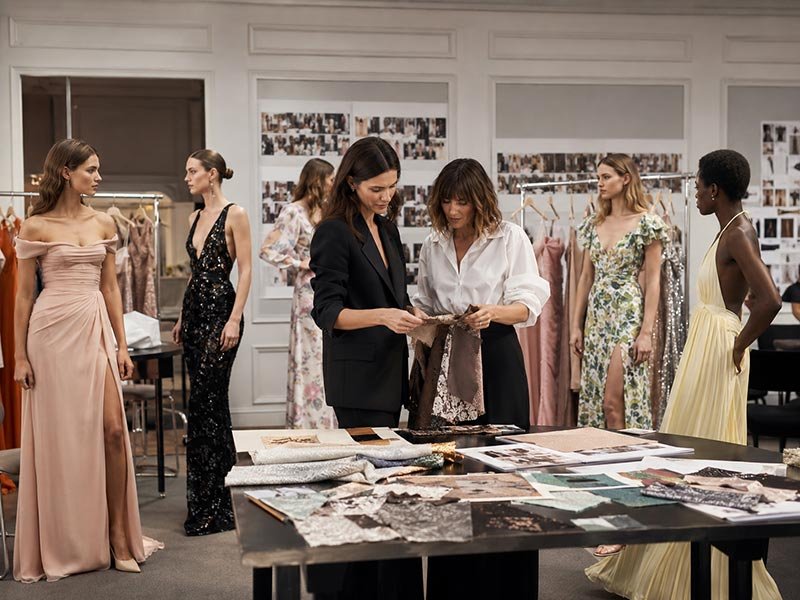
Global labels require more than isolated garment production. Their sourcing systems depend on repeatable development methods, documented approvals, consistent fit standards, material traceability and reliable production planning across seasons. Duolan supports these programs through structured brief review, fabric and trim development, pattern engineering, sample revision, PP confirmation, bulk-production coordination and quality checkpoints. A global program may involve multiple markets, colorways, size systems, inspection requirements and delivery windows.

Regional Leading Brands
Regionally established labels often combine strong online sales with retail, wholesale or international expansion. Their dress programs may include 10–30 styles per order, frequent collection drops and repeated demand for proven silhouettes. Duolan helps organize these programs around style priority, fabric families, fit blocks, price architecture and launch timing. Core commercial styles, visual statement styles and reorder-focused products can follow different development and manufacturing paths without losing collection coherence.
Product Development Teams

Buying and Sourcing Teams
What Established Brands Require From Dress Manufacturers
Dress Category Depth
Development Judgment
Brand teams need more than execution. A manufacturing partner should identify incomplete specifications, unsuitable materials, unstable structures and production risks before expensive revisions or bulk losses occur.
Controlled Sampling
Bulk Reproducibility
Multi-Style Coordination
Repeat-Order Stability
Dress Development Risks and Duolan Control Actions
Strong manufacturing begins by identifying where a design may lose accuracy, stability or commercial value. Each risk needs a defined control action before sampling, production or shipment.
| Project Risk | Why It Matters | Duolan Control Action |
|---|---|---|
| Design-to-sample mismatch | Visual references may not define fit, structure, fabric weight or internal construction | Development brief review, open-point clarification and feasibility assessment |
| Fabric and silhouette mismatch | Incorrect drape, stretch or weight can change the entire garment shape | Fabric behavior review, swatch comparison, lining assessment and alternative recommendation |
| Fit comments misunderstood | General comments may not translate into measurable pattern actions | Comment classification, POM review, pattern correction and revision summary |
| Sample approved but bulk differs | Unlocked materials or unclear production standards create variation | PP basis, BOM confirmation, pattern version control and first-piece inspection |
| Complex workmanship fails at scale | Hand-finished or decorative details may become inconsistent in bulk | Workmanship trial, operation breakdown, pilot verification and inline checkpoints |
| Multiple styles lose priority | A high-risk style can delay the complete collection | Style classification, sample priority, material critical path and production-path planning |
| Reorder quality changes | Fabric batches, trims, production lines or measurements may drift | Preserved pattern, BOM, approved reference, batch review and repeat-order confirmation |
| Launch date becomes compressed | Late materials or approvals reduce QC and logistics buffers | Calendar back-planning, approval deadlines and production-readiness review |
Why Duolan Operates as a Dress Development Partner
Nearly Three Decades of Dress Knowledge
The development foundation behind Duolan began in the fashion womenswear industry in 1996. Long-term work across design, fabric development, product research and dress manufacturing created direct experience with European and American fashion rhythms, silhouette preferences and commercial product requirements. It appears in the ability to judge whether a fabric will hold a neckline, whether a corset construction can be repeated, whether a sequin layout will create excessive weight, and whether a visual concept can remain commercially viable after material and labor costs are considered.
Dress-Focused Product Positioning
Duolan concentrates on fashion dresses, occasion dresses, party dresses, fitted dresses, fashion sets and refined coordinating products. Product development is organized around social, seasonal and event-driven dressing rather than an undifferentiated apparel catalogue.
Focused positioning allows development teams to build deeper knowledge around bust balance, waist shaping, body contour, skirt fall, lining coverage, internal support, decorative surfaces and sample-to-bulk control.
Development Connected to Manufacturing
Pattern rooms, sample development, material sourcing, workmanship engineering, production planning and QC are connected through one project path. Approved sample information is carried forward into PP review, material confirmation, production instructions, first-piece control and final inspection. The connection reduces the common separation between a highly skilled sample room and a bulk line working from incomplete information.
Manufacturing Resources Matched by Project
Dress Categories Developed for Modern Fashion Collections

Mini Dresses

Midi Dresses

Maxi Dresses

Party Dresses
Party dresses often combine high visual impact with close-to-body fit, delicate trims or light-reflective materials.
Development priorities include wearing security, movement, skin comfort, zipper stability, decoration strength and consistent finishing under strong lighting.

Occasion Dresses

Going-Out Dresses

Wedding Guest Dresses

Vacation Dresses

Bodycon Dresses
Bodycon performance comes from stretch percentage, recovery, fabric weight, lining strategy and pattern tension.
The dress should follow the body without uncontrolled transparency, twisting seams or excessive compression at the bust, waist and hip.

Corset Dresses

Halter and Backless Dresses
Halter and backless styles transfer support away from conventional shoulder seams.
Neck tension, bust position, side coverage, strap strength, back opening and fastening stability need coordinated pattern and trim decisions.

Fashion Sets
Coordinated tops, skirts and two-piece dresses extend successful fit blocks and fabric directions across a collection.
Color, material, waistband, closure and length relationships should remain visually connected while each piece functions independently.
Collection Development Beyond Isolated Style Production
Build a Balanced Style Architecture
Coordinate Fabric and Color Families
Protect the Launch Calendar
Prepare for Repeat and Scale
Fabric Engineering for Shape, Movement and Production Stability

Satin

Chiffon

Crepe

Mesh

Lace

Velvet

Stretch Jersey

Sequin Materials
Trim Systems That Keep Dresses Functional and Repeatable
Zippers and Closures
Zipper length, tape color, puller finish, smoothness and placement affect both appearance and dressing comfort. Concealed zippers need stable seam allowances and reinforcement, especially in fitted or satin garments. Hooks, bars, snaps and buttons should support the zipper rather than create additional tension.
Cups and Support
Boning and Interlining
Elastic and Grip
Decorative Components
Labels and Packaging Trims
Design Details That Control Dress Performance
Bust Structure
Neckline Balance

Waist Shaping

Hip and Contour

Halter Support

Backless Stability

Slits and Openings

Hem and Skirt Fall
Hem balance depends on grain direction, bias stretch, fabric weight, lining and skirt volume. Circular and bias-cut skirts may require controlled hanging before final leveling. Finishing should match fabric thickness and desired edge appearance.
Pattern, Fit and Size Control for Dress Programs
Base Pattern Development
Five Critical Fit Zones
- Bust: volume, cup position, neckline stability and side coverage.
- Waist: placement, contour, ease and structural support.
- Hip: shape, movement, stretch tension and seam balance.
- Torso: front-to-back balance, length and body contour.
- Skirt and hem: fall, slit position, movement and final proportion.
Three-Level Size Control
- Base-size approval: the primary fit and silhouette are confirmed.
- Graded-size review: pattern increments are evaluated across the required range.
- Bulk measurement control: agreed points of measurement and tolerances guide inspection.
Measurement and Revision Records
Fit comments are translated into measurable actions. Revised POMs, updated patterns and construction changes are recorded by style and version.
Key areas may include bust width, under-bust, waist, high hip, full hip, body length, strap length, slit height and hem circumference.
Open questions are separated from confirmed revisions so sampling teams do not work from assumptions.
Tech Pack and Feasibility Review Before Sampling

Complete Technical Packages

Reference-Led Development

Original Sample Development

Nine Inputs for Reliable Review
A stronger evaluation is possible when the project includes: Product category,Tech pack or reference,Target fabric direction,Target size range,Number of styles,Estimated quantity,Required workmanship,Launch or delivery timing,Label, packaging and inspection requirements.The review result guides sampling, material sourcing, quotation and production-path decisions.
Production-Ready Sample Development With Clear Review Stages
Brief Confirmation
Material Preparation
Available fabric and trim references are compared against the intended silhouette and construction. Alternative options may be proposed when the original direction creates instability, excessive lead time or poor bulk availability.
Pattern Development
The pattern team translates design direction and measurements into garment structure.
Draping, pattern correction or technical review may be used depending on the silhouette. Fit-sensitive areas are marked for internal review.
Sample Sewing
Internal Review
Staged Progress Updates
Sample Review Note
Revision or Approval Path
Comments are classified into fit, measurement, fabric, trim, construction, visual preference and production risk. The next stage may be a revised sample, photo-ready sample, PP sample or bulk-readiness review depending on project status.
Controlled Revision Management Across Multiple Dress Styles
Style Identification
Comment Classification
Technical Translation
Revision Summary
Version Confirmation
Next-Stage Decision
Dress Workmanship That Protects Fit and Visual Quality
Neckline Finishing
Concealed Zippers
Cup Installation
Boning Channels
Lining Attachment
Mesh Joining
Lace Placement
Sequin Handling
Gathering and Ruching
Pleat Control
Slit Reinforcement
Hem Finishing
Specialized Processes for Fashion-Driven Dress Collections

Digital and Screen Printing

Embroidery

Sequin Embroidery
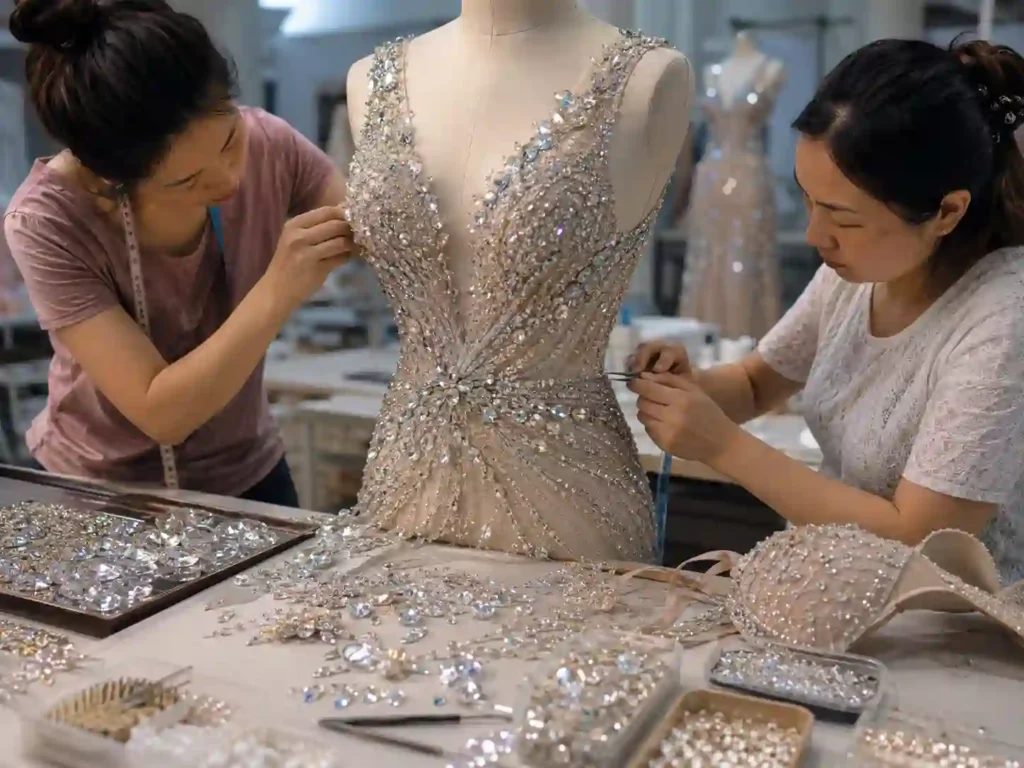
Beading and Crystal Work

Dip Dye and Color Effects

Garment Washing and Finishing
How Approved Samples Become Controlled Bulk Standards
Bulk production begins only after sample information has been converted into clear manufacturing references. Duolan uses a connected control path covering materials, patterns, construction, pilot verification, inspection and packing.
| Control Stage | Items Confirmed | Manufacturing Output |
|---|---|---|
| Approval status | Fit approval, visual approval, remaining comments | Confirmed sample status |
| Material locking | Main fabric, lining, trims, color and surface finish | Approved BOM and material references |
| Pattern control | Pattern number, revision, base size and grading basis | Production pattern set |
| Measurement control | POM chart, approved measurements and tolerances | Bulk measurement specification |
| Workmanship control | Critical seams, support, lining, closures and decoration | Construction reference |
| PP review | Complete garment against bulk materials and standards | PP or production basis |
| First-piece control | Initial production garment and critical operations | First-piece confirmation |
| Inline inspection | Measurements, workmanship, appearance and process consistency | Corrective action record |
| Final inspection | Finished quantity, appearance, measurement and packing | Shipment release basis |
| Reorder preservation | Pattern, BOM, material, color and QC history | Repeat-production file |
Dress-Specific Quality Control From Fabric to Packing
Fabric Inspection
Trim Verification
Cutting Control
First-Piece Inspection
Inline Inspection
Finished-Garment Inspection
Packing Verification
Third-Party Inspection Support
A Multi-Factory System Organized Around Dress Complexity
Owned Core Factories
Satellite Manufacturing Partners
Regional Production Support
South China Material Network
Central Project Coordination
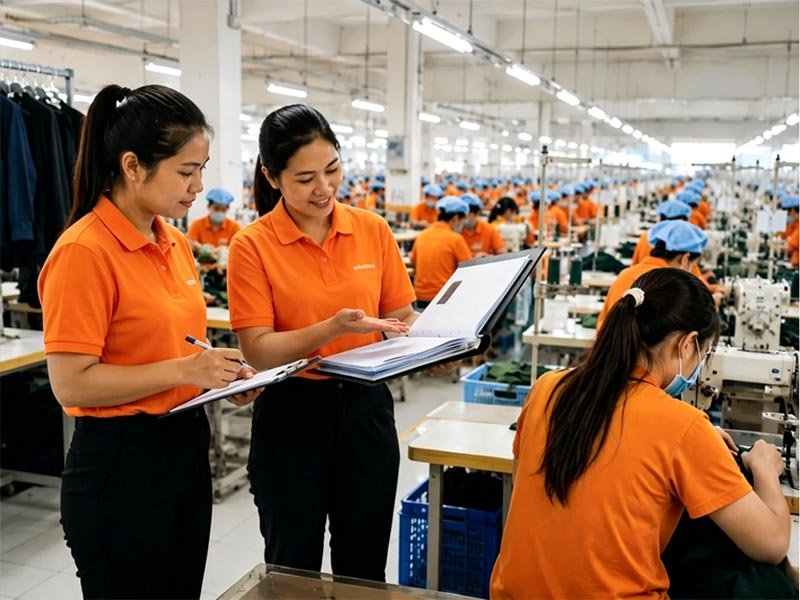
Capacity Designed for Multi-Style and Repeat Programs
16 Owned Factories
20+ Satellite Partners
300 Sewing Lines
50+ Flexible Lines
15,000–35,000 Samples Monthly
6.5–10 Million Monthly Capacity
Cost Engineering Without Weakening Product Value

Fabric Consumption

Internal Construction

Decorative Density

Operation Complexity

Quantity and Material Commitments
Fabric, trim, dyeing and special-process economics change with quantity and color allocation. A multi-style program may gain efficiency by sharing materials or finishes across related products.

Collection Price Architecture
Not every style needs the same cost structure. Image styles may carry stronger visual investment, while commercial core styles need reliable margins and reorder potential.
Compliance and Documentation for Formal Brand Supply Chains
SMETA Audit Record
Brand Compliance Coordination
Textile and Garment Testing
Third-Party Inspection
Label and Packaging Control
Project-Specific Requirements
Anonymized Dress Programs With Measurable Project Scope
The following project profiles reflect the scale and structure of established brand programs. Brand identities, original designs and commercially sensitive information remain confidential.
US Occasionwear Collection — 18 Styles, 48,000 Pieces
- Market: United States
- Product direction: Occasion, party and wedding-guest dresses
- Styles: 18
- Total quantity: 48,000 pieces
- Main materials: Satin, mesh, stretch crepe and sequin fabrics
- Size and color structure: Multiple size runs and seasonal colorways
The collection combined fluid satin dresses, lined mesh bodycon styles, structured bustier products and decorated party dresses. Each group required different pattern, lining, support and production methods. The launch sequence also required image styles to be completed before several commercial styles.
Duolan Approach:The 18 styles were classified into fabric-sensitive, fit-sensitive, structure-sensitive and decoration-sensitive groups. Shared fabric families and trim finishes were identified, while high-risk corset and mesh products entered sampling earlier. Pattern and comment files were controlled by style number and revision. Bulk allocation followed style complexity rather than equal distribution.
Result:All 48,000 pieces were organized through three controlled production paths. Collection color and trim directions remained coordinated, while complex styles received separate first-piece and inline checkpoints. Production sequencing followed the brand’s planned launch order.

UK Fitted Dress Program — 12 Styles, 24,600 Pieces
- Market: United Kingdom
- Product direction: Bodycon, corset, halter and going-out dresses
- Styles: 12
- Total quantity: 24,600 pieces
- Main concerns: Fit consistency, bust support, stretch recovery and size grading
Several styles used related silhouettes but different stretch fabrics, necklines and support systems. Applying one unchanged pattern block would have produced inconsistent compression, bust placement and body length.
Duolan Approach:The program began with base-size fit review across five critical zones: bust, waist, hip, torso and hem. Styles were then separated by stretch and structure. Corset products received cup and boning checks; halter styles received strap-load and side-coverage review; bodycon products were assessed for stretch recovery and opacity.
Measurement changes, pattern versions and construction notes were recorded by style. Graded-size review focused on keeping contour and neckline position consistent across the required range.
Result:The 12 styles moved into bulk with style-specific fit and material standards rather than one generalized block. The 24,600-piece order was produced with separate QC checkpoints for measurements, neckline stability, lining coverage and zipper behavior.

Multi-Market Seasonal Program — 26 Styles, 76,800 Pieces
Project Scope:
- Markets: North America, Australia and selected European channels
- Product direction: Party, vacation, going-out and repeat core dresses
- Styles: 26
- Total quantity: 76,800 pieces
- Order structure: New development, repeat colors and collection extensions
Challenge:
The program combined new seasonal styles with proven silhouettes. Several products shared fabric or color directions, while others required print, embroidery or decorated surfaces. Delivery timing differed by market and sales event.
Duolan Approach:
New styles and repeat styles followed separate development paths. Existing patterns, BOMs and workmanship references were preserved for repeat products. New complex styles received feasibility and pilot review. Material planning grouped shared fabrics, linings and metal finishes where technically appropriate.
The order was divided by style complexity, market timing and required process. Repeat products used familiar production resources, while special-process styles were coordinated through dedicated partners and earlier approval points.
Result:
The 76,800-piece program was organized across 26 style files with defined sample, material, bulk and delivery status. Shared materials improved collection coherence, while preserved product records supported repeat color and length extensions.

Supplier Evaluation Materials for Qualified Brand Teams
Initial Capability Review
Available information can include:
- Company and dress-category profile
- Manufacturing-system overview
- Product development workflow
- Sample and revision process
- General quality-control path
- Primary compliance information
- Contact and project-entry requirements
The initial pack helps sourcing and product teams determine whether Duolan matches their dress category, operating model and production requirements.
Project-Level Capability Review
- Relevant product and workmanship capabilities
- Fabric and trim development direction
- Sample pathway
- Production-path recommendation
- QC checkpoints
- Timing dependencies
- Required brand documents
- Factory or process suitability
Formal Supplier Evaluation
Qualified sourcing programs may proceed to:
- Factory capability documentation
- SMETA-related information
- Quality procedure review
- Production-system discussion
- Third-party inspection planning
- Factory visit coordination
- Confidential project assessment
- Long-term capacity and reorder planning
Sensitive documents and brand information can be managed under appropriate confidentiality arrangements.
Frequently Asked Questions for Established Fashion Brands

Start a Dress Development and Manufacturing Review
Share your dress program with Duolan for a structured assessment of product development, materials, fit, sampling, production and delivery requirements. A useful project review begins with clear commercial and technical information rather than a single reference image or an isolated target price.
Please provide as much of the following information as available:
- Company or brand name
- Company website
- Main sales market
- Dress categories
- Tech packs, sketches, original samples or reference images
- Number of styles
- Estimated quantity by style or program
- Target fabric and trim direction
- Size range and measurement standard
- Required sample stage
- Target launch or delivery timing
- Label and packaging requirements
- Inspection, testing or compliance requirements
- Current sourcing or production challenge
Duolan will review the available development basis, identify major material, fit, construction and manufacturing considerations, and recommend the most suitable next step. Confidential product information can be handled as part of a formal project discussion.