Skip to content
Custom Denim Dress Manufacturer
Custom denim dress development and manufacturing for established fashion brands building denim mini, shirt, shift, bodycon, button-front, overall, lightweight resort and washed casual dress programs.
Duolan supports denim dress programs through denim fabric review, wash direction planning, sample development, fit correction, PP approval, bulk production, wash QC, hardware inspection, packing and repeat delivery.
- 7 denim dress control points guide development: fabric weight, wash effect, shrinkage, topstitching, hardware, fit balance and bulk color consistency.
- 4 wash-review stages support PP approval: fabric swatch, wash sample, first garment wash and bulk shade review.
- 3 denim fabric routes can be evaluated by style: rigid denim, stretch denim and lightweight summer denim.
- 6 owned womenswear factories support closer control over denim mini, shirt, shift, bodycon and casual dress programs.
- 20+ satellite factories support seasonal allocation for casual, resort, lifestyle and repeat color launches.
- South China fabric resources support denim, cotton blends, stretch denim, lightweight denim, lining and pocketing options.
- Humen trim resources support buttons, zippers, snaps, rivets, labels, pocketing, hangtags and packing materials.
- SMETA 2-Pillar audit record supports supplier evaluation for established international fashion brands.
What Denim Dress Manufacturing Really Requires
Denim dress manufacturing is not ordinary dress sewing with denim fabric. A strong denim dress needs controlled fabric weight, wash effect, shrinkage, topstitching accuracy, hardware durability, women’s dress fit and repeatable bulk appearance. Casual, lifestyle, resort and streetwear-inspired denim dresses often rely on clean wash character and structured fabric, yet weak production control can create unstable sizing, uneven wash shade, heavy hems, twisted seams, button stress or poor movement comfort.
Duolan reviews denim dresses as wash-sensitive commercial products. A strong sample must prove the intended color, handfeel, fit and construction before bulk production begins. Denim weight, stretch recovery, wash standard, shrinkage record, topstitching, hardware placement, pocketing and packing condition are reviewed before wider production continues.
- Fabric weight: Denim weight must match dress length, structure, comfort and season.
- Wash consistency: Wash shade, handfeel and fading effect need clear bulk standards.
- Shrinkage control: Pre-wash and post-wash measurements must be reviewed before PP approval.
- Construction strength: Topstitching, plackets, pockets, zippers and buttons need stable execution.
- Bulk repeatability: Fit, wash, color, measurements, trims and final appearance must stay consistent.
Brand Teams Duolan Fits Best
Casual Womenswear Brands
Lifestyle Denim Brands
Resort and Vacation Brands
Streetwear-inspired Fashion Brands
Product Development Teams
Sourcing Offices
Denim Dress Product System for Brand Collections
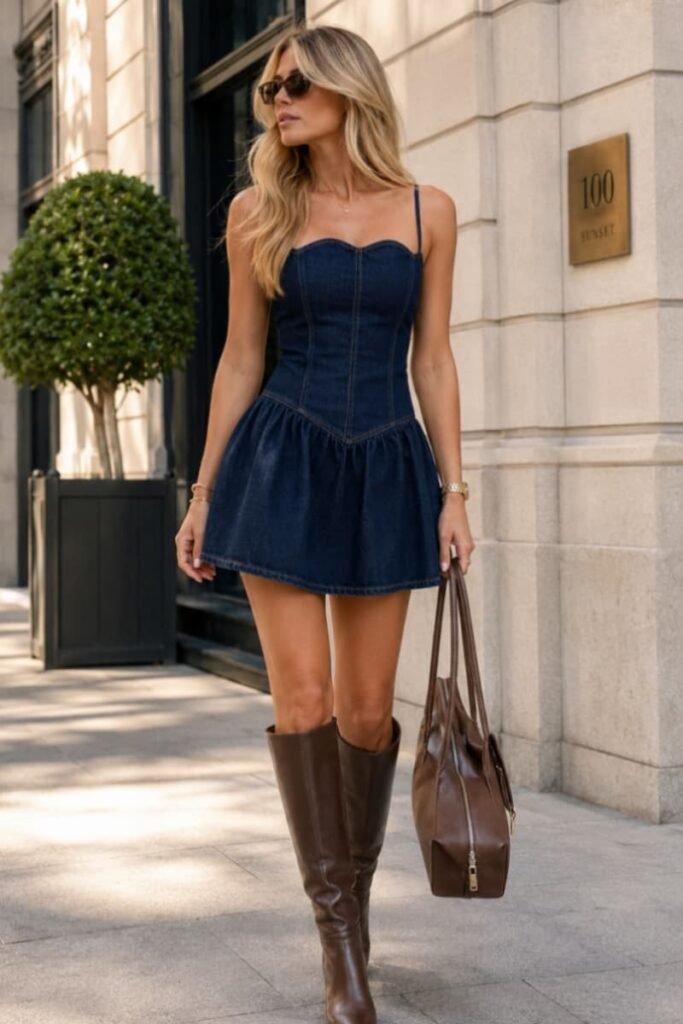
Denim Mini Dresses
- Control mini length before and after wash.
- Match denim weight with walking comfort.
- Keep hem, stitching and wash shade stable in bulk.

Denim Shirt Dresses
- Keep placket flat after wash.
- Review button spacing and chest ease carefully.
- Control shoulder, sleeve and hem proportions.

Denim Shift Dresses
- Balance denim structure with easy fit.
- Review chest and hip allowance after wash.
- Keep straight silhouette from looking boxy.

Denim Bodycon Dresses
- Test stretch recovery after movement.
- Review opacity and side seam pressure.
- Control post-wash measurements across sizes.

Button-front Denim Dresses
- Keep front placket smooth after wash.
- Review button spacing under body movement.
- Check hardware strength before bulk release.

Denim Overall and Pinafore Dresses
- Reinforce straps and metal hardware points.
- Review layered comfort with inner tops.
- Keep pocket and seam placement balanced.

Lightweight Resort Denim Dresses
- Match lightweight denim with silhouette support.
- Review soft wash without losing shape.
- Protect garment recovery after folding.

Washed Denim Casual Dresses
- Lock wash standard before PP approval.
- Review shade variation under consistent light.
- Keep handfeel and measurements repeatable.
Denim Fabric Weight and Handfeel Logic

Rigid Denim for Structured Dresses
- Match rigid denim with structured dress shapes.
- Review movement before approving mini or midi lengths.
- Control seam bulk around plackets and hems.

Stretch Denim for Fitted Styles
- Test stretch recovery before PP approval.
- Review opacity under body tension.
- Track post-wash size changes carefully.

Lightweight Denim for Summer and Resort
- Review handfeel and drape before sampling.
- Check transparency and lining needs.
- Test folding recovery for travel-oriented styles.

Cotton-blend Denim for Daily Comfort
- Balance comfort with shape retention.
- Review wash change before PP approval.
- Check colorfastness for darker shades.

Denim Weight and Dress Silhouette
- Match weight with dress length.
- Review hem movement by silhouette.
- Prevent heavy lower-body appearance.

Handfeel, Recovery and Wearability
- Review skin-contact comfort around armholes and straps.
- Test recovery after sitting and walking.
- Keep handfeel consistent across bulk colorways.
Wash Development and Shrinkage Control
Enzyme Wash
- Style influence: Creates clean softness for commercial casual dresses.
- Fit influence: Shrinkage and handfeel change must be measured.
- Bulk focus: Wash strength and shade need approved standards.
Stone Wash
- Style influence: Builds visible casual and vintage character.
- Fit influence: Abrasion and shrinkage can change measurements.
- Bulk focus: Wash effect must avoid excessive garment variation.
Vintage Wash
- Style influence: Adds stronger visual identity.
- Fit influence: Wash treatment may affect stiffness and recovery.
- Bulk focus: Shade band and placement reference are needed.
Light Wash and Dark Indigo Control
- Style influence: Light and dark denim serve different market positions.
- Fit influence: Wash route can change fabric handfeel.
- Bulk focus: Batch separation and shade review are essential.
Soft Wash for Resort Denim
Soft wash improves wearability for summer and resort denim dresses. Duolan reviews fabric softness, shrinkage, hem movement and packing recovery. The wash should improve comfort without weakening structure.
- Style influence: Creates relaxed vacation and lifestyle appeal.
- Fit influence: Softening can change body fall and length.
- Bulk focus: Handfeel and garment recovery need review.
Shrinkage Before and After Wash
Shrinkage control protects fit and sizing. Duolan records pre-wash and post-wash measurements for key points such as bust, waist, hip, length, hem width and strap length. Shrinkage must be reflected in pattern and PP approval.
- Style influence: Clean fit depends on controlled post-wash shape.
- Fit influence: Pattern allowance must account for wash change.
- Bulk focus: Measurement standards need both before-wash and after-wash records.
Bulk Wash Shade Consistency
Bulk wash consistency protects brand presentation. Duolan reviews wash standard, shade band, approved sample, lighting condition and batch grouping. Wash review helps keep color and handfeel aligned across style, size and color.
- Style influence: Stable wash character protects collection identity.
- Fit influence: Wash route affects handfeel and garment fall.
- Bulk focus: Shade, shrinkage and measurements are checked together.
Women’s Dress Fit and Denim Structure
Bust and Upper-body Fit
- Review bust ease after wash.
- Check upper-body movement in fitting.
- Prevent stiffness around neckline and armhole.
Waist and Hip Ease
- Balance hip ease with fabric weight.
- Review waist position during sitting.
- Keep side seams smooth after wash.
Mini and Midi Length Balance
- Review length before and after wash.
- Test walking movement by silhouette.
- Keep hem level consistent across sizes.
Armhole, Sleeve and Strap Fit
- Review armhole edges for comfort.
- Reinforce straps without making them bulky.
- Check sleeve and strap movement during fitting.
Placket, Zipper and Button-front Balance
- Keep button spacing stable under body movement.
- Review placket flatness after wash.
- Prevent zipper waves and front twisting.
Size Grading After Wash
- Review post-wash measurements by size.
- Adjust grading for denim fabric behavior.
- Keep fit proportion consistent across size range.
Topstitching, Hardware and Detail Construction

Topstitching Accuracy
- Lock stitch distance before production release.
- Review thread color against wash direction.
- Check visible stitching during inline QC.

Button and Snap Placement
- Review button spacing on fitted samples.
- Check snap strength before bulk release.
- Keep hardware placement aligned across sizes.

Zipper and Placket Stability
- Review zipper smoothness after wash.
- Prevent placket twisting and waviness.
- Control seam bulk around closure zones.

Pocket and Utility Detail Placement
- Place pockets according to body proportion.
- Review reinforcement at stress points.
- Keep utility details balanced in bulk.

Strap, Belt and Loop Reinforcement
- Reinforce straps and loops at stress points.
- Review buckles and adjusters during fitting.
- Keep belt loops stable after wash.

Hem, Seam and Edge Durability
- Review hem finish after washing.
- Control edge fray where required.
- Keep seams clean through wash processing.
Fit, Movement and Denim Wear Confidence
Sitting Ease
- Review sitting comfort before PP approval.
- Check button gap and waist pressure.
- Keep mini length safe during movement.
Walking and Hem Movement
- Test walking comfort by dress length.
- Match hem width with fabric weight.
- Prevent stiff lower-body movement.
Stretch Recovery
- Test recovery after movement.
- Review measurements after fit sessions.
- Control bagging around waist and hip.
Strap and Shoulder Comfort
- Review strap comfort during wear.
- Check buckle and adjuster contact points.
- Reinforce support without heavy bulk.
Button-front Safety
- Check front opening during sitting.
- Review chest and waist button stress.
- Keep plackets flat and secure.
Wash-after-wear Appearance
- Review wash recovery before bulk release.
- Check seam and hem behavior after washing.
- Keep handfeel and color aligned with PP standards.
Denim Detail and Production Risk Matrix
Denim details create value only when wash, fit, stitching and hardware stay controlled. Duolan reviews each structure by commercial role, material behavior, durability need and bulk risk.
| Denim Detail | Commercial Value | Production Risk | Duolan Control |
|---|---|---|---|
| Stretch Denim Bodycon | Fitted denim appeal for party and streetwear capsules | Recovery loss, side seam pressure, shrinkage | Stretch test, post-wash measurement review |
| Denim Shirt Dress | Lifestyle polish with easy commercial fit | Placket twist, button gap, collar imbalance | Placket review, button spacing control |
| Button-front Denim Dress | Strong front detail and functional wear | Button stress, front opening distortion | Hardware testing, closure review |
| Denim Mini Length | Youthful casual and summer denim value | Short coverage, post-wash length change | Length check before and after wash |
| Denim Overall / Pinafore | Layered styling and utility appeal | Strap stress, buckle pressure, pocket bulk | Reinforcement and hardware review |
| Washed Denim Dress | Strong wash identity and seasonal character | Shade drift, shrinkage, uneven wash effect | Wash standard, shade band, batch control |
| Pocket / Utility Details | Functional denim styling | Hip bulk, uneven placement, weak stress points | Placement review, bartack reinforcement |
| Hardware and Topstitching | Denim authenticity and durability | Loose trims, uneven stitching, wash damage | Trim testing, stitching standard |
Product-to-Denim Construction Matching Matrix
Denim construction should follow silhouette, fabric route and wash target. Duolan connects denim selection with fit, wash, stitching, hardware and production control before sample work begins.
| Dress Type | Best Denim Route | Key Risk | Development Focus |
|---|---|---|---|
| Denim Mini Dress | Medium or stretch denim with controlled wash | Length shrinkage, hem stiffness | Post-wash length, hem movement, wash shade |
| Denim Shirt Dress | Medium denim with stable placket and buttons | Placket distortion, button gap | Shoulder fit, button spacing, collar balance |
| Denim Shift Dress | Soft structured denim with clean ease | Boxy body, stiff handfeel | Body allowance, fabric weight, wash softness |
| Denim Bodycon Dress | Stretch denim with stable recovery | Bagging, side seam pressure | Stretch recovery, measurements, opacity |
| Button-front Denim Dress | Stable denim with reinforced front opening | Button stress, front twist | Hardware, placket, chest tension |
| Denim Overall Dress | Rigid or medium denim with reinforced straps | Strap pull, buckle pressure | Strap reinforcement, pocket placement |
| Lightweight Resort Denim Dress | Lightweight cotton denim with soft wash | Transparency, shrinkage, weak shape | Handfeel, lining need, packing recovery |
| Washed Denim Casual Dress | Approved wash route with shade standard | Color drift, uneven handfeel | Wash sample, shade band, shrinkage record |
From Denim Dress Brief to PP Approval
Step 1|Style and Denim Program Review
Step 2|Fabric Weight and Wash Direction Review
Step 3|First Sample Development
Step 4|Fit, Wash and Construction Revision
Step 5|PP Sample and Bulk Readiness
Sample Standards for Custom Denim Dresses
Denim dresses require sample stages beyond ordinary visual approval. Fabric swatches, wash samples, shrinkage records and PP samples each answer different production questions before bulk begins.
| Sample Type | What It Confirms | Denim Dress Focus | Bulk Value |
|---|---|---|---|
| Fabric / Wash Swatch Review | Denim route before sample cutting | Weight, color, handfeel, wash target, stretch | Reduces wrong fabric and wash route risk |
| First Fit Sample | Initial fit and construction route | Bust, waist, hip, length, placket, hardware | Reveals early fit and construction problems |
| Wash Sample | Wash effect and handfeel | Shade, fading, softness, surface change | Creates wash reference for bulk production |
| Shrinkage / Measurement Review | Size change after wash | Pre-wash and post-wash measurements | Protects size and grading accuracy |
| Wear Review Sample | Real movement and closure security | Sitting, walking, button gap, strap comfort | Confirms wearability before PP approval |
| PP Sample | Final production benchmark | Measurements, wash standard, trims, labels, packing | Becomes standard for cutting, sewing, wash, QC and delivery |
| Golden Sample | Repeat production reference | Final fit, wash character and construction memory | Supports reorders and seasonal refreshes |
Sample-to-Bulk Engineering for Denim Dresses
Denim Swatch and Wash Standard Locking
Shrinkage and Fabric Relaxation Control
Cutting, Topstitching and Hardware Standardization
Colorway, Wash Shade and Panel Review
First-piece and Inline QC

Denim Dress Risk Control Matrix
Denim dress risks concentrate around wash, shrinkage, construction and hardware. Duolan links each risk to a production control point before wider bulk production begins.
| Risk | Why It Happens | Common Area | Duolan Control |
|---|---|---|---|
| Wash shade variation | Wash standard or batch control unclear | Full garment, panels | Wash sample, shade band, bulk shade review |
| Shrinkage after wash | Fabric and wash route not measured early | Length, bust, waist, hip | Pre-wash and post-wash measurement record |
| Fabric weight mismatch | Denim weight unsuitable for dress silhouette | Full body, hem, placket | Fabric route review, sample fitting |
| Stretch recovery loss | Stretch denim lacks stable return | Bodycon, waist, hip | Recovery test, measurement review |
| Placket distortion | Denim thickness or wash affects front opening | Shirt dress, button-front styles | Placket construction and wash review |
| Button gap / button stress | Button spacing or chest tension unsuitable | Front closure, bust, waist | Button spacing review, fit test |
| Topstitching inconsistency | Stitch distance, tension or thread route not standardized | Visible seams, pockets, hem | Stitch standard, inline inspection |
| Hardware looseness | Button, snap, rivet or buckle strength insufficient | Straps, plackets, pockets | Trim testing, reinforcement |
| Side seam twisting | Grainline, cutting or wash distortion uncontrolled | Side seams | Cutting control, first-piece inspection |
| Bulk measurement drift | PP standards not followed through wash and finishing | Full garment | Measurement checklist, wash QC |
Bulk Manufacturing, QC and Brand Delivery
Denim dress delivery requires stable wash shade, controlled shrinkage, clean construction and durable trims. Duolan connects production control with wash QC, factory coordination, hardware inspection and packing preparation for denim dress programs.
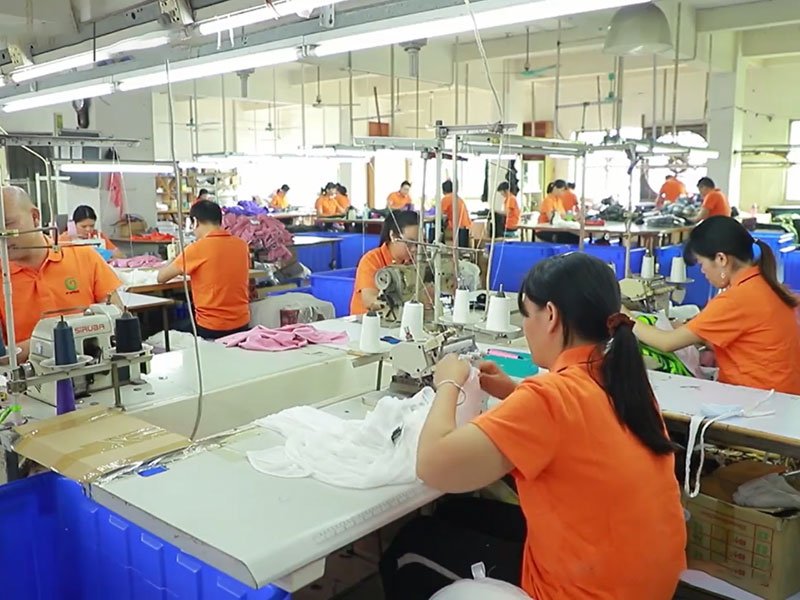
Manufacturing Focus
- Material discipline: Denim fabric, wash standard, thread, buttons, zippers, snaps, rivets, labels and packing materials are checked against approved records.
- Wash control: Wash sample, shade band, shrinkage record and handfeel standard follow PP sample references.
- Fit control: Bust, waist, hip, dress length, hem width, strap length, placket and button spacing receive focused review.
- Detail control: Topstitching, hardware, pockets, loops, hems, collars and plackets are checked by style.
QC Focus
- Measurement checks: Pre-wash and post-wash bust, waist, hip, length, hem width, strap length and key details follow PP standards.
- Wash checks: Shade consistency, handfeel, fading effect, colorfastness risk and panel balance are reviewed.
- Workmanship checks: Topstitching, zipper smoothness, button stress, pocket reinforcement, side seam twisting and hem finish receive inspection.
- Packing checks: Hardware pressure marks, dark denim rubbing, hem creases, button scratches and garment presentation are reviewed before shipment.
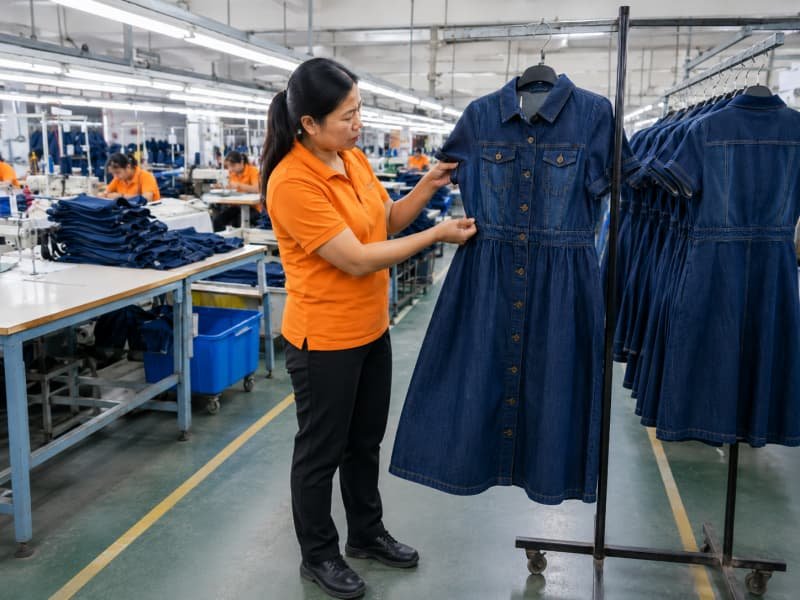
Manufacturing System Support
Duolan’s owned womenswear factories support core denim mini, shirt, shift, bodycon, button-front and overall dress styles requiring closer sample-to-bulk control. The 20+ satellite factory network supports seasonal capacity planning, repeat orders and multi-color casual programs. South China fabric resources and Humen trim resources support denim, thread, buttons, zippers, snaps, rivets, pocketing, labels and packing comparisons.

Brand-ready Delivery
- Label system: Main label, size label, care label, hangtag and barcode requirements are aligned by style.
- Packing method: Rigid denim, stretch denim, lightweight denim, button-front and overall styles may need different folding logic.
- Inspection support: Audit record, testing coordination and third-party inspection discussion support supplier evaluation.
- Repeat records: Approved denim swatch, wash standard, measurements, trims and packing notes support future reorder planning.

Denim Dress Project Case Studies

United States|Washed Denim Mini Program
A US fashion brand developed washed denim mini dresses for casual, summer and going-out launches. The project needed stable wash shade, controlled shrinkage and clean topstitching across short silhouettes.
Project data
- Region: United States
- Style scope: 12–18 styles
- Order volume: 34,000–70,000 pieces
- First sample cycle: 13–21 days depending on wash and shrinkage revision
- Main fabrics: Stretch denim, rigid denim, cotton denim and metal buttons
- Key structures: Mini lengths, fitted bodies, button-front details, side zippers and contrast stitching
- Main risks: Wash shade, shrinkage, topstitching and mini length safety
Duolan actions
- Wash review: Wash sample and shade band were checked before PP approval.
- Fit correction: Mini length, hip allowance and sitting comfort were refined during sampling.
- Stitching review: Topstitching distance and thread color were standardized by style.
- Bulk QC focus: Post-wash measurements, shade, buttons and hem level were checked during production.

Australia|Lightweight Resort Denim Dress Capsule
An Australian brand developed lightweight denim dresses for resort and vacation casual collections. The capsule needed soft handfeel, summer comfort and packable appearance.
Project data
- Region: Australia
- Style scope: 10–16 styles
- Order volume: 26,000–58,000 pieces
- First sample cycle: 12–19 days depending on soft wash and fabric review
- Main fabrics: Lightweight denim, cotton blend denim, soft pocketing and resort trims
- Key structures: Sleeveless bodies, relaxed shift shapes, soft straps and casual hems
- Main risks: Handfeel, packing recovery, soft wash and hem movement
Duolan actions
- Fabric review: Lightweight denim handfeel and opacity were checked before sample release.
- Soft wash review: Wash route was adjusted to keep comfort without losing shape.
- Movement review: Hem movement and armhole comfort were checked during fitting.
- Packing check: Fold recovery and garment appearance were reviewed before shipment planning.
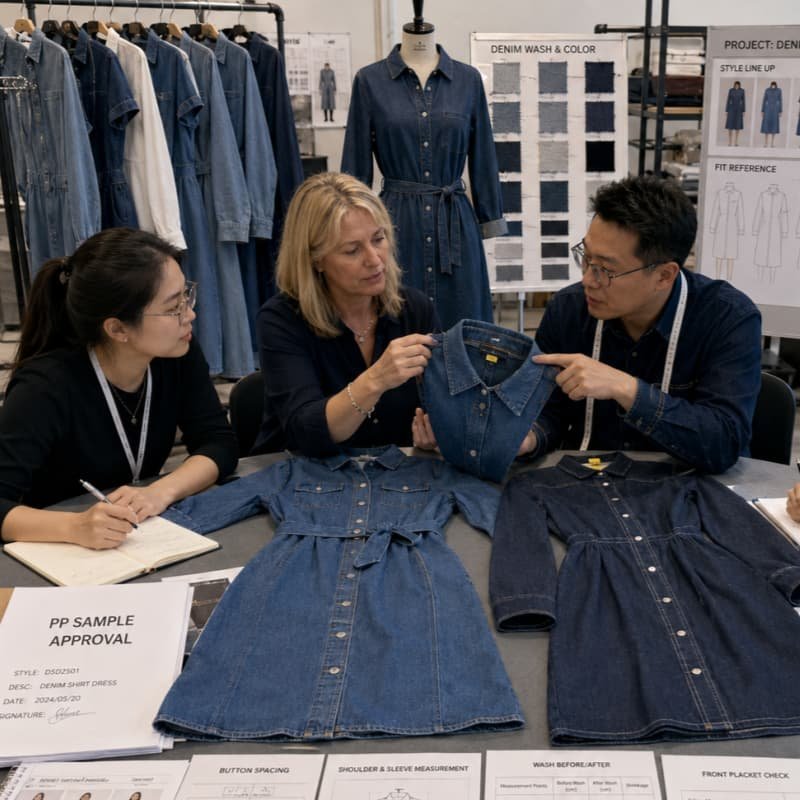
United Kingdom|Denim Shirt Dress Collection
A UK lifestyle brand developed denim shirt dresses with button fronts, collars and medium-weight denim. The project needed clean placket stability, shoulder fit and wash-after-measurement control.
Project data
- Region: United Kingdom
- Style scope: 8–14 styles
- Order volume: 24,000–50,000 pieces
- First sample cycle: 12–20 days based on placket, wash and fit revisions
- Main fabrics: Medium-weight denim, button trims, thread and pocketing
- Key structures: Shirt collars, front plackets, short sleeves, back yokes and curved hems
- Main risks: Placket stability, button spacing, shoulder fit and wash-after-measurement
Duolan actions
- Placket review: Front opening, button spacing and chest tension were checked during fitting.
- Measurement review: Pre-wash and post-wash measurements were recorded for PP approval.
- Shoulder review: Shoulder width and armhole comfort were refined before production release.
- Bulk control: Placket flatness, button strength, wash shade and hem balance were inspected.

Europe|Button-front and Overall Denim Range
A European fashion brand developed button-front denim dresses and overall-inspired silhouettes for lifestyle and streetwear capsules. The program required durable hardware, strap reinforcement and stable bulk measurements.
Project data
- Region: Europe
- Style scope: 14–24 styles
- Order volume: 38,000–80,000 pieces
- First sample cycle: 14–23 days for fabric, hardware and wash revisions
- Main fabrics: Rigid denim, stretch denim, metal hardware and contrast thread
- Key structures: Button fronts, adjustable straps, utility pockets, belt loops and mini-to-midi hems
- Main risks: Hardware durability, strap reinforcement, wash shade consistency and bulk measurement stability
Duolan actions
- Hardware review: Buttons, buckles, snaps and rivets were checked before PP confirmation.
- Reinforcement review: Straps, loops and pocket stress points were adjusted during sampling.
- Wash review: Rigid and stretch denim wash routes were separated by style.
- Bulk control: Hardware placement, post-wash measurements, shade and topstitching were tracked during QC.
Send Your Denim Dress Project
Send denim dress project files for development, sampling and bulk production review. Duolan will assess denim fabric route, wash direction, shrinkage risk, fit behavior, stitching and hardware requirements, PP readiness, QC focus and delivery needs before providing a clearer manufacturing response.
Share Your Project
- Denim dress category: mini, shirt, shift, bodycon, button-front, overall, lightweight resort or washed casual style.
- Design files: tech pack, sketch, reference image, original sample photo, front, back, side and detail photos.
- Denim direction: rigid denim, stretch denim, lightweight denim, cotton-blend denim, enzyme wash, stone wash, vintage wash, light wash or dark indigo.
- Fit focus: bust ease, waist balance, hip allowance, mini length safety, strap comfort, placket fit and post-wash measurements.
- Detail focus: topstitching, buttons, zippers, snaps, rivets, pockets, loops, thread color and hardware durability.
- Production scope: style count, order quantity, colorways, size range, launch date, labels and packing requirements.
Duolan Will Review
- Fabric feasibility: denim weight, stretch, handfeel, wash route, shrinkage and color consistency.
- Construction route: cutting, wash sample, topstitching, hardware placement, pocketing and placket control.
- Bulk plan: sample route, PP readiness, wash QC, measurement checkpoints, packing and delivery requirements.