 Skip to content
QC Checklist for Fashion Dress Manufacturing
A dress-focused quality control framework for fashion brands reviewing fabric, fit, workmanship, PP samples, bulk production and packing readiness.
A strong QC checklist protects fashion dress programs before quality issues become shipment risks. Duolan supports brand teams with a controlled inspection path covering fabric review, trim confirmation, fit and measurement checks, workmanship control, PP sample approval, inline inspection, final inspection, packing review and delivery preparation. Built around fashion dresses, occasion dresses, party dresses and fitted silhouettes, our checklist helps align product development, production standards and shipment release across multi-style programs.
What a QC Checklist Should Control
A QC checklist should turn product requirements into clear inspection points before, during and after bulk production.
From Inspection Form to Production Control
A QC checklist is a structured inspection document used to verify whether fabric, trims, measurements, workmanship, packaging and shipment details meet approved product standards. In fashion dress manufacturing, it should not work as a simple final checking sheet. A reliable checklist must connect product development, sample approval, PP sample standards, production checkpoints and final shipment release.
For dress-focused programs, inspection points need to reflect real product risks. A satin dress may need surface mark, seam pucker and packing crease review. A bodycon dress needs stretch recovery, opacity and measurement control. A corset dress needs cup balance, boning position and support structure review. A sequin dress needs skin comfort, lining coverage and trim security checks.
Duolan uses QC checklist logic to help brand teams review quality across product stages, not only at the end of production. Each project may include reference sample review, fabric direction review, measurement tolerance, workmanship notes, defect records, packing requirements and inspection feedback before shipment preparation.
Key Control Areas
- Fabric, color and trim confirmation
- Fit, measurement and size tolerance
- Workmanship and construction review
- PP sample and bulk standard alignment
- Inline inspection and correction tracking
- Final inspection, packing and shipment release
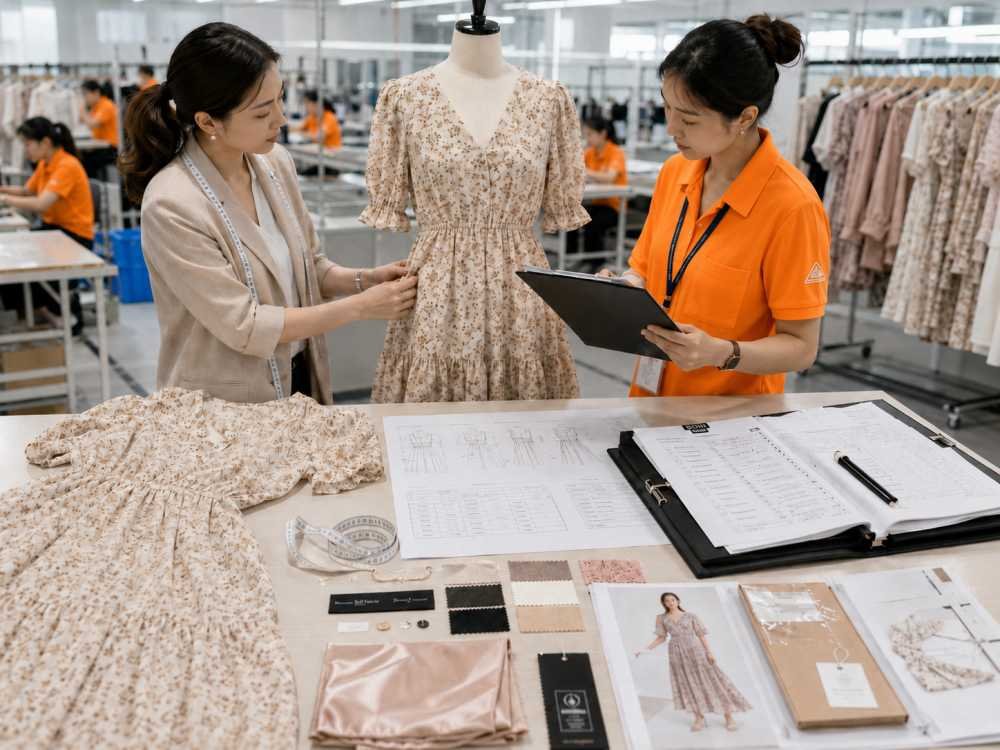
Who Uses a Dress QC Checklist & Why Generic QC Checklists Miss Dress Risks
| Generic QC Item | Why It Is Not Enough | Dress-Specific Risk | Duolan Review Focus |
|---|---|---|---|
| Appearance check | Surface review alone may miss fabric behavior and structure problems. | Satin seam pucker, mesh transparency, sequin irritation or lace tearing may appear after fitting or packing. | Fabric behavior, surface finish, lining match, seam stability and garment presentation. |
| Measurement check | Basic size checking may not protect body fit or stretch recovery. | Bodycon, corset, halter and backless dresses may pass flat measurement but fail wearing balance. | Bust, waist, hip, strap, neckline, slit, hem and stretch tolerance. |
| Workmanship check | General stitching review may ignore style-sensitive construction. | Boning, cups, zipper placement, strap tension, lining coverage and hem balance may affect wearability. | Style construction review based on approved sample and PP standard. |
| Packing check | Carton and polybag checks may miss product presentation risk. | Satin creases, sequin pressure marks, folded cup deformation or trim damage may occur during packing. | Folding method, hanger option, polybag size, carton ratio and final presentation. |
| Label check | Label presence alone does not confirm market or channel readiness. | Wrong barcode, size sticker, hangtag, care label or carton mark may delay receiving. | Label placement, barcode, carton mark, packing ratio and channel instruction. |
| Final inspection only | Late-stage checking may find issues too close to delivery. | Cutting errors, fabric shade issue or process deviation may already affect too many pieces. | Pre-production check, inline inspection, correction record and final release. |
A Controlled Path from Development to Delivery
Duolan builds QC control around fashion dress development and bulk production. Quality work begins when the project brief, tech pack, reference sample, fabric direction or collection plan arrives. Before sampling or production, our team reviews product type, fabric behavior, construction risk, fit priority, trims, measurement requirements, packing plan and delivery schedule.
After sample review, quality standards move into a controlled production reference. Approved sample, PP sample notes, fabric records, BOM, measurement table, workmanship comments, trim placement, label file and packing instruction become working documents for production teams. For multi-style programs, Duolan organizes quality priorities style by style, especially when a launch includes fitted dresses, satin dresses, lace dresses, mesh dresses, sequin dresses, vacation dresses and occasion styles in one order plan.
During bulk production, inspection work may cover fabric lot confirmation, cutting panel review, first-piece check, inline measurement, sewing workmanship, finishing, pressing, packing and shipment release. For orders from 20,000 to 80,000 pieces across 10–30 styles, project coordination and quality records help reduce production confusion and support faster correction when issues appear.
QC Path Includes
- Project brief and risk review
- Fabric and trim confirmation
- Sample and PP standard locking
- Cutting and first-piece inspection
- Inline workmanship review
- Final inspection and packing check
- Shipment readiness confirmation
Fabric and Trim Control for Dress Programs
Fabric control is one of the strongest quality checkpoints in dress manufacturing. The same silhouette may produce different results when fabric weight, stretch, drape, opacity or recovery changes. Duolan reviews fabric direction before cutting to reduce risk in satin, mesh, lace, stretch knit, woven crepe, chiffon, velvet, sequin fabric and blended materials used for fashion dress programs.
For fitted silhouettes, stretch direction and recovery affect size consistency and wearing balance. For satin dresses, surface sensitivity, seam pucker and pressing marks need careful handling. For mesh dresses, transparency, lining color and print placement can affect visual approval. For lace dresses, pattern placement, edge finishing and tear resistance matter. For embellished styles, trim density and garment weight may affect comfort and production speed.
Trim checking also affects production stability. Zippers, hooks, cups, boning, buttons, eyelets, elastic, labels, hangtags and packaging materials need approval before bulk production. Duolan connects material records with sample standards, production notes and final inspection criteria, helping brand teams avoid unexpected changes between approved sample and bulk delivery.
Review Focus
- Color shade and roll consistency
- GSM, handfeel and fabric behavior
- Stretch direction and recovery
- Opacity, lining and coverage
- Zipper, hook, cup and boning placement
- Label, hangtag and packing material approval

Fabric and Trim Inspection Checklist
Material approval should be connected with style risk, sample standard and production readiness.
| Inspection Area | Checklist Item | Why It Matters | Dress Risk Prevented |
|---|---|---|---|
| Fabric shade | Color approval, roll shade, lab dip or bulk shade alignment | Protects visual consistency across sizes and styles | Color mismatch between sample, bulk and reorder |
| Fabric weight | GSM, handfeel and structure review | Helps confirm drape, support and garment shape | Weak silhouette, poor hang, unexpected transparency |
| Stretch behavior | Stretch direction, recovery and tension | Critical for fitted and body-conscious dresses | Size instability, poor fit, loose wearing result |
| Opacity | Shell fabric, lining color and coverage | Important for mesh, light colors and party dresses | Transparency complaints and return risk |
| Surface quality | Marks, slubs, snagging, shine and pressing sensitivity | Strongly affects satin, velvet and polished styles | Visible defects after sewing or packing |
| Trim quality | Zippers, hooks, cups, boning, buttons, eyelets and elastic | Supports function, comfort and wearing stability | Broken closures, poor support, uncomfortable fit |
| Label materials | Care label, size label, brand label, hangtag and barcode | Supports receiving, retail and channel control | Wrong size, barcode errors, packing delay |
| Packing materials | Polybag, hanger, tissue, carton and carton mark | Protects garment presentation and shipment handling | Creases, pressure marks, carton sorting errors |

PP Sample Review Points
Approved samples must become clear production standards before bulk work starts.
Turning Sample Approval into Bulk Standards
A sample is not only a visual reference. For fashion dress programs, it should become a controlled production standard covering fit, fabric, measurements, construction, trims, finishing and packing. Duolan reviews approved samples and PP samples as production references before bulk cutting and sewing begin.
The PP sample checklist may include fabric lot confirmation, color standard, lining decision, zipper placement, strap length, bust support, waist balance, hem level, slit position, seam finish, pressing effect, label placement and packing method. For dresses with structure, such as corset, bustier, halter, backless and fitted designs, the PP sample must show enough production clarity for sewing teams and QC teams.
For programs with 10–30 styles, Duolan can organize sample notes style by style. Each style may carry its own high-risk inspection points. Satin may focus on surface marks and seam quality. Bodycon may focus on stretch and measurement tolerance. Mesh may focus on lining and coverage. Sequin may focus on trim security and inner comfort. Clear PP records help reduce sample-to-bulk variation.
- Approved sample and reference image alignment
- Fit comments and revision summary
- Fabric lot, trims and lining decision
- Measurement table and tolerance
- Workmanship and construction notes
- Packing instruction and final presentation
- Bulk readiness confirmation
Measurement and Fit QC for Dresses
Dress fit control needs more than flat measurements; it needs garment behavior review.
Fit Points That Affect Wearing Balance
Measurement control plays a central role in fashion dress QC. For dresses, the most important quality risk is often not a single measurement value, but how measurements, fabric behavior and garment structure work together on body shape. Duolan reviews size control with attention to silhouette type, fabric stretch, lining, shoulder balance, bust support, waist placement, hip fit, hem level and garment length.
A fitted dress needs stable bust, waist and hip measurements with fabric recovery suitable for repeat wearing. A halter dress needs neck balance and strap strength. A backless dress needs support and coverage. A corset dress needs cup position, boning placement and waist control. A satin dress needs length, seam placement and hem balance without visible distortion. A mesh dress needs coverage alignment between shell and lining.
For bulk programs, measurement checking may happen during sample review, PP confirmation, inline production and final inspection. Duolan can follow brand measurement sheets and tolerances while also flagging style-sensitive risks before mass production advances too far.
Measurement Points
- Bust, waist, hip and body length
- Shoulder, armhole and neckline depth
- Strap length and tension
- Slit height and hem width
- Sleeve, cuff and opening control
- Stretch recovery for fitted styles
- Size run consistency across colorways


Workmanship Checklist for Fashion Dresses
Dress workmanship quality depends on sewing accuracy, structure control, finishing and final presentation.
- Stitching: Stitching review covers stitch density, skipped stitches, broken thread, loose thread, uneven lines and tension marks. For lightweight fabrics, stitch tension can create puckering. For stretch dresses, incorrect tension may affect recovery and comfort. Duolan checks stitching against approved sample standards and production notes.
- Seams: Seam quality affects shape, durability and visual finish. Satin, chiffon, mesh and lace each require different handling. Seam pucker, twisting, poor allowance control or uneven sewing may damage product presentation. Duolan reviews seam strength, seam smoothness, seam allowance and high-visibility areas before final release.
- Zippers: Zipper control includes smooth operation, position, symmetry, zipper tail, slider function and seam alignment. Back zippers and invisible zippers on fitted dresses require careful checking because poor placement can affect wearing comfort and garment balance. Duolan reviews zipper quality during sample, inline and final inspection stages.
- Lining: Lining affects coverage, comfort, structure and transparency control. Mesh, lace, satin and light-color dresses often need special lining review. QC checks may cover lining color, length, attachment, edge finish, exposure risk and comfort. Duolan matches lining decisions with approved sample and brand instructions.
- Hemming: Hem review includes length consistency, edge finish, waviness, pressing, twisting and loose thread. Mini, midi and maxi dresses each need stable hem balance. Satin and lightweight fabrics may show uneven pressing or rolling. Duolan checks hem finish according to style type and approved garment standard.
- Straps: Strap quality affects support, comfort and visual balance. Halter, cami, backless and party dresses may use adjustable straps, elastic straps, tied straps or fixed straps. QC checks include length, tension, attachment strength, symmetry and wearing pressure. Duolan treats straps as structural details, not only decorative parts.
- Trims: Trim review covers cups, boning, hooks, buttons, eyelets, beads, sequins, rhinestones, lace edges and decorative applications. Embellished dresses need security, comfort and visual consistency checks. Duolan reviews trim placement, attachment strength, density, weight and inner comfort before packing approval.
- Pressing: Pressing controls final presentation and packing readiness. Incorrect pressing can create shine marks, flatten volume, distort seams or leave visible creases. Satin, velvet and sequin garments need extra care. Duolan checks final pressing and folding method to protect garment appearance through shipment.
QC Risks by Dress Style
Different dress categories need different inspection priorities before bulk approval and shipment release.

Satin Dresses
Satin dresses need QC attention on drape, seam pucker, surface marks, pressing shine, lining choice and packing crease control. Even when measurements are correct, poor handling can damage final presentation. Duolan reviews satin behavior from sample stage to final packing.

Bodycon Dresses
Bodycon dresses depend on stretch recovery, opacity, size tolerance and body balance. QC checks should cover fabric tension, waist and hip fit, seam strength and lining or double-layer decisions. Duolan reviews fitted styles with measurement and wearing performance in mind.

Mesh Dresses
Mesh dresses require checks on transparency, lining coverage, stretch, print position, seam smoothness and skin comfort. Small alignment problems can become visible after wearing. Duolan reviews mesh shell and lining together, especially for occasion and going-out styles.

Corset Dresses
Corset dresses need structured QC review covering cup balance, boning position, waist support, zipper stability, lining comfort and bust coverage. Production teams need clear PP sample standards because small placement changes may affect wearing stability. Duolan treats corset details as key construction points.

Sequin Dresses
Sequin dresses need checks on sequin loss, rubbing, weight, inner comfort, edge finish, seam bulk and packing pressure. Decoration density can affect sewing speed and final comfort. Duolan reviews embellishment security, lining protection and final appearance before shipment.

Lace Dresses
Lace dresses need checks on pattern placement, edge finish, tear risk, lining match, seam visibility and trim stability. Pattern imbalance can affect product value even when sewing quality is acceptable. Duolan reviews lace layout and finish based on approved sample direction.

Halter Dresses
Halter dresses require checks on neck pressure, strap strength, front coverage, back balance, cup position and wearing security. QC should review support during fitting, not only flat garment measurements. Duolan checks halter construction before bulk approval and final release.

Backless Dresses
Backless dresses need QC control around support, coverage, zipper position, strap placement, tape or inner structure and movement stability. A small balance issue can affect fit confidence. Duolan reviews backless designs through sample comments, PP standards and production checks.
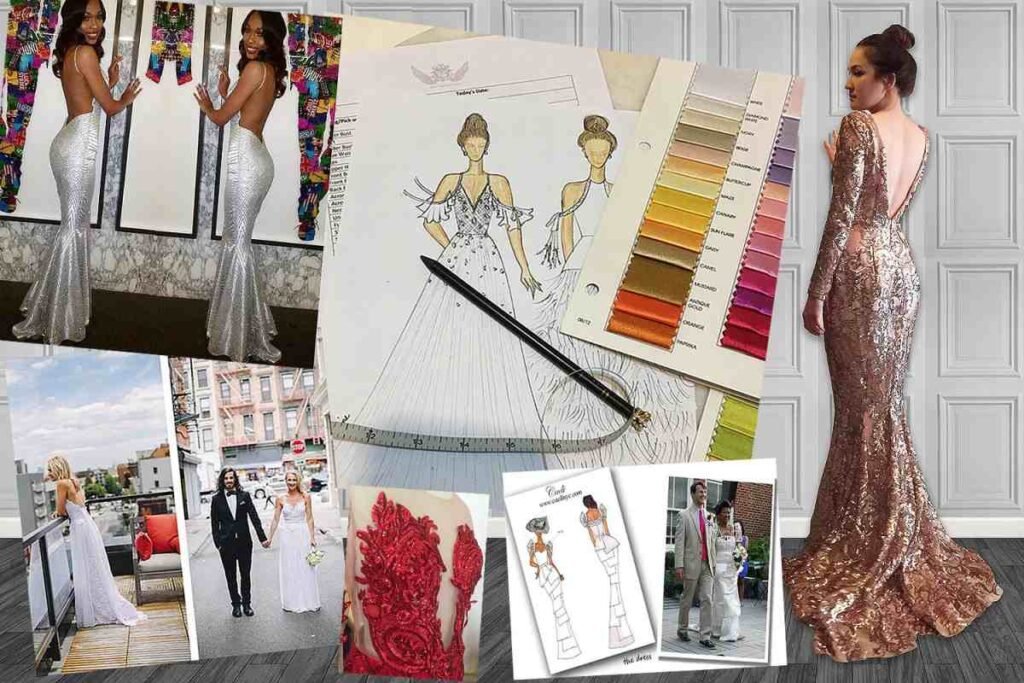
Design Detail Control Before Bulk Production
Design details must be translated into measurable, checkable and repeatable production standards.
Fashion dress quality depends on how well design details survive the move from concept to sample and from sample to bulk production. Duolan reviews design details before bulk work starts so production teams can understand not only what the dress should look like, but how each detail should be made and checked.
Important design details may include neckline depth, cup shape, strap width, back opening, waist seam position, slit height, cutout placement, drape direction, ruching density, lace placement, sequin coverage, hem shape, lining length, zipper position and label placement. These details need clear standards because they directly affect visual approval, fit balance and wearing comfort.
For multi-style orders, design detail control becomes more important. A 24-style occasion dress program may include satin slip dresses, corset minis, mesh midis, embellished party dresses, vacation maxis and fitted evening styles. Each style may require a different checklist. Duolan organizes key details by style and production stage, helping teams reduce repeated questions and avoid uncontrolled interpretation on sewing lines.
Detail Control Points
- Neckline, armhole and back opening
- Strap, cup and support structure
- Cutout, slit and waist seam placement
- Ruching, pleating and drape direction
- Lace, sequin, bead and trim layout
- Lining length and coverage
- Zipper, hook and closure position
Craft and Process Control for Fashion Dresses
Special processes need inspection standards for visual effect, durability, comfort and bulk repeatability.
Controlling Decorative and Structural Processes
Duolan has long experience in fashion dress development and decorative process execution. For brand dress programs, craft control often decides whether a style can move from sample approval to stable bulk production. Sequins, rhinestones, pearl applications, beadwork, embroidery, printing, tie-dye, washing, lace splicing, ruching, corset boning and special finishing all need clear process checks.
Decorative processes require more than visual approval. QC review may include placement accuracy, density, attachment strength, rubbing comfort, garment weight, seam bulk, production efficiency and repair possibility. Structural processes need another layer of control. Corset boning, bust cups, waist panels, lining, back closures and elastic parts affect wearing performance and must match approved sample standards.
Duolan works with mature fabric, trim, accessory and special process partners. Common resources include printing, tie-dye, embroidery and washing factories used for fashion dress programs. For complex styles, process feasibility can be reviewed before sample or PP approval, helping brand teams understand production risk, lead time impact and quality checkpoints earlier.
Process Review Points
- Printing, embroidery and washing effect
- Sequin, bead, pearl and rhinestone application
- Lace splicing and decorative placement
- Boning, cup and support construction
- Ruching, pleating and drape control
- Finishing, pressing and packing protection
- Repair method and defect handling


Inline Inspection During Bulk Production
Final inspection alone cannot protect a fast-moving dress program. When production reaches thousands of pieces per style, problems need to be found while work is still moving through cutting, sewing, finishing and packing. Duolan uses inline inspection logic to monitor key risk points during bulk production.
Inline checks may include fabric lot confirmation, cut panel review, first-piece approval, measurement sampling, seam quality, zipper operation, lining coverage, strap strength, trim placement, pressing marks and finishing condition. For fitted dresses, inline teams may focus on bust, waist, hip and length stability. For embellished dresses, review may include trim loss, inner comfort and seam bulk. For satin dresses, inspection may focus on surface marks, seam smoothness and pressing control.
For orders from 20,000 to 80,000 pieces, production discipline matters. When issues appear, records help teams confirm whether correction is needed at operator level, line level, fabric level, process level or packing level. Early review reduces avoidable rework and protects delivery schedules.
Inline QC Points
- First-piece review before wider production
- Cutting panel and fabric lot check
- Key measurement sampling
- Sewing and seam quality review
- Trim, zipper and lining inspection
- Pressing and finishing control
- Correction record and recheck status
Final Inspection and Packing Checklist
Final inspection should confirm garment quality, packing accuracy and shipment readiness.
From Finished Garment to Shipment Release
Final inspection confirms whether finished dresses meet approved standards before shipment preparation. For brand programs, final inspection should not only check garment defects. It should confirm product version, size ratio, colorway, label, barcode, packing method, carton mark and shipment readiness.
Duolan final review may cover appearance, measurement, workmanship, loose thread, stain, fabric damage, zipper operation, lining exposure, trim security, pressing, folding, polybag, hanger, carton ratio, quantity and client-specific packing instruction. For channel-sensitive orders, barcode and carton mark accuracy can be as important as garment finish because receiving errors may delay warehouse processing.
Packing control is especially important for fashion dresses. Satin may need folding and crease protection. Sequin garments may need pressure control and inner comfort protection. Corset or cup styles may need shape protection. Maxi dresses need length and hem handling. Duolan connects packing review with product type and shipping method, helping reduce presentation damage before goods leave the factory.
Final Control Points
- Appearance and workmanship review
- Measurement and size ratio check
- Label, hangtag and barcode confirmation
- Polybag, hanger and carton mark review
- Packing method based on dress type
- Quantity and shipment document alignment
- Third-party inspection coordination when required
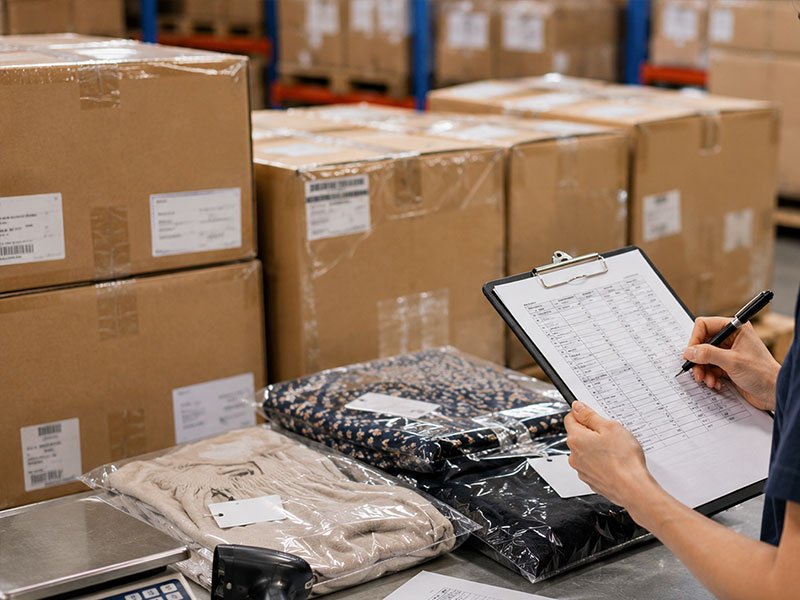
QC Evidence Brand Teams Can Review
Quality confidence grows when inspection work leaves clear visual and written records.
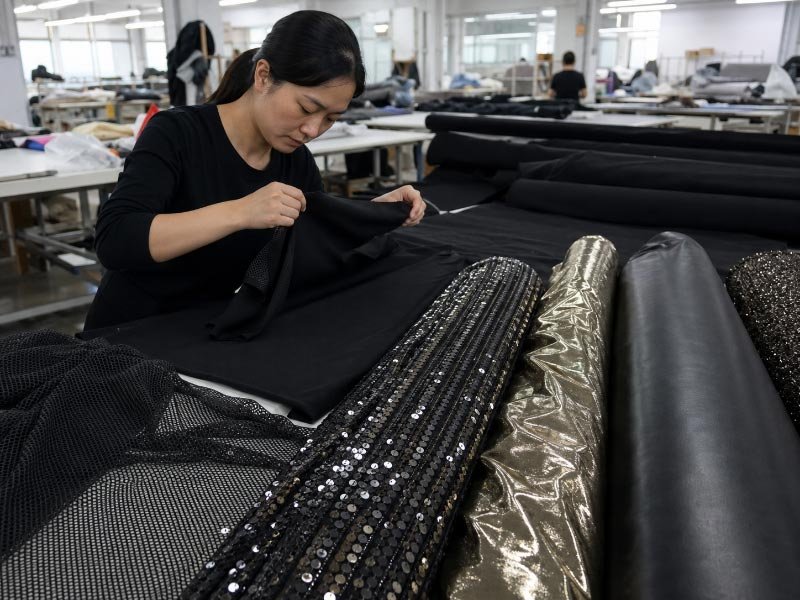
Fabric Inspection
Fabric inspection evidence may include shade review, roll condition, surface check, GSM reference, stretch review and fabric behavior notes. For dress programs, material evidence helps teams understand whether approved fabric direction can support fit, drape, coverage and bulk production needs.

PP Sample Review
PP sample evidence can include approved garment photos, measurement notes, workmanship comments, fabric lot confirmation, trim placement and packing decisions. Duolan uses PP standards to help sewing and QC teams understand what must remain consistent during bulk production.

Measurement Check
Measurement evidence may include size spec, tolerance record, key point sampling and review photos. For fitted and structured dresses, measurement records protect bust, waist, hip, length, strap and neckline control across sizes and colorways.

Inline QC
Inline QC evidence shows how production issues are monitored before final inspection. Records may include first-piece approval, sewing line findings, correction notes and recheck status. Early records support faster correction and reduce wider production impact.

Workmanship Check
Workmanship evidence may show seam finish, stitch quality, zipper placement, lining, hem, strap, trim attachment and pressing condition. These records help brand teams review visual finish and construction details before shipment approval.

Defect Record
Defect records classify issues by severity and location. Common records may include stains, broken thread, measurement deviation, zipper issue, seam pucker, trim loss, packing mark or label error. Clear records help correction work move faster.

Packing Check
Packing evidence confirms polybag, hanger, fold method, size sticker, barcode, hangtag, carton mark, packing ratio and carton condition. For dress programs, packing evidence protects product presentation and warehouse receiving accuracy.

Shipment Readiness
Shipment readiness evidence may include inspection summary, packing list, carton photos, product version check and final confirmation. For multi-style orders, organized records help teams manage launch timing and reduce avoidable shipment confusion.
Manufacturing System Behind QC
Quality control is stronger when development, production, inspection and delivery resources work together.
Owned Factories
Duolan is supported by 16 owned womenswear fashion factories. Core factories are used for key styles, development-sensitive programs and quality-controlled production paths. For brand teams, owned factory control helps protect sample interpretation, production discipline and communication efficiency during complex dress programs.
Satellite Factories
More than 20 long-term satellite garment factories support flexible capacity, repeat orders and production balancing. Satellite resources allow Duolan to match product complexity, volume and delivery timing more carefully, especially when a dress launch includes multiple silhouettes, fabrics and construction levels.
Regional Bases
Duolan’s broader manufacturing support extends across Guangxi, Guizhou, Sichuan and Jiangxi, with related supporting factory labor resources exceeding 12,000 people. Regional capacity helps manage seasonal pressure, replenishment programs and larger launch quantities without relying on one production point.
Sewing Lines
The manufacturing system includes around 300 garment sewing lines. A line-based structure supports production planning for fashion dresses, fitted styles, occasionwear, fashion sets and seasonal collections. QC coordination can be arranged around style risk, production stage and delivery schedule.
Quick Response Lines
More than 50 quick-response and flexible production lines support development-heavy and fast-moving programs. For brand teams managing frequent drops, quick-response capacity helps connect sample review, test production, repeat orders and bulk delivery under a more controlled production rhythm.
Sample Capacity
Monthly sample development capacity reaches approximately 15,000–35,000 pieces or sample rounds, supporting 3,000–8,000 style development and sampling workflows per month. High sample density helps Duolan manage collection development, revision work and PP standard preparation for multi-style dress programs.

Compliance and Inspection Support
Brand-level quality control often requires audit awareness, testing coordination and inspection documentation.
Supporting Standards Beyond Garment Appearance
For established fashion brands, supplier quality review often includes social audit records, testing coordination, product standards and client-specific requirements. Duolan’s factory system has completed SMETA audit and SMETA 2-Pillar audit, with a SMETA social audit record. Based on brand and market requirements, Duolan can coordinate work related to BSCI, ISO 9001, AATCC, ASTM, OEKO-TEX?, EN, China GB standards, GOTS-related material directions and specific client protocols.
Compliance support does not mean every garment automatically carries every certificate. Standards depend on fabric, trim, market, product type, testing scope and brand requirement. Duolan can help teams prepare related information, align inspection requirements, support testing communication and cooperate with third-party inspection when required.
For fashion dress programs, compliance and quality work often connect with labels, care instructions, fiber content, packaging, barcode, carton mark, restricted substance requirements, fabric testing and social responsibility review. Clear early communication helps reduce delays near shipment release.
Support Scope
- SMETA 2-Pillar audit foundation
- Social audit record support
- Brand-specific quality requirements
- AATCC, ASTM and EN coordination
- OEKO-TEX? and material-related review
- Third-party inspection cooperation
- Testing and documentation communication
Download Dress Manufacturing QC Checklist
Use a dress-focused checklist to prepare inspection points before supplier review or production planning.
What the Download Includes
Duolan can provide a dress manufacturing QC checklist framework for brand teams preparing supplier review, sample approval, PP sample confirmation, production control or final inspection planning. The checklist is designed for fashion dress programs rather than generic garment review only.
The downloadable checklist may help teams organize fabric inspection, trim approval, PP sample notes, measurement checkpoints, workmanship review, inline inspection, final inspection, packing verification and supplier evaluation questions. It is especially useful when managing multi-style programs with fitted dresses, satin dresses, mesh dresses, lace dresses, sequin dresses, party dresses, occasion dresses, resort dresses and fashion sets.
For a more accurate review, brand teams may share tech packs, reference samples, target size range, fabric direction, colorways, quantity plan, packing requirements and delivery window. Duolan can then evaluate quality control priorities, sample-to-bulk risks and production readiness based on real project information.
Checklist Sections
- Fabric and trim inspection
- PP sample review
- Fit and measurement control
- Workmanship and construction points
- Inline inspection checklist
- Final inspection checklist
- Packing and labeling review
- Supplier QC evaluation questions

QC Examples From Dress Projects
US Party Dress Program
A US party dress brand planned a 22-style launch covering bodycon minis, corset dresses, mesh midis and embellished going-out styles. Total order quantity reached about 48,000 pieces across five size ranges and multiple colorways. The main concern was sample-to-bulk consistency, especially stretch recovery, bust balance, zipper placement, lining coverage and measurement tolerance.
Duolan reviewed approved samples, fabric behavior, PP standards and inline checkpoints before bulk sewing advanced. The QC plan focused on bust, waist, hip, neckline depth, zipper operation, trim security and final packing presentation. Inline inspection records helped correct seam tension and measurement variation early. Final review confirmed size ratio, label placement, carton marks and packing accuracy before shipment release.
UK Occasionwear Collection
A UK occasionwear brand developed an 18-style satin and lace dress collection with about 32,000 pieces for a seasonal launch. The collection included satin slip dresses, lace midis, ruched minis and structured evening silhouettes. The main risks were satin seam pucker, surface marks, lace placement, lining shade, hem balance and packing crease control.
Duolan organized fabric and trim review before cutting, then used PP sample notes to guide sewing lines. QC checks focused on seam smoothness, pressing marks, lining coverage, lace edge finish, zipper alignment and final garment presentation. Packing control included folding method, polybag size and carton pressure review. The final inspection process helped protect garment appearance for retail and online product presentation.
Australian Resort Dress Drop
An Australian fashion brand prepared a resort dress drop with 26 styles and about 64,000 pieces, including vacation maxis, lightweight woven dresses, halter styles, printed midis and fashion sets. The production challenge came from multiple fabrics, many colorways, different lengths and channel-specific packing requirements.
Duolan reviewed material records, color standards, print placement, size specs, PP samples and packing instructions before production planning. Inline QC focused on print alignment, strap strength, hem level, side seam stability, label accuracy and colorway separation. Final packing review covered barcode, size sticker, carton ratio and style version. QC records supported later reorder preparation and reduced confusion across repeat production.
Quality Inspection Frequently Asked Questions
A garment QC checklist is a structured inspection document used to review fabric, trims, measurements, workmanship, labeling, packing and shipment details against approved product standards. For dress manufacturing, it should also cover fit, drape, support, lining, decorative processes and sample-to-bulk consistency.
A dress QC checklist should include fabric review, trim approval, PP sample standard, measurement points, fit comments, workmanship details, lining coverage, zipper and strap checks, defect classification, inline inspection, final inspection, packing method, label accuracy and shipment readiness.
Yes. Fabric review may include shade, surface condition, GSM reference, stretch direction, recovery, opacity, drape, handfeel and lining match. Fabric behavior is especially important for satin, mesh, lace, stretch knit, velvet, chiffon and fitted dress silhouettes.
Duolan reviews approved samples and PP samples with attention to fabric lot, color, trims, measurements, fit comments, construction details, workmanship, labels and packing method. Important details are translated into production notes and QC checkpoints before bulk work begins.
Yes. Inline inspection may cover first-piece review, fabric lot, cutting panels, key measurements, seam quality, zipper operation, lining coverage, trim placement, pressing and finishing. Early checking helps identify issues before they spread across large production quantities.
Final inspection may include appearance review, measurement check, workmanship review, loose thread, stains, fabric damage, label placement, barcode, hangtag, polybag, carton mark, packing ratio, quantity and client-specific requirements before shipment preparation.
Yes. Duolan can cooperate with third-party inspection requirements when requested by brand teams. Inspection preparation may involve product records, packing list, approved sample reference, measurement sheet, cartons, labels, barcodes, shipment information and quality documents.
Quality issues can be recorded by severity, location, style, production stage and correction status. Common categories include critical defects, major defects, minor defects, measurement deviation, workmanship issue, fabric issue, trim problem, packing error and labeling error.
Duolan reviews dress-specific risks according to silhouette, fabric and construction. Satin needs surface and seam control. Bodycon needs stretch and opacity review. Corset needs support checks. Mesh needs coverage review. Sequin dresses need trim security and comfort checks.
Useful files include tech packs, reference images, original samples, fabric direction, colorways, size specs, measurement tolerance, quantity plan, label files, packing instructions, inspection standard, delivery window and any previous quality concerns from similar production.

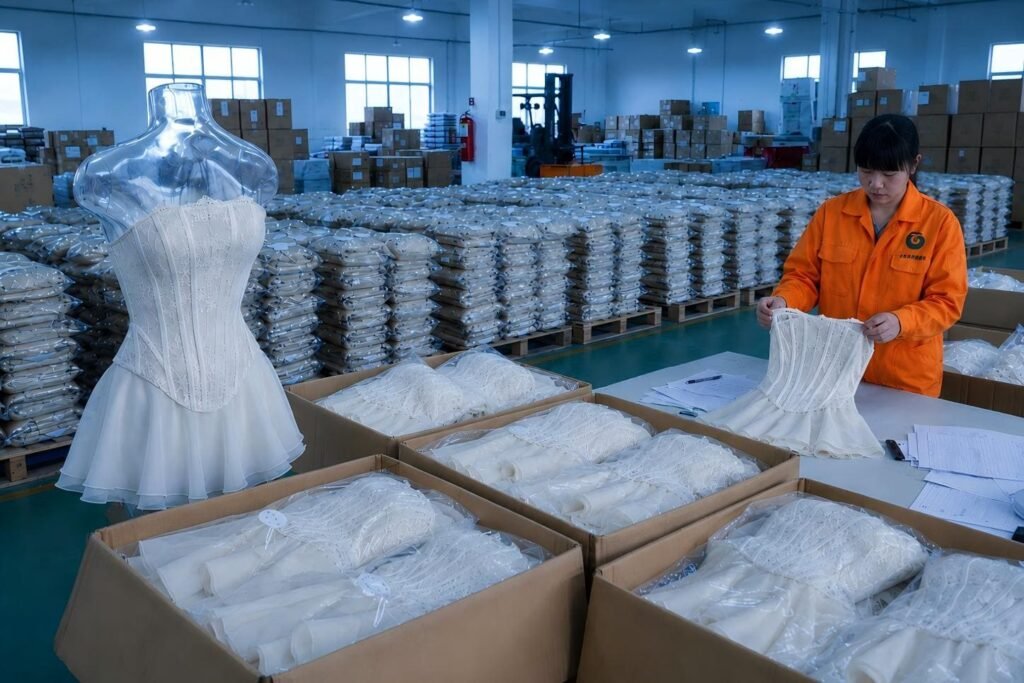
Send Your QC Review Request
Duolan helps fashion brands prepare quality control plans for dress development, PP sample approval, bulk production and shipment readiness. Share your product files and quality requirements with our team, and we can review the key inspection points for fabric, fit, workmanship, construction, labeling, packing and production risk.
For a clearer QC review, please prepare:
- Product type and target market
- Tech pack, reference image or original sample
- Fabric direction, colorways and trim details
- Size range, measurement sheet and tolerance
- Target quantity and delivery window
- PP sample, inspection or packing requirements
- Label, hangtag, barcode and carton mark files
- Previous quality issues or special risk points
Duolan is better suited for brand teams with defined product development needs, production plans and long-term supply goals. Our team can help organize a dress-focused QC checklist for your project before sampling, production or shipment inspection.

