...

Dropshipping Service for Fashion Dress Brands

Manufacturer-backed dress development, private label preparation, launch-order production and shipment coordination for established fashion teams.

Duolan supports women’s fashion brands that need more than a catalog-based dropshipping supplier. We help dress-focused teams move from design direction to sample review, controlled production, private label preparation, packing discipline, warehouse handoff and repeat-order support.

  • Dress-focused womenswear development and manufacturing
  • Private label, hangtag, care label and packing support
  • Launch-order production for multi-style dress programs
  • Shipment coordination for warehouse, forwarder or 3PL delivery
  • Reorder support after sales feedback and style validation

What Dropshipping Service Means for Fashion Brands

Common Dropshipping ModelRisk for Fashion BrandsDuolan Brand-Level Support
Catalog products with limited changeSimilar styles appear across many stores, reducing brand identity and collection valueCustom dress development from tech pack, reference image, original sample or collection brief
App-based product listingProduct control stays weak when fit, fabric, lining and workmanship are not reviewed before launchSample review, fit comments, fabric matching and production-readiness checks before order planning
Random direct shipmentLabel, packing, SKU and carton information may not match warehouse or brand requirementsPrivate label preparation, packing list support, carton marks and shipment documentation
Price-first sourcingLow control over fabric batch, workmanship, size consistency and repeat-order stabilityFabric and trim evaluation, PP sample reference, inline QC and pre-shipment review
No structured reorder pathA winning style becomes difficult to repeat with the same fit, fabric and finishing standardReorder production support, material reference records, style data preservation and production coordination

Built for Serious Fashion Teams

Duolan fits teams with clear product direction, launch calendars, style volume, private label needs and long-term supply expectations.

Established Ecommerce Brands

Ecommerce fashion teams often need a supply route that lowers inventory pressure without weakening brand control. Duolan helps teams plan dress styles, sample purpose, launch quantities, packing rules and reorder paths before production begins. The focus is not random item listing, but controlled dress programs with clear color, size, fabric, label and shipment requirements. Teams with regular drops, campaign launches or repeat styles can use Duolan to connect product development with production planning.

Buying Teams

Procurement teams need suppliers that can read product files, understand style risk, organize samples, lock standards and coordinate bulk delivery. Duolan supports teams reviewing multiple dress styles across mini, midi, maxi, party, occasion, fitted, satin, mesh and sequin directions. The working process can include fabric review, sample comments, PP sample approval, size control, packing confirmation and shipment arrangement, helping procurement teams reduce avoidable uncertainty before placing larger seasonal orders.

Product Teams

Product development teams care about design intention, fit priority, fabric behavior and construction feasibility. Duolan can start from a tech pack, reference image, original sample, moodboard or fabric direction, then turn incomplete development inputs into clearer sampling routes. For dress programs involving support structure, stretch recovery, lining coverage, drape, transparency, sequins, lace or special finishing, Duolan helps identify technical points before sample and production decisions become costly.

Sourcing Offices

Sourcing offices need manufacturers that can support supplier evaluation, multi-style order planning, quality checkpoints and shipment coordination. Duolan’s factory network and project teams are suited for fashion dress programs that require organized development, production discipline and repeat cooperation. Support can include supplier capability details, sample route discussion, production capacity planning, QC communication, private label packaging review and export shipment coordination with nominated forwarders or 3PL warehouses.

Dropshipping-Ready Supply Support

Duolan connects custom dress development with private label preparation, controlled production, shipment planning and repeat-order support.

Development Review

Duolan reviews design files before sampling to check whether the style direction can become a production-ready dress. Project materials may include tech packs, reference images, original samples, fabric ideas, size charts, moodboards, target retail positioning and launch dates. The review focuses on silhouette, support, fabric behavior, lining, trim use, construction difficulty, expected quantity and future production route. The goal is to avoid treating dropshipping as a simple product-upload activity.

Sample Development

Samples are used as decision tools for fashion teams. Duolan can support first proto, fit sample, revised sample, salesman sample and pre-production sample according to project stage. For dresses, sample review may cover bust balance, waist position, hem fall, strap length, zipper placement, side seam stability, lining coverage, fabric transparency and overall visual effect. Better sample control helps teams prepare launch orders with fewer unknown risks.

Private Label Prep

Duolan can prepare private label details around brand presentation and warehouse handling. Support may include woven labels, care labels, hangtags, size stickers, barcode labels, poly bags, carton marks and packing lists according to the project requirement. For fashion dress programs, private label preparation affects more than appearance. It also supports SKU tracking, channel receiving, return identification, inventory management and brand experience after the garment leaves the factory.

Launch Orders

A launch order should connect product testing with brand control. Duolan can help brands plan style count, color range, size ratio, packing method, inspection points and shipment timing for multi-style dress programs. Instead of pushing random inventory, the launch route can be built around sample approval, material confirmation, target market, planned sales window and future reorder potential. Typical brand programs often include 10–30 styles per development cycle.

Shipment Coordination

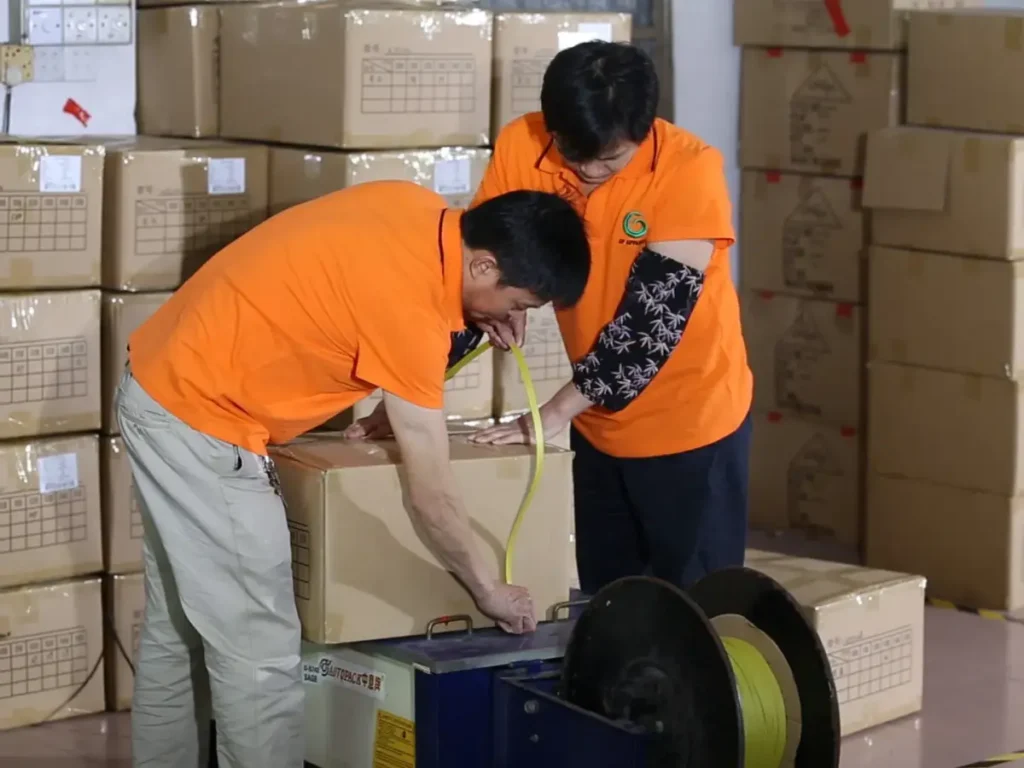
Dropshipping-related supply support often requires shipment discipline. Duolan can coordinate sample shipment, bulk carton information, split shipment planning, packing list preparation and handoff to a nominated forwarder, warehouse or 3PL partner. Common delivery options may include express, air freight and sea freight according to schedule, quantity and destination. Export shipment planning should be discussed together with packing rules, SKU structure and launch calendar.

Reorder Support

Reorders require more control than first orders because the market already approved a style. Duolan can help preserve style information, material references, size specifications, workmanship notes, label rules and packing standards for repeat production. For winning dresses, reorder planning may include same-style replenishment, color extension, size-ratio adjustment, seasonal fabric replacement or larger quantity allocation. This support helps brands maintain consistency across sales cycles.

Fashion Dress Categories We Support

Each dress category needs a different development route, fabric judgment, workmanship control and launch-order plan.

Mini Dresses

Mini dresses work well for fast-moving fashion drops, party edits and social campaign launches, but small length tolerance can quickly change the wearing effect. Duolan reviews body length, hem balance, side seam shape, strap placement, fabric recovery and lining coverage before production planning. For mini dress launch orders, attention should also go to size grading, packaging fold marks and short-length visual proportion across XS–XL or brand-specific size charts.

Midi Dresses

Midi dresses usually require stronger control over drape, waist position, skirt fall and walking comfort. Duolan evaluates fabric weight, skirt width, slit position, zipper placement, lining length and hem finishing before moving into launch-order production. For ecommerce brands, midi dresses often need stable visual presentation across campaign shooting, website product photos and consumer delivery. Proper sample review helps prevent the garment from looking elegant on the hanger but heavy or unbalanced on the body.

Maxi Dresses

Maxi dresses bring higher fabric consumption, longer seams and greater packing sensitivity. Duolan reviews fabric drape, body proportion, hem length, side seam twist, lining weight, print placement and carton packing method. For resort, vacation and occasion programs, maxi dresses may also require light fabric, soft movement and clean finishing after long-distance shipping. Launch planning should consider colorways, size ratios, hanger or folded packing and warehouse receiving requirements.

Party Dresses

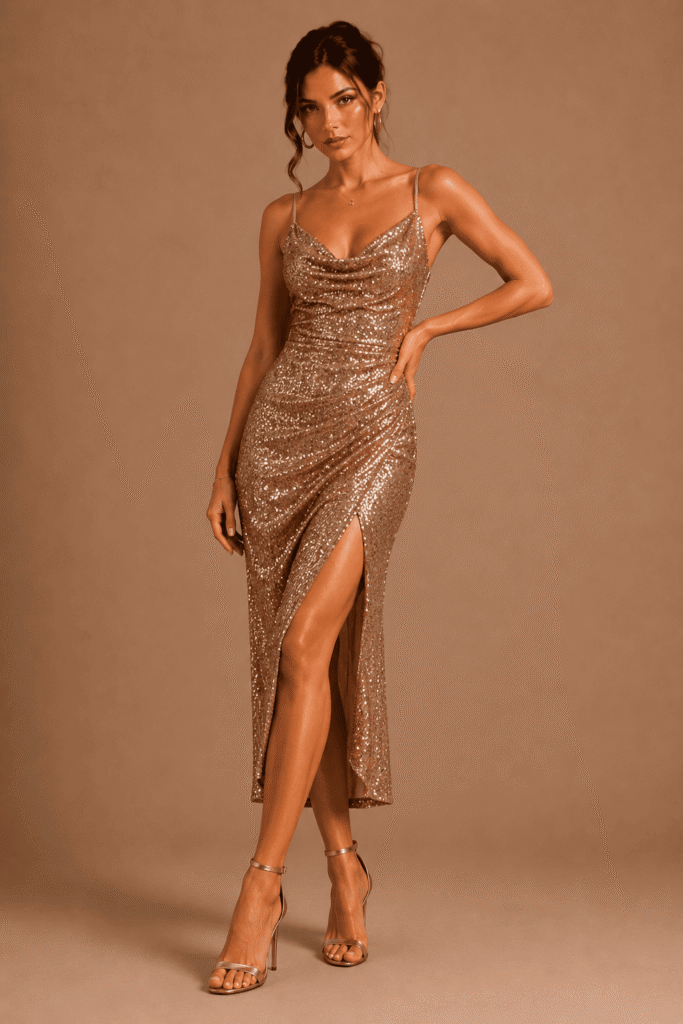
Party dresses often depend on immediate visual impact, so design details, fabric shine, body fit and finishing consistency matter heavily. Duolan supports styles with satin, mesh, sequins, lace, rhinestones, pearls, pleats, cutouts and fitted silhouettes. Review points can include bust support, zipper comfort, lining softness, embellishment security and seam cleanliness. For multi-style party programs, Duolan helps balance trend speed with production control, especially when orders include 10–30 styles.

Occasion Dresses

Occasion dresses require a more elevated finish than everyday fashion items. Duolan reviews silhouette, lining, neckline stability, bust balance, waist shaping, hem finish, decorative trim density and packaging presentation. For event-driven launches, teams often need reliable sample review, approved PP standards and delivery planning before the selling window. The category is suitable for brands planning seasonal capsules, wedding guest edits, holiday edits, graduation styles or evening-focused fashion drops.

Going Out Dresses

Going out dresses need strong commercial appeal, body fit and fabric confidence. Duolan helps review stretch level, opacity, seam placement, strap strength, neckline security and movement comfort before order planning. Styles may include bodycon, ruched, cutout, halter, backless, mesh-panel, satin or embellished directions. For ecommerce selling, going out dresses should look sharp in product photography and remain wearable after packing, shipping and consumer try-on.

Vacation Dresses

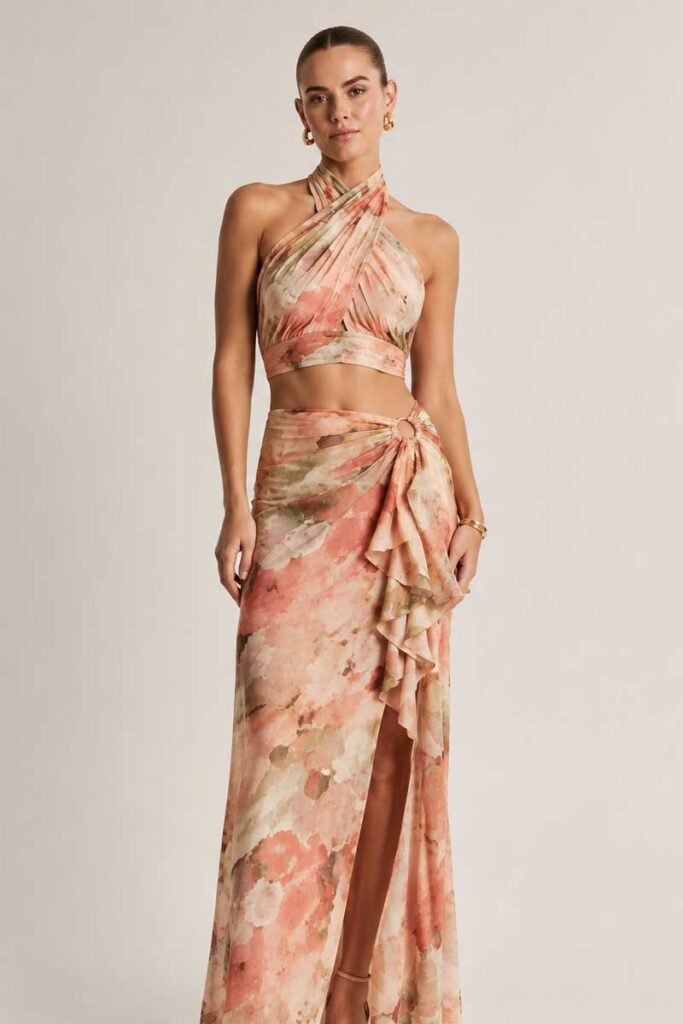
Vacation dresses usually need lighter fabrics, clean movement, soft touch and easy packing recovery. Duolan can support resort-inspired silhouettes, printed dresses, halter styles, lightweight maxis, summer minis and matching fashion sets. Review points include fabric transparency, color fastness direction, print placement, shoulder tie strength, hem control and folded-packing marks. For brands using warehouse or 3PL distribution, packaging should protect presentation without adding unnecessary bulk.

Bodycon Dresses

Bodycon dresses require close fit, stretch recovery and size accuracy. Duolan reviews fabric weight, elasticity, recovery, opacity, seam tension, waist shaping and hem curling risk. Poor fabric selection can make a bodycon dress look transparent, loose after wear or uncomfortable at movement points. Duolan’s pattern and sample review helps brands control body contour, bust balance, waist compression, skirt fall and grading logic before launch-order production.

Satin Dresses

Satin dresses need special attention to shine, drape, needle marks, seam puckering, lining and packing pressure. Duolan checks fabric weight, hand feel, bias behavior, seam finish, zipper area, pressing method and fold position. A satin dress can look premium or cheap based on tiny workmanship differences. For launch orders, Duolan helps brands review sample appearance, bulk fabric consistency, lining coverage and packaging method before warehouse shipment.

Mesh Dresses

Mesh dresses require control over transparency, stretch, print placement, lining, edge finish and skin comfort. Duolan reviews mesh weight, elasticity, recovery, color effect, inner layer coverage and seam construction before sampling and bulk planning. For mesh-panel or fully lined designs, the relation between outer mesh and lining decides the final visual balance. Proper development review helps reduce risks in fit, opacity, neckline stability and body movement.

Sequin Dresses

Sequin dresses require attention to weight, hand feel, skin contact, falling sequins, seam bulk and needle handling. Duolan reviews sequin density, backing fabric, lining softness, seam trimming, zipper area, underarm comfort and packing protection. For partywear and occasion programs, sequin styles can create strong sales value, but poorly controlled production may create scratching, loose decoration or inconsistent surface appearance. Bulk planning should lock workmanship standards early.

Fashion Sets

Fashion sets need coordination across top and bottom proportions, fabric batch, color consistency, size pairing and packing structure. Duolan can support two-piece dress alternatives, crop top and skirt sets, vacation sets, party sets and refined fashion tops paired with skirts. Development review should cover body balance, waistband comfort, fabric recovery, hanger presentation and set-level SKU organization. For ecommerce teams, sets often need clear packing and labeling rules to avoid warehouse mismatch.

Start from Your Development Materials

Duolan can begin from different project inputs, then organize them into a controlled dress development route.

Tech Pack and Size Specification

A complete tech pack gives Duolan the clearest development basis, especially for multi-style dress programs. Our team reviews garment sketch, measurement table, grading rule, BOM, stitching details, label position, fabric information, trim requirement, artwork files, packaging notes and target market. For fitted dresses, size specification requires more attention because small measurement changes around bust, waist, hip, strap length, bodice height or skirt length can change the wearing result.
  • Measurement logic: bust, waist, hip, body length, strap length, neckline drop and hem width are checked against dress category and fabric behavior.
  • Construction review: zipper position, lining coverage, elastic tunnel, boning, cup shape, seam allowance and slit height are assessed before sampling.
  • Development output: missing information, risk points, sample route and quotation basis can be clarified before the first sample begins.

Reference Images and Original Samples

Many fashion teams start from reference images, campaign inspiration or an original sample. Duolan can translate visual direction into development questions before making a sample. We review silhouette, fabric possibility, body proportion, neckline structure, back view, closure method, lining, decorative detail and production difficulty. When an original sample is provided, we can check measurement, fabric, workmanship, seam placement, trim construction and possible changes for the new market or brand standard.
  • Visual translation: design images are converted into garment structure, fabric direction and workmanship requirements.
  • Sample analysis: original samples can be measured and reviewed for fit, construction and production feasibility.
  • Brand adaptation: neckline, length, lining, fabric, color and decoration can be adjusted to match the intended collection direction.

Collection Brief and Launch Calendar

For dress programs with 10–30 styles, Duolan reviews collection logic before development begins. A useful brief may include occasion direction, target consumer profile, sales channel, color story, target retail price, fabric direction, expected quantity, campaign date and delivery window. This information helps organize which styles need first proto, fit sample, salesman sample or PP sample. A launch calendar also helps align sample timing, fabric booking, production planning and shipment preparation.
  • Style grouping: mini, midi, maxi, fitted, satin, mesh, sequin and occasion styles can be grouped by complexity.
  • Time control: simple and complex styles should not share the same sample expectation.
  • Production planning: launch quantity, reorder potential and shipment route are reviewed before bulk commitment.

Fit Control for Dress Programs

Dress-focused manufacturing needs pattern judgment, fabric response review and sample correction before launch-order production.

Body Balance and Silhouette Control

Fashion dresses sell through shape. A garment may match a reference image on the table but fail after wearing if bust balance, waist position, hip ease, strap length or skirt fall is not controlled. Duolan reviews the relationship between body measurement, pattern shape and fabric behavior during sample development. For fitted, party, occasion, halter, backless and corset-inspired dresses, pattern work must support the intended visual result without creating discomfort or production instability.
  • Bust balance: cup position, neckline security, strap tension and front-body height are checked for visual and wearing stability.
  • Waist shaping: waist seam, side seam curve, dart position and panel division affect body contour.
  • Skirt fall: fabric weight, grain direction, hem width and slit position influence movement and product photos.

Fabric-Based Pattern Adjustment

The same pattern does not behave the same in satin, jersey, mesh, crepe, lace or sequin fabric. Duolan evaluates pattern adjustments according to stretch, drape, recovery, thickness, transparency, surface texture and lining requirement. For bodycon dresses, negative ease and recovery need review. For satin dresses, seam tension and bias movement matter. For mesh dresses, lining and stretch balance change the fit result. For sequin dresses, seam bulk and backing stiffness affect comfort and shape.
  • Stretch fabrics: recovery, transparency and seam tension influence size stability.
  • Draped fabrics: weight, bias behavior and hem control influence visual movement.
  • Decorative fabrics: sequins, lace or pearls require seam allowance and lining planning.

Fit Comment Translation

Brand teams often send comments such as “raise neckline,” “more snatched waist,” “reduce hip tightness,” “make skirt fall softer,” or “improve bust support.” Duolan converts these comments into pattern, fabric, construction and sample revision actions. Fit correction should not become random alteration. Every change should connect with measurement, garment balance, material behavior and future bulk production. Clear revision notes help prevent the same issue from returning during PP sample or bulk production.
  • Comment mapping: each fit comment is connected with pattern, measurement or construction change.
  • Revision record: sample changes are documented for internal review and bulk reference.
  • Bulk transition: approved fit details are preserved before production order begins.

Fabric Control Before Market Launch

Duolan reviews fabric, trim, lining and decorative materials according to dress effect, fit and production stability.

Satin, Crepe and Chiffon Review

Soft woven dresses depend heavily on fabric behavior. Satin may create strong visual value, but it can show needle marks, seam puckering, pressing marks and packing creases. Crepe can offer better structure, but weight and texture affect drape. Chiffon can support vacation and occasion looks, but transparency, lining and seam finish require early planning. Duolan reviews fabric weight, hand feel, drape, shrinkage direction, color consistency, lining need and bulk availability before sample and launch-order planning.
  • Satin: review shine level, seam tension, lining, pressing and folding method.
  • Crepe: review body, recovery, texture and hem behavior.
  • Chiffon: review transparency, lining color, seam finish and movement.

Jersey, Mesh and Stretch Fabric Review

Fitted and going out dresses often use jersey, mesh, rib, stretch lace or elastane-blend materials. These fabrics require testing around stretch direction, recovery, opacity, seam strength and size stability. A fabric may feel good in hand but become transparent on the body or lose shape after wear. Duolan reviews fabric GSM where provided, stretch ratio, color, recovery, lining, elastic trim and sewing method before confirming sample direction. Proper review helps avoid fit collapse after launch.
  • Jersey: check weight, recovery, rolling edge and body hold.
  • Mesh: check transparency, lining, print position and seam stability.
  • Stretch lace: check pattern direction, skin comfort and recovery.

Decorative Trim and Lining Control

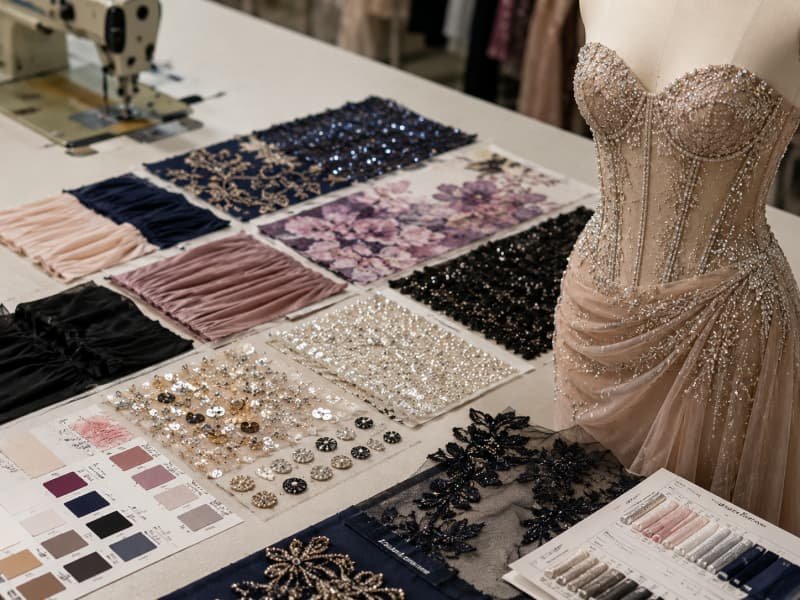
Trims can improve brand value or create production risk. Sequins, pearls, rhinestones, lace trims, zippers, hooks, elastic, boning, cups and lining materials must match the dress structure and target channel. Duolan reviews trim density, placement, sewing method, comfort, color matching, washing consideration and packing protection. For party and occasion dresses, lining often decides comfort and perceived quality. Incorrect lining may make a beautiful dress scratchy, transparent, heavy or difficult to wear.
  • Decorative materials: review density, weight, attachment method and skin contact.
  • Functional trims: review zipper quality, elastic recovery, hook strength and boning placement.
  • Lining: review softness, coverage, color, static risk and movement.

Workmanship Details That Protect Brand Value

Small construction details decide whether a dress can move from sample approval to repeatable production.

Seams, Hems and Pressing

Dress workmanship requires clean seams, stable hems and controlled pressing. Duolan reviews seam type, stitch density, seam allowance, edge finish, hem width, pressing temperature and fabric reaction. Satin needs gentle handling to avoid shine marks and puckering. Mesh and chiffon need careful seam finish to reduce distortion. Bodycon fabric needs stitch control to protect stretch. Sequin and embellished fabrics require trimming around seams to reduce bulk and skin irritation.
  • Seam control: stitch selection and tension should match fabric and movement.
  • Hem control: hem width and finishing method affect drape, length and appearance.
  • Pressing control: pressing method must match fabric sensitivity and packing route.

Zippers, Straps and Closures

Closure details affect wearing experience and return risk. Duolan reviews zipper type, zipper tape color, top stop, puller finish, hook and eye, strap length, elastic quality, tie strength, button security and back opening stability. For fitted and occasion dresses, zipper placement needs special attention because it can affect body curve, comfort and seam flatness. For halter and backless styles, straps and ties must hold shape without twisting or pulling fabric out of balance.
  • Zipper areas: review seam flatness, tape strength, color matching and body comfort.
  • Strap points: review placement, length tolerance, strength and visual balance.
  • Closure security: review hook, tie, elastic or button details before bulk.
Decoration Attachment Standards

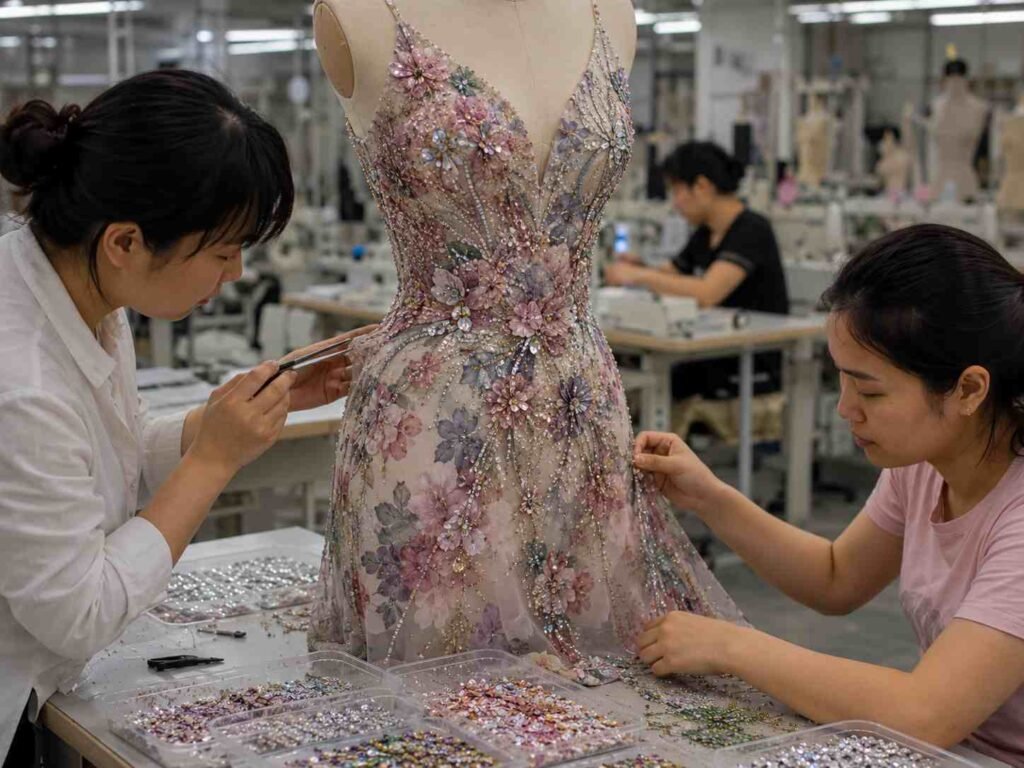
Party and occasion styles often include sequins, rhinestones, pearls, beads, lace applique or embroidery. Duolan reviews decoration layout, density, stitch method, loose end control, backing comfort and bulk repeatability. Decoration should not only look attractive in sample photos; it must remain stable during packing, shipping, try-on and wear. For bulk production, decoration placement and density should be clearly referenced, especially when several factories or production lines are involved in a seasonal program.
  • Placement control: decoration position should match pattern pieces and body proportion.
  • Comfort control: backing, lining and seam trimming reduce scratching.
  • Bulk repeatability: approved sample and workmanship notes guide production teams.

Special Processes for Fashion Dresses

Decorative processes must be reviewed for visual effect, comfort, production stability and shipment protection.

Sequin Work

Sequin dresses need control over sequin density, backing fabric, seam bulk, lining softness and falling risk. Duolan reviews whether the sequin material fits the dress silhouette, target price range and wearing scenario. During production planning, seam areas, zipper placement, underarm zones and hem finishing deserve extra attention. For shipment, packing should reduce surface friction and pressure marks while keeping each garment organized by style, color and size.

Rhinestone Work

Rhinestone details can add strong partywear value, but placement, adhesive method, heat setting, fabric compatibility and packing pressure need review. Duolan checks whether rhinestones support the design direction without creating excessive stiffness or discomfort. For launch-order production, approved placement references and inspection points help reduce missing stones, uneven sparkle and inconsistent layout across pieces. Packing should protect decorated areas from abrasion during carton movement.

Pearl Decoration

Pearl decoration works well for occasion, party and evening-inspired dresses, but weight, attachment strength, backing comfort and layout consistency matter. Duolan reviews pearl size, spacing, thread or setting method, fabric support and lining need before production. Dense pearl areas may require reinforcement or changed seam construction. For brand programs, pearl decoration should be assessed early because it influences sample time, production speed, inspection workload and packing protection.

Embroidery

Embroidery can support logo details, decorative motifs, lace-like panels or refined surface textures. Duolan reviews artwork file, stitch density, thread type, color matching, backing method, fabric stability and placement tolerance before sampling. Stretch fabric, mesh and thin woven materials need special assessment because embroidery can distort the fabric if density is too high. For bulk production, embroidery standards should be locked with approved sample, thread record and placement reference.

Printing

Printing may include placement print, all-over print, heat transfer, screen print or digital print depending on fabric and style direction. Duolan reviews artwork scale, color target, fabric composition, print hand feel, stretch behavior, washing requirement and bulk consistency. For dresses, print placement around bust, waist seam, side seam and hem can change visual proportion. Lab dip, strike-off or print sample may be required before production confirmation.

Pleating

Pleating affects shape, movement and perceived quality. Duolan reviews pleat width, fabric memory, heat setting, waist construction, lining relation and packing recovery. Lightweight fabrics may create elegant movement, while heavier fabrics may lose softness or create bulky seams. For launch-order planning, pleated styles should be assessed for sample lead time, production handling and packaging method. Folded packing should not crush the pleat effect before warehouse arrival.

Lace Application

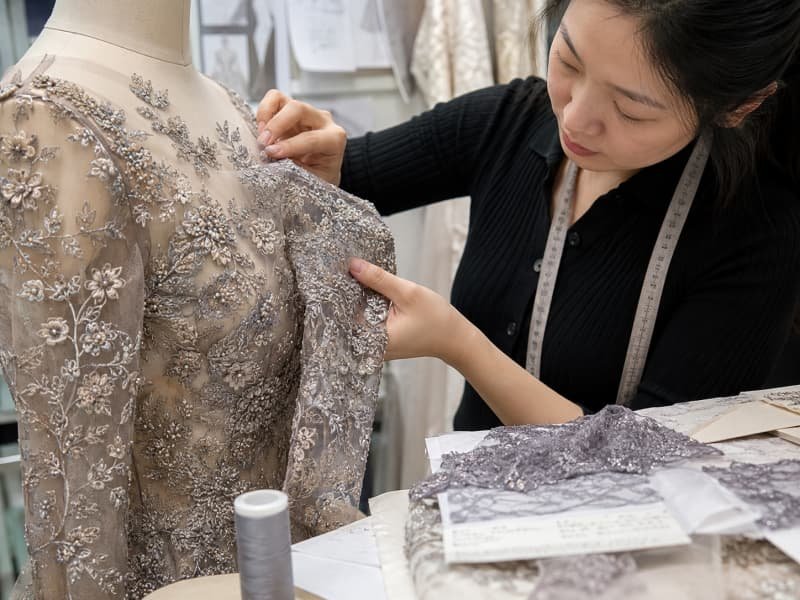
Lace can appear as full fabric, trim, panel, applique or neckline detail. Duolan reviews lace scale, stretch, edge finish, skin comfort, lining, motif placement and seam matching. For occasion dresses, lace quality and placement strongly affect premium appearance. For bulk production, lace direction, cutting loss and motif matching should be reviewed early. Incorrect lace planning may increase material usage, production difficulty and inspection pressure.

Washing and Finishing

Some fashion dresses or sets require washing, softening, garment dye effect or final finishing. Duolan reviews fabric shrinkage, colorfastness direction, hand feel, seam reaction and size stability after finishing. Washing or finishing can improve softness and appearance, but uncontrolled processes may change measurement or color. For repeat production, finishing standards should be recorded and controlled so reordered styles remain close to the approved reference.

Private Label Preparation for Fulfillment

Brand-ready supply requires label accuracy, packing discipline, carton information and warehouse-readable shipment preparation.

Woven Labels

Woven labels carry brand identity and must be prepared with correct logo artwork, size, background color, thread color, fold type and sewing position. Duolan can coordinate woven label placement according to dress structure, such as back neck, side seam, waistband or special label area. For bulk production, label quality should match garment positioning, and placement should remain consistent across styles, colors and sizes.

Care Labels

Care labels require accurate fiber content, care symbols, origin information, size information and market-specific wording when provided by the brand. Duolan can prepare sewing position and label attachment according to garment construction. For lined dresses, fitted dresses or mesh styles, care label placement should avoid discomfort and visibility issues. Before production, label information should be confirmed together with fabric composition and legal requirements from the target market.

Hang Tags

Hangtags support retail presentation and brand communication. Duolan can coordinate hangtag material, string type, logo print, barcode area and attachment position. For warehouse or ecommerce handling, hangtag placement should not damage delicate fabrics such as satin, mesh, chiffon, lace or sequin materials. For multi-style dress programs, hangtag information should be matched with style code, color, size and SKU reference to reduce packing mistakes.

Size Stickers

Size stickers help warehouses, pick-pack teams and retail teams identify garments quickly. Duolan can prepare size stickers according to size system, packaging position and SKU rules. For dress programs with XS–XL, numeric sizes or market-specific grading, size sticker accuracy directly affects receiving and fulfillment. Size stickers should be reviewed with poly bag layout, barcode labels and packing list before production shipment.

Poly Bags

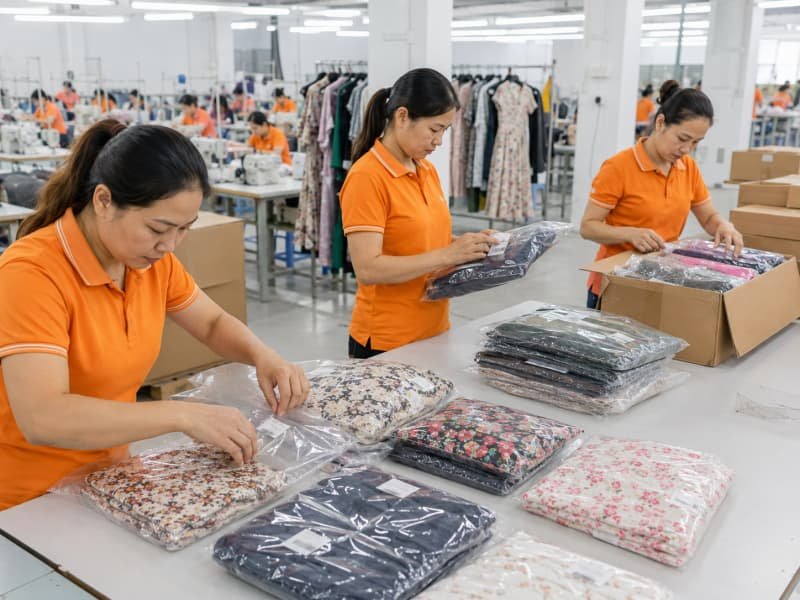
Poly bags protect garments and support warehouse handling. Duolan can prepare bag dimensions, logo print, warning wording, ventilation holes, resealable options or barcode label areas according to brand requirement. For satin, sequin, lace or embellished dresses, bag size and folding method matter because pressure marks or decoration friction can affect product presentation. Packing method should be tested before bulk shipment when fabric is sensitive.

Barcode Labels

Barcode labels connect production packing with inventory receiving. Duolan can apply barcode labels to poly bags or cartons according to warehouse and channel requirements. Teams should provide SKU data, barcode files, style code, color code, size code and placement rule before packing. Accurate barcode labeling helps 3PL warehouses receive, store and process garments with fewer manual corrections after arrival.

Carton Marks

Carton marks support shipping, warehouse receiving and order control. Duolan can prepare carton information such as style number, color, size, quantity, carton number, gross weight, net weight, carton measurement and destination when required. For split shipments or multiple warehouses, carton marks must be organized carefully to avoid receiving confusion. Carton marking should be confirmed before final packing begins.

Packing Lists

Packing lists help connect production completion with shipment handoff. Duolan can prepare packing details by style, color, size, carton count and quantity according to project arrangement. For multi-style dress programs, packing list accuracy is especially important because one order may include 10–30 styles and 20,000–80,000 garments. Clear packing records support warehouse receiving, logistics tracking and reorder review.

From Sample to Launch Order

A controlled launch route connects development review, sampling, PP confirmation, production planning and shipment preparation.

Brief Review and Feasibility Check

Duolan starts by reviewing style complexity, fabric direction, target market, quantity expectation, launch window, label needs and shipment route. For dress projects, feasibility review may cover neckline structure, bust support, waist fit, stretch level, lining, trims, decoration, print placement and bulk production stability. A clear review helps decide whether the style should start from first proto, fit sample, revised sample or PP sample. It also helps teams avoid rushing into production before key product risks are known.
  • Development basis: tech pack, reference image, original sample or collection brief.
  • Risk review: fabric, fit, construction, decoration, packing and delivery timing.
  • Output: sample route, missing information list and next action plan.

Sample Development and Revision

Sample development is the first operational test of a dress program. Duolan can develop samples according to product complexity and available project materials. Simple styles may move faster, while satin, mesh, sequin, corset-inspired, heavily embellished or special-process dresses require more review time. After receiving comments, Duolan converts feedback into pattern, construction, fabric, trim or workmanship adjustments. Revision records help teams understand what changed and why.
  • Sample types: first proto, fit sample, revised sample, salesman sample and PP sample.
  • Review focus: fit, fabric behavior, seam quality, lining, trim position and final appearance.
  • Revision control: comments are translated into measurable development actions.

PP Sample and Bulk Preparation

Before production starts, the PP sample should represent the approved product standard. Duolan uses PP sample, fabric reference, trim information, measurement standard, label file, packing requirement and QC notes as production guidance. For multi-style programs, each style should have a clear approval record. Bulk preparation also involves production scheduling, material booking, cutting plan, sewing arrangement, special-process timing, inline inspection and packing confirmation.
  • PP reference: approved fit, fabric, trim, workmanship and packing rules.
  • Production planning: schedule according to style complexity, quantity and factory matching.
  • Quality preparation: inspection points are set before garments move through production.

Launch Order and Reorder Path

Launch orders often prove which dresses deserve wider volume. Duolan supports production and shipment planning for dress programs with clear style count, color range, size ratio and warehouse requirements. After market feedback, winning styles can move into reorder planning. Reorder support may include same fabric continuation, approved substitute review, color extension, size ratio adjustment or volume increase. A stable reorder path helps brands reduce repeat development work and protect fit consistency.
  • Launch quantity: planned according to style, color, market and delivery route.
  • Reorder data: style references, material records and packing rules are preserved.
  • Growth support: proven styles can move from controlled launch to larger production.

Manufacturing System Behind the Service
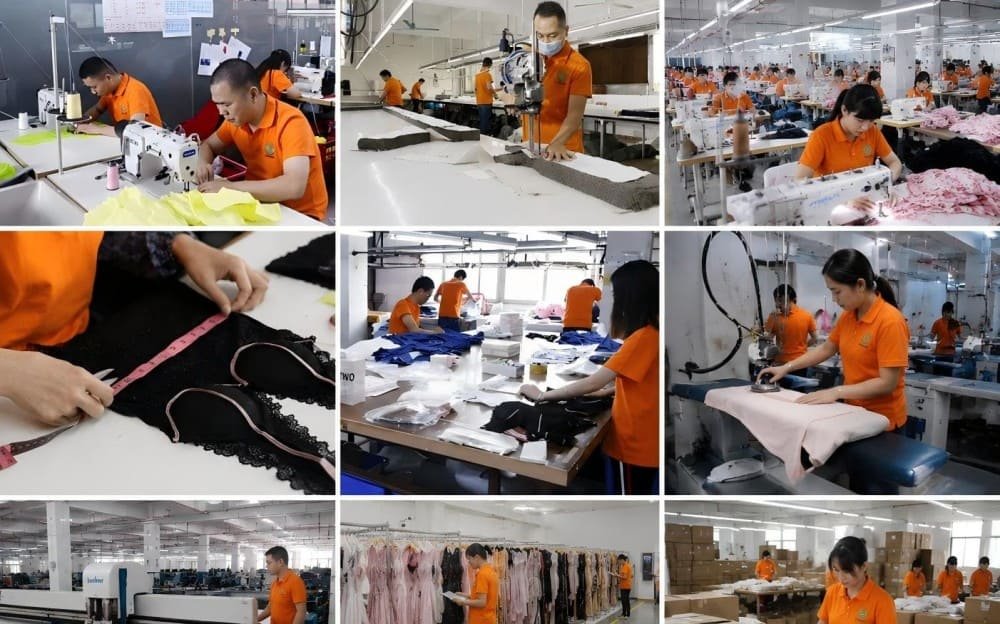
Duolan’s manufacturing network supports dress development, multi-style production, quick-response programs and scalable repeat orders.

Factory Network and Production Scale

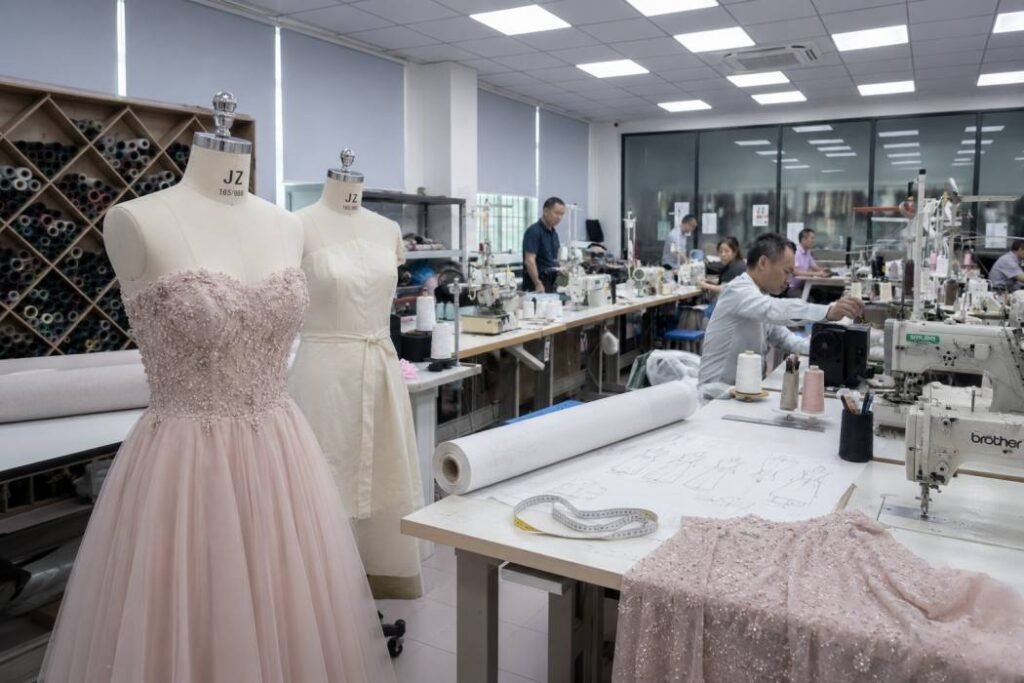
Duolan is supported by a multi-layer womenswear manufacturing system rather than a single production point. The network includes 16 owned fashion womenswear factories and 20+ long-term satellite garment factories. Regional manufacturing support in Guangxi, Guizhou, Sichuan and Jiangxi provides additional production coordination for different order scales and delivery windows. For fashion dress brands, the value lies in matching product complexity with suitable production resources, not simply increasing factory count.

  • Owned factories: stronger control for core styles, key samples and priority dress programs.
  • Satellite factories: production flexibility for repeat orders, volume allocation and seasonal peaks.
  • Regional support: additional capacity buffer for larger programs and production scheduling.

Production Lines and Monthly Capacity

The Duolan-backed manufacturing system includes 300 apparel sewing lines and 50+ quick-response and flexible production lines. Regular monthly capacity is approximately 6,500,000 garments, with peak monthly capacity reaching around 10,000,000 garments. The system also keeps additional monthly capacity space of about 1,000,000–2,000,000 garments depending on product mix and schedule. For dress programs, this allows simultaneous handling of development projects, controlled launch orders, repeat production and larger seasonal programs.
  • Production scale: suitable for brand-level order planning and multi-style programs.
  • Flexible lines: support faster response for tested styles and repeat orders.
  • Capacity allocation: arranged according to style complexity, quantity and delivery schedule.
Sample and Development Density

Duolan’s manufacturing system can support 15,000–35,000 sample developments per month and 3,000–8,000 style development and sampling workflows per month across the broader group structure. This matters for fashion dress programs because brands often develop many styles before selecting final launch orders. Sample capacity alone is not enough; development teams also need pattern, fabric, trim, workmanship and follow-up coordination. Duolan’s structure helps manage parallel projects with clearer sample routes and production transition.
  • Development density: suitable for dress-heavy collections and frequent launch cycles.
  • Sample route: first proto, fit sample, revised sample, salesman sample and PP sample.
  • Production transition: approved samples connect with bulk planning and QC control.

Quality Control Before Delivery

Dropshipping-related supply support must protect fit, fabric, label, packing and shipment accuracy before garments leave the factory.

Fit and Measurement Control

Dress quality begins with fit and measurement control. Duolan checks key measurement points according to approved sample, size specification and garment structure. For dresses, control points may include bust, waist, hip, body length, strap length, neckline drop, sleeve opening, slit height, hem width and lining length. Fitted dresses, party styles and occasion pieces need extra measurement discipline because small deviations may affect wearing comfort and return risk.
  • Measurement checkpoints: key body and garment points are selected by style type.
  • Size consistency: grading and tolerance control help maintain fit across the size range.
  • Sample reference: PP sample and approved specification guide production checks.

Fabric and Appearance Review

Fabric appearance directly affects brand perception after delivery. Duolan reviews color difference, fabric defects, transparency, drape, seam puckering, shine marks, print placement, loose threads, stains, decoration security and lining coverage. Satin, mesh, lace, sequin and embellished dresses require stronger visual inspection because surface issues are easy to notice in ecommerce photography and consumer try-on. Appearance review should happen during production and before packing, not only after cartons are ready.
  • Fabric review: color, texture, defects, drape and batch consistency.
  • Surface review: seam cleanliness, decoration stability, loose threads and stains.
  • Category risk: satin, mesh, lace and sequin styles require dedicated inspection points.

Shipment Planning for Brand Fulfillment

Shipment NeedInformation Needed from Brand TeamDuolan Support
Sample shipmentReceiver name, phone, address, courier preference, sample purposeSample packing, shipping record and tracking information
Launch-order shipmentStyle list, quantity, carton rule, delivery window and destinationPacking plan, carton arrangement, shipment coordination and document preparation
Split shipmentDestination split, SKU split, carton marks, warehouse contact and scheduleSeparate carton planning, packing list support and delivery coordination
3PL handoffBarcode files, carton label rule, receiving instruction and booking detailsBarcode placement, carton marks, packing list and warehouse-ready information
Nominated forwarderForwarder contact, booking instruction, cargo ready date and shipping termFactory-to-forwarder coordination, carton data and shipment preparation

Compliance Support for Brand Programs

Duolan supports audit readiness, testing coordination, label accuracy and shipment documentation for structured fashion programs.

Audit Readiness

Duolan’s factory system has SMETA audit experience and SMETA 2-Pillar audit record. For brand-level cooperation, social responsibility and audit readiness matter because suppliers must meet more than production capability. Procurement and sourcing teams often need to understand factory background, manufacturing structure, quality awareness and compliance cooperation before beginning long-term programs. Duolan can provide capability discussion according to the project stage and brand evaluation requirement.

Testing Coordination

Different markets and channels may require different product or material standards. Duolan can coordinate around requirements related to AATCC, ASTM, OEKO-TEX?, EN, China GB, GOTS or specific brand standards when required by the project. For dress programs, testing discussion may involve fabric composition, colorfastness, shrinkage, appearance, care instruction, trims or client-specific test items. Testing planning should be discussed before bulk production when standards affect material selection or delivery schedule.

Label Accuracy

Label accuracy protects both compliance and consumer clarity. Duolan can prepare label placement and production according to confirmed files for care labels, woven labels, hangtags and packaging stickers. Brand teams should provide final wording, fiber composition, care symbols, country information, size system and barcode data where applicable. For lined dresses, delicate fabrics or transparent styles, label placement also requires comfort and visibility review.

Document Support

Shipment documents and packing records help brands receive goods correctly and manage inventory. Duolan can support packing lists, carton information, quantity records, style-color-size breakdowns and shipment-related coordination according to project needs. For multi-style orders, clear documentation reduces confusion between production completion and warehouse receiving. Documentation support becomes especially valuable when goods move through nominated forwarders, 3PL warehouses or multi-channel inventory systems.

Brand Project Examples

Representative anonymized projects show how Duolan supports fashion dress teams from development to production and delivery.

US Partywear Launch

A US ecommerce fashion brand planned a partywear launch with 18 dress styles across satin minis, bodycon dresses, mesh-panel styles and sequin pieces. The initial concern was product similarity from catalog suppliers and weak control over fit, fabric and private label presentation. Duolan reviewed reference images, target fabrics, color direction, size range and delivery window before sampling. The project moved through first proto, fit comments, revised samples and PP sample confirmation. Bulk production reached about 36,000 garments across selected styles, with branded hangtags, care labels, size stickers, poly bags and warehouse-ready carton marks prepared before shipment. The main value came from keeping trend speed while preserving product identity and launch-order control.

North America Occasion Edit

A North American fashion group needed an occasion dress capsule for a seasonal selling window. The program included 12 styles, mainly midi dresses, satin dresses, lace-panel dresses and refined going out styles. Main risks included satin seam puckering, lining coverage, neckline stability, color consistency and shipment timing. Duolan organized fabric review, sample correction, lining adjustment, PP confirmation and production scheduling. The final order covered about 28,000 garments with multiple colors and size ratios. Packing was arranged by style, color and size, and carton information was prepared for warehouse receiving. The program helped the team move from design direction to a controlled launch order without relying on generic ready-product sourcing.

Multi-Channel Dress Program

A multi-channel fashion retailer needed supply support for online and warehouse distribution. The project included 26 dress and fashion set styles with a total order quantity of about 72,000 garments. The main difficulty was not only production volume, but SKU organization, barcode accuracy, carton split, packing list preparation and reorder reference preservation. Duolan supported style grouping by complexity, fabric and trim coordination, production allocation, inline QC, pre-shipment review and shipment preparation. Sensitive styles such as sequins, satin and mesh dresses received extra inspection and packing attention. After delivery, style information and material references were kept for repeat planning, color extension and future volume discussion.

Download Supply Preparation Checklist

Prepare product, label, packing and shipment details before starting a manufacturer-backed dropshipping supply project.

Product Brief Checklist

The product brief checklist helps teams organize dress category, reference images, target fabric, size range, color plan, expected quantity, launch date and target market. For dress programs, early information reduces back-and-forth communication and helps Duolan evaluate development route, sample type, material questions and production complexity. A stronger brief also helps avoid confusing fashion inspiration with actual production requirements.

Private Label Checklist

The private label checklist covers woven label, care label, hangtag, size sticker, barcode label, poly bag, carton mark and packing list requirements. Teams can use it to prepare logo files, label artwork, care wording, SKU rules and warehouse information before bulk packing begins. Label and packing planning should be aligned with the garment structure, target market and inventory receiving process.

Shipment Handoff Checklist

The shipment handoff checklist helps teams prepare destination, forwarder contact, 3PL instruction, carton label rules, split shipment details, delivery window and required documents. For multi-style programs, shipment preparation should begin before production ends. Clear handoff information helps reduce receiving errors, repacking work and delayed warehouse processing after goods arrive.

Reorder Planning Checklist

The reorder planning checklist helps preserve approved sample, fabric record, trim details, measurement standard, workmanship notes, packing rule and shipment reference. For proven dress styles, reorder production should not restart from memory. Better records help protect fit, material appearance and packing consistency when a style moves from launch order to replenishment or larger production.

Dropshipping Service Frequently Asked Questions

Duolan is not an app-based catalog platform. We are a dress-focused womenswear manufacturer supporting development, sampling, private label preparation, controlled production, packing and shipment coordination for fashion brand programs.
Yes. Duolan can coordinate shipment preparation for nominated forwarders, warehouses or 3PL partners when the brand provides receiving rules, barcode files, carton labels, packing instructions and delivery information.
Yes. Duolan can support woven labels, care labels, hangtags, size stickers, barcode labels, poly bags, carton marks and packing lists according to confirmed brand files and project requirements.
Yes. Duolan can review reference images, original samples, fabric direction, moodboards or tech packs, then organize a development route covering sample type, fabric questions, construction risk and production feasibility.
Suitable categories include mini dresses, midi dresses, maxi dresses, party dresses, occasion dresses, going out dresses, vacation dresses, bodycon dresses, satin dresses, mesh dresses, sequin dresses and fashion sets.
Many established fashion teams develop 10–30 styles per cycle. Duolan can review style complexity, sample route, fabric needs, production planning and shipment requirements before confirming a workable order plan.
Brand programs often range from 20,000–80,000 garments per order across selected styles, colors and sizes. Quantity planning depends on product complexity, material availability, delivery window and production allocation.
Yes. Duolan can translate fit comments into pattern, measurement, construction or fabric adjustments. Common review areas include bust balance, waist fit, hip ease, strap length, neckline security and skirt fall.
Yes. Duolan can apply barcode labels and carton marks according to confirmed files. Teams should provide SKU data, barcode files, style-color-size breakdowns, carton rules and warehouse receiving instructions.
Please send tech packs, reference images, original sample photos, size charts, fabric direction, target quantity, target market, launch date, label files, packing rules and shipment or 3PL requirements when available.

Submit Your Supply Project

Duolan supports fashion dress teams that need more than a standard product catalog. Share your development materials, target style range, quantity plan, label requirements, packing rules and shipment route, and our team will review how to connect your dress program with sampling, production, private label preparation and delivery coordination.

For faster project evaluation, please include:

  • Company website and target market
  • Dress categories and number of styles
  • Tech pack, reference images or original sample photos
  • Target fabrics, colors and size range
  • Expected quantity and launch date
  • Label, hangtag, barcode and packaging requirements
  • Warehouse, forwarder or 3PL delivery instructions
  • Current stage: sample, launch order, reorder or supplier evaluation

Start Your Apparel Development Project

OEM/ODM Manufacturing Support for Fashion Brands

Share your collection details, estimated quantities, target market, development timeline, and technical requirements. The production team will review your request and provide a tailored manufacturing solution based on your product category, fabric selection, construction needs, and delivery schedule.

Fashion Manufacturing Support with Scalable Production Capacity

From sample development to bulk production, Duolan supports fashion brands with confidential OEM/ODM manufacturing, stable quality management, flexible production planning, and coordinated multi-factory execution for seasonal and capsule collections.

Need Direct Assistance?

Seraphinite AcceleratorOptimized by Seraphinite Accelerator
Turns on site high speed to be attractive for people and search engines.