Skip to content
Custom Mini Dress Manufacturer
Custom mini and short dress development and manufacturing for established fashion brands requiring controlled fit, safe length, strong fabric judgment and repeatable bulk quality.
Duolan supports dress-focused brands with mini dress programs built around sample accuracy, length control, lining coverage, support structure, fabric behavior, PP approval, bulk production, QC, packing and repeat delivery.
- 16 owned womenswear factories support direct control for core mini dress programs.
- 20+ satellite factories provide flexible capacity for multi-style short dress launches.
- 300 sewing lines support parallel bulk production across varied dress structures.
- 50+ quick-response lines support sampling, trend tests and launch preparation.
- 15,000–35,000 monthly sample capacity supports frequent mini dress development cycles.
- 3,000–8,000 monthly style development workflows support multi-style sampling and revisions.
- SMETA 2-Pillar audit record supports supplier evaluation for mature fashion brands.







Mini Dress And Short Dress Manufacturing
Mini dresses and short dresses may look simple, but they are among the most fit-sensitive styles in women’s fashion. Because the length sits above the knee, even a small issue in hem balance, waist position, lining coverage, or fabric recovery can be noticed quickly when the customer wears it.
At Duolan, we treat mini dress development as more than just reducing dress length. Each style is reviewed based on body proportion, movement comfort, fabric stretch, opacity, bust support, closure strength, and bulk production stability. This helps brands avoid common problems such as uneven hems, poor coverage, weak zippers, see-through fabrics, or inconsistent sizing across production batches.
For fashion brands developing party dresses, bodycon mini dresses, cocktail dresses, vacation dresses, or private label short dresses, our goal is to make each piece look strong in photos, feel secure on the body, and remain consistent from sample to bulk order.
What We Can Manufacture
- Custom mini dresses: Suitable for partywear, bodycon collections, going-out styles, vacation drops, and trend-led fashion programs.
- Custom short dresses: Ideal for cocktail dresses, casual short dresses, summer collections, occasionwear, and boutique fashion lines.
- Private label mini dresses: Support for brand labels, custom sizing, packaging, trims, care labels, and repeat production.
- Party mini dresses: Development support for mesh, satin, sequin, cut-out, ruched, halter, strapless, and high-impact styles.
- Bulk short dress production: From sample development and fitting correction to PP samples, quality control, packing, and final delivery.

Built for Established Mini Dress Brands
Duolan works with fashion brands and product teams that need structured mini dress development, not casual small-order custom dress production. The strongest fit comes from brands with defined product direction, launch timing, quality expectations and repeat production value.
Global Fashion Brands
Global fashion brands need short dress suppliers able to control multiple styles, sizes, colors and deliveries across planned launches. Duolan supports these programs through fabric sourcing, sampling, PP sample locking, factory routing, QC and retail-ready packing.
Partywear Brands
Partywear brands need mini dresses with strong visual impact and reliable wearability. Duolan reviews stretch recovery, lining, support, mesh coverage, sequin comfort, zipper function and packing protection before bulk production begins.
Going-out Dress Brands
Going-out collections depend on photo-ready silhouettes and stable real-wear performance. Duolan supports bodycon, halter, backless, ruched, one-shoulder and cut-out mini dresses with fit review, structure control and sample-to-bulk discipline.
Occasionwear Brands
Occasion mini dresses need polish, comfort and clean finishing. Cocktail, graduation, birthday, homecoming and semi-formal short dresses require controlled fabric, lining length, hem balance, neckline stability and final pressing.
Product Development Teams
Product teams need samples that answer real development questions. Duolan reviews design references, length targets, fabric direction, fit comments, lining choices, support points and PP sample requirements before bulk decisions.
Sourcing Offices
Sourcing offices evaluate mini dress manufacturers through sample quality, bulk consistency, compliance readiness, production timing, QC discipline and packing accuracy. Duolan provides structured manufacturing information for formal supplier review.
Mini Dress Product Scenarios
Mini dress development should begin with the wearing scene. A party mini dress, going-out mini dress, occasion mini dress and vacation mini dress may share short length, yet each program requires different fabric, structure, fit and finishing decisions.

Party Mini Dresses
Party mini dresses require visual energy, but strong visuals cannot replace wearability. Duolan reviews each party style through movement, surface effect, stretch, coverage and packing protection.
- Bodycon party styles: Stretch recovery, negative ease, lining and side seam balance need early review.
- Mesh and cut-out styles: Coverage maps, edge finishing and lining placement protect wear confidence.
- Sequin and shine styles: Weight, scratch risk, zipper movement and packing protection require special handling.
- Bulk readiness: PP samples must lock trim placement, hem level, inner finish and QC checkpoints.

Going-out Mini Dresses
Going-out mini dresses often need strong ecommerce and social media presentation. A garment may look attractive on a model, yet fail if bust support, strap tension, back balance or hem safety are weak.
- Halter and backless styles: Neck load, bust support and closure strength guide sample decisions.
- Ruched mini dresses: Ruching depth, side seam control and size scaling affect bulk consistency.
- One-shoulder designs: Shoulder balance, neckline stability and zipper placement need fit testing.
- Photo-ready finish: Fabric surface, seam smoothness, pressing and packing affect final presentation.

Occasion Mini Dresses
Occasion mini dresses carry a more polished product expectation. Short length must still feel refined, stable and suitable for graduation, cocktail, birthday, homecoming or semi-formal dressing.
- Cocktail mini dresses: Satin, velvet, lace or structured fabrics need clean seam and pressing control.
- Graduation mini dresses: Comfort, coverage, movement and photo effect matter across several sizes.
- Birthday and event styles: Shine, color and fit should support celebration use without garment instability.
- Short formal balance: Mini length needs polish through lining, hem, zipper and inner finishing.

Vacation Mini Dresses
Vacation and resort mini dresses rely on lightness, color, print and ease. These styles require a different development route from fitted partywear.
- Printed mini dresses: Placement, color, side seams and hem balance need cutting control.
- Lightweight fabrics: Opacity, lining length and wrinkle behavior require review before sampling.
- Soft silhouettes: Drape and movement matter more than tight structure.
- Travel packing: Folding, polybag and carton choices should protect shape and surface.

Mini Dress Collection Programs
Established brands often develop mini dresses as a program rather than one isolated style. A launch may combine hero pieces, core sellers, repeatable silhouettes and seasonal statement styles.
- Hero styles: Strong silhouettes, special fabrics or high-impact details support campaign visuals.
- Commercial core: Stable fit, repeatable fabric and controlled construction support volume orders.
- Seasonal styles: Color, print, shine or fabric stories add freshness to the range.
- Repeat styles: Approved patterns, BOM records and PP samples support future reorders.
Mini Dress Silhouette Range
A mini dress silhouette decides more than appearance. It controls support, movement, coverage, fabric behavior, sample difficulty and production risk. Duolan reviews each silhouette by wearing position, structure, size range and bulk repeatability before production planning.

Bodycon Mini Dresses
Bodycon mini dresses are fit-sensitive. Fabric must stretch, recover and hold shape while keeping opacity and comfort under tension.
- Stretch recovery: Poor recovery leads to bagging, twisting or shape loss after wear.
- Negative ease: Fit must shape the body without creating discomfort or transparency.
- Side seam balance: Twisted side seams are common when stretch direction or cutting is weak.
- Lining decision: Lining can improve coverage, but may reduce stretch if poorly matched.

Corset and Bustier Mini Dresses
Corset mini dresses need internal structure, not only a corset-like visual. Support must stay stable in short-length garments where body movement is more visible.
- Cup position: Incorrect cup height affects bust shape and neckline confidence.
- Boning channels: Boning needs correct position, length and inner finishing.
- Back closure: Zipper, hook or lace-up construction must support fit tension.
- Size grading: Structure must scale across sizes without distorting the silhouette.

Halter and Strapless Mini Dresses
Halter and strapless mini dresses rely on support engineering. A beautiful neckline can fail if load, grip and bust control are not reviewed.
- Neck load: Halter straps must support bust weight without pulling or discomfort.
- Top edge stability: Strapless styles need grip, support and secure inner construction.
- Bust support: Cups, lining, elastic or inner panels may be required.
- Movement review: Upper body movement must not expose coverage problems.

Backless and Cut-out Mini Dresses
Backless and cut-out styles increase visual appeal while reducing structural support. Development must balance exposure with stability.
- Coverage map: Open areas need review across front, side and back views.
- Edge finish: Cut-out edges require clean binding, stitching or reinforced finishing.
- Support compensation: Backless styles may need halter, side support or hidden structure.
- Wear confidence: Sample review should include movement, sitting and walking considerations.

Ruched, Mesh and Sequin Mini Dresses
Decorative and texture-rich mini dresses need careful process control. Ruching, mesh and sequins add product value only when bulk quality remains stable.
- Ruching depth: Amount and position must remain consistent across sizes.
- Mesh transparency: Lining and opacity maps prevent unexpected exposure.
- Sequin comfort: Inner finish should reduce scratch risk and skin irritation.
- Packing protection: Embellished surfaces need folding and carton decisions before shipment.

A-line and Fit-and-flare Mini Dresses
A-line and fit-and-flare mini dresses can look easier, yet proportion and hem balance remain sensitive.
- Waist placement: A slight position change affects the full short-length proportion.
- Skirt flare: Too much flare may create coverage risk during movement.
- Hem level: Short hems expose uneven cutting or pressing quickly.
- Commercial fit: Softer silhouettes still need controlled size grading.
Fabric Choices for Mini Dresses
Fabric choice can make or break a mini dress. Short length exposes fabric transparency, stretch failure, seam distortion, shine direction, lining mismatch and packing marks faster than longer garments. Duolan reviews fabric by role, silhouette, wearing scene and bulk availability.

Stretch Fabrics
Stretch fabrics are common in bodycon, going-out and party mini dresses. The main concern is not only elasticity, but recovery after movement.
- Jersey and rib: Require recovery testing, opacity review and seam elasticity.
- Scuba and compact knits: Offer shape support but may feel heavy in short styles.
- Stretch mesh: Needs lining decisions, coverage mapping and edge stability.
- Bandage-inspired fabrics: Require controlled tension, strong seams and careful size grading.

Satin and Shine Fabrics
Satin, velvet and shine finishes can create a polished short dress, but surface issues appear easily.
- Satin: Needs seam puckering control, pressing discipline and packing protection.
- Velvet: Nap direction, shade and crushing marks require early review.
- Metallic or foil finishes: Surface durability and crease behavior should be tested.
- Shine direction: Cutting direction affects visual consistency across pieces.

Mesh, Lace and Sheer Fabrics
Sheer materials require coverage planning before sampling. Visual softness needs structure behind it.
- Mesh: Opacity, lining, stretch and edge finish need coordinated review.
- Lace: Placement, scallop edge, lining color and seam bulk affect refinement.
- Tulle overlays: Movement, stiffness and lining attachment influence final shape.
- Coverage mapping: Bust, hip, side and hem areas need special attention.

Sequin and Embellished Fabrics
Sequin mini dresses often serve as hero or party pieces. They need more production care than flat fabrics.
- Weight control: Heavy embellishment may affect garment hang and comfort.
- Edge treatment: Sequin edges need cleaning around seams, hem and zipper.
- Inner comfort: Lining prevents scratch, friction and skin irritation.
- Carton protection: Surface protection reduces crushing, snagging and shine damage.

Lightweight Vacation Fabrics
Vacation mini dresses need soft movement and easy wear. Lightweight fabrics require opacity and shrinkage review.
- Chiffon-touch fabrics: Need lining, hem control and pressing review.
- Printed woven fabrics: Need print placement and shade control.
- Soft polyester or rayon blends: Need shrinkage, drape and wrinkle checks.
- Color stories: Light tones need stronger transparency and lining review.
Length, Coverage and Wear Confidence
Mini dress manufacturing starts with length control. A short dress can pass a flat measurement check and still feel unsafe during real movement. Duolan reviews length, lining, hem, coverage and body movement before PP approval, especially for fitted, sheer, backless, cut-out and partywear styles.

Safe Length Review
Safe length is not one measurement. Front length, back length, side seam length and hem level need separate review because body shape, fabric stretch and garment structure affect each area differently.
- Front length: Needs enough coverage during sitting, walking and bending.
- Back length: Often requires extra attention due to hip curve and movement.
- Side length: Side seam position can expose unevenness or twisting.
- Length tolerance: PP samples should lock measurable tolerance before bulk.

Lining Coverage
Lining protects opacity, comfort and wear confidence. Poor lining length can create exposure, show through fabric, twist during wear or appear below the hem.
- Outer-to-lining balance: Lining should support coverage without showing under the hem.
- Stretch lining: Must recover with the outer fabric for fitted mini dresses.
- Sheer materials: Mesh, lace and light colors need a clear opacity plan.
- Inner comfort: Lining reduces friction from sequins, lace, mesh or boning.

Movement Check
Mini dress quality should be reviewed on the body, not only on a table. Movement can reveal issues hidden in a still sample.
- Walking: Hem behavior and side seam balance should stay stable.
- Sitting: Length and lining coverage must remain acceptable.
- Arm movement: Halter, strapless and backless styles may shift.
- Body stretch: Fitted styles should not become transparent or overly tight.

Hem Balance
A short hem is highly visible. Cutting, pressing, fabric weight and sewing tension can all create uneven hem lines.
- Hem level: Front, back and sides need balanced visual alignment.
- Fabric fall: Satin, chiffon and mesh require different hem handling.
- Seam tension: Stretch mini dresses need elastic seam control.
- Final pressing: Pressing marks or uneven shape affect retail presentation.

Size Grading Impact
A mini dress cannot be graded carelessly. Length, coverage, neckline, strap and support points shift across sizes.
- Larger sizes: Bust, hip and back coverage may need extra review.
- Smaller sizes: Proportion can become too short if length grading is mechanical.
- Fitted styles: Negative ease should be reviewed across the range.
- PP approval: Graded specs should reflect wear confidence, not only numeric scale.
Pattern, Fit and Size Control
Short-length garments magnify small pattern issues. A few millimeters around the neckline, side seam, waist, hip or hem can change the entire wearing effect. Duolan reviews mini dress fit through body balance, fabric behavior and size consistency before bulk production begins.

Bust and Neckline Balance
Bust and neckline control are critical in mini dresses because upper body instability often combines with short length risk.
- Bust position: Poor bust balance affects support, shape and neckline confidence.
- Neckline stability: Halter, strapless, low-cut and one-shoulder styles need fit testing.
- Cup or lining support: Inner structure may be needed for fitted or open-back designs.
- Strap placement: Strap angle and length affect both appearance and comfort.

Waist and Hip Fit
Waist and hip fit define mini dress proportion. An incorrect waist line can make the dress ride up or distort the silhouette.
- Waist placement: Needs alignment with style intent and body proportion.
- Hip fit: Too tight creates riding-up; too loose weakens shape.
- Side seam control: Twisting reveals cutting, pattern or stretch problems.
- Fabric recovery: Stretch garments should return after movement.

Hem and Length Tolerance
Mini dress length must be controlled by design, sample and production specs. Hem tolerance should not remain vague.
- Hem level: Uneven hems stand out immediately in short garments.
- Tolerance by size: Length allowance may need adjustment across size range.
- Outer and lining relationship: Both layers require separate specifications.
- Final QC: Length should be checked by size and color before packing.

Size Range and Grading
Standard-size mini dress production needs stronger grading review than ordinary relaxed garments.
- Grading logic: Bodycon, corset and cut-out mini dresses require sensitive grading.
- Fit sample review: One sample size cannot guarantee full-size range stability.
- Measurement points: Bust, waist, hip, length, neckline, strap and hem need priority.
- Bulk consistency: Approved pattern and tolerance records support repeat production.
Lining, Support and Closure Details
Mini dress quality often comes from invisible structure. Lining, support, closures and inner finishing decide whether a short dress feels secure, comfortable and brand-ready.
Lining
Lining is not only an opacity layer. It affects comfort, structure, garment movement and inner appearance.
- Coverage: Lining length should protect key body areas without showing below hem.
- Comfort: Soft lining reduces friction from sequins, lace, mesh and inner seams.
- Stretch match: Fitted garments need lining with compatible recovery.
- Color match: Nude, black, white and fashion colors require separate opacity review.

Bust Support
Bust support becomes more important when a mini dress has open shoulders, exposed back, low neckline or fitted fabric.
- Strapless styles: Need inner grip, top edge stability and structure support.
- Halter styles: Neck load must be balanced against bust shape.
- Corset styles: Cups, boning and lining should work as one structure.
- Backless styles: Hidden support options need review before sample approval.

Closure
Closure details affect wearing security and production quality. A weak zipper or closure can damage the whole garment experience.
- Invisible zipper: Needs smooth insertion, correct length and strength.
- Hook and eye: Helps secure upper openings or back closures.
- Tie or lace-up backs: Need reinforcement and balanced tension.
- Elastic openings: Require recovery and seam strength checks.

Inner Finish
Inner finishing matters when fabrics touch the body closely. Mini dresses often have less fabric coverage, making comfort issues easier to notice.
- Sequin edges: Need cleaning or lining to reduce scratch.
- Boning ends: Need soft protection to avoid pressure points.
- Mesh seams: Should remain flat, clean and comfortable.
- Cut-out edges: Require reinforcement without visible bulk.

Packing Protection
Closures, support layers and delicate surfaces can be damaged during packing if garment type is not considered.
- Structured styles: Need folding methods that protect shape.
- Sequin styles: Need surface protection against snagging.
- Satin styles: Need crease and pressure mark prevention.
- Backless or strappy styles: Need careful strap arrangement before bagging.

Mini Dress Development Path
Mini dress development should follow a controlled path from design review to PP approval. Duolan uses each stage to clarify length, fit, fabric, lining, support and production feasibility before bulk production begins.
Step 1|Design and Length Review
Duolan reviews reference images, sketches, tech packs, target wearing scene, front length, back length, side length, hem shape and coverage needs. For mini and short dresses, early length review helps prevent unsafe proportions from entering sampling.
Step 2|Fabric and Structure Review
Fabric direction is reviewed against silhouette, stretch, opacity, lining, support and bulk availability. A satin mini, bodycon mini, mesh mini and corset mini require different sample plans. Duolan also checks zipper, strap, elastic, boning, hardware and special process needs.
Step 3|First Sample Development
The first sample tests silhouette, length, body proportion, fabric behavior, main construction and visual direction. Duolan uses the first sample to reveal fabric risk, pattern balance, lining needs and potential bulk issues before deeper revisions.
Step 4|Fit and Coverage Revision
Sample comments are translated into specific adjustments. Bust, waist, hip, neckline, strap, lining, zipper, hem and length tolerance may need correction. Duolan records revision details so development becomes closer to production standard rather than repeated trial.
Step 5|PP Sample and Bulk Readiness
Approved styles move into PP sample preparation, BOM locking, production notes, QC checklist and packing standards. For mini dresses, PP sample review must confirm final length, lining, support, fit, fabric and surface condition before bulk cutting begins.
Mini Dress Sample Standards
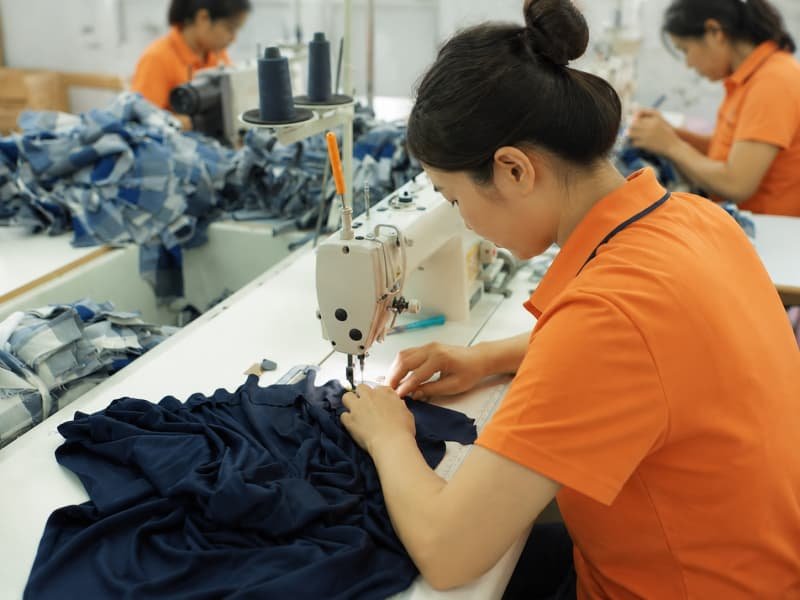
Different sample types serve different mini dress decisions. Duolan helps brands use each sample stage to confirm design, fit, visual effect, production standard and bulk readiness.
| Sample Type | Purpose | Duolan Checks |
|---|---|---|
| First Sample | Tests design direction and initial construction | Silhouette, length, fabric behavior, lining need and main structure |
| Fit Sample | Reviews wearing balance and coverage | Bust, waist, hip, strap, neckline, movement and hem safety |
| Revised Sample | Confirms development changes | Fit comments, lining length, zipper, support, fabric and edge finish |
| Photo Sample | Supports campaign or ecommerce review | Color, surface, drape, presentation, hem level and photo effect |
| Salesman Sample | Supports commercial or showroom review | Workmanship, fit impression, garment feel and style readiness |
| PP Sample | Becomes bulk production benchmark | Material, measurement, workmanship, labels, packing and QC points |
Mini Dress Risk Matrix
Mini dresses carry concentrated fit and production risks. Duolan reviews risk areas before sampling and locks key controls before bulk.
| Mini Dress Risk | Why It Happens | Duolan Control |
|---|---|---|
| Unsafe length | Pattern too short, movement not reviewed, grading too mechanical | Front, back, side length checks plus movement review |
| Poor coverage | Lining, mesh, cut-out or slit areas not mapped clearly | Lining coverage map and opacity review before approval |
| Weak bust support | Open neckline, strapless, halter or backless structure too light | Support reinforcement, closure review and fit sample testing |
| Side seam twisting | Stretch direction, cutting balance or tension not controlled | Fabric direction check, cutting control and first-piece confirmation |
| Transparency under stretch | Fabric looks opaque flat but opens under body tension | Stretch opacity test and lining compatibility review |
| Uneven hem | Cutting, pressing, fabric fall or sewing tension creates distortion | Hem balance check during sample and final QC |
| Sequin discomfort | Edges, lining or zipper areas scratch skin during wear | Inner finish, edge cleaning and packing protection |
| Bulk length drift | PP standard and tolerance not clearly locked | Length QC by size, color and production batch |
What Brands Should Prepare
A strong mini dress brief helps Duolan evaluate length safety, fabric feasibility, fit risk, sample path, production route and delivery timing. Complete information reduces repeated clarification and improves sample accuracy.
Design and Reference Files
Clear design materials help Duolan understand silhouette, proportion, detail placement and garment structure before sampling.
- Tech pack or sketch: Include front, back, side views and key construction notes.
- Reference sample: Send original sample photos or garment sample when fit is hard to explain.
- Detail images: Provide close-ups for neckline, bust, back, zipper, lining, hem and trims.
- Style purpose: Mark party, going-out, occasion, vacation or repeatable commercial direction.

Length and Coverage Information
Mini and short dress projects need more precise length guidance than general dresses.
- Target length: Share mini or short dress length expectation by size or sample size.
- Front/back/side specs: These points help prevent uneven or unsafe length.
- Lining requirement: Clarify lining length, fabric, stretch and opacity needs.
- Coverage concern: Mark cut-out, mesh, slit, backless or low neckline areas early.

Fabric, Trim and Structure Details
Materials and trims directly affect mini dress fit, comfort and bulk stability.
- Fabric direction: Share satin, mesh, jersey, sequin, lace, velvet or print preferences.
- Stretch level: Indicate desired body fit, recovery and compression level when relevant.
- Support details: Note cups, boning, elastic, strap structure or back closure needs.
- Trim requirements: Include zipper, hook, eyelet, slider, hardware and decorative trims.

Size, Quantity and Launch Plan
Production planning improves when brand teams share size, quantity and calendar needs early.
- Size range: Provide standard size chart and key tolerance points.
- Colorways: Share core colors, seasonal colors and campaign colors by style.
- Target quantity: Provide estimated units by style, color and size.
- Launch timing: Include sample deadline, photo date, PP approval date and delivery window.

Brand Delivery Requirements
Mini dress production should align with brand packing and channel needs before shipment.
- Label package: Main label, care label, size label and fiber information.
- Packing method: Folding, polybag, barcode, hangtag and carton mark requirements.
- Channel rules: Warehouse, ecommerce, retail or wholesale receiving standards.
- Project stage: Indicate sample, revised sample, PP approval, bulk or reorder stage.
Production Engineering for Mini Dresses
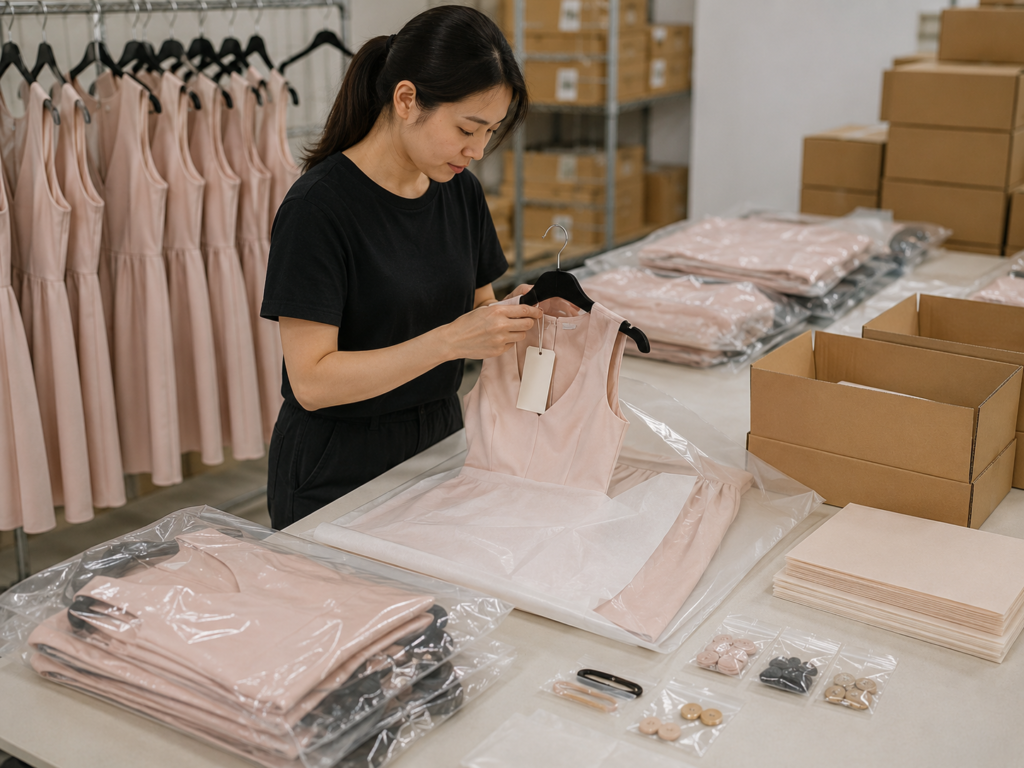
Mini dress samples need to become production standards before bulk cutting begins. Duolan translates approved details into measurements, process notes, sewing requirements, first-piece checks and QC points.
Length and Measurement Standards

Short dress production needs clear measurement control at sample and bulk stages.
- Length tolerance: Front, back and side length should enter the production spec.
- Hem control: Hem level and shape require sample approval and final QC.
- Lining length: Lining needs separate measurement and tolerance from outer fabric.
- Size grading: Mini length should be reviewed across all sizes before PP approval.
Structure and Sewing Notes

Mini dress construction details must be clear enough for production lines to repeat.
- Support points: Bust, neckline, strap, back and zipper areas need production notes.
- Stretch stitching: Bodycon and jersey styles require suitable seam elasticity.
- Boning and cups: Structured styles need inner construction details, not only visual approval.
- Edge finishing: Mesh, lace, cut-out and sequin edges need defined finishing methods.
First-piece Confirmation

First-piece confirmation reduces the risk of producing many units with incorrect length, fit or structure.
- Fit check: Key measurements are checked against PP sample and size spec.
- Construction check: Lining, zipper, straps, support and inner finish are reviewed.
- Surface check: Satin marks, sequin edges, mesh tension and pressing marks are checked.
- Production feedback: Issues are corrected before wider bulk production continues.
Inline QC Planning

Mini dress inline checks focus on garment risks likely to appear during production.
- Length drift: Short garments need repeated length checks during sewing.
- Side seam balance: Stretch and fitted garments need seam alignment review.
- Coverage control: Mesh, cut-out and lining areas require special attention.
- Closure function: Zippers, hooks, straps and ties need strength checks before finishing.
Manufacturing System for Mini Dress Bulk
Mini dress programs need fast development and disciplined production routing. Duolan’s manufacturing system supports fit-sensitive short dress projects through owned factory control, satellite capacity, sample density, quick-response lines and planned bulk production.
Factory and Capacity Structure
- 16 owned womenswear factories: Direct control supports core mini dresses, complex styles and sensitive brand programs.
- 20+ satellite factories: Flexible capacity supports multi-style mini dress drops, repeat orders and volume extensions.
- 300 sewing lines: Parallel line capacity supports approved styles across different dress structures.
- 50+ quick-response lines: Trend styles, test runs and launch preparation can move faster when needed.
- 6,500,000 stable monthly capacity: Planned bulk production supports mature brand programs and repeat delivery.

Development and Sample Capability
- 15,000–35,000 monthly sample capacity: Frequent mini dress development can support seasonal launches and capsule programs.
- 3,000–8,000 monthly style development workflows: Multiple bodycon, party, occasion and resort mini styles can move through sampling.
- 750–1,200 development team members: Product planning, design, fabric, pattern, sample and process teams support collection-level work.
- 300–400 pattern and sample specialists: Pattern makers, CAD engineers and sample technicians translate short dress designs into workable garments.
- 130–200 process development members: Sewing process, special process, costing and risk review support complex mini dress programs.

Mini Dress Production Routing
- Core styles stay closer to owned factory control when fit, support or material sensitivity is high.
- Repeatable mini dress styles can use flexible routing after PP samples and QC standards are locked.
- High-impact party styles receive earlier risk review for mesh, sequin, support and packing protection.
- Quick-response lines support trend-driven mini styles during launch preparation or urgent replenishment.
- Bulk routing follows garment complexity, not only order quantity for stronger quality consistency.

Sample-to-Bulk Mini Dress Control
A mini dress sample becomes valuable only when it can move into controlled bulk production. Duolan connects sample approval to material records, PP standards, production notes, QC points and packing methods.
| Control Point | Gets Locked | Why It Matters |
|---|---|---|
| Approved Sample | Final length, fit, fabric, lining, trims and surface finish | Prevents bulk production from relying on visual memory |
| Length Spec | Front, back, side length, hem shape and tolerance | Controls short dress coverage and production consistency |
| BOM | Main fabric, lining, zipper, thread, trims, labels and packing | Connects purchasing, production and repeat order records |
| PP Sample | Physical production benchmark for each approved style | Gives production teams a clear standard to follow |
| Production Notes | Sewing method, support points, lining, edge finish and pressing | Reduces interpretation gaps across lines |
| QC Points | Length, coverage, fit, fabric, seams, closure and defects | Protects garment quality before shipment |
| Packing Standard | Folding, polybag, hangtag, barcode and carton method | Protects garment shape, surface and channel-ready delivery |
QC and Cost Logic for Mini Dresses
Mini dress QC should protect wear confidence, not only detect garment defects. Cost should be judged by material, construction, process, support, sample rounds, QC and repeat value.
| QC Area | Checks Needed | Production Risk Controlled |
|---|---|---|
| Fabric QC | Color, stretch, recovery, opacity, shrinkage and surface defects | Prevents poor fit, transparency and bulk inconsistency |
| Cutting QC | Fabric direction, panel balance, size accuracy and print placement | Reduces twisting, uneven hems and poor visual alignment |
| Length QC | Front, back, side length, lining length and hem level | Controls coverage and short dress safety |
| Fit QC | Bust, waist, hip, neckline, strap and zipper function | Protects wearing stability across sizes |
| Construction QC | Seams, lining, boning, cups, elastic, closures and edges | Prevents support failure and discomfort |
| Final QC | Appearance, measurements, loose threads, stains, pressing and packing | Protects shipment quality and brand presentation |
Cost Drivers for Mini Dress Programs
| Cost Driver | Typical Impact | Why It Matters |
|---|---|---|
| Fabric and Lining | Major cost driver | Satin, sequin, lace, mesh, stretch and custom print change sourcing cost quickly |
| Sewing and Construction | Major cost driver | Corset, bodycon, lining, ruching, cut-out and fitted styles require more labor |
| Special Process | Variable cost driver | Sequin, embroidery, print, pleating or dyeing can increase sample and bulk cost |
| Trims and Hardware | Moderate cost driver | Zippers, boning, hooks, straps, eyelets and sliders affect both cost and fit |
| Sample and Revision Work | Development cost driver | Complex fit, new fabric tests and photo samples increase pre-production effort |
| QC and Finishing | Quality cost driver | Satin, sequin, mesh and fitted garments need stronger inspection and pressing |
| Labels and Packing | Delivery cost driver | Barcode, hangtag, polybag, carton and folding rules affect final shipment cost |
| Repeat Potential | Efficiency driver | BOM, PP sample and color records help future orders run more efficiently |
Brand Label, Packaging and Compliance
Mini dress programs should arrive ready for brand channels. Labels, care information, barcodes, packing ratios, carton marks and compliance records support supplier evaluation and delivery accuracy.
- Main labels and size labels are placed without affecting comfort or garment appearance.
- Care labels are reviewed for fabric type, lining, transparency and skin contact.
- Hangtags and barcodes are aligned by style, color, size and channel need.
- Polybag and folding methods protect satin, sequin, mesh and structured mini dresses.
- Carton marks and packing ratios support warehouse receiving across multi-style shipments.
- SMETA audit records support supplier review for established fashion brand programs.
- Testing discussions can follow AATCC, ASTM, EN, GB or brand-specific standards.
- OEKO-TEX® or GOTS material requirements can be coordinated when programs require certified fabrics.

Anonymous Mini Dress Project Evidence
Duolan respects brand confidentiality. These anonymized mini dress project patterns reflect realistic program sizes, sample cycles and order volumes aligned with current brand cooperation ranges.
United States|Party Mini Dress Program
A US partywear brand developed a mini dress program covering fitted, mesh, ruched and cut-out styles. The project needed strong photo impact while keeping coverage, stretch and bulk length consistent.
Project data
- Region: United States
- Program type: Party mini dress launch
- Style scope: 12–18 styles
- Order volume: 28,000–62,000 pieces
- Sample cycle: 12–18 days for first sample rounds
- Main fabrics: Stretch jersey, mesh, satin-touch and sequin-influenced materials
Key controls
- Stretch recovery: Fabric was reviewed for bodycon fit, transparency and shape retention.
- Coverage mapping: Mesh and cut-out areas were checked against lining and wear confidence.
- Hem safety: Front, back and side lengths were locked before PP approval.
- Packing protection: Surface-sensitive garments received folding and polybag protection guidance.

Australia|Going-out Mini Collection
An Australian going-out brand prepared a short dress collection with halter, backless, strapless and shine-focused styles. The program needed secure support and strong ecommerce presentation.
Project data
- Region: Australia
- Program type: Going-out mini dress collection
- Style scope: 10–16 styles
- Order volume: 32,000–70,000 pieces
- Sample cycle: 10–16 days for first sample rounds
- Main focus: Bust support, closure strength, strap tension and photo-ready finish
Key controls
- Support review: Halter, strapless and backless styles received neckline and bust checks.
- Closure control: Zippers, hooks and back openings were reviewed before bulk readiness.
- Surface finish: Shine fabrics were checked for pressing marks and packing creases.
- First-piece checks: Critical measurements and construction details were confirmed early.

United Kingdom|Occasion Mini Dress Line
A UK occasionwear brand developed short dresses for graduation, cocktail, birthday and homecoming scenarios. The line required polished fabric and a more refined finish than ordinary partywear.
Project data
- Region: United Kingdom
- Program type: Occasion mini dress line
- Style scope: 8–14 styles
- Order volume: 22,000–48,000 pieces
- Sample cycle: 12–20 days depending on structure and fabric
- Main fabrics: Satin, lace, soft woven, stretch lining
Key controls
- Lining length: Outer and inner layers were measured separately before PP approval.
- Hem balance: Mini lengths were reviewed for standing, sitting and movement.
- Photo sample review: Surface, color and final pressing supported campaign evaluation.
- Bulk handover: BOM, PP samples and QC points were prepared by style.

France|Satin Mini Dress Capsule
A French contemporary brand developed a satin mini capsule with slip, one-shoulder and fitted short dresses. The program focused on refined surface quality and clean proportion.
Project data
- Region: France
- Program type: Satin mini dress capsule
- Style scope: 6–10 styles
- Order volume: 20,000–36,000 pieces
- Sample cycle: 14–21 days for satin-sensitive styles
- Main risks: Seam puckering, pressing marks, hem level and packing creases
Key controls
- Satin handling: Seam tension, stitch method and pressing temperature were reviewed.
- Length control: Front, back and side length points were checked before bulk.
- Packaging review: Folding and polybag method were adjusted to reduce surface marks.
- Repeat readiness: Approved colors, fabric records and PP standards were documented.

Mini Dress FAQ
Yes. Duolan develops and manufactures custom mini and short dresses for established fashion brands, including party mini dresses, going-out styles, occasion mini dresses, bodycon dresses, corset dresses, mesh styles, sequin pieces and vacation mini dresses. Programs can move from design review and sampling to PP approval, bulk production, QC, packing and repeat delivery.
Yes. Mini dress and short dress search intent overlaps strongly. Mini dress usually refers to shorter, trend-led, party or going-out styles. Short dress can also cover above-knee occasion, cocktail and vacation dresses. Duolan uses Custom Mini Dress Manufacturer as the main topic while naturally covering custom short dress production.
Short length makes proportion, coverage, lining, stretch, support and hem control more visible. Small measurement changes can affect wear confidence. Fitted, mesh, backless, strapless, cut-out or sequin mini dresses need stronger review of fabric behavior, lining coverage, support points, closures, PP samples and QC standards before bulk production.
Useful files include tech packs, sketches, reference samples, front and back photos, target mini length, fabric direction, lining requirements, size range, colorways, target quantity, label requirements and launch timing. For complex styles, close-up references for neckline, zipper, lining, support, cut-out, mesh or sequin details help improve sample accuracy.
Yes. Duolan can support bodycon mini dresses, corset mini dresses, halter styles, strapless styles, backless designs, ruched mini dresses, cut-out styles, mesh dresses and sequin party dresses. Each style receives review for fit, support, fabric recovery, coverage, construction, sample path, production notes and QC focus.
Duolan reviews front length, back length, side length, hem level, lining length and movement coverage before PP approval. For fitted, sheer, cut-out or backless mini dresses, coverage maps and opacity checks are especially important. Bulk QC then checks length, lining and key measurements by size and color.
Yes, once approved samples become production standards. Duolan connects approved mini dress samples to BOM, PP samples, length specs, production notes, QC checkpoints and packing standards. Sample approval alone is not enough; mini dresses need measurable length, fit, lining and construction controls before bulk cutting begins.
Yes. Duolan can follow requirements for main labels, care labels, size labels, hangtags, barcodes, polybags, folding, carton marks and packing ratios. Satin, sequin, mesh and structured mini dresses may need special packing review to protect garment surface, shape, straps and decorative details during transport.

Send Your Mini Dress Project
Duolan reviews mini and short dress projects from development and manufacturing angles. Share your design files, references, fabric direction, size range, target quantity and launch timing for a structured review.
Share Your Project
- Mini or short dress style: party, going-out, occasion, vacation or collection program.
- Design files: tech pack, sketch, original sample photos or reference images.
- Fabric direction: satin, mesh, jersey, lace, sequin, velvet, chiffon or print.
- Fit details: target length, lining, support, neckline, closure and size range.
- Production details: quantity, colorways, launch date, label and packing requirements.
Duolan Will Review
- Length, coverage, fit and fabric feasibility.
- Sample path, revision needs and PP sample readiness.
- Production route, QC focus and packing requirements.