 Skip to content
Custom Sequin Dress Manufacturer
Custom sequin dress development and manufacturing for established fashion brands building party, cocktail, holiday, going-out and occasion dress programs with controlled shine, comfort, fit and bulk consistency.
Duolan supports sequin dress programs through sequin fabric review, pattern development, lining decisions, sample correction, PP approval, bulk production, surface QC, packing protection and repeat delivery.
- 1996 fashion R&D background supports long-term work with fast-moving womenswear and decorative dress development.
- Sequin, pearl, rhinestone and beadwork experience supports surface-sensitive fashion dress construction.
- 16 owned womenswear factories strengthen control over complex party and occasion dress styles.
- 2–3 regular partners for each special process support embroidery, dyeing, printing and finishing coordination.
- South China fabric and Humen trim resources support sequin fabrics, linings, zippers and trims.
- SMETA 2-Pillar audit record supports formal supplier evaluation for established fashion brands.







What Sequin Dress Manufacturing Really Requires
Sequin dress manufacturing is not simple shiny fabric sewing. A sequin dress needs surface direction control, cutting discipline, seam planning, inner comfort, lining decisions, fit support, missing-piece checks and packing protection. Party, holiday, cocktail and occasion dresses often rely on strong shine, yet weak production control can create scratching, bulky seams, zipper distortion, missing sequins or crushed surfaces.
Duolan reviews sequin dresses as surface-sensitive fashion products. A strong sample must show the desired light reflection, body shape and event value, while also proving comfort, construction, bulk repeatability and delivery safety. Sequin direction, base fabric, stretch recovery, garment weight, lining and packing method are reviewed before bulk production begins.
Core Manufacturing Priorities
- Surface direction: Sequin grain, shine angle and panel direction must match approved sample standards.
- Inner comfort: Lining and edge finishing reduce scratching around neckline, armhole, hem and side seam.
- Fit support: Heavy or stretch sequin fabrics affect bust, strap, zipper and body tension.
- Bulk repeatability: Missing pieces, shade drift, direction mismatch and seam bulk need early control.
- Packing protection: Raised surfaces need protection from friction, crushing, folding pressure and abrasion.
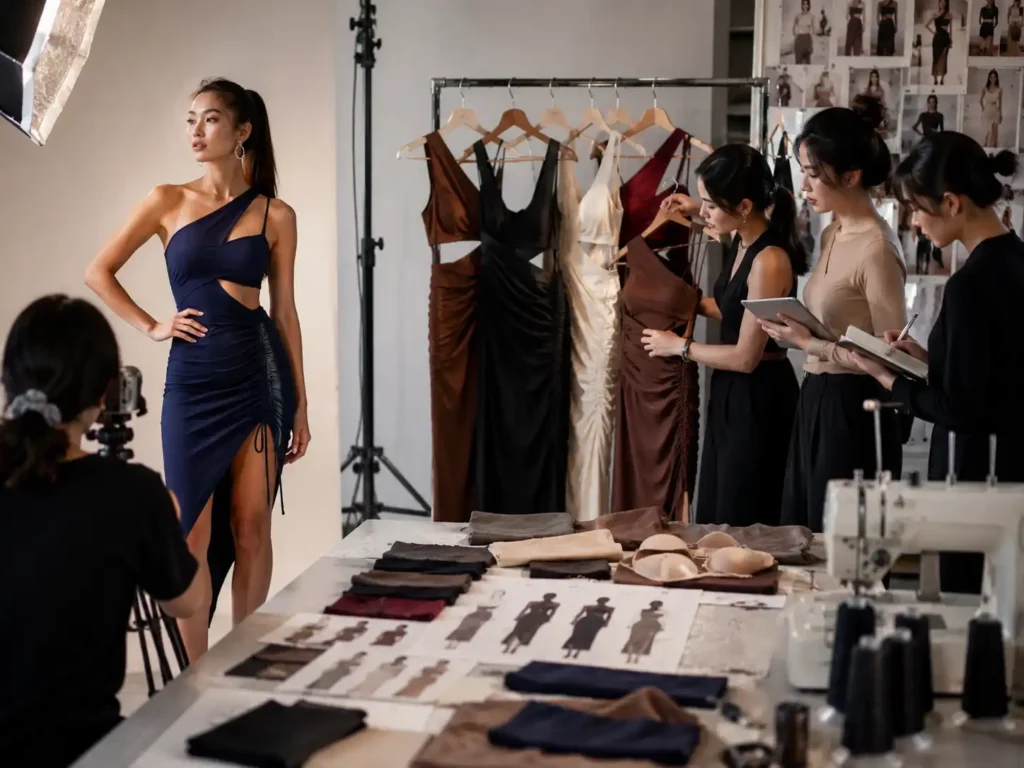
Brand Teams Duolan Fits Best
Duolan is structured for established fashion brands developing sequin party, cocktail, holiday, going-out and occasion dress programs. Strong alignment comes from teams needing surface control, sample accuracy, fit comfort, PP standards, bulk QC and protected delivery.
Partywear Brands
Partywear brands need visual impact, body confidence and secure movement. Duolan supports sequin mini dresses, bodycon styles, cut-out dresses, mesh-sequin designs and going-out silhouettes with attention to stretch recovery, opacity, strap strength, inner comfort and zipper smoothness.
Holiday Dress Brands
Holiday dress brands need festive shine, reliable launch timing and protected delivery condition. Duolan reviews sequin direction, velvet or metallic pairings, lining comfort, surface abrasion, carton pressure and packing method before bulk shipment.
Occasionwear Brands
Occasionwear brands often need cocktail, semi-formal, wedding guest and event-ready sequin styles. Duolan supports polished shine, balanced garment weight, refined lining, hem protection and controlled surface QC for dresses needing event value without unstable construction.
Cocktail Dress Brands
Cocktail dress brands need a refined shine level and semi-formal fit. Duolan reviews midi lengths, strapless construction, satin lining, invisible zipper control, side seam smoothness and surface consistency for sequin cocktail capsules.
Product Teams
Product teams need samples proving more than shine. Duolan organizes revisions around sequin density, base fabric, lining, scratch points, zipper distortion, body tension, hem edge, packing recovery and PP readiness.
Sourcing Offices
Sourcing offices evaluate suppliers through sample accuracy, audit readiness, production discipline, QC communication and delivery protection. Duolan supports supplier review with manufacturing facts, sequin construction logic, SMETA record, packing control and structured project information.
Sequin Dress Product System for Brand Collections
Sequin dress programs need clear product structure. Established fashion brands often build one launch around mini styles, fitted party dresses, cocktail looks, holiday statements, going-out pieces and evening-inspired silhouettes. Duolan connects dress type, base fabric, sequin direction, lining comfort, construction risk and packing protection before sampling begins.

Sequin Mini Dresses
Sequin mini dresses need strong shine with secure short-length control. Duolan supports party minis, birthday dresses, holiday minis and going-out silhouettes with careful review of hem edge, lining coverage, strap tension and inner comfort.
- Control short hem edges without scratching the wearer.
- Review lining coverage, zipper smoothness and strap load.
- Protect raised surfaces during folding, packing and shipment.

Sequin Bodycon Dresses
Sequin bodycon dresses need stretch control, body shaping and comfort. Duolan reviews base fabric recovery, side seam tension, opacity, lining compatibility and sequin durability across fitted silhouettes.
- Balance body tension without losing stretch recovery.
- Check opacity, side seams and zipper area during fitting.
- Reduce missing sequins around high-stretch garment zones.
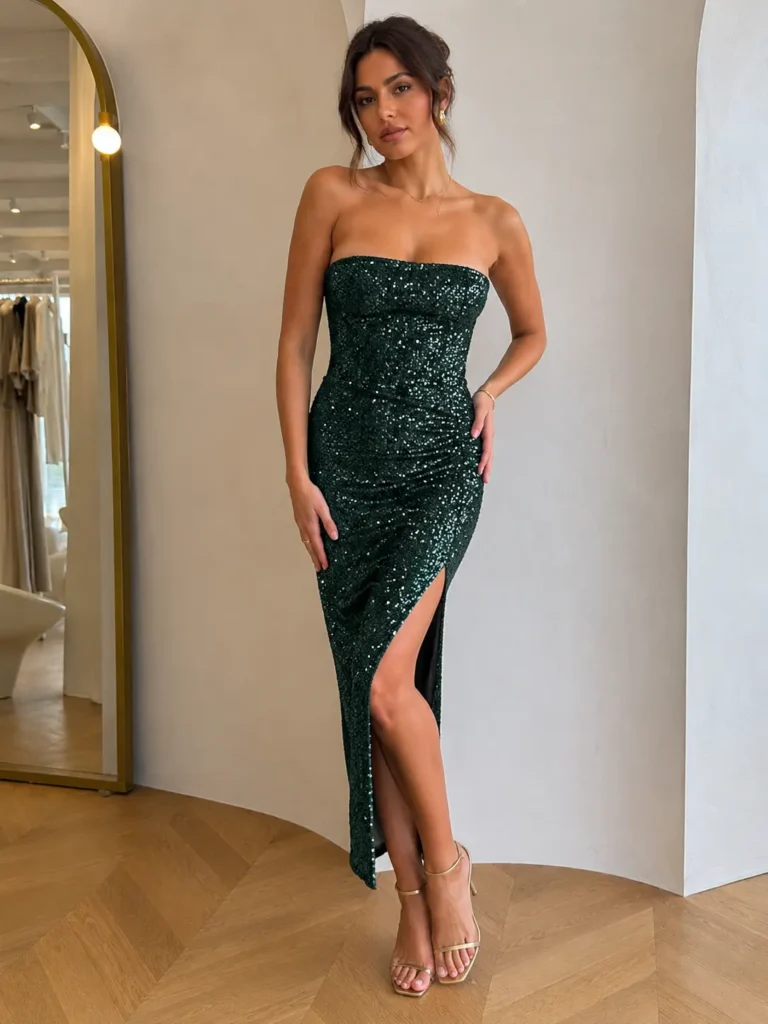
Sequin Cocktail Dresses
Sequin cocktail dresses need refined shine and polished event value. Duolan supports strapless, one-shoulder, midi, fitted and semi-formal sequin styles with controlled lining, smooth closure, surface direction and final presentation.
- Keep shine refined for cocktail and semi-formal events.
- Review bust support, zipper smoothness and inner comfort.
- Control surface direction across bodice, skirt and side panels.

Sequin Holiday Dresses
Sequin holiday dresses need festive impact and launch-ready delivery. Duolan supports holiday capsules with dense sequin, velvet pairings, metallic surfaces and fitted mini-to-midi shapes.
- Review festive shine, garment weight and delivery timing.
- Protect surfaces from abrasion, pressure and carton movement.
- Check pile, metallic finish and sequin direction together.

Sequin Going-out Dresses
Going-out sequin dresses need instant visual recognition with secure movement. Duolan supports halter, backless, cut-out, ruched and fitted styles with attention to neckline stability, edge finish, stretch recovery and comfort.
- Keep body confidence through movement and social wear.
- Review cut-out edges, straps, lining and side seam tension.
- Control inner scratch points before approving PP samples.

Sequin Evening-inspired Dresses
Evening-inspired sequin dresses need longer lines, controlled weight and refined finishing. Duolan supports midi, long, slit and soft formal-inspired styles without shifting into bridal gown positioning.
- Balance weight, drape and hem control in longer styles.
- Review lining movement, slit height and surface consistency.
- Protect hem edges and raised surfaces during packing.

Sequin Mesh Dresses
Sequin mesh dresses combine sheer effect, surface shine and stretch risk. Duolan reviews mesh recovery, coverage map, lining boundaries, sequin weight, edge treatment and sleeve comfort before bulk.
- Map coverage zones before sample approval.
- Review mesh recovery, sequin weight and lining relation.
- Control edge finish around neckline, sleeve and cut-out.

Sequin Sleeve Dresses
Sequin sleeve dresses need arm comfort and surface protection. Duolan supports long-sleeve, puff-sleeve, fitted sleeve and sheer-sleeve sequin styles with focus on armhole comfort, sleeve friction, lining and wrist edge.
- Reduce sleeve friction during arm movement and long wear.
- Review armhole, cuff edge and inner comfort carefully.
- Control sleeve panel direction across left and right sides.
Sequin Fabric Decisions Before Sampling
Sequin fabric selection shapes visual value, sample cycle, cost structure, sewing route, comfort and packing protection. A strong-looking sequin fabric may still create production problems if the base cloth stretches poorly, sequins shed during cutting, seam allowances become too thick, or raised surfaces crush during delivery. Duolan reviews sequin materials before pattern and sample work begin.
All-over Sequin Fabric
All-over sequin fabric creates immediate party, holiday and evening impact. Duolan reviews density, weight, direction, base cloth, shine angle and missing-piece risk before development. Dense sequin can raise perceived value, yet heavier surfaces can pull straps, change hem fall and increase seam bulk.
- Cost influence: Higher density raises material use, operation time and QC pressure.
- Sample influence: Weight, drape, neckline support and zipper thickness need early testing.
- QC focus: Direction, missing sequins, shedding, seam bulk and surface pressure require review.
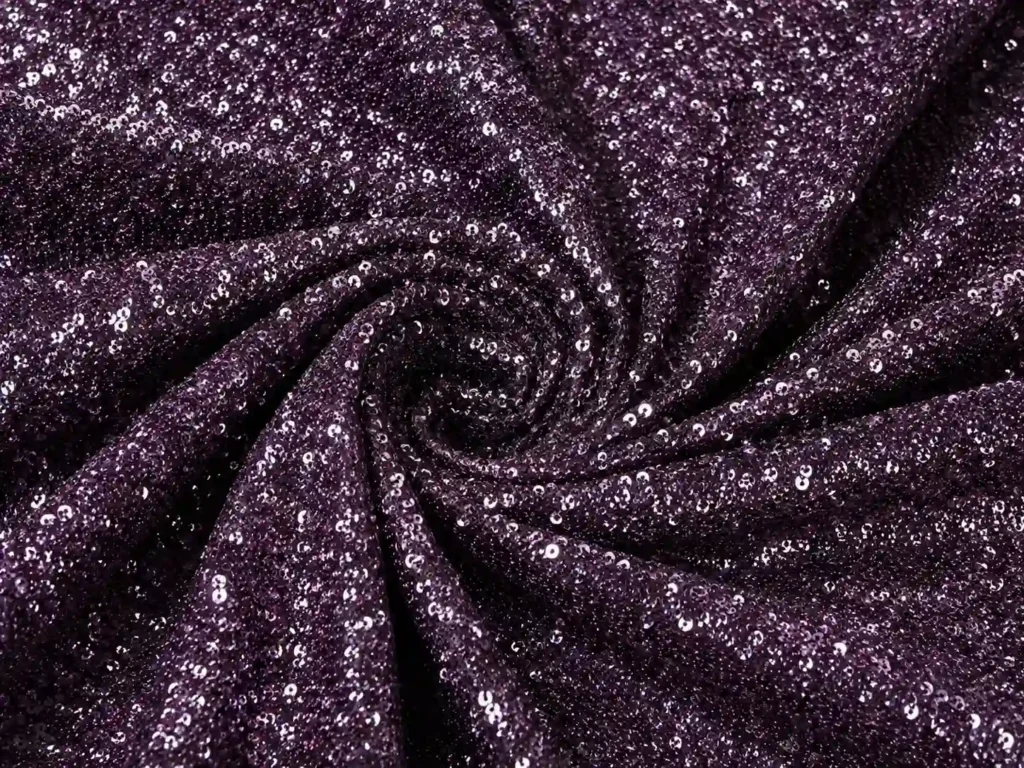
Stretch Sequin Base
Stretch sequin fabric supports bodycon, going-out and fitted party dresses. Duolan reviews recovery, opacity, sequin attachment strength, stretch direction and seam elasticity. A stretch base can improve comfort, yet weak recovery can create bagging around hip, waist or hem.
- Cost influence: Stable stretch base reduces fit risk but needs stronger material review.
- Sample influence: Body tension, side seams and zipper areas require fit testing.
- QC focus: Recovery, missing pieces, transparency and seam stretch need checking.

Sequin Mesh
Sequin mesh creates sheer shine for sleeves, panels, overlays and fitted styles. Duolan reviews mesh recovery, coverage, lining map, sequin weight and edge behavior. Mesh can look refined in photos, yet weak lining decisions may create exposure or scratch risk.
- Cost influence: Lining map, panel placement and edge finishing affect production cost.
- Sample influence: Coverage, sleeve comfort and cut-out stability need movement review.
- QC focus: Distortion, transparency, sequin loss and edge rolling require inspection.

Sequin Velvet and Metallic Base
Sequin velvet and metallic bases suit holiday launches and evening-inspired ranges. Duolan reviews pile direction, shine balance, rubbing risk, heat sensitivity, seam thickness and fold recovery. These materials need careful handling because surface change may appear after pressing or packing.
- Cost influence: Surface protection, careful pressing and packing can raise production complexity.
- Sample influence: Lighting effect, pile direction and color depth need approval review.
- QC focus: Crushed pile, rubbing, shade drift and pressure marks need final checks.

Partial Sequin Panels
Partial sequin panels create controlled sparkle without full-body surface cost. Duolan reviews placement, seam transition, lining relation, fabric compatibility and body position. Panel design can reduce weight and cost, yet poor placement can look disconnected or create uncomfortable seam zones.
- Cost influence: Panel placement controls material use, labor route and detail value.
- Sample influence: Sequin-to-fabric seams, lining and body position need review.
- QC focus: Panel symmetry, seam comfort and surface alignment require attention.

Mixed Sequin and Rhinestone Surfaces
Mixed sequin, rhinestone or bead surfaces create high-value event impact. Duolan reviews density, attachment method, garment weight, backing comfort, risk of falling pieces and packing protection. Mixed embellishment should elevate the dress without making wear unstable or production difficult.
- Cost influence: Decoration density, material grade and attachment method affect unit cost.
- Sample influence: Weight balance, strap stress and inner comfort need early review.
- QC focus: Missing pieces, weak attachment, scratch points and carton friction need checks.

Sequin Construction and Inner Comfort Control
Sequin construction decides whether a shiny dress can become a wearable, repeatable product. Duolan reviews sequin direction, cutting loss, seam trimming, sewing route, lining comfort and packing method before wider production. Strong construction prevents a beautiful sample from becoming an uncomfortable or inconsistent bulk order.
Sequin Direction Review
Sequin direction affects light reflection, shade perception and panel consistency. Duolan checks grain direction across front, back, sleeves, skirt panels and side seams. When direction changes accidentally between panels or sizes, bulk garments can look mismatched under lights, photography or retail display.
- Lock surface direction before cutting markers begin.
- Compare panel reflection under normal and bright lighting.
- Keep left and right panels visually balanced.

Cutting and Sequin Loss Control
Sequin fabric can shed, break or shift during cutting. Duolan reviews cutting direction, layer height, panel numbering, allowance zones and fabric handling before production. Cutting discipline helps reduce missing pieces, uneven edges and panel mismatch.
- Control cutting direction for reflection and texture consistency.
- Separate panels clearly to avoid direction mixing.
- Review loss-prone zones before wider production release.

Seam Trimming and Sewing Route
Sequin seam allowance can become thick, rough or difficult to stitch. Duolan reviews whether sequins need clearing from seam zones, especially near zipper, side seam, armhole, neckline and hem. Clean seam planning improves comfort, appearance and zipper function.
- Reduce seam bulk where raised surfaces affect fit.
- Review zipper, armhole and neckline sewing routes.
- Keep side seams smooth under body tension.

Lining for Scratch Prevention
Lining is part of sequin dress construction, not an afterthought. Duolan reviews lining weight, stretch, color, length, attachment and skin feel. A proper lining reduces scratch points, improves coverage and helps the outer sequin layer hang correctly.
- Use lining to protect skin-contact areas.
- Match lining stretch with base fabric recovery.
- Review armhole, neckline and hem comfort carefully.

Packing Protection Before Delivery
Sequin surfaces can be damaged by folding, friction and carton pressure. Duolan reviews packing method, fold position, surface-to-surface contact, individual protection and carton arrangement before shipment. Packing protection helps garments arrive with clean shine and fewer crushed areas.
- Reduce friction between raised sequin surfaces.
- Avoid pressure on high-shine or embellished zones.
- Confirm fold recovery before shipment planning.

Fit and Support for Sequin Dresses
Sequin dresses carry weight, texture and surface friction, so fit cannot follow ordinary dress rules. Straps, neckline, bust support, zipper, armhole, sleeve, side seam, hem and lining all need review under movement. Duolan checks fit and support before PP approval to protect both visual impact and wear confidence.

Bust and Neckline Support
Sequin dresses often feel heavier than plain fabric dresses. Duolan reviews bust curve, neckline height, inner support, lining, zipper relation and upper-body tension. Strapless, sweetheart, square-neck and low-neck sequin styles need secure positioning without harsh pressure.
- Review bust support under garment weight.
- Control neckline stability during sitting and movement.
- Match lining with outer sequin fabric behavior.

Strap and Shoulder Load
Straps carry sequin garment weight, especially on mini, halter and going-out styles. Duolan reviews strap width, attachment, adjusters, seam reinforcement and shoulder comfort. Weak strap planning can cause pulling, twisting or discomfort during long event wear.
- Strengthen strap points before bulk approval.
- Check halter, cami and thin-strap tension.
- Review shoulder comfort with garment weight included.

Bodycon Stretch Recovery
Sequin bodycon dresses need stretch, recovery and surface durability working together. Duolan reviews base stretch, sequin attachment, side seam tension, opacity, hip recovery and waist behavior. Fitted sequin styles should shape the body without shedding or losing recovery.
- Test stretch recovery after movement and sitting.
- Review opacity under body tension.
- Control side seam balance across sizes.

Zipper and Back Line
Zipper areas are high-risk zones for sequin dresses. Duolan reviews seam bulk, zipper insertion, center-back balance, lining connection and pull smoothness. Thick sequin allowances can create puckering, stiffness or uncomfortable pressure without careful seam planning.
- Clear seam bulk near zipper areas.
- Keep center-back line smooth and wearable.
- Check zipper movement before PP confirmation.

Sleeve and Armhole Comfort
Sequin sleeves and armholes can scratch during movement. Duolan reviews seam edge, lining, sleeve width, armhole depth and wrist finish. Long-sleeve sequin dresses need arm mobility and comfort without surface damage or sleeve twisting.
- Smooth armhole edges before fit approval.
- Review sleeve friction through movement.
- Protect wrist and inner arm contact zones.

Hem, Slit and Edge Security
Sequin hems and slits affect walking, comfort and surface durability. Duolan reviews hem finish, slit reinforcement, inner protection, edge weight and line balance. Mini styles need secure coverage; long styles need hem protection from surface friction.
- Keep hem edges smooth against skin.
- Reinforce slit areas under movement stress.
- Protect lower edges during packing and delivery.
Sequin Detail and Craft Risk Matrix
| Sample Type | Role in Collection | What It Confirms |
|---|---|---|
| Concept Sample | Tests whether the collection direction can become garments | Silhouette, fabric mood, proportion, key detail and style potential |
| Fit Sample | Reviews wearing balance and standard-size fit | Bust, waist, hip, length, neckline, comfort, movement and coverage |
| Revised Sample | Confirms comments and development adjustments | Pattern correction, fabric change, lining, trims, measurement and construction |
| Photo Sample | Supports campaign, ecommerce or internal visual review | Color, drape, surface finish, styling effect and presentation quality |
| Salesman Sample | Supports sales, showroom or internal commercial evaluation | Quality feel, fit impression, brand alignment and product readiness |
| PP Sample | Becomes the production benchmark | Material, measurement, workmanship, labels, packing and QC standards |
| Bulk Reference Sample | Supports repeat or extended production | Production memory, BOM record, color reference and key QC notes |
Product-to-Sequin Fabric Matching Matrix
Sequin fabric choice should follow dress type, event role and fit requirement. Duolan reviews the connection between product direction and surface material before sampling begins.
| Dress Type | Best Sequin Direction | Key Risk | Development Focus |
|---|---|---|---|
| Sequin Mini Dress | All-over sequin, stretch sequin, soft lining | Hem scratch, short-length exposure | Hem edge, lining, strap strength, packing |
| Sequin Bodycon Dress | Stretch sequin base, jersey lining | Recovery loss, side seam tension | Stretch review, opacity, zipper, fit sample |
| Sequin Cocktail Dress | Refined sequin mesh, compact lining | Over-shine, zipper puckering | Semi-formal shine, smooth closure, lining comfort |
| Sequin Holiday Dress | Dense sequin, velvet mix, metallic surface | Surface abrasion, carton pressure | Direction control, packing protection, surface QC |
| Sequin Long-sleeve Dress | Sequin mesh, lined sleeve, lightweight sequin | Arm friction, sleeve twisting | Armhole comfort, sleeve width, inner finish |
| Sequin Mesh Dress | Sequin mesh with coverage lining | Transparency, edge distortion | Coverage map, lining boundary, edge finish |
| Sequin Evening-inspired Dress | Dense sequin, soft lining, long panels | Weight balance, hem damage | Drape review, lining movement, hem protection |
| Sequin Going-out Dress | Stretch sequin, cut-out panels, ruched base | Movement exposure, scratch zones | Fit support, edge finish, wear review |
From Sequin Dress Brief to PP Approval
Sequin dress development needs staged review because fabric, construction, comfort and packing risks appear at different points. Duolan moves from design brief to PP approval through controlled checks before bulk production.
Step 1|Style and Event Direction Review
Duolan reviews whether the project belongs to partywear, holiday dress, cocktail, going-out, evening-inspired or occasion range. Early review covers silhouette, length, neckline, sleeve, sequin density, surface shine, target launch timing, expected wearing context and campaign use.
Step 2|Sequin Fabric and Base Review
Sequin fabric is reviewed by base cloth, weight, stretch, recovery, direction, density, color, lining need and surface durability. Dense, stretch, mesh, metallic and mixed embellishment options need different development paths because each one affects fit, comfort, cost and packing.
Step 3|First Sample Development
The first sample checks whether sequin fabric supports the intended body shape, shine level, lining comfort and sewing route. Duolan reviews neckline, strap, zipper, armhole, hem, side seam and surface direction to identify correction needs before deeper development.
Step 4|Fit, Lining and Surface Revision
Revision work focuses on fit support, lining comfort, sequin scratch points, zipper smoothness, seam bulk, stretch recovery and surface consistency. Comments are translated into pattern, construction, material and workmanship corrections.
Step 5|PP Sample and Bulk Readiness
PP sample approval locks sequin direction, fabric batch, lining, measurements, BOM, sewing route, QC focus, packing method, labels and delivery requirements. Bulk production begins only after the approved dress has been translated into production standards.
Sample Standards for Custom Sequin Dresses
Sequin dresses require sample stages beyond ordinary visual approval. Fabric swatches, first samples, comfort checks and PP samples each answer different production questions before bulk begins.
| Sample Type | What It Confirms | Sequin Dress Focus | Bulk Value |
|---|---|---|---|
| Sequin Swatch Trial | Surface direction and material feel | Shine, density, weight, backing, color | Reduces fabric mismatch before sampling |
| First Sample | Initial silhouette and construction route | Fit, sequin direction, lining, zipper, hem | Reveals early comfort and sewing risks |
| Fit Sample | Body balance and movement security | Bust, waist, hip, strap, side seam | Converts comments into pattern and measurement updates |
| Lining / Comfort Sample | Inner feel and scratch prevention | Armhole, neckline, hem, sleeve, side seam | Reduces wearer discomfort before PP approval |
| Photo Sample | Campaign and ecommerce appearance | Light reflection, body line, color depth | Supports launch image and presentation review |
| PP Sample | Final production benchmark | Measurements, workmanship, fabric, packing | Becomes standard for cutting, sewing, QC and delivery |
| Golden Sample | Repeat production reference | Final fit, surface direction and construction memory | Supports repeat orders and seasonal refreshes |
Sequin Dress Workmanship and Surface QC
Sequin workmanship must be proven through surface detail, inner comfort and production checks. Strong sequin dress quality depends on direction consistency, missing-piece control, seam management, zipper smoothness, edge comfort and packing protection.

Sequin Direction Consistency
Surface direction affects shine and color perception. Duolan checks panel direction across front, back, side seams, sleeves and skirt sections. Direction standards are compared against approved samples, especially for dense sequin, velvet-sequin and metallic surfaces.
- Keep reflection consistent across every garment panel.
- Review left-right panels before production continues.
- Check shine under different lighting conditions.

Sequin Loss and Missing Pieces
Missing sequins can reduce garment value quickly. Duolan checks cutting edges, seam zones, high-stretch areas, handling points and final surface appearance. Missing-piece control requires inspection during cutting, sewing and final packing, not only after completion.
- Inspect loss-prone areas during production.
- Check missing pieces near seams and edges.
- Review finished garments before individual packing.

Seam Thickness and Clean Sewing
Sequin seam zones can become bulky or rough. Duolan reviews seam allowance, clearing requirements, needle choice, thread strength and pressing limits. Clean sewing helps improve body comfort and reduce zipper or side seam distortion.
- Reduce raised thickness in high-pressure seams.
- Review side seams and waist seams carefully.
- Keep sewing lines clean against textured surfaces.

Zipper Area Control
Zippers can distort when sequin allowance is too thick. Duolan reviews zipper opening, seam clearing, lining attachment, hook support and back line smoothness. Smooth zipper control is especially important for fitted sequin cocktail and bodycon dresses.
- Keep zipper movement smooth and clean.
- Reduce puckering along center-back lines.
- Review zipper comfort during fit checks.

Armhole, Neckline and Hem Edge
Edges are frequent scratch points on sequin dresses. Duolan reviews binding, lining, edge cleaning, seam allowance and skin contact zones. Armholes, necklines, hems, slits and cuffs receive special attention because they touch the body during movement.
- Smooth edge areas before PP approval.
- Check scratch points through movement review.
- Protect hems and cuffs during final packing.

Final Surface and Packing Review
Final review checks shine, missing pieces, abrasion, crushing, fold recovery and packing method. Duolan reviews whether garments should be folded, protected or separated to reduce surface friction during transit. Packing decisions protect brand presentation after shipment.
- Inspect surface condition before bagging.
- Reduce friction between raised surfaces.
- Confirm packing method by fabric type.
Sample-to-Bulk Engineering for Sequin Dresses
Approved sequin samples need translation into controlled production standards. A strong sample does not guarantee safe bulk production when sequin direction, batch, lining, seams, zipper, edge comfort and packing method remain unclear. Duolan prepares each sequin dress program through material, cutting, sewing, lining and QC handover.
Material and Sequin Batch Locking
Sequin fabric, lining, thread, zipper, hardware, label, care label and packing materials are confirmed against approved sample records. Duolan reviews shade, shine, density, backing, stretch, weight and batch relation before bulk release. Batch locking helps reduce reflection drift and handfeel variation.
Cutting Direction and Panel Control
Cutting controls surface direction before sewing begins. Duolan reviews marker direction, panel placement, left-right balance, sleeve matching, skirt panel flow and batch separation. Panel numbering helps prevent direction mismatch across front, back, sleeves and side pieces.
Sewing Route and Sequin Clearing
Sequin seams require planned sewing routes. Duolan reviews whether sequins should be cleared from zipper, side seam, armhole, neckline, hem and slit areas. Seam clearing reduces bulk, improves comfort and helps the finished garment keep a smoother body line.
Lining, Comfort and Wear Safety
Lining standards enter the BOM and PP sample requirements. Duolan reviews lining stretch, color, length, attachment, breathability and skin feel. Neckline, sleeve, armhole, side seam and hem areas are checked for scratch prevention and movement comfort.
First-piece and Inline Surface QC
First-piece review checks whether production output matches PP expectations. Measurements, surface direction, missing pieces, zipper smoothness, lining comfort, hem edge, sleeve mobility, pressing limits and packing recovery are checked early. Inline QC prevents surface issues from spreading across bulk.
Sequin Dress Risk Control Matrix
Sequin dress risks concentrate around surface direction, garment weight, inner comfort, stretch behavior and packing protection. Duolan links each risk to a production control point before wider bulk production begins.
| Risk | Why It Happens | Common Area | Duolan Control |
|---|---|---|---|
| Direction mismatch | Panels cut against surface grain | Front, back, sleeves, skirt | Direction approval, panel numbering, cutting review |
| Missing sequins | Cutting, sewing or handling loss | Edges, seams, high-stretch zones | Loss check, inline QC, final surface review |
| Scratching | Rough sequins or exposed seam allowance | Neckline, armhole, hem, sleeve | Lining, seam cleaning, comfort review |
| Thick seam allowance | Dense sequin trapped inside seams | Side seam, zipper, waist | Seam clearing, operation standard, first-piece check |
| Zipper puckering | Fabric bulk or tension not controlled | Center back, side zipper | Zipper standard, lining control, inline check |
| Strap overload | Heavy sequin surface pulls straps | Shoulder, halter, cami straps | Strap reinforcement, weight review, fit sample |
| Stretch distortion | Base fabric recovery not stable | Bodycon, hip, waist, hem | Stretch review, wear sample, size check |
| Lining discomfort | Lining does not match outer surface | Bodice, skirt, sleeve | Lining selection, attachment check, movement review |
| Packing abrasion | Raised surfaces rub inside carton | Fold points, embellished zones | Protected packing, fold review, carton planning |
| Reflection drift | Batch or direction variation | Multi-panel garments | Batch review, shade and shine check |
Bulk Manufacturing, Packing and Brand Delivery
Sequin dress delivery requires more than garment completion. Raised surfaces, inner comfort, labels, care instructions, fold recovery and carton protection all affect final condition. Duolan connects production control with surface QC and packing protection for sequin dress programs.
Manufacturing Focus
- Material discipline: Sequin fabric, lining, thread, zipper, label and packing materials are checked against approved records.
- Surface consistency: Direction, shine, missing pieces and panel balance follow PP sample references.
- Comfort control: Neckline, armhole, sleeve, hem and side seam areas receive scratch-point review.
- Construction control: Zipper, straps, seams, lining, slits and edges are checked before final packing.

Packing Focus
- Surface protection: Raised sequin areas need reduced friction during folding, bagging and cartoning.
- Fold planning: Dense or mixed embellishment styles may need specific fold positions.
- Carton logic: Style, color, size ratio and garment surface sensitivity shape carton arrangement.
- Care label support: Care instructions should reflect sequin surface, lining and handling needs.

Delivery Support
- QC records: Surface, measurement, workmanship and packing checks support shipment review.
- Label system: Main label, size label, care label, hangtag and barcode requirements are aligned by style.
- Inspection support: Audit record, testing coordination and third-party inspection discussion support supplier evaluation.
- Repeat records: Approved sequin fabrics, linings, measurements and packing notes support future reorder planning.

Manufacturing System for Sequin Dress Programs
Sequin dress programs often include multiple surfaces, silhouettes, linings and delivery windows. Duolan’s manufacturing system supports product development, sample revision, surface control, production allocation, QC coordination and repeat delivery for established fashion brands.
Owned Factory Control
Duolan’s 16 owned womenswear factories support core sequin styles and complex dress programs needing closer control. Fitted sequin dresses, holiday capsules, cocktail styles and structured occasion pieces benefit from direct production oversight and clearer sample-to-bulk handover.
Satellite Factory Coordination
The 20+ satellite factory network supports seasonal capacity planning, repeat orders and style allocation. For holiday and party launches, coordinated allocation helps separate dense sequin, stretch sequin, mesh sequin and repeat color programs by production route.
Special Process Support
Regular partners for embroidery, dyeing, printing and finishing support decorative dress development. Sequin programs often need matching work with lining, trims, color direction, embroidery or mixed embellishment surfaces, so process coordination matters before sampling and bulk approval.
Fabric and Trim Resources
South China fabric market and Humen trim resources support comparisons across sequin fabrics, mesh bases, soft linings, zippers, straps, hardware, labels and protective packing materials. Fast sourcing comparison helps refine visual value, comfort and cost direction.
Evaluation Readiness
SMETA 2-Pillar audit record supports formal supplier evaluation. Duolan can coordinate discussions around quality standards, care labels, third-party inspection, packing method and delivery documentation for mature sourcing teams.
Anonymous Sequin Dress Project Evidence
Duolan respects brand confidentiality. The following anonymized project patterns reflect realistic cooperation ranges for established fashion brands, with 10–30 styles per order and 20,000–80,000 pieces per brand order. Each program required sequin material review, fit correction, PP standards, surface QC and packing protection.

United States|Holiday Sequin Dress Program
A US fashion brand developed a holiday sequin dress program covering mini, fitted, long-sleeve and cocktail-inspired silhouettes. The project needed strong festive shine, comfortable lining, surface consistency and protected delivery for seasonal ecommerce and retail launches.
Project data
- Region: United States
- Style scope: 12–20 styles
- Order volume: 36,000–72,000 pieces
- First sample cycle: 13–20 days depending on sequin density and lining complexity
- Main fabrics: All-over sequin, stretch sequin, soft lining and metallic trim
- Key structures: Mini hems, fitted bodices, long sleeves, back zippers and lined skirts
- Main risks: Sequin direction, missing pieces, sleeve friction, lining comfort and packing abrasion
Duolan actions
- Material review: Sequin density, surface direction and backing were checked before sampling.
- Comfort correction: Neckline, sleeve, armhole and hem scratch points were reviewed.
- PP handover: Sequin direction, lining, zipper and packing standards were documented.
- Bulk QC focus: Missing pieces, surface abrasion, measurements and fold recovery were checked.

Australia|Going-out Sequin Mini Collection
An Australian partywear brand developed a going-out sequin mini collection with bodycon, halter, cut-out and ruched styles. The project needed high visual impact with secure fit, stretch recovery and clean inner comfort.
Project data
- Region: Australia
- Style scope: 10–18 styles
- Order volume: 28,000–60,000 pieces
- First sample cycle: 11–17 days for stretch and fitted styles
- Main fabrics: Stretch sequin, mesh sequin, jersey lining and soft elastic trims
- Key structures: Halter straps, cut-outs, mini hems, ruched seams and invisible zippers
- Main risks: Body tension, short hem comfort, strap load, opacity and zipper smoothness
Duolan actions
- Stretch review: Base fabric recovery and sequin attachment were checked during fitting.
- Fit correction: Bust, waist, hip, strap and side seam tension were refined.
- Edge control: Cut-out edges, mini hems and neckline zones received comfort review.
- Production notes: Stretch, zipper, lining and hem standards were locked for bulk.

United Kingdom|Cocktail Sequin Midi Capsule
A UK occasionwear brand developed sequin cocktail midi dresses with semi-formal shine, soft lining and refined body shapes. The program needed controlled sparkle without heavy partywear styling.
Project data
- Region: United Kingdom
- Style scope: 10–14 styles
- Order volume: 24,000–48,000 pieces
- First sample cycle: 14–21 days based on lining and structure revisions
- Main fabrics: Sequin mesh, satin lining, compact woven panels and tonal trims
- Key structures: Midi hems, fitted waist, soft sleeves, center-back zipper and lined bodices
- Main risks: Semi-formal shine level, lining coverage, side seam comfort and surface consistency
Duolan actions
- Shine review: Sequin density and surface direction were adjusted for cocktail positioning.
- Lining review: Satin lining and coverage areas were checked before PP approval.
- Zipper control: Center-back zipper and side seam areas were reviewed for bulk smoothness.
- Surface QC: Missing pieces, direction and packing recovery were checked before shipment.

Europe|Evening-inspired Sequin Dress Range
A European fashion brand developed an evening-inspired sequin range with longer silhouettes, dense sequin surfaces and velvet contrast details. The project required controlled garment weight, surface direction and protective packing.
Project data
- Region: Europe
- Style scope: 14–24 styles
- Order volume: 40,000–80,000 pieces
- First sample cycle: 15–23 days for dense sequin and contrast material combinations
- Main fabrics: Dense sequin, velvet contrast, stretch mesh and soft inner lining
- Key structures: Slits, long panels, fitted bodices, lined sleeves and protected hems
- Main risks: Weight balance, hem surface damage, velvet pressure marks and carton protection
Duolan actions
- Weight review: Dense sequin styles were reviewed for strap, bodice and hem balance.
- Surface direction: Sequin direction and velvet pile were checked against approved samples.
- Hem protection: Long hems and slit edges received comfort and abrasion review.
- Packing plan: Surface-sensitive styles received protected folding and carton guidance.
Custom Fashion Collection FAQ
Fashion collection manufacturing involves style roles, fabric planning, sampling, PP standards, bulk production, QC, packing and delivery. These questions help brand teams understand how Duolan supports collection-level programs instead of single-style production.
A custom fashion collection manufacturer helps a brand develop and produce a group of garments built around a defined direction, product role, fabric plan, color story and launch calendar. Duolan supports dress-focused womenswear collections from brief review and sample development to PP approval, bulk production, QC, packing and repeat records. The focus is coordinated collection execution, not isolated garment sewing.
Single-style production focuses on one garment. Collection manufacturing manages several garments with shared brand direction, fabric logic, color rhythm, sample sequence and delivery timing. Duolan reviews how styles relate to each other, which garments need priority sampling, which materials should be grouped and how bulk production should be organized so the collection arrives as a coherent program.
Yes. Duolan supports seasonal womenswear collections, capsule drops and dress-centered product programs for established brands. The strongest fit includes fashion dresses, occasion dresses, partywear, vacation dresses, going-out styles, fashion sets, refined tops and structured garments. Development can begin from collection briefs, moodboards, reference styles, fabric direction and launch calendars.
Useful information includes a collection brief, moodboard, reference styles, product categories, target market, fabric direction, color palette, size range, target quantity, launch timing and channel requirements. Tech packs, original samples and previous production notes are also valuable. Clearer information allows Duolan to review sample priority, material needs, production route, costing logic and delivery planning more accurately.
Yes. Duolan can manage multi-style sampling through style grouping and sample priority planning. Hero styles, complex garments, uncertain fabrics and commercial core pieces may require different sample paths. Duolan organizes first samples, fit samples, revised samples, photo samples and PP samples so several garments can move forward without losing collection coherence or production readiness.
Duolan reviews fabric mood, material availability, lab dip requirements, shade bands, color-to-style allocation and bulk fabric records. For collections using multiple fabrics, we check whether satin, mesh, lace, jersey, chiffon, sequin or printed fabrics can work together visually and operationally. Color and fabric control helps the full collection feel aligned after production.
Yes, once approved samples become production standards. Duolan connects each approved style to BOM records, material locking, PP samples, production notes, QC checkpoints and packing requirements. Sample approval alone is not enough. Each garment must be translated into a clear production reference before bulk cutting, sewing, finishing and shipment.
Duolan reviews launch timing by working backward from the target release date. Key stages include collection brief review, fabric sourcing, first samples, revisions, photo or salesman samples, PP approval, material booking, bulk production, QC, packing and shipment. Calendar planning is especially important when several styles, fabrics and sample stages move together.
Yes. Duolan can follow brand requirements for main labels, care labels, size labels, hangtags, barcodes, polybags, folding, carton marks and packing ratios. For collection shipments, packing accuracy matters because several styles, colors and sizes may be delivered together. Strong packing standards support channel receiving and product presentation.
A brand can send a collection brief, product categories, style count, moodboard, reference images, fabric direction, color palette, target quantity, size range and launch date. Duolan will review the collection from a development and manufacturing perspective, including sample path, fabric feasibility, production route, QC focus, packing needs and delivery planning.

Send Your Fashion Collection Brief
Duolan works best with established womenswear brands, product teams, sourcing offices and multi-brand groups that need collection-level development and manufacturing. If your brand has a seasonal direction, capsule plan, dress program, partywear drop, resort collection or multi-style womenswear launch, our team can review how the program may move from collection brief to samples, PP standards, bulk production, QC and delivery.
You can submit a complete collection brief or an early development package with reference styles, moodboards, fabric direction, color palette, target quantity, size range and launch timing. Duolan will review product roles, sample priority, fabric feasibility, fit risk, production route, packing needs and repeat potential before recommending the next step.
Share Your Collection
- Collection type: occasion, partywear, resort, going-out, contemporary dress or fashion set program.
- Number of styles, product categories, launch timing and target quantity.
- Moodboard, reference images, fabric direction, color palette and size range.
Useful Project Details
- Sample purpose: concept, fit, photo, salesman, PP or bulk reference.
- Fabric, trim, special process, label, barcode, polybag and carton requirements.
- Current stage: collection planning, sample development, revision, PP approval or bulk production.
Duolan Will Review
Collection structure, style roles and sample priority.
Fabric, fit, construction and production feasibility.
Bulk readiness, QC focus, packing plan and repeat delivery potential.
- Name
- Tel / WhatsApp (optional)
- Email address
- Message
- Upload your files

