 Skip to content
Custom Mesh Dress Manufacturer
Custom mesh dress development and manufacturing for established fashion brands building sheer, stretch, layered, embroidered, resort, party and going-out dress programs.
Duolan supports mesh dress programs through fabric review, transparency control, lining coverage, pattern development, sample correction, PP approval, bulk production, QC, packing and repeat delivery.
- 1996 fashion R&D background supports long-term understanding of sheer womenswear and fashion dress development.
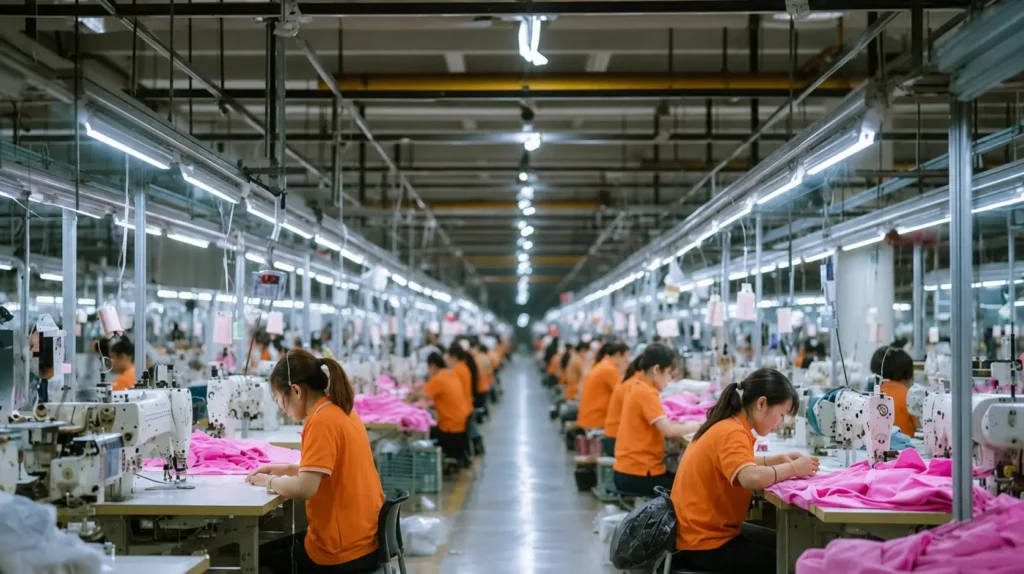
- Since 2008 manufacturing investment supports organized sample-to-bulk execution for complex dress programs.
- 16 owned womenswear factories strengthen control over fitted mesh, sheer panel and layered dress styles.
- South China fabric market access supports mesh, stretch mesh, embroidered mesh and lining sourcing.
- Humen trim market resources support zippers, elastic, binding, straps, labels and packing materials.
- SMETA 2-Pillar audit record supports supplier evaluation for established international fashion brands.







What Mesh Dress Manufacturing Really Requires
Mesh dress manufacturing is not simple transparent fabric sewing. A mesh dress needs controlled sheer effect, planned coverage, stable lining, stretch recovery, clean edges, comfortable seams and repeatable bulk appearance. Party, going-out, resort, festival and occasion mesh dresses often rely on visual lightness, yet weak construction can create exposure risk, rolling edges, distorted panels, uncomfortable seams or inconsistent transparency.
Duolan reviews mesh dresses as material-sensitive fashion products. A strong sample must show the desired sheer effect and body line while proving coverage, comfort, edge stability, fit recovery and bulk feasibility. Mesh type, lining color, stretch direction, cut-out position, seam method, layer movement and packing method are reviewed before wider production begins.
Core Manufacturing Priorities
- Sheer effect control: Transparency should match brand position, selling scene and garment structure.
- Lining coverage: Bust, waist, hip, skirt and back zones need planned coverage decisions.
- Stretch recovery: Fitted mesh styles require recovery after sitting, walking and body movement.
- Edge stability: Necklines, armholes, cut-outs and hems need clean, soft and stable finishing.
- Bulk repeatability: Transparency, color, lining placement and seam quality must remain consistent.
Brand Teams Duolan Fits Best
Duolan is structured for established fashion brands developing mesh party, going-out, resort, festival, occasion and sheer fashion dress programs. Strong alignment comes from teams needing controlled transparency, fit comfort, lining planning, PP standards, bulk QC and protected delivery.
Partywear Brands
Partywear brands need confident sheer styling with body security. Duolan supports mesh bodycon dresses, cut-out styles, ruched mesh silhouettes and fitted party dresses with attention to opacity, lining position, side seam balance and edge comfort.
Going-out Dress Brands
Going-out brands need quick visual recognition with stable wear. Duolan reviews stretch mesh recovery, neckline stability, cut-out coverage, back openings, zipper smoothness and inner comfort before PP approval.
Resort Brands
Resort and vacation brands need light, breathable mesh dresses with soft movement and packable structure. Duolan supports sheer overlays, printed mesh, layered mesh and cover-up inspired dresses with controlled transparency, hem balance and packing recovery.
Occasionwear Brands
Occasionwear brands use mesh for sleeves, panels, overlays, embroidery and refined sheer detail. Duolan reviews lining shade, motif placement, soft edge finishing, inner comfort and movement before bulk release.
Product Development Teams
Product teams need samples answering mesh-specific questions around transparency, recovery, lining, edge finish and size behavior. Duolan organizes revisions around material performance, fit and production feasibility.
Sourcing Offices
Sourcing offices evaluate suppliers through sample accuracy, audit readiness, PP standards, QC communication and delivery reliability. Duolan supports review with mesh construction logic, audit record and structured production information.
Mesh Dress Product System for Brand Collections
Mesh dress programs need a product system, not a random sheer dress list. Established fashion brands often build one launch around bodycon mesh styles, mini dresses, cut-out dresses, overlays, long-sleeve mesh pieces, embroidered mesh, sequin mesh and resort mesh dresses. Duolan connects dress type, mesh behavior, lining coverage, edge finish and production control before sampling begins.
Mesh Bodycon Dresses
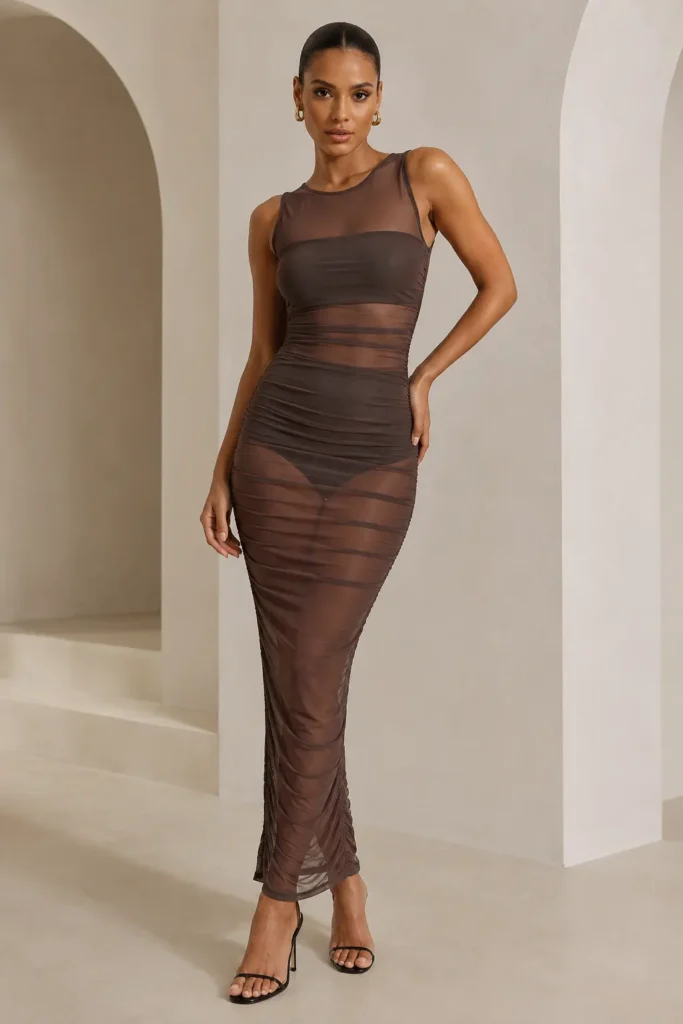
Mesh bodycon dresses need stretch, opacity and recovery working together. Duolan supports fitted mesh dresses, ruched bodycon styles and lined stretch mesh silhouettes with controlled side seams, body tension, lining relation and zipper smoothness.
- Control opacity under body tension and movement.
- Review side seam balance, recovery and lining placement.
- Protect body shape without excessive tightness or exposure.

Mesh Mini Dresses
Mesh mini dresses need sheer styling with short-length security. Duolan supports party minis, going-out minis, ruched mesh styles and lined mini silhouettes with careful hem, lining, strap and edge review.
- Review short hem safety before PP approval.
- Control lining length, edge softness and wearer comfort.
- Keep sheer impact without unstable coverage.

Mesh Cut-out Dresses
Mesh cut-out dresses need edge stability and body placement. Duolan supports cut-out mesh bodycon dresses, sheer waist panels, back openings and festival-inspired styles with planned binding, lining boundaries and movement review.
- Stabilize cut-out edges without stiffness or rolling.
- Review coverage boundaries during body movement.
- Match edge finish with stretch and mesh weight.

Mesh Overlay Dresses
Mesh overlay dresses use sheer layers over lining or base fabric. Duolan supports soft overlay dresses, draped mesh styles, printed mesh layers and occasion-ready sheer panels with attention to layer movement and hem balance.
- Keep outer mesh and lining moving together.
- Review layer length, twisting and lower-hem balance.
- Protect light mesh from distortion during production.

Mesh Long-sleeve Dresses
Mesh long-sleeve dresses need arm comfort and sleeve stability. Duolan supports sheer sleeves, embroidered mesh sleeves, printed mesh sleeves and fitted long-sleeve styles with controlled armhole, cuff, sleeve twist and skin contact.
- Review sleeve comfort through arm movement.
- Control sleeve twist, cuff edge and armhole feel.
- Match sleeve mesh with bodice structure.

Embroidered Mesh Dresses
Embroidered mesh dresses need motif placement and weight control. Duolan supports feminine occasion dresses, vacation mesh styles and semi-formal sheer panels with careful embroidery density, lining color, transparency and bulk repeatability.
- Review embroidery weight before sample approval.
- Match lining color with motif and transparency.
- Control placement across size range and panels.

Sequin Mesh Dresses
Sequin mesh dresses combine sheer structure with raised surface risk. Duolan supports holiday, party and cocktail-inspired mesh dresses with sequin weight review, lining protection, edge comfort and packing control.
- Check sequin weight on mesh base early.
- Protect skin-contact zones with suitable lining.
- Review packing method for raised surfaces.

Resort Mesh Dresses
Resort mesh dresses need lightness, airflow and easy movement. Duolan supports sheer resort dresses, printed mesh cover-up dresses, soft layered dresses and vacation-ready silhouettes with controlled transparency, packing recovery and fabric handfeel.
- Keep resort mesh light, breathable and packable.
- Review transparency level and lining requirement.
- Control hems, layers and post-packing recovery.
Mesh Fabric Decisions Before Sampling
Mesh fabric selection shapes visual effect, fit, sample cycle, cost structure, QC focus and delivery condition. A mesh material may look attractive in reference photos yet fail during stretch, cutting, sewing, lining attachment, edge finishing or packing. Duolan reviews mesh direction before pattern and sample work begins.
Stretch Mesh
Stretch mesh supports bodycon, cut-out and going-out dresses. Duolan reviews stretch direction, recovery, transparency under tension, handfeel and seam compatibility. Strong stretch mesh can create confident body shape, while weak recovery can cause bagging, side seam movement or unstable coverage.
- Cost influence: Better recovery reduces fit risk and improves repeat production stability.
- Sample influence: Body tension, side seam balance and opacity need body review.
- QC focus: Recovery, transparency, seam stretch and twisting require inspection.

Power Mesh
Power mesh supports shaping and structure in fitted dresses. Duolan reviews compression, comfort, thickness, lining relation and seam behavior. It can support body control, yet excessive pressure may reduce comfort during longer wear or create visible tension across body zones.
- Cost influence: Stronger mesh may improve structure but requires careful fit correction.
- Sample influence: Waist, hip and bust pressure need movement review.
- QC focus: Compression consistency, seam stress and size grading need control.

Soft Sheer Mesh
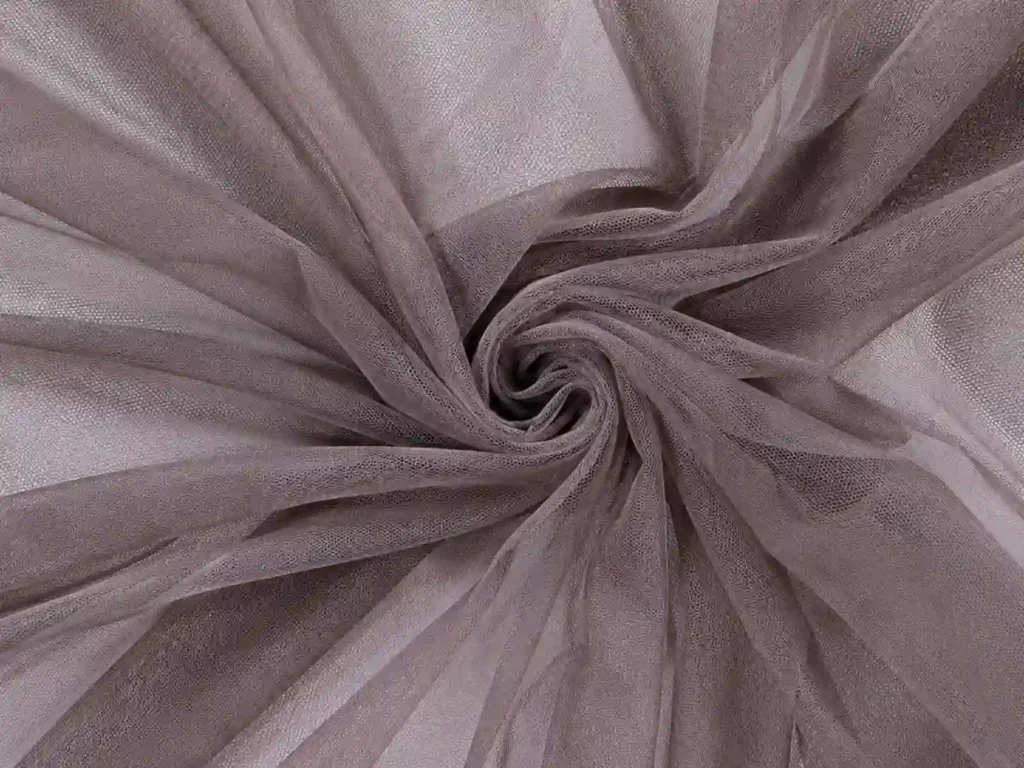
Soft sheer mesh creates lightness for overlays, sleeves and resort dresses. Duolan reviews softness, transparency, edge behavior, snagging risk and drape. It gives visual delicacy, yet weak handling can create wavy hems, rolling edges or unstable layers.
- Cost influence: Fine mesh can increase handling, sewing and inspection needs.
- Sample influence: Hem finish, sleeve comfort and layer movement need review.
- QC focus: Snags, distortion, edge rolling and transparency consistency need checks.
Embroidered Mesh
Embroidered mesh adds feminine detail and occasion value. Duolan reviews motif size, embroidery weight, backing, lining color and placement. Embroidery can elevate the garment, yet excess weight may pull mesh panels, distort hems or reduce soft movement.
- Cost influence: Motif density, placement and cutting loss affect material planning.
- Sample influence: Lining shade, motif position and panel balance need approval.
- QC focus: Loose threads, distortion, motif alignment and inner comfort require inspection.

Printed Mesh
Printed mesh supports resort, festival and statement fashion programs. Duolan reviews print clarity, stretch distortion, color depth, pattern placement and lining relation. Printed mesh needs careful review because artwork may shift visually when stretched over the body.
- Cost influence: Print method, color count and placement affect development route.
- Sample influence: Artwork scale, stretch distortion and lining color need review.
- QC focus: Color consistency, print placement and seam alignment require checks.

Sequin Mesh
Sequin mesh combines transparency with surface weight. Duolan reviews sequin density, mesh strength, stretch limit, scratch risk, lining and packing method. Sequin mesh can deliver strong holiday or party value, but poor construction can create discomfort and surface damage.
- Cost influence: Sequin density, lining and packing protection increase production complexity.
- Sample influence: Weight, inner comfort and edge finish need early testing.
- QC focus: Missing sequins, scratching, mesh distortion and abrasion need inspection.

Layered Tulle and Mesh Blends
Layered mesh and tulle blends create volume, softness and event styling. Duolan reviews layer count, transparency, hem relation, static behavior and movement. Layered mesh works best when outer layer, lining and hem levels remain balanced across sizes.
- Cost influence: Multiple layers increase cutting, sewing and hem inspection work.
- Sample influence: Layer length, movement and opacity need fitting review.
- QC focus: Twisting, uneven hems, layer shift and packing wrinkles need checks.

Transparency, Coverage and Lining Map
Mesh dress development begins with coverage planning. Sheer areas should not be left to guesswork during sewing. Duolan reviews transparency, lining, body zones, movement, size range and brand positioning before sample approval so mesh dresses remain confident, wearable and repeatable in bulk production.
Sheer Zone Planning
Sheer zones decide the visual identity of a mesh dress. Duolan reviews neckline, sleeve, waist, side panel, skirt, back opening and cut-out areas by intended exposure and wearing scene. Party, resort and occasion mesh dresses need different transparency levels, so each sheer zone is evaluated before sampling.
- Define sheer zones before pattern correction begins.
- Review exposure level by event and brand position.
- Check transparency under lighting and body movement.

Lining Coverage Map
A lining map defines where the garment covers and where mesh remains sheer. Duolan reviews bust, waist, hip, skirt, sleeve, back opening and cut-out coverage before PP approval. Clear coverage mapping helps prevent bulk garments from drifting away from approved sample intent.
- Mark lining zones for every high-risk body area.
- Keep coverage stable across all approved sizes.
- Check lining position during movement and fitting.

Nude, Tonal and Contrast Lining
Lining color changes the entire mesh dress mood. Nude lining softens exposure, tonal lining creates clean coverage, and contrast lining can become a visible design feature. Duolan reviews color pairing, transparency, shade depth and final visual balance before sample approval.
- Match lining shade with fabric and skin-coverage intent.
- Review color depth under natural and studio lighting.
- Avoid lining choices weakening premium mesh appearance.

Opacity Under Stretch
Stretch mesh becomes more transparent when pulled over the body. Duolan checks bust, waist, hip, sleeve and back zones under tension instead of relying only on flat fabric review. Stretch opacity affects fitted bodycon styles, cut-out dresses and going-out mesh programs.
- Test transparency under body tension and movement.
- Review opacity after sitting and walking.
- Match stretch recovery with lining behavior.

Layer Movement and Lining Shift
Mesh layers and linings can twist, climb or separate during wear. Duolan reviews attachment points, lining length, hem relation, static behavior and movement. A strong mesh dress should keep outer layer and lining aligned through walking, sitting and packing recovery.
- Review lining movement during real wear tests.
- Control outer mesh and lining length relation.
- Prevent lining twist, climb and hem exposure.

Fit, Stretch Recovery and Wear Confidence
Mesh dresses create fit risk through stretch, transparency and body exposure. A fitted mesh sample may look strong during static review yet fail during movement when side seams twist, lining shifts, sleeves pull or cut-out edges wave. Duolan reviews fit and recovery before PP approval.

Bust and Neckline Stability
Bust and neckline areas need coverage, shape and recovery working together. Duolan reviews neckline depth, lining edge, bust support, mesh stretch and body movement. Low necklines, sheer panels and fitted bodices require careful review before sample approval.
- Control neckline stability during sitting and movement.
- Review bust coverage under stretch and lighting.
- Match lining edge with neckline shape.

Side Seam Balance
Side seams reveal mesh distortion quickly. Duolan reviews side seam direction, stretch tension, lining relation and hip ease. Fitted mesh dresses need side seams staying clean and balanced across sizes, not twisting around the body during movement.
- Keep side seams straight under body tension.
- Review hip ease and lining pull together.
- Check side seam balance before PP approval.

Bodycon Stretch Recovery
Bodycon mesh dresses depend on recovery after wear. Duolan reviews base fabric stretch, return, opacity, seam stress and size grading. A mesh bodycon dress should shape the body without bagging around hip, waist or hem after sitting.
- Review recovery after sitting and walking.
- Check opacity across high-tension zones.
- Control stretch behavior across size range.

Sleeve and Armhole Comfort
Mesh sleeves and armholes touch the body during movement. Duolan reviews sleeve width, armhole depth, cuff edge, seam allowance and skin comfort. Long-sleeve mesh styles need mobility without twisting, scratching or restricting arm movement.
- Review sleeve movement before PP confirmation.
- Smooth armhole and cuff contact zones.
- Control sleeve twist across left and right sides.

Cut-out and Back Opening Security
Cut-outs and back openings need stable edges and controlled exposure. Duolan reviews edge recovery, binding, seam allowance, lining boundary and body placement. Open structures should stay flat, smooth and secure through walking, bending and seated movement.
- Stabilize cut-out openings without hard edges.
- Review back exposure with real body movement.
- Match binding method with mesh stretch.

Hem, Slit and Lower Edge Control
Mesh hems can wave, roll or hang unevenly. Duolan reviews narrow hem, binding, overlock, lining length, slit edge and layer relation. Lower edges should remain light, clean and balanced after sewing, pressing and packing.
- Keep mesh hems light and balanced.
- Review slit edges for comfort and stability.
- Check hem recovery after packing simulation.
Mesh Edge, Binding and Interior Finish
Mesh edges decide whether a garment feels refined or unfinished. Necklines, armholes, cut-outs, panel seams, hems and lining connections require careful finishing because mesh is light, sheer and often stretch-sensitive. Duolan reviews edge methods by appearance, recovery, comfort and production repeatability.
Neckline Edge
Mesh necklines need clean recovery and soft contact. Duolan reviews neckline shape, binding width, seam allowance, lining edge and stretch behavior. The edge should stay close to the body without rolling, gaping or scratching during movement.
- Keep neckline edges clean and stable.
- Match binding width with mesh weight.
- Review neckline recovery during fitting.

Armhole Edge
Armholes receive constant friction during wear. Duolan reviews armhole curve, seam allowance, binding, lining and skin feel. Mesh armholes should remain soft and secure without rough seams or loose waves.
- Smooth armhole contact before PP approval.
- Review arm movement and edge comfort.
- Prevent rough seams around skin-contact zones.

Cut-out Edge
Cut-out edges shape the visual impact of mesh dresses. Duolan reviews curve placement, edge stretch, binding, reinforcement and lining boundary. A cut-out edge should lie flat without stiffness, rolling or distortion.
- Keep cut-out edges flat and comfortable.
- Control edge recovery under body movement.
- Avoid bulky finishing around sheer openings.

Mesh Panel Seam
Mesh panel seams should look intentional and clean. Duolan reviews seam type, thread color, allowance width, lining relation and panel tension. Poor panel seams can make sheer areas look cheap or uneven.
- Keep panel seams slim and balanced.
- Match thread color with mesh transparency.
- Review panel tension before bulk cutting.

Hem Finish
Mesh hems need lightweight finishing. Duolan reviews narrow hem, overlock, binding or layered hem depending on fabric behavior. Hem choices affect movement, drape, transparency and packing recovery.
- Select hem finish by mesh weight.
- Keep left-right hem balance consistent.
- Review hem shape after hanging and packing.

Interior and Skin-contact Finish
The inside of a mesh dress affects comfort and perceived quality. Duolan reviews lining attachment, seam allowance, overlock quality, zipper inside and skin-contact zones. Clean interior finishing prevents scratching, twisting and visible bulk.
- Keep inner seams smooth and lightweight.
- Review lining attachment and seam thickness.
- Reduce scratch points inside sheer garments.

Mesh Detail and Construction Risk Matrix
Mesh details create value only when transparency, coverage, comfort and production control stay aligned. Duolan reviews each mesh structure by visual role, fabric behavior, wearer contact and bulk risk.
| Mesh Detail | Visual Value | Production Risk | Duolan Control |
|---|---|---|---|
| Stretch Mesh | Fitted sheer effect and body contour | Recovery loss, transparency under tension | Stretch review, opacity check, fit sample |
| Sheer Mesh Panel | Controlled exposure and layered styling | Lining mismatch, panel distortion | Coverage map, panel seam control |
| Mesh Sleeve | Soft sheer arm detail | Sleeve twist, armhole discomfort | Sleeve movement review, edge finishing |
| Mesh Cut-out | Strong party and going-out detail | Rolling edge, exposure risk | Binding method, body movement check |
| Embroidered Mesh | Feminine texture and occasion value | Weight pull, motif distortion | Motif placement, lining color review |
| Printed Mesh | Resort, festival and visual storytelling | Print stretch, color inconsistency | Artwork review, stretch check |
| Sequin Mesh | Holiday and party shine | Scratch, missing sequins, base distortion | Lining protection, surface QC |
| Layered Mesh | Volume, softness and movement | Layer twist, uneven hem | Layer length review, packing check |
Product-to-Mesh Fabric Matching Matrix
Mesh fabric choice should follow dress type, body exposure and fit requirement. Duolan connects product direction with material behavior before sample work begins.
| Dress Type | Best Mesh Direction | Key Risk | Development Focus |
|---|---|---|---|
| Mesh Bodycon Dress | Stretch mesh, power mesh, jersey lining | Transparency under tension, recovery loss | Opacity check, fit sample, side seam control |
| Mesh Mini Dress | Soft sheer mesh, stretch mesh, short lining | Hem exposure, lining shift | Short hem review, lining length, movement test |
| Mesh Cut-out Dress | Stretch mesh, bonded edge, tonal lining | Edge rolling, exposure drift | Cut-out stability, coverage map, binding |
| Mesh Overlay Dress | Soft sheer mesh, printed mesh, full lining | Layer twist, hem imbalance | Layer relation, hem control, packing recovery |
| Mesh Long-sleeve Dress | Lightweight mesh, embroidered mesh | Sleeve twist, arm friction | Sleeve mobility, armhole comfort, cuff edge |
| Embroidered Mesh Dress | Embroidered mesh, tonal lining | Motif weight, lining mismatch | Motif placement, lining shade, panel stability |
| Sequin Mesh Dress | Sequin mesh, soft lining | Scratching, base distortion | Inner protection, surface QC, packing |
| Resort Mesh Dress | Printed mesh, soft sheer mesh | Packing wrinkle, weak recovery | Fabric handfeel, fold recovery, hem balance |
From Mesh Dress Brief to PP Approval
Mesh dress development needs staged review because transparency, stretch, lining and edge risks appear at different points. Duolan moves from design brief to PP approval through controlled checks before bulk production.
Step 1|Style and Wearing Scenario Review
Duolan reviews whether the project belongs to partywear, going-out, resort, festival, occasion, vacation or sheer fashion range. Early review covers silhouette, length, exposure level, sleeve, cut-out, lining need, campaign use and launch timing.
Step 2|Mesh Fabric and Lining Review
Mesh fabric is reviewed by stretch, recovery, transparency, softness, print, embroidery, sequin surface, layer relation and lining compatibility. Lining color, weight, coverage and attachment method are reviewed alongside outer mesh, not after sample completion.
Step 3|First Sample Development
The first sample checks whether mesh supports intended fit, sheer effect, coverage, edge finish and comfort. Duolan reviews neckline, side seam, sleeve, cut-out, hem, zipper, lining and layer movement to identify correction needs before deeper development.
Step 4|Fit, Coverage and Edge Revision
Revision work focuses on fit balance, transparency, lining map, edge recovery, stretch behavior, sleeve movement and skin-contact comfort. Comments are translated into pattern, construction, material and workmanship corrections.
Step 5|PP Sample and Bulk Readiness
PP sample approval locks mesh fabric, lining coverage, measurements, BOM, edge finishing, sewing route, QC focus, labels, packing method and delivery requirements. Bulk production begins after approved sample standards become production instructions.
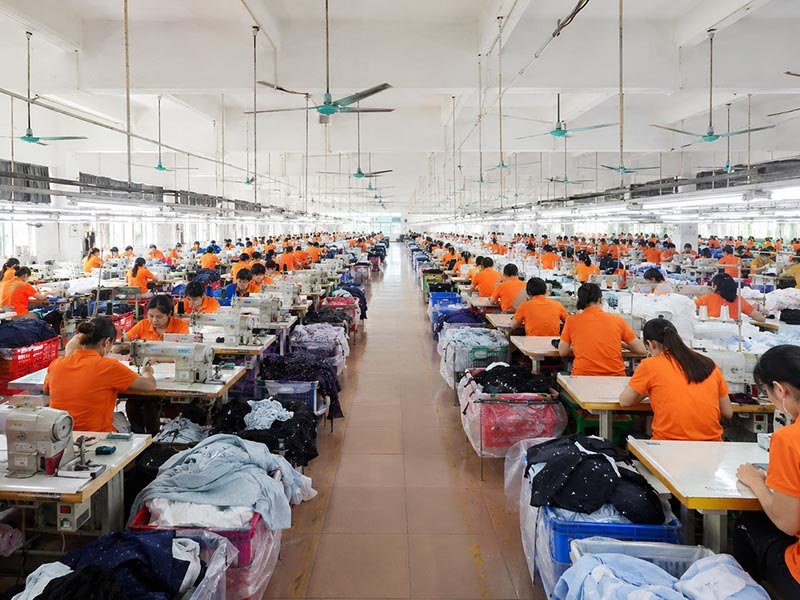
Sample Standards for Custom Mesh Dresses
Mesh dresses require sample stages beyond ordinary visual approval. Fabric trials, coverage samples, fit samples and PP samples each answer different production questions before bulk begins.
| Sample Type | What It Confirms | Mesh Dress Focus | Bulk Value |
|---|---|---|---|
| Mesh Swatch Trial | Fabric handfeel and transparency | Stretch, recovery, softness, opacity | Reduces material mismatch before sampling |
| First Sample | Initial silhouette and construction route | Fit, lining, edge, transparency | Reveals early comfort and sewing risks |
| Fit Sample | Body balance and movement security | Bust, waist, hip, side seam, sleeve | Converts comments into pattern and measurement updates |
| Lining / Coverage Sample | Sheer zones and coverage map | Bust, hip, skirt, back, cut-out zones | Locks coverage before PP approval |
| Wear Review Sample | Movement and comfort | Sitting, walking, arm movement, stretch | Reduces exposure and recovery risks |
| PP Sample | Final production benchmark | Measurements, workmanship, fabric, packing | Becomes standard for cutting, sewing, QC and delivery |
| Golden Sample | Repeat production reference | Final fit, transparency and construction memory | Supports reorders and seasonal refreshes |
Sample-to-Bulk Engineering for Mesh Dresses
Approved mesh samples need translation into controlled production standards. A strong sample does not guarantee safe bulk production when mesh direction, lining coverage, edge finish, stretch recovery, panel seams and packing method remain unclear. Duolan prepares each mesh dress program through material, cutting, sewing, lining and QC handover.risk point and inspection need before production begins.
Mesh and Lining Material Locking
Mesh fabric, lining, thread, zipper, elastic, binding, trim, label and packing materials are confirmed against approved sample records. Duolan reviews transparency, stretch, recovery, handfeel, shade, weight, lining color and batch relation before bulk release.
Cutting Direction and Stretch Control
Cutting controls shape and recovery before sewing begins. Duolan reviews stretch direction, panel placement, sleeve pair matching, print direction, embroidered motif position and batch separation. Panel numbering helps prevent direction mismatch and lining position drift.
Sewing Route and Edge Standards
Mesh dresses require planned sewing routes. Duolan reviews neckline, armhole, cut-out, side seam, hem, sleeve and lining connection standards. Edge finishing, binding, overlock and narrow hem methods are clarified before production release.
Coverage Map and Comfort Review
Coverage mapping enters PP sample and QC requirements. Duolan reviews bust, waist, hip, skirt, back, sleeve and cut-out zones for lining placement and wearer confidence. Comfort review checks scratch points, rough seams, lining twist and stretch restriction.
First-piece and Inline QC
First-piece review checks whether production output matches PP expectations. Measurements, transparency, lining coverage, seam appearance, edge finish, sleeve mobility, hem level and packing recovery are checked early. Inline QC prevents small issues from spreading across bulk.
Mesh Dress Risk Control Matrix
Mesh dress risks concentrate around transparency, lining placement, stretch behavior, edge finish and layer stability. Duolan links each risk to a production control point before wider bulk production begins.
| Risk | Why It Happens | Common Area | Duolan Control |
|---|---|---|---|
| Excess transparency | Mesh stretches or lining coverage is insufficient | Bust, hip, skirt, back | Coverage map, opacity check, fit sample |
| Lining mismatch | Lining color or length not aligned | Bodice, skirt, cut-out | Lining shade review, attachment check |
| Stretch distortion | Mesh recovery and cut direction unstable | Side seam, hip, waist | Stretch review, cutting direction control |
| Edge rolling | Edge finish unsuitable for mesh weight | Neckline, cut-out, hem | Binding method, edge recovery check |
| Cut-out waves | Opening shape lacks stability | Waist, back, side panel | Pattern correction, movement review |
| Sleeve twisting | Sleeve cut or mesh recovery unstable | Long sleeves, cuffs | Sleeve balance, arm movement check |
| Embroidery pull | Motif weight distorts mesh base | Bodice, sleeve, skirt | Motif placement, weight review |
| Sequin mesh scratch | Raised surface contacts skin | Armhole, neckline, hem | Lining protection, edge comfort check |
| Layered hem imbalance | Outer mesh and lining move separately | Overlay skirt, maxi hem | Layer length review, hem inspection |
| Shade drift | Mesh and lining batches vary | Multi-color programs | Batch review, shade approval |
Bulk Manufacturing, QC and Brand Delivery
Mesh dress delivery requires stable transparency, clean finishing, lining accuracy and protected garment condition. Duolan connects production control with QC review and packing preparation for mesh dress programs.
Manufacturing Focus
- Material discipline: Mesh fabric, lining, thread, zipper, binding, elastic and trims are checked against approved records.
- Coverage consistency: Sheer zones, lining length, opacity and body exposure follow PP sample references.
- Edge control: Neckline, armhole, cut-out, sleeve, slit and hem receive focused review.
- Fit stability: Stretch recovery, side seam balance, sleeve movement and lining behavior are checked by style.
QC Focus
- Measurement checks: Bust, waist, hip, length, sleeve, slit, hem and lining length follow PP standards.
- Transparency checks: Mesh opacity, lining coverage and sheer panel placement are reviewed under movement and light.
- Workmanship checks: Edge rolling, seam distortion, rough touch, panel alignment and hem balance receive inspection.
- Packing checks: Snagging, twisting, fold recovery and lining shift are reviewed before shipment.
Brand-ready Delivery
- Label system: Main label, size label, care label, hangtag and barcode requirements are aligned by style.
- Packing method: Soft mesh, embroidered mesh, sequin mesh and layered mesh may need different folding logic.
- Inspection support: Audit record, testing coordination and third-party inspection discussion support supplier evaluation.
- Repeat records: Approved mesh, lining, measurements and edge standards support future reorder planning.
Manufacturing System for Mesh Dress Programs
Mesh dress programs often include multiple fabrics, linings, silhouettes and launch windows. Duolan’s manufacturing system supports product development, sample revision, production allocation, QC coordination and repeat delivery for established fashion brands.
Owned Factory Control
Duolan’s 16 owned womenswear factories support core mesh styles and complex dress programs needing closer control. Fitted mesh, cut-out mesh, lined mesh, embroidered mesh and layered mesh styles benefit from direct production oversight and clearer sample-to-bulk handover.
Satellite Factory Coordination
The 20+ satellite factory network supports seasonal capacity planning, repeat orders and style allocation. For resort, party and going-out launches, coordinated allocation helps separate stretch mesh, embroidered mesh, printed mesh and repeat color programs by production route.
Special Process Support
Regular partners for embroidery, dyeing, printing and finishing support mesh dress development. Mesh programs often involve printed effects, embroidered motifs, dyed tones or sequin surfaces, so process coordination matters before sampling and bulk approval.
Fabric and Trim Resources
South China fabric market and Humen trim resources support comparisons across mesh fabrics, stretch bases, linings, zippers, binding, elastic, labels and protective packing materials. Fast sourcing comparison helps refine transparency, comfort and cost direction.
Evaluation Readiness
SMETA 2-Pillar audit record supports formal supplier evaluation. Duolan can coordinate discussions around quality standards, care labels, third-party inspection, packing method and delivery documentation for mature sourcing teams.
Anonymous Mesh Dress Project Evidence
Duolan respects brand confidentiality. The following anonymized project patterns reflect realistic cooperation ranges for established fashion brands, with 10–30 styles per order and 20,000–80,000 pieces per brand order. Each program required mesh material review, coverage planning, fit correction, PP standards, QC and delivery discipline.
United States|Going-out Mesh Bodycon Program
A US fashion brand developed a mesh bodycon program with fitted, ruched and cut-out silhouettes for going-out launches. The project needed strong sheer styling with controlled opacity, lining coverage, stretch recovery and smooth zipper execution.
Project data
- Region: United States
- Style scope: 12–18 styles
- Order volume: 32,000–68,000 pieces
- First sample cycle: 11–18 days depending on stretch and lining revision
- Main fabrics: Stretch mesh, soft lining and jersey base
- Key structures: Cut-outs, ruched seams, bodycon panels, back zippers and mini hems
- Main risks: Opacity under stretch, side seam balance, lining coverage and zipper smoothness
Duolan actions
- Opacity review: Stretch mesh was checked under body tension before PP approval.
- Fit correction: Bust, waist, hip and side seam balance were refined during sampling.
- Coverage mapping: Lining zones were defined for bust, hip, skirt and cut-out areas.
- Bulk QC focus: Transparency, recovery, zipper smoothness and edge finish were checked by style.

Australia|Resort Mesh Dress Collection
An Australian resort brand developed lightweight mesh dresses for vacation and travel styling. The program focused on soft sheer movement, printed mesh, breathable handfeel and packing recovery for ecommerce and resortwear capsules.
Project data
- Region: Australia
- Style scope: 10–16 styles
- Order volume: 26,000–56,000 pieces
- First sample cycle: 12–19 days depending on print and layer review
- Main fabrics: Soft sheer mesh, printed mesh and lightweight lining
- Key structures: Overlay panels, resort hems, soft sleeves and relaxed silhouettes
- Main risks: Transparency level, layer movement, packing wrinkles and hem imbalance
Duolan actions
- Fabric review: Soft mesh handfeel, transparency and print behavior were checked before sampling.
- Layer control: Outer mesh and lining movement were reviewed during fitting.
- Hem review: Lightweight hems were checked for balance after hanging and packing.
- Packing check: Fold recovery and wrinkle condition were reviewed before shipment planning.

United Kingdom|Occasion Mesh Midi Capsule
A UK occasionwear brand developed embroidered mesh midi dresses with tonal lining and structured support panels. The project needed refined transparency, motif placement, lining color and clean edge finishing for semi-formal event wear.
Project data
- Region: United Kingdom
- Style scope: 8–14 styles
- Order volume: 22,000–48,000 pieces
- First sample cycle: 14–21 days based on embroidery and lining complexity
- Main fabrics: Embroidered mesh, tonal lining and compact woven support panels
- Key structures: Midi hems, lined bodices, mesh sleeves, back zippers and soft edges
- Main risks: Embroidery weight, lining color, motif placement and edge finish
Duolan actions
- Motif review: Embroidery placement and weight were reviewed against garment structure.
- Lining review: Tonal lining color was tested under natural and studio lighting.
- Edge control: Neckline, sleeves and hems received soft finishing review.
- PP handover: Motif placement, lining and edge standards were prepared for bulk.

Europe|Festival and Party Mesh Range
A European fashion brand developed festival and party mesh dresses with cut-outs, sequin mesh and contrast lining. The collection required bold sheer placement, secure fit, inner comfort and surface QC across multiple statement styles.
Project data
- Region: Europe
- Style scope: 14–24 styles
- Order volume: 38,000–80,000 pieces
- First sample cycle: 13–22 days for sequin mesh and cut-out development
- Main fabrics: Stretch mesh, cut-out mesh, sequin mesh and contrast lining
- Key structures: Back openings, bodycon panels, mesh sleeves, mini hems and lined cut-outs
- Main risks: Cut-out edge recovery, sheer panel placement, inner comfort and surface QC
Duolan actions
- Cut-out review: Edge recovery and body placement were checked during fitting.
- Comfort check: Armholes, neckline and hem zones were reviewed for skin contact.
- Surface QC: Sequin mesh areas were checked for scratch risk and missing pieces.
- Bulk control: Coverage, surface condition and packing recovery were tracked before delivery.

Custom Mesh Dress Manufacturing
Before developing a custom mesh dress, the most important points are the mesh type, transparency level, lining coverage, stretch direction, body fit, edge finish and production quantity. Mesh dresses are more sensitive than ordinary dresses because small issues in opacity, lining length, side seam balance or hem control can affect both comfort and appearance.
For best results, brands should provide reference images, sketches, tech packs, target fabric direction, size range, colorways, order quantity and any special requirements for labels or packaging.
Transparency is controlled through fabric selection, lining color, lining coverage and stretch testing. A mesh fabric may look acceptable when flat, but it can become much more transparent when stretched over the bust, waist, hip or back area.
During development, we review sheer zones, lining placement and opacity under movement. For fitted mesh dresses, bodycon styles and cut-out designs, this step is especially important before PP sample approval.
Not always. Some mesh dresses use full lining, some use partial lining, and some keep selected areas sheer for design effect. The right solution depends on the dress style, wearing occasion, brand positioning and target customer.
For example, party mesh dresses may need bust and hip coverage, while resort mesh dresses may use lighter lining or sheer overlay effects. A clear lining map helps avoid exposure risk and keeps bulk production consistent with the approved sample.
Common options include stretch mesh, power mesh, soft sheer mesh, printed mesh, embroidered mesh, sequin mesh, tulle and layered mesh blends. Each fabric has different risks.
Stretch mesh is suitable for bodycon and going-out dresses. Soft sheer mesh works well for overlays and resort styles. Embroidered mesh adds occasionwear value but needs motif and weight control. Sequin mesh creates strong party appeal but requires lining protection and careful packing.
Stretch recovery decides whether the dress can return to shape after sitting, walking or body movement. Poor recovery can cause bagging, twisting side seams, unstable coverage or loose hems.
For mesh bodycon dresses, we review stretch direction, opacity under tension, seam stress, lining behavior and size grading before bulk production. This helps the final garment stay fitted, comfortable and visually clean.
Mesh edges need suitable finishing methods based on fabric weight, stretch and garment structure. Necklines, armholes, hems, cut-outs and sleeve edges may require binding, narrow hemming, overlock, lining connection or reinforcement.
The goal is to keep the edge soft, flat and stable without making the garment feel bulky. Edge finishing is usually reviewed during sampling and confirmed again through the PP sample.
Yes. We can support mesh dresses with cut-outs, sheer panels, ruched seams, embroidery, printed mesh, sequin mesh, long sleeves, overlays and layered structures.
For these styles, the main focus is not only appearance. We also review edge stability, skin comfort, motif placement, surface weight, lining protection, packing method and QC standards. This is important because decorative mesh dresses often carry higher production risk.
For mesh dresses, sample approval should not rely only on appearance. Depending on the project, the sample process may include fabric swatch review, first sample, fit sample, lining or coverage sample, wear review sample and PP sample.
The PP sample is the key production standard. It should confirm fabric, lining, measurements, edge finish, workmanship, labels, packing method and QC focus before bulk cutting begins.
Common problems include excessive transparency, lining mismatch, unstable stretch recovery, edge rolling, cut-out waves, sleeve twisting, embroidery pulling, sequin scratching, uneven hems, panel distortion and shade differences between mesh and lining.
These issues are usually controlled through fabric testing, coverage mapping, pattern correction, first-piece inspection, inline QC and final garment inspection.
Bulk consistency depends on clear handover from sample to production. Before bulk production, we confirm the mesh fabric, lining, trims, thread, zipper, elastic, labels, measurements, sewing route, edge finish and packing method.
During production, first-piece review and inline QC are used to check transparency, lining placement, seam quality, stretch recovery, hem balance and overall workmanship. This helps reduce differences between the approved sample and final bulk garments.
Yes. Private label support can include main labels, size labels, care labels, hangtags, barcodes, custom packaging and repeat production records. For mesh dresses, private label work should be aligned with the approved fabric, lining, measurements and QC standards so future reorders remain consistent.
To prepare a clearer quotation, please send the dress category, reference images or tech pack, fabric direction, lining requirement, colorways, size range, order quantity, target delivery time, label requirements and packing details.
If the design includes cut-outs, embroidery, sequins, printed mesh or special lining coverage, please also include close-up detail images or construction notes. This helps us review cost, sample difficulty and production feasibility more accurately.

Send Your Mesh Dress Project
Send mesh dress project files for development, sampling and bulk production review. Duolan will assess mesh material direction, transparency level, lining coverage, stretch recovery, edge finish, sample route, PP readiness, QC focus and delivery requirements before providing a clearer manufacturing response.
Share Your Project
- Mesh dress category: bodycon, mini, cut-out, overlay, long-sleeve, embroidered mesh, sequin mesh or resort mesh.
- Design files: tech pack, sketch, reference image, original sample photo, front, back and detail photos.
- Mesh direction: stretch mesh, power mesh, soft sheer mesh, embroidered mesh, printed mesh or layered mesh.
- Coverage focus: transparent zones, lining coverage, bust, waist, hip, sleeve, skirt or back opening map.
- Fit focus: neckline, sleeve, side seam, cut-out edge, hem, slit, stretch recovery and wear comfort.
- Production scope: style count, order quantity, colorways, size range, launch date, labels and packing requirements.
Duolan Will Review
- Material feasibility: mesh stretch, transparency, handfeel, recovery, embroidery or sequin surface.
- Coverage risk: lining placement, exposure level, opacity under stretch and layer behavior.
- Bulk plan: sample route, PP readiness, edge finish, QC checkpoints, packing and delivery requirements.

