Skip to content
Custom Dress for Multi-Brand Groups & Incubators
Custom dress development and manufacturing for multi-brand fashion groups, portfolio operators and qualified incubators managing several labels, dress programs, sample stages, packaging standards, launch calendars and repeat production plans.
Duolan supports multi-brand dress programs through brand-code separation, style-code tracking, fabric-route review, sample-stage control, PP approval, bulk production, QC, packing and delivery coordination.
- 6 multi-brand control points guide project separation: brand code, style code, sample stage, PP standard, label and packing.
- 5 project stages support portfolio planning: concept review, sample development, PP locking, bulk production and repeat planning.
- 7 separation zones protect brand accuracy: fabric, color, trims, label, packaging, QC points and delivery window.
- 4 organization interfaces support daily workflow: brand team, product team, sourcing team and QC team.
- 3 program formats fit portfolio operations: portfolio dress program, incubated label launch and repeat capsule.
- 10–30 styles per order match current cooperating brand development rhythm.
- 20,000–80,000 pieces per brand order support multi-style dress production for mature fashion organizations.






Multi-Brand Organizations Duolan Works With
Duolan works with fashion organizations managing several labels, product lines, sample stages and delivery plans. Strong alignment comes from teams with clear brand separation, style lists, launch calendars, quality expectations and bulk production plans.
Multi-Brand Fashion Groups
Multi-brand fashion groups manage several womenswear labels across markets, price levels and product directions. Duolan supports brand separation across dress category, fabric standard, fit expectation, label requirement, packing method and delivery rhythm.
Brand Portfolio Operators
Portfolio operators often run ecommerce labels, showroom brands, regional labels or campaign-driven capsule lines under one organization. Duolan supports portfolio teams through brand-code control, style-code tracking, sample-stage records and launch-window planning.
Qualified Fashion Brand Incubators
Qualified incubators need more than concept support. The strongest fit comes from incubators with style count, launch plan, production pathway and bulk-order direction. Duolan supports incubated labels moving from sample approval into PP standards and controlled production.
Premium Ecommerce Brand Houses
Premium ecommerce brand houses often manage fast-moving labels with photo samples, campaign drops, repeat colors and frequent range updates. Duolan supports sample tracking, packing control, PP locking and reorder references across several labels.
Sourcing Offices Managing Several Labels
Sourcing offices may manage several brands through one supply chain. Duolan supports file separation, material discussion, quotation review, sample version control, QC preparation and shipment coordination by brand and style.
Product Teams Supporting Multiple Brands
Product teams supporting several labels need clearer sample comments, fabric decisions, PP standards and repeat records. Duolan helps reduce cross-brand confusion through structured project separation and production handover.
How Multi-Brand Groups Choose a Dress Manufacturing Partner
Multi-brand groups choose dress suppliers through coordination evidence. A single-label supplier may produce one strong dress program, yet portfolio organizations need a partner able to manage several brand codes, style lists, product directions, sample stages, label standards and delivery calendars at the same time.
A strong supplier for portfolio operations must protect each brand’s language. One label may need premium satin occasion dresses. Another may need cost-controlled partywear. A third may need an incubated resort capsule moving from sample stage into first production. Mixing standards across labels creates product confusion, internal rework and launch risk.
Duolan is positioned for fashion organizations needing dress-focused production coordination across several labels, not isolated one-style production.
Can the Supplier Separate Brand Standards?
Different labels may carry different price levels, fit expectations, fabric standards, packaging rules and QC priorities. A portfolio supplier must avoid applying one label’s standard to another label.
Duolan separates brand-level requirements before sample development begins. Fabric direction, fit comments, label standard, packing method and QC points remain connected to the correct brand code.
- Separate product language by brand code.
- Keep fabric standard aligned with each label’s price level.
- Avoid mixing premium and cost-efficient production routes.
- Keep QC points connected to brand-specific expectations.
Can the Supplier Manage Several Dress Programs Together?
Multi-brand organizations often develop occasion dresses, party dresses, resort dresses, holiday programs, satin capsules, lace ranges and bodycon drops at the same time. Each program needs a different material route, sample path and QC focus.
Duolan organizes programs by brand, dress category, style code, fabric route, sample stage and delivery window. High-risk styles receive earlier review before production pressure rises.
- Group styles by brand and product role.
- Separate fabric-sensitive programs from lower-risk styles.
- Track sample stages across several labels.
- Connect production planning with launch priority.
Can the Supplier Track Style Codes and Sample Stages?
Style-code confusion creates expensive errors in multi-brand operations. Similar silhouettes, similar colors or similar fabric directions may move across several labels at once.
Duolan tracks style code, sample version, colorway, fabric route, comment status and approval stage. First samples, revised samples, photo samples, sales samples and PP samples stay separated.
- Keep style lists organized by brand.
- Track sample stage by style code.
- Avoid mixing visual samples with PP samples.
- Keep comments linked to the correct sample version.
Can the Supplier Protect Confidential Projects?
Portfolio teams often manage unreleased labels, collaboration pieces, campaign dresses, limited capsule styles or incubated brand launches. Project files, sample photos, tech packs, fabric boards and packaging details require clear boundaries.
Duolan handles project materials through brand-level separation and internal handover discipline. Production teams receive execution information needed for manufacturing, while brand story and launch-sensitive content stay controlled.
- Keep unreleased brand files separate.
- Avoid cross-use of sample photos and fabric boards.
- Control collaboration, capsule and campaign references.
- Preserve project records by brand and style.
Can the Supplier Coordinate Multiple Launch Calendars?
Several labels may share overlapping launch windows. Resort launch, holiday drop, partywear capsule, ecommerce campaign and repeat color extension can collide inside one production cycle.
Duolan reviews launch priority, sample deadline, PP window, bulk schedule, packing method and shipment target by brand. Risk-sensitive materials and campaign styles move earlier in the planning sequence.
- Review launch windows before bulk release.
- Prioritize campaign, repeat and high-risk styles.
- Align sample and PP timing with shipment targets.
- Reduce last-minute production pressure.
Can the Supplier Support Scale-up and Repeat Programs?
Incubated labels need a pathway from concept sample into bulk production. Portfolio labels need repeat colors, new capsules and updated seasonal ranges without rebuilding every standard.
Duolan keeps approved sample references, fabric cards, color standards, production notes, QC points and packing records. Repeat programs can begin from existing standards instead of starting from zero.
- Archive approved samples and fabric references.
- Preserve production notes by brand and style.
- Support color extensions and repeat programs.
- Help incubated labels move from sample approval toward production readiness.
Where Multi-Brand Dress Programs Usually Break Down
Multi-brand dress programs usually break down through coordination errors, not sewing difficulty alone. Several labels may move through concept review, sample development, PP approval, bulk production and packing at the same time. Weak project separation quickly creates file errors, sample confusion, label mismatches and delivery pressure.
Duolan structures portfolio projects around brand code, style code, sample stage, material route, PP standard, label-packing requirement and launch window. Clear separation reduces internal rework for portfolio teams.
Brand Files Become Mixed
Different labels may send tech packs, reference samples, color cards, packaging files and label standards at the same time. Mixed files can lead to wrong fabric, wrong trim, wrong packing or wrong QC standard.
Duolan response: Build project records by brand code, style code and sample stage. Technical files, fabric references, label standards and packing instructions stay connected to the correct label.
Style Codes and Sample Versions Become Confused
Several labels may develop similar satin minis, lace midis, bodycon dresses or resort maxis during the same season. Similar style names and sample rounds can create version confusion.
Duolan response: Track style code, sample version, fabric route, colorway, comment status and approval stage. First sample, revised sample, photo sample and PP sample remain clearly separated.
Brand Standards Are Applied Incorrectly
A premium label may require refined finishing, higher-grade fabric and sharper presentation. Another label may require a different cost structure or faster commercial route. Standard mixing weakens brand identity.
Duolan response: Review each label through price level, product role, fabric route, workmanship standard, QC expectation and packing requirement.
Labels and Packaging Are Mismatched
Main labels, care labels, hangtags, barcode stickers, polybags, carton marks and packing ratios create high risk in multi-brand shipments. A small packing error can affect warehouse receiving and launch timing.
Duolan response: Treat label and packing requirements as production standards. Brand-specific label checklists and packing rules are reviewed before final packing.
Multiple Launch Calendars Collide
Portfolio organizations may run holiday drops, resort launches, partywear capsules, limited releases and repeat colors in overlapping windows. Delayed PP approval in one label can affect shared production planning.
Duolan response: Review launch priority, PP window, fabric readiness, production sequence and shipment target by brand. High-risk fabric and campaign styles move earlier.
Incubated Labels Cannot Scale Cleanly
An incubated label may achieve a strong sample or test drop, yet bulk production can fail if PP standards, production notes and QC checkpoints are not prepared early.
Duolan response: Build bulk-ready standards from sample stage. Approved pattern, fabric, trims, measurements, labels, packing and QC points become repeat references.
Supplier Adds Internal Management Work
Portfolio teams do not need a supplier requiring constant reminders. Cross-brand confusion, missing updates and unclear approval status increase internal workload.
Duolan response: Use brand-code separation, sample-stage tracking, PP handover, QC feedback and shipment records to reduce repeated clarification.
Brand Code, Style Code and Project Separation System
Multi-brand dress production needs separation before sampling begins. A supplier cannot manage several labels through one shared folder, one generic sample log or one packing standard. Portfolio accuracy starts with brand-code discipline and style-level records.
Duolan separates brand files, style lists, sample rounds, material references, PP standards, label rules, packing methods and QC points. Separation protects each label’s product identity and reduces cross-brand errors during production.
Brand Code Separation
Each brand needs its own file structure, sample record, material direction, label standard, packing rule and QC focus. Brand-code separation prevents one label’s standard from entering another label’s project.
- Keep tech packs and sample comments by brand.
- Separate fabric and trim references by label.
- Keep packing standards linked to brand identity.
- Preserve project records for repeat programs.
Style Code Management
Each style needs a clear code, name, sample version, colorway, size range and approval status. Similar dresses across different labels must remain distinguishable.
- Link style code with tech pack and sample version.
- Track fabric route, colorway and sample stage.
- Keep comments connected to correct style.
- Record PP readiness by style code.
Sample Version Control
Multi-brand groups often manage first samples, revised samples, photo samples, sales samples and PP samples in parallel. Sample purpose must stay clear.
- Separate sample purpose before review.
- Avoid using photo samples as PP references.
- Track approval status after each revision.
- Keep old versions from entering production.
Material and Trim Separation
Similar fabrics and trims create risk in portfolio production. Burgundy satin, wine satin, soft lace, structured lace, silver zipper and nickel zipper may look close but belong to different brand standards.
- Keep fabric cards and trim references by brand.
- Review similar colors under approved standards.
- Separate sensitive materials during production planning.
- Match trims with correct style and label.
Production Reference Separation
PP sample, BOM, size spec, workmanship notes, QC checklist and packing method must follow the correct brand and style. Production teams need clean handover references.
- Link PP sample with correct production file.
- Keep QC checkpoints by style and brand.
- Review first pieces against correct PP standard.
- Archive approved references for repeat programs.
Dress Programs Managed Across Multiple Brands
Multi-brand organizations need dress programs managed by brand role, product category and launch rhythm. A supplier must understand how one group can develop premium occasion dresses, fast-moving partywear, resort capsules, holiday drops, limited editions and repeat core styles across several labels.
Duolan supports dress programs through brand separation, fabric-route review, sample tracking, PP approval, QC planning and packing control.

Occasion Dress Programs
Occasion dresses often serve premium or event-focused labels inside a portfolio. Duolan reviews fit, lining, zipper, lace, satin, hem, sleeve comfort and final presentation by brand standard.
- Portfolio role: Supports refined event dressing across premium labels.
- Management focus: Lining, surface, silhouette and packing presentation.
- Risk point: Similar occasion styles can share silhouettes but require different brand finishes.
- Duolan response: Separate fit comments, fabric standards and PP references by label.

Cut-out Dress Programs
Cut-out dresses require exposure control, edge stability and reinforcement. Duolan reviews opening placement, lining, support, movement and PP standard.
- Portfolio role: Supports trend-driven party, resort and limited capsule ranges.
- Management focus: Placement, fit, support and movement confidence.
- Risk point: Openings can shift or expose more than intended across sizes.
- Duolan response: Review fit sample and PP sample before bulk release.

Party Dress Programs
Party dresses may serve going-out labels, premium ecommerce labels or seasonal campaign brands. Duolan reviews mini length, bodycon fit, cut-out placement, mesh coverage, sequin comfort and movement.
- Portfolio role: Supports fast-moving event and nightlife categories.
- Management focus: Fit, exposure, support, surface detail and launch timing.
- Risk point: Party styles can be pushed too close to generic low-grade execution.
- Duolan response: Match partywear route with each brand’s visual level and QC standard.

Resort Dress Programs
Resort dresses often appear across vacation, ecommerce and premium lifestyle labels. Duolan reviews print scale, lightweight fabric, transparency, shrinkage, lining and packing recovery.
- Portfolio role: Supports warm-season and travel-ready categories.
- Management focus: Print, drape, comfort, packing and shipment condition.
- Risk point: Similar prints across labels can create artwork or fabric confusion.
- Duolan response: Track print files, fabric batches and packing rules by brand.

Cocktail Dress Programs
Cocktail programs require balance between commercial appeal and refined finishing. Duolan supports satin, crepe, lace, structured mini, ruched and midi cocktail styles.
- Portfolio role: Supports event-ready labels and occasion capsules.
- Management focus: Fit proportion, zipper smoothness, hem level and surface quality.
- Risk point: Clean silhouettes expose small workmanship problems quickly.
- Duolan response: Review pattern, fabric and workmanship before PP approval.

Holiday Dress Programs
Holiday programs often carry tight launch windows and delicate materials. Duolan reviews sequin, velvet, satin, lace, metallic, jewel tones, lining and packing protection.
- Portfolio role: Supports Christmas, New Year and party season drops.
- Management focus: Seasonal timing, surface protection and festive color accuracy.
- Risk point: Multiple labels may compete for the same holiday production window.
- Duolan response: Plan PP window, bulk schedule and packing sequence by launch priority.

Limited Edition Dress Drops
Limited edition drops serve collaboration labels, campaign pieces, new brand launches or portfolio capsule programs. Duolan reviews exclusive materials, special colorways, confidentiality, labels and packaging.
- Portfolio role: Supports special brand stories and limited release strategies.
- Management focus: Material locking, project boundary, label accuracy and launch timing.
- Risk point: Unique sample details may fail during bulk if standards are unclear.
- Duolan response: Lock fabric, trims, PP sample, label and packing before bulk release.

Satin Dress Programs
Satin dresses can appear in occasion, party and ecommerce labels. Duolan reviews shine, seam tension, zipper waves, fold marks, lining and color.
- Portfolio role: Supports polished premium and event-driven dress lines.
- Management focus: Surface protection, seam control and packing recovery.
- Risk point: Similar satin colors across labels may drift or mix.
- Duolan response: Keep approved satin swatches and color references by brand.

Lace Dress Programs
Lace dresses require motif placement, lining color, transparency and edge finish. Duolan supports lace midi, cocktail, long sleeve and panel dress programs.
- Portfolio role: Supports feminine, occasion and premium capsule lines.
- Management focus: Lace mapping, lining tone, symmetry and cutting standard.
- Risk point: One lace standard cannot apply across all labels.
- Duolan response: Separate lace references, lining decisions and placement maps by brand.

Mesh Dress Programs
Mesh dresses often serve party, bodycon, cut-out and layered ranges. Duolan reviews transparency, lining map, stretch, edge finish and comfort.
- Portfolio role: Supports bold partywear and modern occasion labels.
- Management focus: Coverage, seam visibility, movement and skin comfort.
- Risk point: Mesh coverage expectations vary by brand level.
- Duolan response: Review lining and exposure standard by label.

Sequin Dress Programs
Sequin dresses support party, holiday, New Year and campaign drops. Duolan reviews sequin direction, density, lining, scratch points, seam allowance and packing.
- Portfolio role: Supports visual-impact programs and seasonal hero styles.
- Management focus: Surface, lining, comfort and protected packing.
- Risk point: Surface damage and label mix-ups increase with multi-brand orders.
- Duolan response: Separate sequin handling and packing checklists by brand and style.

Bodycon Dress Programs
Bodycon dresses need recovery, opacity and grading control. Duolan reviews stretch direction, side seam balance, lining, hem and body movement.
- Portfolio role: Supports commercial fitted dress lines and going-out labels.
- Management focus: Recovery, size stability and fit consistency.
- Risk point: Similar fits across labels may still require different size rules.
- Duolan response: Track measurements and grading standards by brand.
Incubated Brand Scale-up Path
Qualified incubators need a path from brand idea to production-ready standards. Early samples alone do not create a scalable dress label. Incubated brands need product direction, sample evidence, PP standards, production references and repeat planning.
Duolan supports incubated dress labels when a clear launch plan, style count, production pathway and bulk-order direction exist. The focus is not education-only support or sample-only development. The focus is moving promising labels into controlled production.
Concept to Sample-ready
An incubated label may begin with brand positioning, target market, dress direction, price level, reference images and fabric mood. Duolan reviews whether the idea can become a sample with clear silhouette, material route and construction logic.
- Review brand direction before sample development.
- Clarify dress category and product role.
- Identify fabric and fit risk early.
- Prepare sample goal by style.
Sample to Test Drop
A test drop may need first samples, fit samples, photo samples or sales samples. Duolan reviews fit, material, surface, lining, styling and presentation before a label moves closer to launch.
- Separate sample purpose by project stage.
- Track comments across revisions.
- Review photo sample needs for launch assets.
- Keep sample data ready for PP planning.
Test Drop to PP Standard
A promising test drop needs production standards before bulk release. Duolan locks pattern, fabric, trims, measurements, workmanship, labels, packing and QC points through PP approval.
- Convert approved sample into PP standard.
- Confirm material and trim availability.
- Lock label and packing requirements.
- Prepare production handover records.
PP Standard to Bulk Production
Bulk production must follow approved references, not sample-room memory. Duolan supports first-piece review, inline QC, final inspection and packing review for incubated labels moving into first production runs.
- Review first pieces against PP sample.
- Check fit, fabric, workmanship and labels.
- Monitor high-risk areas during production.
- Prepare shipment by brand requirements.
Repeat Program and Color Extension
Incubated labels with market response may move into repeat colors or new capsules. Duolan keeps approved sample references, fabric cards, color standards, production notes and QC points for faster follow-up development.
- Archive approved production standards.
- Support repeat color and fabric review.
- Reduce rework in follow-up programs.
- Preserve label identity across new drops.

Multi-Brand Fabric, Color and Trim Control
Multi-brand fabric and trim control requires more discipline than single-label sourcing. Similar materials can carry different meanings across labels. Wine satin, burgundy satin, soft lace, structured lace, champagne trim and gold hardware may look close in a sourcing room yet serve different brand standards.
Duolan separates fabric, color and trim references by brand and style, then links approved materials to sample records, PP standards and production files.
Fabric Handfeel Separation
Different labels may expect different fabric touch, weight, drape or structure. A satin for a premium occasion label cannot automatically serve a faster partywear label.
- Keep approved fabric cards by brand.
- Review handfeel against dress category.
- Separate premium and cost-efficient routes.
- Avoid material substitution without review.
Color Standard Control
Similar color names can create risk. Burgundy, wine, oxblood, cherry, chocolate and champagne can shift across satin, mesh, lace and sequin bases.
- Approve color references by fabric base.
- Keep lab dip or color card linked to style code.
- Review shade under production-ready material.
- Preserve repeat color standards.
Lace and Mesh Separation
Lace and mesh vary in softness, transparency, stretch, motif and support. Different labels may require different coverage levels and lining decisions.
- Separate lace mapping by brand.
- Review mesh transparency by product role.
- Keep lining decisions connected to each label.
- Track motif placement before bulk cutting.
Sequin and Surface Material Control
Sequin, velvet, metallic and embellished surfaces carry handling and packing risk. Portfolio projects need surface references tied to each style.
- Review direction, density and surface behavior.
- Separate packing method by material sensitivity.
- Keep surface inspection points by brand.
- Prevent cross-use of similar decorative materials.
Trim and Hardware Separation
Zippers, buckles, rings, straps, buttons and labels must match brand level and garment function. Similar trims can create wrong execution when several labels share one production window.
- Track trim specification by style code.
- Check color, size and finish before PP approval.
- Keep hardware comfort and function aligned with garment.
- Prepare trim references for final inspection.
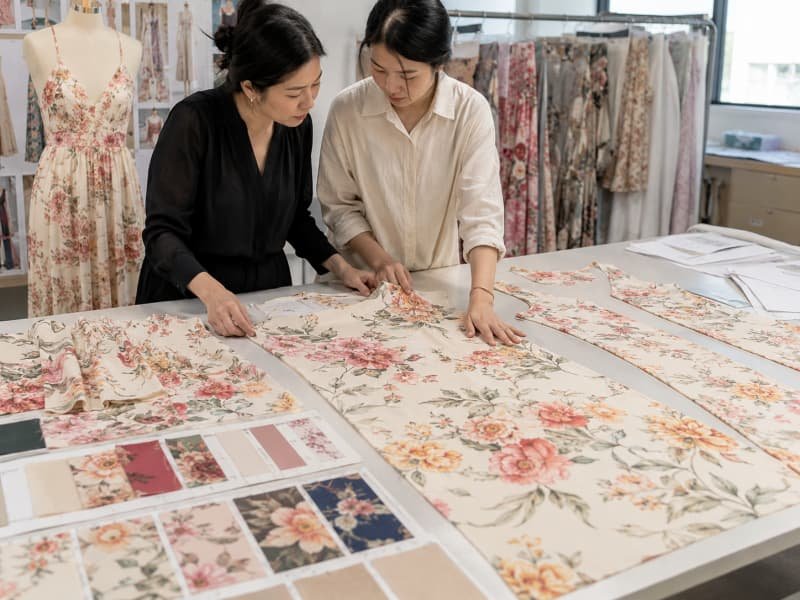
Brand-specific Labels, Packaging and Barcode Control
Label and packing control becomes a major risk in multi-brand dress programs. Several labels may use different main labels, care labels, hangtags, barcode rules, polybags, folding methods, carton marks and shipment destinations. Packing errors can damage receiving, warehouse processing and launch timing.
Duolan treats labels and packing as production standards, not final-stage details.
Main Label and Care Label
Each label may carry different main label design, care label content, composition, country-of-origin requirement, size format and language requirement.
- Review label files before production.
- Match label type with correct brand and style.
- Check size and care information by market.
- Confirm placement before sewing.
Hangtag and Brand Card
Portfolio projects may include hangtags, price tickets, brand cards, limited tags, fabric story cards or campaign inserts. Each item must match the correct label and dress program.
- Keep hangtags linked to style code.
- Review card placement and attachment.
- Separate limited-release labels from regular labels.
- Check final pairing before packing.
Barcode and SKU Logic
Barcode, SKU, color, size, style code and brand code must align. Multi-brand orders increase risk around similar colors and similar silhouettes.
- Confirm barcode rules before packing.
- Match SKU with style, size and color.
- Review sticker placement and scanning logic.
- Reduce warehouse receiving errors.
Polybag and Packing Method
Different brands may require flat fold, hanger pack, garment bag, tissue protection, individual polybag or special surface protection. Satin, sequin, velvet and lace need material-sensitive packing.
- Match packing method with fabric route.
- Protect surface-sensitive dresses.
- Keep size and color separation clear.
- Review packed garment presentation.
Carton Mark and Shipment Separation
Several labels may ship through one logistics flow or different warehouse routes. Carton marks, packing lists and shipment references must stay accurate.
- Separate cartons by brand and destination.
- Check carton mark against packing list.
- Review shipment documents before release.
- Support multi-market shipment coordination.

Confidentiality and Brand Boundary Control
Multi-brand groups and incubators often manage unreleased labels, new capsule concepts, collaboration projects, campaign dresses and limited edition programs. File boundaries matter. Sample photos, fabric boards, tech packs, label files and packaging information should not move across labels or external use without permission.
Duolan handles project information with brand-level separation and internal execution discipline.
Unreleased Brand Files
New brands and capsule projects may remain confidential until launch. Duolan keeps tech packs, reference images, sample photos, fabric cards and packing files tied to project communication and production needs.
- Keep unreleased brand materials separate.
- Avoid public use of private project assets.
- Store project records by brand and style.
- Share execution details only with relevant teams.
Collaboration and Campaign Styles
Collaboration dresses, influencer capsules, campaign styles and limited editions often carry higher launch sensitivity. Duolan separates sample records, label files and packing details for these programs.
- Mark sensitive projects clearly.
- Separate collaboration labels and tags.
- Control sample photo handling.
- Keep launch information inside project workflow.
Fabric and Trim References
Exclusive fabrics, special trims, print artwork and color cards can carry brand value. Duolan keeps approved references linked to the correct label.
- Keep fabric boards separated by brand.
- Prevent cross-use of exclusive trims.
- Record approved material decisions.
- Maintain repeat references for future programs.
Production Handover Boundaries
Production teams need clear instructions, not unnecessary brand-sensitive information. Duolan converts approved requirements into execution standards while keeping brand story and launch-sensitive content controlled.
- Share production rules with sewing teams.
- Limit sensitive context to needed roles.
- Link PP sample with correct brand file.
Multi-Launch Calendar and Capacity Planning
Multi-brand organizations rarely manage one launch at a time. Holiday drops, resort launches, partywear capsules, limited editions, ecommerce campaigns and repeat color programs may overlap. Supplier planning must connect sample timing, PP windows, bulk schedule, packing and shipment targets across several labels.
Duolan reviews portfolio timing by brand priority, style risk, fabric readiness and launch window.
Launch Priority Review
Not every style carries the same urgency. Campaign dresses, hero styles, repeat core styles and commercial volume items need different timing.
- Identify launch-critical styles early.
- Separate hero styles from lower-risk styles.
- Review brand priority before production planning.
- Keep approval deadlines visible by brand.
Sample and PP Window Planning
Several labels may move through sample and PP stages at the same time. Duolan tracks first sample, revised sample, photo sample and PP approval dates by style.
- Track sample stages by style code.
- Highlight late PP approvals.
- Review material-sensitive samples earlier.
- Keep PP status connected to production release.
Material Risk Scheduling
Satin, sequin, velvet, lace, print and embellished styles need earlier review because sourcing, cutting, sewing and packing risks differ.
- Schedule high-risk materials ahead of standard routes.
- Confirm bulk fabric and trims before production pressure.
- Review packing needs before final stage.
- Avoid late material decisions.
Bulk Capacity Planning
Production planning depends on style complexity, fabric route, workmanship difficulty and delivery window. Portfolio programs cannot be treated as one flat order.
- Group styles by sewing and fabric risk.
- Plan production sequence by brand priority.
- Track capacity against shipment needs.
- Reduce rush corrections near delivery.
Shipment Window Coordination
Packing, carton marking, shipment documents and forwarder timing need brand-level review. Several labels may share one shipment or ship to separate destinations.
- Confirm shipment target by brand.
- Separate packing and carton requirements.
- Review documents before release.
- Support repeat delivery planning.
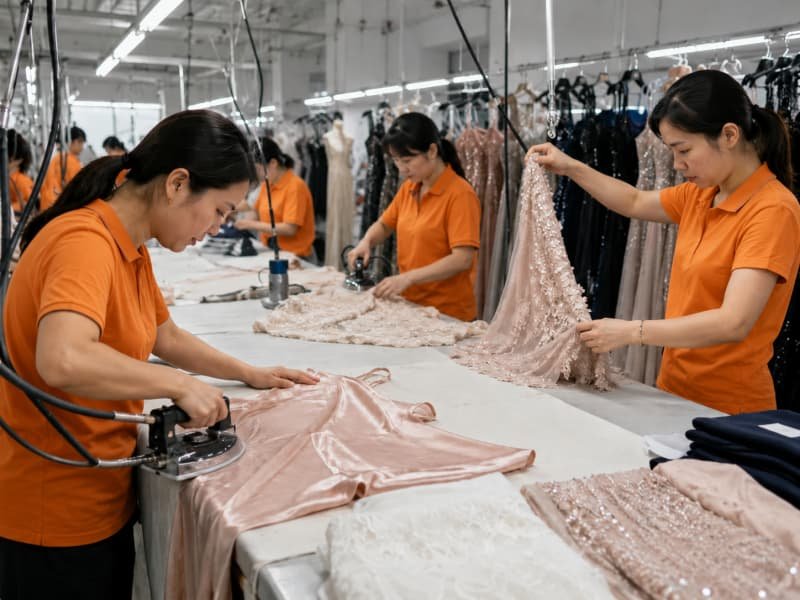
PP Approval and Bulk Consistency Across Brand Portfolios
PP approval protects multi-brand production from interpretation drift. Each brand needs its own approved pattern, fabric, trims, measurements, workmanship, labels, packing and QC points. Shared production planning must not erase brand-specific standards.
Duolan treats PP samples as production references by brand and style. First-piece review, inline QC and final inspection follow the correct PP standard, not a similar garment from another label.
PP Standard by Brand
Each label locks its own PP standard. A satin mini for one brand cannot guide a satin mini from another brand unless the standard matches exactly.
- Lock pattern and measurement by brand.
- Confirm bulk fabric and trim references.
- Review label and packing requirements.
- Keep PP sample tied to style code.
First-piece Review
First-piece review checks whether production interpretation matches the correct PP sample. Errors identified at this stage can be corrected before volume expands.
- Compare first piece with correct PP sample.
- Check fabric, trims, measurements and workmanship.
- Review label and packing-related details.
- Correct interpretation before bulk sewing continues.
Inline QC
Inline QC helps identify risks during production. Portfolio programs need monitoring across several fabric routes and brand standards.
- Check high-risk areas by style.
- Track fabric and color consistency.
- Review seam, lining, zipper and surface quality.
- Report risks before final inspection.
Portfolio Consistency
Portfolio consistency does not mean making every label look the same. Each brand needs its own identity protected through fabric choice, fit, finishing, packaging and presentation.
- Preserve each brand’s product language.
- Avoid generic factory execution across labels.
- Keep workmanship standard aligned with brand level.
- Protect packing presentation by label.
Reorder Reference
Repeat programs and color extensions need memory. Duolan keeps approved samples, fabric references, color standards, production notes and QC points for future programs.
- Preserve sample and fabric archives.
- Record key production decisions.
- Support repeat colors and capsule updates.
- Reduce drift across future seasons.

Multi-Brand Risk Control Matrix
Multi-brand production risk usually appears when files, samples, materials, labels, calendars and shipments overlap. Duolan uses project separation and production-stage checks to keep each brand’s dress program aligned with approved standards.
| Multi-Brand Risk Area | Common Breakdown | Duolan Control Focus |
|---|---|---|
| Brand Files | Tech packs or references mixed between labels | Brand code and file separation |
| Style Codes | Similar styles confused across brands | Style code and sample-stage tracking |
| Fabric Standards | Similar fabrics used under different expectations | Fabric card and batch reference |
| Colorways | Similar shades drift across brands | Approved color standard by brand |
| Labels | Main label, care label or hangtag mismatch | Brand-specific label checklist |
| Packaging | Polybag, barcode, carton mark errors | Packing standard by brand and style |
| Launch Calendar | Multiple brands compete for same window | PP and delivery priority planning |
| Confidentiality | Unreleased project materials exposed | Project boundary discipline |
| Repeat Orders | Production memory missing | Approved sample archive and reorder notes |
Confidentiality and Brand Boundary Control
Multi-brand organizations need communication across group-level and brand-level roles. Duolan separates sourcing review, product execution, QC needs, brand priorities and logistics details so each team receives useful information at the right stage.
Group-level Sourcing Team
Group-level sourcing teams review supplier capability, production planning, cost logic, delivery risk, trade terms and long-term cooperation value. Duolan supports sourcing review through project scope, style count, material route and production plan discussion.
Brand-level Product Team
Brand-level product teams manage tech packs, sample comments, fit revisions, fabric decisions and PP standards. Duolan keeps product records separated by brand and style code.
Brand Manager / Portfolio Manager
Portfolio managers need product differentiation across labels. Duolan supports brand-level separation so occasion, party, resort, holiday and limited programs remain aligned with each label’s role.
QC Team
QC teams need measurable checkpoints for each brand. Duolan supports QC preparation around fabric, measurements, workmanship, labels, packing and shipment accuracy.
Merchandising / Buying Team
Merchandising and buying teams manage launch priority, color plans, style roles, repeat programs and replenishment timing. Duolan supports planning through style status, sample stage and production schedule updates.
Logistics / Operations Team
Operations teams need packing lists, carton marks, barcodes, shipment destinations and document accuracy. Duolan supports brand and shipment separation before final release.
Dress for Multi-Brand case studies
Duolan supports multi-brand dress programs through brand-code separation, style-code tracking, sample-stage control, PP approval, label-packing accuracy, QC communication and repeat planning. Project details can be discussed by country, program scale, coordination challenge and Duolan response without exposing private brand information.
United States|Premium Ecommerce Brand House
A US premium ecommerce brand house developed party dresses, satin minis and lace midis across 3 labels. The program included 24 styles and approximately 72,000 pieces.
- Portfolio Focus: Build separate dress identities for three ecommerce labels while sharing one production coordination flow.
- Coordination Challenge: Similar launch windows, different price bands, separate labels and similar satin colorways created cross-brand confusion risk.
- Duolan Response: Duolan separated brand codes, reviewed fabric routes by label, prepared label-packing checklists and tracked PP status style by style.
- Program Value: Cross-brand confusion was reduced, and bulk handover became clearer for production and packing teams.

Australia|Incubated Resort and Occasion Labels
An Australian fashion organization developed printed resort dresses, halter dresses and occasion midis across 2 emerging labels. The program included 18 styles and approximately 46,000 pieces.
- Portfolio Focus: Move one label from test sample stage while preparing another label for repeat production.
- Coordination Challenge: One label needed fabric and print validation, while another needed bulk-ready lining decisions and reorder references.
- Duolan Response: Duolan separated sample-stage tracking, reviewed fabric batches, confirmed lining decisions and prepared reorder references.
- Program Value: Incubated labels moved toward production-ready standards with clearer sample records and material decisions.

United Kingdom|Multi-Brand Occasionwear Program
A UK fashion group developed satin occasion dresses, lace cocktail dresses and long sleeve dresses across 2 brands. The program included 16 styles and approximately 38,000 pieces.
- Portfolio Focus: Maintain separate fit standards and finishing levels for two occasionwear labels.
- Coordination Challenge: Different label requirements, PP windows, lace placement standards and sleeve comfort expectations created approval pressure.
- Duolan Response: Duolan reviewed PP standards by brand, mapped lace placement, checked label files and used first-piece review before volume sewing.
- Program Value: Each label’s dress language stayed protected during shared production planning.

Europe|Portfolio Repeat and Color Extension Program
A European portfolio team managed repeat core dresses, seasonal color extensions and limited capsule updates across several labels. Program scale ranged from 12–26 styles per season and approximately 28,000–68,000 pieces.
- Portfolio Focus: Keep repeat styles stable while updating colors, fabrics and capsule details.
- Coordination Challenge: Shade drift, fabric feel drift, style-code confusion and missing production memory could weaken repeat quality.
- Duolan Response: Duolan maintained approved sample archives, color references, production notes and reorder standards by brand and style.
- Program Value: Repeat planning could begin from existing standards instead of rebuilding decisions from the beginning.

FAQs
Duolan works with multi-brand fashion groups, brand portfolio operators, qualified fashion incubators, premium ecommerce brand houses, sourcing offices and product teams managing several labels. The strongest fit is usually with teams that already have brand separation, style lists, launch plans and bulk production direction.
Duolan separates each project by brand code, style code, sample stage, fabric route, PP standard, label requirement, packing rule and delivery window. This helps each label keep its own product standard while sharing one production coordination flow.
Brand-code separation prevents one label’s fabric standard, fit expectation, label file or packing rule from being applied to another label. This is especially important when several brands develop similar dress styles or launch in overlapping timelines.
Yes. Duolan supports multi-brand dress programs across occasion dresses, party dresses, resort dresses, cocktail dresses, holiday dresses, satin dresses, lace dresses, mesh dresses, sequin dresses, bodycon dresses and limited edition drops. Each program is reviewed by brand role, material route, sample stage and launch priority.
Duolan tracks style code, sample version, colorway, fabric route, comment status and approval stage. First samples, revised samples, photo samples, sales samples and PP samples are kept separate so production teams work from the correct reference.
Yes, when the incubated label has a clear launch plan, style count, production pathway and bulk-order direction. Duolan helps move promising labels from concept review and sample development into PP standards, controlled bulk production and repeat planning.
Duolan keeps unreleased brand files, sample photos, fabric boards, tech packs, label files and packaging details separated by brand and style. Production teams receive only the execution information needed for manufacturing, while launch-sensitive content stays controlled.
Duolan treats labels and packing as production standards, not final-stage details. Main labels, care labels, hangtags, barcodes, SKU stickers, polybags, carton marks and packing lists are reviewed by brand, style, size, color and shipment destination.

Send Your Multi-Brand Dress Program Brief
A strong multi-brand dress program starts with clear portfolio information. Duolan can review brand structure, style lists, sample stages, fabric routes, label rules, packing standards, PP windows, QC needs, shipment markets and repeat plans once the project brief is ready.
Share Your Portfolio Structure
- Group type, number of brands, target markets, price levels, brand positions, dress categories, launch calendars and current coordination challenge.
- Portfolio format, such as multi-label ecommerce group, brand house, sourcing office, qualified incubator, showroom brand group or regional label operator.
- Program roles, such as campaign styles, commercial styles, test drops, repeat core dresses, holiday drops, resort capsules or limited releases.
Share Your Brand and Style Files
- Brand codes, style list, tech packs, sample comments, fabric direction, color cards, label standards, packaging files and barcode / SKU rules.
- Sample stage by style, including first sample, revised sample, photo sample, sales sample, PP sample or approved bulk reference.
- Brand-specific concerns around fabric handfeel, fit standard, color accuracy, label accuracy, packing separation or confidential project boundary.
Share Your Production and Delivery Needs
- Style count per brand, colorways, size range, order quantity, sample stages, PP approval window, QC requirements, packing separation and shipment markets.
- Delivery details, including launch window, shipment method, forwarder requirement, carton mark, barcode rule, warehouse destination and repeat program plan.
- Portfolio risk points, such as similar styles across labels, similar colors, overlapping launch calendars, label-packing mismatch or missing reorder references.