 Skip to content
Custom Dress Manufacturer for Detail-Oriented Dress Brands
Custom dress development and manufacturing for fashion brands where straps, corset structures, ruching, cut-outs, lace, mesh, sequins, trims, linings, closures and finishing details define product value.
Duolan supports detail-heavy dress programs from design review and pattern development to sample correction, PP approval, workmanship control, bulk production and repeat order standards.
- 30+ years of dress development background support complex silhouette, trim and workmanship decisions.
- 650–1,200 pattern and sampling equipment units support controlled sample correction and detail trials.
- 300–400 pattern and sample development team members support multi-style dress development cycles.
- 150–300 embroidery equipment units support decorative surface work, motif testing and embellished panels.
- 7,000–9,000 core sewing machines support varied stitch methods, detail construction and bulk execution.
- 15,000–35,000 monthly sample cycles support first samples, fit samples, photo samples and PP samples.
- 3,000–6,000 inspection, packing and support equipment units help protect garment details before shipment.








Detail-Oriented Dress Brands Duolan Works With
Corset Dress Brands
- Cup and boning placement are reviewed against bust position, waist line and back structure.
- Lining, padding and closure choices are checked for comfort, support and repeatable sewing.
- PP sample notes connect support details with first-piece review and bulk QC.
Going-Out Dress Brands
- Tension points are checked around neckline, bust, waist, hip and back opening.
- Cut-out edges, strap anchors and mesh coverage are reviewed before sample approval.
- Bulk inspection focuses on symmetry, surface finish, stretch recovery and secure fit.
Lace and Mesh Labels
- Lace mapping protects motif position across bust, waist, hip and hem zones.
- Mesh coverage is checked with lining color, stretch and body movement.
- Edge finishing, label placement and packing method reduce snagging and surface damage.
Embellished Dress Brands
- Decorative surfaces are reviewed for loss risk, skin contact and seam thickness.
- Stitching routes are planned to protect surface detail and garment shape.
- Final packing checks reduce crushed decoration, scratches and shipment damage.
Satin Occasion Labels
- Satin surfaces are checked for needle marks, seam tension and pressing limits.
- Slit, hem and zipper details are reviewed against movement and garment balance.
- Packing method is selected to reduce fold marks and front-panel damage.
Product and Technical Teams
Product, development and technical teams need sample comments translated into workable corrections. Duolan supports tech pack review, original sample analysis, detail close-up review, revision notes, PP checklists and production-ready standards.
- Visual feedback becomes pattern correction, trim revision or construction note.
- Sample stages are separated by purpose: first, fit, photo, PP and golden standard.
- Approved detail points remain linked with BOM, QC focus and repeat order records.
Why Detail-Oriented Dress Brands Need a Different Manufacturer
Detail-oriented dresses rarely fail through one obvious mistake. They lose value through small shifts: a strap placed too wide, a cup sitting too low, a zipper pulling a satin seam, a lace motif drifting across the waist, a cut-out stretching after wear, a slit falling at the wrong height. Each small difference changes the final garment language.
A manufacturer for detail-heavy dresses must work before sewing begins. Pattern balance, fabric behavior, trim selection, lining, stitch method, reinforcement, sample purpose and PP approval need shared control. A beautiful first sample is not enough when the approved details are not converted into repeatable production instructions.
Duolan approaches detail-led dress programs through design review, pattern mapping, trim coordination, sample correction, PP detail locking, first-piece review, inline QC and final presentation control. The work is not decoration alone. It is garment engineering for brands where close-up finish, fit security and sample-to-bulk consistency matter.
- Design interpretation: Reference images, tech packs, original samples and close-up details need technical reading.
- Pattern protection: Straps, cups, cut-outs, ruching, slits and back openings often begin with paper pattern decisions.
- Trim coordination: Boning, pads, zippers, eyelets, drawcords, linings and labels must support garment structure.
- Sample correction: Comments should become pattern updates, trim revisions, stitch notes or workmanship standards.
- PP detail locking: Approved details need recorded placement, measurements, stitch method, trim version and QC focus.
- Bulk repeatability: First-piece, inline and final inspection must compare production against approved detail standards.

How Detail-Oriented Brands Choose a Manufacturer
Can the Manufacturer Read Design Details?
Can Pattern Work Protect the Detail?
Can Trims and Construction Work Together?
Can the First Sample Expose Detail Risk?
Can Fit Comments Become Technical Corrections?
Can PP Sample Lock the Detail Standard?
Can Bulk Repeat the Approved Details?

Where Detail-Oriented Dress Programs Break Down
Detail-led dress programs often break down when design details remain visual, verbal or scattered across sample comments. Duolan keeps key garment details connected with pattern work, trim decisions, sample correction, PP approval and bulk QC.
Details Look Close, Not Premium
- Compare detail zones against reference images and approved sample standard.
- Check front, side, back and close-up finish before revision approval.
- Record key detail placements and construction notes for production use.
- Use PP sample as the final reference before bulk starts.
Construction Is Not Planned Early
- Map cup, waist, hip, back and hem zones before cutting.
- Review seam position, fold volume, edge finish and reinforcement needs.
- Match trim decisions with garment structure and wear security.
- Confirm construction route before sample correction expands.
Sample Comments Stay Vague
- Translate visual feedback into exact garment zones.
- Separate fit correction from fabric, trim or sewing correction.
- Record revision reason, action and next sample target.
- Keep approved changes linked with PP checklist items.
Decorative Details Affect Wearability
- Review scratch points around underarm, bust, side seam and hem.
- Check strap tension, back opening and closure security.
- Match lining with lace, mesh, sequin and transparent fabrics.
- Adjust trim placement where decoration weakens comfort or fit.
Bulk Loses Sample Detail
- Compare bulk first piece with PP sample and detail notes.
- Check symmetry, placement, stitch method and trim version.
- Review surface-sensitive styles before packing.
- Preserve issue notes for repeat production.
QC Checks Only General Defects
- Inspect straps, cups, cut-outs, lace, mesh, sequins, zippers and linings.
- Check garment surface after pressing and before packing.
- Compare key detail zones across sizes and colors.
- Record corrections before final shipment.
Repeat Orders Lose Detail Memory
- Keep PP sample notes, pattern version, trim records and BOM linked with each approved dress style.
- Compare repeat orders against earlier cup position, strap placement, ruching direction, lace mapping and zipper method.
- Review updated fabric, lining, hardware or label versions before production begins.
- Apply previous QC findings to first-piece review, inline inspection and final packing checks.
Duolan Detail-to-Production Development System
Step 1|Detail Brief Review
Step 2|Pattern and Construction Mapping
Step 3|First Sample Detail Check
Step 4|Revision and Fit Translation
Step 5|PP Detail Locking
PP sample approval locks details for production. Duolan records placement, measurement, stitch method, trim version, lining, reinforcement, pressing limits, label position, packing protection and QC focus. For detail-heavy dresses, PP standard must speak to the sample room, production line, QC team and packing team at the same time. The approved garment becomes the shared reference for first-piece review and bulk control.
Step 6|Bulk Detail QC and Reorder Archive
Bulk production is controlled through first-piece review, inline checks, final inspection and packing review. Duolan checks whether approved details remain consistent across sizes, colors, styles and production batches. After shipment, PP sample notes, BOM, pattern version, trim records, workmanship notes, QC findings and packing method remain archived. Repeat orders can then use the earlier detail standard instead of rebuilding from memory.
Detail-Oriented Dress Programs Duolan Supports

Corset Detail Dresses

Ruched Dresses

Cut-Out Dresses

Halter Strap Dresses

Lace Panel Dresses

Mesh Detail Dresses

Sequin Dresses

Satin Detail Dresses
Design Detail Control Matrix
Detail-led dress development works best when each construction detail has a clear risk review and control method before sampling and production. The matrix below helps align design, sampling, PP approval and bulk inspection.
| Detail Type | Common Risk | Duolan Control Focus |
|---|---|---|
| Strap and Halter | Uneven tension, weak connection, neck discomfort | Placement, reinforcement, adjustment hardware |
| Corset and Bustier | Weak support, cup shift, waist distortion | Boning, cup position, lining, grip |
| Ruching and Draping | Uneven folds, bulky seams, poor waist shape | Fold direction, seam control, elastic balance |
| Cut-Out and Backless | Gaping, unsafe fit, edge stretching | Edge binding, tension, body zone review |
| Lace and Mesh | Motif mismatch, poor coverage, snagging | Placement, lining tone, edge finish |
| Sequin and Beads | Surface loss, skin irritation, heavy seams | Density, backing, lining, stitch path |
| Zipper and Closure | Waves, pulling, poor operation | Zipper type, seam tension, fit balance |
| Hem and Slit | Uneven fall, unstable movement | Length control, slit height, pressing |
Sample Correction for Design Details
Neckline and Bust Corrections
- Review neckline curve, cup placement and bust balance against reference style.
- Check whether strap tension, lining or closure affects front shape.
- Convert fitting comments into pattern and construction updates.
- Confirm improved bust shape through revised sample or PP review.

Waist and Ruching Corrections
A “cleaner waist” may require more than tightening. Ruching direction, seam position, fold volume, fabric stretch, lining and hip balance all affect waist appearance. Duolan reviews waist detail from front, side and back, then separates pattern correction from sewing correction. For ruched bodycon styles, fold balance and stretch recovery must be checked across sizes, not only on one sample body.
- Adjust fold direction, elastic tension and seam control where needed.
- Review waist placement against bust and hip proportion.
- Reduce bulk around side seams and zipper areas.
- Record approved ruching direction for production inspection.

Back Tie and Cut-Out Corrections
- Reinforce stress points around eyelets, straps and back openings.
- Review cut-out edges for gaping, stretching and comfort.
- Check tie position against waist and bust support.
- Confirm open-back details through fitting and movement review.

Lace and Mesh Corrections
A comment such as “lace looks cheap” may involve motif scale, edge finish, lining color, seam allowance, transparency or placement. Mesh may look too exposed when lining coverage and panel shape are not matched. Duolan reviews lace and mesh details through close-up photos, body zones, fabric behavior and stitching method.
- Adjust motif placement across bust, waist, hip and hem areas.
- Review lining tone against lace or mesh color.
- Improve edge finish, seam visibility and transparency control.
- Protect delicate surfaces from tag, trim and packing friction.

Zipper and Closure Corrections
- Match zipper type with fabric weight and garment tension.
- Check seam allowance, lining attachment and pressing method.
- Review fit pressure around back, side or waist closure zones.
- Add zipper flatness to PP and final inspection criteria.

Trims, Hardware and Lining Detail Review
Lining Details
- Match lining tone with lace, mesh, white and sheer fabrics.
- Check lining stretch against outer fabric movement.
- Review lining length around slit, hem, bust and back opening.
- Reduce bulk and skin irritation around seam-heavy zones.
Zippers and Closures
Closures must function cleanly and preserve dress appearance. Duolan reviews invisible zippers, metal zippers, side zippers, back zippers, hooks, eyelets, ties, buttons and clasps according to garment structure. A closure may pull on satin, distort a fitted style or weaken a backless design. Closure selection is reviewed during sampling and locked during PP approval.
- Select zipper type according to fabric weight and seam tension.
- Check closure smoothness after fitting and pressing.
- Reinforce stress zones around eyelets, hooks and ties.
- Review closure placement for comfort and visual balance.
Boning and Cups
- Review cup placement against bust height and neckline shape.
- Match boning strength with fabric and waist structure.
- Add grip or lining support where slippage risk appears.
- Check inner finish for comfort against skin.
Straps and Adjusters
Straps carry visual proportion and physical tension. Duolan reviews strap width, length, angle, stitch strength, metal adjusters, rings, sliders, anchors and reinforcement. Halter, spaghetti strap, wide strap and back-tie styles each require different tension control. Strap placement is checked during fitting and bulk inspection because even small shifts can change bust balance and neckline comfort.
- Confirm strap symmetry from front and back views.
- Review anchor strength under garment movement.
- Match hardware color, size and finish with brand direction.
- Add reinforcement where fabric or strap tension requires support.
Labels and Packing Details
Labels, hangtags and packing can damage delicate garments when placed without material awareness. Duolan reviews main labels, care labels, size labels, hangtag position, barcode ticket, folding method, polybag, tissue, hanger or carton density. Satin, lace, mesh, sequin and velvet dresses need packing decisions aligned with surface risk.
- Keep hangtags away from delicate lace, mesh and embellished zones.
- Place labels for comfort and clean presentation.
- Select folded or hanger packing according to garment surface.
- Review packed garment condition before carton sealing.

Workmanship Standards for Detail-Heavy Dresses
Stitching and Seam Finish
- Satin needs smooth seam tension and controlled pressing.
- Mesh and lace need edge stability with reduced bulk.
- Stretch fabrics need recovery without popped seams.
- Corset and strap zones need reinforcement at stress points.
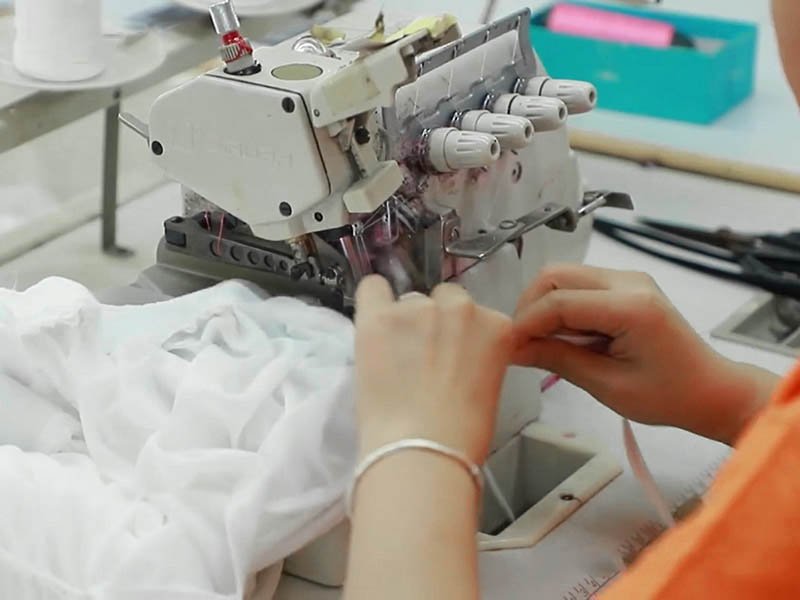
Symmetry and Placement
Detail-oriented dresses often rely on balanced left-right placement. Straps, cups, lace panels, mesh inserts, cut-outs, ruching, slits and sequin motifs must sit consistently. Duolan checks symmetry during sample review, first-piece review and inline production. Placement marks and pattern references help reduce variation when bulk production moves across sizes and operators.
- Strap height and angle are checked from front and back.
- Cup, neckline and waist positions are reviewed against body balance.
- Lace, mesh and cut-out zones are checked against pattern marks.
- Slit height and hem balance are confirmed after pressing.

Ruching and Fold Control
- Mark fold direction and gathering zones clearly.
- Balance ruching between waist, hip and side seam.
- Review fabric recovery after stretch and wear.
- Check fold consistency across colors and sizes.

Surface-Sensitive Handling
Satin, velvet, lace, mesh, sequin and bead surfaces need careful handling. Duolan reviews cutting, sewing, pressing, inspection and packing steps to reduce needle marks, snagging, crushed pile, sequin loss, scratch points and fold damage. Surface-sensitive garments need QC before and after pressing because finishing can create new issues.
- Velvet pile direction and pressure marks are checked.
- Sequin and bead loss are reviewed before packing.
- Lace and mesh are protected from rough trims and tags.
- Satin surfaces are checked under light before polybagging.

Final Presentation
A detail-heavy dress must leave production clean, balanced and presentation-ready. Duolan reviews threads, seam finish, garment shape, pressing, label placement, folding or hanging method, polybag condition and carton pressure. Final presentation matters because fragile details can lose quality after inspection if packing is not aligned with garment construction.

Detail-Level QC from PP Sample to Bulk
Detail-level QC protects approved sample work during production. Duolan checks more than measurements and general appearance. Each detail-heavy dress receives inspection focus based on PP sample, construction notes, trims, fabric surface and packing method.
PP Sample Detail Lock
First-Piece Detail Review
Inline Detail Inspection
Final Detail Inspection
Reorder Detail Archive

Detail-to-Bulk Risk Control Table
Detail-oriented dress production needs risk control before bulk output grows. The table below connects common detail drift with control actions used before and during production.
| Detail Risk | Bulk Breakdown | Control Before Production |
|---|---|---|
| Strap Position Drift | Left and right straps sit differently | Strap placement marks and first-piece check |
| Corset Support Failure | Bodice collapses or slips | Boning, cup and lining review |
| Ruching Inconsistency | Waist and hip shape look uneven | Fold direction and seam control |
| Lace Placement Drift | Motif shifts across panels | Lace mapping and cutting plan |
| Mesh Transparency Issue | Coverage feels unsafe | Lining tone and panel placement review |
| Sequin Surface Loss | Missing sequins or scratch points | Surface QC and packing method |
| Zipper Wave | Satin or fitted style looks distorted | Zipper tension and seam correction |
| Hem Imbalance | Front, side or back length turns uneven | Measurement and pressing control |
| Reorder Detail Drift | Repeat style loses original finish | PP sample and detail archive |
Manufacturing System for Detail-Heavy Dress Orders
Core Factory Control for Complex Details
- Core styles can stay closer to sample room, pattern team and project coordination.
- PP standards are easier to transfer when complex details require direct control.
- First-piece review helps production teams align with approved sample details.
- Detail-heavy programs can receive stronger feedback loops before output expands.
Special Process Coordination
- Embroidery placement is reviewed against pattern and body zones.
- Surface decoration is checked for weight, backing and comfort.
- Process samples are reviewed before garment sample approval where needed.
- Bulk process details remain linked with BOM and QC notes.
Multi-Style Order Planning
- Styles can be grouped by corset, mesh, lace, sequin, satin or stretch complexity.
- Similar trims and construction methods can be managed under shared standards.
- Difficult styles can receive earlier first-piece and inline review.
- Repeat styles can use previous records to reduce development time.
Standard Transfer Across Production
Detail accuracy depends on clear standard transfer. Duolan connects PP sample, BOM, pattern notes, trim files, construction notes, QC focus and packing method before production starts. Production teams need more than a sample garment. They need written and visual control points connected with approved details.
- PP samples guide garment appearance and detail placement.
- BOM and trim records protect version accuracy.
- QC notes highlight garment-specific risks.
- Packing instructions protect surface and presentation after inspection.
Detail-Oriented Dress Program Case Studies
United States|Corset and Satin Detail Program
- Detail Focus: Corset cups, boning, satin zipper waves, slit position, lining and pressing.
- Development Challenge: Satin surface showed tension marks, and corset styles needed stronger bust and waist support.
- Duolan Response: Duolan reviewed fit samples, corrected cup and boning placement, locked PP detail notes and checked first pieces against approved standards.
- Program Result: The order gained clearer support structure, smoother satin presentation and stronger detail consistency.

United Kingdom|Mesh and Cut-Out Party Line
A UK partywear brand developed mesh-panel dresses, cut-out minis, backless styles and ruched bodycon silhouettes across 18 styles and approximately 48,000 pieces. The line needed visual impact without losing coverage, comfort or fit security.
- Detail Focus: Mesh coverage, cut-out edge, halter tension, backless support and ruching balance.
- Development Challenge: Early samples needed better edge stability, safer lining coverage and cleaner waist shaping.
- Duolan Response: Duolan reviewed transparency, revised binding, adjusted strap tension and confirmed ruching direction before PP release.
- Program Result: Bulk production followed clearer construction standards for exposed and fitted detail zones.

Australia|Lace and Resort Occasion Program
- Detail Focus: Lace motif, lining tone, edge finish, hem balance, print-to-lace proportion and packing recovery.
- Development Challenge: Lace needed better placement across bust and waist zones, while packing had to protect delicate edges.
- Duolan Response: Duolan mapped lace panels, reviewed lining color, checked hem balance and adjusted packing method for delicate styles.
- Program Result: The collection achieved cleaner close-up finish and more stable arrival presentation.

Europe|Repeat Detail Standard Program
A European fashion brand managed repeat satin, ruched, mesh and embellished styles across 26 styles and approximately 68,000 pieces. The project needed detail continuity across repeat colors, seasonal edits and updated trims.
- Detail Focus: Repeat fit, label position, zipper method, ruching placement, sequin surface and packing method.
- Development Challenge: Earlier approved details needed to remain stable while new colors and trim updates entered production.
- Duolan Response: Duolan used PP sample records, BOM, workmanship notes, QC findings and reorder comments during new production review.
- Program Result: Repeat production gained stronger detail memory and smoother preparation for next-season updates.

Send Your Detail-Oriented Dress Brief
A strong detail-oriented dress program starts with clear design information and critical detail points. Duolan can review your tech pack, reference images, original sample, close-up photos, sample comments, target quantity, launch timing and PP approval needs before recommending a development route.
Share Your Design Details
- Tech pack, reference images, original sample photos, close-up detail shots, previous sample comments, fit notes, construction expectations or garment measurement chart.
- Design details requiring control, such as corset cups, boning, straps, ruching, cut-outs, back ties, lace panels, mesh inserts, sequins, zippers, slit, hem or lining.
- Brand-level finish expectations around close-up quality, photo sample appearance, garment comfort, fit security and repeat order consistency.
Share Your Critical Detail Points
- Key risk zones around bust, waist, hip, neckline, shoulder, back opening, side seam, slit, hem, zipper, label placement, hangtag position and packing method.
- Trim and construction requirements such as lining, cups, pads, boning, eyelets, drawcords, hooks, hardware, elastic, labels, care labels and packaging.
- Sample stage needed: first sample, fit sample, photo sample, PP sample, golden sample, revised sample or repeat production reference.
Share Your Production Plan
- Style count, target quantity, size range, colorways, delivery window, launch schedule, PP approval window, QC standard, packing requirement and repeat order plan.
- Current project status, such as new collection, sample correction, supplier transition, repeat order, category extension or bulk preparation.
- Available files for review, including BOM, artwork, color card, trim file, packing rule, previous QC notes or approved sample photos.

