 Skip to content
Tech Pack Guide for Dress Development & Manufacturing
Tech Pack Guide for Dress Development & Manufacturing
Turn dress design files into production-ready samples, controlled bulk standards and scalable womenswear manufacturing programs.
A complete tech pack should do more than describe a garment. For fashion dress brands, product teams and sourcing offices, it becomes the shared language for sample development, fabric selection, fit correction, costing, PP sample approval and bulk production control. Duolan helps brand teams review tech packs with a manufacturing mindset, especially for fashion dresses, party dresses, occasion dresses, fitted silhouettes, satin styles, mesh styles, corset dresses, sequin dresses and multi-style seasonal programs.
A Manufacturing File, Not Only a Design File
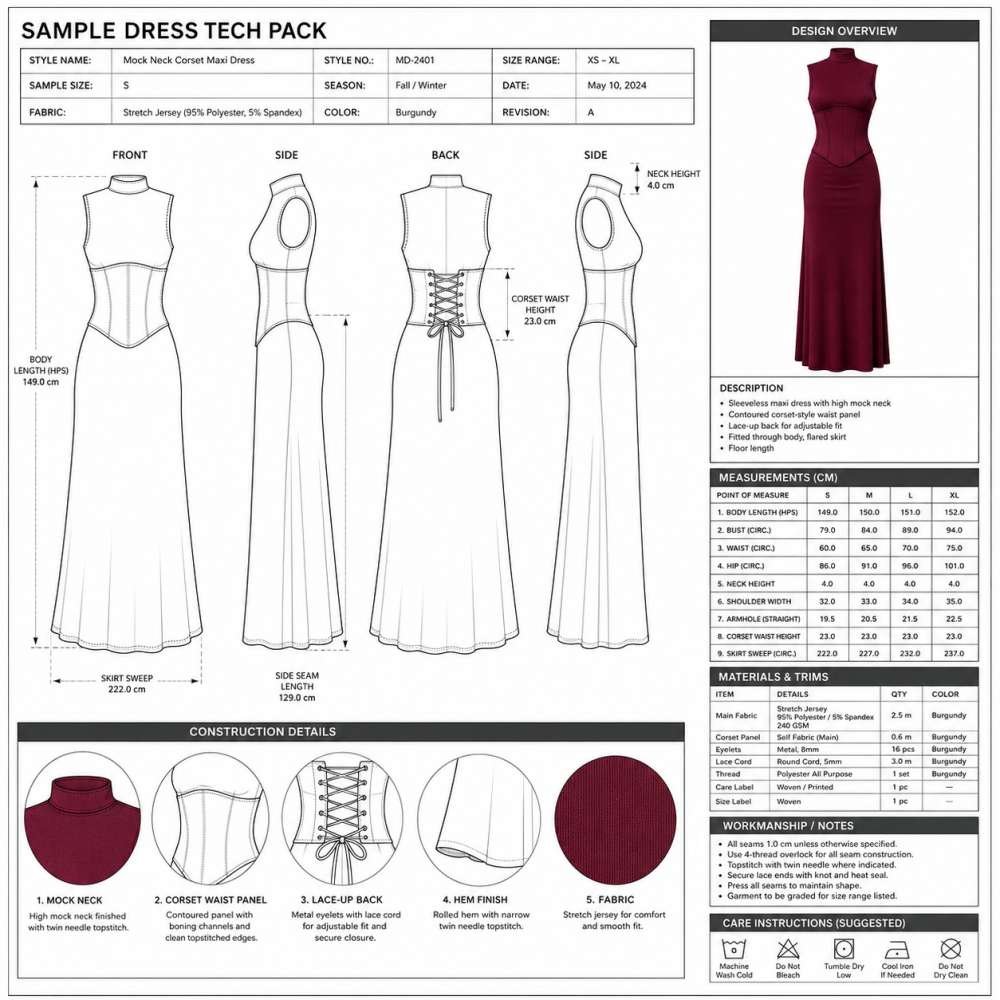
A fashion tech pack is a structured product document used to translate a garment concept into measurable and manufacturable instructions. For a dress program, it should include technical flat sketches, construction details, fabric information, trims, BOM, measurements, tolerances, colorways, labels, packaging notes, care requirements, sample comments and bulk production references.
For Duolan, a strong tech pack does not end at “front view and back view.” It should help the development team answer critical questions before sampling starts:
Design clarity:
- Is the intended silhouette clear enough for pattern development?
- Are the front, back and side details visible?
- Are neckline, strap, waist, hem, slit and closure details marked?
Material clarity:
- Is fabric composition, weight, stretch, hand feel and drape direction defined?
- Does the fabric support the intended body shape and visual effect?
- Are lining, interlining, cups, boning, elastic or mesh panels required?
Production clarity:
- Can the style be made with stable workmanship?
- Are measurements and tolerances suitable for the target fit?
- Are packaging and bulk handling requirements clear enough for production?
A mature tech pack helps reduce unnecessary sample rounds, unclear quotation assumptions, material confusion and production deviation. For fashion dresses, the value is especially high because small changes in fabric, waist position, lining coverage, stitch method or support structure can change the final garment dramatically.
Who Uses a Tech Pack Guide?
Fashion Brands
Product Teams
Sourcing Offices
Buying Teams
Why Tech Packs Matter Before Sampling
Clear Quotation Basis
Better Sample Direction
Fabric Risk Control
Measurement Discipline
Revision Records
Bulk Production Basis
Production-Ready Tech Pack Checklist
Style Overview
Technical Flats
Fabric Details
BOM
Trim List
Colorways
POM Sheet
Size Grading
Tolerance Rules
Construction Notes
Label Packaging
Sample Comments
Sample comments should be attached to the tech pack as revisions happen. Each comment should show issue, requested change, measurement adjustment, fabric decision, workmanship update and approval status. Duolan uses these records to connect first sample, revised sample, PP sample and bulk production references.
Tech Pack, Spec Sheet and Pattern
| Item | Main Purpose | What It Includes | How Duolan Uses It |
|---|---|---|---|
| Tech Pack | Complete product communication file for development, quotation, sampling and production | Flats, BOM, fabric, trims, POM, grading, tolerances, construction, labels, packaging, comments | Reviews feasibility, costing basis, sample path, material risk and bulk readiness |
| Spec Sheet | Measurement and size control document | Base size, graded sizes, POM, tolerance, measurement method | Checks fit priority, sample measurements and bulk inspection references |
| Pattern | Garment shape engineering file | Paper pattern, CAD pattern, seam allowance, cutting direction, graded pattern | Builds fit, silhouette, construction logic and size development |
| Sample Comment Sheet | Revision and approval tracking file | Fit comments, visual comments, measurement changes, fabric changes, approval notes | Converts sample feedback into controlled pattern, material and workmanship updates |
| PP Sample Reference | Bulk production approval standard | Approved sample, final fabric, trims, workmanship, labels, packaging | Supports first-piece check, inline QC, final inspection and repeat production |
Feasibility Before Quotation
When Duolan receives a tech pack, the review does not start with a single unit price. The first step is to understand whether the style can move from design file to sample and then into controlled bulk production.
Style structure:
- Category, silhouette, length and occasion use are reviewed first.
- Fitted, lined, structured, sequin, corset and mesh styles receive deeper construction review.
- Multi-style programs are checked by style difficulty, not only by total quantity.
Material direction:
- Shell fabric, lining and trims are checked against the intended shape.
- Stretch, recovery, drape, transparency, weight and surface finish are reviewed before sample planning.
- For fabrics needing lab dips or special finishes, lead time risk is noted early.
Production path:
- Duolan checks whether the style is suitable for first sample, fit sample, revised sample, photo-ready sample, PP sample or direct bulk readiness review.
- Order quantities such as 20,000–80,000 units across 10–30 styles require style-level production planning.
- Complex workmanship may need pilot run, first-piece confirmation or special process coordination.
The goal is not to slow down development. The goal is to avoid a poor sample path, an unrealistic quote or a production standard that cannot be repeated.
Dress Tech Pack Details by Style

Satin Dresses

Bodycon Dresses

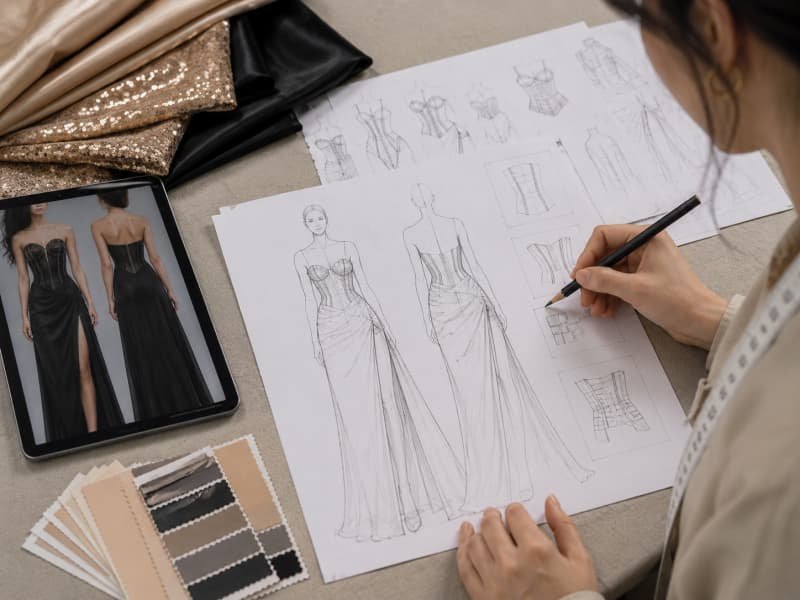
Corset Dresses

Mesh Dresses

Sequin Dresses

Halter Dresses

Backless Dresses

Occasion Dresses

Fabric Information for Tech Packs
Fabric information should help the manufacturer judge silhouette, fit, workmanship, costing, sample direction and bulk stability.
Fabric Details That Change Dress Development
For fashion dresses, fabric is never a background detail. It decides whether a style drapes softly, holds structure, stretches correctly, photographs well, feels comfortable and survives bulk production. A tech pack should not only name the fabric; it should define the performance needed from the material.
Core fabric information:
- Composition: polyester, viscose, nylon, spandex blend, cotton blend or mixed fiber content.
- Weight: GSM or weight range, especially for satin, mesh, jersey, velvet and structured woven styles.
- Stretch: one-way stretch, two-way stretch, recovery level and stretch direction.
- Surface: matte, glossy, brushed, textured, sheer, printed, embroidered or embellished.
- Hand feel: soft, compact, fluid, crisp, structured or elastic.
- Transparency: lining requirement, coverage risk and color influence.
- Shrinkage: expected shrinkage after steaming, washing or production handling.
- Color: Pantone, lab dip, strike-off, bulk color tolerance and lining match.
Duolan’s supply chain resources around South China fabric and trim markets allow the team to help brands evaluate fabric alternatives when the original material is not suitable for cost, lead time, construction or bulk stability. The review is especially important for styles where fabric behavior directly controls fit, such as bodycon dresses, satin slips, corset minis, mesh ruched dresses and occasionwear silhouettes.
A mature tech pack should also show fabric priority. Some styles need exact fabric replication; others allow approved alternatives as long as drape, stretch, shine and hand feel stay within the target range. Duolan can review both paths before sampling.
BOM and Trim Requirements
A complete BOM protects costing accuracy, material sourcing, sample control, bulk purchasing and repeat production consistency.
The BOM Connects Design With Cost and Production
A Bill of Materials should identify every material needed to make and ship the garment. For Duolan, BOM review is one of the first steps in tech pack evaluation because missing materials often lead to inaccurate quotation, delayed sampling and unstable bulk production.
A dress BOM normally includes:
- Shell fabric: fabric name, composition, width, weight, color and consumption basis.
- Lining: type, color, weight, coverage area and feel against skin.
- Interlining: placement, stiffness and bonding requirement.
- Zipper: invisible, nylon, metal, length, color, puller and placement.
- Closure: hook-and-eye, button, snap, tie, loop, drawcord or back lacing.
- Support: cups, boning, elastic, silicone tape, shoulder strap adjusters.
- Decorative trims: lace, rhinestones, pearls, sequins, beads, appliqué and chains.
- Labels: main label, size label, care label, brand label and compliance label.
- Packaging: hangtag, polybag, hanger, tissue, carton and folding method.
For embellished dresses, Duolan pays attention to trim density, placement, hand feel and sewing sequence. A rhinestone or pearl detail can look small in a sketch but affect labor time, inspection risk, packing protection and bulk loss. For structured dresses, cups and boning need specification before sampling because support structure changes pattern engineering.
A clear BOM also helps sourcing teams compare cost ranges across factories fairly. Without a complete BOM, two factories may quote the same style with different fabric, lining, zipper or trim assumptions. The result may look cheaper at the quotation stage but become risky during sample or production.


Measurement, POM and Tolerance Guide
Measurement clarity helps reduce fit confusion from first sample to size grading, PP sample and bulk inspection.
Fit Control Starts With Measurable Points
A dress tech pack should define the points of measurement clearly enough for pattern makers, sample teams, QC inspectors and brand fit teams to read the same standard. For Duolan, POM review is not only about numbers. It is about whether the measurements support the intended silhouette.
Important POM for dress programs:
- Bust: full bust, under bust, cup width or bust panel width when relevant.
- Waist: natural waist, raised waist, dropped waist or corset waist position.
- Hip: full hip, lower hip, relaxed hip and stretch-adjusted hip if needed.
- Length: shoulder to hem, center front length, center back length and skirt length.
- Strap: strap width, strap length, halter tie length and adjustable range.
- Neckline: front neck drop, back neck drop and neckline width.
- Opening: slit height, armhole depth, sleeve opening or back opening.
- Hem: hem sweep, flare width and side seam balance.
Tolerance should match product risk. A loose resort maxi can allow more relaxed tolerance than a fitted corset mini. A high-stretch bodycon dress may need tolerance rules based on relaxed and stretched measurements. A satin slip may require careful control of side seam balance and hem length because visual asymmetry is easy to see.
Duolan connects POM review with sample comments. When a fit comment says “waist too loose” or “strap too long,” the team translates it into pattern correction, measurement update, sample revision and later bulk inspection reference. This keeps feedback from becoming a vague note.
Construction Notes for Dress Manufacturing

Seam Type

Stitch Density

Lining Method

Zipper Placement

Support Structure

Finishing Method
Common Tech Pack Mistakes
Missing BOM
Vague Fabric
No Tolerance
Weak Flats
Incomplete Grading
Unclear Lining
No Revision Trail
Weak Packaging Notes
A Structured Review Before Sampling
Duolan’s tech pack review is designed for fashion dress programs where visual effect, fit, fabric and production stability need to work together. The process begins with the product file and continues into sample planning.
Brief review:
- Confirm style category, season, target quantity, launch timing and development purpose.
- Identify whether the project is a new launch, repeat order, scale-up order or collection development program.
- Check whether reference images, original samples, fabric swatches or sample comments are available.
Feasibility review:
- Evaluate silhouette, construction difficulty, fabric suitability and workmanship risk.
- Identify missing information needed for quotation or sampling.
- Mark styles needing extra attention, such as corset, bodycon, sequin, mesh, satin and lined occasion dresses.
Material review:
- Review shell fabric, lining, trims, labels, packaging and special process requirements.
- Suggest alternative materials when the original direction creates sourcing, cost, lead time or performance risk.
- Check whether lab dips, strike-offs, embroidery samples or trim samples are needed.
Sample plan:
- Decide whether to start with first sample, fit sample, revised sample, photo sample or PP sample path.
- Align expected lead time according to complexity, material readiness and process requirement.
- Record sample focus, such as fit, drape, support, workmanship, visual effect or bulk readiness.
Duolan’s goal is to give the brand team a clearer development route before time is spent on sample rounds.


From Tech Pack to First Sample
The first sample should help brand teams judge fit, fabric, workmanship and production feasibility with fewer blind spots.
Development Steps After File Review
After the tech pack is reviewed, Duolan turns the file into a sample path. The aim is not only to make a garment that looks close to the drawing. The sample must help the brand decide what should be corrected, approved or prepared for production.
Development input:
- Tech pack, spec sheet, reference images, original sample or fabric swatches.
- Target size, target quantity, launch timing and market direction.
- Special notes for fit, fabric hand feel, trims, labels and packaging.
Pattern and sample preparation:
- Pattern makers review measurements, seam position, body balance and construction feasibility.
- Fabric and trim teams check material availability, alternatives and lead time.
- Sample room prepares cutting, sewing, pressing and internal review.
Typical sample types:
- First proto for shape and design translation.
- Fit sample for measurement and wearing balance.
- Revised sample for comment response.
- Salesman sample for presentation or line review.
- PP sample for production approval.
- Golden sample for bulk reference when needed.
Common sample timing:
- Simple styles with ready fabric can often move faster.
- Complex styles with special fabric, embellishment, corset structure, lining development or custom trims require more review time.
- Multi-style programs are usually planned by priority, material readiness and launch schedule.
Duolan supports high development density through a large sample and production structure, including monthly sample development capacity in the range of 15,000–35,000 pieces or style-times across the group system. For mature fashion brands, the value is not only sample speed. The stronger value is controlled sample direction.
Sample Comments and Revision Control
Sample comments should become measurable updates, not scattered messages between teams and factories.
Turning Fit Comments Into Controlled Changes
Fit comments are one of the most important parts of dress development. A comment such as “waist feels loose,” “front neckline too low,” “strap pulls at neck” or “skirt does not drape correctly” must be translated into pattern, measurement, fabric or construction updates.
How Duolan handles comments:
- Clarifies whether the issue is fit, visual effect, fabric behavior, workmanship or size grading.
- Connects the comment to a specific POM, pattern area, seam position or material decision.
- Updates the sample direction through a revision summary.
- Checks whether the change affects cost, lead time, workmanship or bulk production.
- Keeps approved revisions connected to PP sample and production references.
Common dress revision areas:
- Bust support, cup position, strap length and neckline balance.
- Waist tightness, hip fit, side seam shape and body length.
- Fabric drape, transparency, stretch recovery and lining coverage.
- Zipper placement, slit height, hem balance and internal finishing.
- Decorative trim placement, density, hand feel and durability.
For brands developing 10–30 styles in one program, revision control becomes a production management issue. Without a clean record, several styles can reach different approval stages at the same time, creating confusion between sample room, pattern team, purchasing team and bulk production lines.
Duolan keeps the revision process connected to the tech pack so the approved sample can move forward as a production basis, not only as a visual reference.

Bulk Readiness After Sample Approval
Sample approval should lead to production readiness, material locking and clear bulk standards before cutting starts.
Why Approval Is Not the Same as Production Start
A sample can be visually approved but still not ready for bulk production. Duolan normally runs a production-readiness check before bulk starts, especially for dress programs with multiple styles, fabrics, colors, sizes or workmanship risks.
Bulk readiness review covers:
- Sample status: fit confirmed, visual confirmed, PP basis or pending refinement.
- Order purpose: launch order, test order, repeat order or scale-up order.
- Material lock: shell fabric, lining, trims, color, lab dip, zipper, support parts and labels.
- Measurement lock: base size, graded sizes, tolerance and critical POM.
- Workmanship lock: seam method, lining method, zipper method, support structure and finishing.
- Packaging lock: folding, hanger, polybag, carton, protection and shipment condition.
- Production path: single factory, matched production line, flexible line, special process or multi-line coordination.
For a typical program of 20,000–80,000 units across 10–30 styles, bulk readiness cannot be handled as one single action. Duolan reviews style by style, then groups styles according to material readiness, complexity, order quantity and delivery requirements.
Client-facing output may include:
- Bulk Start Confirmation.
- Production Readiness Note.
- Material Readiness Update.
- Production Path & Timeline Plan.
- PP Sample / Bulk Reference Confirmation.
The purpose is simple: reduce bulk loss before fabric is cut and production capacity is committed.

Duolan Manufacturing System
| Capability Area | Duolan Manufacturing Basis | Brand Value |
|---|---|---|
| Owned womenswear factories | 16 factories | Core style control, sample-to-bulk stability and direct production management |
| Satellite garment factories | 20+ long-term partners | Capacity flexibility for repeat orders, volume release and multi-style programs |
| Coordinated workers across system | 12,000+ workers | Support for seasonal programs, launch orders and scalable production planning |
| Sewing production lines | 300 lines | Style-level line matching for regular, fitted, complex and repeat styles |
| Quick-response flexible lines | 50+ lines | Support for test orders, urgent development needs and fast-moving dress programs |
| Monthly sample development capacity | 15,000–35,000 pieces / style-times | High development density for multi-style collections and repeated sample revisions |
| Regular monthly garment capacity | About 6,500,000 pieces | Stable manufacturing base for ongoing fashion programs |
| Peak monthly capacity | Up to 10,000,000 pieces | Additional support during concentrated seasonal production windows |
| Equipment scale | About 12,000–20,000 sets across group system | Cutting, sewing, sample, pressing, inspection, embroidery, print and packing support |
| Special process resources | 2–3 stable partners each for printing, tie-dye, embroidery, washing and finishing | Faster coordination for decorative, seasonal and visual-effect dress styles |

Supplier Evaluation for Sourcing Offices
A tech pack can also help sourcing offices judge whether a manufacturer is suitable for long-term brand programs.
What Sourcing Teams Should Ask Before Development
For established fashion brands, a manufacturer should not be evaluated only by sample price or available capacity. The stronger question is whether the supplier can understand the tech pack, identify missing details, guide sample development, lock production standards and support repeat orders.
Duolan recommends reviewing these areas:
Development understanding:
- Can the supplier explain the style risk before sampling?
- Can they read technical flats, BOM, POM, construction notes and sample comments?
- Can they suggest material alternatives without weakening brand direction?
Sample process:
- Can they handle first sample, fit sample, revised sample, salesman sample and PP sample?
- Can they translate comments into pattern and measurement updates?
- Can they manage multiple styles at different approval stages?
Production control:
- Can they run bulk readiness review before production?
- Can they match styles to suitable factories, lines or special process partners?
- Can they provide production path and timeline planning for multi-style orders?
Compliance and responsibility:
- Duolan’s factory system has SMETA 2-Pillar audit record.
- The team can align with requirements related to BSCI, ISO 9001, AATCC, ASTM, OEKO-TEX, EN, China GB, GOTS and specific brand standards when needed.
- Testing, audit and document support can be discussed according to market and program requirements.
Long-term value:
- The right supplier should protect design confidentiality, maintain production records and support repeat order consistency.
- A strong tech pack review process helps sourcing offices judge whether the manufacturer can become part of the brand’s supplier list.
Tech Pack Project Examples
The following examples show how tech pack review supports sample direction, bulk planning and repeatable dress production.

US Occasionwear Program
A US occasionwear brand sent a 24-style dress program for seasonal launch planning. The original tech packs included flat sketches, fabric names and size charts, but several styles lacked lining details, cup construction notes and tolerance rules. Duolan reviewed the program by category: satin midi dresses, fitted minis, ruched mesh dresses and structured corset styles. The team marked 9 styles needing fabric or support structure confirmation before first sample. After revised tech packs and sample comments were aligned, the brand moved into a launch order of about 52,000 units across 18 approved styles. Duolan supported sample revision, fabric lock, PP sample basis and style-level production planning before bulk.

UK Partywear Line
A UK partywear label developed a 16-style capsule built around sequin, mesh and fitted silhouettes. The main challenge was not design direction but production risk: sequin density, lining comfort, zipper placement, mesh coverage and trim durability. Duolan reviewed BOM completeness, construction details and packing requirements before sampling. Several sequin styles were adjusted with softer lining and clearer seam allowance notes. The order later entered bulk production at about 34,000 units across 12 styles. The strongest improvement came from controlled revision records: sample comments were added back into tech pack updates, reducing confusion between approved visual effect and production standard.

Australian Resort Drop
An Australian resortwear brand prepared a 20-style dress and set program for warm-weather retail. The tech packs had strong visual direction, but fabric behavior was not fully defined. Duolan reviewed lightweight woven, satin-feel fabric, printed mesh and stretch jersey options against drape, transparency, shrinkage and packing condition. Several styles required strike-off review before sample confirmation. After sample rounds, 15 styles moved forward into a combined order of about 68,000 units. Duolan helped organize the program by fabric group and delivery stage, allowing cutting, sewing, print coordination and packing checks to move with better sequence.






Tech Pack Guide Frequently Asked Questions
A dress tech pack should include technical flats, style overview, fabric details, BOM, trims, colorways, POM, graded measurements, tolerance, construction notes, label details, packaging requirements and sample comments. For fitted, lined, satin, mesh, sequin or corset styles, extra notes for support, lining, fabric behavior and workmanship are strongly recommended.
Yes. Duolan can review incomplete files when the brand provides enough project direction. Reference images, original samples, fabric swatches, target size, estimated quantity and launch timing can help the team identify missing information and prepare a clearer development path before sampling.
Not always. A tech pack, reference sample or clear design direction may be enough to start pattern development. If your team already has a pattern, Duolan can review it with measurements, fabric behavior and construction requirements before sample making.
Yes, when the tech pack includes enough material, workmanship, measurement, trim, label, packaging and quantity information. For styles with missing fabric or trim details, Duolan may first provide a review note or request extra information before confirming a realistic quotation direction.
The BOM should list all garment and packing materials, including shell fabric, lining, zipper, buttons, cups, boning, lace, sequins, labels, hangtags, polybags and cartons. More complete BOM information supports better costing, sourcing, sampling and repeat production.
Yes. Duolan can review whether the original fabric direction supports the intended silhouette, fit and production needs. When needed, the team can suggest alternative material directions based on drape, stretch, shine, weight, hand feel, cost, lead time and bulk stability.
Duolan reviews comments by fit, fabric, measurement, workmanship and visual effect. Approved changes are translated into revision notes, pattern updates, measurement adjustments or material decisions. The goal is to keep every sample round connected to the final production reference.
Bulk readiness review checks whether the approved sample, material direction, measurements, workmanship points, trims, labels, packaging and launch requirements are ready for production. It helps prevent sample approval from moving into bulk without enough locked standards.
Yes. Duolan’s manufacturing system supports multi-style dress programs through owned factories, satellite factories, flexible lines, sample capacity, special process partners and production path planning. Programs with 10–30 styles can be reviewed by complexity, material readiness and delivery stage.
Upload your tech pack, reference images, original sample photos, fabric swatches, size chart, BOM, sample comments and target quantity if available. If some files are not ready, share the current version and Duolan can identify what is still needed for review.

Send Your Tech Pack for Review
Duolan works with fashion dress brands, product development teams and sourcing offices that need more than file reading. Share your tech pack, reference image, original sample, fabric direction or collection brief, and our team can review the development basis, missing details, material feasibility, sample route, workmanship risk and bulk production readiness. For multi-style dress programs, please include target quantity, colorways, size range, launch window and current approval stage so we can evaluate the project more accurately.
Before sending, helpful information includes:
- Tech pack, spec sheet, BOM or current development file.
- Reference images, original sample photos or fabric swatches.
- Target size range, colorways and estimated order quantity.
- Current need: sample review, quotation, supplier evaluation, PP sample or bulk production.
- Launch timing, delivery expectation and packaging requirements.
- Fit comments, previous sample issues or revision notes if available.
Duolan can support fashion dresses, occasion dresses, party dresses, satin dresses, mesh dresses, sequin dresses, corset dresses, bodycon dresses, resort dresses and multi-style seasonal collections from development review to controlled bulk execution.

