Skip to content
Custom Dress Manufacturer for Production Capacity Planning
Duolan helps fashion brands plan custom dress production around launch dates, style complexity, sample approval status, material readiness, production line loading, QC milestones, shipment method and reorder forecasts. Capacity planning connects development, PP approval, bulk sewing, inspection, packing and delivery before production pressure reaches peak season.
- 10–30 styles per brand program support seasonal dress launches, capsule drops and category expansions.
- 20,000–80,000 pieces per brand order support launch quantities, repeat orders and phased delivery needs.
- T-21 / T-14 / T-7 checkpoints help track material status, production progress and delivery readiness.
- 50+ quick-response lines support urgent replenishment, test winners and time-sensitive dress styles.
- 300 sewing lines allow line allocation by fabric group, complexity level and delivery window.
- Air 5–8 days / sea 20–35 days support shipment planning around launch and warehouse timing.








Built for Brands Planning Bulk Dress Production
Premium Ecommerce Dress Brands
- Launch calendars are reviewed against style count, order quantity, sample approval stage and shipment preference.
- Hero styles, commercial styles and reorder candidates can follow different production timing.
- Production capacity can be discussed before final PO once forecasts and style direction become clear.
Occasionwear and Partywear Brands
- Peak season programs need earlier capacity review, especially when fabric and trims require longer sourcing.
- Complex styles are separated from stable styles so production speed is not overestimated.
- QC timing is planned before sewing starts, reducing late-stage rework before delivery.
Multi-Style Dress Programs
Multi-style programs require line allocation across different fabric groups and construction risks. A 15-style program may include satin slips, mesh minis, corset dresses, chiffon midis and sequin styles, each moving at a different production rhythm.
- Styles are grouped by complexity, material readiness, PP approval status and production path.
- Capacity windows are planned by style group rather than one combined order number.
- Bulk readiness review reduces production delays caused by unfinished samples or unclear BOM records.
Multi-Brand Fashion Groups
Multi-brand groups often manage several labels with different price bands, fit standards, launch windows and repeat cycles. Duolan can help organize capacity around brand line, product group, production route and delivery priority.
- Core styles, high-control styles, mature styles and reorder styles can receive separate capacity paths.
- Multi-factory coordination helps avoid overloading one line or one production base.
- Approved records from earlier programs can support future allocation and reorder planning.
Sourcing Offices
Sourcing offices need suppliers able to communicate realistic production windows before orders become urgent. Capacity planning depends on sample stage, fabric readiness, factory loading, line skill, QC requirement and shipping route.
- Forecasts, style counts, fabric groups and launch dates help estimate available production windows.
- Open PP issues are reviewed before capacity promises become fixed commitments.
- Production allocation, packing plans and shipment timing can be coordinated with nominated forwarders.
Production and Merchandising Teams
- Launch timing is reviewed against sample approval and material arrival rather than production start alone.
- Quantity per style is evaluated together with complexity and line capacity.
- Repeat-order planning can begin early when past patterns, BOM records and golden samples exist.
Why Dress Capacity Planning Fails
Dress production capacity fails when brands and manufacturers treat capacity as a fixed monthly number instead of a production system. A factory may say it has large output, yet a real dress order depends on style complexity, PP approval status, fabric arrival, line skill, QC load, packing method, shipment route and launch deadline. A satin slip dress, mesh bodycon dress, corset mini, chiffon midi, sequin party dress and lace occasion dress cannot share the same production rhythm. Each style creates different pressure on cutting, sewing, pressing, inspection and packing.
A strong production plan connects development and bulk before pressure arrives. Sample status, BOM records, fabric readiness, trims, PP approval, line loading, inspection timing and shipping windows need to move together. When one part is late, the whole launch calendar can compress. Duolan reviews capacity around actual garment behavior, not only order quantity.
- Sample approval delay
Fit samples, photo samples and PP samples carry different meanings. Production planning becomes risky when visual approval is treated as production approval. Duolan separates sample purpose and tracks open comments before bulk scheduling. - Material timing gap
Fabric, lining, zipper, boning, elastic, labels, packaging and special-process materials must arrive before production windows close. Duolan reviews material readiness by style group so lines do not wait with incomplete BOMs. - Style complexity underestimation
Sequin, corset, mesh, chiffon, lace, satin and embellished styles need different sewing speed, QC time and packing care. Duolan groups styles by complexity before line allocation. - Line mismatch
A line suited for stable woven dresses may not be the best path for corset structures, mesh panels or heavy embellishment. Duolan matches style risk with factory skill, line experience and QC focus. - Peak season pressure
Graduation, homecoming, wedding guest, holiday, resort and partywear seasons can create fixed selling windows. Duolan reviews forecast, launch date and shipment choice early to reduce last-minute capacity conflict. - Reorder conflict
Successful styles may need quick replenishment while new launch styles also need production space. Duolan separates new orders, repeat orders and urgent replenishment to avoid line competition. - QC timing added too late
Inspection cannot sit only at the end. Satin marks, fit deviation, lace placement, sequin loss, zipper issues and packing creases need earlier checks. Duolan uses inline and final review to protect delivery timing.
Dress Categories Needing Capacity Planning
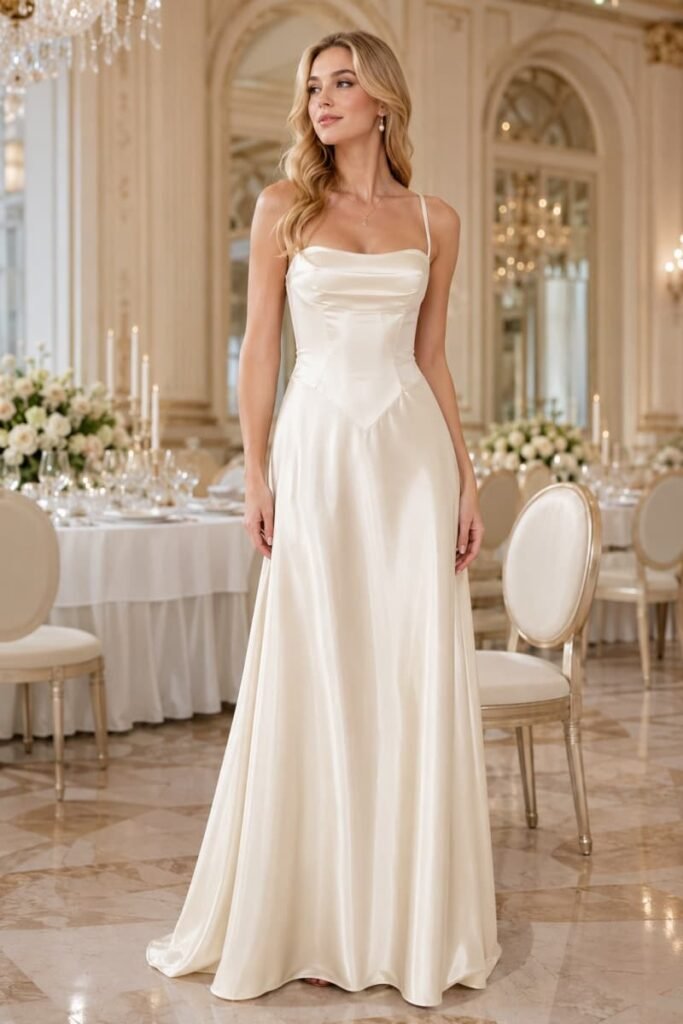
Satin Dress Production
- Review satin weight, gloss level, slippage, opacity and lining need before production booking.
- Plan sewing and pressing with enough care to protect clean surface quality.
- Confirm packing method early to reduce creases before arrival.

Bodycon and Mesh Production
- Review fabric recovery, opacity, lining compatibility and body measurement points.
- Plan capacity around fit risk, not only sewing simplicity.
- Add inline checks for measurements, seam tension, lining and coverage.

Corset Dress Production
- Reserve experienced lines for boning, structured bodices and support details.
- Confirm PP samples before bulk cutting because small structure changes affect fit.
- Add inspection focus for cup, zipper, lining, support and movement.

Sequin and Embellished Production
- Review embellishment density, backing comfort, seam allowance and trim loss.
- Plan extra time for cutting, sewing, inspection and packing protection.
- Separate embellished styles from faster commercial styles during allocation.

Chiffon and Soft Occasion Production
- Review transparency, layer count, lining tone, hem method and static risk.
- Allocate enough time for cutting, gathers, ruffles, sleeves and skirt movement.
- Protect soft appearance through pressing and packing planning.

Resort and Printed Production
- Review print scale, color family, fabric shrinkage and panel layout.
- Plan cutting around motif placement and size marker requirements.
- Keep strike-off, lab dip and fabric batch records connected with PP approval.

Multi-Style Partywear Production
- Group styles by fit risk, material type, construction complexity and QC focus.
- Reserve lines according to sewing skill and production speed.
- Build capacity buffers for late PP comments or material delays.

Repeat Order Production
- Use past production records to support faster capacity review.
- Separate repeat orders from new launch styles to prevent capacity conflict.
- Review material availability before promising reorder timing.
From Launch Calendar to Capacity Plan
Launch Calendar Review
Style and Quantity Mapping
Each style is mapped by dress category, color count, size range, quantity, fabric group, construction complexity and delivery priority. A 30,000-piece order with stable repeat styles requires a different plan from a 30,000-piece order spread across complex corsets, sequins, mesh panels and chiffon layers. Quantity per style matters as much as total quantity. Duolan reviews production rhythm by style group before line allocation.
Sample and PP Status Check
Material Readiness Review
Material readiness directly affects production booking. Fabric, lining, trims, zipper, boning, elastic, labels, packaging and special-process items must arrive before lines can run efficiently.Duolan reviews material status by style and by group. Satin, mesh, lace, sequin, printed fabric and chiffon may follow different procurement paths. Capacity planning becomes safer when material arrival dates align with cutting and sewing schedules.
Line Allocation Planning
Line allocation considers style complexity, quantity, fabric behavior, construction method, skill requirement, delivery window and factory loading. Core factories can handle high-control styles, while mature styles or repeat orders may follow different production paths. Quick-response lines may support urgent replenishment. Duolan allocates production paths according to actual garment risk, helping avoid unrealistic timelines and inefficient line use.
QC and Delivery Window Locking
Capacity Planning by Style Complexity
Simple Commercial Styles
- Best suited for stable lines with clear specs and approved PP samples.
- Faster output depends on simple construction, ready materials and low correction risk.
- Reorder records can improve planning speed for future color or size extensions.
Fit-Sensitive Styles
- Capacity planning includes extra review around bust, waist, hip, opening and garment length.
- Fit samples or size set samples may be prioritized before line reservation becomes final.
- Inline measurement checks support better control during bulk.
Fabric-Sensitive Styles
- Satin needs surface and seam control.
- Chiffon needs soft handling, lining and hem review.
- Mesh and lace need transparency, placement and edge stability checks.
Detail-Heavy Styles
- Process review estimates added sewing, trimming, repair and inspection time.
- Detail placement and construction method should be confirmed before PP approval.
- QC planning protects consistency across production batches.
Repeat and Reorder Styles
- Mature styles can follow proven production paths.
- Reorder timing still depends on material availability and current line loading.
- Quick-response lines may support urgent replenishment when standards are already locked.
Capacity Risk and Duolan Planning Control
Capacity risk appears when timing, samples, materials, lines and QC are not planned together. Duolan links each risk with a planning action before bulk production begins.
| Capacity Risk | What Goes Wrong | Duolan Planning Focus |
|---|---|---|
| Capacity reserved too late | Approved styles cannot enter production on time | Early line planning, launch calendar review, factory allocation |
| PP samples not locked | Bulk production waits or starts with unclear standard | PP approval tracking, open issue review, production readiness check |
| Style complexity underestimated | Sewing time, QC time and delivery window become unrealistic | Complexity grouping, process review, skilled line matching |
| Materials arrive late | Production lines wait while delivery window shrinks | Fabric and trim readiness review, BOM tracking, sourcing timeline |
| Reorders interrupt launch orders | Core launch styles lose capacity priority | Separate reorder planning, quick-response line allocation |
| QC added too late | Final inspection finds problems after production is complete | Inline QC plan, T-21 / T-14 / T-7 checks, PP comparison |
Capacity Reservation for Seasonal Dress Programs
Forecast Before Final PO
Reserve by Style Group
Capacity can be reviewed by satin group, mesh group, corset group, chiffon group, sequin group, print group or repeat group. Style-group planning helps allocate suitable lines and QC focus. A sequin party style and a chiffon occasion dress may share a launch date but need very different production handling.
Separate New Orders and Reorders
Plan Around Peak Season
Build Capacity Buffer
Complex styles, late materials, open sample comments, QC repair, packing requirements and freight changes all need buffer. A capacity plan without buffer becomes fragile. Duolan reviews risk points and adds checkpoints before the production window becomes too tight.
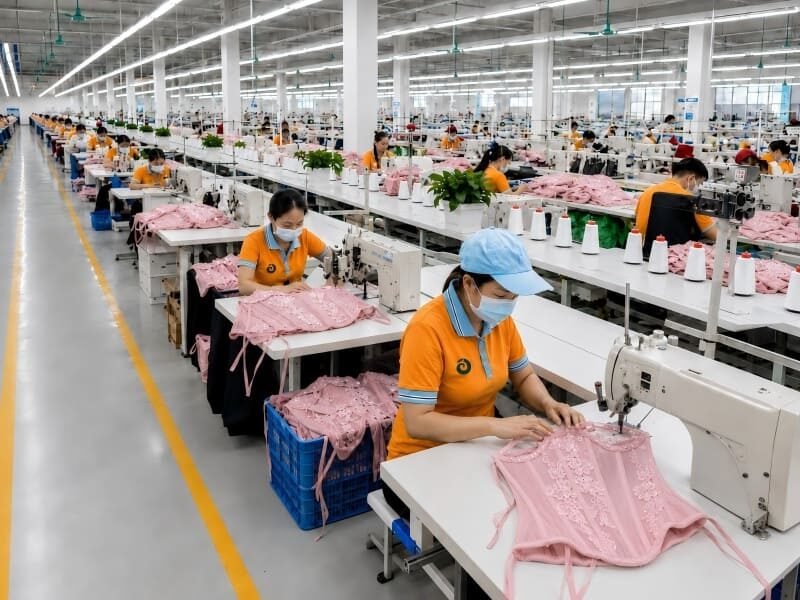
Material Readiness Before Production Booking
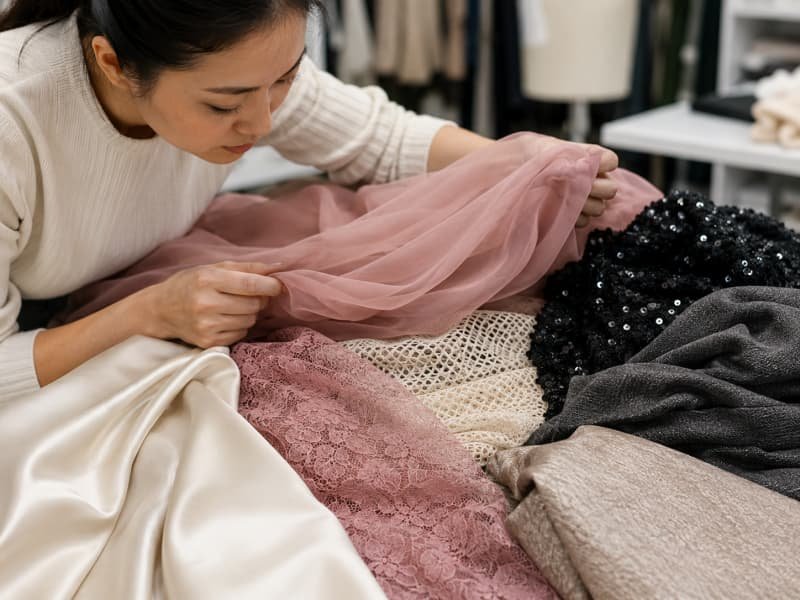
Main Fabric Readiness
- Bulk fabric approval should align with PP sample direction.
- Fabric delay can compress production and inspection windows.
- Fabric risk is reviewed by style group before line allocation.

Lining and Inner Structure
- Corset, strapless and backless styles need inner structure review.
- Pale colors and sheer fabrics need lining tone and opacity checks.
- Inner materials should arrive before cutting and sewing windows.

Trims and Closures
- Trim cards reduce confusion across similar styles.
- Functional trims are reviewed by construction requirement.
- Color matching should align with approved fabric and PP sample.

Special Process Timing
Printing, embroidery, beadwork, pleating, washing, tie-dye, garment dyeing and finishing can add lead time before or after sewing. These steps must be added to capacity planning.
- Special-process styles need separate timeline review.
- Process output should match sample approval and QC standard.
- Late-process changes can affect bulk delivery timing.
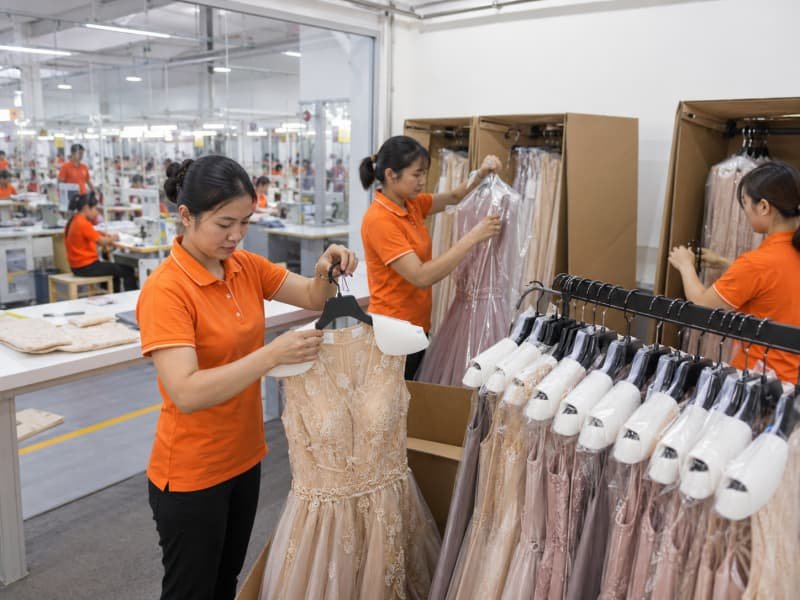
Packaging Components
Hangers, polybags, cartons, barcodes, size stickers, fold methods, tissue and packing instructions affect final delivery readiness. Packing is not a last-minute detail when warehouse receiving standards are strict.
- Packing method should match fabric and garment structure.
- Carton grouping can support style separation and warehouse handling.
- Barcode and label readiness protects final shipment flow.
Replacement Rules
- Replacement rules protect PP standard and brand quality.
- Material changes should be recorded by style.
- Approved alternatives can reduce delay when original materials face supply pressure.
Line Allocation Across Factories and Sewing Lines
Production capacity planning becomes stronger when each dress style follows the right production path. Duolan does not treat all approved styles as equal line assignments. A satin style, a corset dress, a mesh bodycon, a sequin mini, a chiffon occasion dress and a repeat-order woven dress need different teams, timing, QC focus and packing support.
Core Factory Allocation
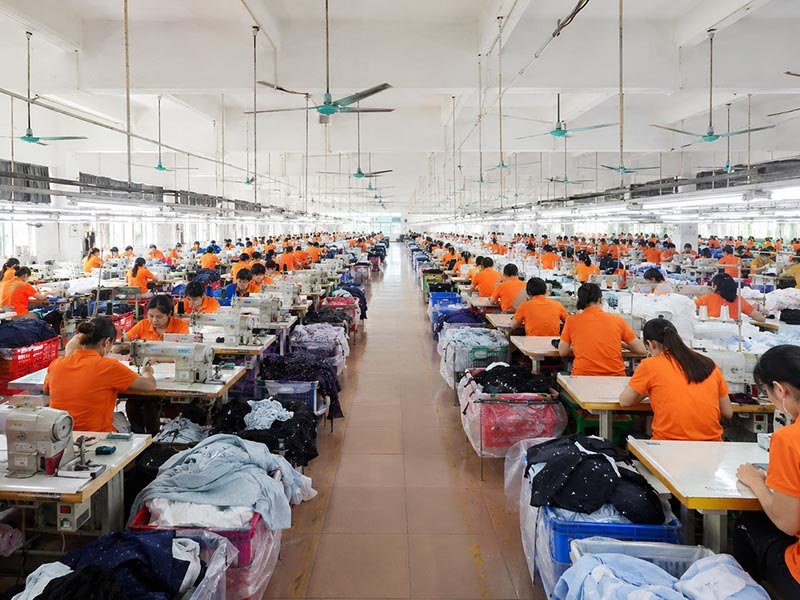
Duolan’s owned factories are used for programs requiring closer control, stronger sample-to-bulk discipline and higher production visibility. Core factory allocation is better suited for complex dresses, high-value launch styles, fitted silhouettes, corset structures, delicate fabrics and styles with strict PP requirements.
- Suitable for satin, corset, mesh, lace, chiffon, sequin and high-control occasion styles.
- Supports closer connection between sample approval, PP Lock, production instruction and QC checks.
- Helps protect styles carrying higher brand visibility, campaign value or delivery risk.
Satellite Factory Allocation
- Suitable for proven styles, repeat colors, stable silhouettes and mature construction.
- Helps free core factory capacity for new, complex or high-control programs.
- Supports volume planning when one launch includes many approved style groups.
Quick-Response Line Allocation
- Suitable for approved repeat styles, urgent reorder needs and limited time-sensitive production.
- Not ideal for styles with open PP comments, unconfirmed fabric or unresolved fit risk.
- Helps brands react faster when a style performs well after launch.
Capacity Load Review
- Higher quantity does not always mean easier planning if styles are complex.
- Lower quantity can still create pressure when fabric or construction is sensitive.
- Capacity planning becomes safer when line loading, material readiness and QC timing are reviewed together.
Style Group Allocation
Different dress groups need different production experience. Satin lines need surface and pressing control. Mesh lines need stretch, transparency and lining control. Corset lines need support structure accuracy. Sequin lines need surface handling and repair planning. Chiffon lines need delicate sewing and hem control.
- Satin group: seam smoothness, pressing, shine marks, packing creases.
- Mesh group: stretch recovery, lining, opacity, seam tension, fit points.
- Corset group: cups, boning, zipper, lining, support, waist shape.
- Sequin group: loss rate, seam bulk, lining comfort, repair points.
- Chiffon group: fraying, layering, hem balance, pressing protection.
- Repeat group: approved pattern, BOM, golden sample, faster planning path.
Production Path Confirmation
After factory and line planning, Duolan aligns each style with production instruction, PP sample, BOM, inspection points, packing method and delivery schedule. The goal is not simply placing orders into available lines. The goal is matching each dress group with a production path able to protect quality and delivery.
T&A Calendar for Dress Production
Step 1|Sample Approval Milestone
Step 2|PP Lock Milestone
Step 3|Material Arrival Milestone
Step 4|Cutting and Sewing Milestone
Step 5|QC Milestone
Step 6|Shipment Milestone
Production Capacity QC and Delivery Checkpoints
Capacity planning only works when QC and delivery are included from the beginning. Duolan connects forecast review, PP readiness, material status, line allocation, inspection and shipment planning before production begins.
| Planning Stage | Duolan Checks | Delivery Risk Controlled |
|---|---|---|
| Forecast Review | Style count, target quantity, launch date, shipment mode | Capacity mismatch before PO |
| PP Readiness | Approved sample, open comments, BOM, size spec | Production delay from unclear standards |
| Material Readiness | Fabric, lining, trims, packing, process status | Line waiting and compressed lead time |
| Line Allocation | Style complexity, quantity, factory skill, timeline | Wrong production path and low efficiency |
| Inline QC | Measurements, workmanship, structure, fabric handling | Late rework and bulk deviation |
| Final QC | PP comparison, packing, labels, carton plan | Shipment rejection and delivery delay |
| Shipment Planning | Air 5–8 days, sea 20–35 days, forwarder coordination | Missed launch window |
Duolan Manufacturing System for Capacity Planning
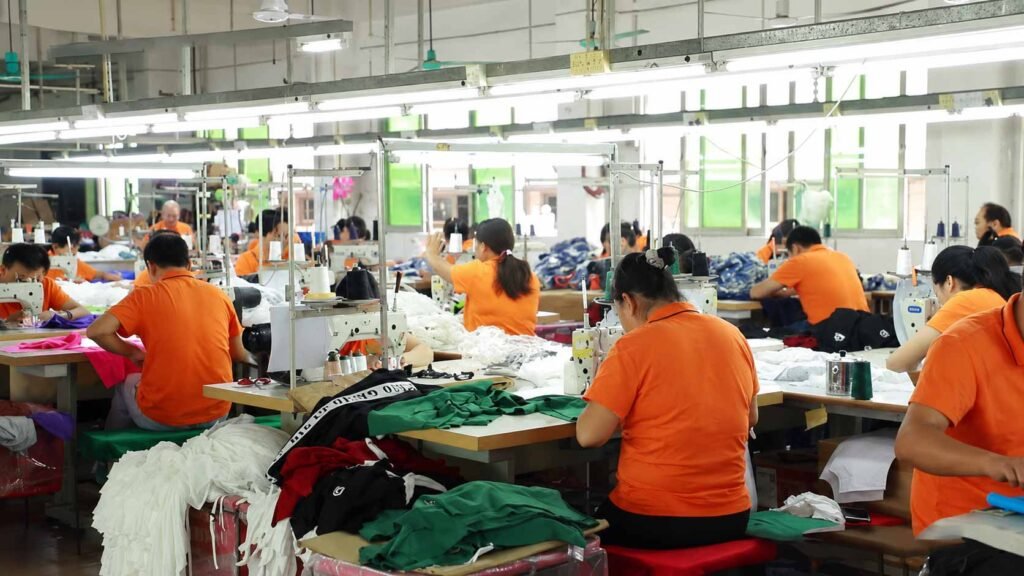
Duolan’s capacity planning strength comes from a connected manufacturing structure rather than a single factory output claim. Large dress programs need sample capacity, production lines, skilled workers, core factories, flexible partner capacity, QC coordination, packing preparation and shipment planning working in the same direction. For fashion brands managing launch calendars, peak seasons, repeat orders and multi-style dress programs, Duolan’s system helps connect production planning with real garment execution.
- 16 owned womenswear factories
Core factories support high-control dress programs, complex styles, key launch orders and styles needing closer management from PP approval through bulk inspection. - 20+ long-term satellite factories
Satellite capacity supports mature styles, stable repeat orders, volume extension and flexible production planning after standards are locked. - 12,000+ workers across the manufacturing system
Workforce scale supports multi-style production, staged delivery, repeat orders and complex dress programs requiring different skill groups. - 300 sewing lines
Line resources allow dress groups to be allocated by style type, construction difficulty, material behavior, quantity and delivery window. - 50+ quick-response lines
Flexible lines support selected replenishment, urgent reorder needs, test winners and time-sensitive programs when PP standards and materials are ready. - 6.5 million pieces monthly stable capacity
Stable output supports regular brand order rhythm, seasonal launches, multi-style programs and planned bulk production. - 10 million pieces peak monthly capacity
Peak capacity helps support larger seasonal windows, high-volume programs and urgent production pressure when planning begins early enough. - 15,000–35,000 monthly sample capacity
Sample capacity connects first samples, fit samples, photo samples, PP samples and golden samples with upcoming bulk planning. - 3,000–8,000 monthly style workflows
Style workflow capacity helps organize pattern updates, material records, sample comments, PP status and production preparation across many styles. - Air 5–8 days / sea 20–35 days
Shipment options help production teams plan around launch timing, warehouse needs, replenishment urgency and cost priorities.
Duolan’s system supports capacity planning through a full chain: forecast review, sample status check, PP Lock, material readiness, line allocation, inline QC, final inspection, packing and shipment coordination. For mature fashion brands, the value is not only having capacity available. The value is knowing which capacity path fits each dress program before production starts.
Anonymous Capacity Planning Dress Case Studies
US Premium Ecommerce Dress Launch
- Program range: 12–18 styles with approximately 30,000–50,000 pieces planned across launch and repeat needs.
- Capacity challenge: Some styles were still under fit sample revision while other styles were ready for PP approval. Production windows needed early reservation without forcing unfinished styles into bulk.
- Duolan solution: Styles were grouped by PP readiness. Mature styles moved first into line planning, while high-risk styles kept revision windows before final production allocation.
- Planning focus: Sample status, material readiness, PP Lock, style complexity and QC checkpoints were reviewed before bulk schedule confirmation.

Australian Resort and Party Season Program
An Australian brand planned resort prints and party styles under one seasonal launch. Styles included printed maxis, satin minis, mesh dresses and halter midis.
- Program range: 15–25 styles with approximately 40,000–70,000 pieces planned for launch and reorder planning.
- Capacity challenge: Printed fabrics, satin, mesh, lining and packaging had different arrival schedules. If all styles waited for one production window, delivery risk would increase.
- Duolan solution: Resort prints and partywear were separated by material readiness and style group. Print styles followed strike-off and fabric timing, while partywear followed fit and PP status.
- Planning focus: Fabric mapping, line allocation, photo sample timing, packing method and shipment route were reviewed by style group.
UK Occasionwear Peak Season Order
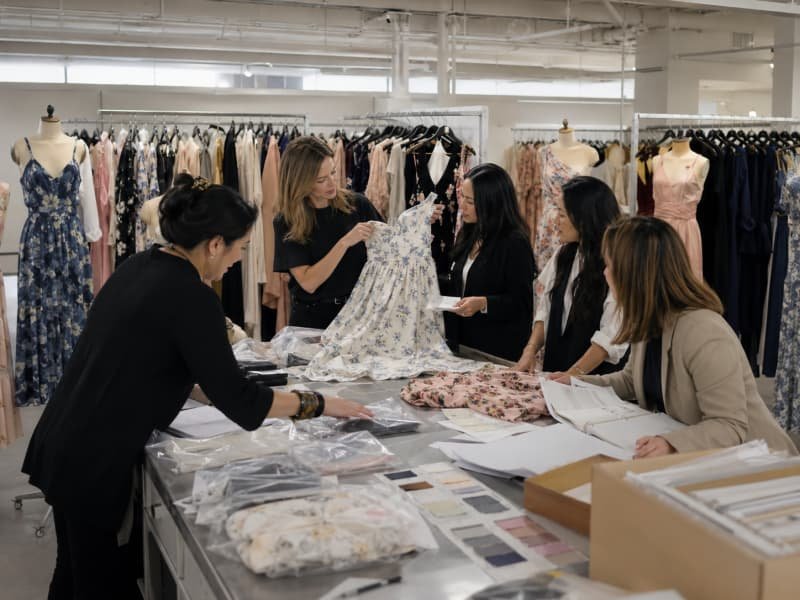
A UK occasionwear brand prepared wedding guest, graduation and cocktail dress styles for a fixed peak-season delivery window.
- Program range: 10–16 styles with approximately 20,000–40,000 pieces planned for controlled launch production.
- Capacity challenge: Complex styles required longer QC time, while repeat styles had faster production potential. New launch styles and reorder styles could compete for the same lines.
- Duolan solution: Core new styles were placed into owned-factory planning, while stable repeat styles followed mature production paths. T-21 / T-14 / T-7 checkpoints tracked risk before shipment.
- Planning focus: PP approval, production path, inline QC, packing standard, final inspection and delivery window were reviewed before production release.

FAQ for Production Capacity Planning

Send Your Production Capacity Plan
Share your line sheet, tech packs, style count, quantity per style, launch calendar, delivery window, PP sample status, fabric readiness, current production stage, preferred shipment method and reorder forecast. Duolan can review your dress production plan around capacity reservation, line allocation, material readiness, QC milestones, packing needs, shipment route and repeat-order potential.
A strong capacity brief may include:
- Style count, dress categories, priority styles, quantity per style and expected launch timing.
- PP sample status, open comments, fabric readiness, trim status, packaging needs and shipment method.
- Reorder forecast, delivery window, warehouse timing, forwarder details and current project stage.