 Skip to content
Custom Silk Dress Manufacturer
Dress-focused development and manufacturing support for established fashion brands building refined silk collections, seasonal drops, and repeatable commercial programs.
Duolan develops silk dress programs from tech packs, original samples, reference images, fabric swatches or collection briefs. The team coordinates fabric verification, lining review, pattern development, draping control, sample correction, pre-production approval, bulk planning, quality inspection and delivery for silk, silk-blend and silk-look dress collections.
Manufacturing and silk-dress program facts:
- 30+ years of womenswear development experience behind dress-focused fabric, fit and workmanship judgment.
- 16 owned womenswear factories and 20+ long-term satellite factories support coordinated launch, repeat and scale-up production.
- 300 garment sewing lines and 50+ flexible lines allow multi-style silk programs to be separated by material sensitivity, construction difficulty and delivery window.
- An anonymized US occasionwear silk program covered 18 styles and 46,800 pieces across bias slips, cowl midis, halter maxis and draped minis.
- An anonymized multi-market fashion dress program covered 24 styles and 72,000 pieces across North America, Europe and Middle East distribution.
Manufacturing Depth for Brand-level Dress Programs
30+ Years Experience
- Dress silhouette and body balance
- Fabric behavior and visual effect
- Pattern feasibility
- Sample correction
- Workmanship selection
- Bulk-production readiness
16 Owned Factories
Sixteen owned womenswear factories provide direct control over core developments, technically sensitive styles, important launch programs and products requiring close coordination between the sample room and production teams. Core projects can be assigned according to:
- Fabric sensitivity
- Fit complexity
- Construction difficulty
- Workmanship requirements
- Quantity structure
- Launch priority
50+ Flexible Lines
More than fifty quick-response and flexible production lines support launch quantities, repeat orders, selected urgent developments and collections with several styles moving at different speeds. Flexible capacity is valuable when one collection includes:
- Early campaign styles
- Commercial volume styles
- Later repeat styles
- Complex products requiring additional validation
- Different planned shipment windows
12,000+ Manufacturing Workers
300 Sewing Lines
20+ Satellite Factories







Silk Dress Manufacturing for Established Fashion Teams
Established Fashion Brands
Product Development Teams
Buying and Sourcing Teams
Occasion and Resort Brands
Eight Standards for Evaluating Silk Dress Manufacturers
Material Verification
Dress Development Ability
Pattern and Draping Control
Sample-stage Discipline
Workmanship Control
Bulk Consistency
An attractive sample offers limited value when its materials, construction or finishing cannot be reproduced. Bulk readiness depends on approved patterns, measurement specifications, fabric and trim confirmation, workmanship notes, pre-production reference, first-piece review, inline control and final inspection.
Scalable Manufacturing
Large fashion programs often contain ten to thirty styles rather than one product. A suitable partner must allocate capacity by style, difficulty, approval timing, quantity and delivery window. Core styles, complex styles, campaign products, repeat runs and volume lines may require separate production routes.
Compliance and Documentation
Controlling Risks Before Silk Dresses Reach Production
Silk dress problems become costly when material, pattern, finishing and approval decisions remain unclear until bulk production. Duolan moves the main risks into development and pre-production review.
Fiber Content Confusion
Fabric-Silhouette Mismatch
A light charmeuse may create a fluid slip dress but fail to support a structured bodice. A heavier silk may hold shape while losing the soft fall required for a cowl neckline. Fabric review considers drape, body, surface, transparency, recovery, weight distribution and sewing behavior before the pattern route is fixed.
Bias-cut Growth
Bias-cut panels can lengthen, twist, narrow or pull differently after cutting, sewing, hanging, steaming and wearing. Control begins with grain planning, controlled cutting, panel handling, hanging allowance, side-seam observation, balanced joining and final hem levelling after the garment has settled.
Seam Puckering
Needle and Surface Marks
Pressing Damage
Lot and Color Variation
Sample-to-Bulk Deviation
Custom Silk Dress Styles for Fashion Collections
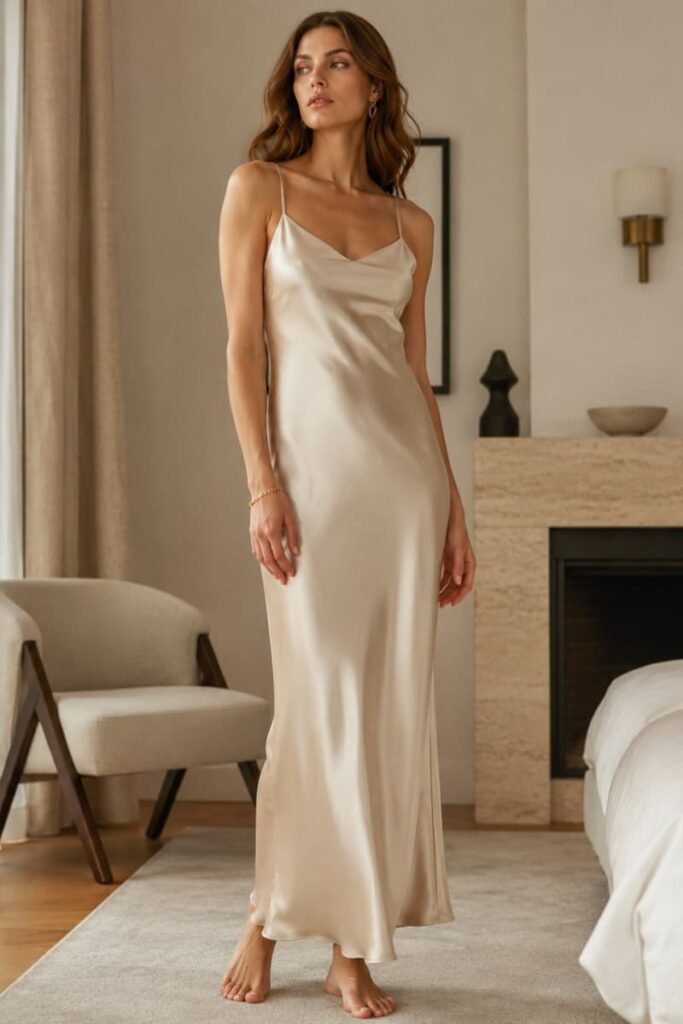
Silk Slip Dresses

Bias-cut Silk Dresses

Cowl-neck Silk Dresses

Draped Silk Dresses

Silk Mini Dresses

Silk Midi Dresses

Silk Maxi Dresses

Silk Halter Dresses

Silk Backless Dresses

Printed Silk Dresses

Silk Occasion Dresses

Silk Resort Dresses
Silk Dress Programs Built Around Brand Collections
Duolan supports coordinated dress groups in which silhouette, material, color, fit, price level, sampling priority and production timing work as one commercial program.

Minimal Silk Capsule
Development focuses on refined fit, fabric quality, clean workmanship, tonal lining, discreet trims, consistent strap proportions and shared material use across several products to improve collection coherence and material planning.

Occasion Collection
The range needs a structured mix of campaign products, strong commercial silhouettes, accessible price points and higher-impact styles without creating unmanageable production complexity.

Resort and Vacation Edit
Duolan coordinates print direction, fabric transparency, lining, movement, packing recovery and production timing around seasonal launch and delivery windows.

Evening and Party Program
Visual impact must remain compatible with comfort, production time, price architecture and bulk repeatability. High-risk styles are isolated early for additional trials.

Printed Silk Collection
Print scale may be adjusted for mini, midi and maxi proportions. Placement, repeat direction, cutting efficiency, shade approval and artwork ownership are reviewed before production fabric is released.
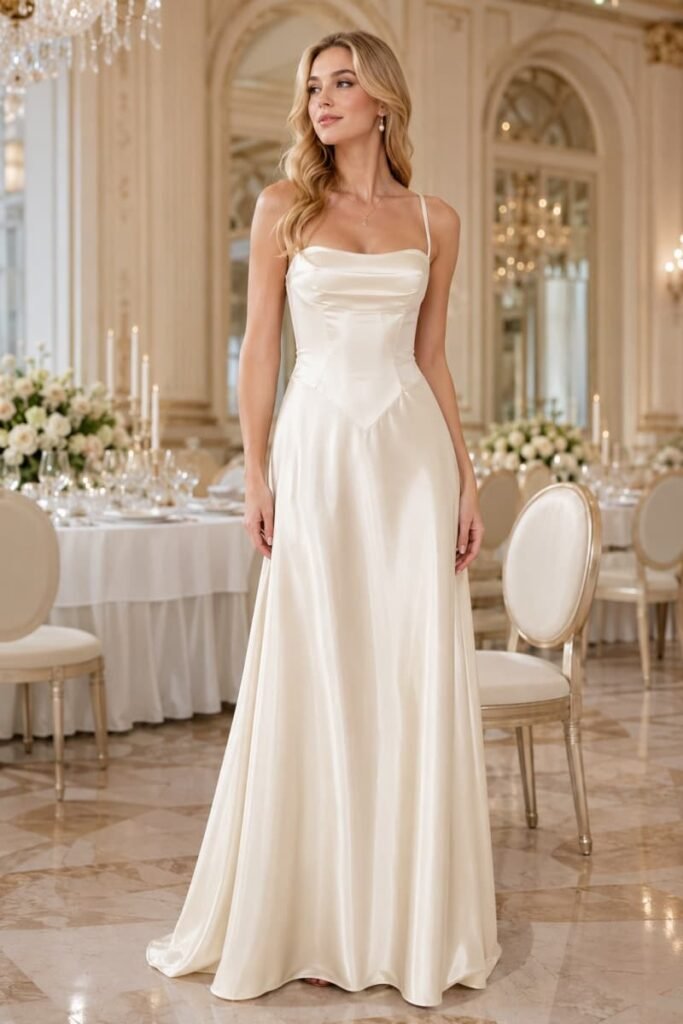
Seasonal Color Extension
Existing pattern, fit, BOM, workmanship and QC records shorten the redevelopment path while preserving the identity and commercial performance of the original product.
Understanding Silk Materials Before Dress Development
Clear material terminology protects labeling, costing, product claims, testing, care instructions and garment performance throughout development and production.
| Material Term | Meaning | Development Points to Confirm |
|---|---|---|
| 100% Silk | Fabric made entirely from silk fiber | Fiber report, weave, weight, width, finish, shrinkage, shade, care route |
| Mulberry Silk | Silk fiber associated with domesticated silkworm production | Supplier documentation, fabric specification, testing requirements |
| Silk Satin | Satin-weave fabric made with silk fiber | Momme or weight, gloss, drape, snag risk, seam behavior, pressing route |
| Silk Charmeuse | Lightweight silk fabric with a smooth face and softer reverse | Fluidity, transparency, bias behavior, surface protection, lining |
| Silk Crepe | Silk fabric with a textured or pebbled surface | Recovery, body, stretch behavior, drape, seam response |
| Silk Georgette | Lightweight, sheer, slightly textured silk fabric | Transparency, lining, edge finishing, gathering, snag protection |
| Silk Chiffon | Very light, sheer silk fabric with airy movement | Layer count, lining, narrow hems, seam type, cutting stability |
| Silk Blend | Silk combined with another fiber | Exact blend ratio, performance change, labeling, care, cost |
| Silk-look Satin | Satin fabric made from fibers other than silk | Accurate composition wording, performance, care, positioning |
Silk Fabrics Selected Around the Intended Dress Effect
Fabric selection begins with the silhouette, wearer experience, finish, price level, order structure, care route and production requirements – not only a visual swatch.

Silk Charmeuse

Silk Crepe

Silk Georgette

Silk Chiffon
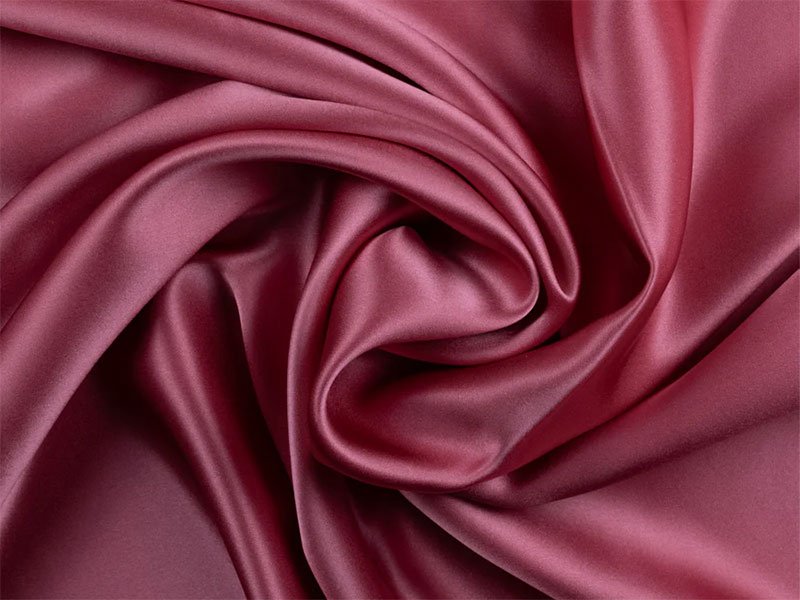
Silk Satin

Silk Blends
Silk Fabric Specifications Reviewed Before Sampling
Composition, Construction and Weight
Transparency, Lining and Skin Feel
Drape, Structure and Recovery
The selected material must support the visual objective of the garment. A cowl neckline needs controlled fall. A bias-cut slip needs fluidity without uncontrolled growth. A halter or backless dress may require stronger support. A fitted silk dress needs enough structure to hold the shape without creating seam stress or visible pulling. Review points include:
- Vertical and diagonal drape
- Fabric body
- Stretch and recovery
- Bias behavior
- Crease response
- Pressing response
- Skirt movement
- Strap and seam loading
Color, Print and Bulk Continuity
Custom color and print routes introduce additional approval stages. Lab dips, strike-offs, print scale, artwork direction, shade review and lot availability need enough time before sampling and production. Bulk continuity is reviewed for:
- Color consistency
- Print repeat
- Panel direction
- Lot segregation
- Replacement availability
- Reorder feasibility
- Label and care consistency
Material recommendations are made only after the silhouette, price position, quantity, launch date and required appearance are understood.
Matching Silk Behavior to Dress Silhouettes

Bias Slip Balance

Cowl Drape Control
A cowl neckline needs enough softness to form natural folds and enough stability to retain coverage. Neckline width, depth, shoulder position, facing, internal anchoring and front weight are tested on the intended fabric rather than decided from a sketch alone.

Draped Waist Stability

Maxi Weight Distribution

Backless Support Engineering

Printed Resort Movement
Lining and Opacity Engineering for Silk Dresses
Opacity Under Real Conditions
Key review areas include:
- Bust and hip coverage
- Side seams under tension
- Back and cut-out areas
- Slits and wrap openings
- Garment movement
- Photography conditions
- Lining visibility at openings
Weight and Drape Compatibility
A heavy lining can pull against a fluid outer fabric, flatten a cowl, reduce skirt movement or create a visible inner shape. A very light lining may roll, cling, rise or fail to provide coverage.
Duolan compares the outer fabric and lining for:
- Weight relationship
- Stretch compatibility
- Surface friction
- Recovery
- Shrinkage
- Static tendency
- Care route
- Hem behavior
Construction and Coverage
The pattern must prevent the lining from showing above the outer edge, pulling the outer garment or becoming visible during movement. Backless, halter, low-cut and asymmetric dresses often require localized solutions rather than a standard full lining.
Sample-to-Bulk Control
Outer fabric and lining specifications are locked together before bulk production.
Approved color, weight, handfeel, construction, attachment method, hem level and internal appearance become part of the production standard.
Custom Color, Print, Trims and Brand Execution

Custom Color

Digital Print

Placement Print

Functional Trims

Brand Labels

Packaging Instructions
Start Silk Dress Development From Available Information
Tech Pack Development
Reference Image Development
Original Sample Development
Collection Brief Development
Pattern and Draping Development for Silk Silhouettes
Grain Direction and Bias Behavior
- Panel grain
- Cutting direction
- Fabric resting
- Panel growth
- Side-seam movement
- Waist and hip balance
- Lining compatibility
- Hem levelling
Cowl, Drape and Twist Development
- Fold origin
- Fold volume
- Neckline depth
- Body coverage
- Bust balance
- Internal anchoring
- Seam bulk
- Repeatable marking
Halter and Backless Balance
Halter and backless dresses shift support toward the neck, shoulders, side seams, waist and internal construction. Development checks:
- Neck pressure
- Bust position
- Side-bust coverage
- Front gaping
- Strap length
- Back opening
- Closure stability
- Movement security
Pattern corrections are based on the intended fit and target size standard rather than simply tightening loose areas.
Fit Correction and Size Grading
Duolan can follow client-provided alpha or numerical size charts and grading rules. Common project references may include XS-XXL, US 0-16, UK 4-20 or EU 32-48, subject to product structure and the approved measurement specification. Grading reviews more than circumference. It also considers:
- Neckline position
- Strap length
- Bust shaping
- Waist placement
- Hip balance
- Slit level
- Dress length
- Drape proportion
The approved size range, sample size, grade rule and tolerance are confirmed before bulk production.
Controlled Silk Dress Sample Development Process
Step 1|Brief Review
Step 2|Fabric Direction
Step 3|Feasibility Check
Step 4|Pattern Development
Step 5|First Sample
Step 6|Fit and Visual Review
Step 7|Revision Sample
Step 8|Bulk-readiness Review
Sample Stages and Project Planning References
Planning windows begin after the required fabric, construction direction, measurements and development information are available. Custom-dyed, printed, embellished or highly complex silk products may require additional time.
| Stage | Main Purpose | Planning Reference |
|---|---|---|
| Feasibility Review | Clarify fabric, structure, risks, missing information and sample route | 2-4 working days after receiving usable project information |
| First Development Sample | Evaluate silhouette, construction, fabric direction and initial fit | Commonly 10-15 working days after material and pattern direction are confirmed |
| Complex Silk Sample | Develop bias-cut, draped, printed, structured or multi-process styles | Commonly 15-25 working days after critical materials are available |
| Revision Sample | Verify fit comments, pattern changes and workmanship corrections | Commonly 7-12 working days after consolidated comments |
| Photo or Sales Sample | Prepare a visually refined sample for internal sales or campaign use | Scheduled according to final material and visual requirements |
| Size Set | Verify graded measurements and fit across selected sizes | Scheduled after the base size and grade rules are confirmed |
| Pre-production Sample | Establish the material, workmanship, measurement and visual basis for bulk | Commonly 7-12 working days after final comments and materials |
| Bulk Production | Execute approved multi-style production after materials and standards are locked | Many 20,000-80,000-piece programs require 35-60 days, depending on style count, material route, processes, approval timing and shipment plan |
Size Development Note: Duolan follows the brand’s approved measurement chart, sample size, grading rules, fit model information and tolerance requirements. Alpha and numerical size ranges are assessed according to silhouette and construction rather than treated as one universal standard.
Workmanship Control for Delicate Silk Dresses
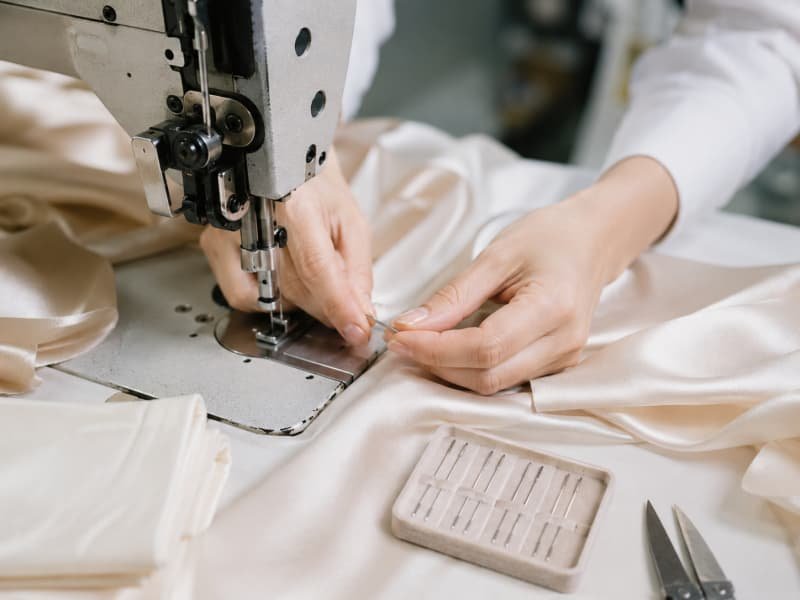
Needle Selection

Thread Tension

Seam Puckering

Seam Slippage

Narrow Hem Control

Zipper Installation

Pressing Control

Surface Protection
What Determines Silk Dress Cost and Production Planning
Fabric Composition
Color and Print Route
Construction Complexity
Material Consumption
Order Structure
Approval and Delivery Plan
Late material approval, repeated fit changes, delayed artwork, unconfirmed labels or changing packing instructions can compress the production window. Duolan works backward from the required launch or receiving date and identifies which approvals must be completed first.
Scalable Production for Multi-style Silk Dress Programs
Duolan’s manufacturing network supports brand programs containing ten to thirty styles and total quantities commonly ranging from 20,000 to 80,000 pieces.
Core Factory Control
Flexible Production Planning
Multi-style Coordination
Special-process Coordination
Reorder Capacity
Peak-season Allocation
Preventing Predictable Silk Dress Quality Problems
Quality control starts by identifying where the garment is most likely to fail. Each risk is linked to a development, pre-production, inline or final-inspection action.
Seam Puckering
Control: Trial seams on actual fabric, approved seam reference, tension adjustment, controlled operation, inline appearance checks and final pressing review.
Bias Distortion
Control: Grain marking, cutting control, panel resting, balanced handling, garment hanging, side-seam review and final hem levelling.
Length Growth
Control: Review after settling, record measurement conditions, stabilize critical areas, compare lining and outer length, and confirm final length before bulk hemming.
Lining Exposure
Control: Opening checks, movement fitting, lining pattern correction, controlled attachment, under-stitching where suitable and final appearance inspection.
Pressing Marks
Control: Pressing trials, approved temperature route, pressing cloth, clean equipment, controlled pressure, seam protection and surface inspection under suitable light.
Surface Damage
Control: Clean work areas, surface protection, needle control, careful bundling, damaged-piece segregation, protected movement and final light-table inspection.
Color Variation
Control: Approved standard, bulk shade review, lot separation, panel matching, lighting definition, carton control and shade records for repeat production.
Packing Creases
Control: Packing trial, tissue protection, controlled folds, suitable bag and carton size, hanger packing where required, and unpacking-recovery review.
Quality Inspection and Material Documentation
Fabric Inspection
Cutting Control
Inline Workmanship
Measurement Review
Final Appearance
Compliance Coordination
Duolan’s manufacturing system has completed a SMETA 2-Pillar audit. Additional testing, material documentation, inspection, label, packaging, social-responsibility and market requirements can be coordinated according to the specific brand program.
Representative Multi-style Silk Dress Project Profiles
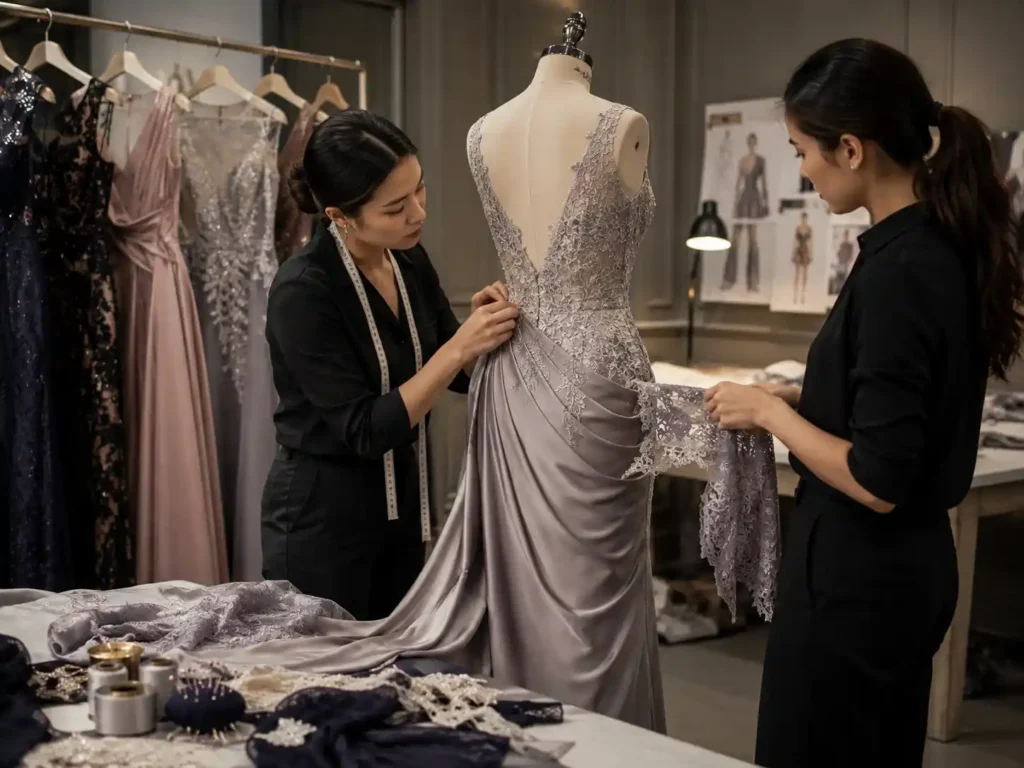
US Occasionwear Program
Brand Type: Established occasion and partywear label
Program: 18 styles / 46,800 pieces
Products: Bias-cut slips, cowl-neck midis, halter maxis, draped minis and backless occasion dresses
Size Structure: US 0-16 based on the brand’s measurement specification
The main challenge involved maintaining consistent drape and body balance across several silk and silk-blend fabric directions. Early references contained deep cowls, open backs, fine straps and bias-cut skirts, creating risks around neckline coverage, side-seam twist, garment growth, zipper waves and lining visibility.
Duolan separated the program into core commercial styles, higher-risk campaign styles and volume styles. Bias-cut products received additional hanging and hem review. Cowl shapes were corrected through mannequin draping and pattern adjustment. Backless products were evaluated for front support, side coverage, strap anchoring and lining construction.
Production standards included approved pattern versions, fabric and lining records, critical measurements, seam references, zipper details, pressing instructions and packing requirements. Five production lines were assigned according to style difficulty and approval status.
The full program moved through two principal shipment windows. High-risk silhouettes entered first-piece confirmation before wider production release, while repeatable commercial styles advanced through the standard production path.

European Resort Collection
Brand Type: Regional resort and vacationwear label
Program: 12 styles / 28,600 pieces
Products: Printed silk maxis, halter dresses, flowing midis, wrap dresses and relaxed evening slips
Color and Print Structure: Four print stories and six coordinated solid colors
The collection required coordination between garment patterns and large-scale artwork. A single print repeat could not be applied identically across mini, midi and maxi proportions without affecting motif placement and visual balance.
Duolan reviewed artwork scale, panel direction, key motif placement, fabric width, cutting utilization, neckline position, waist seams, gathering and skirt volume. Separate placement notes were developed for selected silhouettes. Strike-off review covered color, scale, surface, fixation and the relationship between the print and the lining.
Several pale colors required additional opacity assessment. Lining weight and color were adjusted to protect coverage without restricting skirt movement. Halter products received neckline-load and back-coverage review, while maxi styles were assessed after hanging to confirm finished length.
The production plan separated printed and solid-color materials, protected fabric lots and linked each artwork approval to the correct style and pattern version. Packing trials were completed for longer garments to reduce sharp folding and print-surface marking.

Multi-market Fashion Dress Program
Region: North America, Europe and Middle East distribution
Brand Type: Large multi-market fashion group
Program: 24 styles / 72,000 pieces
Products: Silk-look commercial dresses, selected silk-blend occasion styles, printed midis, draped minis and evening maxis
Delivery Structure: Three planned receiving windows
The main pressure came from the number of styles, varied approval speeds, multiple colorways, broad size coverage and separate regional label and packing requirements.
Duolan divided the order by product risk, material route, construction, quantity and delivery priority. Core volume products entered stable lines, while draped and shape-sensitive styles remained under closer technical control. Printed, solid-color and embellished products followed separate material and process schedules.
Project records tracked sample status, fabric approval, pattern version, size range, production route, QC priorities, label set, packing instructions and shipment allocation. A late neckline correction on two styles was isolated without disturbing the remaining program because the affected products had not entered full production.
First-piece reviews confirmed fit, drape, lining, zipper appearance, pressing and packaging before each major release. The program was prepared for three receiving windows, allowing campaign styles, commercial launch products and later volume products to follow the brand’s planned retail sequence.
Silk Dress Manufacturing Frequently Asked Questions

Start Your Silk Dress Development Project
Duolan supports established fashion brands, product teams, sourcing teams and multi-brand groups developing silk dresses for occasion, resort, evening, party, vacation and seasonal collections.
Send the available project information for an initial review. A complete tech pack is welcome, although development can also begin from reference images, original sample photographs, fabric swatches, artwork or a structured collection brief.
Useful information includes:
- Company name and website
- Product category and number of styles
- Tech packs or reference images
- Required silk composition or fabric direction
- Fabric swatches or supplier information
- Target sizes and measurement chart
- Colors, prints and artwork
- Quantity by style and color
- Required sample stage
- Target launch or receiving date
- Testing and quality requirements
- Main labels, care labels, hangtags and packaging
- Existing fit, material, workmanship or delivery concerns


