Skip to content
Custom Linen Dress Manufacturer
Dress-focused linen development, controlled sampling, and scalable production for established fashion brands, sourcing teams, and seasonal collection programs.
Duolan supports linen dress projects from material direction and pattern engineering through sample approval, bulk production, quality inspection, branded packaging, and repeat-order coordination. The team is best suited to defined linen programs where natural texture, shrinkage behavior, opacity, wash route, fit balance, garment presentation and repeat-order records must remain controlled across multiple styles.
Duolan supports linen dress projects through:
- Development from tech packs, sketches, reference garments, or collection briefs
- Evaluation of drape, opacity, shrinkage, lining, fit, construction, and finishing before bulk
- Multi-style linen programs for resort, vacation, contemporary daywear, and refined casual collections
- Conversion of approved samples into traceable production standards for more stable delivery
- Packaging, inspection, shipment and replenishment planning around brand requirements
Manufacturing and case facts:
- 12,000+ workers across owned and coordinated production bases support larger multi-style linen programs
- 300 sewing lines help match linen shirt dresses, lined maxis, embroidered styles and washed garments with suitable routes
- 15,000-35,000 monthly sample-development capacity supports style-level linen sampling when material readiness is clear
- A US resort linen program covered 18 styles and 42,600 garments across shirt, wrap, tiered, halter and belted silhouettes
- An Australian daywear line covered 26 linen-cotton and linen-viscose styles with 68,400 garments across several delivery paths
Manufacturing Depth Behind Every Linen Dress Program
A structured factory network supports development-heavy collections, parallel style execution, controlled bulk production, replenishment, and long-term supply coordination.
30+ Years Development
16 Owned Factories
20+ Satellite Factories
12,000+ Workers
300 Sewing Lines
50+ Flexible Lines
Built for Established Fashion and Product Teams
Fashion Brands
- Seasonal collection development
- Multi-style sampling
- Launch and repeat production
- Brand-specific quality standards
Product Teams
- Design feasibility review
- Fabric-to-silhouette matching
- Fit and sample comments
- PP and bulk preparation
Buying Teams
- Clear quotation basis
- Production path planning
- Quality and inspection coordination
- Delivery and packaging control
Sourcing Offices
- Supplier evaluation support
- Multi-style coordination
- Factory and line allocation
- Reorder record management
What Strong Linen Dress Manufacturing Requires
A suitable manufacturing partner must connect linen material knowledge with dress development, controlled sampling, stable production, and disciplined project execution.
| Brand Requirement | Common Project Risk | Duolan Control Direction |
|---|---|---|
| Linen material knowledge | Fabric selected by appearance alone may shrink, twist, become transparent, or lose the intended silhouette after finishing. | Review composition, weight, weave, drape, opacity, surface character, finishing route, color, and bulk availability before sample direction is locked. |
| Dress-focused development | A factory experienced only in loose basics may struggle with shaped waists, bust balance, fitted bodices, lining, zippers, or refined hems. | Match pattern, ease, support, lining, closures, seam structure, and finishing with the intended linen dress silhouette. |
| Sample accuracy | A visually similar sample may still fail in fit, movement, fabric behavior, construction, or future production feasibility. | Define sample purpose, review fit priorities, record revisions, and judge whether the sample can become a PP and bulk reference. |
| Shrinkage planning | Pattern measurements may change after garment washing, softening, steaming, or finishing. | Evaluate the selected material and finishing route before final pattern and bulk measurement standards are confirmed. |
| Bulk consistency | Fabric batch, color, handfeel, pressing, construction, or garment dimensions may differ from the approved sample. | Lock BOM, material direction, measurements, workmanship points, PP reference, inspection checkpoints, and packing instructions. |
| Multi-style capacity | Ten to thirty styles may require different materials, trims, risk levels, production lines, and delivery priorities. | Break orders down by style, color, size, quantity, complexity, material readiness, and production route before scheduling. |
| Quality documentation | Verbal approval creates confusion during production, inspection, shipment, and repeat orders. | Maintain style files, sample comments, pattern versions, BOM records, QC points, packing standards, and production notes. |
| Long-term repeatability | Reorders may restart from zero if material, pattern, color, and workmanship records are lost. | Preserve approved production assets and review material availability, color batches, size ratios, and prior QC findings before replenishment. |
Linen Dress Styles Developed for Fashion Collections
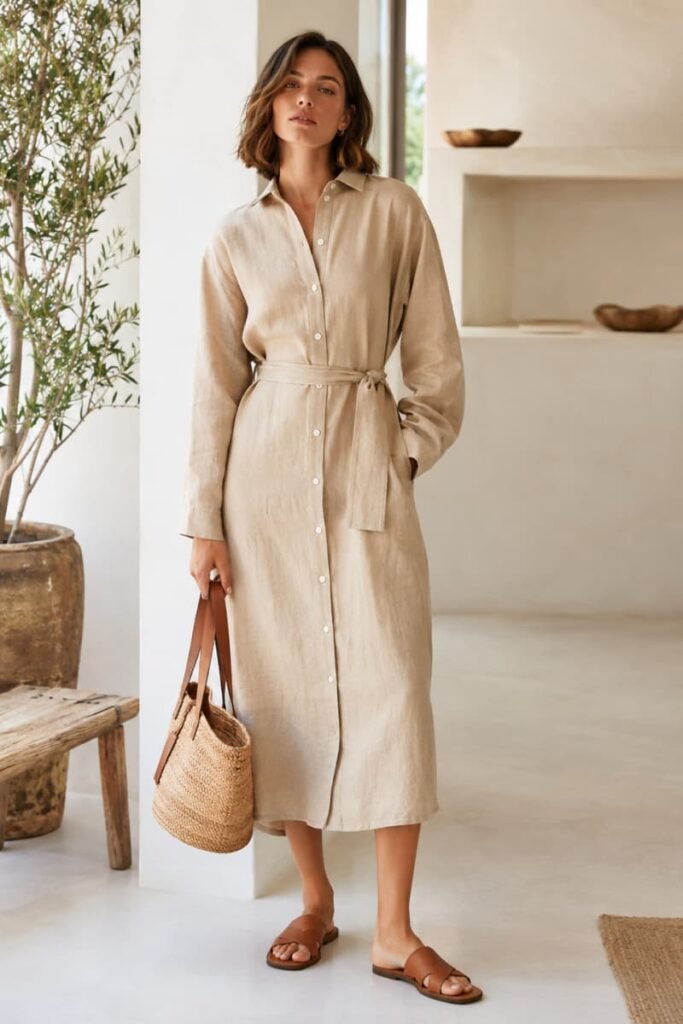
Linen Shirt Dresses
Shirt dresses require controlled collars, plackets, button spacing, shoulder balance, sleeve movement, pocket positioning, and clean topstitching. Medium-weight linen or linen blends often provide enough structure while retaining natural texture. Longer styles may need side vents, belts, or partial lining depending on color and density.

Linen Wrap Dresses
Wrap designs depend on overlap depth, neckline security, waist tie placement, skirt coverage, and movement during sitting or walking. Linen drape and stiffness influence how the front panels cross. Pattern testing should consider target body shape, bust coverage, seam reinforcement, and tie anchoring.

Linen A-Line Dresses

Linen Mini Dresses

Linen Midi Dresses

Linen Maxi Dresses

Smocked Linen Dresses

Tiered Linen Dresses

Belted Linen Dresses

Sleeveless Linen Dresses

Halter Linen Dresses

Lined Linen Dresses
Linen Collections Planned Around Commercial Wearing Scenarios

Resort Collections
- Lightweight and medium weights
- Relaxed yet controlled silhouettes
- Travel and packing considerations
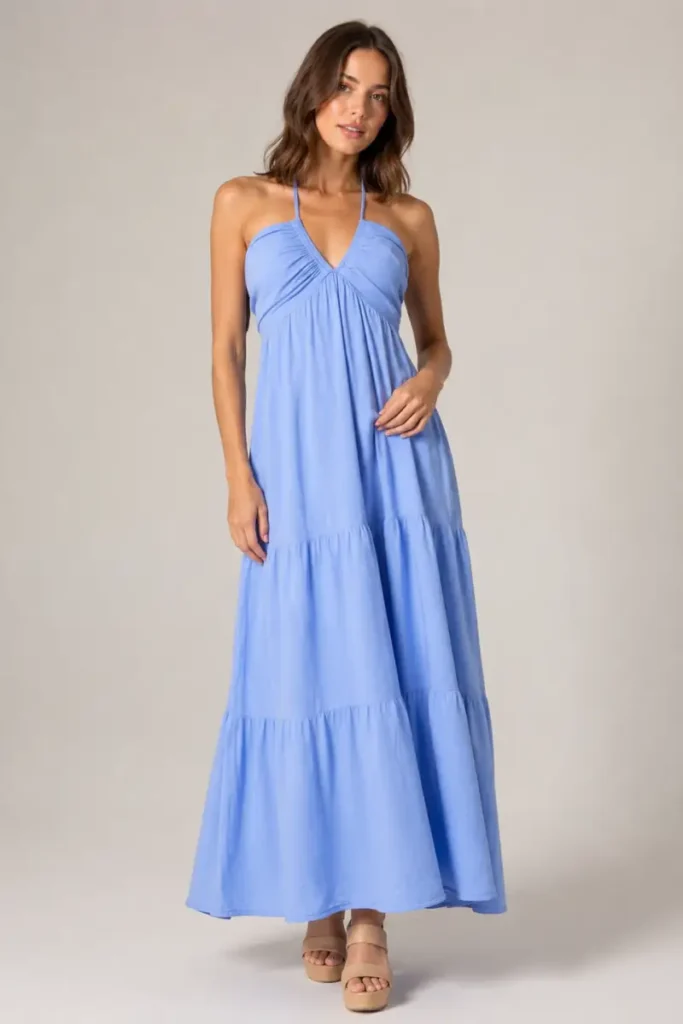
Vacation Dresses
- Campaign-ready appearance
- Comfortable coverage
- Multi-color capsule planning

Contemporary Daywear
- Refined seams and closures
- Controlled waist and shoulder fit
- Clean packing presentation

Premium Casual Lines
- Material-led development
- Restrained detailing
- Repeat-order potential
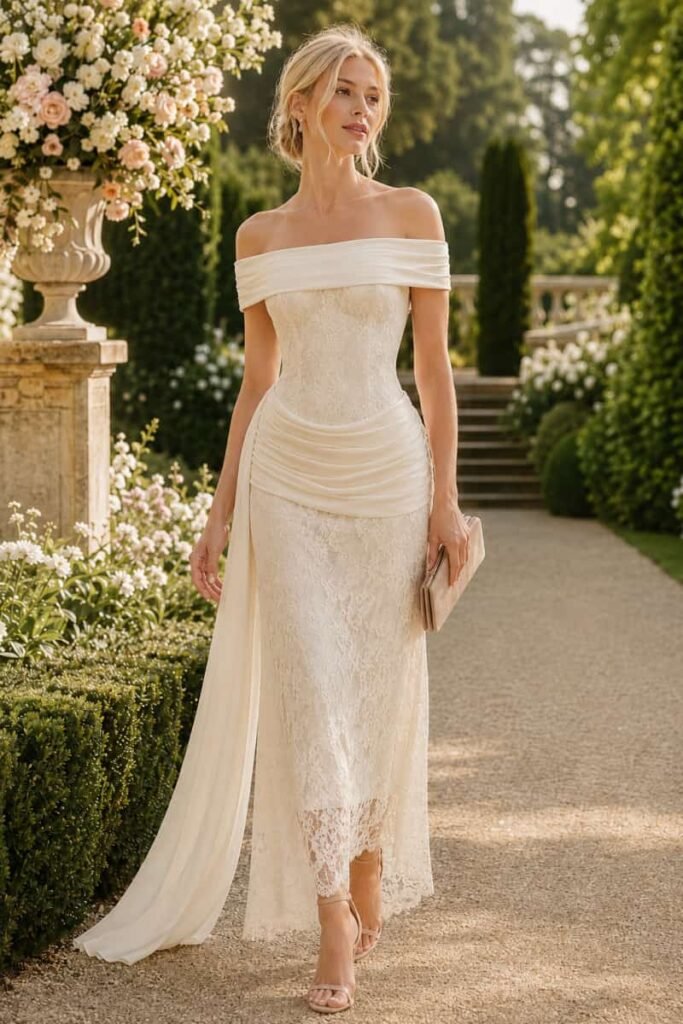
Wedding Guest Edits
- Occasion-ready silhouettes
- Lining and opacity review
- Color and fit consistency
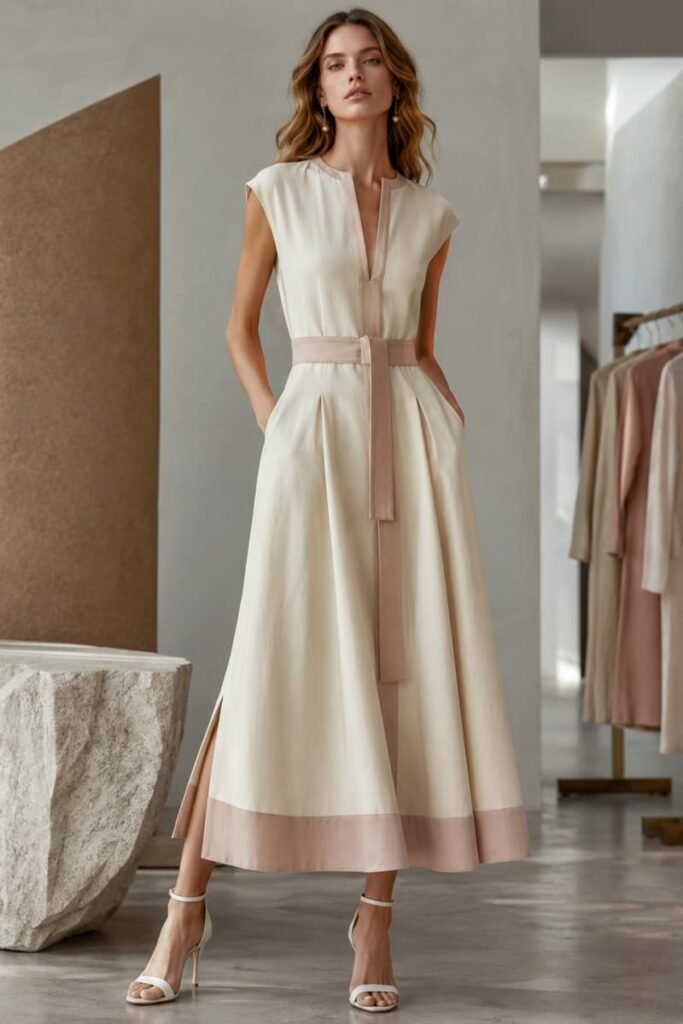
Seasonal Dress Drops
- Multi-style sample planning
- Style-level production routes
- Launch and replenishment paths
Linen Materials Matched to Dress Effect and Production

100% Linen
- Strong natural material identity
- More visible wrinkle behavior
- Shrinkage and skew require review
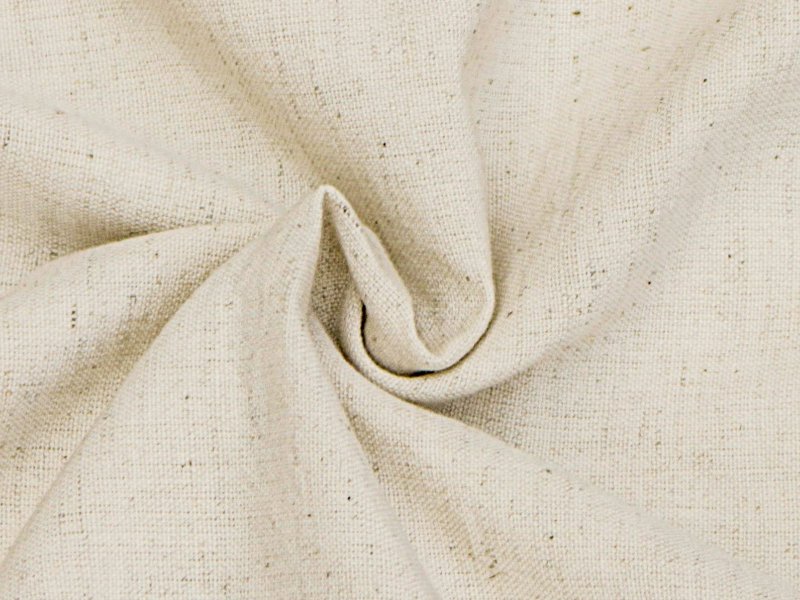
Linen Cotton
- Balanced natural feel
- Often easier sewing behavior
- Suitable for structured casual dresses

Linen Viscose
- Fluid skirt movement
- Softer body feel
- Stabilization may be required

Linen Lyocell
- Smooth refined appearance
- Softer drape
- Suitable for contemporary silhouettes

Yarn-Dyed Linen
- Integrated woven pattern
- Alignment-sensitive cutting
- Strong shirt dress potential

Washed Linen
- Softer finished handfeel
- Controlled relaxed appearance
- Measurement change must be planned

Printed Linen
- Strong seasonal identity
- Repeat and placement control
- Color approval before bulk

Embroidered Linen
- Premium surface detail
- Distortion risk around dense motifs
- Placement linked to pattern pieces
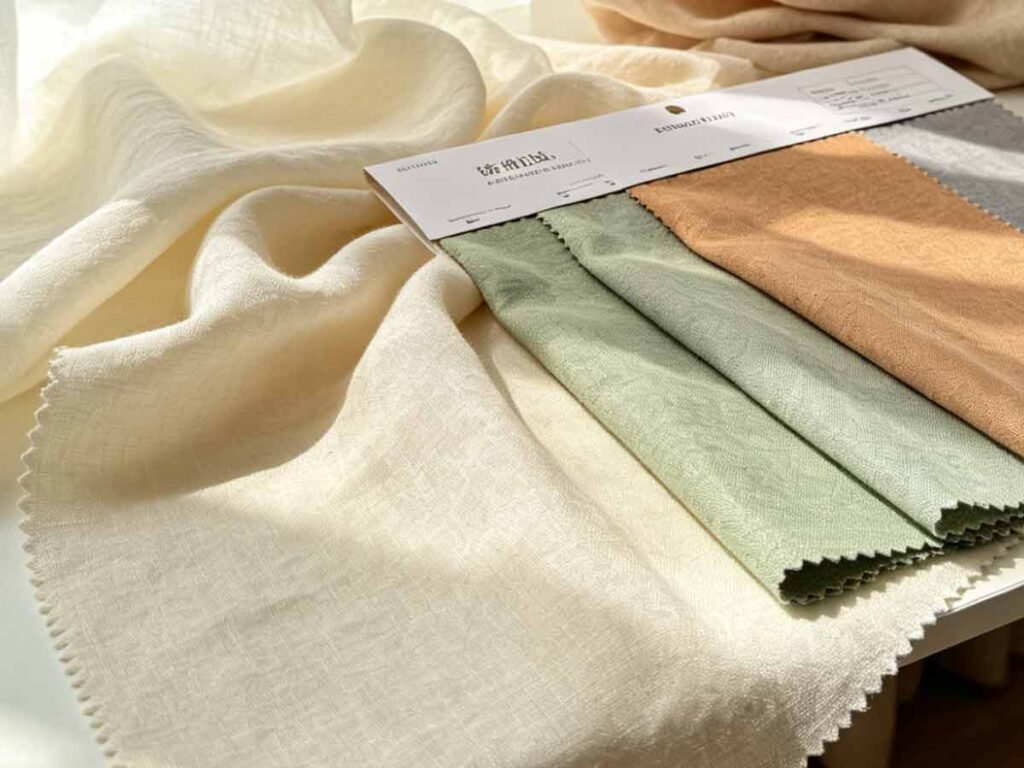
Linen-Look Alternatives
- Alternative performance direction
- Broader cost and care options
- Composition communicated accurately
Compare Linen Directions Before Starting Samples
Material names alone do not define performance; weave, weight, finishing, color, and supplier consistency also shape the final dress result.
| Material Direction | Drape and Structure | Wrinkle Character | Opacity Direction | Suitable Dress Uses | Main Production Focus |
|---|---|---|---|---|---|
| 100% linen | Crisp to moderately fluid depending on weight and finish | Most visible natural creasing | Light colors may need lining | Shirt, A-line, relaxed midi, maxi, structured sleeveless | Shrinkage, skew, seam puckering, pressing, batch shade |
| Linen-cotton | More familiar body and moderate structure | Usually softer creasing than pure linen | Depends on weave density and color | Casual daywear, shirt dresses, utility dresses, belted shapes | Blend consistency, washing, handfeel, topstitching |
| Linen-viscose | Softer, more fluid, better movement | Softer crease profile | Lightweight versions may need lining | Wrap, gathered midi, fluid maxi, soft sleeves | Seam growth, neckline stability, pressing, hanging |
| Linen-lyocell | Smooth and refined with fluid fall | Controlled yet still visible | Often moderate; evaluate pale colors | Contemporary daywear, premium resort, clean midi shapes | Surface marking, drape, seam stability, finishing |
| Yarn-dyed linen | Varies from crisp to soft | Natural creasing remains visible | Often improved by denser weave | Striped shirt dresses, checked midis, utility styles | Pattern matching, cutting yield, pocket and placket alignment |
| Washed linen | Relaxed, softened, less formal | Intentionally casual surface | Depends on base cloth and wash | Vacation, relaxed daywear, oversized and tiered dresses | Wash route, dimensional change, color, trim compatibility |
| Printed linen | Depends on base fabric and print process | Similar to selected base cloth | Print colors may alter visual coverage | Resort, vacation, floral, seasonal statement styles | Artwork, repeat, placement, shrinkage, color approval |
| Embroidered linen | Local stiffness or weight around motifs | Base fabric still creases naturally | Motifs may improve local coverage | Premium casual, resort, occasion day dresses | Stitch density, backing, distortion, skin comfort, placement |
Control Linen Risks Before They Reach Bulk Production
Shrinkage Change
- Review fabric and garment finishing
- Measure before and after treatment
- Adjust pattern or specification where needed
- Lock the approved route before bulk
Seam Puckering
Incorrect needle, thread, tension, seam type, pressing, or fabric handling can create visible puckering. Linen surfaces make poor seams easy to notice.
- Trial critical seams
- Review stitch density and tension
- Stabilize sensitive edges
- Compare production seams with approval references
Fabric Skew
Loose structures, washing, or poor cutting alignment can cause twisting, side-seam movement, or uneven hanging.
- Inspect grain and fabric alignment
- Control spreading and cutting
- Review wash response
- Check side seams and hem balance after finishing
Shade Variation
Natural-fiber materials and dyeing routes may show visible shade differences between rolls or production lots.
- Confirm color standard
- Review roll and batch information
- Avoid uncontrolled panel mixing
- Inspect finished garments under agreed lighting
Transparency
- Assess fabric on body or mannequin
- Review light and stretch conditions
- Select lining or partial coverage
- Confirm lining color and movement
Excess Wrinkling
- Set pressing standards
- Review packaging method
- Use tissue or hanging where required
- Inspect garment presentation before packing
Lining Mismatch
- Evaluate shell and lining together
- Review seam attachment points
- Confirm finished lengths
- Test movement before approval
Wash-Fit Change
- Measure pre-treatment and post-treatment
- Review bust, waist, hip, length, and balance
- Confirm care route
- Use finished samples for production decisions
Shrinkage Planning Begins Before Final Pattern Approval
Plan Dimensional Change Before Pattern Locking
Linen shrinkage should not be treated as a final inspection surprise. Material composition, weave, yarn, color process, washing, softening, drying, pressing, and garment construction can influence length, width, seam behavior, and overall balance. A pattern developed on untreated fabric may not remain accurate after the final treatment route.
Duolan reviews several areas before a linen dress reaches production preparation:
- Material condition: Confirm whether fabric arrives greige, dyed, prewashed, softened, sanforized, garment-washed, or untreated.
- Garment route: Identify whether the dress will receive washing, steaming, pressing, enzyme treatment, softening, or other finishing.
- Critical measurements: Track bust, waist, hip, shoulder, sleeve, body length, skirt length, slit position, and hem level according to the silhouette.
- Construction sensitivity: Review panels, bias areas, gathered sections, waist seams, plackets, zippers, linings, and mixed materials.
- Sample relevance: Use a sample produced with a representative material and finishing route when confirming fit or production standards.
Pattern compensation should be based on controlled observations rather than a universal linen allowance. Two fabrics with similar fiber content can behave differently because of weight, weave, finishing, dyeing, or supplier production. Final size specifications should clearly state whether measurements refer to untreated, washed, pressed, or packed garments.
Lock the Approved Wash Route Before Bulk
Once a finish becomes part of the approved garment appearance, production needs a stable reference. A softer handfeel achieved on one sample does not automatically guarantee the same dimensions, color, crease profile, or seam appearance across bulk. Before production starts, Duolan can coordinate:
- Approved fabric and color references
- Wash or finishing instructions
- Pre-treatment and post-treatment measurement records
- Approved sample appearance
- Pressing and drying direction
- Trim compatibility checks
- Lining and shell behavior review
- Finished-garment tolerance points
- Care-label wording supplied or approved by the brand
- Production and final-inspection checkpoints
Bulk production time begins only after the PP basis, BOM, materials, order details, and required commercial milestones are confirmed. Adding a new wash treatment after pattern and sample approval may affect measurements, handfeel, color, trim performance, lead time, and cost.
Build the Intended Linen Silhouette Without Coverage Problems
Match Drape to the Intended Silhouette
A linen dress can look architectural, relaxed, fluid, crisp, softly gathered, or deliberately oversized. Fabric composition alone cannot predict the result. Weight, weave, yarn thickness, finishing, panel shape, gathering ratio, seam placement, and garment length all influence how the dress hangs.
For structured shirt dresses and clean A-line styles, a medium-weight material may support collars, plackets, waist definition, pockets, and topstitching. For wrap dresses or flowing maxis, a linen-viscose or linen-lyocell direction may offer more movement, yet softer fabric can require stabilization around necklines, zippers, shoulder seams, and waist areas.
Duolan reviews drape in relation to:
- Body fit and intended ease
- Skirt sweep and garment length
- Gathered or tiered volume
- Sleeve shape and shoulder balance
- Belt, tie, and pocket weight
- Bias or curved panels
- Lining and seam allowances
- Hanging behavior after finishing
A fabric may photograph well when held by hand but perform differently after becoming a full-length dress. Sample assessment should include front, side, back, movement, sitting, and hanging views.
Control Opacity Without Destroying Movement
Opacity risk becomes more visible with white, cream, pastel, lightweight, open-weave, fitted, or stretched linen. Coverage decisions should consider both static appearance and garment movement under daylight, studio lighting, and direct backlighting.
Lining is not always an all-or-nothing decision. Possible routes include:
- Full lining
- Bodice-only lining
- Skirt lining
- Partial slip construction
- Double-layer panels
- Facing and localized coverage
- Pocket-bag coverage
- Denser fabric selection
- Color-matched or tonal lining
The lining must support the shell rather than fight it. Excessive lining weight can flatten gathers or make a relaxed dress feel rigid. Insufficient lining can move independently, expose seams, twist around the body, or finish at an awkward visible level.
Shell and lining should be reviewed for shrinkage, stretch, weight, color, static, seam attachment, hem position, and care route. Coverage should be confirmed on a fitting body or mannequin, not only by placing a fabric swatch on a table.
Pattern Engineering for Natural Woven Dress Materials

Develop Fit Around Fabric Behavior
A pattern created for jersey, stretch woven, satin, or synthetic crepe cannot be transferred directly to linen without review. Natural woven fabrics often provide less recovery, expose strain around fitted areas, and show seam movement more clearly.
Duolan evaluates fit through several connected zones:
- Shoulder and armhole: Movement, neckline position, sleeve balance, and gaping
- Bust area: Dart direction, princess seams, wrap coverage, button strain, and apex position
- Waist: Intended ease, seam placement, belt position, shirring, and closure stability
- Hip and seat: Sitting comfort, pocket interaction, side-seam balance, and skirt release
- Skirt: Flare, gathering, tiers, sweep, slit length, and hem level
- Back: Shoulder balance, waist shaping, zipper position, open-back security, and strap tension
Relaxed linen dresses still need accurate balance. Excess ease placed in the wrong area can create a shapeless garment, while insufficient ease can produce drag lines, opening plackets, strained zippers, or restricted movement.

Grade Sizes Without Losing the Original Silhouette
Duolan follows brand-supplied size charts and grading requirements rather than imposing one universal size system. A base sample size should be selected according to the brand’s market, fit model, existing block, or target size range.
Grading review should cover more than bust, waist, and hip increments. Structural positions also matter:
- Neck width and depth
- Shoulder width
- Armhole depth
- Dart position
- Bust point
- Waist level
- Pocket location
- Strap length
- Slit height
- Tier depth
- Hem sweep
- Closure length
For shaped dresses, a proportional grade may not preserve the intended contour across all sizes. Fit-sensitive styles can require additional review at selected edge sizes before bulk. Comments should identify whether a change applies only to the sample size, all sizes, or a specific size group.
Final pattern versions, measurement charts, sample comments, and approved construction details should remain aligned before PP approval.
Size Standards Connected to Real Garment Performance
Base Size Selection
- Confirm sample size before pattern work
- Identify body or garment measurements
- Record intended ease
- Define fit model information where available
Fit Priority Mapping
- Silhouette
- Coverage
- Movement
- Length
- Support
- Visual balance
Grading Rule Review
- Use brand grading rules
- Mark fixed and graded points
- Review edge sizes where needed
- Keep pattern and specification versions aligned
Comment Translation
Fit comments become useful only when converted into measurable pattern or construction actions. “Too loose,” “not flattering,” or “needs more shape” should be clarified by location, amount, visual goal, and size impact.
- Mark photo locations
- State measurement changes
- Separate fit and style changes
- Issue revision summaries
Construction Details Protect Fit, Appearance, and Wearability
Linen workmanship becomes visible through seams, edges, closures, pressing, reinforcement, and the way each detail behaves after finishing and wear.

Seam Finishing
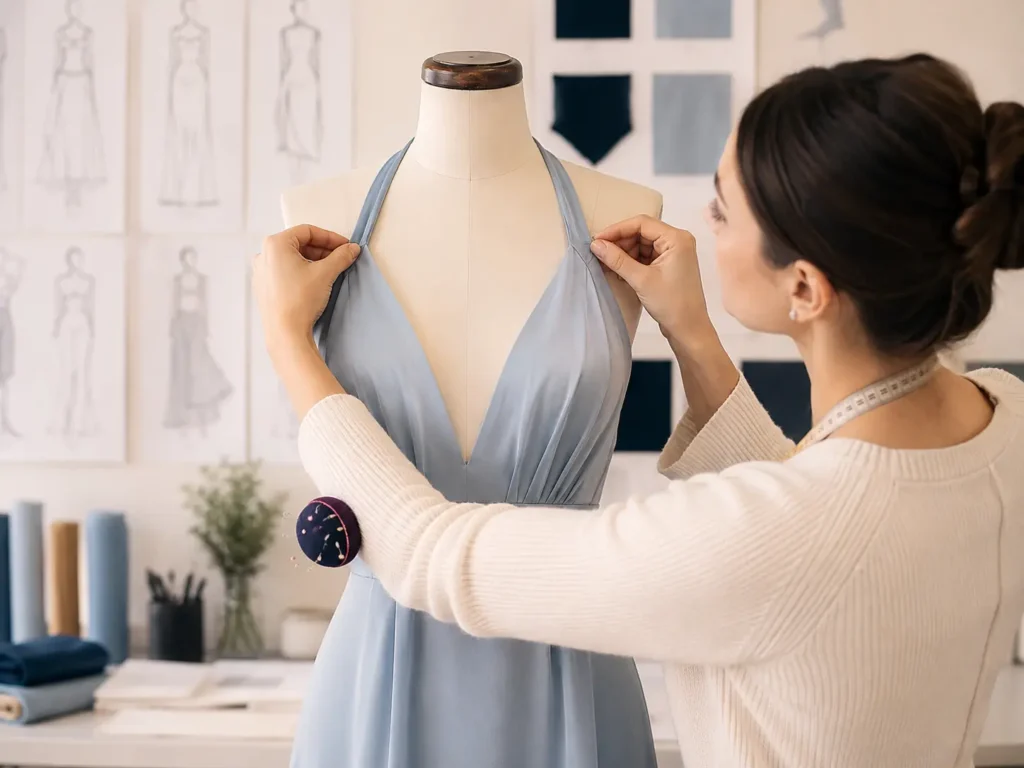
Neckline Stability
Necklines can stretch, ripple, gape, or lose symmetry during sewing and wear. Stay stitching, tape, facing, lining, interfacing, binding, and seam direction should match the design and fabric. Halter, V-neck, square-neck, wrap, and open-back shapes require different stabilization.

Armhole Finishing
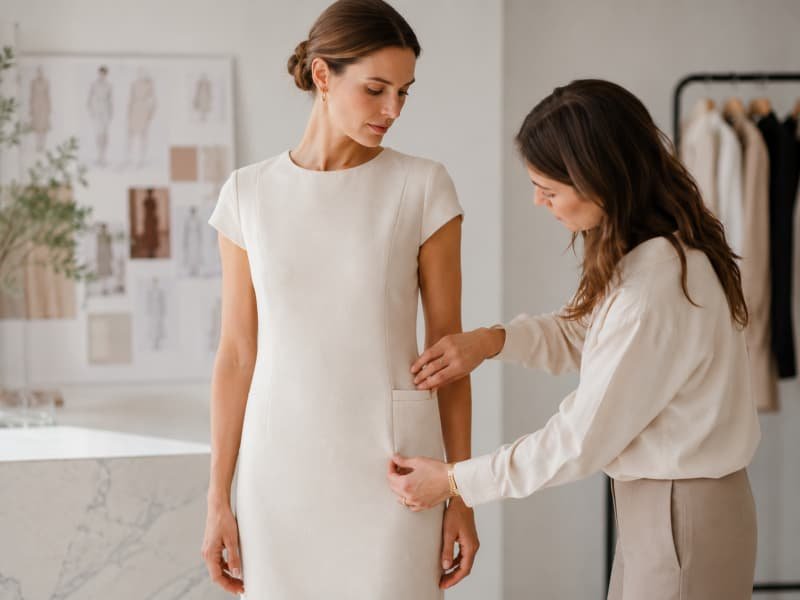
Pocket Reinforcement

Button Plackets

Invisible Zippers

Smocking and Shirring

Hems and Slits
Surface and Finishing Options for Distinctive Linen Collections
Color and decorative processes must remain compatible with fabric behavior, pattern alignment, sample timing, production quantity, care requirements, and bulk consistency.
Solid Color Development
- Pantone or physical standard
- Lab dip review where required
- Batch and roll awareness
Yarn-Dyed Patterns
- Stripe and check placement
- Cutting consumption review
- Panel symmetry standards
Digital Printing
- Artwork and repeat confirmation
- Color and scale review
- Bulk print consistency
Embroidery
- Density and backing trials
- Placement templates
- Comfort and distortion checks
Washed Handfeel
- Wash appearance standard
- Measurement control
- Trim and label compatibility
Pressed Finish
- Pressing checkpoints
- Folding or hanging direction
- Final appearance inspection
Samples Built for Decisions, Revisions, and Production
Start With a Clear Development Basis
Duolan can review projects supported by a tech pack, flat sketch, reference image, original garment, size chart, fabric swatch, moodboard, previous sample comments, or a mixed information set. A complete tech pack improves quotation and sampling accuracy, yet concept-stage projects can still enter an initial development review.
Before confirming a sample plan, the team should understand:
- Product category and intended use
- Target silhouette and fit
- Fabric composition, weight, handfeel, color, and opacity
- Lining and coverage requirements
- Closures, pockets, trims, belts, and decorative details
- Sample size and size chart
- Sample purpose
- Target quantity
- Campaign, showroom, buying meeting, or launch date
- Future bulk production plan
Sample purpose changes the development route. A first prototype checks direction. A fit sample evaluates body balance. A photo-ready sample prioritizes presentation. A salesman sample supports commercial review. A PP sample establishes a production basis.
Across Duolan’s wider manufacturing system, monthly sample development capacity ranges from approximately 15,000 to 35,000 sample developments, depending on product complexity and material readiness. Capacity alone does not replace style-level judgment; each sample still needs a defined purpose and review standard.
Manage Timing Through Confirmed Development Nodes
A reliable sample calendar starts after the development basis and material direction are clear. Fixed promises made before reviewing fabric, structure, embellishment, original samples, or fit requirements create avoidable risk.
The sample route normally follows seven controlled nodes:
- Brief and file review
- Fabric and trim direction
- Pattern or draping preparation
- Sample cutting and sewing
- Internal measurement and workmanship review
- Sample presentation and comments
- Revision, approval, or movement toward PP preparation
More complex routes may require embroidery trials, print strike-offs, wash tests, alternative fabrics, lining trials, or several fit reviews. Rush requests can be assessed after material readiness and construction risks are understood.
Duolan confirms the sampling timeline according to style complexity, file completeness, fabric availability, color development, special processes, fitting requirements, and courier arrangements rather than applying one fixed number to every dress.
Reduce Revisions Through Better Development Control
Unclear Sample Purpose
- Define the decision required
- Identify approval stakeholders
- Record the next stage
- Avoid mixed sample objectives
Wrong Fabric Direction
- Compare target and actual handfeel
- Review drape and opacity
- Identify temporary sample material
- Confirm bulk-material path
Unclear Fit Comments
- Mark photos
- State requested amounts
- Separate fit and styling
- Confirm affected sizes
Changing Design Details
- Track version changes
- Update BOM and drawings
- Reconfirm cost effects
- Reassess sample timing
Missing Construction Standards
- Review internal workmanship
- Mark critical operations
- Create production references
- Confirm inspection points
Comments Not Recorded
- One revision document
- Clear version number
- Closed and open points
- Next approval target
Move Beyond a Visually Similar Prototype
Separate Appearance Approval From Production Approval
A sample may photograph well while still carrying unresolved production risks. Temporary fabric, substitute trims, hand-finished details, unconfirmed measurements, or one-off pressing can create a result that cannot be repeated economically or consistently.
A production-ready linen dress should establish:
- Confirmed shell fabric direction
- Lining and trim specifications
- Approved color or artwork reference
- Pattern and measurement version
- Construction and seam standards
- Closure, pocket, belt, and reinforcement details
- Wash or finishing route
- Pressing and garment presentation standard
- Label and packaging requirements
- Critical quality checkpoints
For linen products, material behavior deserves special attention. A sample made with a temporary fabric cannot fully validate drape, transparency, shrinkage, seam appearance, or final fit. Temporary materials can support early design review, but production preparation requires a clear route toward the intended bulk material.
Use Sample Stages to Build Manufacturing Standards
Each stage should close a defined set of questions:
- First prototype: Does the design direction work?
- Fit sample: Are balance, ease, length, coverage, and movement correct?
- Revised sample: Were comments translated accurately?
- Photo-ready or salesman sample: Is visual presentation suitable for commercial review?
- PP sample: Are production materials, measurements, workmanship, and finishing ready to become the bulk basis?
The PP stage should not become a formality. Open issues around fabric, lining, trims, labels, packaging, wash, measurements, or construction need documented resolution before production scheduling.
Duolan uses the approved sample together with specifications, BOM, pattern files, workmanship notes, and QC points. No single physical garment can carry every production instruction without supporting documents.
Convert Sample Approval Into Controlled Bulk Standards
Confirm the Production Basis Before Scheduling
- Shell fabric and lining
- Color and artwork
- Trims and closures
- Pattern version
- Size chart and grading
- Measurement tolerances
- Workmanship points
- Wash or finishing route
- Labels and packaging
- Inspection standard
- Delivery and launch requirements
- Material and process risks still open

Translate Approval Into Line-Level Instructions
Production teams need instructions that can be followed repeatedly across styles, colors, sizes, lines, and factories. Duolan breaks the order down by style, color, size, quantity, complexity, material readiness, and risk class. A linen collection may include:
- Standard shirt dresses
- Fit-sensitive midi dresses
- Material-sensitive light-color styles
- Embroidered or printed designs
- Washed casual garments
- Lined maxi dresses
- Rush replenishment styles
- Repeat products using existing production assets
Each group may require a different line, first-piece review, special-process route, inspection frequency, or production sequence. Approved standards move into cutting, sewing, finishing, inspection, and packing through pattern files, BOM records, operation points, measurement charts, reference samples, production meetings, and QC checkpoints. The goal is not to promise zero variation; the goal is to control variation against confirmed standards.

Structured Production for Multi-Style Linen Dress Orders
Order Breakdown
Risk Classification
Material Locking
Line Matching
First-Piece Review
Inline Control
Inline checks focus on measurements, workmanship, component position, shade handling, seam appearance, closures, and visible defects while correction remains possible. Waiting until final inspection increases rework and delivery risk.
Production Timing
Reference production periods begin after PP, BOM, materials, order information, and required commercial milestones are confirmed: Simple styles: approximately 15–20 days; Standard styles: approximately 20–30 days; Complex styles: approximately 30–45 days.
Shipment Preparation
Final inspection, labels, barcodes, folding, tissue, polybags, hanging requirements, carton marks, assortments, shipping documents, and handover timing are planned before the packing stage. Production time and transportation time should remain clearly separated.
Quality Control From Material Review to Packed Garments
Control Quality Before and During Production
Quality does not begin at final inspection. Development and pre-production decisions determine many later outcomes.
Duolan’s control path can include:
- Design and construction feasibility review
- Fabric, lining, trim, and color confirmation
- Shrinkage or finishing behavior review
- Pattern and sample assessment
- PP sample and BOM locking
- Pre-production meeting
- Cutting and material control
- First-piece confirmation
- Inline measurement and workmanship checks
- Finishing, pressing, and appearance review
Critical linen checkpoints include seam puckering, grain alignment, twisting, placket straightness, pocket shape, zipper smoothness, neckline stability, armhole shape, lining position, transparency, shade grouping, hem balance, pressing marks, and finished measurements.
Inspection priorities change by style. A relaxed shirt dress requires strong placket, collar, topstitching, pocket, and hem control. A fitted midi requires more attention around bust, waist, hip, zipper, lining, slit, and seam strain. A washed dress requires pre-treatment and post-treatment comparisons.
Protect Final Presentation and Shipment Accuracy
Final inspection should verify more than visible sewing defects. Garments also need correct labels, care information, size markings, hangtags, barcodes, packaging, assortments, carton marks, quantities, and shipment references.
Finished linen dresses are particularly sensitive to:
- Folding marks
- Crushing
- Poor pressing
- Uneven hems
- Lining exposure
- Shade mixing
- Unbalanced belts
- Distorted collars or plackets
- Incorrect care labels
- Moisture or packaging conditions
Third-party inspection can be arranged according to brand requirements. Inspection standards, sample sizes, defect classifications, reporting formats, and release procedures should be confirmed before the scheduled inspection date.
Repeat-order quality also depends on records from the first order. Pattern versions, BOM details, color standards, PP references, workmanship points, QC findings, packaging instructions, and approved deviations should remain available for future review.
Brand Identification and Packaging for Linen Dress Orders
Labels and packaging need accurate files, placement standards, material compatibility, care information, barcode data, and presentation suitable for the final sales channel.

Main Labels
- Woven or printed direction
- Placement confirmation
- Stitching and comfort review

Size Labels
Size identification must follow the approved size range and packing data. Placement should remain consistent without interfering with care labels, neck comfort, waist seams, or lining construction.
- Brand size system
- Correct style-size mapping
- Packing and barcode alignment
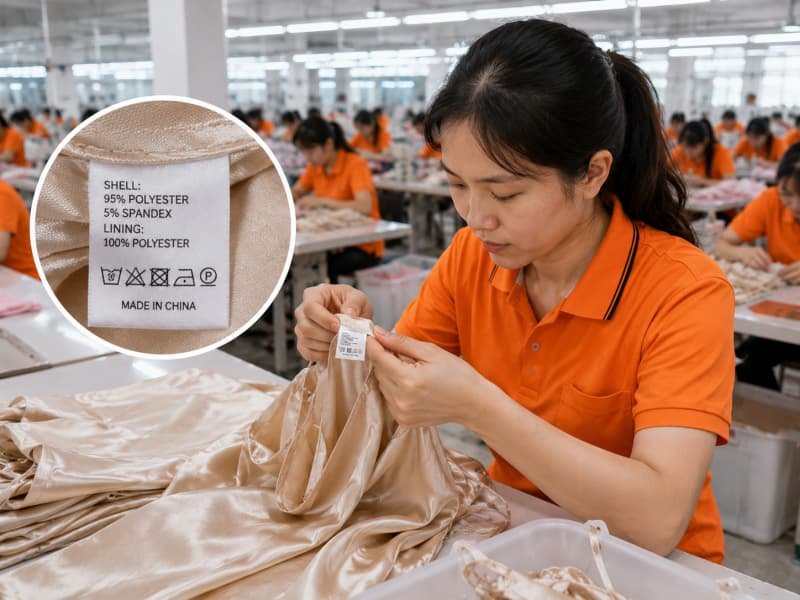
Care Labels
- Fiber and lining details
- Country and market requirements
- Wash and care instructions

Hangtags and Barcodes
- Artwork and data control
- SKU verification
- Attachment consistency

Garment Packaging
- Folding or hanging review
- Tissue and protection
- Polybag or alternative packaging

Carton Packing
- Assortment and carton marks
- Accessory control
- Warehouse-ready identification
Documentation and Inspection for Formal Supply Programs
SMETA Audit Basis
- Audit-document review
- Factory-scope confirmation
- Supplier onboarding support
- Correct validity records
Material Documentation
- Supplier declarations
- Composition records
- Applicable test reports
- Batch or material traceability
Third-Party Inspection
- Pre-final scheduling
- Inspector access
- Report coordination
- Corrective action follow-up
Label Compliance
- Label artwork review
- Data and placement control
- Market-specific instructions
- Packing manual execution
Dress Development Depth Connected to Scalable Manufacturing
A Dress-Focused Development Partner
Duolan is positioned for fashion brands, product teams, buying teams, and sourcing offices seeking more than a general garment factory. Core category knowledge includes mini, midi, maxi, party, occasion, vacation, going-out, fitted, structured, and fashion-led dresses.
Linen programs benefit from the same dress-focused knowledge:
- Fabric-to-silhouette judgment
- Pattern and fit correction
- Bust, waist, hip, and skirt balance
- Lining and transparency planning
- Closure and pocket engineering
- Sample-stage management
- Multi-style collection coordination
- PP and production-readiness review
- Bulk quality and delivery planning
- Repeat-order standard preservation
The development background traces to womenswear research and product work beginning in the 1990s, followed by continued manufacturing investment from 2008 onward. The system has grown around product development, sample execution, manufacturing organization, special-process coordination, and scalable delivery.
Core Control With Flexible Scale
Owned factories support core projects, approved sample transfer, sensitive styles, production discipline, and repeat consistency. Long-term coordinated satellite factories provide additional flexibility for rolling orders, seasonal peaks, replenishment, parallel styles, and process matching.
The manufacturing structure includes:
- 16 owned womenswear factories
- More than 20 coordinated satellite factories
- More than 12,000 workers across regional resources
- Approximately 300 sewing lines
- More than 50 quick-response and flexible lines
- Monthly sample development capacity of approximately 15,000–35,000 developments, depending on complexity
Duolan does not assign orders based only on open capacity. Style complexity, fabric, trims, finishing, fit risk, special processes, quality requirements, quantity, and delivery timing guide production allocation.
The strongest fit involves brands with defined dress programs, development files, sampling needs, launch plans, bulk orders, repeat potential, and long-term supply expectations.
Linen Dress Programs Requiring Development and Scale

US Resort Program
Region: United States
Brand Type: Established contemporary resort and vacationwear brand
Program: 18 linen and linen-blend dress styles
Total Quantity: 42,600 garments
Style Quantity Range: 1,500–3,600 garments per style
The collection combined shirt dresses, wrap midis, tiered maxis, halter dresses, belted styles, and light-color sleeveless dresses. Main risks included uneven drape across material qualities, transparency in pale colors, waist inconsistency, stripe alignment, and differing finishing routes.
Duolan’s program structure covered:
- Material grouping by silhouette
- Lining decisions for pale and fitted styles
- Separate pattern reviews for relaxed and shaped products
- Print and stripe placement confirmation
- PP standards for each material group
- Production allocation by construction complexity
- Inline checks focused on waist, length, plackets, and lining
- Shipment sequencing around the seasonal launch calendar
The program was planned as several production groups rather than one mixed block, allowing material-sensitive styles and commercial repeat styles to follow different control paths.

UK Vacation Collection
Brand Type: High-frequency vacation and summer dress brand
Program: 12 primarily pure-linen styles
Total Quantity: 24,800 garments
Style Quantity Range: 1,200–2,900 garments per style
The program included oversized shirt dresses, short belted dresses, relaxed midis, gathered maxis, and embroidered styles. Development concerns centered on wash-related dimensional change, soft-handfeel consistency, embroidery distortion, placket appearance, hem level, and packing creases.
Control actions included:
- Approved washing route before final measurement locking
- Pre-treatment and post-treatment sample comparison
- Embroidery trials on production-representative fabric
- Separate workmanship notes for plackets and side pockets
- Finished-garment measurement control
- Pressing and folding standard
- Reorder records covering patterns, BOM, colors, and QC findings

Australian Daywear Line
Region: Australia
Brand Type: Premium contemporary daywear brand
Program: 26 linen-cotton and linen-viscose dress styles
Total Quantity: 68,400 garments
Style Quantity Range: 1,600–4,200 garments per style
The assortment included clean midi dresses, fitted waists, soft wrap silhouettes, sleeveless workwear styles, button-front designs, and lined maxis. Main risks involved fabric substitution, bust and waist balance, seam puckering, shell-to-lining compatibility, color-batch control, and parallel delivery dates.
Program management covered:
- Fabric alternatives reviewed against target drape and price position
- Base-size and grade-rule confirmation
- Fit-sensitive styles routed through additional sample review
- Shell and lining shrinkage compatibility checks
- Style-level production classification
- First-piece review for fitted and lined products
- Inline measurement and seam checks
- Split packing and shipment preparation according to warehouse plans
The 26-style structure required several production paths, staged material readiness, and coordinated QC rather than one general line schedule.
Linen Dress Frequently Asked Questions
Start Your Linen Dress Development Program
Send Duolan the available information for your linen dress collection, sample request, supplier evaluation, bulk quotation, or repeat-order program. A complete tech pack is helpful, but a reference image, original sample photographs, fabric idea, size chart, or collection brief can also support an initial evaluation.
Our team will review the dress category, silhouette, linen direction, lining, opacity, fit priorities, construction, trims, finishing, colors, size range, quantities, quality requirements, launch calendar, and production stage before proposing a suitable development route.
Please include:
- Tech pack, sketch, reference image, or original sample photographs
- Preferred linen composition, weight, handfeel, color, or finish
- Sample size, size chart, grade rules, and target market
- Lining, transparency, closure, pocket, belt, and trim requirements
- Artwork, embroidery, print, main label, care label, and packaging files
- Number of styles, quantity by style, color, and size
- Sample deadline, delivery date, campaign date, and launch date
- Testing, audit, inspection, shipping, and warehouse requirements