 Skip to content
Custom Dress Manufacturer for Fabric Library Development
Dress-focused fabric sourcing, material evaluation, sample development, and controlled production for established fashion brands and product teams.
Duolan helps fashion brands turn scattered fabric references into an organized material foundation for dress development and repeat production. The workflow connects fabric cards, supplier specifications, color approvals, sample records, trim boards, pattern decisions, PP standards, bulk quality controls and reorder references, so each approved fabric can move from inspiration to sampling and from sampling to commercial production with clearer continuity.
- 30+ years of womenswear development experience supports material judgment across satin, chiffon, mesh, lace, jersey, ponte, velvet, sequin and structured dress categories.
- 16 owned womenswear factories and 20+ long-term satellite factories support core styles, sample-to-bulk transitions, repeat orders and scale-up programs.
- Around 300 sewing lines and 50+ quick-response lines allow material-sensitive, fit-sensitive and process-intensive dresses to follow different production paths.
- 15,000-35,000 monthly sample-development pieces or development runs support parallel fabric trials, fit samples, revised samples and PP confirmations.
- An anonymized UK partywear fabric-library program covered 23 styles and 56,800 pieces across sequin, velvet, printed mesh, satin and embellished dress directions.








A Manufacturing System Built for Dress Development
30+ Years Development Experience
16 Owned Factories
20+ Satellite Factories
300 Sewing Lines
50+ Quick-Response Lines
High Development Density
Built for Established Fashion Development Teams
Fashion Dress Brands
- Seasonal material planning
- Dress-specific fabric evaluation
- Multi-style sample development
- Color and trim coordination
- Approved material retention
- Launch, repeat and scale-up production
Product Development Teams
- Fabric and silhouette decisions
- Sample purpose and review priorities
- Material substitutions
- Pattern adjustments
- Revision records
- PP and bulk readiness requirements
Buying and Sourcing Teams
- Cost structure
- Production feasibility
- Quality checkpoints
- Delivery planning
- Compliance requirements
- Supplier coordination
Multi-Brand Fashion Groups
Groups managing several labels often need different materials for separate price positions, silhouettes, markets and seasonal programs. A structured fabric library helps teams:
- Separate materials by brand
- Retain approved specifications
- Compare alternative directions
- Reuse proven material bases
- Coordinate multiple development calendars
- Reduce repeated sourcing work
Common Fabric Library Problems We Help Control
A large number of swatches does not automatically create a useful material system. Value comes from clear records, application knowledge, approved standards and production continuity.
Fragmented Material Records
- Unclear material codes
- Missing composition or GSM
- No approved color reference
- Lost supplier history
- Unrecorded sample use
- No current availability status
Weak Silhouette Matching
- Dress silhouette
- Body fit
- Internal structure
- Lining system
- Sewing method
- Intended wearing occasion
Sample-to-Bulk Differences
- Approved swatch reference
- Lab dip or color approval
- BOM confirmation
- PP basis
- Incoming material checks
- Bulk lot review
Limited Reorder Visibility
- Original material standard
- Last production use
- Current availability
- Replacement options
- Approved trims and lining
- Reorder review requirements
What a Production-Ready Fabric Library Actually Contains
From Swatch Collection to Development System
- Material identity: Each fabric needs a consistent reference code linking the physical swatch, specification, supplier record, color direction, sample use and approval status.
- Technical behavior: Composition alone cannot predict garment performance. Relevant data may include GSM, usable width, construction, stretch direction, recovery, shrinkage behavior, opacity, handfeel, drape, surface finish, pressing sensitivity and care requirements.
- Dress application: Material records should explain where a fabric works best. A soft satin may suit fluid slip dresses but offer insufficient support for a corset structure. Lightweight mesh may create attractive layering but require lining, coverage, edge control and stretch compatibility.
- Commercial conditions: MOQ, color minimums, lead time, dyeing requirements, print setup, test requirements, available stock status and replenishment risk influence whether a fabric can support one sample, a 20-style collection or repeat bulk production.
- Development history: A valuable record connects a fabric with samples already developed. Notes may cover pattern adjustments, lining choices, seam performance, fit results, pressing response, visual appearance and bulk readiness.
- Approval status: Teams should be able to distinguish an inspiration swatch from a sourced option, sample-approved fabric, PP-approved fabric or bulk-released material.
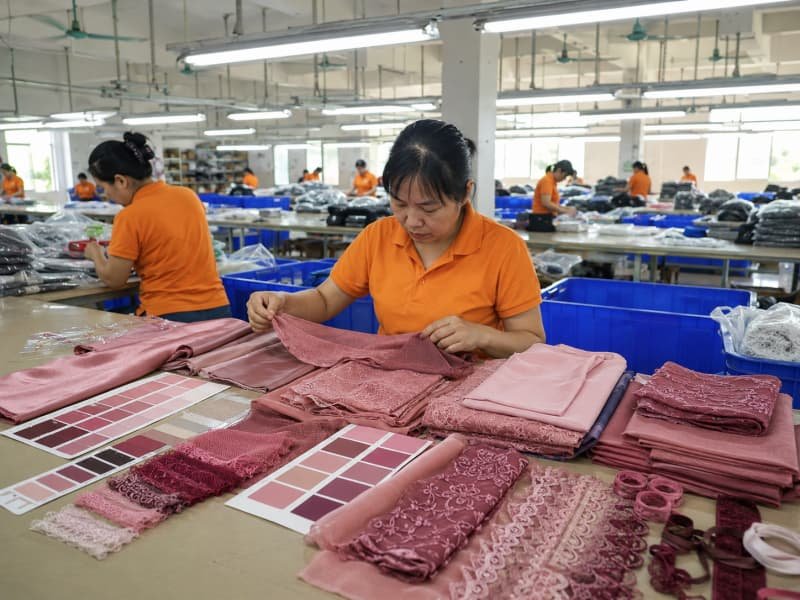
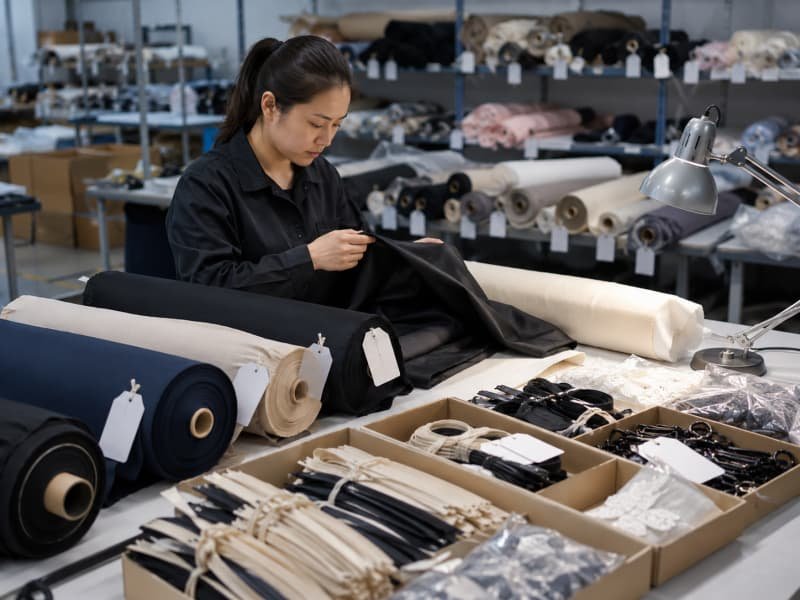
A Dress-Focused Material Library
Dress development requires a different material logic from T-shirts, outerwear, bags or home textiles. The same composition can behave differently depending on yarn, construction, finishing, weight and stretch. Duolan organizes material decisions around finished dress performance:
- For fitted silhouettes: Stretch percentage must be reviewed together with recovery, opacity, compression, seam behavior and grading. High stretch without recovery can create growth at the waist, hip and seat.
- For fluid silhouettes: Drape, weight, surface movement, seam puckering, bias behavior and lining interaction influence how a slip, maxi or draped dress falls on the body.
- For structured dresses: Main fabric, fusible, lining, boning, cups, power mesh, stay tape and closure systems must work together. A surface fabric alone cannot provide reliable structure.
- For layered or transparent dresses: Mesh, lace, chiffon and tulle require coverage planning, color coordination, edge finishing, seam placement and lining stretch compatibility.
- For decorated dresses: Sequins, embroidery, beads, rhinestones, pearls, printing and pleating affect fabric weight, sewing sequence, comfort, material loss, packing and inspection.
Duolan reviews material direction as part of garment development, not as an isolated sourcing task. Fabric choice, pattern construction, sample accuracy, workmanship, cost and bulk repeatability are evaluated together.
What Goes Into Your Dress Fabric Library
Approved Fabric Swatches
Physical swatches remain important because handfeel, weight, surface texture, stretch, transparency and drape cannot always be judged accurately from an image. Records can include:
- Internal fabric reference
- Supplier reference
- Color reference
- Approval stage
- Related sample style
- Last review date
Technical Fabric Data
- Fiber composition
- GSM
- Usable width
- Construction
- Stretch direction
- Recovery
- Surface finish
- Care direction
Dress Application Notes
Application notes explain how a material is expected to perform in garment development. The review may cover:
- Best-matched silhouettes
- Required lining
- Support requirements
- Transparency risk
- Drape direction
- Pattern implications
- Sewing sensitivity
- Pressing limitations
Color and Print Records
Color records link Pantone direction, lab dips, strike-offs, sample approvals and bulk standards. Print records may include:
- Artwork version
- Repeat size
- Print method
- Color approval
- Fabric base
- Placement direction
- Strike-off status
- Sample result
Sample Development History
A material gains greater value after use in a real sample. Sample history can show:
- Style number
- Sample stage
- Pattern adjustment
- Fit observation
- Lining selection
- Workmanship issue
- Revision action
- Bulk readiness comment
Production Availability Status
Material status should be reviewed before every new order because supply conditions can change. Useful records include:
- Current supplier status
- MOQ and color minimum
- Estimated material lead time
- Dyeing or print requirements
- Testing status
- Available alternative
- Reorder risk
- Production approval status
Dress Categories Supported by Material-Led Development
Duolan develops dress collections by linking silhouette, wearing occasion, material behavior, construction, workmanship and production requirements.

Mini Dresses
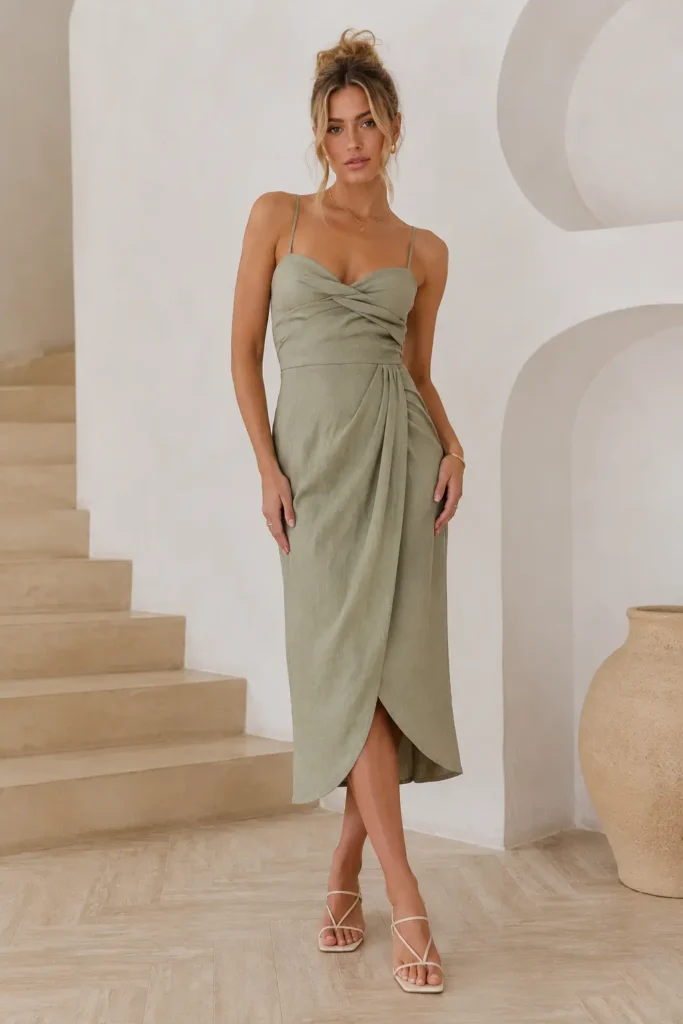
Midi Dresses

Maxi Dresses

Party Dresses

Occasion Dresses

Going-Out Dresses

Vacation Dresses

Bodycon Dresses

Corset Dresses

Satin Dresses

Mesh Dresses

Sequin Dresses
Fabric Directions Developed for Fashion Dress Collections
Material selection begins with the intended dress result. Duolan evaluates visual appearance, fit behavior, workmanship, sourcing conditions and production stability before approval.

Satin
- Shine level and color reflection
- Drape and bias behavior
- Needle and seam marks
- Pressing sensitivity
- Lining interaction
- Scratch and packing risk

Chiffon
- Transparency
- Grain stability
- Surface movement
- Print clarity
- Hem method
- Lining and coverage

Crepe
- Surface grain
- Body and drape
- Stretch direction
- Seam behavior
- Shrinkage
- Suitability for grading

Mesh
- Stretch and recovery
- Transparency
- Edge stability
- Surface snagging
- Lining compatibility
- Seam elasticity

Lace
- Motif positioning
- Symmetry
- Scallop use
- Lining color
- Seam joining
- Bulk cutting consistency

Jersey
- Stretch percentage
- Recovery
- GSM
- Growth after wear
- Opacity
- Seam and hem methods
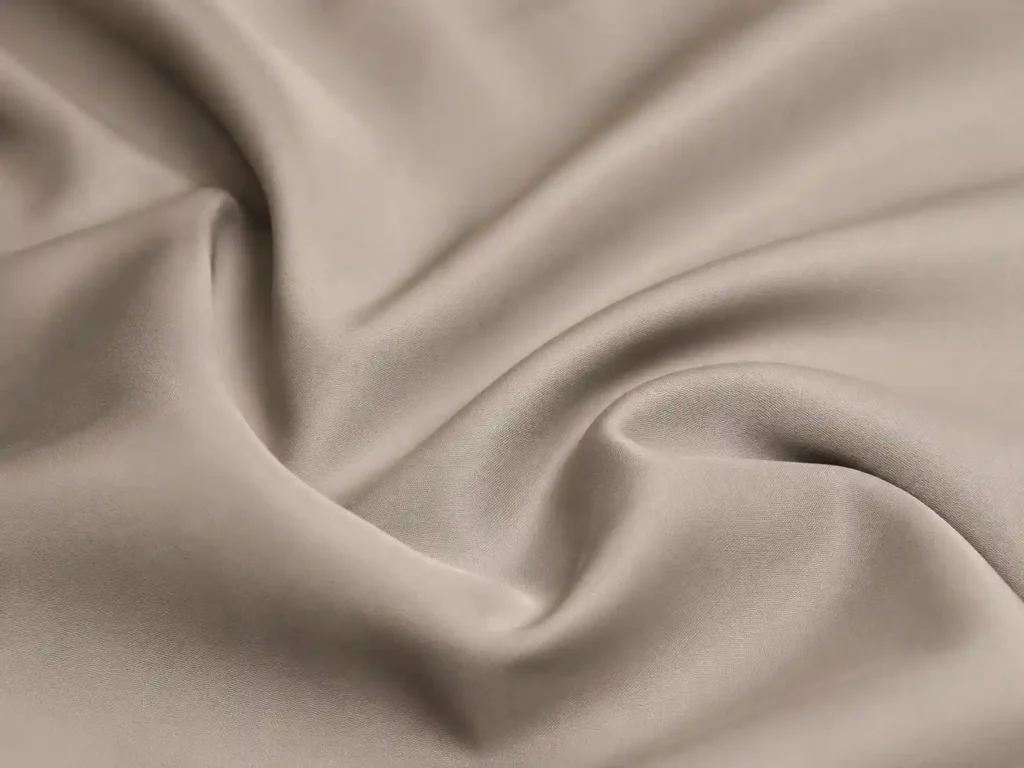
Ponte
- Compression
- Recovery
- Surface smoothness
- Pilling risk
- Seam bulk
- Shape retention

Velvet
- Nap consistency
- Crushing risk
- Seam impression
- Color depth
- Lining
- Pressing method

Sequin Fabric
- Base stretch
- Sequin loss
- Seam clearance
- Skin contact
- Weight distribution
- Packing friction

Jacquard
Jacquard can create structure and premium visual depth without added decoration. Pattern scale, fabric weight, fraying, seam thickness and motif placement influence the garment result.
Duolan evaluates:
- Motif scale
- Direction
- Cutting layout
- Structure
- Pressing
- Seam finish

Linen Blends
Linen blends can support resort, vacation, summer and relaxed occasion styles. Blend composition affects wrinkling, softness, shrinkage, opacity and drape.
Checks include:
- Shrinkage
- Creasing
- Slub consistency
- Color appearance
- Lining need
- Care requirements
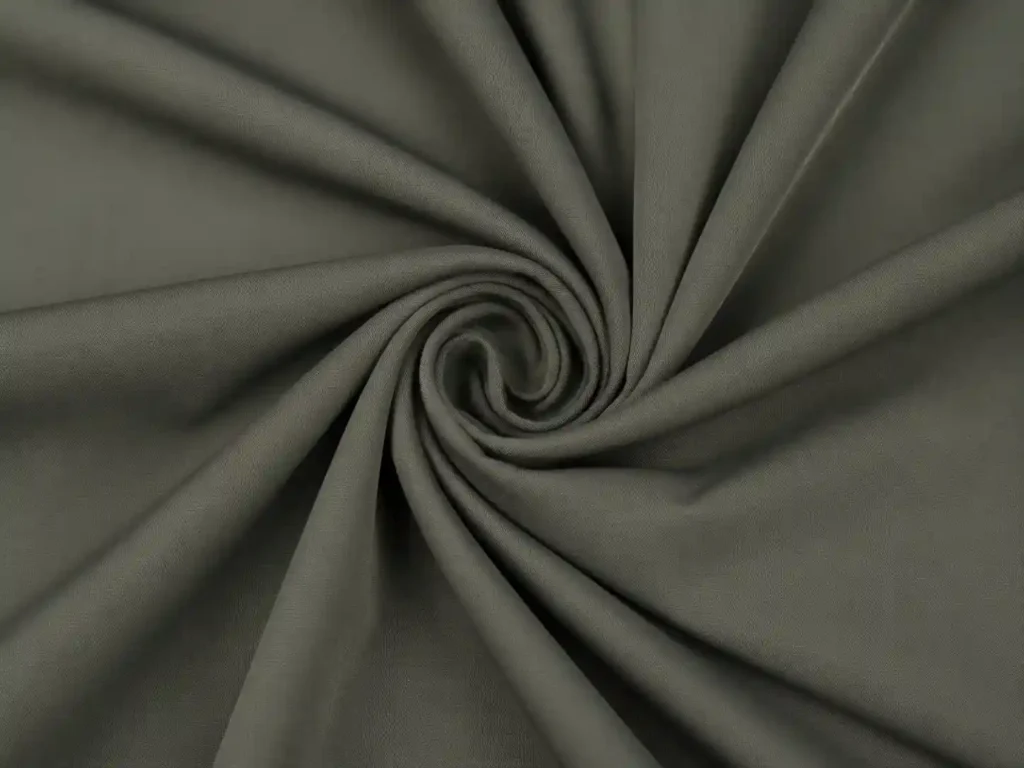
Stretch Wovens
Stretch woven fabrics support fitted dresses requiring cleaner structure than jersey. Performance depends on stretch direction, recovery, weight and heat response.
Evaluation includes:
- Fit movement
- Recovery
- Seam stress
- Waist and hip balance
- Opacity
- Dimensional stability
Match Fabric Performance to Dress Silhouettes
Strong material selection begins with the required garment result, not only composition, color or surface appearance.
| Dress Direction | Required Fabric Performance | Suitable Material Directions | Main Development Risks | Duolan Review Focus |
|---|---|---|---|---|
| Bodycon Dress | Stretch, recovery, opacity, compression, smooth surface | Jersey, ponte, stretch woven, double-layer mesh | Transparency, growth, seam waving, poor recovery, distorted grading | Stretch direction, fit trial, recovery, seam construction, lining |
| Corset Dress | Structure, stability, surface quality, support compatibility | Structured satin, taffeta direction, jacquard, stable woven | Cup collapse, boning distortion, wrinkling, closure stress | Outer fabric, fusible, lining, cups, boning, power mesh, closures |
| Satin Slip Dress | Fluid drape, clean surface, controlled bias behavior | Satin, crepe-back satin, fluid woven | Seam puckering, needle marks, twisting, cling, pressing marks | Grain, seam method, lining, pressing, hem balance |
| Mesh Dress | Stretch, recovery, softness, transparency control | Soft mesh, power mesh, printed mesh, embroidered mesh | Edge rolling, transparency, lining mismatch, seam breakage | Coverage map, lining stretch, seam elasticity, print placement |
| Lace Dress | Motif quality, stable base, suitable edge, controlled transparency | Corded lace, embroidered lace, stretch lace, guipure direction | Asymmetry, motif interruption, fraying, lining mismatch | Placement, cutting, scallop use, lining, seam joining |
| Sequin Dress | Stable base, secure decoration, manageable weight | Sequin mesh, embroidered sequin base, stretch sequin fabric | Missing sequins, skin irritation, zipper obstruction, abrasion | Seam clearance, lining, weight, edge protection, packing |
| Resort Dress | Breathability, movement, print clarity, soft handfeel | Chiffon, viscose direction, linen blend, lightweight woven | Shrinkage, excessive transparency, print variation, wrinkling | Shrinkage, print review, lining, drape, care direction |
| Occasion Dress | Refined finish, fit stability, controlled structure | Crepe, satin, lace, velvet, jacquard, structured mesh | Fit imbalance, surface damage, visible internal construction | Silhouette, support, lining, closure, pressing, final appearance |
| Ruffled Dress | Drape, edge stability, controlled weight | Chiffon, lightweight crepe, mesh, soft woven | Uneven ruffles, heavy seams, edge distortion, inconsistent volume | Ruffle ratio, grain, edge finish, sample comparison |
| Pleated Dress | Heat response, pleat retention, drape, color consistency | Polyester woven, chiffon, satin direction, selected blends | Pleat opening, uneven depth, shrinkage, pressing damage | Pleat trial, heat setting, panel matching, bulk repeatability |
Material Selection Note:
Final recommendations depend on approved style details, target price position, required quantity, color plan, testing requirements, launch schedule and supplier availability. A suitable sample fabric is not automatically suitable for bulk production until sourcing and production conditions are reviewed.
Fabric Sourcing Built Around the Dress Result
Nominated Fabric Review
Brands may nominate an existing mill, supplier, fabric code or approved material. Duolan can review:
- Available specification
- Fabric width and consumption
- MOQ and color minimum
- Sampling availability
- Bulk lead-time basis
- Suitability for construction
- Required lining and trims
- Production risks
Reference-Based Sourcing
When only an image, old sample, mood board or fabric direction is available, sourcing starts by identifying the performance required rather than copying appearance alone. The review considers:
- Surface appearance
- Weight and body
- Drape
- Stretch
- Opacity
- Handfeel
- Intended silhouette
- Target price position
Alternative Material Development
- Visual similarity
- Drape and structure
- Stretch and recovery
- Color capability
- Sewing behavior
- Bulk availability
- Cost effect
- Pattern implications
Bulk Availability Review
- Supplier confirmation
- Dyeing or print capacity
- Material production time
- Lot consistency
- Reorder possibility
- Replacement planning
Material Cost Alignment
Fabric decisions affect more than price per meter. Width, consumption, cutting loss, shrinkage, print layout, motif placement, color minimums, testing and defects can change the final garment cost. Duolan reviews opportunities to:
- Improve material utilization
- Reduce avoidable loss
- Select a better width
- Adjust non-critical specifications
- Consolidate colors
- Retain key visual value
Supplier Risk Review
Material sourcing includes risks outside appearance. Delayed lab dips, unstable shade, unavailable trims, inconsistent stretch and late bulk arrival can compress sampling and production schedules. Risk reviews may identify:
- Long-lead materials
- Unstable availability
- High color minimums
- Difficult repeatability
- Testing requirements
- Needed approval deadlines
Develop Color and Surface Effects for Production
Color, print and finishing decisions must work on the selected fabric, within the garment construction and across bulk production conditions.
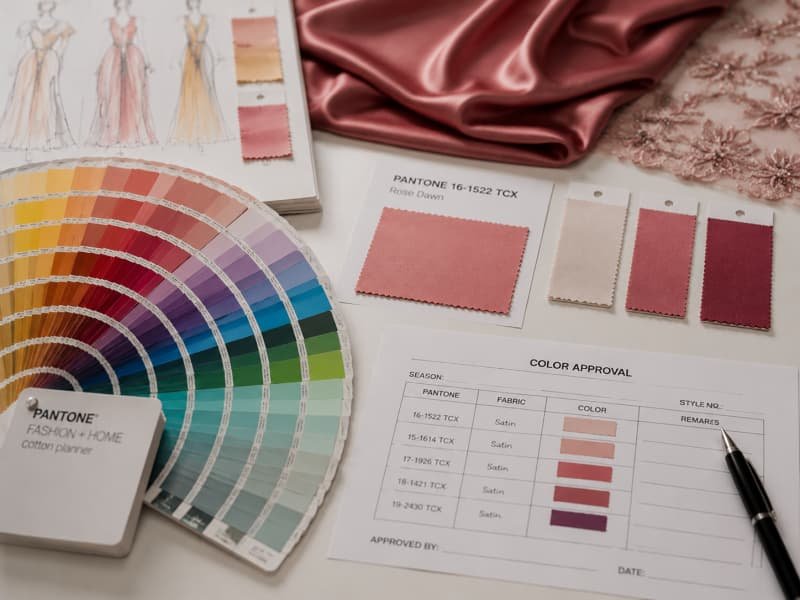
Pantone Color Direction
- Target Pantone
- Material base
- Surface reflection
- Lining influence
- Color family
- End-use lighting
- Approval method
- Bulk standard

Lab Dip Development
Lab dips help evaluate custom solid colors before bulk dyeing. Approval should consider more than the nearest color match. Review points include:
- Primary shade
- Undertone
- Light-source response
- Surface finish
- Fabric handfeel
- Lot feasibility
- Approved reference
- Required revision

Print Strike-Off
A strike-off verifies artwork, repeat, color, scale, sharpness and interaction with the selected fabric. Review covers:
- Artwork version
- Repeat dimensions
- Print technique
- Color separation
- Fabric absorption
- Stretch distortion
- Placement impact
- Bulk print standard

Placement Print Control
Placement prints must align with pattern pieces, seams, darts, bust shape, ruching, cut-outs and grading. Duolan reviews:
- Print position
- Pattern-piece size
- Size-range movement
- Left-right balance
- Seam interruption
- Cutting tolerance
- Sample appearance
- Bulk cutting plan

Decorative Surface Development
- Base fabric suitability
- Decoration density
- Attachment method
- Seam clearance
- Comfort
- Process loss
- Inspection focus
- Packing protection

Washing and Finishing
Washing, dyeing, heat setting, pleating, brushing, coating and special finishing can change dimensions, color, handfeel, drape and surface stability. Before approval, teams may review:
- Finished appearance
- Shrinkage
- Color change
- Handfeel
- Stretch response
- Care direction
- Repeatability
- Production lead-time effect
Develop Main Fabric, Lining and Trims Together
Lining Systems
- Opacity
- Stretch compatibility
- Weight
- Handfeel
- Static
- Color
- Seam construction
- Coverage areas
Zippers and Closures
Zipper type, tape weight, puller, length, color and installation method affect both appearance and function. Review may include:
- Invisible zipper
- Metal zipper
- Coil zipper
- Hook-and-eye
- Internal closure
- Side or back position
- Seam stress
- Bulk color consistency
Boning and Cups
- Cup shape
- Cup position
- Boning type
- Boning length
- Channel construction
- Bust balance
- Comfort
- Size grading
Elastic and Support Trims
- Stretch strength
- Recovery
- Width
- Color
- Skin comfort
- Attachment
- Concealment
- Size consistency
Decorative Trims
- Material and finish
- Color
- Dimension
- Placement
- Durability
- MOQ
- Lead time
- Bulk replacement restrictions
Brand Components
Woven labels, care labels, size labels, hangtags, stickers, barcodes, security devices and packaging components should follow approved brand manuals. Duolan can coordinate:
- Artwork files
- Material
- Dimensions
- Position
- Care information
- Composition text
- Barcode data
- Packing requirements
Fabric Decisions Shape Pattern and Fit Development
Translating Material Behavior Into Pattern Decisions
Duolan can begin development from a tech pack, reference image, original sample, fabric idea or collection direction. Before pattern work advances, the team reviews the most sensitive interaction between material and silhouette.
Fitted dresses:
A bodycon pattern depends on the stretch and recovery of the selected fabric. Two fabrics with similar stretch can create different compression, transparency, growth and seam behavior. Pattern dimensions, ease, lining, seam type and grading may need separate adjustment.
Corset and bustier dresses:
The pattern must coordinate with cups, boning, lining, power mesh, closures and outer fabric. A soft outer fabric may require greater internal support. A stiff fabric may require altered seam shape and pressing control to avoid ridges or distortion.
Halter and backless dresses:
Fabric weight and stretch influence neck pressure, bust balance, side coverage, gaping and back stability. Internal support and strap construction should be planned before final fit approval.
Satin dresses:
Bias sections, curved seams, narrow straps and fluid skirts can stretch during cutting and sewing. Grain direction, seam method, stay support, pressing and hanging behavior need to be considered during pattern and sample development.
Mesh and lace dresses:
Pattern placement may depend on transparency zones, motif direction, scallop edges, stretch, lining coverage and seam visibility. Grading should retain the visual intention without creating exposed areas in larger or smaller sizes.

Fit Review Beyond Flat Measurements
A size specification provides essential measurements, but finished fit also depends on how the garment balances on the body. Duolan reviews areas such as:
- Bust position and support
- Waist placement
- Hip balance
- Shoulder and strap tension
- Side-seam direction
- Neckline stability
- Armhole coverage
- Back opening
- Slit position
- Skirt fall
- Hem balance
- Internal support
Grading can follow brand-provided size charts, measurement tolerances, body blocks and fit standards. Size range is confirmed by project because different brands use different base sizes, increments, body profiles and market requirements. Changing the approved fabric after fit development may require another review. A heavier or less elastic replacement can alter garment measurements even when the paper pattern remains unchanged. Material substitutions are therefore evaluated against both visual similarity and fit consequences.

Design Feasibility Before Sampling
Before sample work begins, Duolan identifies details likely to affect production:
- Unstable fabric for the intended shape
- Insufficient coverage
- High-stress openings
- Weak support
- Difficult seam positions
- Decoration crossing seam allowance
- Inconsistent print placement
- Excessive material loss
- Processes difficult to repeat
- Details requiring pilot verification
The aim is not to simplify every design. The aim is to choose a development route capable of preserving the intended look while remaining wearable and repeatable in bulk.

Move Fabric Direction Into Decision-Ready Samples
Sampling is managed as a controlled development path. Style complexity, material readiness, custom colors, prints, trims and approval rounds determine the final schedule.
Step 1|Development Brief
The first step defines the purpose of the sample and the information available. Duolan reviews:
- Tech pack or reference
- Sample purpose
- Fabric direction
- Fit priority
- Target size
- Required details
- Target quantity
- Launch timing
Step 2|Feasibility Review
Pattern, development, sourcing and merchandising teams identify the most sensitive points before cutting. The review may highlight:
- Fabric suitability
- Support structure
- Transparency
- Pattern risk
- Trim availability
- Process difficulty
- Bulk repeatability
Step 3|Material Preparation
Approved or shortlisted fabrics, lining, zippers, cups, boning, elastic, decoration and brand components are prepared according to the sample goal.
Custom color, print, embroidery or other surface development may require separate approval stages before a representative sample can be completed.
Step 4|Pattern and Sample Making
Pattern development considers size specifications, silhouette, fabric behavior, internal structure and sewing sequence. During sample sewing, the team monitors:
- Material handling
- Seam response
- Construction balance
- Support
- Surface appearance
- Pressing
- Measurements
- Finish quality
Step 5|Internal Sample Review
- Measurements
- Silhouette
- Fit priorities
- Material appearance
- Construction
- Trims
- Workmanship
- Review points for the brand
Step 6|Revision and Next Stage
Comments are organized into actionable development points rather than treated as isolated messages. The next step may be:
- Revised sample
- Fit sample
- Photo-ready sample
- Salesman sample
- PP sample
- Trial order preparation
- Bulk readiness review
A sample timeline is confirmed after material readiness and style complexity are reviewed.
Workmanship Controls for Fabric-Sensitive Dress Production

Cutting Direction Control
- Grain alignment
- Nap direction
- Shade grouping
- Print position
- Motif symmetry
- Fabric relaxation
- Panel direction
- Cutting identification

Satin Seam Control
- Needle and thread choice
- Stitch tension
- Seam method
- Handling
- Pressing temperature
- Seam allowance
- Lining
- Final packing

Stretch Seam Construction
- Stitch type
- Thread elasticity
- Seam allowance
- Feed balance
- Recovery
- Stress points
- Hem method
- Lining behavior
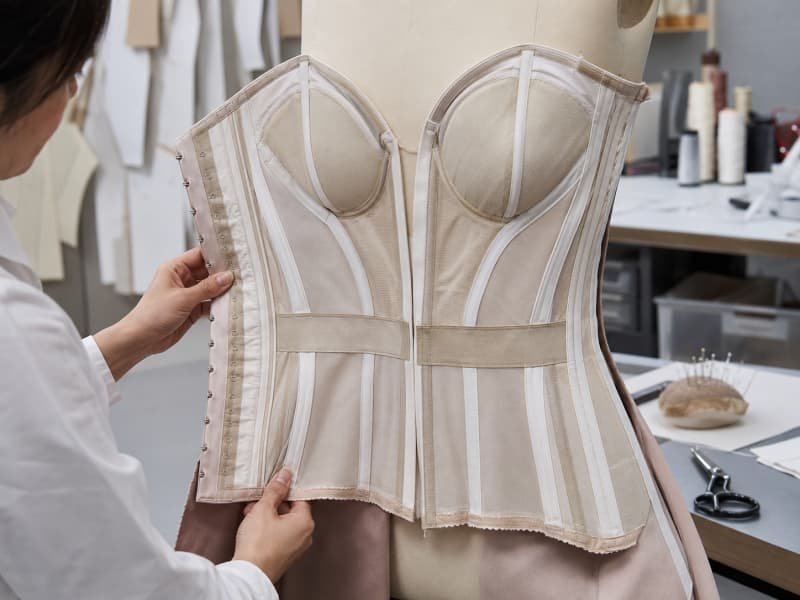
Corset Structure Assembly
- Panel symmetry
- Cup placement
- Boning length
- Channel width
- Bust balance
- Waist shaping
- Closure alignment
- Edge finish

Mesh and Lace Joining
- Seam width
- Thread color
- Motif alignment
- Lining connection
- Edge finish
- Stretch compatibility
- Coverage
- Surface protection
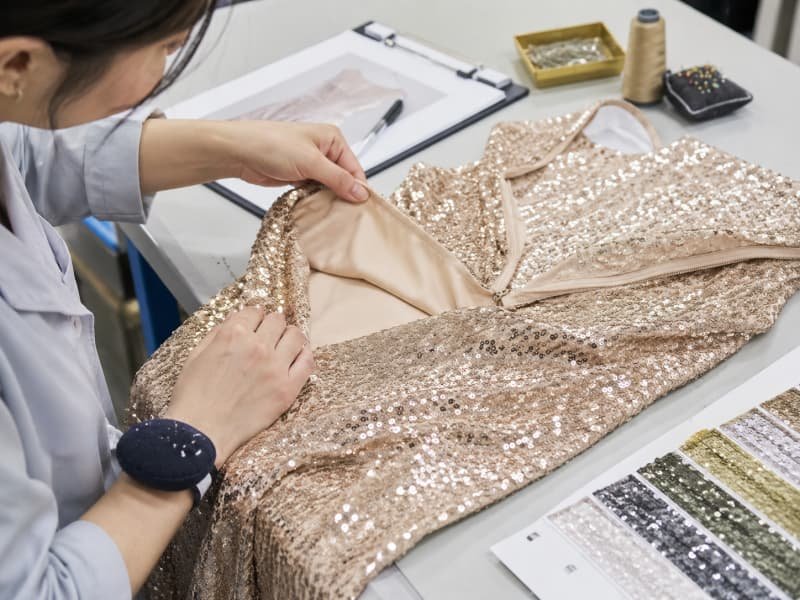
Sequin Seam Preparation
- Sequin removal
- Seam clearance
- Edge securing
- Lining
- Reinforcement
- Zipper-area preparation
- Missing-sequin repair
- Protective packing

Ruching Consistency
Ruching must follow a repeatable standard rather than random gathering. Control covers:
- Ruching position
- Gather ratio
- Elastic length
- Stitch tension
- Panel size
- Symmetry
- Grading
- Bulk comparison

Decorative Process Trials
Embroidery, printing, pleating, beading, rhinestones, pearls, foil and washing should be tested on the intended material. Review includes:
- Visual effect
- Material reaction
- Stretch loss
- Color stability
- Attachment
- Comfort
- Production time
- Inspection method

First-Piece Verification
Fit-sensitive, structure-sensitive, material-sensitive or process-intensive styles may require first-piece confirmation or a pilot run before full release. Verification covers:
- Key measurements
- Material behavior
- Construction
- Workmanship
- Pressing
- Fit-sensitive points
- Decoration
- Packing response
Fabric Risks Checked Before and During Production
Testing requirements depend on the product, destination market, brand manual, material type, care claim and intended use. Relevant checks can be coordinated internally or through designated third-party facilities.
| Material or Production Risk | Evaluation or Control | Why It Matters for Dresses | Typical Record |
|---|---|---|---|
| Shrinkage | Dimensional stability review before pattern or bulk release | Shrinkage changes finished measurements, hem length, lining balance and repeat-order fit | Test result, wash comparison, measurement record |
| Shade Variation | Lab dip approval, lot comparison, roll grouping | Visible color variation is especially serious for solid dresses, sets, satin and repeat orders | Approved lab dip, shade grouping record |
| Stretch Loss | Stretch and recovery review | Weak recovery causes waist, hip, seat, neckline or strap growth | Material review, sample wear assessment |
| Transparency | Opacity and lining assessment | Coverage affects wearability, fit approval, product claims and return risk | Layering comparison, mannequin review |
| Seam Slippage | Seam performance evaluation where relevant | Lightweight satin, chiffon and woven materials can open at stressed seams | Seam test or trial sample |
| Pilling and Snagging | Surface durability review | Jersey, mesh, velvet, lace and textured fabrics can lose appearance through wear or handling | Surface test or handling record |
| Decoration Loss | Attachment, abrasion and handling check | Sequins, beads, rhinestones, pearls and appliques may detach during sewing, wearing or shipment | Process sample, inspection record |
| Pressing Sensitivity | Heat and surface response check | Satin, velvet, coated fabrics and special finishes can shine, crush, mark or distort | Pressing trial, before-and-after review |
| Print Variation | Strike-off, color review, placement and bulk comparison | Incorrect scale, shade, alignment or stretch distortion changes the intended design | Approved strike-off, sample garment |
| Incoming Fabric Defects | Shade, holes, stains, snags, oil marks, weaving, printing or decoration inspection | Defects entering cutting can spread across a large production lot | Incoming material inspection record |
| GSM or Width Variation | Compare bulk material with approved specification | Weight and usable width influence fit, consumption, opacity, drape and cost | Material inspection sheet |
| Trim Function | Closure, elastic, boning, cup, eyelet, hook and zipper review | Functional components affect support, security, comfort and durability | Trim board, trial assembly, PP sample |
| Measurement Control | Check PP basis, first piece, inline stages and finished garments | Material behavior and sewing operations can alter garment dimensions | Measurement report and QC record |
| Packing Response | Folding, hanging, surface protection and carton review | Satin, velvet, sequins, embellishment and structured dresses can mark or deform in transit | Packing trial and approved instruction |
Step 1|Approved Sample and Material Standard
Step 2|Bulk Readiness Review
Step 3|Incoming Fabric and Trim Inspection
Step 4|First-Piece or Pilot Verification
Step 5|Inline Measurement and Workmanship Checks
Step 6|Final Garment Inspection
Step 7|Label, Packing and Shipment Preparation Review
Step 8|Reorder Standard Preservation
Lock Approved Materials Before Bulk Production Starts
Bulk Readiness Review
The team confirms whether the current version is:
- Fit confirmed
- Visually confirmed
- A PP basis
- Pending material approval
- Pending workmanship refinement
- Pending size or grading confirmation
- Pending packaging or label information
Main fabric:
Approved reference, color, finish, GSM direction, width, stretch, handfeel, surface and any special handling requirements.
Lining and support materials:
Lining type, color, stretch, opacity, interfacing, power mesh, cups, boning, elastic, stay tape and internal support.
Trims:
Zipper, hook-and-eye, buttons, eyelets, rings, buckles, decorative trims, labels and packaging components.
Measurements and grading:
Approved size specification, tolerance, base size, grading rules, fit comments and critical measurement points.
Workmanship:
Seam method, lining attachment, edge finish, ruching ratio, pleat direction, decoration placement, support construction, pressing and finishing.
Brand presentation:
Labels, hangtags, barcode, folding, hanging, protective materials, polybag, carton and shipping marks.
Open points are resolved before release or clearly recorded for confirmation. Production should not depend on verbal memory alone.
Production Path and Timeline Planning
A production path may distinguish:
- Regular styles
- Complex styles
- Quick-response styles
- High-risk workmanship
- Special-process styles
- Repeat styles
- Scale-up styles
A delivery timeline is confirmed after material readiness, approvals, order structure and production path are reviewed. Duolan does not treat bulk manufacturing as one undivided block.
First-Piece and Pilot Control
Pilot control is especially valuable for:
- Corset and bustier dresses
- Bodycon dresses
- Halter and backless structures
- Satin dresses
- Sequin dresses
- Layered mesh dresses
- Lace-placement styles
- Structured occasion dresses
- New fabrics or trims
- First bulk orders
Controlled Production Updates
Control may include:
- Material status
- Cutting and shade grouping
- Critical measurements
- Construction points
- Decoration
- Process priorities
- Inline defects
- Corrective action
- Packing readiness
- Delivery risks
Repeat-Order Standard Preservation
After production, approved records can be retained for later development or reorder review:
- Fabric and color reference
- Lining and trim details
- BOM
- Pattern and grading basis
- Workmanship notes
- QC concerns
- Packing instructions
- Supplier availability
- Recommended reorder checks
A new order still requires current availability and production review, but retained standards make future decisions clearer and faster.
Capacity for Multi-Style Dress Programs and Reorders
Core Factory Control
Brand value:
- Closer production coordination
- Clearer workmanship control
- Faster internal issue escalation
- Better development continuity
- Stronger standard preservation
- Direct factory visibility
Flexible Factory Network
Production is allocated according to:
- Product category
- Fabric
- Process
- Complexity
- Quantity
- Delivery timing
Multi-Style Planning
Brand orders commonly include 10-30 styles rather than one isolated product. Duolan separates each program by style, color, size, quantity, material status and workmanship risk.
Planning covers:
- Style priority
- Material arrival
- Approval deadlines
- Line allocation
- Special processes
- QC stages
Development and Production Coordination
Development scale should result in:
- Organized files
- Clear status tracking
- Defined priorities
- Controlled revisions
- Production-ready outcomes
- Better collection coordination
Launch and Repeat Orders
Duolan supports the path from development through launch, repeat and scale-up production.
Order structure is evaluated by fabric conditions, colors, trims, processes, size breakdown, line efficiency and future volume potential.
MOQ is assessed by project conditions rather than used as a low-price attraction.
Delivery and Compliance Coordination
The factory system has completed SMETA and SMETA 2-Pillar audit processes. Projects can be reviewed against relevant brand requirements covering social compliance, testing, labeling, packaging, inspection and documentation.
Requirements linked to BSCI, ISO 9001, AATCC, ASTM, OEKO-TEX, EN standards, China GB standards, GOTS or brand-specific manuals can be evaluated according to the project and factory path selected.
Fabric Library Development Across Multi-Style Dress Programs
Client names, brand labels, unreleased products, complete technical packs and confidential designs are not displayed. Project examples are presented by market, development challenge, order structure and manufacturing solution.

US Occasionwear Program - 12 Styles and 24,600 Pieces
Project background:
A US occasionwear brand planned a 12-style collection covering fitted midi dresses, satin slip dresses, structured mini dresses, mesh-overlay styles and two corset silhouettes. The confirmed launch structure totaled 24,600 pieces across several colors and a brand-specific size range.
Development challenge:
The brand had fabric images and several physical references, but material information was divided between previous suppliers, internal design files and individual sample notes. Several satin references were available only in small cuts. Mesh options varied in stretch and transparency, while the structured styles required coordinated lining, cups, boning and closures.
Duolan review:
The team separated materials by dress function:
- Fluid satin for slip and draped silhouettes
- Stable satin direction for corset structures
- Soft mesh for layered visual sections
- Higher-recovery mesh for fitted sections
- Coordinated linings for opacity and movement
- Support components for corset and strapless styles
Each shortlisted material received a project code, specification record, color direction, supplier status, style application and sample link.
Action taken:
Satin alternatives were compared by shine, drape, needle response, seam appearance and bulk availability. Mesh options were reviewed for stretch, recovery, transparency and lining compatibility. Sample development identified separate pattern adjustments for the fitted mesh and structured satin groups.
Lab dips were prepared for key solid colors. The approved materials, linings, zippers, cups, boning and internal support were placed into style-level material records before PP preparation.
Production control:
The order was divided by construction sensitivity. Corset and satin styles received first-piece reviews before full release. Incoming fabric checks focused on shade, handfeel, GSM direction, width, stretch, surface condition and approved reference comparison.
Operational result:
All 12 styles moved from the organized material set into bulk production. Approved material references, related sample notes, BOM details, lining systems and workmanship points were retained for future occasionwear development and reorder review.

UK Partywear Program - 23 Styles and 56,800 Pieces
Project background:
A UK partywear brand developed 23 styles for a holiday and event season program. The confirmed order structure totaled 56,800 pieces, including sequin minis, velvet dresses, printed mesh dresses, embellished bodycon styles, satin pieces and structured going-out silhouettes.
Development challenge:
Material complexity created the primary risk. Sequin bases differed in stretch and weight. Velvet required nap control and surface protection. Printed mesh needed coordinated artwork, repeat scale, lining colors and stretch assessment. Rhinestone and decorative processes had separate minimums and production schedules.
Duolan review:
Materials were reorganized by risk and use:
- Stretch sequin bases for fitted shapes
- Stable sequin bases for structured silhouettes
- Velvet directions by weight and nap
- Printed mesh by stretch and opacity
- Lining colors matched to outer layers
- Decorative processes separated by base-fabric suitability
Each material record included style links, process requirements, lead-time concerns, seam preparation, comfort risks, packing needs and inspection points.
Action taken:
Sequin seams were trialed before final workmanship approval. Decoration was cleared from seam allowances where required, and lining coverage was reviewed for skin contact. Velvet cutting direction and shade grouping were defined before bulk cutting. Printed mesh moved through artwork review, strike-off, sample application and bulk-standard confirmation.
The project timeline separated long-lead decorated materials from faster solid-fabric styles. Production priorities followed material readiness rather than one common start date.
Production control:
High-risk styles received pilot or first-piece verification. Inline checks covered decoration placement, missing sequins, stretch seams, lining, zipper operation, key measurements and surface handling. Packing instructions included protective measures for decorated and velvet styles.
Operational result:
The 23-style program entered production through several controlled material and process paths. Approved sequin, mesh, velvet, lining, decoration and packing references were retained by category, giving the brand a clearer material base for later partywear drops.

European Resort Program - 16 Styles and 38,400 Pieces
A European womenswear brand planned a 16-style resort and vacation collection totaling 38,400 pieces. The range included printed maxi dresses, lightweight midi dresses, chiffon layers, linen-blend minis, halter styles and relaxed two-piece directions supporting the dress collection.
Development challenge:
The brand required breathable handfeel, fluid movement, strong print identity and a consistent color story. Several early materials showed excessive transparency or shrinkage. One linen-blend direction created a stiffer silhouette than the design intended. Print scale also needed adjustment across mini, midi and maxi lengths.
Duolan review:
Fabric options were evaluated for:
- Drape
- Breathability
- Opacity
- Shrinkage
- Wrinkling
- Print clarity
- Weight
- Lining need
- Bulk availability
- Care direction
Action taken:
Print artwork was reviewed against pattern dimensions and dress length. Strike-offs were assessed for color, scale, sharpness and fabric response. Lightweight fabrics received opacity and lining reviews. Linen alternatives were compared by softness, drape, shrinkage and wrinkling.
Sample comments led to separate pattern and lining adjustments for the chiffon, printed woven and linen-blend groups. Approved materials were recorded with print version, color status, sample style, lining, shrinkage notes and production conditions.
Production control:
Bulk material was checked against approved print and solid-color references. Print position, shade, shrinkage direction, measurements, lining coverage and hem balance received specific attention during production.
Operational result:
The 16-style collection moved into production with four clearly defined material families. The retained records provided a reusable base for future resort colors, print updates, silhouette extensions and repeat review.
Brand-Level Discipline Beyond Material and Manufacturing
Audit Readiness
Project onboarding can review:
- Social compliance requirements
- Factory qualification
- Vendor manuals
- Audit documentation
- Corrective requirements
- Factory allocation
- Production scope
- Record validity
Testing and Standards
Duolan can review requirements related to:
- AATCC
- ASTM
- OEKO-TEX
- EN standards
- China GB standards
- GOTS
- Composition labeling
- Brand-specific protocols
Third-Party Inspection
Duolan can coordinate:
- Inspection booking
- Approved sample access
- Size specifications
- BOM
- Packing instructions
- Inspection standards
- Corrective action
- Shipment release documents
Confidential Development
Tech packs, BOMs, original samples, material references, patterns, labels, packaging files, unreleased products and launch information are treated as project assets.
Confidentiality practices include:
- Controlled internal sharing
- Anonymous public case studies
- No unauthorized logo display
- No unauthorized sample publication
- NDA review where required
- Protected original sample handling
Fabric Library Frequently Asked Questions
A dress fabric library is an organized physical and digital material reference connected to garment development. Records can include composition, GSM, width, stretch, recovery, drape, opacity, color, supplier status, MOQ, lead-time basis, sample applications, testing status, approved trims and production notes. Its value comes from supporting design decisions, sampling, material approval, bulk production and future reuse.
Yes. Duolan can organize materials around a brand’s dress categories, silhouettes, seasonal collections, price positions, color directions and development workflow. The structure may follow a brand’s existing material codes or use project-specific references. Final scope depends on the number of material families, required data, physical swatches, sample links, supplier records and ongoing update needs.
Yes. Brand-nominated suppliers and materials can be reviewed for specification, MOQ, color requirements, sample availability, bulk lead time, construction suitability, testing needs and production risk. Duolan can also coordinate nominated fabric with lining, trims, pattern development, workmanship, quality control and bulk planning.
Records may include material code, supplier reference, composition, construction, GSM, usable width, stretch direction, recovery, handfeel, drape, opacity, finish, color, MOQ, lead-time basis, testing status, sample style, approval stage, lining, trims, production notes, availability and approved alternatives. The final record format follows project needs.
Yes. Alternatives can be reviewed when an original material is unavailable, unstable, too costly, unsuitable for required quantities or incompatible with the launch schedule. Comparison focuses on appearance, drape, structure, stretch, recovery, opacity, handfeel, color capability, sewing performance, cost effect and bulk availability. Pattern or workmanship adjustments may be required after substitution.
Duolan evaluates the finished garment result. Bodycon styles require stretch, recovery, opacity and seam stability. Corset dresses need structure and support compatibility. Satin slip dresses depend on drape, grain and clean seams. Mesh dresses require stretch, coverage and lining coordination. Material selection is reviewed together with pattern, fit, construction, trims and production requirements.
Yes. Depending on material and project conditions, development may include Pantone direction, lab dips, print artwork review, repeat adjustment, strike-offs, placement planning, sample-garment review and bulk-standard confirmation. Color and print lead times depend on fabric base, technique, number of colors, artwork readiness, supplier conditions, testing and approval rounds.
A timeline is confirmed after reviewing style complexity, fabric readiness, custom color or print requirements, trims, construction, sample purpose and required approvals. A simple style using available materials follows a different path from a corset, sequin, printed mesh or custom-dyed dress. Duolan provides a project timeline after the development basis is clear rather than promising one fixed schedule for every style.
Before bulk release, Duolan reviews approved fabric, color, lining, trims, measurements, grading, workmanship, labels and packing requirements. The production basis can include approved swatches, lab dips, strike-offs, BOM, PP sample, specifications and critical process notes. Incoming bulk materials are compared with approved references before cutting and production release.
Useful information includes a tech pack, reference image, original sample photos, fabric swatch, composition, GSM, stretch direction, desired handfeel, color or print direction, dress category, target size standard, quantity by style, expected colors, testing needs, price position, packaging manual and target launch or delivery date. Incomplete projects can begin with the strongest available references.

Start Your Dress Fabric Library Project
Send Duolan the strongest information currently available. A complete technical pack is useful, but development can also begin from reference images, original sample photos, existing fabric swatches, color ideas, print artwork or a collection brief.
For a clearer project review, include:
- Dress categories and number of styles
- Tech packs or reference images
- Existing fabric swatches or specifications
- Composition, GSM, stretch, handfeel or opacity requirements
- Color and print direction
- Lining, trim, support or decoration needs
- Brand size chart and measurement tolerances
- Quantity by style, color and size
- Target price position
- Testing and compliance requirements
- Required sample purpose
- Planned launch, delivery or shipping date
- Current fabric sourcing or production problem
Duolan will review the material direction, style complexity, sample path, sourcing conditions, major risks and bulk-production basis before confirming the next development step.


