Skip to content
Custom Dress Manufacturer for Size Range Development
Dress-focused pattern, fit, grading and bulk manufacturing support for fashion brands building commercially reliable size ranges across multiple dress categories.
Duolan supports size-range development from base-size selection and garment specification review through fit samples, graded patterns, selected size-set validation, PP approval, controlled bulk manufacturing, measurement inspection and repeat-order records.
- Develop brand-specific size charts, base-size patterns, graded nests, fit samples and selected size-set samples.
- Control bust, waist, hip, length, support structure and visual proportions across the approved size range.
- Move approved patterns, measurements, fabrics and workmanship standards into organized multi-style bulk production.
- Review stretch, drape, opacity, lining, structural components and edge-size behavior before production release.
- Preserve approved pattern, grade, measurement and workmanship records for repeat programs.
Manufacturing and case facts:
- 30+ years of womenswear development experience supports dress-specific pattern, fit and grading decisions.
- Multi-size dress programs commonly involve 10-30 styles and total order volumes of 20,000-80,000 garments.
- A United States fitted dress program covered 18 styles and 42,600 garments across XXS-XXL.
- A United Kingdom occasionwear size program covered 12 styles and 28,800 garments across UK 6-20.
- An Australian resort program covered 24 styles and 67,200 garments across AU 4-18 with two vertical-proportion directions.








Built for Structured Dress Development Programs
Fashion Brand Teams
Fashion brands managing frequent product launches need more than a supplier able to sew several labelled sizes. Brand teams need a size architecture aligned with their market position, target wearer, retail channel and established fit identity. Duolan can work from an existing brand size chart or support a revised range based on:
- Target market and selling region
- Core selling sizes
- Intended dress silhouette
- Fit preference and wearing ease
- Fabric stretch or non-stretch behavior
- Future repeat-order requirements
Product Development Teams
- Design and measurement review
- Base-size pattern direction
- Fit priorities
- Material behavior
- Sample revision records
- Size-set validation
- PP and bulk preparation
Technical Design Teams
- Measurement specification review
- POM definition
- Pattern correction
- Grade-rule discussion
- Fit-comment translation
- Size-set measurement checks
- Approved-standard records
Buying and Sourcing Teams
Sourcing teams need to verify whether a manufacturer can manage development, production, documentation, quality control and delivery under one organized system.
Duolan is suitable for programs involving:
- Ten to thirty styles per order
- Multiple colorways and sizes
- Fitted and structure-sensitive dresses
- Seasonal drops
- Launch orders and repeat orders
- Total order volumes commonly reaching 20,000 to 80,000 garments
What Dress Size Range Development Includes
Market Size Direction
The development process begins with the intended market rather than a factory’s default measurements. US, UK, EU and Australian ranges may use different size labels, body assumptions and retail expectations.
Duolan reviews:
- Target selling region
- Alpha or numeric sizing
- Existing brand size chart
- Core commercial sizes
- Straight, curve, petite or tall direction
- Planned retail channel
Base Size Selection
A base size provides the foundation for pattern development and later grading. Selecting a base size only because a sample room commonly works in medium can distort a brand’s fit identity.
Selection should reflect:
- Main selling size
- Fit-model size
- Target body profile
- Garment silhouette
- Fabric behavior
- Existing block system
Measurement Specification
Common dress POMs include:
- Underbust
- Front and back length
- Armhole
- Strap length
- Waist position
- Hip level
- Hem opening
- Slit height
Pattern Grading
Grading must consider:
- Width increments
- Length increments
- Dart movement
- Bust-point position
- Armhole shape
- Waist balance
- Structural placement
Size Set Validation
Review covers:
- Measurements
- Proportion
- Mobility
- Coverage
- Support
- Visual balance
- Construction feasibility
- Fabric response
Bulk Standard Locking
Approved fit alone does not create a production standard. The final development package must align patterns, measurements, material references, construction details and tolerances.
Bulk preparation may include:
- Approved pattern version
- Final graded nest
- PP sample basis
- Measurement specification
- BOM
- Workmanship notes
- QC checkpoints
Where Dress Size Ranges Commonly Lose Fit
Size problems usually begin before bulk sewing. Incorrect foundations, unclear measurement methods or untested edge sizes can transfer one development mistake across an entire order.
| Development Risk | Commercial Effect | Duolan Control Direction |
| Incorrect base size | Every graded size inherits poor balance or unwanted ease | Review core selling size, fit model, silhouette and target wearer before pattern approval |
| Mechanical equal scaling | Smaller and larger sizes lose proportion | Apply point-specific horizontal and vertical grade rules |
| Undefined measurement method | Different teams record different results | Define POM location, garment position and measuring condition |
| Fabric behavior ignored | Approved measurements produce an incorrect worn fit | Review stretch, recovery, drape, weight, opacity and lining interaction |
| Only one size sampled | Edge-size problems remain hidden until production | Validate selected small, middle and large sizes according to risk |
| Structural parts not graded | Cups, boning, straps or openings shift away from the body | Grade construction positions together with the main pattern |
| Unclear tolerance priorities | Critical fit points receive the same tolerance as minor points | Separate fit-critical, appearance-critical and general measurements |
| Pattern and spec mismatch | Sewing teams follow conflicting standards | Reconcile graded pattern, measurement sheet and PP basis before production |
| Comments not recorded | Earlier fit issues return during revision or repeat orders | Issue revision notes and maintain version control |
| Bulk starts before locking | Material, fit or workmanship changes enter production | Complete a bulk-readiness review before line allocation |
Size Programs for Different Fashion Markets
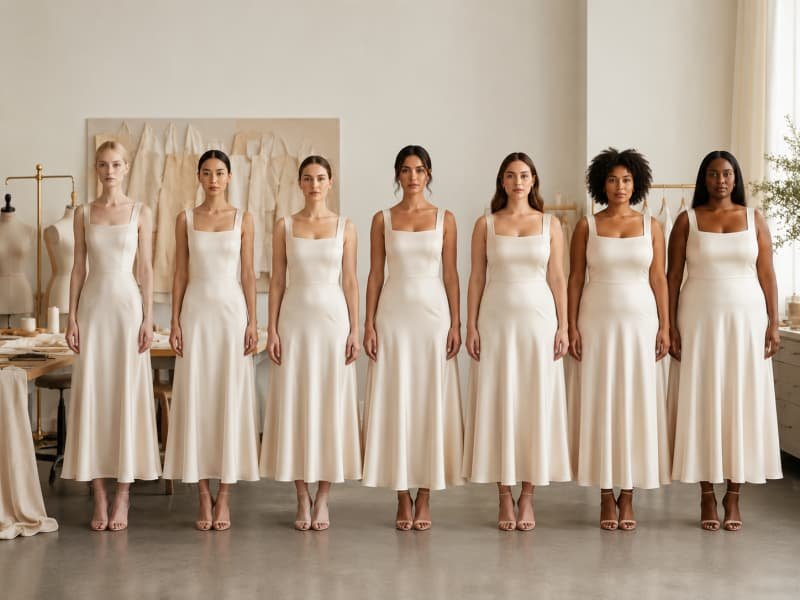
Each size program needs an individual block, grading and validation strategy based on body proportion, garment structure, fabric and commercial range width.
Alpha Size Ranges
Development priorities include:
- Defined core size
- Controlled bust-waist-hip progression
- Length balance
- Fabric stretch allowance
- Edge-size validation

Numeric Size Ranges
Development priorities include:
- Stable grade intervals
- Accurate body-to-garment relationship
- Consistent waist position
- Size-specific support
- Clear conversion information

Extended Size Ranges
Development priorities include:
- Grade-band review
- Fuller bust allowance
- Upper-arm and armhole balance
- Support strength
- Length and rise placement
- Independent fit validation

Petite Size Programs
Development priorities include:
- Shorter vertical balance
- Correct natural waist
- Controlled neckline depth
- Adjusted slit and trim positions
- Preserved silhouette

Tall Size Programs
Development priorities include:
- Added torso or skirt length
- Correct waist and hip level
- Longer straps where required
- Mobility review
- Print or embellishment repositioning

Fuller-Bust Fit
Development priorities include:
- Bust-point accuracy
- Cup and underbust relationship
- Front-to-back balance
- Strap load
- Neckline security
- Lining and support structure
From Brand Brief to Approved Size Range
Brief Review
Useful inputs include:
- Tech pack
- Existing size chart
- Reference garment
- Design sketch
- Fit comments
- Fabric direction
Market Review
The size structure is checked against the selling region, intended wearer and brand position.
Review points include:
- Alpha or numeric sizing
- Core selling sizes
- Straight or extended range
- Petite or tall needs
- Retail fit expectation
- Existing return reasons
Size Chart Audit
Duolan may identify:
- Unstable grade jumps
- Missing vertical measurements
- Conflicting body and garment values
- Unclear measuring methods
- Overly broad tolerances
Base Pattern
Key areas include:
- Neckline
- Bust shaping
- Waist balance
- Hip line
- Armhole
- Strap position
- Hem volume
First Fit Sample
The first sample checks whether the selected fabric, base pattern and construction produce the intended result.
The review should assess:
- Appearance
- Measurements
- Comfort
- Movement
- Coverage
- Support
- Production feasibility
Fit Correction
Comments are translated into technical actions rather than repeated as general instructions.
Actions may include:
- Pattern adjustment
- Spec revision
- Fabric reassessment
- Trim change
- Construction revision
- Updated open questions
- Revision summary
Pattern Grading
Grading also controls:
- Dart and seam movement
- Cup position
- Boning placement
- Strap location
- Slit height
- Trim positioning
Size Set Review
The review checks:
- Measurement progression
- Silhouette consistency
- Wearing ease
- Structural support
- Fabric response
- Visual proportion
Bulk Readiness
Final patterns, measurements, materials and workmanship references are aligned before production.
The team confirms:
- Approved sample status
- Pattern version
- Graded nest
- BOM
- Critical tolerances
- Label and packaging details
- Production path
Building the Right Base Size and Fit Block
Base Size Must Reflect Commercial Reality
- Core selling size: Sales history may show where most units are sold and where fit accuracy matters most.
- Fit-model size: A fit model should represent the target wearer rather than merely match one measurement.
- Brand fit identity: Some brands prefer a close, sculpted fit; others require relaxed ease or a softer occasion silhouette.
- Garment category: A bodycon mini, satin bias slip and corset midi need different base-pattern logic.
- Future range: A broad extended range may require more than one block or a separate grade band.
- Fabric behavior: Stretch, recovery, weight and drape influence the relationship between body and garment measurements.

Fit Blocks Must Match Dress Construction
One generic women’s block cannot reliably support every dress category. Pattern foundations must reflect the garment’s balance, wearing ease and internal structure. A fitted jersey block may use controlled negative ease around bust, waist and hip. A woven satin block needs added ease because the material does not stretch. A corset block must manage cup capacity, underbust shaping, waist compression, boning position and back closure. A relaxed resort block requires enough movement while maintaining a clear shoulder, neckline and waist relationship. Duolan assesses fit-block needs through:
- Silhouette and intended ease
- Stretch direction and recovery
- Lining construction
- Bust support
- Waist shaping
- Closure type
- Shoulder or strap structure
- Intended garment length
For fashion groups operating several dress categories, separate block families create better long-term control. A brand may maintain different foundations for bodycon, woven fitted, corset, relaxed and bias-cut dresses. New styles can then be developed from an appropriate approved basis rather than rebuilt from an unrelated pattern. Block selection also affects future speed. Once a stable block, measurement logic and grading structure are approved, repeat developments can begin from a more reliable technical foundation.

Broad Ranges May Need Split Blocks
A wide range cannot always be developed through one continuous grade nest. Body proportion changes become more pronounced across larger size spans, especially around bust depth, front length, shoulder balance, armhole, waist-to-hip relationship and support requirements. A split-block strategy may be recommended when:
- Straight and curve ranges serve different body proportions
- Cup capacity changes cannot be achieved through ordinary grading
- Larger sizes require stronger support or revised internal construction
- Edge sizes show significant front-to-back balance changes
- A petite or tall range changes vertical proportion
- The same labelled style must serve separate fit profiles
For example, a corset dress covering US 0-18 may need a straight-size block and an adjusted upper-range block. The outer appearance can remain visually connected, while cup shaping, boning length, underbust balance and closure strength are handled more accurately. Duolan does not force every project into split blocks. The decision follows fit evidence, range width, sales plan and construction risk. Where a continuous grade remains suitable, extra size-set validation may provide sufficient control.

Developing Production-ready Dress Specifications
Define Dress-specific Measurement Points
Bust, waist and hip are necessary, but complex dresses need a broader measurement structure. Missing POMs can allow design positions to shift even when three main circumferences remain within tolerance.
Depending on the style, Duolan may recommend measurements for:
- High bust and full bust
- Underbust
- Front and back neckline depth
- Shoulder width
- Armhole
- Front and back body length
- Waist position
- High hip and full hip
- Strap length
- Sleeve opening
- Skirt length
- Sweep
- Slit height
- Cup width and cup height
- Boning length
- Zipper length
- Lining length
POM selection should focus on fit and appearance. A corset dress needs detailed upper-body measurements. A bias satin slip needs neckline, strap, body length and sweep control. A bodycon mini needs bust, waist, hip, hem and length progression linked to stretch behavior.
Establish One Measurement Method
Even an accurate numerical chart can fail when teams measure garments differently. Measurement methods must define garment position, start and end points, whether a value is half or full circumference and whether elastic or stretch material is measured relaxed.
Examples include:
- Dress length measured from high shoulder point or center back
- Strap length measured including or excluding rings and sliders
- Waist measured straight across or along a curved seam
- Slit height measured from hem or from seam junction
- Bust measured one inch below armhole or at the fullest garment position
- Stretch panels measured relaxed before extension
- Cup depth measured flat or over a shaped form
Diagrams and photographs are valuable when a measurement point is unusual. An annotated spec sheet reduces disagreement among pattern makers, merchandisers, sewing teams and inspectors.
For repeat programs, the same measurement method should remain attached to the approved style record. Consistent methods are especially important when orders are split across production lines or facilities.
Set Grade Rules and Tolerance Priorities
A size chart needs both target measurements and a clear control policy. Grade increments define movement between sizes, while tolerances define acceptable production variation around each target.
Not every point should carry the same tolerance. A small difference at cup placement, strap length, neckline width or waist can have a greater fit effect than a similar difference at a wide hem.
Duolan separates:
- Fit-critical points: Bust, underbust, waist, hip, armhole, strap and body length.
- Security points: Neckline coverage, back opening, slit height and closure position.
- Visual points: Seam alignment, waist placement, trim position and skirt balance.
- General points: Measurements with less direct impact on fit.
Tolerance planning must consider fabric and construction. Stretch garments behave differently from stable woven garments. Bias-cut satin may relax after hanging. Pleats, smocking and gathers introduce controlled dimensional variation. Sequin, lace and mesh may require special measuring conditions.
The approved specification becomes part of the PP and quality-control basis rather than remaining only a development file.
Pattern Engineering for Consistent Dress Proportions
Balance the Bust, Waist and Hip
Duolan reviews:
- Bust-point placement
- Front length over the bust
- Back width and back length
- Side-seam position
- Waist shaping
- High-hip and full-hip curve
- Dart direction and intake
- Skirt balance
- Hem hang
Pattern correction may require redistributing width, moving darts, increasing front length, reshaping princess seams or adjusting the back. The correct action depends on silhouette and material.
Duolan records approved pattern changes before grading. Grading an unresolved base pattern only multiplies the original problem.
Control Necklines, Straps and Open Backs
Pattern development should assess:
- Neckline width and depth
- Gaping risk
- Strap anchor position
- Strap angle
- Armhole coverage
- Side-front exposure
- Back opening width
- Closure stability
- Lining and facing support
- Adhesive or bra compatibility where relevant
Duolan treats these positions as functional pattern points. Edge sizes receive special attention because neckline and strap changes can become more noticeable at the smallest and largest sizes.
Maintain Design Lines Across Sizes
Fashion appeal often depends on a precise waist seam, cup shape, cut-out, lace panel, ruching line, print placement or slit position. Poor grading can move these details away from the intended body location.
Pattern development must connect design lines with anatomical and garment reference points. Examples include:
- Corset seam aligned with bust shaping
- Waist seam held near the natural waist
- Cut-out positioned for secure coverage
- Slit kept at a controlled height
- Lace panel balanced between seam lines
- Ruching distributed through the intended zone
- Print engineered around pattern pieces
- Pleat positions adjusted for width growth
Duolan reviews whether a design detail should grade proportionally, remain visually fixed or receive size-specific adjustment. A chest cut-out may not grow at the same rate as bust circumference. A decorative bow may remain one size. A slit may need a controlled vertical rule rather than an automatic length increase.
The aim is a connected family of sizes sharing one design language rather than a set of garments created through uncontrolled enlargement.

Pattern Grading Built Around Fit and Construction
Horizontal Grade Rules
Horizontal grading manages width and circumference progression across bust, waist, hip, armhole, neckline, sleeve and hem areas. A reliable rule set should answer:
- How much total circumference changes between sizes
- Where growth is distributed across front, back and side seams
- Whether bust growth needs extra front allocation
- How waist shaping changes
- How hip curve develops
- Whether armhole width and depth change together
- How neckline width remains secure
- Whether skirt sweep grows at the same rate as hip
A fitted dress may use carefully controlled increments to maintain body contour. A relaxed dress may allow broader ease without losing shoulder balance. Stretch garments require increments connected to fabric extension and recovery.
Duolan checks the full graded nest for unexpected jumps, broken curves or seam-length mismatches. Pattern pieces which sew together must remain compatible through every size.
Vertical Grade Rules
- Shoulder to bust point
- Bust point to waist
- Waist to high hip
- Waist to full hip
- Armhole depth
- Front and back body length
- Skirt length
- Slit position
- Boning length
- Strap length
Grade Structural Components Together
Outer patterns, lining, interlining, cups, boning channels, power mesh, facings, elastics and closures must remain compatible after grading. For corset and bustier dresses, review includes:
- Cup width and depth
- Underbust curve
- Boning length and position
- Center-front and side-front seams
- Eyelet or hook spacing
- Modesty panel
- Lining and support layer
For adjustable dresses, ties, elastic and straps require size-appropriate lengths. For lined mesh dresses, shell and lining may need different ease logic. For lace dresses, seam and motif placement must remain visually balanced. Duolan connects structural grade rules with workmanship instructions so production teams understand how graded components assemble.
Validate Grade Bands and Edge Sizes
A mathematically smooth nest does not guarantee a successful worn fit. Selected physical samples confirm whether the grade rules perform correctly at high-risk points. Validation may compare:
- Smallest planned size
- Approved base size
- Largest straight size
- Largest extended size
- A size near a split-block transition
The number of size-set samples depends on range width, silhouette, fabric and construction. A loose day dress may need fewer physical checks than a corset, bodycon or deep-neck occasion dress.
Where edge-size results reveal a proportional shift, Duolan may adjust the grade rule, revise a block or add a size-specific construction action. Digital grading remains connected to physical fit evidence.
How Fabric Changes Size and Fit Decisions
Identical patterns can perform differently in separate materials. Stretch, recovery, drape, opacity, weight and surface structure must be reviewed before fit and grading are approved.
| Fabric Direction | Size-range Risk | Development and Production Control |
|---|---|---|
| Stretch jersey | Excess extension, weak recovery or transparency changes body fit | Confirm stretch direction, recovery, weight, opacity, negative ease and relaxed measurement method |
| Stretch woven | Moderate stretch may vary by batch and color | Test actual bulk-direction fabric and maintain controlled ease |
| Satin | No stretch, seam tension and surface reflection expose fit errors | Control ease, grain, lining, needle marks, seam balance, pressing and packing |
| Bias-cut satin | Garment length and width may relax after hanging | Review grain, hanging behavior, body length and final measurement timing |
| Mesh | Shell and lining may stretch differently | Develop shell, lining and support layers as one system |
| Lace | Motif placement, seam position and limited stretch affect fit | Confirm motif direction, placement, joining method, lining and grade behavior |
| Sequin fabric | Weight, stiffness and limited movement can reduce comfort | Review support, seam allowance, lining, embellishment clearance and size-specific stress |
| Chiffon | Drape and volume can shift with panel width | Control sweep, seam balance, transparency, lining and gathering distribution |
| Crepe | Different weights create separate drape and recovery results | Approve actual weight, stretch, handfeel and batch consistency |
| Pleated fabric | Pleat depth and recovery affect finished measurements | Define measuring state, pleat allocation, panel width and heat sensitivity |
Size Control for Complex Dress Categories

Bodycon Dresses
- Bust-waist-hip progression
- Side-seam balance
- Fabric stretch by direction
- Recovery after wear
- Lining stretch
- Mini length
- Hem opening
- Seam durability

Corset Dresses
- Cup capacity
- Underbust fit
- Waist shaping
- Boning position
- Back-panel balance
- Strap load
- Hook, zipper or lace-up closure
- Edge-size support strength

Halter Dresses
- Front-neck balance
- Tie or strap length
- Bust coverage
- Armhole position
- Side-front security
- Back opening
- Lining support
- Size-specific strap load

Backless Dresses
- Back opening position
- Side-seam stability
- Bust support
- Strap or tie placement
- Internal elastic
- Non-slip support where suitable
- Closure strength
- Movement testing

Satin Slip Dresses
- Bust ease
- Neckline balance
- Strap adjustment
- Bias relaxation
- Waist and hip flow
- Lining length
- Seam smoothness
- Hanging before measurement

Mesh and Sequin Dresses
- Shell and lining relationship
- Transparency zones
- Embellishment clearance
- Seam comfort
- Stretch difference
- Motif position
- Weight support
- Size-specific decoration balance
Fit and Size Set Validation Before Production
First Fit Sample Establishes the Foundation
The first fit sample tests the relationship between the design, base pattern, material and construction. Its purpose is not merely to resemble a sketch.
Duolan reviews:
- Overall silhouette
- Garment balance
- Bust, waist and hip fit
- Neckline security
- Strap and armhole position
- Length
- Movement
- Lining behavior
- Closure function
- Workmanship feasibility
Sample measurements are compared with the current specification. Fit comments are separated into pattern, measurement, fabric, trim, construction and visual categories.
Duolan prepares revision actions and lists open points requiring approval before the next sample.
Size Set Samples Test the Graded Range
After base fit approval and grading, selected size-set samples verify whether the range behaves correctly beyond the base size.
Selection depends on:
- Number of sizes
- Range width
- Straight or extended sizing
- Garment silhouette
- Fabric risk
- Structural complexity
- Brand approval policy
A common strategy uses a base or middle size plus representative small and large sizes. Broader ranges may require an additional sample near a block transition.
Size-set review covers measurement progression, visual proportion, fit security, support, movement and workmanship. Problems found at edge sizes are corrected before the range becomes a production standard.
Workmanship Details Supporting Every Dress Size

Seams, Closures and Stress Points
Duolan reviews:
- Seam type
- Seam allowance
- Stitch density
- Reinforcement
- Zipper length and position
- Hook-and-eye placement
- Back opening
- Slit reinforcement
- Strap attachment
- Armhole finishing
- Hem method
Stress points can change by size. Strap joins, waist seams, zipper ends, slit tops, lace-up panels and hook positions may require added reinforcement in larger sizes or structure-sensitive designs.

Internal Support and Lining
Internal construction can determine whether a fashion dress remains wearable. Cups, boning, power mesh, interfacing, waist stay, non-slip elastic and lining must work with the outer silhouette.
Duolan develops support according to:
- Bust shape and coverage
- Strapless or backless construction
- Fabric stability
- Waist shaping
- Closure type
- Target size range
- Comfort requirement
- Visual cleanliness
Cup position and size cannot remain fixed across a broad range. Boning must follow graded seam positions. Power mesh should provide support without creating visible edges.
Lining needs compatible stretch and enough ease. Non-slip support should remain hidden and comfortable.
For corset and structured dresses, internal layers are reviewed before grading is finalized. Outer pattern, lining, support and closure must remain compatible in every approved size.

Decorative Details and Size Proportion
Ruching, pleats, bows, lace motifs, rhinestones, pearls, sequins and embroidery contribute to product identity, but their scale and position can become inconsistent across sizes.
Duolan assesses:
- Whether decoration should remain one physical size
- Whether spacing should expand
- Whether placement should follow a seam or body point
- Whether density should remain visually consistent
- Whether added weight requires support
- Whether seam lines interrupt motifs
- Whether decoration affects tolerance or pressing
A fixed bow may suit every size, while ruching allocation may need to grow with panel width. A printed placement may require separate positioning rules. Embellishment near an armhole or side seam must allow sewing and comfort.
Decoration approval is connected to graded patterns, workmanship samples and PP references before bulk production.
Development Timing Planned Around Decision Points
Brief Review Stage
Key inputs:
- Tech pack or reference
- Base size
- Size chart
- Fabric direction
- Fit priorities
- Target date
Bulk Production Window
For multi-style dress orders, production planning commonly begins around 30-45 days after PP approval and material readiness. Exact timing depends on style count, quantity, fabric supply, special processes, quality requirements and packing method.
Large programs are scheduled by style and critical path rather than treated as one production block.
Revision Window
Timing depends on:
- Pattern-change scope
- New fabric or trim
- Construction trials
- Additional fit review
- Material availability
First Sample Window
Corsetry, special fabrics, custom colors, embroidery, sequins, wash processes or engineered prints may require a separate schedule.
Size Set Window
Selected size-set samples are normally planned after base-size fit approval and grading completion. A working reference is approximately 7-12 working days for many programs.
Broader ranges, multiple blocks or several physical fit approvals may extend the schedule.
PP Approval Stage
PP timing begins when fabric, trims, color, graded measurements, workmanship and packaging direction are sufficiently clear.
A PP sample should represent the planned production basis rather than an unfinished development version.
Turning Approved Fit into a Production Standard
Confirm Sample Approval Status
- Fit confirmed
- Visual direction confirmed
- PP basis confirmed
- Material pending
- Workmanship pending
- Packaging pending
- Revision still required
- Bulk ready
Lock Materials and Workmanship
- Fabric quality, color and batch direction
- Lining
- Zippers
- Cups and boning
- Straps and elastic
- Lace and decorative trims
- Labels
- Measurement priorities
- Seam and finishing methods
- Packing requirements
Design the Production Path
An order containing ten to thirty styles should not be placed into production as one undifferentiated quantity. Duolan breaks the order down by:
- Style
- Color
- Size
- Quantity
- Fabric
- Construction complexity
- Special process
- Fit risk
- Delivery priority
Styles are classified as standard, fit-sensitive, material-sensitive, process-sensitive, repeat or rush. Production resources are then matched according to capability and timing. Complex corset or embellished dresses may remain with experienced core lines. Stable repeat styles can reuse approved patterns, BOMs and workmanship records. Multi-style programs may use phased line starts to protect the critical shipping path.

Measurement Control from PP Sample to Shipment
Pre-production Measurement Control
Before bulk cutting and sewing, the PP basis is checked against the approved pattern, size specification and material.
Review points include:
- Correct pattern version
- Graded pattern completeness
- Measurement chart version
- POM method
- Critical tolerances
- Fabric stretch or relaxation
- Lining compatibility
- Construction details
- Labels and size identification
For fit-sensitive styles, a first-piece or trial-production review can confirm whether line methods reproduce the PP standard.
Early checking allows correction before a large quantity is completed.
Inline Size and Workmanship Checks
Inline inspection focuses on risk while production is still adjustable. Checking only completed goods can reveal a problem too late.
Duolan can monitor:
- Bust, waist and hip
- Body and skirt length
- Strap length
- Neckline and armhole
- Cup and boning placement
- Slit height
- Seam balance
- Zipper operation
- Lining position
- Decoration placement
Inspection frequency and sample selection depend on style risk, quantity and agreed quality requirements. Edge sizes and fit-critical sizes may receive focused measurement review.
Quality findings are connected to corrective actions. A recurring waist deviation may indicate sewing allowance, pressing, fabric relaxation or pattern handling rather than random operator error.
Final Size, Ratio and Packing Verification
Final inspection checks more than individual garments. Multi-size orders require correct size identification, assortment and carton distribution.
Final verification can include:
- Finished measurements
- Appearance
- Workmanship
- Color consistency
- Labels
- Size labels
- Hangtags
- Barcode or SKU
- Polybag information
- Size and color ratio
- Carton mark
- Packing list
Sensitive dresses receive packaging suitable for their construction. Satin may require protection from pressure marks.
Sequins and rhinestones may need tissue or internal separation. Corset structures should not be crushed through unsuitable folding.
Manufacturing Capacity for Multi-size Dress Programs
16 Owned Factories
Core facilities can support:
- Sampling links
- Pattern execution
- Complex workmanship
- PP preparation
- First-piece control
- Quality follow-up
20+ Satellite Factories
Allocation depends on:
- Style complexity
- Fabric
- Process
- Quantity
- Delivery path
- Facility suitability
12,000+ Workers
Scale supports:
- Multiple collections
- Parallel styles
- Seasonal peaks
- Repeat programs
- Volume expansion
- Specialized operations
About 300 Sewing Lines
Approximately 300 sewing lines across the manufacturing system create capacity for segmented scheduling.
Orders can be divided by:
- Core complex styles
- Stable commercial styles
- Repeat styles
- Fast-moving priority styles
- Process-sensitive styles
- Delivery group
50+ Flexible Lines
Flexible lines are used according to:
- Style readiness
- Material readiness
- Quantity
- Fit risk
- Launch calendar
- Existing production load
Structured Coordination
Scale has value only when information remains controlled. Duolan coordinates briefs, samples, comments, PP standards, production paths, quality checkpoints and delivery updates through staged records.
Brand teams can communicate through:
- Voice calls
- Video calls
- Online project meetings
- Shared documents and annotations
Representative Size Range Development Programs

United States Fitted Dress Program - 18 Styles, 42,600 Garments
Project profile:
A US trend-led fashion brand planned an 18-style fitted dress program covering bodycon minis, ruched midis and open-back styles. The approved range covered XXS-XXL across three main fabric directions. Total planned quantity reached 42,600 garments.
Initial risk:
The existing size chart used one regular width increment across most POMs. Earlier developments from another source showed excessive neckline width in larger sizes, tight hips in upper sizes and inconsistent mini lengths. Two jersey qualities also had different stretch and recovery despite similar composition labels.
Duolan development route:
- Audited the existing garment chart and separated fit-critical POMs.
- Confirmed a core base size from the brand’s fit model and sales history.
- Tested the actual stretch and recovery direction of both jersey groups.
- Revised bust-waist-hip distribution and side-seam balance.
- Applied separate length rules for mini silhouettes.
- Controlled back opening, strap position and neckline width independently from circumference growth.
- Produced base fit samples followed by selected small and large size samples.
Production organization:
The program was divided into three construction families. Stable ruched styles were grouped together, while open-back styles with internal support were assigned to experienced lines. Size and color ratios were checked against purchase-order breakdowns before packing.
Program outcome:
The full range moved into production after two controlled fit stages and one size-set review cycle. Bulk production was organized over a 38-day manufacturing window after PP approval and material readiness. The final order shipped within the agreed delivery window, and approved pattern and material records were retained for repeat planning.

United Kingdom Occasionwear Program - 12 Styles, 28,800 Garments
Project profile:
A UK occasionwear brand developed 12 dresses in UK 6-20, including corset minis, satin midis, mesh-panel dresses and embellished party styles. Total order quantity reached 28,800 garments.
Initial risk:
The design team required a strong sculpted appearance, but the original size chart did not define cup, underbust, boning or front-body length progression. The upper sizes showed cup displacement, back-panel tension and inadequate support. Satin styles also showed waist pulling and side-seam movement.
Duolan development route:
- Added cup width, cup height, underbust and structural POMs.
- Reviewed front length and bust projection separately from total bust circumference.
- Developed graded boning and lining components alongside outer patterns.
- Adjusted back-panel growth and closure strength.
- Confirmed satin ease and lining relationship by style.
- Selected UK 6, UK 12 and UK 20 for representative size review across structural families.
- Prepared workmanship references for cups, boning, zippers, mesh support and embellished seams.
- Locked PP standards by style group rather than approving the collection through one generic sample.
Production organization:
Corset and high-risk mesh styles remained with core experienced lines. Embellishment processes were confirmed through approved panels before garment production. The size breakdown was planned by style, color and range, with additional checks on UK 18 and UK 20 for support-sensitive designs.
Program outcome:
The 12-style collection entered production after structural adjustments and size-set validation. Manufacturing and quality control were completed over 41 days after PP approval and material locking.r development.

Australian Resort Program - 24 Styles, 67,200 Garments
Project profile:
An Australian resort and vacationwear brand prepared 24 dresses covering AU 4-18. The collection included printed maxis, halter minis, cut-out midis and lightweight woven dresses. Total planned volume reached 67,200 garments.
Initial risk:
The collection combined standard and shorter-length requirements. Print placement, waist position, back openings and skirt length needed to remain balanced across sizes. Several original specifications changed length only at the hem, causing waist and hip positions to sit too low on shorter wearers.
Duolan development route:
- Separated standard and shorter vertical-proportion directions.
- Adjusted shoulder-to-bust, bust-to-waist and waist-to-hip positions.
- Repositioned halter anchors and back openings.
- Developed controlled skirt-length and slit rules.
- Reviewed engineered print positions against graded pattern pieces.
- Confirmed lining coverage for light-colored and lightweight styles.
- Produced representative samples for both vertical-proportion directions.
- Connected print strike-offs, graded patterns and size specifications before PP approval.
Production organization:
The order was grouped by print process, fabric family and construction. Printed styles followed strike-off and panel-position approval. Halter and cut-out styles received added fit checks. Production ran through phased line starts so early approved groups could begin without waiting for the entire collection.
Program outcome:
All 24 styles were delivered through a staged 44-day production plan after final PP approvals and material readiness. The two vertical-proportion systems created a clearer base for later resort drops and repeat color developments.
A Verifiable Dress Development and Manufacturing Partner
Dress-focused Experience
- Fabric and silhouette matching
- Pattern and fit development
- Decorative workmanship
- Complex structures
- Multi-style collections
- Sample-to-bulk coordination
Controlled Development
- Brief review
- Feasibility note
- Sample plan
- Fit review
- Revision summary
- Grading basis
- Size-set review
- Bulk-start confirmation
- Production path plan
Manufacturing Verification
Duolan supports factory visits for qualified brand projects.
Visits can include relevant sample, production, inspection and packing areas according to the project and facility arrangement.
Selected manufacturing facilities have completed SMETA 2-Pillar audit requirements.
Additional testing, inspection and compliance cooperation can be arranged according to the brand’s specified standard and documentation.
International Collaboration
English-speaking project coordination supports direct communication with design, product, technical, sourcing and quality teams. Available communication methods include:
- Voice calls
- Video calls
- Online meetings
- Images and videos
- Documents and annotated files
Frequently Asked Questions About Dress Size Development
Yes. Duolan can review an existing body chart, garment specification, graded pattern or approved sample. The review checks measurement progression, missing POMs, unclear measuring methods, silhouette compatibility and grading consistency. Existing standards remain the starting point unless fit evidence or construction risk suggests an adjustment.
A reference sample can provide useful measurements and fit information, but one garment does not define a complete size system by itself. Duolan also needs the target market, intended range, core size, fit preference, fabric direction and product category before creating graded garment specifications.
Base-size selection considers the brand’s core selling size, fit model, target wearer, dress silhouette, fabric behavior and future range. Duolan does not automatically select a factory-standard medium when another size provides a better commercial and technical foundation.
Yes. Pattern grading can be developed after the base pattern and fit direction are sufficiently approved. Grade rules cover horizontal and vertical growth, seam balance, structural positions and design details. Broader or specialized ranges may require split blocks or additional size validation.
Sample selection depends on range width and risk. A common plan includes the base size plus representative small and large sizes. Corset, bodycon, extended-size, petite, tall or highly structured programs may require additional physical samples near high-risk sizes or block transitions.
Yes, subject to project review. Extended ranges may require a revised block, fuller-bust shaping, added front length, different shoulder balance, stronger support and separate fit validation. Duolan avoids treating extended sizing as simple enlargement of a straight-size pattern.
Fabric stretch, recovery, weight, drape, opacity and relaxation influence wearing ease and finished measurements. Jersey, satin, mesh, lace, sequins and bias-cut fabrics require different fit and grading decisions. Actual development fabric or a confirmed equivalent should be reviewed before final approval.
Many custom dress samples can be planned within approximately 7-15 working days after files, material direction, sample arrangements and key measurements are confirmed. Complex structures, special fabrics, custom processes or multiple physical size samples require a project-specific schedule.
Duolan aligns the approved pattern, graded specification, PP basis, material reference and workmanship standard before production. Control can include first-piece review, inline measurement checks, edge-size checks, final measurements, size-ratio verification and packing inspection.
Useful materials include a tech pack, size chart, graded pattern, reference sample, design image, fit comments, target size range, fabric details, colorways, order quantity and launch date. Duolan can begin an initial review even when not every document is complete.

Start Your Dress Size Range Project
Send Duolan the available development basis for an initial review of fit direction, pattern requirements, grading risk, sample stages and production readiness. A complete tech pack is helpful, although an existing sample, measurement chart, reference image or previous fit comments can also support the first evaluation.
For a more accurate review, include:
- Product category and number of styles
- Existing size chart or target size range
- Base size or current fit-model size
- Body or garment measurement specification
- Tech pack, pattern or reference garment
- Fabric composition, weight, stretch and color direction
- Fit issues requiring correction
- Sizes required for physical validation
- Estimated quantity by style
- Target launch or delivery date
- Label, packaging and inspection requirements
Duolan will review the development basis before confirming the recommended sample path, required files, timing and bulk-production direction.