Skip to content
Custom Brunch Dress Manufacturer
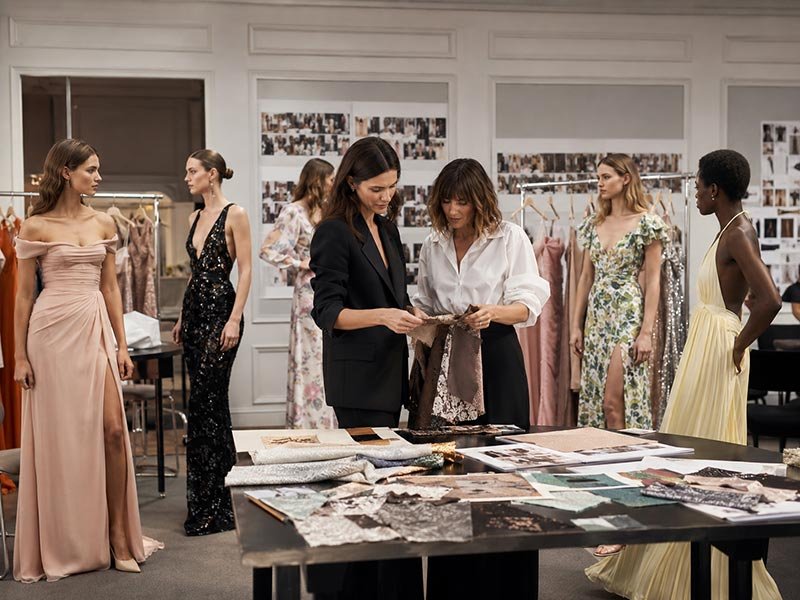
Dress-focused development and manufacturing for fashion brands creating refined brunch, daytime occasion, resort, and social dressing collections.
- Develop 10–30 coordinated styles across mini, midi, and maxi lengths for one seasonal dress program.
- Organize commercial collections with printed, solid, embroidered, smocked, wrap, halter, tiered, and fit-and-flare silhouettes.
- Plan brand orders from 20,000 to 80,000 garments across style, color, size, and delivery groups.
- Move from collection brief, fabric direction, and pattern development into sampling, bulk production, quality control, and repeat orders.
- Draw on nearly 30 years of fast-fashion womenswear development and dress manufacturing experience.
Built for Established Fashion and Product Teams
Fashion Dress Brands
Brunch-focused brands need collections with a recognizable visual direction and enough commercial variety to support product launches, editorial content, social campaigns, and repeat sales. Duolan helps organize each program around coordinated silhouettes, colors, fabrics, and price positions rather than treating every style as an isolated order.
Development can begin from a complete tech pack, reference images, original garments, mood boards, sketches, fabric swatches, or an early collection plan. Product discussions cover style role, visual priority, fit sensitivity, material behavior, production complexity, and expected order volume.
Product Development Teams
Product teams often manage several deadlines at once: design approval, material confirmation, fit review, photo sampling, costing, PP approval, and bulk delivery. Duolan structures sample development around clear review objectives so each version answers a defined question.
A first sample may focus on silhouette and proportion. A fit sample may prioritize bust, waist, hip, torso, sleeve, or length measurements. A revised sample may lock construction, lining, closures, and decorative details. A PP sample establishes the production reference before the line starts.
Sourcing and Buying Teams
Sourcing teams require dependable information, not broad claims. Quotations need a clear basis. Sample schedules need defined approval points. Bulk orders need material, workmanship, measurement, QC, packing, and delivery controls.
Duolan supports structured communication through development briefs, feasibility notes, sample plans, revision summaries, bulk-readiness reviews, production timelines, and quality updates. Such records allow internal teams to compare suppliers, track decisions, and reduce information loss between design, merchandising, sourcing, and production departments.
What Defines a Commercial Brunch Dress Collection?
More Than Casual Daywear
A brunch dress should feel effortless without appearing unfinished. The garment may use relaxed fabric, soft gathering, adjustable details, or an easy silhouette, yet the neckline, waist, sleeve, hem, lining, and finishing still need enough refinement for restaurants, birthdays, garden gatherings, daytime events, and social photography.
Compared with basic casual dresses, brunch styles usually carry stronger visual details: shaped waistlines, controlled sleeve volume, expressive prints, tiered skirts, lace trims, smocking, statement necklines, open backs, or better-defined proportions.
A Social Occasion Product
Brunch dressing is closely connected to social behavior. Garments are worn while sitting, walking, eating, posing for photographs, moving between indoor and outdoor environments, and often remaining on the body for several hours.
Such conditions affect product development. Necklines must remain stable while seated. Sleeves must allow movement. Waist shaping should feel secure without excessive restriction. Light colors require transparency review. Skirts need enough movement without creating uncontrolled volume. Open-back and halter designs need reliable support and coverage.
A Collection-Level Category
Brunch is better developed as a product family than as one fixed silhouette. A balanced program may connect printed midi dresses, solid minis, flowy maxis, wrap styles, shirt dresses, smocked shapes, and wedding-guest crossover pieces through common color, fabric, print, and fit decisions.
The strongest collections usually contain several roles: visual campaign pieces, dependable commercial shapes, easy color extensions, repeat-order candidates, and occasion crossover styles. A clear product architecture prevents the range from becoming a random group of attractive dresses.
Control the Risks Before Development Becomes Expensive
Brunch dresses often appear easy, yet lightweight fabrics, pale colors, fitted waists, prints, gathers, linings, straps, and open-back structures can create costly problems during sampling or bulk production.
| Development Risk | Commercial Effect | Duolan Control Direction |
|---|---|---|
| Brunch concept remains too broad | Styles lack a clear collection identity | Define consumer occasion, silhouette mix, color direction, product role, and retail position |
| Fabric does not support the silhouette | Garment hangs flat, feels heavy, clings, wrinkles, or loses shape | Review weight, drape, recovery, opacity, shrinkage, surface, and lining need |
| Pale colors become transparent | Returns, poor photography, or negative wear feedback | Check shell, lining shade, GSM, seam visibility, and daylight coverage |
| Pattern balance is unstable | Neckline gaping, waist twisting, uneven hems, or poor movement | Confirm base size, POM, body balance, ease, and fitting priorities |
| Sample looks good but cannot be repeated | Bulk quality drifts from the approved version | Lock BOM, materials, measurements, construction, PP sample, and QC points |
| Print scale or placement is wrong | Garment loses visual proportion across sizes | Review artwork scale, repeat, cutting placement, strike-off, and grading effect |
| Multi-style program lacks coordination | Collection becomes difficult to merchandise | Plan shared materials, color families, silhouette roles, and price structure |
| Launch date is not back-planned | Sampling or bulk production compresses QC and shipping time | Build a calendar covering samples, approvals, materials, production, inspection, and freight |
Build a Balanced Brunch Dress Collection
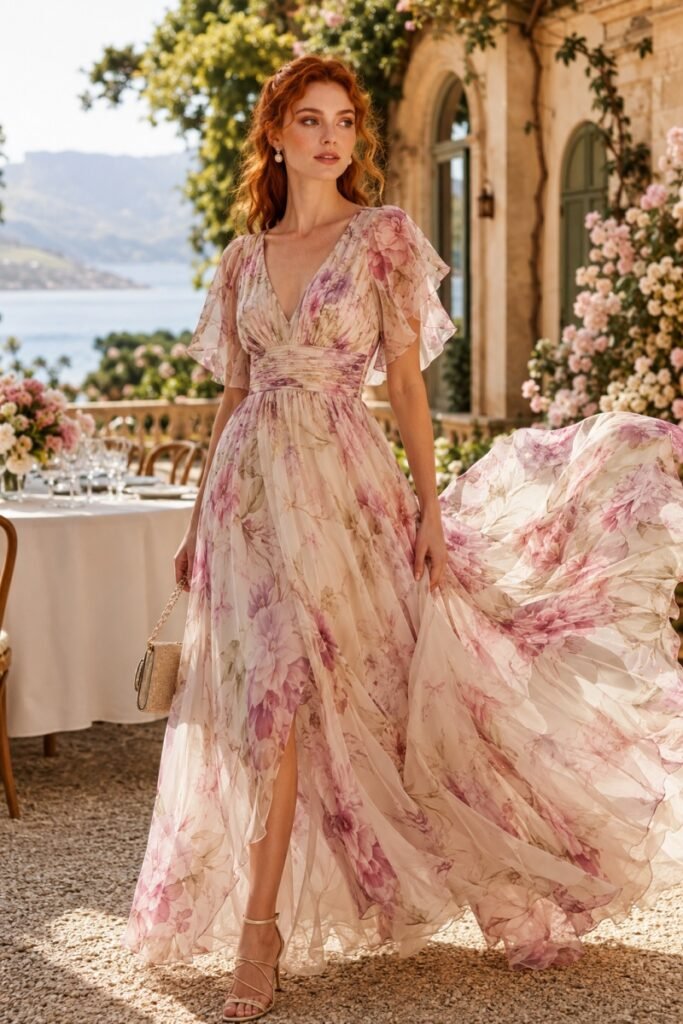
Hero Print Dress

Commercial Midi Dress
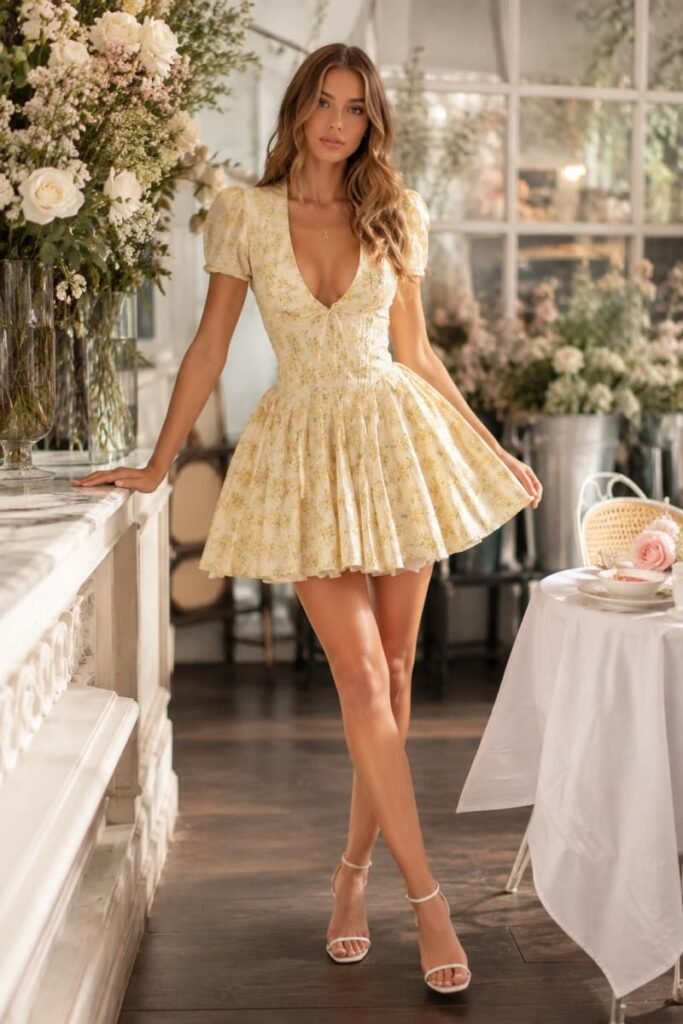
Social Mini Dress
A mini brunch dress can add a younger, more expressive product direction through puff sleeves, square necklines, corset-inspired seams, smocking, cut-outs, ties, or playful prints. Commercial mini lengths should be reviewed in relation to body height, seated coverage, skirt movement, lining, hem allowance, and grading. A visually short sample may become unsuitable in larger sizes if length growth and body proportion are not planned carefully.

Flowing Maxi Dress

Easy Reorder Shape

Occasion Crossover Style
Custom Brunch Dress Styles for Seasonal Collections

Printed Midi Dresses

Floral Maxi Dresses
Floral maxis create strong resort, destination, garden, and outdoor social appeal. A successful silhouette needs controlled volume rather than uncontrolled fabric. Panel direction, print repeat, neckline support, strap stability, skirt weight, lining length, hem circumference, and body proportion should be reviewed together.
Large floral artwork may require placement planning, while small repeats need enough visual scale to remain clear across a long garment.

Puff Sleeve Minis
Puff sleeve minis combine social-media impact with youthful brunch styling. Sleeve volume may be built through gathers, elastic, pleats, organza support, lining, or shaped pattern pieces. Fit work must consider shoulder width, armhole comfort, bicep ease, sleeve-head height, elastic pressure, neckline stability, body length, and seated coverage. Sleeve volume should remain consistent across sizes without overpowering smaller frames or becoming flat in larger sizes.

Wrap Brunch Dresses

Smocked Day Dresses

Polished Shirt Dresses

Halter and Backless Dresses

Lace and Embroidered Dresses
Match Dress Lengths With Real Wearing Occasions
Length and silhouette influence styling, fit, movement, material use, lining, packing, and final cost. A coordinated range usually combines several shapes rather than repeating one outline across every style.
Mini Lengths
Mini dresses work well for birthday brunches, rooftop gatherings, youthful day parties, and fashion-led social events. Product review should cover finished length by size, seated coverage, lining, skirt opening, slit position, and hem stability.
A fixed length increase across all sizes may not produce the best body proportion. Grading should consider torso length, hip depth, and intended market positioning.
Midi Lengths
Midi dresses offer the broadest crossover between brunch, city daywear, wedding-guest dressing, work-to-social use, and spring or summer events.
Important factors include natural waist position, hip ease, skirt sweep, slit height, calf position, lining length, and movement. Fabric drape changes the visual length; soft viscose and structured poplin may use the same measurement yet appear very different on the body.
Maxi Lengths
Large hems also affect fabric consumption, cutting layout, sewing time, pressing, packing, and transport volume. Production efficiency improves when panel construction and print repeat are evaluated before finalizing the pattern.
Wrap Silhouettes
Tie placement, waist level, inner fastening, neckline depth, and skirt movement should be tested using the intended fabric, since slippery or heavy materials may move differently from sample substitutes.
Fit-and-Flare Shapes
Seam placement, dart intake, gathering ratio, lining, zipper installation, and pressing determine whether the waist appears clean or heavy.
Tiered Silhouettes
Each tier requires a defined length, width, gathering ratio, seam method, and pressing approach. Print direction and motif interruption should also be considered across horizontal joining seams.
Shirt Silhouettes
The design may use a belt, elastic waist, shaped seams, or relaxed body. Each route creates a different fit and cost profile.
Bias Silhouettes
A bias sample may need resting time before final hemming. Bulk cutting and sewing methods must control distortion so finished lengths and side seams remain consistent.
Select Fabrics by Silhouette, Wear, and Production Risk
Fabric choice shapes the entire garment. Duolan reviews drape, weight, opacity, recovery, shrinkage, wrinkle behavior, print compatibility, lining, workmanship, care requirements, and bulk repeatability before recommending a production route.
| Fabric Direction | Suitable Brunch Styles | Main Strengths | Development and Bulk Controls |
|---|---|---|---|
| Cotton Poplin | Shirt dresses, puff-sleeve minis, fit-and-flare midis | Clean shape, breathable hand, strong print surface | Shrinkage, stiffness, seam puckering, pale-color opacity, pressing |
| Cotton-Linen Blend | Resort midis, relaxed maxis, belted dresses | Natural texture, breathable feel, premium daytime appearance | Wrinkling, slubs, shrinkage, shade variation, seam appearance |
| Viscose or Rayon | Wrap dresses, printed midis, flowing maxis | Soft drape, fluid movement, rich print result | Shrinkage, dimensional stability, wet strength, seam slippage, colorfastness |
| Crepe | Midi dresses, gathered dresses, occasion crossover | Controlled drape, lower shine, refined surface | Weight, stretch, recovery, snagging, pressing marks, lining |
| Chiffon | Layered maxis, sleeve details, feminine midis | Light movement, transparency, soft volume | Lining, seam method, narrow hems, snagging, print shift, static |
| Lightweight Satin | Bias midis, halter dresses, elevated daywear | Fluid shine, premium visual effect, clean color depth | Needle marks, seam puckering, pressing, slipping, shade variation |
| Light Jersey | Ruched dresses, fitted day dresses, travel styles | Stretch comfort, easy movement, body adaptability | GSM, recovery, spirality, transparency, seam stretch, shrinkage |
| Lace or Embroidery | Wedding-guest crossover, premium brunch styles | Surface depth, feminine detail, higher perceived value | Motif placement, backing, lining, cutting loss, thread security, skin comfort |
Fabric Approval Must Reflect the Garment
A fabric swatch can indicate color and touch, but it cannot fully show skirt movement, bodice support, seam behavior, gathering, transparency, sleeve volume, or pressing response. For important styles, fabric judgment should be linked to the intended silhouette.
Lightweight viscose may create beautiful movement but require shrinkage control and seam support. Poplin may hold a puff sleeve well but feel too rigid for a flowing maxi. Satin can elevate a halter midi yet expose needle marks, seam tension, or pressing problems. Lace may appear refined on a card but become heavy or uncomfortable after full garment construction.
Material Decisions Affect More Than Cost
Fabric width, usable width, repeat, shrinkage, cutting direction, minimum dyeing or printing quantity, lining, wastage, and special finishing all influence quotation and lead time.
Early material review helps avoid developing a sample around a fabric route unsuited to the target quantity or launch schedule. Substitute materials should be compared for appearance, performance, care, cost, and bulk availability rather than selected only by visual similarity.
Plan Color and Print With Production in Mind

White and Ivory

Soft Pastels
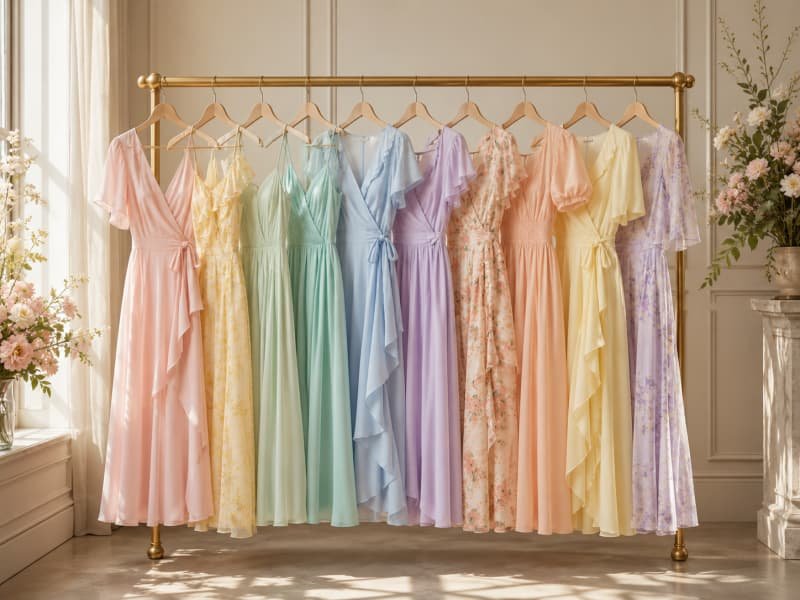
Blush, butter yellow, mint, powder blue, lavender, and soft peach can create a refined spring or summer direction. Pale shades reveal color inconsistency, stains, pressing marks, and transparency more easily than dark colors.
Lab dips, lighting review, dye-lot control, lining coordination, zipper shade, thread color, and packing cleanliness all deserve attention.

Botanical Florals
Botanical and floral prints remain closely linked to brunch and garden occasions. Print size should relate to garment length, panel width, sleeve shape, and intended retail position. Large motifs may need controlled placement.
Directional flowers require cutting orientation. Small dense prints may hide seam transitions but can lose clarity on textured fabric. Color count and printing method also affect cost and lead time.

Summer Brights

Natural Neutrals
Seasonal Print Capsules
Limited prints can create campaign value without carrying the entire order. A brand may place one distinctive print across two or three silhouettes while supporting the collection with solid colors drawn from the artwork. Shared color and material decisions improve range coordination, simplify merchandising, and create opportunities for future print or color extensions.
Design Details Must Improve Appearance and Wearability
Neckline and Coverage
Sleeve Volume Control
Smocking and Elastic
Ruching and Gathering
Waist Shaping
Slits and Hem Movement
Straps and Adjusters
Linings and Closures
Linings control opacity, comfort, internal finish, shape, and garment movement. Their weight, stretch, color, shrinkage, and length must match the shell. Invisible zippers, buttons, loops, hooks, snaps, ties, and elastic openings should be selected according to fabric and wear. Closure placement must support entry, fit, and stability without disrupting the visual design.
Build a Clear Development Basis Before Sampling
Files and References We Can Review
- Tech pack with sketches, construction, measurements, BOM, and artwork
- Front, side, and back reference images
- Original garment or physical sample
- Collection mood board and style direction
- Fabric swatch, color standard, or print artwork
- Existing size chart or target market measurements
- Label, packaging, and compliance requirements
- Estimated quantity and intended launch window
Feasibility Review Before Pattern Work
A reference image may show visual direction but leave many technical questions unanswered.
The development review considers how the garment opens, how the bust is supported, whether a lining is required, where seams should sit, how the fabric should behave, how the design will grade, and whether decorative elements can be repeated in production.
Risk-sensitive areas are identified early.
- A light ivory dress may need opacity testing.
- A halter dress may require support review.
- A full printed maxi may need artwork and cutting analysis.
- A smocked dress needs stretch and recovery targets.
- A bias satin midi requires seam and hanging control.
Sample Purpose Defines the Review Standard
Not every sample serves the same purpose:
- A prototype establishes silhouette and construction direction.
- A fit sample checks body balance, measurements, mobility, and grading basis.
- A salesman or presentation sample prioritizes visual completion for internal selection.
- A photo sample supports campaign, e-commerce, or line review.
- A revised sample records approved development changes.
- A PP sample establishes the final production reference.
The sample proposal should state the intended stage, material basis, expected review points, timing, fee coverage, and required approvals. Clear purpose reduces repeated revisions caused by teams evaluating one sample against several conflicting expectations.
Control Pattern, Measurements, and US Market Fit
Base Size and Measurement Framework
- Base size
- Full size range
- Points of measurement
- Measurement method
- Grade rules
- Tolerances
- Stretch measurements where relevant
- Garment length by size
- Special fit priorities

Fit Priorities by Silhouette
A wrap dress needs secure bust overlap, stable waist positioning, adequate skirt overlap, and tie placement. A smocked dress needs defined relaxed and extended measurements. A shirt dress requires shoulder, bust, placket, sleeve, and mobility control. A halter dress needs neck comfort, bust stability, side coverage, and correct back length.
A midi fit-and-flare dress depends on bust-to-waist balance and clean skirt release. A bias satin dress requires attention to grain, seam stretch, hanging, and length. A puff-sleeve mini needs sleeve mobility and commercially acceptable finished length across sizes.

Comments Must Become Pattern Actions
Fit comments should not remain as general statements such as “make it better fitted” or “open the neckline slightly.” Effective revisions identify the garment area, measurement change, pattern action, construction impact, and expected visual result.
Comments can be grouped into:
- Measurement correction
- Pattern balance
- Ease adjustment
- Neckline and coverage
- Sleeve and armhole movement
- Waist and hip shaping
- Length and proportion
- Closure and entry
- Fabric-related fit behavior
A revision summary records approved changes and unresolved points before another sample is cut. Such discipline lowers the risk of repeating the same issue across several styles or sizes.

Move Samples Through a Controlled Review Cycle
Development Start and Sample Plan
After reviewing the project information, Duolan prepares the sampling route. The plan may cover pattern development, fabric and trim sourcing, special-process testing, sample sewing, internal review, photography, shipment, and revision timing.
Lead time is confirmed according to style complexity, material availability, artwork, custom color, special processes, and approval speed. A straightforward brunch dress using available material can move faster than an embroidered, printed, bias-cut, or highly fitted style requiring extra tests.
The sample proposal should therefore provide project-specific dates rather than a universal promise.
Staged Development Updates
Visible progress helps teams make decisions before a sample is fully completed. Updates may include:
- Development start confirmation
- Material or trim arrival
- Pattern and cutting progress
- Early drape or structure review
- Half-finished construction details
- Questions requiring early approval
- Completion notice
- Photo, video, and shipping preparation
For a 10–30-style program, not every image needs to be sent without context. Updates should focus on critical styles, shared risks, material decisions, and points capable of affecting several products.
Sample Review Delivery
A completed sample should arrive with enough information for an efficient internal review. Duolan can provide front, side, and back views, close-up details, selected measurements, material notes, and areas requiring attention.
A short Sample Review Note separates:
- Points already close to target
- Fit areas needing wearer assessment
- Visual details requiring confirmation
- Material limitations
- Proposed revisions
- Decisions needed before the next stage
Consolidated feedback is then converted into pattern, measurement, material, trim, construction, and artwork actions. A Revision Summary helps prevent contradictory instructions and repeated errors.
Refined Workmanship Behind Commercial Brunch Dresses

Lightweight Seam Control

Invisible Zipper Installation
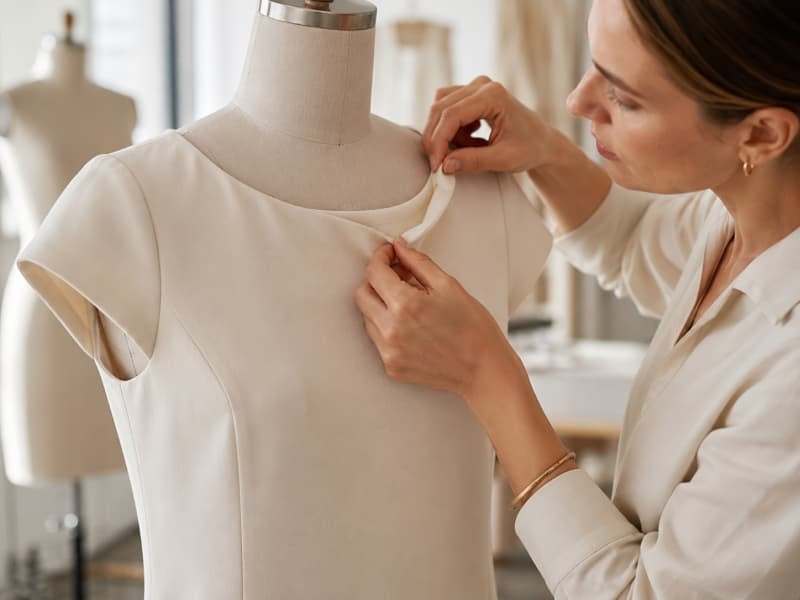
Clean Neckline Finishing

Narrow and Rolled Hems
Brunch dresses often use lightweight or flowing skirts where hem quality becomes highly visible. Narrow hems, rolled hems, baby hems, cover hems, and clean turn-ups each suit different materials.
Hem width, feeding, differential tension, curve handling, pressing, and resting behavior can change the finished line. Bias or full-circle skirts may require hanging time before final leveling.

Smocking Consistency

Gathering Distribution
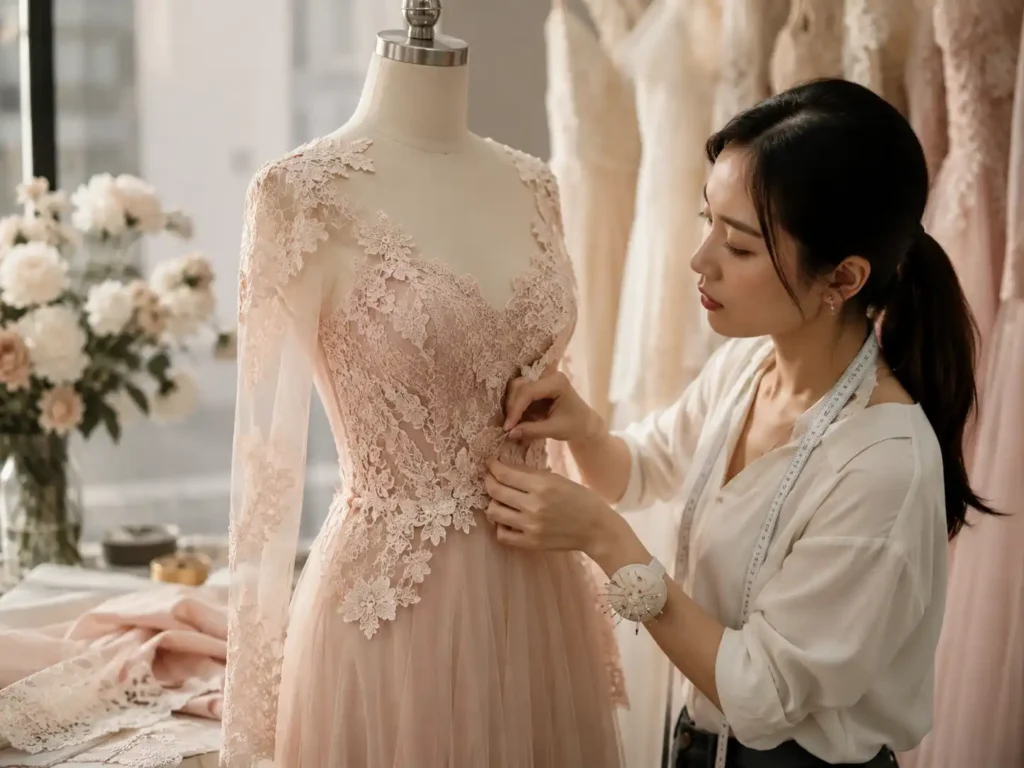
Lace and Embroidery Placement

Strap and Tie Reinforcement
Coordinate Printing, Embroidery, Pleating, and Finishing
All-over Printing
Placement Printing
Embroidery Development
Pleating and Texture
Garment Dye and Washing
Decorative Applications
Transfer Approved Samples Into Repeatable Bulk Standards
Bulk Readiness Review
The review identifies the exact approval status:
- Fit approved
- Visual appearance approved
- PP basis approved
- Material pending
- Construction pending
- Packaging pending
- Further refinement required
The order objective is also clarified. A launch order, repeat order, scale-up order, and seasonal replenishment program may require different scheduling, material, and QC decisions.
Material and Workmanship Lock
Before cutting begins, production-critical points should be locked:
- Shell fabric and approved lot
- Lining
- Color or print standard
- Zippers, buttons, elastic, straps, and trims
- Embroidery or special-process reference
- Pattern and measurement version
- Grade rules and tolerances
- Seam and finishing methods
- Label and packaging instructions
- Carton and shipping marks
Order Breakdown and Production Route
A 20,000–80,000-piece brand program is not treated as one undivided quantity. The order is broken down by style, color, size, quantity, complexity, material readiness, process, and delivery priority.
Styles may be classified as standard production, fit-sensitive, material-sensitive, print-sensitive, special-process, repeat, or urgent. Each group is matched to a suitable factory, line, pilot route, and inspection plan.
First-Piece and Pilot Confirmation
Early verification allows pattern, method, tension, measurement, or material issues to be corrected before they affect thousands of garments.
Private Label and Packing Lock
Brand labels, size labels, care labels, hangtags, barcodes, polybags, tissue, inserts, stickers, folding methods, carton assortment, and shipping marks should be confirmed before final packing.
Packaging decisions affect presentation, product protection, warehouse handling, freight volume, and delivery accuracy. Approval records help prevent a correctly made garment from being delayed by labeling or assortment errors.
Manufacturing Capacity Organized Around Product Complexity

Core Factory Control
Core and higher-risk styles can be placed with owned factories or production teams familiar with fashion dress construction.
Greater control is valuable where fit, fabric, decorative work, or visual consistency requires close coordination between pattern, sample, production, and QC functions.

Coordinated Factory Network

Multi-style Order Planning
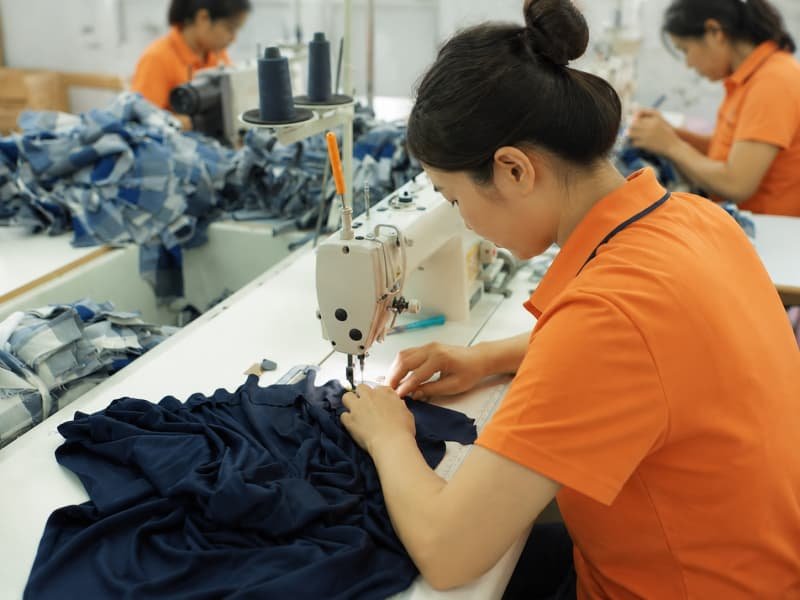
Flexible Production Support

Special Process Coordination
Duolan works with established resources for printing, embroidery, garment dyeing, washing, and related fashion processes. Projects are allocated according to material, visual requirement, quantity, timing, and process risk. A special-process partner should be evaluated as part of the garment route, not as a separate decorative service.

Repeat Order Continuity
Quality Control From Fabric Inspection to Final Packing
Fabric Inspection
Pale colors, satin, viscose, print, lace, and textured materials each need different inspection priorities.
Shrinkage and Color Review
Approved references and test results guide pattern allowance and material release.
Cutting Control
Directional prints, bias panels, lace motifs, and placement artwork require a more controlled cutting plan than solid standard fabric.
First-Piece Inspection
Inline Quality Checks
Inline inspection focuses on problems while correction remains possible.
Critical points may include neckline symmetry, sleeve setting, smocking width, waist alignment, print position, seam puckering, strap attachment, slit height, zipper operation, and panel matching.
Measurement Review
Measurements are checked against the approved specification and tolerance. Priority POMs differ by style.
A wrap dress may emphasize overlap and waist; a halter style may emphasize strap and back length; a maxi may emphasize total length and hem balance.
Final Workmanship Inspection
The garment should be assessed both flat and on a hanger or form where shape-sensitive issues are easier to see.
Packing and Carton Checks
Packing inspection covers labels, size identification, barcode, hangtag, folding, polybag, assortment, quantity, carton marks, carton condition, and shipping requirements.
A quality garment packed under the wrong size, barcode, or assortment can still create serious warehouse and launch problems.
Compliance Support for Global Fashion Programs
Factory Audit Foundation
Audit records help sourcing teams evaluate labor, health and safety, environmental, and business-practice foundations.
Relevant documentation can be reviewed during supplier qualification according to project and brand requirements.
Product Standard Coordination
Duolan can coordinate project requirements related to AATCC, ASTM, OEKO-TEX?, EN, China GB standards, GOTS-related material programs, and brand-specific specifications where applicable. Test plans, material evidence, product category, destination market, and nominated third-party requirements should be confirmed for each order.
Brand-Specific Requirements
Traceable Approval Records
A strong compliance route depends on records linking approved materials, test documents, labels, packing, inspection, and shipment information to the correct style and order. Clear version control reduces the risk of outdated artwork, incorrect care labels, unapproved material changes, or mismatched packaging instructions entering production.
Plan Production Around the Intended Launch Window
Back-plan the Calendar
Collection brief → design confirmation → fabric and trim direction → first sample → fit review → revised sample → photo or presentation sample → PP approval → material booking → cutting → sewing → inline inspection → finishing → final inspection → packing → shipping → warehouse receipt → launch
Late decisions near the beginning compress quality and logistics time near the end. Early alignment on materials, samples, labels, and shipping creates a more reliable calendar.
Bulk Production Reference
Planning references may be organized as:
- Straightforward styles: approximately 15–20 days
- Standard fashion styles: approximately 20–30 days
- Complex or special-process styles: approximately 30–45 days
Shipping Is a Separate Timeline
Duolan can coordinate with nominated forwarders and support relevant FOB, CIF, DDP, or other agreed delivery arrangements according to the project.
Repeat Order Planning
Repeat orders should not start from zero. Before replenishment, Duolan reviews fabric availability, color continuity, trim changes, size ratios, packaging updates, sales feedback, and previous QC records.
A familiar pattern and production route can improve efficiency, yet a new material lot or revised detail may still require first-piece or approval control.
Representative Brunch Dress Project Profiles

United States Spring Brunch Program
- Market: United States
- Channel: Established online fashion brand with wholesale retail accounts
- Collection: 18 styles
- Order volume: 46,800 garments
- Product mix: 6 printed midi dresses, 4 puff-sleeve minis, 3 smocked dresses, 3 flowing maxis, and 2 wedding-guest crossover styles
- Size range: XS–XL
- Color and print groups: 5 solids and 6 print directions
The main development challenge came from using several lightweight fabrics across one coordinated launch. Pale colors needed better opacity, viscose prints required shrinkage control, and puff-sleeve styles showed inconsistent sleeve volume between materials. Duolan separated the range into three material groups, aligned lining standards by color, adjusted sleeve-head and gathering ratios for each fabric behavior, and established shared QC points for waist level, neckline stability, skirt balance, and finished length. The production route divided campaign styles, commercial core styles, and easier repeat shapes across suitable lines. Print, lining, and packing approvals were locked before full cutting. The resulting program maintained a coordinated visual direction while allowing style-level controls for different fabrics and constructions.

United Kingdom Day Occasion Collection
- Market: United Kingdom
- Channel: Regional occasionwear and contemporary fashion brand
- Collection: 12 styles
- Order volume: 27,600 garments
- Product mix: Lace-trim midis, chiffon sleeve dresses, soft satin styles, wrap dresses, and structured pastel day dresses
- Size range: UK 6–18
- Launch: Spring wedding-guest and brunch season

Australian Resort Brunch Collection
- Market: Australia
- Channel: Established resort and vacation fashion company
- Collection: 24 styles
- Order volume: 68,400 garments
- Product mix: Printed maxis, halter midis, open-back dresses, linen-blend shirt dresses, tiered shapes, and smocked vacation dresses
- Size range: AU 6–16
- Delivery structure: Two production and shipping windows
Why Fashion Brands Work With Duolan
Dress-focused Experience
Development Before Production
Collection-Level Coordination
Structured Sample Communication
Sample-to-Bulk Discipline
Flexible Manufacturing Network
Quality Risk Awareness
Repeat-order Continuity
Custom Brunch Dress Manufacturing Frequently Asked Questions

Start Your Brunch Dress Development Project
Share your collection brief, tech packs, reference images, original garment photos, fabric direction, target quantities, size range, color plan, expected launch date, and current development stage. Duolan will review the product direction, material and fit risks, sampling requirements, order structure, production feasibility, and next-step path before preparing a project response.
A clear brief helps our team provide a more useful review of pattern requirements, material options, sample route, quotation basis, bulk lead time, quality controls, labeling, packaging, and delivery planning.
You may submit:
- Tech pack, sketch, mood board, or reference image
- Number of styles and estimated quantity
- Mini, midi, or maxi product direction
- Fabric, color, and print requirements
- Size range and target market
- Sample, PP, or bulk-production status
- Brand label and packaging requirements
- Target delivery or launch date
- Inspection and shipping requirements