 Skip to content
Custom Vacation Dress Manufacturer for Fashion Brands
Develop vacation dresses and resort collections through a dress-focused manufacturing system covering fabric direction, custom prints, pattern development, fit review, sampling, bulk production, quality control and export delivery.
- Vacation programs commonly covering 10–30 coordinated styles
- Brand order plans commonly ranging from 20,000–80,000 garments
- Nearly 30 years of fashion dress development experience
- 16 owned womenswear factories and 20+ long-term production partners
- 300 sewing lines and 50+ flexible production lines
- Support from collection development through repeat production
Built for Structured Vacation and Resort Programs
Fashion Dress Brands
Vacation collections need a clear connection between visual direction and commercial performance. Duolan supports brands developing coordinated summer, holiday, travel and resort programs rather than isolated garments.
Cooperation may cover:
- Printed mini, midi and maxi dresses
- Halter, backless, slip and cut-out silhouettes
- Beach-to-dinner styles
- Resort occasion dresses
- Coordinated sets and related separates
- Seasonal color and print extensions
Development begins by reviewing target market, retail position, sales channel, expected order structure and launch window. Material, construction and workmanship choices are then evaluated against the required appearance, wearing experience and production plan.
Product Development Teams
Teams can submit tech packs, sketches, reference garments, original samples, print artwork, size specifications or collection briefs. Each input is translated into a controlled development path covering material review, pattern work, sample construction, comments, revision priorities and production readiness.
Multi-style projects are coordinated by style, complexity, material route and approval stage so that one difficult style does not create confusion across the entire collection.
Buying and Sourcing Teams
Sourcing teams assess more than unit cost. They examine factory structure, development discipline, production planning, quality checkpoints, compliance readiness and communication reliability.
Duolan provides a structured route from feasibility review to sampling, PP confirmation, production planning, inline inspection, final checking and shipment preparation. Core styles can be allocated to controlled production resources, while repeat orders and volume growth can be supported through the wider manufacturing network.
Project communication can include development notes, sample review points, revision records, production timelines, quality updates and packing confirmations according to program needs.
Control Vacation Dress Risks Before Production
Fabric Silhouette Mismatch
Before sampling, Duolan reviews:
- Fabric weight and composition
- Drape and surface character
- Stretch and recovery
- Transparency under daylight
- Shrinkage risk
- Lining compatibility
- Width and cutting efficiency
- Bulk availability
Print Scale Errors
Print artwork cannot be approved only as a digital file. Repeat size, motif direction and garment proportion must work across different panels and sizes.
A print suitable for a flowing maxi dress may become crowded on a fitted mini dress. Large motifs can break across bust seams, waist panels or button plackets. Small repeats may lose visual impact after gathering.
Duolan reviews artwork against pattern pieces and sample size before bulk printing. Strike-offs, color references, print direction and placement notes are confirmed where required. Special attention is given to front panels, symmetrical areas, skirt seams, waist joins and visible placement zones.
Transparency and Lining
Material review considers:
- Shell transparency in light and dark colors
- Lining coverage area
- Lining weight and softness
- Color relationship between shell and lining
- Static and cling
- Hem length difference
- Seam visibility
- Comfort in warm climates
Unstable Open Structures
Halter, backless, low-neck and cut-out dresses require structural balance. A dress can look correct on a mannequin yet shift during walking, sitting or arm movement.
Duolan reviews strap width, strap angle, neck pressure, bust coverage, back opening, waist anchoring and closure position. Hidden elastic, internal support, adjusters, hooks, cups or stabilization layers may be considered when appearance and function require them.
The objective is not to add unnecessary structure. The objective is to keep the intended openness while maintaining coverage, proportion and wearing confidence across the planned size range.
Sample Bulk Differences
A strong sample loses value when fabric, trims, print, measurements or construction details change during production. Duolan therefore treats the approved sample as one part of a wider production standard.
Before bulk cutting, the team confirms:
- Approved fabric and lining
- Color or print reference
- Trim specifications
- Size chart and grading
- Critical measurements
- Construction details
- Workmanship points
- Label and packaging requirements
A PP basis, first-piece review or production-readiness confirmation is used according to project complexity.
Missed Launch Windows
Vacation collections often depend on a narrow seasonal sales period. A delay in print approval, sample revision, fabric booking or packaging can reduce the effective selling period even when production itself is completed quickly.
Duolan plans backward from the required shipment or launch date. Development is divided into material approval, first sample, revision, sales sample, PP preparation, bulk production, inspection and logistics stages.
Critical approvals are separated from lower-risk decisions. Brand teams receive a clearer view of which comments affect fit, which affect appearance and which must be confirmed before material booking or production start.
Develop a Collection, Not an Isolated Dress
Dress-led Resort Collection Planning
A vacation range may serve several moments within one trip: airport arrival, daytime exploration, beach surroundings, resort lunch, evening dining, social events and destination celebrations. Those moments require different levels of coverage, structure, movement and visual impact.
Collection planning can include:
- Lightweight daytime mini and midi dresses
- Printed flowing maxi dresses
- Halter and backless destination styles
- Slip dresses for evening use
- Coordinated sets for flexible styling
- Wedding guest and resort occasion options
Duolan reviews how fabrics and construction can be shared across styles without making the range repetitive. One base fabric may support several silhouettes, while selected hero styles receive distinctive prints, trims or construction details. Color planning also matters. Main commercial colors should work across several styles, while campaign colors and prints may remain concentrated in selected pieces. Shared materials and trims can improve purchasing efficiency, reduce development fragmentation and strengthen repeat-order preparation. The collection is then divided by development difficulty. Simple commercial styles, fit-sensitive styles, print-sensitive styles and special-process styles follow different approval paths. Such separation protects the launch schedule because a difficult garment no longer controls every other style in the range.
Commercial Balance Across Styles
A strong visual range cannot rely only on statement pieces. Campaign dresses may attract attention, but reliable commercial styles often generate the volume, replenishment and long-term sales value.
Duolan can help translate a confirmed direction into a balanced product structure:
- Hero styles for campaign photography
- Commercial styles for broader sales
- Easy-fit styles with lower return exposure
- Fabric extensions using proven materials
- Color extensions for repeat production
- Occasion crossover styles for wider use
- Coordinated separates supporting basket growth
Each role affects development decisions. A campaign maxi dress may justify complex placement printing or dramatic volume. A repeat-oriented midi dress may require cleaner construction, stable fabric availability and an easier fit. A destination event dress may need greater bust support, lining coverage and finishing quality. Production planning also reflects those differences. High-volume commercial pieces can be matched to stable lines, while complex visual styles may need specialized workmanship or additional first-piece checking. A collection becomes easier to scale when product roles, materials and approval standards are defined early. Duolan’s dress-focused structure is built to carry those decisions from sample development into seasonal bulk orders and future color or print extensions.
Vacation Dress Styles for Distinct Brand Directions
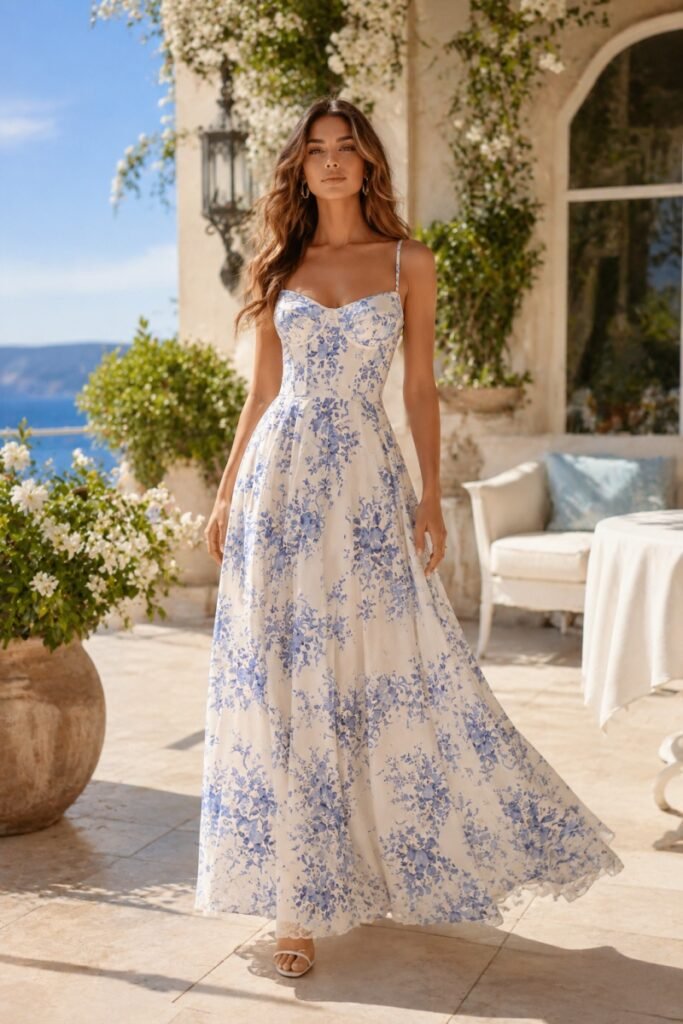
Printed Maxi Dresses
Printed maxi dresses create movement and strong campaign imagery, but long pattern pieces magnify print, cutting and hem-balance problems.
Development priorities include:
- Repeat scale relative to garment length
- Motif direction across panels
- Print continuity at visible seams
- Skirt volume and fabric consumption
- Lining coverage
- Hem leveling after hanging
- Side slit position
- Size grading for length and volume
Suitable materials may include viscose blends, lightweight crepe, chiffon-like woven fabrics or printed polyester qualities selected according to price, drape and care requirements.

Halter Vacation Dresses
- Strap width and angle
- Neckline depth
- Bust point position
- Side coverage
- Underarm shape
- Back opening
- Waist anchoring
- Closure and adjustability

Vacation Matching Sets
Coordinated tops and skirts extend the vacation range while allowing multiple styling combinations. Set development requires strict color, print and fabric consistency because both pieces may be worn together.
Controls include:
- Shared dye lot or print batch
- Waist and top proportion
- Pattern alignment
- Size pairing logic
- Separate and combined fit
- Label consistency
- Packing method
- Reorder matching
Sets can share materials with dresses, improving collection cohesion and giving proven fabrics more commercial use across the program.

Cut-out Dresses
- Position relative to bust and waist
- Opening size
- Edge stabilization
- Seam allowance
- Lining treatment
- Stretch direction
- Closure placement
- Full-size grading logic

Slip Dresses
- Straight or bias-cut direction
- Front neckline balance
- Cowl depth where applicable
- Strap position
- Side seam behavior
- Lining or double-layer requirement
- Hem movement
- Packing recovery

Wrap Dresses
- Front overlap depth
- Neckline security
- Waist tie anchoring
- Internal tie position
- Skirt sweep
- Side opening exposure
- Sleeve balance
- Grading across the full range

Tiered Dresses
- Tier proportion
- Gathering ratio
- Horizontal seam position
- Fabric weight
- Print transition
- Total garment weight
- Hem circumference
- Shrinkage effect

Lightweight Midi Dresses
Midi dresses often carry the commercial center of a vacation range. They need enough visual interest for online sales while remaining wearable across travel, daytime and dining settings.Material and fit decisions focus on:
- Comfortable waist shaping
- Balanced skirt volume
- Bra-compatible or adjustable upper construction
- Controlled transparency
- Travel-friendly finishing
- Stable length grading
- Easy-care expectations
- Repeat-order material availability
Midi styles can also serve as reliable color-extension products after the first launch.

Ruched Dresses
- Ruching placement
- Gathering ratio
- Elastic or drawcord specification
- Left-right symmetry
- Lining interaction
- Final garment length
- Seam strength
- Bulk consistency
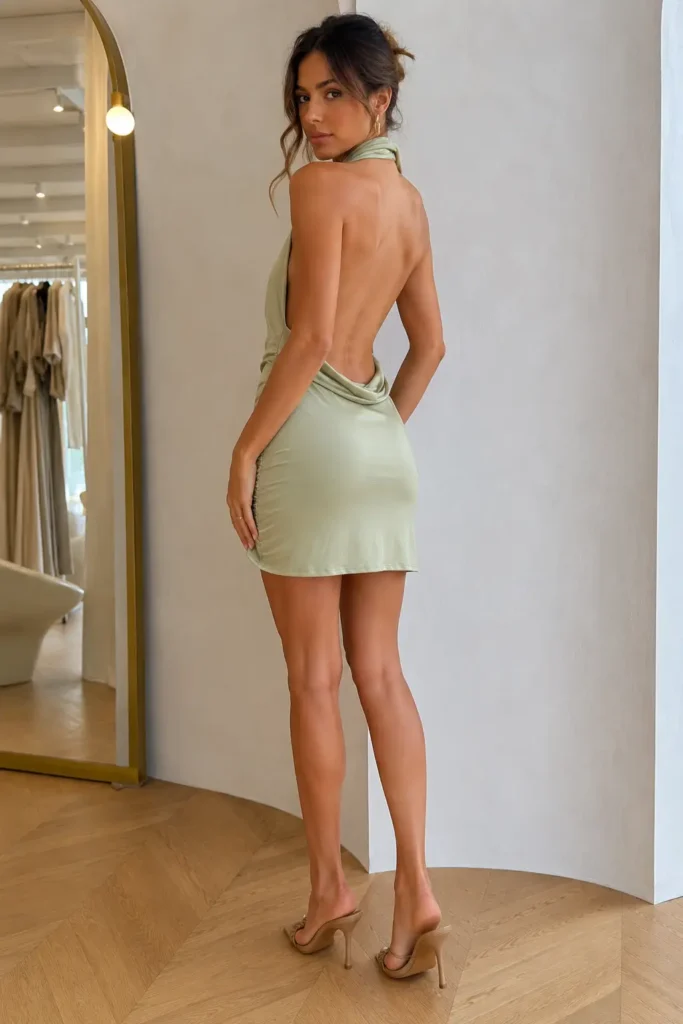
Backless Dresses
Backless silhouettes depend on the front bodice and waist to keep the garment stable. Poor balance can create gaping, twisting or upward movement.
Development may include internal elastic, clean facing, adjustable ties, hidden hooks or carefully positioned closures. The team evaluates how low the back can sit while preserving bust coverage and side stability.
For lightweight satin, viscose or crepe, edge finishing must remain clean without visible stiffness. Lining and facing should support the shape without becoming heavier than the shell or showing through the outer fabric.

Smocked Dresses
Smocking offers stretch and texture but must recover consistently across sizes and production batches. Thread tension, row spacing and fabric response directly affect body fit.
Duolan reviews smocking density, finished panel width, recovery, bust coverage and seam joining. Elastic performance should be assessed before bulk production, especially when the same style covers a wide size range.
The smocked panel must connect cleanly to straps, skirts and linings without creating hard edges or uneven tension.

Beach-to-Dinner Dresses
A beach-to-dinner dress needs relaxed movement without looking like a cover-up. Material, neckline, lining and finishing must support a more polished second use.
Suitable directions may include flowing maxis, refined halters, wrap midis and soft slip silhouettes. Duolan reviews whether transparency, side openings, trims and internal construction remain appropriate beyond the beach environment.
Packing and wrinkle recovery also matter because the garment is often marketed for travel. Material selection must balance drape, comfort, appearance and realistic care requirements.
Build a Vacation Range With Clear Product Roles
Hero Printed Styles
Commercial Maxi Dresses
Commercial maxi dresses combine strong visual movement with broader wearing appeal. They often support higher unit volumes and repeat colors when the fit and material are stable. The pattern should control body length, waist position, skirt sweep, slit height and hem balance across sizes. Material availability is especially important because long skirts consume more fabric and can magnify shade or print differences. A proven maxi block can later support new prints, sleeves, necklines or color directions.
Easy Midi Dresses
Minimal Slip Styles
Coordinated Vacation Sets
Occasion Crossover Dresses
Match Fabrics to Drape, Fit and Vacation Use
Vacation materials must deliver visual movement, comfort, opacity and production stability at the same time. Duolan evaluates fabric against silhouette, climate, target price, care expectations, print requirements and bulk availability before recommending a development direction.
| Material Direction | Best Suited Styles | Main Visual or Wearing Value | Main Production Risk | Development and Bulk Checks |
|---|---|---|---|---|
| Lightweight Chiffon-like Woven | Layered maxis, printed dresses, flowing sleeves | Airy movement, soft volume and strong photography effect | Transparency, snagging, seam puckering and unstable hems | Fabric weight, lining, needle and thread setup, shrinkage, print clarity and hanging balance |
| Viscose or Rayon Blend | Wrap dresses, midis, tiered dresses and relaxed maxis | Soft handfeel, fluid drape and warm-weather comfort | Shrinkage, torque, shade variation and dimensional movement | Wash test, shrinkage allowance, grain control, bulk lot review and pressing method |
| Cotton Blend | Day dresses, sundresses, shirt dresses and smocked styles | Breathability, natural surface and structured casual appearance | Wrinkling, stiffness, shrinkage and print penetration | Composition, weave, softening, wash result, opacity and recovery |
| Linen Blend | Resort midis, relaxed maxis and refined daytime dresses | Natural texture, premium resort character and breathability | Creasing, slub variation, shade difference and seam stress | Blend ratio, fabric weight, color standard, seam strength, shrinkage and packing recovery |
| Soft Crepe | Wrap dresses, dinner dresses and commercial midis | Controlled drape, good coverage and refined surface | Surface variation, snagging and pressing marks | Weight, grain stability, opacity, seam finish and heat sensitivity |
| Lightweight Satin | Slip dresses, halter evening styles and occasion crossover products | Fluid shine, elevated appearance and strong campaign value | Needle marks, seam waviness, scratches, pressure marks and transparency | Surface inspection, lining, needle setup, pressing, handling and protective packing |
| Stretch Mesh | Layered dresses, ruched styles and fitted vacation evening dresses | Sheer layering, body contour and visual depth | Uneven stretch, exposed internal seams and inconsistent coverage | Stretch direction, recovery, lining tone, seam elasticity, transparency and grading |
| Printed Polyester Woven | Printed maxis, commercial midis and high-volume seasonal styles | Stable color, broad print options and scalable availability | Static, low-quality shine, heat sensitivity and handfeel mismatch | Yarn quality, finish, print fastness, drape, opacity, heat setting and bulk shade |
Control Print, Color and Garment Placement
Artwork and Repeat Review
- Original artwork in suitable resolution
- Repeat size or placement dimensions
- Pantone or physical color references
- Target fabric composition
- Garment sketch or tech pack
- Planned colorways
- Sample size
- Full size range
- Expected order quantity
- Target launch date
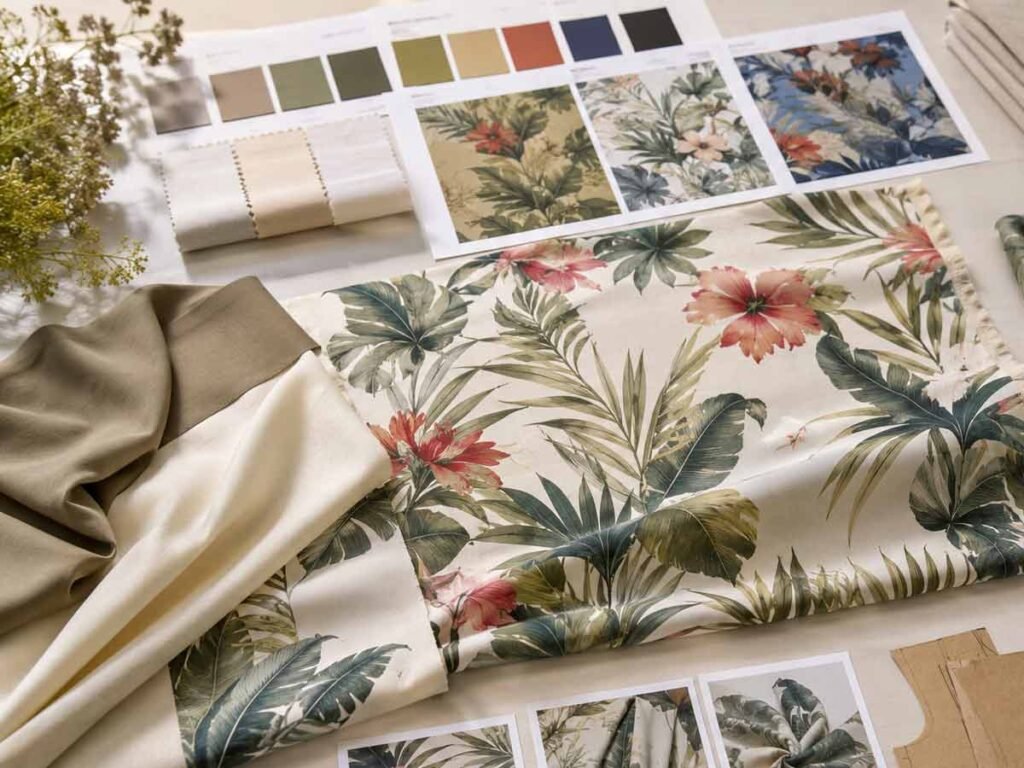
Strike-off and Color Approval
- Color accuracy
- Saturation
- Outline sharpness
- White-ground cleanliness
- Bleeding
- Repeat join
- Surface penetration
- Handfeel after printing
- Washing or rubbing performance
- Relationship to lining and trims

Placement Across Garment Sizes
- Center front and center back
- Bust area
- Waist seam
- Neckline
- Sleeve head
- Front slit
- Skirt panels
- Tier joins
- Side seams
- Large cut-out openings

Engineer Fit Behind Effortless Vacation Silhouettes
Halter Neck Balance
Halter straps carry both visual and functional responsibility. Incorrect angle or length may pull against the neck, reduce bust coverage or distort the front bodice. Duolan reviews strap width, neckline depth, bust position, side coverage and back anchoring together. Pattern corrections are made at the bodice rather than treating every issue as a strap-length problem. For adjustable halters, hardware or tie length must suit the fabric weight and brand direction.
Bust Coverage Control
Vacation dresses often use low necklines, open sides or soft cups. Coverage must be evaluated in relation to the target market, sample size and complete size range. Review points include neckline width, cup position, underarm shape, lining coverage and movement during wear. For larger sizes, proportion changes may be needed to keep the original visual character without reducing security.
Backless Stability
Waist Position
Lining Coverage
Lining must cover critical areas without restricting drape or appearing below the shell. Short linings under flowing dresses require careful length and hem treatment. For open backs, cut-outs and side slits, lining shapes may differ from the shell pattern. Color should support the outer material and avoid an unintended contrast under sunlight. Bulk checking includes lining twist, attachment, hem level, seam show-through and comfort against the body.
Slit Height Control
Hem Balance
Maxi and bias-influenced dresses may relax after sewing. Cutting accuracy alone does not guarantee a level finished hem.
Duolan considers fabric grain, panel shape, skirt weight, seam construction and hanging time. Selected styles may need resting before final leveling.
Final inspection reviews front, side and back length, especially around high-low hems, godets, tiers and curved panels.
Full Size Grading
Review Development Feasibility Before Sampling
Information Your Team Can Submit
A complete tech pack remains the strongest starting point because it defines construction, measurements, materials, trims, colorways, labels and packaging.
Clear documentation reduces assumptions before fabric is ordered or patterns are cut.
Useful files may include:
- Flat sketches
- Reference images
- Original sample photographs
- Measurement specification
- Size chart
- Grading rules
- BOM
- Fabric composition or swatches
- Print artwork
- Color standards
- Construction details
- Fit comments
- Label files
- Packing instructions
- Target quantity
- Launch timeline
Projects without complete technical files can still enter an initial review. Duolan first identifies which decisions are already clear and which must be developed. A reference image may communicate appearance, but it does not define fabric weight, internal construction, measurement tolerance or bulk workmanship.
What Duolan Reviews
The initial review connects the design intention with manufacturing reality.
The team evaluates:
- Fabric suitability
- Available material routes
- Print method
- Pattern complexity
- Fit-sensitive areas
- Lining requirement
- Trim function
- Construction feasibility
- Special-process requirements
- Sample objective
- Quantity structure
- Production path
- Launch timing
Quotation is prepared around actual product information rather than a generic dress price. Main cost drivers may include material consumption, lining, print method, complex pattern pieces, gathering, handmade decoration, special trims, order allocation, testing, packaging and delivery requirements.
A feasibility review may also identify alternatives. A different fabric blend may preserve drape while improving opacity. A revised seam position may improve print use or construction stability. A shared material across several styles may simplify purchasing and repeat production.
The objective is to establish a sound sample route before time and material are committed.
Turn Vacation Concepts Into Production-ready Samples

Project Brief Review

Fabric and Trim Direction

Pattern Development

First Sample

Fit and Visual Revision

PP and Bulk Readiness
Plan Around the Vacation Launch Window
Confirm Launch Timing
Planning begins with the required launch, warehouse or shipment date. Campaign photography, wholesale appointments and internal range reviews may create earlier deadlines than the public launch itself.
The team records which styles are required first, which can follow later and whether the range will launch in one drop or several coordinated drops.
Develop Fabric and Print
Custom fabrics, exclusive colors and printed materials require approval time before garment sampling and bulk booking.
Artwork review, strike-offs, color evaluation, fabric testing and sample-garment appearance should be included in the schedule. A delay at material stage can affect every style sharing the same fabric.
Alternative material routes may be considered where timing becomes critical.
Complete First Samples
A first sample should be scheduled early enough to allow meaningful internal review rather than forcing immediate approval.
Photo or salesman samples may follow a different priority route when needed for campaigns or selling activity.
Manage Revision Rounds
Duolan provides a clearer revision path by defining which points must be approved before the next sample and which can be finalized at PP stage.
Complex halter, backless, cut-out or satin styles may require additional review compared with relaxed woven dresses.
Prepare Bulk Production
Production time is assessed according to quantity, style count, complexity, material status, special processes and required inspection arrangements. Multi-style programs may enter production in controlled groups instead of waiting for every style to reach the same stage.
Inspect, Pack and Ship
Final scheduling includes inspection, garment finishing, labels, folding or hanging, carton preparation, documents and transport.
Long dresses, satin surfaces and lightweight printed fabrics may need specific packing methods to reduce pressure marks, snagging or excessive creasing.
Sea, air, express or split shipment decisions should be confirmed in relation to the actual launch requirement and inventory plan.
Workmanship for Lightweight and Refined Silhouettes
Fine Seam and Tension Control
- Smooth side seams
- Controlled neckline edges
- Clean armholes
- Stable waist joins
- Balanced tier seams
- Secure strap attachments
- Smooth zipper areas
- Minimum fabric distortion
Lining and Clean Edge Finishing
Lining affects opacity, comfort, drape and internal appearance. A lining that is too heavy can restrict movement; a lining that is too light may cling or fail to provide coverage. Duolan evaluates lining construction according to the neckline, back opening, side slit, cut-outs and shell transparency. Full lining, partial lining, double-layer sections and clean facing may be combined within one garment. Important controls include:
- Lining color compatibility
- Smooth attachment
- Sufficient movement allowance
- No visible pulling at openings
- Correct hem difference
- Clean internal seams
- Comfortable labels
- Stable cut-out edges
Halter and backless styles may require shaped facings or partial internal support rather than a conventional full lining. Slip dresses may use self-fabric or lightweight lining depending on shine, opacity and drape. Internal finishing should remain neat enough for premium brand presentation. Raw edges, bulky joins and exposed reinforcement can reduce the perceived quality even when they are not visible during normal wear.
Gathering, Draping and Volume
- Gathering ratio
- Start and end positions
- Symmetry
- Finished section length
- Elastic specification
- Drawcord length
- Stitch security
- Fullness distribution
Hem, Slit and Closure Execution
Maxi hems, curved hems and bias-influenced hems must be balanced after the garment has settled. Uneven hems become especially visible in movement and campaign photography. Hem method is selected according to fabric weight and desired finish. Narrow rolled hems may suit chiffon-like materials, while clean turn-ups or blind finishing may suit crepe, satin or linen blends. Slit construction requires:
- Accurate height
- Secure top reinforcement
- Smooth lining opening
- Clean seam allowance
- Balanced left-right placement
- No pulling during movement
Invisible zippers should lie flat without waves, color mismatch or trapped lining. Hooks, ties and adjustable elements must be secure and easy to use. Pressing is controlled according to surface sensitivity. Satin and some synthetic fabrics require protection from heat, shine and pressure marks. Finished garments are handled and packed to preserve the approved surface and silhouette.
Lock the Approved Standard Before Bulk Production

Bulk Readiness Review
Before production begins, the project is reviewed around the actual approval status. A sample may be visually approved but still require final measurement or material confirmation. Another sample may be fit approved while packaging or labels remain open.
The review confirms:
- Sample approval status
- Shell fabric
- Lining
- Trims
- Print or color
- Size chart
- Grading
- Critical measurements
- Construction points
- Workmanship standard
- Labels
- Packing method
- Inspection requirement
- Delivery plan
The brand order is also classified by purpose: launch order, repeat order, scale-up order or an additional drop. Different purposes create different risks. A launch order may require closer first-piece review. A repeat order needs comparison with retained standards. A scale-up order requires capacity and material-lot planning.

Production Start Confirmation
After readiness review, the order is divided by style, color, size and quantity. Each style is classified by complexity, material route and critical construction points.
The production path may include:
- Core factory allocation
- Flexible production line
- Separate trial run
- Print or embroidery coordination
- Special workmanship line
- Multiple-line allocation
- First-piece confirmation
- Additional inline checkpoints
A production timeline is then built around material arrival, cutting, sewing, special process, finishing, inspection and packing.
The purpose is not to create excessive paperwork. The purpose is to prevent development information from disappearing when the order moves from sample room to production floor.
Approved samples, BOM information, measurement files, workmanship notes and packing requirements remain connected to the order. Production teams receive a clear basis, while brand teams receive more organized progress information.
Manufacturing Capacity for Multi-style Vacation Programs
Nearly 30 Years
16 Owned Factories
20+ Partner Factories
12,000+ Workers
300 Sewing Lines
50+ Flexible Lines
Coordinate Multiple Styles Without Losing Control
Complexity Review
Material Readiness
Production Matching
First-piece Confirmation
Inline Updates
Reorder Planning
Quality Control From Fabric to Final Packing

Fabric Inspection
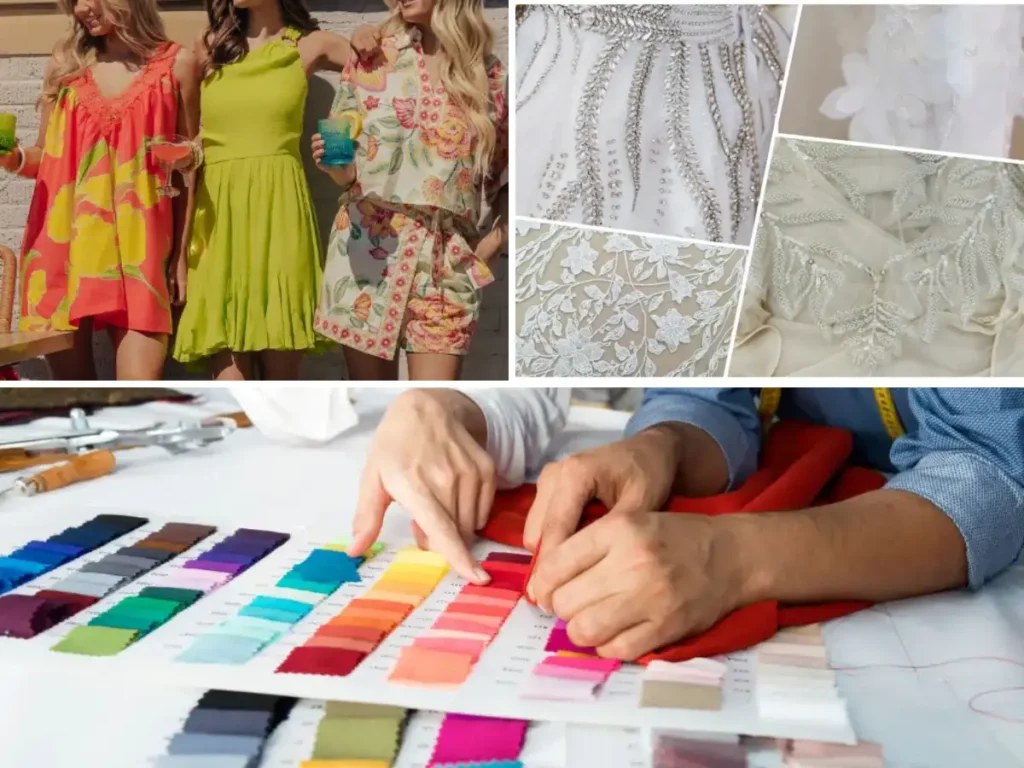
Color and Print Check

Pre-production Review

First-piece Inspection

Inline Sewing Control

Measurement Inspection

Final Garment Inspection

Packing and Needle Control
Packing inspection confirms labels, hangtags, barcodes, folding, protective materials, polybags, size-color assortment and carton marks. Needle control and metal detection requirements are applied according to product and brand standards. Final packing should preserve the surface, drape and presentation of long, lightweight or satin garments during transport.
Duolan’s manufacturing system has completed SMETA and SMETA 2-Pillar auditing. Cooperation can also be organized around applicable BSCI, ISO 9001, AATCC, ASTM, OEKO-TEX®, EN, China GB, GOTS or brand-specific requirements according to the actual product, factory and market.
Complete Brand Presentation Through Export Delivery
Main Brand Labels
Size and Care Labels
Hangtags and Tickets
Branded Packaging
Folding and Wrinkle Control
Export Carton Planning
Vacation Dress Programs Across Global Markets

United States Summer Vacation Drop
- Reviewing repeat scale against individual pattern pieces
- Producing physical print trials on the selected shell fabrics
- Reducing motif scale for two fitted silhouettes
- Adjusting print direction at center-front panels
- Replacing a heavy full lining with controlled partial coverage on selected styles
- Correcting halter strap angle and bust coverage
- Preparing a shared color and trim standard
- Moving approved commercial styles into production before the final complex styles

European Resort Collection
A European resortwear company developed 14 styles with a total order quantity of 28,600 garments. The range covered viscose-blend maxis, cotton-blend day dresses, relaxed linen-blend midis and two refined evening slip dresses. Sizes followed a European 32–46 range. The main risks involved shrinkage, color consistency and different drape requirements across the collection. Several styles shared the same print direction, while solid-color products needed to coordinate with printed pieces for campaign merchandising. Duolan organized material review before final pattern approval. The development route included:
- Fabric weight and handfeel comparison
- Shrinkage testing for viscose and cotton blends
- Linen-blend color review
- Lining-opacity comparison in pale colors
- Print strike-off approval
- Pattern corrections after wash results
- Full-size grading review for maxi length and bust coverage
- Packing trials for wrinkle-sensitive products
Two viscose qualities were initially considered. The softer option produced stronger movement but exceeded the shrinkage level suitable for the original pattern. The approved route used a more stable blend, followed by pattern adjustment to restore the desired skirt fall. The pale cotton dresses received revised lining coverage after daylight review. The slip styles followed separate sewing and pressing controls because their smooth surfaces made seam and handling marks more visible. Bulk production was divided by material family, allowing shade, cutting and sewing controls to remain consistent. The final program maintained a coordinated visual direction while using different manufacturing routes for natural-texture, printed and evening styles.

Australian Beach-to-Dinner Program
- Defining critical POMs for each silhouette group
- Separating halter, backless, cut-out and relaxed styles
- Reviewing sample size and full-size grading rules
- Adjusting cup and side coverage on larger sizes
- Adding concealed stabilization to selected backless styles
- Revising slit grading for sizes AU 14–18
- Matching lining color more closely to pale shell fabrics
- Creating a common workmanship standard for straps, ties and clean edges
- Scheduling production by four delivery windows
How to Evaluate a Vacation Dress Manufacturer
A capable manufacturing partner should prove category understanding, development control, material judgment, scalable production and organized quality management. Product photographs alone cannot show whether a supplier can carry a 10–30-style range into reliable bulk production.
| Evaluation Area | Weak Evidence | Strong Manufacturing Evidence | Duolan Capability Direction |
|---|---|---|---|
| Vacation Dress Experience | General clothing photographs without development detail | Clear understanding of maxi, halter, backless, wrap, slip, printed and resort occasion styles | Dress-focused development covering vacation, party, occasion, fitted and fashion-led silhouettes |
| Collection Development | Product list with no relationship between styles | Ability to organize hero, commercial, easy-fit, repeat and occasion crossover products | Multi-style development supported by fabric, print, fit and production planning |
| Fabric Knowledge | Generic material names | Explanation of weight, drape, opacity, stretch, shrinkage, care and bulk availability | Fabric review linked to silhouette, price position, launch timing and production stability |
| Print Capability | Statement saying custom print is available | Artwork review, repeat planning, strike-off, garment review and bulk color control | Print resources and development support connected to pattern and finished-garment effect |
| Pattern and Fit | Sample made only from measurements | Pattern correction based on structure, material, body balance and full-size grading | Independent pattern, fit adjustment and grading capability for fashion dresses |
| Sample Management | Fast sample promise without stage definition | Clear first sample, fit, revision, sales sample and PP purpose | Structured brief review, staged updates, sample review notes and revision summaries |
| Bulk Transition | Production starts immediately after visual approval | Material locking, PP basis, first-piece review and documented production standard | Bulk Readiness Review and Production Start Confirmation before scale-up |
| Production Scale | One capacity figure without allocation logic | Production routing by style, quantity, complexity and delivery window | 16 owned factories, 20+ partners, 300 sewing lines and 50+ flexible lines |
| Quality Control | General high-quality claim | Fabric, pre-production, first-piece, inline, measurement, final and packing controls | Risk-based quality checkpoints linked to approved samples and brand standards |
| Compliance | Unverified certification logos | Current factory-specific audit records and willingness to follow market requirements | SMETA and SMETA 2-Pillar audit foundation with support for applicable brand standards |
| Communication | Sales replies without technical follow-up | Clear responsibility, structured comments, timelines and risk escalation | English-language project coordination across development, production, QC and shipment |
| Reorder Stability | Every order developed again from memory | Retained standards, previous quality review and controlled material or color extensions | Sample, BOM, measurement, workmanship and packing references for repeat production |
Frequently Asked Questions About Custom Vacation Dresses
Duolan develops mini, midi and maxi vacation dresses across printed, relaxed, fitted and occasion-led directions. Main options include halter dresses, backless dresses, wrap dresses, slip dresses, cut-out dresses, tiered dresses, smocked dresses, ruched dresses, lightweight day dresses and beach-to-dinner styles.
Coordinated tops, skirts and matching sets can also be developed where they support the dress collection. Every product direction is reviewed against material behavior, fit, construction, target market, quantity and production feasibility.
Yes. Duolan can support coordinated resort and vacation programs rather than only one garment. A collection may include 10–30 styles distributed across hero products, commercial dresses, easier-fit options, occasion crossover styles and coordinated sets.
The process can cover collection review, fabric direction, print development, pattern work, samples, size grading, PP preparation, multi-style bulk production, quality control, packing and repeat-order planning.
Both routes are possible. A complete tech pack provides the clearest basis for quotation, measurements, construction and production standards. Useful files include flat sketches, BOM, size chart, grading, fabric details, artwork, trims, labels and packing instructions.
A reference image, original sample, sketch or collection brief can enter an initial feasibility review. Missing information must then be developed and confirmed before production. Reference images alone are not a complete manufacturing standard.
Common directions include viscose or rayon blends, lightweight polyester woven fabrics, chiffon-like materials, cotton blends, linen blends, crepe, lightweight satin and stretch mesh.
The best choice depends on silhouette, drape, opacity, climate, print, price position, care requirements, bulk quantity and launch timing. Duolan reviews fabric weight, composition, handfeel, stretch, shrinkage, width, transparency, lining and bulk availability before recommending a route.
Yes. Print support can include artwork review, repeat-size planning, strike-offs, color matching, all-over prints and selected placement-print development.
The team considers how artwork appears on pattern pieces, gathers, seams and different sizes. Bulk controls can cover print clarity, color, direction, obvious placement errors and fabric-lot consistency.
Solid colors can be reviewed through approved physical references, lab dips or other agreed standards according to the fabric and project.
Halter and backless styles are reviewed around strap angle, neck pressure, bust coverage, underarm shape, back opening, waist anchoring and movement.
Pattern correction is used where proportion or structure causes the problem. Depending on the design, internal elastic, facing, adjusters, hooks, cups or concealed stabilization may be considered.
Full-size grading also receives attention because open structures cannot be enlarged mechanically without affecting coverage and balance.
Sample development can include project review, material direction, trim selection, pattern work, first sample, fit comments, revision, sales or photo sample and PP preparation according to program needs.
The actual path depends on style complexity and sample purpose. Duolan may provide staged progress updates for fit-sensitive, material-sensitive or complex products.
Completed samples can be supported by photos, measurements, development notes and revision points to help internal review.
Before bulk manufacturing, Duolan runs a production-readiness review covering sample status, fabric, lining, trims, color, print, measurements, grading, workmanship, labels, packaging and inspection requirements.
The order is then divided by style, color, size, quantity and complexity. First-piece and inline controls are applied according to risk.
Approved samples, BOM information, measurement files and workmanship standards remain connected to the production route.
Yes. The wider manufacturing system includes 16 owned factories, more than 20 long-term production partners, around 300 sewing lines and over 50 flexible lines.
Multi-style orders are organized by material readiness, complexity, quantity and delivery window. Different styles may enter production in controlled groups rather than waiting for the entire range to reach one stage.
Programs containing 10–30 styles and 20,000–80,000 total garments can be evaluated according to actual materials, timing and factory allocation.
Please provide as much of the following as available:
- Brand or company information
- Target market
- Product sketches or reference images
- Tech packs
- Original sample photos
- Fabric direction
- Print artwork
- Size chart
- Expected style count
- Quantity by style or total range
- Target price position
- Required launch or shipment date
- Label and packaging needs
- Testing or audit requirements
Duolan will review development feasibility, key risks, material direction, sampling route, production planning and the information required for quotation.

Start Your Vacation Dress Development Project
Send your vacation, resort or summer collection information to Duolan for an initial development and production review. Clear project details allow our team to evaluate materials, prints, fit-sensitive structures, sample stages, production capacity and delivery requirements more accurately.
Your submission may include:
- Tech packs, sketches or reference images
- Original garment photos or physical samples
- Collection mood boards
- Print artwork and Pantone references
- Fabric and trim direction
- Size chart and grading requirements
- Planned number of styles
- Quantity by style, color and size
- Target market and sales channel
- Required sample, campaign, shipment or launch dates
- Label, packaging and compliance files
Duolan will review the collection direction, product complexity, material suitability, fit risks, sampling sequence, bulk readiness and suitable manufacturing route. Projects can then move into material sourcing, quotation, sample planning or production evaluation according to their current stage.


