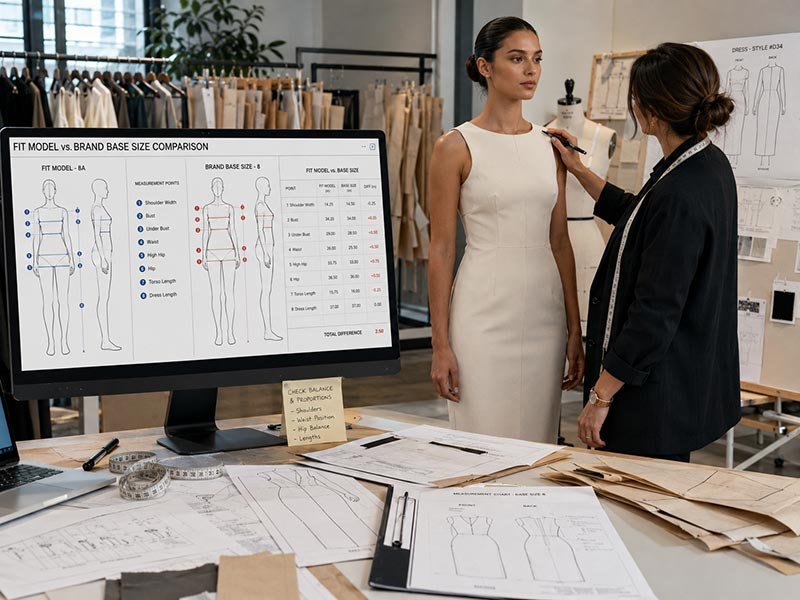
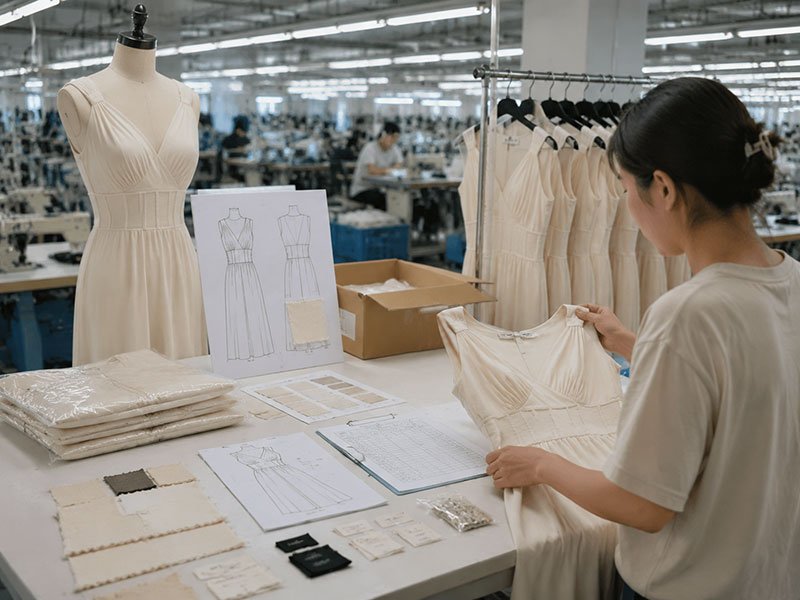
...

Custom Social Event Dress Manufacturer

Dress-focused development and manufacturing for fashion brands building commercially structured collections for parties, celebrations, formal occasions and seasonal social events.

  • Party, cocktail, prom, graduation, homecoming, wedding guest, formal and going-out dress development
  • 10–30 styles commonly managed across one collection program
  • 20,000–80,000 pieces across a typical established-brand order
  • Satin, mesh, sequin, velvet, lace, chiffon, jersey and structured corsetry
  • Reference bulk cycles of 15–20, 20–30 or 30–45 days according to construction complexity

Duolan supports design review, fabric and trim coordination, pattern development, sample refinement, production-readiness control, bulk manufacturing, quality inspection and delivery planning. Our role is to turn a defined brand direction into dresses that can be reviewed, approved, manufactured and reordered with controlled standards.

Social Event Dress Manufacturing for Established Fashion Teams

A social-event collection carries stronger expectations than a basic dress range. Every style must deliver visual impact, secure fit, appropriate coverage, movement comfort and repeatable production quality across sizes, colors and production batches.

Fashion Dress Brands

Duolan works with dress-focused labels developing regular partywear, occasionwear, going-out, wedding guest and event-driven collections. Support can begin with a collection brief, tech pack, reference image, original sample or defined fabric direction.

Our team reviews:

  • Brand positioning and intended retail level
  • Core wearing occasions and seasonal calendar
  • Silhouette balance across the collection
  • Fabric mood, color direction and trim language
  • Sample purpose and bulk production plan

The goal is not to create disconnected styles. Development decisions are made around a consistent visual identity, coherent price architecture and a clear path from first sample to commercial production.

Product Development Teams

Product teams need more than sewing execution. They need design intent translated into measurable, reviewable and production-ready standards.

Duolan supports:

  • Feasibility review before sampling
  • Pattern and measurement interpretation
  • Fabric behavior assessment
  • Structure, lining and closure planning
  • Fit comment conversion
  • Revision records and open-point tracking
  • PP and bulk-readiness preparation

When a design contains fitted shaping, exposed backs, corsetry, high slits, layered mesh or decoration, development must identify where visual goals and production requirements may conflict. Early review reduces repeated sampling and unclear bulk instructions.

Buying and Sourcing Teams

Buying and sourcing teams often manage many styles, internal deadlines and several approval stakeholders. Clear documentation and disciplined production handover become as important as workmanship.
Duolan can coordinate:

  • Multi-style project review
  • Supplier capability information
  • Sample tracking and staged updates
  • Material and trim confirmations
  • Production timeline planning
  • Quality checkpoints
  • Label, packing and shipment instructions
  • Third-party inspection coordination

Each confirmed point should move into a usable file or production standard. Clear records reduce communication gaps between the brand, sample room, material suppliers, production lines and quality teams.

What Strong Social Event Dress Programs Require

A successful event-dress program depends on several linked decisions. A visually attractive sample alone is not enough when the collection must pass fit review, support campaign photography, enter bulk production and remain consistent during replenishment.

Clear Occasion Direction

A cocktail dress, wedding guest dress and homecoming dress may share a similar length, yet their coverage, color, structure and styling expectations differ. Development begins by defining where the dress will be worn, how formal the setting is and what emotional response the brand expects from the final look.

Commercial Collection Balance

A strong range needs visual pieces, commercial pieces and repeatable silhouettes. Too many complex styles can create cost and delivery pressure, while too many safe styles may weaken campaign impact. Duolan helps review the relationship between hero designs, core sales styles and easier extensions.

Fabric-Silhouette Matching

Satin drape, mesh transparency, jersey recovery, velvet pile and sequin weight all change the final silhouette. Fabric selection must be evaluated against structure, fit, lining, seam construction, pressing behavior, wear comfort and future bulk availability.

Controlled Fit Standards

Fitted event dresses require more than a size chart. Bust balance, waist position, hip shaping, back depth, strap length, slit height and skirt fall must work together. A measurement can be technically correct while the overall silhouette still looks unbalanced.

Production-Ready Sampling

A first sample should help the brand make decisions. Fit, fabric, proportion, structure and workmanship must be visible enough to assess. Later samples should close defined issues and move toward PP and production standards rather than repeat earlier uncertainty.

Predictable Launch Timing

Prom, graduation, wedding guest, holiday and party collections have fixed selling windows. Development delays can affect campaign photography, buying meetings, warehouse arrival and full-price selling time. Materials, samples, approvals, production, inspection and shipping need one connected calendar.

Development Risks We Control Before Bulk Production

Social-event dresses combine visual design, body-sensitive fit, delicate materials and time-sensitive selling windows. Duolan reviews risks before they become repeated sample costs, production inconsistency or late delivery.

Project RiskCommon ResultDuolan Control Point
Design and sample mismatchThe sample follows the image but misses the intended proportion, mood or wearing effectDesign brief review, silhouette analysis and priority confirmation before pattern work
Fabric and silhouette mismatchA dress hangs too heavily, looks transparent, loses support or appears cheaper than intendedFabric behavior review covering drape, stretch, recovery, opacity, weight, surface and pressing response
Fit comments not translatedThe next sample changes measurements but repeats the original wearing problemComment classification, pattern action list, measurement updates and revision summary
Decorative detail instabilitySequins fall, beads irritate the skin, rhinestones shift or embroidery distorts the base fabricProcess trial, placement confirmation, attachment review, lining protection and pilot verification
Sample-to-bulk inconsistencyBulk color, fit, trims, workmanship or packing differs from the approved versionPP basis, BOM lock, measurement standard, first-piece confirmation, inline QC and final packing check
Launch calendar compressionSampling, approval, production and logistics overlap without enough recovery timeBackward planning from warehouse and launch dates, with material, approval, QC and shipping buffers

Dresses Developed for Major Social Event Categories
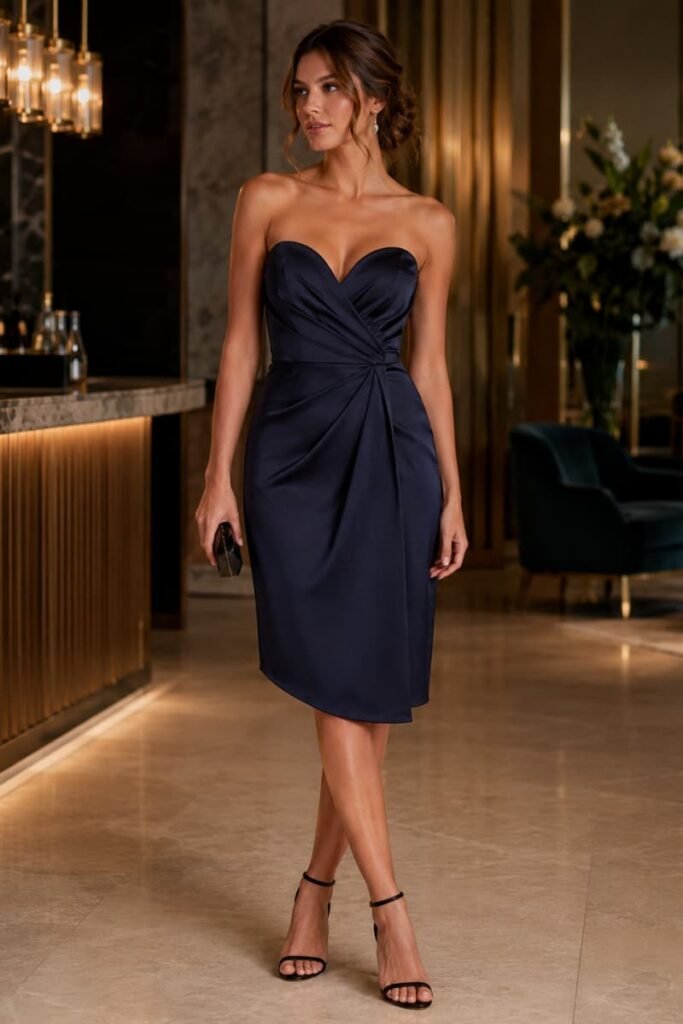
Social-event dressing covers several commercial occasions rather than one fixed product type. Duolan develops each group around its expected formality, body coverage, movement, photographic performance, material behavior and selling season.

Cocktail Dresses

Cocktail collections often use mini or midi lengths with stronger neckline, waist and surface-detail emphasis. Development must balance visual impact with sitting comfort, secure bust coverage and clean finishing. Satin, crepe, velvet, lace, mesh and embellished materials are common, but every material requires a different seam and lining solution.
3.Party Dresses

Party Dresses

Party dresses may include bodycon silhouettes, corsetry, sequins, cut-outs, ruching, metallic surfaces or asymmetric construction. Movement, closure strength, decoration security and skin comfort require early review. The dress needs to look strong under photography and remain wearable through standing, dancing and sitting.

Wedding Guest Dresses

Wedding guest ranges normally require polished color, elegant coverage and a refined silhouette without moving into bridal styling. Midi and maxi lengths, draped satin, chiffon, lace, floral print and structured bodices are common. Color selection, lining, slit height and travel recovery often influence commercial acceptance.
Party Occasion Dresses​

Prom Dresses

Prom programs may contain fitted gowns, corset styles, layered mesh, high slits, sequins, rhinestones and statement backs. Production planning must consider support, weight distribution, hem control, size grading and decorative consistency. Selling windows also require earlier material and sample preparation.

Homecoming Dresses

Homecoming collections frequently use shorter lengths, fitted shapes, shine, sparkle and youthful construction details. Secure necklines, comfortable arm movement, stable hems and controlled stretch are important because the dress must perform during active wear rather than only look attractive on a hanger.

Graduation Dresses

Graduation dresses often rely on white, ivory, pastel or clean solid colors. Opacity, undergarment coverage, neckline security and gown compatibility matter. The dress must photograph well before and after the ceremony while remaining comfortable during extended sitting and outdoor movement.
Formal Event Dresses​

Formal Event Dresses

Formal event products require controlled length, polished finishing and a more refined relationship between fabric and silhouette. Long satin, velvet, crepe, chiffon and structured woven dresses need careful hem leveling, lining, pressing and packing to preserve their final appearance.

Going-Out Dresses

Going-out products combine fast visual recognition with accessible wearability. Bodycon, halter, backless, ruched, mini, cut-out and mesh-panel designs are common. Fit must remain secure around the bust, waist and back while allowing the intended stretch and body movement.

Custom Dress Styles Built Around Brand Direction

Duolan develops social-event dresses from defined brand aesthetics rather than a generic product catalogue. Each silhouette is reviewed for fabric behavior, proportion, support, comfort, construction difficulty and future bulk repeatability.

Bodycon Dresses

A strong bodycon dress follows the body without creating uncontrolled drag lines, transparency or poor recovery. Fabric stretch percentage, return strength, lining, seam direction and negative ease must be assessed together. Bust, waist and hip shaping are checked as a complete contour rather than three isolated measurements.

Corset Dresses

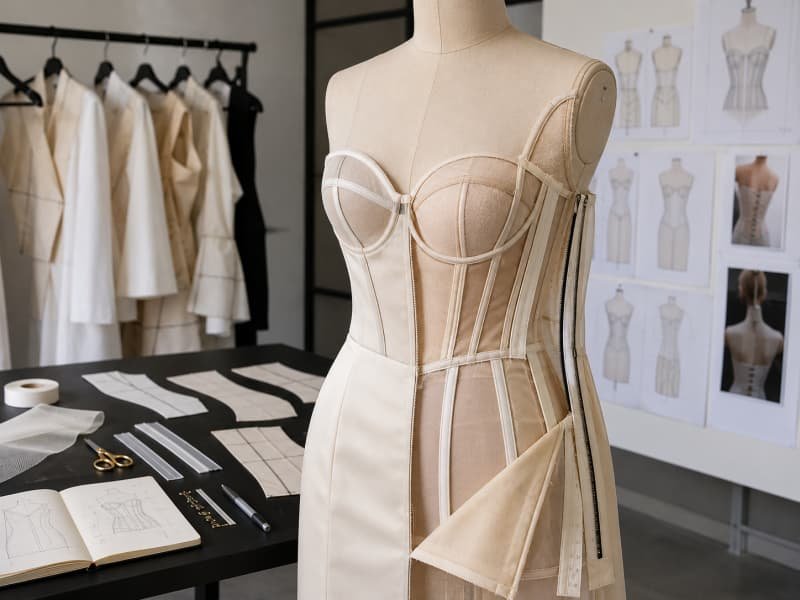
Corset dresses require planned cup position, boning length, waist shaping, closure strength and lining support. Adding boning alone does not create a stable corset. Structure must follow the intended neckline and body proportion while remaining suitable for consistent production across sizes.

Bustier Dresses

Bustier construction depends on accurate bust volume, under-bust placement, cup coverage and connection between the bodice and skirt. Internal support should remain visually clean. Seam placement, padding, power mesh, elastic and closure methods are selected according to the desired level of lift and shaping.

Halter Dresses

Halter styles transfer more garment weight to the neck and upper body. Strap width, neckline depth, back opening, fabric weight and bust support determine comfort. A visually clean halter must remain stable during movement without pulling the neckline or creating excess pressure.

Backless Dresses

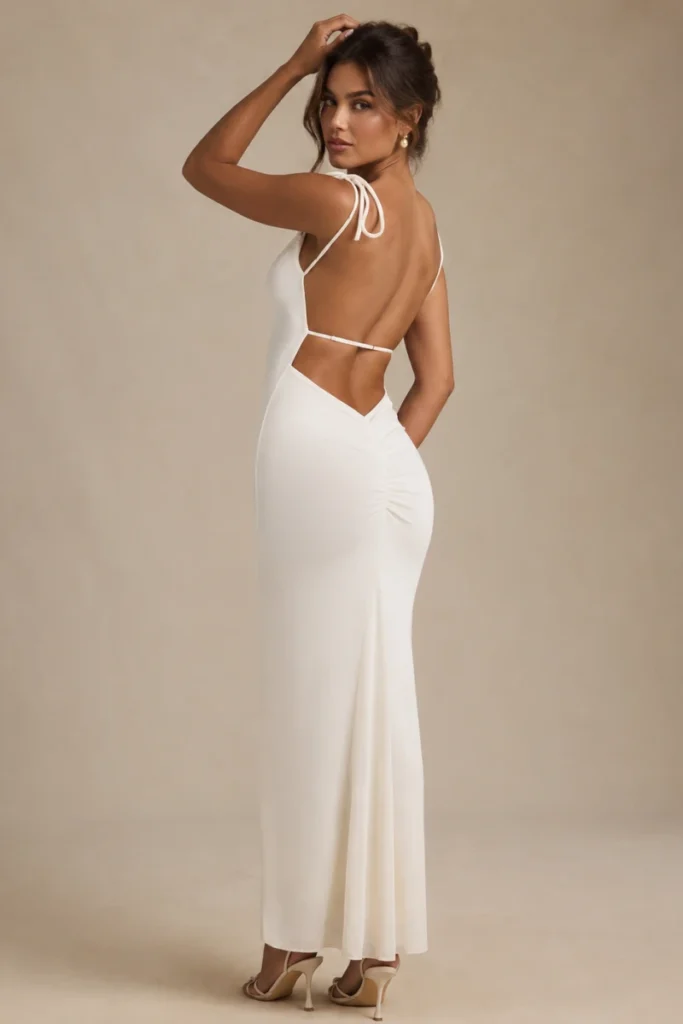
Backless construction needs hidden stability. Neckline shape, side seam position, waist anchoring, internal elastic, ties, adhesive compatibility and closure placement must work together. Development checks how the dress stays in position when the wearer stands, walks and sits.

Cut-Out Dresses

Cut-outs change both appearance and garment balance. Position, size, edge construction, stretch direction and skin exposure must be assessed on the body. Reinforcement may be needed to prevent distortion, while seam allowances and internal finishing must remain hidden from the intended opening.

Ruched Dresses

Ruching can improve fit flexibility and visual texture, yet uneven gathering creates bulk or imbalance. Development controls gathering ratio, direction, anchor points, elastic tension and symmetry. The base pattern must allow the ruching to sit smoothly rather than compensate for incorrect shaping.

Draped Dresses

Draped designs depend on grain direction, fabric weight, fold control and body balance. Small pattern changes can shift the drape dramatically. The sample process checks fold placement, neckline stability, waist position and how the drape behaves during movement and photography.

Slip Dresses

A slip dress appears simple but exposes cutting and sewing quality. Bias behavior, neckline shape, strap length, side seam twist, bust coverage, hem leveling and pressing must be controlled. Satin and lightweight woven fabrics may require hanging recovery before the final hem is set.
5 Asymmetric Dresses

Asymmetric Dresses

One-shoulder necklines, asymmetric hems and diagonal drapes require careful balance. The garment must look intentionally uneven without twisting around the body. Pattern grain, support placement, seam tension and hem control are reviewed during fitting and pilot production.

High-Slit Dresses

Slit height influences styling, movement and wear security. Reinforcement, lining connection, seam allowance and stress distribution are planned according to fabric and dress length. The approved sample should define both the visual position and the measurement reference used in bulk.

A-Line Event Dresses

A-line dresses remain commercially important because they suit several event categories and size ranges. The quality depends on bust fit, waist placement, skirt volume, fabric fall and hem balance. Structured and fluid versions require different pattern and pressing approaches.

Building a Commercial Social Event Dress Collection

A collection should offer visual identity, sellable variety and controlled production complexity. Duolan reviews the role of each design before sampling, helping the brand connect creative direction with product architecture, launch timing and repeat-order potential.

Organize Styles by Commercial Role

A balanced collection normally contains several product roles:
  • Hero styles create campaign impact through stronger silhouette, surface detail or color.
  • Core commercial styles translate the same identity into easier-to-wear products.
  • Repeatable silhouettes provide a base for new colors, lengths or fabric updates.
  • Entry products support broader conversion without weakening the collection language.
  • Event-specific pieces target prom, graduation, wedding guest, holiday or party windows.
For a program containing 10–30 styles, not every design should carry the same development risk. Complex corset, sequin or layered-mesh styles can be started earlier, while proven silhouettes can move through a more direct route.

Balance Silhouette and Length

Mini, midi and maxi products should create intentional variety. A collection with too many similar fitted minis may compete with itself, while a range with unrelated silhouettes may lack brand coherence.

Duolan can review:

  • Fitted versus fluid proportion
  • Structured versus soft bodices
  • Open-back versus covered-back options
  • Strapless, halter, one-shoulder and sleeved balance
  • Mini, midi and maxi distribution
  • Day-to-evening progression
  • Occasion coverage across the selling calendar

Silhouette planning also influences fabric allocation, pattern workload and production-line matching.

Plan Materials Across the Range

A collection built entirely around one difficult material can create unnecessary supply and production pressure.

Material architecture may include:

  • Signature satin or velvet for premium visual styles
  • Stretch jersey for fitted commercial designs
  • Mesh and lace for layering or controlled transparency
  • Sequin and embellished materials for limited statement pieces
  • Chiffon or lightweight woven options for softer event categories
  • Reusable lining, zipper and support specifications across related styles

Shared materials can improve color coordination and purchasing efficiency, but they should only be reused where the fabric behavior suits the silhouette.

Prepare Repeat and Extension Options

Strong sellers should not require development from zero each season. Once the pattern, fit, material direction, workmanship and QC standards are confirmed, the style can support:

  • New seasonal colors
  • Revised lengths
  • Alternative sleeves or straps
  • Surface-decoration updates
  • Fabric changes with controlled re-fitting
  • Coordinated styles using the same bodice block
  • Repeat production with preserved technical records

The development file becomes a reusable production asset rather than a one-time sample record.

Length and Silhouette Planning for Event Collections

Length decisions affect occasion suitability, body proportion, material consumption, movement, packaging and retail presentation. Duolan develops each length around the intended market, season and wearing environment.

Mini Event Dresses

Mini dresses suit parties, homecoming, birthdays and going-out collections. Hem security, sitting coverage and skirt movement need evaluation on the body. Structured mini styles may require internal support, while stretch versions need controlled recovery to avoid riding upward.

Short Cocktail Dresses

Short cocktail styles offer more coverage than an extreme mini while keeping a youthful event identity. Neckline and back exposure can be balanced against the hem length. Satin, crepe, lace, velvet and structured jersey are common choices.

Midi Occasion Dresses

Midi lengths work well for wedding guest, cocktail, graduation and semi-formal programs. The exact hem position influences leg proportion and footwear styling. Slits, drape, bias cutting and skirt width determine walking comfort and photographic movement.

Long Formal Dresses

Long dresses require accurate hem leveling, lining control and pressing. Fabric weight must be distributed through the bodice without distorting the neckline or straps. Long fitted designs also need enough movement through the hem and slit.

Maxi Social Dresses

Maxi products can serve resort dinners, wedding guest occasions and evening programs. Chiffon, satin, crepe, mesh and printed fabrics create different movement. Packaging must reduce crushing, hanging distortion and pressure marks.

High-Low Silhouettes

High-low hems create motion and footwear visibility. Pattern balance, edge finishing and fabric grain determine whether the shape looks fluid or irregular. Bulk cutting and hanging behavior need careful control for lightweight materials.

Fabrics Selected for Appearance, Fit and Production

Fabric selection determines how a social-event dress falls, stretches, supports, photographs, presses, packs and performs during wear. Duolan reviews material behavior against the intended silhouette rather than selecting fabric from appearance alone.

Satin

Satin creates shine and fluidity but exposes needle marks, seam tension, pressing errors and packing creases. Weight, yarn structure, surface finish and grain direction change the result. Satin selection should consider drape, opacity, bias behavior, seam puckering and recovery after transport.

Mesh

Mesh supports layering, illusion panels, ruching and controlled transparency. Stretch direction, recovery, hole size, softness and color matching affect both fit and comfort. Power mesh can provide support, while lightweight mesh needs careful seam and edge finishing.

Sequin Fabric

Sequin materials deliver strong event visibility but add weight, abrasion and sewing complexity. Sequin size, base fabric, attachment method and pattern direction affect cutting and production. Lining, seam clearance, skin protection and decoration security need testing before bulk release.

Velvet

Velvet offers depth and premium surface character. Pile direction, shade variation, pressure marks and pressing sensitivity require controlled cutting and handling. Garment panels must follow a consistent nap direction, and packaging should avoid prolonged compression.

Lace

Lace can create coverage, texture or focal detail. Pattern scale, edge design, motif placement, stretch, transparency and color consistency influence development. Premium results often depend on balanced motif placement rather than using more lace.

Chiffon

Chiffon provides light movement but can shift during cutting, show seam distortion and expose internal construction. Layer quantity, lining, edge finishing and grain control affect quality. Long chiffon skirts need hem recovery before final leveling.

Stretch Jersey

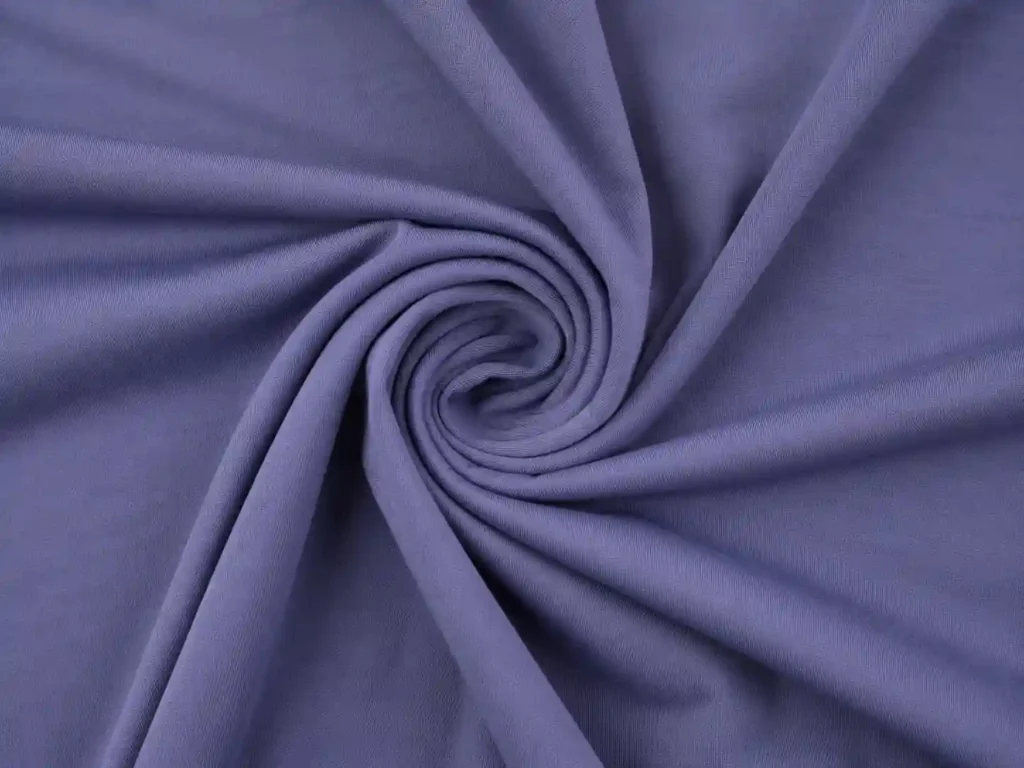
Jersey supports fitted and draped silhouettes. Stretch percentage alone is not enough; recovery, weight, opacity and surface stability matter. Pattern ease, seam type, lining and pressing temperature must match the fabric to prevent growth or distortion.

Embellished Wovens

Beaded, rhinestone, metallic and embroidered fabrics require early process review. Decoration placement may affect seam lines, dart positions, pattern matching, weight and comfort. Bulk standards should define acceptable placement and attachment variation.

Material Decisions for Different Event Dress Results

The same silhouette can look refined, weak, heavy, transparent or unstable depending on material selection. The comparison below connects visual goals with production considerations before sampling begins.

MaterialBest-Suited ProductsMain StrengthKey Development RiskRecommended Control
SatinSlip, draped, wedding guest, cocktail and evening dressesShine, fluid movement and premium visual finishNeedle marks, seam puckering, bias growth and packing creasesWeight review, stitch trial, grain planning, hanging recovery and pressing test
Stretch MeshLayered bodycon, ruched, cut-out and illusion-panel dressesTransparency control, flexible fit and layeringRecovery loss, edge waving, shade mismatch and skin irritationStretch-direction check, recovery test, lining combination and seam trial
SequinHoliday, party, prom and statement dressesStrong photography and event visibilityWeight, dropped sequins, scratchy seams and placement variationAttachment trial, cleared seam allowances, lining protection and pilot run
VelvetHoliday, formal, cocktail and winter event dressesDepth, rich color and structured drapeNap mismatch, pressure marks and shade variationOne-way cutting, pile inspection, low-pressure pressing and protective packing
LaceWedding guest, cocktail, formal and layered dressesTexture, coverage and decorative valueMotif imbalance, transparency and edge inconsistencyMotif planning, lining review, placement marking and color approval
ChiffonFormal, graduation, wedding guest and flowing maxi dressesLight movement and layered softnessCutting movement, seam distortion and uneven hemsLayer control, stabilized cutting, fine finishing and hanging before hemming
Stretch JerseyBodycon, ruched and going-out dressesContour, movement comfort and fit flexibilityTransparency, growth and weak recoveryWeight, opacity and recovery review with controlled pattern ease
CrepeCocktail, formal, midi and structured occasion dressesClean surface, balanced drape and versatile tailoringDifferent weights produce very different silhouettesWeight comparison, drape test, shrinkage review and pressing standard

Fit Engineering for Body-Sensitive Event Dresses

The visual value of an event dress depends heavily on how the garment sits on the body. Duolan treats fit as a relationship between measurements, fabric behavior, support construction and silhouette balance.

Bust, Waist and Hip Balance

Fitted dresses need coordinated shaping through the full torso. Increasing or reducing one measurement without considering nearby areas can create drag lines, gaping, compression or rotation. Fit review covers:
  • Bust point and cup position
  • Upper-bust and under-bust balance
  • Waist location and shaping depth
  • High-hip and full-hip contour
  • Side-seam direction
  • Front and back length relationship
  • Fabric stretch and recovery
  • Lining restriction or support
For bodycon styles, negative ease must be appropriate for the fabric. For structured woven styles, internal shaping must carry the load rather than relying on surface tightness.

Neckline and Back Security

Social-event dresses frequently use open necklines and backs. A design can look correct while standing still yet become unstable during walking, sitting or arm movement. Development checks:
  • Neckline depth and width
  • Strap placement and tension
  • Armhole exposure
  • Side-bust coverage
  • Back opening depth
  • Waist anchoring
  • Closure position
  • Hidden elastic or grip support
  • Interaction between shell and lining
Halter and backless styles may require different internal solutions even when their external appearance looks similarly minimal.

Slits, Hems and Movement

Slits and narrow hems affect walking range, sitting comfort and wear security. A slit should be approved by both visual position and measurable reference. Control points include:
  • Slit start position
  • Reinforcement method
  • Lining opening
  • Seam strength
  • Walking movement
  • Sitting coverage
  • Hem circumference
  • Fabric weight
  • Shoe and styling relationship
Long fitted dresses need enough lower-body movement without losing the intended line. Flowing dresses require even hem fall after fabric relaxation.

Grading Across Sizes

A successful base-size sample does not guarantee balanced grading. Cup volume, neckline width, strap length, slit height and body length may need controlled grade rules rather than uniform increases. Duolan reviews grading according to:

  • Brand size chart
  • Target market
  • Intended fit
  • Fabric stretch
  • Structural support
  • Dress length
  • Key exposure points
  • Existing approved blocks where available

Hidden Support Systems Behind Clean Dress Design

Many event dresses appear minimal from the outside while relying on carefully selected internal components. Duolan plans support, lining and closures as part of the design rather than adding them after the sample loses stability.

Cups and Padding

Cup shape, size, position and thickness influence neckline appearance and support. Cups should align with the pattern and target size range. Poor placement can distort the bust, create visible edges or reduce coverage.

Boning Systems

Boning supports vertical shape and prevents collapse. Type, width, length, channel construction and ending position must match the garment. Boning should not create pressure points or show through the outer fabric.
4Mesh Edge Control (1)

Power Mesh Support

Power mesh can strengthen backs, side panels and corset interiors while maintaining flexibility. Weight, recovery, color and stretch direction require review. Internal support must not become visible through the outer layer.

Lining Construction

Full lining, partial lining and double-layer construction create different results. Lining affects opacity, stretch, drape, heat, comfort and seam appearance. A lining with excessive restriction can damage the intended outer silhouette.
3. Trim and Closure Readiness (1)

Closure Selection

Invisible zippers, exposed zippers, hooks, eyes, lacing, buttons and tie systems carry different loads. Closure length, position and top security are planned according to the dress structure and dressing process.

Anti-Slip Details

Silicone elastic, inner waist stays, hidden straps and secure neckline construction can improve stability. Functional components should remain clean, comfortable and consistent with the brand’s visual standard.

Special Processes for High-Impact Event Dresses

Decoration should strengthen the design without creating uncontrolled weight, discomfort, production variation or delivery risk. Duolan reviews every special process against the base material, placement, wear area, order quantity and bulk execution route.

Sequin Application

Sequin work may use fully sequined fabric, embroidery-based sequins or placed decoration. Cutting layouts, seam clearance, sequence direction and replacement pieces need planning. Inner seams should be cleared or protected where decoration could contact the skin.

Beading and Pearls

Beads and pearls create weight and localized stress. Attachment density, thread strength, backing material and placement must be tested. Heavily decorated panels may require additional support so the garment does not sag during hanging or wear.

Rhinestone Setting

Rhinestones can be heat-applied, transferred or attached through other methods. Base-fabric heat tolerance, adhesive performance, wash requirements and spacing influence durability. A process trial is needed before approval.

Embroidery

Embroidery changes fabric stiffness, shrinkage and drape. Stitch density, backing, thread, motif size and position must suit the garment panel. Embroidery should be evaluated after finishing rather than only as a flat artwork.

Printing and Gradient Effects

Print scale, registration, color standard and panel placement affect the final garment. Placement prints require pattern and artwork coordination. Gradient, digital and special-surface prints may need strike-offs before production materials are released.

Pleating and Surface Texture

Pleating changes width, movement and heat sensitivity. Pleat depth, direction, recovery and panel matching need defined standards. The process must remain stable through sewing, pressing, packing and expected care conditions.

Color, Trims and Private Label Coordination

Brand identity extends beyond the dress silhouette. Color, labels, hardware, closures and packaging must remain consistent across samples, bulk production and repeat orders.

Color Development

Color can be reviewed through Pantone references, physical swatches, lab dips or approved sample materials. Different fibers, finishes and surfaces reflect color differently, so satin, mesh, lining and trim may not match through one formula alone. Duolan coordinates:
  • Lab-dip submissions where required
  • Main fabric and lining comparison
  • Mesh and lace shade alignment
  • Sequin and rhinestone color direction
  • Zipper tape and thread matching
  • Bulk-lot review
  • Approved reference retention

Trim Coordination

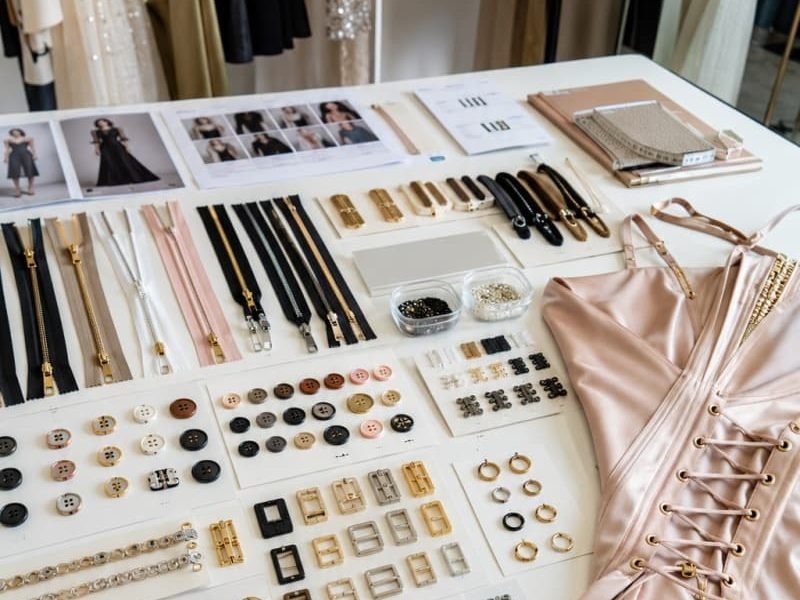
Trim selection influences both appearance and reliability. Zippers, hooks, eyelets, rings, sliders, elastic, cups, boning and decorative components are reviewed for color, size, function and order availability. Critical trims may require:
  • Physical sample approval
  • Pull or attachment review
  • Finish and plating check
  • Size confirmation
  • Supplier and item-code record
  • Backup sourcing plan
  • Bulk arrival inspection

Brand Labels

Private-label execution may include main labels, size labels, care labels, composition labels, country-of-origin information and hangtags. Placement, folding, sewing method and language version follow the approved brand manual.

Packing Identity

Packaging can include polybags, tissue, protective layers, barcode labels, size stickers, hanging presentation, carton marks and warehouse labels. Fragile decoration, velvet pile and satin surfaces may require additional protection.

Pattern, Measurement and Grading Control
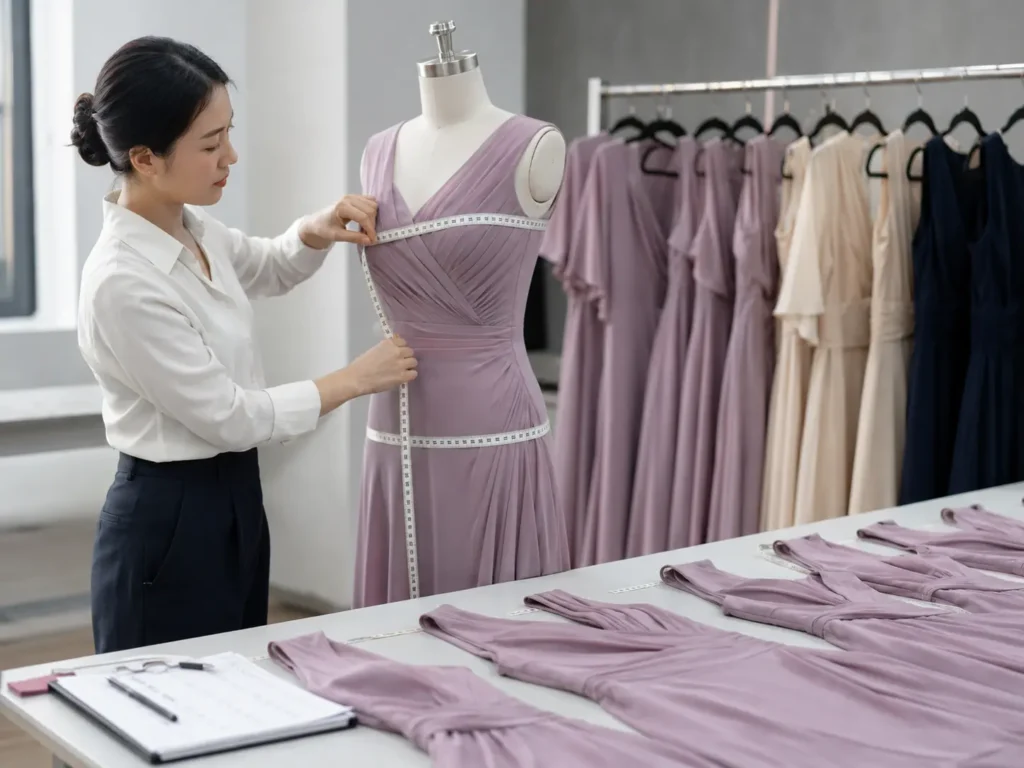
Pattern work translates visual intention into body proportion, seam placement, movement and repeatable dimensions. Duolan combines the size specification with fabric and structure rather than treating every measurement as an isolated number.

Establishing the Base Size

Base-size development begins with the target market and brand fit standard. Important points include:
  • Bust, waist and hip relationship
  • Front and back body length
  • Shoulder and strap position
  • Armhole shape
  • Neckline exposure
  • Waist seam position
  • Skirt length and sweep
  • Slit level
  • Intended ease or negative ease
Existing approved blocks can provide a useful starting point, especially for brands with a defined fitted-dress standard.

Point-of-Measure Discipline

Every critical dimension should have a clear measuring method. Ambiguous points lead to inconsistent comments and production checks. A specification may define:
  • Measurement name
  • Start and end points
  • Garment position during measurement
  • Whether elastic is relaxed or extended
  • Whether ruching is included
  • Tolerance
  • Size-grade rule
  • Priority level
Body-sensitive areas often need tighter communication than decorative or non-critical measurements.

Pattern Adjustment from Fit Comments

Comments should become technical actions. “Bust feels insecure” may require review of cup position, neckline width, side-bust coverage, strap angle, lining and stretch rather than only reducing one measurement. A revision summary can separate:
  • Confirmed changes
  • Pattern corrections
  • Measurement updates
  • Material changes
  • Construction changes
  • Visual preferences
  • Open questions
  • Points retained from the previous sample

Grading for Size Consistency

Grade rules should preserve the approved silhouette, fit balance and coverage across the full size range rather than increasing every measurement by the same amount. The grading review can separate:
  • Bust, waist and hip increments
  • Underbust and bodice length changes
  • Strap length, angle and placement
  • Neckline and armhole coverage
  • Open-back width and depth
  • Hem length and garment proportion
  • Ease and stretch distribution
Duolan can apply the brand’s existing grade rules or review areas where standard increments may distort the intended shape.

Samples Developed for a Defined Commercial Purpose

Every sample should answer a specific question. Duolan separates sample stages so brands can evaluate design, fit, photography, buying presentations and production readiness without mixing different approval goals.

First Prototype

The first prototype validates the overall direction. It allows review of silhouette, proportion, design interpretation, approximate fabric behavior and major construction. It should reveal where refinement is needed rather than pretend to be a final production standard.

Fit Sample

A fit sample focuses on body balance, measurements, coverage, movement and structure. The intended or behaviorally similar fabric should be used wherever material properties directly affect the result.

Revision Sample

A revision sample closes identified comments. Changes should be recorded clearly so the brand can distinguish corrected points, retained points and new questions. Repeating the same unresolved issue indicates a weak feedback process.

Photo-Ready Sample

A photo-ready sample supports campaign, e-commerce or lookbook work. Visual finish, color, fabric, proportion and decoration need stronger accuracy. Photo approval does not automatically mean the style is ready for production.

Salesman Sample

Salesman samples support internal meetings, showrooms or wholesale presentations. Consistency across several pieces may be required, and timing often follows a buying calendar rather than a production calendar.

PP Sample

The pre-production sample becomes a bulk reference after materials, measurements, workmanship, trims, labels and packaging directions are sufficiently confirmed. Remaining deviations must be listed rather than left to production interpretation.

Workmanship Standards for Complex Social Event Dresses

Event dresses reveal workmanship through light, movement and close-range photography. Duolan focuses on construction points that directly affect silhouette, comfort, visual finish and bulk consistency.

Satin Sewing and Pressing

Satin shows needle marks, tension imbalance and seam puckering more easily than many matte fabrics. Control points include:

  • Needle and thread selection
  • Stitch density
  • Seam direction
  • Fabric feeding
  • Bias-panel stabilization
  • Dart pressing
  • Zipper installation
  • Seam allowance shadow
  • Final pressing temperature
  • Packing pressure

A seam may meet the measurement standard yet still fail visually if the surface reflects uneven tension. Stitch and pressing trials help define the correct method before volume production.

Mesh and Layered Construction

Mesh construction needs controlled stretch and clean attachment to lining or support panels. Important details include:
  • Stretch direction
  • Layer alignment
  • Edge stabilization
  • Ruching ratio
  • Seam elasticity
  • Neckline finishing
  • Illusion-panel color
  • Power-mesh positioning
  • Lining transition
  • Thread visibility
Layered mesh should not twist, bubble or create inconsistent transparency. Production checks compare both flat measurements and worn appearance where required.

Sequin and Embellished Seams

Decorated materials cannot always be sewn through without preparation. Sequins may need clearing from seam allowances, replacement after construction and protective finishing inside the garment.
Bulk controls may include:

  • Decoration direction
  • Cleared seam width
  • Replacement method
  • Attachment security
  • Pattern placement
  • Abrasion protection
  • Machine suitability
  • Hand-finishing points
  • Final loose-decoration check
  • Protective packing

Corset and Bustier Construction

Corsetry requires accuracy between pattern panels, cups, boning, lining and closure.

Key standards include:

  • Symmetrical panel shape
  • Correct cup placement
  • Boning channel width
  • Smooth boning ends
  • Waist definition
  • Balanced top edge
  • Secure zipper or lacing
  • Clean internal finishing
  • No visible support shadow
  • Consistent structure across sizes

Zippers, Slits and Stress Points

Invisible zippers must remain smooth without pulling the seam or catching the lining. Slits, straps, hooks, eyelets and cut-out corners require reinforcement according to fabric stress.

Stress-point checks focus on:

  • Bartack or reinforcement placement
  • Seam allowance security
  • Zipper top closure
  • Slit opening
  • Strap attachment
  • Hook and eye strength
  • Eyelet backing
  • Waist-seam load
  • Heavy skirt connection

Hem, Lining and Final Finish

Long and bias-cut dresses may need hanging recovery before hemming. Linings should remain shorter than the shell without pulling the dress upward or showing during movement. Final review includes:

  • Hem level
  • Lining length
  • Loose threads
  • Pressing shine
  • Decoration security
  • Seam appearance
  • Closure operation
  • Surface cleanliness
  • Size-label accuracy
  • Packing condition

From Approved Sample to Controlled Bulk Production

Sample approval becomes valuable only when it is translated into materials, measurements, workmanship instructions and quality checkpoints that production teams can reproduce.

Approval Status

Duolan first identifies whether the current sample is fit-approved, visually approved, suitable as a PP basis or still pending refinement. Different approval states should not be treated as equal permission to begin bulk production.

Material Lock

Main fabric, lining, mesh, lace, decoration, zippers, cups, boning, labels and packaging materials are confirmed according to the approved direction. Substitutions require review when they may change appearance, fit or function.

Technical Lock

The approved pattern version, size specification, grade rules, BOM, construction notes, artwork placement, color references, approved sample, label details and packing instructions are consolidated as the final production basis.

Production Path

Orders are separated by style, color, size, quantity and complexity.

Standard, complex, quick-response and high-risk-process styles may follow different lines or factory routes.

First-Piece or Pilot Review

Corset, satin, sequin, mesh, bodycon, halter and backless styles may benefit from first-piece confirmation or a controlled pilot stage before full production release. Early verification reduces the chance of repeating one issue across thousands of pieces.

Bulk Release

Full production begins after the required materials, standards, approvals and production route are aligned. The project then moves into inline control, final inspection, packing and delivery management.

Quality Control Built Around Event Dress Risks

Quality control starts during development, not only at final inspection. Social-event dresses require checks related to fit, fabric surface, support, transparency, decoration, measurements and packing presentation.

Development Review

Before sampling, Duolan identifies risks involving drape, stretch, recovery, transparency, support, decoration, seam visibility and structure. The chosen sample route is adjusted around the highest-risk points.

Fabric and Trim Control

Incoming materials can be checked against approved color, surface, weight, width, stretch, decoration, zipper, cup, boning, label and packaging references. Test requirements follow the market and brand manual.

PP and Pre-Production

The approved sample, measurements, BOM, workmanship points, artwork, labels and packing direction are transferred into production references. Open deviations are recorded before line release.
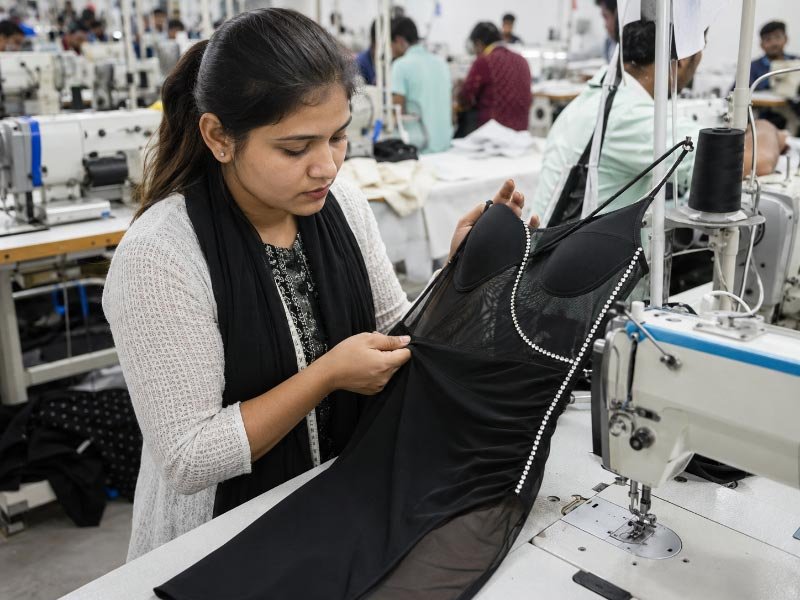
Inline Inspection
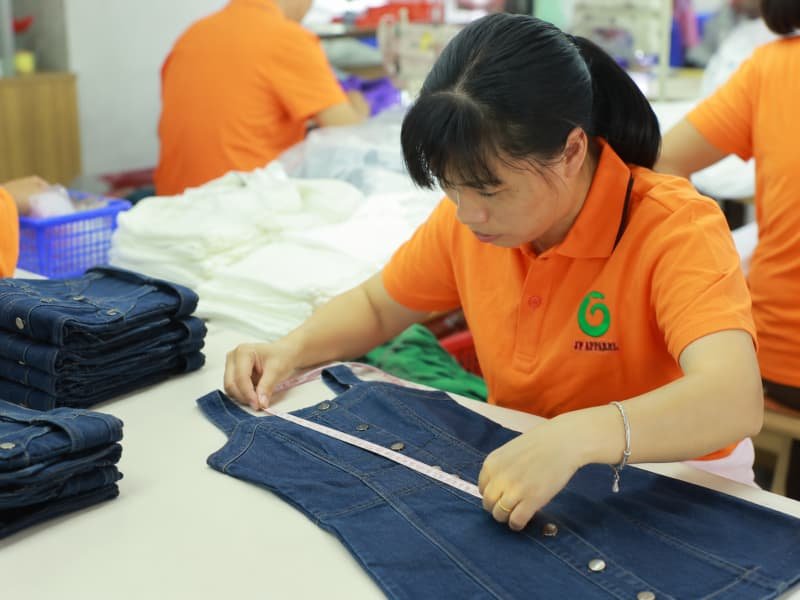
Production checks focus on dimensions, seam quality, fit-sensitive positions, decoration placement, color, panel alignment, closure operation and key construction. Problems are addressed before they reach the full order quantity.

Final Inspection

Final inspection covers appearance, measurements, workmanship, quantity, labels, hangtags, barcode, packing and carton information. Third-party inspection can be coordinated according to the agreed standard.

Reorder Records

Pattern versions, BOM information, approved materials, workmanship notes, QC findings and packing records can be retained for repeat production. Reorders are reviewed for material-batch, color, trim and capacity changes rather than assumed to be identical automatically.

A Scalable Dress Manufacturing System for Brand Programs

Duolan is supported by a multi-level manufacturing network developed around fashion dresses, sample work, flexible capacity and bulk delivery. Scale is used to match project complexity and timing rather than place every order into one production route.

16 Owned Factories

Owned factories provide direct control for core development, priority styles and important production programs. They form the foundation for pattern, sample, production and quality coordination.

20+ Satellite Factories

Long-term satellite partners provide additional capacity for repeat orders, seasonal peaks, process matching and larger production programs. Allocation follows product complexity and control requirements.

12,000+ Workers

The broader manufacturing network includes more than 12,000 workers across supporting production locations. Workforce scale supports multi-style programs and changing order volume.

300 Sewing Lines

Approximately 300 sewing lines across the manufacturing system provide capacity for different product routes. Line matching considers fabric, construction, order quantity and delivery timing.

50+ Quick-Response Lines

More than 50 flexible and quick-response lines support development, controlled test production, urgent repeat needs and selected calendar-sensitive projects.

15,000–35,000 Samples Monthly

The wider system is structured for high development density, with monthly sample capacity varying according to style complexity and project mix. Volume is paired with sample-purpose definition and revision control.

Audit, Testing and Documentation Preparation

Compliance requirements vary by destination market, product, material and brand manual. Duolan prepares projects around defined requirements rather than making broad claims that every standard applies to every order.

Social Audit Readiness

Duolan’s manufacturing system has completed SMETA and SMETA 2-Pillar audit work and maintains relevant social-audit records. Additional review requirements can be discussed according to the sourcing program.

Material Testing

Testing may cover composition, colorfastness, shrinkage, pH, restricted substances, dimensional stability or other requested items. The exact test plan depends on material type, destination and brand standard.

Product Standards

Projects can be prepared in relation to applicable AATCC, ASTM, OEKO-TEX?, EN, China GB, GOTS-related or brand-specific requirements where relevant. Required scope and responsible laboratory should be confirmed before testing.

Label Information

Care labels, composition labels, size labels, country-of-origin information, main labels and hangtags are checked against approved artwork and placement instructions.

Packing Standards

Polybag, size sticker, barcode, carton mark, warehouse label, hanging or folded presentation and protective packing are implemented according to the brand guide.

Shipment Documents

Commercial invoice, packing list, HS information, inspection files, testing documents and shipment details can be coordinated according to the agreed delivery route.

Launch Calendar, Production and Delivery Coordination

Social-event collections are tied to selling windows. Duolan plans development and manufacturing backward from campaign, warehouse and launch dates instead of treating production as an isolated block.

Plan Backward from Launch

A controlled calendar may include:
  • Target online or store launch
  • Warehouse receiving date
  • Shipping departure
  • Final inspection
  • Packing completion
  • Bulk production
  • PP approval
Holiday, prom, graduation, homecoming and wedding-season products need additional care because a late delivery may miss the strongest selling period.

Bulk Production References

Common production references after required approvals and material readiness are:

  • Simple styles: approximately 15–20 days
  • Regular fashion styles: approximately 20–30 days
  • Complex styles: approximately 30–45 days

Final timing depends on style count, order quantity, material readiness, embellishment, construction, approval speed, production allocation and packing requirements.

Shipping References

Common transportation references include:
  • Express: approximately 3–7 days
  • Air freight: approximately 5–8 days
  • Sea freight: approximately 20–35 days
Transit time varies by destination, route, customs, seasonal congestion and final delivery arrangement.

Flexible Delivery Coordination

Available cooperation routes may include FOB, CIF, DDP, split shipment, nominated forwarder and delivery coordination with regional warehouses.

The agreed Incoterm should define responsibility for freight, customs, insurance and final delivery.

Representative Social Event Dress Project Profiles

The following anonymized profiles use order structures consistent with Duolan’s established-brand programs. Brand identities and commercially sensitive details are withheld. Quantities illustrate the scale, style count and control methods relevant to social-event dress manufacturing.
Case 02 United Kingdom Stylist led Occasionwear Capsule

North American Occasionwear Program

  • Region: United States and Canada
  • Collection: Wedding guest, cocktail and formal event dresses
  • Style Count: 18 styles
  • Total Quantity: 42,600 pieces
  • Main Materials: Satin, crepe, chiffon, lace and stretch mesh
  • Size Range: Brand-defined regular and extended sizes
The program combined fitted midi dresses, draped satin styles, lace-panel products and long formal silhouettes. The main challenge was maintaining a consistent occasionwear identity across materials with very different drape, stretch and opacity. Development control focused on fabric-silhouette matching, neckline coverage, slit position, lining selection and size consistency. Satin styles received additional seam and pressing review. Mesh and lace products required color alignment between shell, lining and support materials. The 18 styles were grouped by construction risk. Standard crepe products followed the regular production route, while draped satin and lace-panel styles entered earlier sample and first-piece review. Shared zippers, linings and label specifications were used where technically appropriate. Result: The range moved into a 42,600-piece production program with separate line allocation for fluid woven, fitted stretch and lace-based products. Production records were retained to support color extensions and repeat planning.

European Holiday Party Collection

  • Region: United Kingdom and European Union
  • Collection: Holiday party, evening and going-out dresses
  • Style Count: 24 styles
  • Total Quantity: 68,400 pieces
  • Main Materials: Sequin, velvet, metallic jersey, satin and power mesh
  • Key Processes: Sequin clearing, rhinestone application, corsetry and asymmetric draping
The range contained visually strong products for holiday campaigns and peak party-season trading. The key risk was not only decoration quality; it was the interaction between decoration weight, fit, lining, deadlines and packing. Duolan separated the program into four manufacturing groups: sequin dresses, velvet styles, stretch going-out products and structured corset pieces. Decoration panels were reviewed before sampling, while high-weight styles received strap, waist and closure checks. Sequin seams were cleared and protected to reduce skin contact. Velvet cutting followed controlled nap direction. Corset styles used approved cup and boning references, and rhinestone processes were tested against the base fabric. Result: The 24-style program was organized into several controlled production paths rather than one general line plan. A 68,400-piece total order was scheduled around PP approval, decoration readiness, first-piece confirmation and protected packing for high-risk surfaces.

Australian Graduation and Event Edit

  • Region: Australia and New Zealand
  • Collection: Graduation, birthday, formal and social-event dresses
  • Style Count: 12 styles
  • Total Quantity: 25,800 pieces
  • Main Materials: White crepe, satin, stretch jersey, mesh and lightweight woven
  • Core Concerns: Opacity, fit, photography, delivery timing and color consistency
The program included white and pastel graduation dresses, short birthday styles, fitted jersey products and several longer formal options. Light colors created stronger transparency and lining requirements, while fitted styles needed reliable recovery and coverage. Duolan reviewed each light-colored shell with its intended lining. Neckline, side-bust, skirt length and slit position were checked during fitting. Photo-ready samples were prioritized for campaign timing, while final PP standards included approved color, opacity, measurements and packing. The 12 styles were developed around several reusable blocks to improve consistency and future extension. Different fabrics still required separate ease and pattern adjustments rather than one unchanged fit. Result: The 25,800-piece program entered production through a staged schedule aligned with campaign and warehouse dates. Confirmed pattern, BOM and QC records created a clearer base for future graduation colors and event-season repeats.

Frequently Asked Questions About Custom Event Dresses

Duolan develops party, cocktail, prom, homecoming, graduation, wedding guest, formal, semi-formal, birthday, going-out and related occasion dresses. Wedding guest products are within our focus; specialist bridal gowns are not positioned as a primary product category.
Yes. Reference images can support an initial feasibility review when accompanied by clear information about the intended silhouette, fabric, size, quantity and launch timing. A complete tech pack provides stronger control, but sketches, original samples, moodboards and fabric ideas can also form a development basis.
Yes. Corset and bustier development may include cup position, boning, power mesh, lining, waist shaping, closures and fit review. Final feasibility depends on the design, fabric, target fit, size range and required production quantity.
Sample timing is confirmed after reviewing style complexity, material readiness, sample purpose, pattern requirements and special processes. The sample proposal identifies required approval points and factors that may affect timing. Rush requests are reviewed separately against material and development capacity.
Yes. Duolan can follow a supplied size chart and grade rules. We may raise questions where fabric behavior, exposed construction, corsetry, short lengths or fitted silhouettes require additional clarification to preserve coverage and proportion across sizes.
The control basis may include an approved sample, PP sample, BOM, measurements, pattern version, workmanship notes, color references, artwork, labels, packing instructions, first-piece review, inline inspection and final checking.
Yes. Duolan can coordinate commonly used dress fabrics, linings, mesh, lace, sequins, zippers, cups, boning, labels and packaging. Material recommendations are based on the target appearance, fit, price level, order quantity and production stability.
Reference cycles are approximately 15–20 days for simple styles, 20–30 days for regular fashion styles and 30–45 days for complex styles after required approvals and material readiness. Final timing is confirmed against the full project scope.
Yes. Third-party inspection can be coordinated according to the agreed inspection standard, timing and responsible party. Brand-specific quality manuals and inspection requirements should be shared before production begins.
Useful information includes tech packs or reference images, product category, fabric direction, size standard, style count, quantities, target market, required sample stage, launch date, quality concerns, compliance requirements, labels and packing instructions.

Start Your Social Event Dress Development Program

Send Duolan the available design and commercial information for an initial project review. Our team will assess the development basis, fabric direction, pattern and fit priorities, special-process risks, sample route, expected order structure and launch timing before confirming the next step.

Useful files and details include:

  • Tech pack, flat sketch or reference images
  • Original sample photos or construction references
  • Target fabrics, colors and trim direction
  • Base size, size chart and intended fit
  • Number of styles and estimated quantity
  • Sample purpose: first prototype, fit, photo, salesman or PP
  • Target campaign, warehouse or launch date
  • Decoration, corsetry, lining or closure requirements
  • Testing, label, packing and inspection manuals
  • Preferred shipment destination and delivery terms

Duolan is positioned for established fashion programs requiring clear development, controlled sampling, scalable production and long-term supply coordination. We will review what is ready, what still needs confirmation and how the project can move toward a production-ready standard.


Start Your Apparel Development Project

OEM/ODM Manufacturing Support for Fashion Brands

Share your collection details, estimated quantities, target market, development timeline, and technical requirements. The production team will review your request and provide a tailored manufacturing solution based on your product category, fabric selection, construction needs, and delivery schedule.

Fashion Manufacturing Support with Scalable Production Capacity

From sample development to bulk production, Duolan supports fashion brands with confidential OEM/ODM manufacturing, stable quality management, flexible production planning, and coordinated multi-factory execution for seasonal and capsule collections.

Need Direct Assistance?

Seraphinite AcceleratorOptimized by Seraphinite Accelerator
Turns on site high speed to be attractive for people and search engines.