Skip to content
Custom Asymmetric Dress Manufacturer
Asymmetric Dress Development Built for Fit, Movement and Bulk Consistency
Duolan develops asymmetric dresses for established fashion brands, product teams, buying offices and sourcing teams. Every project moves through fabric evaluation, pattern engineering, sample correction, production preparation and controlled bulk execution.
- 8 core asymmetric construction directions supported
- 12+ style-specific fit and measurement points reviewed
- 3 approval gates covering fit, materials and production standards
- 16 owned factories, 20+ satellite factories and 50+ flexible production lines
Developed for Structured Fashion Dress Programs
Established Fashion Brands
Product Development Teams
Product teams normally manage silhouette, fit, material, cost positioning and launch timing at the same time. An asymmetric style can become difficult when a visual detail changes shoulder balance, grain direction, hem behavior or lining construction. Duolan reviews the design as a complete garment rather than an isolated visual element. Reference images, tech packs, original samples, sketches and fit comments are translated into fabric decisions, pattern actions and measurable sample corrections. Development discussions remain connected to production feasibility from the beginning.
Buying and Sourcing Teams
Occasion and Partywear Teams
Custom Asymmetric Dress Styles We Develop
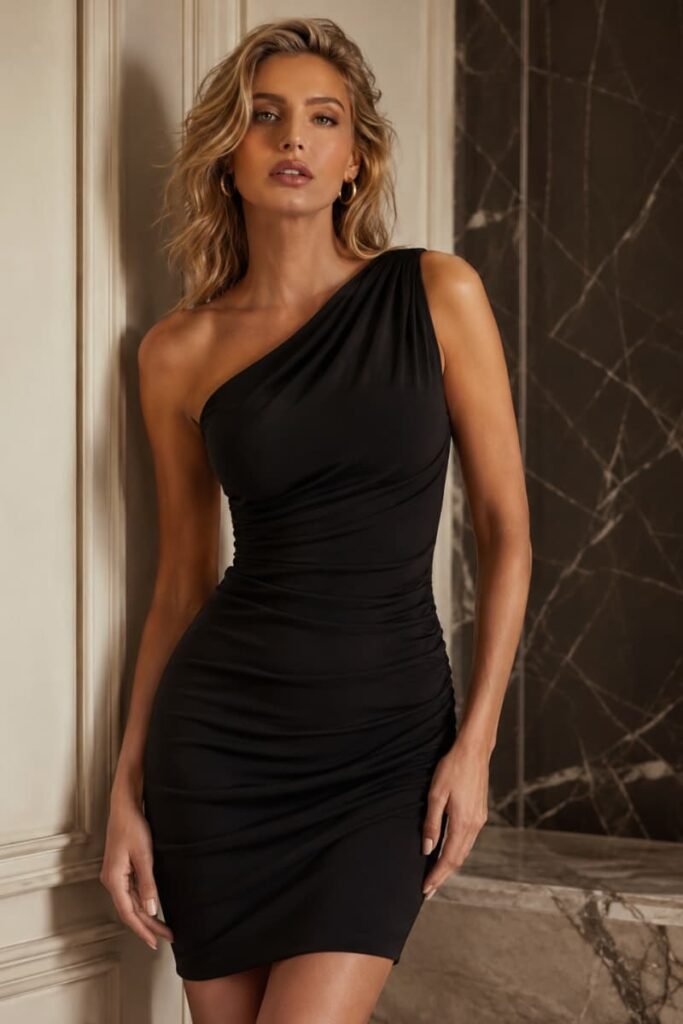
One-Shoulder Dresses

Asymmetric Neckline Dresses

High-Low Hem Dresses

Draped Asymmetric Dresses

Side-Ruched Dresses
Side ruching creates controlled fullness and can visually shape the waist, hip or skirt length. Asymmetric ruching becomes more demanding when only one side is gathered or when a diagonal seam carries different tension from the opposite side. Duolan defines the gathering ratio, elastic recovery, fixed length and anchor positions before bulk production. Excessive gathering can create heavy seam thickness, while insufficient gathering weakens the intended visual effect. Development can include adjustable drawcord ruching, fixed elastic ruching, channel construction or concealed gathering. Inspection focuses on left-right length difference, seam rotation, gathering distribution and the stability of the finished garment after wear and handling.

Asymmetric Cut-Out Dresses

Layered Ruffle Dresses

Single-Sleeve Dresses
Built Around Commercial Collection Scenarios
Party Collections
Occasionwear Lines
Going-Out Drops
Cocktail Programs
Resort Collections
Social-Event Dresses
Critical Risks in Asymmetric Dress Manufacturing
Asymmetric construction creates unequal forces across the garment. Shoulder load, grain direction, diagonal seams, uneven hems and single-sided details can change fit or appearance during sampling and bulk production. Every risk needs a defined control action before production approval.
| Design Feature | Main Development Risk | Duolan Control Action | Approval Evidence |
|---|---|---|---|
| One-shoulder neckline | Slippage, neckline gaping or uneven bust coverage | Review shoulder load, neckline tension, armhole shape and internal support | Front, back, side and movement fit images |
| Diagonal neckline | Edge rolling, stretching or incorrect coverage | Confirm grain direction, stabilization method, facing or lining construction | Approved neckline measurement and edge standard |
| Bias-cut panel | Panel growth, twisting or side-seam movement | Control cutting direction, panel handling, hanging time and final leveling | Grainline record and post-hanging measurement |
| High-low hem | Uneven transition or length change after hanging | Define every high and low point and recheck hem after relaxation | Approved hem map with measurement references |
| Side ruching | Inconsistent gathering or rotated side seam | Lock gathering ratio, elastic length and anchor positions | Approved ratio sample and placement reference |
| Diagonal draping | Fold collapse, excessive bulk or incorrect anchor point | Adjust pattern volume, drape direction and concealed fixation | Fit-approved drape photographs and pattern notes |
| Asymmetric cut-out | Gaping, stretching or unstable coverage | Reinforce opening, control edge tension and review grading rules | Size-set position check and movement review |
| Single sleeve | Garment pulled toward sleeve side | Balance sleeve weight, shoulder construction and opposite neckline | Arm-movement review and shoulder balance record |
Fabric Selection for Drape and Structural Balance
Material choice determines whether an asymmetric design hangs cleanly, remains secure and can be reproduced across bulk production. Duolan evaluates composition, weight, stretch, recovery, opacity, surface sensitivity, seam behavior and availability before confirming a fabric direction.
| Fabric Direction | Suitable Applications | Main Risk | Recommended Control |
|---|---|---|---|
| Satin | One-shoulder, draped midi, bias-cut and occasion dresses | Needle marks, seam puckering, growth, pressing shine and surface scratching | Grain planning, seam trials, hanging review, controlled pressing and protective packing |
| Crepe | Structured drape, asymmetric neckline and cocktail dresses | Different drape between qualities, edge thickness and shade variation | Confirm weight, composition, surface and bulk lot before PP approval |
| Chiffon | High-low hems, cascading layers and resort dresses | Transparency, seam slippage, uneven rolling and bias growth | Layer planning, lining review, narrow-hem trial and post-hanging leveling |
| Stretch Jersey | Side ruching, fitted cut-outs and one-sleeve styles | Recovery loss, seam stretching, transparency and body distortion | Test stretch direction, recovery, seam elasticity and opacity under tension |
| Mesh | Cut-outs, overlays, sleeves and fitted party dresses | Weak edges, seam damage, inconsistent transparency and bagging | Confirm mesh density, stretch recovery, reinforcement and lining relationship |
| Organza or Tulle | Sculpted ruffles, layered hems and structured volume | Sharp edges, bulk at seams and shape inconsistency | Develop controlled layer width, edge finish, seam allowance and packing method |
| Lace | Asymmetric overlays, panels and occasion dresses | Motif mismatch, seam visibility and irregular stretch | Plan motif placement, panel matching, lining tone and joining method |
| Sequin Fabrics | One-sleeve, party and statement dresses | Scratchy seams, sequin loss, cutting waste and heavy sleeve load | Map embellishment direction, clear seam areas, reinforce edges and protect inner contact points |
Material approval should include more than a handfeel decision. A brand team may need composition, usable width, color standard, opacity, stretch percentage, recovery, shrinkage information and bulk availability before confirming the final direction.
Pattern Engineering for Balanced Asymmetric Silhouettes
Balancing Unequal Shoulder and Neckline Loads
- Shoulder point position and width
- Neckline depth and diagonal angle
- Bust-point relationship
- Armhole contour
- Side-seam balance
- Opposite underarm tension
- Lining or facing behavior
- Internal stay position

Controlling Grain Direction and Bias Growth
- Grainline mapping for every panel
- Cutting trials in target fabric
- Controlled panel handling
- Defined relaxation or hanging stage
- Side-seam and hem remeasurement
- Final hem leveling after stabilization
- Pattern adjustment based on observed growth

Engineering Drape Volume and Anchor Points
- Pattern spread or added volume
- Fold direction
- Fixed and floating areas
- Internal tack positions
- Gathering ratio
- Seam joining sequence
- Pressing restrictions
- Approved visual reference

Connecting Outer Fabric and Lining
Lining can support an asymmetric dress or distort it. A lining cut too short may pull the outer layer upward, while a lining with excessive volume may show through a fluid fabric or interfere with draping.
Duolan develops outer and inner patterns as a connected system. One-shoulder styles may require lining to stabilize the neckline and support cups or boning. High-low chiffon dresses may need a shorter lining protecting coverage without weakening outer-layer movement. Fitted cut-out dresses may combine self-fabric lining, power mesh and partial clean finishing.
Control points include lining length, attachment position, ease, stretch direction, seam allowance and turn-of-cloth requirements. An approved sample should confirm both visible appearance and internal comfort before the construction becomes a production standard.

Measurement and Grading for Asymmetric Dress Styles
Uneven Hem References
Shoulder and Neckline Points
Cut-Out Positioning
Drape and Ruching Lengths
Asymmetric Grading Rules
Tolerance Priorities
Hidden Construction Supporting Fit and Wearability
Internal Stay Tape
Shoulder Stabilization
Cups and Boning
Power Mesh Support
Secure Closures
Controlled Lining
From Design Brief to Production-Ready Sample
Project Brief Review
Fabric and Trim Direction
Pattern Development
Pattern work converts visual direction into measurable construction.
Grainlines, neckline angles, hem points, drape volume, cut-out positions and internal support are established. Pattern notes identify areas requiring close attention during sample sewing and later grading.
First Sample Construction
Fit Review and Revision
PP and Bulk Readiness
Fit Corrections for Asymmetric Dress Performance
One-Shoulder Neckline Slippage
The supported shoulder remained in position, but the open side dropped during movement. The neckline also lifted near the armhole and created uneven bust coverage.
Root-cause review:
The shoulder carried excessive load while the opposite neckline lacked enough stabilization. The armhole shape and lining tension also pulled in different directions.
Correction actions:
- Adjusted shoulder angle and neckline curve
- Rebalanced armhole depth
- Added controlled neckline stabilization
- Revised lining tension
- Repositioned internal support
- Rechecked bust coverage during arm movement
Result standard:
The neckline remained clean during standing and movement without introducing visible tension lines. Final approval included front, back, side and raised-arm views.
Diagonal Drape Losing Shape
Draping appeared strong on the mannequin but collapsed near the waist after movement. The lower fold also pulled the side seam toward the front.
Root-cause review:
Pattern volume concentrated in one area, while the anchor point carried too much weight. Fabric grain direction encouraged the lower panel to grow.
Correction actions:
- Redistributed drape volume
- Adjusted grain direction
- Moved the concealed anchor point
- Reduced local seam thickness
- Added a secondary internal fixation
- Rebalanced side-seam position
Result standard:
Folds remained visible without appearing rigid. The side seam returned to its approved position and the drape maintained shape after handling.
High-Low Hem Twisting
Observed issue:
The skirt looked balanced immediately after sewing, but the long side moved lower after hanging. One side seam rotated and the transition curve became uneven.
Root-cause review:
Several sections crossed the bias at different angles. Panels were hemmed before sufficient relaxation, and the joining sequence introduced unequal tension.
Correction actions:
- Mapped panel grainlines
- Adjusted joining sequence
- Allowed controlled hanging before final leveling
- Rechecked side-seam balance
- Revised hem curve
- Confirmed final measurements after pressing
Result standard:
The approved high and low points remained within the defined measurement standard after stabilization. The transition curve appeared smooth from front, side and back views.
Workmanship Details for Repeatable Asymmetric Construction
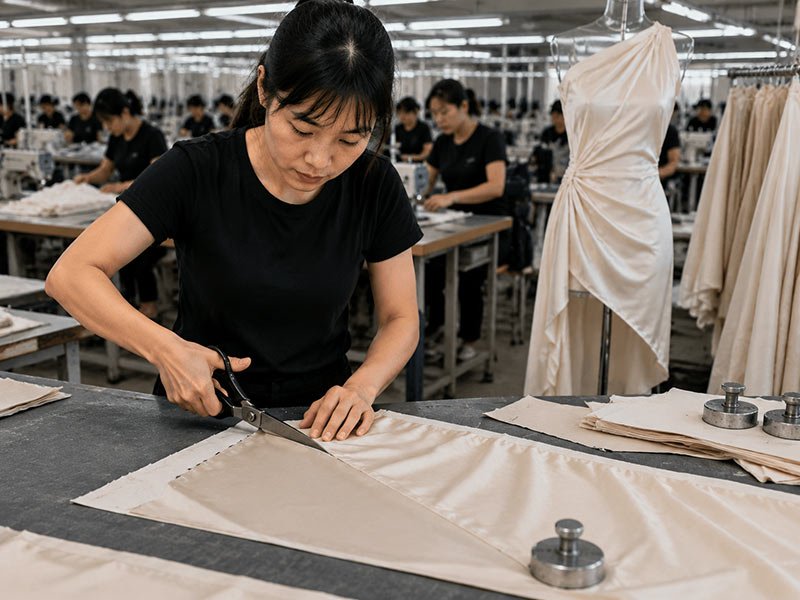
Bias Seam Stabilization

Clean Narrow Hems
Chiffon, satin and lightweight woven fabrics often require narrow hems. Width, stitch density and feeding must remain even along curved or diagonal edges. High-low skirts receive special attention at transition areas where hem direction changes and fabric may grow differently.

Puckering Control

Drape Anchoring

Ruffle Placement

Concealed Zipper Finish

Lining Connection
Lining attachment must support the outer garment without pulling hems, necklines or draping.Ease and attachment points are confirmed during sample review. Internal seams remain clean and comfortable against the body.
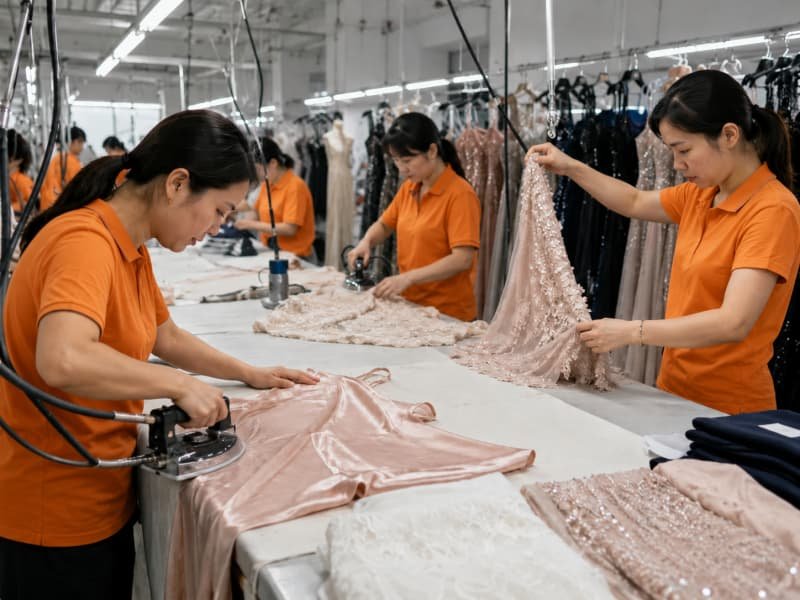
Pressing and Packing
Custom Development Paths for Brand-Specific Designs
Tech Pack Development
Reference Image Development
Original Sample Development
Fabric and Color Development
Trim and Detail Development
Branding and Packaging
Controlling Approved Samples Into Bulk Production
Approved Sample Status
Pattern Locking
BOM Confirmation
Measurement Standard
Workmanship Standard
Seam construction, edge finish, ruffle placement, drape anchoring, reinforcement, pressing and internal finishing are confirmed through sample evidence and production notes. Sensitive operations receive clearer references before line start.
PP Sample Approval
First-Piece Verification
Inline and Final Control
Quality Control Focused on Asymmetric Dress Risks

Fabric Inspection

Cutting and Grain Direction

First-Piece Confirmation

Inline Measurement Checks

Final Appearance Inspection
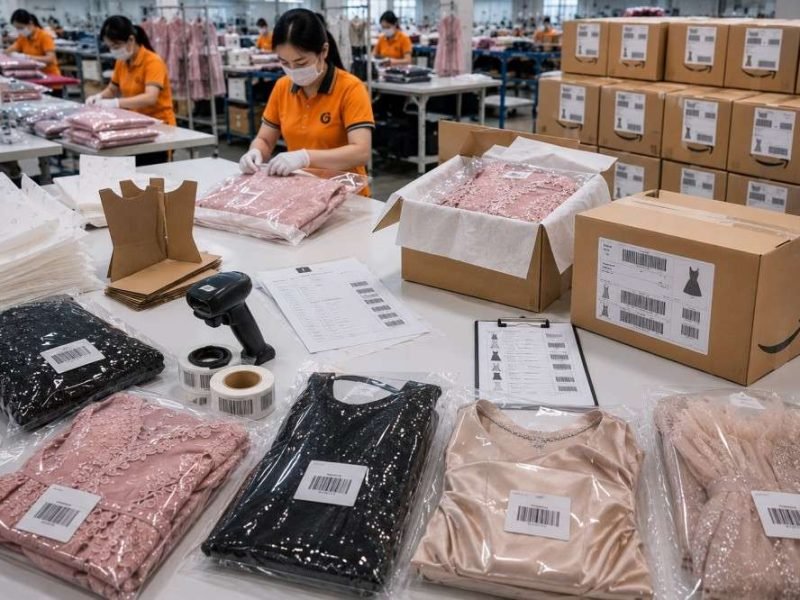
Packing and Label Verification
Manufacturing Capacity for Multi-Style Dress Programs
16 Owned Factories
Projects can be matched according to dress construction, material and workmanship needs.
20+ Satellite Factories
Allocation follows approved standards, production capability and project requirements rather than unstructured outsourcing.
12,000+ Supporting Workers
Workforce scale supports parallel planning when collections contain different construction routes.
50+ Flexible Lines
Line selection considers style complexity and operation sequence instead of quantity alone.
Specialized Process Resources
Each process route is evaluated against visual outcome, timing and repeatability.
Coordinated Project Execution
Development, material coordination, production planning, QC, packing and delivery preparation remain connected across project stages.
The manufacturing network is valuable because resources can move under one project standard rather than operate as isolated factories.
Compliance Support for Brand-Level Dress Production
SMETA Audit Foundation
Market Testing Coordination
Product Documentation
Label and Packing Control
Asymmetric Dress Projects Managed at Collection Scale

US Partywear Collection
Project profile
- Market: United States
- Collection: Party and going-out dresses
- Styles: 18
- Total order: 36,000 pieces
- Average volume: 2,000 pieces per style
- Main directions: One-shoulder satin, side-ruching, cut-outs and asymmetric mini dresses
Development challenge
Several styles combined fitted bodies with diagonal satin necklines. Early samples showed neckline relaxation, pulling near the supported shoulder and visible seam puckering. Two mesh cut-out styles also needed stronger edge control without creating heavy internal construction.
Duolan response
The team separated upper-body support from outer drape development. Shoulder angles, neckline curves and lining tension were revised before grading. Satin seam trials were completed for tension and pressing. Cut-out edges received controlled reinforcement and position measurements tied to waist and side-seam references.
Production control
Approved patterns, BOM references, critical measurements and neckline photographs were included in the production standard. First pieces were reviewed for shoulder balance, bust coverage, cut-out position and satin seam appearance. Inline checks focused on the same points.
Project outcome
All 18 styles moved through coordinated production windows. The program retained a unified partywear direction while allowing different construction routes for satin, mesh and stretch styles.

UK Occasionwear Program
Project profile
- Market: United Kingdom
- Collection: Occasion and wedding guest dresses
- Styles: 24
- Total order: 62,400 pieces
- Average volume: 2,600 pieces per style
- Main directions: Draped midi, high-low chiffon, asymmetric neckline and ruffle dresses
Development challenge
The collection used several lightweight materials across related silhouettes. Chiffon styles developed hem growth after hanging, while draped crepe styles lost fold definition across larger sizes. Ruffle placement also needed consistent visual rhythm across 24 styles.
Duolan response
Grainlines and hem references were mapped for every high-low style. Samples were allowed to stabilize before final leveling. Draped styles received separate grade rules for body dimensions and fold volume. Ruffle templates established start points, width and direction for every approved size.
Production control
PP samples confirmed bulk materials and final construction. First-piece checks included hem maps, side-seam balance, drape position and ruffle placement. Final inspection reviewed front, side and back appearance alongside measurement records.
Project outcome
The collection maintained consistent silhouette language across mini, midi and maxi categories. Material-specific standards reduced variation while allowing each asymmetric feature to retain its intended movement.

Australian Resort Dress Drop
Project profile
- Market: Australia
- Collection: Resort and social-event dresses
- Styles: 12
- Total order: 24,000 pieces
- Average volume: 2,000 pieces per style
- Main directions: Printed one-shoulder maxi, layered high-low hems and asymmetric mesh overlays
Development challenge
The program combined lightweight outer layers with travel-oriented packing. Printed panels needed directional alignment, long bias sections required stabilization, and layered hems risked creasing during transport.
Duolan response
Print placement and grain direction were reviewed together before cutting approval. Long panels were stabilized and remeasured before final hemming. Outer-layer and lining lengths were adjusted to protect movement and coverage. Packing trials evaluated fold positions and recovery after compression.
Production control
Cutting records identified panel direction and print orientation. First-piece review covered shoulder security, side-seam balance and layer spacing. Packing checks confirmed protective folding and carton arrangement.
Project outcome
The 12-style drop maintained light movement and clear visual identity while meeting defined packing and delivery requirements. Approved files were retained for later color and print developments.
Frequently Asked Questions About Asymmetric Dress Manufacturing
Yes. Duolan reviews measurements, construction, materials, artwork, asymmetric reference points and fit priorities before sampling. Any unclear areas are listed for confirmation. The review also considers production feasibility so the sample can become a reliable basis for grading, PP approval and bulk production.
Yes. A reference image can establish visual direction, but additional decisions are required for fabric, fit, construction, internal support, measurements and finishing. Duolan develops an interpretation plan and confirms important assumptions before pattern work starts.
Suitable fabrics include satin, crepe, chiffon, jersey, mesh, lace, organza, tulle and embellished materials. Selection depends on drape, stretch, support, opacity, seam behavior and intended silhouette. Fabric approval should also consider bulk availability and lot consistency.
Control begins with shoulder angle, neckline curve, armhole shape, bust coverage and internal support. Depending on the design, Duolan may use stay tape, lining control, cups, boning, power mesh or an internal waist stay. Fit approval includes movement views.
Every critical high and low point is defined from a stable reference such as the high shoulder point, center front, side seam or center back. Fluid or bias-cut fabrics are allowed to stabilize before final hem leveling and approval.
Yes. Bias-cut development requires grainline mapping, controlled panel handling, hanging review, seam-balance checks and final leveling. Material behavior must be confirmed in the target fabric because different satin or crepe qualities can grow differently.
Comments are translated into measurable pattern, fit or workmanship actions. Duolan identifies the affected area, proposed correction and any related impact on material or construction. Revised standards are documented before the next sample or production stage.
The process includes pattern locking, BOM confirmation, size specification, asymmetric measurement references, workmanship standards, PP approval, first-piece verification, inline QC and final inspection. Production begins from confirmed standards rather than appearance alone.
Yes. Brand size charts and grading rules can be followed after development review. Additional asymmetric points may be added for left-right shoulders, neckline drops, high-low hems, cut-outs, drape anchors and ruffle positions.
Yes. Services can include main labels, care labels, size labels, hangtags, barcodes, polybags, folding, hanger packing and carton requirements. Artwork, wording, placement and packing details need approval before bulk completion.

Send Your Asymmetric Dress Project for Review
Share your tech pack, sketch, reference image, original sample, fabric direction or collection brief with Duolan. Include enough information for an accurate review of silhouette, structure, fit, material, workmanship and production requirements.
Useful project information includes:
- Target dress styles and asymmetric features
- Tech packs, sketches or reference images
- Brand size chart and grading rules
- Preferred fabric, lining and trim direction
- Target quantity by style and color
- Sample purpose and current approval stage
- Planned launch or warehouse delivery window
- Required testing, labeling and packing standards
- Known fit, quality or construction concerns
Duolan will review the development basis, key technical risks, sample route, material requirements, production preparation and information still needed for quotation. A clear brief allows the team to propose a more reliable path from design review to sample approval and bulk execution.