Skip to content
Custom Pleated Dress Manufacturer
Pleated dress development and manufacturing for fashion brands requiring controlled silhouettes, stable pleat structures and dependable bulk production.
- Knife, accordion, micro, sunray, box, inverted, panel and mixed pleat structures can be evaluated around the selected fabric, silhouette and intended retail position.
- A 3-stage validation path covers pleating trials, garment sample review and bulk first-piece confirmation before full production release.
- Multi-style programs commonly contain 10–30 styles and 20,000–80,000 total garments across planned colors, sizes and delivery windows.
- Nearly 30 years of fashion dress development experience supports fabric judgment, pattern correction, workmanship planning and sample-to-bulk execution.
Pleated Dress Manufacturing for Established Fashion Teams
Fashion Dress Brands
Pleated dresses often sit across occasion, party, resort, graduation, cocktail and wedding guest collections. Fashion brands need more than a factory able to fold fabric. They need a development partner capable of aligning the pleat effect with the silhouette, fabric handfeel, retail position and intended wearing occasion.
Duolan supports:
- Seasonal and capsule dress collections
- Commercial and statement style balance
- Multiple lengths and silhouette groups
- Planned color and material directions
- Repeat production after market validation
- Coordinated development across related styles
Product Development Teams
Support includes:
- Tech pack and reference review
- Fabric and pleat feasibility discussion
- Pattern development and correction
- Fit comment classification
- Revised sample tracking
- PP sample preparation
- Bulk readiness confirmation
Buying and Sourcing Teams
Buying and sourcing teams need a supplier able to communicate across product, quality, compliance, production and delivery functions. A pleated program can involve the main fabric mill, lining supplier, special-process partner, sewing factory, QC team and packing team.
Duolan coordinates:
- Supplier capability information
- Development and production timelines
- Quality checkpoints
- Material and workmanship records
- Compliance documentation
- Inspection and shipping arrangements
- Repeat-order information retention
Production Risks Behind Pleated Dress Development
Unstable Pleat Retention
- Fabric composition review
- Sample pleating trial
- Recovery observation
- Surface and handfeel comparison
- Bulk-lot verification before cutting
Uneven Pleat Width
Inconsistent pleat width changes the visual rhythm of a dress and can also alter the finished garment measurement. Variations become especially visible on long vertical panels, center-front placements and symmetrical skirts. Control actions include:
- Approved pleat reference
- Direction and spacing definition
- Panel-to-panel comparison
- Left-right symmetry review
- First-piece measurement
Excess Waist Bulk
Pleated fabric consumes more width than flat fabric. Incorrect pleat density, seam placement or waistband construction can create excessive thickness around the waist, yoke or side seam. Development must balance:
- Pleat take-up
- Waist circumference
- Seam allowance
- Lining attachment
- Zipper placement
- Finished wearing comfort
Sample-to-Bulk Variation
- Material locking
- Pleat reference approval
- Pattern version control
- Workmanship confirmation
- PP or first-piece review
- Inline inspection points
Distorted Hem Balance
- Front and back length
- Side seam balance
- Panel symmetry
- Inner and outer layer relationship
- Movement during walking
- Final pressing condition
Packing Compression
- Folding direction review
- Tissue or support placement
- Garment bag sizing
- Carton quantity planning
- Recovery observation after unpacking
- Shipping-method coordination
More Than a Fabric Pleating Workshop
Pleating Process Capability
The pleating process focuses on fold formation, heat response, shape memory and visual consistency. Duolan evaluates the process around the intended dress rather than treating pleated fabric as an isolated material.
The evaluation considers:
- Fabric composition and finish
- Pleat width, depth and direction
- Surface changes after processing
- Dimensional change
- Required recovery
- Bulk process stability
Complete Dress Development
Pleated fabric still needs to become a wearable, balanced and production-ready garment. The dress structure determines whether the final result feels refined or bulky, stable or distorted.
Duolan connects pleating with:
- Pattern and grading
- Waist and yoke construction
- Bust and neckline control
- Lining and transparency management
- Zipper and closure placement
- Hem finishing
- Label and packing requirements
Pleated Dress Styles for Commercial Collections

Pleated Mini Dresses
- Secure neckline or shoulder structure
- Stable waist position
- Appropriate hip ease
- Safe finished length
- Lining coverage during movement
- Pleat opening control

Pleated Midi Dresses
Midi length gives enough vertical area for micro, accordion, knife or sunray pleats to create movement without the full weight of a maxi dress. The waist-to-hem relationship must remain balanced across the size range.
Development priorities:
- Controlled skirt fall
- Pleat rhythm around the body
- Side seam alignment
- Lining length
- Walking movement
- Hem level after hanging

Pleated Maxi Dresses
Maxi dresses make every inconsistency visible. Small differences in pleat direction, panel length or hem tension can become obvious across a long silhouette. Fabric weight must support movement without pulling the pleats open.
Development priorities:
- Vertical line continuity
- Panel length control
- Skirt weight distribution
- Front-back balance
- Full-length lining management
- Packing and hanging protection

Pleated Occasion Dresses
Occasion styles often combine pleats with satin panels, chiffon layers, asymmetric necklines, waist draping or structured bodices. Pleating must support the intended elegance without adding uncontrolled thickness.
Development priorities:
- Bodice-to-skirt transition
- Draping and pleat integration
- Transparency management
- Formal surface finish
- Clean closure construction
- Photographic visual balance

Pleated Party Dresses
- Controlled visual density
- Stretch and recovery
- Skin-contact comfort
- Secure openings
- Pleat-to-seam alignment
- Stable performance during movement

Pleated Resort Dresses
Resort collections often require lightweight fabrics, printed surfaces and relaxed movement. Pleat selection must suit warm-weather wearing, packing and travel without losing the intended shape. Development priorities:
- Lightweight handfeel
- Breathable lining choices
- Print and pleat relationship
- Easy movement
- Packability
- Recovery after unpacking

Pleated Shirt Dresses
- Placket straightness
- Collar balance
- Waist definition
- Pleat position relative to buttons
- Sleeve and body proportion
- Pressing consistency

Asymmetric Pleated Dresses
Asymmetry introduces unequal tension, panel lengths and weight distribution. Pleat direction must support the intended diagonal or sculptural effect without twisting the garment. Development priorities:
- Directional pattern engineering
- Off-center balance
- One-shoulder support
- Uneven hem control
- Lining shape
- Movement from all viewing angles
Pleat Structures Developed Around Fabric and Silhouette

Knife Pleats
- Direction across adjoining panels
- Pleat overlap and take-up
- Waist thickness
- Symmetry around closures
- Pressing and packing direction
- Size grading behavior

Accordion Pleats
Accordion pleats create alternating folds with flexible movement and strong visual texture. They are often used for midi and maxi skirts or full-body pleated constructions. Key considerations:
- Fabric thermal response
- Fold recovery
- Body expansion
- Seam interruption
- Hem treatment
- Carton compression

Micro Pleats
- Fine pleat consistency
- Surface distortion
- Finished width calculation
- Seam bulk
- Edge finishing
- Size-range expansion

Sunray Pleats
Sunray pleats widen from a narrow origin toward the hem, creating radial movement. Pattern shape and pleat placement must work together because the pleat width changes across the panel. Key considerations:
- Radius and origin point
- Waist connection
- Hem sweep
- Left-right balance
- Panel joining
- Length after setting

Box Pleats
- Pleat depth
- Top stitching or securing
- Waist bulk
- Matching across seams
- Internal finishing
- Press retention

Inverted Pleats
Inverted pleats direct volume inward and create a clean surface from the front. They may be used at center front, center back or selected skirt panels. Key considerations:
- Center-line accuracy
- Opening depth
- Internal seam finishing
- Movement allowance
- Placement relative to zipper
- Symmetrical pressing

Panel Pleating
- Transition seam
- Panel width
- Grain direction
- Material thickness difference
- Edge stability
- Color and surface matching

Mixed Pleat Structures
A single garment may combine micro pleats with flat panels, knife pleats with gathers, or sunray pleats with draped sections. Mixed structures require coordinated pattern and process planning. Key considerations:
- Visual hierarchy
- Thickness at junctions
- Process sequence
How Different Fabrics Perform After Pleating
Not every fabric holds pleats in the same way. Fiber composition, weight, finishing, surface texture and thermal behavior should be evaluated before the final pattern and production method are confirmed.
| Fabric Direction | Drape and Surface | Pleat Retention | Main Development Risk | Suitable Applications | Duolan Review Focus |
|---|---|---|---|---|---|
| Polyester Chiffon | Light, fluid and slightly transparent | Usually strong after a suitable setting process | Transparency, edge instability and inconsistent panel length | Midi, maxi, occasion and layered dresses | Composition, lining, pleat clarity, hem recovery and bulk lot |
| Polyester Georgette | Fluid with a textured surface | Medium to strong depending on specification | Surface distortion and excessive texture after setting | Occasion, party and asymmetric dresses | Weight, texture, pleat spacing, sewing tension and pressing |
| Crepe | Controlled drape with a matte or lightly textured face | Varies by fiber and finish | Excessive waist bulk and reduced fold sharpness | Day-to-evening, midi and structured dresses | Composition, thickness, pleat depth, seam bulk and silhouette |
| Satin | Smooth, reflective and visually formal | Requires careful testing | Heat marks, shine change, pressure marks and visible needle holes | Occasion, cocktail and statement dresses | Surface response, lining, handling, seam quality and packing |
| Organza | Crisp, transparent and structured | Clear fold definition | Excessive stiffness, sharp edges and uncomfortable volume | Statement sleeves, overlays and structured skirts | Handfeel, fold sharpness, edge finish, skin contact and volume |
| Recycled Polyester | Performance varies by yarn and finishing route | Must be verified by actual lot | Recovery variation, surface change and batch inconsistency | Responsible fashion collections | Certification scope, composition, handfeel, trial result and bulk availability |
| Polyester Blends | Behavior depends on blend ratio and finishing | Cannot be assumed without testing | Inconsistent setting response and dimensional change | Commercial fashion dresses with specific handfeel targets | Fiber ratio, shrinkage, recovery, surface and approved bulk reference |
| Natural-Fiber Blends | Softer and less thermally stable in many constructions | Often limited compared with synthetic-based fabrics | Pleat opening, shrinkage and reduced long-term definition | Soft pleats, stitched pleats and relaxed silhouettes | Intended care, construction method, pleat permanence expectations and fit |
Fabric Development Before Pleating Begins
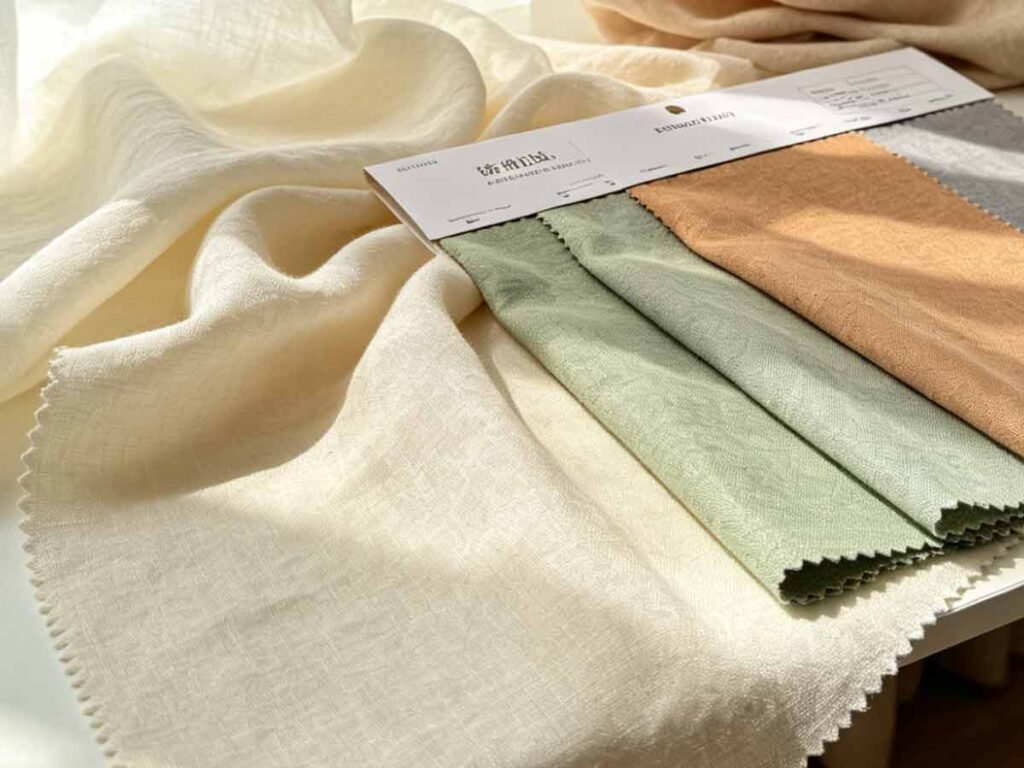
Fiber Composition
Review points:
- Main fiber and blend ratio
- Yarn and construction type
- Mechanical or chemical finishing
- Thermal sensitivity
- Intended care method
- Availability of consistent bulk lots

Weight and Thickness
Review points:
- Fabric GSM or comparable weight data
- Single-layer and folded thickness
- Skirt weight
- Seam build-up
- Hem behavior
- Finished-garment comfort

Drape and Handfeel
Pleats can appear crisp, soft, fluid or sculptural depending on the base material. The intended visual result should be described before fabric approval.
Review points:
- Softness or firmness
- Surface texture
- Fluidity
- Recovery after compression
- Skin-contact comfort
- Compatibility with the target retail position

Heat and Surface Response
Review points:
- Surface marking
- Color change
- Gloss change
- Pressing sensitivity
- Handfeel change
- Test result under proposed process conditions

Transparency and Lining
Pleating can increase or reduce apparent transparency depending on fold density and movement. Lining must provide coverage without restricting pleat expansion or skirt movement.
Review points:
- Standing and movement transparency
- Lining color
- Lining weight
- Stretch compatibility
- Attachment points
- Inner-layer length
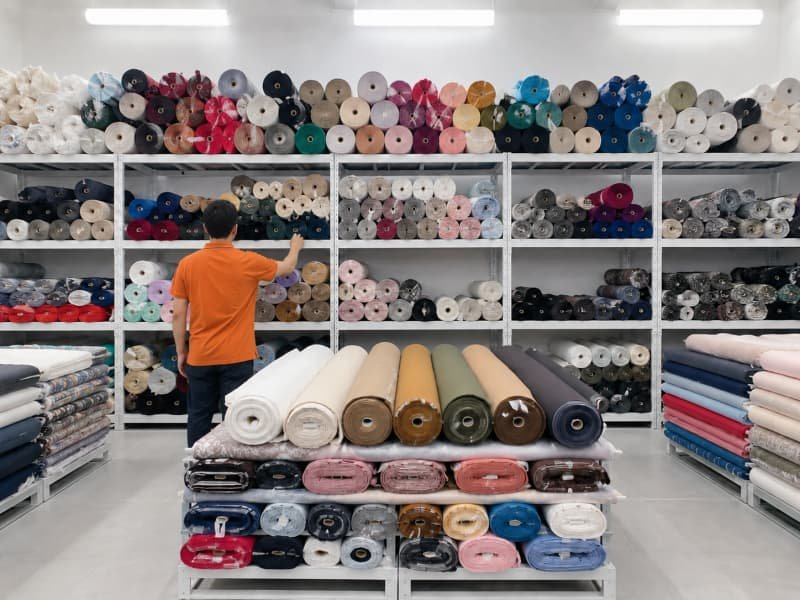
Bulk Material Availability
Review points:
- Mill source
- Available quantity
- Dye-lot planning
- Lab dip or color standard
- Reorder availability
- Material locking before bulk
Pleating Is an Engineered Production Process
Define the Pleat Before Sampling
The review covers:
- Pleat family: Knife, accordion, micro, sunray, box, inverted, panel or combined structure.
- Position: Full garment, skirt only, selected panels, sleeves, neckline or decorative insert.
- Direction: Vertical, radial, diagonal or intentionally irregular.
- Scale: Fine, medium or wide pleat appearance.
- Movement: Controlled opening, soft expansion, structured volume or continuous vertical flow.
- Garment relationship: Connection with waistband, yoke, side seam, zipper, lining and hem.
- Commercial requirement: Statement effect, repeatable commercial style, travel-friendly product or formal occasion finish.
Convert the Approved Effect Into Bulk Control
Bulk production requires the approved sample to become a set of manufacturing references. Duolan records the material, pleat direction, construction points and visible standards required for production.
Bulk control covers:
- Approved fabric and color
- Approved pleat panel or garment sample
- Pattern and grading version
- Pleat direction and panel location
- Waist and yoke construction
- Seam matching
- Lining attachment
- Hem treatment
- Pressing method
- Folding and packing direction
- First-piece confirmation
- Inline visual comparison
Production is not released merely because one sample looks correct. The agreed effect must be explainable, measurable and repeatable across colors, sizes and batches.
Validate Fabric and Pattern Together
Pleat development should not be separated from pattern development. A test panel provides information about finished width, panel length, recovery and surface response. Those findings become pattern inputs.
The development sequence can include:
- Create a sample pleating test from the proposed material.
- Compare pre-process and post-process dimensions.
- Review pleat clarity, depth, spacing and handfeel.
- Observe the panel after hanging, compression and normal handling.
- Calculate the required fabric consumption and pattern width.
- Adjust waist, yoke, seam and hem construction.
- Build the first garment sample using the approved process direction.
- Review fit, visual balance and movement on a mannequin or fitting body.
A visually attractive panel can still fail as a garment when the waist becomes bulky, the lining restricts movement or the side seams twist. Garment validation remains essential.

Heat Setting for Controlled Pleat Shape
Evaluate Material Tolerance Before Setting
Evaluation may include:
- Fiber and blend confirmation
- Fabric weight and thickness
- Dye and finish information
- Surface sensitivity
- Initial dimensional check
- Trial pleating under the proposed process
- Color and handfeel comparison
- Recovery observation after resting
Control Shape Without Damaging Appearance
A strong pleat is not automatically a successful result.
The garment still needs an appropriate handfeel, clean surface and refined drape.
Development balances:
- Pleat sharpness against softness
- Shape memory against natural movement
- Surface stability against pressure marking
- Dimensional control against unwanted shrinkage
- Visual consistency across colorways
- Technical stability against skin comfort
The final process direction should match the product position. A structured day dress may need crisp folds, while an occasion maxi may require a softer and more fluid pleat response.
Maintain Stability Through Production and Packing
Heat setting is only one stage. Later sewing, pressing, steaming, folding and shipping can change the pleated surface.
Production control includes:
- Limit unnecessary re-pressing on sensitive pleats.
- Keep panel direction consistent during sewing.
- Prevent seam allowances from flattening visible folds.
- Review garment dimensions after construction.
- Check pleat recovery after final pressing.
- Test packing folds before bulk carton planning.
- Inspect the garment after unpacking.
- Record the approved handling method for production and packing teams.
The goal is not merely to create a pleat.
Pattern Engineering Behind Balanced Pleated Dresses
Pleat Take-Up
Key controls:
- Flat-to-pleated width relationship
- Panel quantity
- Waist or yoke attachment length
- Seam allowance
- Size grading
- Fabric consumption planning
Panel Width
Panel width influences visual rhythm, seam location and the continuity of the pleat pattern. Incorrect panel planning can create narrow leftover sections or obvious interruptions.
Key controls:
- Available fabric width
- Pleat repeat
- Center-front and center-back position
- Side panel balance
- Seam visibility
- Cutting efficiency
Grain Direction
Grain direction affects hanging, twisting and recovery. Directional pleats or asymmetric panels become particularly sensitive when the fabric grain is not controlled.
Key controls:
- Warp and weft orientation
- Bias influence
- Printed or textured direction
- Panel mirroring
- Side seam behavior
- Skirt fall
Waist and Yoke
Key controls:
- Waist circumference
- Pleat anchoring point
- Yoke shape
- Internal finishing
- Zipper clearance
- Comfort against the body
Seam Placement
Key controls:
- Side seam position
- Center seam need
- Closure location
- Pleat-to-seam alignment
- Bulk at joining points
- Allowance for repair and inspection
Hem Sweep
Pleat depth and skirt width determine the movement and visual spread of the hem. A narrow hem can restrict the pleat effect, while excessive sweep can increase weight and material use.
Key controls:
- Intended movement
- Finished circumference
- Lining sweep
- Hem method
- Length consistency
- Hanging-time evaluation
Fit and Measurement Control for Pleated Silhouettes
Bust and Neckline
Review points:
- Bust circumference
- Underbust position
- Neckline depth
- Armhole shape
- Strap or shoulder length
- Lining and support
Waist Position
Review points:
- Natural or raised waist
- Front-back balance
- Waistband width
- Closure tension
- Pleat anchoring
- Size-to-size consistency
Hip Ease
Pleats can visually add volume or mechanically open around the hip. The amount of ease should match the intended silhouette.
Review points:
- Hip circumference
- Pleat expansion
- Lining ease
- Sitting comfort
- Side seam position
- Body-conscious versus relaxed fit
Side Seam Balance
Review points:
- Front-back width balance
- Grain direction
- Pattern shape
- Pleat tension
- Zipper influence
- Movement test
Lining Length
Review points:
- Coverage during walking and sitting
- Inner-layer sweep
- Hem separation
- Stretch compatibility
- Attachment position
- Size grading
Hem and Movement
Finished length should be reviewed after the dress has rested in its natural hanging condition. Movement checks reveal issues not visible in flat measurement.
Review points:
- Front, side and back length
- Walking clearance
- Stair movement
- Sitting behavior
- Pleat opening
- Lining relationship
From Design Brief to Production-Ready Pleated Sample
Brief Review
Development can begin from a tech pack, original sample, reference image, sketch, mood board or material idea.
Useful inputs:
- Product category
- Reference images
- Intended pleat structure
- Fabric direction
- Size chart
- Target quantity
- Market and launch date
- Label and packing requirements
Fabric and Pleat Review
The proposed material is reviewed against the desired pleat effect. A pleating trial may be required before the garment sample begins.
Review outputs may include:
- Material suitability notes
- Alternative fabric direction
- Pleat test result
- Surface-risk observation
- Lining recommendation
- Pattern adjustment requirement
Pattern Development
The pattern translates the intended silhouette into measurable garment components. Pleat take-up, panel width, waist construction and lining are incorporated into the development version.
Pattern work may include:
- Base pattern creation
- Panel engineering
- Pleat consumption allowance
- Seam and closure planning
- Initial size specification
- Construction notes
First Garment Sample
The first sample tests the entire relationship between fabric, pleat, pattern, fit and workmanship. It is reviewed as a garment rather than as an isolated visual prototype.
Review points:
- Front, side and back appearance
- Pleat direction and clarity
- Waist and hip balance
- Lining and transparency
- Hem level
- Construction feasibility
Revision and Fit Review
Comments are classified into fit, visual, material, pleat and production issues. Each comment should lead to a defined action.
Possible actions:
- Pattern correction
- Pleat-density adjustment
- Material replacement
- Lining revision
- Construction change
- Measurement update
- Revised sample confirmation
PP and Bulk Readiness
A confirmed sample becomes the basis for production only after material, measurements, workmanship and packing requirements are aligned.
Readiness items include:
- Approved sample status
- BOM and material standard
- Size specification
- Pleat reference
- Workmanship points
- Label and packing files
- Production and QC notes
Validate Complex Pleated Styles Before Full Production
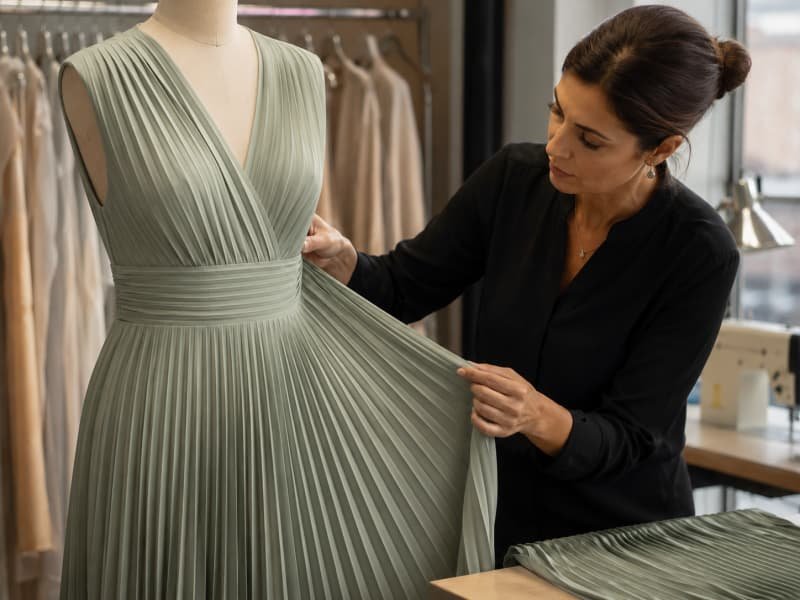
Pleating Trial
- Fold definition
- Finished width
- Length change
- Handfeel
- Surface response
- Recovery after handling

Construction Trial
- Seam thickness
- Pleat interruption
- Zipper area
- Lining movement
- Edge finishing
- Wear comfort

First-Piece Review
- Approved material
- Pleat direction
- Garment measurements
- Fit and balance
- Workmanship
- Packing readiness
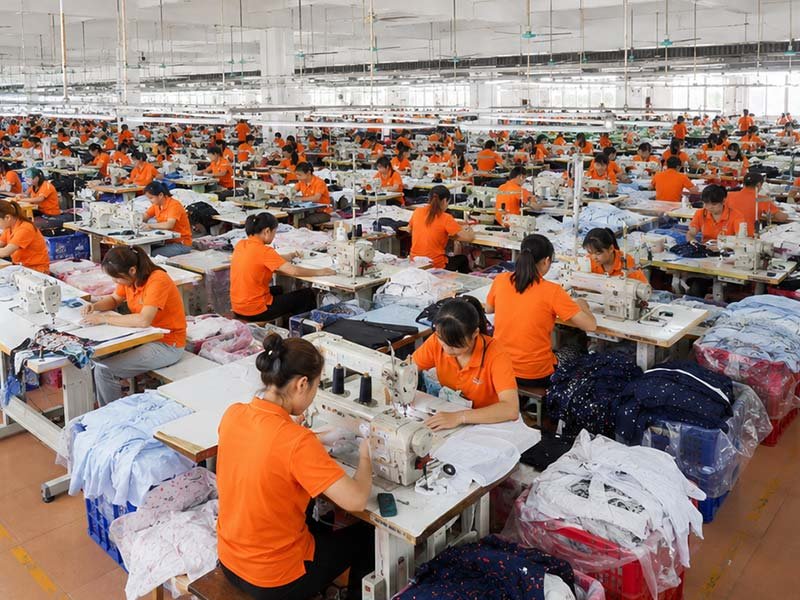
Pilot Production
- Process repeatability
- Operator understanding
- Size variation
- Color variation
- Inspection method
- Production timing
Construction Details That Protect the Pleated Effect
Waistband Connection
The waistband secures the pleats and defines the silhouette. Uneven attachment can change pleat spacing or create local thickness. Control points:
- Pleat distribution
- Waist measurement
- Internal seam bulk
- Stabilization
- Lining attachment
- Top-edge finish
Yoke Construction
A yoke can distribute volume more smoothly and reduce bulk near the body. Shape and depth should match the intended silhouette.
Control points:
- Yoke curve
- Seam alignment
- Interfacing
- Lining
- Size grading
- Pressing
Pleat-Seam Alignment
- Match points
- Panel sequence
- Direction
- Seam allowance
- Symmetry
- Inline comparison
Invisible Zipper
Zipper areas can flatten pleats, create thickness or cause waves. Closure placement should remain clean and easy to operate.
Control points:
- Zipper length
- Seam stabilization
- Top hook
- Pleat clearance
- Lining finish
- Smooth opening
Lining Attachment
Lining should provide opacity and comfort without restricting the pleated layer. Attachment points require enough freedom for movement.
Control points:
- Lining fabric
- Sweep
- Length
- Stretch
- Seam connection
- Hem separation
Hem Finishing
- Narrow rolled hem
- Clean-finish hem
- Binding
- Raw or heat-controlled edge where suitable
- Length balance
- Pressing response
Neckline and Shoulder
Pleated bodices require stable necklines and shoulder points. Fine pleats may spread or compress around curved edges. Control points:
- Neckline stabilization
- Strap width
- Shoulder position
- Armhole finish
- Lining support
- Coverage during movement
Labels and Branding
Brand labels, care labels and size labels should be positioned without distorting delicate pleated surfaces or causing discomfort. Control points:
- Label size
- Placement
- Stitch method
- Care instructions
- Language requirements
- Brand consistency
Preserve Design Value While Improving Production Logic
Fabric Route
Evaluation covers:
- Surface and handfeel
- Pleat performance
- Fabric width
- Consumption
- Lining need
- Bulk availability
- Target price architecture
Pleat Density
Increasing pleat density can raise fabric consumption, process time and waist bulk. A small adjustment may preserve the visual impression while improving construction and material efficiency.
Evaluation covers:
- Visual impact
- Finished width
- Waist thickness
- Material use
- Production stability
- Size grading
Construction Route
Evaluation covers:
- Seam count
- Panel count
- Lining construction
- Closure route
- Hem method
- Repair accessibility
- Bulk repeatability
Color and Quantity Planning
Evaluation covers:
- Core and statement colors
- Dye-lot requirements
- Color-specific surface response
- Size ratio
- Reorder potential
- Delivery sequence
Controlled Transition From Sample to Bulk
Sample Status
The team confirms whether the garment is approved for fit, visual direction, production reference or final PP basis. Unresolved comments are separated from approved points.
Key records:
- Approval status
- Open issues
- Revised measurements
- Material status
- Pleat reference
- Next decision point
Material Locking
Key records:
- Supplier and quality
- Composition
- Color standard
- Bulk lot
- Lining
- Zipper and trims
- Care requirement
Pattern Version Control
The production pattern must correspond with the approved sample and latest fit comments. Old pattern versions create major bulk risk.
Key records:
- Pattern version
- Revision date
- Size base
- Grading rule
- Measurement sheet
- Construction updates
Workmanship Standard
Key records:
- Waist and yoke
- Pleat alignment
- Zipper
- Lining
- Hem
- Pressing
- Label placement
First-Piece Confirmation
The first production piece is checked before volume expands. Critical issues can be corrected while the production impact remains limited.
Key checks:
- Material
- Measurements
- Pleat direction
- Fit and balance
- Workmanship
- Visual comparison
Production Release
Full production begins only after the necessary materials, documents, standards and scheduling conditions are aligned.
Release basis:
- Approved production reference
- Confirmed BOM
- Final specifications
- QC checkpoints
- Packing standard
- Delivery plan
Quality Control for Pleated Dress Production

Incoming Fabric Review
Inspection points:
- Color and lot
- Width and weight
- Surface defects
- Handfeel
- Composition records
- Shrinkage or process-relevant behavior
- Quantity availability

Pleated Panel Review
Inspection points:
- Pleat width
- Direction
- Clarity
- Panel dimensions
- Surface condition
- Symmetry
- Recovery

Cutting Control
Cutting must preserve grain, direction and panel identity. Directional pleats require careful bundling and numbering.
Inspection points:
- Pattern version
- Grain orientation
- Panel direction
- Cut accuracy
- Size identification
- Bundle sequence
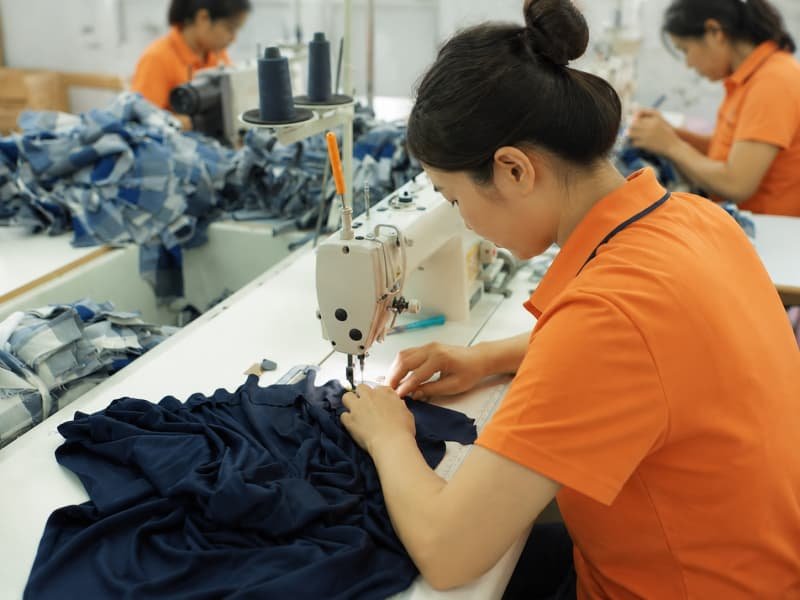
Sewing-Line Control
Inspection points:
- Waist distribution
- Seam alignment
- Zipper installation
- Lining
- Neckline and shoulder
- Hem
- Label placement

Measurement Review
Inspection points:
- Bust
- Waist
- Hip
- Body length
- Strap length
- Lining length
- Hem opening
- Critical product-specific dimensions
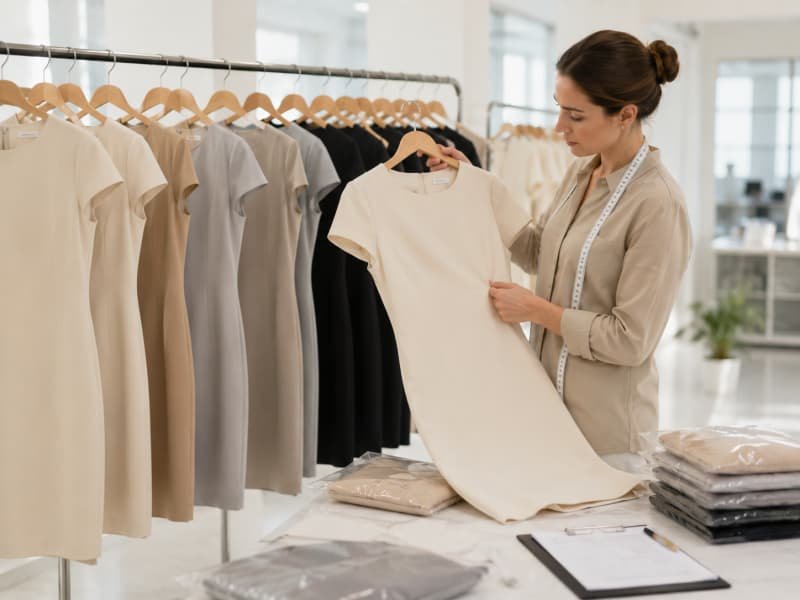
Appearance Review
Pleated dresses are evaluated from front, side and back views under natural hanging conditions.
Inspection points:
- Pleat rhythm
- Side seam balance
- Hem level
- Surface marks
- Pressing
- Transparency
- Symmetry

Final Garment Inspection
Final inspection verifies workmanship, measurements, appearance, labels and packing against the agreed standard and inspection plan.
Inspection points:
- Approved reference
- Defect classification
- Size and color distribution
- Label and care information
- Packing quantity
- Carton marks

Packing Recovery Check
Selected packed garments can be reopened to confirm that folding and carton pressure have not damaged the pleat effect.
Inspection points:
- Fold marks
- Pleat recovery
- Surface pressure
- Garment dimensions
- Hanger or flat-pack method
- Repacking instructions
Packaging Designed to Protect Pleated Garments
Folding Direction
Review points:
- Pleat direction
- Garment length
- Fold count
- Pressure points
- Unpacking recovery
- Retail or warehouse needs
Garment Protection
Tissue, backing materials, garment bags or hanger support may be used according to the fabric surface and pleat sensitivity.
Review points:
- Surface protection
- Color transfer risk
- Moisture control
- Sharp trim protection
- Bag dimensions
- Material compliance
Carton Planning
Review points:
- Pieces per carton
- Garment dimensions
- Carton strength
- Shipping method
- Stacking pressure
- Destination handling
Brand Packaging
Hangtags, size stickers, barcodes, folding boards and destination labels are coordinated with the final packing standard.
Review points:
- Artwork and language
- Barcode accuracy
- Placement
- Pack ratio
- Carton marks
- Warehouse instructions
Manufacturing Capacity for Multi-Style Pleated Programs
Nearly 30 Years Development
The manufacturing foundation is supported by nearly three decades of fast-fashion womenswear and dress development experience.
Long-term work across design, fabric, pattern, decoration and production provides a stronger basis for judging whether a pleated concept can move from reference to repeatable garment.
16 Owned Factories
Core projects and controlled production can be allocated within a network of 16 owned womenswear factories. The structure provides stronger direct management for key styles, higher-risk products and recurring programs.Value for brand teams:
- Core production control
- Better production-path matching
- Capacity for repeat and scale-up orders
20+ Satellite Factories
More than 20 long-term satellite factories provide additional flexibility for suitable styles, regional capacity support and seasonal production peaks.
Value for brand teams:
- Flexible allocation
- Capacity buffering
- Multi-style parallel production
- Support for rolling repeat orders
12,000+ Workers
Value for brand teams:
- Parallel project execution
- Different style-complexity routes
- Seasonal production support
- Wider labor and skill availability
300 Sewing Lines
Value for brand teams:
- Multi-style scheduling
- Controlled launch production
- Repeat-order responsiveness
- Production-path flexibility
15,000–35,000 Samples
Value for brand teams:
- Parallel sample development
- Multi-style collection support
- Revision capacity
- Stronger continuity from development to bulk
Compliance and Documentation for Global Fashion Markets
SMETA Audit Foundation
Available cooperation can include:
- Audit information review
- Factory information
- Social-compliance coordination
- Brand-specific evaluation support
- Factory-visit arrangements
Product Standard Coordination
Coordination may include:
- Testing requirement review
- Sample submission
- Material documentation
- Product specification
- Third-party testing arrangement
- Report tracking
Material and Sustainability Files
Documents may include:
- Composition information
- Supplier certificates
- Transaction or scope documents where applicable
- Test reports
- Care information
- Material traceability files
Brand-Specific Requirements
Large fashion groups often maintain their own restricted-substance, workmanship, inspection, labeling and packing manuals. Duolan reviews those requirements as part of project preparation.
Cooperation may include:
- Vendor manual review
- Restricted-substance requirements
- Inspection standards
- Label and language rules
- Packing manuals
- Shipping documents
Representative Pleated Dress Production Programs

U.S. Occasionwear Program
- 18 styles
- 42,000 total garments
- 6 main color directions
- U.S. size range 2–12
- Micro, knife and sunray pleat combinations
- Polyester chiffon, georgette and satin-panel constructions
- 2 planned shipment windows
- Tested pleat density before final pattern release
- Reduced unnecessary fabric build-up at the waist
- Adjusted yoke and lining construction
- Defined pleat direction around side seams
- Confirmed first-piece standards before production volume increased
- Used separate packing methods for midi and maxi styles

European Resort Collection
A European fashion group developed a resort-focused pleated collection combining printed surfaces and lightweight silhouettes. Project data:
- 12 styles
- 28,800 total garments
- 5 color and print directions
- EU size range 32–44
- Midi, maxi and asymmetric silhouettes
- Accordion, panel and soft knife pleats
- 4 primary fabric specifications
Main challenge: Printed panels needed to maintain visual continuity after pleating, while lightweight materials required sufficient opacity without losing movement. Different print grounds also showed different dimensional responses during trial processing. Development response:
- Reviewed print placement before pleating
- Tested material dimensions before final pattern calculation
- Matched lining weight to each outer fabric
- Adjusted asymmetric hem patterns after hanging review
- Separated high-risk print directions from simpler solid-color styles
- Added unpacking recovery checks to packing approval
Program result: The final assortment maintained a coordinated collection identity across different pleat structures. Production was divided by fabric route and style complexity to protect the launch calendar.

Multi-Market Party Dress Drop
- 26 styles
- 76,000 total garments
- 9 colorways
- U.S. size range 0–14
- EU size range 32–46
- Pleated mini, midi and maxi styles
- 3 planned delivery waves
- Classified styles by process and fit risk
- Created separate production paths for metallic and standard fabrics
- Confirmed critical measurements by style family
- Used first-piece review for higher-risk asymmetric styles
- Coordinated destination labels and packing by shipment wave
- Retained approved information for repeat-production decisions
Production and Delivery Planning by Project Complexity
Lead time begins after the required sample, material, order and payment conditions are confirmed. Fabric sourcing, pleating trials, custom colors, third-party testing and special packaging can affect the final schedule.
| Project Stage or Method | Reference Timing | Main Conditions |
|---|---|---|
| Sample planning | Confirmed after project review | Depends on design files, fabric availability, pleating trials, pattern complexity and revision scope |
| Simple bulk styles | 15–20 days | Materials ready, standards confirmed and limited special processing |
| Regular bulk styles | 20–30 days | Standard fashion construction, approved materials, PP basis and normal production planning |
| Complex bulk styles | 30–45 days | Multiple fabrics, sensitive pleating, asymmetric structure, special workmanship or higher inspection needs |
| Express shipping | 3–7 days | Destination, shipment weight, customs and service level |
| Air freight | 5–8 days | Flight schedule, destination handling and customs |
| Sea freight | 20–35 days | Port pair, sailing schedule, consolidation and customs |
| Split shipment | Project-based | Launch priorities, warehouse requirements and available production sequence |
A production timeline is built backward from the required receiving or launch date. The plan normally considers material readiness, pleating trials, sample approval, PP confirmation, bulk production, inspection, packing, shipping and contingency time.
Frequently Asked Questions About Pleated Dress Manufacturing

Start Your Pleated Dress Development Program
Send Duolan your pleated dress project for a structured development, sample or bulk-production review. A clear project brief allows the team to evaluate fabric suitability, pleat structure, pattern requirements, fit priorities, construction risks, production path and delivery timing before preparing the next step.
Please include as much of the following information as available:
- Company or brand name and website
- Tech pack, reference images or original sample photos
- Intended pleat type or visual reference
- Preferred fabric, handfeel and color direction
- Size range and measurement chart
- Number of styles and estimated quantity
- Target market and required compliance standards
- Desired sample purpose
- Target launch or receiving date
- Label, packaging and shipping requirements