
Custom Tie-Back Dress Manufacturer
Custom tie-back dress development for fashion brands requiring controlled fit, stable back construction and repeatable bulk production.
- 8 tie-back structure directions covering waist ties, halter ties, open backs, bow backs, shoulder ties, cut-outs, strapless backs and multi-tie designs.
- 10+ critical measurement points can be defined for strap length, attachment position, back opening, coverage and waist balance.
- 3 fit states can be reviewed: untied, lightly secured and fully tied.
- 4 production gates connect approved samples with materials, workmanship, first-piece confirmation and bulk quality control.
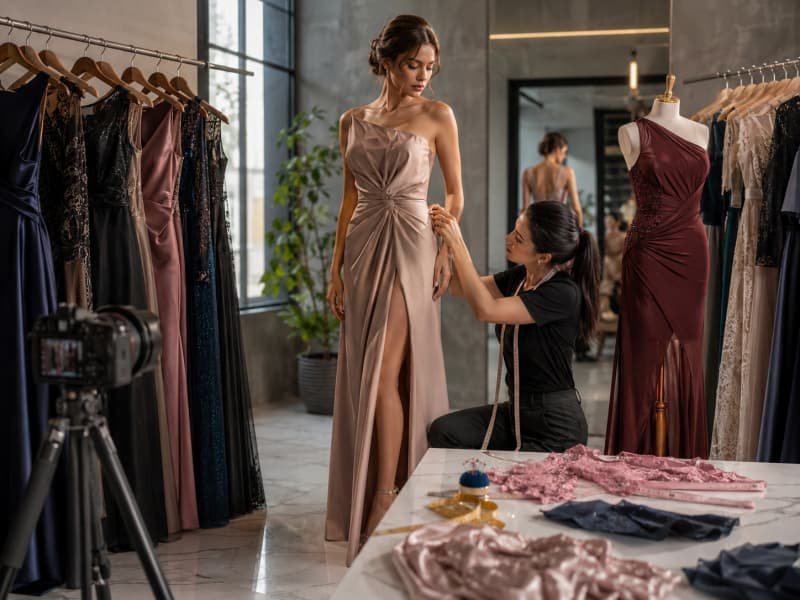
Duolan develops tie-back mini, midi and maxi dresses from tech packs, reference images, original samples or collection briefs. Each project is reviewed around fabric behavior, pattern balance, tie function, coverage, internal support and production feasibility before moving into sampling or bulk planning.
Dress Development Supported by Scalable Manufacturing
30+ Years Experience
16 Owned Factories
20+ Satellite Factories
Long-term satellite partners add production flexibility for multi-style programs, repeat orders and seasonal volume changes.
Styles are not distributed only by available capacity. Production paths can be matched according to fabric type, tie construction, decorative process, order quantity and required delivery window.
12,000+ Workers
50+ Response Lines
SMETA Audit Base
Built for Established Fashion Dress Programs
Fashion Dress Brands
Product Development Teams
Buying and Sourcing Teams
Multi-Brand Groups
Where Tie-Back Dress Projects Lose Control
Most failures begin before bulk sewing. Back opening, tie angle, fabric behavior, grading and support decisions must be clarified while patterns and samples can still be corrected.
| Project Risk | Visible Result | Duolan Control Point |
|---|---|---|
| Tie position is based only on a reference image | Bow sits too high, too low or off-center | Pattern placement review and body-reference measurement |
| Back opening lacks structural support | Edge stands away from the body or collapses | Back contour review, lining decision and tension-path adjustment |
| Strap dimensions are not graded | Small sizes carry excess tie length while larger sizes lose adjustment range | Size-specific strap rule and graded specification |
| Fabric is too slippery or soft | Bow loosens, twists or loses shape during wear | Fabric behavior review, tie construction trial and interfacing assessment |
| Anchor seam is under-reinforced | Local seam distortion or opening after repeated tying | Reinforcement method, seam allowance review and first-piece inspection |
| Coverage is judged only on a mannequin | Side bust, bra line or back exposure changes during movement | Live fit review, movement check and photo assessment |
| Sample comments stay outside technical files | Approved changes are missed during production | Revision summary, updated pattern, specification and workmanship notes |
| Bulk starts before standards are locked | Different lines produce inconsistent openings, ties and silhouettes | PP basis, material lock, first-piece verification and inline checks |
Tie-Back Describes Several Different Structures

Back-Waist Tie
Fabric ties extend from the side waist or back waist and shape the silhouette without fully controlling the garment closure. Development must consider waist-seam balance, tie placement, gathering behavior and whether the bow remains centered after movement. Wider ties create stronger visual volume.
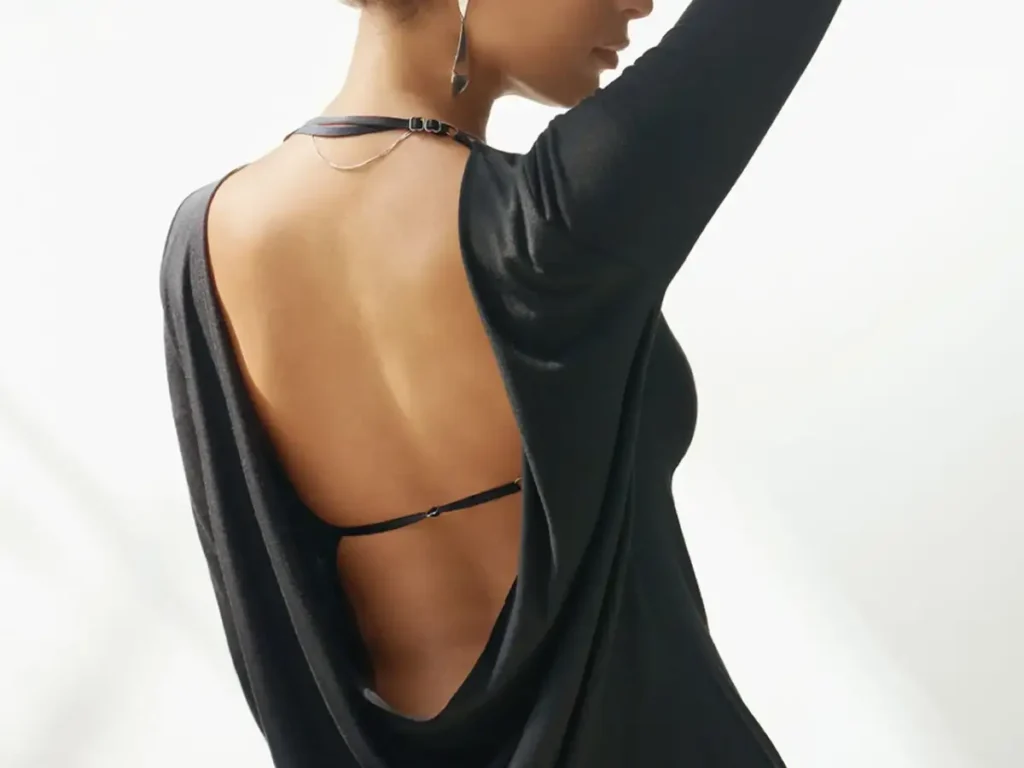
Open-Back Tie
An open-back dress uses one or more ties to control a low, curved or cut-away back opening. Fit depends on the relationship between front coverage, side-back width, shoulder position and tie tension. A visually clean open back may still need a zipper, elastic, lining or internal stabilization to remain wearable.
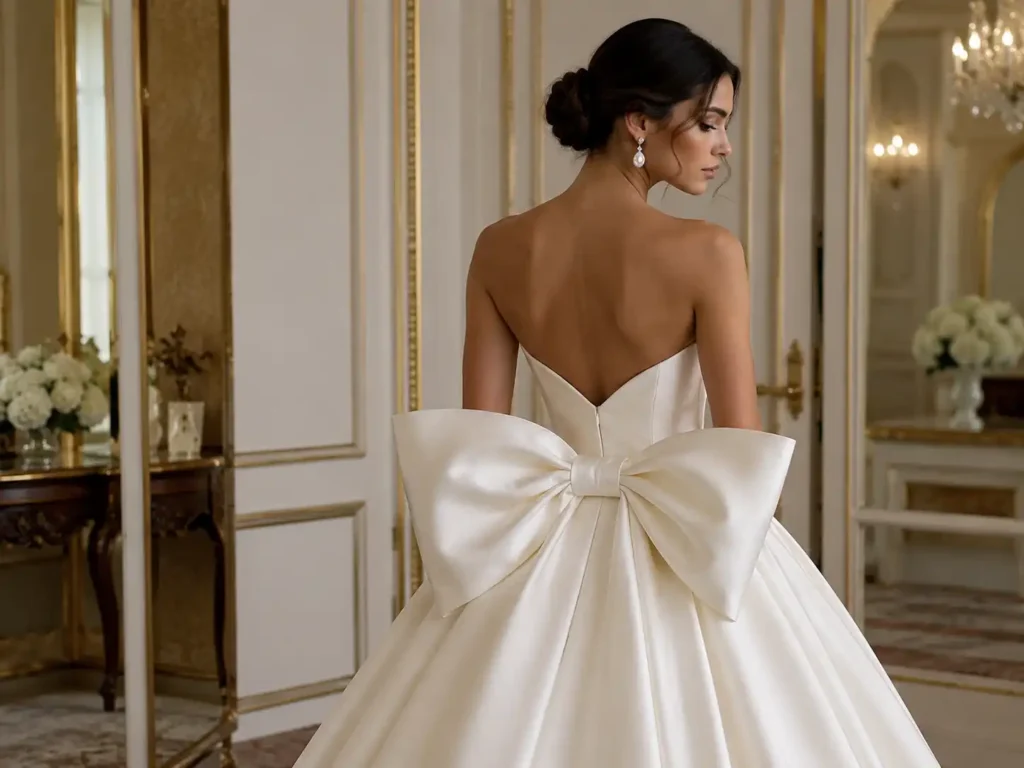
Bow-Back Closure
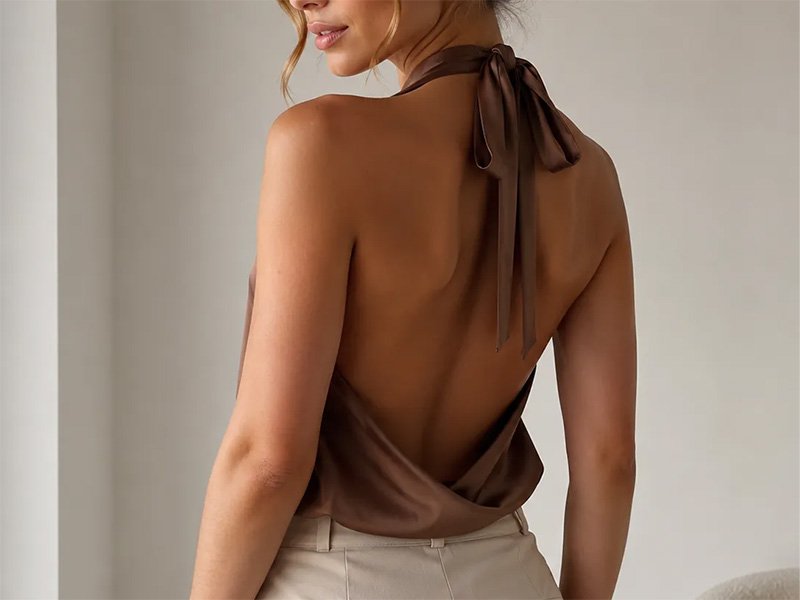
Halter Tie-Back
Halter ties transfer part of the garment load toward the neck. Strap angle, neckline depth, bust coverage and neck pressure must be reviewed together. Wider ties distribute pressure more comfortably, while narrow ties can create strong visual lines but may need construction support to prevent rolling or distortion.
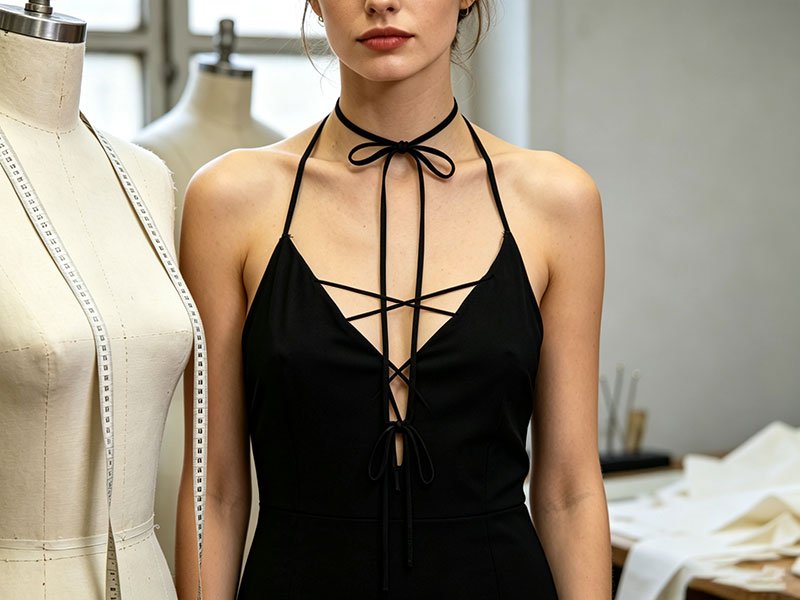
Neck Tie-Back
Some styles close at the upper back or neckline without functioning as a true halter. The tie controls neckline position while the bodice carries most garment weight. Development checks include neckline opening, shoulder stability, back-neck comfort and whether the tied area stays flat during sitting and movement.
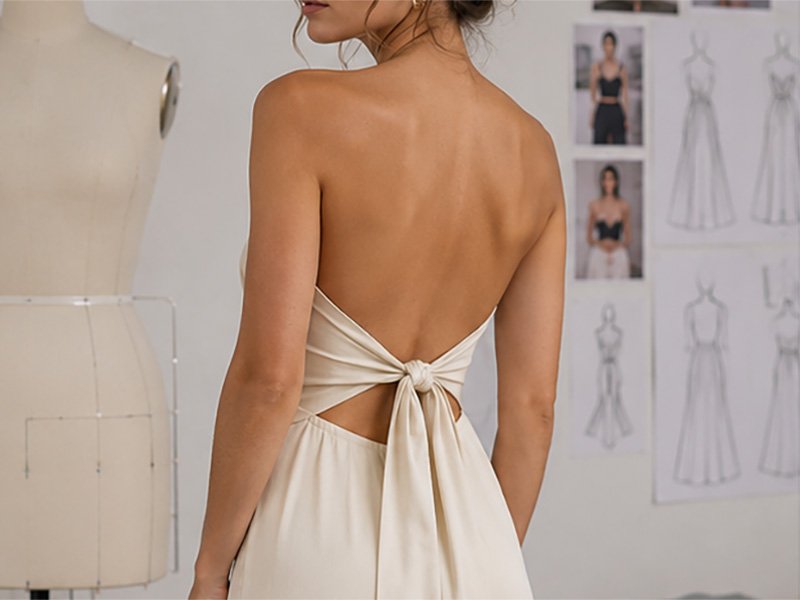
Strapless Tie-Back
A strapless dress may use back ties for adjustment or visual styling, but the ties should not become the only support system. Side structure, anti-slip solutions, lining, zipper placement, bust shaping and internal support may be required. The back tie must integrate with the full bodice construction.
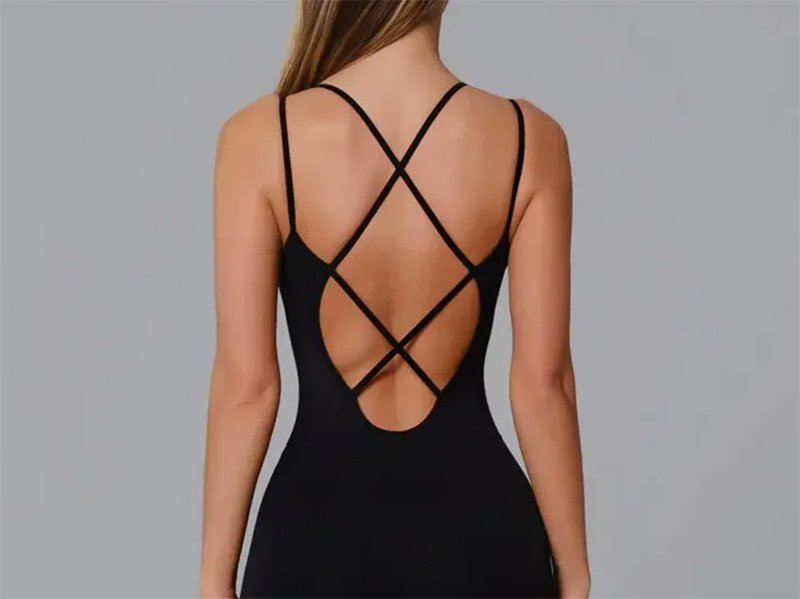
Shoulder Tie Dress
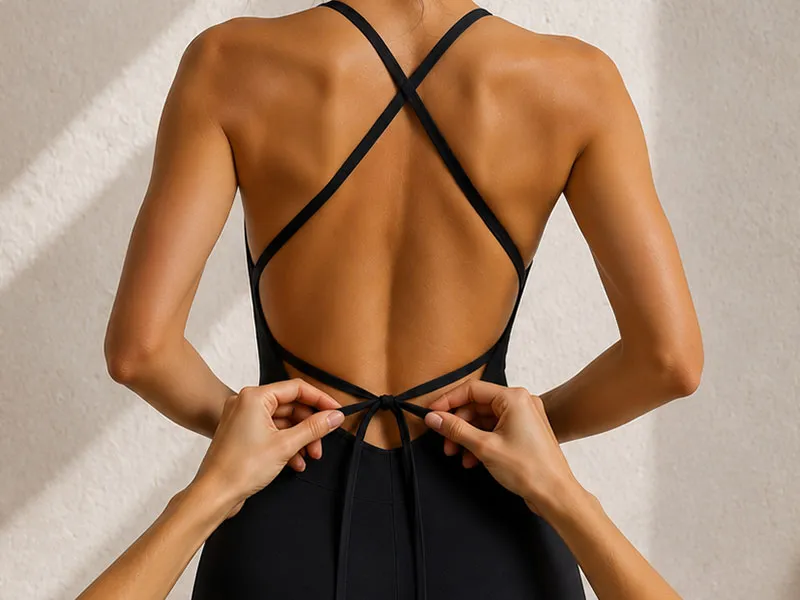
Multi-Tie Back
Custom Tie-Back Dresses for Complete Collections
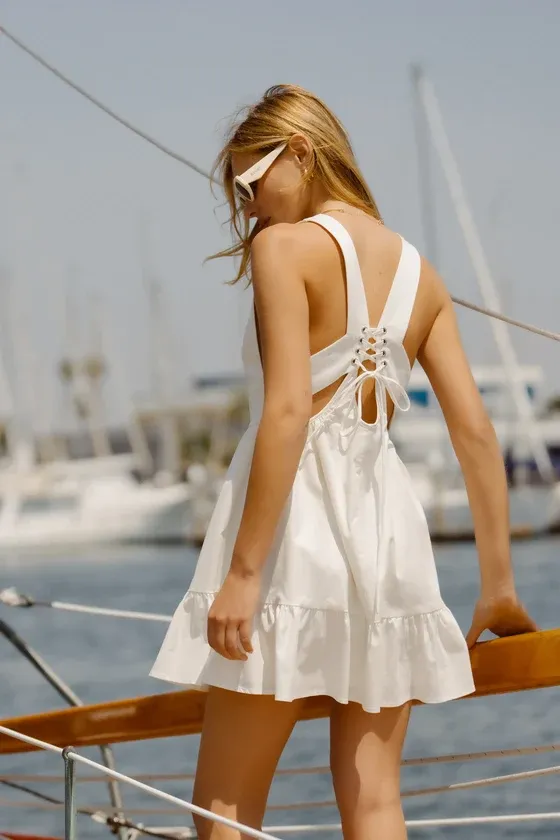
Tie-Back Mini Dresses
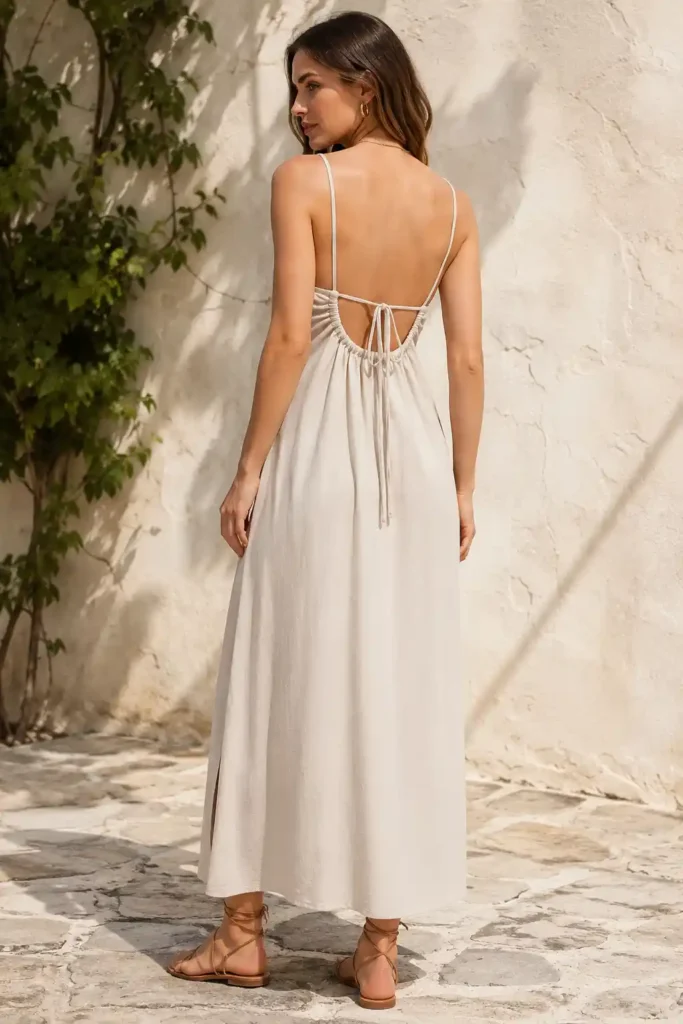
Tie-Back Midi Dresses

Tie-Back Maxi Dresses
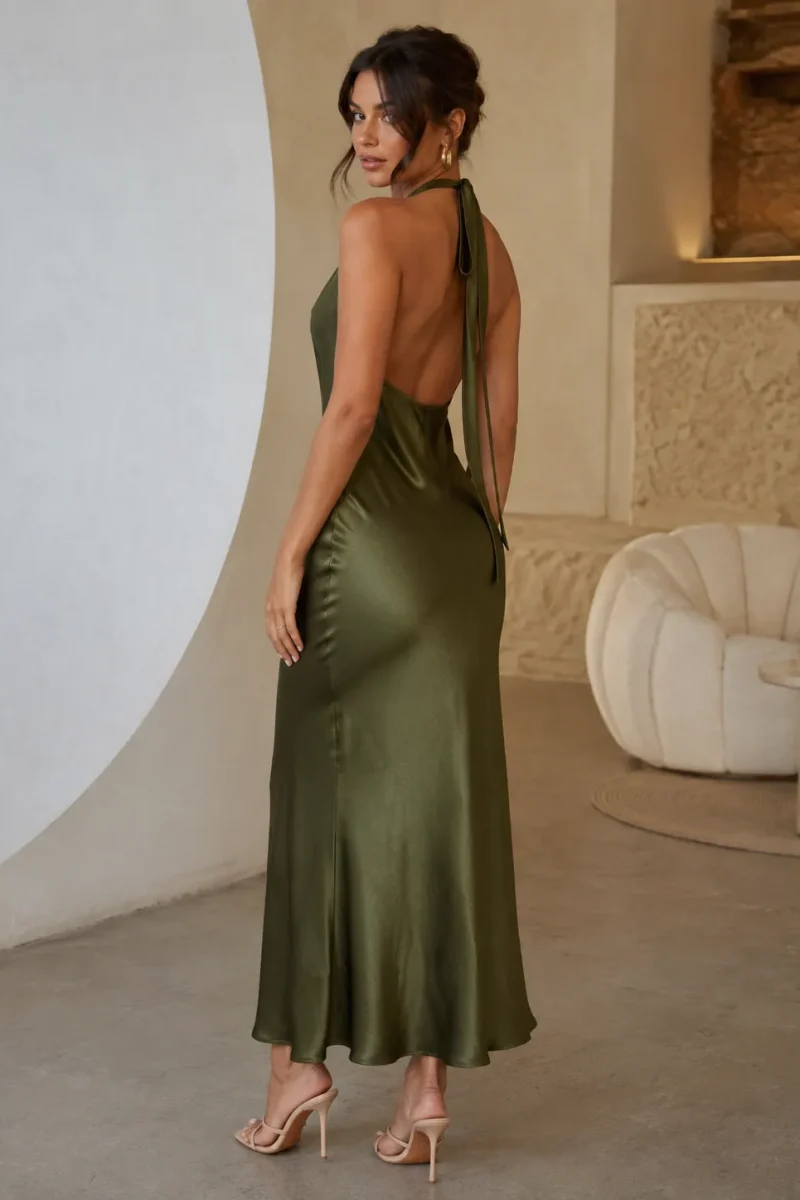
Halter Tie Dresses
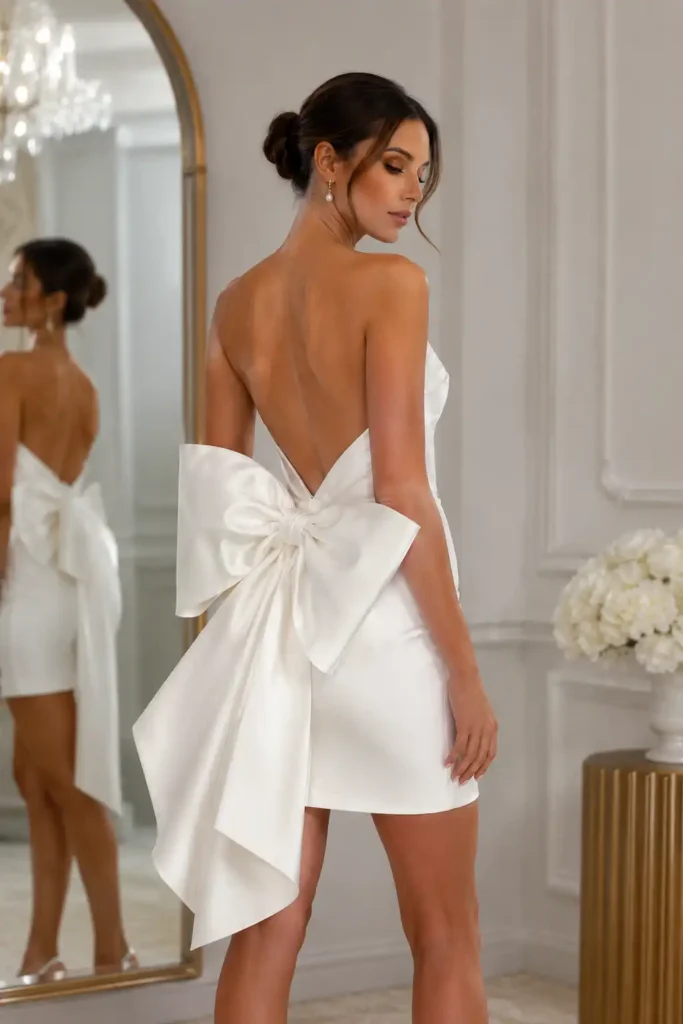
Bow-Back Dresses

Open-Back Dresses
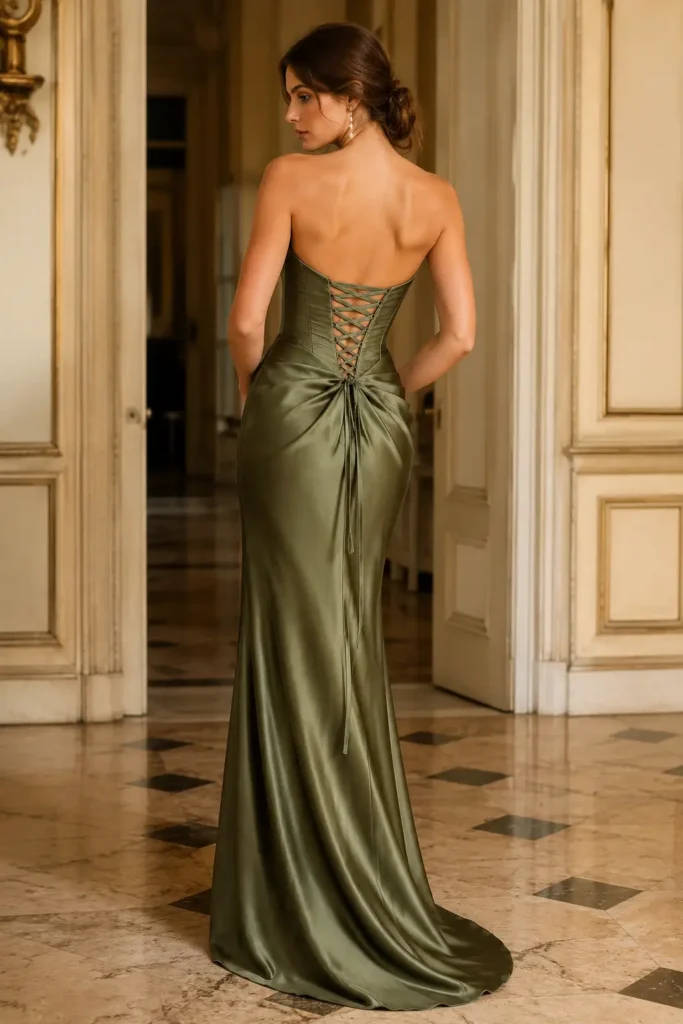
Strapless Tie Dresses
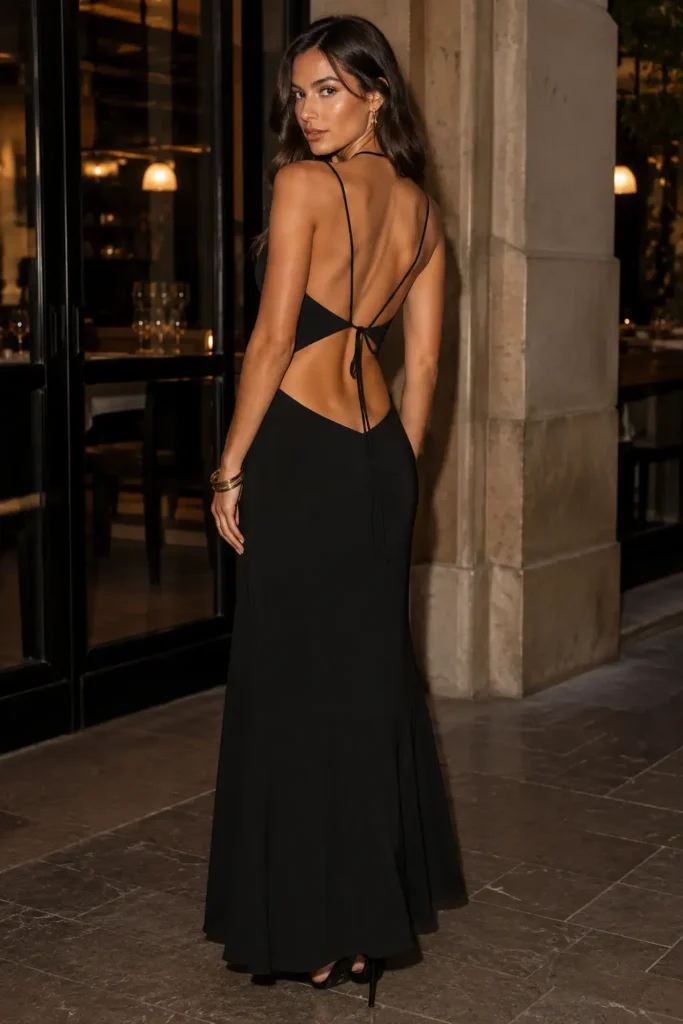
Cut-Out Tie Dresses
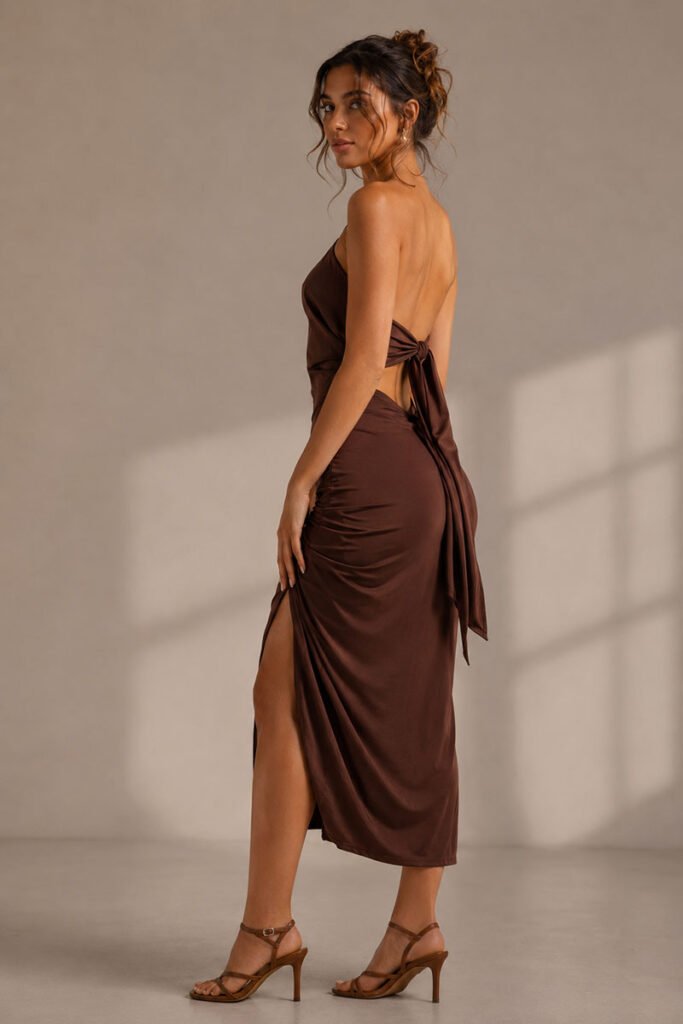
Ruched Tie-Back Dresses
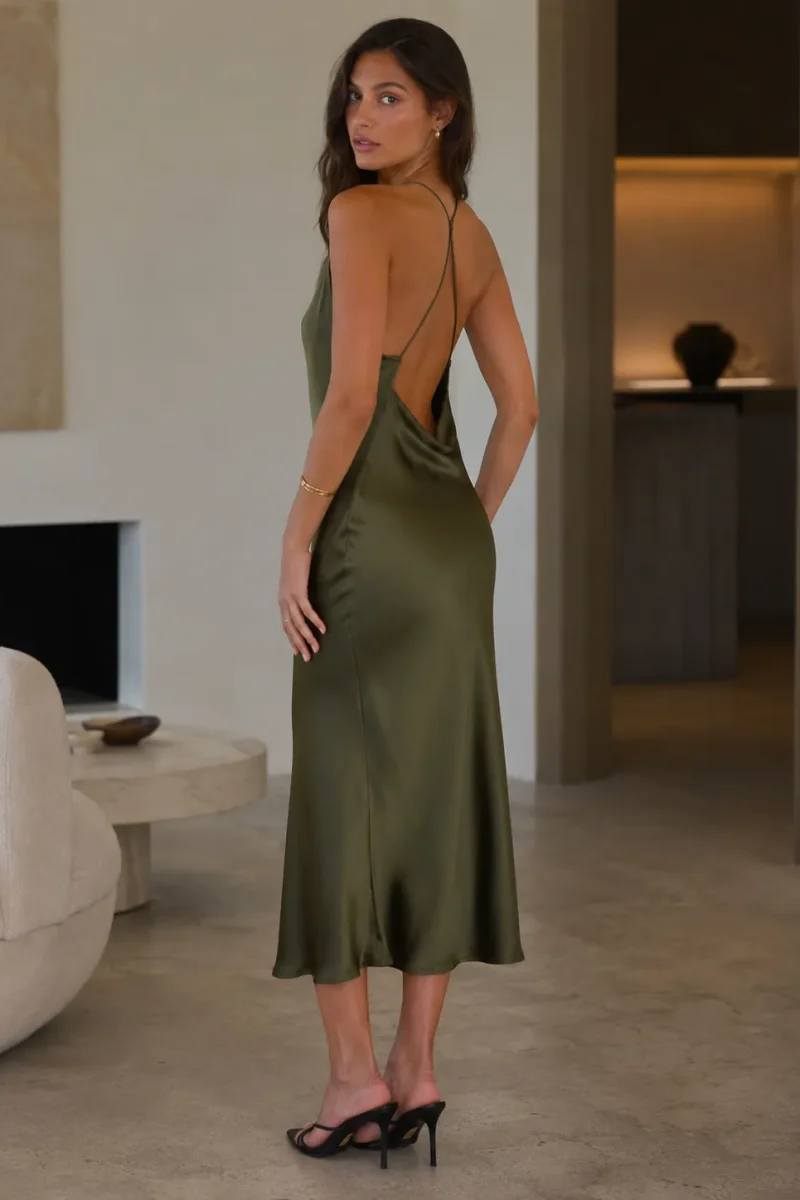
Satin Tie-Back Dresses
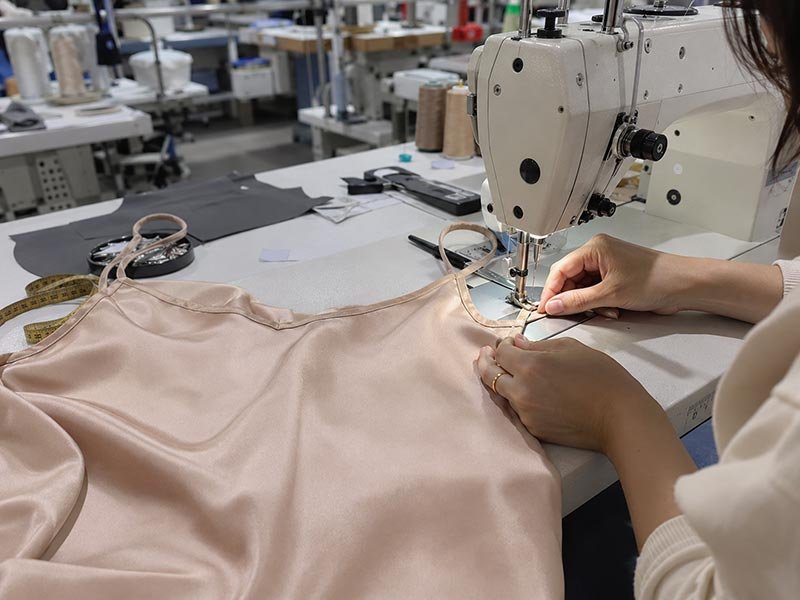
Satin emphasizes every seam, pucker and pressure point. A tie can look elegant but may slip or twist when the surface is very smooth. Construction trials can evaluate interfacing, edge turning, stitch selection, pressing temperature and packing method before an approved appearance becomes the bulk standard.
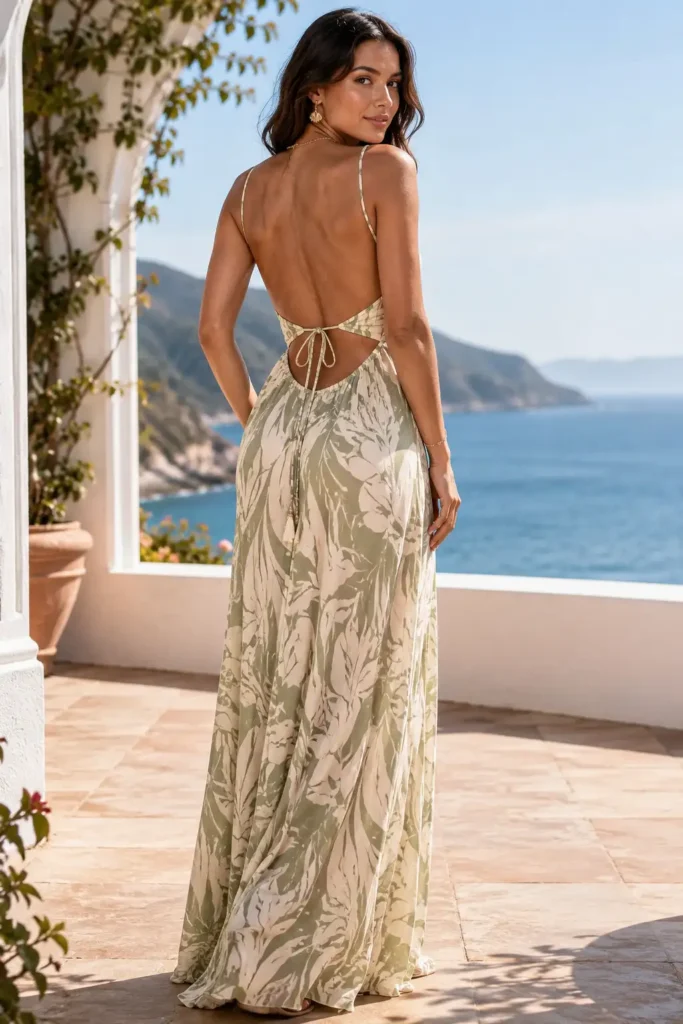
Printed Resort Dresses
Printed tie-back dresses combine pattern placement, light fabric and adjustable silhouettes. Development checks include print direction, floral scale, matching at key seams, lining visibility and shrinkage behavior. Larger prints may require marker planning around the back opening and tied feature to avoid broken visual placement.

Occasion Tie Dresses
Occasion versions may include lace, mesh, embellishment, draping, boning or shaped cups. Tie details must coordinate with formal finishing and internal support. Production planning may separate decorative processes, bodice construction and final assembly to protect visual quality across multi-style collection orders.
Tie-Back Dresses Across Fashion Scenarios
Resort Collections
Vacation Dresses
Going-Out Dresses
Party Collections
Cocktail Dresses
Wedding Guest Dresses
Summer Occasionwear
Holiday Collections
Design Variables Shaping the Final Dress
Neckline Shape
Back Opening Depth
Tie Width
Tie Length
Tie Angle
Anchor Position
Bow Volume
Waist Placement
Sleeve Direction
Skirt Silhouette
Cut-Out Geometry
Slit Position
Engineering Stable Back Structure and Proportion
A clean back view depends on how the upper back, side body, waist, closure and lining work together. Pattern geometry must control both exposure and stability.
Building a Controlled Tension Path
Tie-back construction works best when tension travels through planned structural points rather than pulling against a single seam.
- Upper-body balance: The front neckline, bust point, armhole and back opening must hold a consistent relationship. Tightening the tie should not raise the front bodice, distort the armhole or shift the bust position.
- Side-back coverage: Side coverage protects fit and wearability. A narrow side-back section may create a strong look but can expose undergarments or collapse when the wearer moves.
- Waist anchoring: The waist often becomes the structural base for open-back designs. Waist seams, elastic, zippers or fitted panels may stabilize the garment independently from the decorative tie.
- Back contour: Straight lines on a sketch rarely follow the body accurately. Curves need pattern shaping so edges lie cleanly against the back without standing away.
- Closure logic: A tie may close the garment, adjust it or only decorate it. Zippers, hooks, elastic and internal panels should be selected according to the real dressing sequence.
- Lining control: Lining must support the edge without rolling outward. Attachment method, understitching, seam allowance and pressing all influence the final back line.
A fit review should observe the garment before tying, after a light tie and after full adjustment. Large changes between those states indicate excessive dependence on tie tension and may require pattern correction.
Preserving the Intended Back View
A strong back design should remain recognizable across fabric colors, sizes and production batches.
- Symmetry: Left and right openings, tie anchors and seam lines should align visually. Small asymmetries become obvious around bows and cut-outs.
- Edge stability: Curved open-back edges can stretch during handling. Stabilization decisions should be made before sewing rather than corrected through aggressive pressing.
- Body movement: The back must be reviewed during arm movement, turning, sitting and walking. A static mannequin cannot reveal every gap or pressure point.
- Visual proportion: Opening depth, waist height and bow scale should suit the garment length. Mini and maxi dresses often need different back proportions even when sharing the same design language.
- Size continuity: Larger sizes may require added coverage or support while preserving the intended look. Mechanical enlargement can create excessive exposure or weak tension.
- Bulk repeatability: Approved curves, tie positions and internal construction should be recorded in patterns, specifications and workmanship notes before production begins.
Strap Geometry, Strength and Tie Performance
Designing the Tie Component
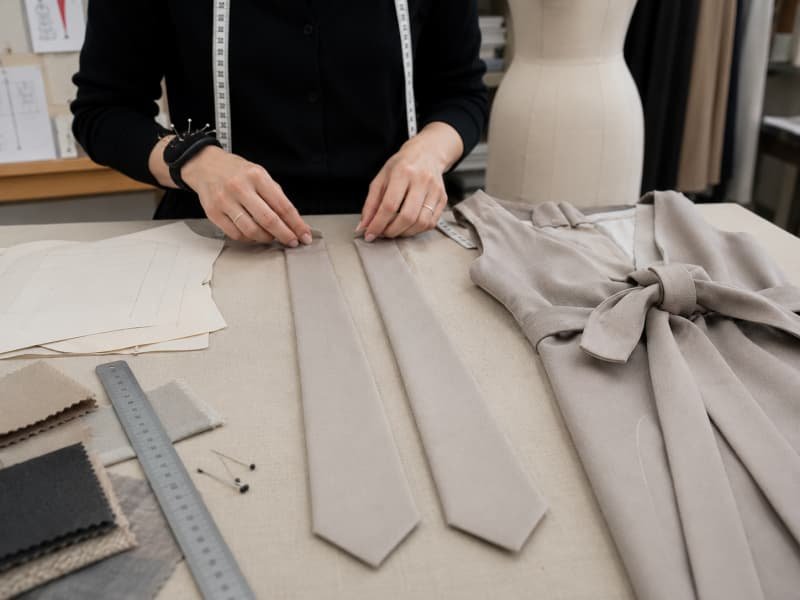
A tie behaves as a flexible structural part rather than a simple fabric strip.
- Width: Narrow straps create concentrated pressure and are more likely to twist. Wider ties distribute load and form fuller bows but may become bulky in heavier fabrics.
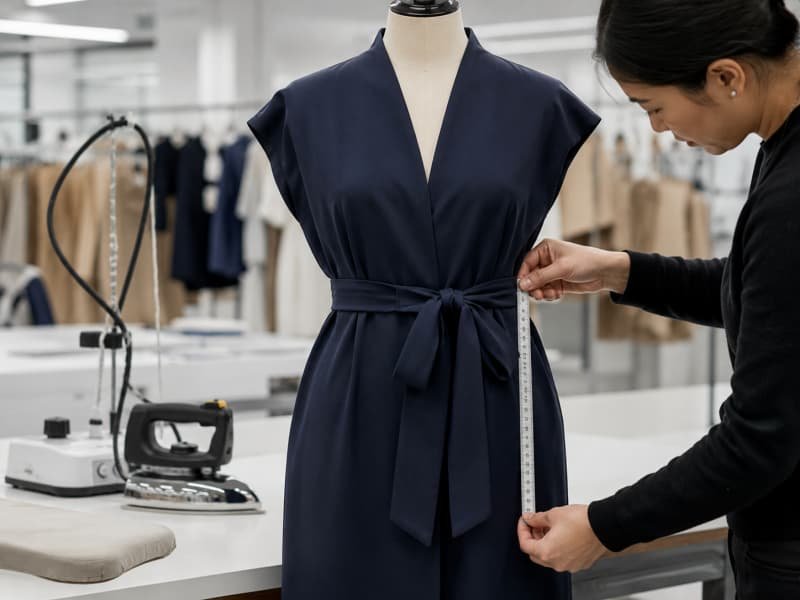
- Length: Finished length should allow the intended knot or bow without excessive trailing ends. Size ranges may need graded lengths, particularly when ties control closure or fit.
- Grain direction: Straight grain, cross grain and bias-cut ties stretch and recover differently. Bias ties can feel softer but may lengthen or twist under repeated tension.
- Internal structure: Lightweight interfacing or a suitable backing may help satin and soft woven ties retain shape. Excessive structure can make knots stiff and uncomfortable.
- Edge finish: Turned, bagged, bound or narrow-hem constructions create different thickness and appearance. Finished edges should remain even along the full length.
- Pressing: Over-pressing can flatten satin, create shine or alter dimensions. Tie pressing should follow fabric-specific handling standards.
The approved sample should define whether the tie is intended for a single knot, flat bow, full bow, cross-back arrangement or multi-step closure.
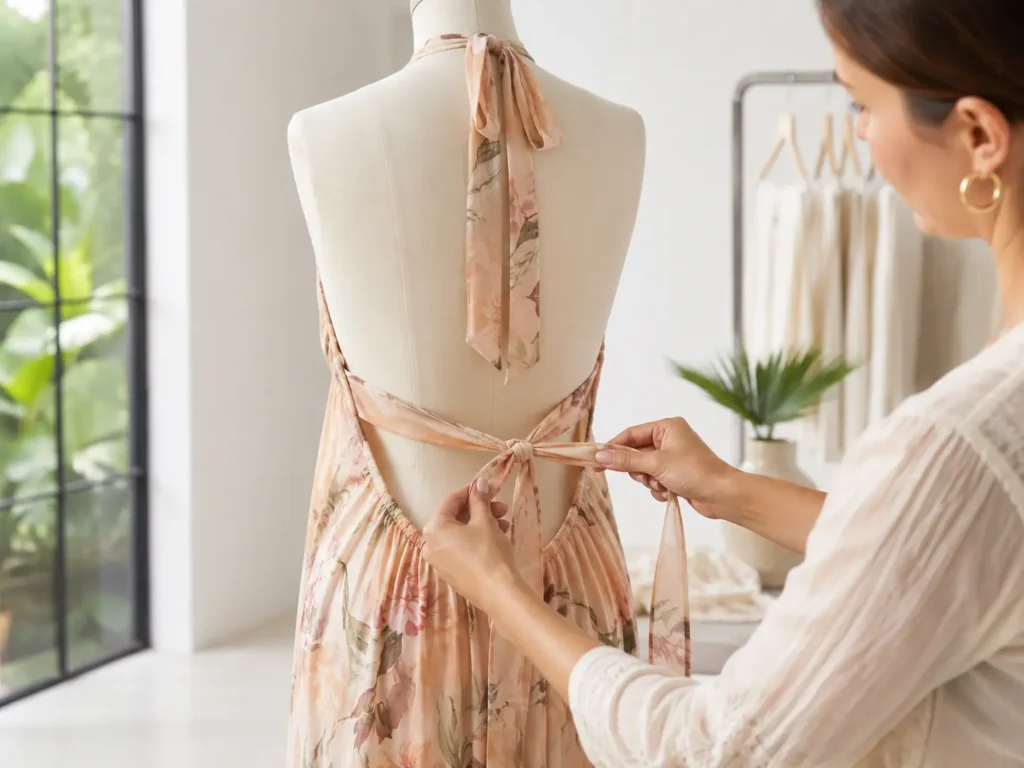
Reinforcing the Anchor Point
The attachment area receives repeated pulling during dressing and wear.
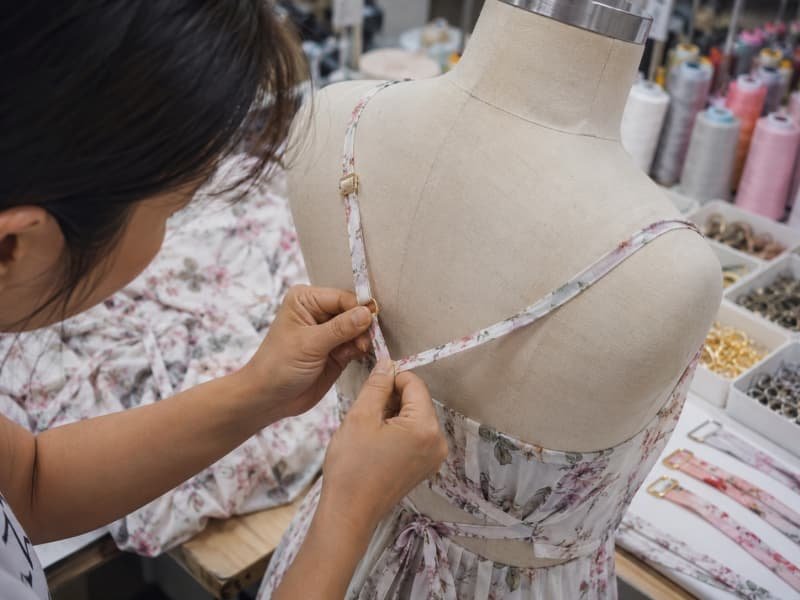
- Seam integration: Anchors positioned inside waist, side or neckline seams can distribute force better than attachments placed on unsupported panels.
- Reinforcement method: Backing, extended seam allowance, additional stitching or selected bartack use may be considered according to fabric and visual requirements.
- Local distortion: Strong stitching alone cannot correct a weak pattern area. Reinforcement should protect the fabric without creating visible puckering.
- Lining connection: Lining may share load or cover reinforcement, but attachment must not pull the outer shell out of shape.
- First-piece check: Tie length, width, symmetry and attachment position should be reviewed before a full production run.
- Repeated-use review: Where required, internal pull checks and wear simulation can be agreed according to the project standard.
Balancing Fit, Coverage and Wearing Stability
Reviewing Fit Around the Body
Fit evaluation should connect front, side and back views.
- Bust position: Tightening the tie must not pull the bust upward, flatten shaping or create neckline gaps.
- Side coverage: Side bust and side-back coverage should be checked from several angles. Exposure can increase when arms move or the body turns.
- Waist balance: The waist seam should remain level after tying. Upward movement at the back often signals incorrect anchor position or excessive tension.
- Armhole shape: Open backs and halter designs change armhole pressure. Gaping or cutting may require pattern adjustments rather than stronger tying.
- Neck comfort: Halter and neck-tie styles should distribute pressure across sufficient strap width and an appropriate angle.
- Back contact: Back edges should sit cleanly without digging, rolling or standing away from the body.
Testing Movement and Dressing
Movement review helps identify risks hidden during static fitting.
- Sitting: The bodice should not shift upward or create excessive pressure at the neck, waist or anchor points.
- Walking: Maxi and full-skirt styles may pull downward and change back tension.
- Arm movement: Lifting or extending the arms can expose side gaps or move shoulder and halter ties.
- Turning: Twisting the torso reveals whether open-back edges remain controlled.
- Self-dressing: The wearer should be able to understand and secure the ties according to the intended dressing sequence.
- Photography: Front, side and back photos show asymmetry, bow scale, edge shape and visual exposure more clearly than verbal comments alone.
Fabrics Selected for Structure and Dress Behavior

Satin

Viscose Woven

Chiffon
Crepe
Cotton Poplin
Linen Blends
Stretch Jersey

Mesh and Lace
Lining, Closures and Hidden Support Systems
Full Lining
Partial Lining
Invisible Zippers
Elastic Support
Boning and Structure
Anti-Slip Solutions
Pattern Development for Controlled Back Fit
Reference Analysis
Pattern Balance
Contour Correction
Revision Transfer
Size Grading Around Tie and Back Structure
Tie-back grading cannot rely on enlarging every measurement by the same percentage. Coverage, strap range, opening depth and bow proportion need controlled rules across the size set.
| Measurement Point | Development Purpose | Grading Consideration |
|---|---|---|
| Bust circumference | Controls upper-body fit | Must connect with front shaping and side coverage |
| Underbust | Supports fitted, halter and structured styles | May require separate increments from waist grading |
| Waist circumference | Sets body anchor and tie adjustment range | Tightening should not distort side seams |
| Front bodice length | Preserves neckline and waist position | Reviewed against bust depth and silhouette |
| Back bodice length | Maintains level waist and opening position | Should not rise when the tie is secured |
| Back opening width | Controls exposure and edge contact | Larger sizes may need coverage correction |
| Back opening depth | Defines visual back line | Mechanical enlargement can create excessive exposure |
| Finished tie length | Provides knot or bow range | Can require size-group increments |
| Finished tie width | Controls pressure and bow scale | Usually remains stable unless support needs change |
| Tie anchor position | Determines tension path | Must stay aligned with body reference points |
| Side-back coverage | Protects fit and underwear concealment | Often needs deliberate review in upper sizes |
| Neck or shoulder strap length | Controls upper-body support | Requires fit checks across bust and shoulder variations |
From Design Reference to Production-Ready Sample

Brief Review

Risk Identification
Material Direction

Pattern Development
First Sample

Fit Review

Revision Round
Production Readiness
Feasibility Review Before Sampling Begins
Design Feasibility
Fabric Feasibility
Fit Feasibility
Construction Feasibility
Bulk Feasibility
Timeline Feasibility
Turning Fit Comments into Technical Corrections
Back Edge Stands Away
- The curve is checked against the body rather than simply pulled tighter.
- Pattern length and contour are reviewed around the opening.
- Lining and stabilization methods are assessed.
- Tie angle is checked for upward or outward distortion.
- The next sample verifies both relaxed and secured states.
Waist Rises After Tying
- Side seams are checked before and after tying.
- Front and back bodice lengths are compared.
- Anchor height and pull direction are reviewed.
- Waist seam stability is assessed.
- Pattern corrections replace temporary sample pinning.
Neck Pressure Feels High
- Tie width and angle are evaluated.
- Garment weight distribution is reviewed.
- Internal support options are considered.
- Front neckline and armhole balance are checked.
- Movement tests confirm whether pressure remains acceptable.
Bow Loses Shape
- Tie width and length are reviewed against fabric thickness.
- Grain direction and stretch are checked.
- Interfacing trials may be completed.
- Knot and bow methods are tested.
- Packing and presentation instructions are defined.
Workmanship Standards for Tie-Back Construction
Consistent Tie Width
Accurate Tie Length
Reinforced Anchors
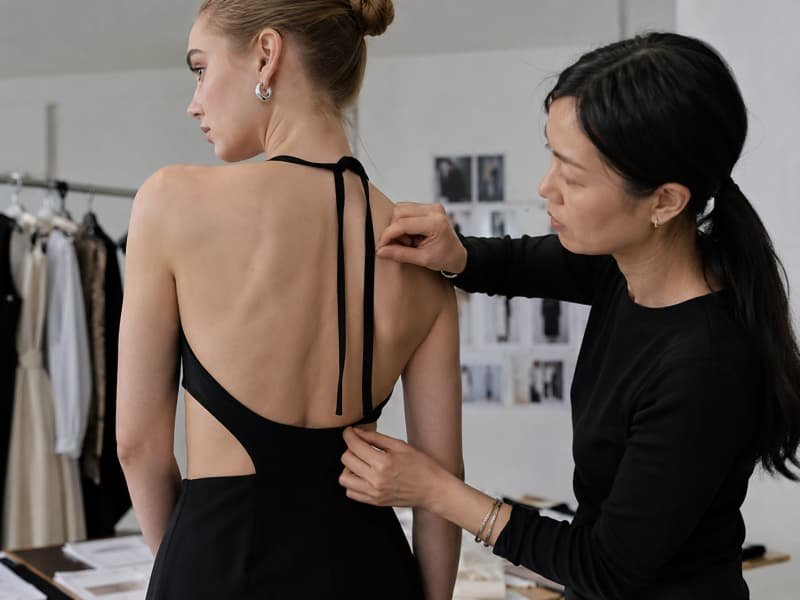
Balanced Back Opening
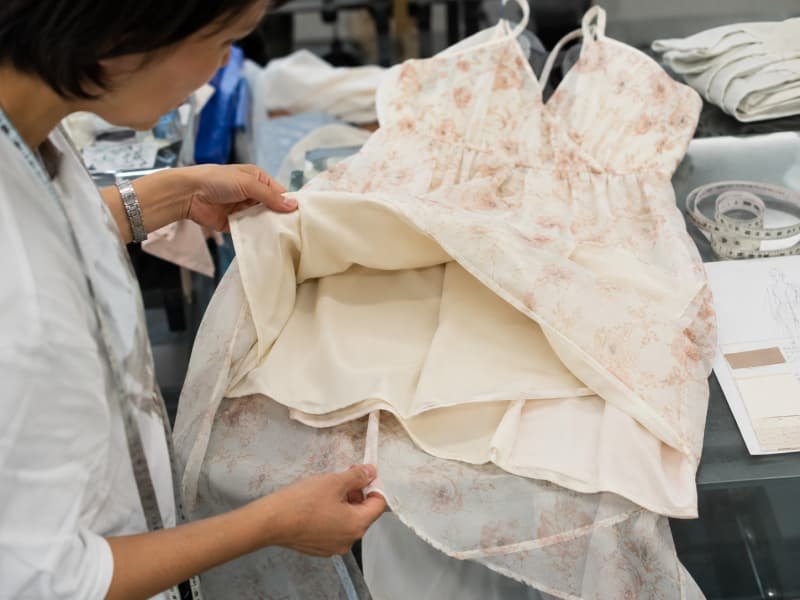
Clean Lining Control
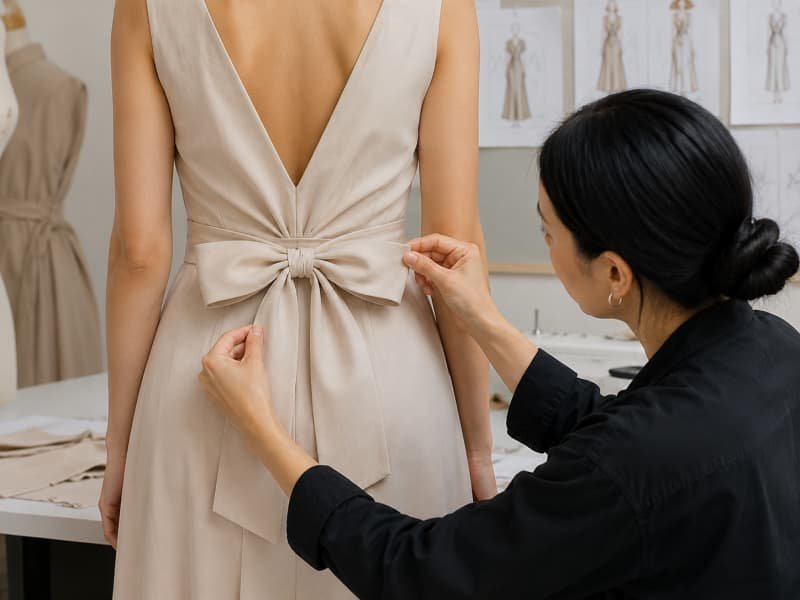
Symmetrical Bow Position
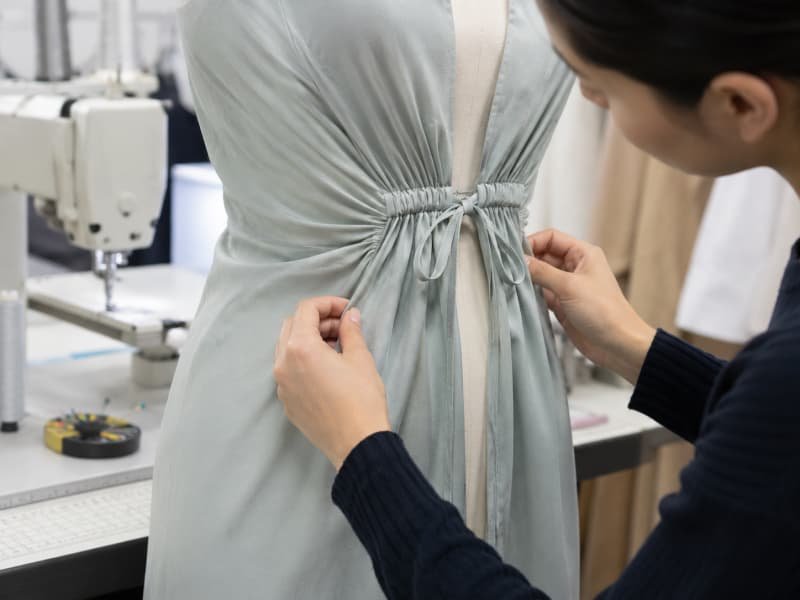
Stable Gathering
Ruching and gathered waists require even distribution. Uneven gathering can pull the tie off-center or distort side seams.
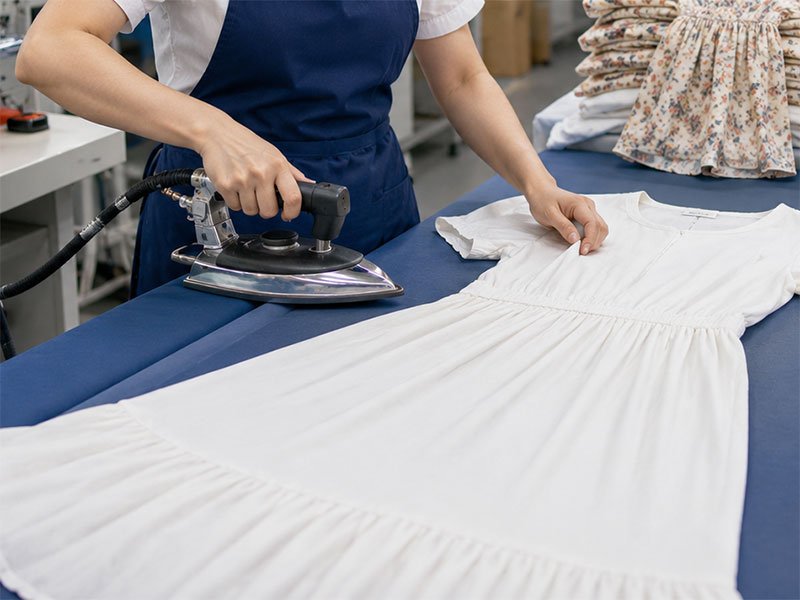
Controlled Pressing
Locking Approved Standards Before Bulk Production
Approved Sample Status
Material Lock
Measurement Lock
Workmanship Lock
Packing Lock
Production Path
Verifying First Pieces Before Full Production
First-Piece Confirmation
Critical Operation Trial
Pilot Quantity Review
Correction Before Scale
Manufacturing Structured for Multi-Style Dress Programs
Core Factory Control
Flexible Capacity Allocation
Style-Based Routing
Multi-Style Planning
Reorder Support
Launch Back-Planning
Quality Control Focused on Back Fit
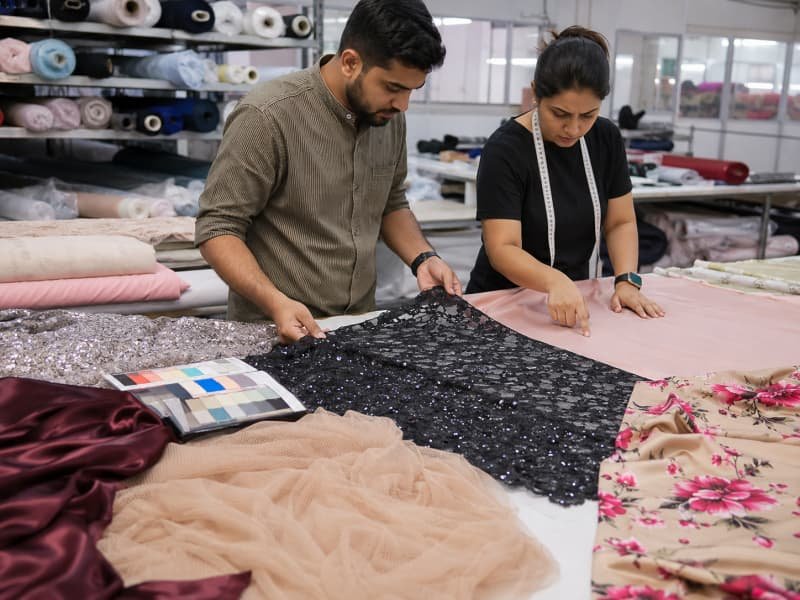
Fabric Inspection
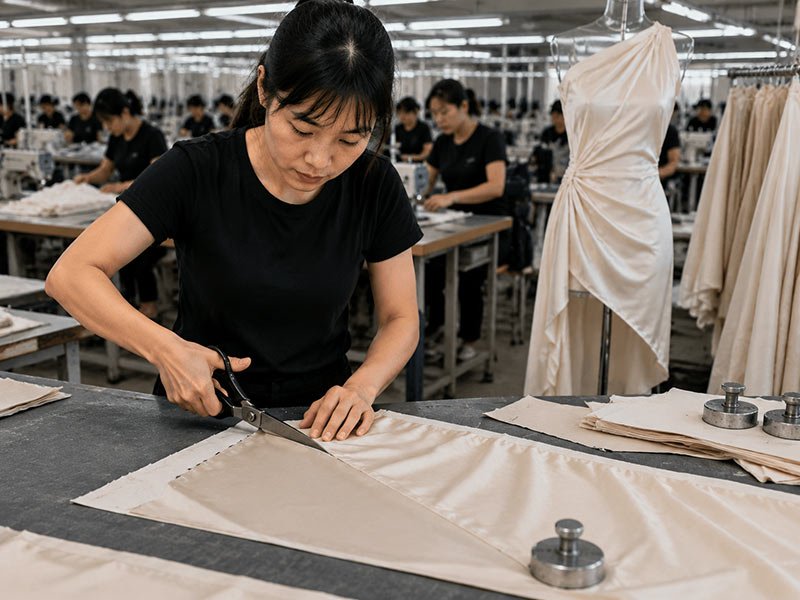
Cutting Control
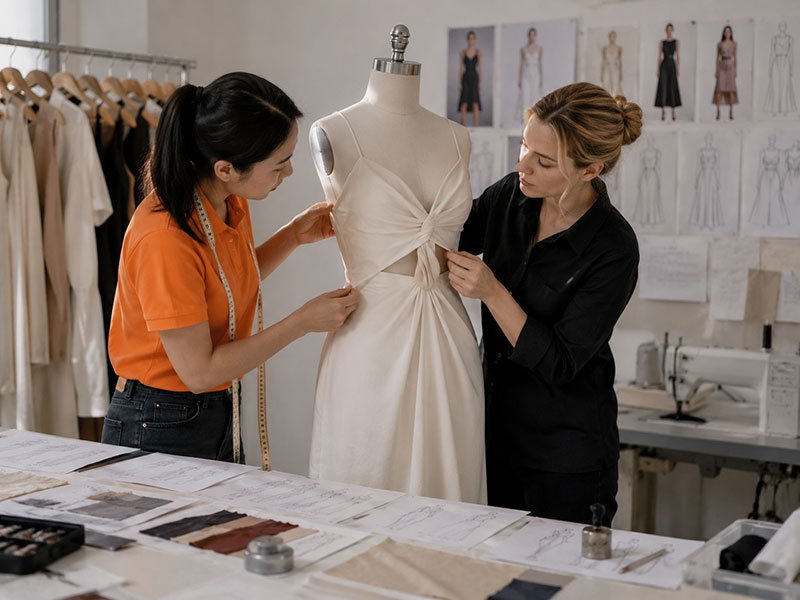
First-Piece Review
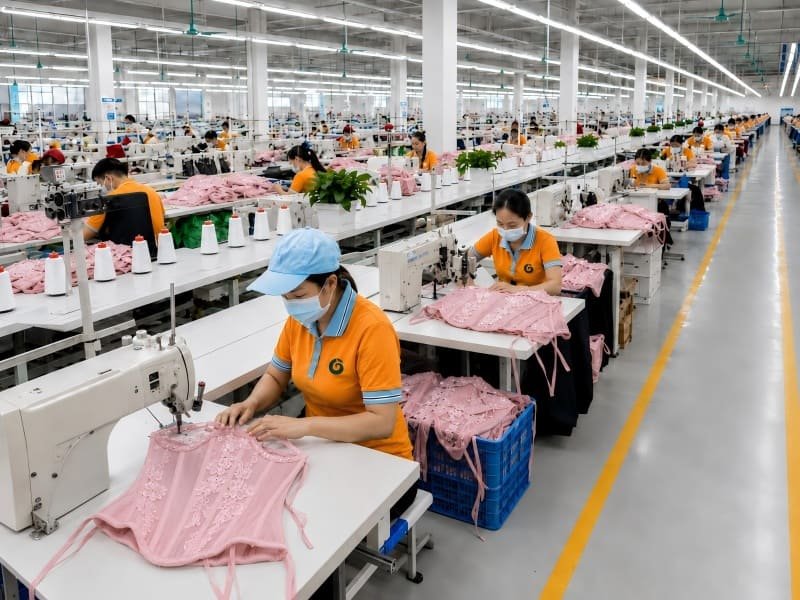
Inline Inspection
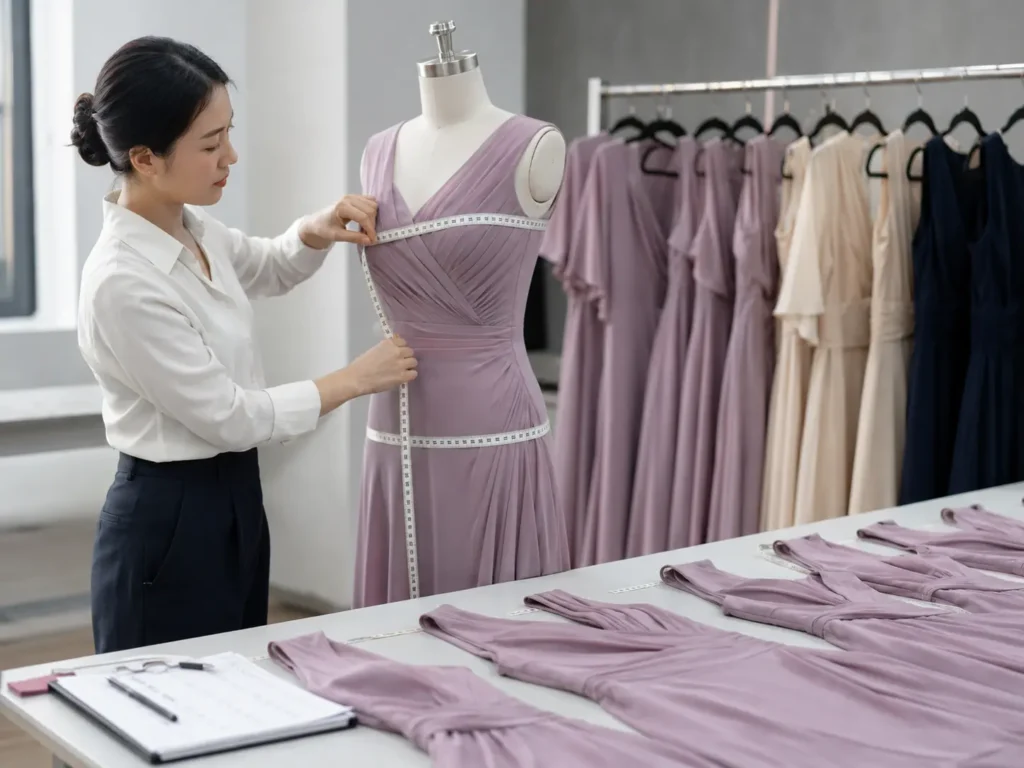
Measurement Inspection

Workmanship Inspection

Final Inspection
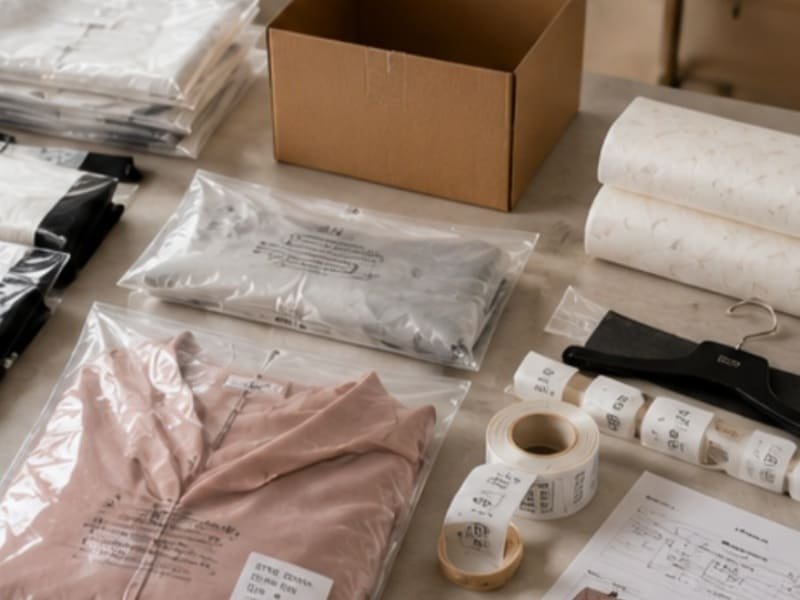
Packing Verification
Compliance and Testing for Formal Programs
Social Audit Foundation
Material Documentation
Performance Requirements
Garment Safety
Third-Party Inspection
Brand-Specific Standards
Duolan can review requirements related to BSCI, ISO 9001, AATCC, ASTM, OEKO-TEX®, EN, China GB, GOTS or specific brand manuals according to project applicability.
Private Label and Retail-Ready Presentation
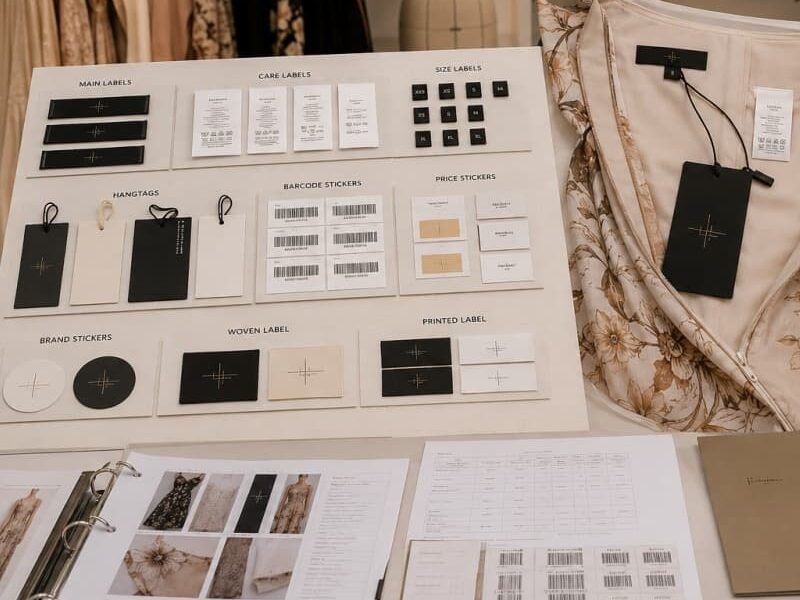
Main Brand Labels
Size and Care Labels
Hangtags and Barcodes
Folded Packing
Hanger Packing
Carton and Shipment Marks
Tie-Back Dress Programs Across Global Markets
US Going-Out Collection
Program profile: 18 styles, 42,000 garments, mini and fitted midi silhouettes, four core color directions.
The collection combined halter ties, curved open backs and side-waist cut-outs. Early samples showed inconsistent side-bust coverage and back waists rising when the ties were fully secured.
Duolan reviewed the strap angle, side-back pattern width, waist-anchor position and internal support. Size grading was adjusted so upper sizes retained coverage without losing the intended low-back appearance. First-piece checks focused on tie length, opening depth and left-right symmetry.
The approved program moved into coordinated production with separate handling for stretch woven and satin styles. Revision records and PP references were maintained for follow-up color orders.
European Resort Collection
Program profile: 24 styles, 68,000 garments, printed viscose midi and maxi dresses, six print and solid-color groups.
Major risks included fabric shrinkage, long skirt weight, tie distortion and print placement around open backs. Several styles used wide waist ties, while others used shoulder ties and low curved backs.
Material review compared drape, shrinkage and surface behavior before pattern confirmation. Tie dimensions were adapted to fabric thickness, and marker planning protected major print areas around the back opening. Sample reviews included walking and sitting because maxi skirt weight changed bodice tension.
Production was grouped by print process and construction complexity. Fabric, tie dimensions, back-opening specifications and packing methods were locked before bulk cutting.

Australian Occasionwear Line
Program profile: 14 styles, 31,500 garments, satin bow backs, strapless tie backs and structured cocktail dresses.
The primary challenges were satin seam visibility, bow collapse, strapless stability and edge distortion along low backs. Several styles looked correct on mannequins but lost stability during movement.
Duolan developed internal support options, revised tie widths, tested interfacing directions and adjusted back contour patterns. Live fit reviews covered sitting, arm movement and walking. Structured styles entered first-piece verification before wider production release.
Quality checks emphasized pressing, bow dimensions, anchor reinforcement, lining exposure and back-edge shape. Protective packing reduced satin abrasion and deep folding marks.
Frequently Asked Questions

Start Your Tie-Back Dress Development Project
Share the information already available, even when the project is still between design direction and a complete tech pack. Duolan can review the intended tie function, back structure, fabric behavior, fit priorities, size range, workmanship risks and bulk-production path before recommending the next stage.
Useful project information includes:
- Tech pack, sketch, reference images or original sample photos
- Tie-back type and intended adjustment function
- Target fabric, color, print or handfeel direction
- Required size range and measurement standard
- Estimated quantity by style or complete collection
- Target sample purpose: fit, photo, presentation or PP preparation
- Planned launch, delivery or sales window
- Branding, label, barcode and packing requirements
- Testing, inspection or compliance standards
- Main quality concerns from previous production
After review, Duolan can outline the missing information, main development risks, recommended sample path and production considerations. Clear inputs allow pattern, material and timing decisions to move in the right order.