Skip to content
Custom Slit Midi Dress Manufacturer
Dress-focused development and manufacturing for fashion brands requiring controlled fit, balanced slit construction and production-ready quality.
- 4 core slit controls: placement, finished height, opening behavior and movement coverage
- 10 critical measurement points reviewed for fit, length, lining and slit consistency
- 2–3 controlled sample stages used to refine silhouette, construction and bulk readiness
- 16 owned womenswear factories supported by 20+ coordinated satellite factories
- 300 sewing lines and 50+ quick-response lines for multi-style production planning
What Defines a Reliable Slit Midi Dress Manufacturer?
Product Understanding
Slit midi dress development requires a clear relationship between design appearance and garment movement. A slit measured correctly on a flat sample may appear higher once the dress stretches across the hip or moves during walking.
Duolan reviews:
- Finished dress length
- Slit start and end points
- Hip ease or negative ease
- Fabric stretch and recovery
- Lining endpoint
- Hem opening
- Zipper placement
- Intended wearing occasion
Every specification is evaluated as part of the complete garment rather than as an isolated measurement.
Production Control
A production-ready standard should connect the approved sample with a controlled bulk process. Pattern versions, material references, measurement tolerances, construction notes, reinforcement methods and pressing standards must remain aligned.
Duolan converts the approved design into:
- Confirmed pattern files
- Updated measurement specifications
- Locked fabric and trim references
- Approved workmanship details
- First-piece inspection points
- Inline QC checkpoints
- Packing and handling instructions
The result is a repeatable manufacturing standard suitable for initial production and future reorders.
Built for Structured Fashion Dress Programs
Fast Fashion Labels
- Multi-style development planning
- Fabric and trim coordination
- Sample priority management
- Colorway organization
- PP approval discipline
- Production allocation
- Reorder file preservation
Occasionwear Brands
- Drape and body balance
- Lining and opacity
- Slit position
- Pressing quality
- Seam appearance
- Zipper finish
- Movement coverage
Product Development Teams
- Tech pack review
- Pattern clarification
- Sample stage definition
- Consolidated revision records
- Updated measurements
- Bulk readiness review
- Production handover files
Sourcing Offices
Sourcing offices often evaluate several styles, factories and production routes at the same time. Clear communication, document control and realistic production planning become essential. Support may include:
- Supplier capability information
- Style feasibility assessment
- Material risk review
- Sample progress records
- Factory allocation
- QC documentation
- Shipping coordination
Duolan provides centralized project management across development, production and delivery.
Risks Controlled Before Bulk Production Begins
Incorrect Slit Height
- Define the measurement origin
- Record finished slit height
- Review on the base size
- Check graded sizes
- Confirm lining position
- Approve the final sample
Side Seam Twisting
- Review grainline direction
- Balance front and back panels
- Check hip ease
- Hang the sample before review
- Correct the paper pattern
- Recheck after pressing
Lining Exposure
- Match stretch direction
- Confirm lining endpoint
- Review walking movement
- Inspect sitting coverage
- Control seam attachment
- Check every approved size
Fabric Mismatch
- Review composition and GSM
- Check stretch percentage
- Test recovery
- Inspect opacity
- Compare drape
- Approve the production quality
Weak Slit Reinforcement
- Select a suitable reinforcement method
- Test the stress point
- Control stitch density
- Avoid visible bulk
- Inspect first production pieces
- Include the point in QC
Sample Bulk Difference
- Lock the approved pattern
- Lock the BOM
- Approve PP samples
- Confirm first pieces
- Run inline checks
- Preserve reorder standards








Dress Development Supported by Manufacturing Scale
16 Owned Factories
The network supports:
- Fashion dresses
- Occasionwear
- Fitted silhouettes
- Woven and stretch styles
- Multi-style programs
- Repeat production
20+ Satellite Factories
Satellite support helps manage:
- Parallel production
- Specialized workmanship
- Seasonal capacity
- Regional production planning
- Repeat programs
- Split delivery schedules
12,000+ Workers
A broad production workforce supports different garment categories, sewing operations, finishing requirements and order structures.
Workforce scale creates value when paired with:
- Style allocation
- Operation planning
- Line training
- First-piece approval
- Inline inspection
- Final quality control
Volume alone never replaces a confirmed production standard.
300 Sewing Lines
The manufacturing network includes 300 sewing lines used across different womenswear categories and production programs.
Line selection considers:
- Fabric handling difficulty
- Stretch or woven construction
- Number of operations
- Order volume
- Size range
- Delivery sequence
Slit midi dresses with satin, jersey, mesh or ruched details require different production routes.
50+ Quick-response Lines
Quick-response lines support style testing, repeat orders, launch-window requirements and selected fast-moving programs.
Suitable projects normally have:
- Confirmed materials
- Approved patterns
- Clear construction files
- Locked trims
- Defined quantities
- Fast approval discipline
Quick response depends on preparation quality, not only sewing speed.
15,000–35,000 Samples Monthly
The wider development system supports a high volume of sample activity across styles, fabrics and product stages.
Sample capacity is organized around:
- Prototype samples
- Fit samples
- Photo samples
- Sales samples
- PP samples
- Revision samples
Each sample must serve a defined decision rather than becoming an isolated prototype.
Custom Slit Midi Dress Styles We Develop

Side Slit Midi
- Left or right placement
- Hip ease
- Zipper position
- Slit height
- Seam stability
- Lining finish
- Reinforcement
- Movement coverage

Front Slit Midi
- Center alignment
- Overlap allowance
- Walking coverage
- Front-panel balance
- Lining position
- Hem stability
- Reinforcement
- Pressing

Back Slit Midi
A back slit or vent supports movement in structured and narrow skirts while maintaining a cleaner front appearance. Key development points:
- Vent depth
- Underlap construction
- Center-back seam
- Zipper relationship
- Walking ease
- Hem alignment
- Pressing
- Reinforcement
Back vents suit office-to-evening, tailored and sheath silhouettes. Correct overlap prevents the vent from opening excessively.

High Slit Midi
High slits create stronger visual impact for party, occasion and going-out collections. Coverage must be assessed on-body rather than only on a dress form. Key development points:
- Market positioning
- Hip level
- Underwear coverage
- Lining endpoint
- Stretch behavior
- Opening angle
- Reinforcement
- Size grading
High-slit styles need clear approval standards for standing, walking and sitting positions.

Double Slit Midi
Double slits may appear at both sides, the front panels or asymmetric positions. Balanced openings are important because small measurement differences become visible immediately. Key development points:
- Left-right symmetry
- Panel balance
- Hem width
- Slit height tolerance
- Lining structure
- Fabric drape
- Reinforcement
- Grading
Double-slit dresses often suit column, rib-knit and relaxed resort silhouettes.

Wrap Slit Midi
Wrap constructions create a natural opening rather than a fixed seam slit. The visual height changes according to overlap, waist tension and movement. Key development points:
- Wrap overlap
- Waist security
- Tie position
- Front coverage
- Hem curve
- Fabric drape
- Size grading
- Movement testing
Wrap designs require enough overlap to protect coverage while preserving the intended fluid appearance.

Ruched Slit Midi
Ruching adds texture and can visually shape the waist or hip. The gathering system may also increase or reduce the slit opening.
Key development points:
- Gathering ratio
- Elastic tension
- Drawcord length
- Side-seam balance
- Slit integration
- Lining compatibility
- Fabric recovery
- Bulk consistency
Ruched styles require controlled stitch tension and repeatable gathering measurements.

Asymmetric Slit Midi
- Seam angle
- Drape direction
- Hem balance
- Panel length
- Grainline
- Lining shape
- Reinforcement
- Pressing
Slit Placement Options and Construction Logic
Side Seam Slit
- Hip contour
- Seam allowance
- Zipper side
- Reinforcement
- Lining attachment
- Pressing direction
Princess Seam Slit
- Panel balance
- Seam curve
- Bust-to-hip alignment
- Opening position
- Reinforcement
- Topstitch appearance
Center Front Slit
A center-front opening creates symmetry and a strong visual line. Any misalignment becomes immediately visible.
Control points:
- Center-front grain
- Opening overlap
- Seam straightness
- Hem alignment
- Lining
- Walking coverage
Offset Front Slit
An offset slit creates a fashion-led appearance and may follow a panel or dart line.
Control points:
- Visual proportion
- Pattern balance
- Left-right garment weight
- Drape
- Lining shape
- Pressing
Center Back Vent
A back vent improves movement in narrow silhouettes while preserving front coverage.
Control points:
- Underlap width
- Vent depth
- Center-back zipper
- Hem connection
- Reinforcement
- Pressing quality
Overlap Opening
An overlap creates greater coverage than an open seam slit. The upper panel must remain stable during movement. Control points:
- Overlap width
- Fabric weight
- Panel anchoring
- Lining
- Hem curve
- Size grading
Wrap Opening
A wrap opening forms through overlapping front panels. Coverage changes as the wearer moves. Control points:
- Waist anchoring
- Overlap amount
- Tie or closure
- Bust and hip balance
- Edge finish
- Hem shape
Panel-integrated Slit
- Panel matching
- Seam direction
- Grainline
- Bulk at intersections
- Lining
- Stitch consistency
Matching Slit Construction to Dress Silhouettes

Bodycon Silhouette
- Stretch percentage
- Recovery
- Opacity
- Hip balance
- Seam type
- Slit reinforcement
- Lining stretch
- Grading

Sheath Silhouette
Sheath dresses need clean vertical lines, balanced waist shaping and enough movement for walking.
Development priorities:
- Waist-to-hip shaping
- Hem opening
- Back or side slit
- Zipper position
- Lining
- Pressing
- Vent overlap
- Finished length
Structured crepe, suiting and medium-weight woven fabrics often suit the silhouette.

A-line Silhouette
An A-line dress already provides hem movement, so the slit may serve a visual rather than functional purpose. Development priorities:
- Slit proportion
- Panel flare
- Hem curve
- Fabric drape
- Lining shape
- Side-seam balance
- Visual placement
- Grading
An excessively high slit can conflict with the softer A-line shape.

Bias-cut Silhouette
- Grainline
- Fabric relaxation
- Hanging time
- Seam handling
- Hem leveling
- Slit stability
- Lining compatibility
- Pressing

Slip Silhouette
Slip dresses rely on clean drape, narrow seams and minimal surface interruption. Satin and lightweight crepe reveal stitch and pressing defects easily. Development priorities:
- Strap length
- Bust coverage
- Bias behavior
- Seam puckering
- Lining
- Slit finish
- Hem balance
- Packing
A clean slit edge should not create visible bulk or distortion.
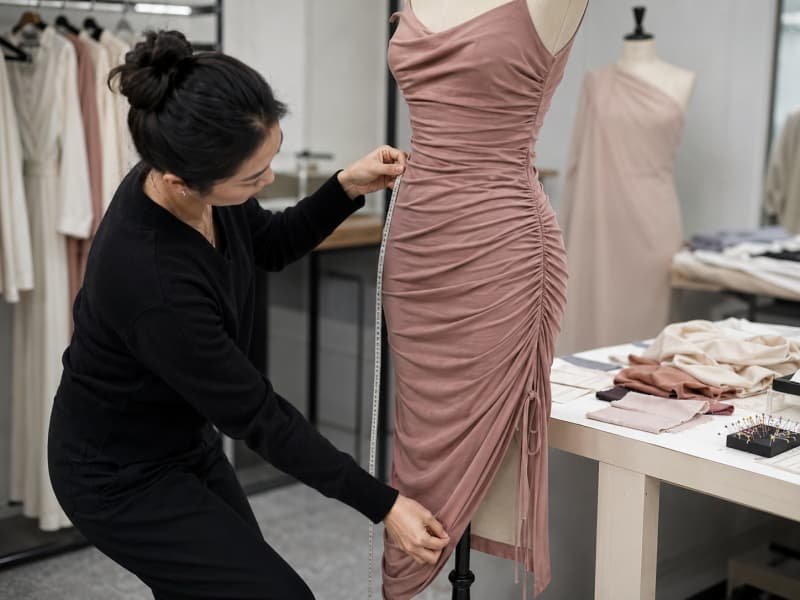
Ruched Silhouette
Ruching changes local garment length and tension. An adjustable ruched slit needs a defined minimum and maximum opening.
Development priorities:
- Gathering ratio
- Drawcord security
- Elastic recovery
- Left-right balance
- Lining
- Slit range
- Stitch durability
- Production measurement
Bodice, Neckline and Sleeve Customization Options
Cowl Neck
- Cowl depth
- Neckline stability
- Bust coverage
- Strap placement
- Back shape
- Lining method
Square Neck
Square necklines require accurate corner construction and stable front-body shaping. Development points:
- Neckline width
- Corner reinforcement
- Bust fit
- Strap position
- Facing or lining
- Zipper route
Halter Neck
Halter styles concentrate support around the neck and upper back. The neckline must remain stable without excessive pressure. Development points:
- Neck closure
- Bust support
- Armhole coverage
- Back depth
- Lining
- Strap strength
Strapless Bodice
Strapless slit midi dresses often require internal support and close fit control.
Development points:
- Bust shape
- Boning position
- Grip elastic
- Cup placement
- Zipper
- Lining structure
Long Sleeve
- Sleeve stretch
- Armhole fit
- Cuff finish
- Shoulder balance
- Lining
- Movement
One Shoulder
- Shoulder stability
- Bust balance
- Armhole shape
- Side seam
- Zipper
- Lining
Slit Midi Dresses for Different Collections
Going-out Collections
- Ruched jersey
- Stretch mesh
- High side slits
- Cut-out bodices
- Cowl necklines
- Dark or seasonal colors
Occasionwear Collections
- Satin slip shapes
- Crepe column dresses
- Front or side slits
- Draped waists
- One-shoulder bodices
- Lined construction
Day-to-night Collections
- Structured crepe
- Ponte
- Tailored sheath shapes
- Back vents
- Modest side slits
- Clean necklines
Resort Collections
- Wrap openings
- Double side slits
- Printed crepe
- Lightweight woven fabrics
- Halter necklines
- Soft A-line shapes
Fabric Comparison for Slit Midi Dress Development
Fabric selection affects slit opening, fit, opacity, drape, seam stability and long-term recovery. Material approval should consider the complete garment rather than color and composition alone.
| Fabric | Suitable Style Direction | Main Strength | Main Development Risk | Bulk Control Focus |
|---|---|---|---|---|
| Stretch Jersey | Bodycon, ruched, fitted midi | Comfort and body fit | Transparency, weak recovery, seam stretching | GSM, stretch, recovery and shrinkage |
| Satin | Slip, occasion, bias and cowl styles | Drape and surface shine | Needle marks, seam puckering, pressure marks | Cutting direction, seam handling and packing |
| Crepe | Sheath, draped and day-to-night styles | Coverage and balanced structure | Batch handfeel and weight variation | GSM, shade, shrinkage and drape |
| Ponte | Structured fitted dresses | Recovery, opacity and support | Excess weight or stiffness | Stretch balance and heat setting |
| Chiffon | Layered, resort and soft occasion styles | Fluid movement | Transparency, fraying and seam slippage | Lining, edge finish and panel control |
| Stretch Mesh | Overlay, going-out and ruched styles | Lightweight visual layering | Coverage, seam recovery and print alignment | Stretch, opacity, lining and seam type |
| Rib Knit | Casual fitted and double-slit styles | Comfort and vertical texture | Growth, distortion and uneven recovery | Rib density, shrinkage and hem stability |
| Lightweight Woven | Wrap, A-line and resort styles | Breathability and print versatility | Wrinkling, transparency and seam opening | Fabric width, shrinkage and lining choice |
Lining and Coverage Engineering for Slit Dresses
Full Lining
Control points:
- Lining weight
- Stretch compatibility
- Slit opening
- Hem relationship
- Zipper attachment
- Internal movement
- Seam bulk
- Pressing
Partial Lining
Control points:
- Endpoint position
- Seam visibility
- Slit relationship
- Opacity
- Edge finish
- Stretch balance
- Comfort
- Color match
Double-layer Construction
Control points:
- Layer stretch
- Recovery
- Seam bulk
- Hem finish
- Twisting
- Slit alignment
- Weight
- Heat retention
Slit-specific Finish
A lining near a slit may stop above the opening, follow the slit shape or remain separate from the outer opening.
Control points:
- Finished endpoint
- Seam anchoring
- Walking movement
- Sitting coverage
- Lining exposure
- Pressing
- Stitch tension
- Grading
Four Fabric Behaviors Determining Dress Performance

Drape Controls Movement
- Intended silhouette
- Slit opening angle
- Front and back balance
- Movement during walking
- Clean hanging appearance
- Stable pressing result

Stretch Controls Fit
- Horizontal stretch
- Vertical stretch
- Stretch direction
- Base-size negative ease
- Graded-size tension
- Seam elasticity
- Lining compatibility

Opacity Controls Coverage
Opacity affects commercial wearability, especially in light colors, fitted silhouettes and high slits.
Review methods may include:
- Natural light inspection
- Strong light inspection
- On-body fitting
- Stretch opacity check
- Lining comparison
- Underwear visibility review
A fabric appearing opaque on a table may become transparent once stretched across the hip.

Recovery Controls Shape
Recovery measures how well a fabric returns after stretching. Weak recovery may create bagging at the hip, distorted side seams and an enlarged slit opening. Review points include:
- Initial recovery
- Repeated stretch
- Heat response
- Wash response
- Seam recovery
- Garment hanging behavior
Stable recovery supports fit consistency throughout wear and across bulk production.
Closures, Trims and Branding Components
Invisible Zipper
Invisible zippers create a clean finish for fitted, satin and occasion styles. Control points:
- Zipper length
- Tape color
- Seam stability
- Waist matching
- Top closure
- Pressing
- Slider quality
- Bulk consistency
Side Zipper
- Left or right side
- Zipper endpoint
- Slit location
- Seam stress
- Lining
- Waist shaping
- Dressing ease
- Reinforcement
Hook and Eye
- Position
- Stitch security
- Comfort
- Visibility
- Metal finish
- Color
- Size
- Production consistency
Elastic Support
Internal elastic may support strapless necklines, waists, ruching or stretch openings. Control points:
- Width
- Recovery
- Tension
- Attachment
- Skin comfort
- Heat resistance
- Wash performance
- Measurement consistency
Brand Labels
- Placement
- Fiber content
- Care instructions
- Market language
- Skin comfort
- Stitching
- Size identification
- Colorfastness
Retail Packaging
- Individual polybags
- Tissue protection
- Hanger packing
- Fold templates
- Size stickers
- Barcode labels
- Carton assortment
- Shipping marks
Development Review Before Pattern Making
Design and Product Review
Duolan reviews the design from front, back and side views. The assessment connects silhouette, market positioning, material direction and intended wearing occasion.
Review areas include:
- Midi length proportion
- Slit direction
- Neckline and sleeve
- Bust and waist shaping
- Hip fit
- Lining
- Closure
- Branding
- Target size range
- Planned quantity
Any conflict between visual reference and technical specification is clarified before pattern work begins.
Production Feasibility Review
A design may be visually achievable while remaining unstable for bulk production. Feasibility review evaluates whether the selected method can be repeated across production quantities and sizes.
Review areas include:
- Fabric availability
- Shade continuity
- Stretch consistency
- Seam construction
- Slit reinforcement
- Ruching repeatability
- Special trim lead time
- Pressing requirements
- Packing sensitivity
- Production allocation
Recommended adjustments are explained before execution rather than introduced without approval.
What to Include in Your Development Brief
Design Views
Useful files:
- AI
- PSD
- EPS
- SVG
- High-resolution images
Measurement Spec
Provide a garment measurement chart rather than body measurements alone.
Important information:
- Base size
- Size range
- Measurement method
- Tolerances
- Grading rules
- Market standard
Slit Definition
Include:
- Position
- Finished height
- Measurement origin
- Opening width
- Underlap or overlap
- Lining endpoint
- Reinforcement
- Left or right side
Fabric Requirements
Useful information:
- Composition
- GSM
- Stretch
- Recovery
- Opacity
- Handfeel
- Drape
- Color
Construction Notes
Useful details:
- Stitch type
- Seam allowance
- Hem width
- Reinforcement
- Internal finish
- Pressing
- Special operations
- Approved reference sample
Branding and Packing
Provide label, hangtag and packing requirements early enough for sourcing and approval.
Useful details:
- Main label artwork
- Care label content
- Size label
- Hangtag
- Barcode
- Polybag
- Folding method
- Carton marks
Pattern Engineering for Balanced Fit and Movement
Balance Across Bust, Waist and Hip
Pattern review includes:
- Bust shaping
- Waist suppression
- Hip distribution
- Front-back balance
- Side-seam position
- Dart direction
- Stretch allowance
- Ease placement
Grainline and Side-seam Control
Control methods include:
- Grainline marking
- Fabric direction approval
- Panel symmetry
- Cutting orientation
- Hanging before hemming
- Side-seam inspection
- Pressing review
- Pattern correction
Movement and Hem Balance
A dress should be reviewed while standing, walking and sitting. Static fit alone cannot confirm slit performance.
Movement review includes:
- Walking stride
- Sitting coverage
- Stair movement
- Hip tension
- Hem swing
- Slit opening
- Lining movement
- Zipper comfort
The hem should remain balanced after the garment relaxes on a hanger.

Engineering Slit Height, Stability and Coverage
Defining Slit Position
- Left or right side
- Distance from center line
- Seam or panel location
- Distance from hem
- Finished opening width
- Top reinforcement
- Lining relationship
- Size grading rule
Controlling Finished Height
- One measurement origin
- Base-size specification
- Graded-size instruction
- Finished seam condition
- On-body approval
- Tolerance definition
- Lining endpoint
- PP sample confirmation
Managing Opening Behavior
The slit opening changes according to garment tension and fabric response.
Variables include:
- Hip ease
- Negative ease
- Stretch percentage
- Recovery
- Slit angle
- Panel weight
- Lining tension
- Walking stride
A stable opening should return to its intended position after movement rather than remain stretched or twisted.
Reinforcing Stress Points
- Bar tack
- Short reinforcement stitch
- Internal tape
- Seam extension
- Backing fabric
- Structured overlap
- Controlled seam allowance
- Stress-point testing
Confirming Movement Coverage
- Standing front view
- Side view
- Walking
- Sitting
- Step movement
- Cross-leg sitting
- Light and opacity
- Lining exposure
From Development Brief to Review-ready Sample
Brief Review
Output:
- Clarification list
- Risk notes
- Missing information
- Sample purpose
- Initial timeline
Fabric Preparation
Available fabrics are reviewed against weight, stretch, opacity, drape and color direction.
Output:
- Swatch options
- Material comparison
- Lining suggestion
- Trim selection
- Approval request
Pattern Making
Output:
- Base pattern
- Grainline
- Seam allowance
- Slit construction
- Lining pattern
- Internal structure
Sample Sewing
The sample room follows confirmed materials and construction notes. Critical operations are reviewed during sewing.
Output:
- First sample
- Workmanship notes
- Internal observations
- Measurement record
- Risk photos
Internal Review
The finished sample is measured and checked before dispatch.
Review includes:
- Main POMs
- Slit height
- Side-seam balance
- Lining
- Zipper
- Hem
- Pressing
- Appearance
Brand Review
Consolidated comments are translated into pattern, measurement, fabric or construction actions.Planning reference:
- Standard woven or jersey first samples are commonly scheduled within 10–15 working days after material and specification confirmation.
- Bias-cut, layered, heavily ruched or custom-trim styles may require 15–25 working days.
- Final timing is confirmed after design complexity and material availability are reviewed.
Workmanship Details Protecting Fit and Appearance

Slit Top Reinforcement
Inspection points:
- Reinforcement length
- Stitch density
- Fabric distortion
- Symmetry
- Internal finish
- Surface appearance
- Stress resistance
- Pressing

Clean Seam Allowance
Inspection points:
- Allowance width
- Edge finish
- Thread tension
- Seam straightness
- Bulk
- Fraying
- Lining relationship
- Pressing direction

Lining Attachment
Inspection points:
- Attachment points
- Ease
- Slit opening
- Zipper connection
- Hem length
- Twisting
- Seam bulk
- Comfort

Invisible Zipper Finish
Inspection points:
- Zipper straightness
- Waist matching
- Top alignment
- Slider movement
- Tape visibility
- Seam puckering
- Hook and eye
- Lining finish

Balanced Hem
Inspection points:
- Front-back balance
- Side length
- Bias growth
- Hem width
- Slit intersection
- Stitch visibility
- Pressing
- Final hanging check

Controlled Pressing
Inspection points:
- Temperature
- Pressure
- Protective cloth
- Seam impression
- Satin shine
- Pleat or ruching shape
- Hem setting
- Packing readiness
Critical Process Testing Before Production Scale-up
Slit Stress Test
Review areas:
- Stitch security
- Fabric tearing
- Seam opening
- Reinforcement visibility
- Recovery
- Lining stress
Stretch Seam Test
Review areas:
- Seam elongation
- Thread selection
- Stitch type
- Recovery
- Puckering
- Wash response
Satin Seam Trial
Review areas:
- Needle size
- Stitch length
- Seam puckering
- Feed control
- Pressing
- Surface marking
Lining Connection Trial
Review areas:
- Stretch compatibility
- Ease
- Slit connection
- Zipper
- Hem
- Twisting
First-piece Confirmation
Review areas:
- Measurements
- Workmanship
- Slit height
- Fabric
- Labels
- Packing
Pilot Production Review
Review areas:
- Operation stability
- Defect patterns
- Line training
- Timing
- QC standard
- Corrective actions
Controlled Bulk Production for Multi-style Programs
Standard Lock
- Approved PP sample
- Final pattern
- Measurement chart
- BOM
- Construction notes
- Label details
- Packing instructions
- Quantity breakdown
Material Inspection
- Shade
- Handfeel
- GSM
- Stretch
- Opacity
- Defects
- Width
- Approved reference match
Cutting Preparation
- Fabric relaxation
- Marker approval
- Grain direction
- Bundle identification
- Shade grouping
- Panel matching
- Slit position
- Size ratio
Sewing Control
Production lines receive operation standards and critical-point training.
Control points:
- First-piece approval
- Slit reinforcement
- Seam quality
- Zipper
- Lining
- Measurement checks
- Ruching
- Hem
Finishing and Inspection
Finished dresses are measured, pressed and checked before packing.
Control points:
- Appearance
- Measurements
- Thread trimming
- Stains
- Pressing
- Slit symmetry
- Label placement
- Packing quality
Delivery Planning
A standard bulk program may be planned for approximately 30–45 days after PP approval and material confirmation. Multi-style programs, custom-dyed fabrics, special trims or complex packaging may require 45–60 days. Schedule planning considers:
- Fabric lead time
- Style count
- Quantity
- Production allocation
- Inspection
- Shipping method
Quality Checkpoints for Slit Midi Dress Production
Quality control follows product-specific risks rather than a generic final inspection alone.
| Production Stage | Inspection Point | Main Risk | Control Method |
|---|---|---|---|
| Fabric Arrival | Shade, GSM, stretch, opacity and defects | Fit variation, transparency or shade difference | Compare against approved swatch, BOM and PP sample |
| Cutting | Grainline, panel direction and slit location | Twisted seams, uneven slit or mismatched panels | Marker review, bundle control and shade grouping |
| First Piece | Fit, slit height, zipper, lining and workmanship | Production starts from an incorrect standard | First-piece measurement and visual approval |
| Sewing | Reinforcement, seam quality and opening symmetry | Weak slit, puckering or left-right imbalance | Inline operation checks and corrective action |
| Measurement | Bust, waist, hip, length, hem and slit | Fit or coverage deviation | POM inspection against approved tolerance |
| Lining | Length, attachment and opening behavior | Lining exposure or restricted movement | Hanging, walking and visual checks |
| Finishing | Hem, pressing, thread and stains | Uneven drape, shine or surface damage | Final finishing standard and hanging review |
| Packing | Folding, hanger position and protection | Creases, pressure marks or distorted slit shape | Approved packing method and carton checks |
Keeping Bulk and Reorders Consistent

Approved Product Standard
Preserved information includes:
- Pattern version
- Measurement chart
- Tolerances
- BOM
- Fabric reference
- Color reference
- Construction details
- PP sample
- QC notes
- Packing method

Material Continuity
Review includes:
- Lot number
- Shade
- GSM
- Stretch
- Recovery
- Handfeel
- Opacity
- Shrinkage

Production Continuity
Control includes:
- Line briefing
- First-piece review
- Critical operation notes
- Measurement checkpoints
- Inline inspection
- Final comparison
- Defect records
- Corrective action

Reorder Planning
Reorders become easier when materials, patterns and approvals remain organized.
Planning includes:
- Forecast quantity
- Color continuation
- Material availability
- Trim availability
- Size ratio
- Target delivery
- Packaging updates
- Market changes
Manufacturing Capacity with Audited Production Systems
Owned Factory Control
Brand value:
- Direct production coordination
- Stable workmanship standards
- Clear production records
- Stronger repeat control
- Planned line allocation
- Centralized communication
Flexible Factory Network
Brand value:
- Multi-style allocation
- Seasonal flexibility
- Specialized operations
- Regional capacity
- Parallel production
- Scalable order planning
Development Coordination
Brand value:
- Clear sample stages
- Technical clarification
- Fabric risk review
- Revision records
- PP preparation
- Production handover
Quality Management
Brand value:
- Product-specific checkpoints
- First-piece approval
- Inline inspection
- Final inspection
- Corrective action
- Reorder records
Compliance Support
Support may cover:
- SMETA 2-Pillar records
- Factory profiles
- Material information
- Care label content
- Production records
- Inspection documentation
Delivery Coordination
Brand value:
- Defined milestones
- Packing approval
- Carton planning
- Shipping documents
- Split delivery discussion
- Reorder coordination
Slit Midi Dress Development and Production Cases

United States Fashion Label
Project Scope
- 24 dress styles
- 48,600 garments
- 6 primary color directions
- US sizes 0–14
- Bodycon, ruched and side-slit midi dresses
- E-commerce and selected retail distribution
Development Challenge
Several initial reference styles used high-stretch jersey with adjustable ruching. The visible slit height increased after the garments stretched across the hip. The proposed lining also ended too close to the opening, creating exposure during walking.
Duolan Review
The team separated flat measurements from worn performance and identified four control areas:
- Hip negative ease
- Slit height
- Gathering ratio
- Lining endpoint
Actions Taken
- Adjusted hip distribution across front and back patterns
- Reduced excessive side-seam tension
- Defined minimum and maximum adjustable slit heights
- Extended the lining above the stress zone
- Added a measurable gathering standard
- Confirmed two graded sizes before PP approval
Result
The collection entered production after two structured revision rounds. Pattern, POM, ruching and lining standards were retained for repeat development across later color extensions.

United Kingdom Occasionwear Brand
Project Scope
- 18 styles
- 32,400 garments
- 7 satin slit midi styles
- UK sizes 6–18
- Wedding guest and occasionwear collection
- Hanger and folded packing formats
Development Challenge
Soft satin created seam puckering near the slit, pressure marks during pressing and side-seam rotation after hanging. The original packing fold also crossed the main slit area and left visible creases.
Duolan Review
The team reviewed:
- Fabric grain direction
- Needle and stitch settings
- Panel balance
- Hanging behavior
- Pressing protection
- Packing fold position
Actions Taken
- Revised cutting direction for selected panels
- Adjusted seam allowance and stitch length
- Added hanging time before final hem leveling
- Changed reinforcement to reduce visible bulk
- Defined a lower pressing pressure
- Moved the packing fold away from the slit
- Added tissue protection for selected colors
Result
The PP standard was approved with controlled seam appearance and improved packing protection. The same construction file supported three additional colorways without changing the core pattern.

Australian Contemporary Brand
Project Scope
- 12 styles
- 21,600 garments
- Crepe and lightweight woven fabrics
- AU sizes 6–16
- Day-to-night and resort directions
- Side, wrap and double-slit silhouettes
Development Challenge
Different color batches produced small changes in handfeel and drape. The brand also required consistent finished dress length and slit height across multiple production lines.
Duolan Review
The team identified three priority risks:
- Fabric batch variation
- Measurement method differences
- Production-line interpretation
Actions Taken
- Locked approved fabric references for each color
- Defined slit height from the finished hem
- Added diagram-based POM instructions
- Used one first-piece checklist across all lines
- Checked representative sizes before full release
- Preserved the pattern, BOM and QC file for reorder use
Result
All 12 styles moved through a coordinated production plan with consistent measurement methods. Product files remained available for reorder and future silhouette extensions.
Frequently Asked Questions About Custom Slit Midi Dresses

Start Your Slit Midi Dress Development Project
Send Duolan a clear project brief so our team can review product structure, material direction, sample route and production requirements. Useful files include a tech pack, front and back sketches, reference images, original sample photos, garment measurements, slit position, finished slit height, target fabric, lining preference, size range, quantities, color plan, branding details, packaging requirements and target delivery window.
For a multi-style collection, include the number of styles, planned order volume, sample priorities and expected launch sequence. Our team will review the information before confirming fabric preparation, sample planning, quotation requirements and bulk-production considerations.
Please provide:
- Company and brand information
- Product or collection brief
- Tech pack or design references
- Target fabric and colors
- Slit position and height
- Size range and grading standard
- Quantity by style and color
- Branding and packaging details
- Target sample deadline
- Target bulk delivery window