Skip to content
Custom Refined Fashion Top Manufacturer
Refined Fashion Tops Developed for Modern Brand Collections
Duolan supports fashion brands, product teams and sourcing offices with refined top development built around fabric behavior, silhouette, fit, internal structure, workmanship and production consistency.
- 30+ years of fashion product development experience
- 16 owned womenswear manufacturing factories
- 20+ long-term satellite manufacturing partners
- 300 sewing lines across the manufacturing system
- 50+ quick-response and flexible production lines
- Structured for 10–30 style programs and 20,000–80,000-piece seasonal orders
From corset tops and satin draped styles to mesh, lace, halter and structured blouse programs, each project moves through design review, material coordination, pattern development, sample refinement, production-readiness control and bulk quality management.
Built for Established Fashion Brand Teams
Fashion Brand Teams
The cooperation model suits brands managing:
- Seasonal or monthly product launches
- Contemporary, occasion, party or resort categories
- Defined retail positioning and margin targets
- Multi-color and multi-size production
- Repeat-order and category-extension plans
- Tops coordinated with dresses, skirts or matching sets
Product Development Teams
Product teams need more than a supplier capable of reading measurements. They need technical communication that converts design language into fabric, pattern, construction and production decisions.
Duolan supports product teams through:
- Design and feasibility review
- Material and trim direction
- Pattern and fit development
- Structured sample comments
- Revision records
- PP and production-readiness confirmation
- Bulk quality checkpoints
Buying and Sourcing Teams
Duolan can support formal supplier evaluation with:
- Company and manufacturing information
- Product-category capability review
- Sampling and bulk-production pathways
- Social audit records
- Quality and testing coordination
- Factory visit arrangements
- Production and shipment updates
- Repeat-order file preservation
What Makes a Fashion Top Refined?
Refinement Begins with Product Balance
A polished top should hold its intended silhouette from the front, side and back. Neckline depth, shoulder placement, bust position, waist contour, body length and hem balance must support the same visual direction.
A design may look attractive in a flat sketch but lose its character when worn because the fabric collapses, the bust line sits too high, the neckline opens, the armhole pulls or the waist loses definition. Development therefore starts with the relationship between design intention and body shape.
For fitted and structured styles, refinement often depends on millimeters rather than dramatic changes. A slight adjustment to the cup position, strap angle, neckline tension or side-seam shape can separate a polished garment from one that appears unstable.
Materials Must Support the Design
Fabric selection influences drape, opacity, surface quality, stretch, recovery, seam appearance and production risk. Expensive fabric does not automatically produce a refined garment. The material must be compatible with the intended cut and construction.
A soft satin may suit a draped cowl top but lack stability for a sharply structured bustier. A rigid lace may create a strong visual effect but require careful placement and a softer lining. Stretch mesh may offer clean body shaping but only when recovery, transparency and seam tension are controlled.
Material decisions should therefore be made around the finished garment result, not the swatch appearance alone.
Internal Construction Matters
A refined top must remain secure and comfortable during real wear. Linings, cups, boning, elastic, gripper tape, hooks, zippers and adjustable components should support the garment without appearing bulky or visible from the outside.
Internal seams should remain clean. Lining should not roll outward. Cups should sit at the correct height. Boning should support rather than distort. Zippers should close smoothly without creating waves. Adjustable hardware should match the scale, color and price positioning of the garment.
The most effective internal construction is often almost invisible, yet it determines whether the outer silhouette stays polished.
Bulk Repeatability Completes Refinement
A sample can appear refined because it was handled by an experienced sample maker. A manufacturing program is successful only when the same fabric behavior, dimensions, workmanship and visual finish can be reproduced across sizes, colors and production batches. Repeatability requires:
- Approved pattern versions
- Confirmed material specifications
- Defined measurement methods
- Workmanship instructions
- Critical control points
- PP or approved reference samples
- First-piece verification
- Inline and final inspection standards
Development Risks Behind Refined Fashion Tops
Refined tops often combine sensitive fabrics, close fit, exposed areas, concealed support and detailed finishing. The following matrix links common production risks with specific control actions used during development and bulk preparation.
| Development Risk | Typical Product Effect | Duolan Control Action | Production Result |
|---|---|---|---|
| Design-to-sample mismatch | Proportion or silhouette differs from the intended look | Design reference review, silhouette analysis and sample-purpose confirmation | Clearer development direction before pattern work |
| Fabric mismatch | Top appears too stiff, too flat, too transparent or unable to hold shape | Fabric behavior, weight, stretch, recovery, opacity and drape evaluation | Material direction better aligned with the silhouette |
| Gaping neckline | Neckline opens away from the body during movement | Neckline shape, tension, seam stabilization and fit correction | More secure neckline across standing and movement |
| Unbalanced bust position | Cups, darts or seams sit above or below the intended body position | Bust-point, underbust, cup and torso-length review | More natural shaping and improved wearing stability |
| Weak internal support | Strapless or corset styles collapse, roll or move | Lining, cup, boning, elastic, gripper and closure assessment | Stronger support without excessive bulk |
| Transparency inconsistency | Coverage changes across colors, sizes or production batches | Shell-and-lining opacity check under different lighting | Controlled coverage aligned with the design |
| Sample-to-bulk variation | Bulk units differ in shape, trims, measurements or finish | BOM lock, PP basis, first-piece confirmation and inline QC | Closer reproduction of approved standards |
| Multi-style timing conflict | Sample comments, materials and approvals become disorganized | Style-level timeline, priority ranking and production-path planning | More controlled collection development |
| Sensitive seam appearance | Satin, mesh or lightweight fabrics show puckering and needle marks | Needle, thread, seam, tension and pressing trials | Cleaner seam appearance and reduced surface damage |
| Reorder inconsistency | Repeat production differs from the previous shipment | Pattern, BOM, color, workmanship and QC record preservation | Stronger consistency across repeat orders |
Refined Fashion Tops We Develop

Corset Tops
- Cup position and breast coverage
- Boning type, length and placement
- Underbust and waist balance
- Center-front and side-seam shaping
- Lining stability
- Back zipper, hook or lace-up construction
- Grading across the requested size range

Bustier Tops
Bustier styles rely on a close fit but often need a lighter visual effect than traditional corsetry. Fabric, interfacing and lining must hold the bust and waist while keeping the outer surface clean.
Development focuses on neckline shape, cup depth, seam position, side support and lower-edge stability. A bustier that fits the base size well may still fail after grading when cup proportions and underbust changes are treated as simple linear increases. Duolan evaluates the relationship between shell material, internal support, closure method and target size range before production standards are locked.

Halter Tops
- Is the neck strap fixed, tied or adjustable?
- Does the front panel pull upward?
- Is side-bust coverage sufficient?
- Does the back opening stay flat?
- Is the underarm edge secure during movement?
- Does the fabric recover after wear?

Satin Draped Tops
- Satin weight and fluidity
- Matte or high-luster surface
- Bias or straight-grain cutting
- Cowl and pleat depth
- Needle and seam visibility
- Pressing sensitivity
- Lining and opacity
- Packing pressure and surface marks

Mesh Fashion Tops
- Mesh stretch direction
- Recovery after extension
- Layer count
- Body coverage
- Lining color
- Neckline and armhole finish
- Printed or embroidered placement
- Seam tension
- Size grading under stretch

Lace Occasion Tops
- Motif scale and direction
- Left-right symmetry
- Scallop-edge application
- Seam placement
- Lace-to-lining color relationship
- Transparency level
- Skin-contact comfort
- Placement standards for production cutting

Asymmetric Tops
Asymmetric tops rely on deliberate imbalance. Neckline angle, shoulder position, hem direction and side-seam tension must look intentional rather than distorted. Fit review checks whether the garment rotates, pulls toward one side or changes position during movement.
Stretch direction and support components may need to differ between the left and right sides. Pattern markings, panel orientation and sewing sequence should be especially clear because production teams cannot rely on mirrored construction.

Off-Shoulder Tops
- Upper-body circumference
- Elastic recovery
- Sleeve attachment
- Arm movement
- Neckline depth
- Bust coverage
- Internal grip or support
- Fabric weight

Structured Camisoles
Structured camisoles combine narrow straps with close torso shaping. Strap placement, bust position, neckline stability, side coverage and hem shape determine whether the garment feels polished. Adjustable straps may improve wearability, but hardware scale and color should match the garment.
Fixed straps require more precise length control and grading. For fitted camisoles, the relationship between fabric stretch, lining, negative ease and closure method should be reviewed before final pattern approval.

Refined Blouses
Refined blouses depend on clean collar and neckline construction, controlled volume, sleeve balance, smooth button plackets and fabric-sensitive finishing.
Suitable directions include:
- Draped blouses
- Tie-neck blouses
- Wrap blouses
- Pleated-front blouses
- Soft peplum shapes
- Sheer layered blouses
- Contemporary fitted shirts

Fashion Bodysuits
Bodysuits require upper-body fit and lower-body function to work together. Torso length, bust shaping, leg opening, snap placement and stretch recovery affect comfort and stability.
Duolan reviews the intended body tension, lining areas, closure hardware and fabric recovery across the requested size range.
A bodysuit that looks correct on a mannequin may still feel uncomfortable if torso length and crotch extension are not evaluated during fitting.

Matching Set Tops
Set tops should coordinate with skirts or trousers in fabric, color, proportion, workmanship and pricing architecture. The top cannot be developed independently when the commercial value comes from the complete outfit.Development considers:
- Shared material use
- Color and dye-lot control
- Coordinated fit
- Proportion with the bottom
- Separate and set-selling potential
- Packaging and labeling
- Production allocation across both garments
Tops Designed Around Collection Roles

Going-Out Collections

Contemporary Womenswear

Occasion and Cocktail

Resort and Vacation

Work-to-Evening

Matching Set Programs
Translating Brand Aesthetics into Product Standards
Silhouette Language Becomes Pattern Direction
- Where the garment should sit on the body
- Which area should feel fitted or relaxed
- How much skin should be visible
- Whether the waist should be defined
- How the back should appear
- How the hem should relate to skirts or trousers
- Whether the style must remain secure during movement
Fabric Mood Becomes Material Specification
- Color performance
- Shrinkage
- Stretch direction
- Recovery
- Seam appearance
- Pressing response
- Packing marks
- Repeat-order availability
- Order volume and lead time
Detail Language Becomes Workmanship Rules
- Pleat start and finish points
- Ruching length and fullness
- Lace motif placement
- Strap width and attachment position
- Binding width
- Edge-finish method
- Stitch density
- Zipper length and top-stop position
- Internal support placement
- Pressing and final-shape requirements
Retail Position Becomes Commercial Engineering
A refined design must still fit the intended retail price, launch timing and order structure. Cost is influenced by material yield, lining, support components, cut complexity, handmade work, special processes and inspection requirements. Duolan reviews where value is visible and where complexity may add cost without improving the product. Commercial engineering may involve:
- Selecting a more stable fabric with a similar visual result
- Adjusting internal construction
- Simplifying hidden operations
- Rationalizing trim use
- Improving marker efficiency
- Separating image styles from volume styles
- Planning shared materials across several designs
The objective is not to remove refinement. The objective is to protect the visible product value while creating a workable production plan.
Fabrics Selected for Garment Results
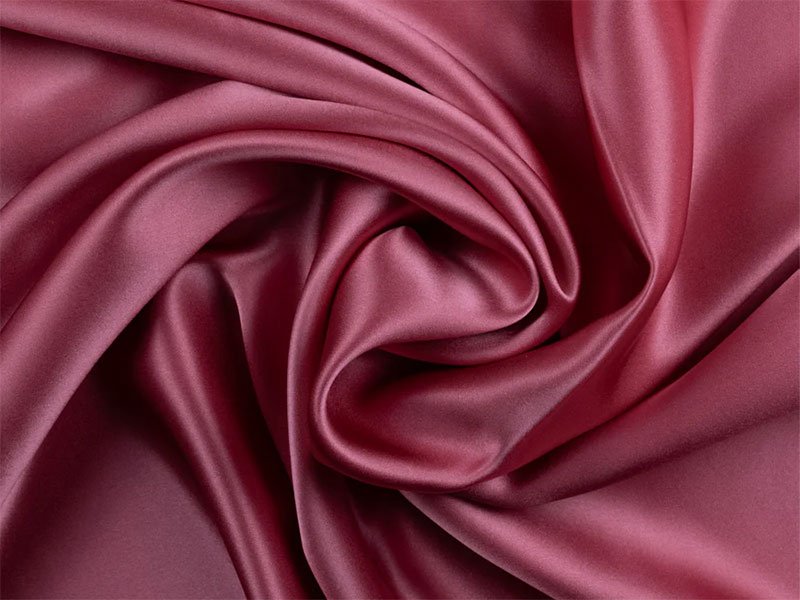
Satin

Crepe

Chiffon

Georgette

Stretch Mesh

Tulle

Lace
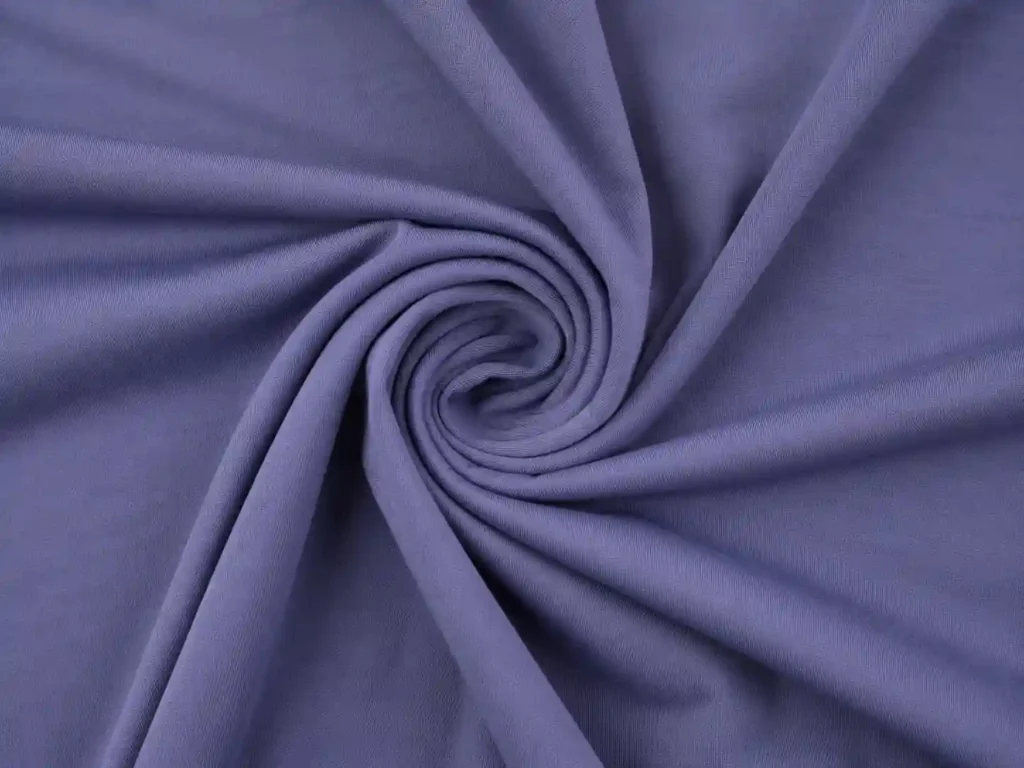
Stretch Jersey

Cotton Poplin

Jacquard
Jacquard creates texture and visual depth without additional surface decoration. Weight, pattern scale, reverse-side texture and fraying behavior should be evaluated.
Suitable products include structured tops, occasion bustiers and coordinated sets. Cutting may need placement control when the motif is directional or large scale.

Velvet
Velvet offers depth and occasion value but requires nap-direction control, careful pressing and suitable seam construction. Shade appearance can change according to pile direction and lighting.
Development should confirm cutting orientation, lining, support, zipper handling, seam marks and packaging. Production and inspection need consistent nap direction across every panel.

Embellished Fabrics
Pre-embellished mesh, sequin fabric, beaded textiles and embroidered bases can reduce some application work but introduce cutting loss, seam bulk, skin-contact and repair risks.
Material evaluation should cover embellishment security, usable width, repeat pattern, weight, edge treatment and replacement availability. High-risk areas may require reinforcement or local hand repair.
Match Each Top to Its Fabric
Material selection should follow the intended silhouette, support level, surface appearance and production plan. The matrix below provides a working basis for early development discussions.
| Top Direction | Suitable Material Options | Required Material Behavior | Main Production Risk | Development Review |
|---|---|---|---|---|
| Corset Top | Stable satin, crepe, jacquard, structured woven | Body, support and clean seam appearance | Slippage, seam distortion or weak shaping | Interfacing, lining, boning and seam trial |
| Bustier Top | Stretch satin, stable woven, velvet, lace overlay | Controlled fit with moderate flexibility | Cup distortion and neckline instability | Cup, underbust and closure review |
| Draped Top | Satin, crepe, georgette, soft jersey | Fluid drape and controlled fold formation | Flat drape, seam puckering and twisting | Grain, fold placement and pressing test |
| Mesh Top | Stretch mesh, power mesh, soft tulle | Recovery, softness and planned transparency | Shape loss, exposed seams and uneven coverage | Stretch, lining, tension and edge review |
| Lace Top | Woven lace, stretch lace, embroidered mesh | Motif clarity and stable placement | Pattern asymmetry and edge inconsistency | Placement map, lining and cutting trial |
| Halter Top | Satin, crepe, jersey, stable mesh | Secure neckline and balanced support | Neck pressure and side-bust exposure | Strap, neckline, back and recovery review |
| Refined Blouse | Crepe, georgette, chiffon, poplin, lightweight jacquard | Drape or crispness suited to the design | Collar collapse, puckering or transparency | Interfacing, seam and lining review |
| Bodysuit | Stretch jersey, power mesh, stretch lace | Recovery and four-way comfort | Torso tension and leg-opening distortion | Stretch ratio, torso length and snap placement |
| Structured Camisole | Satin, crepe, jacquard, cotton blend | Stable neckline with controlled fit | Strap movement and upper-edge gaping | Strap, lining, closure and grading review |
| Matching Set Top | Shared woven, print, satin, crepe or jersey | Color and surface consistency with the bottom | Dye-lot or print-placement mismatch | Set-level material and production planning |
Control Details Behind Clean Top Silhouettes

Neckline Stability

Bust Point Position

Cup Shape

Underbust Balance

Strap Position

Armhole Shape

Side-Seam Control

Waist Contour

Back Opening

Hem Balance
The hem should sit at the intended level without rolling, lifting or dipping. Cropped and fitted tops are especially sensitive to body length, stretch, lining tension and waist movement.
Front, side and back hem levels should be evaluated on the body, not only on a table.

Lining Control
Lining should support the shell without pulling, showing or rolling outward. It may need different ease, stretch or construction according to the shell fabric.
Color, handfeel, opacity and seam attachment are reviewed alongside the outer material.

Size Grading
Grading must protect design proportions across the requested size range. Neckline depth, strap position, cup volume, armhole, body length and support cannot be increased through one uniform formula.Critical measurements and visual checkpoints should be defined for each size group.
Pattern and Fit Engineering for Fashion Tops
Building from the Brand Base Size
- Bust
- Underbust
- Waist
- Hem opening
- Across shoulder
- Front and back body length
- Armhole
- Neckline depth
- Strap length
- Cup width and height
- Side-seam length
- Zipper length
Converting Fit Comments into Pattern Actions
Fit comments are most useful when they describe location, direction and desired result. “Too loose” is less actionable than “remove gaping from the front armhole while maintaining bust coverage.”
Duolan organizes comments into categories:
- Silhouette
- Balance
- Measurement
- Support
- Coverage
- Movement
- Fabric behavior
- Construction
- Visual finish
Pattern corrections may involve reshaping the neckline, adjusting dart intake, changing cup position, rotating the side seam, redistributing waist contour or revising strap placement. Correcting the root cause is more stable than making temporary changes on the sample surface.
Grading Beyond Linear Increments
Measurement Tolerance and Inspection
Tolerance should reflect the garment area and its impact on fit. A minor difference in a relaxed hem may have limited impact, while the same difference at the neckline, underbust or strap can change wearability.
Critical POMs should receive tighter monitoring during first-piece, inline and final inspection. Measurement control is linked with workmanship because sewing tension, pressing and material relaxation can alter dimensions after assembly.
Linings, Trims and Hidden Support Systems

Lining Systems

Cups

Boning

Zippers

Elastic and Gripper
Elastic can stabilize necklines, sleeves, backs and bodysuit openings. Gripper tape supports strapless or off-shoulder products. Excess tension may create marks or rolling, while insufficient tension reduces security.

Hooks and Eyes
Hooks, eyes and bars provide concealed closure and reinforcement. Size, color, spacing and attachment strength should suit the product. For zipper tops, a hook at the upper edge may reduce strain and improve closure alignment.

Strap Adjusters

Interfacing and Support Layers
Interfacing shapes necklines, plackets, waist sections and structured panels. Weight and bonding temperature should be compatible with the shell. Trials are recommended for sensitive surfaces.
Feasibility Review Before Sample Development
Materials Your Team Can Submit
- Tech pack
- Design sketch
- Reference image
- Original garment photos
- Physical sample
- Moodboard
- Fabric swatch or direction
- Size chart
- Previous fit comments
- Target quantity
- Intended launch date
- Label and packaging files
Product Questions Reviewed First
- Intended silhouette
- Product category
- Sample purpose
- Target market
- Base size
- Fit direction
- Coverage requirements
- Fabric expectation
- Lining and support
- Closure method
- Surface techniques
- Retail position
- Production quantity
- Launch timing
Risks Identified Before Sampling
- Fabric unable to hold the desired shape
- Neckline needing concealed stabilization
- Cup or boning construction not defined
- Transparent areas requiring clearer coverage standards
- Decorative work unsuitable for the target quantity
- Size chart inconsistent with the intended fit
- Material availability conflicting with the launch date
- Construction requiring a pilot stage before scale
Development Plan and Commercial Basis
- Development method
- Required sample stage
- Material sourcing basis
- Pattern and construction work
- Special processes
- Sample fee basis
- Approval checkpoints
- Estimated schedule
- Bulk-production considerations
Sample Development by Project Purpose
First Prototype
Review normally focuses on proportion, neckline, bust, waist, body length, major details and overall resemblance to the design direction.
Fit Sample
Fit comments are organized into measurable actions before the next pattern version is prepared.
Revised Sample
Complex tops may require focused confirmation of cups, boning, strap placement, transparency or drape before visual finishing is completed.
Photo-Ready Sample
Fit and production feasibility should already be sufficiently controlled so photography decisions do not approve an attractive version that cannot move into manufacturing.
Sales Sample
Material allocation, color stories and sample timing should be coordinated at collection level.
PP Sample
Any remaining deviations should be recorded clearly before production release.
From Approved Sample to Production Standard
Approved Pattern and Measurement Basis
The approved pattern version should correspond with the latest fit decisions and measurement chart. Pattern codes and revision versions help prevent earlier files from entering production.
Critical measurements are identified for first-piece, inline and final checks. For:
- refined tops
- neckline
- underbust
- strap length
- body length
- hem opening
may require closer control than non-critical areas.
Material and Trim Lock
- Shell fabric
- Lining
- Color
- Approved swatch or lab dip
- Zipper
- Cups
- Boning
- Elastic
- Hooks
- Hardware
- Labels
- Packaging materials
Workmanship and Construction Instructions
- Seam type
- Stitch density
- Binding width
- Ruching placement
- Boning position
- Cup attachment
- Lace alignment
- Zipper construction
- Hem method
- Pressing
- Final garment shape
Bulk Readiness Review
Before production starts, Duolan checks whether the project is fit confirmed, visually confirmed, PP based or still pending refinement. The review also confirms:
- Style, color, size and quantity breakdown
- Material readiness
- Production path
- Pilot or first-piece need
- Inspection requirements
- Packaging instructions
- Shipping target
- Approval responsibilities
Bulk lead time is then evaluated according to product complexity and material readiness. Common production references are approximately 15–20 days for simpler styles, 20–30 days for regular styles and 30–45 days for complex products after the required production basis is confirmed.
Workmanship That Defines Product Refinement

Clean Neckline Finish
Inspection checks include seam allowance control, rolling, stretching, topstitch consistency and final pressing.

Narrow Hem Control
The method, folder, stitch setting and pressing sequence should be tested on the selected fabric. Hem appearance is checked from both the outer and inner sides.

Fine Binding
Binding that is too tight distorts the opening; binding that is too loose creates ripples. Curved areas require controlled handling.

Balanced Darts
Dart points should end smoothly without creating bubbles or sharp peaks. Satin and lightweight woven fabrics need especially careful pressing.

Controlled Ruching
Production references may include start and stop points, elastic length, stitch method and approved appearance photos.

Invisible Zipper Finish
Fabric stabilization may be required for satin, mesh overlays or bias-cut panels.

Clean Lining Attachment
Lining should support the top without pulling the outer shell. Necklines, armholes, zippers, cups and hems need suitable attachment and ease.
Inspection checks whether lining shows, rolls, twists or restricts movement.

Refined Internal Seams
Seam choice considers bulk, skin contact, transparency, fraying and production efficiency.

Pressing and Final Shape
Satin, velvet, lace and embellished surfaces require extra care to prevent shine, crushing, impressions or decoration damage.
Fashion Craft Developed for Stable Production
Embroidery
Lace Placement
Sequin Application
Beading and Pearls
Rhinestone Work
Print and Surface Effects
Production Engineering Before Order Scale-Up
Construction Breakdown
- Fabric preparation
- Cutting direction
- Panel identification
- Support-component preparation
- Cup and boning assembly
- Lining construction
- Main-body assembly
- Zipper and closure
- Edge finishing
- Decoration
- Pressing
- Final inspection
Material Handling Plan
Satin, mesh, lace, velvet and embellished fabrics require different preparation and movement through production.
Material handling may include:
- Fabric relaxation
- Shade grouping
- Nap-direction control
- Layer-height limits
- Cutting protection
- Panel bundling
- Decoration protection
- Controlled pressing
- Protective packing
A suitable handling plan reduces distortion, shade differences and surface damage.
Critical Operation Trials
High-risk operations may be tested before bulk release. Examples include:
- Satin seams
- Mesh binding
- Lace placement
- Cup insertion
- Boning casing
- Strap attachment
- Invisible zipper installation
- Embellished seam joining
- Narrow hem
- Heat-applied decoration
Operation trials help establish machine settings, workmanship method and inspection criteria.
Pilot and First-Piece Verification
Structured, fitted or craft-sensitive styles may require a pilot or first-piece check. The verification confirms whether production teams can reproduce:
- Shape
- Measurements
- Support
- Neckline stability
- Material appearance
- Construction
- Decoration placement
- Pressing
- Labeling
Issues found at first-piece stage can be corrected before they spread across a large production quantity.
Manufacturing Organized for Multi-Style Programs
Owned Factory Control
Satellite Capacity Support
Flexible Production Lines
Multi-Style Coordination
Brand programs commonly contain 10–30 styles with different fabrics, structures and launch priorities. Styles are divided according to: Complexity,Material,craft,quantity,approval status,production risk,target delivery. Priority and production paths are organized at style level.
Specialized Process Coordination
Scale-Up Planning
Quality Control from Sample to Shipment

Fabric Inspection
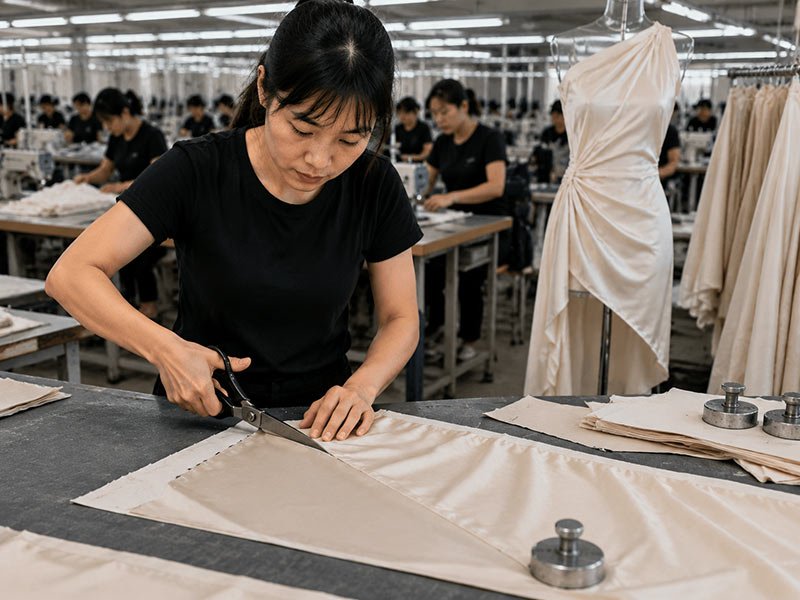
Cutting Control

First-Piece Confirmation

Inline Inspection

Measurement Control
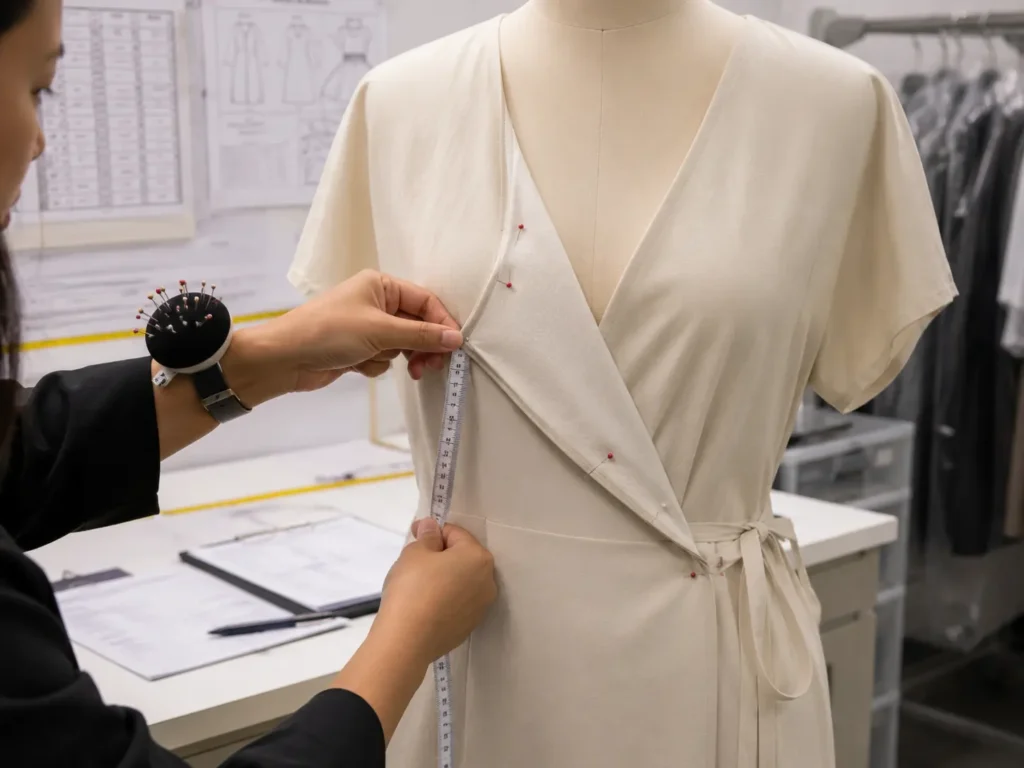
Workmanship Inspection
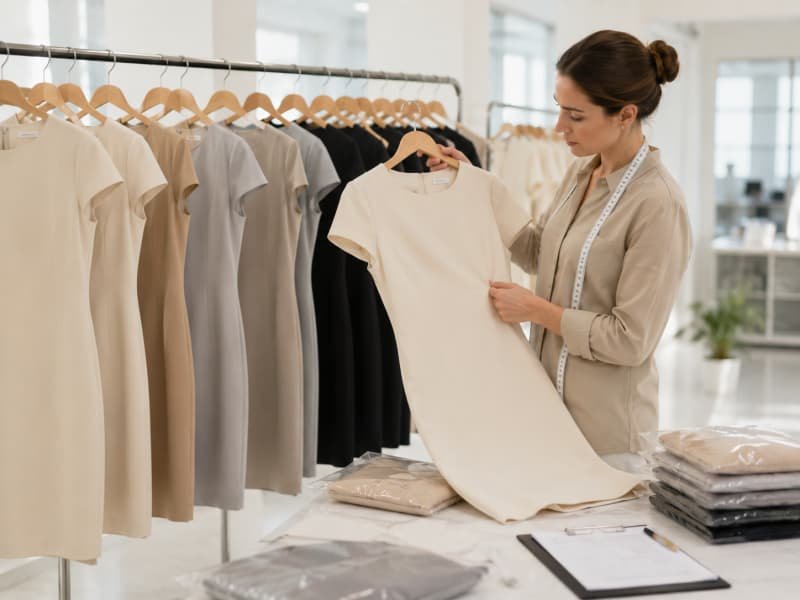
Final Appearance Review

Packing Verification
Repeat-Order Standards Preserved for Future Collections
Product Files Retained by Style
Repeat-order records may include:
- Pattern version
- Measurement chart
- BOM
- Fabric information
- Color reference
- Trim specification
- Workmanship notes
- PP or approved sample basis
- Label and packing details
- Previous inspection points
The records help identify what should remain unchanged and what requires new confirmation.
Material Availability Rechecked
A previous material specification does not guarantee future availability. Repeat production begins with a review of:
- Fabric continuity
- Color continuity
- Trim availability
- Dye-lot risk
- Component changes
- Lead time
- Order quantity
Any replacement should be reviewed against the approved product effect rather than accepted solely because the specification appears similar.
Previous Production Feedback Used
The team may review:
- Areas with repeated corrections
- Size-specific issues
- Material handling
- Workmanship bottlenecks
- Packing pressure
- Inspection observations
- Return or wear feedback supplied by the brand
Color and Style Extensions
Successful silhouettes may be extended into:
- new colors
- fabrics
- sleeves
- necklines
- coordinated bottoms
Extensions are reviewed as development projects because changing the material or construction can alter fit and production behavior. The original pattern provides a useful base, but suitability still needs verification.
Why Fashion Brands Evaluate Duolan
Fashion Development Background
Dress-Led Product Understanding
Structured Development Process
Projects move through design review, material coordination, pattern development, sample stages, revision records and production-readiness confirmation.
The process helps keep comments, decisions and approvals organized across multi-style programs.
Complex Style Capability
Scalable Manufacturing Network
Sample-to-Bulk Control
Compliance, Documentation and Delivery Coordination
Audit and Standards Coordination
According to project requirements, teams can coordinate standards, testing or documentation related to:
- BSCI requirements
- ISO 9001 quality alignment
- AATCC methods
- ASTM methods
- OEKO-TEX? material requirements
- EN standards
- China GB standards
- GOTS-related material requirements
- Brand-specific standards
- Third-party inspection
Label and Packaging Control
Production can coordinate:
- Main labels
- Size labels
- Care labels
- Content and origin information
- Hangtags
- Barcode stickers
- Polybag warnings
- Tissue or protective packing
- Size-color ratios
- Carton marks
- Shipping marks
Artwork, placement, language and market requirements should be confirmed before bulk production.
Shipping and Delivery Options
Common reference routes include:
- Express: approximately 3–7 days
- Air freight: approximately 5–8 days
- Sea freight: approximately 20–35 days
Production timing and transport timing should be planned separately. Bulk-production references are approximately 15–20 days for simpler styles, 20–30 days for regular styles and 30–45 days for complex styles after the required production basis is confirmed.
Project Communication
Duolan supports communication through:
- voice calls
- video calls
- online project meetings.
Formal approvals can remain in email or agreed documentation, while faster channels support clarification, image review and progress coordination. Factory visits can be arranged for qualified programs, including sample-room, production, inspection and packing review.
Refined Fashion Top Project Case Studies

United States Contemporary Collection
Order Structure:
- 18 styles
- 34 colors across the program
- XS–XL size range
- 42,600 total pieces
- Online and selected retail distribution
- Two coordinated delivery windows
The original range used several visually similar satin materials with different weights and surface finishes. Early references also showed inconsistent neckline depth and strap positions across styles. Several mesh designs required better coverage planning for lighter colors.
Duolan Approach:
- Grouped the range into satin, mesh and structured construction paths
- Reduced overlapping fabric directions
- Reviewed strap, neckline and body-length standards
- Added lining-tone confirmation for light mesh colors
- Defined separate sample purposes for fit and photography
- Locked material, pattern and workmanship standards before production
- Used first-piece confirmation for higher-risk satin and structured styles
The 18-style program moved into two production waves. Shared materials improved color coordination and purchasing efficiency. Fit comments were organized by style family, reducing repeated revisions. The second wave used approved standards from the first group, allowing faster production preparation and more consistent presentation across the collection.

United Kingdom Occasionwear Program
A UK occasionwear company developed a 12-style collection of corset tops, lace bustiers, embellished camisoles and satin halter styles for cocktail, party and evening use.
Order Structure:
- 12 styles
- 22 color-style combinations
- UK 6–18 size range
- 27,800 total pieces
- Multiple online launch dates
- Third-party final inspection
Primary Challenges:
The size range required more controlled cup, underbust and neckline grading. Heavy embellishment on two styles affected the fabric fall and placed pressure on narrow straps. Lace placement needed stronger symmetry standards.
Duolan Approach:
- Classified styles by support and surface-technique risk
- Reviewed cup, boning and underbust construction by size group
- Reinforced embellished strap attachment
- Created lace motif and scallop-edge placement references
- Used revised fit samples for selected edge sizes
- Completed pilot verification for the highest-risk structured styles
- Added loose-component and internal-comfort checks to inspection
Result:
Support and coverage standards remained more consistent across the extended size range. Lace placement became easier to inspect through approved visual references. The program passed the agreed final-inspection process and later supported color extensions for selected commercial styles.

Australian Resort Top Program
Order Structure:
- 24 styles
- 41 color and print combinations
- AU 6–16 size range
- 63,200 total pieces
- Resort and holiday delivery calendar
- Sea and split-air shipment plan
Several lightweight fabrics showed different transparency levels between printed and solid colors. Wrap and halter styles also needed secure coverage without losing the relaxed resort appearance. Tops and skirts had to remain aligned in color and delivery timing.
Duolan Approach:
- Evaluated shell and lining combinations under natural and strong light
- Adjusted wrap overlap and side-bust coverage
- Reviewed halter strap position and neck pressure
- Coordinated print placement across tops and skirts
- Planned set materials under shared production lots
- Prioritized photo and sales samples according to launch dates
- Divided bulk delivery according to campaign and warehouse timing
The program maintained a consistent resort identity across tops and matching bottoms. Coverage improvements were achieved without making the silhouettes heavy. Coordinated material planning reduced visible color differences between set pieces, while split delivery protected the earlier campaign window.
Frequently Asked Questions

Start Your Refined Top Development Project
Share the product information currently available, whether it is a complete tech pack, reference image, sketch, sample photo, fabric direction or early collection brief. Duolan will review the product category, silhouette, material, fit priorities, internal structure, workmanship, target quantity, size range and delivery schedule before recommending the next development or production path.
Clear project information helps the team provide a more relevant response. Useful details include:
- Product type and collection purpose
- Tech pack, sketch or reference image
- Target fabric or handfeel
- Base size and requested size range
- Colorways
- Estimated quantity by style
- Intended sample purpose
- Target launch or delivery date
- Surface techniques or special construction
- Label and packaging requirements
- Inspection or compliance requirements
After review, the team can clarify available development options, information still required, material and construction risks, sample basis, production feasibility and the next approval stage.