Skip to content
Custom Jersey Dress Manufacturer for Fashion Brands
Dress-focused development and manufacturing for fitted, ruched, draped, wrap, bodycon, midi and maxi jersey collections.
- Jersey programs can be planned across 10–30 styles, combining different silhouettes, colors and size runs within one coordinated collection.
- Established brand orders commonly total 20,000–80,000 pieces across multiple styles rather than relying on a single high-volume design.
- Every jersey project is reviewed for fabric weight, stretch direction, recovery, shrinkage, opacity, seam stability and fit before bulk release.
- Duolan connects fabric sourcing, pattern development, sample revision, PP approval, production planning, quality control and branded delivery.
Manufacturing Scale Built for Multi-Style Jersey Programs
30+ Years Development
16 Owned Factories
20+ Satellite Factories
Long-term satellite factories provide production flexibility for repeat orders, replenishment, peak-season programs and multi-style collections. Production allocation is based on style complexity, jersey construction, quantity, workmanship level and delivery schedule instead of distributing orders only according to available labor.
12,000+ Workers
50+ Flexible Lines
SMETA Audit Foundation
Built for Established Fashion and Product Teams
Fashion Dress Brands
Product Development Teams
Fashion Buying Teams
Sourcing Offices
Ecommerce Fashion Groups
Multi-Brand Companies
Why Jersey Dresses Need Dress Specialists
A jersey dress is not a longer T-shirt. Body contour, fabric weight, gravity, neckline exposure, hem balance and movement affect the final silhouette. Dress-focused development protects the visual result while keeping construction suitable for production.
A Dress Carries More Weight
Longer jersey garments place more vertical load on the fabric than tops. A soft modal or viscose jersey may lengthen after hanging, especially in maxi dresses, bias-influenced sections or heavily ruched styles. Pattern length cannot be approved only from flat measurements.
Duolan reviews fabric weight, vertical stretch, garment length and construction before confirming the pattern. Hang testing may be used for styles where the hem or waist position could drop after the garment rests. Skirt volume, panel direction and hem finish are also considered because uneven weight distribution can distort the lower silhouette.
The goal is not to remove all movement from jersey. Fluidity often creates the desired appearance. Control means allowing the intended drape while reducing unexpected growth, twisting or hem imbalance.
Body Fit Changes Fabric Behavior
Stretch garments sit directly against the bust, waist, hips and seat. Small differences in recovery can change compression, comfort, opacity and shape. A fabric that looks acceptable on a hanger may become transparent or unstable when stretched on the body.
Pattern development therefore uses the actual approved fabric whenever possible. Negative ease is adjusted by garment zone rather than applied as one uniform percentage. Bust shaping, waist suppression, hip balance and lower-skirt movement need separate consideration.
Fit review also includes sitting, walking, arm movement and garment recovery after wear. Static mannequin approval alone cannot confirm real wearing performance.
Fashion Details Add Stress
Twist fronts, cut-outs, side ruching, wrap panels, asymmetric seams and high slits redirect tension through the garment. Every design detail changes how the jersey stretches and where stress accumulates.
A cut-out edge may roll without stabilization. A twist front may pull one side seam forward. A wrap front may open during movement. Dense ruching can shorten garment length or increase bulk at the seam.
Duolan evaluates these details as connected structural elements. Pattern shape, reinforcement, seam type and fabric direction are adjusted before bulk standards are finalized.

What Strong Jersey Dress Programs Require
Fabric-to-Style Matching
Fit-Sensitive Pattern Work
Production-Ready Sampling
Controlled Material Approval
Size and Grading Discipline
Jersey dresses cannot be graded only by adding equal measurements around the body. Necklines, cut-outs, slit heights, ruching lengths, strap positions and waist shaping must remain visually balanced across the full size range while preserving comfort and coverage.
Repeat-Order Records
Jersey Dress Risks and Control Points
Jersey can appear simple at sketch stage, yet stretch, recovery, opacity and seam behavior introduce risks that often become visible only after wear, washing or bulk production. Each risk needs a defined control action and evidence record.
| Risk Area | Product Impact | Duolan Control Point | Confirmation Evidence |
|---|---|---|---|
| Weak stretch recovery | Bagging at hips, seat, elbows or knees | Recovery review before pattern approval | Fabric test and wear review |
| Excessive shrinkage | Shorter length and tighter fit after washing | Wash and shrinkage assessment | Before-and-after measurements |
| Fabric spirality | Twisted side seams and uneven hem | Grain direction and fabric relaxation control | Cutting and post-wash check |
| Low opacity | Visible underwear and body-line exposure | Weight, color and coverage review | Light and fitting assessment |
| Seam waviness | Stretched, rippled or unstable seams | Needle, thread, tension and feeding adjustment | Approved seam sample |
| Neckline stretch-out | Gaping or rolling neckline | Stabilization, binding and pattern correction | Fit and recovery review |
| Uneven ruching | Asymmetry and inconsistent garment length | Ruching ratio and placement standard | Measurement and visual reference |
| Bulk lot variation | Sample-to-bulk mismatch | Material locking and bulk lot comparison | Approved swatch and bulk record |
Custom Jersey Dress Styles We Develop
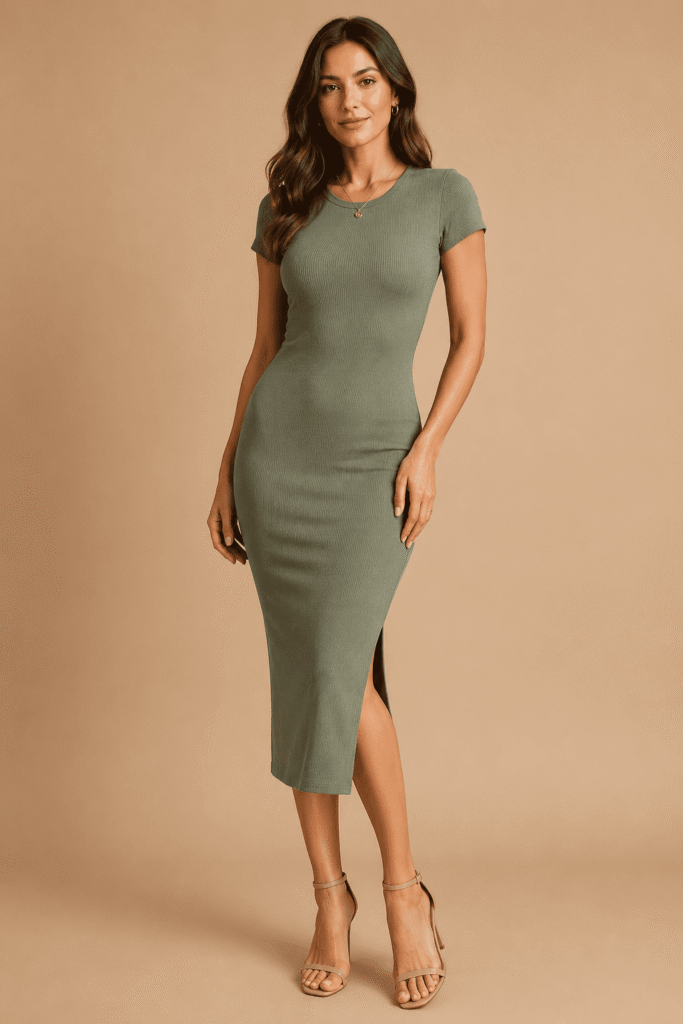
Bodycon Jersey Dresses

Ruched Jersey Dresses

Draped Jersey Dresses

Wrap Jersey Dresses

Twist-Front Dresses

Cut-Out Jersey Dresses

Jersey Midi Dresses

Jersey Maxi Dresses
Build a Commercial Jersey Dress Collection
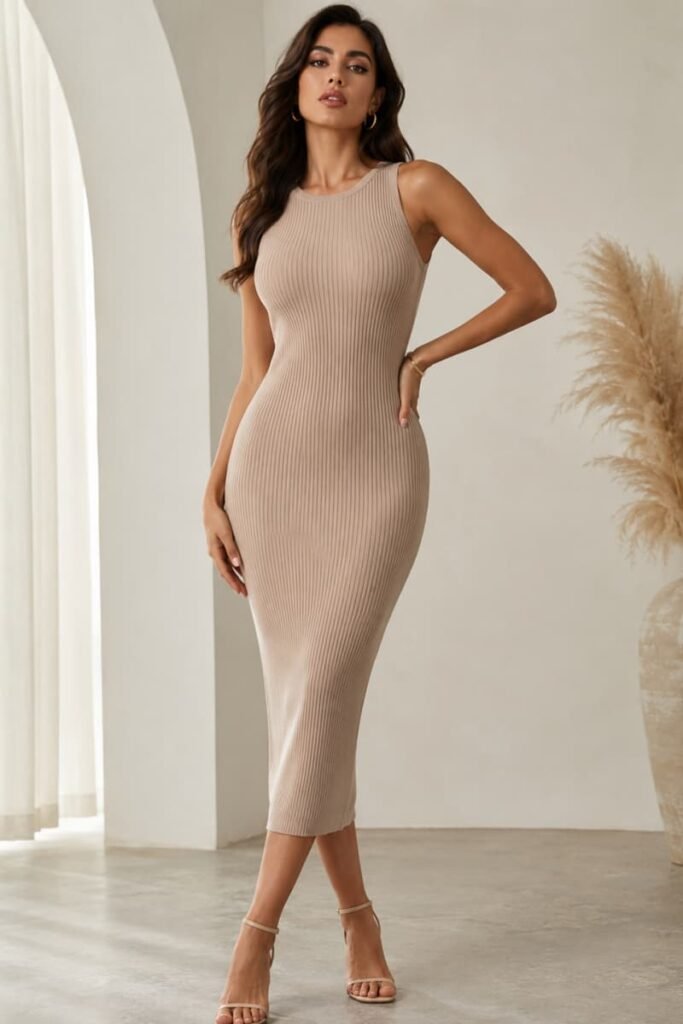
Bodycon Core Line

Going-Out Dress Drop

Ruched Dress Capsule

Day-to-Night Midi Range

Resort Jersey Program

Repeat Core Program
Jersey Fabrics Matched to Dress Performance

Viscose Elastane Jersey

Modal Jersey
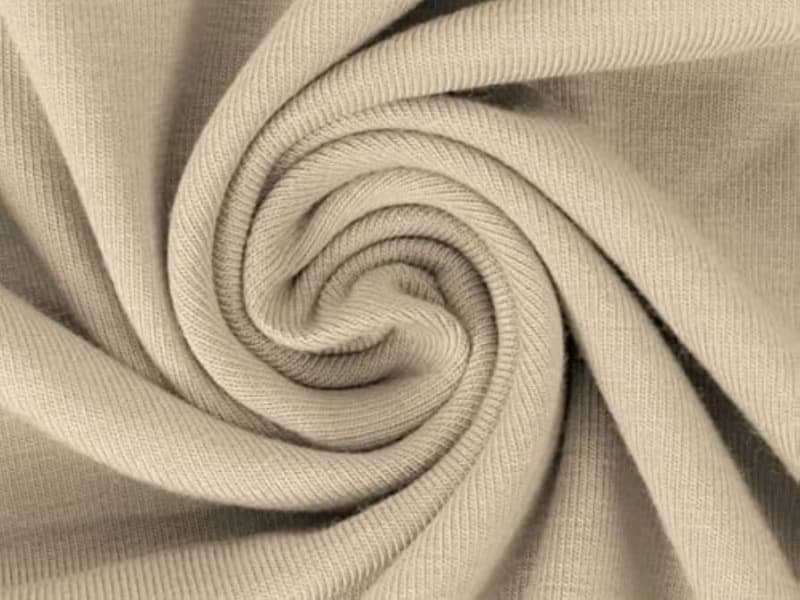
Cotton Elastane Jersey

Polyester Spandex Jersey
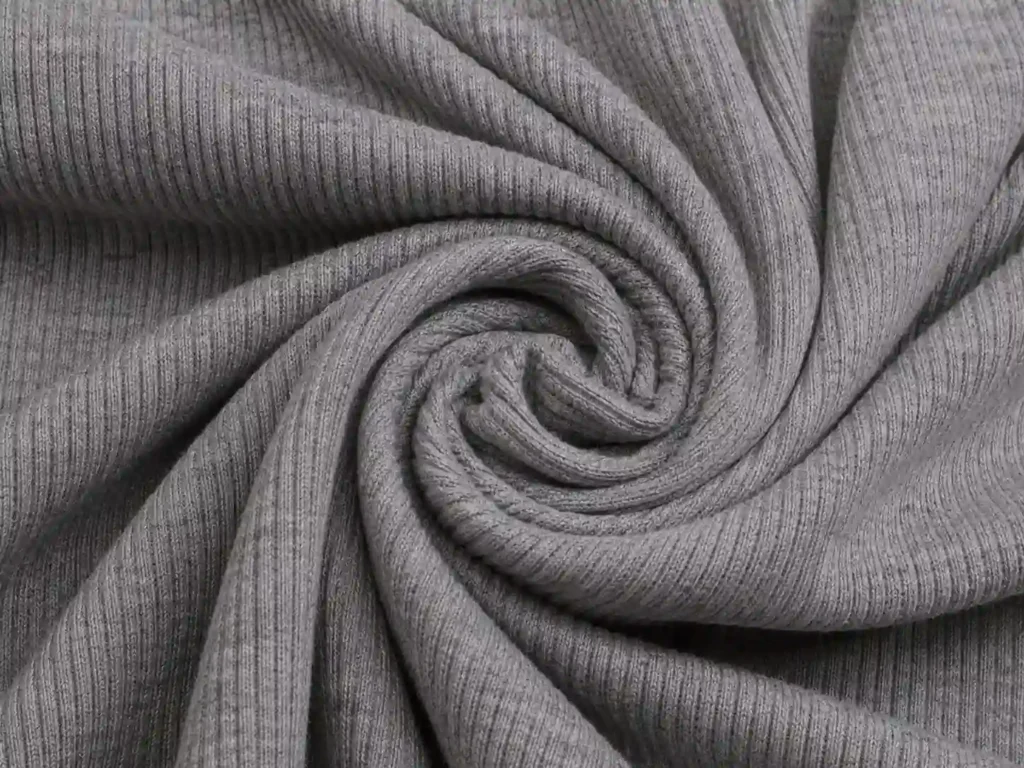
Rib Jersey

Double Jersey
Double jersey offers greater density, shape support and coverage than single jersey. It is suitable for structured bodycon, office-to-evening and premium fitted dresses. Added weight may reduce fluid drape, so pattern shape and seam bulk need adjustment.

Interlock Jersey

Ponte Knit
Stretch, Recovery and Shape Retention Control
Stretch Is Not Recovery
A fabric can stretch widely and still recover poorly. Weak recovery leads to loose necklines, bagging at the hips, increased dress length and uneven ruching after wear. Recovery is therefore evaluated alongside stretch, not treated as the same property.
During development, fabric is checked in the main stretch direction and, where relevant, in the vertical direction. The assessment considers how quickly the fabric returns, whether the surface becomes distorted and whether repeated extension changes the garment shape.
Pattern ease is set from actual behavior. Strong-recovery fabric can support a closer fit, while soft low-recovery jersey may need less negative ease, different seam placement or more stable construction.
Vertical Stretch Changes Length
Vertical elasticity is especially important in midi and maxi dresses. Fabric weight, moisture, hanging time and body movement can increase garment length. A sample approved immediately after sewing may hang differently after resting.
Duolan reviews finished length after the garment settles. Draped panels, twist fronts, asymmetric hems and heavy ruching are checked for uneven growth. Where needed, patterns or hems are corrected after hang assessment rather than relying only on initial measurements.
Long-term stability is also considered for packing and retail display. Hanging garments may require support or controlled hanger points to avoid shoulder and length distortion.
Coverage Changes Under Tension
Opacity should be assessed while the fabric is stretched to the intended wearing condition. A jersey can appear dense on the cutting table but become transparent at the hips, seat or bust.
Light colors, printed grounds and brushed finishes may behave differently from dark solid colors. Review includes underwear visibility, seam show-through and the appearance of labels or internal construction. Solutions can include increased weight, denser knit, double layering, lining panels or adjusted pattern ease.
Wear Testing Protects Fit
Real movement reveals problems not visible on a mannequin. Sitting can open wrap fronts or move slit positions. Walking can cause skirts to ride up. Arm movement can stretch necklines or shift shoulder seams.
Fit review therefore includes movement, recovery and comfort. After movement, the garment should return close to its intended shape without excessive adjustment. Findings are converted into pattern, construction or material actions rather than left as subjective comments.
Fabric Tests Before Jersey Dress Production
Weight and Width
Shrinkage Review
Stretch Measurement
Recovery Assessment
Spirality Check
Opacity Assessment
Pilling Review
Bulk Lot Comparison
Fit Engineering for Jersey Dress Silhouettes

Bust, Waist and Hip Balance
Pattern review considers fabric stretch, body measurements, style lines and intended compression. Side seams should remain vertical, waist positions should sit correctly, and the skirt should fall without climbing or twisting.
For ruched dresses, finished garment measurements and gathering distribution are reviewed together. Excessive gathering can hide fit problems in one size but create bulk or imbalance in another.

Neckline and Armhole Stability
Control options include adjusted pattern shape, binding ratios, clear elastic, stay tape, clean finishing and appropriate seam methods. Choice depends on neckline design, fabric weight and visual requirements.
Fitting includes front and side views, movement and recovery after wear. A neckline should remain secure without creating pressure, pulling or visible internal support.

Length, Slit and Hem Balance
Jersey length changes through fabric weight, vertical stretch and movement. Mini dresses need sufficient security, midi dresses need walking comfort, and maxi dresses require stable hem balance.
Slit height is reviewed both flat and on the body. Reinforcement at the slit top must prevent tearing without creating a hard visible point.Coverstitch, twin needle, narrow turnback or bonded options require separate trial and tension control.

Real Movement Verification
A polished still image cannot confirm wearability. Fit sessions include sitting, walking, raising arms, turning and garment recovery. Wrap overlap, cut-out position, skirt ride-up and neckline security are observed during movement.
Comments are separated into pattern, measurement, fabric and workmanship actions. Clear classification prevents one correction from creating a new problem elsewhere.
Measurements and Grading Built for Consistent Fit
Point-of-Measure Definition
Critical points often include bust, waist, hip, body length, shoulder width, armhole, sleeve length, slit height, neckline width, strap length and hem opening. Ruched styles may also need measurements before and after gathering or from fixed anchor points.
Photos or diagrams can be added for unusual points so sample rooms, production teams and inspectors use the same method.
Critical Tolerances
Tolerance decisions consider fabric recovery, seam construction, garment length and wearing function. A numeric tolerance should not excuse visible imbalance, twisting or asymmetry.
Inline measurements identify drift before large quantities are completed. Final inspection confirms the approved size specification and brand requirements.
Grading Visual Proportions
Grading must protect design proportions as sizes increase or decrease. Cut-out width, ruching depth, slit height, twist placement, neckline drop and strap position cannot always grow at the same rate as bust or hip measurements.
Duolan reviews whether details should grade fully, partially or remain fixed. The objective is to preserve appearance, coverage and wearability across the size range.
Comment-to-Spec Updates
Fit comments must return to the pattern and specification. Temporary adjustments made only on a sample do not create a reliable production standard.
Each approved change is reflected in measurement sheets, pattern revisions, construction notes or visual references. Version control identifies which sample and specification form the basis for PP and bulk production.
Jersey Dress Details Engineered for Production
Controlled Ruching
Draped Panels
Twist-Front Construction
Cut-Out Edges
Wrap Overlap
Slit Stability
Sewing and Workmanship for Stable Jersey Dresses
Seam Construction and Tension
Seam allowance, stitch density and thread choice are confirmed during sampling. Fitted areas may experience greater stress than skirt sections, so the same seam cannot always be evaluated only on a flat sample.
Operators receive workmanship references for high-risk zones such as underarms, side seams, twists, drawstring channels and slit tops.
Neckline and Binding Control
Clear elastic, stay tape or internal support may be introduced where visual design allows. Shoulder seams can also require stabilization to prevent garment length and neckline position from changing during hanging.
Approval includes front, back and side appearance as well as recovery after stretching.
Hem and Coverstitch Quality
Hems must lie flat without tunneling, roping, twisting or skipped stitches. Coverstitch settings depend on fabric thickness and stretch. Lightweight jersey may require different feeding and preparation from ponte or double jersey.
Garment length is checked after pressing and resting. For curved, asymmetric or flared hems, controlled handling is important because stretching during sewing can create an uneven lower edge.
Ruching and Elastic Application
Ruching must remain consistent in visual density and finished measurement. Drawcord channels, side-seam gathers and elasticated center seams are checked for secure ends, smooth movement and balanced appearance.
Pressing and Final Shape
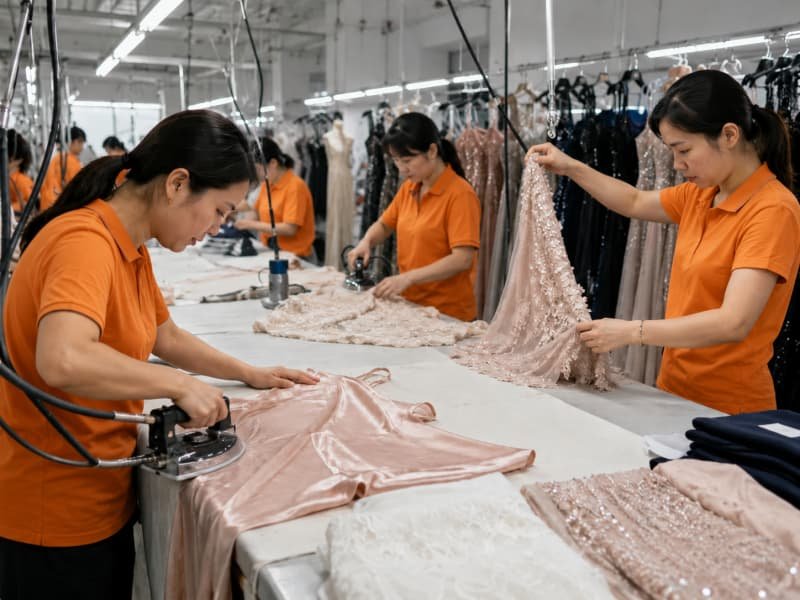
Heat, pressure and steam can change jersey surface, shine and dimensions. Pressing methods are matched to fiber and finish. Heavy pressure may flatten rib or create marks, while excessive steam may alter measurements.
Finished garments are allowed to settle before critical measurements and packing.
Final shaping should support the approved silhouette without hiding sewing defects.
Start Development From the Materials You Have
Tech Pack
Reference Images
Original Sample
Size Chart
Fabric Direction
Collection Brief
Feasibility Review Before the First Sample
Design and Fabric Compatibility
The intended silhouette is compared with fabric weight, drape, stretch and recovery. A reference dress made in dense jersey may not translate into lightweight modal without losing coverage or structure. Similar appearance does not guarantee equivalent performance.
Our review identifies where the material supports the concept and where changes may be needed. Options can include different weight, stronger recovery, double layering, revised panel direction or simplified construction.
Fit and Coverage Risks
Fitted designs are reviewed for bust support, neckline security, waist placement, hip coverage, skirt ride-up and cut-out exposure. Pale colors and lightweight jersey receive added attention.
Potential concerns are raised before sampling so the first version can test the right questions. A sample may be planned as a fit sample rather than a photo-ready sample when structure and coverage still require validation.
Construction Feasibility
Duolan considers seam access, operator handling, measurement control and QC visibility. Construction trials or detail samples may be recommended before a full sample.
Project and Timeline Alignment
Sample purpose, launch date, expected revisions, fabric availability and bulk planning are reviewed together. Timeline estimates begin after the development basis and material path are reasonably clear.
Projects with custom fabric, prints, special colors or multiple fittings require different schedules from styles using available materials. The objective is a realistic path rather than an unsupported promise.
Jersey Dress Sample Development Process
Brief Review
Fabric Preparation
Pattern Development
Sample Sewing
Internal Fit Review
Revision Planning
Turning Fit Comments Into Controlled Revisions
Separate Comment Types
Update the Production Basis
Use Before-and-After Evidence
Define the Next Sample Purpose
Not every revision needs to solve every commercial question. One round may focus on fit; another may confirm fabric or color; a final PP sample locks production. Clear stage definition prevents a photo sample from being mistaken for a production standard or a fabric-substitute prototype from being approved for bulk without material review.
Controlled Jersey Dress Bulk Manufacturing

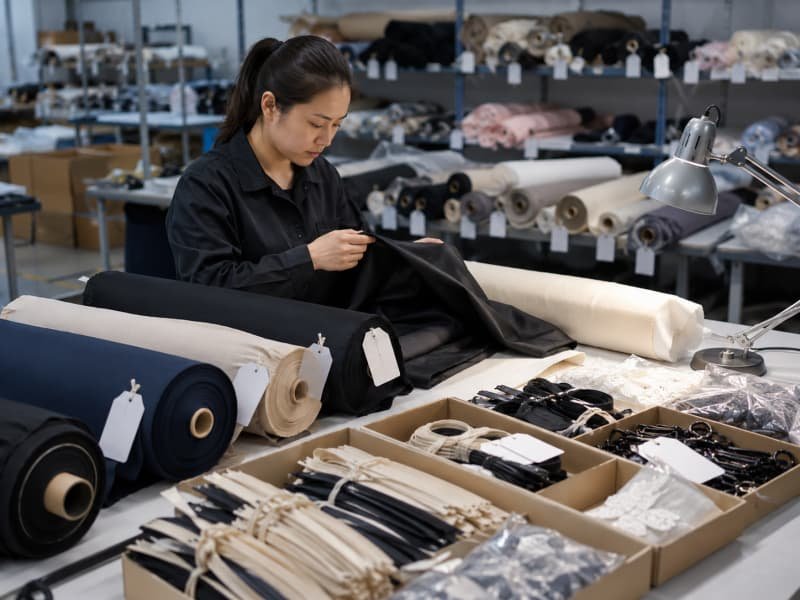
Fabric Inspection
Bulk fabric is checked for shade, visible defects, width, weight, handfeel and general consistency against the approved basis. Roll information is recorded where needed to support shade management and production tracing.

Fabric Relaxation

Spreading and Cutting
Bundling and Identification

Line Preparation
Approved samples, measurements, construction details and risk points are reviewed before full line output.
Operators and QC staff align on critical seams, ruching, binding, slit, hem and appearance standards.
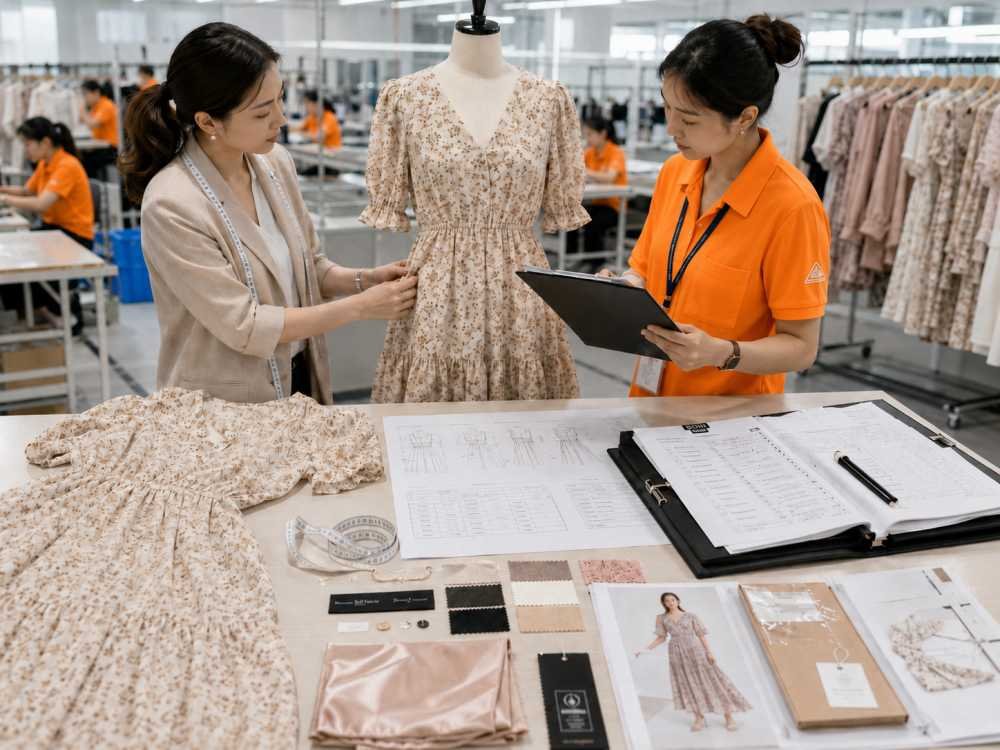
First-Piece Review
Initial production pieces are checked for measurements, fit-related dimensions, workmanship and visual balance.
Corrections are made before the line reaches full output. Higher-risk styles may use a pilot quantity.

Inline Control
Finishing and Packing
A Manufacturing System for Scale and Reorders
Owned Factory Control
Satellite Capacity Support
Quick-Response Lines
Multi-Style Coordination
Specialized Process Matching
Reorder Capacity Planning
Compliance and Documentation for Brand Programs
Audit Foundation
Duolan’s manufacturing system has completed SMETA audit and SMETA 2-Pillar audit requirements and maintains related social audit records.
Audit documentation can be reviewed during supplier qualification according to project and confidentiality requirements.
Standards Coordination
Project requirements may reference BSCI-related social compliance, ISO 9001 quality systems, AATCC, ASTM, OEKO-TEX®, EN standards, China GB standards, GOTS-related materials or brand-specific manuals. Duolan coordinates applicable requirements according to the product, material, destination market and nominated testing process.
Project Documentation
Available project records can include material approvals, sample status, measurement sheets, BOM information, color references, inspection reports, packing confirmation and shipment preparation documents.
Third-party testing or inspection can be coordinated when required by the brand or sourcing office.
Sampling, Production and Commercial Planning
Timelines and quotation accuracy depend on material readiness, style complexity, approval speed, order structure and packaging requirements. The figures below are planning references rather than automatic promises.
| Project Stage | Planning Reference | Main Inputs Required | Main Timing Factors |
|---|---|---|---|
| Initial sample | Commonly 7–15 working days after development basis and material direction are confirmed | Tech pack or reference, sample size, fabric direction, construction details | Fabric sourcing, pattern complexity, special details |
| Complex sample | Commonly 12–20 working days where drape, cut-outs, twists or special fabric need trials | Detailed reference, fit expectation, material approval path | Detail trials, custom color, multiple constructions |
| Revision sample | Commonly 5–10 working days after clear comments and required materials are available | Consolidated comments, updated measurements, returned sample if needed | Comment scope, pattern changes, material changes |
| PP sample | Scheduled after bulk material and final production details are ready | Approved pattern, BOM, size spec, bulk fabric, labels and packing | Material arrival, final color, production construction |
| Bulk production | Often planned around 30–45 days after PP approval and material readiness | Confirmed order, quantity breakdown, PP basis, packing and QC requirements | Total quantity, number of styles, fabric availability, workmanship |
| Multi-style program | Planned by style group and launch priority | Style list, quantities, colors, size breakdown and launch calendar | Parallel approvals, shared fabrics, factory allocation |
| Repeat order | Evaluated from preserved standards and current material availability | Previous order reference, updated quantity and delivery requirement | Fabric continuity, color lot, capacity and requested ship date |
Quotation is based on fabric, weight, consumption, lining, pattern complexity, ruching or draping, color quantity, size range, testing, labels, packaging, order structure and delivery terms. Formal bulk pricing requires more production-ready detail than an early estimated range.
Branding, Packing, Delivery and Reorder Control
Labels and Product Identity
Packing Method
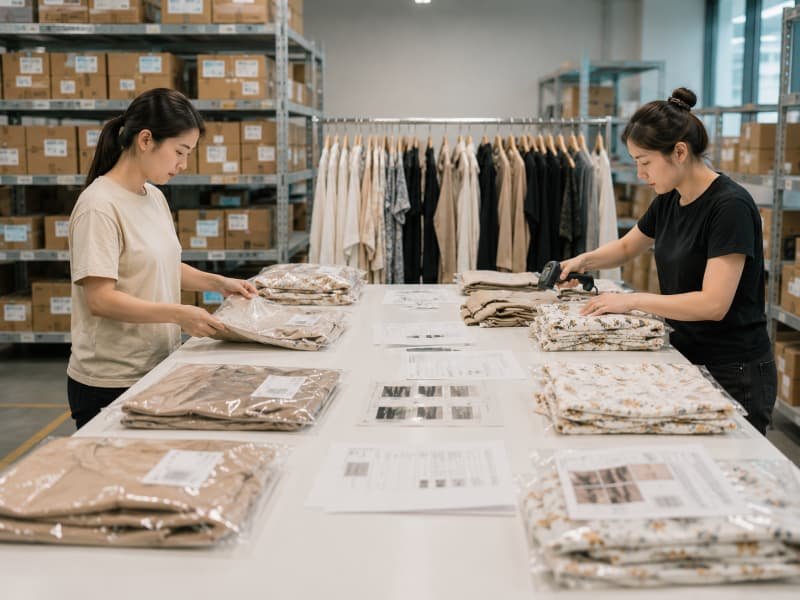
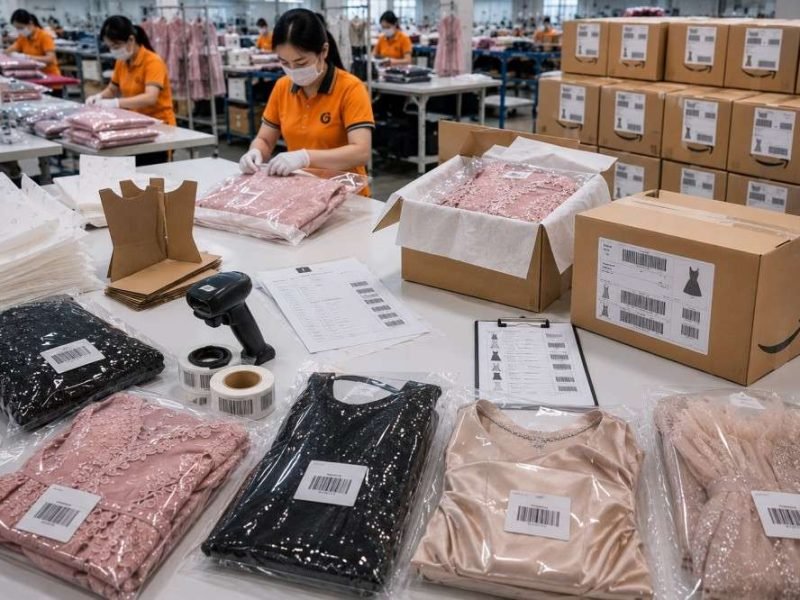
Folding, hanging and internal support are selected according to dress length, ruching, drape and neckline structure. Heavy stacking can flatten gathers or create pressure lines. Hanging may stretch shoulders or garment length when the jersey is soft. Packing trials can confirm fold lines, polybag size, tissue placement, hanger type and carton quantity. Pale and dark garments may require separation to reduce color transfer risk.
Delivery Coordination
Shipment preparation includes quantity confirmation, packing review, required inspection status and shipping document coordination.
Delivery planning can align with nominated forwarders, consolidation needs and agreed trade terms.
Reorder File Preservation
Approved pattern, measurements, fabric reference, color standard, workmanship notes, label files, packing requirements and previous QC findings are retained by style. Before a repeat order begins, material availability and any requested updates are reviewed against the prior basis.
Carton and Warehouse Requirements
Jersey Dress Programs Delivered for Fashion Markets
US Going-Out Collection
A US fashion label developed 18 jersey dress styles across bodycon, ruched, twist-front and cut-out silhouettes, with a total order of 42,600 pieces.
The main challenge involved balancing strong body contour with opacity and recovery across black, white, red and seasonal colors. Several early fabric options stretched well but showed body lines in pale shades or failed to recover after extended wear.
Duolan separated the collection into two material platforms: a fluid medium-weight jersey for draped styles and a denser recovery-focused jersey for fitted pale-color styles. Critical measurements, cut-out placement, ruching ratios and slit heights were reviewed by style. First-piece checks were completed before full release.
The program shipped across six size groups. Inline measurement tracking reduced repeated corrections, while preserved fabric and pattern references supported a later replenishment order for four top-performing styles.

UK Ecommerce Midi Program
A UK ecommerce group placed a 12-style jersey midi program totaling 27,400 pieces across long-sleeve, wrap, side-ruched and asymmetric designs.
The original concern was inconsistent garment length caused by soft viscose jersey and vertical growth. Wrap overlap and neckline security also changed between sample sizes.
Duolan added hang assessment before final hem approval, adjusted vertical ease and revised the grading rules for wrap overlap, neckline drop and slit height. The production basis included relaxed garment measurements, visual drape references and size-specific critical points.
Bulk fabric was compared with the approved sample basis for weight, recovery and shade. First-piece inspection focused on body length, waist position and front overlap. The brand completed the launch without changing the planned size specification after production began.

European Contemporary Range
A European contemporary label developed 24 jersey styles across midi and maxi lengths, reaching 68,800 pieces in the seasonal order.
The range used shared colors but different jersey structures, including modal blends, interlock and double jersey. The challenge was preserving one collection identity while matching each silhouette to the correct weight and recovery.
Duolan organized styles into fluid, fitted and structured groups. Each group followed a separate pattern and workmanship path, while color standards, labels and packaging remained coordinated across the collection. High-risk twist, cut-out and draped styles received detail trials and PP confirmation.
Production was allocated according to complexity rather than quantity alone. Shared reporting allowed the product team to track sample approval, material status, first-piece checks and packing progress across all 24 styles.

Frequently Asked Questions About Jersey Dress Manufacturing

Start Your Jersey Dress Development Review
Send your jersey dress brief for a structured review of fabric direction, fit priorities, sample requirements, production risks and bulk planning. A useful project file may include a tech pack, reference images, an existing sample, size chart, fabric swatch, color standards, quantity breakdown, launch date and label or packaging files.
Our team will review:
- Jersey composition, weight, stretch, recovery, opacity and drape
- Silhouette, fit intention and critical measurements
- Ruching, twist, cut-out, wrap, slit or drape construction
- Sample purpose and likely revision path
- Quantity by style, color and size
- Bulk readiness, quality checkpoints and delivery planning
- Main-label, care-label, hangtag, barcode and packing requirements