 Skip to content
Custom Organza Dress Manufacturer
Dress-focused development and manufacturing for commercial organza collections, from material evaluation and structured sampling to controlled bulk production.
- 6 organza material directions covering plain, printed, jacquard, embroidered, shimmer and silk-blend options
- 8 commercial dress categories across mini, midi, maxi, party, cocktail, prom, occasion and wedding guest programs
- 3 sample control gates covering silhouette, transparency and production readiness
- 10 organza-specific quality points checked from fabric inspection through final packing
- 16 owned womenswear factories supported by 20+ long-term satellite factories
- 300 sewing lines and 50+ quick-response lines supporting multi-style development, launch orders, repeat production and scaled programs
Built for Commercial Organza Dress Programs
Fashion Dress Brands
- Multi-style seasonal dress programs
- Mini, midi and maxi silhouette planning
- Hero styles and commercial volume styles
- Colorway and lining coordination
- Launch orders followed by repeat production
- Material and workmanship records for future reorders
Product Development Teams
- Intended silhouette and visual proportion
- Fabric stiffness, transparency and hand feel
- Lining coverage and skin-contact comfort
- Pattern balance and movement
- Construction feasibility
- Sample purpose and approval stage
- Bulk-ready workmanship standards
Buying and Sourcing Teams
- Multi-style order breakdown
- Fabric, lining and trim confirmation
- Color and size quantity planning
- PP sample and first-piece approval
- Inline production updates
- Third-party inspection preparation
- Label, barcode and packaging confirmation
- Reorder documentation
Organza Dress Risks Controlled Before Bulk Production
Organza offers transparency, crisp structure and lightweight volume, yet small technical errors remain highly visible. Early risk identification protects sample accuracy, production consistency, retail appearance and delivery timing.
| Development or Production Risk | How the Problem Appears | Duolan Control Point |
|---|---|---|
| Incorrect fabric stiffness | Sleeves collapse, skirts look flat or the silhouette becomes excessively rigid | Fabric behavior review using swatches, drape checks and structural trials |
| Uncontrolled transparency | Seam allowances, labels, bra lines or internal construction remain visible | Coverage mapping, lining-color review and seam placement planning |
| Fraying edges | Raw edges deteriorate during sewing, fitting or repeated handling | Edge-finishing selection based on location, thickness and visual requirement |
| Visible needle damage | Needle holes or pulled yarns remain visible on delicate surfaces | Needle, thread and stitch-density trials before sample construction |
| Uneven gathering | Sleeve heads, waist gathers and tier seams appear inconsistent | Gathering ratio definition, marked distribution points and first-piece review |
| Skin irritation | Necklines, armholes, cuffs and waist seams feel sharp or abrasive | Soft binding, lining transitions and skin-contact material selection |
| Sample-to-bulk volume change | Bulk sleeves, bows or skirts lose the approved shape | Material locking, pattern control, PP sample and first-piece confirmation |
| Pressing marks | Shine, flattening or permanent creases appear after finishing | Controlled temperature, pressure, protective cloth and operator instruction |
| Packing compression | Bows, puff sleeves, flowers and layered skirts arrive crushed | Style-specific folding, support inserts and carton pressure planning |
| Reorder inconsistency | Later orders use different stiffness, lining tone or workmanship | Pattern, BOM, material, workmanship and QC record preservation |
Custom Organza Dresses Across Commercial Categories

Organza Mini Dresses
Organza mini dresses need controlled proportion rather than exaggerated volume alone. Short lengths make sleeve scale, waist position, bust coverage and hem stability more noticeable. Key controls include:
- Safe finished length for movement
- Lining length beneath a transparent shell
- Stable waist and side-seam balance
- Controlled sleeve-head volume
- Comfortable armhole and neckline finishing
- Hem structure that does not flip or collapse
Mini styles work well for birthday, party, homecoming, graduation and going-out collections.

Organza Midi Dresses
Midi dresses provide more space for printed organza, tiered structures, sculpted sleeves and transparent overlays. The main challenge lies in balancing visual volume with flattering body proportion.
Development priorities include:
- Waist placement and torso length
- Skirt volume distribution
- Lining coverage through the hip
- Tier depth and gathering ratio
- Sleeve proportion relative to skirt width
- Walking movement and hem recovery
Midi silhouettes suit wedding guest, cocktail, spring formal, holiday and occasionwear collections, where visual impact must remain wearable for several hours.

Organza Maxi Dresses
Maxi dresses require disciplined weight and layer management. Excessive layers can make a lightweight material feel heavy, while insufficient support can leave the skirt flat and visually weak.
Duolan evaluates:
- Outer-layer quantity
- Lining weight and opacity
- Skirt sweep and movement
- Train or floor-length handling
- Side-seam and center-back balance
- Packaging dimensions
- Hanging and storage requirements
Organza maxi dresses can support prom, formal occasion, evening, resort event and statement collection programs without relying on bridal construction.

Organza Party Dresses
Party dresses often combine organza with fitted bodices, corset-inspired seams, satin linings, decorative bows, ruching or volume sleeves. The style must photograph well while remaining stable during movement.
Development review covers:
- Bust and waist fit
- Strap or sleeve security
- Transparent panel placement
- Internal support
- Zipper opening
- Decoration weight
- Dance and sitting comfort
A successful party style balances campaign-level visual impact with repeatable production and a price structure suited to commercial quantities.

Organza Occasion Dresses
Occasion dresses require refined finishing because wearers view the garment at close range and often expect a higher perceived value. Organza can create shoulder volume, sculpted waist details, layered skirts and elegant transparency. Priority areas include:
- Clean internal construction
- Symmetrical draping or gathering
- Lining tone and coverage
- Refined zipper installation
- Controlled neckline and armhole edges
- Smooth transition between opaque and sheer areas
Occasion programs may include cocktail, graduation, formal dinner, wedding guest and seasonal event categories.

Organza Cocktail Dresses
Cocktail dresses usually require a compact silhouette with one or two strong design elements. Organza may be used for sleeves, a sculpted bow, an overskirt, a bubble hem or a transparent upper layer.
Commercial development focuses on:
- Clear visual focal point
- Controlled use of material
- Balanced construction cost
- Easy dressing and secure closure
- Stable shape during wear
- Retail-ready presentation after packing
The material should strengthen the silhouette without turning a commercial cocktail dress into an excessively formal garment.

Organza Prom Dresses
- Consistent skirt volume
- Reinforced bodice support
- Color matching across shell and lining
- Decoration security
- Grading of fitted areas
- Carton and hanging requirements
- Multi-color production scheduling

Organza Wedding Guest Dresses
- Wearability across different venues
- Lining coverage in daylight
- Photographic color accuracy
- Comfortable sitting and movement
- Appropriate volume for social settings
- Balanced elegance and commercial styling
Organza Collection Development for Seasonal Fashion Drops
Build a Balanced Silhouette Mix
An organza collection may combine one visual hero style, several commercial volume styles and simpler repeat-order candidates.
A balanced 12-style program could include:
- 2 statement mini dresses with sculpted sleeves or bows
- 3 commercial mini dresses with controlled volume
- 3 midi dresses using printed or plain organza
- 2 wedding guest or cocktail styles
- 1 maxi campaign style
- 1 simplified reorder style using an existing pattern base
The mix can be adjusted according to sales channel, season and price structure.
Control Material Across Styles
- Shared or style-specific organza
- Common lining colors
- Reusable zippers and trims
- Embroidery or print placement
- Expected fabric consumption
- Cutting loss by silhouette
- Reorder availability
Plan by Launch Calendar
Development should move backward from the target sales date.
A commercial organza program may include the following planning windows:
- Project and material review
- Fabric sourcing, lab dip or print strike-off
- First sample
- Fit and visual revision
- Photo or salesman sample
- PP sample
- Bulk production
- Quality inspection
- Packing and shipping buffer
Complex printed, embroidered or heavily structured styles need earlier material and workmanship testing than plain commercial silhouettes.
Separate Hero and Volume Styles
A sculpted organza dress may lead campaign images, while a simplified puff-sleeve mini may deliver higher sales volume. Both styles serve different commercial roles. Hero styles may carry:
- Higher material consumption
- More complex structure
- Stronger visual identity
- Tighter workmanship control
Volume styles require:
- Stable fit
- Efficient cutting
- Repeatable workmanship
- Broader size acceptance
Collection costing should reflect each role rather than applying one cost target to every design.
How Organza Creates Structure, Volume and Transparency
Organza Versus Chiffon
Chiffon usually produces softer drape, fluid movement and a less structured silhouette. Organza holds folds, sleeve volume and sculpted details more clearly.
Choose organza when the design needs:
- A visible architectural outline
- Crisp puff sleeves
- Structured bows
- Controlled bubble hems
- Transparent layers with body
- Sculpted ruffles
- A fuller skirt without heavy fabric
Choose chiffon when the design needs flowing movement, soft gathers or a less defined edge.
Organza Versus Tulle
Tulle creates airy volume through an open net structure. Organza offers a smoother surface, clearer color, sharper folds and stronger visual panels.
Organza works better for:
- Fashion sleeves
- Printed overlays
- Clean transparent panels
- Structured skirts
- Bows and draped shapes
- Embroidery on a woven base
Tulle may work better as an internal support layer or when a design requires diffused volume rather than a crisp outer surface.
Lightweight Structural Engineering
- Fiber composition
- Yarn density
- Finish
- Fabric weight
- Layer count
- Grain direction
- Panel shape
- Seam construction
- Supporting materials
Transparency as a Design Tool
- Fully covered zones
- Semi-transparent zones
- Intentionally sheer zones
- Seam positions
- Label positions
- Zipper tape visibility
- Boning or cup visibility
- Lining edge position
Material Behavior Under Light
Organza changes under daylight, studio lighting and flash photography. Shimmer finishes, pale colors and printed grounds can appear more transparent in strong light. Material approval should consider:
- Front and back lighting
- White and dark backgrounds
- Flash photography
- Lining contrast
- Print saturation
- Surface reflection
- Color shift between layers
Campaign appearance and real-wear coverage should be assessed together.
Organza Fabric Options for Different Dress Results

Polyester Organza
Suitable applications include:
- Puff sleeves
- Tiered skirts
- Bows
- Bubble hems
- Transparent overlays
- Occasion midi dresses

Silk-Blend Organza
Silk-blend organza offers a more refined surface, lighter hand and elegant visual depth. It may be considered for premium collections where fabric perception carries greater value.
Development considerations include:
- Higher material cost
- Greater sensitivity to handling
- Shade variation
- Limited color availability
- Delicate pressing requirements
- Higher cutting loss
- More careful packing
The material should be reserved for styles where the fabric difference remains visible to the wearer and supports the brand’s retail position.

Printed Organza
Control points include:
- Print strike-off approval
- Base-fabric transparency
- Color saturation
- Pattern scale
- Placement and direction
- Matching across major seams
- Lining-color influence
- Repeat-order print consistency

Embroidered Organza
Embroidery adds texture and perceived value while preserving the transparent base. It may be used for floral patterns, borders, scattered motifs or engineered placements.
Technical review covers:
- Embroidery density
- Base-fabric distortion
- Thread weight
- Reverse-side comfort
- Motif placement
- Seam alignment
- Cutting loss
- Edge finishing
- Needle damage
Dense embroidery may require stabilizing during production, while skin-contact areas may need lining or backing protection.

Jacquard Organza
Development must evaluate:
- Pattern scale
- Direction
- Fabric width
- Repeat size
- Transparency
- stiffness
- Surface snagging
- Seam matching
- Cutting efficiency

Shimmer Organza
Metallic, pearlized or shimmer organza offers strong camera impact for party, holiday and prom collections. Reflective finishes can also expose pressing marks, scratches and uneven construction.
Control points include:
- Surface durability
- Color under different lighting
- Metallic transfer
- Abrasion resistance
- Pressing response
- Stitch visibility
- Packing protection
Shimmer should be used where reflection supports the design rather than overpowering the silhouette.
Fabric, Lining and Trim Systems for Organza Dresses
Satin Lining Systems
Review points include:
- Lining weight
- Surface shine
- Color relationship
- Static behavior
- Stretch compatibility
- Seam bulk
- Heat sensitivity
Soft Woven Linings
Key checks include:
- Opacity under daylight
- Breathability
- Shrinkage
- Colorfastness
- Smoothness against skin
- Compatibility with the shell pattern
- Hem movement
Tulle Support Layers
Review covers:
- Volume target
- Tulle stiffness
- Noise during movement
- Skin contact
- Seam thickness
- Recovery after packing
- Grading across sizes
Corset Base Structures
Possible components include:
- Cups
- Boning
- Waist stay
- Power mesh
- Fused bodice panels
- Hook-and-eye support
- Concealed zipper
- Lining and facing
Zippers and Closures
Invisible zippers remain common, yet organza can expose zipper tape, seam bulk and puckering. Color, length and insertion method should be approved before bulk production.
Alternative closures may include:
- Concealed side zippers
- Center-back zippers
- Hook-and-eye support
- Covered buttons
- Corset lacing
- Adjustable straps
Closure selection affects fitting, dressing ease, production efficiency and retail durability.
Binding and Skin Contact
Necklines, cuffs, armholes and internal seams may need soft binding or lining transitions. Raw organza against skin can feel sharp, especially during extended wear.
Comfort options include:
- Bias binding
- Soft facing
- Clean lining turn
- Organza-free underarm panels
- Covered seam allowances
- Soft elastic channels
- Protected embroidery backing
Comfort should be checked during movement, not only while the garment is standing on a mannequin.
Structural Design Details That Shape Organza Dresses

Puff and Balloon Sleeves
- Sleeve-cap position
- Front and back sleeve balance
- Gathering distribution
- Upper-arm ease
- Cuff opening
- Lining or internal support
- Underarm comfort
- Recovery after packing

Bubble Hems
- Outer-to-inner length ratio
- Gathering quantity
- Lining stiffness
- Seam allowance direction
- Hem weight
- Side-seam balance
- Size grading
- Packing recovery

Tiered Skirts
- Tier depth
- Circumference ratio
- Gathering marks
- Seam direction
- Layer transparency
- Lining length
- Print placement
- Hem finishing

Structured Bows
Organza bows can become a strong brand detail at the shoulder, waist, back or neckline. Bow construction should define volume, symmetry and attachment strength.
Development may use:
- Single-layer organza
- Double-layer organza
- Organza with interfacing
- Wire-supported edges
- Internal tulle
- Hidden hand tacks
- Detachable fastening
The bow must survive packing and wearing without rotating, collapsing or pulling the garment out of balance.

Transparent Overlays
- Overlay length
- Side-seam alignment
- Transparency
- Opening position
- Movement
- Static behavior
- Hem difference
- Zipper access
- Label placement

Sculpted Ruffles
- Ruffle pattern type
- Finished width
- Edge method
- Layer count
- Attachment line
- Symmetry
- Weight
- Skin contact
- Grading
Balancing Transparency, Coverage and Wearing Comfort
Bust Coverage
- Cup position
- Neckline depth
- Side-bust coverage
- Armhole exposure
- Lining edge
- Strap support
- Movement stability
Underarm Protection
Underarm zones experience friction and moisture. Exposed organza edges can irritate skin or fray during repeated wear.
Possible solutions include:
- Soft binding
- Lined armholes
- Lower organza placement
- Soft underarm gussets
- Covered seam allowances
- Adjusted sleeve opening
Fit testing should include raised-arm movement and natural walking.
Waist and Hip Coverage
The lining should remain stable through the waist and hip without pulling the organza shell. A lining that is too narrow can distort side seams; one that is too loose may appear through the transparent outer layer.
Checks include:
- Waist ease
- Hip ease
- Lining length
- Vent or slit position
- Static behavior
- Seam alignment
- Sitting comfort
Sleeve Comfort
- Bicep circumference
- Elbow movement
- Cuff opening
- Sleeve-cap balance
- Lining restriction
- Seam position
- Skin-contact edges
Hem and Slit Coverage
- Slit height
- Lining overlap
- Step length
- Hem recovery
- Front and back transparency
- Wind movement
- Seated coverage
Label Placement
Main labels, care labels and size labels can remain visible through organza. Placement should protect brand presentation and wearer comfort.
Options include:
- Inside the opaque lining
- At an internal side seam
- Beneath a facing
- On a detachable loop
- Away from transparent center-back areas
Label color and backing should be reviewed with the full garment.
Pattern and Fit Control for Structured Organza Silhouettes

Bodice Balance
- Bust apex
- Dart direction
- Princess-seam shape
- Waist location
- Back length
- Shoulder slope
- Neckline position
- Zipper tension

Sleeve and Shoulder Proportion
Large sleeves change the visual width of the upper body. Pattern development considers the relationship between sleeve volume, neckline, bodice length and skirt shape. A structured shoulder may need:
- Adjusted armhole depth
- Controlled sleeve-cap ease
- Internal support
- Marked gathering zones
- Balanced front and back volume
- Reinforced attachment points
The same sleeve cannot simply be enlarged across every size without proportion review.

Skirt Volume Distribution
Volume should be allocated according to silhouette. An A-line midi needs different panel and gathering logic from a bubble mini or full prom skirt. Control points include:
- Waist circumference
- Panel width
- Hip clearance
- Grain direction
- Gathering position
- Tier growth
- Lining sweep
- Hem circumference
Pattern efficiency and fabric consumption are reviewed together.

Size Grading
Duolan follows the brand’s size chart and grading rules rather than imposing one fixed house standard. A project may use alpha sizing, US numeric sizing, UK sizing or a proprietary specification. For broad commercial size runs, fit validation may include:
- Base sample size
- One smaller representative size
- One larger representative size
- Additional extended-size review where required
- Size-set measurement checks
- Visual proportion checks on high-volume details
Puff sleeves, corset seams, waist placement and skirt volume may require more than mathematical grading alone.
From Design Brief to Organza Development Feasibility
Information to Submit
- Front, side and back design views
- Tech pack or measurement specification
- Reference photos
- Target organza direction
- Lining and coverage requirement
- Colorways
- Size range
- Decoration details
- Target quantity
- Launch date
- Target price position
- Label and packaging requirements
Development Review
Duolan reviews:
- Whether the selected organza can create the intended shape
- Where lining or support is required
- Which seams remain visible
- Whether details can be reproduced consistently
- Which areas need local testing
- Likely material and labor cost drivers
- Sample purpose
- Production-readiness risks
- Information still missing
The review aims to turn an attractive concept into a clear development route.
Project Output
Following review, the project can move toward:
- Material swatch selection
- Local structure trial
- First pattern
- First sample
- Fit sample
- Revised sample
- Photo sample
- PP sample
- Bulk quotation
- Production path planning
Sample fee and lead time are confirmed after the material, structure and required sample stage are understood.
Production-ready Organza Dress Sample Development
Project Brief Review
Fabric Direction Review
Pattern Development
First Sample Construction
Fit and Proportion Review
Fabric and Structure Adjustment
Revised Sample Confirmation
PP and Bulk Readiness
Organza Sewing and Edge Finishing Standards
French Seams
Suitable areas may include:
- Side seams
- Sleeve seams
- Skirt panels
- Transparent overlays
Narrow Enclosed Seams
A narrow enclosed seam can reduce visible width while protecting fraying edges. The method requires accurate cutting and controlled stitching.
Review points include:
- Final seam width
- Thread tension
- Needle selection
- Pressing direction
- Curve handling
- Layer thickness
Uneven seam width becomes visible through pale or sheer organza.
Bound Seams
Binding can protect edges, add visual definition and improve comfort. Binding material should be softer than the organza in skin-contact areas.
Applications include:
- Armholes
- Necklines
- Internal waist seams
- Corset edges
- Decorative transparent seams
Binding width, color and stretch should be approved with the garment rather than as an isolated trim.
Rolled and Baby Hems
Controls include:
- Finished width
- Stitch density
- Thread tension
- Feed balance
- Curve smoothness
- Color matching
- Edge waviness
Invisible Zipper Installation
Inspection covers:
- Straight installation
- Smooth opening
- Top alignment
- Waist-seam matching
- No fabric catching
- No visible reinforcement
- Flat surrounding surface
Stitch and Needle Control
Needle size, needle condition, thread type and stitch density affect surface damage. A sharp or damaged needle can create permanent holes or pulled yarns.
Production controls may include:
- Pre-production stitch trial
- Regular needle replacement
- Thread-tension reference
- Approved stitch density
- Seam sampling
- First-piece review
- Inline observation
Needle and stitch decisions should follow the actual fabric lot.
Decorative Techniques for Statement Organza Dresses

3D Floral Appliqué
- Flower scale
- Placement
- Edge treatment
- Petal stiffness
- Attachment method
- Weight distribution
- Skin contact
- Packing protection
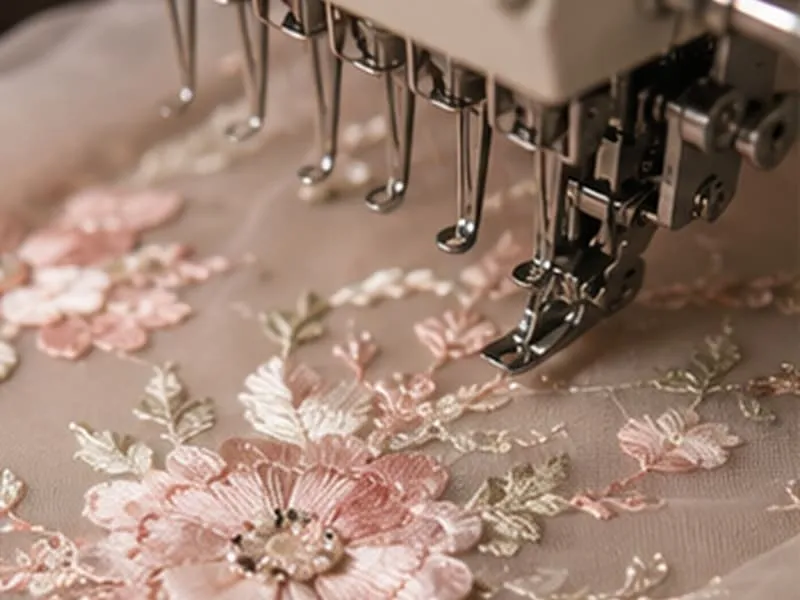
Embroidery
- Stabilizer selection
- Fabric distortion
- Thread tension
- Motif placement
- Reverse-side comfort
- Color consistency
- Needle damage
- Seam matching

Pearl and Beading
- Bead weight
- Spacing
- Reinforcement
- Hand or machine application
- Thread security
- Replacement allowance
- Skin-contact backing
- Final inspection

Rhinestone Decoration
- Adhesion or stitching
- Heat sensitivity
- Placement template
- Color consistency
- Abrasion
- Lining protection
- Packing pressure
- Replacement rate
Printing
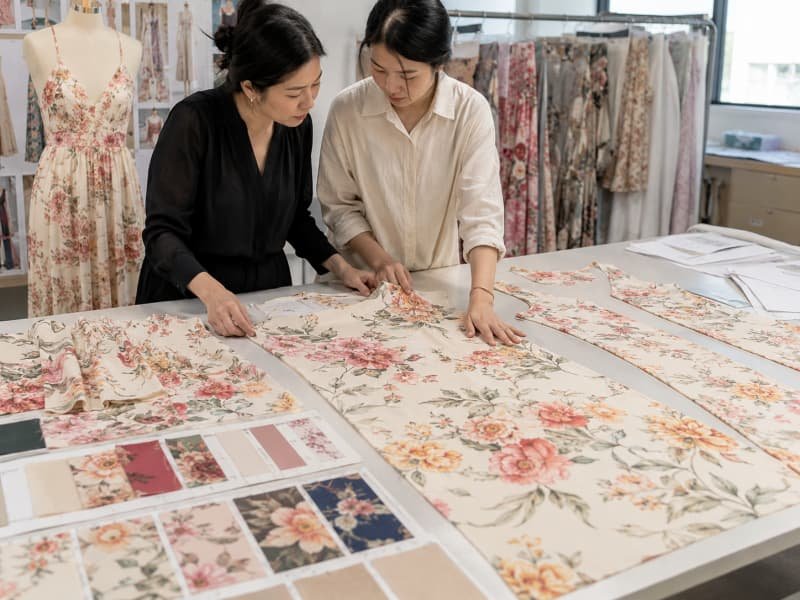
- Artwork preparation
- Color separation
- Strike-off
- Base-fabric approval
- Repeat confirmation
- Placement planning
- Bulk color approval
- Lot comparison

Pleating and Ruffles
- Pleat depth
- Heat-setting suitability
- Recovery
- Ruffle width
- Cutting direction
- Edge method
- Attachment line
- Symmetry
- Packing behavior
Controlling Organza Dresses from Sample to Bulk
Approved Sample Status
The team confirms whether the current sample is:
- Visually approved
- Fit approved
- Approved as PP basis
- Pending minor correction
- Approved only for photography
- Approved only for costing
Production should not begin from an unclear approval status.
Material Locking
Bulk records should identify:
- Organza supplier or approved source
- Composition
- Weight or construction
- Color standard
- Lining
- Zipper
- Support materials
- Decoration components
Any replacement requires approval before use.
Measurement and Pattern Control
The final pattern version, measurement chart, tolerances and grading rules should align with the approved sample. High-sensitivity points may include:
- Bust
- Waist
- Bodice length
- Armhole
- Skirt length
Version control prevents old patterns or unapproved comments from entering production.
Workmanship Standard
A production workmanship sheet may define:
- Seam method
- Seam width
- Edge finish
- Gathering ratio
- Support structure
- Zipper installation
- Decoration placement
- Pressing instruction
- Label location
Reference photos can clarify visual details that written instructions cannot fully explain.
PP and First-piece Review
Complex styles may require a PP sample, first-piece review or pilot run before full release. The purpose is to validate production construction, materials and appearance under line conditions.
High-risk organza styles include:
- Bubble hems
- Large bows
- Corset bases
- Embroidered panels
- Printed placement
- Multi-tier skirts
- Sculpted sleeves
Reorder Preservation
Once a style enters repeat production, the following records should remain available:
- Approved pattern version
- BOM
- Material standard
- Color reference
- Measurement chart
- Workmanship sheet
- PP or golden sample basis
- QC findings
- Packing record
A repeat order should build on confirmed production assets rather than restart from memory.
A Controlled Manufacturing Path for Organza Dress Orders
Organza production requires protected handling from fabric arrival through packing. The production path is planned around style complexity, material sensitivity, quantity and delivery timing.
Fabric Inspection
Relaxing and Preparation
Cutting and Identification
Structure Assembly
First-piece Confirmation
Inline Quality Control
Finishing and Pressing
Packing and Shipment Preparation
Bulk production planning windows depend on material readiness, style complexity, quantity and approval speed:
- Simpler commercial organza styles: approximately 15–20 days
- Regular structured or multi-layer styles: approximately 20–30 days
- Complex printed, embroidered, corseted or highly decorated styles: approximately 30–45 days
Shipping time is planned separately according to destination and transport method.
Manufacturing Capacity for Multi-style Organza Dress Programs
300 Sewing Lines
Around 300 sewing lines support parallel production across dress categories and order stages. Line allocation considers style complexity, fabric behavior, construction method and delivery priority.
20+ Satellite Factories
12,000+ Supporting Workers
16 Owned Factories
Owned factories provide stronger control for core styles, development-sensitive products and orders requiring close sample-to-bulk coordination.
Brand value includes:
- Direct production control
- Clear priority setting
- Production-path visibility
- Better handling of complex styles
- Stronger connection between sample and bulk teams
50+ Quick-response Lines
More than 50 quick-response and flexible lines support:
- Launch orders
- Time-sensitive styles
- Sales-driven replenishment
- Priority repeat orders
- Selected multi-style programs
Quick response remains linked to material readiness and confirmed production standards.
Scalable Monthly Output
The wider manufacturing system supports a stable monthly output of approximately 6.5 million garments, with peak capacity reaching around 10 million garments according to production mix and scheduling.
Capacity value lies in controlled allocation, not volume alone. Organza styles are matched with production teams capable of handling transparent fabrics, structured details and sensitive finishing.
Quality Control Points for Organza Dress Production
Quality control follows the points most likely to change the approved organza effect: stiffness, transparency, layer balance, visible seams, structured volume, decoration, pressing and packing.
| Inspection Stage | Main Control Points | Problems Being Prevented |
|---|---|---|
| Fabric inspection | Shade, stiffness, width, transparency, pulled yarns, creases and lot consistency | Different volume, color or surface appearance within one order |
| Cutting | Grain direction, motif placement, layer count, panel identification and clean handling | Twisted shape, mixed panels, asymmetry and surface marks |
| Pre-sewing trial | Needle, thread, tension, stitch density, edge finish and pressing response | Needle holes, puckering, fraying and permanent shine |
| Bodice assembly | Bust balance, support, seam alignment, zipper area and lining connection | Poor fit, visible internals and distorted bodice shape |
| Sleeve construction | Gathering distribution, sleeve-cap balance, cuff opening and support | Uneven volume, limited movement and left-right difference |
| Skirt construction | Tier ratio, lining length, hem level, bubble attachment and panel balance | Collapsed volume, twisting and uneven hem |
| Decoration | Placement, attachment strength, weight, backing and symmetry | Dropping components, distortion and skin irritation |
| Inline inspection | Measurements, workmanship, transparency, color and critical visual points | Repeated defects spreading through the production quantity |
| Final inspection | Appearance, dimensions, stains, pressing, closures, labels and packaging | Retail rejection, functional failure and presentation problems |
| Packing audit | Folding, supports, polybag, barcode, carton quantity and pressure | Crushed structure, mixed labels and shipment errors |
Packing Organza Dresses Without Crushing Their Structure

Folding or Hanging
Hanging may suit long, heavily structured or premium styles where retail presentation must remain intact. Folding may suit commercial mini and midi programs when the fold path protects key volume.

Sleeve and Bow Support

Layered Skirt Folding

Surface Protection

Carton Pressure

Brand and Retail Details
Packing can include:Main label,Size label,Care label,Hangtag,Barcode,Price ticket,Branded polybag,Tissue,Hanger,Carton mark,Assortment label.
Compliance and Documentation for US Fashion Programs
Social Compliance Support
- SMETA audit information
- Factory profile
- Production-location coordination
- Social-compliance document review
- Brand-specific onboarding support
- Factory visit arrangements
Product and Material Testing
Testing can be coordinated according to product construction and market needs, including relevant AATCC, ASTM, OEKO-TEX®, EN, China GB or brand-specific requirements.Possible areas include:
- Colorfastness
- Dimensional stability
- Seam performance
- Trim security
- Restricted substances
Inspection and Production Files
Duolan can cooperate with:
- Brand inspection teams
- Independent third-party inspection
- PP sample approval
- Inline inspection
- Shipment-document preparation
Production files may include specifications, BOM, approved materials, measurement charts, workmanship notes, packaging instructions and inspection records.
Organza Dress Programs Developed for Commercial Markets

United States Partywear Collection
A U.S. partywear brand planned an 18-style organza collection for birthday, homecoming and holiday launches.
The total order reached 42,600 pieces across three delivery windows, with mini and short-midi silhouettes forming the main sales range. The initial brief included puff sleeves, fitted bodices, bubble hems and structured back bows. Early reference samples showed three risks:
- Sleeve shapes collapsed after packing
- Pale organza exposed zipper tape and internal seam allowances
- Bubble hems twisted because the inner and outer circumferences were not balanced
Duolan divided the project into three construction groups. Sleeve styles received fabric-stiffness comparisons and adjusted sleeve-cap patterns. Pale styles used revised lining shades, narrower internal seams and concealed reinforcement around the zipper. Bubble hems received marked attachment points and controlled gathering ratios.
A two-stage sample review separated visual proportion from measurement corrections. Sixteen styles moved into PP review after two development rounds; two higher-risk bow styles required an additional local structure trial.
Bulk production was split into 23,400 pieces for the first launch and 19,200 pieces for the second delivery. First-piece confirmation focused on sleeve recovery, bow angle, hem volume and lining coverage. Twelve styles later entered a repeat program totaling 18,600 additional pieces after the initial selling period.

United Kingdom Occasionwear Program
A UK occasionwear brand developed 14 printed-organza wedding guest and cocktail styles with a combined initial order of 28,800 pieces. The collection included floral midi dresses, asymmetric overlays, full sleeves and tiered skirts. The main challenge came from the relationship between print, transparency and lining color. The same floral shell appeared muted over beige lining, brighter over ivory and cooler over pale blue. Seam placement also changed the print appearance on transparent sleeves. Duolan organized the project around:
- Print strike-off approval
- Three lining-color comparisons
- Daylight and studio-light review
- Pattern placement at center-front and sleeve seams
- Tier and hem print direction
- Bulk fabric lot comparison
The brand selected two lining systems: a warm neutral lining for six commercial styles and tonal linings for eight premium styles. Engineered placement was limited to the upper-price designs, while repeat-print cutting supported the core sales range. Production used two main color groups and seven size options. A representative size-set review checked a smaller, base and larger size for sleeve proportion, waist position and skirt balance. Final packing quantities were adjusted for fuller sleeve styles to reduce crushing. The program shipped in two seasonal windows. Ten of the 14 styles remained in the brand’s later occasion edit, while five silhouettes were extended into new print and color directions.

Australian Contemporary Dress Collection
- Four campaign styles retained full visual volume
- Ten main sales styles used controlled panel widths and shared fabric
- Five reorder candidates used simplified internal support
- Three experimental styles remained at sample stage until sales direction was clearer
Custom Organza Dress Frequently Asked Questions

Start Your Organza Dress Development Project
- Company or brand name
- Website or social account
- Target market
- Tech pack, sketch or reference images
- Organza type or desired visual effect
- Lining and coverage requirements
- Colorways
- Size range and size chart
- Target quantity by style and color
- Decoration or special workmanship
- Required sample stage
- Target launch and delivery date
- Label, barcode and packaging requirements
- Testing or inspection standards


