 Skip to content
Custom Tulle Dress Manufacturer
Tulle Dress Development and Manufacturing for Established Fashion Brands
Duolan develops adult fashion tulle dresses from design direction and fabric selection through pattern making, sampling, bulk production, quality control and delivery coordination.
- Tulle volume is controlled through 4 connected variables: material stiffness, layer count, gathering ratio and lining weight.
- Every project reviews 6 tulle-specific checkpoints: skirt balance, waist thickness, opacity, skin comfort, bodice support and volume recovery.
- Collection programs with 10–30 styles are separated by construction risk before sampling and production planning.
- Structured, embellished and multi-layer styles receive dedicated workmanship and production-readiness reviews.
A Dress Manufacturing System Built for Brand Programs
30+ Years Development Experience
For tulle dresses, experience matters before cutting begins. The team evaluates whether a design requires soft drape, controlled lift, firm volume, mixed tulle hardness or structural support. Early judgment helps prevent attractive sketches from becoming heavy, bulky or unstable garments.
16 Owned Factories
Sixteen owned womenswear factories provide direct control for core styles, complex construction, important launches and high-standard production programs. Core tulle dress styles can be matched with production teams familiar with layered skirts, fitted bodices, lining systems, gathering, ruffles and delicate surface work.
Owned production control also supports clearer responsibility for approved samples, pattern versions, workmanship notes and quality checkpoints. Complex tulle styles are not released into production before their critical construction requirements are understood and documented.
20+ Satellite Factories
More than 20 long-term satellite factories provide additional capacity for repeat orders, seasonal peaks, volume expansion and multi-style production. Satellite capacity is not used as uncontrolled outsourcing. Production allocation considers garment construction, workmanship level, delivery timing and factory specialization.
For a collection containing both simple tulle overlays and complex corset tulle dresses, styles can be separated into suitable production paths while following common approved samples, specifications, BOM records and QC requirements.
12,000+ Supporting Workers
Multi-style programs can be broken down by fabric, structure, special process and delivery priority. Capacity planning is then connected with sample approval, material readiness and quality requirements instead of treating the entire order as one production block.
Special Process Resources
Special processes are reviewed as part of garment development because they can change tulle stiffness, weight, drape, transparency and skin comfort. Process placement, backing, lining and attachment methods must be confirmed before bulk production standards are locked.
SMETA Audit Foundation
Compliance support is connected with product execution. Fabric documentation, garment construction, labeling, testing requirements, packing specifications and shipment records should move through one controlled project path rather than being handled separately at the end.
Developed for Fashion Teams With Structured Product Plans
Fashion Dress Brands
Product Development Teams
Buying and Sourcing Teams
Multi-Brand Fashion Groups
Tulle Dress Risks Controlled Before Bulk Production
Incorrect Tulle Stiffness
- Required skirt lift and movement
- Skin contact areas
- Layer combination
- Gathering density
- Lining weight
- Packing recovery
Uncontrolled Layer Volume
Adding more layers does not automatically improve a tulle dress. Excess layers can create a thick waist seam, uneven silhouette, high material consumption and difficult packing. Duolan defines the role of every layer:
- Shape-building layer
- Soft transition layer
- Visible outer layer
- Coverage layer
- Lining or petticoat layer
Layer quantity, panel width, gathering ratio and attachment order are reviewed together. The aim is controlled volume with a clear purpose, not unnecessary bulk.
Uneven Skirt Length
Multi-layer tulle can move during spreading, cutting, sewing and hanging. A skirt may appear level on the table but become uneven after the garment settles on a mannequin.
Control includes:
- Layer identification during cutting
- Consistent panel direction
- Controlled joining and gathering
- Hanging or mannequin review
- Inner-to-outer length comparison
- Final skirt leveling
Long, asymmetric and high-low skirts receive additional balance checks before finishing.
Excessive Waist Thickness
Several gathered tulle layers, lining, zipper seams and bodice seams can meet at one waistline. Without a planned construction, the waist becomes thick, stiff or visibly uneven.Duolan reviews :
- seam allowance distribution
- gathering concentration
- layer staggering
- lining attachment
- zipper placement.
Selected layers may be reduced, shifted or connected separately to preserve a clean waist shape. Construction must support the visual waistline instead of distorting it.
Poor Opacity Control
Transparency is often part of the design, but uncontrolled transparency creates fit, comfort and marketability problems. Lighting, tulle color, lining color and layer count can change the final coverage.
Opacity review covers:
- Bust and under-bust coverage
- Waist and hip coverage
- Side seam exposure
- Back panel transparency
- Skirt overlap during movement
- Flash photography appearance
Lining length and color are selected according to the intended visual effect and target market.
Sample-to-Bulk Difference
- Approved tulle and lining
- Layer specification
- Pattern version
- Gathering distribution
- Measurement sheet
- Workmanship notes
- PP or approved reference
- Packing method
Custom Tulle Dress Styles for Fashion Collections

Layered Tulle Mini
- Soft, medium or mixed-stiffness tulle
- Number of visible and supporting layers
- Mini length during standing and movement
- Lining coverage
- Waist gathering distribution
- Bodice-to-skirt proportion

Strapless Tulle Dress
A strapless tulle dress cannot rely on appearance alone. The upper body needs enough internal support to remain secure during sitting, walking and dancing. Duolan evaluates:
- Bust contour
- Anti-slip tape
- Boning distribution
- Cup support
- Inner waist stay
- Center-back closure
- Neckline tension
The skirt weight must also be considered. Heavy or highly gathered tulle can pull downward, so bodice and skirt construction need to work as one system.

Tulle Maxi Dress
- Floor clearance
- Front and back balance
- Train or no-train construction
- Lining movement
- Layer weight
- Waist load
- Packing protection

Corset Tulle Dress

Tulle Midi Dress
Midi silhouettes require better movement and vertical balance than short, highly structured skirts. Excessive stiffness can make the garment look wide, while overly soft tulle may collapse around the legs. Duolan reviews panel width, layer length, skirt circumference, gathering level and lining shape. The outer layer can remain light and transparent while inner layers create controlled body. Midi styles work well for cocktail, wedding guest, graduation and occasion collections.

Off-Shoulder Tulle Dress

Halter Tulle Dress
Halter styles place more tension around the neck and upper bodice. Neckline shape, strap width, back exposure and bust support need to be evaluated together.
For tulle halter dresses, transparent panels may require reinforced seam areas or hidden support layers. The garment should remain stable without creating excessive pressure at the neck. Back closures, ties, hooks or concealed zippers are selected according to fit adjustment and visual direction.

Bubble Tulle Dress
Bubble tulle dresses depend on controlled internal volume and a clean relationship between outer material, inner support and lining. Poor construction can create random folds, uneven fullness or excessive bulk.
Duolan evaluates outer panel length, inner anchoring, volume distribution and hem connection. The bubble effect should remain intentional from front, side and back views. The construction also needs to recover after folding and transportation.

Ruffle Tulle Dress
Ruffles can create movement, romance and strong visual layering, but their width, spacing and edge treatment determine whether the garment looks refined or overloaded.
Development includes:Ruffle depth,Gathering ratio,Placement direction,Layer overlap,Edge finish,Weight distribution,Symmetry.Ruffles around the neckline, bodice or armhole require softer materials and greater skin-comfort control than skirt ruffles.

Appliqué Tulle Dress
Appliqué adds depth without fully covering the transparent base. Positioning must follow the pattern and body rather than being attached randomly after assembly.
Duolan considers motif scale, placement map, seam crossings, lining visibility, attachment method and production repeatability. Floral, lace or dimensional appliqué may need hand positioning, templates or marked placement references. Bulk QC checks placement direction, attachment security and left-right balance.

Glitter Tulle Dress
Glitter tulle produces strong eventwear impact, yet surface finish can affect skin comfort, cutting cleanliness and sewing performance. Loose glitter can contaminate work areas or transfer to lining and packaging.
Material review checks glitter adhesion, hand feel, shedding, fold marks and color appearance under light. Seams and edges near the skin may require lining, binding or soft transition materials. Packing should minimize rubbing and surface damage.

Wedding Guest Tulle
Wedding guest tulle dresses require a balance between occasion impact and commercial wearability. The design should feel elevated without moving into bridal gown construction or one-off couture production.
Suitable directions include layered midi dresses, fitted bodice minis, soft tulle maxis, floral appliqué styles and restrained corset-inspired silhouettes. Development focuses on repeatable construction, market-appropriate coverage, comfortable movement and a price structure suitable for branded retail collections.
Tulle Materials Selected for Silhouette and Wearability

Soft Tulle

Medium-Stiff Tulle

Firm Tulle

Glitter Tulle

Flocked Tulle

Embroidered Tulle
Compare Tulle With Other Sheer Dress Materials
Tulle, mesh, organza and chiffon may all appear light or transparent, yet they perform different jobs. Material decisions should be based on silhouette, stretch, volume, movement, comfort and production risk.
| Material | Main Behavior | Best Dress Applications | Key Development Risk | Production Impact | Duolan Direction |
|---|---|---|---|---|---|
| Soft Tulle | Lightweight, transparent and fluid with limited structural lift | Romantic overlays, sleeves, soft layered skirts, ruffles | Too many layers may create waist bulk without clear shape | More layer planning and careful gathering may be needed | Use for softness, movement and visible layering |
| Medium Tulle | Balanced shape, volume and movement | Party minis, tiered skirts, bubble dresses, occasionwear | Incorrect gathering can make volume uneven | Suitable for controlled commercial volume | Use as an outer or supporting layer according to silhouette |
| Firm Tulle | Strong projection and stable volume | Statement skirts, internal support, structured ruffles | Sharp hand feel, bulky seams and difficult skin contact | Lower layer count may still create strong volume | Keep away from direct skin contact or add soft transitions |
| Stretch Mesh | Flexible, body-following and often elastic | Bodycon dresses, fitted sleeves, transparent panels, ruched dresses | Growth, recovery, print distortion and opacity variation | Requires stretch-aware pattern and seam construction | Use for close fit and movement rather than skirt volume |
| Organza | Transparent, crisp and visibly structured | Puff sleeves, bows, bubble skirts, architectural overlays | Creasing, fraying, scratching and visible seam allowances | Needs edge control, pressing discipline and packing protection | Use when transparent structure is more important than softness |
| Chiffon | Soft, flowing and draped with low volume | Flowing skirts, sleeves, gathers and elegant overlays | Slippage, seam puckering, distortion and uneven hems | Requires careful cutting, fine sewing and hem control | Use for movement and drape rather than lifted volume |
Tulle Volume Engineered Through Material and Construction
Start With the Target Silhouette
The development team first defines the required visual shape from the front, side and back. A short party dress may need outward projection from the waist, while a romantic midi may require gentle movement with limited side width. A maxi style may need vertical flow rather than strong lift.
The target should answer several questions:
- Should volume begin directly at the waist or below it?
- Should the skirt hold a stable shape or move freely?
- Is the outer layer meant to appear soft, crisp or cloud-like?
- Should the lining follow the outer shape or remain narrow?
- How much side projection is commercially acceptable?
- How should the dress recover after packing?
Once the silhouette is defined, tulle hardness and construction can be selected with a clear purpose. Starting with a fixed layer count before understanding the target often leads to unnecessary material, high waist thickness and unstable results.
Build a Layer Function Plan
Duolan can document:
- Layer sequence
- Material quality per layer
- Finished length per layer
- Gathering ratio
- Panel quantity
- Seam position
- Attachment method
- Lining relationship
Control Gathering and Waist Distribution
Gathering control may include:
- Marked balance points
- Section-based ratios
- Stabilizing stitches
- Separate front and back panels
- Layer-by-layer attachment
- Staggered seam allowances
- Reduced bulk near zipper areas
Verify Recovery After Packing
A tulle dress may look correct after steaming in the sample room but arrive compressed after international transport. Volume recovery becomes part of product performance.
Packing review considers:
- Folding direction
- Pressure from neighboring garments
- Individual bag size
- Carton loading
- Tissue or protective layers
- Glitter and appliqué surfaces
- Steam or hanging recovery instructions
For styles with strong projection, a packing trial can help assess how quickly the garment returns to its approved shape. The goal is not to prevent every fold; it is to prevent permanent distortion, crushed decoration or severe imbalance.
Lining, Opacity and Comfort Planned as One System

Select Lining for Visual Results
- Color relationship with outer tulle
- Matte or shiny surface
- Stretch requirement
- Weight and drape
- Opacity under strong light
- Seam visibility
- Static behavior
- Recovery after wear

Plan Coverage by Garment Zone
Coverage should be mapped according to the garment design rather than using one lining shape everywhere. Important zones include:
- Bust and under-bust
- Side bust
- Waist seam
- Center back
- Hip and seat
- Upper thigh
- Skirt overlap
- High slit areas
A transparent upper bodice may use strategic lining panels, power mesh or cup coverage while keeping selected areas sheer. A skirt may use a shorter lining for visual layering, but movement tests should confirm acceptable coverage during walking, sitting and stairs.

Reduce Skin Irritation
- Soft lining transitions
- Bound seam edges
- Covered boning
- Clean zipper guards
- Soft elastic
- Reduced seam bulk
- Backing behind appliqué
- Placement changes away from friction zones

Control Static and Layer Movement
Several lightweight synthetic layers can generate static, cling to the lining or separate unpredictably. Static behavior may change with humidity, packing and fabric finishing. Material combinations are reviewed for:
- Layer-to-layer friction
- Lining cling
- Skirt separation
- Movement noise
- Surface attraction
- Post-packing appearance
Finishing, lining selection and packing can reduce unwanted effects. The approved material combination should be preserved in bulk because replacing the lining can change both comfort and silhouette.
Hidden Support for Secure Tulle Dress Fit
Built-In Cups
Boning Structure
Anti-Slip Control
Inner Waist Stay
Zippers and Hooks
Power Mesh Support
Tulle Design Details Developed for Repeatable Production
Tiered Layers
Circular Ruffles
Gathered Ruffles
Raw Tulle Edges
Bound Edge Finishing
Floral Appliqué
Tulle Embroidery
Sequin Decoration
Pleated Tulle Effects
Pattern, Fit and Grading for Tulle Silhouettes
Establish the Correct Base Fit
The base pattern defines how the dress sits before decorative volume is added. For fitted bodices, the team reviews bust contour, under-bust position, waist level, torso length, neckline shape, armhole and back balance.
Important questions include:
- Where should the visual waist sit?
- How much ease is suitable for the fabric and closure?
- Does the neckline remain secure during movement?
- Is the cup position correct for the brand block?
- Does the bodice support the skirt weight?
- Are side seams visually vertical?
Tulle can hide some internal seams but cannot correct an unstable base pattern. The bodice should be evaluated before excessive decorative layers make fit problems harder to identify.
Balance Bodice and Skirt Proportion
Duolan evaluates:
- Bodice length
- Waist seam position
- Skirt starting point
- Side projection
- Front and back fullness
- Lining width
- Finished dress length
Grade Structure, Not Only Measurements
Size grading for tulle dresses requires more than enlarging the base pattern. The relationship between bodice, cup, strap, waist, skirt circumference and layer volume should remain coherent.
Grading review may include:
- Bust and waist increments
- Cup and dart development
- Strap length
- Neckline security
- Boning length
- Zipper length
- Skirt panel width
- Layer quantity
- Finished garment length
- Lining coverage
The same layer configuration may not behave identically across the entire size range. A size-set sample or selected graded-size review can identify proportion problems before bulk cutting.
Define Measurement Methods and Tolerances
Every measurement point needs a shared method. A dress measured flat with the lining stretched can produce a different result from a relaxed measurement. Tulle layers can also obscure the true waist or hem position.
Duolan aligns measuring diagrams and key points such as:
- Bust
- Under-bust
- Waist
- Hip
- Bodice length
- Strap length
- Neckline opening
- Skirt length
- Lining length
- Slit height
- Cup position
- Zipper length
Critical points can receive tighter attention according to fit sensitivity.
Tulle Dress Sampling With Production Readiness in Mind

Project and Feasibility Review
- Tech pack
- Reference image
- Original sample
- Design sketch
- Size chart
- Fabric direction
- Quantity plan
- Target launch date

First Sample Development
The first sample translates the agreed direction into a physical garment. Pattern, tulle, lining, support components and workmanship are combined according to the initial development plan. During sampling, Duolan can provide staged updates for complex styles, including:
- Material arrival
- Pattern or draping progress
- Layer trial
- Bodice structure
- Key detail close-ups
- Mannequin view
- Pre-completion review
The first sample is evaluated for direction rather than treated as an automatic final standard. A clear review note can separate achieved points from areas requiring fit or visual refinement.

Revision and Fit Response
Sample comments are converted into actions by category:
- Pattern correction
- Measurement adjustment
- Tulle replacement
- Layer change
- Gathering redistribution
- Lining revision
- Support improvement
- Detail placement correction
- Workmanship refinement
A revision summary helps prevent repeated or contradictory changes. Updated measurements and visual comments should remain aligned. For multi-style programs, separate style records keep comments from moving into the wrong sample.

PP and Bulk Readiness
- Approved pattern version
- Tulle and lining standard
- Color
- Layer sequence
- Measurements
- Construction points
- Decoration placement
- Labels
- Packing
- QC checkpoints
Project Information Needed Before Development Begins
Tech Pack Projects
Reference Image Projects
Original Sample Projects
Collection Brief Projects
Tulle Dress Cost and Timeline Planning
Tulle dress quotations depend on material consumption, layer construction, bodice structure, decoration, size range, quantity and packing. The references below support early planning; final timing and cost are confirmed after project review.
| Project Factor | Planning Reference | Main Cost or Timing Impact | Information Needed |
|---|---|---|---|
| Tulle Quality | Soft, medium, firm, glitter, flocked or embroidered | Fabric price, width, stiffness, handling and availability | Target hand feel, color, surface and silhouette |
| Layer Construction | Single overlay, multi-layer, mixed stiffness or supported volume | Material consumption, cutting, gathering, waist thickness and sewing time | Layer effect, skirt circumference and visual volume |
| Bodice Structure | Soft bodice, lined bodice, corset-inspired or fully supported | Pattern development, cups, boning, fitting and assembly | Neckline, support level, closure and fit standard |
| Decoration | Ruffles, appliqué, embroidery, sequins, glitter or pleating | Process testing, placement, attachment, inspection and loss | Artwork, placement, density and finish |
| Size Range | Brand size chart and grading requirements | Pattern grading, size-set review, consumption and QC | Base size, graded measurements and tolerance priorities |
| Sampling | Planned after material and construction review | Fabric sourcing, pattern complexity, fitting and revisions | Complete files and approval response timing |
| Simple Bulk Styles | Common production reference: 15–20 days | Material readiness and production schedule | Approved standard and complete order breakdown |
| Regular Bulk Styles | Common production reference: 20–30 days | Layer construction, trims, colors and multi-size production | Approved sample, BOM, color and size quantities |
| Complex Bulk Styles | Common production reference: 30–45 days | Corset structure, embroidery, appliqué, pleating or high layer counts | Process approval, pilot review and material readiness |
| Delivery | Express 3–7 days, air 5–8 days, sea 20–35 days | Destination, carton volume, selling window and trade term | Destination, delivery term and required arrival date |
Tulle Cutting and Sewing Workmanship Control
Spreading and Cutting Discipline
- Fabric shade and surface review
- Mesh or grain direction
- Controlled spreading tension
- Marker alignment
- Panel quantity
- Layer identification
- Notch visibility
- Protection from snagging
- Separation of glitter or embroidered qualities
Layer Joining and Gathering
Several panels may need to be joined before gathering. Seam placement should be distributed so bulky joins do not collect at one area or remain highly visible.
Gathering can be controlled through:
- Balance marks
- Section division
- Stabilizing rows
- Ratio references
- Layer-by-layer attachment
- Controlled tension
- Front-back separation
Operators should not judge fullness only by eye. Reference marks help maintain even distribution and preserve the intended silhouette. When many layers connect to one waist seam, seam allowances can be staggered, reduced or attached in groups. The method depends on fabric stiffness, bodice construction and zipper location. A clean waist seam improves fit, appearance and zipper performance.
Delicate Seam Construction
- Seam puckering
- Needle damage
- Skipped stitches
- Open seams
- Thread tension
- Raw seam visibility
- Lining attachment
- Zipper catching
- Boning or cup concealment
- Ruffle and appliqué security
Hem Leveling and Finishing
Raw tulle edges may not require a conventional sewn hem, but finished length still needs control. Garments are reviewed in a natural hanging position because layers can settle differently after sewing. Hem review may include:
- Front-center length
- Side length
- Back length
- Layer progression
- High-low balance
- Train shape
- Lining relationship
- Left-right symmetry
Steam must be used carefully because excessive heat can change synthetic tulle. Glitter, flocking, pleating and appliqué need material-specific finishing. The final garment should match the approved volume before packing begins.
Controlled Transition From Approved Sample to Bulk

Bulk Readiness Review
- Fit approval status
- Visual approval status
- PP basis
- Pending refinements
- Fabric and lining
- Color
- Layer construction
- Measurements
- Workmanship
- Labels and packing
- Delivery requirement

Order Breakdown and Production Path
Bulk orders are separated by style, color, size, quantity and construction risk.
Tulle dresses can be grouped as:
- Simple overlays
- Regular layered styles
- Structured bodice styles
- High-volume skirts
- Embellished styles
- Pleated or special-process styles
- Repeat styles
- Delivery-priority styles
Production planning matches each group with the most suitable path. A collection does not need every style to follow the same line, factory or release date. High-risk pieces can receive additional validation without holding back all regular styles.

Material and Workmanship Locking
- Tulle quality
- Composition
- Width
- Color
- Stiffness direction
- Lining
- Cups and boning
- Zipper
- Trim
- Layer sequence
- Gathering ratio
- Decoration placement
- Labels
- Packing

First-Piece and Inline Control
A first piece or pilot stage can confirm whether production execution matches the approved standard before large quantities are completed.
Review points include:
- Bodice fit
- Layer count
- Skirt volume
- Waist thickness
- Finished length
- Lining coverage
- Closure
- Decoration
- Packing recovery
Inline inspection then checks production at selected stages. Early correction is more efficient than finding the same issue across completed garments. Quality information is shared with production teams through reference samples, comments, photos and inspection notes.
Tulle Dress Quality Control From Fabric to Shipment
Fabric Inspection
Incoming tulle and lining are reviewed for:
- color
- hand feel
- stiffness
- width
- visible defects
- surface condition.
Glitter, flocked and embroidered qualities receive additional surface checks.
Material differences can change the approved silhouette even when the color looks correct. Bulk fabric is compared with the approved direction before full cutting begins.
Cutting Verification
Cut quantities, panel direction, layer identification and critical lengths are verified during cutting preparation.
Checks focus on:
- Correct layer material
- Correct panel quantity
- Smooth raw edges
- No major snags or holes
- Pattern version
- Size identification
- Embroidery or flock direction
- Decoration placement basis
Errors at the cutting stage can affect every later operation, so unclear pieces are separated before sewing.
Measurement Review
- Bodice length
- Waist position
- Skirt length
- Lining length
- Layer progression
- Cup position
- Strap length
- Zipper length
- High-low balance
Decoration Inspection
- Placement
- Direction
- Symmetry
- Attachment security
- Missing elements
- Surface damage
- Skin comfort
- Color consistency
- Seam interference
Layer Count Control
Each style receives a defined layer structure. Production and QC teams verify visible layers, supporting layers and lining according to the approved specification. Layer count alone is not enough. Length sequence, material hardness and attachment order are also checked. Missing or reversed layers can change volume, transparency and waist thickness.
Workmanship Inspection
Final Appearance Review
Packing and Shipment Check
Manufacturing Capacity Organized by Style Complexity
Core Styles Stay Under Direct Control
Important launch styles, structured bodices, complex layer constructions and high-visibility pieces are prioritized for controlled production paths.
The project team connects approved samples with:Pattern version,Material standard,Workmanship points,Measurement priorities,QC checkpoints,Packing requirements.
Commercial Styles Receive Stable Production Paths
Regular layered dresses, simple overlays, sleeve applications and repeatable mini or midi silhouettes can be organized for efficient production after standards are confirmed.
Efficiency comes from clear preparation rather than simplified quality. Materials, panel quantities, gathering instructions, size ratios and sewing methods remain documented.
High-Risk Styles Receive Additional Validation
The additional review determines whether workmanship can remain consistent at bulk scale. Risks are addressed before thousands of pieces repeat the same issue.
Multi-Style Orders Are Planned as Programs
Duolan breaks the program into manageable production groups. Material readiness, sample status, complexity and delivery dates are considered together. Such planning supports 20,000–80,000-piece brand programs without treating every style as identical.
Repeat Styles Preserve Production Knowledge
Repeat production should not restart from memory. Before reordering, the team reviews material batch changes, previous comments, size performance and required updates. Stable records help preserve the garment identity across later colors, seasons and quantities.
Compliance Support for International Fashion Dress Programs
SMETA Audit Record
Duolan’s manufacturing system has completed SMETA and SMETA 2-Pillar audit requirements.
Audit information can support supplier evaluation for brands requiring social responsibility records before development or production begins. Required documents are reviewed according to cooperation stage and confidentiality conditions.
Brand-Specific Standards
Textile Testing Coordination
Material Documentation
Label and Packing Requirements
Inspection Support
Packaging Tulle Dresses Without Crushing Their Shape

Define the Correct Folding Method
- Folding direction
- Bodice protection
- Cup shape
- Boning pressure
- Skirt layer alignment
- Raw edge placement
- Decoration contact
- Zipper protection

Control Individual and Carton Pressure
An individual bag that is too small can permanently compress the skirt or bend decorative details. A bag that is excessively large may create disorganized packing and movement. Carton planning reviews:
- Garments per bag
- Garments per carton
- Carton dimensions
- Product volume
- Carton pressure
- Shipping method
- Warehouse handling
- Delivery cost
Tissue, protective sheets or shaped inserts may be added for selected structures. Glitter and appliqué surfaces can require separation to reduce rubbing.

Confirm Volume Recovery
A packing trial can be completed for shape-sensitive products. The garment is packed according to the proposed method, held under transport-like pressure and then reviewed after unpacking.
The team checks:
- Skirt recovery
- Permanent creases
- Crushed ruffles
- Appliqué distortion
- Glitter transfer
- Cup shape
- Boning deformation
- Required steaming or hanging time
Recovery guidance can be included for warehouse or ecommerce fulfillment teams when needed.
Clear Communication Across Development and Production
Project Brief Review
English Project Communication
Sample Stage Updates
Revision Summaries
Production Status Updates
Factory Visit Support
Tulle Dress Programs Solved Through Controlled Development

U.S. Partywear Collection
Program profile
- Market: United States
- Product direction: Party, birthday and going-out dresses
- Styles: 18
- Total quantity: 42,600 pieces
- Colorways: 3–5 per selected style
- Size range: Brand-specific U.S. grading
- Main products: Layered minis, corset tulle dresses, glitter tulle and ruffle dresses
Initial challenge
The collection used several tulle qualities without a consistent volume standard. Early references showed attractive front views, but side projection, waist thickness and lining lengths varied across the 18 styles. Six statement styles also combined corset bodices with highly gathered skirts, creating downward pull and zipper pressure.
Development response
Duolan divided the program into five construction groups:
- Soft layered skirts
- Medium-volume minis
- Structured corset styles
- Glitter surface styles
- Ruffle and appliqué styles
A material board defined soft, medium and firm tulle roles. Layer plans recorded material, finished length, gathering direction and attachment order. Structured styles received cup, boning, neckline and inner-waist reviews. Zipper areas used reduced gathering and staggered seam allowances.
Production control
Six high-risk styles went through first-piece confirmation. Remaining commercial styles entered production after PP alignment. QC focused on layer count, skirt balance, waist thickness, glitter shedding, lining coverage and packing recovery.
Result
All 18 styles moved through one coordinated production calendar. The order was released in two planned production waves, allowing higher-risk statement pieces to receive additional review without delaying regular layered styles. Final packing used separate methods for corset and non-corset garments.
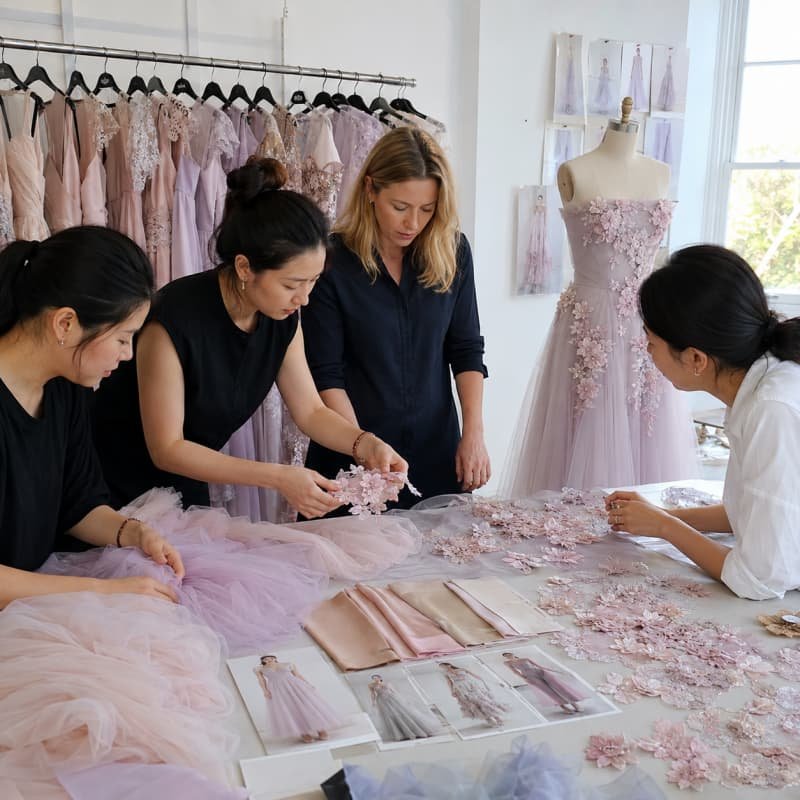
UK Occasionwear Program
Program profile
- Market: United Kingdom
- Product direction: Wedding guest, cocktail and formal occasion dresses
- Styles: 12
- Total quantity: 26,400 pieces
- Main silhouettes: Midi tulle, corset midi, floral appliqué and soft maxi dresses
- Delivery structure: One main launch with selected style priorities
Initial challenge
The brand required a refined, less theatrical tulle appearance. Original references used too much firm tulle, creating excessive side width and a stiff walking effect. Nude lining colors also appeared too yellow beneath pastel outer materials. Three floral appliqué styles showed inconsistent motif balance between sizes.
Development response
Firm tulle was retained only as an internal support layer for selected styles. Softer outer layers created a smoother surface and more elegant movement. Lining colors were reviewed under daylight and studio lighting to improve the relationship with pastel tulle.
For appliqué styles, Duolan developed placement maps around the neckline, waist and skirt. Motif clusters were adjusted by size rather than enlarged mechanically. Corset midis received additional torso-length and cup-position review.
Production control
The 12 styles were divided into regular, structured and appliqué production paths. First-piece checks confirmed lining tone, skirt width, appliqué balance and bodice support. Inline inspection focused on midi hem balance and motif attachment.
Result
The finished range maintained a consistent occasionwear identity while preserving different silhouettes. Production was completed as one 26,400-piece program, with structured and appliqué styles following additional approval points. Packing plans separated embellished garments to reduce rubbing and motif distortion.

Australian Ecommerce Reorder
Program profile
- Market: Australia
- Product direction: Online fashion, eventwear and seasonal party dresses
- Styles: 24
- Total quantity: 68,000 pieces
- Repeat styles: 7
- New developments: 17
- Delivery plan: 3 shipment waves
- Main products: Tulle minis, halter dresses, bubble styles and tiered midis
Initial challenge
Seven repeat styles needed to match earlier fit and visual standards while using new material batches. New developments had different complexity levels, and the launch calendar required selected styles to ship earlier. Previous packing methods also compressed bubble skirts and required excessive warehouse steaming.
Development response
Repeat styles were reviewed against stored pattern versions, BOM information, workmanship points and previous comments. New tulle batches were compared for stiffness, shade and recovery. Two materials were rejected because their hand feel changed the approved skirt volume.
The 17 new styles were grouped by sample readiness and construction risk. Bubble styles received packing trials, while halter dresses were reviewed for neckline pressure and bust support. The full order was separated into three shipment priorities.
Production control
Repeat styles used approved references with updated material confirmation. New styles followed PP or first-piece review according to risk. QC compared volume, length, lining coverage and closures across shipment waves.
Result
The 68,000-piece program moved through three planned deliveries rather than one uncontrolled release. Seven repeat styles retained their approved silhouettes after material revalidation. Revised bubble-dress packing reduced severe compression and improved shape recovery after unpacking.
Custom Tulle Dress Frequently Asked Questions

Start Your Custom Tulle Dress Development Project
Send Duolan your tech pack, reference images, original sample photographs or collection brief. Our team will review the garment direction before recommending a sampling and production path.
For a more accurate first evaluation, please include:
- Brand website and target market
- Product type and selling occasion
- Tech pack, sketches or reference images
- Target tulle effect or material reference
- Lining and opacity requirements
- Size chart and fit priorities
- Colorways
- Estimated quantity by style
- Required launch or delivery date
- Decoration and branding requirements
- Packing and compliance requirements
Duolan will review fabric suitability, skirt-volume logic, bodice structure, workmanship-sensitive areas, sampling requirements and bulk feasibility. For multi-style programs, please indicate which styles are hero products, commercial products, repeat styles or priority launches.


