Skip to content
Custom Georgette Dress Manufacturer
Georgette dress development and manufacturing for established fashion brands, buying teams, sourcing offices and multi-style seasonal programs.
- 8 core georgette dress categories covering mini, midi, maxi, printed, ruffled, tiered, wrap and occasion silhouettes
- Development planning for 10–30 styles within one collection, with fabric, lining, color and construction coordinated across the program
- Standard georgette samples are commonly planned within 7–15 working days after design information and fabric direction are confirmed
- Production planning supports brand programs ranging from approximately 20,000 to 80,000 garments across multiple styles
- Fabric behavior, opacity, seam control, print consistency and sample-to-bulk accuracy are reviewed before production release
- Backed by 16 owned womenswear factories, 20+ satellite factories and a dress-focused manufacturing network
Georgette Dress Manufacturing for Established Fashion Teams
Fashion Dress Brands
- Seasonal mini, midi and maxi dress programs
- Printed and solid-color collection development
- Coordinated fabric stories across multiple silhouettes
- Launch, repeat and scale-up production planning
- Fit, workmanship and bulk-readiness review
Product Development Teams
Product teams often enter a georgette project with a sketch, reference garment, fabric idea or unfinished Tech Pack. Development work begins by identifying the intended movement, opacity, fit priority, layering method and market positioning. Before sample cutting, Duolan reviews:
- Whether the selected georgette can hold the intended silhouette
- Whether the lining will restrict movement
- Whether gathers, ruffles or pleats remain stable in production
- Whether the hem method suits the fabric weight
- Whether the approved construction can be reproduced across sizes
Buying and Sourcing Teams
Buying and sourcing teams need clear records, measurable standards and predictable handovers from development to production. A visually acceptable first sample is not sufficient when a collection includes multiple colors, prints, size ranges and delivery windows.
Duolan organizes projects around:
- Confirmed fabric and lining specifications
- Measurement charts and tolerance priorities
- Sample comments and revision records
- Material and workmanship locking
- PP or approved-sample references
- Inline, final and packing inspection checkpoints
Start Your Georgette Dress Project From Clear Inputs
Complete Tech Pack
Reference Image
Original Sample
Fabric-Led Brief
Collection Brief
Approved Sample Transfer
Georgette Dress Risks Controlled Before Bulk Production
A lightweight dress can appear simple while carrying several material and construction risks. Early control protects drape, coverage, fit and repeatable production quality.
| Development or Production Risk | Possible Garment Result | Duolan Control Direction |
|---|---|---|
| Fabric weight does not match the silhouette | Dress appears flat, bulky or lacks movement | Compare weight, drape, texture and recovery against the intended shape |
| Georgette is more transparent than expected | Inadequate coverage under retail, daylight or flash photography | Review color, layer count, lining shade and lining length |
| Shell and lining behave differently | Twisting, pulling, static cling or uneven hem | Check shrinkage, stretch, weight and movement compatibility |
| Thread tension is too high | Puckered seams and visible stitch tracks | Run needle, thread, stitch density and tension trials |
| Bias panels are hemmed too early | Uneven finished length after hanging | Allow controlled relaxation before final leveling and hemming |
| Print repeat is not engineered for panels | Broken motifs and inconsistent visual placement | Approve artwork scale, repeat direction and panel placement |
| Ruffle ratios vary between operators | Uneven volume across the same style | Record finished ruffle length, gather ratio and attachment standard |
| Bulk material differs from sample material | Approved drape or color is lost in production | Lock material quality, shade reference and approved swatch before cutting |
| Narrow hems are poorly controlled | Wavy, twisted or thick skirt edges | Approve hem width, stitch setting, folder method and operator standard |
| Comments are not converted into measurable changes | Repeated sample rounds and unclear approval | Use revision records, measurement updates and point-by-point comment responses |
Custom Georgette Dress Categories for Fashion Collections
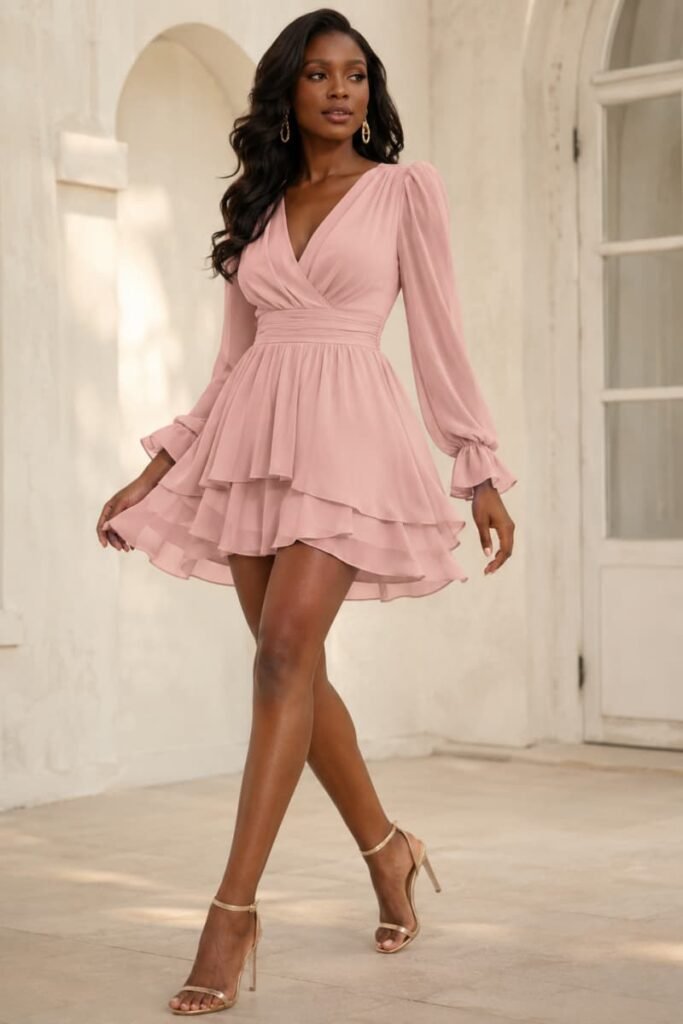
Georgette Mini Dresses
- Finished length by size
- Lining coverage during movement
- Sleeve and skirt volume
- Waist seam stability
- Invisible zipper reinforcement
- Hem control on curved edges

Georgette Midi Dresses
- Waist placement and torso proportion
- Skirt sweep and walking ease
- Lining length under slits
- Pleat, gather or panel distribution
- Hem leveling after hanging
- Print continuity across larger panels

Georgette Maxi Dresses
- Panel grain direction
- Full-length measurement standards
- Skirt circumference
- Tier balance
- Lining movement
- Hanging and final hem leveling

Printed Georgette Dresses
- Artwork scale and repeat
- Color strike-off approval
- Print direction
- Panel placement
- Shade consistency
- Shell and lining color balance
- Cutting markers for visible motifs

Ruffled Georgette Dresses
- Ruffle width and finished length
- Gather ratio
- Grain direction
- Edge treatment
- Join position
- Symmetry between left and right sides
- Production reference samples for operators

Tiered Georgette Dresses
- Tier depth
- Gather distribution
- Seam weight
- Lining construction
- Waist bulk
- Finished skirt sweep
- Cost impact from increased fabric consumption

Georgette Wrap Dresses
- Front overlap
- Tie position and strength
- Neckline stabilization
- Bust coverage
- Inside fastening
- Skirt opening
- Size grading of overlap and waist ties

Occasion Georgette Dresses
Occasion designs may combine georgette with pleating, draping, lace, mesh, beads, rhinestones or structured internal layers. Decorative work must remain compatible with a light shell fabric. Duolan reviews:
- Weight distribution
- Reinforcement under trims
- Lining and modesty coverage
- Handfeel against the skin
- Snagging risk
- Pressing method
- Durability during packing and transport
Georgette Dresses Planned Around Real Wearing Occasions

Wedding Guest

Cocktail Events

Going Out

Graduation

Resort Collections

Vacation Drops

Summer Occasion

Holiday Party
Georgette Fabric Options Selected by Garment Performance

Polyester Georgette
- Printed maxis
- Ruffle minis
- Occasion midis
- Gathered sleeves
- Wrap dresses
- Tiered collections

Recycled Polyester Georgette
- Material documentation
- Lot consistency
- Print color response
- Surface texture
- Shrinkage
- Supply continuity for repeat orders

Viscose Georgette
Viscose georgette often offers a softer, more fluid hand and a natural-looking drape. The material may require closer control of shrinkage, dimensional movement and wet-processing behavior.
It can suit:
- Soft midis
- Flowing maxis
- Draped bodies
- Feminine sleeves
- Premium printed dresses
Bulk planning should include shrinkage results and care-label requirements.

Silk Georgette
Silk georgette provides a refined hand, light movement and premium surface character. It is suitable for elevated occasion or designer-led collections where material quality is central to the garment.
Development requires careful handling of:
- Fine seam construction
- Needle marks
- Pressing temperature
- Water spotting
- Color consistency
- Fabric yield
- Packing protection

Stretch Georgette
Stretch georgette supports fitted dresses or bodies requiring greater movement. Stretch direction and recovery must match the pattern and lining system. Duolan checks:
- Stretch percentage and direction
- Recovery
- Seam extension
- Lining compatibility
- Measurement stability
- Body transparency under extension

Double Georgette
Double georgette offers greater weight, coverage and body than lighter qualities.
It can support structured draping, wrap dresses, tailored midis and less transparent occasion products.
The fabric can reduce lining dependence in selected areas, but weight, seam thickness and pressing response still require review.

Printed Georgette
- Base quality
- Strike-off
- Color
- Repeat
- Print direction
- Bulk shade
- Finished handfeel

Crinkle Georgette
Crinkle or textured georgette creates a more visible surface and may suit relaxed, vacation or bohemian-inspired collections.
Texture depth can affect measurements, print clarity and pressing.
Production standards should define whether texture is natural, mechanically created or finished through another process, along with acceptable variation.
Lining and Opacity Control for Georgette Dresses
Full Lining for Consistent Coverage
- Lining length relative to shell length
- Skirt sweep and movement
- Shell-lining connection points
- Seam allowance visibility
- Slit and opening coverage
- Color effect through the outer layer
Partial Lining for Movement and Design Intent
- Bodice lining with sheer sleeves
- Short skirt lining under a longer shell
- Bust panels under draped overlays
- Nude lining beneath lace or mesh inserts
- Separate slip-style internal layers
Shell and Lining Compatibility
The shell and lining should not fight each other during wear or after care. Different shrinkage, stretch, surface friction or weight can create twisting and uneven hems.
Duolan reviews:
- Fabric and lining shrinkage
- Stretch direction
- Static behavior
- Surface friction
- Weight relationship
- Color migration risk
- Care method
Compatibility is checked before large material orders are released wherever fabric behavior presents a visible risk.
Coverage Under Movement and Photography
Factory lighting alone is not enough for pale, fitted or lightly layered dresses. White, blush, nude, yellow and pastel shades may appear acceptable on a hanger but become transparent during movement or flash photography. Coverage review may include:
- Mannequin assessment
- Fit-sample wear review
- Stretch-area assessment
- Daylight review
- Strong backlighting
- Photography or flash check for relevant products
The final decision should reflect the target market, selling channel and intended use.
Printing Dyeing and Color Control for Georgette
Lab Dip Approval for Solid Colors
- Target color
- Lighting conditions
- Face and back appearance
- Color depth
- Lining coordination
- Acceptable commercial tolerance
Strike-Off Approval for Prints
- Repeat dimensions
- Motif direction
- Color separation
- Ground color
- Fine-line clarity
- Edge bleeding
- Handfeel after printing
- Shrinkage or distortion
Print Placement Across Dress Panels
- Center-front position
- Left-right balance
- Border alignment
- Sleeve direction
- Tier continuity
- Back-panel appearance
- Additional fabric allowance for placement
Bulk Shade and Lot Control
- Lot identification
- Shade grouping
- Roll inspection
- Panel cutting from matched lots
- Size and color allocation
- Retained approved swatches
- Final visual review
Trims and Decorative Details Engineered for Georgette

Invisible Zippers
- Reinforce the zipper area where required
- Control top and bottom alignment
- Confirm smooth opening
- Check seam flatness
- Match zipper tape color

Covered Buttons
Covered buttons can extend the fabric story across cuffs, necklines or center fronts. Fine georgette may need an internal base or selected backing to prevent distortion.
- Define button size
- Confirm loop strength
- Check spacing
- Prevent frayed edges
- Test fastening during wear

Elastic and Smocking
- Approve relaxed and extended measurements
- Record elastic length
- Control row spacing
- Test recovery
- Check skin comfort
- Confirm grading method

Lace and Mesh Inserts
Lace or mesh inserts add visual depth but require compatible weight, stretch and color.
- Align seam placement
- Control transparency
- Match color tone
- Stabilize joining seams
- Review skin contact
- Prevent heavy joins beneath georgette

Beads and Rhinestones
Decorative stones and beads can pull on lightweight fabric, create snagging or alter drape.
- Reinforce attachment areas
- Approve spacing and density
- Check weight distribution
- Protect the inside surface
- Review abrasion and packing
- Define repair and inspection standards

Embroidery and Appliqué
- Test embroidery on actual fabric
- Approve backing
- Control edge finish
- Check shrinkage
- Review drape after application
- Inspect bulk placement consistency
Custom Design Options for Georgette Dress Development
Neckline Development
Sleeve Development
Waistline Development
Skirt Shape Development
Length Development
Ruffles and Tiers
Draping and Gathering
Open-Back Details
Silhouette and Structure Control Beneath Fluid Fabric
Bodice Balance Controls the Entire Dress
- Bust point position
- Front and back length balance
- Neckline stability
- Armhole coverage
- Dart or gather distribution
- Side-seam position
- Lining ease
- Closure placement
Waist Construction Must Support Fabric Volume
- Total gather ratio
- Placement of fullness
- Waistband width
- Elastic strength
- Lining attachment
- Zipper intersection
- Seam thickness
- Pressing method
Skirt Movement Requires Controlled Geometry
- Hem circumference
- Panel shape
- Side-seam direction
- Slit placement
- Tier proportions
- Lining sweep
- Finished length
- Movement allowance
Open and Wrap Structures Need Secure Coverage
Wrap fronts, halter shapes, cowl necklines and open backs are visually attractive but can shift during wear. Risk control includes:
- Front overlap measurement
- Hidden snap or fastening
- Tie anchoring
- Strap position
- Neckline tape or stabilization
- Lining coverage
- Movement testing
- Grading review across sizes
Security measures should remain visually discreet and consistent with the design.
Tech Packs and Measurement Standards Before Sampling
Technical Drawings
Measurement Chart
Fabric Specification
Construction Notes
Artwork and Trims
Packaging Information
Pattern Fit and Grading for Georgette Dresses

Base Pattern and Sample Size
Development begins with the intended market, fit profile and base sample size. A US, UK, European or Australian size reference may use different body assumptions and grading expectations.
Before drafting or adapting the pattern, Duolan confirms:
- Sample size
- Body or garment measurement basis
- Intended ease
- Fit category
- Length expectations
- Bust, waist and hip priorities
- Whether the design is fitted, regular, relaxed or oversized
Standard size labels alone are not enough to define fit.

Fit Review Beyond Static Appearance
Review points can include:
- Neckline opening during bending
- Armhole exposure
- Sleeve mobility
- Wrap-front security
- Waist position
- Side-seam balance
- Skirt opening while walking
- Lining movement
- Hem level
- Back-neck or strap stability

Grading Across the Size Range
Georgette dress grading should preserve proportions rather than mechanically enlarge every detail. Ruffle width, tier depth, neckline opening, strap placement and wrap overlap may require controlled grading rules.
A size range such as XXS–XL, US 0–16 or an extended range can be developed according to the brand’s approved chart and fit strategy. Extended sizing may require separate fit review or additional base-size evaluation when proportions change significantly.

Measurement Tolerance and Inspection
Not every measurement carries equal risk. Critical POMs should receive tighter attention because small deviations can affect coverage or visual balance.
Examples include:Neckline depth,Bust width,Waist position,Front overlap,Strap length,Mini length,Slit height,Sleeve opening,Lining length.Inspection tolerances are agreed by product type and measurement importance before bulk production.
Sample Revision Records That Preserve Every Decision
Comment Classification
Comments are separated into categories before action:
- Fit and measurements
- Silhouette and proportion
- Fabric and lining
- Construction
- Workmanship
- Color and print
- Trims
- Packaging or presentation
Classification helps the team understand which changes affect the pattern, which require new materials and which can be corrected through sewing or finishing.
Before-and-After Comparison
Useful comparisons include:
- Neckline depth
- Waist placement
- Sleeve volume
- Ruffle ratio
- Skirt length
- Lining coverage
- Draping position
- Zipper or closure finish
Revision Summary
The summary helps avoid several common problems:
- Old comments being repeated
- One correction creating another issue
- Different departments using different sample versions
- Bulk teams receiving incomplete instructions
- Unapproved details entering production
Approval Status Control
- Visual approval
- Fit approval
- Material approval
- Photo-sample approval
- PP basis
- Production-ready approval
Structured Georgette Dress Sample Development
Project Review
Fabric Direction
Pattern Development
First Sample
The first sample checks silhouette, proportion, fit, fabric response and construction. A standard georgette development sample is commonly planned within 7–15 working days after design basis and material direction are confirmed.
Fit and Workmanship Review
Revision and Approval
Revision samples apply confirmed changes in order of priority.
Each round should move the style toward an agreed fit, visual standard and production method.
Production-Ready Sample Standards for Georgette Dresses
Fit and Measurement Standard
- Approved sample size
- Critical POMs
- Tolerances
- Fit notes
- Pattern revision
- Grading rules
- Length and coverage priorities
Material and BOM Standard
The production BOM should identify the approved shell fabric, lining, zipper, elastic, labels, thread, trims and packaging materials. For georgette products, useful records include:
- Fabric composition and weight
- Approved handfeel and texture
- Color or print reference
- Lining quality and shade
- Material supplier or article reference
- Shrinkage result
- Replacement approval process
Construction and Workmanship Standard
- Seam type
- Stitch density
- Narrow hem width
- Zipper reinforcement
- Gather ratio
- Ruffle attachment
- Lining joining method
- Pressing restrictions
- Trim reinforcement
Bulk Readiness Review
Before production release, Duolan checks whether the sample, materials, dimensions, construction, labels and packing requirements are sufficiently aligned.
The review confirms:
- What is approved
- What is still pending
- Which details carry production risk
- Whether a PP sample or first-piece confirmation is required
- Which production route suits the style
- Which inspection checkpoints need additional attention
Georgette Sewing and Workmanship Control Details

Needle Thread and Tension
Needle size, point type, thread and machine tension affect seam appearance. Incorrect settings can create pulled yarns, skipped stitches, puckering or visible needle holes. Control work includes:
- Trial sewing on the approved fabric
- Fine needle selection
- Compatible thread
- Balanced upper and lower tension
- Stitch-density review
- Seam-strength assessment
- Rechecking settings after fabric-lot changes
The preferred setting balances clean appearance with adequate seam performance.

Seam Construction
Seam choice depends on transparency, fabric weight, lining and product positioning.
Possible methods include:
- French seams for selected unlined areas
- Narrow overlocked seams
- Clean-lined seams
- Bound or enclosed areas
- Stabilized zipper seams
- Reinforced waist joins
- Fine seam allowances beneath overlays
The inside should remain neat without creating unnecessary thickness visible through the shell.

Narrow Rolled Hems
- Finished hem width
- Folder or handling method
- Stitch density
- Feed balance
- Curved-edge preparation
- Thread tension
- Start and finish points
- Final pressing

Zipper and Closure Areas
- Interfacing or tape reinforcement
- Seam stabilization
- Zipper alignment
- Top-edge finishing
- Hook placement
- Tie anchoring
- Loop strength
- Opening and closing test

Ruffles Pleats and Gathers
- Cut width
- Finished length
- Gather ratio
- Pleat depth
- Join position
- Symmetry points
- Edge finish
- Attachment method

Pressing and Finishing
Georgette can react to excessive heat, steam pressure or direct contact. Finishing should remove handling marks without flattening texture, creating shine or stretching bias areas.
Controls include:
- Temperature trial
- Press cloth where required
- Limited pressure
- Controlled steam
- Hanging after pressing
- Final length and shape check
- Protection before packing
From Approved Sample to Controlled Bulk Production
Bulk Readiness and Material Locking
Before production release, Duolan confirms:
- Approved sample status
- Fabric and lining
- Color or print
- Trims
- Measurements
- Workmanship
- Labels
- Packaging
- Outstanding approvals
Material references and production instructions are aligned to reduce sample-to-bulk deviation.
Order Breakdown and Production Path
Multi-style programs are broken down by style, color, size, quantity, complexity and delivery requirement.
The team identifies:
- Regular styles
- High-risk styles
- Printed styles
- Embellished styles
- Bias or complex-hem styles
- Styles requiring special-process coordination
- Styles suitable for shared material planning
Production resources are matched to product needs rather than assigning every style to one route.
Pre-Production and Inline Control
Pre-production communication aligns the pattern, sample, materials, critical operations and inspection requirements.Inline checks focus on issues that are difficult or expensive to correct later:
- Seam puckering
- Length imbalance
- Ruffle inconsistency
- Print direction
- Lining attachment
- Measurement drift
- Trim placement
Corrective action is taken while garments remain in production.
Georgette Dress Quality Checks Across Production Stages
Fabric Inspection
Shrinkage Review
Cutting Inspection
Cut components are checked for panel accuracy, grain, print direction, numbering and visible defects before sewing.
First-Piece Inspection
Inline Inspection
Measurement Inspection
Final Garment Inspection
Packing Inspection
Manufacturing Capacity for Multi-Style Georgette Programs
16 Owned Factories
20+ Satellite Factories
12,000+ Supporting Workers
300 Sewing Lines
50+ Quick-Response Lines
Multi-Region Production Support
Private Label and Packaging for Georgette Dresses

Main and Size Labels
- Woven or printed options
- Brand artwork approval
- Size sequence
- Placement standard
- Stitching method

Care Labels
- Fiber content
- Care symbols
- Country information
- Supplier or brand references
- Multi-language layouts where required

Hangtags and Barcodes
- Artwork
- Barcode data
- String or fastener
- Placement
- Color-size identification
- Scan verification where required

Individual Protection
- Polybag selection
- Tissue protection
- Trim covers
- Sleeve or hanger options
- Moisture considerations
- Dark-light color separation

Folding and Presentation
- Controlled fold points
- Skirt support
- Sleeve arrangement
- Tissue placement
- Recovery after unpacking

Carton and Ratio Packing
- Carton markings
- Packing ratios
- Quantity records
- Weight and dimension planning
- Split-shipment identification
- Warehouse or forwarder instructions
MOQ Cost and Lead Time Based on Project Structure
MOQ Structure
MOQ is influenced by:
- Fabric supplier minimums
- Dyeing or print minimums
- Color quantity
- Lining
- Trims
- Packaging
- Special processes
- Size-color breakdown
- Production-line efficiency
A multi-style collection may be assessed differently from one isolated style when fabrics, colors, trims or construction methods can be coordinated across the program.
Final quantity planning is confirmed after project review.
Cost Structure
The main cost drivers for georgette dresses include:
- Fabric composition and weight
- Fabric consumption
- Print method
- Placement requirements
- Number of layers
- Lining
- Ruffle or tier volume
- Pleating
- Embellishment
- Sewing complexity
- QC requirements
- Labels and packing
Accurate quotation requires a Tech Pack, reference sample or sufficiently detailed construction information. Image-only quotations remain provisional until material and workmanship are reviewed.
Timeline Structure
A working schedule commonly includes:
- Project and file review
- Fabric sourcing or development
- Pattern making
- First sample
- Revision
- Print or color approval
- PP or bulk-readiness confirmation
- Material preparation
- Production
- Inspection
- Packing
- Shipment
Standard georgette samples are commonly planned within 7–15 working days after essential information is confirmed. Bulk manufacturing may commonly require 25–45 working days after approvals and material readiness.
Georgette Dress Programs Across International Fashion Markets

US Occasionwear Program
Region: United States
Program: Wedding guest and occasion dress collection
Style count: 18 styles
Total quantity: 46,800 garments
Product mix: Printed midis, ruffled maxis, wrap dresses and long-sleeve occasion styles
Size range: US 0–16
The initial project contained several pale printed fabrics, large skirt sweeps and partially lined bodies. Early samples showed inconsistent opacity between colors, excessive weight in two gathered waist constructions and uneven length on bias-influenced panels.
The development route included:
- Separating lining standards by color rather than using one lining for every style
- Reducing gather concentration at selected waist seams
- Revising lining sweep to prevent restriction
- Adding controlled hanging before final hem approval
- Locking print scale and panel direction through strike-offs
- Identifying critical neckline, wrap overlap and finished-length measurements
Bulk planning divided the collection by print method, construction complexity and delivery priority. First-piece checks focused on lining coverage, seam appearance and length.
Publishing result fields to verify internally:
- Number of sample rounds
- Final approved quantities by style
- Inspection outcome
- On-time delivery result
- Repeat order status

UK Online Fashion Program
Region: United Kingdom
Program: Going-out and partywear georgette collection
Style count: 24 styles
Total quantity: 72,000 garments
Product mix: Mini dresses, draped midis, open-back designs, ruched styles and embellished occasion pieces
Size range: UK 4–18
The main risks involved short lengths, open backs, cowl necklines, rhinestone details and close-fitting lining. Product review identified several areas where visual styling required stronger production standards.
Development action included:
- Defining minimum coverage for mini linings
- Stabilizing cowl and open-back edges
- Reinforcing rhinestone attachment areas
- Creating measurable drape and gather positions
- Separating fitted and relaxed grading rules
- Testing zipper insertion on the actual shell and lining combination
- Adding snagging and trim inspection to final QC
Styles were grouped into regular, complex and decorative production routes. The team planned PP or first-piece review according to risk rather than applying one control level to every garment.
Publishing result fields to verify internally:
- First-sample approval rate
- Number of corrected styles before production
- Final inspection findings
- Delivery performance
- Reorder volume

Australian Resort Program
Region: Australia
Program: Resort and vacation georgette collection
Style count: 12 styles
Total quantity: 28,800 garments
Product mix: Printed maxis, tiered dresses, halter styles, wrap midis and lightweight sleeve dresses
Size range: AU 6–18
The program used three print stories across several silhouettes. The original artwork direction created inconsistent motif scale between mini, midi and maxi products. Long skirts also required better hem and packing control for warehouse presentation.
Development work included:
- Adjusting artwork scale by silhouette
- Creating print-placement rules for center fronts and tiers
- Balancing tier depth and gather ratios across sizes
- Confirming full and partial lining by style
- Allowing length stabilization before final hemming
- Reviewing packing folds for long skirts
- Using shared fabric stories while maintaining product-specific construction
Production planning linked fabric lots to style groups and separated long, bias-sensitive products from simpler gathered shapes. Packing instructions protected the skirt and reduced unnecessary fold pressure.
Publishing result fields to verify internally:
- Approved print revisions
- Bulk shade results
- Packing inspection outcome
- Delivery timing
- Seasonal repeat status
How Fashion Teams Evaluate Georgette Dress Suppliers
A suitable manufacturing partner must connect material knowledge, product development, bulk control and long-term supply organization. The comparison below provides a clear supplier-evaluation framework.
| Evaluation Area | Limited Production Approach | Brand-Level Requirement | Duolan Manufacturing Approach |
|---|---|---|---|
| Georgette knowledge | Identifies fabric by trade name | Evaluates weight, drape, opacity, texture and production behavior | Reviews fabric against silhouette, lining, sewing and bulk requirements |
| Product range | Shows assorted dress images | Demonstrates relevant mini, midi, maxi, printed and occasion experience | Organizes georgette products by silhouette, market and construction risk |
| Development | Produces from a photo | Converts design direction into measurable product information | Reviews Tech Pack, reference sample, pattern, material and sample purpose |
| Lining | Adds a standard lining | Controls coverage, movement, shrinkage and color effect | Matches shell and lining by product, color and structure |
| Printing | Accepts supplied artwork | Controls scale, repeat, color and placement | Uses strike-off, artwork and cutting references before bulk |
| Sampling | Sends one prototype | Separates visual, fit, material, PP and production-ready approval | Uses staged review, revisions and approval status records |
| Workmanship | Relies on operator experience | Defines material-specific seam, hem, tension and finishing standards | Tests and records critical operations for georgette |
| Bulk transition | Starts production after verbal approval | Locks approved sample, BOM, measurements and workmanship | Conducts bulk-readiness and material confirmation |
| Quality control | Checks finished garments | Prevents defects through fabric, first-piece, inline and final inspection | Uses risk-based checkpoints across development and production |
| Multi-style capacity | Handles styles as unrelated orders | Coordinates fabric, sampling, production and delivery across a collection | Uses owned factories, satellite resources and multi-line planning |
| Compliance | Provides general statements | Supplies current audit, testing and project documents | Supports SMETA records, testing coordination and client-specific standards |
| Repeat production | Recreates the style from old messages | Preserves pattern, BOM, approvals and quality references | Maintains production standards for repeat and scale-up planning |
Frequently Asked Questions About Georgette Dress Manufacturing

Send Your Georgette Dress Project for Evaluation
Share enough information for our team to understand the product direction, development stage and expected production route. A complete Tech Pack is useful, but an initial evaluation can also begin from reference images, original sample photos, fabric swatches, print artwork, measurement charts or an organized collection brief.
Please include:
- Company name, website and target market
- Product category and number of styles
- Tech Packs, sketches or reference images
- Preferred georgette composition, weight or handfeel
- Fabric colors or print artwork
- Lining and coverage requirements
- Sample size and complete size range
- Estimated quantity by style or collection
- Required sample type
- Target launch or warehouse date
- Label, packaging and compliance requirements
- Current project stage: development, quotation, transfer, repeat or bulk production
After receiving the information, Duolan will review the fabric direction, silhouette, construction risk, sample basis and likely production path before confirming the next step.