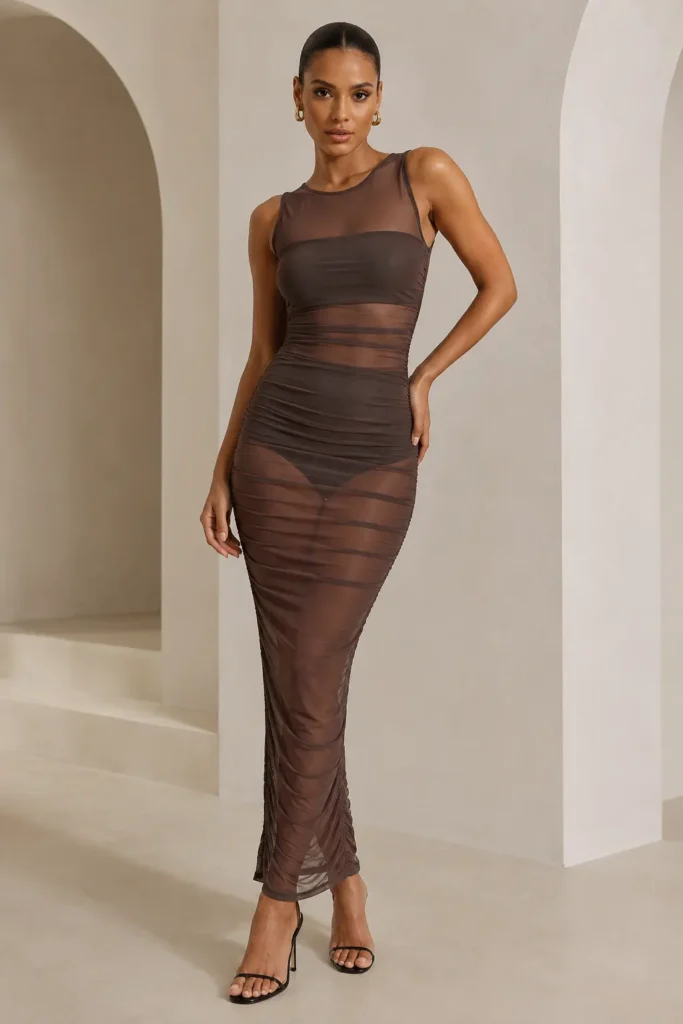
...

Custom Sheer Dress Manufacturer

Production-ready sheer dresses developed around transparency, coverage, fit, lining structure, workmanship and repeatable bulk manufacturing.

  • 8 fabric directions covering stretch mesh, power mesh, tulle, net, lace, chiffon, organza and decorated mesh.
  • 9 coverage zones reviewed across the bust, underbust, waist, hip, thigh, side body, back, sleeve and hem.
  • 12 core measurement points converted into pattern, grading and inspection standards.
  • 3 lighting conditions considered during transparency review: indoor light, natural light and photography flash.
  • Supported by 16 owned womenswear factories, 20+ satellite factories and 50+ flexible production lines for multi-style programs and repeat production.

Sheer Dress Development At A Glance

A successful sheer dress must balance visual transparency with secure coverage, stable fit, clean construction and repeatable manufacturing. Duolan reviews every project as a complete product system rather than treating mesh or tulle as a simple surface material.

Eight Fabric Directions

Development can begin with stretch mesh, power mesh, soft tulle, fine net, lace, chiffon, organza or decorated mesh. Selection depends on stretch direction, recovery, weight, surface feel, transparency, drape and the intended silhouette. Fabric direction is reviewed before pattern cutting because a design created for soft stretch mesh cannot be transferred directly to rigid tulle or crisp organza without changing fit, seam construction and lining support.

Nine Coverage Zones

Coverage is planned by body zone rather than applying one lining solution to the entire garment. Bust, underbust, waist, hip, upper thigh, side body, back, sleeve and hem may require different layer counts, colors or placement methods. Zonal planning allows a dress to remain visually sheer while protecting movement, fit security and photography performance.

Twelve Measurement Points

Core measurements may include bust, underbust, waist, hip, front length, back length, armhole, sleeve opening, strap length, bodysuit rise, slit height and hem opening. Critical points are selected according to the silhouette. A fitted mesh mini and a layered tulle maxi require different priorities even when both garments are described as sheer dresses.

Three Light Reviews

Transparency can change under showroom lighting, daylight and flash photography. Duolan reviews shell fabric, lining color and body stretch under relevant lighting conditions. Light review is especially important for pale colors, skin-tone linings, fine black mesh, reflective decoration and dresses developed for campaign photography or event settings.

Five Sample Stages

Depending on project requirements, the sample path can include a first prototype, fit sample, revised sample, photo or salesman sample and pre-production sample. Each stage serves a separate decision. A photo sample may prioritize visual presentation, while a fit or PP sample must establish measurable standards for production.

Structured Bulk Control

Approved samples are transferred into production through fabric, lining, color, pattern, measurement, workmanship, label and packaging confirmation. Higher-risk styles may receive a first-piece review or pilot run before full production release. Bulk manufacturing begins after critical standards are clear enough for production teams and quality teams to follow consistently.

Built For Established Fashion Teams

Duolan works most effectively with fashion organizations that have a defined product direction, collection plan, launch schedule and measurable production requirements. Communication focuses on product decisions, sample standards, production readiness and long-term supply coordination.

Fashion Product Teams

Product teams need more than visual sample replication. They need a manufacturer capable of reading tech packs, reference garments, mood boards and fit comments while identifying risks before development becomes expensive. Duolan helps translate design language into material choices, pattern logic, lining coverage, workmanship methods and production standards. Sheer dress programs can be organized by product role, including campaign pieces, commercial fitted styles, occasion products and repeatable core silhouettes.

Buying And Sourcing Teams

Sourcing teams often evaluate several factors at once: sample accuracy, material availability, production capacity, documentation, quality checkpoints, shipment planning and supplier responsiveness. Duolan structures project information around confirmed stages. Important decisions are recorded through sample plans, review notes, revision summaries, material confirmations, production readiness checks and packing instructions, reducing reliance on verbal communication or repeated follow-up.

Established Fashion Brands

Going-out, partywear, occasionwear, resort and ecommerce fashion brands often develop 10–30 styles within one program. Such programs may combine fitted mesh minis, printed maxis, sheer panels, lined bodycon dresses and decorated hero pieces. Duolan supports collection-level coordination by separating styles according to material, fit sensitivity, workmanship complexity and launch priority, then planning suitable sampling and production paths.

Control Risks Before They Reach Bulk

Sheer fabrics expose fit, seam, lining and workmanship problems more clearly than opaque materials. Each major risk requires a defined development or production control point before quantities increase.

Development RiskProduct ConsequenceDuolan Control Method
Transparency differs from the intended visualThe dress appears either too revealing or too heavily coveredReview layer count, fabric stretch, lining color and light response before sample approval
Mesh stretch conflicts with the patternSide seams twist, hems rise or bust and hip areas distortMeasure stretch direction and recovery, then adjust negative ease and pattern balance
Lining changes the shell colorSkin-tone, white, red or pastel mesh appears darker, duller or unevenTest shell-and-lining combinations together under relevant lighting
Coverage shifts between sizesLarger or smaller sizes expose different body areasReview graded coverage lines and fit samples at selected size points
Seams become visible or wavyTransparent construction looks rough and loses visual valueTest needle, thread, seam type, stitch density and tension before production
Bodysuit and dress pull differentlyTorso discomfort, drag lines or unstable movement appearsMatch shell and base stretch, review body rise and control attachment points
Sample standards are not transferredBulk garments differ in fit, transparency or detailingLock approved sample, BOM, pattern, measurements, workmanship notes and QC points
Decoration overloads the baseMesh stretches, tears, sags or feels uncomfortableValidate decoration weight, density, backing and placement through trial panels
Fabric batches behave differentlyReorders vary in color depth, recovery or transparencyConfirm batch standards and recheck color, stretch and surface behavior
Production starts before risk reviewSmall sample issues become large-volume defectsUse bulk readiness review and first-piece or pilot confirmation for sensitive styles

Custom Sheer Dress Product Directions

Duolan develops sheer dresses across fitted, layered, flowing and structured silhouettes. Each direction requires a separate combination of fabric behavior, coverage strategy, pattern engineering, sewing method and bulk control.

Sheer Bodycon Dresses

Bodycon development starts with controlled fit rather than simply making a garment tighter. Stretch percentage, recovery, fabric weight and lining behavior influence the required negative ease. Bust, waist and hip measurements must remain balanced while side seams, hems and sheer panels stay in position during walking and sitting. Options include single-layer sleeves, lined body panels, ruched coverage, printed mesh, contrast lining and integrated bodysuit bases.
Sheer-Mesh-Mini-Dress_

Sheer Mini Dresses

A mini length increases the importance of hem position, lining length, bodysuit coverage and movement testing. The outer mesh may extend below a shorter lining, but the relationship must remain intentional across sizes. Duolan reviews dress length, inner coverage, slit position, seat movement and photography angles. Suitable directions include party minis, birthday dresses, long-sleeve mesh minis, ruched fitted styles and decorated occasion pieces.

Sheer Midi Dresses

Sheer midi dresses can combine commercial wearability with a strong visual identity. Common developments include lined bodycon bodies with transparent hems, lace or mesh sleeves, corset-inspired upper sections and layered skirt panels. Pattern control focuses on waist balance, hip release, walking allowance and lining termination. Midi proportions must support the intended occasion without creating an unintended break line where the inner layer ends.

Sheer Maxi Dresses

Maxi styles require control of fabric weight, vertical stretch, skirt movement, lining length and hem stability. Fine mesh may lengthen under its own weight, while tulle or organza may require more volume management. Duolan reviews panel direction, skirt sweep, slit height, train length, lining movement and packing method. Printed mesh maxis, resort overlays, occasion styles and evening silhouettes can be developed from brand references.

Sheer Overlay Dresses

An overlay garment depends on the relationship between the transparent shell and the inner base. Length, color, stretch and attachment points must work together without twisting or visible pulling. Options include mini slips, full-length inner dresses, briefs, bodysuits and fitted jersey bases. Duolan evaluates whether shell and inner components should be joined, partially secured or produced as separate pieces according to dressing function and visual effect.

Mesh Ruched Dresses

Ruching can improve coverage, shape the silhouette and create commercial visual texture. Poorly distributed gathering may distort seams, shorten garment length or create uneven transparency. Development covers gather ratios, elastic tension, anchor points, drape direction and size grading. Ruched mesh styles can be extended across mini, midi, asymmetric and off-shoulder silhouettes while preserving a consistent fit block.

Sheer Panel Dresses

Sheer panels create controlled exposure around the waist, neckline, back, sleeves or skirt. Panel placement must follow the body and remain stable after grading. Duolan reviews seam allowance visibility, reinforcement, edge finishing and alignment with darts or style lines. Panels can be combined with jersey, satin, lace, crepe or structured bodice fabrics to create contrast without weakening construction.

Bodysuit Sheer Dresses

Integrated bodysuit dresses require two fit systems to work together: the outer dress and the internal base. Torso length, leg opening, snap position, stretch direction and attachment points must support dressing comfort. The bodysuit should not pull down the neckline, lift the skirt or create visible tension. Development may include brief bases, thong bases, cup coverage, adjustable straps and selective body lining.

Designed Around Real Selling Occasions

A sheer dress should match the movement, coverage, visual language and wearing confidence expected in its selling occasion. Product decisions change when the same transparent material is used for a party mini, resort maxi or wedding guest midi.

Going Out Collections

Going-out dresses often require close fit, high visual impact and movement stability. Stretch mesh, ruching, cut-outs, asymmetric necklines and short lining structures are common. Development priorities include body recovery, bust and hip coverage, side seam stability, hem position and flash photography. A strong fit block can later support color, sleeve, neckline and length extensions for repeat programs.

Party And Birthday

Party and birthday styles may use rhinestones, glitter mesh, sequins, flocking or bold lining contrast. Decoration must be evaluated against fabric strength and skin contact. Duolan reviews whether embellishment density changes stretch, whether trim edges require protection and whether packaging prevents snagging or pressure marks. Hero pieces can be balanced with more repeatable commercial styles within one coordinated program.

Holiday Events

Holiday collections frequently combine black, red, metallic, emerald and jewel-tone materials. Sheer sleeves, lace panels and decorated mesh can create occasion value without overloading the entire garment. Production planning must consider decoration time, color matching, PP approval and seasonal delivery buffers. Early material confirmation reduces pressure near the selling window.

Resort And Vacation

Resort sheer dresses favor light movement, layered transparency, printed mesh, soft chiffon-like fabrics and longer silhouettes. Important controls include skirt sweep, slit position, lining movement, strap stability and packability. Printed proportions should remain attractive after gathering and grading. Sheer resort pieces can also coordinate with slips, refined tops, skirts or matching sets.

Cocktail And Occasion

Cocktail and occasion styles need controlled exposure rather than uncontrolled transparency. Midi lengths, sheer upper panels, lace sleeves, lined corset bodies and overlay skirts are common directions. Duolan reviews bust security, lining tone, zipper protection, seam cleanliness and sitting comfort. Decoration and structure are planned around the target retail position and expected wearing environment.

Wedding Guest Edits

Wedding guest collections require refined color, polished finishing and reliable coverage. Mesh, lace, chiffon and organza may be combined with partial lining, draping or embroidery. The garment should photograph well in daylight while remaining secure during movement. Pale colors and skin-tone layers receive additional review because small differences in lining shade can change the complete visual result.

Sheer Fabrics Selected By Product Behavior

Fabric names alone do not define performance. Weight, stretch, recovery, openness, drape, surface feel and sewing response determine whether a material can deliver the intended silhouette and remain stable in bulk production.

Fabric DirectionMain BehaviorSuitable ApplicationsMain Development RiskControl Focus
Stretch MeshSoft, close-fitting and available in different stretch ratiosBodycon dresses, ruching, sleeves and overlaysBagging, low recovery, uneven transparencyStretch direction, recovery, weight and negative ease
Power MeshStronger recovery and greater shaping supportInner support, fitted panels, bodysuit basesExcess compression or visible edge linesSupport level, comfort and edge placement
Soft TulleLight, airy and suitable for layered effectsOverlay skirts, sleeves, gathered panelsSnagging, stiffness variation and seam visibilityHandfeel, layer count and edge finish
Fine NetOpen visual texture with light structurePanels, sleeves, necklines and decorative areasHole growth and needle damageNeedle choice, reinforcement and seam allowance
LacePatterned transparency and strong visual identityOccasion dresses, sleeves, overlays and panelsMotif mismatch, uneven coverage and edge wasteMotif placement, symmetry and lining interaction
ChiffonFlowing, lightweight and semi-transparentDraped dresses, resort styles and layered skirtsSlippage, fraying, puckering and shade changeGrain control, narrow seams and lining tone
OrganzaCrisp transparency and sculptural volumeStatement sleeves, overlays and occasion skirtsSharp seams, crease marks and excessive stiffnessStructure balance, seam finish and pressing
Decorated MeshPrinted, flocked, glittered, embroidered or embellished surfaceParty, holiday and premium occasion dressesReduced stretch, surface damage and added weightDecoration density, backing and production testing

Fabric Testing Before Pattern And Sample Approval

Sheer fabric assessment should occur before final pattern decisions. Small changes in stretch, recovery, openness or color depth can alter coverage, fit, lining choice and manufacturing stability.

Stretch And Recovery Review

A material may stretch sufficiently during a quick hand test yet fail to recover after repeated movement. Recovery affects whether the garment returns to its intended shape around the waist, hip, sleeve and neckline. Duolan reviews stretch direction and behavior before deciding negative ease or panel placement.
Key checks include:
  • Lengthwise and crosswise stretch direction.
  • Recovery after extension.
  • Weight change under vertical hanging.
  • Edge curling or rolling.
  • Distortion around seams.
  • Surface whitening when stretched.
  • Transparency change under body tension.
Pattern allowance should follow fabric behavior. A pattern developed for high-recovery mesh can become loose in a softer mesh, while a rigid net may restrict movement when applied to a bodycon block.

Transparency And Color Review

Color depth changes when sheer fabric is stretched, layered or placed over different skin-tone and colored linings.

Pale mesh, white mesh, red mesh and fine black mesh deserve careful review because a small lining difference may noticeably alter the finished garment.

Duolan can compare:

  • Single layer against double layer.
  • Shell over nude, tonal or contrast lining.
  • Relaxed fabric against stretched fabric.
  • Indoor light against daylight.
  • Standard photography against flash.
  • Flat swatch against garment-shaped application.

Color approval should consider shell and lining together. Approving each component separately may still produce an unexpected combined result.

Sewing Response Review

Transparent materials reveal construction, making trial sewing valuable before the full sample.

Tests may compare seam types, stitch density, thread tension, needle size and edge finishing. The objective is to reduce puckering, skipped stitches, needle holes and visible bulk.

Trial areas may include:

  • Mesh-to-mesh seams.
  • Mesh-to-lining joins.
  • Mesh-to-woven joins.
  • Elastic attachment.
  • Invisible zipper insertion.
  • Narrow hems and rolled hems.
  • Decoration attachment.
  • Reinforcement around openings.

Transparency Controlled By Body Zone

Transparency should be designed rather than treated as one garment-wide setting. A successful sheer dress can remain visually light while using different structures around high-coverage, high-movement and decorative areas.

Bust Waist And Hip Coverage

Bust and hip zones often require greater coverage or a more stable base than sleeves, lower skirts or back panels. The waist may rely on ruching, double mesh or strategic seams rather than a full opaque layer. Duolan evaluates each area against the intended silhouette, neckline, undergarment concept and movement level. Possible methods include:
  • Tonal stretch lining.
  • Skin-tone lining.
  • Double mesh layers.
  • Cup or bra coverage.
  • Printed or embroidered coverage.
  • Ruched panel density.
  • Bodysuit or brief base.
  • Placement appliqué.
  • Opaque style lines.
  • Layered wrap construction.
Coverage lines should look intentional from the front, side and back. Abrupt lining edges can create visual breaks, especially under thin black, pale or reflective mesh.

Movement And Seating Review

A dress can appear secure while standing yet change significantly during walking, sitting or arm movement. Sheer minis, high slits, backless styles and bodysuit dresses require movement review before approval.

Duolan considers:

  • Lining rise while walking.
  • Hem and slit movement.
  • Side bust exposure.
  • Armhole opening during movement.
  • Back neckline stability.
  • Bodysuit pull through the torso.
  • Mesh whitening under stretch.
  • Ruching distribution after sitting.
  • Lining twist around the hip.
  • Coverage consistency across selected sizes.

Movement comments should be converted into pattern, lining or attachment adjustments instead of relying on styling instructions alone.

Lighting And Photography Review

Campaign photography may reveal transparency not visible under sample-room lighting. Flash can expose lining boundaries, seam allowances, internal cups or reinforcement. Daylight can also make pale fabrics more transparent than expected.

For photography-sensitive products, Duolan recommends reviewing:

  • Front, side and back under standard light.
  • Natural light near a window or outdoor source.
  • Flash photography at realistic distance.
  • Close-up views of lining edges.
  • Stretched areas around bust, waist and hip.
  • Decorated areas where base mesh becomes visible.
  • Pale shades and skin-tone combinations.

Lining And Bodysuit Systems That Stay Stable

Lining is part of the visible design, fit and wearing experience of a sheer dress. Duolan evaluates inner structures according to color, stretch, length, attachment, movement and compatibility with the shell.

Full Stretch Lining

Full lining creates broad coverage while preserving the outer appearance of mesh, lace or chiffon. The lining must follow the shell without restricting movement or creating drag lines. Stretch direction, recovery, thickness and color depth are checked together. Full lining works well for fitted dresses requiring reliable body coverage, but overly heavy lining can flatten drape or reduce the intended sheer effect.

Partial Body Lining

Partial lining covers selected body zones while leaving sleeves, necklines, backs or lower skirts transparent. Lining termination should follow an intentional design line and remain stable after movement. Duolan reviews edge visibility, attachment method and graded placement. Partial lining is frequently used for sheer midi dresses, lace overlays, mesh party dresses and occasion styles with transparent upper sections.

Mini Slip Bases

A mini slip can sit under a longer sheer shell to create layered proportion and controlled coverage. The slip requires its own fit, length and hem standard. Shell and base may be connected at shoulder, waist or selected seam points, or produced separately. Attachment decisions depend on dressing ease, twisting risk and visual movement.

Integrated Bodysuits

A built-in bodysuit offers secure coverage for transparent outer dresses. Development covers torso rise, leg opening, snap placement, neckline, cup coverage and stretch balance. The bodysuit must not pull the outer dress downward or create tension lines. Selected attachment points keep the inner base aligned while allowing comfortable movement.

Brief And Cup Bases

Some designs need only a brief base, shaped cups or a fitted bust panel rather than complete lining. Such structures preserve transparency while protecting critical areas. Cup position, cup depth, underbust balance and brief rise must align with the outer pattern. Internal components should remain discreet under normal and flash lighting.

Contrast Lining Effects

Contrast lining can create a deliberate color or graphic effect under black, colored or printed mesh. The combination should be assessed as one material story. Contrast layers may strengthen a collection identity, but seam allowances, darts and lining boundaries become more visible. Duolan reviews visual placement before final sample approval.

Fit Engineering For Sheer And Stretch Dresses

Fine transparent materials reveal drag lines, uneven tension, unstable seams and poor grading more clearly than many opaque fabrics. Fit development must connect body measurements, material behavior, coverage and construction.

Controlled Fit Across Bust Waist And Hip

Fitted sheer dresses often use negative ease, but the reduction should not be applied evenly to every body area. Bust shaping, waist suppression, hip balance and garment length respond differently to fabric stretch. Excess reduction may create over-transparency or seam distortion, while insufficient reduction may cause bagging and unstable coverage. Fit review considers:
  • Bust width and projection.
  • Underbust position.
  • Waist balance.
  • High and full hip.
  • Front and back length.
  • Side seam direction.
  • Armhole and sleeve tension.
  • Neckline stability.
  • Hem rise after movement.
  • Lining and shell interaction.
Duolan compares the intended silhouette with the real fabric response before locking the pattern.

Pattern Correction Instead Of Surface Alteration

Effective revision returns to the paper pattern. Pinning or temporary sample adjustments can demonstrate a direction, but bulk standards require corrected pattern pieces and updated measurements. A side seam pulling forward may result from front-to-back balance rather than simple width. A rising hem may come from hip allowance, vertical stretch or garment length distribution. Pattern corrections may involve:
  • Reshaping side seams.
  • Adjusting bust or waist darts.
  • Rebalancing front and back length.
  • Changing negative ease.
  • Repositioning sheer panels.
  • Correcting sleeve cap and armhole.
  • Adjusting bodysuit rise.
  • Changing slit or lining height.
  • Revising gather ratios.
  • Updating graded nest rules.

Size Range And Grading Discipline

Size development should protect design proportion rather than enlarge every measurement mechanically. Coverage zones, neckline depth, panel width, slit height and bodysuit rise may need controlled grading rules. A lining edge acceptable in a core size may become too high or too low after standard proportional grading.

For brand-specific size ranges, Duolan can work from supplied measurement charts and fit standards. A structured size-set review may use three selected sizes—for example, a smaller, core and larger size—to examine grading behavior before full production. Final size selection depends on the brand’s range, silhouette and risk level.

Grade Fit and Proportion Across Sizes (1)

Tech Packs Measurements And Size Development

Clear technical information reduces sample rework and gives production and inspection teams measurable standards. Duolan can begin from a tech pack, original sample, reference image or structured collection brief, then identify missing decisions before pattern development.

Files That Support Accurate Development

The most useful project materials include:
  • Front, back and side design views.
  • Construction callouts.
  • Main fabric and lining direction.
  • Color reference or Pantone information.
  • Measurement chart.
  • Size range and grading rules.
  • Label and packaging files.
  • Artwork for print, embroidery or decoration.
  • Original sample or reference garment.
  • Target quantity and launch timing.
  • Intended market and wearing occasion.
  • Fit comments from an existing version.
When a complete tech pack is unavailable, Duolan can organize available references into a development brief. Unclear areas are reviewed before quotation or sampling.

Twelve Core Measurement References

Depending on the style, a sheer dress specification may prioritize:
  1. Bust
  2. Underbust
  3. Waist
  4. High hip
  5. Full hip
  6. Front body length
  7. Back body length
  8. Armhole
  9. Sleeve opening
  10. Strap length
  11. Bodysuit rise
  12. Slit or lining height
Other measurements may be added for neckline depth, skirt sweep, hem opening, zipper length, cup spacing or shoulder position.

Measurement Method And Tolerance

A specification should explain how each point is measured. Half-girth and full-girth measurements should not be mixed. Dress length requires a clear starting point. Strap length should state whether hardware is included. Slit height should define the start and end points. Tolerance depends on garment area and fit sensitivity. A small deviation at bust coverage, bodysuit rise or strap length may create a larger wearing problem than the same deviation at a wide skirt hem. Critical measurements receive tighter review and more frequent inspection than non-critical decorative dimensions. Planning Reference

  • Development review after complete files: 1–3 working days
  • Material and construction direction: 3–7 working days, depending on sourcing
  • Standard first sample after material confirmation: 7–12 working days
  • Complex lined, bodysuit or decorated sample: 10–18 working days
  • Structured revision round: 5–8 working days
  • PP or production-reference sample: 5–10 working days

Final timing is confirmed after fabric availability, structure, decoration and approval requirements are reviewed.

Fit Comment to Measurement Update​

Design Structures Developed For Wearable Results

A strong visual concept must also support movement, dressing, production and repeat orders. Duolan reviews structural choices before deciding the final pattern and workmanship route.

Ruched Mesh Construction

Ruching can control coverage and shape the body, but gather ratios need consistent distribution. Excess gathering may distort seams or shorten the dress unpredictably. Duolan defines gathering areas, anchor points, elastic length and finished measurements. Size grading also considers how visual density changes across the range.

Cut-Out Panel Placement

Cut-outs and sheer inserts should follow body structure while remaining secure during movement. Panel edges require clean reinforcement without heavy visible bulk. Development reviews side bust exposure, waist placement, seam alignment and graded dimensions. Sheer sections can be framed with jersey, satin, crepe or structured bodice panels.

Draped Sheer Layers

Draping depends on fabric weight, direction and stretch. A lightweight mesh drape may lengthen after hanging, while chiffon or tulle responds differently at seams. Duolan reviews fold placement, attachment, raw-edge control and movement. Draping should remain intentional from front, side and back rather than collapsing after packing or wear.

Halter And Backless Shapes

Halter and backless designs place more responsibility on neck straps, side coverage, bust support and waist anchoring. Sheer fabrics may need hidden reinforcement, cups, elastic or bodysuit support. Strap length and back opening are reviewed during fit, and internal structures are positioned to remain discreet under photography.

Slits And Layered Hems

Slit height influences movement, coverage and visual proportion. A sheer shell may use a higher outer slit while a lining or base controls exposure. Layered hems require separate finished lengths and movement allowance. Duolan checks whether shell and lining move independently without twisting, catching or exposing unfinished internal construction.

Off-Shoulder Sleeves

Off-shoulder mesh dresses require stable elastic tension, sleeve mobility and neckline recovery. Excess tension can pull the bodice upward; insufficient tension can create slipping. Duolan reviews upper-arm measurement, elastic ratio, sleeve cap shaping and lining support. Decoration or ruching should not interfere with neckline recovery.

Workmanship Details Visible Through Sheer Fabrics

Transparent fabrics expose seam allowance, thread tension, edge finishing and internal attachment. Clean workmanship is not hidden inside the garment; it becomes part of the visible product.

Narrow Overlock Seams

Narrow overlock can reduce internal bulk on stretch mesh and lightweight layers. Thread tension, stitch width and differential feed require adjustment according to fabric stretch and openness. The seam should remain flat without cutting into the mesh or creating a heavy ridge visible from the outside.

Clean Bound Edges

Binding can stabilize necklines, armholes and panel edges, especially where sheer fabric joins a more structured component. Binding width, stretch and color must suit the base. Uneven binding can cause rippling or alter the opening measurement. Duolan tests edge behavior before approving bulk construction.

Baby And Rolled Hems

Baby hems and rolled hems suit chiffon, organza, tulle and lightweight sheer skirts. Hem width should remain consistent around curves and long skirt sweeps. Thread tension, pressing and fabric handling influence whether the hem hangs cleanly. A test section helps determine the most suitable finish.

Invisible Zipper Setting

A zipper installed into mesh, lace or a layered structure needs support without creating a visible heavy strip. Reinforcement, lining attachment and seam allowance are planned together. Zipper ends, neckline transitions and waist seams receive close review because local thickness can distort the transparent shell.

Stretch Seam Control

Bodycon mesh, bodysuits and stretch linings need seams that move with the garment while recovering after wear. Stitch type and thread selection should prevent popping without creating excessive rigidity. Seam performance is checked at high-tension areas such as side hips, underarms, waist joins and bodysuit openings.

Mesh To Woven Joining

Joining mesh to satin, crepe, corset fabric or other woven bases introduces different stretch and feeding behavior. The rigid component may pull or wave the mesh unless seam construction and handling are controlled. Duolan tests reinforcement, seam direction and pressing before production release.

Lining Attachment

Lining should remain aligned without turning outward, twisting or pulling the shell. Attachment points may include shoulders, waist seams, side seams, zipper areas and selected hems. Too many attachment points can restrict movement; too few can allow the lining to shift. The method follows the product structure.

Stress Point Reinforcement

Straps, slit ends, bodysuit snaps, zipper bases, side cut-outs and decoration anchors may require discreet reinforcement. Reinforcement should protect the product without becoming visible through the fabric. Position, size, color and softness are considered during sample review.

Decoration Processes Matched To Delicate Bases

Decoration can raise visual value, but weight, density, attachment and backing must remain compatible with the sheer foundation. Duolan evaluates process suitability before committing a design to bulk production.

Printed Mesh

Printed mesh requires artwork review, repeat planning, color confirmation and distortion assessment. Stretch can change image proportions, especially around bust, hip and ruching. Placement artwork should consider pattern pieces and grading, while all-over prints require stable repeat and shade control across the production batch.
Embroidered Tulle​

Embroidered Tulle

Embroidery adds texture and coverage but can stiffen or shrink a lightweight base. Motif direction, density, border placement and thread weight affect drape. Duolan reviews panel placement, matching and seam interruption. Embroidery strike-offs or trial panels help confirm color and fabric response.

Sequin Mesh

Sequin weight and density can pull mesh downward or create discomfort against the skin. Sequin-free seam allowances, lining protection and reinforced attachment may be required. Production review covers missing sequins, sharp edges, pattern alignment, garment weight and packing pressure.

Rhinestone Application

Rhinestones can create focused visual impact on fitted mesh or tulle. Stone size, spacing, adhesive or attachment method and stretch behavior require validation. High-density placement may restrict fabric recovery. Duolan checks whether the design remains flexible enough for dressing and movement.
Beaded Mesh​

Beading And Pearls

Beads and pearls add premium detail but create local weight and potential snagging. Placement should follow support areas rather than unsupported fine mesh wherever possible. Stitch security, backing, skin contact and repair standards are reviewed before bulk. Packing may require tissue or protective separation.

Appliqué And Flocking

Appliqué and flocked surfaces can build coverage, texture or graphic identity. Edge security, flexibility, colorfastness and stretch compatibility determine suitability. The base should not distort around applied areas. Sample trials establish whether placement remains consistent after grading and production handling.

A Controlled Eight Stage Sample Path

Sampling is organized as a sequence of product decisions. Each stage should move fit, transparency, construction and production readiness closer to a confirmed standard.

Project Brief Review

Duolan reviews design references, intended market, fabric direction, size range, target quantity, launch timing and sample purpose. Missing information is identified before pattern work begins. A photo sample, fit sample and production-reference sample may require different priorities.

Feasibility Review

Material behavior, lining, coverage, pattern complexity, decoration and manufacturing risks are evaluated. The review identifies areas requiring trial panels, alternative construction or early material confirmation. The objective is to prevent avoidable redesign after a complete sample has already been made.

Fabric Direction

Shell, lining, elastic, zipper, cups, trims and decoration bases are coordinated. Stretch, recovery, color depth, handfeel and production availability are considered. A selected material direction becomes the basis for pattern and sample decisions rather than changing repeatedly during revision.

Pattern Development

Pattern work translates silhouette, measurements, coverage and construction into production pieces. Negative ease, panel lines, lining, bodysuit structure, slit position and gather ratios are defined according to fabric behavior. Critical pattern decisions are documented for later correction and grading.

First Sample

The first sample evaluates overall interpretation, silhouette, material effect and structural feasibility. Comments are separated into visual, fit, material, workmanship and production-related categories. A first sample is not treated as a final production standard.

Fit And Light Review

The sample is assessed from front, side and back, including movement and selected lighting. Bust, waist, hip, length, lining and bodysuit behavior receive focused review. Photography-sensitive styles may be checked under flash or strong light before approval.

Structured Revision

Fit comments are converted into pattern, measurement, construction or material actions. A revision summary records what changed and why. Related points are handled together so one correction does not create a new problem elsewhere in the garment.

PP And Bulk Readiness

Before production release, Duolan reviews approved sample status, fabric, lining, trims, measurements, workmanship, labels and packaging. Sensitive styles may receive a first-piece confirmation or pilot stage. The approved direction becomes a measurable production standard.

Sample Comments Converted Into Measurable Corrections

Useful sample comments must lead to a defined technical action. Duolan organizes feedback to prevent vague corrections, conflicting changes and repeated sample rounds.

Visual Fit And Construction Comments

Sample feedback can be divided into five groups:
  • Visual direction: silhouette, proportion, drape, color depth and transparency.
  • Fit: bust, waist, hip, length, neckline, armhole, sleeve and movement.
  • Material: stretch, recovery, handfeel, lining tone and surface appearance.
  • Construction: seam type, edge finish, attachment, zipper and reinforcement.
  • Production readiness: repeatability, workmanship sensitivity, decoration control and inspection method.
Separating comment types helps determine whether a problem comes from the pattern, material, construction or original design direction.

Before And After Revision Records

Revision records can show:
  • Original comment.
  • Affected pattern or component.
  • Planned technical action.
  • Updated measurement.
  • Updated construction note.
  • Material or trim change.
  • Result in the revised sample.
  • Remaining decision required from the brand team.
For example, “the neckline feels loose” may lead to changes in neckline shape, binding length, shoulder position or fabric recovery. Simply reducing one measurement without identifying the cause may create a different fit problem.

Approval Status Must Remain Clear

A sample can be visually approved while still awaiting fit correction, or fit approved while material color remains pending.

Duolan separates approval status where needed:

  • Visual direction confirmed.
  • Fit confirmed.
  • Material confirmed.
  • Workmanship confirmed.
  • Photography sample confirmed.
  • PP basis confirmed.
  • Pending final refinement.

Clear status prevents an early prototype from being used accidentally as the bulk standard.

Approved Samples Transferred Into Bulk Standards

A good sample becomes valuable only when its approved decisions can be repeated across production quantities, sizes, colors and future orders. Duolan performs a production-readiness review before bulk release.

Standards Locked Before Production

The bulk basis can include:
  • Approved sample or PP sample.
  • Final pattern and graded nest.
  • Measurement specification.
  • Main fabric and approved batch direction.
  • Lining color, stretch and length.
  • Trims and components.
  • Artwork and decoration placement.
  • Workmanship notes.
  • Label and care information.
  • Packing method and carton instruction.
  • Critical QC points.
  • Shipment and warehouse requirements.
Any item still pending is identified before production begins.

Order Breakdown And Production Path

Bulk orders are broken down by style, color, size, quantity, material and construction complexity. Styles can be grouped as standard, fit-sensitive, decoration-sensitive or high-risk. Production paths are selected according to available material, workmanship requirements and delivery sequence.

A multi-style program may use:

  • Dedicated lines for fitted mesh core styles.
  • Separate handling for embroidered or decorated pieces.
  • Pilot confirmation for bodysuit or complex lined styles.
  • Shared material planning for related products.
  • Split production or shipment according to launch priority.
  • Repeat production records for established styles.

First-Piece And Pilot Confirmation

Higher-risk styles may receive a first-piece review or a limited pilot run. The review focuses on fit, transparency, lining, workmanship and visual match before full production volume is released. Early confirmation helps prevent a small construction issue from spreading across thousands of garments.

Repeat Order Preservation

Repeat production depends on preserved standards. Duolan can retain pattern information, BOM direction, workmanship points, approved measurements, color references and QC notes. Before a repeat order, material batch, stretch, color and component availability are rechecked rather than assuming every input remains unchanged.

Branding Packaging And Delivery Without Snagging Damage

Sheer and decorated dresses require packaging designed around delicate surfaces, long lengths, static, light colors and sharp components. Branding and packing are checked as part of the finished product standard.

Main And Size Labels

Label material, size, color and placement should not irritate the skin or show prominently through transparent areas. Placement may need adjustment when the back, side seam or neckline is sheer. Labels are positioned according to garment structure and brand files.

Care Labels

Care labels should reflect the shell, lining and decoration. Printed mesh, rhinestones, sequins, embroidery and delicate edges may require specific care wording. Label length and position are reviewed so the label does not remain visible through the garment during wear.

Hangtags And Barcodes

Hangtags, price tickets, barcode labels and warehouse stickers are applied according to packing instructions. Attachment location should avoid creating holes, snags or distortion in fine mesh. Tagging through reinforced seams or designated loops is preferred over piercing delicate panels.

Protective Folding

Folding methods consider dress length, decoration and crease sensitivity. Tissue can separate rhinestones, sequins, zippers or sharp trim from the sheer surface. Long maxi styles may require controlled folding to avoid deep pressure lines or tangled straps.

Individual Packing

Polybags, tissue, size stickers and warning labels are matched to the brand’s requirements. Light-colored mesh should be protected from contamination and color transfer. Static and humidity considerations may influence material choice and packing method.

Coordinated Delivery

Delivery options include express, air, sea, FOB, CIF, DDP, split shipment and nominated-forwarder coordination. Packing and shipment sequencing can follow style priority, campaign timing, warehouse windows or multiple destination requirements.

Manufacturing Capacity Planned Around Product Complexity

Duolan operates through a dress-focused manufacturing network rather than relying on a single production point. Capacity is assigned according to style complexity, material readiness, workmanship, quantity and launch schedule.

Sixteen Owned Factories

Core factories provide direct control over important development and production programs. Fit-sensitive, visually important and technically complex styles can be matched with suitable internal production resources. Owned-factory control supports sample-to-bulk communication, first-piece review and critical workmanship management.

Twenty Plus Satellite Factories

Long-term satellite factories provide additional flexibility for repeat orders, seasonal volume and multi-style programs. Production is allocated according to garment category, complexity and timing. Satellite capacity is used within a structured production path rather than as uncontrolled subcontracting.

Twelve Thousand Plus Workers

The wider manufacturing network includes more than 12,000 workers across supporting production regions. Scale supports larger brand programs, rolling repeat orders and seasonal concentration. Order allocation still follows product requirements rather than relying only on available headcount.

Fifty Plus Flexible Lines

More than 50 flexible lines support quick-response, launch, repeat and replenishment requirements. Flexible capacity does not replace approval discipline.

Fabric, pattern, workmanship and quality standards must remain confirmed before production acceleration.

Specialized Process Partners

Duolan works with established resources for printing, dyeing, embroidery, washing, trims and special processes.

Several mature partners are available across key special-process directions, allowing projects to be matched according to technique, material and timing requirements.

Project Timing Framework

Planning ranges are confirmed after technical review:

  • Complete project review: 1–3 working days
  • Standard first sample: 7–12 working days after material confirmation
  • Complex sheer sample: 10–18 working days
  • Structured revision: 5–8 working days
  • Standard bulk manufacturing: 25–45 working days after approvals

Quality Control Built Around Sheer Dress Risks

Quality control for sheer dresses must focus on fabric damage, transparency, lining, fit and visible construction. Generic final inspection alone cannot control all risks.

Fabric Surface Control

Fabric is checked for holes, snags, broken yarns, stains, shade variation, printing defects and inconsistent openness. Stretch mesh may also be compared for recovery and width. Surface issues can become more visible after cutting, stretching or photography.

Shade And Transparency

Shell color and transparency are reviewed with the approved lining direction. Different batches or rolls may create visible color-depth variation. Pale, skin-tone and dark fine-mesh colors receive focused attention because lighting can amplify small differences.

Cutting Direction

Grain, stretch direction, print placement and pair symmetry are checked before sewing. Transparent materials can reveal off-grain panels or mismatched placement. Cut components may be numbered or grouped according to production requirements.

Seam Appearance

Inline checks look for seam waviness, skipped stitches, thread breaks, needle damage, uneven seam allowance and visible bulk. Mesh-to-woven joins, elastic attachments and zipper areas receive additional attention because different materials feed differently.

Lining Alignment

Lining length, coverage, color, fixing and movement are checked against the approved sample. Inspectors look for twisting, exposed lining edges, shell pulling and mismatched stretch. Critical coverage zones are assessed from front, side and back.

Measurement Control

Critical points such as bust, waist, hip, body length, strap length, bodysuit rise, slit height and lining length are measured according to the approved specification. Inspection frequency follows fit sensitivity and identified production risk.

Decoration Security

Printed, embroidered, sequin, rhinestone, beaded and appliqué areas are checked for placement, symmetry, missing elements, sharp edges and surface damage. Decoration should not weaken the base or restrict required stretch.

Movement And Appearance

Finished garments may be reviewed on a form or fit reference for silhouette, drape, coverage and visible workmanship. High-risk products can receive movement checks around necklines, slits, bodysuits and short linings before packing.

Final Packing Check

Labels, size stickers, barcodes, hangtags, folding, tissue, polybags and carton marks are checked against instructions. Sheer and decorated garments require protection from snagging, zipper contact, pressure marks and color transfer during transport.

Compliance And Documentation Prepared Before Shipment

Compliance preparation begins before materials and labels are finalized. Duolan works according to brand manuals, market requirements, testing instructions and shipment documentation needs.

Factory Audit Readiness

Duolan’s manufacturing system has completed a SMETA 2-Pillar audit and maintains a SMETA social audit record. Additional factory evaluation, vendor onboarding or social compliance requirements can be reviewed according to the brand’s supplier process.

Fabric And Material Testing

Testing can be coordinated according to product, market and brand requirements. Relevant items may include fiber content, colorfastness, shrinkage, pH, restricted substances, print performance and trim safety. Required standards should be shared before material approval.

Label And Care Information

Main labels, size labels, care labels, fiber content, country of origin, hangtags and barcode information are reviewed against approved files. Care instructions should reflect the actual shell, lining, decoration and construction rather than using a generic dress label.

Brand Specific Standards

Vendor manuals, quality manuals, restricted substance lists, measurement methods, packing guides and warehouse instructions can be incorporated into the project workflow. Special requirements should be identified before PP approval and bulk packing.

Inspection Documentation

Projects can include internal measurement, visual, workmanship and packing records. Third-party inspection coordination is available when required. Inspection scope, sample level and booking timing should be agreed before the final production stage.

Shipment Documents

Commercial invoice, packing list, carton details, HS information and required testing or inspection records are prepared according to shipment structure. Documentation is coordinated with the selected delivery method and nominated forwarder when applicable.

Sheer Dress Programs Managed At Brand Scale

The following anonymized program profiles illustrate how multi-style sheer dress orders can be structured around fabric behavior, fit, production risk and launch timing.

North American Going-Out Program

Program Profile

  • Region: United States
  • Product direction: fitted mesh mini and midi dresses
  • Style count: 18 styles
  • Total quantity: 42,600 pieces
  • Colorways: 5 principal colors
  • Size range: XS–XL
  • Main structures: ruching, sheer sleeves, lined bodies and bodysuit bases

Challenge

Three stretch-mesh qualities produced different recovery and transparency after fitting. Pale and red colorways also changed visibly over the original lining selection. Several styles shared a visual direction but required different negative ease and coverage.

Duolan Approach

The program was divided into three fabric groups and two principal fit blocks. Four lining tones were reviewed with shell fabrics under indoor, daylight and flash conditions. Core sizes and selected outer sizes were checked before grading release. Bodysuit styles received separate torso-rise and movement review.

Production Result

All 18 styles entered production through approved fabric, lining, pattern and workmanship standards. The order was divided into two shipment waves: 26,000 pieces for the main launch and 16,600 pieces for the second release. Fit and QC records were retained for color and length extensions.

United Kingdom Occasion Program

Program Profile

  • Region: United Kingdom
  • Product direction: embroidered tulle, sheer overlay and lined midi dresses
  • Style count: 12 styles
  • Total quantity: 28,800 pieces
  • Size range: UK 6–18
  • Main materials: tulle, lace, stretch lining and embroidery
  • Delivery structure: one main shipment with a campaign-sample priority

Challenge

Embroidery placement needed to remain balanced across several sizes, while bust and hip coverage could not rely on standard proportional grading. Inner lining edges were visible under photography on two pale colorways.

Duolan Approach

Embroidery zones were mapped against pattern pieces before sample approval. Size-set review focused on UK 6, 12 and 18. Lining height and color were adjusted by body zone, and pale shades were reviewed under strong lighting. Seam allowances and zipper reinforcement were positioned away from the most transparent areas.

Production Result

The 12 styles were confirmed through two structured sample rounds followed by PP review. Bulk manufacturing ran across a planned 38-working-day window after material and PP approval. Campaign samples were prioritized ahead of the main quantity without changing the approved bulk standard.

Australian Resort Party Program

Program Profile

  • Region: Australia
  • Product direction: printed mesh maxis, ruched midis and bodysuit dresses
  • Style count: 24 styles
  • Total quantity: 61,200 pieces
  • Size range: AU 6–16
  • Print stories: 6 coordinated directions
  • Shipment plan: two delivery waves

Challenge

The program combined printed stretch mesh, soft tulle and fitted inner structures. Print scale changed through ruching and grading, while 24 styles needed to move through sampling and production without mixing comments or material standards.

Duolan Approach

Styles were separated into four production paths according to print, fit and construction risk. Shared mesh bases were grouped for color and print review. Hero maxis and bodysuit styles entered sample development first, followed by commercial ruched styles using established fit blocks. Each style received an individual revision summary and production-readiness status.

Production Result

The full 61,200-piece program was produced across a 41-working-day manufacturing window after final approvals. The first wave prioritized campaign and early-launch products, while the second wave completed supporting and repeat-focused styles. Pattern, print and QC records were retained for future extensions.

Frequently Asked Questions About Sheer Dress Manufacturing

Duolan develops fitted mesh minis, midis and maxis, sheer overlays, ruched dresses, panel dresses, sheer sleeve styles, lace dresses, printed mesh dresses and integrated bodysuit dresses. Programs can also include matching tops, skirts, bodysuits or coordinated sets where they support a dress-led collection.
Material directions include stretch mesh, power mesh, tulle, fine net, lace, chiffon, organza and printed, embroidered or decorated mesh. Selection depends on transparency, stretch, recovery, drape, surface feel, construction, quantity, price position and lead time.
Transparency is reviewed by body zone, fabric layer, lining color, garment stretch and lighting condition. Bust, waist, hip, thigh, side body, back, sleeve and hem areas can use different structures. Samples may be checked in indoor light, natural light and photography flash.
Yes. Bodysuit development can include brief or thong bases, snap closures, cups, stretch lining, adjustable straps and selected attachment points. Torso rise, leg opening, neckline, shell interaction and movement are reviewed before grading and bulk production.
Yes. Reference images, sketches, original garments, mood boards and partial tech packs can be reviewed. Duolan identifies missing fabric, construction, measurement and coverage decisions, then organizes the available information into a clearer sample plan.
A standard first sample is generally planned within 7–12 working days after material confirmation. Complex lined, bodysuit, embroidered or highly decorated samples may require 10–18 working days. A structured revision commonly requires 5–8 working days. Final timing is confirmed after feasibility review.
Duolan works from the brand’s measurement chart and fit standard. Grading considers coverage, neckline, panel width, slit height, bodysuit rise and lining position rather than enlarging every detail mechanically. Selected size-set samples may be recommended for fit-sensitive styles.
Production planning depends on style count, color count, size ratio, fabric requirements, decoration, manufacturing complexity and delivery schedule. Multi-style programs are reviewed as a complete order structure so material and production paths can be planned efficiently.
Standard bulk manufacturing is commonly planned within 25–45 working days after PP approval and material confirmation. Multi-style, embroidered, beaded or special-process programs may require a longer critical path. Inspection, packing and shipment time should be included in the launch calendar.
Duolan transfers the approved direction through final patterns, measurement specifications, fabric and lining standards, workmanship notes, approved samples, QC points and packing instructions. Sensitive styles may receive first-piece or pilot confirmation before full production release.

Start Your Sheer Dress Development Project

Send Duolan your tech pack, reference image, original sample, fabric idea or collection brief. Our team will review the silhouette, fabric behavior, transparency, coverage, lining, bodysuit structure, fit priorities, workmanship, sample route and production requirements before preparing the appropriate development path.

For a more accurate review, include:

  • Brand or company name
  • Target market and sales channel
  • Sheer dress type or collection direction
  • Tech pack, sketch or reference images
  • Main fabric and lining ideas
  • Required transparency and coverage
  • Size range and measurement chart
  • Colors and artwork
  • Number of styles
  • Estimated quantity by style or program
  • Sample purpose
  • Target delivery or launch date
  • Label and packaging requirements
  • Compliance or testing instructions
  • Current stage: development, sample revision, supplier evaluation, bulk production or repeat order

Duolan Apparel supports established fashion brands, buying teams, product teams and sourcing organizations seeking a dress-focused manufacturing partner for product development, structured sampling, scalable production and repeat supply.


Mesh and Sheer-panel Dresses​

Start Your Apparel Development Project

OEM/ODM Manufacturing Support for Fashion Brands

Share your collection details, estimated quantities, target market, development timeline, and technical requirements. The production team will review your request and provide a tailored manufacturing solution based on your product category, fabric selection, construction needs, and delivery schedule.

Fashion Manufacturing Support with Scalable Production Capacity

From sample development to bulk production, Duolan supports fashion brands with confidential OEM/ODM manufacturing, stable quality management, flexible production planning, and coordinated multi-factory execution for seasonal and capsule collections.

Need Direct Assistance?

Seraphinite AcceleratorOptimized by Seraphinite Accelerator
Turns on site high speed to be attractive for people and search engines.