...

Custom Beaded Dress Manufacturer

Beaded Dress Development Built for Fashion Collections

Duolan develops production-ready beaded dresses for established fashion brands, occasionwear teams, product teams and sourcing offices. Every project connects decorative design with fabric behavior, fit, support, comfort, workmanship and repeatable bulk execution.

  • 6 control areas reviewed before sampling: bead type, density, placement, base fabric, support structure and wearing comfort.
  • 3 core approval stages: beading swatch or panel, fit-reviewed sample and PP or bulk-ready sample.
  • Manufacturing structures prepared for 10–30 style programs and 20,000–80,000-piece brand orders.
  • More than 30 years of womenswear development knowledge behind product decisions.

Manufacturing Strength Behind Complex Beaded Dress Programs

Beaded collections require more than decorative handwork. Development density, material coordination, fit control, production planning and quality discipline must operate as one system. Duolan combines long-term dress knowledge with a structured manufacturing network built for multi-style programs and repeat production.

30+ Years Development

Duolan’s womenswear foundation began with fashion product development, fabric exploration and dress design work in 1996. Long-term experience covers fitted silhouettes, party dresses, occasionwear, commercial fashion collections and decoration-led products. Beaded dress decisions are therefore reviewed from both visual and manufacturing perspectives: how a design should look, how the garment should fit, which construction can carry the embellishment weight, and whether the confirmed result can be repeated during larger production.

16 Owned Factories

Sixteen owned womenswear factories provide direct control over priority styles, sample-to-bulk transition, production allocation and key workmanship requirements. Core styles can remain within closely managed manufacturing paths, while construction notes, approved measurements, trim references and quality checkpoints move from development into production. A controlled structure is especially valuable for beadwork because minor changes in thread tension, placement, backing or lining can alter appearance and comfort.

20+ Satellite Factories

More than twenty long-term satellite factories add capacity flexibility for repeat orders, replenishment and seasonal volume changes. Production allocation is not based on available space alone. Style complexity, base fabric, beading route, fit sensitivity, delivery window and inspection requirements are reviewed before work is assigned. Stable coordination supports multi-style programs without treating every design as an identical production task.

12,000+ Supporting Workers

The broader manufacturing network includes more than 12,000 workers across established regional production bases. Scale matters when a collection includes numerous silhouettes, colors, sizes and decoration levels. Labor planning for beadwork must consider skilled handwork hours, sewing capacity, inspection time and repair resources. Duolan organizes production around confirmed style requirements rather than adding decoration after a sewing schedule has already been fixed.

50+ Flexible Lines

More than fifty flexible and quick-response lines support launch orders, priority styles, repeat production and collection timing requirements. Beaded products often require separate handling from basic garments because trims must be prepared, panels may need decoration before assembly, and completed surfaces need protection throughout sewing and packing. Flexible line planning allows different workmanship levels to follow suitable production paths.

15,000–35,000 Sample Capacity

The wider development system can process approximately 15,000–35,000 sample pieces or development cycles per month across its product structure. High capacity is meaningful only when development remains organized. Duolan separates first prototypes, fit samples, revised samples, photo-ready samples and PP samples, helping product teams understand the purpose and approval status of each version before moving forward.

Built for Established Fashion and Product Teams

Duolan works best with organizations holding a defined product direction, a structured development process, a target market and a production plan. Communication focuses on converting creative direction into commercially relevant dresses with controlled sampling, manufacturing and repeat-order standards.

Fashion Brand Teams

Fashion brand teams need more than a supplier capable of attaching beads. A successful program must match brand identity, target price architecture, seasonal timing and expected retail use. Duolan reviews silhouette, decoration level, fabrication and construction as connected decisions. Hero styles can carry stronger visual work, while commercial styles may use more focused placement, controlled density or repeatable motifs to protect both product value and production efficiency.

Occasionwear Teams

Occasionwear teams often plan around holiday parties, cocktail events, birthdays, wedding guest seasons, graduation periods and social calendars. Each event requires a different balance of visual impact, movement, fit and comfort. Duolan supports collection structures combining mini, midi and maxi lengths, fitted and flowing silhouettes, concentrated beadwork and lighter decorative options, allowing one program to feel coordinated without becoming repetitive.

Product Development Teams

Product development teams usually focus on design translation, fabric behavior, measurement accuracy, sample comments, construction feasibility and bulk readiness. Duolan organizes submitted information into clear development actions. Bead materials, placement references, support layers, lining coverage, fit points and workmanship risks are reviewed before sample decisions become expensive or difficult to reverse.

Sourcing Offices

Sourcing offices require disciplined documentation, realistic feasibility feedback, structured quotations, sample status clarity and reliable production coordination. Duolan can support supplier evaluation, product review, factory allocation, PP approval, production updates, quality checkpoints, labeling and packing requirements. Communication is built around confirmed information, responsible risk feedback and traceable next steps rather than general promises.

Control the Risks Behind Beaded Dress Production

Beadwork changes garment weight, stretch, balance, surface handling and production time. Strong visual results depend on risks being identified before decoration begins. Duolan links every major risk with a defined review or control action.

Placement Distortion

Artwork placed on a flat drawing can distort across the bust, waist, hip, darts, princess seams or shaped cups. Duolan reviews body curvature, seam paths and pattern sections before confirming placement. Anchor measurements are marked from stable construction points rather than relying only on visual judgment. Placement rules are then adjusted by size so motifs remain balanced instead of moving unpredictably across larger or smaller garments.

Fabric Sagging

Heavy beads can stretch mesh, pull jersey, distort satin or change the hang of a skirt. Fabric weight, stretch, recovery, weave stability and support layers are reviewed against decoration density. Local reinforcement, backing, partial lining or redistributed bead placement may be recommended when the visual plan creates excessive load. Finished garment weight is considered during fit review, not only after production.

Loose Beads

Loose threads, weak endpoints, insufficient knot security and poorly selected attachment methods can cause missing beads during fitting, packing or use. Control begins with material and method selection. Critical endpoints, high-friction zones and exposed edges receive additional attention. Inspection includes missing beads, thread visibility, attachment security and localized repair before final packing.

Skin Irritation

Underarms, necklines, side seams, waist edges and inner bodice areas can become uncomfortable when bead edges, knots or backing remain exposed. Duolan evaluates lining coverage, seam position, binding, clean finishing and bead-free comfort zones. A visually attractive dress must also support movement, sitting, dancing and extended wear without sharp contact against the body.

Size Inconsistency

Simple enlargement of a beading pattern can produce poor proportions across a graded size range. Motifs may become too sparse, too crowded or incorrectly positioned. Duolan reviews placement anchors, motif scale, center-front balance, side-seam clearance and key body points across the requested size specification. Measurement control and decorative grading are treated as related tasks.

Bulk Deviation

A strong sample can lose its value when bead batches, attachment methods, lining, placement rules or workmanship instructions change during production. Duolan uses approved references, trim boards, production notes, PP confirmation, first-piece review and in-line checkpoints to carry sample decisions into bulk. Production does not begin from photographs alone.

What to Evaluate in a Beaded Dress Manufacturer

A capable manufacturing partner should explain how design, materials, fit, workmanship and production controls connect. The following evaluation points help procurement and product teams compare capabilities beyond attractive sample photographs.

Evaluation AreaQuestions Worth AskingDuolan Control Direction
Product DevelopmentCan artwork become a workable beading and construction plan?Design review, placement planning and feasibility feedback
Bead MaterialsCan size, color, finish and supply batches be controlled?Approved trim references and incoming comparison
Base FabricCan the fabric carry the planned decoration weight?Drape, stretch, stability and reinforcement review
Fit and GradingCan placement remain balanced across the full size range?Pattern-led anchor points and size-specific placement checks
ComfortHow are sharp edges, knots and heavy areas managed?Lining, backing, bead-free zones and wear review
WorkmanshipHow are endpoints, seams, zippers and motif alignment controlled?Defined sewing and beadwork notes
SamplingDoes the sample validate appearance and production feasibility?Swatch, fit sample, revision and PP stages
Bulk ConsistencyHow is the approved sample translated into production?Material locking, first-piece confirmation and in-line QC
CapacityCan multiple styles and decoration levels run together?Style-based production allocation
ComplianceCan audit, testing, labeling and inspection requirements be supported?Document coordination and project-specific execution

Beaded Dress Categories for Commercial Fashion Collections

Different silhouettes place different demands on bead weight, stretch, body balance, lining and construction. Duolan develops a wide range of fashion-led beaded dresses for party, occasion, social-event and seasonal collections.

Beaded Mini Dresses

Beaded mini dresses need strong visual impact within a compact garment area. Placement often concentrates around cups, waistlines, necklines, side panels or hemlines. Short lengths expose proportion errors quickly, so bust level, waist position, skirt balance and hem symmetry require close control. Stretch restriction and total garment weight must also remain suitable for movement, dancing and seated wear. Common bases include mesh, stretch jersey, satin and structured woven fabrics.

Beaded Midi Dresses

Midi lengths allow gradient decoration, border motifs, waist emphasis and controlled all-over patterns. Longer skirt panels increase the risk of downward pull, uneven drape and distortion along side seams. Duolan reviews skirt shape, slit position, bead density and fabric support before confirming construction. Midi dresses work well for cocktail, wedding guest and refined occasion collections where beadwork needs elegance without excessive surface weight.

Beaded Maxi Dresses

Maxi dresses require careful weight distribution from shoulder to hem. Full-length beadwork can create stretching, dragging or uneven panel lengths if fabric and support are not planned correctly. Decoration may be concentrated at the bodice, fade through the skirt or form engineered borders. Lining, zipper support, hanger storage and packing method become important because the completed garment carries more mass and surface exposure.
Beaded Party Dresses​he

Beaded Party Dresses

Party dresses often combine crystals, beads, sequins, mesh, cut-outs, corset elements or fitted silhouettes. Commercial success depends on balancing visual energy with wearability and repeatable production. Duolan reviews dance movement, underarm comfort, neckline security, zipper clearance and bead durability. Styles may range from highly embellished hero products to lighter commercial options carrying concentrated motifs at high-visibility zones.
Sequin and Beaded Dresses

Beaded Occasion Dresses

Occasion dresses need camera-ready detail, polished fit and controlled surface quality. Suitable directions include tonal pearls, crystal borders, floral bead motifs, geometric placement and mixed embroidery. Product decisions depend on target event, price architecture and wearing duration. Lining coverage, silhouette balance and construction quality usually matter as much as the embellishment itself.

Beaded Bodycon Dresses

Bodycon silhouettes place beadwork under repeated stretch and recovery. Rigid placement can restrict movement, break thread or distort the garment shape. Duolan evaluates fabric extension, recovery, bead-free stretch zones, motif segmentation and seam location. Bust, waist and hip measurements require disciplined control, while inner backing and attachment methods must remain flexible enough for wear without compromising decorative stability.
Crystal Embellished Dresses

Beaded Corset Dresses

Corset dresses combine decoration with structured cups, boning, waist shaping and controlled tension. Bead placement must respect cup seams, boning channels, center-front balance and zipper areas. Heavy surface work can flatten cup shape or pull the neckline downward when support is insufficient. Duolan develops the outer visual layer together with the internal support system rather than treating beadwork as a final addition.

Beaded Bustier Dresses

Bustier dresses require accurate cup position, neckline shape, underbust balance and strap or back support. Pearls, crystals or beads can emphasize cup lines, waist contours or corset panels, but density must not interfere with seam shaping. Clean inner finishing, secure cup attachment and controlled edge work help maintain both visual definition and wearing comfort.

Beaded Cocktail Dresses

Cocktail dresses usually rely on refined proportion rather than maximum decoration. Beaded necklines, cuffs, waist panels, shoulder motifs or gradient skirts can create distinction while keeping the dress suitable for varied social settings. Duolan coordinates motif scale, sheen, dress length, slit position and lining so the finished product feels polished rather than costume-like.

Beaded Homecoming Dresses

Homecoming styles often favor youthful mini lengths, corset bodices, bodycon shapes, open backs or fit-and-flare skirts. Decoration must photograph well while supporting movement. Lightweight crystals, pearls, seed beads and selective sequin combinations can deliver impact without excessive mass. Reinforced straps, secure closures and protected underarm zones are central to development.

Beaded Wedding Guest Dresses

Wedding guest dresses require elevated detail while remaining commercially wearable across ceremonies, receptions and evening settings. Tonal beadwork, floral motifs, pearl accents and controlled shimmer work well across midi and maxi silhouettes. Duolan pays close attention to drape, lining, color consistency, sitting comfort and packing, especially for satin, mesh or fluid base fabrics.

Beaded Formal Dresses

Formal dresses may use stronger bodice structures, longer lengths and more concentrated decoration. Visual balance across front, back and side views is important, along with train handling, slit construction and total garment weight. Production planning includes panel sequencing, embellishment protection, finishing and final appearance inspection to maintain a polished result through delivery.

Beaded Dress Programs Built Around Selling Occasions

Strong collections connect product design with real event calendars. Duolan helps organize silhouettes, decoration levels, colors and sample priorities around the occasions where each dress will be worn, photographed and sold.

Holiday Party

Holiday programs can combine crystal-heavy hero dresses, metallic beadwork, black-and-gold commercial styles and lighter shimmer options. Sampling should begin early enough to confirm specialty trims, photo-ready pieces and production materials before the peak manufacturing period. Mini, midi and fitted silhouettes can share a coordinated visual language without using identical patterns.

Birthday and Going Out

Birthday and going-out edits often favor bodycon, corset, mini, cut-out and one-shoulder silhouettes. Beadwork should highlight body lines, neckline shape and camera-facing zones. Movement, underarm comfort and secure closures remain essential because the product is worn for active social occasions. Commercial planning can mix full-impact styles with focused motif applications.

Cocktail Events

Cocktail collections benefit from controlled embellishment, refined fabric surfaces and balanced proportions. Tonal crystals, pearl borders, geometric beading and waist emphasis work well across midi and short silhouettes. Decoration needs enough sophistication for event dressing without turning every design into a heavily formal gown.

Homecoming and Graduation

Homecoming and graduation programs require youthful silhouettes, strong photography and reliable movement. Mini lengths, fitted bodices, skater skirts, open backs and corset details are common. Decoration should remain secure through sitting, walking and dancing. Strap strength, neckline stability and packing protection deserve early attention.

Wedding Guest

Wedding guest collections can combine fluid midi dresses, fitted mesh styles, asymmetric silhouettes and refined maxis. Beadwork usually performs best when color, shine and motif scale support the dress rather than dominate it. Comfort during long events and consistency under daylight and evening lighting are both important.

Seasonal Occasionwear

Seasonal occasionwear programs may include 10–30 styles across multiple lengths, colors and decoration intensities. Duolan can help separate hero pieces, core commercial products and repeatable styles. Development priorities are planned against campaign photography, internal review, PP approval, production, inspection and shipping dates.

Beads, Pearls and Crystals Selected by Product Function

Decoration materials differ in weight, edge profile, reflection, durability and attachment requirements. Material selection should support the intended silhouette, event, price architecture, base fabric and production volume.

Seed Beads

Seed beads create detailed lines, filled motifs, gradients and intricate embroidery effects. Their small size supports precision but increases labor when density is high. Glass, acrylic and metallic finishes vary in weight and consistency. Selection should consider hole quality, edge smoothness, colorfastness, batch stability and whether the underlying fabric can carry repeated stitch points without distortion.

Bugle Beads

Bugle beads, sometimes described as cannon beads, create linear sparkle and directional movement. Their longer shape works well for fringes, geometric patterns, rays and art-deco effects. Sharp ends can damage thread or irritate skin when poorly positioned. Orientation, spacing, endpoint security and lining coverage require clear approval during sample development.

Pearls

Pearls create softer reflection and a refined surface suitable for occasion, cocktail and wedding guest styles. Options vary by diameter, coating, color, weight and hole quality. Dense pearl work can become heavy quickly, so placement is often concentrated around necklines, cups, waistlines or motifs. Coating consistency and abrasion resistance should be checked before bulk use.

Rhinestones

Rhinestones offer stronger point reflection and can be sewn, set or applied through suitable hot-fix methods. Stone size, backing, adhesive quality, setting temperature and base-fabric tolerance all affect durability. Hot-fix methods are not suitable for every fabric or construction. Sewn stones may provide stronger security in high-stress areas but require greater labor.

Crystals

Crystals deliver high clarity and premium light return. Their weight and cost require careful allocation, especially for larger sizes or full-surface designs. Crystal placement is often most effective at neckline edges, cup lines, waist contours or engineered motifs. Approved color, cut and backing references should remain locked for production and future reorders.

Metallic Beads

Metallic beads create a sharper fashion effect for party, holiday and evening products. Coating quality, oxidation risk, edge smoothness and color stability require review. Metallic surfaces may react differently under rubbing, humidity and packing pressure. Inner contact zones should be protected, and mixed-metal designs need controlled color balance to avoid visual inconsistency.

Sequins With Beads

Mixed sequin and bead embroidery can create depth while controlling weight and labor. Sequins build reflective coverage, while beads define outlines, centers or directional detail. Material combinations must be reviewed for scratching, overlap, thread security and surface movement. A structured motif plan helps prevent random density changes across production.

Mixed Embellishments

Pearls, crystals, beads, sequins, embroidery and appliqués can be combined for strong visual identity. Every additional component introduces another material batch, attachment method and inspection point. Duolan evaluates whether each element contributes enough visual value to justify added labor, weight and production risk. Mixed decoration works best when the hierarchy is clear.

Fabrics and Linings Engineered for Beading Weight

Base fabric determines how beadwork sits, moves and survives production. Duolan reviews stretch, recovery, drape, opacity, surface sensitivity, seam stability and support needs before confirming a decoration route.

Mesh and Tulle Foundations

Mesh and tulle are common choices for illusion panels, all-over beadwork, fitted overlays and transparent effects. Their open structure makes needle placement visible and allows intricate motifs, yet weak or highly elastic mesh may stretch under concentrated weight. Bead density should be distributed around stable pattern areas, while high-stress zones may require stronger mesh, local backing or a secondary support layer.

Stretch mesh needs special attention because bead stitching can reduce extension. A pattern developed on undecorated mesh may fit differently after beadwork is completed. Duolan reviews stretch before and after the test panel, placement around bust and hip curves, seam stability and the relationship between outer mesh and lining.

Satin With Beadwork

Satin provides a smooth, reflective base for pearls, crystals and concentrated motifs. Needle marks, pulling and surface damage are more visible than on textured fabrics. Heavy beadwork can interrupt fluid drape, while poor handling can create puckering around stitch points. Bead layout therefore needs enough spacing and support to preserve the intended surface.

For fitted satin dresses, the pattern, grain direction, lining and bead placement must be reviewed together. Decoration crossing darts or princess seams requires accurate alignment. Pressing and handling controls also matter because direct pressure may damage beads or leave impressions on the satin. Packing should prevent hard decorative surfaces from pressing against unprotected fabric areas.
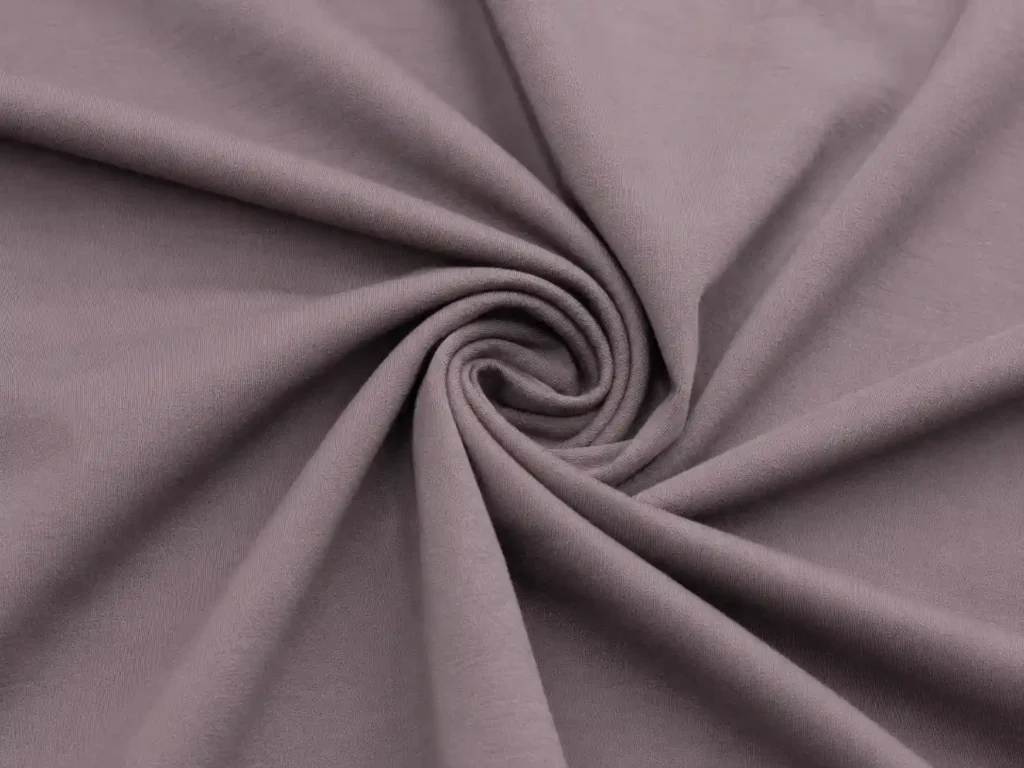
Stretch Jersey Systems

Stretch jersey works well for bodycon and going-out dresses, but beadwork changes the mechanical behavior of the garment. Dense stitching can restrict stretch, reduce recovery and create local stiffness. Motifs may need segmented construction, flexible spacing or bead-free expansion zones around high-movement areas.

Duolan compares fabric stretch direction with the intended body fit and decorative map. Bust, waist and hip areas are reviewed under movement, while seams and openings remain clear of rigid clusters. The lining or internal support should not fight against the outer fabric. Sample fitting needs to evaluate both appearance and ease after decoration, not before.

Velvet and Plush Surfaces

Velvet offers rich depth for crystals, pearls and metallic beadwork. The pile can partially hide small beads or distort attachment visibility, so material size and reflection need testing. Marking, pressing and handling must protect the pile direction. Dense decoration can also flatten localized areas and create tonal differences.

Bead positions should be marked through methods suited to the surface without leaving permanent marks. Seam alignment, nap direction and final pressing require careful control. Protective packing is important because pressure can crush both velvet pile and raised embellishments. Structured hanging may be preferable for certain high-value styles.

Lace and Decorative Bases

Lace provides built-in motifs capable of guiding bead placement. Beads may highlight floral centers, outlines, scalloped edges or selected areas rather than covering the full surface. Lace stability varies greatly; soft stretch lace behaves differently from corded or embroidered lace. Motif placement must align with pattern pieces, seams and neckline edges.

When lace is layered over mesh, satin or jersey, all layers need coordinated stretch and support. Attachment points should not distort the lace motif. Duolan can develop beadwork based on the lace repeat, allowing decorative density to follow the fabric structure while protecting comfort and production consistency.

Crepe and Structured Wovens

Crepe and stable woven fabrics provide controlled foundations for geometric beading, borders, shoulder details and structured occasion dresses. Their lower stretch can support accurate placement, but garment shaping still affects motif alignment across darts, seams and curved panels. 

Structured fabrics are useful for corset, bustier and fit-and-flare silhouettes where beadwork should remain clearly positioned. Seam allowances, boning channels and internal support must stay free from bulky decoration. Duolan reviews the beading map alongside construction order so decorated panels can be assembled without damaging the surface.

Beading Placement Designed for Shape and Balance

Placement determines how the eye reads a dress and how the garment behaves during wear. Duolan plans motifs from stable construction points, body proportions and production boundaries rather than decorating empty surface area.

Neckline Placement

Neckline beadwork can frame the face and create a clear focal point. Density, edge distance and bead profile must protect comfort and finishing. Decoration near binding, facing or turn-back edges needs enough clearance for clean construction. Heavier stones may pull soft necklines downward, so support and stitch method should be tested before approval.

Bust and Cup Placement

Cup and bust areas create curved surfaces where flat artwork can become distorted. Motifs should respect cup seams, apex position, underbust shape and size grading. Dense decoration may flatten molded forms or add unwanted volume. Duolan maps anchor points around the bust structure and reviews appearance from front, side and three-quarter views.

Waist Emphasis

Beaded waistlines can improve proportion and visual focus, yet rigid horizontal placement may reduce stretch or create pressure. Waist motifs should align with the actual waist level, side seams and zipper position. Gradient density or segmented motifs often provide more comfort than a continuous heavy belt effect.

Side Panel Detailing

Side panels can elongate the body and frame a fitted silhouette. Placement must remain symmetrical and avoid disappearing into side seams. Beadwork around underarm, waist and hip movement areas needs secure attachment and controlled edge finishing. Side motifs should be checked on a body form rather than only on a flat panel.

Hem and Borders

Hem borders create strong visual completion on mini, midi and maxi dresses. Weight must remain balanced around the full circumference or the skirt may hang unevenly. Border depth, slit position, seam joins and hem finishing require coordination. Beads near the lower edge also face greater impact and abrasion during wear and packing.

Gradient Beading

Gradient effects reduce density gradually from one area to another. A clear density standard is needed because visual judgment alone can vary between workers. Duolan develops reference panels and placement zones showing where density begins, changes and finishes. Gradient control is especially important for multi-panel skirts and repeat production.

All-Over Patterns

All-over beadwork delivers high visual value but introduces weight, labor and consistency risk. Motif repeats need alignment across pattern pieces, while seams, darts, zippers and hems require defined handling. Full coverage also increases inspection time. An approved panel and completed garment reference are essential before production allocation.

Engineered Motifs

Engineered motifs are positioned around specific body or construction areas rather than repeated uniformly. Floral branches, geometric shapes, art-deco lines and asymmetrical designs require accurate coordinates. Placement should be measured from center front, waist, shoulder or seam anchors. Clear artwork and pattern overlays improve repeatability across sizes and production units.

Beading Methods Matched to Design and Volume

No single attachment route suits every dress. Duolan evaluates visual detail, production quantity, fabric tolerance, labor hours, surface weight, repair needs and repeat-order stability before recommending a method.

Hand Beading

Hand beading offers the greatest flexibility for complex curves, irregular motifs, mixed materials and couture-inspired effects. Skilled work can follow shaped cups, lace motifs and engineered placement with high visual detail. Labor hours rise quickly as density increases, so the approved sample should record material quantity, stitch route, endpoint method and approximate work content. Handwork capacity must be reserved within the production schedule rather than added after sewing allocation.

Machine-Assisted Beading

Machine-assisted methods can improve repeatability for selected linear, repeated or panel-based patterns. Suitability depends on bead format, fabric structure and motif design. A machine route may provide consistent spacing but less flexibility around three-dimensional construction. Test panels should confirm needle impact, thread tension, surface distortion and trim feeding before full development.

Bead Embroidery

Bead embroidery combines stitching and decorative materials within a defined motif. It can use beads, sequins, cord, thread and appliqué elements to create layered surfaces. Digitized or guided patterns improve positioning, yet material height and density still need physical testing. Panel shrinkage after embroidery should be measured because dense stitch work can alter dimensions.

Hot-Fix Rhinestones

Hot-fix rhinestones can create clean reflective patterns with efficient placement when fabric and adhesive conditions are suitable. Temperature, pressure and dwell time must match the stone backing and base material. Heat-sensitive fabrics, stretch surfaces or heavily finished textiles may require alternative methods. Durability should be tested before relying on hot-fix application for high-stress zones.

Sewn Crystals and Stones

Sewn stones provide secure attachment for selected high-value points, edges and engineered motifs. Stitch visibility, backing, hole quality and thread strength influence final appearance. Large stones add concentrated weight and may require localized support. Placement near seams, zippers or body-contact areas needs additional clearance and protection.

Embellished Panels

Pre-made embellished panels, motifs or appliqués can provide controlled decorative units for bodices, waist areas and skirt sections. Panel dimensions must match the garment pattern, and attachment should avoid visible edges, stiffness or mismatched stretch. Bulk consistency depends on approved panel quality, placement measurements and reliable trim supply.

Controlling Bead Color, Finish and Production Batches

Beadwork can appear inconsistent even when garment construction remains correct. Differences in shade, coating, crystal reflection, diameter and material finish become highly visible across coordinated collections and repeat orders.

Approved Trim Standards

Every production-critical bead or stone should have an approved reference linked to the style. The reference may include supplier code, material, size, color, finish, hole format, application route and approved sample location. A physical trim board or sealed sample provides stronger control than a color name alone. Terms such as silver, champagne, pearl white or clear crystal can cover many visibly different materials.

Incoming Batch Comparison

Incoming decoration materials are compared against the approved standard before production release. Key checks include color, reflection, size consistency, coating quality, edge condition and visible defects. Materials from different batches should not be mixed casually within one garment or production group. A slight finish shift may become obvious when dresses are displayed together under retail lighting.

Production Allocation

Material allocation should follow style, color and size requirements before beadwork begins. Sufficient approved materials need to cover production, repair allowances, quality replacement and agreed spare trim support. Allocation also reduces the risk of changing suppliers or batches partway through a run. For repeat production, retained references help assess whether a new batch is acceptably close to the original.
2. United Kingdom|Material Record and RSL Coordination Program (1)

Reorder Preservation

Repeat orders benefit from preserved trim references, artwork versions, placement notes, approved photographs, construction information and quality points. Exact material availability may change over time, so early review is important. When replacement is unavoidable, a comparison sample should be approved before full production. Reorder consistency is protected through retained standards, not memory.

Technical Files Converted Into Production Instructions

Clear information reduces repeated sampling and prevents decoration decisions from becoming informal workshop judgments. Duolan can begin from a Tech Pack, original sample, reference image, artwork file or collection brief, then identify missing information before development starts.

Tech Pack Review

A Tech Pack should define silhouette, construction, measurements, materials, labels and finishing. For beaded styles, decoration method, material references, placement areas and density direction also need review. Duolan checks whether the specified construction can support the desired result and identifies conflicts between artwork, fabric, fit or production sequence.

Reference Image Review

Reference images communicate visual direction but rarely provide enough production detail. Duolan analyzes silhouette, fabric behavior, bead type, apparent density, support, seams, lining and closures. The review separates visible design intent from assumptions, helping the product team decide which elements must be copied, adapted or newly developed.

Beading Artwork

Artwork should show motif shape, scale, color separation, orientation and intended location. Vector files or high-resolution drawings help when placement needs precise repetition. Duolan can translate artwork into measurable zones, anchor points, material lists and panel references. Curved areas may require pattern overlays or physical sampling before final approval.

Size Specification

The requested size chart should identify garment measurements and the brand’s measurement method. Bead placement often needs its own grading logic beyond garment dimensions. Duolan reviews bust, waist, hip, bodice length, strap length, neckline depth, skirt length and other product-specific points against the intended fit and decoration.

Material Direction

Fabric swatches, composition, weight, stretch, finish and color references help evaluate support and appearance. Bead materials should include size, color, finish and preferred quality. When references are incomplete, Duolan can propose options for review, but final production should follow approved materials rather than general descriptions.

Project Requirements

Target quantity, style count, colorways, size range, launch date, inspection expectations, labeling and packing requirements influence the development path. A 20-style collection requires different planning from one complex hero dress. Clear commercial information allows sampling, material sourcing and production allocation to be evaluated together.

Pattern and Fit Control Before Beading Begins

Beading cannot correct an unstable pattern. Decoration adds weight, stiffness and localized tension, so fit and pattern decisions must be tested with the intended materials rather than finalized on an undecorated prototype alone.

Pattern Balance Under Weight

A pattern may hang correctly before decoration yet shift after beads are applied. Heavy bodices can pull waistlines upward or downward, while skirt beadwork may lengthen selected panels. Duolan reviews the expected weight distribution and identifies where stay tape, backing, lining or construction changes may be needed. Center front, side seams and hem balance are checked after the sample carries the planned decoration level. Visual symmetry should be assessed on a form or fit model because gravity and body curvature reveal problems hidden on a flat table.

Bust and Waist Fit

Fitted beaded dresses require accurate bust shape, underbust position, waist level and side-seam balance. A dense motif can reduce flexibility across cups or waist panels. Cup seams and darts should remain compatible with the decorative route, while bead-free allowances protect shaping and sewing. Fit comments need measurable actions. Instead of “make the bust better,” useful instructions identify cup position, neckline gaping, underbust tension, side-seam direction and required measurement changes. Duolan translates visual comments into pattern and construction adjustments.

Stretch and Recovery

Stretch fabrics are tested in the directions required by the garment. Beading can reduce usable extension and slow recovery, especially when dense stitching crosses the main stretch direction. A decorated panel comparison helps reveal how much movement remains after application. Bodycon styles need enough stretch for dressing and movement while maintaining shape. Placement may be divided into zones, or rigid motifs may be kept away from high-extension areas. The approved fit should reflect the decorated state rather than an undecorated fabric assumption.

Placement Across Sizes

Decorative grading should preserve visual balance, not merely enlarge every measurement. Centered motifs, cup borders, waist patterns and side details may require different adjustments across the size range. Stable anchors such as center front, waistline, shoulder seam and side seam are used to control location. Core placement measurements can be listed alongside garment dimensions. Size sets or selected graded samples may be requested for high-risk styles. The final approach depends on size range, motif complexity and brand standards.

Measurement Discipline

Each product needs a clear point-of-measurement method and suitable tolerance by area. Structured bodices, straps, necklines and fitted waists often require tighter control than flowing skirt widths. One tolerance should not be applied blindly to every point. Duolan reviews measurements during sample fitting, PP approval, first-piece confirmation and final inspection according to the agreed plan. Measurement information remains connected to fit comments, pattern changes and approved construction.

Internal Support for Heavier Beaded Dress Designs

Support structures distribute weight, preserve shape and improve wearing stability. Components should be selected according to silhouette, fabric, decoration density and intended movement rather than added as isolated features.

Built-In Cups

Built-in cups support bust shape and reduce dependence on external undergarments. Cup size, position, coverage and edge transition must match the neckline and target size specification. Beadwork around cup seams should enhance shape without flattening or distorting the form.

Boning Structure

Boning supports corset, bustier and structured bodices. Channel position, length, flexibility and endpoint finishing affect comfort and silhouette. Decorative work should remain clear of channels and seam allowances so boning can be inserted securely without damaging beads.

Waist Stay

A waist stay can transfer garment weight toward the waist and reduce pressure on straps or necklines. It is valuable for heavily decorated bodices and longer skirts. Length, closure, attachment points and inner comfort need clear development.

Strap Reinforcement

Thin straps can stretch or become uncomfortable under bead weight. Reinforcement may involve internal tape, adjusted width, stronger fabric layers or changed attachment points. Strap length and back support should be tested on the completed decorated sample.

Mesh Support Layer

A stable mesh support layer can carry decoration while preserving the appearance of a softer outer mesh. The two layers need compatible stretch and clean joining. Support should remain visually discreet and comfortable against the body.
Sheer-Back-Panel-Dress

Local Backing

Localized backing strengthens high-density motifs and reduces fabric distortion. Backing type, weight, softness and edge treatment should suit the base fabric. Excessively stiff backing can create visible ridges or restrict movement.

Seam Reinforcement

Side seams, waist seams, strap joins, zipper openings and slit points may need reinforcement when decoration adds stress. Reinforcement should protect construction without creating bulk. Beads near seam allowances must be cleared or repositioned before sewing.

Zipper Support

Invisible and exposed zippers need enough bead-free clearance to operate smoothly. Heavy decoration near the opening can twist zipper tape or trap beads in the slider. Support, top stops, hook-and-eye placement and inner finishing are reviewed during sampling.

Making Beaded Dresses Comfortable for Real Wear

Visual impact loses value when a dress scratches, pulls, restricts movement or becomes too heavy. Comfort is evaluated around contact zones, movement patterns and wearing duration during sample review.

Neckline and Underarm Protection

Necklines and underarms are high-friction areas where small bead edges, exposed knots or raised thread can irritate the skin. Decoration should maintain suitable clearance from finished edges, or the inner surface should receive coverage through lining, binding or clean backing. Arm movement is reviewed during fitting. Side bodice motifs may need reshaping when they enter the underarm zone. A small placement change can improve comfort without reducing visual impact.

Internal Surface Finishing

The back of beadwork should be inspected as carefully as the front. Loose knots, long thread floats, stiff backing and exposed edges can catch against skin or lining. Clean internal finishing also improves durability because threads are less likely to snag during dressing. Lining construction should avoid pulling directly against raised work. Attachment points between lining and outer shell need enough control to prevent twisting while allowing the dress to move naturally.

Weight Distribution

Garment weight should be distributed through the bodice, waist, straps and internal support. Heavy skirts hanging from narrow straps can create pressure and neckline distortion. Dense chest decoration may also change bust balance. Duolan reviews completed sample weight, shoulder pressure, waist support and skirt movement. Decoration can be redistributed or reduced in hidden high-load areas when the original plan creates poor wear performance.

Movement Testing

A fit review should include walking, sitting, raising the arms and turning the body. Party and occasion dresses may also require dance movement or stair handling. Rigid motifs across hips, waist or shoulders can limit mobility even when static measurements appear correct. Slits, open backs and cut-outs need secure edges around decoration. Movement testing reveals where beads collide, scratch or pull against seams.

Wearing Duration

An outfit worn for several hours requires different comfort standards from a short editorial sample. Wedding guest, graduation, cocktail and holiday dresses should remain stable through sitting, dining and social movement. Lining breathability, total weight, internal pressure and edge softness all contribute to wearing quality. Duolan considers end-use during material and placement review, helping decoration support the product rather than dominate it.

Sewing Details Protecting Beading and Garment Structure

Beaded garments require construction sequences designed around decorated surfaces. Seam preparation, motif alignment, zipper handling, reinforcement and inner finishing directly affect appearance and durability.

Clearing Seam Allowances

Beads should not remain inside seam allowances where machine needles, presser feet or overlock blades can strike them. Selected areas are cleared before assembly according to the approved seam width and construction route. Threads left after bead removal must be secured so neighboring work does not loosen. Cleared edges should not create visible gaps along the finished seam. Artwork and placement planning need enough overlap or alignment allowance to maintain visual continuity after assembly.

Securing Bead Endpoints

Every motif has starting and finishing points where loose thread can spread damage beyond one missing bead. Endpoints should be locked according to material, thread and stitch route. High-friction zones may require stronger security or localized reinforcement. Repair teams need approved methods for replacing missing beads without creating visible knots, shade changes or uneven spacing. Spare approved materials should remain available during production and final inspection.

Zipper Area Control

Beads near zipper teeth can block operation, damage the slider or create an uneven opening. A controlled clearance zone allows sewing, pressing and use without sacrificing visual balance. Motifs may stop, taper or continue through a separately attached decorative solution. Zipper tape, seam support, top closure and lining attachment are checked after decoration because surface weight can distort the opening.

Motif Alignment

Motifs crossing center seams, side seams, waist seams or panel joins require pattern-led alignment. Front and back views should remain intentional, while side motifs need balanced entry and exit points. Alignment marks and approved photographs guide production. When perfect continuity is technically unrealistic, the design should use planned breaks rather than accidental mismatch. Early pattern review prevents expensive hand correction later.

Edge Finishing

Necklines, armholes, straps, cut-outs and slits need clean edges free from bulky beads and exposed backing. Decoration should be placed after considering seam turn, binding, facing and lining methods. Finished edge thickness must remain appropriate for the silhouette. Structured edges may need support tape, while soft mesh edges may require delicate binding or clean lining. Edge appearance is reviewed from both outside and inside.

Hem Construction

Beaded hems face impact, abrasion and packing pressure. Border motifs must allow the correct finished length and hem method. Heavy decoration can make standard turning difficult, while uneven weight may alter the hang. Mini and midi hems require strong visual symmetry. Maxi and formal dresses need floor clearance and balanced panel lengths. Hem approval should follow the decorated sample, not an undecorated shell.

Production-Ready Beaded Dress Sample Development

Sampling validates appearance, fit, material behavior, construction, comfort, labor content and production feasibility. Every version should have a clear purpose and approval status.

Brief Review

Development begins by organizing silhouette, market, occasion, target quantity, size range, fabric direction, bead references, artwork, packaging and launch timing. Missing information is identified early. High-risk points are listed before material sourcing or pattern work begins.

Feasibility Review

Duolan evaluates whether the proposed base fabric can support the beadwork, whether placement conflicts with seams or structure, and whether the intended method suits planned quantity and timing. Alternative approaches may be suggested when the original route creates excessive weight, cost or bulk risk.

Beading Swatch

A swatch or test panel helps confirm bead size, color, finish, thread, density, backing, stretch impact and surface appearance. A focused swatch often prevents a full sample from using an unsuitable combination. Standard planning may allow approximately 5–10 working days depending on material availability and complexity.

Pattern Development

Pattern work establishes silhouette, fit, seam location and structural support before final placement. Beading artwork can then be aligned to real pattern sections. Complex cups, corsets, open backs, shaped waists and fitted hips may require an early shell or toile review.

First Sample

The first full sample combines design, fabric, decoration and construction for review. Complex beaded styles commonly require around 15–25 working days after material and design confirmation. Timing varies with custom trim development, handwork hours and the number of decorated panels.

Fit Review

Fit review evaluates bust, waist, hip, bodice length, strap position, neckline stability, skirt balance and movement. Decoration weight and stiffness are considered during the fitting. Comments are converted into measurable pattern, placement or construction changes.

Revised Sample

A revision addresses confirmed priorities rather than changing every area without structure. Depending on material readiness and comment scope, revision planning may require approximately 7–15 working days. A revision summary records completed actions and remaining decisions.

PP Sample

The PP or bulk-ready sample should reflect approved materials, measurements, workmanship, placement and packing direction closely enough to guide production. Approval status must be clear before bulk release. Remaining open points are listed rather than assumed.

Structured Sample Reviews for Faster Decisions

A sample should arrive with enough information for internal review. Clear visual records, measurements and revision notes help design, product and procurement teams make decisions without losing context.

Visual Review Set

Front, back, side and three-quarter photographs provide a complete view of silhouette and decoration. Close-ups show neckline, cups, waist, seams, zipper, lining, hem and key motif areas. Consistent lighting helps reveal color and reflection differences. Important issues can be marked directly on images for faster discussion.

Measurement Record

Key measurements are checked against the submitted specification and measured through the agreed method. Deviations are listed by point rather than described generally. Fit-sensitive areas such as bust, underbust, waist, hip, strap, neckline depth and length receive additional attention according to style.

Beading Review Note

The review note can record material, density, placement, weight, comfort, thread visibility, missing beads and construction observations. Recommendations may include revised spacing, local backing, motif movement, reduced density or a different attachment route. Every recommendation should connect with a visible reason.

Revision Summary

A revision summary separates completed changes, pending approvals and newly identified risks. Product teams can confirm whether the next version is a final fit sample, photo-ready sample or PP sample. Clear status prevents outdated comments or sample versions from entering production.

What Determines Beaded Dress Cost and Lead Time

Beaded dress quotations are built from material, labor, construction and production conditions. A transparent cost structure helps product teams decide where decoration creates the greatest commercial value.

Cost or Timing DriverManufacturing ImpactDevelopment Decision
Bead TypeMaterial price, weight, finish and replacement availabilitySelect approved quality and supplier reference
Bead DensityHandwork hours, garment weight and inspection timeDefine density zones with swatches
Placement AreaPattern alignment and surface coveragePrioritize high-visibility areas
Application MethodLabor, consistency, fabric tolerance and repair routeMatch method to design and order structure
Base FabricBacking, handling and support requirementsTest fabric with actual decoration
Color CountTrim sourcing, separation and changeoverConfirm color architecture early
Size RangePlacement grading and additional checksDefine anchor measurements
Style CountDevelopment and production coordinationGroup styles by complexity
Handwork CapacityScheduling and production releaseReserve skilled labor before launch
Custom Trim DevelopmentTooling, sampling and material lead timeApprove trim before final sample
Packing MethodProtection, carton volume and laborMatch packing to surface risk
Launch DateApproval and production bufferPlan backward from delivery window

Working timeline references may include 5–10 working days for selected test panels, 15–25 working days for a complex first sample, 7–15 working days for a revision, and approximately 35–60 days for bulk production after final material and PP approvals. Final timing depends on style count, beadwork hours, material readiness, quantity and required inspection stages.

Locking Production-Critical Beading Details

Every approved element needs a clear production reference. Locking materials and workmanship before the line begins protects appearance, fit, cost and delivery.

Fabric Batch

Fabric shade, weight, stretch, recovery, hand feel and finish are checked against approval. Batch differences can alter both fit and bead appearance. Fabric allocation by style and color reduces mixed-batch risk.

Bead Batch

Bead color, size, coating, reflection and hole quality are compared with the approved trim. Material separation prevents visible variation within one garment or delivery group. Replacement batches need approval before release.

Lining Standard

Lining composition, color, stretch, opacity and attachment affect comfort and appearance. A lining change can alter fit, transparency and drape. Approved lining remains part of the production standard.

Placement Rules

Artwork, anchor measurements, density zones and seam clearances define how decoration should appear. Reference panels and approved photographs support visual checks, while measurements protect repeatability.

Construction Details

Seam widths, reinforcement, zipper treatment, edge finishing, backing, support and repair methods are recorded. Decoration should not force unapproved construction changes during production.

Packing Method

Folding, tissue, garment bags, hangers, surface separation, carton direction and label placement are confirmed before packing begins. Beaded surfaces need protection from pressure, abrasion and entanglement.

From Approved Sample to Controlled Bulk Production

Sample approval becomes valuable only when confirmed decisions are converted into production standards. Duolan runs a bulk-readiness review before releasing complex beaded styles.

Approval Status

The team first confirms whether the available sample is fit approved, visually approved, a PP basis or still pending refinement. Different approval states lead to different next steps. A visually accepted sample may still contain material substitutions or construction details unsuitable for bulk.
Open points are listed clearly. Bulk release should not depend on informal assumptions about which version or comment set is current.

Material Locking

Fabric, lining, beads, crystals, pearls, thread, backing, zipper and other trims are checked against approved references. Color, finish, size and source are recorded where needed. Material replacement requires review before use.
Sufficient allocation should cover production, repair, quality replacement and any agreed spare support. Material locking protects both the first order and future repeat consistency.

Measurement and Placement

Approved garment measurements and placement anchors are transferred into production information. Key motif positions, density zones, seam clearances and edge distances are confirmed. Size grading rules are included when placement changes across sizes.
Production teams receive measurable standards rather than only sample photographs. First pieces can then be compared against both the approved garment and recorded points.

Workmanship Standard

Construction order, seam preparation, bead removal, endpoint security, lining attachment, reinforcement and finishing points are documented. High-risk locations receive highlighted instructions.
The approved standard should explain what matters most and how it will be checked. Clear notes reduce variation between sample-room methods and production-line execution.

Production Release

After key items are aligned, Duolan prepares the production route, timing and QC checkpoints. Complex styles may require a pilot or first-piece confirmation before full release. Bulk production planning commonly falls within a 35–60-day range after final approvals, with longer schedules for intensive handwork or complex multi-style programs.

Duolan garment production workshop video cover showing sewing lines and apparel production

Production Planning for Multi-Style Beaded Collections

A beaded collection cannot be scheduled as one uniform block. Each style has a different mix of material readiness, handwork hours, fit sensitivity, sewing sequence and inspection demand.

Style Classification

Every style is classified by construction and decoration complexity. Categories may include concentrated embellishment, all-over beadwork, structured corset construction, stretch bodycon, fluid satin or layered mesh. Classification helps determine sample priority, material ordering and production route. Hero styles with high visual value may need earlier testing, while more repeatable commercial styles can follow shorter development paths once shared standards are approved.

Order Breakdown

Orders are separated by style, color, size and quantity. Bead material needs, decorated panel counts, handwork hours and repair allowances are then calculated.

A collection of 10–30 styles may involve several production groups rather than one schedule. Breakdown also supports accurate tracking of approvals, production progress and final packing by SKU.

Factory Allocation

Core or high-risk styles may remain within closely managed owned factories. Other styles can be allocated through suitable long-term production resources according to complexity, timing and capacity.

Allocation follows product requirements rather than random factory availability. Special-process coordination is planned alongside garment sewing so decorated panels arrive in the correct sequence.

Timeline Planning

The timeline works backward from required delivery, allowing space for material approval, swatches, samples, revisions, PP review, pilot verification, production, inspection and packing. Complex beadwork needs enough buffer for repair and final visual checking. A compressed schedule should be assessed honestly. Production speed cannot compensate for unapproved materials or incomplete artwork.

Repeat Production

Repeat orders use retained samples, trim references, artwork, measurements, workmanship notes and inspection points.

New material batches are reviewed before release. Production allocation may change with quantity, yet the product standard should remain stable.

Pilot Verification Before Full Beaded Dress Production

Complex styles benefit from first-piece or pilot confirmation before the full production quantity is released. Early verification catches errors while correction remains controlled.

First-Piece Check

The first completed piece is compared with the approved sample, measurement specification, trim standard and workmanship notes. Placement, density, shape, lining, zipper function and overall balance are reviewed before wider release.

Beading Sequence

The pilot confirms whether decoration should occur before or after selected construction stages. Incorrect sequencing can damage beads, block seams or create alignment problems. The approved sequence becomes part of production instructions.

Fit Recheck

The first piece verifies whether production methods reproduce the approved fit. Structured bodices, bodycon shapes, halters, open backs and heavily decorated skirts receive particular attention.

Workmanship Trial

Critical operations such as seam clearing, endpoint security, motif joining, edge finishing and zipper handling are tested under production conditions. Any unclear method is corrected before reaching the full run.

QC Checkpoint Test

Inspectors review whether the planned checkpoints can detect real defects. Placement measurements, missing-bead checks, symmetry review and final appearance standards are adjusted when necessary.

Packing Simulation

A completed garment is folded or hung according to the proposed method. Surface pressure, snagging, bead transfer, creasing and carton fit are reviewed before mass packing materials are finalized.

Quality Control for Beading and Bulk Consistency

Beaded dress inspection must cover material, placement, construction, fit, comfort and packing. Final inspection alone cannot correct problems already repeated across thousands of pieces.

Incoming Bead Inspection

Beads, pearls, crystals and stones are checked for color, size, finish, coating, edge condition and obvious defects. Approved references guide the comparison before materials enter production.

Panel Approval

Early decorated panels are reviewed for density, motif shape, thread visibility, surface distortion and dimension change. Panel approval prevents unsuitable work from moving into garment assembly.

Placement Measurement

Anchor positions are checked from center front, waist, shoulder, seam or other defined points. Symmetry and motif orientation are reviewed across selected sizes.

Attachment Security

Loose threads, weak endpoints, unstable stones and poorly secured motifs are identified during production. High-friction and high-stress zones receive additional attention.

Missing Bead Check

Inspectors look for missing, broken, discolored or incorrectly placed materials. Repair uses approved trims and methods so corrected areas do not become visible patches.

Fit and Weight Review

Selected garments are reviewed for measurement, silhouette, balance and movement. Decoration weight should not pull necklines, distort waistlines or create uneven hems.

Final Appearance

Front, back and side views are checked under suitable lighting. Reflection, symmetry, surface cleanliness, pressing and garment shape are reviewed as a complete presentation.

Label and Packing Check

Brand labels, care labels, hangtags, barcodes, size stickers, bags and carton markings are checked against instructions. Packing should protect decorated surfaces from abrasion and crushing.

Inspection Release

Final release follows the agreed inspection plan and project requirements. Open issues are recorded and resolved before shipment rather than hidden behind general quality statements.

Packaging, Compliance and Manufacturing Evidence

Beaded garments need protected delivery, documented execution and a manufacturing partner prepared for brand-level review. Duolan combines product handling, compliance coordination and verifiable development experience.

Protective Beaded Dress Packaging

Raised beads, crystals and pearls can scratch fabric, catch against nearby garments or receive pressure marks during transport. Packing is selected according to decoration location, garment weight, fabric sensitivity and shipment method.

Possible controls include tissue protection over decorated areas, individual garment bags, surface separation, controlled folding, hanger packing when required, stable carton loading and suitable carton dimensions. Dense motifs should not press directly against satin, velvet or delicate mesh. Straps, fringes and decorative edges need secure positioning to avoid entanglement.

Packing review begins before final production ends. A simulation can reveal whether beadwork transfers marks, creates excess carton pressure or changes garment presentation. Brand labels, care labels, hangtags, barcodes, size stickers and carton markings are integrated into the packing standard.

Compliance and Audit Support

Duolan’s core manufacturing system has completed SMETA audit and SMETA 2-Pillar audit, supported by a social audit record. Project execution can also coordinate requirements connected with BSCI, ISO 9001, AATCC, ASTM, OEKO-TEX®, EN, China GB standards, GOTS material directions and specific brand manuals where applicable.

An important distinction remains between an audit already completed and a standard followed according to project requirements. Documentation should reflect the actual scope. Duolan can coordinate material information, test requirements, inspection arrangements, labeling, care instructions, packaging standards and supporting production records according to the market and product.

Beaded products may require additional attention to trim safety, sharp edges, attachment security, colorfastness, care labeling and end-use requirements. Test plans should be confirmed according to destination market, age group, retail channel and brand policy.

Why Duolan for Beaded Dresses

Duolan’s value comes from the connection between dress development knowledge and organized manufacturing. The team’s experience includes pearl dresses, bugle-bead applications, crystal decoration, sequins combined with printing and other composite decorative techniques.

More than thirty years of womenswear development knowledge supports silhouette, fabric, pattern, construction and commercial product decisions. Sixteen owned factories and more than twenty long-term satellite factories support controlled core production, flexible allocation, repeat orders and scaling. The wider network includes more than 12,000 workers and over fifty flexible production lines.

Duolan is positioned for fashion brands developing complete dress programs rather than isolated decorative samples. Development can move from artwork and materials through fit review, sample revision, PP approval, production planning, QC, packing and repeat-order preservation.

Beaded Dress Programs Developed for Global Markets
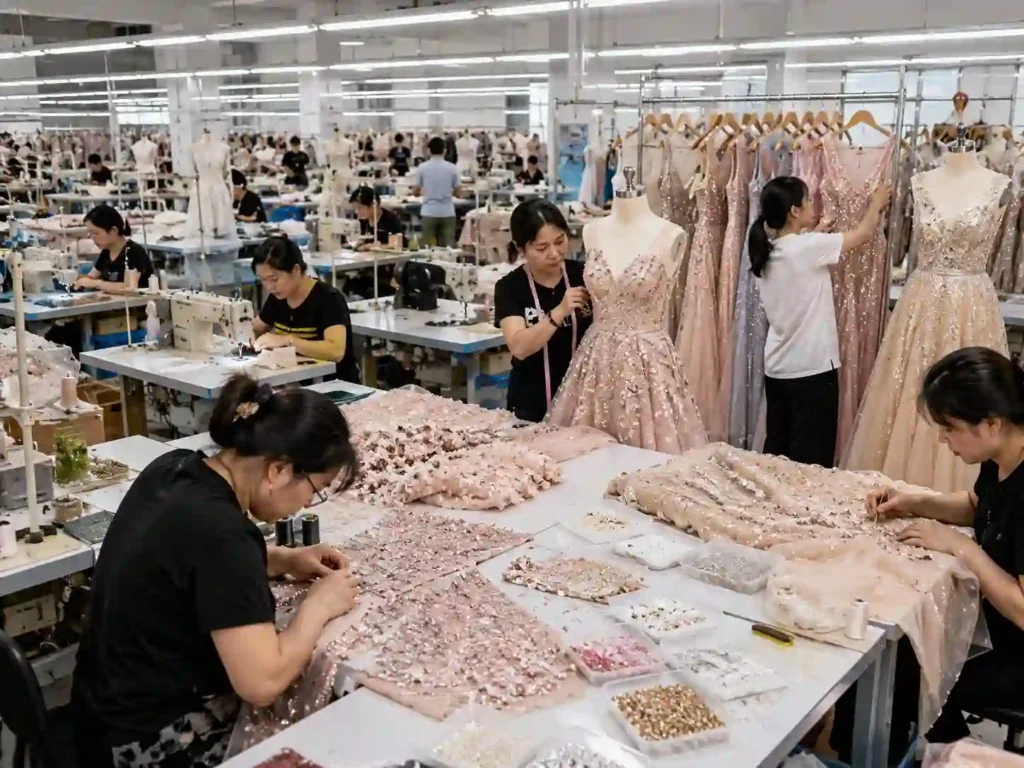
The following project profiles represent realistic order structures for established fashion brands. Brand names remain confidential, while quantities, style structures and manufacturing challenges reflect commercial collection conditions.

United States Partywear Program

  • Region: United States
  • Collection: Partywear and Birthday Dresses
  • Styles: 18
  • Total Order Quantity: 42,600 pieces
  • Size Range: Brand-specific US sizing
  • Colorways: 2–5 per style
  • Product Mix: Beaded minis, corset dresses, fitted mesh dresses and crystal-trimmed bodycon styles

The program combined three decoration levels: concentrated neckline work, engineered bodice motifs and selected all-over beading. Main development risks included restricted stretch across fitted hips, pressure from heavily decorated cups, inconsistent crystal reflection and bead interference near invisible zippers.

Duolan first separated the styles by risk level. Stretch-sensitive designs received decorated panel tests before full sampling. Structured bodices were reviewed for cup shape, boning position and internal weight distribution. Placement anchors were added for front, side and waist motifs, while zipper areas received defined clearance.
The project moved through first samples, focused fit revisions and PP approval. Production was divided according to construction complexity rather than color alone. First-piece reviews checked placement, fit, lining coverage and zipper function. Final packing used protected folding and individual surface separation.

Result: The collection entered production with confirmed material, placement and workmanship references across all 18 styles. The brand retained approved standards for planned repeat orders and color extensions.

United Kingdom Holiday Collection

  • Region: United Kingdom
  • Collection: Holiday and Occasionwear Edit
  • Styles: 12
  • Total Order Quantity: 26,400 pieces
  • Size Range: Brand-specific UK sizing
  • Colorways: 2–4 per style
  • Product Mix: Beaded midi dresses, asymmetric minis, velvet party dresses and pearl-detail occasion styles
The collection required a consistent premium look across different base fabrics. Satin needed protection from needle marks and packing pressure, velvet required careful surface handling, and mesh styles needed controlled transparency and lining coverage. Several styles used tonal beads intended to look consistent under warm retail lighting. Duolan developed physical trim references for each color group and reviewed bead finish against the base fabric. Satin styles used concentrated motifs rather than uncontrolled full-surface density. Velvet styles received larger reflective elements capable of remaining visible above the pile. Mesh products used stable placement zones and protected inner finishing. Sampling priorities were planned around photography deadlines. Hero styles entered development first, followed by commercial variations using shared trim families. PP review focused on bead color, motif balance, finished length and packing. Bulk production included panel checks, first-piece confirmation and final appearance inspection. Result: Twelve coordinated styles were delivered as one visual program while maintaining distinct silhouette and decoration identities. Approved trim boards and artwork records remained available for post-launch repeat planning.

Australian Wedding Guest Collection

  • Region: Australia
  • Collection: Wedding Guest and Social Occasion Dresses
  • Styles: 24
  • Total Order Quantity: 68,800 pieces
  • Size Range: Extended brand size specification
  • Colorways: 2–6 per style
  • Product Mix: Beaded midis, fluid maxis, one-shoulder dresses, fitted mesh styles and pearl-accented satin dresses
The program combined multiple lengths and silhouette families under one refined decoration direction. Key risks included placement grading across a broad size range, bead weight on fluid maxis, underarm comfort on one-shoulder styles and maintaining tonal consistency across pearl and crystal finishes. Duolan created shared material families while keeping style-specific placement rules. Size grading used center-front, waist, shoulder and side-seam anchors rather than simple artwork enlargement. Heavier maxi skirts received redistributed density, while one-shoulder styles used reinforcement and bead-free comfort zones. The 24 styles were divided into development waves. High-risk structures and custom motifs were sampled first. Commercial styles followed once fabric and trim directions were approved. Production planning separated handwork-intensive products from lighter decorative styles, allowing inspection resources to match real risk. Result: The full order progressed through coordinated development, production and packing without reducing every style to one decoration formula. Retained samples, trim references and placement notes created a stronger base for future color and repeat programs.

Custom Beaded Dress Frequently Asked Questions

Duolan develops beaded mini, midi, maxi, party, occasion, bodycon, corset, bustier, cocktail, homecoming, wedding guest and formal dresses. Product direction remains focused on fashion-led commercial collections rather than individual bridal gown orders. Suitable projects may use pearls, bugle beads, crystals, rhinestones, sequins, embroidery or mixed embellishment methods.
Yes. A reference image can establish visual direction, but additional review is needed for fabric, fit, construction, bead material, placement, lining and production quantity. Duolan analyzes visible design features, identifies missing information and proposes a development path. A Tech Pack, size chart, bead references and target quantity improve accuracy.
Yes. Vector artwork, high-resolution drawings, placement maps and physical references can be converted into measurable motif zones and panel instructions. Curved areas such as cups, waistlines and hips may require pattern overlays or physical panel tests. Artwork should include scale, colors, material direction and intended placement wherever possible.
Control begins with the correct material, thread and attachment method. Endpoints, high-friction areas and stress zones receive focused attention. Production inspection covers loose threads, missing beads, broken materials and repair quality. Packing also protects raised surfaces from abrasion and pressure.
Placement is anchored to stable pattern and garment points such as center front, waist, shoulder and side seam. Motifs are reviewed across the requested size range rather than enlarged mechanically. High-risk styles may require selected graded samples or size-set verification before production.
Yes, subject to design complexity, material availability, required labor hours, style count and delivery schedule. Handwork capacity must be planned before production release. Duolan may recommend different decoration levels or application routes across a collection to balance visual value, timing and repeatability.
MOQ is evaluated through fabric and trim minimums, color count, size range, bead sourcing, handwork content, style structure, production allocation and launch requirements. Duolan does not use one quantity for every dress type. A complete brief allows a more accurate project assessment.
A selected swatch may require approximately 5–10 working days. A complex first sample commonly requires around 15–25 working days after material and design confirmation. Revisions may require 7–15 working days depending on comment scope and material readiness. Final timing is confirmed after feasibility review.
A common planning range is approximately 35–60 days after final material, PP sample and order approvals. Heavy hand beadwork, custom trim development, large style counts or additional inspection requirements can extend the schedule. Production planning should work backward from the required delivery window.
Useful information includes company details, target market, Tech Pack or reference image, beading artwork, fabric direction, bead references, size specification, style count, colorways, quantity, launch date, labeling, packing and inspection requirements. Incomplete information can still be submitted; Duolan will identify the next items needed.

Start Your Beaded Dress Development Project

Share your beaded dress concept, Tech Pack, reference image, original sample or collection brief with Duolan. Our product and manufacturing teams will review silhouette, base fabric, bead materials, placement, fit, support structure, workmanship, sample route and bulk feasibility before recommending the next development stage.

Clear project information allows a more accurate review of sample timing, material sourcing, order structure, quotation basis and production planning. Send the files already available, even when certain details remain open. Duolan can identify missing information and explain which decisions should be confirmed before sampling.

Helpful project information includes:

  • Company name and website
  • Target market and selling occasion
  • Product type and number of styles
  • Tech Pack, artwork or reference images
  • Fabric and bead material direction
  • Size range and fit standard
  • Colorways and target quantities
  • Required sample stage
  • Target launch or delivery date
  • Label, packaging and inspection requirements
Long Embellished Styles​

Start Your Apparel Development Project

OEM/ODM Manufacturing Support for Fashion Brands

Share your collection details, estimated quantities, target market, development timeline, and technical requirements. The production team will review your request and provide a tailored manufacturing solution based on your product category, fabric selection, construction needs, and delivery schedule.

Fashion Manufacturing Support with Scalable Production Capacity

From sample development to bulk production, Duolan supports fashion brands with confidential OEM/ODM manufacturing, stable quality management, flexible production planning, and coordinated multi-factory execution for seasonal and capsule collections.

Need Direct Assistance?

Seraphinite AcceleratorOptimized by Seraphinite Accelerator
Turns on site high speed to be attractive for people and search engines.