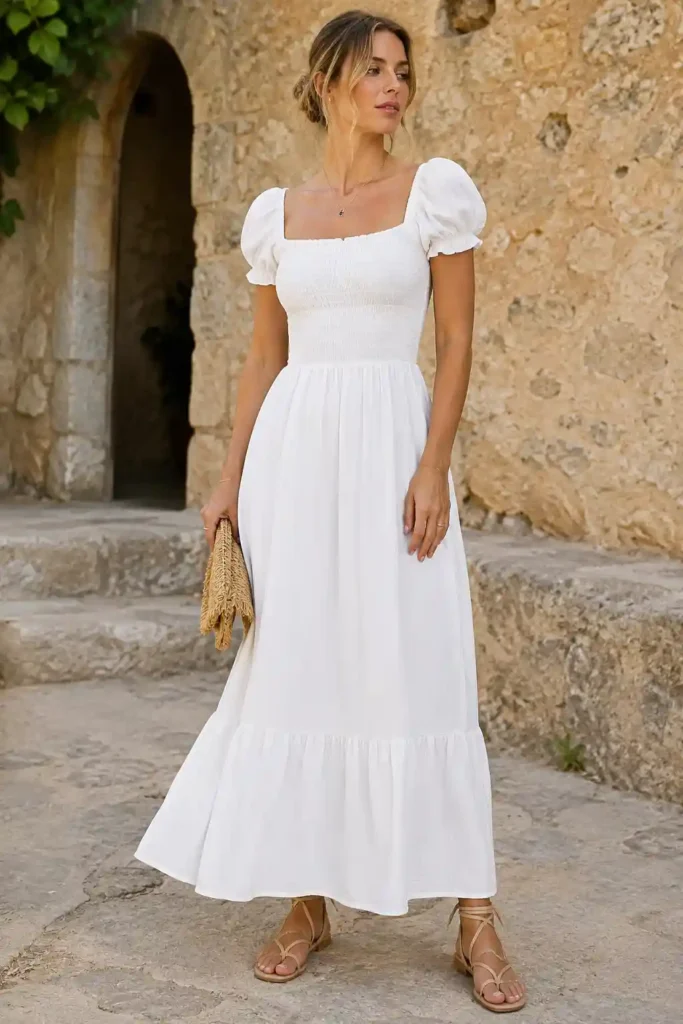
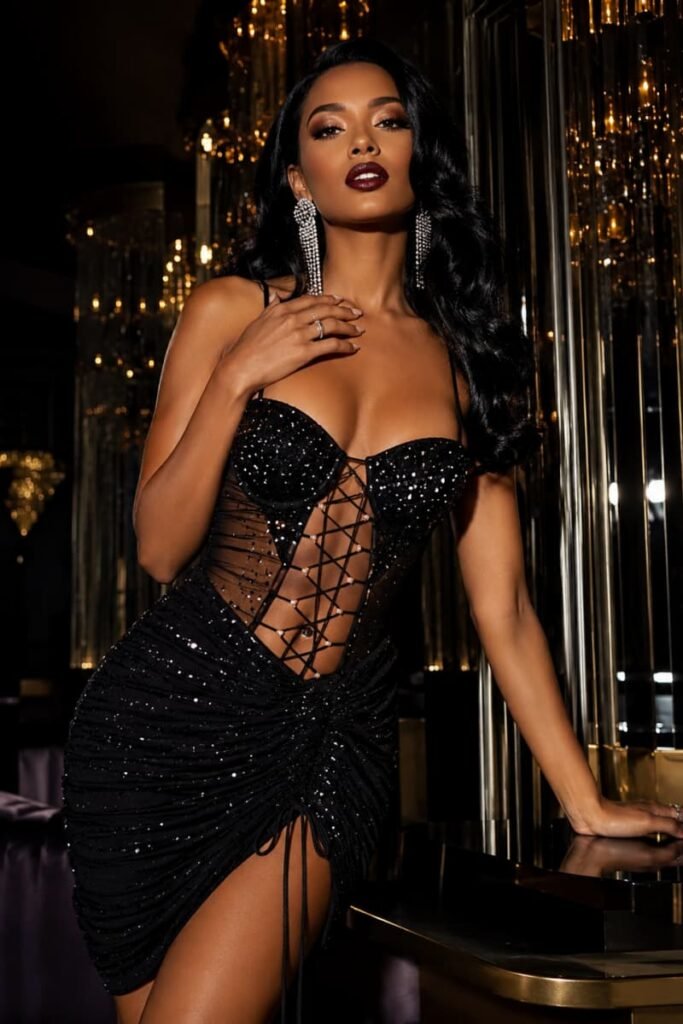
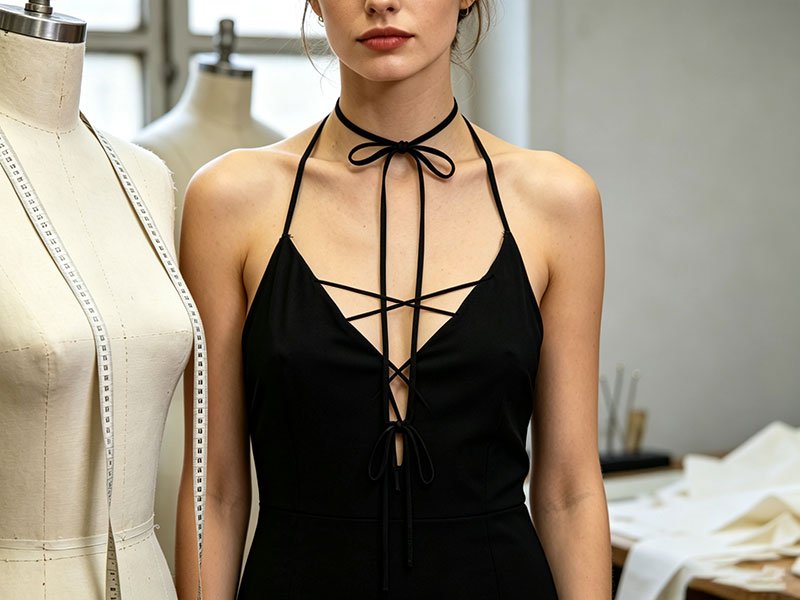
...

Custom Eyelet Lace-Up Dress Manufacturer

Dress-focused development and manufacturing for eyelet embroidery, metal-eyelet, corset-laced, side-laced, and open-back fashion dress collections.

  • 3 eyelet construction systems: embroidered openwork, metal eyelets, and hybrid designs
  • 8+ lace-up placement directions across bodice, waist, side seam, shoulder, and back
  • Brand programs commonly structured around 10–30 styles and 20,000–80,000 garments
  • 30+ years of dress development background supporting fit, fabric, workmanship, and production decisions
  • 16 owned womenswear factories, 20+ satellite factories, 300 sewing lines, and 50+ flexible lines
  • Development support from reference image, original sample, technical drawing, or complete tech pack

Understand the Three Eyelet Dress Systems
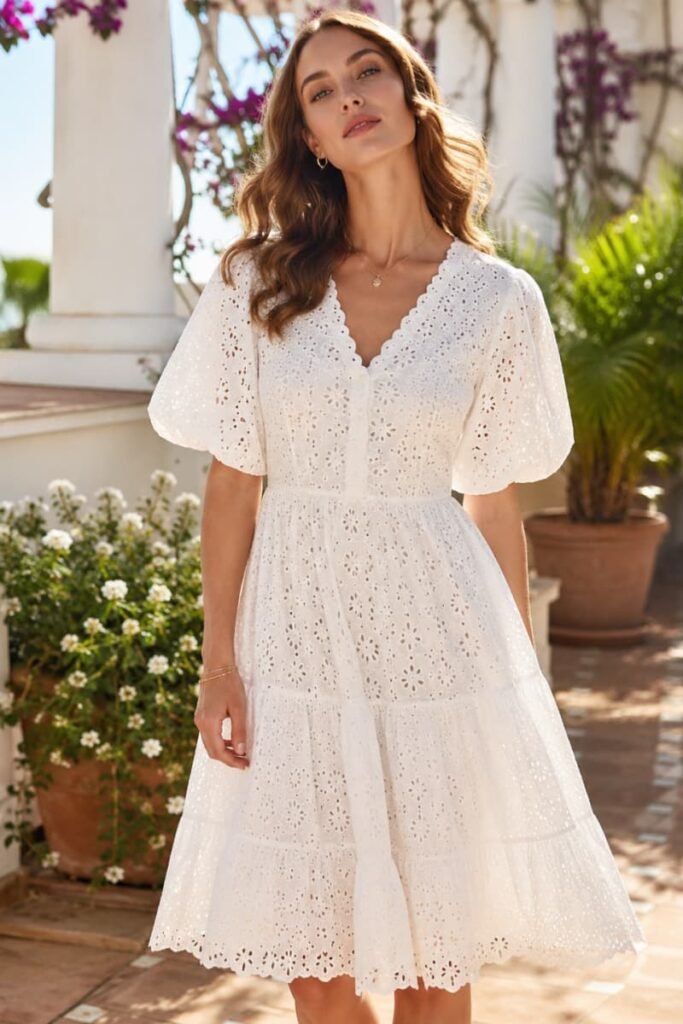
The term “eyelet lace-up dress” may describe several construction methods. Correctly defining the eyelet system before fabric sourcing and pattern development prevents material errors, inaccurate quotations, and samples that miss the intended visual direction.

Embroidered Eyelet Dresses

Embroidered eyelet fabric, often described as broderie anglaise or Schiffli embroidery, combines a woven base with stitched motifs and controlled open holes. Cotton poplin, cambric, voile, and cotton-linen blends are common foundations. Development decisions include motif scale, hole diameter, embroidery density, border placement, transparency, lining coverage, and the relationship between artwork repeats and pattern pieces. A floral eyelet border intended for the hem must be positioned differently from an all-over eyelet pattern. Bust, waist, and lacing zones may also require smaller openings or additional support.

Metal Eyelet Dresses

Metal eyelets or grommets create reinforced openings for ribbon, cord, tape, or self-fabric ties. They may be used at the center back, side waist, front bodice, shoulder, or cut-out panels.

A reliable structure requires more than pressing hardware into a single fabric layer. Development covers eyelet diameter, washer construction, finish, spacing, reinforcement, seam distance, lace thickness, pull direction, and skin contact.

The surrounding material must remain flat when the lace is tightened.

Hybrid Eyelet Dresses

Hybrid designs combine embroidered openwork fabric with metal eyelets or engineered fabric loops. These styles offer strong visual distinction but create more interaction between transparency, fit, lining, support, and hardware tension.

A cotton eyelet corset dress, for example, may require a lined bodice, stable waist seam, reinforcement behind the grommets, controlled back opening, and carefully positioned embroidery motifs. Each component must support the same silhouette rather than compete with it.

Built for Dress Brands and Product Teams

Duolan supports structured fashion programs where product direction, sample accuracy, production discipline, and repeat-order consistency matter as much as the finished garment.

Fashion Dress Brands

Fast-moving dress brands need suppliers able to understand seasonal timing, silhouette direction, fabric behavior, and commercial fit. Eyelet lace-up dresses may enter summer, resort, festival, vacation, or going-out collections, often alongside several related silhouettes and colorways. Duolan can coordinate style review, material direction, pattern development, sampling, bulk readiness, production planning, quality control, and branded delivery within one dress-focused manufacturing system.

Product Development Teams

Product developers require more than a visual copy. They need clear responses to technical drawings, measurement specifications, construction notes, sample comments, and revision priorities. Duolan reviews missing information, identifies high-risk areas, separates visual comments from fit comments, and helps move each style toward a production-ready version. Eyelet placement, lining coverage, lace length, back opening, and reinforcement are recorded as controlled product standards.

Buying and Merchandising Teams

Buying and merchandising teams work across price, calendar, range architecture, margin, and launch priorities. A promising design still needs a realistic production route. Duolan helps evaluate how embroidery density, hardware quantity, lining coverage, dress length, size range, and order structure affect cost and timing. Multi-style projects can be separated by complexity so simpler commercial styles and high-detail statement styles follow suitable development paths.

Sourcing Offices

Sourcing offices need dependable documentation, factory coordination, quality checkpoints, and clear production status. Eyelet lace-up dresses contain several failure points that may remain hidden until wear testing or bulk inspection. Duolan supports supplier evaluation, development review, PP preparation, production updates, inspection coordination, packing confirmation, and repeat-order standard preservation.

Risks We Control Before Sampling

Eyelet lace-up dresses combine openwork material, localized tension, adjustable fit, hardware, lining, and decorative placement. Early risk control protects the sample calendar and reduces avoidable redesign after fabric has already been cut.

Wrong Eyelet Definition

“Eyelet” may mean embroidered open holes, metal grommets, decorative punched openings, or a combination. Duolan confirms the exact system before material booking and quotation.

Excessive Transparency

Openwork scale and lining color can expose more skin than expected or change the visual contrast of the embroidery. Coverage is planned by garment zone.

Weak Hardware Support

Metal eyelets installed without suitable backing can rotate, pull out, or tear the surrounding fabric. Reinforcement is developed around real tension direction.

Uneven Lace-Up Spacing

Small position differences become highly visible when two eyelet rows run parallel. Fixed measuring points and placement templates improve symmetry.

Unstable Bust Fit

Adjustable lacing cannot correct an inaccurate bust shape, armhole, neckline, or cup position. Base pattern balance must be approved first.

Distorted Openings

A back or side opening may collapse, flare, or twist when lace tension is applied.
Edge structure and pattern shape must work together.

Motifs Cut Incorrectly

Embroidery flowers, scallops, or border details may be cut by seams, darts, or zippers. Pattern placement must consider artwork repeats before marker planning.

Sample-to-Bulk Variation

Hardware substitutions, embroidery batch changes, lining differences, and inconsistent installation can alter approved results. Material locking and production standards reduce variation.

Why Eyelet Lace-Up Dresses Need Dress Specialists

A successful style must look refined on a hanger, remain balanced on the body, survive repeated adjustment, and transfer into bulk production without losing the approved appearance.

Materials and Fit Must Be Developed Together

Eyelet fabric is not a neutral surface. Hole density, embroidery weight, base-fabric stiffness, shrinkage, and border design affect the silhouette.

A lightweight voile eyelet may suit a relaxed resort dress but may not provide enough support for a fitted lace-up bodice. A crisp poplin eyelet can hold an A-line shape but may create unwanted volume around a gathered waist. Cotton-linen blends offer a natural appearance but require careful shrinkage and wrinkle planning.

Fit decisions must therefore begin with material behavior. Bust shaping, waist suppression, skirt volume, lining, interfacing, and opening width are adjusted according to the selected fabric rather than copied from a generic block.

Lace-Up Features Create Structural Load

A lace-up feature becomes a small tension system once the wearer tightens the cord. Load travels through the lace, eyelet rim, reinforcement, surrounding fabric, seam allowance, and supporting garment panels.

A decorative lace-up section may tolerate light tension. A corset-inspired back or adjustable side waist may carry substantially more load. Both structures may look similar in photographs, yet they require different backing, edge control, eyelet spacing, and pattern support.

Duolan separates decorative lacing from functional lacing during development so the garment is not under-engineered or unnecessarily heavy.

Sample Craft Must Become Repeatable Workmanship

A sample technician can manually correct small alignment differences, shape an opening during pressing, or adjust lace tension by eye. Bulk production needs measurable instructions.

Approved details are translated into placement references, material standards, reinforcement specifications, stitch methods, lacing sequence, measurement points, and inspection checkpoints. The goal is not only one attractive sample.

The goal is an attractive product version that can be repeated across sizes, colors, production lines, and future orders.

Sample Craft Must Become Repeatable Workmanship (1) lace-up

Develop a Complete Eyelet Lace-Up Dress Collection

Duolan develops more than one silhouette. Product directions can be organized into a coordinated range with controlled material stories, fit families, lace-up details, and launch-ready commercial balance.

Eyelet Mini Dresses

Mini dresses work well with fitted bodices, gathered skirts, puff sleeves, cut-out waists, or open backs. Short lengths increase the visual importance of proportion, hem placement, and skirt balance. For border eyelet fabrics, the hem motif should be planned before final length is approved. A lined bodice with a lighter skirt lining can preserve shape without making the garment feel heavy.

Broderie Midi Dresses

Midi lengths suit feminine daywear, vacation, occasion, and contemporary collections. Eyelet borders can be placed at sleeve hems, waist panels, tier seams, or skirt hems. Development focuses on skirt volume, lining length, walking comfort, seam placement, and the relationship between embroidery scale and total garment length.

Lace-Up Maxi Dresses

Maxi dresses create strong visual impact through open backs, halter ties, side-waist lacing, and long embroidered skirts. Longer lengths require careful control of garment weight, drag, lining, hem stability, and back-opening shape. Lace-up placement should support the torso without allowing the skirt weight to pull the bodice downward.

Side Lace-Up Dresses

Side lacing can shape the waist, expose controlled skin, or create a graphic corset influence. Side-seam balance is critical because unequal tension can pull the skirt and bodice off grain.

Reinforcement must remain discreet while protecting the fabric from repeated tightening.

Corset Eyelet Dresses

Corset-inspired styles may combine shaped cups, princess seams, boning, waist definition, and center-back lacing. Embroidered eyelet fabric adds softness, while internal structure protects fit. Development priorities include bust support, cup placement, waist balance, bone channels, opening width, lining, and comfort at the eyelet rows.
Europe|Party and Lace-up Back Dress Range

Open-Back Dresses

Open-back eyelet dresses suit summer, resort, festival, and occasion ranges. Lace-up backs may be adjustable, decorative, or combined with an invisible zipper. Back exposure, strap security, bra coverage, edge stability, and movement must be reviewed on a body or fit form rather than from flat measurements alone.

Puff-Sleeve Dresses

Puff sleeves balance romantic eyelet embroidery with commercial silhouettes. Sleeve volume, cuff tension, armhole shape, and embroidery placement influence comfort and visual proportion. Border motifs may be used at cuffs, while lighter all-over eyelet works well through sleeve volume.

Cut-Out Lace-Up Dresses

Cut-outs combined with lacing create strong fashion impact but also increase risk. Openings must remain stable while walking, sitting, and raising the arms. Internal support, lining boundaries, seam position, skin comfort, and size grading require early review.

Build a Coordinated Seasonal Dress Program

A commercial collection needs more than repeated versions of one design. Duolan can help organize different lengths, fit levels, fabric weights, sleeve shapes, and lace-up placements into a clear seasonal range.

Summer Daywear

Lightweight cotton eyelet, partial lining, soft gathers, puff sleeves, tie shoulders, and easy waist shapes support warm-weather daywear. Commercial value comes from breathability, wash comfort, and wearable coverage.
Australia|Resort Backless Maxi Collection

Resort Collections

Resort programs can combine open backs, halter shapes, maxi lengths, scalloped borders, and natural-color embroidery. Fabric drape and lining weight should remain suitable for warm climates and travel packing.

Vacation Dresses

Vacation dresses benefit from adjustable backs and waist ties because wearers often prefer flexible fit. Adjustment must remain controlled so straps and bodices do not lose position during movement.

Festival Dresses

Festival directions may use metal eyelets, side lacing, cut-outs, contrast cords, short lengths, and corset influences. Reinforcement, comfort, and hardware surface finish become especially important.

Going-Out Dresses

Going-out styles may combine fitted silhouettes, shaped necklines, high side openings, body-conscious fit, and dramatic back lacing. Stable lining and accurate fit are required to avoid distortion.

Contemporary Occasion

Occasion-focused eyelet dresses may use refined embroidery, controlled volume, structured bodices, midi lengths, and tonal lining. Clean internal workmanship supports a higher retail position.

Customize Every Product Decision

Full development covers the decisions that shape appearance, fit, cost, manufacturing risk, and market positioning. Each option is reviewed as part of one garment system.

Neckline Direction

Square, sweetheart, V-neck, halter, scoop, off-shoulder, and straight necklines can be developed around bust shape, eyelet placement, and coverage requirements.

Sleeve Construction

Puff, flutter, cap, long, balloon, and sleeveless options require different armhole balance, lining, gathering ratios, and embroidery placement.

Dress Length

Mini, above-knee, midi, tea, ankle, and maxi lengths influence border placement, lining length, weight, and size grading.

Waist Position

Natural waist, raised waist, dropped waist, basque, corset waist, and cut-out waist constructions alter proportion and lace-up function.

Lacing Location

Center-back, side, front, shoulder, halter, waist cut-out, and decorative panel lacing can be selected according to fit and styling goals.

Eyelet System

Choose embroidered openwork, metal eyelets, grommets, stitched eyelet holes, fabric loops, or a hybrid construction.

Embroidery Artwork

All-over florals, geometric holes, border motifs, scalloped edges, isolated placements, and custom repeats can be reviewed for pattern compatibility.

Lining Coverage

Full lining, bodice lining, skirt lining, modesty panels, partial lining, contrast lining, and double self-fabric layers create different visual and functional results.

Closure Method

Invisible zippers, side zippers, hook-and-eye support, internal waist stays, functional lacing, and decorative lacing can work alone or in combination.

Fit Direction

Relaxed, shaped, fitted, body-conscious, corset-supported, softly gathered, or adjustable fit requires a matching fabric and pattern path.

Color Planning

Optic white, ivory, black, natural, pastel, bright seasonal colors, tonal embroidery, contrast embroidery, and contrast laces create different retail positions.

Brand Presentation

Main labels, size labels, care labels, hangtags, barcodes, spare laces, branded hardware, and packaging can be coordinated with the approved garment standard.

Choose the Right Eyelet Fabric

Material selection should begin with silhouette, opacity, embroidery density, season, retail position, order quantity, and production stability. No single eyelet fabric suits every dress structure.

Fabric DirectionHandfeel and StructureOpacity and LiningBest ApplicationsMain Development Risk
Cotton Cambric EyeletLight, smooth, soft structureUsually needs targeted or full liningSummer minis, easy midis, puff sleevesDistortion around large holes and shrinkage
Cotton Poplin EyeletCrisp, stable, clear shapeModerate opacity; lining depends on hole densityA-line dresses, fitted bodices, shirt-dress directionsExcess bulk in gathers or layered seams
Cotton Voile EyeletAiry, soft, fluidHigh transparency; lining commonly requiredResort maxis, relaxed dresses, sleeve volumeWeak support for functional lacing
Cotton-Linen EyeletNatural texture, moderate bodyVaries by weave and hole sizeVacation, resort, premium day dressesWrinkling, shrinkage, and irregular surface
Polyester-Cotton EyeletStable, easier-care, controlled shapeModerate opacityCommercial repeat programs and structured silhouettesHandfeel may not suit premium natural positioning
Viscose-Blend EyeletSofter drape, fluid movementOften needs liningFeminine midis, flowing skirtsStretch, growth, and embroidery stability
Schiffli Border EyeletDecorative border with controlled repeatsDepends on base fabricHem borders, sleeve borders, tiered dressesBorder placement and fabric utilization
Custom All-Over EyeletArtwork developed for full garment usePlanned by motif densityExclusive collections and signature productsArtwork lead time and repeat consistency

Fabric evaluation also covers base composition, usable width, embroidery width, edge damage, color consistency, shrinkage behavior, handfeel, drape, hole stability, and available repeat quantities.

For lace-up structures, material around the eyelets may need woven interfacing, backing patches, double layers, or a separate support panel. An attractive embroidered fabric should not be forced to carry tension beyond its structural ability.

Specify Metal Eyelets and Grommets Correctly

Metal components should be selected according to lace thickness, garment weight, tension level, fabric structure, finish durability, skin contact, and brand requirements. A common development range may use inner diameters of approximately 4–10 mm, with spacing selected according to lace width, opening length, and visual proportion. Final specifications follow design review and pull testing rather than a fixed universal number.

Inner Diameter

Common dress applications may use smaller openings for narrow ribbon and larger openings for flat tape or braided cord. Final diameter should allow smooth adjustment without excessive movement.

Washer Construction

Washer-backed eyelets distribute pressure more evenly than a single thin flange. Functional lacing normally benefits from a stable front-and-back hardware set.

Metal Finish

Silver, gold, gunmetal, black, antique brass, matte, brushed, and glossy finishes should match the collection story and other trims. Surface coating must remain even around the inner rim.

Edge Smoothness

The inner opening should not cut, snag, or abrade ribbon and cord. Sharp edges also create discomfort when eyelets sit close to the skin.

Placement Distance

Eyelets positioned too close to a raw edge or seam may tear under tension. Distance depends on eyelet size, fabric strength, backing, seam allowance, and pull direction.

Installation Pressure

Under-pressing creates loose hardware; over-pressing may crush the fabric, distort the eyelet, or damage surface coating. Trial installation should use the actual fabric stack.

Engineer the Lace-Up Structure by Position

Each lacing position changes the pattern, fit, reinforcement path, dressing method, and inspection criteria. Visual similarity does not mean structural similarity.

Center-Back Lacing

Center-back lacing can adjust the upper body and waist while creating a corset influence. Development covers back opening width, eyelet rows, modesty panel, zipper support, and size grading.

Side-Waist Lacing

Side lacing shapes the waist or frames a cut-out. Unequal tension can twist side seams, so left and right placement must be controlled from fixed reference points.

Front-Bodice Lacing

Front lacing may be decorative or functional. Bust coverage, opening stability, underlayer construction, and lace friction influence wearability.

Shoulder Lacing

Shoulder lacing creates adjustable width and visual detail. Strap strength, neckline stability, arm movement, and knot position should be tested.

Halter Lacing

Halter constructions carry load around the neck and upper back. Tie width, edge softness, neckline shape, and bust support affect comfort.

Adjustable Back Ties

Fabric ties or ribbon backs may adjust fit without metal hardware. Tie length, attachment strength, knot volume, and back coverage still require control.

Corset Cross-Lacing

Corset-style lacing works with shaped panels, boning, waist definition, and structured lining. The base garment must support the body before lacing is tightened.

Decorative Cross-Lacing

Decorative lacing may sit over a closed panel, zipper, or stable insert. Lower tension allows lighter construction, but spacing and alignment remain visually critical.

Reinforce Every Eyelet Under Real Tension

Reinforcement should follow load direction, fabric strength, eyelet size, opening shape, and intended fit adjustment. Adding a random piece of fusible material is not enough.

Build a Layered Support Zone

A functional eyelet row may include:
  • Outer fashion fabric
  • Woven or nonwoven interfacing
  • Internal reinforcement strip
  • Lining or support facing
  • Washer-backed eyelet
  • Controlled seam allowance
  • Optional boning or edge tape
The support zone should remain flat and flexible enough for wearing comfort. Reinforcement that is too soft fails under tension. Reinforcement that is too rigid may create visible ridges, bubbling, or an unnatural edge.
The backing width should extend beyond the hardware area so load is distributed into the panel rather than concentrated around one hole.

Control Position From Fixed References

Eyelet placement should not be marked by visual estimation. Rows are measured from stable garment references such as center back, waist seam, neckline edge, panel seam, or finished opening edge.
Control points include:
  • Distance from the finished edge
  • Vertical or diagonal spacing
  • Left-to-right symmetry
  • First and last eyelet position
  • Relationship to waist and bust levels
  • Distance from seam joins
  • Opening length after lacing
  • Alignment across sizes
Templates, guides, or controlled marking methods reduce variation during production.

Verify Tension Before Bulk Release

Pull testing should use the actual combination of fabric, reinforcement, hardware, and lace. The test should observe more than immediate eyelet removal.
Review also includes:

  • Fabric whitening around the hole
  • Fraying or splitting
  • Eyelet rotation
  • Washer movement
  • Surface coating damage
  • Panel distortion
  • Lace abrasion
  • Stitch failure near reinforcement
  • Shape recovery after release

For heavily adjusted back or side structures, repeated tightening gives more useful information than a single pull.

Balance Fit Before Using Adjustable Lacing

Lacing provides controlled adjustment only after the base pattern is balanced. It cannot repair inaccurate bust shaping, poor armholes, uneven side seams, or incorrect waist placement.

Establish the Base Bodice Fit

The bodice should sit correctly when lacing is positioned within the approved opening range. Critical areas include:
  • Bust point
  • Cup or dart position
  • Neckline shape
  • Underarm coverage
  • Shoulder or strap placement
  • Front and back length
  • Waist position
  • Side-seam balance
  • Back opening width
A lace-up back that must be fully closed to achieve fit offers no useful adjustment. An opening that remains too wide may expose more skin than intended or reduce support.

Define the Adjustment Range

Product teams should decide what the lacing is expected to adjust:

  • Minor body variation
  • Waist shaping
  • Bust fit
  • Back-width flexibility
  • Visual styling only
  • Dressing access

The approved sample should record the intended opening at key body levels. For a center-back style, the opening may differ at upper back, bust line, waist, and hip. One constant gap is not always correct.

Lace length must support the full adjustment range while leaving enough tail for secure tying without excessive bulk.

Grade the Structure Across Sizes

Size grading affects more than circumference. Eyelet rows, opening width, strap position, cup proportions, cut-outs, and lace length may require controlled rules.

A size range such as XS–XXL should not use identical eyelet spacing and opening length without review. Visual proportion, support, and adjustment should remain consistent across the range.

Duolan develops size rules from approved measurements, target fit, base fabric, and lacing function. Measurement charts should include finished garment dimensions rather than relying only on body measurements.

Hardware and Lace-up Details

Plan Lining, Coverage, and Transparency

Eyelet fabric creates intentional openness, but coverage must remain controlled according to garment zone, fit, color, market, and styling direction. White eyelet requires special attention because base fabric, embroidery thread, lining shade, seam allowance, labels, and reinforcement may all be visible. Lining should be reviewed under both studio light and natural light.

Full Lining

Full lining offers broad coverage and helps stabilize lightweight embroidered fabric. Lining weight should remain light enough to preserve breathability and skirt movement.

Bodice Lining

Bodice-only lining supports bust shaping, eyelet reinforcement, neckline edges, and zippers while keeping the skirt lighter.

Skirt Lining

A skirt lining can control transparency below the waist while allowing openwork sleeves, shoulders, or bodice details to remain visible.

Modesty Panels

Lace-up backs and fronts may use removable or fixed modesty panels. Panel width, attachment, color, and edge finishing should follow the intended opening range.

Tonal and Contrast Lining

Tonal lining creates a refined appearance. Nude lining increases skin-effect contrast. Contrast lining can highlight embroidery but may expose uneven seam allowances.

Zoned Coverage

Different zones can use different solutions: double fabric at cups, stable lining at eyelet rows, lighter lining through the skirt, and unlined decorative sleeves.

Match Laces, Cords, and Tapes

The lacing material affects adjustment, knot security, friction, wear, appearance, and eyelet sizing. Selection should follow function rather than color alone. Lace length should be confirmed on the fitted garment, not calculated only from eyelet count. Opening width, crossing pattern, knot type, tail length, and size grading all influence consumption.

Self-Fabric Ties

Self-fabric ties create a coordinated appearance. Construction must control bulk, turning, seam quality, stretch, and width consistency.

Satin Ribbon

Satin ribbon offers a soft sheen and romantic finish. Smooth surfaces can loosen more easily, so knot behavior and wearer movement should be reviewed.

Grosgrain Ribbon

Grosgrain provides more grip and a structured appearance. Ribbed texture may suit functional waist or back adjustment.

Cotton Cord

Cotton cord gives a natural, casual, or resort direction. Diameter, softness, shrinkage, and fraying require evaluation.

Flat Woven Tape

Flat tape distributes pressure and works well for graphic lacing. Edge quality and stiffness influence comfort through metal openings.

Elastic Lacing

Elastic cord supports movement and flexible fit but may reduce the sharp corset appearance. Recovery and long-term stretching should be checked.

Braided Cord

Braided cord creates texture and strength. Surface roughness must not damage eyelet coating or irritate skin.

Waxed Cord

Waxed cord offers a defined, slightly technical appearance and improved grip. It may suit festival or fashion-forward styles more than soft romantic collections.

Start Development From Clear Project Inputs

A complete tech pack is helpful, but development can also begin from a reference image, original sample, sketch, fabric direction, or collection brief. Clear project objectives improve first-sample usefulness. Duolan first identifies the sample purpose: visual prototype, fit sample, revised sample, sales sample, PP sample, or bulk preparation. Development priorities are then organized around the purpose.

Technical Files

Provide front and back drawings, measurement specifications, construction notes, BOM, artwork, color references, and size range when available.

Reference Images

Mark which elements should be retained, changed, removed, or improved. Separate silhouette references from fabric, trim, or detail references.

Original Samples

Original garments can support measurement, construction, fit, and workmanship review. Note any features requiring improvement rather than automatic copying.

Fabric Direction

Share composition, handfeel, weight, drape, transparency, stretch, color, embroidery, or target retail position. Swatches and supplier references are useful.

Order Structure

State style count, colorways, size range, quantity by style or color, launch timing, destination, and expected repeat-order pattern.

Brand Requirements

Include label files, care instructions, testing expectations, packing standards, inspection requirements, and confidentiality needs.

Review Feasibility Before Cutting Fabric

A feasibility review converts a visual idea into a development route. The review identifies which details are ready, which need clarification, and which may create bulk risk.

Review Fabric and Structure Compatibility

The selected fabric should support the intended silhouette and lacing function. Review includes:
  • Base-fabric stability
  • Embroidery density
  • Hole position near tension zones
  • Drape and shape retention
  • Lining compatibility
  • Reinforcement visibility
  • Seam bulk
  • Pressing response
  • Shrinkage risk
  • Color availability
When a soft eyelet fabric cannot safely carry functional metal lacing, options may include a separate support panel, fabric loops, decorative lacing over a closed structure, or a more stable base material.

Review Fit and Wearability

Fit review begins before the first pattern is finalized.

Questions include:

  • Does lacing adjust the bust, waist, or only the opening?
  • Is a zipper needed for dressing access?
  • Will the neckline remain stable when the back opens?
  • Does the cut-out expose undergarments?
  • Can the wearer sit and move comfortably?
  • Will hardware touch the skin?
  • Does the skirt weight pull the bodice?
  • Can the style grade cleanly across sizes?

Potential conflicts should be identified before sample sewing.

Review Production Readiness

A detail may be possible for one handmade sample but unsuitable for 20,000 garments.Production review considers:

  • Repeatability
  • Material availability
  • Hardware consistency
  • Embroidery lead path
  • Installation method
  • Inspection access
  • Repair risk
  • Packing protection
  • Style quantity
  • Delivery calendar

A complex design may require a component trial, embroidery strike-off, eyelet pull trial, or partial bodice test before a full sample.

Duolan garment production workshop video cover showing sewing lines and apparel production

Move Through a Controlled Sample Path

Sampling is organized around decisions rather than a race to produce the first garment. Each stage should answer a defined question and reduce uncertainty before production. Indicative schedules are confirmed after material and construction review. A project plan may allocate approximately 7–15 working days for an initial complex sample after required materials are ready, followed by a separate revision window. Custom embroidery, newly developed hardware, or incomplete specifications may extend the schedule.

Brief Confirmation

Confirm product type, sample purpose, fabric direction, fit priorities, reference basis, target quantity, launch timing, and expected next stage.

Material Direction

Review available eyelet fabrics, custom embroidery options, lining, interfacing, hardware, laces, zippers, and supporting trims.

Pattern Development

Translate technical drawings, samples, or references into balanced pattern pieces while considering motif placement, support, opening shape, and grading logic.

Component Trials

High-risk elements may be tested separately, including metal eyelet installation, reinforcement layers, lace thickness, embroidery placement, and lining visibility.

First Sample

The first sample evaluates silhouette, fabric behavior, overall construction, lace-up function, coverage, and major proportions.

Internal Review

Measurements, workmanship, eyelet alignment, reinforcement, embroidery position, lining, zipper operation, and garment balance are reviewed before dispatch.

Fit Comments

Comments are separated into fit, visual, material, workmanship, and production categories. Each action should be traceable to a clear revision.

Revision Sample

The revision verifies agreed changes rather than introducing uncontrolled new directions. Remaining open points should be identified before PP preparation.

PP Preparation

The PP or production-basis sample aligns fabric, trims, measurements, workmanship, labels, packing, and quality checkpoints before bulk release.

Build Clean Workmanship Inside and Out

High-quality eyelet lace-up dresses must remain refined from the exterior, interior, and reverse side of every decorative feature. Clean workmanship also improves bulk consistency and inspection efficiency.

Control Embroidery Panel Construction

Embroidery panels should be matched with attention to motif direction, seam interruption, scalloped edges, and visual balance. Key workmanship points include:
  • Clean cutting around openwork edges
  • Stable seams without excessive puckering
  • Motif alignment at center front and center back
  • Controlled joins at waist and tier seams
  • Neat scalloped hems
  • No trapped loose threads behind open holes
  • Smooth lining beneath transparent areas
  • Balanced embroidery position across left and right sides
Seam allowance width should remain appropriate for the fabric. Overly wide seam allowances may become visible beneath openwork areas.

Finish Lace-Up Openings Cleanly

A lace-up opening should form a controlled shape before the lace is inserted. The two sides should remain symmetrical, stable, and smooth. Workmanship includes:
  • Straight or intentionally shaped opening edges
  • Even topstitching
  • Secure reinforcement
  • Eyelets seated flat
  • Smooth washers
  • No crushed fabric
  • Consistent eyelet direction
  • Clean modesty panel attachment
  • Hidden support where required
  • Balanced lace crossing
  • Secure lace ends
The opening should not depend on pressing alone to remain flat.

Integrate Lining and Support

Lining should support the garment without pulling the outer layer. Attachment points must allow the outer fabric to sit naturally. Special attention is given to:
  • Neckline understitching
  • Armhole turning
  • Cup and bust shaping
  • Waist seam alignment
  • Boning channels
  • Zipper backing
  • Eyelet-row support
  • Modesty panels
  • Hem separation
  • Label placement
Internal reinforcement should not be visible through white or light-colored eyelet fabric.

Finish the Garment for Inspection

Final workmanship review covers:

  • Thread cleanliness
  • Seam security
  • Hem level
  • Symmetry
  • Pressing
  • Zipper operation
  • Lace function
  • Eyelet stability
  • Lining coverage
  • Measurement
  • Label accuracy
  • Packing readiness

Exterior beauty and internal order should follow the same approved standard. 

Transfer Approved Samples Into Bulk Standards

An approved sample becomes useful only when its materials, measurements, workmanship, fit, and presentation are converted into production references understood by every responsible team.

Run a Bulk Readiness Review

Before production release, Duolan reviews the approval status:
  • Visual direction confirmed
  • Fit confirmed
  • Measurements confirmed
  • Fabric confirmed
  • Lining confirmed
  • Hardware confirmed
  • Laces confirmed
  • Embroidery confirmed
  • Workmanship confirmed
  • Labels confirmed
  • Packing confirmed
  • Remaining open points identified
The review distinguishes a visually accepted sample from a production-basis sample. Any remaining differences should be documented before cutting starts.

Lock the Production Basis

Bulk standards may include:
  • Approved sample or PP sample
  • Updated tech pack
  • Finished measurement chart
  • BOM
  • Fabric and trim approvals
  • Embroidery artwork
  • Eyelet specification
  • Lacing sequence
  • Reinforcement diagram
  • Workmanship notes
  • Label files
  • Packing instructions
  • Quality checkpoints
A replacement material should not enter production without review because small differences in eyelet finish, lace friction, lining weight, or embroidery density may alter the approved appearance.

Match the Order to the Right Production Path

Multi-style orders are broken down by:

  • Style complexity
  • Fabric family
  • Embroidery route
  • Hardware installation
  • Fit risk
  • Order quantity
  • Color count
  • Size range
  • Delivery priority
  • Inspection requirements

Core or complex styles may remain under tighter factory control, while simpler related styles follow suitable lines within the wider manufacturing system. Production is managed as a connected program rather than one undivided order.
Bulk delivery timing is confirmed after material availability, PP status, style count, order quantity, and production path are reviewed. A working plan for a confirmed multi-style dress program may fall within approximately 30–50 days after all production inputs are locked, while custom embroidery or high style counts may require a longer calendar.

6.Repeat Order Preparation (1)

Inspect High-Risk Points Throughout Production

Quality control begins with product definition and continues through material, sample, production, finishing, and packing stages. Final inspection alone cannot recover weak reinforcement or incorrect embroidery placement.

Risk AreaPossible FailureControl MethodControl Stage
Base FabricShade, shrinkage, skew, inconsistent handfeelLot review, shade control, behavior checkIncoming and pre-cut
Eyelet EmbroideryBroken stitches, uneven holes, puckering, border variationArtwork and fabric approval, incoming inspectionDevelopment and incoming
Motif PlacementFlowers or borders cut by seams and dartsPattern-position review and marker controlSample and cutting
Metal EyeletsRotation, pull-out, sharp rim, finish damageTrial installation, backing approval, pull reviewSample and inline
Eyelet SpacingUneven rows or poor symmetryFixed measurement points and placement templatesCutting and inline
ReinforcementVisible bubbling, weak support, excessive stiffnessLayer trial and approved reinforcement mapSample and sewing
Lace MaterialSlipping, fraying, abrasion, wrong lengthApproved material, wear review, consumption controlSample and final
Lace-Up OpeningFlare, twist, collapse, uneven gapPattern review, edge support, fit checkSample and inline
FitBust imbalance, unstable neckline, waist mismatchFit review, measurement check, revision controlSample, PP, final
TransparencyExcess exposure or visible internal partsCoverage review and lining approvalSample and final
MeasurementsSize variation across productionFinished-spec checks at defined pointsInline and final
WorkmanshipPuckering, uneven seams, exposed threadsOperation standard and inline inspectionSewing and final
Labels and PackingWrong size, care information, barcode, or lace packPacking checklist and order reconciliationFinal and packing

Inspection priorities should reflect style risk. A corset-inspired lace-up back requires more attention to fit, reinforcement, and opening width than a relaxed eyelet day dress with decorative shoulder ties.

Build Quotations From Production Facts

A reliable quotation reflects the full product structure. Reference images alone rarely show fabric composition, embroidery route, reinforcement, lining, internal support, size range, or packing requirements.

Material Cost Drivers

Material cost may include:

  • Base eyelet fabric
  • Custom embroidery
  • Border utilization loss
  • Lining
  • Interfacing
  • Reinforcement tape
  • Metal eyelets and washers
  • Laces or ribbons
  • Zippers
  • Boning
  • Labels
  • Packaging

Custom all-over embroidery and border embroidery may have different order conditions, usable widths, and cutting yields.

Workmanship Cost Drivers

Workmanship depends on:

  • Panel count
  • Motif matching
  • Lace-up position
  • Eyelet quantity
  • Reinforcement layers
  • Cup or corset structure
  • Lining complexity
  • Cut-outs
  • Sleeve volume
  • Hem treatment
  • Installation trials
  • Inspection intensity

Two visually similar dresses may require very different production time when one uses decorative lacing and the other uses functional tension-bearing lacing.

Order Planning Drivers

Quotation also reflects:
  • Number of styles
  • Colorways
  • Size breakdown
  • Quantity per style
  • Material minimums
  • Testing
  • Packing format
  • Delivery calendar
  • Inspection requirements
  • Destination
  • Repeat-order potential
For brand programs of 10–30 styles and 20,000–80,000 total garments, project planning should separate shared fabrics and trims from style-specific components. Consolidation may improve material efficiency, while high-detail styles still require individual risk review.

Prepare Labels, Packaging, and Transport Protection

Label placement should avoid transparent areas, openwork motifs, and skin irritation. White or unlined dresses may require discreet backing and thread color.

Main and Size Labels

Label placement should avoid transparent areas, openwork motifs, and skin irritation. White or unlined dresses may require discreet backing and thread color.

Care Labels

Care instructions should reflect outer fabric, embroidery thread, lining, hardware, lace, and surface finish. Metal components may affect washing and ironing guidance.

Hangtags and Barcodes

Hangtags, barcode stickers, price tickets, security tags, and retailer-specific information should be checked against style, color, and size.

Spare Laces

Projects requiring replacement laces can pack them in a small labeled bag or secure them according to the packing manual. Length, color, and material must match the garment.

Hardware Protection

Tissue, sleeves, protective layers, or controlled folding can reduce eyelet rubbing, pressure marks, snagging, and coating scratches during transport.

Carton Planning

Flat pack, hanging pack, folding direction, garment quantity, carton dimensions, assortment, and carton marks should reflect dress structure and destination handling.

A lace-up dress should arrive with the approved lacing arrangement intact. Packing teams need clear instructions so cords are not tangled, pulled unevenly, or left with inconsistent openings.

Scale Through Duolan’s Manufacturing System

Duolan combines dress development experience, core factory control, flexible production resources, and specialized supporting suppliers to handle multi-style fashion programs.

Dress Development Background

The leadership and development foundation reaches back more than 30 years in fast-fashion womenswear and dress product development, including fabric, silhouette, decorative workmanship, and commercial execution.

Owned Factory Control

Sixteen owned womenswear factories support core project control, complex style allocation, development continuity, and production stability.

Satellite Capacity

More than 20 long-term satellite factories provide additional flexibility for repeat orders, seasonal peaks, production balancing, and suitable style allocation.

Production Network

The wider manufacturing system includes more than 12,000 supporting workers, approximately 300 sewing lines, and 50+ quick-response and flexible lines.

Specialized Resources

Established support includes fabric, trims, accessories, embroidery, printing, garment dyeing, washing, and other special-process resources. Projects can be routed according to material and construction needs.

Compliance Support

The factory system has completed SMETA and SMETA 2-Pillar audits. Production can be coordinated according to project requirements involving BSCI, ISO 9001, AATCC, ASTM, OEKO-TEX®, EN, China GB, GOTS, and specific brand standards where applicable.

Scale has value only when it supports product control. Duolan uses the manufacturing network to match different style complexities, calendars, and order stages rather than placing every garment on the same route.

Eyelet Lace-Up Dress Case Studies

The following anonymized order structures reflect the scale and development patterns commonly managed for established dress programs. Brand names and proprietary designs remain confidential.

Cotton Eyelet Summer Collection

Region: United States
Program: Summer and vacation dress collection
Order Structure: 18 styles, 4 coordinated fabric directions, 42,600 garments
Product Mix: Mini dresses, puff-sleeve midis, open-back maxis, tie-shoulder styles, and scalloped-border dresses
Development Challenge:
The collection used white and pastel cotton eyelet fabrics with several open-hole densities. Main risks included transparency, inconsistent border placement, visible reinforcement beneath light colors, and different shrinkage behavior across fabric groups.
Duolan Approach:

  • Grouped styles by fabric family and lining requirement
  • Reviewed motif scale against bodice, sleeve, and skirt pattern pieces
  • Defined full, partial, and bodice-only lining by style
  • Adjusted border placement before final dress lengths were locked
  • Recorded white lining, thread, zipper, label, and reinforcement shades
  • Used fit comments to refine bust coverage and back-opening depth
  • Prepared production standards by fabric group rather than by image alone

Outcome:
The program moved from development into a coordinated multi-style production plan with shared materials, controlled lining standards, and style-specific embroidery placement instructions.

Side Lace-Up Going-Out Dresses

Region: United Kingdom
Program: Fashion-forward going-out and festival dresses
Order Structure: 12 styles, 3 metal finishes, 28,800 garments
Product Mix: Side-laced minis, waist cut-outs, fitted midis, corset-inspired bodices, and contrast-cord designs
Development Challenge:
Side eyelets carried real waist tension. Early concepts used lightweight fashion fabrics without sufficient support. Main risks included eyelet pull-out, side-seam twisting, inconsistent opening width, and discomfort where hardware touched the skin.
Duolan Approach:

  • Classified each style as decorative or functional lacing
  • Developed reinforcement strips around the full eyelet row
  • Reviewed metal diameter and washer construction against lace width
  • Positioned rows from fixed waist and side-seam references
  • Added soft internal coverage at skin-contact zones
  • Adjusted base waist fit before defining the lace adjustment range
  • Conducted component trials using the actual fabric stack
  • Locked the lacing sequence and lace length for PP review

Outcome:
The approved structures preserved the intended cut-out appearance while creating a repeatable installation method for multiple sizes and colors.

Corset Eyelet Occasion Program

Region: Europe
Program: Contemporary occasion and party dresses
Order Structure: 24 styles, 5 color groups, 67,200 garments
Product Mix: Corset bodices, center-back lacing, embroidered eyelet overlays, shaped cups, boning, and fitted skirts
Development Challenge:
The collection required strong bust and waist control without creating a heavy bridal appearance. Embroidered overlays, lining, boning, metal eyelets, zippers, and lace-up openings needed to perform as one system.
Duolan Approach:
  • Established base fit before adjusting the back opening
  • Separated cup shaping, waist fit, and lacing function during sample review
  • Developed support layers beneath embroidered outer fabric
  • Controlled boning position and eyelet-row distance
  • Used zippers on selected styles for easier dressing
  • Recorded back-gap measurements at upper back, bust, and waist
  • Reviewed eyelet and lace colors under each outer-fabric color
  • Converted approved sample details into PP and bulk checkpoints
  • Allocated styles by construction complexity and delivery priority
Outcome:
The 24-style program entered production with a shared corset construction logic, controlled color-specific trims, and defined sample-to-bulk standards.

Frequently Asked Questions About Eyelet Lace-Up Dresses

Eyelet may describe embroidered openwork fabric, metal eyelets used for lacing, stitched eyelet holes, or a hybrid design using several systems. The correct definition should be confirmed before quotation and sampling.
Yes. Reference images can support initial review when accompanied by target fabric, intended fit, required changes, quantity, size range, and launch timing. A technical drawing or measurement chart improves accuracy.
Cotton cambric, poplin, voile, cotton-linen blends, polyester-cotton blends, and viscose blends are common. The best option depends on silhouette, structure, transparency, season, and price position.
Functional eyelets may use interfacing, internal reinforcement strips, facings, double layers, washers, support tape, or boning. The final method follows fabric strength and expected tension.
Sometimes, but not automatically. A zipper may still be needed for dressing access, fit consistency, or a controlled back opening. The decision depends on silhouette and lacing function.
No. Coverage can be full, partial, zoned, or omitted in decorative areas. Hole size, fabric color, garment zone, market, and intended styling determine the lining plan.
Custom artwork can be reviewed according to motif scale, embroidery width, hole density, stitch construction, placement, order quantity, and production route.
Placement is measured from fixed garment references and may use templates, guides, marked panels, or controlled installation methods. Left-right symmetry is checked during production.
Yes. Length variants may share fabric and visual details, but border placement, lining, skirt volume, weight, and grading should be reviewed separately.
Provide style images or tech packs, fabric direction, eyelet type, lace-up location, lining, size range, colorways, quantity, branding, packing, testing, and delivery requirements.
Approved samples are aligned with the tech pack, BOM, measurements, materials, reinforcement, eyelet specifications, lacing sequence, workmanship notes, and QC checkpoints before bulk release.
Yes. Duolan is structured for multi-style dress programs, including development, sample coordination, production-path planning, inline quality control, packing, and repeat-order support.

Start Your Eyelet Lace-Up Dress Project

Send Duolan the available project materials, even when every detail has not been finalized. Our team will review the product direction, eyelet system, fabric behavior, lace-up function, fit requirements, construction risks, order structure, and production path before confirming the next stage.

Useful project materials include:

  • Tech pack or technical drawings
  • Front, back, side, and detail reference images
  • Original sample photos
  • Measurement chart and target size range
  • Fabric or embroidery direction
  • Eyelet artwork or border reference
  • Metal eyelet finish and diameter preference
  • Lace, ribbon, cord, or tape direction
  • Lining and coverage requirements
  • Style count and colorways
  • Target quantity by style or color
  • Launch date and destination
  • Label, hangtag, barcode, and packing files
  • Testing, audit, or inspection requirements

After review, Duolan can recommend the appropriate route: material evaluation, feasibility review, sample development, revision, PP preparation, bulk quotation, or production-readiness planning.


4.Europe|Mesh and Lace-up Corset Dress Range (1)

Start Your Apparel Development Project

OEM/ODM Manufacturing Support for Fashion Brands

Share your collection details, estimated quantities, target market, development timeline, and technical requirements. The production team will review your request and provide a tailored manufacturing solution based on your product category, fabric selection, construction needs, and delivery schedule.

Fashion Manufacturing Support with Scalable Production Capacity

From sample development to bulk production, Duolan supports fashion brands with confidential OEM/ODM manufacturing, stable quality management, flexible production planning, and coordinated multi-factory execution for seasonal and capsule collections.

Need Direct Assistance?

Seraphinite AcceleratorOptimized by Seraphinite Accelerator
Turns on site high speed to be attractive for people and search engines.