Skip to content
Party Dress & Partywear Manufacturing Solutions
Partywear development built around strong visual identity, controlled fit, reliable workmanship, and repeatable bulk production.
- 30+ years focused on fast-fashion womenswear and dress development.
- 16 owned womenswear factories supported by 20+ long-term satellite factories.
- 300 sewing lines plus 50+ flexible lines for multi-style programs and repeat orders.
- Stable monthly capacity of approximately 6.5 million garments across the manufacturing group.
- Monthly sample-development capacity of approximately 15,000-35,000 styles or sample pieces.
- SMETA and SMETA 2-Pillar audit foundation for formal supplier qualification.
Built for Established Partywear Brands and Product Teams
Partywear Brand Teams
Product Development Teams
Buying and Sourcing Teams
Multi-Brand Fashion Groups
Control the Risks Behind High-Impact Partywear
Design Translation
Fabric Mismatch
Fit Instability
Complex Detail Failure
Bulk Variation
Launch Delay
Partywear Categories We Develop and Manufacture

Party Mini Dresses

Cocktail Dresses

Bodycon Party Dresses

Corset Party Dresses

Satin Party Dresses

Mesh and Lace Dresses

Sequin Party Dresses

Partywear Sets
Partywear can extend beyond dresses into matching tops and skirts, bodysuits, fitted separates, statement tops, co-ordinated sets, and jumpsuits. A coordinated line benefits from shared fabrics, colors, trims, fit direction, and packing standards. Duolan can organize linked styles so a brand gains a broader assortment without developing every product from an unrelated material and construction base.
Develop Partywear Around Real Selling Occasions
Birthday and Going Out
Cocktail and Social Events
Holiday and New Year
Homecoming and Graduation
Wedding Guest Events
Seasonal Party Drops
A seasonal drop may combine minis, midis, fitted silhouettes, soft drapes, sequins, mesh, lace, satin, and matching separates. The strongest assortment does not rely on one construction level. Duolan helps organize hero styles, commercial core styles, color extensions, photo samples, repeatable fits, and production priorities so the line can move from campaign development into controlled sales production.
Build a Partywear Collection, Not Isolated Styles
Create a Commercial Style Architecture
Coordinate Fabric and Color Stories
Partywear collections often work best with a focused material palette. Satin may provide fluid shine, mesh can add transparency and layering, stretch jersey supports body-conscious volume styles, lace brings refined texture, and sequins create campaign impact. A coordinated family can use black, burgundy, champagne, silver, deep green, ivory, or seasonal accent colors without creating unnecessary sourcing and quality complexity.
Duolan evaluates whether colorways can use the same fabric base, whether lining colors should match or contrast, whether trims remain available across the full launch, and whether metallic or sequin surfaces need separate packing. Color approval, lab dips, swatches, trim boards, and material alternatives are linked to the sample plan so visual direction and production feasibility move together.
Plan Multi-Style Sampling and Production
Not every style should enter sampling and bulk production at the same time. High-risk corset, sequin, mesh, or heavily draped pieces may need early material trials and first prototypes. Commercial stretch styles can move through a faster pattern route once fabric and fit standards are clear. Photo samples, fit samples, salesman samples, revised samples, and PP samples serve different decisions, so the purpose of each version should be defined before work begins.
For larger programs, Duolan can separate styles by risk, launch priority, material readiness, and production complexity. The resulting schedule protects photography, internal review, buying decisions, material booking, pilot checks, final production, inspection, packing, and shipment without forcing every SKU into the same timeline.

Match Partywear Fabrics to Silhouette and Production Risk
Partywear fabrics behave differently under tension, movement, lighting, pressing, and repeated production. Material selection is reviewed against shape, support, coverage, surface appearance, target price, and manufacturing stability before the sample route is fixed.
| Fabric Direction | Strongest Applications | Performance to Review | Main Production Risks | Duolan Development Control |
|---|---|---|---|---|
| Satin | Slip, cowl, draped, halter, midi and maxi party dresses | Drape, shine, grain, crease recovery, seam appearance | Puckering, needle marks, pressing shine, color variation | Fabric comparison, grain planning, seam testing, lining and pressing standard |
| Stretch Jersey | Bodycon, ruched, fitted mini and midi dresses | Weight, stretch direction, recovery, opacity, hand feel | Growth, seam bursting, transparency, unstable grading | Stretch and recovery review, fit sample, seam test, measurement tolerance |
| Mesh | Layered, illusion, cut-out, panelled and bodycon styles | Stretch, opacity, recovery, skin feel, color depth | Visible seams, rolling edges, inconsistent transparency | Lining map, edge method, panel control, light-condition review |
| Lace | Cocktail, fitted, corset, panelled and occasion styles | Motif scale, stretch, hand feel, transparency, placement | Motif mismatch, fraying, visible seam joins, shade difference | Placement plan, backing choice, seam trial, cutting and matching reference |
| Sequin Fabric | Mini, fitted, holiday, New Year and statement dresses | Weight, ground stability, sequin direction, comfort | Sequin loss, scratching, broken needles, heavy seams | Seam clearing, attachment review, lining, workmanship map, protective packing |
| Velvet | Holiday, cocktail, fitted and draped dresses | Pile direction, recovery, shade, pressing response | Shading, crushing, seam marks, inconsistent nap | One-way cutting plan, handling method, pressing test, batch control |
| Chiffon and Organza | Layered, ruffled, draped and volume party dresses | Transparency, float, stiffness, recovery, edge behavior | Fraying, uneven layers, static, weak edge finish | Layer plan, edge testing, lining choice, pressing and hanging review |
| Crepe | Cocktail, draped, fitted, midi and refined social dresses | Drape, texture, recovery, opacity, surface stability | Stretch variation, seam impression, uneven fall | Weight selection, pattern balance, seam method, finishing standard |
Engineer Fit, Support and Wear Safety

Bust and Neckline Support

Waist and Hip Balance

Stretch and Recovery

Strap and Halter Load

Lining and Opacity

Slit and Hem Safety
Control Embellishment Before It Becomes a Bulk Risk

Sequin Application

Rhinestone and Beading

Lace Positioning

Ruching and Draping

Corset Construction

Closures and Openings
Review Partywear Feasibility Before Sampling Starts
Fabric Feasibility
Fit Feasibility
Workmanship Feasibility
Cost Feasibility
Timeline Feasibility
Bulk Feasibility
A visually successful sample is not automatically ready for production. Duolan checks whether the approved material can be secured, whether pattern and construction are repeatable, whether trims are stable, whether measurement tolerances are realistic, and whether quality points can be inspected consistently. The outcome becomes the basis for sampling, pilot work, or a production-readiness plan.
Protect Approved Standards During Bulk Production
Complete a Bulk Readiness Review
Break the Order Down by Production Risk
Verify First Pieces and High-Risk Operations
Keep Every Team on the Same Reference
Pattern teams, material teams, sewing lines, special-process suppliers, QC staff, packing teams, and project managers need the same approved references. Duolan uses the approved sample, updated pattern, size specification, BOM, material cards, workmanship notes, tolerance rules, packing instructions, and QC checkpoints to align execution. Changes after approval are documented so the active version remains clear. Once production is complete, the same records support future replenishment. Pattern versions, material references, trim details, inspection findings, and packing standards become reusable production assets rather than disappearing after the first order.
Turn Partywear Concepts into Production-Ready Samples

Start with a Structured Development Brief

Build the First Sample Around the Main Decision

Convert Comments into Measurable Corrections
Confirm a Production-Ready Standard
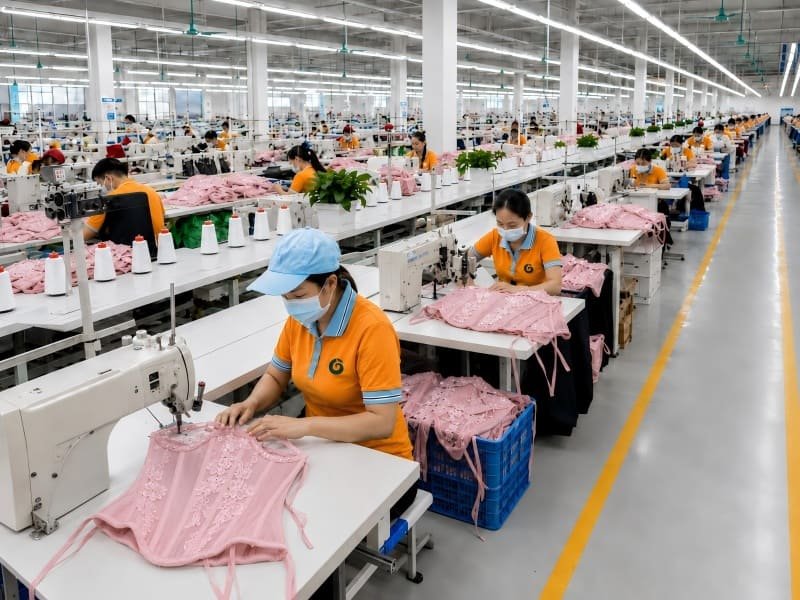
Before bulk production, the sample basis should align fit and measurement, fabric and color, trims and accessories, lining, construction, decoration, labels, packing, and inspection points. Depending on the project, the final reference may be a PP sample, golden sample, approved sample with signed comments, or a controlled combination of sample, tech pack, BOM, and workmanship notes. Duolan normally prepares a clear sample and production route rather than presenting only a sample fee. The schedule is confirmed after fabric, trim, complexity, and sample purpose are reviewed. Material availability and comment turnaround remain major timing factors, so the development plan identifies the decisions needed from both teams before dates are locked.
A Manufacturing System Built for Multi-Style Partywear
16 Owned Factories
20+ Satellite Factories
12,000+ Supporting Workers
300 Sewing Lines
50+ Flexible Lines
6.5 Million Monthly Capacity
Stable monthly production capacity across the group is approximately 6.5 million garments, with peak capacity reaching around 10 million garments and additional capacity space of roughly 1-2 million pieces per month. Capacity is valuable only when matched with material readiness, technical control, QC staffing, and delivery planning, so production commitments are confirmed project by project.
Choose the Right Partywear Development Path
OEM Execution
ODM Development
Private Label Programs
Inspect Partywear by Product Risk, Not One Standard
Quality control is organized around material, fit, construction, surface decoration, wearing safety, finishing, and packing. Partywear categories receive different inspection points because the main defect risk in a satin slip dress is not the same as the risk in a sequin mini or corset style.
| Control Stage | Main Inspection Points | Partywear-Specific Focus | Evidence and Decision |
|---|---|---|---|
| Material Inspection | Composition, width, weight, shade, defects, stretch, recovery | Satin shade and marks, mesh opacity, sequin attachment, velvet nap, lining match | Inspection record, approved swatch, lot separation where needed |
| Cutting Control | Grain, nap, direction, placement, size bundle, shade grouping | Lace motif, sequin direction, satin grain, mesh panel orientation | Cutting reference, placement map, bundle identification |
| First-Piece Review | Measurements, silhouette, seam balance, construction, trims | Bust support, boning, cup position, ruching, cut-outs, zipper, lining, hem | First-piece or pilot confirmation before full release |
| Inline Inspection | Stitching, seam strength, measurements, symmetry, operation quality | Seam stretch, decoration loss, panel alignment, gaping, puckering, edge comfort | Inline report, correction action, recheck result |
| Final Inspection | Size, visual finish, workmanship, cleanliness, pressing, function | Wear security, opacity, slit and hem, zipper function, embellishment, shape | Final inspection result, project-specific AQL or agreed standard |
| Packing Inspection | Labels, barcodes, folding, protection, carton data, quantity | Anti-snag protection, sequin and rhinestone protection, satin crease control | Packing reference, carton record, shipment release |
Support Brand Compliance and Supplier Qualification
Social Audit Foundation
The Duolan manufacturing system has completed SMETA and SMETA 2-Pillar audit processes and can provide relevant social-audit records for supplier evaluation. Audit scope, factory entity, validity, and project applicability should be reviewed during onboarding so the approved production location matches the sourcing requirement.
Quality Requirements
Product Testing
Supplier Documentation
Duolan can coordinate sample records, material approvals, BOM information, production references, QC documents, packing instructions, carton marks, shipping documents, and third-party inspection support. Clear files reduce the risk of different teams working from different versions and create a stronger production record for later replenishment.
Plan Launch Orders, Reorders and Scaled Production

Protect the Launch Calendar
Organize Multi-Style Launch Orders

Make Repeat Orders Easier

Coordinate Delivery Options
Available logistics routes include express, air, and sea freight. Common reference times are approximately 3-7 days by express, 5-8 days by air, and 20-35 days by sea, subject to destination, carrier, season, customs, and routing. Projects can be coordinated around FOB, CIF, DDP, split shipments, overseas warehouse arrangements, or a nominated forwarder.
Delivery planning includes quantity, carton count, weight, volume, packing method, labels, barcodes, shipping marks, documents, cutoff dates, and receiving requirements. Logistics is aligned with the launch plan rather than added after production finishes.
Partywear Programs Managed from Development to Delivery
18-Style Holiday Partywear Program
A North American fashion brand planned an 18-style holiday drop totaling 46,800 garments. The assortment included six sequin and rhinestone statement dresses, four satin mini and midi dresses, five ruched stretch styles, and three mesh or cut-out pieces. Individual quantities ranged from 1,600 to 3,800 pieces, with black, burgundy, champagne, silver, and deep green as the main color direction.
Development began by separating the collection into four material and risk groups. Sequin styles received seam-clearing trials, lining checks, edge-comfort review, and protective packing tests. Satin styles were reviewed for grain, puckering, concealed zipper quality, pressing, and shade control. Stretch styles used recovery and opacity checks before fit grading. Mesh pieces received lining maps and transparency review under stronger light.
The sample plan prioritized six campaign styles first, followed by commercial volume styles. Two corset-sequin designs required first-piece confirmation before full production. Material, pattern, BOM, placement maps, size specifications, workmanship points, and packing references were locked before production release. Final output was divided across suitable lines according to complexity, while one reporting structure tracked the complete 18-style launch.

26-Style Party and Occasion Collection
A multi-channel womenswear brand developed a 26-style party and social-event collection totaling 72,400 garments. The line combined eight bodycon and ruched dresses, five satin cocktail styles, four corset or bustier dresses, three lace midis, three mesh-layered dresses, and three matching sets or jumpsuits. Quantities ranged from 1,800 to 4,600 pieces per style across two to four colors.
The main challenge was maintaining one brand fit direction across stretch, woven, corset, and layered constructions. Duolan organized shared measurement priorities, defined separate fit standards for stretch and structured styles, and grouped materials to reduce unnecessary variation. High-risk corset and mesh pieces moved through an earlier prototype and revision route, while proven stretch shapes progressed more quickly after fabric approval.
Production was divided by material and workmanship sensitivity. First-piece checks covered bust support, boning, neckline stability, lining, zipper, ruching placement, mesh coverage, and hem safety. A shared packing manual controlled labels, barcodes, polybags, garment protection, and carton marks across the full program. Approved pattern, BOM, material, workmanship, and QC records created a reusable base for later color extensions and repeat orders.
Frequently Asked Questions About Partywear Manufacturing

Start Your Partywear Development Review
Send a clear project brief so Duolan can evaluate product direction, fabric and trim requirements, fit and structure risks, sample route, workmanship complexity, production method, quality checkpoints, packing, and delivery timing. Useful files include tech packs, reference images, original-sample photos, collection moodboards, size charts, fabric or color direction, BOM information, label manuals, and packing specifications.
For a faster first review, include:
- Product category and number of styles.
- Development stage: sample, quotation, supplier evaluation, bulk, repeat, or scale-up.
- Estimated quantity by style, color, and size where available.
- Target market, price level, and launch or warehouse date.
- Key fabric, fit, support, coverage, or workmanship priorities.
- Testing, audit, labeling, barcode, packing, and logistics requirements.
Duolan will identify the most suitable development route, missing information, material questions, critical risks, sample plan, production-readiness requirements, and next confirmation points. Final quotation and timing are prepared after the style complexity, materials, quantities, approvals, and delivery requirements have been reviewed.