 Skip to content
Embellished Mesh Construction Solutions
Dress development, structural engineering and production control for fashion brands creating beaded, sequined, embroidered and rhinestone mesh garments.
- 30+ years of women’s fashion development experience focused on dress fit, structure, fabric behavior and commercial production.
- 16 owned fashion factories, 20+ satellite factories, 300 sewing lines and 50+ flexible lines supporting complex multi-style programs.
- Mesh, lining, embellishment, placement, fit and reverse-side comfort are reviewed as one construction system before bulk production.
- Typical sample planning is 5-15 days after material and construction direction are confirmed; dense handwork or custom artwork requires a project-specific schedule.
- Programs commonly contain 10-30 styles and 20,000-80,000 total units, with production paths organized by complexity rather than treating every style alike.
- SMETA 2-Pillar audit foundation with project execution aligned to brand manuals, approved samples and applicable market requirements.
What Embellished Mesh Construction Really Involves
Mesh Behavior
Decoration Load
Coverage Planning
Seam Engineering
Fit and Support
Bulk Reproduction
Built for Brand-level Mesh Development Programs
Occasionwear Brands
Product Teams
Buying Teams
Sourcing Offices
Fashion Groups
Designer-led Labels
A strong creative direction often needs technical interpretation rather than simplification. Mesh transparency, asymmetric placement, mixed decoration and unconventional structure are reviewed for wearability, repeatability and intended visual character.
Where Embellished Mesh Projects Commonly Lose Control
Sagging and Growth
Uncontrolled Transparency
Bulky Seams
Size Placement Drift
Sample-bulk Difference
Snagging and Damage
Embellished Mesh Styles Engineered for Production

Beaded Mesh Minis

Rhinestone Bodycon Dresses

Sequin Mesh Midis

Mesh Corset Dresses

Halter Mesh Dresses

Backless Mesh Dresses

Overlay Maxi Dresses
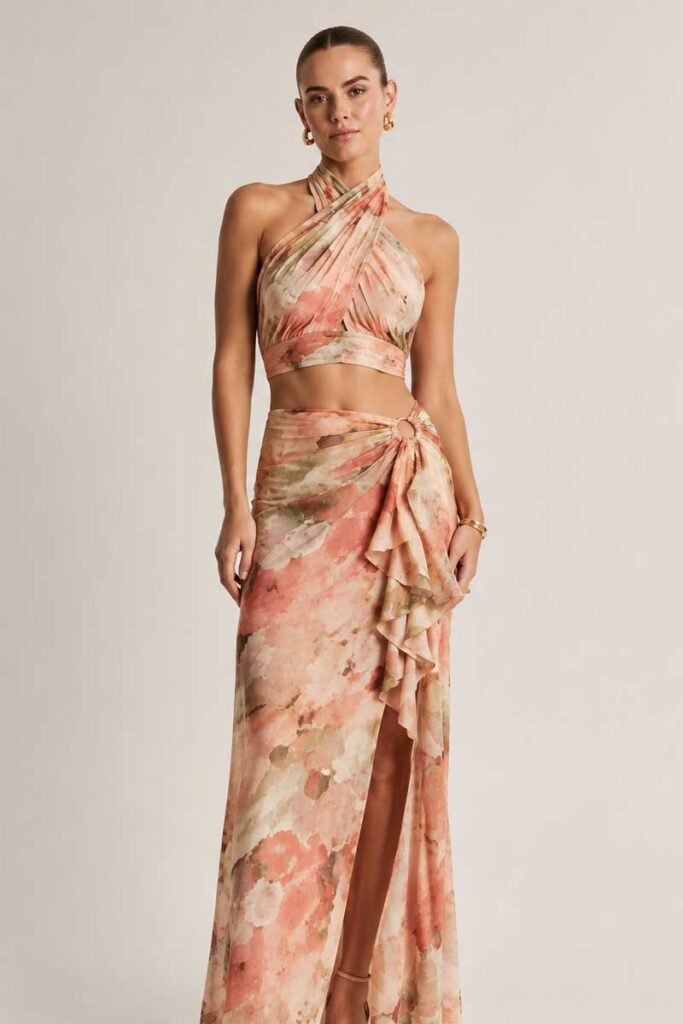
Embellished Mesh Sets
Tops and skirts must align in color, transparency, motif language and wearing comfort. Shared materials can improve consistency, while each piece keeps its own fit, closure and lining solution for separate wear.
Selecting the Right Mesh Before Embellishment Begins
Mesh selection follows the intended silhouette, decoration weight, transparency and production route. Similar-looking bases can behave very differently after embroidery, stones or hand-applied beads are introduced. A comparison sample is often more reliable than choosing by fabric name alone.
| Mesh Base | Best Use | Key Behavior | Main Risk | Duolan Development Focus |
|---|---|---|---|---|
| Power Mesh | Bodycon, corset lining, support zones | High stretch and firmer recovery | Visible compression or recovery loss under decoration | Match stretch direction with lining and keep dense decoration away from maximum-extension zones |
| Stretch Tulle | Sheer fitted panels, rhinestone dresses | Soft, transparent and flexible | Distortion around stones or seams | Test stone spacing, thread tension and edge stabilization before full sample |
| Non-stretch Tulle | Overlay skirts, structured volume | Crisp or soft depending on yarn and finish | Restricted movement and tearing at stress points | Use pattern ease, layered support and controlled attachment points |
| Illusion Mesh | Necklines, sleeves, cut-outs and skin-tone panels | Very transparent with controlled stretch | Poor skin-tone match or visible edge finishing | Review under several lighting conditions and develop clean seam transitions |
| Embroidered Mesh | Statement panels and all-over dresses | Decoration already integrated into the base | Uneven tension, motif waste and size placement issues | Plan marker placement, seam matching and grading rules before cutting |
| Soft Net | Layered skirts and floating overlays | Lightweight and fluid | Snagging, curling and unstable edges | Control cutting, temporary stabilization, seam finish and packing protection |
Matching Embellishment Methods to Mesh Performance
Decoration is selected by more than appearance. Attachment method, weight, abrasion, stretch restriction, reverse-side finish, labor consistency and transport exposure determine whether a finish belongs on a specific mesh and silhouette.

Sequins

Beads and Pearls

Rhinestones

Embroidery

Applique Placement

Mixed Decoration
How We Engineer Support, Coverage and Movement
Decoration Load Distribution
Load map: Decoration density is estimated by garment zone rather than averaged across the whole style. Bust, shoulder, waist and skirt areas carry weight differently.
Suspension path: Heavy overlays may be carried by waist seams, lining, shoulder structures or reinforced side seams so the outer mesh is not the only load-bearing layer.
Balance check: Asymmetrical motifs and one-shoulder designs are reviewed for visual and physical imbalance. A beautiful flat sample may twist once worn if weight is concentrated on one side.
Hanger and storage behavior: Heavy dresses may need hanger loops, padded hangers, hanging limits or folded support during storage and shipment.
Seam and Motif Planning
Clearance zones: Artwork is kept away from zippers, darts, side seams, armholes and hems unless a controlled removal and re-attachment method is specified.
Repeat logic: All-over motifs are aligned by visual priority. Perfect matching is not always possible across curved seams, so the most visible landmarks are defined first.
Needle and thread route: Mesh openness, bead hardness and embroidery density influence needle choice, seam type and machine speed. Dense decorative areas may require manual preparation before sewing.
Reverse-side finish: Thread tails, knots and backing materials are controlled to reduce rubbing and avoid a bulky internal ridge.
Lining and Coverage Mapping
Zone-based coverage: Bust, underarm, waist, hip, seat and upper-thigh areas are mapped separately. A single lining height rarely solves every wearing concern.
Color relationship: Skin-tone lining can preserve a sheer illusion; matching lining increases color depth; contrast lining can make the motif more graphic. Color is tested under studio and natural light.
Stretch compatibility: Outer and inner layers need compatible recovery. A rigid lining under stretch mesh can limit movement; an overly soft lining can fail to stabilize a heavy decorated surface.
Clean transitions: Lining edges, cups and power-mesh panels are positioned to avoid visible ridges beneath transparent areas.
Stretch and Recovery Control
Working extension: The garment is assessed at the body zones where stretch is actually used, not only through a fabric pull test.
Decoration restriction: Dense stitching, glue films or bead rows can create non-stretch islands. Pattern ease and motif gaps are adjusted to prevent local strain.
Seam recovery: Side seams, waist seams and armholes are checked after repeated extension. Wavy seams usually indicate incompatible feed, tension or reinforcement.
Size consistency: Stretch tolerance is linked to critical measurements so grading does not simply enlarge the pattern while leaving decoration behavior unchanged.
Closures and Wearing Comfort
Zipper protection: Stones and beads are cleared from zipper teeth and top stops. Backing strips can protect skin and keep the closure flatter.
Internal support: Cups, boning, grip tape, elastic, hook-and-eye closures and waist stays are selected according to silhouette and desired openness.
High-friction edges: Underarms, necklines, straps and upper thighs receive smoother finishes, controlled decoration spacing and protected thread ends.
Wear test: Fit review includes sitting, reaching, walking and dressing movements. A garment must stay visually controlled beyond the fitting-room pose.

What We Review Before the First Sample
A short technical review can prevent an expensive full sample from proving the wrong material or construction direction. Duolan accepts tech packs, flat sketches, reference images, original samples, artwork files and collection briefs, then defines the missing decisions before work starts.
Design Translation
Fabric Feasibility
Construction Feasibility
Artwork Feasibility
Cost Feasibility
Calendar Feasibility
Recommended submission: tech pack or reference image, expected size range, target quantity, colorways, launch date, target market, desired mesh effect, embellishment method and any concerns about fit, coverage, comfort or cost.
From Design Direction to Production-ready Mesh Samples
Sampling is managed as a sequence of decisions, not a single sewing task. The first version should reveal fabric behavior, fit, support, placement and workmanship questions early enough for effective correction.

Project Alignment

Material and Craft Trial

Pattern Development

First Sample Review

Pattern-led Revision

PP and Bulk Readiness
Timing reference: 5-15 days is a common planning range for initial dress samples after key inputs are confirmed. Dense hand-beading, custom embroidered grounds, newly developed stone layouts or multiple internal support trials require a reviewed schedule. Revision timing depends on whether the change affects only workmanship, or requires new material, artwork or pattern development.
Controlling Embellishment Placement Across Every Size
Size grading changes more than garment measurements. Bust points move, necklines widen, waist lengths change and seam positions shift. Decoration placement must follow body and pattern landmarks or the visual design will drift as the range expands.
Bust and Neckline Mapping
Waist and Side-seam Control
Hem Borders and Long Motifs
Size Verification Method
Construction Details That Protect Appearance and Comfort

Clean Seam Allowance

Motif Clearance

Lining Attachment

Zipper Backing

Underarm Finish

Strap Reinforcement

Reverse-side Control

Overlay Hem Finish
Quality Control for Embellished Mesh Garments
Inspection is organized around the approved sample, material references, size specification, placement artwork and brand quality manual. Acceptance criteria are agreed by project because mesh openness, decoration method and garment structure create different failure modes.
| QC Area | Inspection Focus | Typical Control Point | Reference Basis |
|---|---|---|---|
| Mesh behavior | Stretch, recovery, distortion and surface damage | Incoming material review and selected trial checks | Approved fabric and project requirement |
| Transparency | Lining coverage, color relationship and visible edges | Light-condition review and fitted garment check | Approved sample and coverage map |
| Embellishment | Missing pieces, loose attachment, density and surface consistency | Process inspection plus final visual review | Artwork, craft trial and approved sample |
| Placement | Motif position by style, size and garment landmark | First-piece and selected size verification | Placement chart and graded pattern |
| Measurements | Critical POM, stretch-sensitive areas and balance | Inline measurement and final sampling | Size specification and tolerance |
| Seams | Slippage, waviness, bulk, exposed decoration and edge quality | Operation inspection at high-risk joins | Workmanship standard |
| Comfort | Rough backing, exposed thread, hard edges and closure protection | Reverse-side review and wear movement check | Approved construction and brand requirement |
| Appearance | Drape, symmetry, color, shine and overall visual balance | Garment-on-form or hanger review | PP sample or approved standard |
| Packing | Snag protection, fold pressure, hanger support and carton condition | Packing line check and pre-shipment review | Packing instruction and delivery method |
How Approved Samples Become Repeatable Bulk Standards
Bulk production starts only after the approved direction can be translated into materials, measurements, workmanship and inspection points. Multi-style orders are broken down by complexity, process route and approval status before line allocation.
Readiness Review
Order Breakdown
Material Locking
Craft Locking
Pilot or First Piece
Inline Control
Protected Packing
Reorder Standard
Shipping references after production and release: express services commonly require about 3-7 days, air freight about 5-8 days and sea freight about 20-35 days, depending on destination, routing, customs and the selected delivery term. Production timing is confirmed separately according to style count, material availability, handwork content and approval dates.
The Manufacturing System Behind Complex Mesh Programs
30+ Years Development
16 Owned Factories
20+ Satellite Factories
300 Sewing Lines
50+ Flexible Lines
6.5M Monthly Capacity
Sample Development Scale
Compliance Foundation
SMETA and SMETA 2-Pillar audit records support supplier qualification. Project execution can align with BSCI, ISO 9001, AATCC, ASTM, OEKO-TEX, EN, China GB, GOTS and specific brand requirements where applicable.
Representative Development Paths for Complex Mesh Programs
18-style Beaded Mesh Occasionwear Program
Program scope: 18 styles, 4 color families, XS-XL sizing and 36,000 total units for a seasonal occasionwear launch. The range included six bodycon minis, four corset midis, three halter styles, three mesh-overlay maxis and two coordinated sets. Decoration combined bugle beads, pearls, sequins and selected rhinestone highlights across stretch tulle, power mesh and non-stretch overlay bases.
Main challenge: the original concept used similar motif density across every silhouette. On fitted styles the bead rows restricted recovery; on maxis the same density created excessive skirt weight. Several motifs also crossed zipper and side-seam areas, while a single lining solution reduced the intended transparency on halter and backless pieces.
Development response: Duolan divided the range into three construction families. Bodycon styles received stretch-aware motif gaps and compatible lining recovery. Corset styles used structured inner bodies with decorative mesh applied after fit stabilization. Overlay maxis shifted weight toward waist suspension and reduced low-value density in the lower skirt. Placement charts were linked to bust, waist and seam landmarks across five sizes. Material and craft trials were approved before full sampling, followed by fit revisions and PP readiness checks.
Production result: the 18 styles were assigned to separate routes for fitted stretch, structured corset and floating overlay construction. First-piece confirmation focused on motif position, zipper clearance, lining coverage and reverse-side comfort. Reorder files preserved the final BOM, graded placement, workmanship notes and packing method for later color extensions.

24-style Rhinestone Mesh Partywear Drop
Program scope: 24 styles, 6 colorways, XXS-XXL sizing and 68,000 total units for two linked partywear drops. The collection included mini dresses, asymmetric midis, cut-out bodycon styles, long-sleeve mesh dresses and matching tops. Rhinestone density ranged from scattered highlights to controlled all-over layouts, with selected embroidery and applique elements on statement pieces.
Main challenge: several high-shine concepts relied on hotfix stones over very open stretch mesh. Early trials showed local stiffness, adhesive visibility and uneven recovery. Larger sizes also shifted the visual center of chest and waist motifs, while dense sleeve decoration created friction and restricted movement. Packing tests showed face-to-face contact could mark stones and snag adjacent mesh.
Development response: three stone application routes were tested on the nominated mesh. The preferred system used adjusted spacing, lower-density flex zones and cleaner border transitions. Motif placement was mapped by size group, with separate neckline and waist rules. Sleeves used lighter density around elbow and underarm movement areas. Surface protection, folding direction and inner separation were added to the packing standard. Sample stages were prioritized by commercial importance so core launch styles reached approval before secondary statement styles.
Production result: order breakdown separated core commercial styles, high-risk asymmetric styles and dense statement pieces. Pilot confirmation was used for adhesive behavior, placement and recovery before line release. Inline inspection concentrated on missing stones, glue marks, seam waviness and size placement. The production record supported a later replenishment of selected best-performing colors without rebuilding the technical standard from the beginning.

Embellished Mesh Construction Frequently Asked Questions

Send Your Embellished Mesh Project for Review
A useful review starts with enough information to understand the garment result, production scale and launch timing. Send the materials already available, even when the tech pack is incomplete. Duolan will identify the missing decisions, assess the main material and construction risks, and suggest an appropriate sample or bulk-readiness path. Files can include reference images, flat sketches, original sample photos, artwork, fabric ideas, size charts, BOM details and brand quality requirements. For multi-style programs, include the number of styles, expected total quantity, color plan and approval calendar so development priorities can be organized around the launch rather than style by style in isolation.
- Company or brand name, target market and product category
- Number of styles, colorways, size range and expected total quantity
- Tech pack, reference image, original sample photo or collection brief
- Mesh direction, decoration type, motif artwork and desired transparency
- Fit priorities, lining coverage, support requirements and quality concerns
- Target launch date, sample deadline, production milestone and delivery term
- Label, packaging, barcode, hanger, folding or warehouse requirements


