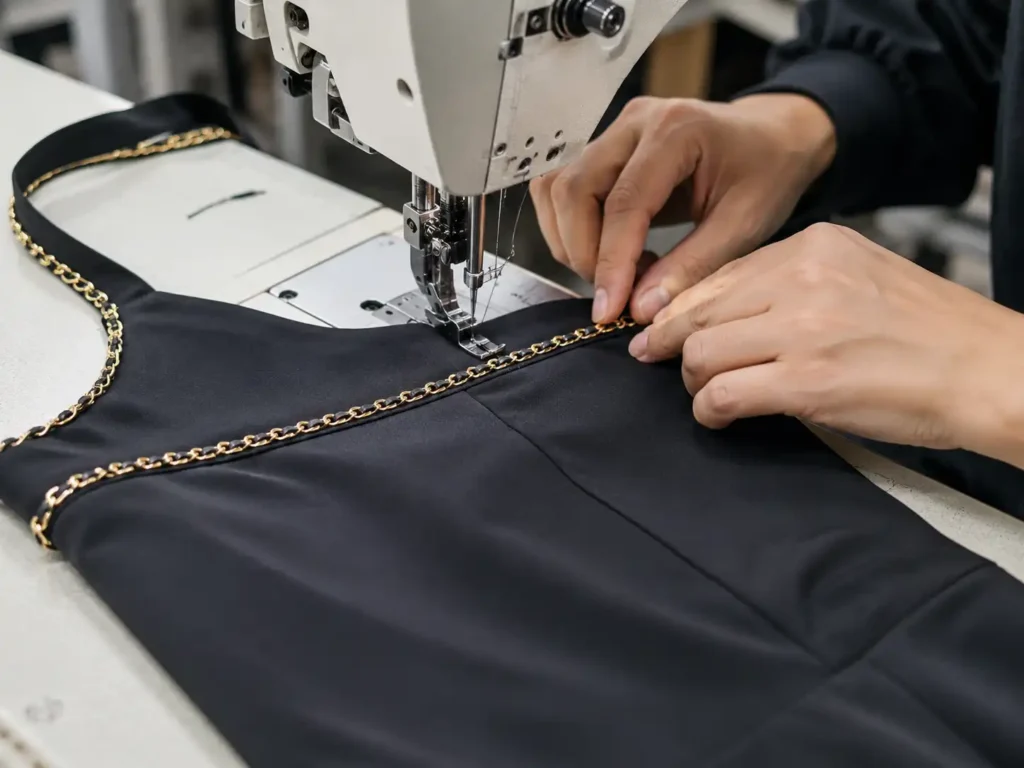
...

EU Apparel Compliance Solutions for Fashion Brands

Compliance-ready womenswear development and manufacturing built around approved materials, controlled samples, documented production, testing coordination and EU market requirements.

  • 16 owned womenswear factories and 20+ coordinated satellite factories operated through brand-specific development, production and quality requirements.
  • 300 sewing lines and 50+ quick-response lines support multi-style seasonal programs, repeat orders and controlled capacity allocation.
  • SMETA 2-Pillar audit record, structured quality checkpoints and cooperation with client-appointed laboratories and inspection companies.
  • 15,000-35,000 sample development units can be handled monthly across the manufacturing group, supporting 3,000-8,000 style development workflows.
  • Stable monthly production capacity of approximately 6.5 million garments, with complex styles routed according to material, workmanship and documentation risk.

Duolan helps fashion brands translate confirmed EU market requirements into material files, samples, labels, production controls, inspection evidence and shipment records. Legal interpretation, market registration and independent test decisions remain with the brand, its EU economic operator, compliance adviser and accredited laboratories.

A Manufacturing Partner Inside Your EU Compliance System

EU market access requires several specialist roles. Duolan occupies the manufacturing execution layer, connecting approved requirements with fabrics, samples, bulk production, inspection preparation and evidence files.

Brand Compliance Direction

The brand, importer, EU economic operator or appointed adviser determines the target markets, applicable rules, required warnings, product claims, testing protocol and internal release standard. Duolan requests those instructions before development begins and records unresolved points instead of guessing. Regulatory scope, legal responsibility, registrations and final market decisions stay with the responsible economic operators.

Independent Verification

Accredited laboratories and inspection companies provide independent testing, reports and inspection findings. Duolan prepares representative samples, material references, BOM details, approved labels, packing data and production access. When a result requires correction, the affected material or goods are isolated, corrective work is recorded and re-testing or re-inspection is coordinated under the brand-approved process.

Manufacturing Execution

Duolan converts approved requirements into actions that production teams can follow: material approval status, PP sample standards, workmanship points, label artwork, barcode data, inspection checkpoints, packing rules and shipment records. The goal is not a certificate statement. The goal is a controlled product version supported by traceable manufacturing evidence from development through delivery.

Built for Complex Fashion Programs Entering Europe

The service structure is designed for established fashion organisations managing frequent development, multiple product categories, controlled launch calendars and formal supplier requirements.

Global Fashion Brands

For multi-market brands, the main challenge is consistency across styles, suppliers, product teams and sales regions. Duolan supports collection-level execution by linking approved materials, sample comments, test status, labels, packing and QC records to each style. Multi-factory allocation is managed against one approved production standard rather than allowing each production unit to interpret requirements differently.

Buying and Sourcing Teams

Buying offices and sourcing teams need disciplined document flow, clear responsibilities and reliable inspection preparation. Duolan can work with vendor manuals, RSL files, test protocols, packing instructions, AQL requirements and client-appointed inspection companies. Each development stage is connected to a release point, reducing last-minute document gaps before production, final inspection or shipment booking.
1. United States|Retail Label and Packing Compliance Program (1)

Compliance and Product Teams

Compliance, QA and product teams require accurate material information without losing the design intent of fashion dresses. Duolan combines garment development knowledge with manufacturing controls for satin, mesh, stretch, corset, sequin and embellished styles. Fit, construction, fibre information, trims, labels and bulk consistency are reviewed together because compliance failures often begin with an uncontrolled product change, not with paperwork alone.

Core EU Apparel Compliance Areas to Control

EU apparel compliance is not one certificate. Product safety, chemical restrictions, fibre information, approved claims, traceable records and market-specific obligations must be translated into measurable development and production controls.

Compliance areaBrand or market responsibilityManufacturing evidence neededDuolan support
General product safetyConfirm applicable product safety duties, economic operator responsibilities and market release criteria.Risk review, approved construction, QC records, traceable product and packing information.Manufacturing risk controls, sample-to-bulk consistency and inspection evidence.
REACH and chemical restrictionsDefine RSL, test scope, restricted substances and acceptance limits for each product risk.Supplier declarations, representative samples, material identity and laboratory reports.Material review, sample preparation, test coordination and change control.
Textile fibre labellingApprove legal fibre names, percentages, language and market-specific information.Confirmed composition, BOM, label artwork and product-label consistency.Execute approved labels and verify garment, hangtag, barcode and packing alignment.
ESPR and DPP readinessPrepare for product-specific ecodesign and digital product data requirements as delegated rules develop.Structured material, supplier, product, production and repair or end-of-life data where required.Provide manufacturing data fields and evidence for the brand platform; no claim of complete DPP compliance before final rules apply.
Textile EPR and circularityAssess producer status, registrations, reporting and fees in relevant Member States.Product weight, fibre data, packaging details and other requested product information.Supply manufacturing and packing data; registrations and reporting remain with the responsible producer.
CE marking scopeConfirm whether specialised legislation applies to the product.Technical evidence only where a product category requires CE marking.Ordinary fashion apparel is not treated as CE-marked clothing; specialised products require separate review.

Manufacturing Risks That Create Compliance Gaps

Most late-stage failures start earlier: an unverified material, an undocumented change, an unsupported claim or a label file released before the product facts are locked.

Unverified Fibre Data

Composition information copied from an early supplier quotation may not match the final fabric, lining or trim. Duolan links fibre data to the selected material reference and BOM before label artwork is released. Where the brand requires analytical verification, representative material is prepared for third-party testing. Any change of supplier, blend or finish returns the item to review.

High-Risk Chemical Inputs

Print pastes, coatings, PU components, metal trims, adhesives, elastics, sequins and special finishes can carry different chemical risks from the main fabric. Risk-based testing is planned around the brand RSL and product construction. A base-fabric report is not automatically treated as evidence for a later coating, print, wash or bonding process.

Material Changes After Testing

A test report may no longer represent bulk production when the supplier, dye lot, coating, backing, adhesive or finishing route changes. Duolan records production-critical material references and reviews substitutions before use. Unapproved changes are held for confirmation, with re-testing coordinated when the change affects the original risk assessment or test coverage.

Unsupported Product Claims

Organic, recycled, responsible, non-toxic and similar claims require evidence that matches the actual material and supply chain. A certificate must be checked for holder, issuer, validity, scope and covered product. Duolan organises available supplier records but does not convert a general mill certificate into a brand claim without documented approval.

Label and Packing Mismatch

Garment labels, hangtags, barcodes, polybags, carton marks and warehouse data can drift when artwork files are updated separately. Duolan uses an approved information set and checks style code, colour, size, composition and packing references during PP review and final packing. Conflicting files are escalated before bulk printing or shipment.

Incomplete Evidence Files

A passed product can still create delays when the test report, sample reference, supplier declaration, PP approval, inspection record or shipment document cannot be connected to the correct style. Duolan organises evidence by style and project stage, giving brand teams a clearer record for internal review, retailer onboarding, audits and future repeat orders.

Start With a Clear Compliance Development Brief

Reliable execution begins before fabric booking or sample cutting. Duolan converts brand instructions into a project brief that separates confirmed requirements, open decisions and conditional actions.

Build the Compliance Input Pack Before Development

  • Core inputs: target EU countries, product category, intended user group, tech pack, size specification, brand RSL, test protocol, label manual, packing manual, inspection standard and required sustainability evidence.
  • Product-specific inputs: fibre direction, lining, stretch requirement, print or coating, metal components, embellishment method, skin-contact materials, functional finishes and any claim planned for retail communication.
  • Commercial inputs: number of styles, order quantity, launch date, delivery model, nominated laboratory, nominated inspection company and internal approval owners.
  • Missing information is recorded as pending. Production does not silently fill a legal, testing or claim-related gap with a factory assumption.

Separate Confirmed, Pending and Conditional Requirements

  • Confirmed items can enter the development plan immediately, such as an approved test protocol or label template.
  • Pending items receive an owner and deadline, such as final fibre composition, target-country language, laboratory selection or care instruction approval.
  • Conditional items are triggered by product risk. A metal trim may require additional testing; a coating change may require re-evaluation; a new supplier may require updated declarations.
  • Sample timing is quoted after fabric availability, construction complexity, testing needs and approval stages are reviewed. A clear path is more reliable than a single generic sampling promise.

Plan Compliance at Collection Scale

  • Programs containing 10-30 styles and 20,000-80,000 total units need risk tiers rather than identical treatment for every SKU.
  • Low-risk styles can follow the standard approval path. Medium-risk styles receive additional material or workmanship checks. High-risk styles, including complex embellishment, coating, metal hardware or multi-layer constructions, receive earlier sample review and targeted testing.
  • The program calendar links material approval, first sample, revisions, PP confirmation, testing, bulk release, inline inspection, final inspection and shipment. Shared dependencies are grouped so one late fabric or label decision does not block the entire collection.

Turn Requirements Into a Controlled Production Plan

Every important requirement needs an owner, a control stage, evidence and a release point. The production plan remains usable because teams can see what is approved, what is pending and what blocks the next step.

RequirementPrimary ownerControl stageEvidenceRelease point
Fibre compositionBrand + Duolan + material supplierMaterial approvalBOM, supplier data, test report when requiredBefore label artwork
RSL and chemical testingBrand + laboratory + DuolanMaterial or product risk stageTest request, representative sample, reportBefore bulk use or shipment, as defined
Certificate or claim evidenceBrand + supplier + DuolanMaterial selectionValid certificate, scope check, material matchBefore claim approval
Label and barcode dataBrand + DuolanPP sampleApproved artwork and information checklistBefore bulk printing
Construction and workmanshipDuolan + brand product teamSample and PP reviewApproved sample, comments, workmanship standardBefore production
Final product and packingDuolan + appointed inspectorFinal inspectionInspection record, label and packing checksBefore shipment release

Compliance Risks Change With Dress Construction

Fashion dresses use different fibres, finishes, support structures and trims. Product risk assessment must follow the real construction rather than applying one generic test list to every style.

Satin Dresses

Satin programs require close control of fibre composition, dye lot, shade, colour transfer, snagging, seam appearance and pressing. Lightweight satin can show every needle and handling mark, while dark colours may need focused rubbing or colourfastness review under the brand protocol. Duolan locks the approved face, weight, colour and finish before bulk and checks production against the PP sample.

Mesh and Lace

Mesh and lace styles often combine several materials: outer mesh, lining, elastic, lace motifs, binding and decorative trims. Each component needs an accurate identity in the BOM, and lining coverage must match the approved design and wear standard. Skin-contact materials, flocking, prints, adhesives and metal decorations are separated for risk review instead of being treated as one fabric.

Bodycon and Stretch

Stretch dresses depend on elastane content, recovery, opacity, seam extension and dimensional stability. A fibre blend alone does not predict fit performance. Duolan reviews fabric stretch direction, power and recovery against the pattern and size specification, then checks graded measurements and bulk consistency. Supplier or lot changes are not accepted solely because the nominal composition looks similar.

Corset and Bustier

Corset styles may include boning, cup foam, underwires, metal sliders, hook-and-eye parts, mesh panels, lining and stabilisers. Compliance review includes component identity, sharp-edge prevention, secure attachment and brand-defined chemical testing where needed. PP approval locks bust balance, support construction, hardware position and internal finishing before the style enters repeatable bulk production.

Sequin and Embellished

Sequins, beads, stones, pearls and metal decorations create detachment, sharpness, abrasion, coating and needle-control risks. Duolan reviews attachment density, stitch path, backing, lining protection and repair standards.  Final inspection includes missing decoration, loose threads, exposed sharp points and consistency across the approved pattern.

Printed and Coated

Printing, foil, flocking, bonding and surface coatings can change chemical and performance risk after the base fabric has been approved. The final treated material is evaluated as the production material. Duolan records the print or coating route, supplier and finish, checks cracking or delamination risks, and coordinates re-evaluation when the formula, supplier or processing condition changes.

Velvet and Pile

Velvet and pile fabrics require direction control, shade management, rubbing review, pressing discipline and careful packing. Mixed pile direction can create a visible colour difference even when the dye lot is correct. Duolan marks cutting direction, checks face damage during sewing and finishing, and aligns the final composition and care information with the actual fabric and construction.

Fashion Sets

Two-piece sets need component-level control. A top and skirt may use different linings, elastics, closures or fibre blends and may require separate labels or packing references. Duolan checks colour-lot matching, component quantity, style coding, size pairing and pack-out accuracy. A complete set is released only when both garments and their information match the approved order structure.

Control Fabric, Trims and Finishes Before Bulk

Material control is the strongest point for preventing late test failures, unsupported claims and bulk inconsistency. Review starts with the final production route, not only the swatch appearance.

Verify the Final Fabric, Not Only the Quotation

  • Material identity: supplier, article number, fibre composition, width, weight or construction, colour, finish and intended garment component are recorded in the BOM.
  • Performance relevance: stretch, recovery, opacity, drape, shrinkage, colourfastness, seam behaviour and dimensional stability are considered according to the dress structure and brand protocol.
  • Incoming control: fabric inspection, shade review, GSM or weight checks where relevant, colour assessment and cutting preparation are carried out before bulk sewing.
  • The manufacturing group operates approximately 1,100-2,000 fabric inspection, spreading and cutting units, including inspection machines, weight measurement equipment, colour light boxes, automatic spreaders and cutting systems. Equipment supports control; approved standards and trained decisions determine release.

Review Trims as Independent Materials

  • Zippers, snaps, sliders, hooks, eyelets, chains, elastics, lace, labels, heat transfers, adhesives, sequins and decorative stones are reviewed by actual use and skin contact.
  • Supplier declarations and certificates are checked against the selected component rather than stored as general supplier marketing documents.
  • Where a brand protocol requires testing for nickel release, restricted substances, coating chemistry, colourfastness, attachment or mechanical performance, representative components are prepared and identified correctly.
  • Trim substitutions are controlled because a visually similar part can use a different plating, resin, adhesive or backing and may invalidate earlier evidence.

Treat Special Processes as Material Changes

  • Printing, embroidery, washing, dyeing, coating, pleating, bonding, transfer application and embellishment can alter the final product risk.
  • Duolan works with established special-process resources, including 2-3 commonly used partner facilities in major process categories such as printing, dyeing, embroidery and washing.
  • Process parameters, artwork, colour, placement, curing or bonding route and approved hand feel are confirmed before bulk.
  • When a process formula, supplier or application changes, the affected style returns to technical review. Earlier evidence is not assumed to cover a materially different final product.
Special-Process-Coordination

Use Certificates and Claims With Exact Scope

A valid document has value only when it covers the correct holder, material, process, site and validity period. Duolan organises evidence without turning supplier documents into unsupported product claims.

Check Certificate Scope

The review checks issuer, certificate holder, validity dates, covered site, material category, product scope and any transaction or chain-of-custody requirement. A certificate from one mill, fibre or process is not automatically applied to another supplier or finished garment. Missing links are identified before the claim enters artwork, product copy or retailer data.

Match the Actual Material

Supplier files are linked to the selected fabric or trim article in the BOM. Article number, composition, colour, finish and source are compared with the document scope. When a brand requires organic, recycled or other certified content, the team confirms which evidence must travel with the order and which party is responsible for final claim approval.

Control Every Change

A new supplier, substitute fabric, revised blend, changed finish or different production site may require updated evidence. Duolan records the change and pauses the related claim or release point until the required documents are reviewed. Claim language remains under brand approval, while production uses only the material version connected to the accepted evidence.

Lock Compliance at Sample and PP Stages

Samples are decision tools. Each stage should reduce uncertainty in materials, fit, construction, labels, testing and bulk repeatability before production capacity is committed.

Tech Pack Review

Style details, intended materials, measurements, construction, trims, labels and packing are reviewed together. Conflicts between the tech pack, reference sample and compliance manual are listed early. The review identifies decisions needed before pattern work, sourcing or laboratory sample preparation begins.

Material Confirmation

Fabric and trim references are assigned to the style BOM. Fibre information, finish, supplier records and risk-based testing status are checked. Substitutes remain clearly marked and are not treated as approved bulk materials until the brand confirms the change and any related evidence requirement.

First Sample

The first sample tests design translation, fabric behaviour, construction feasibility and the initial fit direction. High-risk details such as bust support, transparency, metal position, embellishment backing, bonding or surface finish are reviewed before later approvals. A visually close sample is not accepted as production-ready when the construction cannot be repeated consistently.

Fit and Revision

Fit comments are converted into pattern, measurement and construction actions. Grading follows the brand size specification and approved grade rules. Measurement tolerance is controlled against the brand standard rather than one generic factory value. Each revision records what changed so the final version can become the bulk reference.

PP Confirmation

The PP sample locks approved fabric, colour, lining, trims, workmanship, measurements, labels and packing presentation.
Open test or document items remain visible on the release list. Bulk printing, cutting or sewing starts only after the required approvals are recorded for the program.

Bulk Release

Production timing is confirmed after materials and approvals are ready. Reference bulk cycles are 15-20 days for simple styles, 20-30 days for regular styles and 30-45 days for complex styles. Multi-style programs may use phased release so approved styles move forward without bypassing controls on styles still under review.

Execute Labels and Product Information Without Drift
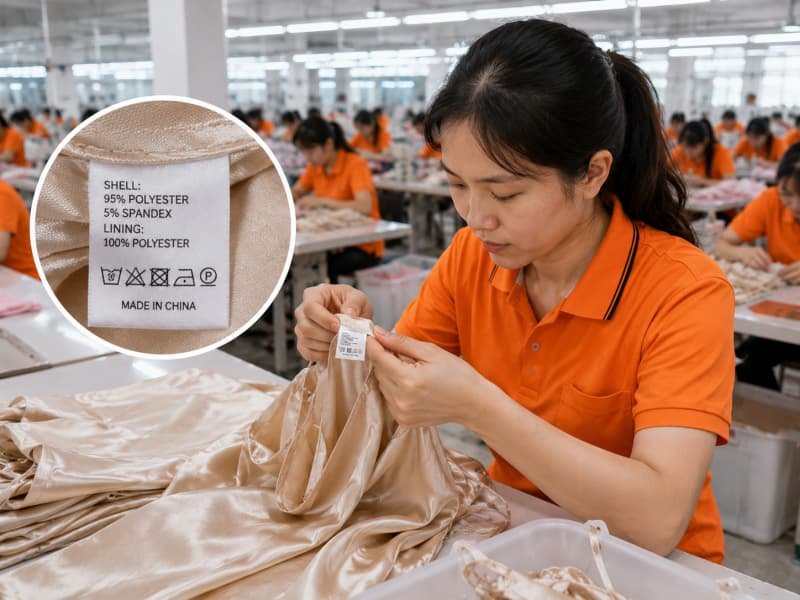
The brand or appointed adviser approves legally required content. Duolan controls how approved information is translated across garments, hangtags, barcodes, polybags and cartons. Image Direction: Use a real product, material, sample, production or inspection image directly connected to the card content.

Fibre Composition

Fibre names and percentages are taken from the confirmed production material and approved data. Main fabric, lining and other relevant components are handled according to the brand instruction and applicable textile rules. Artwork is not released while the composition source remains uncertain or conflicts with the BOM.

Care and Size Data

Care instructions, size labels and measurement references follow the brand-approved system. Care content is checked against the final fabric, trims, embellishment and construction because a process suitable for the base fabric may damage a bonded, coated or decorated garment. Size coding remains consistent across garment labels, hangtags and packing.

Market and Brand Details

Country-of-origin wording, responsible economic operator information, languages, warnings, brand address and other market data are implemented from approved files. Requirements can vary by product and selling country, so Duolan does not create legal content independently. The production team verifies placement, legibility and consistency with the approved sample.
pack

Barcodes and Packing

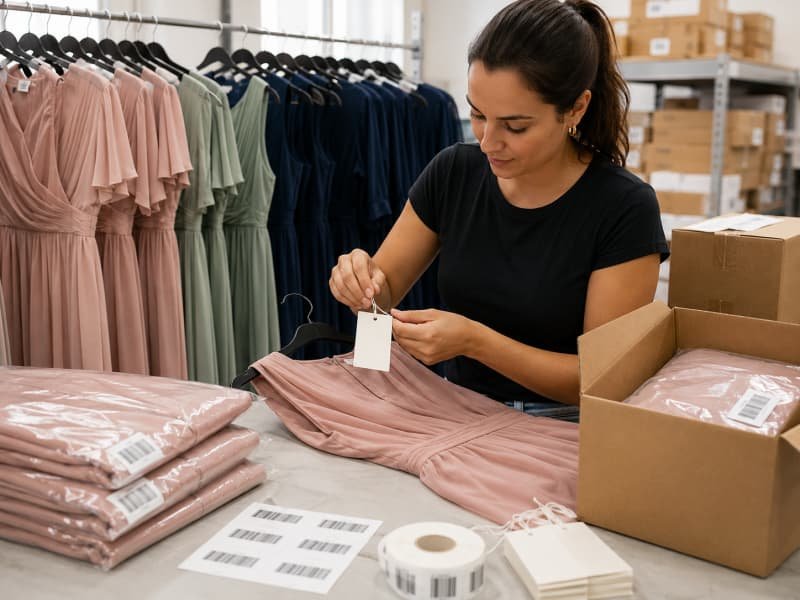
EAN or UPC data, SKU, style, colour, size, polybag labels, carton marks and pack ratios are checked as one information set. Scan verification or brand system checks can be coordinated when required. Ordinary fashion clothing is not presented as CE-marked apparel; specialised products are reviewed separately when CE legislation applies.

Quality Control From Fabric Receipt to Shipment

Quality checks protect more than appearance. They keep the approved product facts, materials, construction, labels and packing consistent across bulk production and future repeat orders.

Incoming Fabric Check

Fabric article, colour, lot, face, width, weight or construction and visible defects are checked against the approved reference. Shade groups and roll identities are controlled before cutting. Suspect rolls are separated so an incoming difference does not spread through multiple sizes or styles.
Pre-Production Meeting​(生成前会议)

Pre-Production Meeting

Production, technical, QC and merchandising teams review the PP sample, BOM, workmanship points, measurement priorities, label files, packing method and open compliance items. The meeting converts development decisions into instructions that can be followed on the sewing line and during inspection.

First-Piece Confirmation

The first completed pieces are compared with the approved sample before full-line output accelerates. Fabric handling, seam type, support structure, trim position, label placement and critical measurements are checked. Corrections are made at the start of production rather than after thousands of units are completed.

Inline Measurement Control

Critical points are selected according to the silhouette: bust, waist, hip, body length, strap, cup position, rise, skirt fall or component matching. Results are checked against the brand specification and approved tolerance. Trends are corrected before they become a full-order deviation.

Workmanship Inspection

QC checks seam appearance, stitch security, puckering, tension, lining, opacity, pressing, symmetry, zipper operation, bonding and finishing. Standards vary by style. Satin, mesh, stretch, corset and embellished garments receive checks based on their specific failure modes rather than a generic checklist.

Trim and Needle Control

Decorative components are checked for security, missing parts, sharp points, coating damage and consistency. Needle and metal-control procedures are applied according to product and brand requirements. Repairs are recorded and rechecked so corrected goods do not bypass the final standard.

Label and Barcode Check

Composition, care, size, style, colour, origin, barcode and hangtag data are compared with the approved information. Placement, legibility and scan performance are checked where required. Mixed labels or obsolete artwork are isolated before packing.

Final Packing Review

Finished garments, folding, protective materials, polybag markings, pack ratios, carton quantity, carton marks and shipment documents are checked against the approved packing manual. Client-appointed final inspection can be arranged before shipment release, with non-conformities corrected and verified under the agreed process.

Coordinate Independent Testing and Inspection Properly

A manufacturing partner should prepare accurate samples and evidence, cooperate with independent findings and close corrective actions. Independence is protected; preparation quality is strengthened.

Prepare the Correct Sample and Documentation

  • Confirm the brand test protocol, product category, target market, sample quantity, colour or size coverage and required components.
  • Identify the sample against the production material and style BOM. A laboratory should know which fabric, lining, trim, print, coating or finished garment is being tested.
  • Provide approved labels, supplier documents and relevant product information without editing or interpreting the laboratory result.
  • Testing timing is connected to development and bulk release. High-risk materials are tested early enough to allow correction; shipment-stage testing is used only where the brand protocol requires it.

Support an Independent Factory Inspection

  • Provide inspection access, order files, approved samples, size specifications, packing instructions and available quantities.
  • Support random sample selection and product identification without directing the inspector toward preferred goods.
  • Prepare measurement areas, lighting, barcode tools, carton access and responsible staff so the inspection can proceed efficiently.
  • The inspector applies the brand or inspection-company standard. Duolan does not promise a pass result; Duolan prepares the production and evidence for a fair, complete assessment.

Close Failures With Corrective Evidence

  • Affected materials or goods are isolated, and the finding is linked to the relevant style, batch and process.
  • Root cause is reviewed across supplier input, pattern, sewing method, process parameter, label file or packing execution.
  • Correction, rework or replacement is documented. Re-testing or re-inspection is arranged when required by the brand or independent provider.
  • The corrected standard is added to the project record and repeat-order instructions, reducing the chance that the same failure returns in a later production run.
Repeat Orders record (1)

Build Traceable Manufacturing Evidence by Style

Compliance records become useful when every file can be connected to the correct style, material version, sample stage, production batch and shipment.

Approved BOM

The BOM records main fabric, lining, trims, labels, packing materials, supplier references and approved alternatives. It provides one product structure for sourcing, sampling, testing, production and repeat orders. Updates are version-controlled so old material details do not re-enter the project.

Supplier Evidence

Declarations, certificates, scope documents and available transaction records are organised against the selected material or component. Missing or expired evidence is marked clearly. The file supports brand review but does not replace independent verification or legal approval.

Sample History

First samples, fit comments, revisions, PP approvals and reference photographs create a development trail. The record explains which version became the production standard and which changes affected materials, measurements, labels or testing.

Batch Records

Production lot, fabric lot, colour group, size distribution, line allocation and change records help connect bulk garments to the approved product version.

Multi-factory programs use the same released standard and project-level controls.

QC Evidence

Inline findings, measurement checks, workmanship records, label checks, corrective actions and final inspection files are stored by style and production stage.

Photographs support the written record where brand policy permits.

Shipment Pack

Packing lists, carton details, inspection status, laboratory references, approved artwork and shipment documents can be consolidated for brand review. Duolan can supply structured manufacturing data for traceability, DPP preparation or EPR data requests, while platform operation and legal reporting remain with the responsible brand organisation.

Manufacturing Scale With Brand-Level Control

Scale matters only when standards travel with the order. Duolan combines development depth, owned-factory control, coordinated capacity and formal audit readiness for multi-style womenswear programs.

30+ Years Development

The leadership background reaches back to fashion product development work beginning in 1996, with long-term focus on womenswear, fabric development, dress structure and commercial product execution. Experience supports earlier identification of construction and material risks in fashion-led styles.

16 Owned Factories

Core styles and priority programs can be managed through 16 owned womenswear factories. Direct control supports sample accuracy, production discipline, issue escalation and stable replication of the approved PP standard across bulk orders.

20+ Satellite Factories

More than 20 coordinated satellite factories provide capacity flexibility for repeat orders and seasonal volume. Allocation is based on product complexity, workmanship and delivery needs. Released standards, BOMs, labels and QC requirements remain consistent across the program.

300 Sewing Lines

Approximately 300 sewing lines support parallel development and bulk programs. Product routing considers fabric handling, silhouette, special construction and required finish. Capacity is not assigned only by available space; technical fit influences the production path.

50+ Response Lines

More than 50 quick-response and flexible lines support staged releases, selected replenishment and multi-style calendars. They are used within the same approval and quality framework, not as an uncontrolled shortcut around PP, testing or inspection gates.

Audit and Capacity

The factory system has a SMETA audit and SMETA 2-Pillar audit record. Stable monthly capacity is approximately 6.5 million garments, with peak capacity reaching about 10 million. Brand-specific requirements, third-party inspection and documented quality controls remain central when volume increases.

A 22-Style EU Compliance Execution Program

A representative anonymised program based on recurring order structures shows how compliance work is integrated into development and production rather than added at shipment.

Program Scope and Risk Map

  • Program profile: a US occasionwear brand prepared 22 styles and 58,600 garments for EU distribution across satin, mesh, stretch, corset, embellished and fashion-set categories.
  • Input files included a brand RSL, testing protocol, fibre and label guide, packing manual, inspection checklist and product data fields.
  • Nine styles were classified as high risk because of metal trims, coated components, sequins, bonded details or multi-layer construction. Eight were medium risk and five followed the standard path.
  • The project was divided into six approval groups so shared fabrics, labels and test dependencies could be controlled without delaying every style.

Development and Production Controls

  • Material references were connected to style BOMs before label data was released. Supplier evidence was checked for scope and validity, and missing records were placed on the open-item list.
  • High-risk materials and components were prepared for two coordinated third-party testing rounds. Changes to a coated trim and a lining blend were held until evidence and label data were updated.
  • PP approval locked construction, measurements, labels and packing. Production was released in three controlled lots rather than forcing all styles into one start date.
  • Inline QC focused on seam appearance, stretch recovery, support construction, embellishment security, label accuracy and component matching according to the risk map.

Evidence Pack and Program Outcome

  • The project file contained 22 released BOMs, 22 PP approval records, material and supplier documents, laboratory references, label artwork, QC evidence and final packing confirmations.
  • Label information was aligned with the final material version before bulk printing. Styles with changed components were reviewed again instead of relying on earlier evidence.
  • The brand received one consolidated manufacturing evidence pack organised by style and production lot for internal compliance and sourcing review.
  • The outcome reflects controlled execution, not a legal guarantee: product decisions, market obligations and final compliance approval remained with the brand and its appointed specialists.
How Do You Adapt the Dress Design (1)

EU Apparel Compliance Frequently Asked Questions

No. Duolan is a womenswear development and manufacturing partner. Legal interpretation, economic operator duties, market registrations and final compliance decisions remain with the brand, importer or appointed adviser. Duolan supports manufacturing execution, material documentation, testing coordination, labels, PP control, QC, inspection preparation and production evidence.
Yes. Duolan can follow a brand RSL or testing protocol, identify the materials and components involved, prepare representative samples and coordinate testing with a client-appointed accredited laboratory. Test scope and acceptance limits should be defined by the responsible compliance team.
Ordinary fashion apparel is generally not CE marked under the EU Textile Labelling Regulation. CE marking applies only when separate EU legislation requires it, such as certain personal protective equipment, medical devices or toys. Product scope should be confirmed before any CE mark is used.
Yes. Send the current RSL, test protocol, restricted-substance limits, sampling rules and report format. Duolan will connect the requirements to the relevant fabrics, trims, prints, coatings and finished garments and will record open items before bulk release.
Yes. Duolan can prepare samples, BOM details, material references, labels and production access for a nominated laboratory or inspection company. Independent decisions remain with the appointed provider, and corrective actions are coordinated when findings require changes or re-verification.
Composition is linked to the selected production material and BOM. Supplier data is reviewed, and third-party analytical testing can be coordinated when required. Label artwork is released only after the composition source is approved. Supplier, blend or finish changes return to review.
Yes. Duolan can execute approved fibre, care, size, origin, responsible-operator, warning, barcode and packing information. The brand or appointed adviser should approve the legal content and language requirements for each market. Duolan checks consistency across garment labels, hangtags, polybags and cartons.
Duolan can provide structured manufacturing data such as BOMs, material references, supplier evidence, product identifiers, production records, QC files and packing data. The brand remains responsible for its DPP platform, final data architecture and compliance with product-specific rules as they are adopted.
Duolan can supply available product, fibre, weight and packaging information requested by the brand. Producer registration, national reporting, authorised representation and fee payment remain with the legally responsible producer or its appointed organisation in each relevant market.
Yes. NDA terms can be reviewed before tech packs, compliance manuals, original samples or collection information are shared. Access to sensitive files can be limited to the relevant development, sourcing, production and quality teams under the agreed project process.

Submit Your EU Compliance Manufacturing Requirements

Send the product and compliance information already used by your organisation. Duolan will review the manufacturing scope, identify missing inputs and prepare a development path covering materials, samples, testing coordination, labels, production controls, inspection preparation and evidence files. For multi-style programs, include the collection calendar and indicate which requirements apply across all styles and which are product-specific. The first review is intended to clarify feasibility and responsibilities before sampling or bulk commitments are made.

  • Company name, website, target EU countries and responsible project contacts
  • Tech packs, reference samples or collection brief, including 10-30 style programs where applicable
  • Estimated quantities, colour and size distribution, launch date and required delivery model
  • Brand RSL, laboratory test protocol, compliance manual and third-party inspection standard
  • Fibre, label, care, barcode, packaging and market-information requirements
  • Organic, recycled or other material claims and the evidence standard required by your organisation
  • DPP, traceability, retailer onboarding or textile EPR data fields requested from the manufacturer

Recommended form fields: Name, Company, Website, Email, Tel/WhatsApp, Target EU Markets, Product Category, Number of Styles, Estimated Quantity, Required Delivery Date, Message and File Upload.


Start Your Apparel Development Project

OEM/ODM Manufacturing Support for Fashion Brands

Share your collection details, estimated quantities, target market, development timeline, and technical requirements. The production team will review your request and provide a tailored manufacturing solution based on your product category, fabric selection, construction needs, and delivery schedule.

Fashion Manufacturing Support with Scalable Production Capacity

From sample development to bulk production, Duolan supports fashion brands with confidential OEM/ODM manufacturing, stable quality management, flexible production planning, and coordinated multi-factory execution for seasonal and capsule collections.

Need Direct Assistance?

Seraphinite AcceleratorOptimized by Seraphinite Accelerator
Turns on site high speed to be attractive for people and search engines.