...

Corset and Bustier Pattern Development

Dress-focused pattern engineering, sample refinement and bulk manufacturing support for fashion brands developing structured tops, dresses and occasionwear.

  • 30+ years of fast-fashion dress development experience across pattern, fabric, workmanship and commercial production.
  • A group-wide pattern and sample team of approximately 300-400 specialists supports CAD pattern making, sample sewing, fit correction and technical documentation.
  • Approximately 650-1,200 group-wide pattern, sample and development machines include CAD systems, plotting equipment, sample sewing machines and pressing stations.
  • Monthly development capacity covers about 15,000-35,000 sample pieces or development versions across 3,000-8,000 active styles.
  • Development can begin from a tech pack, sketch, reference image, original garment, fabric direction or collection brief.
  • Cup position, neckline security, boning, lining, closures, grading and bulk controls are reviewed as one connected system.

What Corset and Bustier Pattern Development Delivers

Pattern development converts a visual design into a fitted, measurable and repeatable garment structure. Strong development work defines the body relationship, support system, construction path and grading rules before production resources are committed.
3Corset Sewing (1)

Pattern Engineering

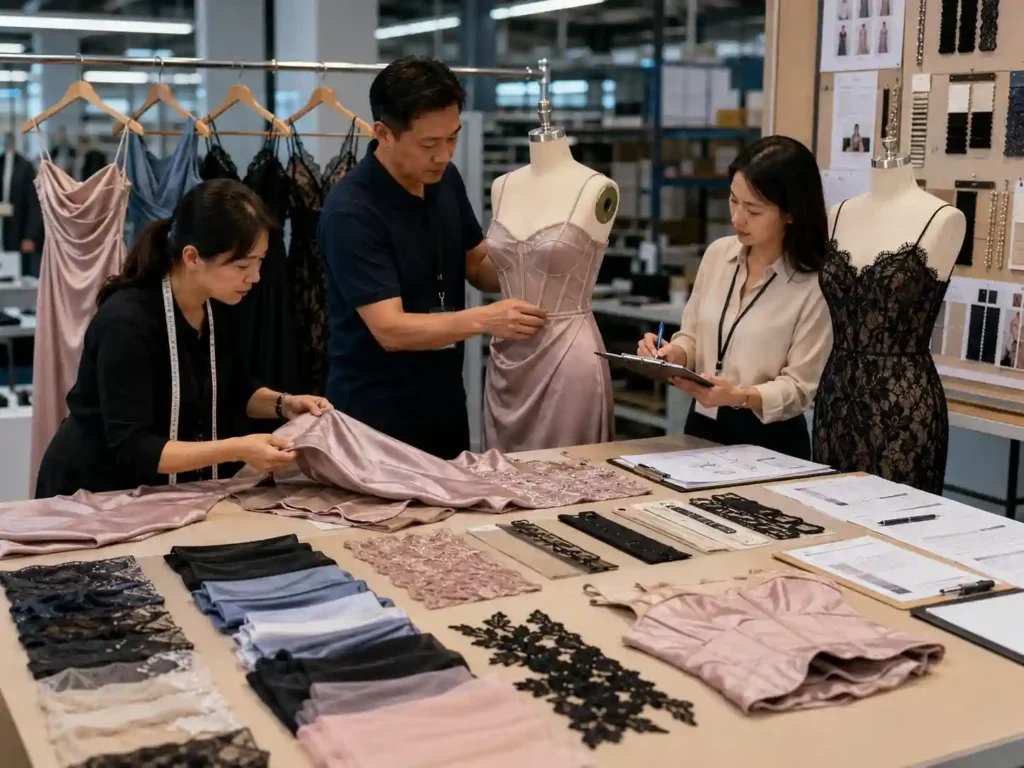
Corset and bustier development starts with body balance rather than surface styling. The pattern team establishes bust point, cup width, cup depth, underbust line, waist position, torso length, side seam balance and back opening. Panel lines are then placed to shape the body and support the intended silhouette. Boning positions, seam allowances, lining pieces, closure extensions and trim placements are built into the pattern instead of added after the sample is sewn. A successful pattern gives the sample room to be evaluated, corrected and graded without losing the design language.
  • Input can include a tech pack, sketch, reference garment or photographed sample.
  • Output should identify every pattern piece, grainline, seam allowance and construction reference.
  • Fit comments must translate into measurable pattern actions rather than general visual feedback.
Production Readiness

A visually attractive sample is not automatically ready for production. Production readiness requires confirmed material behavior, stable cup and neckline fit, repeatable boning placement, workable sewing sequences and clear tolerances. The approved version should align the pattern, measurement specification, bill of materials, workmanship notes and quality checkpoints. When those references agree, the sewing line, pattern room, material team and inspection team work from the same standard. The result is a development package that can move through size-set review, pre-production approval and bulk manufacturing with fewer interpretation gaps.
  • Sample purpose is defined before each development round.
  • Approved materials and trims are locked before the pre-production sample.
  • Critical points remain traceable from pattern revision to bulk inspection.

Development Support for Structured Fashion Programs

Duolan supports structured fashion products where fit, support, visual proportion and bulk consistency carry equal weight. Each project is organized around the working needs of the team responsible for design, sourcing and launch execution.

Product Development Teams

Product teams need a supplier that can read design intent and convert comments into technical action. Duolan reviews target silhouette, base size, cup shape, neckline, waist emphasis, fabric behavior and sample purpose before pattern work begins. During fitting, visual comments are separated into pattern, material, construction and styling decisions. Clear revision notes keep every sample round focused on a defined outcome, whether the goal is fit validation, campaign appearance, size-set approval or pre-production locking.

Sourcing Teams

Sourcing teams need comparable costs, controlled timelines and production standards that can be audited. Development planning therefore includes material availability, trim lead time, construction complexity, sample gates, approval responsibility and bulk feasibility. A corset design with ten panels, internal boning and decorative lacing has a different cost and schedule profile from a lightly structured bustier top. Early clarification gives sourcing teams a more dependable basis for supplier evaluation and production allocation.

Occasionwear Brands

Occasionwear and partywear programs rely on strong visual impact without sacrificing wearability. Structured bodices must remain secure during movement, photography, retail handling and repeated wear. Duolan develops corset and bustier structures for mini, midi and maxi dresses, party tops, matching sets and fitted occasionwear. Cup coverage, strap or neckline security, lining comfort, zipper strength and embellished fabric behavior are reviewed alongside the intended campaign look.

Corset and Bustier Patterns Need Different Engineering

Corset and bustier silhouettes can look similar, yet their load paths and fit priorities differ. Treating both products as the same bodice often creates unstable necklines, compressed cups, weak waist shaping or internal support that cannot survive production.

Development PointCorset PatternBustier PatternEngineering Decision
Primary control zoneTorso shaping, waist definition and panel balanceCup volume, underbust anchoring and neckline stabilityDefine whether the project needs true structural support or a corset-inspired appearance.
Pattern foundationMulti-panel torso block with controlled waist reductionBodice or bra-inspired foundation with cup and cradle developmentChoose the base block before styling lines are added.
Support systemBoning, stable lining, waist stay and reinforced closureCup, underbust support, side wing, optional wire or foamMap every support component to a pattern piece and sewing step.
Main fit riskRiding up, twisting, waist collapse or excess pressureCup overflow, bust compression, gaping or slippingFit review must separate torso balance from cup-volume problems.
Common closuresLacing, zipper, hook-and-eye, busk or combined systemsZipper, hook-and-eye, adjustable back or concealed closureClosure strength and extension must match the load carried by the garment.
Grading focusTorso length, waist ratio, panel balance and bone lengthCup width, depth, bust-point movement and underbust growthAvoid proportional enlargement across every pattern piece.
Bulk inspectionPanel symmetry, waist level, bone placement and closure strengthCup symmetry, neckline contact, underbust stability and side-wing balanceCritical measurements and construction checkpoints need separate inspection standards.

Start Development From the Information Available

A complete technical pack is valuable, but pattern work can also begin from other controlled references. The first review identifies missing decisions, separates visual goals from structural requirements and defines the fastest route toward a testable sample.

Tech Pack Development

A tech pack provides the strongest starting point when measurements, materials, construction and design details are already defined.
Duolan checks whether the sketch, size specification, bill of materials and workmanship notes agree with each other. Areas needing clarification are flagged before pattern release, including cup sizing, center-front height, waist placement, closure type, boning material, lining stability and target stretch. A short feasibility review can prevent pattern work from being built around conflicting instructions.

  • Confirm base size and target size range.
  • Confirm whether the cup is fashion-sized or linked to bra cup groups.
  • Confirm sample purpose and approval authority.

Reference Sample Development

An original garment can provide useful information on proportion, construction and fit, but direct copying may preserve unwanted limitations. Duolan measures the reference, studies internal layers, identifies the function of each seam and rebuilds the pattern around the brand size standard.

Material changes are assessed before the pattern is finalized because a new fabric can alter stretch, recovery, compression and support. 

  • Measure the garment in a relaxed state and under light tension where relevant.
  • Record internal components before disassembly or replication.
  • Separate design features from fit defects that should not be carried forward.

Sketch or Image Development

A sketch or reference image shows direction but rarely contains enough information for accurate pattern making. Duolan converts visual cues into development questions: Is the neckline supported by cups, boning, straps or internal grip? Does the waist need shaping or only a corset-inspired seam layout? Is the fabric stable, stretch or layered? Is the back closed by zipper, lacing or hooks? Answers are documented before the pattern begins so the first sample tests a defined structure rather than an assumption.

  • Provide front, side and back references whenever possible.
  • State the desired coverage, support and body fit.
  • Share target fabric feeling, price position and launch date.

Critical Measurements Behind a Stable Pattern

Structured bodices react strongly to small changes in body position and garment length. A reliable block controls six measurement groups before style lines, boning channels and decorative details are finalized.

Upper Bust

Upper-bust measurement helps establish neckline contact and the volume above the fullest part of the bust. Excess room can produce gaping along a strapless or sweetheart neckline, while insufficient room can pull the neckline outward and distort cup shape. The value should be read together with full bust, front width and upper-chest shape. A single circumference cannot explain whether the pattern needs less neckline length, more cup depth or a different panel angle.

Full Bust

Full bust defines overall circumference but does not describe how volume is distributed. Two fit models can share the same full-bust measurement and still require different cup width, depth or bust-point placement. Development therefore checks the horizontal level, the front-to-back distribution and the relationship between full bust and underbust. Cup seams, princess lines and side panels are adjusted according to shape rather than circumference alone.

Underbust

Underbust measurement establishes the anchor below the bust. A bustier with a loose underbust line may slide downward even when the neckline initially looks correct. Excessive reduction can create pressure, roll the lower edge or force the cups upward. The pattern team reviews underbust circumference, rib-cage shape, elastic or stay construction and the load carried by the closure. Support is created by controlled contact, not by making every area tighter.

Bust Point

Bust-point position controls the visual center of the cup and the direction of shaping seams. A point placed too high, low, inward or outward can make the cup look distorted even when total volume is close. The location is checked vertically from the shoulder or high-point shoulder and horizontally from center front. During grading, the bust point moves by controlled increments rather than remaining fixed across the size range.

Waist Position

Corset shaping depends on the natural waist, garment waist and visual waist working together. A waistline set too high can shorten the torso and push the bust upward; a low waist can create folding, pressure or a dropped silhouette that was never intended. Front, side and back waist levels are checked separately because the body is three-dimensional. Panel seams and bone lengths are corrected to maintain a level, balanced shape.

Torso Length

Torso length governs center-front height, side-body comfort, back balance and the vertical distance between bust and waist. A short torso pattern can compress the bust or dig into the underarm. An overly long pattern may buckle at the waist or hip. Development reviews center front, center back, side waist length and seated comfort. Corset dresses also require a clean transition from structured bodice to skirt without a visible break in balance.

Cup Geometry and Neckline Control

Cup fit is a three-dimensional problem involving width, depth, height, apex position, underbust shape and neckline contact. Each variable influences support, coverage and visual proportion across the full size range.

Cup Width

Cup width determines how far the structure extends around the bust. A narrow cup can cut into side breast tissue, push volume upward or move the apex inward. An overly wide cup may flatten projection and create empty space near the side seam. Width is reviewed against the underwire or cup seam, side-wing position and intended coverage. When the style has no underwire, seam placement still needs to follow the body instead of acting as a decorative line only.

Cup Depth

Cup depth provides forward projection. Insufficient depth often appears as compression, overflow or a neckline pulled away from the body. Excess depth creates empty space and weak support. Pattern correction may involve redistributing volume across lower cup, upper cup and side cup rather than simply enlarging the entire piece. Fabric stretch and foam thickness are considered because both can change the effective internal volume after sewing.

Cup Height

Cup height controls coverage, visual proportion and how securely the neckline contains movement. A low balconette line, a plunge neckline and a straight bustier edge require different support paths. Height is balanced with apex location, strap placement, center-front height and upper-cup tension. For strapless designs, neckline contact and internal anchoring must work together; adding height without correcting the lower structure can still leave the garment unstable.

Apex Position

The apex should align with the intended bust point in the base size and move logically during grading. A misplaced apex can tilt the cup, twist seams and create uneven neckline tension. Fit comments such as “the cup looks off” are translated into measurable actions: move apex, change cup depth, rotate seam angle or rebalance center front. Clear revision notes prevent one visual complaint from generating several uncontrolled changes.

Underbust Shape

Underbust shaping follows the rib cage and supports the lower cup. A straight line may look acceptable on paper but lift away from the body when worn. Curvature, cradle shape, elastic tension, lining stability and closure placement are reviewed together. For corset dresses, the underbust seam may also connect to vertical panel lines; the transition must remain smooth so pressure is spread rather than concentrated at one seam.

Neckline Contact

A secure neckline lies close to the body without cutting, rolling or creating visible strain. Gaping can come from excess neckline length, shallow cups, incorrect apex position, weak lining or insufficient anchoring. Compression can come from the opposite combination. Development tests standing, arm movement and seated posture because a neckline that looks clean on a static mannequin may shift during wear. Anti-slip treatments are considered only after pattern and support balance are correct.

Internal Support Must Work as One System

Boning, lining, waist support and closures should share the load created by the garment. Isolated components may improve appearance in a sample but fail when the style is worn, graded or repeated in bulk.
Boning Position
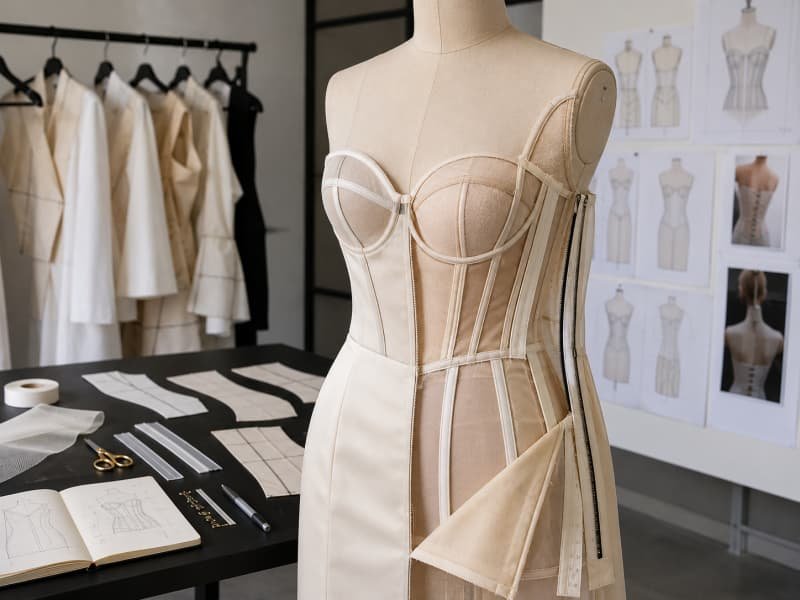
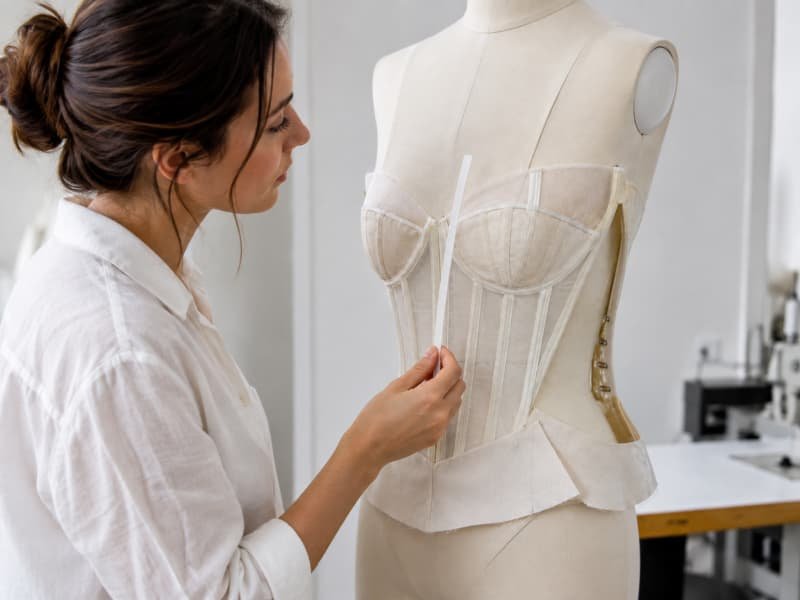
Boning stabilizes seam direction, controls vertical collapse and helps distribute pressure. Position should follow the pattern architecture: center front, princess seams, side seams or back panels. A bone placed too close to the bust apex can create pressure; one ending at the wrong height can dig into the body or push the neckline away. Every position is mapped on the pattern and checked against the approved sample so bulk operators do not rely on visual estimation.

Boning Channels

Channels need enough width for insertion and movement without allowing the bone to rotate. Seam allowance, binding method, top and bottom stops and cleaning access all affect production reliability. Decorative external channels and hidden internal channels require different sewing sequences. The pattern and workmanship sheet should define channel width, finish and endpoint protection. Production trials confirm whether the chosen method remains neat across curves, seam intersections and embellished fabrics.

Foundation Lining

The outer fabric creates the visible surface; the foundation lining carries much of the structure. Stable woven lining, power mesh, fused support or layered combinations may be used according to the design. The inner layer must match the body, boning and closure without fighting the outer shell. Stretch differences between layers can cause bubbling, twisting or edge roll. Sample review includes internal smoothness, seam bulk, skin contact and whether the lining can be repeated consistently in bulk.

Waist Stay

A waist stay can stabilize a defined waist and reduce load on the zipper or lacing, but it needs correct position and controlled length. Too loose, it offers little support; too tight, it concentrates pressure and changes the external shape. The stay should be anchored to structural seams rather than decorative layers. During grading, its length and attachment points are reviewed separately from the outer garment circumference.

Underbust Support

Support below the bust can come from shaped seams, elastic, underwire, cup cradle, lining tension or a combination. The chosen system must fit the visual design and intended wear. A fashion bustier may use lighter support than lingerie, while a strapless occasion dress may need more stable anchoring. Development checks whether the system holds the garment in place without relying on excessive tightness at the neckline or waist.

Closure Reinforcement

Zippers, lacing, hooks, busks and eyelets carry different loads. Reinforcement is planned into the pattern with extensions, stable layers, seam allowances and stitch density. Eyelet spacing needs enough structure to resist tearing; zipper tapes need smooth alignment and secure bottom stops; hook-and-eye areas need controlled overlap. Closure testing is part of sample approval because failure at center back can affect fit, wear safety and brand perception.

Fabric Behavior Changes Pattern and Support

A pattern cannot be separated from the material used to build it. Stretch, recovery, thickness, surface finish and layer interaction change cup volume, waist control, seam appearance and production stability.

Stable Woven Fabrics

Satin, taffeta, brocade, crepe and structured woven fabrics can support a defined corset silhouette, yet each behaves differently under seam tension and pressing. Satin may show needle marks and seam impressions; brocade can add thickness at panel intersections; taffeta may create sharp shape but little forgiveness. Pattern ease, seam curves, lining and pressing method are adjusted according to the actual fabric. A stable outer shell still needs internal support when the design carries body pressure or a strapless neckline.
  • Review grain direction and panel symmetry.
  • Test seam slippage, pressing marks and edge bulk.
  • Confirm whether fusing changes hand feel or surface appearance.

Stretch Fashion Fabrics

Stretch satin, ponte, jersey and power-knit combinations can improve movement and body contact, but they change the balance between comfort and support. Development measures stretch direction, usable stretch and recovery rather than relying on fiber content alone. Negative ease is distributed differently across cup, underbust, waist and back panels. The outer fabric and lining must recover at compatible rates; otherwise the shell may sag while the foundation remains tight, or the lining may distort the outer surface.
  • Check stretch at relaxed, worn and repeated-extension conditions.
  • Review opacity and surface whitening under tension.
  • Lock the approved fabric lot or a controlled equivalent before PP approval.

Lace and Mesh

Lace and mesh introduce transparency, directional motifs and variable stability. A lace overlay may need motif placement, scallop control and invisible anchoring. Mesh may need double layers, stable tape or selective lining to prevent distortion. Cup seams, boning channels and closures should not cut through important motifs without a placement plan. Skin comfort is also reviewed because rigid embroidery, sequins or cut mesh edges can irritate high-pressure areas near underarm, neckline and waist.
  • Map motif direction and left-right symmetry.
  • Plan coverage zones before pattern cutting.
  • Test seam strength and recovery where mesh carries support.

Sequins and Embellishment

Sequin, bead and rhinestone surfaces add weight and local stiffness. A paper pattern that works in plain fabric may sag, twist or become too thick when decoration is applied. Development identifies clean seam paths, boning clearance, zipper zones and lining protection before the final artwork is approved. Sequin removal at seam allowances, manual repair points and edge finishing need production instructions. The internal layer should shield the skin and support the garment without flattening the intended surface effect.
  • Measure added weight in the sample, not only fabric GSM.
  • Confirm decoration loss and repair standards.
  • Protect embellished surfaces during pressing, packing and shipment.

Corset and Bustier Styles for Fashion Collections
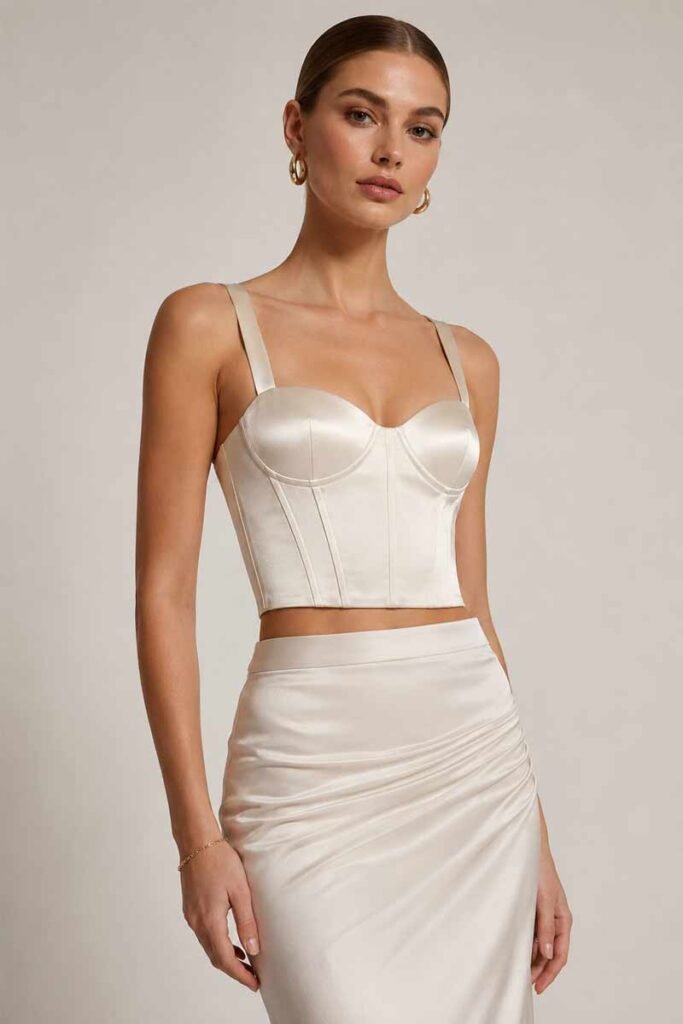
Duolan develops structured bodices as commercial fashion products, not isolated pattern exercises. Each style is planned around its selling occasion, fabric direction, fit identity and production route.

Corset Tops

Corset tops may use overbust, underbust or fashion-panel construction with lacing, zipper or hook closures. Development priorities include torso length, waist shaping, underarm comfort, neckline stability and how the top pairs with skirts or trousers. The pattern can be built for a structured woven shell, stretch bodycon fabric, lace overlay or embellished surface. Hem shape and closure placement are reviewed for movement and styling across the intended size range.

Bustier Tops

Bustier tops place more emphasis on cup geometry, underbust anchoring and upper-edge security. Strapless, thin-strap and halter versions require different load paths. Cup seams, foam, wire, grip tape and side-wing structure are chosen according to the desired support level. Fashion proportions are preserved while the internal construction remains clean enough for repeated production. Matching skirt or trouser programs can share fabric, trims and color standards.

Corset Mini Dresses

Corset mini dresses combine a structured upper body with a fitted, A-line, pleated or draped skirt. The transition at waist and high hip must remain smooth; excessive stiffness at the bodice can make the skirt kick outward or break the silhouette. Mini length also increases movement demands, so neckline security, zipper strength, hem balance and seated comfort are reviewed during fitting. Decorative seams and boning are aligned with the visual center of the dress.

Bustier Occasion Dresses

Bustier occasion dresses may include satin, lace, mesh, ruched or embellished skirts. The bodice must support the bust while maintaining an elegant neckline and clean waist. Skirt weight can pull on the bodice, especially in midi and maxi lengths, so waist seam reinforcement and internal hanging support may be needed. Development checks campaign appearance, movement, dance comfort, sitting position and whether the structure remains stable throughout an event.

Structured Matching Sets

Matching sets extend the commercial value of one developed bodice across skirts, trousers or layered pieces. A stable corset or bustier block can support color, fabric, neckline and hem variations while retaining the brand fit. Development files record which elements are reusable and which require new validation. Shared materials and trims can improve production coordination, but each lower-body pairing is checked for waist overlap, closure interaction and styling proportion.

Decorated Bodices

Lace, mesh, sequins, pearls and rhinestones can elevate corset and bustier products, yet decoration should follow the structure rather than hide it. Artwork placement is coordinated with cup seams, boning channels, neckline edges, closures and grading. Heavy areas are supported from inside, and skin-contact zones receive protective finishing. Production samples confirm left-right symmetry, decoration density, repair methods and whether the final effect remains consistent across multiple sizes and colorways.

Common Fit Failures and Pattern Corrections

Fit problems often share similar visual symptoms but come from different causes. Duolan separates pattern balance, cup geometry, material behavior and support construction before selecting a correction.

Neckline Gaping

Gaping can come from excess upper-edge length, shallow cup depth, an apex placed too low, weak foundation lining or insufficient underbust anchoring. Simply reducing the neckline may create compression without solving the cause. Correction begins by checking the body-to-pattern relationship from center front to side seam. The team may rotate fullness into the cup, reshape the upper cup, shorten the edge locally or strengthen the internal support. Movement testing confirms the result after alteration.

Cup Overflow

Overflow usually indicates insufficient cup volume, incorrect cup width, a neckline cut too low for the intended body range or excessive compression from the outer fabric. Adding circumference at the side seam rarely solves a cup-specific problem. Pattern correction redistributes width and depth while protecting neckline proportion. When cup groups are required, the range may need separate cup blocks rather than a single graded cup. The revised sample is checked from front, side and three-quarter views.

Bust Compression

Compression can appear as flattened projection, horizontal strain, cup seams pulled off position or discomfort below the bust. Causes include shallow cups, a short front length, rigid fabric, tight underbust or lining with less give than the outer shell. Correction identifies where pressure is concentrated and adds volume only where needed. The goal is controlled support, not general looseness. Final approval includes breathing, arm movement and seated posture.

Bodice Slipping

A strapless bodice can slip when the underbust anchor is loose, torso length is wrong, the back is too open, the lining lacks stability or the closure stretches. Grip tape may help but should not replace correct pattern balance. Development checks the vertical distance from bust to waist, the support carried by side and back panels and whether the garment is being held only by the neckline. The corrected structure distributes load across underbust, waist and closure.

Waist Riding Up

Riding up can result from a short torso pattern, excessive waist reduction, insufficient hip allowance, a high side seam or boning that ends in the wrong position. The garment moves toward the narrowest point of the body, disturbing cup and neckline fit. Correction reviews center-front, side and back lengths, waist level and the transition below the waist. Seated fitting is important because lower-edge pressure may only appear when the body bends.

Side Seam Twisting

A twisted side seam signals imbalance between front and back, grain distortion, uneven stretch or a cup pulling the front panel out of position. The seam should remain visually vertical under normal posture. Correction may change front-back distribution, cup volume, side-wing angle or fabric orientation. During grading, the same balance is checked in smaller and larger representative sizes because twisting can increase when body proportions move away from the base size.

From First Pattern to Approved Production Sample

Structured styles usually require several controlled development gates. Planning ranges below assume that design direction, base size, materials and trims are available; a confirmed schedule is issued after feasibility review and material lead-time checking.

StageMain ReviewTypical Planning RangeApproval Output
Feasibility ReviewDesign goal, fabric, support system, closure, size range and risk points1-3 working daysDevelopment brief and proposed sample route
Initial PatternBase block, cup geometry, panel balance, seam map and internal support plan3-5 working daysPattern release for first sample
First SampleSilhouette, cup and neckline direction, torso balance, construction feasibility10-15 working daysFit comments and revision list
Revised Fit SamplePattern corrections, material changes, support adjustment and movement7-12 working daysApproved base-size fit or next focused revision
Size-Set SampleRepresentative sizes, grading balance, cup progression and support consistency10-15 working daysApproved size range and grading comments
PP / Golden SampleFinal material lot, trims, workmanship, labels, packing and QC references7-10 working daysProduction authorization
Complex Bulk ProductionCutting, sewing, support insertion, inline control, final inspection and packing30-45 daysShipment-ready bulk order

Corset and Bustier Grading Across Commercial Sizes

Grading should preserve the intended body relationship, not enlarge every pattern piece by one proportional factor. Structured bodices require separate rules for cup volume, torso length, underbust, neckline and support components.

Cup Volume Growth

Cup width, depth and height do not grow at identical rates. The rule depends on the brand size chart, fit model and whether cup groups are part of the product. For a standard XS-XL fashion range, the base size is usually reviewed alongside at least one smaller and one larger representative size. Extended ranges or multiple cup groups may require separate upper-range blocks and additional fitting rather than a single continuous grade.

Bust Point Movement

The apex moves vertically and horizontally as size changes. Holding the bust point fixed can make smaller sizes look too wide and larger sizes look too narrow or low. Grading rules define controlled movement relative to center front, shoulder and underbust. Princess seams, cup seams and decorative panel lines are adjusted together so visual symmetry remains clean across the size set.

Underbust Growth

Underbust circumference influences anchoring and comfort. Growth must coordinate with back width, side-wing angle, closure extension and elastic or stay length. Too little growth creates pressure and pushes the garment upward; too much growth weakens support. The approved rule is checked on representative sizes under standing, arm-movement and seated conditions, especially for strapless or heavily embellished styles.

Neckline Security

Upper-edge length and shape need controlled grading because body proportion does not change evenly. A neckline that fits the base size can gape in a smaller size or cut into a larger size when the grade is purely proportional. Strap position, cup height, center-front depth and back opening are reviewed as a linked system. Larger sizes may need structural adjustment as well as dimensional growth.

Torso Length

Center-front, side and back lengths grow by different amounts. Corset panels must remain balanced so the waist stays level and bone endpoints do not move into pressure zones. A size set should include visual checks at waist, underarm and lower edge, not only circumference measurements. For longline or dress-integrated corsets, the transition into the skirt is also reviewed in each representative size.

Support Components

Boning length, underwire, foam cup, waist stay, elastic, zipper and hook-and-eye components may require separate size rules or component ranges. Reusing one component across every size can change support and pressure. The BOM should identify size-linked components and acceptable substitutions. PP approval confirms that production receives the same support system evaluated during fitting.

What a Production-Ready Pattern Package Includes

Approved pattern work becomes valuable only when the technical information can be transferred to sampling, costing, sewing, inspection and repeat orders. Duolan organizes the final references around two connected outputs.

Pattern and Technical Package

The final package should identify the approved pattern version, every pattern piece, grainline, cut quantity, seam allowance, notches, drill points and stretch direction. Corset and bustier projects also need a cup and support map showing boning positions, channel width, underwire or foam references, waist stay, lining layers, closure extensions and reinforcement zones. The measurement specification records critical points such as bust, underbust, center-front height, neckline length, waist, side length, back opening and garment length. Revision history explains what changed after each fit round so no earlier version returns to production by mistake. Construction notes describe sewing order, seam finishing, edge treatment, lining attachment, cup assembly, bone insertion and closure installation. When decoration is present, placement references align artwork with seams, cups, bones and graded pattern positions. Clear files allow costing and production teams to assess the same garment rather than interpret separate versions.

Bulk Control Transfer

Before bulk cutting, the approved sample, pattern, BOM, material card and workmanship notes are aligned. Fabric composition, color, usable width, stretch, recovery, surface effect and lot reference are confirmed. Trims such as boning, wire, cups, eyelets, hooks, zippers, lining and labels are locked to the approved standard or a documented equivalent. The PP or golden sample becomes the visual and technical reference. First-piece inspection checks cup symmetry, bust-point position, neckline contact, waist level, bone placement, closure alignment and internal cleanliness. Inline checks monitor repeat operations before errors spread across the order. Final inspection covers appearance, measurements, support construction, decoration, pressing and packing. Reorder files preserve pattern version, material references, fit comments and quality checkpoints so future production begins from an approved base rather than reconstructed memory.

A Structured Bodice Program From Brief to Bulk

A typical confidential brand program can involve 10-30 styles and 20,000-80,000 total units. The representative structure below shows how a multi-style corset and bustier order can be organized without mixing development priorities.

Program Brief

A representative U.S. occasionwear program included 18 styles and 46,800 units across seven corset dresses, five bustier tops and six structured party dresses. The range used 12 color and material combinations covering stretch satin, stable satin, lace overlay, mesh and selected embellishment. Development began from a collection brief, front-and-back references, a brand size chart and target retail positioning. The initial risk review separated true support styles from corset-inspired fashion styles, which prevented every garment from receiving the same heavy internal construction.
  • Base development size: brand-selected U.S. core size.
  • Representative size-set review: one smaller, base and one larger size for key structures.
  • Three sample gates: first fit, revised fit and PP / golden sample.
  • Complex bulk production planning: 30-45 days after final approvals and material readiness.
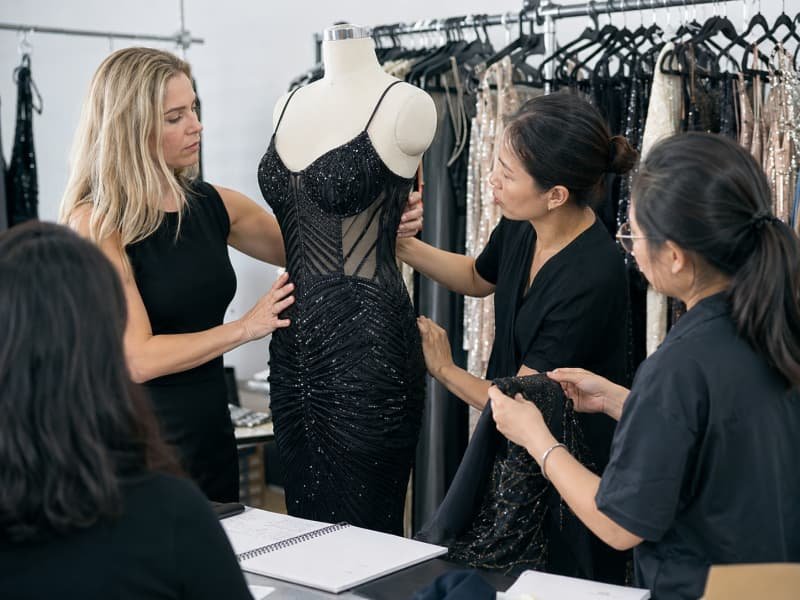
Control Results

The program used approved blocks by product family rather than drafting all 18 styles independently. Cup and neckline standards were shared where the design allowed, while torso length, skirt transition and decoration placement remained style-specific. Fit comments were categorized into pattern, material, support and workmanship actions. PP samples locked the final satin lots, lace placement, boning map, lining and closure specifications before bulk cutting. Production lines received visual checkpoints for cup symmetry, neckline, waist level, bone position and internal finishing. The structure supported multiple styles while preserving separate approval records for each pattern and color-material combination.
  • 18 approved style files with controlled revision history.
  • Shared components used only after fit and construction validation.
  • First-piece and inline checkpoints assigned to critical structured operations.
  • Reorder records preserved pattern, BOM, material and PP references.
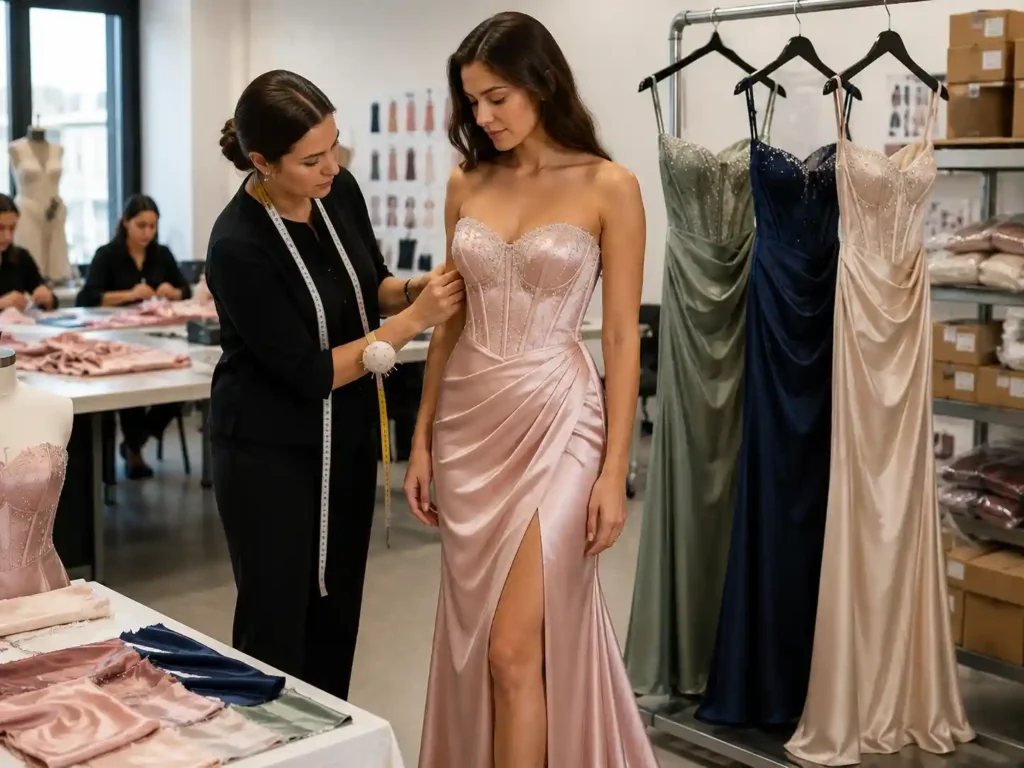
Development Depth Backed by Manufacturing Scale

Structured fashion products need detailed pattern work and enough manufacturing control to repeat the approved result. Duolan combines group-wide development resources with owned factories, coordinated satellite capacity and dress-focused production management.

30+ Years Development

Duolan is built on more than 30 years of experience in fast-fashion womenswear development, with a long focus on dresses, fabric application, pattern expression and decorative workmanship. The value of that background is not a historical number alone. It supports earlier judgement on whether a design can achieve the target silhouette, which materials can carry the structure and which details may create instability during production.

300-400 Pattern Specialists

The group-wide pattern and sample function includes approximately 300-400 people across pattern rooms, CAD pattern engineering, sample centers, senior sample machinists, technical supervision and sample management. Complex corset and bustier work can therefore move through pattern, sample, fit correction and technical documentation within one organized development system rather than relying on a single freelance pattern maker.

650-1,200 Development Machines

Group-wide pattern, sample and development equipment totals approximately 650-1,200 units. Resources include CAD pattern systems, marker systems, pattern plotters, sample lockstitch machines, overlock machines, coverstitch machines, electric cutters and sample pressing stations. Equipment supports controlled pattern output and repeatable sample construction; the approved method is still defined by technical judgement, not machinery alone.

16 Owned Factories

Sixteen owned womenswear factories give Duolan direct control over core styles, sample transfer and production execution. More than 20 long-term satellite factories add flexible support for rolling orders, repeat programs and capacity allocation. Complex structured products can be matched to factories and lines with suitable workmanship instead of being placed according to available space only.

300 Sewing Lines

The manufacturing network includes about 300 garment sewing lines and more than 50 quick-response or flexible lines. Sample trial lines, printing, embroidery, washing, finishing and automatic cutting resources support multi-style programs. For corset and bustier orders, line planning considers boning insertion, cup assembly, lining attachment, closure operations and decoration before production begins.

6.5M Monthly Capacity

Stable group-wide monthly capacity is approximately 6.5 million garments, with peak capacity reaching about 10 million. Scale matters only when approved standards can be preserved across factories, lines and repeat orders. Duolan uses pattern version control, BOM alignment, PP approval, first-piece checking and inline quality points to connect development detail with manufacturing volume.

Corset Pattern Development Frequently Asked Questions

Development can begin from a tech pack, sketch, reference image, original sample, fabric swatch or collection brief. The most useful information includes base size, size range, target market, cup and support direction, closure type, preferred materials, estimated quantity and launch date. Duolan reviews missing decisions before pattern work starts.
Yes. A reference image is treated as a visual direction rather than a complete technical instruction. The team confirms front, side and back proportions, support level, neckline, cup construction, boning, lining, closure and fabric behavior. A feasibility review identifies details that cannot be read accurately from the image alone.
Yes. The original garment can be measured and studied for proportion, pattern balance, internal construction and fit. Development does not need to preserve defects. Duolan can rebuild the pattern around the brand size chart, desired material and revised fit direction while keeping approved design features.
Corset patterns normally control more of the torso and waist through panels, boning, stable layers and reinforced closures. Bustier patterns place greater emphasis on cup volume, underbust anchoring, side-wing balance and neckline security. Some fashion styles combine both systems, so the structure is defined before drafting begins.
Yes, when the design and intended support require them. Boning type, cup method, wire or wire-free structure, foam, lining, channels and reinforcement are reviewed as a system. Final choices depend on fabric, coverage, size range, comfort expectations, production method and target cost.
A structured first sample is commonly planned at 10-15 working days after the development brief and materials are confirmed. Focused revisions are often planned at 7-12 working days. Size-set and PP stages require separate time. Final timing depends on material availability, complexity, number of styles and approval speed.
Comments are categorized into pattern, measurement, material, support, construction and styling actions. Each action is linked to a responsible file or component. The revision summary records what changed, what remains open and what the next sample must prove. Visual comments become measurable instructions before the next sample is cut.
Cup volume, apex position, underbust, neckline, torso length, boning and closure components are graded with separate rules. Representative size-set samples confirm that smaller and larger sizes retain the intended support and proportion. Extended ranges or multiple cup groups may need additional blocks and fitting.
Usually not. The first sample checks direction and reveals fit or construction issues. A production-ready sample needs approved fit, materials, trims, workmanship, measurements, grading, labels, packing and QC references. PP or golden sample approval normally occurs after those points are locked.
Yes. Duolan can continue from pattern and sample development into PP approval and bulk manufacturing. Complex structured styles are commonly planned at 30-45 days for production after final approvals and material readiness. Express, air and sea delivery options can then be coordinated according to the launch schedule.

Start Your Corset or Bustier Development Review

Send the available project information and Duolan will review the development route before pattern work begins. Useful files include a tech pack, sketch, front-and-back references, original sample photos, brand size chart, base size, target size range, fabric direction, cup and support requirements, closure choice, estimated order quantity and launch date. For unreleased designs, an NDA can be reviewed before complete files are shared. The first response can focus on feasibility, missing decisions, sample stages, material risks and the information needed for costing. Clear input helps the pattern room test the right structure in the first sample and gives production teams a stronger basis for future size-set, PP and bulk planning.

  • Name, company and business email
  • Tel / WhatsApp, optional
  • Product type and target market
  • Base size and size range
  • Fabric, lining and support direction
  • Estimated bulk quantity and launch date
  • Message and file upload
  • Submit button: Send Brief
Chest support

Start Your Apparel Development Project

OEM/ODM Manufacturing Support for Fashion Brands

Share your collection details, estimated quantities, target market, development timeline, and technical requirements. The production team will review your request and provide a tailored manufacturing solution based on your product category, fabric selection, construction needs, and delivery schedule.

Fashion Manufacturing Support with Scalable Production Capacity

From sample development to bulk production, Duolan supports fashion brands with confidential OEM/ODM manufacturing, stable quality management, flexible production planning, and coordinated multi-factory execution for seasonal and capsule collections.

Need Direct Assistance?

Seraphinite AcceleratorOptimized by Seraphinite Accelerator
Turns on site high speed to be attractive for people and search engines.