Skip to content
What Is the Best Fabric for Halter Dresses : A Practical Guide to Drape, Support, and Fit
Your trusted Women’s Apparel Development & Manufacturing Partner from China
- Jerry
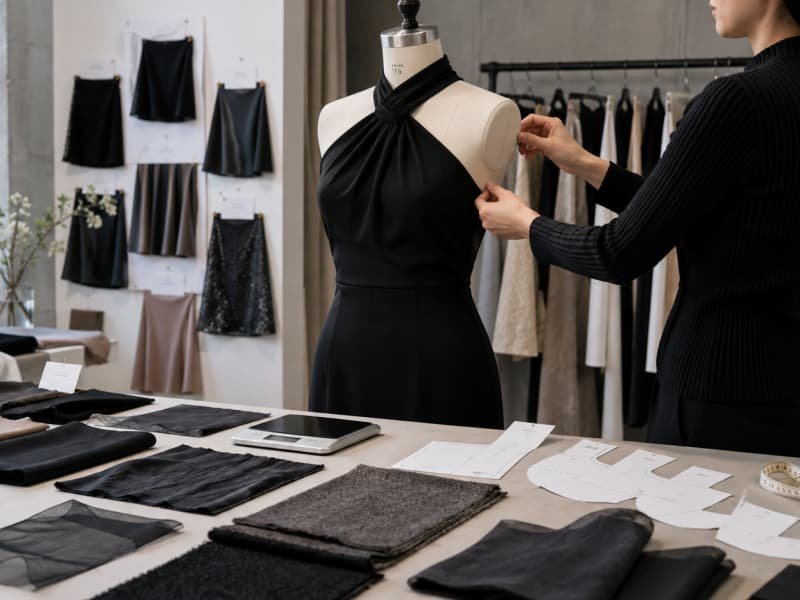
A halter dress can look almost effortless on a model, yet it is one of the easiest dress styles to misjudge during product development. The neckline may twist, the armhole may gape, the front may drop lower than intended, or a full skirt may gradually pull against the wearer’s neck. These problems are often blamed on the pattern alone, but fabric behavior is usually part of the cause. The right cloth does more than create a surface appearance. It determines how the dress hangs, how the neckline carries weight, how the bust is supported, and whether the approved sample can be reproduced consistently in production.
The best fabric for a halter dress depends on the silhouette and end use. Satin, crepe and chiffon suit fluid occasion styles; jersey supports fitted dresses that need stretch; cotton and linen work well for breathable summer designs; and structured woven fabrics are better for corset-inspired halters. The final choice should balance drape, garment weight, opacity, recovery, support, comfort and manufacturing stability.
Consider a common development surprise: a soft satin sample is approved because it falls beautifully during a short fitting, but the production fabric arrives slightly heavier and less fluid. The skirt begins to pull downward, the neckline sits differently, and the waist no longer falls where it did on the sample. No visible design detail changed, yet the dress changed completely. Understanding that chain reaction is the difference between choosing an attractive fabric and choosing the right fabric.
What Makes a Fabric Suitable for a Halter Dress?
A suitable halter-dress fabric must create the intended silhouette without pulling at the neck, gaping at the armholes, becoming transparent under tension, or losing shape during wear. Drape, finished garment weight, stretch recovery, opacity, surface comfort, seam stability and lining compatibility matter more than the fabric name alone.
Drape and Silhouette
Drape describes how fabric falls, folds and moves around the body. It is related to softness, but the two are not identical. A cloth can feel soft between the fingers and still spread outward instead of falling in narrow vertical folds. On a halter dress, that distinction affects the neckline, bust, waist and skirt at the same time. A bias-cut midi generally needs a fabric that follows the body without collapsing, while a structured mini needs enough body to keep its neckline and upper shape clean. Selecting by touch alone is therefore unreliable; the fabric must be viewed in the volume and direction in which it will actually be used.
Fluid satin, lightweight crepe, chiffon and georgette are often chosen for softly draped styles, but each creates a different silhouette. Satin tends to form smooth, reflective folds; crepe falls with less glare and slightly more visual control; chiffon floats and separates from the body; georgette gives soft movement with a little more grain and body. A full-size drape test on a dress form is more revealing than a small swatch because two or three meters of fabric can behave very differently from a twenty-centimeter cutting. Bias panels should also be allowed to relax before the final length and balance are judged.
Weight and Neck Load
Halter dresses direct more of the garment’s load toward the neck than ordinary sleeveless dresses. Even when the back and waist help stabilize the bodice, the neck tie, collar or band may still carry part of the skirt weight. This is why finished garment weight is more useful than GSM alone. A lightweight shell can become unexpectedly heavy after lining, gathers, tiered panels, cups, zipper tape, stones or beads are added. A medium-weight stretch knit may feel manageable in a mini dress yet elongate noticeably when used for a maxi because the skirt continuously pulls downward.
The most practical check is an extended wear fitting with the complete sample. A neckline that feels comfortable during a quick showroom fitting may become irritating after thirty minutes. Watch whether the front bodice is being dragged downward, whether the wearer keeps adjusting the tie, and whether the back or waist is contributing enough support. Common solutions include reducing skirt volume, selecting a lighter lining, widening the neck band, adding underbust elastic, strengthening the back band or anchoring the bodice at the waist. Tightening the halter tie should be the last adjustment, not the first response to poor load distribution.
Opacity and Skin Feel
Opacity must be assessed under realistic conditions, not only by holding the fabric against a table. Pale chiffon, lightweight crepe, thin jersey, mesh and loosely woven linen may look adequately covered in a relaxed state but become transparent when stretched across the bust, hip or seat. Strong daylight and flash photography can reveal more than ordinary indoor lighting. For this reason, product teams should review the shell over the intended lining color, under representative tension and on a body. Strategic lining may be more successful than full lining because it protects coverage without unnecessarily increasing heat and garment weight.
Skin feel deserves equal attention because the neck, underarm and exposed back are sensitive contact areas. The wearer may see the polished face of a satin, but she feels the reverse side, seam allowance, zipper tape, binding and any internal elastic. Metallic yarns, sequin edges, heat-cut mesh and stiff fusibles can cause irritation even when the dress looks refined. A compatible lining should improve comfort without fighting the shell. Its stretch, shrinkage, weight and surface friction should be close enough to the outer fabric that both layers move together rather than twisting, bubbling or pulling against each other.
Construction Stability
A fabric must survive cutting, sewing, pressing and wear while preserving the intended line of the dress. Satin may pucker around a curved neckline if the needle, thread, feed or tension is unsuitable. Chiffon can stretch during binding and create a wavy edge. Jersey may grow as it passes through the machine, especially at armholes and neck seams. Loose linen can slip at fitted seams, while mesh may curl, snag or distort before the garment is completed. These are not reasons to reject the fabrics, but they are reasons to develop the construction around the material rather than forcing one sewing method onto every style.
Pattern pieces, grain direction and stabilization should be reviewed together. A bias neck band can curve smoothly but may continue stretching under load; a straight-grain band is more stable but may not form as softly. Stay tape, clear elastic, lightweight interfacing or a shaped facing may be required, yet each option changes thickness and appearance. The sample room should test critical seams before completing the full prototype. A short neckline trial can reveal puckering, stretching or bulk early, when corrections are still inexpensive. This approach is especially useful for satin, chiffon, soft jersey and delicate mesh styles.
Development factor | Practical starting range | What to review |
Lightweight fluid woven | 60-130 GSM | Transparency, seam slippage and hem balance |
Medium woven shell | 130-220 GSM | Neck load, stiffness and pressing marks |
Fitted stretch knit | 180-320 GSM | Recovery, ride-up and show-through |
Lightweight lining | 45-90 GSM | Static, opacity and added garment weight |
Stretch lining | 90-180 GSM | Recovery compatibility and bulk |
Crosswise stretch for fitted styles | About 20-50% | Pattern ease, bust support and neckline stability |
Dimensional change after care | Often targeted around 3-5% | Finished measurements, twisting and hem accuracy |
Hang time for fluid or bias samples | Commonly 24-48 hours | Length growth and uneven hems |
Which Fabrics Are Best for Halter Dresses?
Satin, crepe, chiffon, georgette, jersey, cotton, linen, mesh and velvet can all suit halter dresses, but they serve different designs. Satin and crepe support polished occasion styles, chiffon and georgette create movement, jersey adds fitted comfort, natural fabrics suit summer dresses, and mesh or velvet delivers stronger visual impact.

Satin and Crepe
Satin is a natural choice for sleek halter dresses because its smooth face reflects light and gives simple shapes a polished finish. It works particularly well for bias-cut midis, cowl-front halters, open-back maxis and evening styles. However, satin is a weave rather than a single fiber. Polyester, recycled polyester, viscose, acetate and silk satins can differ substantially in drape, snag resistance, wrinkle response, price and care. A high-gloss satin may photograph dramatically but also reveal every seam ripple, pressing mark and fit imbalance. Matte satin and crepe-back satin are often easier to control in commercial production.
Crepe is usually more forgiving and versatile. Its textured surface reduces glare, softens the appearance of small seam irregularities and can provide a useful balance between movement and control. Lightweight crepe suits draped or gathered silhouettes; medium crepe is effective for fitted midis, structured minis and clean occasion dresses. Stretch crepe can support close-fitting designs, but the word stretch does not guarantee recovery. The material should be cycled repeatedly and measured after release. A fabric that feels comfortable during the first fitting may still grow at the neckline, seat or hem after several hours of wear.
Chiffon and Georgette
Chiffon and georgette are best for halter dresses that depend on softness, layering and visible movement. Chiffon is generally lighter, smoother and more transparent, creating a delicate floating effect. Georgette has a slightly grainier surface and more body, so gathers and flared panels tend to hold greater definition. Both can work for full-length occasion dresses, ruffled styles, gathered bodices and vacation maxis, yet they should not be treated as identical substitutes. A switch between them can change skirt volume, neckline behavior and the visual weight of the garment even when composition and color appear similar.
Both fabrics normally require lining, double layers or planned coverage. Their production risks include fraying, seam slippage, puckering, distortion during cutting and uneven hems after hanging. A narrow rolled hem may look refined, but inconsistent feed or excessive tension can make the edge wave. Curved necklines require especially light stabilization because too much interfacing destroys the airy look, while too little allows the edge to stretch. When the dress has a full or bias skirt, the garment should hang before final hemming so panels can settle under their own weight.
Jersey and Compact Knits
Jersey is often the most practical fabric for fitted halter dresses because it follows the body and supports movement without requiring a highly rigid structure. It is widely used for bodycon minis, ruched midis, cutout dresses, casual maxis and party styles. The key property is not simply how far the cloth stretches, but how well it recovers. Weak recovery can cause the front neckline to fall away from the chest, the armhole to widen, the seat to bag and the skirt to become longer during wear. Stretch should be recorded in both width and length directions rather than described as merely soft or elastic.
Single jersey is lightweight and comfortable, but it may show underwear lines, curl at the cut edge and grow during sewing. Interlock, ponte, double knit and compact jersey provide more control and are often better for clean fitted silhouettes. Heavier fabric can smooth the body, yet it may feel warm or increase pressure at the neck. Lighter jersey can feel cooler but may require self-lining, power mesh or a double front panel. The final choice should reflect the desired compression, climate, care requirements and intended retail price rather than relying on fabric thickness as a shortcut for quality.
Natural and Statement Fabrics
Cotton and linen are strong options for casual summer and resort halter dresses. Cotton voile and lawn create soft lightweight shapes, while poplin produces a crisper silhouette. Cotton sateen provides a smoother surface and can support more fitted daytime styles. Linen offers natural texture and a relaxed premium look, but pure linen wrinkles readily and may feel firm before washing. Linen-viscose and linen-cotton blends usually drape more softly and can be easier to wear. Natural fabrics should be tested for shrinkage, colorfastness, seam slippage and appearance after laundering, especially when the garment will be sold as a washable vacation piece.
Mesh and velvet serve a more expressive purpose. Soft fashion mesh creates sheer layers, ruching and visual depth, while power mesh provides internal control; the two should not be confused. Velvet gives fall and winter halters rich color and surface depth, but directional pile requires every panel to be cut consistently. Stretch velvet may also grow vertically. Embellished mesh, sequin cloth and beaded fabrics can become much heavier than their base suggests, so total garment weight and abrasion at the neckline must be checked. The most dramatic material is only commercially successful when it remains wearable and repeatable.
Fabric | Common weight range | Best applications | Main risks |
Lightweight satin | 80-140 GSM | Bias midis, fluid maxis and cowl halters | Puckering, snagging and transparency |
Medium satin | 140-220 GSM | Structured occasion dresses | Neck load and pressing marks |
Chiffon | 40-90 GSM | Layered maxis, ruffles and overlays | Transparency, slippage and uneven hems |
Georgette | 60-140 GSM | Gathered dresses and soft occasionwear | Fraying and seam distortion |
Lightweight crepe | 90-160 GSM | Draped midis and flowing styles | Growth and seam grin |
Medium crepe | 160-260 GSM | Fitted and structured halters | Stiffness and heat sensitivity |
Jersey | 140-240 GSM | Ruched and fitted dresses | Poor recovery and show-through |
Ponte or compact knit | 220-350 GSM | Bodycon and shaped minis | Heat, bulk and excess compression |
Cotton lawn or voile | 60-120 GSM | Summer and vacation dresses | Transparency and wrinkling |
Poplin or cotton sateen | 110-220 GSM | Crisp casual or fitted styles | Shrinkage and limited fluidity |
Linen blend | 120-220 GSM | Resort midis and maxis | Wrinkling and seam slippage |
Stretch mesh | 40-130 GSM | Sheer layers and fitted party dresses | Snagging and weak edge stability |
Stretch velvet | 180-320 GSM | Winter party and evening styles | Pile damage and vertical growth |
Which Fabric Fits Each Halter Dress Style?
Fabric should be matched to the halter silhouette rather than selected from a general list of fashionable materials. Fitted dresses need recovery and control, flowing maxis need low weight and stable drape, corset styles need supportive fabric systems, while party and vacation dresses must balance visual impact with comfort and practical wear.

Fitted Halter Dresses
Fitted halter dresses need fabrics that follow the body without losing shape at the neckline, armhole, waist or seat. Compact jersey, stretch crepe, ponte, double knit and supported stretch mesh are common starting points. The paper pattern must reflect the actual stretch and recovery of the approved material. A style developed in fabric with twenty-five percent crosswise stretch may fit very differently when moved into a material with fifty percent stretch. Using the same pattern can reduce bust support, lengthen the garment and create a neckline that looks secure on a hanger but falls away during movement.
Thickness also affects the result. Thin single jersey creates a light, fluid dress but may reveal underwear, seam allowances and body lines. A denser knit provides smoother contouring but can feel warmer and add neck load. Fit testing should include sitting, walking, bending, turning and raising the arms. Observe whether the skirt rides upward, whether the armhole opens and whether the neckline returns to position after movement. A suitable fitted fabric should stretch with the wearer and recover close to its original dimensions without depending on excessive tension at the neck.
Flowing Maxi Dresses
A flowing halter maxi requires fabric light enough to move freely but stable enough to avoid uncontrolled length growth, twisting and neck strain. Chiffon, georgette, lightweight crepe, rayon challis, soft viscose blends and fluid satin are common options. Skirt construction changes the calculation. A narrow bias skirt contains less material but may lengthen as it relaxes, while a tiered or heavily gathered skirt may use several times more cloth than a fitted dress. Even a lightweight shell can therefore produce a surprisingly heavy finished garment once lining and trims are included.
The completed sample should hang before the final hem is marked, especially when bias panels or asymmetrical sections are present. Twenty-four to forty-eight hours is a useful development starting point, though some fabrics need longer. The neck should not carry the full skirt load. A stable back band, underbust elastic, waist seam or internal stay can distribute weight through the torso. For printed maxis, assess motif direction, panel placement and distortion on the complete dress. Large repeats and directional artwork can also increase consumption, which should be considered before the final fabric and price are approved.
Corset and Structured Halters
Corset-inspired halters require a coordinated material system rather than one attractive outer fabric. Medium satin, structured crepe, taffeta, compact woven cloth, bonded fabric or firm stretch material can create the visible shell, while cups, interlining, boning, power mesh, elastic, stay tape and a waist stay provide internal shape. These components must work together. A delicate satin may crease over rigid boning, a thick shell may create bulky seam intersections, and a highly elastic outer layer can bubble when placed over a non-stretch inner frame.
The level of support depends on neckline depth, bust shape, back exposure and how the bodice is anchored. A high halter with a stable back needs a different construction from a plunging open-back design. Cup projection, spacing and position should be reviewed across the intended size range because one cup shape rarely performs equally in every size. Boning should be graded and positioned deliberately rather than enlarged in a purely proportional way. A representative prototype should include the actual support layers early in development; a simplified visual sample cannot reliably predict comfort, seam bulk or production fit.
Party and Vacation Styles
Party halter dresses often use satin, velvet, metallic knit, sequin mesh, embellished tulle or lurex jersey. These fabrics create strong visual impact, but they should be assessed in motion and under varied lighting. High-gloss satin can expose wrinkles and seam marks. Sequins and stones add weight and may scratch the neck. Metallic yarns may feel rough against exposed skin. A useful wear trial includes sitting, dancing and repeated arm movement because a garment that looks secure in a static fitting can shift or become uncomfortable during an event.
Vacation halters have different priorities. Breathability, packability, drying time, wrinkle response and sunlight opacity may be as important as the first visual impression. Cotton lawn, rayon, linen blends, lightweight crepe and soft printed cloth are practical directions. Pure linen feels cool but creases strongly in luggage; linen-viscose often drapes more softly. Polyester crepe may resist wrinkles and hold color consistently, though it may feel warmer. Pale fabrics should be checked in strong daylight and over swimwear. Adjustable ties help fit flexibility, but very narrow ties can become uncomfortable during extended wear.
Halter style | Suitable fabric direction | Useful starting specification | Critical checks |
Bodycon mini | Compact jersey or stretch crepe | 200-320 GSM; about 20-50% cross stretch | Recovery, ride-up and neckline gaping |
Ruched midi | Soft jersey or stretch mesh | 140-240 GSM | Sheerness, seam strength and growth |
Bias-cut midi | Satin or lightweight crepe | 90-180 GSM | Bias lengthening and puckering |
Flowing maxi | Chiffon, georgette or light crepe | 60-140 GSM plus suitable lining | Neck load and hem balance |
Tiered vacation maxi | Cotton voile, rayon or light crepe | 70-150 GSM | Total garment weight and shrinkage |
Structured mini | Medium crepe, satin or compact woven | 150-260 GSM | Neckline shape and pressing response |
Corset halter | Structured shell with internal support | Usually 160-300 GSM shell | Cup balance, boning and seam bulk |
Sheer party dress | Soft mesh with strategic lining | Shell 40-120 GSM | Coverage, snagging and edge stability |
Sequin halter | Embellished mesh or woven base | Review finished garment weight | Abrasion, decoration loss and neck pressure |
Velvet halter | Stretch or woven velvet | Approximately 180-320 GSM | Pile direction, growth and heat damage |
Do Halter Dresses Need Stretch, Lining, or Support?
Some halter dresses need stretch, while others work better in stable woven fabrics. Many require lining for opacity or comfort, and fitted, plunging, open-back or corset-inspired styles often benefit from cups, power mesh, elastic, interfacing, boning or a waist stay that transfers load away from the neck.

Stretch and Recovery
Stretch should be measured rather than described with vague phrases such as slightly stretchy or very elastic. Product teams normally check both widthwise and lengthwise extension because each direction affects the dress differently. A simple development method is to mark a ten-centimeter section, extend it without forcing, and record the new length. If it reaches thirteen centimeters, the approximate stretch is thirty percent. The fabric should then return close to ten centimeters after release. A material that remains permanently extended is more likely to produce neckline growth, armhole opening and seat bagging.
Repeated movement is more revealing than a single pull. Some knits recover well after one extension but gradually lengthen after ten or twenty cycles. Crosswise stretch generally supports body movement, while excessive lengthwise stretch can allow a maxi skirt to pull downward. Four-way stretch may improve mobility but often requires stronger edge stabilization. The required percentage also depends on pattern ease and closure. A zip-back fitted halter can use moderate stretch, while a pull-on bodycon style usually needs more. More stretch does not automatically mean better fit; excessive elasticity can reduce bust support and make the dress feel unstable.
Lining Strategy
Lining affects opacity, comfort, drape, heat retention and garment weight, so it should be treated as part of the material system rather than an invisible finishing layer. Stable woven shells usually work best with woven linings that have compatible movement and shrinkage. Stretch jersey or mesh generally needs tricot, stretch lining or power mesh. A rigid lining inside a highly elastic shell can restrict movement, create drag lines and pull the outer layer out of shape. Matching color is not the only objective; compatible physical behavior is equally important.
Full lining is not always the most effective answer. A flowing chiffon maxi may use a double-layered bodice and short skirt lining beneath a sheer outer layer. A backless style may need front coverage without lining the open back. A fitted mesh dress may use power mesh through the torso and a softer material around the neck. Self-colored lining creates a solid appearance, while nude lining preserves a sheer visual effect. Every option should be checked under daylight and flash photography, then worn long enough to assess static, cling, twisting and heat.
Internal Support
Cups, boning, elastic, power mesh, interfacing and waist stays can improve support, but each component should solve a defined problem. Cups provide shape and coverage when a conventional bra cannot be worn. Their projection, spacing, edge shape and placement must match the pattern and size range. Boning supports vertical structure and helps prevent a fitted bodice from folding, but the ends must be secured and cushioned. Interfacing stabilizes necklines, openings and zipper areas, yet a heavy fusible can make soft satin look rigid or create visible bubbling.
Power mesh offers controlled support without the stiffness of a woven inner bodice. Underbust elastic and internal waist stays can transfer load around the torso, reducing the need to pull the halter tie tightly. The support system should be tested as a complete unit because every layer changes the others. A firmer lining may reduce the stretch required from the shell; a rigid cup may change neckline tension; extra boning may create seam bulk. Adding structure automatically is not a mark of higher quality. The best construction is the lightest system that provides secure, repeatable support.
Neckline Stability
A secure halter neckline begins with correct pattern balance. Tightening the neck tie should not compensate for an edge that is too long, a bust dart that is poorly positioned or a fabric that stretched during sewing. Stay stitching, clear elastic, narrow woven tape, lightweight fusible support or a shaped facing can control the edge. The chosen method should suit the fabric and intended appearance. Chiffon needs delicate hidden stabilization, whereas compact jersey may tolerate controlled elastic tension without becoming visually stiff.
Grain direction also changes stability. A bias-cut band curves smoothly but can continue stretching under the weight of the dress. A straight-grain band is firmer but less adaptable to a soft curve. Rings, sliders, hooks, buttons and loops should be anchored into a stable internal layer rather than the decorative shell alone. Dynamic fitting is essential: the wearer should raise her arms, turn, bend and sit while front and side coverage are observed. The neckline should remain close to the body without digging into the neck or requiring constant adjustment.
How Should Brands Test Fabric Before Production?
Fabric should be reviewed through swatches, color approvals, relevant performance tests, a representative garment sample, fit evaluation, pre-production confirmation and bulk inspection. Weight, stretch recovery, shrinkage, opacity, seam behavior, shade consistency, care performance and finished-garment comfort should be checked before the material is released for cutting.

Swatches and Color Approval
A swatch should be reviewed against the actual garment design rather than approved as an isolated piece of attractive fabric. The record should include composition, GSM, usable width, stretch direction, finish, supplier reference, color, lead time, minimum dye quantity and intended style. Each quality should receive a clear material code and a dated physical reference. This reduces the risk of approving one cloth during development and receiving a visually similar but technically different material later. Small changes in weight, surface friction or stretch can alter the neckline, skirt fall and construction method.
Lab dips should be reviewed under more than one light source because a color can appear neutral in office lighting and noticeably warmer or cooler in daylight. Printed fabrics require a strike-off that shows scale, registration, sharpness, background color and how the artwork behaves on the selected texture. A print may look crisp on smooth satin but softer on crepe or georgette. Alternative fabrics should receive a new code and fresh approval. Calling a substitute similar is not enough when its drape, recovery, shrinkage or opacity could require pattern and construction changes.
Performance Testing
Testing should focus on the risks created by the fabric and garment rather than applying the same checklist mechanically to every dress. A chiffon halter may need particular attention to seam slippage, dimensional stability and colorfastness. A stretch velvet bodycon dress requires recovery, pilling, pile and vertical-growth checks. A dark fabric worn close to the neck and underarm may need rubbing and perspiration colorfastness evaluation. Embellished mesh requires attachment, snagging and abrasion review. The exact methods and acceptance limits should follow the destination market and the brand’s own requirements.
Common development checks include weight, usable width, dimensional change after care, colorfastness, stretch and recovery, seam strength or slippage, pilling, abrasion, snagging, spirality, opacity under tension, shade consistency and decoration durability. Many apparel programs aim to control dimensional change within a few percentage points, often around three to five percent, but the appropriate limit varies by fabric and specification. Laboratory results should be considered together with fitting. A fabric can pass physical tests and still create neckline gaping, uncomfortable load or a poor silhouette in the finished dress.
Prototype Evaluation
The first representative sample should answer whether the fabric can deliver the intended product, not merely whether the garment can be sewn. Start with the overall silhouette: bust shape, waist position, neckline curve, back opening and skirt fall. Then test movement. The model should walk, sit, bend, turn and raise her arms while the team observes neck pressure, front and side coverage, armhole opening, skirt growth, hem balance, zipper stress, lining movement and transparency. Strong daylight and photography conditions are useful because some opacity and surface problems are difficult to see under ordinary fitting-room light.
Fluid or bias dresses should hang before final length is evaluated. Stretch dresses should be worn long enough to reveal weak recovery. Embellished styles should be checked for scratching, decoration loss and total weight. Every issue should be classified carefully as a pattern, fabric, construction or combined problem. Reducing neckline length may hide gaping caused by weak recovery but create excessive pressure. A pre-production sample should use the intended bulk fabric, lining, trims and construction wherever possible. Simplified sample materials provide limited evidence about final fit and production stability.
Bulk Consistency
Sample-to-bulk consistency begins when the approved fabric, pattern, trims, measurements, workmanship and finishing method are locked before production. Bulk fabric should be compared with the approved standard for color, weight, width, hand feel, stretch, recovery and visible defects. Rolls with noticeable shade differences should be separated and controlled. Shrinkage and relaxation results should be confirmed before cutting because changes can affect pattern dimensions and finished measurements. For fluid, satin, mesh, corset and bodycon styles, a first-piece or pilot review can reveal problems before they spread across the order.
Inline inspection should focus on the areas that determine the appearance and wearability of a halter dress: neckline length, bust balance, armhole shape, strap position, seam puckering, lining exposure, cup placement, boning and hem level. Final inspection remains important, but it cannot efficiently correct a construction problem repeated through hundreds or thousands of pieces. Good control moves decisions forward in stages, from material approval to first piece and inline review. This is how the approved sample becomes a repeatable production standard rather than a one-off garment created under sample-room conditions.
Stage | Recommended checks | Main decision |
Initial swatch | Composition, GSM, width, stretch, hand feel and opacity | Is the material suitable for development? |
Lab dip or strike-off | Color under multiple lights, print scale and registration | Is the visual direction approved? |
Fabric testing | Shrinkage, colorfastness, recovery, seam behavior and pilling | Can the material meet product requirements? |
First prototype | Drape, fit, neck pressure, transparency and movement | Does the design work in this fabric? |
Revised fit sample | Pattern corrections, support, lining and edge stability | Is the fit direction ready to confirm? |
Pre-production sample | Bulk-intended fabric, trims, measurements and workmanship | Is production construction locked? |
Bulk fabric inspection | Shade, defects, width, GSM, stretch and shrinkage | Can cutting begin safely? |
First-piece review | Critical fit, support and sewing points | Is the line following the approved standard? |
Inline inspection | Measurements, neckline, seams, lining and trims | Are problems controlled during sewing? |
Final inspection | Appearance, measurements, function and packing | Is the order ready for shipment? |
From Fabric Choice to a Production-Ready Halter Dress
The best fabric for a halter dress is not the fabric with the most attractive name, the highest shine or the softest first touch. It is the material that creates the intended silhouette, supports the neckline without unnecessary pressure, provides the required coverage, remains comfortable during movement and can be reproduced consistently in production. Satin may be ideal for one bias evening dress and completely unsuitable for another structured halter. Jersey may improve comfort in a fitted style but fail when recovery is weak. Chiffon may create beautiful movement yet require a carefully engineered lining and neckline to remain secure.
For product teams, the strongest decisions are made by connecting fabric data with a complete garment trial. GSM, stretch, shrinkage and laboratory results narrow the options, but they do not replace draping, fitting, movement and extended wear. A material should be approved only after the shell, lining, support components and construction have been assessed together. That disciplined approach reduces sample revisions, protects the design intent and gives the production team a clearer standard to repeat when the order moves beyond the sample room.
Duolan Apparel is a Guangdong-based custom womenswear manufacturer focused on fashion dresses, including halter, fitted, backless, party, occasion and vacation styles. Its development work covers fabric sourcing, material alternatives, pattern and fit adjustment, lining and trim matching, sample evaluation and production-readiness review. Brands preparing a halter dress or coordinated collection can submit a tech pack, reference garment, design image, target fabric, size specification and planned quantity for a practical development assessment and quotation.
A clear initial brief should include the target silhouette, sales occasion, fabric mood, required support, expected size range, estimated order quantity and delivery window. These details allow the development team to identify material risks early and recommend a sampling route that is closer to the intended commercial result.
Share:
Our Services
Categories
Table of Contents
Here, developing fashion collections is more than manufacturing garments — it’s a collaborative process focused on transforming ideas into well-executed, market-ready products. From fabric sourcing and sample development to scalable production and delivery coordination, every stage is built to support quality, consistency, and efficient collection launches across global markets.