...

Custom Dress Manufacturer for Fashion Holding Companies

Dress-focused development and manufacturing for multi-brand fashion groups managing different identities, fit standards, price bands, launch calendars, and production volumes.

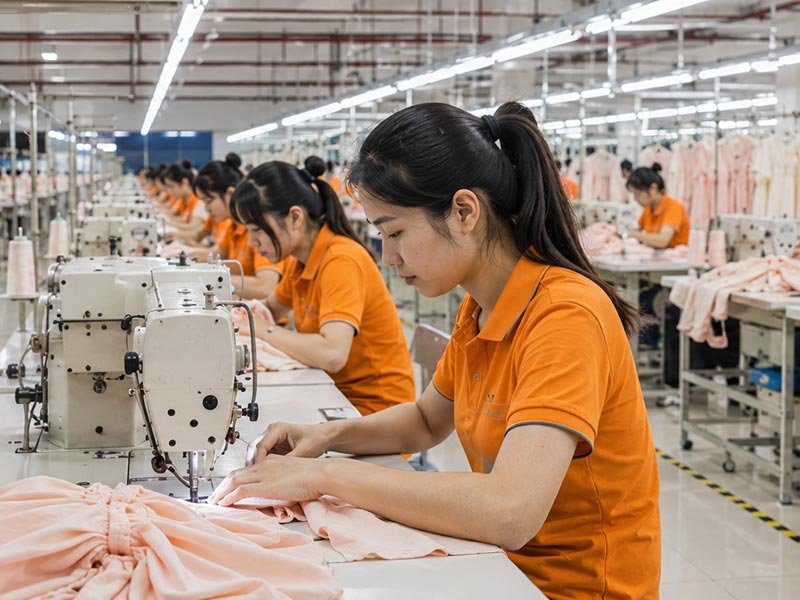
  • 16 owned womenswear factories supported by 20+ coordinated satellite factories
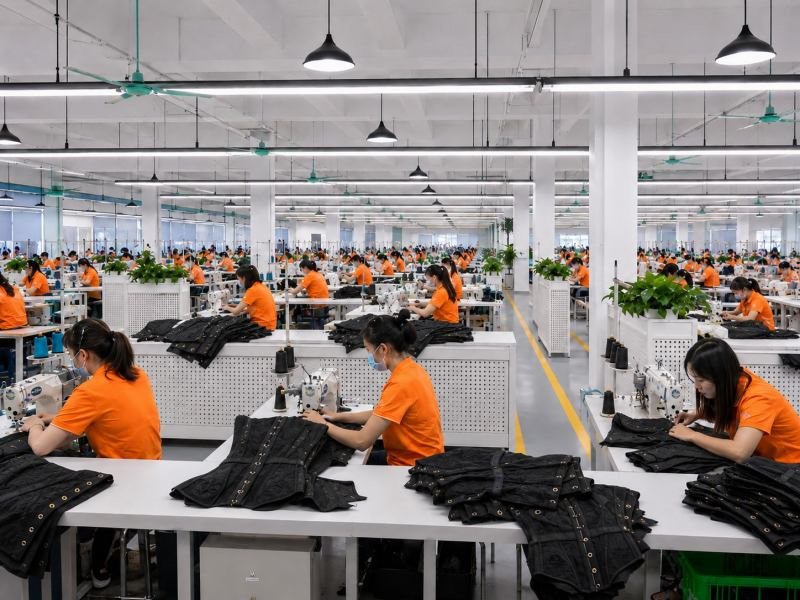
  • 300 sewing lines, including 50+ quick-response and flexible production lines
  • 3,000-8,000 style development and sampling processes supported each month
  • Stable monthly capacity of about 6.5 million garments, with additional peak and reserve capacity
  • One coordinated route from brand brief, fabric review, pattern and sampling to bulk production, quality control, packing, and repeat orders

Built for Fashion Groups Managing Multiple Dress Brands

A fashion holding company needs more than a factory capable of sewing garments. Procurement, development, and brand teams need a manufacturing partner able to understand separate commercial identities while coordinating shared sourcing, production, quality, and delivery requirements.

Fashion Holding Companies

Holding companies often manage several labels with different design languages, retail channels, target ages, and pricing structures. Duolan supports group-level supplier evaluation while keeping brand briefs, style files, fit standards, materials, and approval records separated. Central coordination remains visible to the group, while each label keeps its own product direction. The result is a clearer vendor structure without forcing every label into the same silhouette, fabric, or workmanship standard.

Multi-brand Fashion Groups

A multi-brand group may develop partywear for one label, refined occasion dresses for another, and faster commercial drops for a third. Duolan can organize each project around its own assortment plan, launch date, style priority, and approval route. Group-level visibility can cover capacity, compliance, delivery, and supplier performance, while brand-level execution protects styling, fit, trims, packaging, and market positioning.

Group Buying Teams

Group buying teams usually assess more than quotation speed. They review sample accuracy, material availability, factory allocation, inspection logic, documentation, delivery discipline, and repeat-order stability. Duolan can support structured project files, production-readiness checks, style-level scheduling, quality checkpoints, packing requirements, and shipment coordination. Each order moves through defined decisions rather than informal verbal approval.

Product and Sourcing Offices

Product and sourcing offices often work between creative teams, commercial teams, and production partners. Their pressure comes from incomplete briefs, conflicting comments, changing launch dates, and multiple styles moving at different speeds. Duolan translates design references and technical feedback into pattern, measurement, material, construction, and production actions. Open questions are identified before they become costly sample or bulk issues.

What a Group-level Dress Supplier Must Control

Strong group cooperation depends on six operating capabilities. Each one protects brand identity, launch timing, quality consistency, and long-term sourcing efficiency across several labels and collections.

Brand-specific Execution

Every label needs a separate working standard. Duolan records target market, style language, fit direction, size chart, price band, material level, packaging rules, and quality priorities for each brand. Shared sourcing efficiency never replaces brand-specific development. A premium occasion label and a faster commercial label may use different fabric weight, lining level, seam finish, grading logic, and inspection focus even when both belong to the same group.

Parallel Collection Management

Holding companies frequently run 10-30 styles per order and several development tracks at once. Duolan separates projects by brand, season, drop, style number, sample purpose, approval status, and launch deadline. Priority styles can move through fitting and material confirmation first, while lower-risk commercial styles follow a faster route. Clear status control reduces confusion when different teams submit comments at different times.

Production Allocation

Available capacity alone does not determine factory selection. Duolan reviews fabric behavior, structural complexity, special processes, quantity, delivery window, and quality risk before assigning production. Fit-sensitive corset dresses, material-sensitive satin styles, and sequin-heavy occasion pieces require different lines and control points. Stable repeat styles may return to familiar lines, while rapid replenishment can use flexible capacity when standards are already locked.

Central Visibility

Group procurement teams need a clear view of what is approved, pending, delayed, or at risk. Duolan can organize project communication around sample status, material readiness, open comments, PP approval, production path, inspection points, packing status, and shipment preparation. Brand-level details remain distinct, while group-level reporting supports planning and supplier performance review.

Repeat-order Stability

A successful launch creates future demand for color extensions, new lengths, sleeve changes, regional versions, and replenishment. Duolan preserves approved patterns, measurement tables, BOM information, fabric references, workmanship notes, packaging instructions, and previous quality findings. Repeat production begins from a documented standard rather than rebuilding the style from memory.

Risk-based Coordination

Group projects contain many interdependent decisions. A late color approval can delay fabric; a changed lining can affect fit; an unconfirmed zipper can stop production; a packaging revision can delay shipment. Duolan identifies which decisions sit on the critical path and communicates the effect of delay before the schedule becomes unrecoverable. Risk reduction comes from clear confirmation, not optimistic promises.

Where Multi-brand Dress Programs Commonly Lose Control

Complexity rises quickly when several labels, teams, styles, materials, and launch windows share one supply base. A controlled system links every major risk to a specific operating action and a visible project result.

Group RiskCommon FailureDuolan Control ActionExpected Project Result
Brand identity dilutionDifferent labels begin to look and fit alikeSeparate brand brief, fit direction, material level, and approval fileEach label keeps its own product language
Sample comment confusionFit, visual, and construction comments are mixed across versionsStyle code, sample stage, comment category, revision summary, and open-question listFewer repeated errors and clearer approvals
Capacity conflictSeveral labels need production during the same selling windowStyle-level risk classification and production-path planningPriority styles receive suitable lines and realistic timing
Material inconsistencySample fabric, bulk fabric, lining, or trims change without full reviewMaterial locking, shade and hand-feel review, BOM confirmation, and pre-production checkMore stable appearance and bulk repeatability
Sample-to-bulk deviationApproved appearance is not translated into production standardsPP basis, first-piece review, measurement control, workmanship checkpoints, and inline QCCloser bulk alignment with approved direction
Reorder variationLater batches use different patterns, trims, or workmanshipReorder file preservation and previous-issue reviewBetter consistency across repeat orders
Compliance delayLabels, testing, or packing rules are confirmed too lateRequirement review before bulk startFewer shipment and warehouse interruptions
Confidentiality failureFiles or unreleased designs are shared too broadlyBrand-separated access, controlled visual use, and agreed confidentiality handlingStronger protection for unreleased collections

Duolan’s Role Inside a Multi-brand Supplier Portfolio
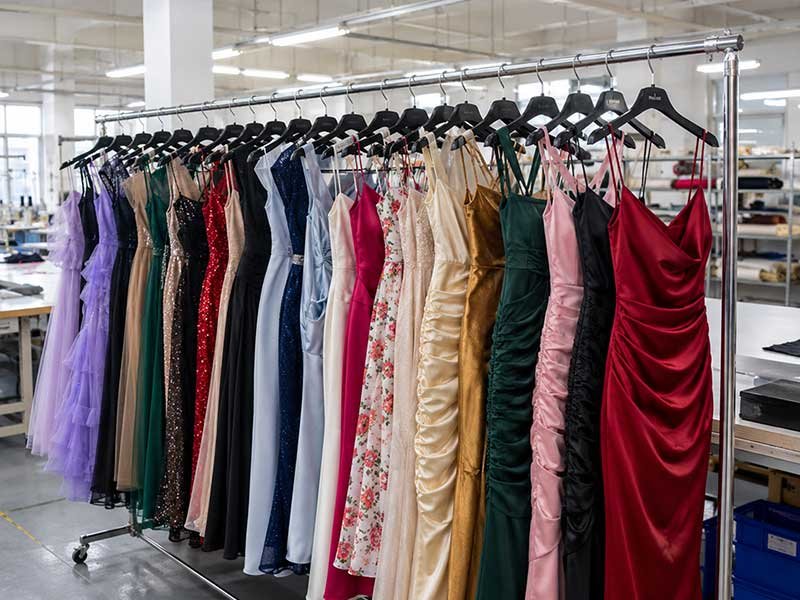
Duolan is positioned as a dress-focused development and manufacturing partner within a wider group sourcing structure. The goal is not to replace every supplier, but to strengthen the category where fit, fabric, construction, and visual execution carry the greatest risk.

Dress Category Specialist

Duolan concentrates on fashion dresses, occasion dresses, party dresses, fitted dresses, vacation dresses, going-out dresses, and related fashion sets. Development work covers material review, pattern, fit, sample revision, production readiness, bulk control, and repeat orders. Category concentration supports deeper judgment on silhouettes, body balance, support structures, surface-sensitive fabrics, decorative techniques, and final presentation.

Multi-project Manufacturing System

Sixteen owned womenswear factories, more than twenty coordinated satellite factories, 300 sewing lines, and over 50 flexible lines create several production routes. Core and higher-risk styles can remain under tighter owned-factory control. Repeat, replenishment, and scaling programs can use coordinated capacity after standards are stable. Special processes such as printing, embroidery, washing, and decorative work are matched according to product needs rather than treated as generic outsourcing.

Brand-level Development Partner

Group teams need a supplier that understands why each label develops a product, not only how to sew it. Duolan reviews target market, retail positioning, fit priority, material direction, intended selling window, sample purpose, and bulk plan. A photo sample, fit sample, sales sample, and PP sample serve different decisions. Clear sample purpose helps reduce unnecessary revisions and improves the transition into production.

Why Fashion Groups Still Need Dress Specialists

Supplier consolidation can reduce administrative work, yet consolidation should not remove category expertise. Fashion dresses combine material behavior, body fit, support, movement, visual finish, and complex workmanship in ways that differ from basic apparel.

Material Behavior Shapes the Product

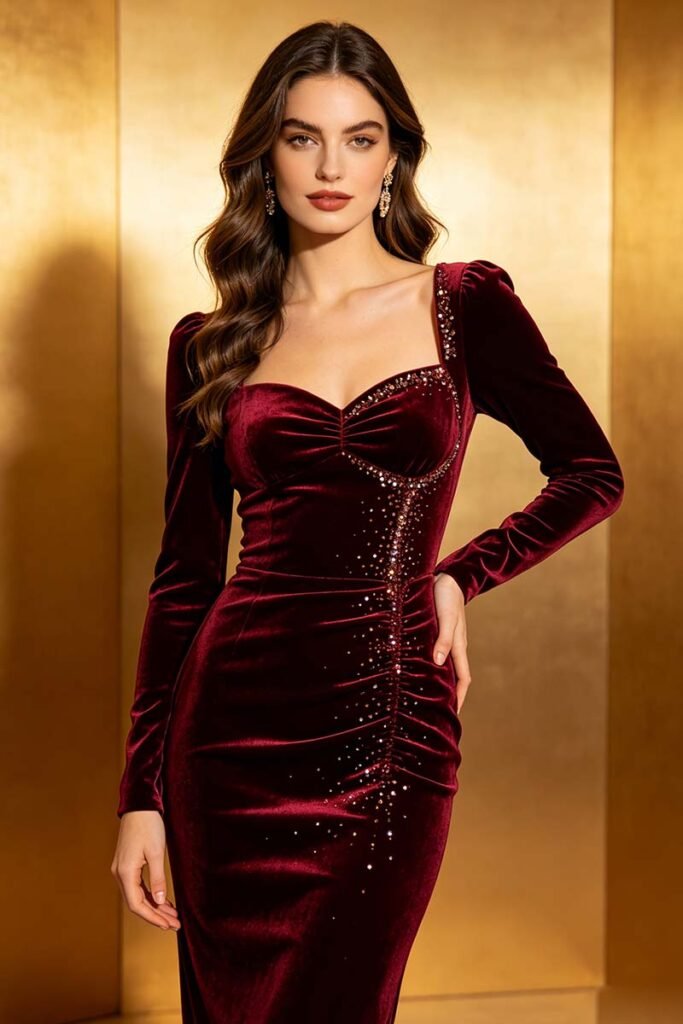
A satin dress can appear premium in a sketch and look flat, marked, or unstable in production if fabric weight, surface sensitivity, lining, seam tension, and pressing are not aligned. Mesh requires control of stretch direction, transparency, edge finish, print or embroidery placement, and lining coverage. Bodycon styles depend on recovery, opacity, pattern tension, seam elasticity, and grading. Sequin dresses bring weight, abrasion, shedding, seam allowance, and repair concerns. Dress specialization begins with understanding how fabric behaves on the intended silhouette, not simply finding a visually similar material.

Structure Must Work on the Body

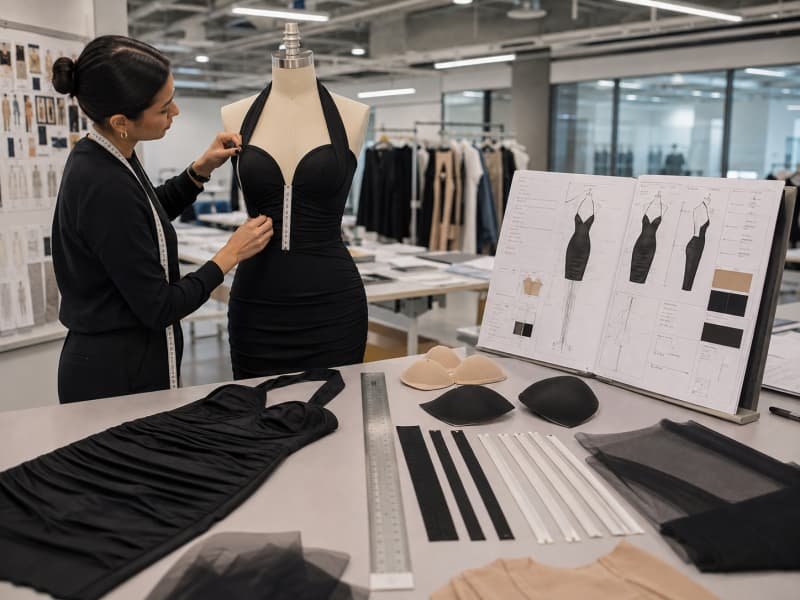
Corset, bustier, halter, strapless, cut-out, and backless dresses cannot be judged only on a hanger. Cup position, neckline stability, boning placement, waist balance, strap tension, zipper support, lining coverage, and movement allowance affect whether the dress feels secure and looks balanced. A pattern may match the measurement sheet and still fail on body proportion. Duolan reviews fit together with material stretch, construction method, target shape, and wear scenario so technical corrections support the intended look rather than flattening it.

Production Must Preserve the Design

A beautiful sample has limited value if production cannot repeat it. Complex dresses need bulk-ready construction methods, stable seam allowances, clear pressing standards, approved trims, measurable tolerance, and inspection points linked to visible risk. Decorative work also needs production logic: bead density, sequin direction, lace matching, drape placement, ruching distribution, and embroidery location must be repeatable at scale. Duolan develops samples with production transfer in mind, helping group teams move from creative approval to controlled manufacturing.

Protect Brand Files, Versions, and Unreleased Designs

Multi-brand groups handle confidential concepts, launch plans, pricing structures, and unreleased products. File discipline must support confidentiality while keeping development fast enough for seasonal calendars.

Brand-separated Files

Project records can be separated by holding company, label, season, drop, style code, and access responsibility. Design references, tech packs, fit notes, material requests, quotations, and packaging files should not be grouped under one generic folder. Separation reduces the chance of using the wrong size chart, trim specification, or approval image when several labels develop similar dress categories.

Version-controlled Development

A style may move through reference analysis, pattern version, first sample, fit revision, visual revision, sales sample, PP sample, and bulk standard. Every stage needs a clear name and date. Comment changes should be converted into technical actions and reflected in the relevant file rather than left in scattered messages. Revision summaries help design, merchandising, sourcing, pattern, sample, and production teams see the same current status.

Controlled Visual Use

Unreleased designs, labels, logos, and campaign-sensitive details should not appear in public materials without approval. Development photography can focus on workmanship, pattern, fabric, and process while hiding identifiable brand information. Anonymized project evidence can prove capability without exposing commercial identity. Confidentiality arrangements can also be reviewed according to the project and group policy.

Clear Comment Ownership

Several departments may comment on one style. Design may focus on visual proportion, technical teams on fit, sourcing on cost, and merchandising on delivery. Duolan can separate comments by category, identify conflicting instructions, and ask for a final decision owner before revision begins. Clear ownership avoids repeated sample rounds caused by unresolved internal differences.

Production File Locking

Before bulk start, confirmed material, measurements, construction points, labels, packing, and PP reference need to be locked into the production file. Any later change should show its effect on cost, timing, stock, or quality risk. Production locking protects both the brand and the factory from uncontrolled last-minute decisions.

Reorder Record Preservation

Repeat orders should refer back to the approved pattern, BOM, measurements, workmanship, QC findings, and packaging basis. If a material or trim is no longer available, replacement review must consider hand feel, color, stretch, opacity, drape, construction impact, and price. A reorder should not silently become a new product.

Dress Categories for Multi-brand Fashion Portfolios

A holding company often needs a balanced category mix: commercial volume styles, image-building pieces, seasonal statements, and repeatable core products. Duolan develops dress families around silhouette, market role, material behavior, and production risk.

Mini Dresses

Mini dresses can serve party, going-out, vacation, and event-driven labels. Critical controls include hem balance, sitting coverage, lining length, slit position, zipper stability, strap security, and grade rules across sizes. Fitted mini styles require careful stretch and opacity review, while structured mini dresses need stable bodice support and clean proportion.
Long Sleeve Midi Dresses​

Midi Dresses

Midi dresses work across contemporary, occasion, wedding-guest, work-to-evening, and premium commercial lines. Development focuses on waist placement, skirt fall, movement, slit height, sleeve balance, and the interaction between fabric drape and length. Midi silhouettes often become repeatable franchise styles when fit and material standards are preserved.

Maxi Dresses

Maxi dresses need control of weight, sweep, hem level, walking movement, lining, and packaging recovery. Resort prints, chiffon layers, satin drape, and occasion structures require different production routes. Length grading also needs market-specific judgment so larger sizes retain proportion without creating excessive volume or unstable hems.

Bodycon Dresses

Bodycon products depend on fabric recovery, pattern tension, seam elasticity, lining compatibility, and size grading. Duolan reviews bust, waist, high hip, low hip, side seam, neckline, and hem behavior together. The goal is controlled contour without excessive transparency, rolling edges, distorted seams, or unstable recovery after wear.
3 Corset Editorial Dresses

Corset Dresses

Corset dresses combine visual shape with engineering. Cup position, boning, seam structure, waist suppression, neckline security, closure strength, lining, and comfort need coordinated development. Complex corset styles may require trial construction, first-piece confirmation, and focused inline inspection before wider production.

Satin Dresses

Satin magnifies every detail. Surface marking, needle choice, seam tension, pressing, puckering, panel balance, lining, and packing can affect the final impression. Fabric selection must consider weight, shine, drape, recovery, opacity, and susceptibility to snagging or pressure marks. Bulk control needs special attention from cutting through final packing.

Mesh Dresses

Mesh offers layered transparency, stretch, print, embroidery, ruching, and body-contour options. Development must confirm mesh direction, lining coverage, seam strength, edge finish, print placement, stretch recovery, and skin comfort. Different panels may need different stretch allowances to keep the dress secure and visually balanced.

Sequin Dresses

Sequin styles create strong campaign value but bring weight, abrasion, shedding, seam difficulty, repair needs, and packing concerns. Duolan reviews sequin direction, density, backing fabric, seam allowance, lining, zipper area, neckline comfort, and hem treatment. Production standards should include acceptable repair method and focused inspection zones.

Party Dresses

Party collections often combine bodycon, satin, mesh, ruched, sequin, cut-out, and corset elements. Commercial success depends on balancing visual impact with comfort, movement, production cost, and reliable fit. Duolan can help separate image styles from volume styles so complex workmanship is used where it adds measurable product value.

Occasion Dresses

Occasionwear requires polished drape, balanced proportion, secure fit, clean finishing, and consistent presentation across midi and maxi lengths. Wedding-guest, cocktail, graduation, and formal-event styles may share a category but demand different color, coverage, material, and timing decisions. Production must protect the visual finish expected at a higher retail position.
Resort Cover-up Dresses

Vacation Dresses

Vacation and resort dresses rely on movement, breathable feel, print, color, packability, and easy styling. Halter, cut-out, backless, printed maxi, and lightweight sets need attention to strap stability, transparency, shrinkage, print matching, and hem recovery. Fabric sourcing and launch timing are especially important for seasonal drops.

Fashion Sets

Coordinated tops, skirts, corset tops, and related separates can extend a successful dress language into a broader assortment. Matching color, fabric batch, trim, print scale, and fit proportion across pieces requires shared planning. Sets also offer price architecture flexibility and can support capsule collections without weakening brand consistency.

Build Distinct Collections Across the Brand Portfolio
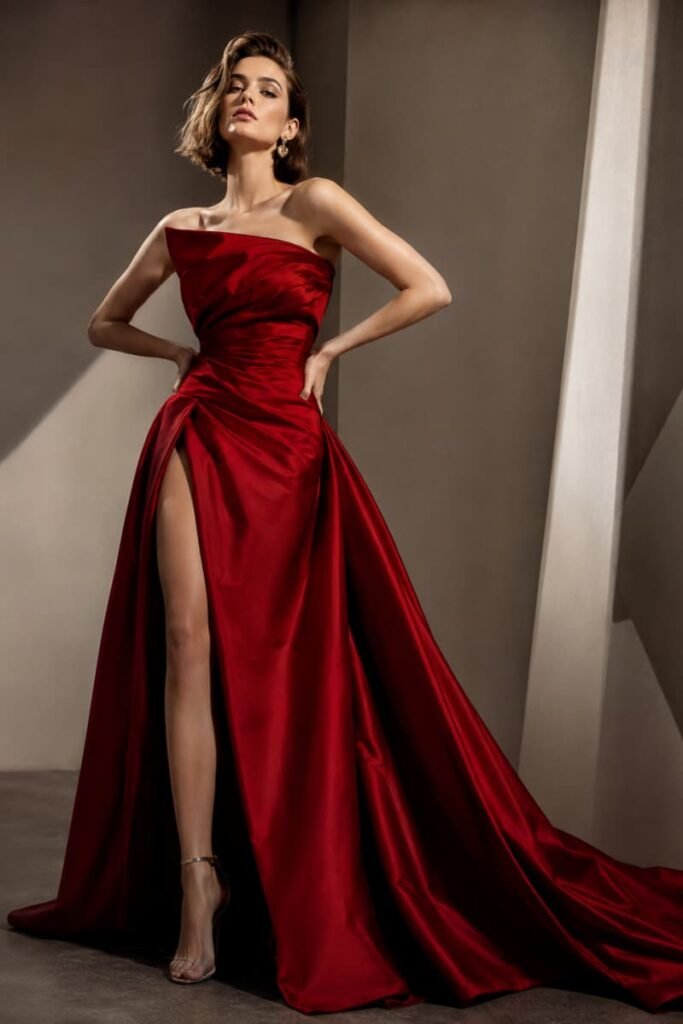
Different labels may share a holding company, yet each assortment must play a clear commercial role. Duolan helps organize style families around launch purpose, price position, product risk, and repeat potential.

Hero Image Styles

Hero styles carry campaign impact and brand recognition. They may use stronger draping, corset structure, sequins, beading, asymmetric cuts, or unusual fabric combinations. Development should protect the original concept while testing whether construction, weight, comfort, and production repeatability remain acceptable. Quantities may be lower than core commercial styles, but approval discipline must be higher.

Commercial Core Styles

Core styles are designed for broader sales, stable fit, predictable cost, and repeat production. Clean bodycon dresses, refined satin midis, black fitted styles, and easy occasion silhouettes can become long-running products. Material availability, grading, workmanship, and packaging need repeatable standards so the group can reorder or extend colors without restarting development.

Entry-price Styles

Entry-price products should preserve fit, finish, and brand expression while controlling unnecessary complexity. Cost optimization may come from fabric selection, simplified internal construction, shared trims, efficient panel design, or adjusted decorative density. Removing value is not the goal; the goal is spending on the visible and functional details that matter most.

Premium Control Styles

Premium styles may use better surface quality, lining, trims, complex pattern work, hand-applied details, or more demanding finishing. Their development path should include closer material review, more focused fitting, and stronger PP standards. Premium pricing needs to be supported by visible quality and stable production rather than expensive components alone.

Seasonal Statement Styles

Holiday, homecoming, graduation, party season, wedding-guest, and resort collections have narrow selling windows. Statement styles need early risk review because custom colors, prints, sequins, embroidery, or complex structure may lengthen development and production. Working backward from warehouse arrival helps protect campaign and launch dates.

Reorder Candidates

Reorder candidates combine good commercial response with stable materials, repeatable construction, and manageable production risk. During initial development, Duolan can help identify which styles are suitable for color extension, length variation, sleeve variation, regional adaptation, or volume scaling. Reorder potential should influence material and construction decisions from the beginning.

Fabric and Trim Planning by Brand Position

Material decisions determine more than appearance. Fabric and trim choices influence fit, drape, support, opacity, cost, development time, production stability, packaging, and reorder potential. Group sourcing works best when material standards match each label’s price and product role.

Premium and Contemporary Labels

Premium and contemporary dresses often depend on controlled drape, surface quality, clean color, stable structure, and refined internal finishing. Satin selection may be compared by weight, shine, snag sensitivity, pressing response, and seam appearance. Mesh may be assessed for fineness, recovery, transparency, and skin feel. Crepe, chiffon, lace, jersey, and lining need to support the target silhouette rather than compete with it. Trims such as zippers, hooks, cups, boning, anti-slip tape, buttons, labels, and packaging components should match the expected retail position. Material approval should include visible and functional standards, not only supplier codes.

Commercial Fast-fashion Labels

Commercial lines need reliable material availability, workable cost, color options, stable bulk performance, and a production route suited to faster calendars. Cost control should never remove essential coverage, recovery, seam stability, or comfort. Duolan can compare material options according to drape, structure, support, stretch, skin feel, opacity, shrinkage, and lead time. Shared fabrics or trims across selected labels may improve leverage, but only when hand feel, visual identity, and price positioning remain appropriate for each brand.

Material Locking for Bulk

Sample fabric should not become a vague reference for production. Before bulk start, the working file should :

  • confirm composition
  • weight or relevant construction
  • color standard
  • finish
  • stretch direction
  • lining
  • trims
  • labels

Shade, hand feel, surface behavior, and cutting performance may need review before release. When a nominated material becomes unavailable, replacement evaluation should cover garment effect, fit, workmanship, cost, timing, and reorder consequences rather than selecting the closest visual swatch.

Separate Fit and Size Standards for Every Brand

Fit cannot be standardized across an entire holding company unless every label serves the same body profile, styling expectation, and channel. Duolan develops and preserves brand-specific measurement, proportion, and grading rules.

Base Size and Measurement Logic

Each brand should confirm the base size, body reference, garment measurement method, intended ease, and priority points of measure. Bust, underbust, waist, high hip, low hip, shoulder, strap length, bodice length, skirt length, slit height, neckline depth, and back width may carry different importance by silhouette. Bodycon styles require controlled negative ease and recovery. Occasion dresses may need more movement allowance. Corset dresses require cup, waist, and support alignment. Measurement sheets must define where and how each point is taken so factories and brand teams compare the same value.

Pattern Balance and Fit Review

A measurement can fall within tolerance while the garment still looks wrong. Pattern balance, seam position, neckline shape, bust contour, waist level, side seam direction, skirt fall, strap tension, and hem balance need visual review. Duolan combines technical measurement with dress-specific fitting judgment. Comments such as “too loose at bust” or “waist looks low” are translated into pattern and construction actions, not only numerical changes. Fabric behavior is reviewed at the same time because a correction suitable for woven satin may not suit stretch mesh or jersey.

Grading Across the Size Range

Grading should preserve the intended proportion, support, coverage, and movement across sizes. Fixed increases applied to every area can create low armholes, misplaced cups, excessive neckline opening, unstable straps, or distorted skirt volume. Brand-specific grade rules may be required for bust, waist, hip, length, strap, neckline, sleeve, and support structures. Larger sizes may need additional engineering rather than simple scaling. Approved grade rules should enter the production file and remain available for repeat orders.

From Group Brief to Production-ready Dress Programs

A disciplined development route gives each team a clear decision point. Design, sourcing, pattern, sample, merchandising, and production teams should know what is being approved and what remains open.

Brand and Project Intake

Development begins with the label, market, product category, intended use, launch date, target quantity, price position, size range, and available design information. Useful inputs include tech packs, reference images, original samples, fabric ideas, fit comments, previous bestsellers, and packaging rules. Duolan reviews whether the brief is complete enough for quotation, material sourcing, pattern development, or sample planning. Missing information is grouped into clear questions rather than discovered one point at a time.

Feasibility and Material Review

Before cutting a sample, Duolan evaluates silhouette, fabric behavior, structure, lining, trims, decorative details, fit sensitivity, and future production risk. A reference image may require a different construction route from the apparent visual. Material options are considered against target effect, price, quantity, availability, color, and timing. High-risk areas such as bust support, back opening, slit height, mesh coverage, satin seam marking, and sequin comfort can be marked for early confirmation.

Pattern and First Sample

Pattern development translates the agreed direction into proportion, shape, support, movement, and measurable construction. The first sample may focus on visual direction, fit, structure, or presentation depending on its purpose. Internal review covers measurements, silhouette, balance, fabric behavior, lining, trims, workmanship, and obvious production concerns before the sample is presented. Clear sample purpose avoids evaluating a prototype as if it were a finished PP sample.

Revision and Approval Path

Comments can arrive through annotated PDFs, fit sheets, images, video calls, or written notes. Duolan separates them into fit, measurement, fabric, trim, construction, visual, label, packaging, and production categories. Technical actions are assigned, open questions are confirmed, and the revised version receives a summary. Approval may lead to a sales sample, photo sample, revised fit sample, or PP sample depending on the commercial stage.

Bulk Readiness and Production Transfer

Before bulk starts, the approved direction is converted into a production basis. Fabric, lining, trims, color, measurements, workmanship, labels, packaging, and PP reference are checked together. The order is classified by style complexity, material sensitivity, special process, quantity, and launch deadline. A production path, QC focus, and delivery plan are then prepared. Development value is completed only when the approved product can be repeated reliably.

Manage Several Brands and Sample Tracks in Parallel

A holding company may develop dozens of styles across different sample purposes and approval calendars. Clear sample classification prevents priority styles, comments, and deadlines from competing with one another.

Brand-separated Queues

Each label receives a separate development queue covering style number, sample type, material status, pattern status, sample status, comments, open questions, target review date, and next action. Group-level teams can see overall progress without merging brand files. A queue also reveals where approval delays, material delays, or missing information are affecting the schedule.

Sample Purpose Control

First prototypes, fit samples, photo samples, salesman samples, size-set samples, PP samples, and production references serve different decisions. A photo sample may prioritize visual finish and campaign timing. A fit sample may use temporary material when silhouette and measurement are the main questions. A PP sample must reflect approved bulk materials and workmanship. Naming the purpose helps every team evaluate the right standard.

Priority Style Planning

Hero styles, campaign styles, core volume styles, and low-risk repeat styles do not need the same sequence. High-risk products can enter pattern and material review earlier. Campaign samples can receive earlier finishing and presentation attention. Stable repeat styles can move faster after material and capacity confirmation. Priority planning protects key commercial dates without treating every style as equally urgent.

Comment Translation

Comments such as “more secure,” “less shiny,” “cleaner waist,” or “better drape” need technical interpretation. Duolan identifies whether the action affects pattern, measurement, fabric, lining, support, trim, construction, or finishing. When one comment creates a conflict elsewhere, the effect is explained before revision. Clear translation reduces cycles caused by literal but incomplete changes.

Open-question Discipline

A revision should not begin while critical comments remain contradictory. Duolan groups open questions, identifies the decision owner, and records the agreed answer. Examples include whether the waist should sit higher, whether the lining should extend, whether the slit position is visual or functional, and whether a trim change is cost-driven or design-driven. Fewer unresolved decisions lead to cleaner revisions.

Revision Summaries

Each revised sample should show what changed, what stayed unchanged, what remains pending, and which files were updated. A concise summary keeps brand, sourcing, pattern, sample, and production teams aligned. The next round then begins from a known version rather than a mixture of old comments and new assumptions.

Cost Architecture Across Different Brand Positions

Price planning works best when the group understands which product decisions create value and which only add complexity. Duolan reviews cost together with silhouette, material, workmanship, order structure, and expected retail position.

What Drives Dress Cost

Major cost drivers include fabric consumption, fabric minimums, custom color, lining, cups, boning, zippers, decorative density, handwork, pattern difficulty, seam count, panel count, size range, colorways, special processing, inspection needs, packaging, and production quantity. Satin may require slower handling and more careful pressing. Sequins may raise cutting loss, sewing time, repair work, and packing needs. Corset structures add internal components and fit risk. Understanding the cost source is more useful than comparing one total number without context.

Build a Portfolio Price Ladder

A brand portfolio may need premium image styles, commercial hero products, stable core styles, and entry-price options. The cost structure should follow the role. Premium styles can justify higher material and workmanship investment when visible quality supports the retail price. Volume styles should favor stable materials, repeatable construction, and controlled risk. Entry-price products can simplify internal details or decorative density while protecting fit, coverage, seam strength, and brand-recognizable features.

Optimize Without Weakening the Product

Cost optimization should begin with a clear value hierarchy. Duolan can compare alternative fabric weights, shared trims, lining options, panel engineering, embellishment placement, construction methods, and packaging formats. Every change should be checked for visual, fit, comfort, production, and timing effects. A cheaper fabric that changes drape or transparency may create more returns and weaker brand perception. A simpler construction can be valuable when it preserves the intended look and improves production stability.

A Manufacturing Network Built for Portfolio Scale

Duolan combines owned-factory control with coordinated capacity. The network supports complex development, core production, repeat orders, replenishment, seasonal peaks, and differentiated factory matching across multiple labels.

Sixteen Owned Factories

Owned factories provide stronger control for core styles, high-risk products, key accounts, complex workmanship, and projects requiring close sample-to-bulk transfer. Internal coordination can connect pattern, sample, material, production, quality, packing, and project management decisions. Group teams gain a clearer escalation route when fit, workmanship, or scheduling issues require rapid action.

Twenty-plus Satellite Factories

Long-term satellite factories add capacity for scaling, repeat orders, replenishment, and production peaks. Allocation is not based only on available space. Product type, process familiarity, quality history, material sensitivity, quantity, and delivery window are reviewed before release. Standards, PP references, and QC expectations must transfer with the order.

Three Hundred Sewing Lines

A network of about 300 sewing lines supports different product and volume profiles. Stable lines can handle ongoing commercial programs, while specialized or experienced lines are matched to fitted, structured, surface-sensitive, or decorative dresses. Production planning considers line suitability, not merely line count.

Flexible Production Lines

More than 50 quick-response and flexible lines support styles with shorter planning cycles, replenishment needs, or smaller multi-style allocation within a larger group program. Flexible capacity is most effective when patterns, materials, BOM, workmanship, and quality standards are already confirmed. Speed cannot replace production readiness.

Multi-region Capacity

Coordinated manufacturing resources in Guangdong and supporting regions including Guangxi, Guizhou, Sichuan, and Jiangxi provide a wider capacity base. Multi-region planning can support seasonality and scale, while higher-risk styles remain on the most suitable production route. Group capacity decisions should balance quality control, workforce familiarity, logistics, and timing.

Material and Process Resources

The manufacturing system is supported by fabric, trim, accessory, printing, embroidery, dyeing, washing, and finishing resources. Special processes are selected according to design and production needs. A sequin, print, embroidery, or washed effect should enter the schedule with its own testing, approval, and quality checkpoints rather than being added late as a decorative afterthought.

Production Scheduling Around Launch and Warehouse Dates

Bulk scheduling starts after approved standards and material readiness are clear. Duolan breaks each order into executable paths based on style complexity, production risk, quantity, special process, QC requirements, packing, and delivery deadline.

Classify Every Style Before Scheduling

Styles can be grouped as standard production, fit-sensitive, material-sensitive, craft-sensitive, repeat, rapid replenishment, or multi-style collection orders. A clean jersey dress and a corset sequin mini should not share the same planning assumptions. Classification helps determine whether a style needs trial construction, special-line experience, first-piece review, additional inline checks, or longer finishing time. It also helps identify which styles can run in parallel and which should follow a staged release.

Work Backward From the Selling Window

Group teams should confirm the launch date, campaign or showroom date, warehouse arrival, inspection window, packing confirmation, production period, PP approval, and material lock. A style intended for holiday or graduation sales has limited recovery time if an early decision is delayed. Duolan can prepare a production path and timeline based on the critical sequence rather than giving one generic lead-time promise for every dress.

Classify Every Style Before Scheduling

Styles can be grouped as standard production, fit-sensitive, material-sensitive, craft-sensitive, repeat, rapid replenishment, or multi-style collection orders. A clean jersey dress and a corset sequin mini should not share the same planning assumptions. Classification helps determine whether a style needs trial construction, special-line experience, first-piece review, additional inline checks, or longer finishing time. It also helps identify which styles can run in parallel and which should follow a staged release.

StageReference WindowMain Conditions
Simple dress production15-20 daysMaterials ready, stable construction, standard packing
Standard dress production20-30 daysNormal fit, lining, trims, and multi-size production
Complex dress production30-45 daysCorset, mesh, satin, sequin, embroidery, or special finishing
Express delivery3-7 daysDestination, customs, parcel size, and carrier service
Air freight5-8 daysFlight space, customs, cargo preparation, and destination handling
Sea freight20-35 daysPort pair, sailing schedule, customs, and inland delivery

Move Approved Samples Into Controlled Bulk Production

Sample approval should create a manufacturing standard, not only an attractive reference garment. Duolan uses a production-readiness review to lock decisions and identify any point still unsuitable for bulk release.

Bulk Readiness Review

Before production, the team confirms whether fit, visual direction, fabric, lining, trims, color, measurements, workmanship, labels, packaging, and PP basis are ready. The order purpose is also identified: launch order, repeat order, replenishment, or scale-up. A style still pending fit or material refinement should not be treated as fully approved. The review separates minor production clarifications from changes capable of affecting cost, timing, or product performance.

First-piece and Trial Verification

Complex styles may require construction trials, first-piece confirmation, or limited pilot production before wider release. Corset dresses need support and symmetry review. Satin dresses need seam, pressing, and surface checks. Mesh layers need coverage and stretch alignment. Sequin styles need comfort, shedding, seam, and repair review. A small early verification can reveal issues before thousands of units enter the same process.

Production Standard Transfer

The production team needs more than a sample on a hanger. The working standard should include approved measurements, tolerance, pattern, BOM, material references, construction notes, operation focus, visual reference, quality checkpoints, labels, packaging, and any special handling. Changes after production release must be controlled and communicated across relevant teams. A stable transfer protects the group from sample-to-bulk differences and gives QC measurable criteria.

Dress-specific Quality Control Across Every Production Stage
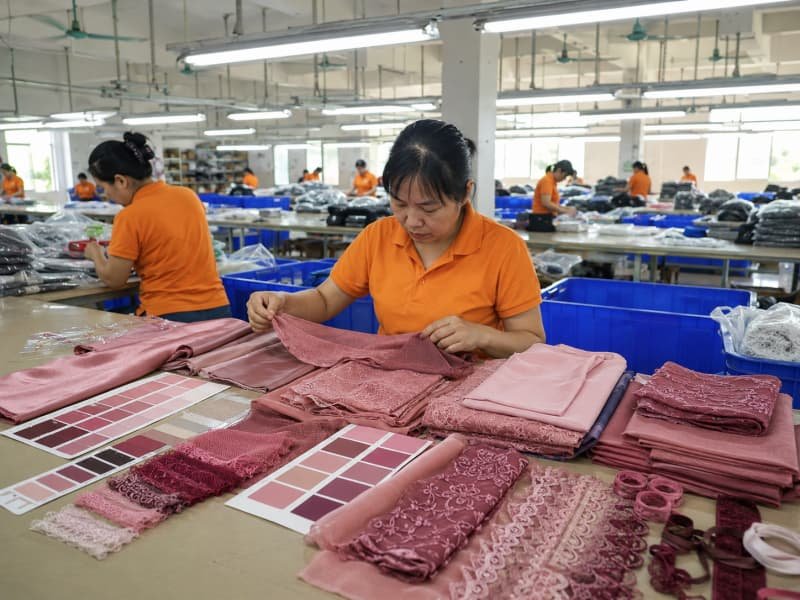
Quality control must follow the product risk. A generic final inspection cannot replace material review, first-piece confirmation, inline measurement, workmanship checks, and packing verification for complex fashion dresses.

Fabric Incoming Review

Fabric review can cover color, shade variation, surface defects, hand feel, width, stretch direction, relevant shrinkage or stability, and consistency with the approved direction. Satin, mesh, jersey, lace, chiffon, sequins, and lined fabrics each require different attention before cutting.

Pre-production Confirmation

Production files, measurements, BOM, fabric, lining, trims, labels, packaging, and key workmanship points are reviewed before line release. High-risk zones are marked for the production and QC teams. Any open point receives a decision owner and deadline.
Rapid-Sampling.webp

First-piece Inspection

The first completed piece is checked for silhouette, measurements, balance, seam appearance, neckline, support, zipper, lining, decorative placement, and finishing. First-piece approval helps correct method or handling before the issue spreads through the line.

Inline Measurement Control

Key points of measure are checked during production, not only after completion. Bodycon and fitted styles need closer attention to bust, waist, hip, length, strap, neckline, and seam position. Trends are corrected before they become full-lot variation.

Workmanship Inspection

Workmanship review covers seam security, stitch appearance, puckering, skipped stitches, raw edges, lining attachment, zipper installation, hem quality, trim attachment, symmetry, and pressing. Acceptance focus changes by product and material.
Body Fit and Proportion​

Fit-sensitive Checks

Corset, halter, strapless, backless, and cut-out dresses receive focused checks on support, cup and boning position, strap security, neckline stability, closure, lining coverage, and left-right balance. Construction must support movement as well as appearance.

Surface-sensitive Checks

Satin, velvet-like surfaces, sequins, beads, embroidery, and delicate mesh can show pressure marks, snags, abrasion, missing decoration, or handling damage. Inspection and packing need product-specific methods to protect the visible finish.

Final Inspection

Final review covers quantity, appearance, measurements, workmanship, color and size breakdown, labeling, packing, and agreed inspection standard. Third-party inspection can be coordinated when required by group policy or market practice.

Packing Verification

Polybags, tissue, hangers, folding, protective layers, labels, barcodes, carton marks, size ratio, and carton quantity are checked before shipment. Packing must protect the garment and meet warehouse requirements without distorting satin, structured bodices, or decorative surfaces.

Preserve Standards for Reorders and Portfolio Growth

Long-term value appears when successful styles can return in new colors, regions, quantities, or related silhouettes without losing the approved standard.

Approved Pattern Reuse

Repeat production should return to the approved pattern and grade rules. Any fit improvement from previous production needs to be documented and approved rather than remembered informally. Pattern reuse reduces redevelopment time and protects consistency.

BOM and Material Records

Fabric, lining, trims, thread, support components, labels, and packaging references should remain linked to the style. Availability is checked before confirming a reorder. Replacements require review of visual effect, fit, cost, timing, and bulk stability.

Previous QC Findings

Issues from the first production should become preventive actions for the next run. Measurement trends, seam concerns, packing marks, trim failures, or process bottlenecks can be added to the next pre-production and inline control plan.

Color and Style Extensions

A proven silhouette can support new colors, lengths, sleeves, necklines, or regional adaptations. Each extension still needs review because color can affect fabric minimums and shade, while structure changes can affect pattern balance and production risk.

Replenishment Planning

Fast replenishment is more realistic when materials, patterns, workmanship, and capacity routes are already known. Duolan can assess stock readiness, fabric lead time, line suitability, and shipment method before confirming a replenishment window.

Scaling Production Volume

A style moving from launch order to larger volume may need line balancing, additional quality checkpoints, material allocation, or multi-line coordination. Scaling should preserve the approved standard while increasing throughput. Capacity expansion is planned, not assumed.

Compliance and Vendor Onboarding for Group Programs

Group supplier approval usually covers social responsibility, factory information, quality systems, product standards, documentation, and market-specific requirements. Duolan supports structured review based on the scope of each program.

SMETA Audit Basis

Duolan’s manufacturing system includes SMETA audit experience and a SMETA 2-Pillar audit record. Group teams can review the relevant factory information and social audit basis during supplier evaluation. Factory allocation should be matched to the approved program and confirmed before production.

Quality Requirements

Project quality requirements can reference group manuals, product specifications, AQL or inspection expectations, measurement tolerance, workmanship standards, defect classification, third-party inspection, and corrective-action needs. Duolan reviews how the requirement applies to the dress category and production stage.

Testing Coordination

Testing may cover fiber content, colorfastness, dimensional stability, restricted substances, seam performance, decoration security, or other market and product needs. Standards such as AATCC, ASTM, EN, China GB, OEKO-TEX-related requirements, GOTS-related material requirements, or specific group protocols can be coordinated according to the project. 

Label and Packing Rules

Care labels, composition labels, country of origin, size labels, brand labels, hangtags, price tickets, barcodes, polybags, carton marks, assortment, and warehouse labels must follow the receiving market and group manual. Early confirmation prevents finished goods from waiting for late packaging decisions.

Vendor Information Pack

A supplier review may require company profile, factory list, capability summary, product focus, audit information, quality process, production network, communication contacts, shipment terms, and selected evidence. Duolan can organize relevant materials for evaluation while protecting confidential information.

Factory Visit Support

Group teams may visit factories, sample rooms, pattern rooms, production lines, quality areas, and packing operations. Visits can be planned around the scope of the program so the team sees the facilities and processes most relevant to the intended dress categories.

Communication and Reporting for Multi-team Cooperation

Multi-brand programs involve design, product, sourcing, quality, logistics, and management teams. Communication needs structure, evidence, and clear decision ownership rather than constant chasing.

English Project Communication

Duolan supports English communication through email, WhatsApp, WeChat, voice calls, video calls, and online meetings. Images, annotated documents, tables, videos, and sample review notes can be used according to the issue. Communication format should match the decision required.

Development Updates

Sample updates can cover material status, pattern status, sample stage, internal review, open questions, revision actions, and expected next decision. A status update should explain what changed and what is needed, not simply state that work is in progress.

Bulk Production Updates

Bulk updates may include material readiness, cutting, first-piece approval, line start, inline checks, finishing, final inspection, packing, and shipment preparation. Style-level issues are reported with proposed action and schedule effect.

Cross-team Comment Control

When different departments provide comments, Duolan can classify them and identify contradictions before work begins. A final decision owner helps prevent design, fit, cost, and delivery instructions from pulling the sample in different directions.

Visual Evidence

Project evidence can include material cards, pattern review, sample comparison, measurement photos, construction close-ups, first-piece inspection, inline QC, packing, and shipment preparation. Visual proof supports faster remote decisions and stronger accountability.

On-site Collaboration

Factory visits, sample-room reviews, production-line visits, QC review, and packing review can be arranged for key programs. On-site meetings can focus on current project risks, future capacity, technical development, and longer-term sourcing plans. 

Multi-brand Dress Programs Managed With Clear Standards

The following anonymized project profiles show how portfolio-level dress programs can be organized. Names, logos, unreleased designs, and commercially sensitive details remain protected.

United States Multi-brand Group

A United States fashion group placed a 24-style dress program across three labels with a combined order quantity of 68,400 pieces. The portfolio included bodycon minis, satin midis, mesh occasion dresses, and commercial black fitted styles. Each label used a different size chart, fit direction, trim level, and packaging method. The main risk was comment crossover between teams and a shared launch window.

Duolan separated the program by label, sample purpose, material group, and production risk. Seven higher-risk styles entered early fit and material review. Stable commercial styles followed a faster sampling route. A brand-specific approval file was maintained for measurements, material, trims, workmanship, labels, and packing. Bulk production was divided between core lines and flexible capacity based on complexity and delivery priority. Group-level reporting showed sample status, material readiness, PP approval, and production progress without merging brand standards.

The 24 styles moved into production under separate QC focus points. Bodycon products received stronger measurement and recovery checks, while satin and mesh styles received focused surface, lining, and handling control. The program supported one consolidated group relationship while preserving three distinct product identities.

European Occasionwear Portfolio

A European holding group developed 18 occasion and party styles for two labels, totaling 42,600 pieces. The range used satin, mesh, lace, sequins, corset structures, and draped silhouettes across midi and maxi lengths. One label required a polished contemporary finish, while the second used stronger embellishment and body-contour details. Several materials looked similar in photos but behaved differently during sewing and fitting.

Duolan organized fabric review by drape, opacity, stretch, support, surface sensitivity, and bulk availability. High-risk corset, sequin, and layered mesh styles received construction trials and first-piece attention. Each label used separate fit and workmanship standards. The contemporary label emphasized clean seams, refined lining, and controlled drape. The party label emphasized support, security, embellishment stability, and visual impact.

Production release followed PP and material locking. Inline inspection plans were adjusted by style risk. Satin styles were checked for puckering and pressure marks, sequins for comfort and missing decoration, and corsets for symmetry and support placement. The structure allowed the group to use shared sourcing oversight without flattening the differences between the two labels.

Regional Group Scale-up

A regional fashion group launched 13 styles with an initial order of 27,800 pieces across two labels. Strong sales led to a repeat program of 31,200 pieces covering core colors, two new colors, and three style extensions. The first order established fit, pattern, BOM, material, workmanship, and packaging references. The repeat order needed faster planning without accepting silent changes in fabric or construction.

Duolan began the repeat program with availability review and previous quality findings. Approved patterns and grade rules were reused. New colors were checked against material minimums, shade standards, and delivery timing. Three extensions involving sleeve and length changes received targeted pattern review rather than full redevelopment. Stable repeat styles returned to familiar production routes, while extensions received first-piece confirmation.

The repeat program benefited from preserved records and known production risks. Group teams received a clearer replenishment path, fewer repeated development questions, and more reliable alignment between the original release and the expanded range. The project showed how a successful dress style can grow across colors and variations without losing the approved brand standard.

European contemporary RTW group​

Eight Standards for Evaluating a Dress Manufacturer

A strong supplier evaluation should examine category knowledge, development control, production discipline, and long-term repeatability. The following standards help fashion groups compare suppliers on evidence rather than presentation alone.

Dress Expertise

Ask for recent examples across the required silhouettes, fabrics, structures, and workmanship. Review whether the supplier can explain product-specific risks before sampling. A generic product list is weaker evidence than clear judgment on satin, mesh, bodycon, corset, sequin, drape, support, and fit.

Brand Understanding

Check how the supplier records target market, fit direction, price band, material level, and visual priorities. A suitable partner should distinguish labels within the same group rather than pushing one factory standard across every brand.

Sample Control

Review how sample purpose, comments, revisions, and approvals are managed. Ask to see the difference between first sample, fit sample, revised sample, photo or sales sample, and PP sample. Strong development systems reduce repeated errors.

Material Coordination

Assess how fabric and trims are selected, tested, substituted, and locked. A supplier should connect material decisions to drape, stretch, support, opacity, skin feel, cost, timing, and bulk consistency. “Similar fabric available” is not enough.

Production Discipline

Ask how orders are classified, scheduled, and assigned to factories or lines. Review first-piece control, production file transfer, change management, and style-level timing. Capacity needs an operating method behind it.

Quality Consistency

Examine incoming review, pre-production confirmation, inline control, final inspection, packing verification, and corrective action. Quality checkpoints should match product risk. One final inspection cannot compensate for uncontrolled early stages.

Compliance Readiness

Confirm actual audit records, applicable factories, testing coordination, labeling, documentation, and group-specific manuals. Avoid treating every standard mentioned on a website as a held certificate. Scope and evidence matter.

Reorder Scalability

Review how approved patterns, BOM, material references, QC findings, and packaging standards are preserved. Ask how the supplier handles replenishment, color extensions, volume growth, and multi-line production without changing the approved product.

Frequently Asked Questions for Fashion Holding Companies

Yes. Projects can be separated by label, season, style, size standard, material level, price position, sample stage, packaging rule, and approval status. Group-level communication can provide overall visibility while each label keeps its own technical and visual standard. Scope, timing, and resource allocation are reviewed before the program begins.
Duolan organizes brand-specific briefs, size charts, patterns, BOM files, material approvals, sample comments, labels, packing rules, and PP references. Style codes and version records help prevent file crossover. Group requirements remain visible, while product execution follows the approved standard for each label.
Yes, subject to style count, complexity, material readiness, sample purpose, and launch calendar. Programs are divided into brand queues and priority groups. High-risk and campaign-critical styles can begin earlier, while stable styles follow a faster path. Timing is confirmed after reviewing the full portfolio rather than one style in isolation.
Each label can use its own base size, points of measure, tolerance, grading, fit comments, and body profile. Duolan reviews measurement together with silhouette, fabric behavior, support, coverage, and movement. Approved pattern and grade rules remain linked to the style for bulk and repeat orders.
Selected fabrics or trims can be shared when the hand feel, visual result, fit, quality level, price position, and delivery plan suit each label. Shared sourcing may improve efficiency, but brand identity and product performance remain the deciding factors. Materials are not standardized only for purchasing convenience.
A production-readiness review confirms fit, visual direction, materials, measurements, workmanship, labels, packing, and PP basis. The order then receives a production path and QC focus. Complex styles may use construction trials or first-piece confirmation before wider line release.
Duolan can evaluate owned-factory lines, flexible lines, coordinated satellite capacity, material availability, and shipment options. Scaling is based on approved standards and suitable production routes. Additional volume may require multi-line planning, more material allocation, and expanded quality checkpoints.
The manufacturing system includes SMETA audit experience and a SMETA 2-Pillar audit record. Duolan can coordinate project requirements involving quality manuals, testing, labels, packing, inspection, and market standards. Final scope depends on the assigned factory, product, market, and group policy.
Brand files can be separated by project and access responsibility. Unreleased designs, logos, and labels are not used publicly without approval. Anonymized evidence can focus on process and workmanship. Confidentiality requirements can be reviewed at project start.
Useful information includes company and brand structure, target markets, dress categories, style count, tech packs or references, fabric direction, size charts, target quantity, launch calendar, price position, compliance needs, packing requirements, and current project stage. Complete information supports a clearer development and production review.

Start a Multi-brand Dress Manufacturing Review

Duolan works with established fashion groups, buying teams, product development teams, and sourcing offices that need clear dress specialization, structured sampling, production planning, quality control, and repeat-order support. A useful first review should show how the group is organized, which labels are involved, what each label develops, and when the products need to reach the market.

Please include the information available now:

  • Holding company and brand portfolio overview
  • Target markets and sales channels
  • Dress categories and style count
  • Tech packs, reference images, or original samples
  • Brand-specific size charts and fit direction
  • Fabric, trim, color, and workmanship requirements
  • Order quantity by style, color, and size
  • Target campaign, launch, and warehouse dates
  • Compliance, testing, labeling, and packing manuals
  • Current need: sample development, supplier evaluation, bulk production, repeat order, or scale-up

Duolan will review category fit, development basis, material risk, sample path, manufacturing route, quality focus, capacity planning, and the next decision needed before a formal program begins.


Start Your Apparel Development Project

OEM/ODM Manufacturing Support for Fashion Brands

Share your collection details, estimated quantities, target market, development timeline, and technical requirements. The production team will review your request and provide a tailored manufacturing solution based on your product category, fabric selection, construction needs, and delivery schedule.

Fashion Manufacturing Support with Scalable Production Capacity

From sample development to bulk production, Duolan supports fashion brands with confidential OEM/ODM manufacturing, stable quality management, flexible production planning, and coordinated multi-factory execution for seasonal and capsule collections.

Need Direct Assistance?

Seraphinite AcceleratorOptimized by Seraphinite Accelerator
Turns on site high speed to be attractive for people and search engines.