...

Custom Dress Manufacturer for Brands Reducing Sample-to-Bulk Risk

Move approved dress samples into controlled bulk production with locked standards, verified first pieces and documented quality checkpoints.

Duolan supports fashion dress programs where fit, fabric behavior, construction, embellishment and final appearance must remain aligned from approval through delivery. Production readiness is reviewed before bulk release, then carried into order breakdown, material control, first-piece verification, inline inspection, final packing and repeat-order records.

  • 16 owned womenswear factories coordinated with 20+ long-term satellite factories.
  • 300 sewing lines plus 50+ quick-response and flexible production lines.
  • 15,000–35,000 sample developments per month across the wider manufacturing system.
  • Brand programs commonly cover 10–30 styles and 20,000–80,000 pieces per order.
  • Bulk production references include approved samples, locked BOMs, measurement standards and defined QC checkpoints.

Built for Brand Teams Managing Bulk Production Risk

A controlled sample-to-bulk path is most valuable when several teams, styles, materials and launch dates must move together. Duolan works around clear approvals, traceable revisions and production standards rather than isolated sample making.

Established Fashion Brands

Seasonal drops, occasion lines and repeat programs require stable execution across styles, colors and sizes. Duolan aligns approved samples with material records, construction notes, production routes and inspection points before order release.
  • Priority: brand fit, collection consistency and repeatable bulk standards.
  • Evidence: approved sample, BOM, measurement sheet, workmanship notes and packing files.

Buying and Sourcing Teams

Sourcing teams need more than a good sample. They need evidence showing how the confirmed version will be transferred to the factory floor, how changes will be controlled and how production status will be reported.
  • Priority: supplier discipline, production visibility and delivery control.
  • Evidence: readiness notes, timelines, first-piece checks, inline reports and final status.

Product Development Teams

Product teams focus on design intent, fit priority, fabric response and technical feasibility. Duolan reviews how each decision affects production repeatability, especially for fitted, structured, draped and embellished dresses.
  • Priority: accurate translation from concept to production-ready standard.
  • Evidence: revision summaries, fit comments, material approvals and PP basis.

Multi-Brand Fashion Groups

Several labels, calendars and approval routes can create version confusion. A structured program separates style ownership, approval status, material readiness, production path and delivery priority for every order group.
  • Priority: multi-style coordination without losing brand-specific standards.
  • Evidence: style matrix, approval tracker, production allocation and packing plan.

Why Approved Dress Samples Change During Bulk Production

Most bulk differences are created before final inspection. Material substitution, unclear versions, grading errors, changed construction methods or weak production handover can multiply across hundreds or thousands of garments before a finished-goods check begins.

Fabric Lot Variation

Bulk fabric may differ in weight, stretch, recovery, drape, transparency, shade or shrinkage from the sample yardage. A visually similar fabric can behave differently after cutting, sewing and pressing.

Trim Substitution

Zippers, boning, cups, elastic, lining, hooks, labels or decorative components may change when approved codes are unavailable. Small substitutions can alter support, comfort, color and final fit.

Pattern Version Confusion

Old paper patterns, unresolved comments or duplicated files can send the wrong shape into cutting. A single version error affects every piece cut from the marker.

Grading Imbalance

A correct base size does not guarantee balanced larger and smaller sizes. Bust position, strap length, waist seam, neckline and hem proportion may shift when grading rules are not reviewed.

Construction Changes

Production lines may change seam allowance, stitch type, attachment order or internal support to improve speed. Unapproved changes can affect silhouette, durability and appearance.

Embellishment Drift

Sequin, bead, pearl, embroidery and trim placement may move during repeated production. Density, direction, edge clearance and seam avoidance need fixed placement references.

Pressing Differences

Satin, velvet, mesh and structured panels can react strongly to heat, pressure and handling. Pressing marks, shine, seam impressions or shape loss can appear even when sewing is acceptable.

Packing Pressure

Folding method, hanger support, tissue, bag size and carton pressure can distort drape, crush decoration or create permanent creases before delivery.

Ten Sample-to-Bulk Risks Brands Must Control

Every risk area should lead to a defined control point. The matrix below connects common bulk failures with the production action required before a deviation expands across a full order.

Risk AreaWhat Can ChangeCommercial ImpactDuolan Control Point
Design translationProportion, neckline, cut-out, drape or visual balanceA garment may be technically complete but miss the intended brand expressionDevelopment review, annotated reference analysis and production-feasibility notes
Fabric behaviorWeight, stretch, recovery, drape, opacity, shrinkage or shadeFit and silhouette can change even when the pattern stays unchangedBulk fabric review, lot control, shrinkage awareness and approved fabric reference
Fit and measurementsBust, waist, hip, shoulder, length, strap or opening positionsReturns, inconsistent size experience and internal approval disputesMeasurement method, tolerances, fit comments, pattern revision and size-set review
Size gradingBalance between base size and extended sizesLarger or smaller sizes may lose proportion, support or wearing stabilityGrading rules, critical-point review and size-set sampling
Trims and componentsZipper, lining, cups, boning, elastic, hooks or labelsSupport, comfort, color, function and final appearance can changeLocked BOM, trim card, approved codes and controlled alternatives
Construction methodSeam allowance, stitch type, lining method, reinforcement or attachment orderProduction efficiency decisions may weaken the approved look or performanceConstruction notes, process trial, first-piece comparison and line briefing
Complex workmanshipSequin, bead, lace, embroidery, pleat, drape or cut-out placementVisual inconsistency, discomfort, damage or high rework exposureWorkmanship standard, placement reference, pilot verification and inline checks
Production handoverOpen comments, mixed versions or missing approvalsThe line may produce from incomplete or outdated informationFinal tech pack, revision closure, approved sample, BOM and readiness confirmation
Packing and labelingHangtags, care labels, barcode, folding, bag and carton methodRetail non-compliance, crushed appearance or shipment delaysPacking specification, label check, pre-pack confirmation and final audit
Repeat ordersPattern, material, process and QC knowledge may be lostLater batches may not match the original approved productReorder file, retained standards, prior production notes and batch comparison

Our Controlled Path from Sample Approval to Bulk Delivery

Duolan connects development, materials, production and quality through a defined approval path. Each stage closes a different risk before the next level of quantity is released.

Development Review

Design intent, target market, fit priority, fabric direction, quantity, launch date and sample purpose are reviewed before technical work begins. Early questions reduce later revision loops.

Production-Ready Sample

Fit, measurements, material direction, construction, lining, trims and visual details are brought to a version suitable for production review, not only photography or presentation.

Material and BOM Lock

Fabric, lining, trims, labels, packaging and approved alternatives are organized by code and specification so sourcing decisions remain connected to the confirmed garment.

Bulk Readiness Review

Sample status, open points, order purpose, material readiness, workmanship sensitivity, packing requirements and production route are checked before bulk release.

Production and Inline QC

First-piece verification, process checks, critical measurements, appearance review and corrective actions are placed inside production rather than left to final inspection.

Delivery and Reorder Record

Final quality, labeling, packing and shipment status are confirmed. Approved patterns, BOMs, notes and production learning are retained for repeat orders and later collections.

Project Review Before Dress Sampling Begins

Sample accuracy improves when the development basis is clear before fabric cutting. Duolan reviews the product objective, available files, technical risks and approval route before confirming the sampling plan.

Build the Development Basis

Development basis: Tech pack, reference image, original sample, size chart, fabric idea, target quantity, price position, launch date and required sample type. Missing information is identified early so the sample does not carry hidden assumptions.
  • Define whether the sample is for fit, visual approval, sales presentation, photography or PP preparation.
  • Identify the non-negotiable design features and areas open to technical adjustment.
  • Separate confirmed data from direction-only references.

Review Feasibility Before Cutting

Control focus: Fabric drape, stretch, opacity, support, lining, opening size, fastening, seam path, embellishment method and production repeatability. High-risk decisions are discussed before they become finished-sample problems.
  • Check whether the proposed material can hold the intended silhouette.
  • Review whether complex details can be repeated at planned order volume.
  • Confirm which approvals are required before the next sample stage.

Issue a Clear Sample Plan

Approval basis: A sample plan should explain the development route, included work, material status, expected review points, revision basis and timeline dependencies. Sample timing becomes more reliable after the design basis and material route are confirmed.

  • Sampling lead time is confirmed by style complexity and material readiness.
  • Revision timing is tied to consolidated comments and required material changes.
  • Rush requests are evaluated against the actual technical path, not accepted blindly.

Stage-Based Dress Sampling for Clearer Production Decisions

Different sample stages answer different questions. A single attractive garment should not be treated as automatic approval for fit, grading, materials, production method and bulk release.

Prototype Sample

Tests the initial silhouette, proportion, design translation and basic construction route. Materials may be development substitutes, so prototype approval should not be used as final fabric or bulk authorization.

Fit Sample

Focuses on body balance, measurements, opening positions, support, length and wearing stability. Fit comments should be consolidated into measurable revisions before the next version.

Revised Sample

Confirms how comments were translated into pattern, structure, material or workmanship changes. A revision summary helps prevent old instructions from reappearing later.

Size Set Sample

Checks grading behavior across selected sizes. Bust position, strap length, waist seam, neckline, skirt fall and overall proportion need review beyond the base size.

Photo or Sales Sample

Prioritizes presentation, campaign use or selling review. Visual readiness does not always mean production readiness, especially when final bulk materials, labels or methods remain open.

PP or Golden Sample

Provides the closest approved reference for bulk production when final or approved-equivalent materials, measurements, construction, trims, labeling and workmanship standards are aligned.

What Makes a Dress Sample Production-Ready

A production-ready sample gives the brand team, pattern team, material team, production line and QC team one shared reference. Visual approval alone is not enough when fit, materials or construction remain open.

Fit and Measurement Standard

Approval basis: Confirmed garment measurements, agreed measuring method, tolerances, base-size fit comments, grading rules and critical positions such as bust, waist, hip, shoulder, strap, neckline, slit and total length.

Fabric and Color Standard

Approval basis: Composition, weight, width, stretch, recovery, drape, opacity, shrinkage, surface finish, approved shade and any bulk-lot comparison required for the dress category.

Trim and Accessory Standard

Approval basis: Zipper, lining, cup, boning, hook, elastic, lace, label, hangtag, barcode and packing component codes, with approved alternatives controlled before substitution.

Construction Standard

Approval basis: Seam allowance, stitch route, lining attachment, support method, edge finish, pleat amount, gathering ratio, lace join, embellishment placement, reinforcement and pressing requirement.

Document Alignment

Approval basis: The approved sample, final pattern, measurement sheet, BOM, construction notes and revision history must describe the same version. Conflicting records are closed before production release.

Bulk Approval Status

Decision point: Fit confirmed, visual confirmed, PP basis or still pending refinement. Clear status prevents a partially approved sample from being treated as a full bulk standard.

Fit, Measurement and Grading Control Before Bulk Production

Dress fit is created by pattern balance, fabric behavior, construction and measurement method working together. Production control must protect both the approved base size and the proportion of extended sizes.

Control Critical Body Points

Control focus: Bust, waist and hip are only the starting points. Shoulder balance, neckline depth, armhole, cup position, under-bust seam, waist seam, strap length, back opening, slit height, skirt fall and hem balance often determine whether a fitted dress wears correctly.
  • Corset and bustier styles need cup position, boning path and waist support review.
  • Halter and backless styles need tension, anchoring and exposure-control checks.
  • Bodycon styles need measurement review under actual stretch and recovery behavior.

Use One Measurement Method

Production action: A size chart can still create disagreement when measuring positions differ.

Garment placement, seam reference, stretched or relaxed condition, curved-line method and allowable tolerance need a shared definition.

  • Mark critical points on the measurement diagram.
  • Use the same method for sample review, inline checks and final inspection.
  • Record approved exceptions rather than relying on verbal acceptance.

Review Grading Beyond Numbers

Brand impact: Linear grading can move design features out of balance.

Neckline, strap, cup, armhole, waist seam, cut-out, slit and embellishment positions may need category-specific rules rather than simple increases.

  • Review selected size-set samples for fit-sensitive styles.
  • Check visual proportion as well as measurement compliance.
  • Link grading approval to the final pattern version before marker release.

Connect Fit to Fabric

Control focus: A pattern approved in one stretch level may fail in a bulk lot with different recovery or weight. Woven satin, power mesh, jersey, lace and bonded structures require different fit allowances and handling.

  • Confirm fabric behavior before final fit approval.
  • Reassess critical measurements when bulk material differs from sample material.
  • Use first-piece verification to catch line and pressing effects on measurements.

Fabric, Color, Trim and BOM Locking for Bulk Consistency

Material control protects the approved silhouette, support, opacity, comfort and visual finish. Duolan links fabric and trim decisions to a locked BOM before bulk release, with alternatives reviewed rather than substituted informally.

Fabric Performance Standard

Control focus: Composition, weight, usable width, stretch direction, stretch percentage, recovery, drape, opacity, shrinkage, colorfastness and surface sensitivity. Satin, mesh, jersey, velvet and embellished bases require different risk checks.
  • Compare development yardage with bulk-lot behavior when relevant.
  • Review how cutting, sewing and pressing affect the final surface.
  • Assess lining interaction rather than judging shell fabric alone.

Color Approval Discipline

Control focus: Lab dip, strike-off, print scale, light source, shade band and lot variation. Color approval must connect to the actual material and finish because satin shine, mesh layering and velvet pile can change perceived shade.
  • Confirm approved color reference and viewing condition.
  • Separate shell, lining, lace, thread and trim color approvals.
  • Control shade grouping when production uses more than one lot.

Trim and Support Components

Control focus: Zipper length and puller, hook and eye, cup shape, boning stiffness, elastic recovery, lining weight, lace edge, hardware finish and decorative attachment. Small component changes can alter fit and wearing stability.
  • Use codes, specifications and placement notes in the BOM.
  • Review approved alternatives before primary materials become unavailable.
  • Check functional trims during first-piece and inline inspection.

BOM Version Control

Production action: Each material line should show item name, supplier or source, specification, color, approved code, placement and status.

The BOM must match the approved sample and final tech pack.

  • Close obsolete material references.
  • Identify pending components before bulk start.
  • Keep packing materials inside the same approval structure.

Engineering Complex Dress Details for Repeatable Bulk Production

Complex dresses need more than skilled sample making. Structure, material response, operator sequence, reinforcement, pressing and QC access must support repeat production at the planned quantity.

Corset Support

Cup position, boning direction, center-front balance, waist shaping, lining tension, zipper stability and back support must work together. Pilot verification checks whether the approved shape remains stable under line production.

Satin Seam Control

Satin exposes needle marks, seam tension, pressing shine, puckering and handling damage. Stitch setup, seam route, pressing protection, inspection lighting and packing method need category-specific control.

Mesh and Lining

Mesh risk centers on transparency, stretch, recovery, seam visibility, print or motif placement and lining coverage. Shell and lining must be reviewed as one fit system rather than separate materials.

Sequin Placement

Sequin direction, density, cutting clearance, seam avoidance, skin contact, dropped pieces, weight and packing protection affect both appearance and wearability. Placement references need repeatable coordinates.

Backless Stability

Backless and halter dresses rely on strap tension, side support, neckline control, closure strength and exposure management. Base-size approval must be reviewed across grading and movement.

Draping and Gathering

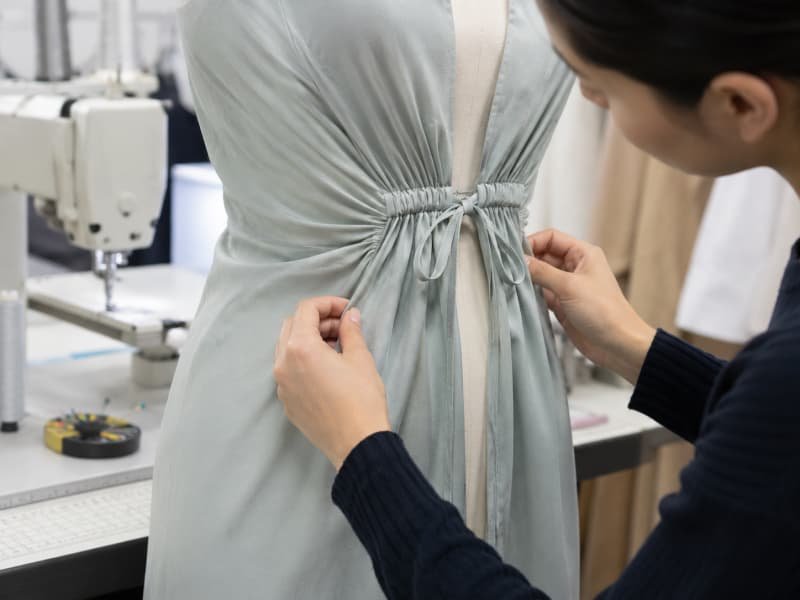
Drape, pleat and gathering effects depend on fabric direction, ratio, stitch position, pressing and operator sequence. Quantified construction notes reduce visual differences between garments and lines.

PP Sample Approval and Bulk Readiness Review

Before bulk production starts, Duolan runs a production-readiness check to align the approved sample, material direction, workmanship points, launch requirement and manufacturing route.

Confirm the Sample Status

Decision point: Fit confirmed, visual confirmed, PP basis or still pending refinement. A clear status prevents open design issues from entering production as hidden assumptions.
  • List approved details and remaining actions separately.
  • Confirm whether final materials are represented in the sample.
  • Identify any accepted deviations that need written records.

Confirm the Order Purpose

Decision point: Launch order, test order, repeat order or scale-up order. Production planning, pilot requirements, inspection intensity and capacity route can change according to the role of the order.
  • New launch styles may require stronger first-piece verification.
  • Repeat orders require comparison with preserved prior standards.
  • Scale-up orders need capacity and multi-line consistency review.

Lock Bulk Inputs

Control focus: Fabric, lining, trims, color, measurements, workmanship points, labeling, packing and delivery conditions. Open inputs are assigned owners and closure dates before release.
  • Confirm approved sample and document version.
  • Check material readiness and approved alternatives.
  • Review high-risk details against the planned production method.

Issue the Start Basis

Required evidence: Bulk Start Confirmation or Production Readiness Note. The record summarizes what is approved, what remains controlled, how production will be routed and which checkpoints require attention.

  • Production is not released only because a sample looks acceptable.
  • Risk-sensitive details remain visible during first-piece and inline checks.
  • Project timing is linked to actual approval readiness.

Turning an Approved Sample into a Production Standard

Bulk teams need controlled references rather than scattered messages. Six linked records help transfer the approved garment from development into cutting, sewing, finishing, QC and packing.

Approved Sample

The physical or fully documented approved version shows visual balance, construction, trim placement, lining coverage and finishing expectations. Approval status and exceptions are recorded.

Final Tech Pack

The final file closes obsolete comments and aligns sketches, construction, labels, packaging and revision notes with the approved version.

Measurement Spec

Points of measure, method, tolerances, grading rules and critical fit positions guide size-set, inline and final checks.

Locked BOM

Fabric, lining, trim, thread, labels, packaging and approved alternatives are defined by specification and status.

Construction Notes

Seam route, stitch requirement, support structure, reinforcement, embellishment placement, pressing protection and special handling are translated into line-ready instructions.

QC Checkpoints

Critical risks are placed at incoming material, cutting, first-piece, inline, finishing, measurement, packing and final inspection stages.

Inline Quality Control Before Small Deviations Multiply

Inline checks protect the order while correction is still possible. QC focuses on risk-sensitive operations, measurements and appearance rather than waiting until every garment is packed.
4 Automatic Cutting for Bulk Accuracy

Cutting Accuracy

Fabric face, direction, shade grouping, shrinkage basis, marker version, notches and panel identification are checked before sewing differences become irreversible.

Sewing Construction

Seam allowance, stitch condition, reinforcement, lining attachment, support structure, zipper, strap and opening methods are reviewed during line production.

Measurement Stability

Critical measurements are sampled at defined stages, especially after operations or pressing steps known to change length, stretch or balance.

Embellishment Placement

Sequin, bead, embroidery, lace, trim and hardware positions are checked for direction, symmetry, edge clearance, density and secure attachment.

Pressing and Appearance

Shine, seam impression, puckering, distortion, crushed pile, uneven drape and handling marks are monitored before final finishing.

Defect Correction

Deviations are isolated, root cause is reviewed, correction is verified and line instructions are updated before production continues.

Production Path Planning for Multi-Style Dress Orders

Orders covering 10–30 styles need more than one factory booking. Duolan breaks each program down by style, color, size, quantity, material, complexity, special process and delivery priority before line allocation.

Style Classification

Styles are grouped as regular, structured, complex, quick-response or high-risk workmanship. Classification helps set sampling, pilot, line and QC requirements.

Material Readiness

Fabric and trim lead times are checked against the launch calendar. Shared materials, special colors and delayed components are separated before production sequencing.

Workmanship Routing

Printing, embroidery, sequin, bead, wash, dye, pleat and special finishing steps are mapped into the garment route so external-process timing does not surprise the line.

Factory and Line Match

Core, fit-sensitive and complex styles can remain under tighter owned-factory control, while repeat or scalable styles can use coordinated capacity according to approved standards.

Timeline Back-Planning

Bulk lead time is planned backward from delivery and approval dates. Reference ranges are 15–20 days for simpler styles, 20–30 days for regular styles and 30–45 days for complex styles after material and approval readiness.

Multi-Style Coordination

Style-level status, approval, material, production, QC and packing milestones are tracked separately so one delayed component does not obscure the condition of the complete program. 

Final Quality, Packing and Delivery Confirmation

Production is complete only when garments, labels, packing and shipment requirements have been checked against the agreed standard. Final control protects both product condition and retail readiness.

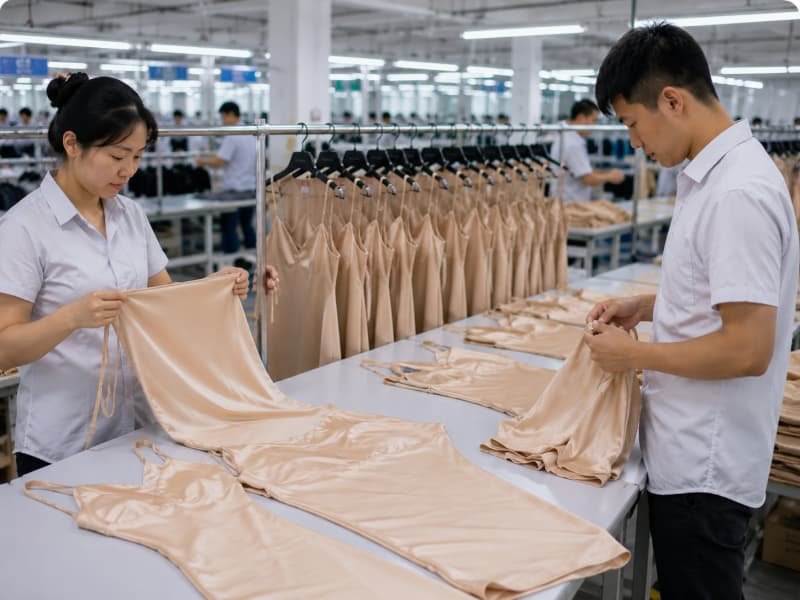
Final Garment Review

Control focus: Workmanship, appearance, symmetry, surface condition, measurements, trims, closure function, lining, embellishment security and approved visual details.

Sampling level follows the agreed inspection requirement.

  • Compare risk-sensitive points with the approved sample and QC notes.
  • Confirm corrective work before packing release.
  • Support third-party inspection when required.
Australian Partywear Label and Packing Project​

Label and Packing Control

Control focus: Care label, size label, brand label, hangtag, barcode, polybag, hanger, tissue, folding, warning text, assortment, carton quantity and carton mark.

  • Check artwork and placement against approved files.
  • Protect satin, sequin, velvet and structured dresses with suitable packing methods.
  • Verify pack ratio and destination requirements before sealing cartons.

Delivery Planning

Timing reference: Express 3–7 days, air 5–8 days and sea 20–35 days are common transport references after shipment release, subject to route, customs and destination conditions. FOB, CIF, DDP and split-shipment coordination can be arranged according to the order.

  • Match shipment method to launch date and cost requirement.
  • Coordinate overseas warehouse or assigned-forwarder instructions.
  • Provide final packing and shipment status before dispatch.

Preserving Approved Standards for Repeat Dress Orders

Repeat production should begin from preserved knowledge rather than rebuilding the style from memory. Each completed order strengthens the technical base for later colors, quantities, regions and seasonal extensions.

Reorder File Preservation

Final pattern, measurement sheet, BOM, construction notes, label files, packing standard, approved sample status and production learning remain connected to the style record.

Version and Material Control

New colors, replacement fabrics, revised trims or regional label changes are treated as controlled updates. Unchanged standards stay locked while new decisions receive approval.

Batch-to-Batch Review

Repeat orders are compared with prior standards for fit, material behavior, workmanship, appearance and packing. Previous defects and corrective actions become prevention points for the next run.

Sample-to-Bulk Controls by Dress Category

Different dress categories fail in different ways. Duolan applies category-specific material, fit, construction and QC priorities rather than one generic inspection approach.

Satin Dresses

Control drape, seam tension, needle marks, pressing shine, lining interaction, crease protection and packing pressure. Bulk-lot surface behavior should be reviewed before release.

Corset Dresses

Control cup position, boning path, waist shaping, neckline support, lining tension, zipper stability, reinforcement and grading balance.

Bodycon Dresses

Control fabric weight, stretch direction, recovery, opacity, relaxed measurement, seam growth, body balance and size consistency.

Mesh Dresses

Control transparency, lining coverage, stretch, print or motif placement, seam visibility, edge finish and shell-lining movement.

Sequin Dresses

Control sequin direction, density, cutting allowance, seam clearance, skin contact, dropped pieces, weight, repair and protective packing.

Halter and Backless

Control strap tension, anchoring, neckline stability, side support, back exposure, closure strength and movement across sizes.

A Dress-Focused Manufacturing System Behind Every Bulk Order

Manufacturing scale matters only when development, materials, production, QC and delivery can move under one coordinated program. Duolan combines owned-factory control with flexible supporting capacity.

30+ Years Development Background

Leadership experience in fast-fashion womenswear development supports decisions around silhouette, fabric, workmanship and commercial production rather than production volume alone.

16 Owned Factories

Owned womenswear factories provide stronger control for core styles, key approvals, complex workmanship and production standards requiring close technical coordination.

20+ Satellite Factories

Long-term satellite factories support repeat orders, volume expansion, delivery peaks and production routing under defined standards and coordination.

300 Sewing Lines

A broad sewing-line base supports multi-style production, line matching and staged releases instead of forcing every dress category through one production method.

50+ Flexible Lines

Quick-response and flexible lines support trial orders, replenishment, urgent additions and collection timing while keeping approval and QC requirements visible.

6.5M Monthly Capacity

The wider system maintains approximately 6.5 million pieces of regular monthly capacity, with peak capacity up to 10 million pieces, supporting brand programs that expand beyond initial development.

Compliance, Testing and Supplier Transparency for Brand Programs

Brand-level production requires audit readiness, standard awareness and verifiable manufacturing activity. Duolan supports document review, factory visits, inspection cooperation and requirements defined by the destination market or brand program.

Audit and Responsibility

Duolan factory resources include SMETA audit and SMETA 2-Pillar audit records.

Social-responsibility evidence can be reviewed within the scope of the assigned manufacturing program.

Product and Material Standards

Projects can be aligned with relevant brand requirements and standards such as BSCI, ISO 9001, AATCC, ASTM, OEKO-TEX, EN, China GB, GOTS and specific program requirements where applicable. Certification and execution scope should be confirmed per order.

Factory Verification

Brand teams can arrange factory, sample-room and production-line visits. Images, videos, documents, online meetings, third-party inspections and staged production updates support verification throughout development and bulk execution.

How Dress Projects Moved from Sample to Controlled Bulk

The following anonymized program profiles reflect the order structures commonly handled by established dress brands: 10–30 styles and 20,000–80,000 pieces per order. Names and unreleased designs remain confidential.

US Occasionwear Program

Project profile: 18 styles, 42,600 pieces, covering satin midi dresses, mesh-lined bodycon dresses and structured occasion styles across three delivery groups.

Risk: Several approved visuals used development fabrics, while final stretch, lining opacity and shade standards were still open. Size grading also affected strap length and waist-seam position.

Control plan: Duolan separated fit approval from fabric approval, locked shell and lining BOMs, reviewed selected size-set samples, issued a bulk-readiness note, verified first pieces for fitted styles and placed inline checks at measurement, lining and pressing stages.

Result: Production moved through staged releases under one approved measurement and material basis. The program retained category-specific controls instead of applying one generic QC standard to all 18 styles.

UK Partywear Program

Project profile: 12 styles, 27,840 pieces, including sequin minis, corset dresses, embellished mesh styles and backless party dresses.

Risk: Decorative density, skin contact, boning position, cup balance and packing damage could change between sample-room work and repeated line production.

Control plan: Placement references were added for sequin and embellishment areas, support components were locked in the BOM, first-piece checks focused on internal structure and wearing stability, and protective folding methods were confirmed before carton packing.

Result: High-risk workmanship points remained visible from PP approval through packing. Production teams, QC teams and packing teams worked from the same approved references.

United States Partywear Collection mini embellished (1)

European Multi-Style Drop

Project profile: 26 styles, 68,400 pieces, split across regular, quick-response, complex and repeat silhouettes with multiple colors and launch dates.

Risk: Mixed material lead times, several approval statuses and different production routes created a high risk of version confusion and uneven delivery progress.

Control plan: The order was broken down by style, color, size, quantity, complexity and delivery priority. Each group received a production route, material status, approval status and QC focus. Repeat silhouettes used preserved standards, while new complex styles received pilot verification.

Result: The brand received a clearer view of which styles were ready, which inputs remained open and which production wave each style belonged to. Multi-style coordination stayed connected to product risk rather than one overall completion percentage.

Evaluate a Dress Manufacturer Before Committing to Bulk

A reliable dress manufacturer should be assessed by evidence across development, sampling, materials, production, quality, delivery and repeat-order control. Price and sample appearance alone do not reveal bulk readiness.

Evaluation PointEvidence to RequestWarning SignDuolan Approach
Dress category experienceComparable fitted, structured, satin, mesh or embellished dress workOnly broad apparel claims with no category-specific risk discussionDress-focused development and category-specific control priorities
Pattern and gradingPattern capability, fit comments, size-set process and measurement methodBase-size sample accepted without grading reviewPattern adjustment, critical-point review and size-set support
Sample-stage controlDefined prototype, fit, revision, sales and PP stagesOne sample used for every approval purposeStage-based sampling with clear approval status
Material confirmationFabric performance record, trim card and approved BOMBulk material ordered from visual similarity onlyFabric, lining, trim and BOM locking before release
PP readinessApproved sample, final documents and open-point listProduction starts while comments remain mixed or unresolvedBulk Readiness Review and start-basis confirmation
First-piece processFirst-piece or pilot record for risk-sensitive stylesFull quantity released without line verificationFirst-piece comparison and pilot logic for complex styles
Inline QCDefined checkpoints and corrective-action processQuality checked mainly after production completionCutting, sewing, measurement, workmanship and finishing checks
Multi-style planningStyle matrix, route, material and timeline controlOne overall status used for a complex collectionOrder breakdown by style, complexity, approval and production route
Packing controlApproved labels, barcode, folding, bag and carton standardPacking reviewed only after all garments are finishedPre-pack confirmation and final packing audit
Compliance readinessAudit records, test support and inspection cooperationUnverified logo claims or unclear assigned-factory scopeSMETA record, requirement alignment and verification support
Delivery reliabilityBack-planned timeline and shipment statusLead time promised without approval and material dependenciesProduction path and timeline planning by style complexity
Repeat-order preservationFinal pattern, BOM, QC and prior-production recordsLater orders rebuilt from messages and memoryReorder file and batch-to-batch comparison

Frequently Asked Questions About Sample-to-Bulk Dress Production

Differences usually come from material lots, pattern versions, grading, trim substitutions, construction changes, pressing conditions, production handover or packing. A strong control path turns the approved sample into measurable standards for material, fit, workmanship and inspection before quantity is released.
Not always. A fit sample may confirm shape and measurements while final fabric, trims, labeling, packing or line method remain open. Bulk release should rely on a confirmed production basis showing which details are fully approved and which items still require closure.
A fit sample focuses on body balance, measurements and wearing performance. A PP sample is prepared as the closest production reference, ideally using final or approved-equivalent materials, trims, construction, labels and workmanship. Fit approval may be one part of PP readiness, not the complete decision.
Final bulk materials provide the strongest reference because fabric weight, stretch, drape, shade, lining and support components affect both fit and appearance. When final materials are unavailable, approved-equivalent materials and open differences should be recorded clearly before bulk start.
Fabric control can include composition, weight, width, stretch, recovery, drape, opacity, shrinkage, surface finish, lab dip, strike-off, shade and lot review according to category needs. Shell, lining, lace, thread and trims are approved as connected parts of the garment.
Critical points are defined with one measuring method and agreed tolerances. Checks can be placed at first-piece, inline and final stages. Fit-sensitive positions such as cup, waist seam, strap, neckline, slit and length receive stronger attention than a generic chest-waist-hip check.
Corset control covers cup position, boning, support, lining and closure. Sequin control covers direction, density, seam clearance, skin contact and packing. Mesh control covers transparency, stretch, lining coverage and placement. Each category uses dedicated first-piece and inline checkpoints.
A replacement should not enter production without review. The alternative is compared for specification, color, function, appearance and fit effect, then approved and updated in the BOM. Support components such as elastic, boning, cups and zippers require functional review, not only visual matching.
Risk-sensitive styles can receive first-piece approval, pilot verification or key-process trials before full release. Inline checks then monitor cutting, construction, measurements, embellishment, pressing and corrective actions while production remains adjustable.
Yes. Orders can be broken down by style, color, size, quantity, complexity, material, special process and delivery priority. Regular, complex, quick-response and repeat styles receive different production paths while approval and QC records remain style-specific.
Reference production ranges are 15–20 days for simpler styles, 20–30 days for regular styles and 30–45 days for complex styles after material and approval readiness. Final timing depends on style count, material lead time, special processes, quantity, approval speed and delivery plan.
Final patterns, measurements, BOMs, construction notes, label files, packing standards, approval status and prior production learning are retained in the reorder record. New colors or material changes are controlled separately so the original approved basis remains clear.

Review Your Dress Project Before Bulk Production

Send Duolan the files and production information currently available. Our team can review the sample status, material direction, fit priorities, technical risks, order structure and proposed bulk route before production release. A clear review is especially useful for fitted, structured, satin, mesh, sequin, corset, halter, backless and multi-style dress programs where small differences can expand quickly at volume.

Useful project information includes:

  • Tech pack, reference images or original sample information.
  • Current sample status: prototype, fit, revised, sales, PP basis or approved sample.
  • Measurement specification, size range and grading requirements.
  • Fabric, lining, trim, color and BOM direction.
  • Style count, target quantity, color split and size breakdown.
  • Target launch date, delivery destination and required shipment route.
  • Main concerns involving fit, materials, workmanship, quality, packing or repeat orders.
  • Available inspection, testing, compliance and labeling requirements.

Suggested form fields: Name | Company | Email | Tel/WhatsApp | Dress Category | Number of Styles | Target Quantity | Current Sample Stage | Target Launch Date | Main Risk Concern | Message | Upload Files


Start Your Apparel Development Project

OEM/ODM Manufacturing Support for Fashion Brands

Share your collection details, estimated quantities, target market, development timeline, and technical requirements. The production team will review your request and provide a tailored manufacturing solution based on your product category, fabric selection, construction needs, and delivery schedule.

Fashion Manufacturing Support with Scalable Production Capacity

From sample development to bulk production, Duolan supports fashion brands with confidential OEM/ODM manufacturing, stable quality management, flexible production planning, and coordinated multi-factory execution for seasonal and capsule collections.

Need Direct Assistance?

Seraphinite AcceleratorOptimized by Seraphinite Accelerator
Turns on site high speed to be attractive for people and search engines.