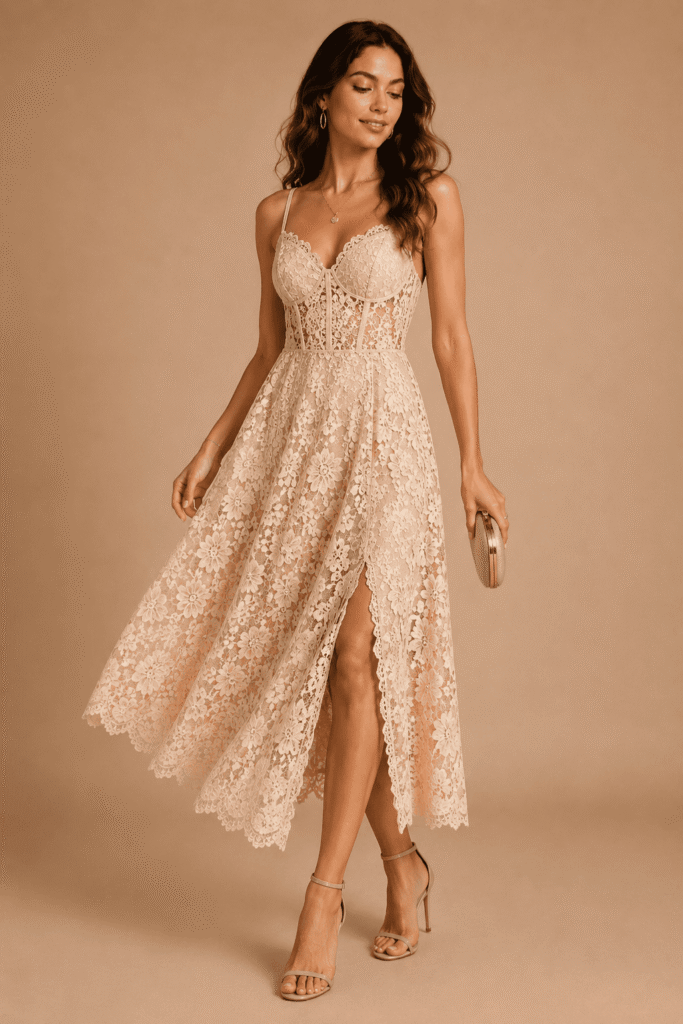
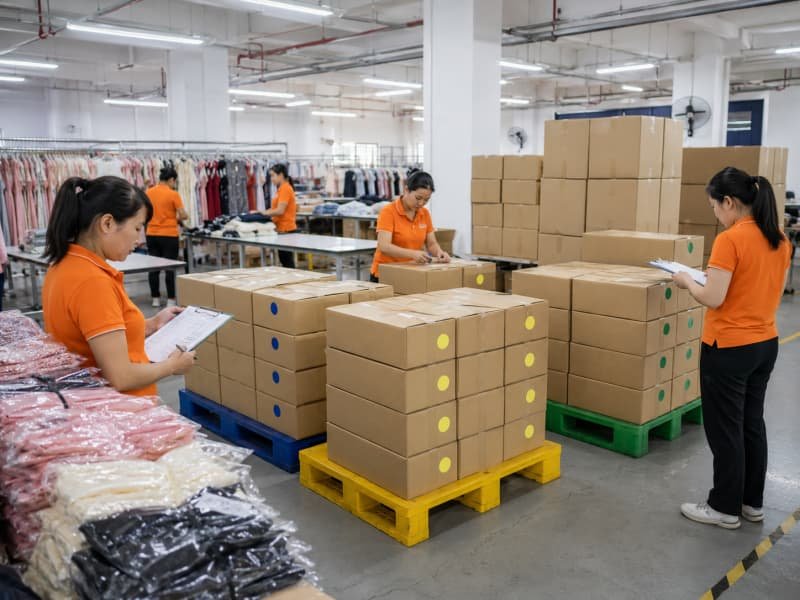
...

Custom Dress Manufacturer for Retail Packaging Requirements

Dress development, bulk production, labeling, retail packaging, carton control, and delivery preparation managed through one coordinated manufacturing path.

Duolan supports fashion brands that need more than a finished garment. Product construction, care information, hangtags, barcode data, unit packaging, carton marks, and packing instructions are reviewed as connected delivery requirements. Each dress is prepared around its fabric behavior, silhouette, embellishment, size-color matrix, sales channel, and receiving rules.

  • 30+ years of fashion dress development experience
  • 16 owned womenswear factories and 20+ satellite factories
  • 10-30 styles commonly managed within one brand program
  • 20,000-80,000 pieces commonly coordinated per brand order
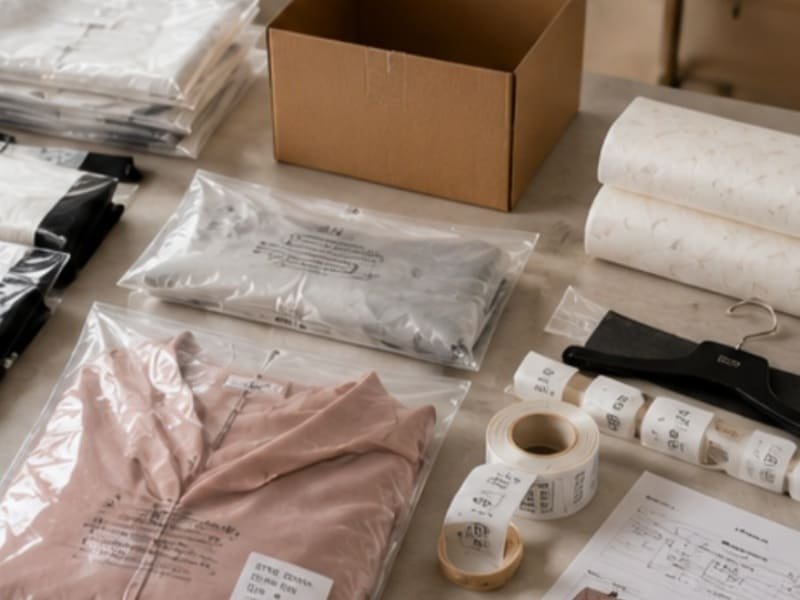
  • Five-layer packing control from garment check to carton reconciliation

Retail-ready Dress Manufacturing Requires Two Standards

A retail-ready dress program must meet both the approved garment standard and the receiving standard. Fit, fabric, construction, labels, tickets, unit packaging, carton assortment, and shipment records need to remain aligned from sample approval through final packing.

Garment Standard

The approved dress establishes silhouette, measurements, material direction, lining, trims, workmanship, color, and visual finish. Production cannot be considered complete when sewing alone is finished. The garment must also pass appearance, measurement, construction, pressing, and style-specific protection checks before any label or packaging component is applied.

Retail Delivery Standard

The receiving standard governs how each finished dress is identified, protected, scanned, counted, packed, and handed over. Main labels, care labels, size labels, hangtags, barcodes, SKU stickers, folding methods, inner bags, carton ratios, carton marks, weights, and packing documents must correspond to the approved style-color-size matrix.

Built for Brand, Retail, and Product Teams

Duolan is structured for established fashion programs where product development and retail preparation carry equal importance. Different teams receive the information, records, and checkpoints needed for their part of the program.

Fashion Brand Teams

Brand teams need the dress, labels, packaging, and visual presentation to feel consistent with the intended price position. Duolan coordinates product details with label artwork, packaging materials, folding presentation, brand cards, and finishing standards so the retail presentation does not feel disconnected from the garment.

Retail Buying Teams

Retail teams focus on style-color-size accuracy, packing ratios, barcode clarity, carton information, delivery windows, and inspection readiness. Duolan organizes packing instructions into controlled checkpoints and separates approval items from production records, reducing ambiguity when several departments review the same order.

Product Development Teams

Product teams need packaging decisions to support the garment rather than damage it. Satin, sequins, lace, mesh, corsetry, pleating, and structured skirts require different protection methods. Duolan reviews packaging after understanding fabric behavior, silhouette, trims, and construction risks.

Sourcing Offices

Sourcing teams need documents, production status, QC evidence, packaging verification, and shipment records that can be audited. Duolan supports sample review, bulk readiness, packing approval, third-party inspection coordination, carton reconciliation, and delivery preparation across multi-style programs.

Packaging Errors That Disrupt Retail Delivery

Packaging mistakes can stop a shipment after the garments are already complete. Each risk below is controlled before sealing cartons, not discovered after warehouse receiving.

Wrong Barcode Data

A readable barcode can still be wrong. Style, color, size, retail code, and barcode artwork must match the approved SKU matrix. Duolan separates artwork approval from bulk application, then checks the code against the garment label and packing record before release.

Mixed Sizes or Colors

Multi-style and multi-color programs create sorting risk during finishing. Dresses, hangtags, size stickers, unit bags, and carton allocations are grouped by style-color-size combination. Packing quantities are reconciled against the order matrix before carton closure.

Incorrect Care Information

Fiber content, lining content, care symbols, origin information, and brand instructions must reflect confirmed materials and market requirements. Care label content is reviewed alongside the BOM and approved garment rather than copied from an unrelated style.

Damaged Surface Finish

Satin can crease or mark, sequins can catch, lace can snag, and corset structures can collapse under pressure. Folding, tissue placement, individual protection, hanging, inserts, or boxes are selected around the dress rather than applied as one universal method.

Wrong Tag Placement

A correct hangtag in the wrong location can damage delicate fabric, interfere with display, or fail a retailer manual. Attachment points, loops, safety pins, strings, and external sticker positions are defined during packaging approval and checked before bulk packing.

Carton Mark Mismatch

Incorrect PO references, destinations, quantities, size ranges, carton numbers, or gross weights can delay receiving. Carton labels and marks are checked against packing lists and physical carton contents before shipment handover.

One Controlled Path Reduces Packaging Disconnects

Disconnected WorkflowDuolan Controlled Workflow
Packaging details arrive after productionLabels and packing requirements are reviewed before bulk release
Garment and barcode files are managed separatelyStyle-color-size data links garment, tag, bag, and carton records
One folding method is used for every dressProtection method follows fabric, structure, and embellishment risk
Packing mistakes appear during final inspectionApproval samples and checkpoints reduce late-stage corrections
Warehouse teams relabel or re-sort goodsRetail identification and assortment are checked before handover
Repeat orders rebuild the process from zeroApproved label, packaging, and carton standards are retained for review

Packaging Designed Around Dress Category Risks
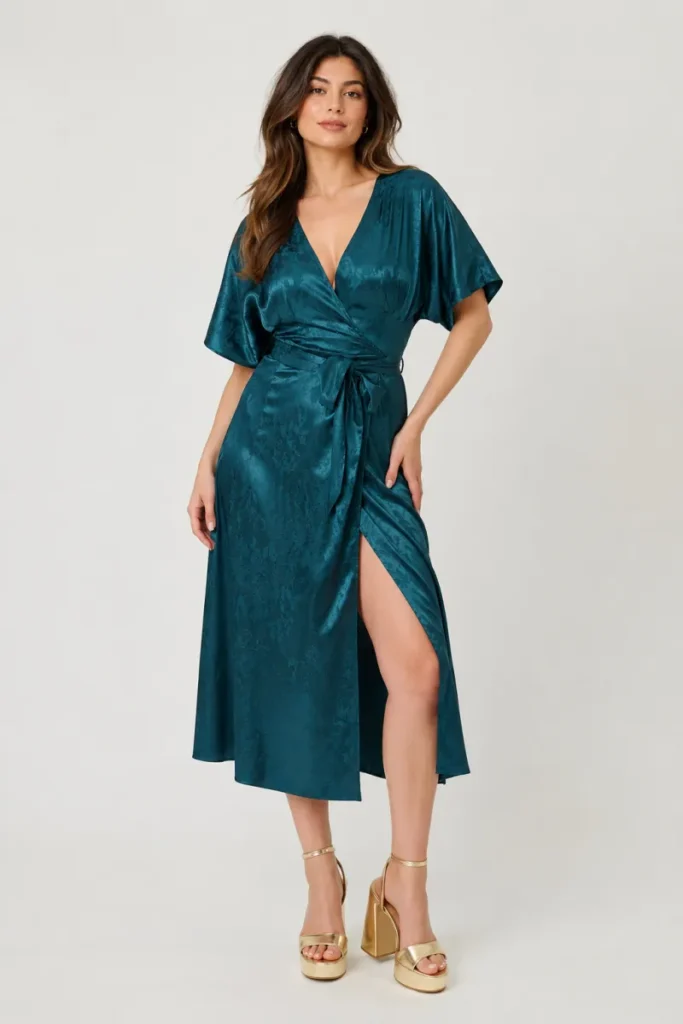
Dress packaging starts with product analysis. Surface sensitivity, silhouette, volume, support structures, embellishment density, and recovery after transit determine how a style should be folded, supported, bagged, hung, or boxed.

Satin Dresses

Satin requires attention to fold lines, pressure marks, abrasion, moisture, and transfer from dark trims. We review grain direction, skirt length, drape, bias construction, pressing condition, and zipper placement before choosing fold position, tissue layers, bag dimensions, and carton compression.

Sequin Dresses

Sequin direction, edge finishing, bead density, backing, and sharp contact points determine protection. A lining or cover layer may be used to prevent surface-to-surface friction. Heavy embellishment also affects carton weight, fold stability, and the number of units packed per carton.

Lace Dresses

Lace edges, appliques, scallops, exposed motifs, and delicate joins can catch during handling. Packaging needs clean attachment points, controlled folding, tissue between vulnerable layers, and enough bag space to avoid pulling or crushing dimensional details.

Mesh Dresses

Mesh can stretch, snag, distort, or shift against lining. Packaging review considers elastic recovery, transparent panels, gathered seams, layered construction, boning, and applied trims. The goal is to protect shape without creating excessive compression or loose movement inside the bag.

Corset Dresses

Corset cups, boning, busks, lace-up backs, underwires, molded sections, and structured waistlines should not be flattened carelessly. Inserts, shaping support, wider carton spacing, or hanging methods may be needed to preserve cup position and body contour.
cPleated Flare

Pleated Dresses

Pleats and draped panels require fold planning along the intended construction lines. Long skirts, asymmetric hems, organza volume, bubble shapes, and structured gathers need enough recovery space after unpacking. Packing quantity per carton is adjusted when compression could permanently change the silhouette.

Material Behavior Determines the Protection Method

Retail packaging is an engineering decision around fabric behavior, not a decorative afterthought. Weight, drape, surface friction, elasticity, transparency, moisture response, embellishment, and crease recovery affect every packing choice.

Surface Friction

Smooth satin, velvet pile, metallic coatings, lace motifs, and sequined surfaces react differently to rubbing. We assess whether direct fabric contact is acceptable or whether tissue, sleeves, interleaving, or separate protection is needed between dress layers.

Crease Recovery

Bias satin, chiffon, crepe, organza, and pressed pleats respond differently after prolonged folding. Fold length, pressure, bag size, carton height, and packing density are considered together. A compact pack is not efficient when garments require steaming, re-pleating, or reshaping after arrival.

Stretch and Recovery

Jersey, power mesh, stretch lace, and bodycon fabrics may distort when stored under tension. Bags must fit the folded garment without pulling at seams. Size stickers and adhesive labels also need placement that does not stretch, stain, or mark sensitive fabric surfaces.

Transparency and Lining

Sheer dresses often use multiple layers, partial lining, nude tones, or contrasting inner structures. Care labels, security tags, size labels, and stickers must be positioned without showing through the garment or creating an unwanted visual line.
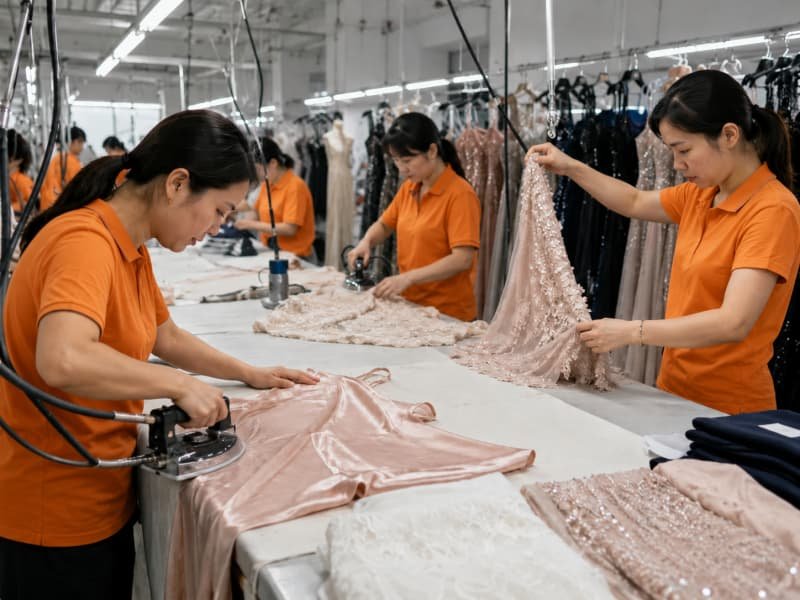
Moisture Sensitivity

Packaging material, ventilation, storage conditions, and shipping mode influence moisture management. A dress should be fully dry and cooled after pressing before sealing. Packaging choices are reviewed against fabric finish, transit duration, destination climate, and brand instructions.

Color Transfer Risk

Dark satin, coated trims, printed tissues, metal chains, and colored embellishments can create transfer risk. Contact points are reviewed during the sample and packaging stages. Protective layers, material separation, and controlled placement reduce avoidable marking during transit.

Workmanship Details That Change Packing Decisions

Small construction details can create major retail damage when packaging ignores how the dress is built. Duolan checks the finished workmanship and selects protection around the most vulnerable points.

Beading and Pearls

Hand-applied beads, pearls, stones, and mixed embellishments need secure attachment, protected contact surfaces, and controlled carton pressure. Loose threads, sharp backs, dense clusters, and heavy panels are checked before packing because transit can amplify small workmanship weaknesses.

Boning and Cups

Boning direction, cup shape, underwire channels, padding, and molded support influence how a corset or bustier dress can be folded. Pressure should not twist bones, invert cups, or create permanent dents. Insert shape and carton spacing are evaluated before bulk packing.

Zippers and Hardware

Invisible zippers, metal zippers, hooks, eyelets, buckles, and chains can scratch fabric or create pressure points. Hardware is closed or positioned consistently, protected where needed, and kept away from delicate satin, mesh, lace, or embellishment surfaces.

Draping and Ruching

Draped panels, twists, gathers, ruching, and knots need a packing position that preserves the approved visual balance. Random folding can shift volume or create false creases. The approved packing sample establishes where fabric should sit inside the bag.

Pleats and Hems

Pressed pleats, horsehair hems, asymmetric hems, bias cuts, and long trains require careful fold lines. Hem supports and interleaving can help prevent sharp compression. Carton dimensions are reviewed against the longest or most structured part of the style.

Applique and Placement

Lace applique, embroidery, prints, bows, corsages, and trim placements need protection from folding through the feature. A fold line crossing a dimensional decoration can change the approved appearance. Packing instructions identify protected zones and placement direction.

Files Reviewed Before Packaging Development Starts

Clear files allow labels, unit packaging, cartons, and shipping records to be developed without late-stage guessing. Duolan reviews available information, identifies conflicts, and lists missing approvals before bulk packing materials are released.

Packing Manual

Retailer or brand instructions covering folding, bagging, tickets, sticker positions, assortment, cartons, warnings, sustainability requirements, and receiving rules.

Label Artwork

Main label, size label, care label, composition, origin, language, color, dimensions, fold type, sewing position, and approved artwork version.

Hangtag Artwork

Brand marks, product data, price-ticket structure, paper specification, finish, hole position, string, seal, attachment point, and print approval.

Barcode Files

UPC, EAN, SKU, retailer code, style code, color code, size code, or other approved data supplied in a controlled matrix.

Size Color Matrix

Complete style-color-size combinations, order quantity, ratio, short or over-delivery tolerance, split-shipment plan, and packing allocation.

Unit Pack Spec

Fold direction, tissue, support insert, individual bag type, bag dimensions, warning text, stickers, sealing method, and presentation direction.

Carton Requirements

Units per carton, solid or assorted packing, carton dimensions, weight limits, carton numbering, destination marks, PO references, and pallet rules.

Delivery Instructions

Required delivery date, inspection booking, forwarder, warehouse address, shipping mode, document set, split shipment, and receiving window.

Labels Managed as Product and Compliance Details

Labels must agree with the actual garment, approved materials, size system, market destination, and brand instructions. Duolan treats label information as controlled product data, not generic sewing accessories.

Main Brand Label

Brand name, label material, weave or print quality, color, dimensions, fold type, sewing edge, placement, seam construction, and skin contact are reviewed before approval. Delicate fabrics may require lighter labels or alternative attachment methods.

Care and Content

Fiber content, lining content, care instructions, symbols, origin information, and responsible-party details are aligned with confirmed materials and market instructions. The approved wording is linked to the style rather than reused without review.

Size Identification

Size labels must follow the approved size range and agree with hangtags, unit stickers, barcode records, carton assortment, and packing lists. A wrong size label creates a product identity error even when garment measurements are correct.

Placement Control

Label position is checked against seam type, lining, transparency, wearer comfort, neckline construction, side seam visibility, and brand preference. Placement is recorded in the approved sample or label instruction before bulk sewing.

Sewing Quality

Stitch density, thread color, fold accuracy, label orientation, trapped lining, puckering, and loose corners are checked. Fine satin, lace, mesh, and lightweight linings need controlled sewing to avoid visible pulling or distortion.

Version Management

Artwork revisions, language changes, fiber updates, origin changes, and retailer-specific versions are separated by style and destination. Obsolete files are not mixed with current production materials, and approved versions are retained for repeat-order review.

Hangtags, Barcodes, and SKU Data Stay Connected

Retail identification works only when every data point refers to the correct physical dress. Duolan links garment identity, ticket information, unit packaging, carton allocation, and shipment records through one style-color-size matrix.

Style Code Match

The style code on the order, hangtag, barcode file, unit sticker, carton record, and packing list is compared before release. Similar style names are not used as the only control reference.

Color Code Match

Marketing color names, internal fabric colors, retailer color codes, and barcode records may differ. Duolan uses the approved order matrix to keep the commercial color identity connected to the correct physical colorway.

Size Code Match

Alpha sizes, numeric sizes, regional sizes, and internal grading codes can create confusion. The approved size conversion and label map are checked before tag printing and before unit packing.

Print Quality Check

Contrast, quiet zones, dimensions, text clarity, coating, cutting, and print position affect scanning and appearance. Printed materials are approved before volume production, and damaged or unclear tickets are removed during packing.

Attachment Control

Tag strings, seals, pins, and loops are matched to the approved attachment point. Delicate dresses need methods that do not puncture visible panels, snag lace, scratch satin, or interfere with the intended retail display.

Three-way Verification

Before carton closure, garment label, hangtag or barcode, and packing record are checked as one identity set. The same approach is used when colors, sizes, markets, or delivery destinations require different ticket versions.

Packaging Options Selected for Protection and Presentation

Packaging should protect the dress, carry the brand presentation, support warehouse identification, and remain efficient for inspection and transport. Every component is selected against the garment and delivery path.

Folding and Tissue

Fold direction follows the approved silhouette and vulnerable zones. Tissue can separate surfaces, support drape, cover embellishment, or soften fold pressure. Tissue type, color, print, and placement are reviewed when branding or color transfer matters.

Individual Bags

Clear polybags, printed bags, zipper bags, garment sleeves, and other unit packs are assessed for dimensions, thickness, sealing, warning text, ventilation, recycled-content requirements, sticker positions, and garment presentation.

Hanging Preparation

Long, structured, heavily embellished, or crease-sensitive dresses may need hanging or partial hanging solutions. Hanger shape, clips, shoulder support, garment covers, rail packing, and container movement are reviewed against cost and receiving requirements.

Structured Inserts

Cardboard, molded supports, cup inserts, tissue forms, collar supports, and internal boards can protect volume or structure. Insert edges, pressure points, recyclability, and removal experience are considered so the support does not damage the dress.

Boxes and Presentation

Paper boxes, rigid boxes, sleeves, printed tissue, brand cards, stickers, and gift-style components may support a premium presentation. Box dimensions and inserts are tested against garment bulk, movement, transit pressure, and packing labor.

Outer Cartons

Carton strength, dimensions, unit count, gross and net weight, CBM, internal spacing, moisture protection, sealing, marks, and destination data are coordinated with the individual pack and shipping mode.

Retail Packaging Approved Before Bulk Packing Begins

Packing materials should not enter mass application until content, dimensions, placement, protection, and retail data are clear. A staged approval path helps prevent thousands of avoidable corrections.

Requirement Review

We organize the packing manual, artwork, size-color matrix, barcode records, carton instructions, destination requirements, and open questions into a clear approval list.

Risk Review

The dress is assessed for crease, snag, pressure, moisture, color transfer, embellishment, structure, and transport risks. Protection options are selected around the highest-risk areas.

Artwork Check

Labels, hangtags, stickers, bags, boxes, and carton marks are checked for approved wording, color, size, code, language, and placement before physical sampling.

Physical Mock-up

A packaging mock-up or packed sample shows the real fold, tissue, labels, tickets, bag, stickers, and presentation. High-risk styles may also need carton compression or unpacking review.

Brand Approval

Comments are recorded by component and version. Approved changes are incorporated before bulk material release, keeping obsolete artwork or positions away from production.

Standard Release

The approved packed sample, instructions, artwork, quantity plan, and inspection points become the bulk packing basis. Any later change is reviewed for cost, timing, and stock impact.

Packaging Requirements Locked During Bulk Readiness Review

Sample approval does not automatically mean production is ready. Duolan runs a bulk readiness review to align the approved garment with materials, measurements, workmanship, labels, packaging, inspection, and launch requirements.

Sample Status

We clarify whether the current sample is fit-approved, visually approved, a PP basis, or still pending refinement. Production instructions must reflect the actual approval status rather than assume every sample comment is closed.

Material Lock

Main fabric, lining, trims, color, finish, and substitution rules are confirmed. Packaging protection is checked again when bulk material behaves differently from development yardage.

Measurement Lock

Base size, graded measurements, tolerances, critical balance points, and style-specific dimensions are confirmed before barcode size data and bulk packing quantities are finalized.

Workmanship Lock

Construction method, seam finish, embellishment, support, zipper, lining, pressing, and vulnerable details are transferred into production and QC references.

Packaging Lock

Labels, hangtags, barcode files, unit pack, stickers, carton ratios, carton marks, destination versions, and packing records are released only after approval.

Timeline Lock

Material readiness, production path, inspection booking, packing material arrival, shipment method, and delivery window are aligned in the production plan before volume release.

Approved Packaging Applied Across Multi-style Bulk Orders

A 10-30 style program cannot be packed as one undifferentiated batch. Duolan breaks the order down by style, color, size, complexity, destination, and packaging version, then controls movement through finishing and packing.

Material Receiving

Labels, hangtags, stickers, bags, boxes, tissues, inserts, and cartons are checked against approved samples, artwork versions, quantities, and delivery schedules before they enter the packing area.

Style Segregation

Packing materials are issued by style-color-size combination and destination. Similar-looking dresses or label versions are separated to reduce cross-use during busy finishing periods.

Pre-pack Inspection

Garments are checked for appearance, measurements, construction, stains, pressing, loose threads, damage, and style-specific workmanship before retail materials conceal or complicate later access.

Unit Pack Application

Labels, hangtags, barcodes, stickers, tissue, inserts, bags, and seals are applied according to the approved packing sample. Direction and attachment points remain consistent across the batch.

Carton Allocation

Units are packed into solid or assorted cartons according to the approved ratio. Carton number, style, color, size range, quantity, destination, and weight are recorded and checked.

Final Reconciliation

Packed quantities, remaining materials, carton counts, packing list totals, order quantity, and split-shipment allocation are reconciled before the shipment is released for inspection or forwarder handover.

Five Checks Before Retail-ready Dresses Leave Production

Packing accuracy is part of delivery quality. Duolan places checks at garment, label, barcode, unit pack, and carton levels so a correct dress is not converted into an incorrect retail unit.

Garment Check

Style, color, size, fabric appearance, measurements, workmanship, pressing, stains, damage, and protection-sensitive details are reviewed before packing. Failed pieces are separated rather than corrected inside a sealed pack.

Label Check

Main label, size label, care label, origin, composition, language, placement, orientation, sewing quality, and version are compared with the approved style information.

Ticket and Barcode Check

Hangtag content, style code, color, size, barcode, SKU, price-ticket format, print clarity, attachment method, and placement are verified against the approved matrix.

Unit Packaging Check

Folding, tissue, inserts, bag type, bag size, warning text, sticker position, seal, presentation direction, garment protection, and pack cleanliness are reviewed against the approved packed sample.

Carton Check

Carton count, units per carton, size-color ratio, carton number, marks, destination, PO reference, dimensions, gross weight, sealing, and visible damage are checked.

Record Release

Packing list, carton details, inspection status, shipment split, exception records, and final quantity are reconciled before release. Any discrepancy is closed or clearly documented before handover.

Carton Assortment and Warehouse Receiving Accuracy

Retail receiving depends on consistent information from the individual dress through the final packing list. Multi-style, multi-color, and multi-size orders require controlled identity at every level.

Control LevelInformation to ConfirmPrimary Risk
GarmentStyle, color, size, labels, appearanceIncorrect physical unit
Hangtag / BarcodeStyle code, color code, size code, SKU, barcodeScan or identity error
Individual PackFold, tissue, bag, stickers, seal, presentationDamage or wrong unit labeling
Carton ContentsQuantity, size-color ratio, solid or assorted packShortage, mix-up, wrong assortment
Outer CartonCarton number, PO, destination, marks, dimensions, weightReceiving delay or routing error
Shipment FilePacking list, carton details, quantity, split, document versionPhysical and document mismatch

Production Timelines Planned Around Retail Delivery Windows

Lead time becomes reliable when garment, packaging, inspection, and shipment decisions are locked before production. Reference ranges below begin after PP basis, BOM, materials, order information, packaging requirements, and commercial approvals are ready.

Simple Styles

Reference bulk production range: 15-20 days. A simple construction can still be delayed by custom colors, printed packaging, late barcode files, retailer approvals, or split destinations. Readiness is reviewed before the date is confirmed.

Regular Styles

Reference bulk production range: 20-30 days. Most multi-style fashion dress programs need coordinated fabric booking, trims, cutting, sewing, finishing, packing-material arrival, final inspection, and carton preparation.

Complex Styles

Reference bulk production range: 30-45 days. Corsetry, sequins, beadwork, layered mesh, lace placement, pleating, special finishing, structured skirts, and premium packaging may require trials, first-piece confirmation, or longer material preparation.

Packaging Timing

Printed labels, hangtags, bags, boxes, stickers, and retailer tickets have their own artwork, sampling, approval, and production path. Packaging lead time is planned alongside garment production rather than added after sewing completion.

Inspection Timing

Internal checks and third-party inspection booking need time before the warehouse or forwarder cutoff. Repacking, carton correction, or reinspection should not be forced into the final shipping day.

Shipping Timing

Production time and transit time are separated. Express, air, sea, rail, truck, split shipment, and forwarder arrangements are evaluated against the launch calendar, warehouse appointment, inventory plan, and final destination.

A Dress-focused Manufacturing System Behind Every Program

Retail preparation is reliable only when the manufacturing organization can manage development, bulk production, finishing, packing, inspection, and shipment as one program. Duolan combines category knowledge with scalable production coordination.

30+ Years Experience

The leadership and development background spans more than three decades in fashion womenswear, dress product development, fabric matching, construction, decorative workmanship, and commercial execution for European and American market directions.

16 Owned Factories

Owned womenswear factories provide direct control for core styles, key development work, priority production, and quality-critical programs. Production paths are matched to style complexity rather than assigned only by available space.

20+ Satellite Factories

Long-term satellite factories add capacity flexibility for repeat orders, scale-up programs, seasonal peaks, and process allocation. Standards, approved materials, QC points, labels, and packaging instructions remain project-controlled.

12,000+ Supporting Workers

The wider manufacturing network supports multi-style development, parallel production, replenishment, and larger seasonal programs. Scale is meaningful only when order breakdown, production path, QC, and packing coordination remain clear.

50+ Response Lines

Quick-response and flexible lines support sample-to-launch transitions, test programs, replenishment, and styles with different timing requirements. Production is planned around fit, fabric, workmanship, packaging, and delivery readiness.

Dress Category Focus

Duolan focuses on fashion dresses, occasion dresses, party dresses, vacation dresses, going-out dresses, body-conscious styles, satin, mesh, sequin, halter, backless, corset, and related fashion sets rather than presenting every apparel category as equal.

Compliance and Inspection Support for Brand Delivery

Retail packaging must align with the approved product, destination market, brand instructions, and inspection plan. Duolan supports evidence and coordination without presenting project-specific standards as universal certification claims.

SMETA Audit Basis

The manufacturing system has SMETA and SMETA 2-Pillar social audit records. Audit scope, validity, factory location, and project applicability should be reviewed during supplier onboarding.

Market Requirements

Label wording, fiber content, origin information, care instructions, warnings, bag text, and sustainability claims are prepared from approved brand or market instructions. Legal responsibility and final wording remain aligned with the relevant selling market.

Testing Coordination

Material, colorfastness, dimensional, seam, attachment, needle, chemical, or other testing can be coordinated according to product, market, retailer, and project requirements. Test scope is confirmed before submission.

Third-party Inspection

Duolan can prepare approved samples, PO data, BOM, measurement charts, packing instructions, carton records, and access for appointed inspection agencies. Findings are recorded for correction, recheck, or reinspection when required.

Document Readiness

Commercial invoices, packing lists, carton details, test or compliance records, inspection documents, and shipment instructions are organized around the agreed delivery path. Required document sets vary by destination and trade terms.

Claim Verification

Recycled content, certified materials, organic claims, packaging certifications, or retailer-specific sustainability statements are used only when supported by valid documents and approved supply-chain records.

Retail Packaging Programs Across Dress Categories

The following anonymized program profiles reflect common cooperation patterns for established brands: 10-30 styles within one order and 20,000-80,000 total pieces per brand program. Names and artwork remain confidential.

US Omnichannel Dress Program

Program profile: 18 styles, 42,000 pieces, 4 color groups, 6 sizes, and two delivery waves. Products included satin minis, mesh midis, fitted jersey dresses, and embellished party styles. The retail pack required brand labels, care labels, size labels, UPC-linked tickets, size-color stickers, individual bags, solid and assorted cartons, destination-specific carton marks, and packing-list reconciliation. Duolan separated packaging versions by style and delivery wave, approved protection methods for satin and embellishment, and connected every packed unit to the style-color-size matrix. Final carton records were aligned with the two warehouse receiving plans before shipment release.

European Occasionwear Collection

Program profile: 24 styles, 68,000 pieces, 3 main color stories, 5-7 sizes by style, and three destination-language versions. The collection included corset dresses, lace midis, pleated maxis, and beaded occasion styles. Key risks were cup deformation, lace snagging, pleat compression, language variation, and mixed ticket versions. Duolan used style-specific packing samples, protected structure and embellishment zones, separated label versions by destination, and confirmed carton assortment before third-party inspection. Packing materials, garment standards, and inspection references were released through the bulk readiness process rather than managed after production.

Regional Fast-fashion Launch

Program profile: 12 styles, 26,400 pieces, 5 colors, 6 sizes, and a compressed launch calendar. The order combined bodycon, halter, backless, satin, and draped styles. Packaging needed clear size identification, barcode placement, compact unit packs, and cartons divided between launch stock and replenishment stock. Duolan reviewed fold recovery, zipper and hardware contact points, sticker positions, and carton ratios before packing material release. Production, packing, inspection, and split-shipment milestones were planned backward from the warehouse receiving dates, keeping launch stock and later replenishment records separate.

Retail Packaging Questions from Fashion Teams
Yes. Send the current manual together with the relevant product category, destination, style-color-size matrix, ticket files, unit pack instructions, carton rules, and delivery window. We first identify applicable requirements, open questions, conflicting information, and approval items. The resulting instructions are connected to sampling, bulk readiness, packing-material approval, unit packing, carton checks, and shipment records.
Send available tech packs or reference images, target materials, size range, order quantity, label artwork, care information, hangtag artwork, barcode or SKU matrix, packing instructions, carton requirements, delivery location, and target date. Incomplete files can still be reviewed. Duolan will list missing information and distinguish what is needed for quotation, sampling, packaging mock-up, bulk release, and final shipment.
Yes. A multi-style collection often requires more than one packing method. Satin may need crease control, sequins may need surface separation, corset cups may need structure support, lace may need snag protection, and pleats may need lower compression. Different methods can be organized under one program while labels, barcode data, carton identity, and inspection records remain consistent.
The approved style-color-size matrix is used as the central reference. Style code, color code, size code, SKU, barcode artwork, hangtag, garment label, unit sticker, carton allocation, and packing list are compared at defined points. Bulk ticket application is not based only on visual garment recognition. Separate versions are controlled when markets, destinations, prices, languages, or retailer systems differ.
Packaging review should begin during development or before bulk readiness, not after production is complete. Artwork, physical samples, label placement, unit protection, bag dimensions, stickers, cartons, and delivery files may require separate approval. Early confirmation protects the production calendar and allows packaging materials to arrive in time for finishing without forcing rushed substitutions.
Reference bulk production ranges are 15-20 days for simple styles, 20-30 days for regular styles, and 30-45 days for complex styles after PP basis, BOM, materials, order information, packaging requirements, and approvals are ready. Final timing depends on quantity, style complexity, material availability, custom colors, special workmanship, packing materials, inspection, split shipment, and delivery method.
Yes. Inspection can cover garment appearance, measurements, workmanship, labels, hangtags, barcode and SKU data, unit packaging, carton assortment, carton marks, quantities, and packing records according to the agreed scope. Duolan prepares reference documents and access, coordinates corrective action when findings occur, and supports recheck or reinspection when required by the brand or sourcing office.
Approved artwork, component specifications, label positions, packing samples, carton rules, and issue records can be retained as repeat-order references. Before reuse, Duolan checks whether fabric, sizing, destination, care content, retailer instructions, packaging claims, barcode records, or delivery routes have changed. Repeatability means reusing confirmed knowledge while still reviewing every new order for version changes.

Send Your Dress and Packaging Requirements

Share the materials already available for your dress program. A complete brief helps Duolan review garment complexity, fabric and structure risks, label content, barcode data, unit packaging, carton assortment, inspection needs, production timing, and delivery preparation with greater accuracy. Your team does not need to prepare every file before contact; send the current tech packs, reference images, packing manual, label artwork, SKU matrix, order quantities, size range, colorways, delivery destinations, and target dates. We will identify missing decisions and recommend the next review stage.

  • Tech pack, reference image, or approved sample information
  • Dress categories, number of styles, colorways, and size range
  • Estimated program quantity and launch or delivery dates
  • Main label, care label, hangtag, barcode, and SKU files
  • Unit packaging, carton marks, warehouse rules, or retail manual
  • Required inspection, test, shipping, and destination information
Packing List​

Start Your Apparel Development Project

OEM/ODM Manufacturing Support for Fashion Brands

Share your collection details, estimated quantities, target market, development timeline, and technical requirements. The production team will review your request and provide a tailored manufacturing solution based on your product category, fabric selection, construction needs, and delivery schedule.

Fashion Manufacturing Support with Scalable Production Capacity

From sample development to bulk production, Duolan supports fashion brands with confidential OEM/ODM manufacturing, stable quality management, flexible production planning, and coordinated multi-factory execution for seasonal and capsule collections.

Need Direct Assistance?

Seraphinite AcceleratorOptimized by Seraphinite Accelerator
Turns on site high speed to be attractive for people and search engines.