
...

Custom Dress Manufacturer for UK Brands - Sample-to-Bulk Production

Dress-focused development, sampling and controlled bulk manufacturing for UK fashion brands, buying teams and product development teams.

  • 30+ years of dress development experience: Long-term work across fashion dresses, occasionwear, fitted silhouettes and decorative dress construction.
  • 15,000-35,000 monthly sample development capacity: A manufacturing system built for high development density and multiple styles moving in parallel.
  • 300 sewing lines and 50+ flexible lines: Production paths can be matched to regular styles, complex construction, launch orders, repeat orders and scale-up programmes.
  • 16 owned womenswear factories plus 20+ satellite factories: Core control and flexible capacity can be combined according to style, workmanship and delivery priorities.
  • SMETA 2-Pillar audited manufacturing system: Social audit records and project documentation support formal supplier evaluation and brand onboarding.

Built for UK Fashion Brands and Product Teams

Duolan works best with organised fashion teams developing clear dress programmes, seasonal collections and repeatable products. The focus remains product interpretation, sampling discipline, bulk consistency and dependable delivery coordination. 

Established Fashion Brands

Established dress labels need more than a factory capable of sewing approved garments. Product identity must remain stable while fabrics, fits, colourways, size ranges and delivery windows change across a season. Duolan supports structured development from brief review through pattern, sample, PP approval, production and repeat-order preparation. Brand-specific standards can be retained through approved samples, specification files, material records and workmanship notes, reducing the risk of approved details disappearing after the first production run.

Buying and Sourcing Teams

Buying and sourcing teams usually evaluate documentation quality, sample accuracy, material control, production visibility, inspection readiness and delivery discipline at the same time. Duolan organises projects around defined checkpoints rather than disconnected messages. A clear sample route, revision summary, bulk-readiness review, production path and quality plan gives internal teams a stronger basis for supplier approval, order placement and cross-functional reporting. English communication is supported by email, WhatsApp, video calls and online meetings.

Product Development Teams

Product teams need design intent translated into fabric behaviour, pattern balance, fit priorities, internal structure and production-compatible workmanship. A strong first sample should reveal what is already close to target, what needs correction and which decisions will affect future bulk. Duolan reviews the sample purpose before development begins, then links comments back to pattern, specification, material and construction decisions. The goal is a product version able to support fitting, photography, range review, PP approval and production planning.

Occasionwear Brand Teams

Occasionwear, partywear and going-out dresses carry higher visual and technical sensitivity than basic garments. Bust support, neckline security, drape, opacity, slit height, lining, zip behaviour and embellishment must work together on the body. Duolan combines dress-focused pattern work, sample refinement, fabric and trim coordination, special-process resources and production control. The manufacturing route suits collections where visual finish, shape and repeatability matter across multiple styles rather than one isolated sample.

Why Approved Samples Can Still Fail in Bulk

Sample approval proves a direction, not automatic production consistency. Bulk differences usually begin when approved choices are not converted into measurable material, fit, construction and inspection standards before cutting starts.

Fabric Drift

A sample may be approved in one fabric lot while bulk arrives with a different weight, stretch, recovery, sheen, colour cast or handfeel. Even a technically similar fabric can change how a skirt falls, how a neckline holds or how a fitted waist recovers. Duolan reviews approved swatches, lab dips, bulk lots and alternative materials before release. Fabric direction is linked to silhouette and construction rather than treated as a separate purchasing item.

Fit Comments Lost

Fit comments can disappear when feedback remains inside emails or photographs without updates to pattern and specification files. A waist reduction, strap adjustment or bust-balance correction must become an identifiable pattern and measurement change. Duolan records comments by priority, updates the relevant technical basis and separates approved points from pending points. Production teams then work from the latest confirmed version instead of relying on verbal memory.

Trim Substitution

A zipper, cup, boning, elastic, lining or decorative trim may look minor during sampling yet change wearing performance in bulk. Similar-looking parts can differ in strength, width, flexibility, colour or skin feel. Material and trim locking identifies approved references, acceptable tolerances and any authorised alternatives. Unplanned substitution is prevented from becoming a silent production decision, especially on corset, bodycon, halter and embellished dresses.

Workmanship Variation

A sample is often made by an experienced sample machinist, while bulk requires repeatable operations across production lines. Seam allowance, stitch density, ruching placement, binding tension, lining attachment and pressing method must be translated into a production-compatible construction standard. Duolan reviews critical operations before release and uses first-piece or pilot checks for higher-risk styles. The aim is consistent execution, not sample-room craftsmanship that cannot be repeated at scale.

Measurement Spread

A garment can pass visual inspection while critical measurements move outside the fit range. Bust, underbust, waist, hip, body length, strap length, slit height and hem opening do not carry equal importance. Duolan identifies critical POMs and assigns project-specific tolerances. Common working ranges may sit around +/-0.5 to 1.0 cm for sensitive body points and +/-1.0 to 1.5 cm for selected lengths, subject to fabric, construction and approved brand standards.

Calendar Compression

Late fabric approval, repeated sample rounds or delayed PP confirmation can compress cutting, sewing, inspection and shipping into an unsafe window. A launch calendar should be converted into approval gates and internal deadlines before pressure reaches production. Duolan maps fabric readiness, sample decisions, PP approval, bulk stages, QC, packing and shipment backwards from the required delivery date. Buffer is protected where style complexity or special processes create higher timing risk.

What Sample-to-Bulk Control Really Requires

Sample-to-bulk production is the controlled conversion of an approved dress sample into documented, measurable and repeatable manufacturing standards. Each approved feature needs a production reference, an owner and a verification point.

Approved Sample ElementBulk Production StandardControl Evidence
Overall appearancePP or sealed sample defines silhouette, visual balance and finishing direction.Approved sample photos, signed sample status and PP reference.
Fabric and colourApproved composition, weight, stretch, handfeel, colour and bulk-lot standard.Swatch, lab dip, lot check and material confirmation record.
Fit and measurementsLatest pattern, POM method, grading rule and agreed tolerance.Measurement sheet, fit comments, pattern revision and size-set review.
Trims and componentsConfirmed BOM for lining, zipper, cups, boning, elastic, labels and packaging.Trim board, codes, colour references and approved alternatives.
ConstructionRepeatable seam, stitch, allowance, reinforcement, pressing and finishing methods.Workmanship sheet, critical-operation samples and close-up references.
Quality standardInspection points linked to fit, appearance, workmanship, quantity and packing.First-piece, inline, final and packing check records.
Order planStyle, colour, size and quantity breakdown matched to production route and timeline.Production Path & Timeline Plan with approval and delivery gates.
Repeat-order basisApproved files and material history preserved for later replenishment or colour extension.Archived sample, BOM, size spec, QC comments and packing standard.

Dress Categories Developed for UK Fashion Programmes
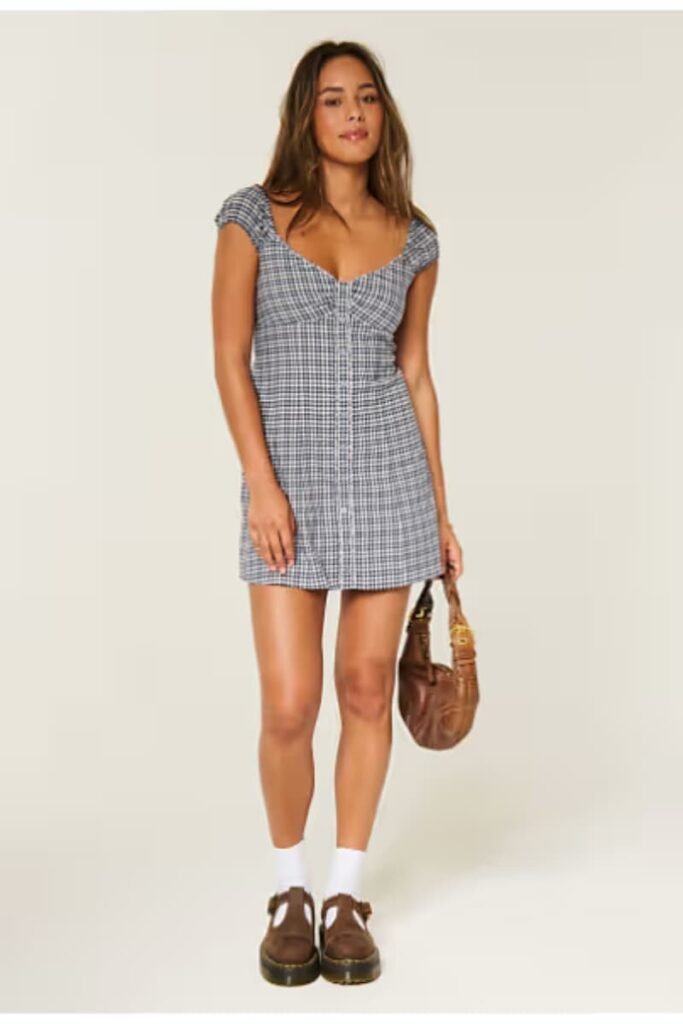
Product capability is organised around silhouette, material behaviour, fit sensitivity and production repeatability. Each category carries a different sample path and a different set of bulk-control priorities.

Mini and Midi Dresses

Commercial mini and midi dresses require balanced proportions rather than simple length changes. Waist placement, skirt volume, slit height, hem turn-up, lining length and grading affect the final look across sizes. Duolan develops woven, stretch and mixed-material silhouettes for day-to-evening, event and fashion collections. Bulk control focuses on body length, waist-to-hip balance, hem consistency, zip setting and colourway alignment so a clean sample remains visually stable across the production range.

Maxi and Column Dresses

Maxi, column and floor-skimming dresses depend on grain direction, fabric fall, hem level and movement. Bias sections, long seams, slits and light linings may shift during cutting or sewing. Duolan reviews hanging behaviour, body length, sweep, seam growth and pressing before bulk release. For fitted columns, waist and hip balance receive additional attention; for flowing maxis, panel alignment, print placement and hem control become key checkpoints.

Occasion and Cocktail

Occasion and cocktail dresses combine visual impact with wearing security. Neckline position, bust shaping, waist definition, sleeve movement, slit height and lining coverage must remain controlled during fitting and production. Duolan supports structured and fluid silhouettes using satin, crepe, mesh, lace, chiffon and decorative fabrics. Sampling confirms proportion and support, while PP and first-piece checks convert approved details into repeatable production operations.

Party and Going-Out

Party and going-out dresses often rely on strong body shape, cut-outs, ruching, asymmetry, metallic surfaces or decorative details. Small shifts can change comfort and visual impact. Development reviews focus on stretch, recovery, neckline security, seam placement, closure strength and internal finishing. Production planning separates high-risk operations from routine sewing, helping preserve the approved shape and finish across multi-style drops and repeat orders.

Satin and Slip Dresses

Satin and slip dresses reveal needle marks, seam tension, puckering, shine variation and pressing errors quickly. Bias-cut styles can grow after hanging, while narrow straps and low backs require stable placement. Duolan reviews grain, cutting direction, stitch and needle choice, seam handling, lining compatibility and hang time during development. Bulk lots are assessed for colour and surface consistency before large-scale cutting, reducing visual differences across garments and colourways.

Bodycon and Fitted

Bodycon and fitted dresses depend on controlled negative ease, stretch direction and recovery. Fabric strength alone does not guarantee a stable shape. Bust, waist, hip, side seam, armhole and hem must work with the selected knit or stretch woven. Duolan links fit comments to pattern and fabric behaviour, then controls seam elasticity, lining, opacity and measurement tolerance during production. First-piece checks are useful when small dimensional changes strongly affect the wearing result.

Corset and Bustier

Corset and bustier dresses need engineering around cups, boning, underbust position, waist compression, top-edge security, lining and closure load. Decorative construction cannot replace structural stability. Duolan reviews cup proportion, boning route, seam reinforcement, fastening, internal comfort and production feasibility before the sample route is fixed. PP approval and pilot production help confirm whether support and visual shape can be repeated without relying on one sample machinist.

Mesh Lace and Sequin

Mesh, lace and sequin dresses combine fragile surfaces with alignment, coverage and comfort requirements. Mesh stretch, lace motif placement, seam transparency, sequin removal at seam lines, bead attachment and lining shape all affect cost and finish. Duolan coordinates fabric, trimming and special-process resources, then defines handling and inspection points before production. The route protects motif balance, skin comfort, attachment stability and consistent visual density across bulk quantities.

Fabric and Trim Decisions Protect Bulk Results

Dress development begins with material behaviour. Drape, stretch, support, opacity, surface direction and colour consistency determine whether a design can move from an attractive sample into stable manufacturing.

Drape, Grain and Surface Behaviour

Satin, crepe, chiffon, velvet and fluid woven fabrics respond differently to cutting, seam construction, pressing and garment weight. A fabric with the right colour but the wrong body can flatten ruching, distort a cowl, remove skirt movement or weaken a fitted waist. Duolan reviews composition, weight, grain, surface direction and intended silhouette together. Bias-cut and long-panel dresses may require hanging checks before hem confirmation because fabric growth can continue after sewing. Velvet needs nap direction control; satin needs surface protection and stable seam handling; chiffon needs compatible seam and lining choices. Bulk approval should therefore cover more than a small swatch. Relevant evidence may include fabric metreage, drape comparison, lab dip, strike-off, bulk-lot view and a garment trial under expected construction conditions.
  • Silhouette match: Fabric weight and fall must support the intended waist, skirt and neckline shape.
  • Cutting direction: Grain, bias and nap rules are recorded before marker and cutting release.
  • Surface protection: Handling, pressing and packing methods are adjusted for shine, pile and abrasion sensitivity.
  • Hem stability: Long or bias garments may require controlled resting before final length is confirmed.

Stretch, Recovery and Shape Retention

Stretch fabrics must be assessed in the direction used on the garment, not only by fibre content. Two fabrics with identical composition can produce different body compression, transparency and recovery. For bodycon, ruched and fitted dresses, Duolan reviews widthwise and lengthwise stretch, recovery after extension, weight, opacity and seam behaviour. Pattern ease is then adjusted to the actual fabric rather than copied from a non-equivalent sample. Lining, power mesh, elastic and stitch formation must move with the outer fabric without restricting it or creating ripples. During bulk, lot variation can change measurements even when the paper pattern remains unchanged, so fabric checks and first-piece measurements are linked before full release.
  • Negative ease: Bust, waist and hip reduction is based on fabric performance and desired wearing pressure.
  • Recovery: The garment should return towards the approved shape after fitting and movement.
  • Seam elasticity: Stitch type and thread tension must remain compatible with garment extension.
  • Opacity: Stretch at body points is checked because coverage can change under tension.

Opacity, Lining and Internal Support

Opacity is not a simple yes-or-no material property. Mesh, chiffon, lace, light colours and stretch fabrics can change coverage across body areas, lighting conditions and sizes. Duolan reviews whether lining needs to be full, partial, shaped, stretch-compatible or strategically placed. Lining weight and recovery affect drape and fit; an overly rigid lining can pull a skirt, while an overly light lining may fail to support a fitted silhouette. Corset and bustier designs may also require cups, boning, elastic, stay tape or power mesh. Each internal component is selected for function, skin feel and production repeatability, then recorded in the material standard before bulk.
  • Coverage zones: Bust, hip, skirt, cut-out and seam areas are reviewed separately.
  • Movement compatibility: Outer and lining layers need compatible stretch and recovery.
  • Support level: Cups, boning, elastic and tapes are matched to silhouette and wearing load.
  • Comfort: Internal edges, seam bulk and decorative backing are checked against the skin.

Colour, Lot and Trim Consistency

Colour approval needs a defined reference and viewing condition. Black, ivory, champagne, burgundy, blush, metallic and saturated colours can shift visibly between sample, lab dip and bulk lot. Duolan coordinates lab dips, strike-offs or bulk-lot confirmations according to material and project needs. Trims receive the same discipline: zippers, lace, mesh, cups, boning, elastic, sequins, beads, labels and packaging must match approved colour, size and performance. When the original item becomes unavailable, an alternative is reviewed for visual and functional impact before substitution. A trim board and BOM connect material approval with production, inspection and future replenishment.
  • Colour reference: Approved standard, light-source expectation and acceptable variation are clarified.
  • Lot control: Bulk material is checked before large cutting volumes are released.
  • Trim identification: Codes, dimensions, colour and placement are recorded in the BOM.
  • Alternative approval: Replacement materials require evaluation before production use.

Pattern Fit and Measurement Control for UK Collections

Fit is managed through a brand-specific technical basis. Duolan follows the approved block, size chart, fit model and measurement method supplied for each programme rather than applying one generic UK fit.

Brand Size Standards Come First

UK fashion labels often use different fit blocks even when the size names appear identical. A UK 10 from one brand may carry a different bust, waist, hip, body length or ease expectation from another. Duolan begins by confirming whether the project uses body measurements, finished garment measurements, an existing brand block, an original sample or a new fit direction. Measurement methods are clarified before comments are translated into pattern changes. Dress length, strap length, slit height and curved openings must have defined start and end points. A reliable fit process therefore follows the brand standard and the approved sample purpose, not a generic size conversion chart.
  • Reference basis: Brand block, approved original, tech pack or measurement chart is identified.
  • Measurement method: Half-girth, full-girth, stretched or relaxed measurements are defined.
  • Fit model: Body profile and sample size are aligned with the brand assessment process.
  • Approval status: Visual approval and fit approval remain separate until both are confirmed.

Critical POMs and Tolerance Levels

A specification sheet turns fitting comments into measurable production controls. Critical points may include bust, underbust, waist, high hip, low hip, body length, strap length, armhole, neckline drop, slit height, hem opening and zipper length. Sensitive body points usually need tighter control than flowing hems or selected decorative dimensions. Working tolerances are agreed by style, fabric and construction. A fitted stretch dress may need approximately +/-0.5 to 1.0 cm on key body points, while selected lengths may allow around +/-1.0 to 1.5 cm. Final tolerances always follow the approved brand standard and production feasibility. QC checks use the same POM definitions applied during sample review.
  • Critical points: Measurements affecting support, exposure, compression or mobility receive priority.
  • Method consistency: Sample room, production and QC measure from the same defined locations.
  • Tolerance hierarchy: Not every dimension receives an identical allowance.
  • Fit comments: Comments are converted into pattern and specification updates before release.

Fit Engineering by Silhouette

Different silhouettes fail in different places. Bodycon dresses rely on controlled negative ease, stretch recovery and side-seam balance. Corset and bustier dresses depend on cup position, underbust placement, waist contour, boning and top-edge security. Halter and backless dresses require neckline coverage, strap load, side shaping and closure stability. Satin and slip dresses need clean bias balance, neckline fall and seam control without excessive tension. Duolan reviews the relationship between fabric, contour, support, body movement and visual target. Effective correction returns to the pattern and internal structure rather than hiding problems through temporary sewing changes.
  • Bodycon: Compression, opacity, seam stretch and hem recovery are assessed together.
  • Corset: Support distribution, cup position, boning and closure load are verified.
  • Halter or backless: Coverage, strap tension and side stability protect wearing security.
  • Satin or slip: Bias behaviour, drape, neckline and seam tension protect a clean surface.

Grading and Size-Set Verification

A correct base-size sample does not guarantee a correct size range. Grading must preserve neckline coverage, strap position, bust shaping, waist balance, slit proportion and garment length across sizes. Duolan reviews the grading logic after the base pattern is approved, then uses size-set sampling or measurement verification when project risk justifies it. Size sets are especially valuable for fitted, corseted, strapless, halter, cut-out and high-slit dresses. The review looks for proportional drift rather than only checking whether numeric measurements were added. Approved grading and critical measurements then become part of the PP and bulk-control basis.

  • Proportion: Style lines and exposure points remain balanced across the range.
  • Support: Cups, boning, elastic and closures remain functional as sizes change.
  • Length: Mini, midi, maxi and slit proportions follow the approved commercial direction.
  • Bulk control: Size-set findings are reflected in specifications and inspection plans.

Construction Details Must Survive Bulk Production

Dress construction is reviewed as a repeatable system. Internal support, closures, seams, decorative work and finishing need methods able to hold the approved shape across production quantities and repeat orders.

Bust Support and Internal Structure

Bust support must distribute load through cups, seams, boning, elastic, lining and closures rather than depending on one component. Corset, bustier, strapless and low-back dresses are reviewed for cup position, underbust alignment, top-edge security, boning length, channel construction and closure strength. The internal structure should support the intended body shape without creating visible ridges, uncomfortable pressure or unstable edges. Duolan tests whether the sample method can be repeated on a production line, then records critical materials and workmanship. Pilot verification may be used when structure is highly sensitive to small changes.
  • Cup and underbust: Position and size are checked against the fit model and pattern.
  • Boning route: Length, rigidity, channel width and termination are controlled.
  • Top-edge security: Elastic, stay tape or internal support helps prevent movement.
  • Closure load: Zips, hooks or lacing are tested against garment tension.

Closures, Openings and Edge Stability

Zippers, buttons, hooks, lacing, adjustable straps and cut-out edges influence both appearance and wearability. A concealed zip can ripple when seam tension or fabric support is wrong. A backless neckline can stretch if the edge lacks suitable stabilisation. Slits can pull at the top when reinforcement and movement allowance are insufficient. Duolan reviews closure length, insertion method, seam support, reinforcement, facing, binding and lining attachment. Production checks focus on alignment, function, security and clean appearance, not only whether the closure opens and closes.
  • Zip setting: Length, tape colour, seam support and top alignment are confirmed.
  • Edge control: Necklines, armholes and cut-outs receive suitable facing or stabilisation.
  • Slit security: Reinforcement and seam construction protect movement and exposure.
  • Strap strength: Attachment, adjusters and elastic recovery are checked under wearing load.

Ruching, Seams and Hem Balance

Ruching and draping need controlled placement, ratio and anchoring. When production teams gather by eye, visual differences can spread quickly across bulk. Duolan identifies gathering length, distribution, seam positions and fixed reference points. Seam allowance, stitch density and thread tension are selected for the fabric and movement requirement. Hems are reviewed for level, turn-up, stretch, visible stitching and weight. Satin, mesh, chiffon and stretch fabrics may need different techniques even when the design appears similar.

Approved close-ups and first-piece comparison help production maintain the intended visual rhythm.

  • Ruching ratio: Gathering amount and start-end points are defined.
  • Seam balance: Side seams and panels remain aligned on the body.
  • Stitch formation: Needle, thread and tension suit fabric and stretch.
  • Hem finish: Length, level and weight remain consistent across sizes and lots.

Sequins, Beads, Lace and Mesh

Decorative materials introduce attachment, comfort, alignment and repair risks. Sequins and beads may need removal from seam allowances before sewing and secure reattachment afterwards. Lace motifs need balanced placement at necklines, centre fronts, seams and hems. Mesh requires controlled tension and compatible lining to avoid rippling or exposure. Duolan coordinates specialised process resources and garment assembly, then defines critical checks for density, missing decoration, loose threads, sharp backing, motif alignment and skin comfort. Where decoration is heavy, garment weight and hanger or packing support are also considered.
  • Attachment: Decorative elements are checked for stability and repair method.
  • Motif placement: Key visual areas are aligned using agreed reference points.
  • Skin comfort: Backing, lining and seam treatment reduce scratching and bulk.
  • Packing protection: Folding, tissue, garment bags and carton pressure are adjusted to surface risk.

Feasibility Review Before Sampling Begins

A useful sample plan starts with clear inputs, an identified purpose and an early risk review. Duolan evaluates what must be confirmed before pattern and sample work begins.

Project Input Review

The review can begin from a tech pack, sketch, reference image, original sample, fabric direction or collection brief. Product type, target market, size range, colourways, quantity, price positioning and launch date are assessed together. Missing information is separated from confirmed information, so development can start with a clear basis rather than hidden assumptions. For existing brands, current product range and fit direction can also be reviewed to understand the expected visual and commercial standard.
  • Useful inputs: Tech pack, original sample, reference images, size chart and target quantities.
  • Project purpose: Fit approval, photography, sales review, launch order, repeat order or scale-up.
  • Commercial context: Price positioning, range role, colour plan and intended selling window.

Technical Risk Review

Before quoting a development route, Duolan examines fabric behaviour, fit sensitivity, internal support, decorative processes, seam complexity and likely bulk risks. A satin bias dress, stretch bodycon dress and boned corset dress should not follow an identical sample plan. High-risk points are identified early so material trials, partial mock-ups or structural decisions can be completed before full sample effort is committed.

The review aims to reduce avoidable revisions, not promise a perfect first attempt.

  • Material risk: Drape, stretch, opacity, colour, lot and trim availability.
  • Fit risk: Bust support, waist balance, cut-outs, straps, slit and garment length.
  • Production risk: Operations difficult to repeat, inspect or scale across lines.

Sample Plan and Timeline

A sample proposal should explain the development method, included work, material basis, approval points, estimated sample timing and likely next stage. Timing is confirmed only after the style, materials and files are reviewed. Straightforward styles with ready materials move differently from custom-dyed, heavily embellished, multi-layered or structurally complex dresses. Each stage has a purpose and a decision gate, helping the brand protect photography dates, range reviews and production windows without relying on an unsupported universal lead-time promise.

  • Sample route: Prototype, fit, revision, photo or sales sample, size set and PP as required.
  • Approval gates: Fabric, fit, colour, trims, workmanship and production readiness.
  • Timeline basis: Style complexity, material readiness, comment speed and launch priority.

Sample Stages from Prototype to PP Approval

Not every programme requires every sample type. The route is selected by product complexity, internal approval process, selling channel and bulk risk. Each stage should answer a defined question.

Development Prototype

The first prototype checks whether the design direction can become a real garment. Proportion, fabric response, major construction and early fit are reviewed before fine finishing receives priority. The prototype is a decision tool, not a promise of final production quality. Comments should identify structural and visual gaps clearly so the next version improves the right points.

Fit Sample

A fit sample focuses on body relationship, balance, mobility and critical measurements. Bust, waist, hip, length, straps, armholes, slits, openings and internal support are reviewed against the brand fit model and size standard. Visual details may remain provisional if fit decisions must be completed first. Approved fit comments are converted into pattern and specification updates.

Revised Sample

A revised sample confirms whether priority comments were interpreted correctly. Duolan separates fit, visual, material and workmanship comments to prevent one change from creating another problem. The revision record notes approved points, modified points and remaining decisions. A final revision may be recommended when the product is close to target but not yet suitable as a PP or production basis.

Photo Sample

A photo sample is prepared for campaign, ecommerce or content production. Colour, surface, proportion and finishing must photograph well, while any known difference from the future bulk basis is disclosed. A photo sample should not automatically become the PP standard when materials or construction remain provisional. The production path continues until approved bulk references are locked.

Salesman Sample

A salesman sample supports showroom, line review or commercial selling appointments. Fabric handfeel, colour, fit, detail and hanging appearance need a presentation-ready standard because the garment will be handled and viewed closely. Range labels, colour and size identification should remain organised. The sample also needs a clear route into PP approval after commercial orders are confirmed.

Colourway Sample

Colourway samples confirm how a style performs in additional colours, prints or surface treatments. Light colours may change opacity, dark colours may reveal shine or seam marks, and prints may require placement control. Not every colour needs a complete sample, but higher-risk colourways should be reviewed before bulk. Approved lab dips, strike-offs and colour references remain linked to the garment standard.

Size-Set Sample

A size set verifies grading and proportion across selected sizes before bulk. Fitted, corseted, strapless, halter, cut-out and high-slit dresses benefit most because exposure and support can change through the range. Measurements are checked together with visual balance. Findings are returned to pattern and specifications before PP or production release.

PP or Sealed Sample

The pre-production or sealed sample represents the approved production basis after fit, materials, trims, workmanship and presentation are aligned. PP approval does not replace material-lot checks or first-piece control, but it gives production and QC a common visual reference. Any authorised differences between PP and bulk must be documented before cutting begins.

Sample Comments Become Controlled Revisions

Clear revision management prevents approved points, pending decisions and new requests from becoming mixed. Duolan turns comments into an ordered set of technical actions and review evidence.

Comments Are Sorted by Decision Type

Fit, measurement, visual, material, construction and packaging comments should not be processed as one undifferentiated list. Duolan organises feedback by category and priority. A neckline comment may require a pattern change, support adjustment and measurement update at the same time. A surface comment may require a fabric alternative or pressing change rather than pattern work. Conflicting requests are identified before the revision starts. The approach helps design, technical, sourcing and production teams understand which decision owns each change and which comments must be approved together.

  • Fit comments: Balance, coverage, comfort, compression and mobility.
  • Measurement comments: POM values, methods, tolerances and grading implications.
  • Visual comments: Proportion, drape, colour, ruching, motif and finishing.
  • Production comments: Repeatability, seam method, reinforcement and inspection risk.

Pattern, Spec and BOM Move Together

A revision is only controlled when the technical basis changes with the garment. Pattern updates, measurement changes and material decisions must reference the same version. Duolan records the latest pattern basis, updates relevant POMs and confirms whether fabric, lining, trims or internal components changed. A bodycon waist correction may require pattern reduction and tolerance review; a corset neckline correction may require cup, boning and top-edge changes; a satin seam correction may require construction and pressing changes. Version control reduces the chance of production using an older pattern or an unapproved component.

  • Pattern version: Latest approved correction is identified before another sample or bulk.
  • Specification version: Measurements and tolerances reflect approved fit decisions.
  • BOM version: Material or trim changes are recorded with approval status.
  • Sample identity: Style, colour, size, stage and date remain visible on each sample.

A Sample Review Note Supports Decisions

Sample delivery should include enough evidence for an efficient review. Duolan can provide front, side and back views, close-ups of critical details, selected measurements and a short review note. The note explains what the sample was intended to verify, what appears close to target, what needs fitting review and which points remain open. After comments return, a revision summary confirms the planned actions and any questions. The process turns a physical sample into a controlled decision stage and helps remote UK teams review complex dresses with fewer misunderstandings.

  • Sample Review Note: Purpose, current status, key evidence and recommended review points.
  • Revision Summary: Confirmed actions, open questions and expected effect on the next version.
  • Staged updates: Material, structure or workmanship questions can be raised before completion.
  • Next-step proposal: Revision, PP, launch order or bulk-readiness review follows the result.

What Makes a Dress Sample Production-Ready

Visual approval alone is not enough. A production-ready dress carries a stable technical, material and workmanship basis able to guide cutting, sewing, inspection, packing and repeat production.

Approved Pattern Basis

The latest pattern includes confirmed fit and structural corrections. Temporary pins, hidden hand adjustments or sample-room fixes are removed from the production basis. Pattern pieces, notches, grain lines and allowances are prepared for the intended manufacturing method.

Confirmed Fabric Direction

Composition, weight, stretch, drape, opacity, surface and colour direction are confirmed. Sample substitutions are identified, and bulk-lot approval requirements are clear before cutting. Fabric behaviour supports the approved silhouette and measurement basis.

Locked Trim Standard

Zippers, lining, cups, boning, elastic, lace, mesh, sequins, labels and packaging have approved references. Dimensions, colour, placement and function are recorded, with authorised alternatives identified where necessary.

Stable Fit Standard

The sample has a clear fit status against the brand block, fit model and intended size.

Critical bust, waist, hip, length, strap and exposure points are reflected in the specification and pattern.

Repeatable Workmanship

Seams, ruching, support, closures, hems, decorative work and finishing can be repeated by production teams. Critical operations have references, and methods do not depend on one-off sample-room corrections.

Defined QC Points

Material, first-piece, inline, final and packing checks are connected to the known risks of the style. Measurement methods and tolerances are available to the production and inspection teams.

Clear Packing Direction

Labels, hangtags, barcodes, folding, protective materials, polybags, garment bags and carton marks are confirmed. Sensitive surfaces receive suitable protection before shipment.

Bulk Readiness Status

The sample is identified as fit confirmed, visually confirmed, PP basis or still pending refinement. Production does not begin while critical approvals remain unclear or contradictory. 

Bulk Readiness Review Before Production Starts

Duolan does not move directly from sample approval to unrestricted bulk. A production-readiness review checks approval status, material standards, production route, timing and quality controls before the order is released.

Confirm the Real Approval Status

A sample may be visually approved but still require fit confirmation, material replacement or production-method refinement. Duolan identifies whether the current version is fit confirmed, visually confirmed, suitable as a PP basis or still pending correction. The intended order stage is also clarified: launch order, repeat order, test programme or scale-up production. These distinctions affect the level of material verification, pilot control, inspection planning and documentation required. A clear status prevents teams from interpreting a positive comment as permission to ignore unresolved technical points.
  • Fit confirmed: Body balance and critical measurements are approved.
  • Visual confirmed: Silhouette, colour and appearance are accepted, while technical points may remain.
  • PP basis: Materials, fit, construction and finishing can guide production.
  • Pending refinement: Specified issues must be resolved before bulk release.

Lock the Critical Bulk Variables

Fabric, lining, trims, colour, measurements, workmanship points and packaging requirements are checked against the approved direction. Duolan identifies which details can enter bulk unchanged and which require an additional trial, lab dip, trim approval, size-set review or first-piece check. A material can be commercially available yet unsuitable for the approved fit; a zipper can match colour yet lack strength; a lining can match composition yet change drape. Bulk locking therefore combines visual, technical and production criteria rather than relying on purchase descriptions alone.
  • Materials: Bulk lots and components match approved function and appearance.
  • Measurements: Latest specifications and tolerance priorities are released.
  • Workmanship: Critical construction and finishing references are available.
  • Packing: Labels, barcodes, folding and carton requirements are confirmed.

Choose the Right Production Path

Orders are broken down by style, colour, size, quantity, material readiness, construction complexity, special process and delivery date. Regular styles, complex styles, flexible-response styles and high-risk workmanship styles may follow different routes. Duolan evaluates whether a programme needs one factory, several lines, a pilot run, specialist embroidery or printing support, or phased production and shipment. Matching the route before cutting helps avoid transferring a high-risk style into a line designed for a different operation profile.
  • Single-line route: Suitable when style, volume and timing can remain under one controlled line.
  • Multi-line route: Supports higher volumes or phased delivery with aligned standards.
  • Special-process route: Coordinates printing, embroidery, dyeing, washing or decorative work.
  • Pilot route: Verifies fit, structure or workmanship before full release.

Issue a Clear Bulk Start Basis

The result is not a casual statement saying production can begin. A Bulk Start Confirmation or Production Readiness Note summarises approved references, remaining conditions, production path, key quality points and timing assumptions. Internal production teams receive the same basis used by project and quality teams. A structured start protects information created during sampling and carries it into cutting, sewing, inspection and packing. The document can be concise, yet it should make ownership and next actions clear enough for a multi-style programme.

  • Approved references: PP or sealed sample, latest specifications, BOM and workmanship basis.
  • Open conditions: Any final confirmation required before a defined production stage.
  • Control plan: First-piece, inline, final and packing checkpoints.
  • Timeline: Material, production, QC, packing and shipment gates.

Locking Materials and Standards Before Bulk Cutting

A BOM and approval set connect the sample with purchasing, production, QC and repeat orders. Each component needs an identifiable standard, not a vague description or a visually similar substitute.

Outer Fabric Standard

Record composition, construction, weight, width, stretch, recovery, handfeel, surface direction and approved colour. Bulk lot is reviewed before large cutting quantities are released. Satin, velvet, mesh, lace, chiffon and stretch fabrics receive handling rules linked to the garment silhouette and surface risk.

Lining and Support

Confirm lining composition, weight, colour, stretch and coverage together with cups, boning, power mesh, elastic, stay tape and reinforcement. Internal materials are tested for movement, comfort and support. Similar-looking substitutes are not accepted when they change drape, compression or wearing security.

Closures and Hardware

Zipper type, length, colour, slider, hooks, eyelets, buttons, adjusters and other hardware are identified by specification. Closure strength and placement are checked against garment tension. Metallic finishes are reviewed for visual consistency, abrasion and compatibility with decorative surfaces.

Lace and Embellishment

Lace code, motif direction, mesh base, sequin density, bead colour and attachment method are confirmed. Placement rules define centre fronts, necklines, seams and hems. Bulk variation is assessed before production, especially where decorative density or motif scale strongly affects the final appearance.

Branding and Labels

Main labels, size labels, care labels, origin information, hangtags, barcodes and tickets follow approved artwork, material, colour, position and attachment. Label and barcode checks are connected to the size-colour assortment to reduce warehouse and retail errors.

Packing Materials

Folding, tissue, inserts, polybags, garment bags, hangers, stickers and carton marks are approved against surface and structure risk. Satin, sequin, embellished and corset dresses may need added protection to avoid crushing, scratching, creasing or shape damage during transport.

Production Planning by Style Complexity and Delivery Date

Bulk orders are not treated as one production block. Duolan breaks each programme into controlled workstreams and matches them to the most suitable factory, line, process and quality route.

Break Down the Order Structure

The order is separated by style, colour, size, quantity and delivery window before production allocation. Material readiness and approval status are added to the breakdown. A 24-style collection may include repeatable commercial dresses, corseted hero pieces, stretch bodycon styles and embellished occasion dresses, each with a different operation profile. Grouping only by delivery date can overload specialist operations or release unfinished standards. Duolan therefore maps style complexity and dependency as well as volume, creating a clearer basis for line loading, pilot decisions, inspection coverage and phased shipment.
  • Style group: Regular, complex, flexible-response and high-risk workmanship.
  • Material status: Ready, pending approval, custom-dyed, printed or special-process dependent.
  • Quantity structure: Colour-size ratios, launch quantities, repeat quantities and scale-up potential.
  • Delivery structure: Single delivery, phased release or prioritised launch styles.

Match Styles to Production Routes

Production routing considers machinery, operator skill, line experience, special processes and inspection needs. A regular woven mini dress can move through a different route from a boned corset dress or all-over sequin style. Duolan has 300 sewing lines and 50+ flexible lines across the manufacturing system, supported by sample lines and specialist resources. The objective is not to place every style into the largest available line. The objective is to match a repeatable method, suitable team and realistic timing to the product standard already approved during development.
  • Regular line: Stable construction, planned volume and repeatable operation sequence.
  • Flexible line: Launch, replenishment or smaller phased quantities requiring quicker response.
  • Specialist route: Decorative, printed, washed or technically sensitive work.
  • Multi-factory coordination: Scale-up or multi-style programmes with shared standards and central control.

Protect Critical Path Materials

Fabric, special trims, printing, embroidery, dyeing and packaging can control the whole calendar even when sewing capacity is available. Duolan identifies long-lead or approval-sensitive items early and aligns purchase release with the approved order plan. Where several styles share fabric or trims, allocation is reviewed to protect priority styles and avoid colour or lot fragmentation. Material status is then connected to cutting and line dates rather than managed separately. The approach supports more reliable planning for seasonal drops, campaign dates and phased UK delivery programmes.

  • Long-lead items: Custom colour, print, lace, embellishment, hardware and packaging.
  • Shared materials: Allocation across styles and colourways is planned before cutting.
  • Approval dependency: Lab dip, strike-off or trim confirmation is tied to release dates.
  • Production dependency: Lines are scheduled against material availability, not optimistic assumptions.

Create a Production Path and Timeline

The Production Path & Timeline Plan converts the order into material, cutting, first-piece, sewing, inline, finishing, final inspection, packing and shipment gates. Internal teams can see which approvals control each stage and which styles carry higher risk. UK brand teams receive a clear view of how the programme is expected to move and where a delayed comment or material decision may affect delivery. Timelines remain project-specific because style count, quantity, special processes, packaging and shipping terms materially change the route.

  • Approval gates: Late decisions are connected to the affected production stage.
  • Capacity gates: Line loading and specialist resources are assigned before release.
  • Quality gates: Pilot, first-piece, inline, final and packing checks are scheduled.
  • Delivery gates: Inspection, booking, documents and shipment preparation are included.

Planning Production Around the UK Launch Calendar

A delivery date becomes reliable only after approvals, material lead time, production, QC, packing and transport are mapped backwards from the required selling window.

Launch and Delivery Gate

Planning begins with the required warehouse, campaign or online-launch date rather than a factory completion estimate. UK destination, inspection requirement, shipping mode and internal receiving buffer are clarified. The programme then works backwards to identify the latest safe dates for final inspection, packing, production completion and PP approval.

Material Approval Gate

Fabric, colour, print, lace, trim and packaging approvals are positioned before their purchase or production lead time becomes critical. Long-lead materials are prioritised. Shared fabrics across several styles are planned together to protect lot consistency and avoid one late style holding back the whole collection.

Sample Decision Gate

First sample, fit revision, photo or sales samples, size set and PP approval are scheduled according to their real purpose. Comment turnaround and material decisions are part of the calendar. Complex styles are started earlier so support, fit or workmanship questions do not compress the bulk window.

Production Gate

Cutting, first-piece, sewing and specialist processes are arranged against material readiness and line allocation. Multi-style programmes can use phased release, allowing approved and ready styles to move while selected complex styles complete their final gate. Production is not accelerated by skipping unresolved standards.

QC and Packing Gate

Inspection and packing need protected time. Inline correction is more efficient than finding repeated issues after completion. Final measurements, visual checks, label-barcode confirmation, folding and carton verification are included before shipment readiness. Sensitive dresses may require additional surface or shape protection.

Shipment and Buffer Gate

Forwarder booking, shipping documents, inspection release and transport buffer are considered before the delivery commitment is confirmed. Sea, air and express routes carry different timing, cost and risk profiles. A realistic buffer protects seasonal programmes from small delays in approval, production or logistics without forcing rushed quality decisions. 

First-Piece and Pilot Checks Before Full Release

Higher-risk dresses are verified at the first-piece or pilot stage before full production is released. Early evidence is cheaper and easier to correct than repeated problems across thousands of garments.

When a Pilot Check Is Recommended

Pilot control is recommended where fit, support, surface, decoration or construction is highly sensitive. Bodycon dresses can change with fabric lot and seam tension. Corset dresses can lose support through small cup, boning or closure differences. Satin can pucker or mark under production handling. Mesh layers can ripple, and sequin work can create comfort or attachment issues. A pilot is also useful when a confirmed style moves to a new line, a materially larger quantity or a new factory within the manufacturing network. The aim is targeted verification, not an unnecessary delay for every style.
  • Fit-sensitive: Bodycon, corset, bustier, halter, backless and strapless dresses.
  • Surface-sensitive: Satin, velvet, metallic, light-colour and delicate fabrics.
  • Decoration-sensitive: Sequins, beads, lace motifs, embroidery and mixed processes.
  • Scale-sensitive: Major quantity increase, new line or phased multi-factory allocation.

What the First Piece Verifies

The first piece is compared with the PP or sealed reference for silhouette, measurements, construction, material, decoration and finishing. Critical points are selected according to the style: cup and waist position on a corset; stretch and opacity on a bodycon dress; seam surface and drape on satin; motif and lining alignment on lace or mesh. The team also checks whether the production operation sequence creates new risks not visible in the sample room.
Findings are recorded before the line continues at full speed.

  • Measurement: Critical POMs and tolerance status.
  • Construction: Seams, support, closures, reinforcement and internal finishing.
  • Appearance: Drape, surface, symmetry, ruching, decoration and pressing.
  • Repeatability: Whether the line method can maintain the approved result consistently.

How Corrections Are Released

When the first piece identifies a gap, the correction is assigned to the correct source: pattern, material, cutting, operation method, machine setting, pressing or finishing. A corrected sample or operation reference may be produced before the line restarts. Approved changes are communicated to production and QC together, preventing a correction from remaining with one supervisor only. The Pilot Run / First-Piece Confirmation Note summarises status and release conditions, providing a clear link between sample standard and live production control.
  • Root cause: Identify whether the issue comes from pattern, material or process.
  • Correction evidence: Update the operation reference, measurement or workmanship point.
  • Line communication: Production and QC receive the same confirmed instruction.
  • Release status: Full run begins only after critical corrections are accepted.

Why Early Control Protects Delivery

Stopping an incorrect operation early protects both quality and timing. Reworking completed garments consumes capacity, damages delicate surfaces and compresses final inspection and packing. A controlled first-piece stage may use a small amount of time at the beginning but protects the larger production window.
For programmes containing 10-30 styles, risk-based pilot selection also prevents unnecessary checks on stable commercial styles while concentrating attention on the garments most likely to create late disruption.

  • Lower rework exposure: Fewer garments are affected before correction.
  • Better line stability: Approved methods are established before full output.
  • Clear QC basis: Inspectors know the corrected risk points from the start.
  • Protected packing window: Late repairs are less likely to consume shipment buffer.

Quality Checkpoints from Fabric to Final Packing

Quality control follows the approved sample, specifications, BOM, workmanship references and packing requirements. Checks are placed where each risk can still be corrected efficiently.

StageMain ChecksReason for Control
Incoming materialsColour, lot, width, defects, weight, stretch, handfeel, surface direction, trims and components.Prevents unapproved material differences from entering cutting and production.
Cutting preparationMarker, grain or nap direction, print or motif position, lay control, numbering and bundle separation.Protects size, colour, panel and lot consistency before sewing begins.
First piece or pilotCritical measurements, fit balance, construction, support, surface and finishing against PP reference.Stops repeated errors before full production output is released.
Inline sewingCritical seams, operation method, stitch formation, reinforcement, closures, ruching and measurement trend.Finds process drift while correction remains local and manageable.
FinishingPressing, shape, symmetry, loose threads, marks, decoration, lining, hem and visual presentation.Protects the approved appearance and prevents finishing damage.
Final inspectionMeasurements, workmanship, appearance, function, quantity, assortment and agreed sampling plan.Confirms shipment readiness against the approved quality basis.
Label and barcodeMain label, size, care, origin, hangtag, barcode, colour-size match and placement.Reduces retail, warehouse and assortment errors.
Packing and cartonFolding, protection, polybag or garment bag, sticker, carton quantity, marks and destination data.Protects garments in transport and supports receiving accuracy.

Manufacturing Capacity for Multi-Style Dress Programmes

Capacity matters when it supports the right production path. Duolan combines owned factories, satellite capacity, flexible lines, sample development and regional resources to handle multi-style programmes, scale-up and replenishment. 

16 Owned Factories

Owned womenswear factories provide a stronger control base for core styles, important programmes and technically sensitive dress development. Development, PP, production and QC information can remain connected through a structured internal route. Owned capacity is used according to product and schedule needs rather than presented as a single undifferentiated production pool.

20+ Satellite Factories

Long-term satellite factories add flexibility for volume, replenishment and style allocation. They support production when programmes need more lines, regional capacity or product-specific resources. Allocation is planned through common samples, files and control points so flexible capacity does not become uncontrolled outsourcing.

300 Sewing Lines

Approximately 300 sewing lines across the manufacturing system support parallel production for multiple styles and orders.
Line assignment considers construction sequence, operator capability, material risk and delivery date. Scale is useful only when each style enters a route suited to its approved production method.

50+ Flexible Lines

More than 50 quick-response and flexible lines support launch quantities, repeat orders, replenishment and phased programmes. Flexible capacity helps bridge early commercial demand and later scale-up without separating sampling from manufacturing standards. Product suitability and material readiness still determine the final route.

15,000-35,000 Samples Monthly

Monthly sample development capacity of approximately 15,000-35,000 pieces or development instances supports a high volume of concurrent work. The system can manage thousands of style-development processes each month. Capacity is paired with staged review, revision and production-readiness logic so sample speed does not replace sample purpose.

6.5M Stable Monthly Capacity

The wider manufacturing system reports stable monthly capacity around 6.5 million garments, with peak capacity reaching approximately 10 million and additional expansion space. Programme allocation remains based on product category, complexity, quality level and timing. The value for a dress brand lies in the ability to move from development to launch, repeat and scale-up through one organised network.

Production Support for UK Fashion Brand Requirements

UK programmes need accurate product files, clear English coordination, compliant labelling, reliable inspection and organised delivery preparation. Duolan aligns manufacturing records with the requirements supplied for each market and channel.

UK Size Specifications

Duolan follows brand-provided UK size charts, blocks, fit models and grading rules. Size naming alone is never used as a fit standard. Measurement methods, critical POMs, tolerances and size-set requirements are clarified before bulk. Product teams can review fit comments through photographs, measurements, video calls and physical samples.

English Project Coordination

Email, WhatsApp, WeChat, voice, video and online meetings support sample and production coordination. Project communication covers file receipt, open questions, sample status, comments, approvals, material changes, production timing and shipment preparation. Clear written summaries reduce reliance on repeated verbal explanations and help internal teams share updates.

Labels and Packaging

Main labels, size labels, care labels, origin information, hangtags, barcodes, tickets, polybags, garment bags and carton marks are prepared from approved artwork and specifications. UK or channel-specific wording remains the brand responsibility unless formally reviewed by an appointed compliance resource. Duolan checks manufacturing and packing execution against confirmed files.

Audit and Compliance Support

The manufacturing system has completed SMETA audit and SMETA 2-Pillar audit, with social audit records available for supplier evaluation. Product testing, material certificates and additional standards are handled by programme requirement. BSCI, ISO 9001, AATCC, ASTM, OEKO-TEX, EN, China GB or other references are not treated as universal claims; applicability and supporting documents are verified for the specific factory, material and order.

Inspection Coordination

Internal quality teams work from approved samples, specifications, BOM and packing standards. Brand-appointed or third-party inspections can be coordinated according to order terms and timing. Inspection scope, sampling plan, measurement method and release requirements should be confirmed before final production, allowing correction time and avoiding unclear shipment decisions.

Shipment and Reorder Files

Duolan supports packing lists, commercial documents, carton data and coordination with the nominated forwarder according to agreed terms. After shipment, approved sample, pattern, BOM, material history, size specification, QC comments and packing standards can be retained for replenishment. Reorders still receive a fresh material and production check because fabric, trim or line conditions may change.

Sample-to-Bulk Dress Programmes for UK Market Launches

Client names, labels and unreleased designs remain confidential. The project examples below show the scale, development risk and control route typical of multi-style brand programmes handled through Duolan.

UK Occasionwear Collection

Project profile: A UK occasionwear label developed 18 styles across satin, crepe, mesh and structured bodice categories. The confirmed launch order totalled 36,000 garments across four delivery groups. Key risks included different lining requirements, bust support on five styles, late colour decisions and a shared launch window.

Development route: Duolan separated fluid, fitted and structured styles into three sample paths. Satin styles received seam and pressing trials; mesh styles received coverage and lining checks; structured styles received cup, boning and closure review. Fit comments were converted into pattern and specification updates before PP.

Bulk control: Approved fabrics, linings, zippers and support components were locked through the BOM. Five higher-risk styles entered first-piece confirmation, while stable commercial styles moved through standard first-piece and inline control. Production was phased by readiness rather than releasing all styles together.

Outcome: All 18 styles moved into bulk under confirmed PP and packing references. The 36,000-piece order was organised into two main shipment windows, protecting the launch sequence while allowing additional time for the most structure-sensitive styles.

Satin and Bodycon Programme

Project profile: A dress-led ecommerce brand prepared 27 styles for a UK party-season programme, totalling 78,400 garments. The range combined stretch bodycon silhouettes, ruched jersey dresses, satin minis and asymmetric midis. Key risks were stretch-lot variation, opacity in light colours, satin puckering, inconsistent ruching and tight photography deadlines.

Development route: Fabric direction was reviewed before fit samples. Bodycon patterns were adjusted to actual stretch and recovery rather than composition alone. Light colourways received opacity and lining checks. Satin styles used grain, seam and pressing trials, while ruching ratios were marked by defined start-end points.

Bulk control: Critical POMs were assigned tighter tolerance priorities, and selected colourways were checked at first-piece. Bulk fabric lots were reviewed before cutting. Inline QC concentrated on waist-hip measurements, side-seam balance, seam surface and ruching distribution.

Outcome: The 27-style programme entered production through regular, flexible and surface-sensitive routes. Priority photo styles were approved first, while bulk and packing standards remained aligned across the complete 78,400-piece order.

Repeat Party Dress Order

Project profile: A regional fashion group placed a 12-style repeat programme totalling 24,600 garments after an earlier successful season. The reorder included black, burgundy and champagne colourways across corset, halter and embellished party dresses. The main challenge was preserving fit and visual identity while original fabric lots and selected trims had changed.

Development route: Duolan reopened the archived approved sample, pattern, BOM, size specification and QC comments. New fabric lots were compared for colour, stretch, handfeel and drape. Replacement zippers and decorative trims were assessed for strength, colour and appearance. Two styles required a confirmation sample because the material change affected support and surface finish.

Bulk control: Updated material references were issued without changing approved fit standards. Corset styles received first-piece support checks; embellished styles received density, attachment and comfort checks. Barcode and packing files were revalidated against the new colour-size assortment.

Outcome: The 24,600-piece repeat programme moved forward with preserved pattern and fit standards, updated material evidence and a clear record of authorised changes. Reorder preparation required fewer unresolved decisions because the original production basis had been retained.

Frequently Asked Questions About Sample-to-Bulk Production

Send the available tech pack, reference images, original sample information, fabric direction, size chart, colourways, target quantities and required delivery date. A complete file helps Duolan assess fabric, fit, construction, sample route, production feasibility and timing. When some information is still open, send the current version and identify pending decisions.
Yes, reference-led development is possible when intellectual-property rights and design ownership are clear. A reference image needs supporting information on intended fabric, fit, size range, quality level and target quantity. Duolan reviews the visual direction and converts it into pattern, material, construction and sample decisions rather than copying appearance without a production basis.
The route depends on style complexity and internal approval needs. A programme may use prototype, fit sample, revised sample, photo or salesman sample, colourway sample, size set and PP sample. Not every style needs every stage. Bulk should begin only when fit, material, workmanship and production status are clearly defined.
A fit sample evaluates body balance, measurements, mobility, support and proportion. A PP sample represents the approved production basis after materials, trims, fit, construction and finishing are aligned. A visually strong fit sample may still need material or workmanship changes before it can guide production.
Duolan uses approved samples, pattern and measurement files, BOM, material references, workmanship points, PP status, first-piece checks, inline QC, final inspection and packing checks. Risk points are selected by product. Satin, bodycon, corset, mesh and sequin dresses receive different control priorities.
Yes. Duolan works from the brand size chart, approved block, fit model and measurement method supplied for the programme. UK size names are not treated as a universal fit standard. Critical POMs, grading rules and tolerances are agreed before production and used again during inspection.
Approval may use swatches, lab dips, strike-offs, trim boards, sample garments and bulk-lot checks. Fabric is assessed for drape, stretch, recovery, opacity, colour and surface as relevant. Trims are checked for colour, size, function, strength and placement. Alternatives require approval before production use.
Bulk timing is confirmed after style count, quantities, material status, special processes, sample or PP approval, packing requirements, inspection and shipping terms are reviewed. A Production Path & Timeline Plan maps the critical gates. A single fixed lead time is not applied to every dress programme.
Yes. Multi-style programmes are planned by style complexity, material readiness, production route and delivery priority. The wider system includes 16 owned factories, 20+ satellite factories, 300 sewing lines and 50+ flexible lines. Allocation remains controlled through common approved standards, files and quality checkpoints.
Approved samples, patterns, specifications, BOM, material history, construction notes, QC comments and packing standards are retained as the repeat basis. Before a reorder, Duolan checks material availability, colour, trim changes, latest pattern version, production route and any new brand comments. Repeat production is verified rather than assumed identical.

Send Your Dress Project for Production Review

Share the information already available for your collection, launch order, repeat order or supplier evaluation. Duolan will review the dress category, fabric direction, fit and structural risks, sample status, production feasibility, likely control points and the information required before quotation or bulk planning. Clear files lead to a more accurate response, but a project does not need to be fully complete before contact. Send the current tech pack, reference images or approved sample details, and the team will identify which decisions need to be confirmed next. The review is designed for structured fashion programmes requiring development, sampling, PP approval, bulk manufacturing, QC, packing and repeat-order support for the UK market.

  • Product information: Dress categories, style count, reference images, tech packs or original samples.
  • Material direction: Fabric, colour, print, lining, trims, support and decorative requirements.
  • Fit basis: Size chart, approved block, fit model, measurement priorities and comments.
  • Order structure: Target quantity by style, colour and size, including expected repeat potential.
  • Timing: Sample deadline, photography date, delivery window, launch date and destination.
  • Quality and packing: PP standard, inspection requirements, labels, barcodes, packaging and shipping terms.


Start Your Apparel Development Project

OEM/ODM Manufacturing Support for Fashion Brands

Share your collection details, estimated quantities, target market, development timeline, and technical requirements. The production team will review your request and provide a tailored manufacturing solution based on your product category, fabric selection, construction needs, and delivery schedule.

Fashion Manufacturing Support with Scalable Production Capacity

From sample development to bulk production, Duolan supports fashion brands with confidential OEM/ODM manufacturing, stable quality management, flexible production planning, and coordinated multi-factory execution for seasonal and capsule collections.

Need Direct Assistance?

Seraphinite AcceleratorOptimized by Seraphinite Accelerator
Turns on site high speed to be attractive for people and search engines.