Skip to content

A-Line and Fit-and-Flare Dress Manufacturing
Dress-focused development and scalable manufacturing for fashion brands requiring controlled waist placement, balanced flare, consistent grading, and repeatable bulk results.
- 6 silhouette checkpoints: bust balance, waist position, flare starting point, side-seam balance, skirt fall, and hem sweep are reviewed as connected parts of one silhouette.
- Multi-style program ready: A-line and fit-and-flare directions can be developed across mini, midi, maxi, occasion, party, and seasonal dress programs.
- Brand-scale production: manufacturing resources include 16 owned womenswear factories, 20+ long-term satellite factories, and 300 sewing lines supporting multi-style production.
- From sample to bulk: approved fit, fabric behavior, construction, grading, workmanship, and QC references are aligned before production release.
Manufacturing Risks Behind Balanced A-Line and Fit-and-Flare Dresses
Waist Position Drift
Flare Distribution Error
Fabric-Silhouette Mismatch
A pattern cannot be separated from fabric behavior. Soft satin may produce a fluid A-line with limited visual volume, while crisp poplin, organza, structured crepe, or bonded materials can hold a wider shape. Stretch jersey may follow the body closely through the upper section, while a low-recovery knit can lose waist definition during wear. Before sample cutting, material review should consider weight, drape, stretch, recovery, surface friction, thickness, transparency, support, and pressing response. A fabric substitution may therefore require pattern adjustment rather than a simple material change. Duolan reviews the intended silhouette together with fabric direction so the sample reflects the required shape instead of forcing an unsuitable fabric into an existing pattern.
Grading Shape Loss
A strong sample in one size does not automatically create a strong commercial size range. Mechanical enlargement can move the waist, change bodice length, increase skirt volume too quickly, or distort the relationship between bust shaping and flare. Fit-and-flare styles are especially sensitive because both a fitted upper section and a controlled lower-volume transition have to remain recognizable. Grading review separates horizontal growth from vertical proportion. Bust, waist, high hip, body length, armhole, skirt length, flare width, and hem sweep require coordinated rules. For a six-size program, the largest size should still read as the same design rather than a broader version with a different silhouette. Size specifications, graded patterns, measurement tolerances, and fit comments therefore remain linked through PP approval and bulk QC.
A-Line and Fit-and-Flare Require Different Manufacturing Decisions
Both silhouettes create visual movement away from the body, but their construction logic is not identical. Understanding the difference before pattern development helps prevent wrong waist placement, unsuitable materials, excessive skirt volume, and grading changes that weaken the original design.
| Development Point | A-Line Dress | Fit-and-Flare Dress |
|---|---|---|
| Upper-body fit | Can range from shaped to moderately relaxed depending on brand direction | Usually more fitted through bust, torso, and waist |
| Waist definition | May be subtle, natural, raised, lowered, or seam-free | Usually a stronger visual and structural anchor |
| Flare starting point | Can develop gradually from waist, high hip, or lower torso | Commonly becomes more visible from the waist or fitted hip transition |
| Skirt volume | Controlled to full, depending on fabric and panel shape | Usually requires clearer contrast between fitted bodice and skirt volume |
| Fabric behavior | Fluid and structured options can both work with different pattern approaches | Bodice support and skirt behavior must work together |
| Grading focus | Preserve line, length, side balance, and controlled sweep | Preserve bust-waist relationship, waist position, flare transition, and volume |
| Common bulk risk | Uneven hem, side-seam drift, excess volume, poor drape | Waist distortion, bodice fit changes, inconsistent flare, grading imbalance |
A-Line and Fit-and-Flare Styles Built for Fashion Programs
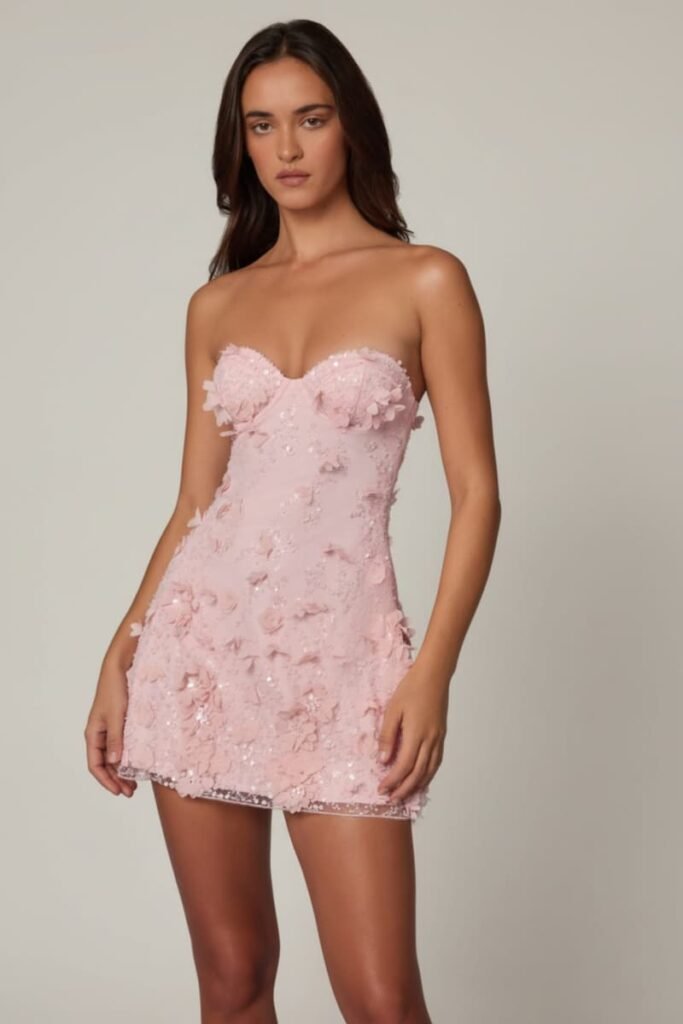
Soft A-Line Mini

Structured A-Line Midi

Fluid A-Line Maxi

Fitted-Bodice Flare Mini

Occasion Fit-and-Flare Midi

Full-Skirt Fit-and-Flare
Pattern Engineering Controls the Silhouette Before Sewing Begins
Upper-Body Balance Defines How the Lower Silhouette Reads
A strong flare cannot compensate for an upper body sitting incorrectly. Pattern review therefore starts with neckline, shoulder, bust point, armhole, side seam, center front, center back, waistline, and closure position. Each point affects how the dress hangs before skirt volume is even considered.
For an A-line style, the upper section may be close-fitting or moderately relaxed, but side seams still need to fall cleanly and the front/back body lengths need to reflect the intended fit. Excess front length can create folds near the waist. Insufficient bust shaping can push the side seam backward. A neckline sitting away from the body can also change how the entire dress appears in campaign photography.
Fit-and-flare dresses place even more pressure on upper-body accuracy. Bodice suppression may come from darts, princess seams, shaped side seams, stretch, internal support, or combinations of those methods. Bust shaping has to connect naturally into the waist rather than creating sharp pulling lines. A fitted bodice also needs enough movement and wearing security for the intended neckline and sleeve construction.
Duolan reviews the sample in three views — front, side, and back — rather than checking only flat measurements. Fit comments are translated into pattern actions and specification updates so later versions do not depend on verbal instructions. Once the upper-body balance is approved, the same reference becomes part of the PP and production basis.

Waist Position and Flare Geometry Create the Recognizable Shape
The waist is more than a circumference measurement. Its vertical position determines torso proportion, leg proportion, where skirt volume begins, and how a fitted bodice transitions into movement. A visually correct waist therefore requires both measurement control and pattern geometry.
Development starts by defining the intended waist direction: natural waist, raised waist, dropped waist, shaped waist seam, or a seam-free transition. Front and back waist levels are then checked together because body shaping can make a nominally level seam appear uneven once worn. Side-seam position is equally important. A side seam rotating forward or backward can make the flare look asymmetrical even when the hem measurement is technically correct.
Flare is planned through panel angle, dart manipulation, seam placement, slash-and-spread development, gathers, pleats, godets, circular sections, or a combination of methods. The correct choice depends on the design language and fabric behavior. A gradual A-line may need controlled distribution through several panels. A stronger fit-and-flare silhouette may require a more defined volume change after the waist.
Duolan does not use hem circumference as the only volume reference. Front projection, side projection, back volume, skirt fall, waist-seam load, and movement are reviewed together. Approved geometry is then carried into grading so larger and smaller sizes preserve the intended visual transition rather than receiving a simple proportional enlargement.

Grain, Skirt Fall and Hem Balance Finish the Pattern Logic
Long skirt panels magnify cutting and grain errors. A piece placed differently on the grain can twist, stretch, or fall at another angle even when two paper patterns have identical dimensions. Fluid satin, chiffon, georgette, viscose blends, mesh, and other soft materials make the issue especially visible.
Pattern markers therefore need to respect grain direction, nap or surface direction where relevant, print orientation, lace placement, and panel symmetry. For multi-panel skirts, the combination of straight-grain, cross-grain, or bias-sensitive sections should be deliberate. A mixed-grain structure can create movement, but uncontrolled grain differences can also create uneven side seams or hems.
Hem balance is reviewed after the garment has been assembled and the fabric has responded to its own weight. Long or curved hems may settle differently from the original cut edge. The final finishing method also changes the appearance. A narrow rolled hem gives a different fall from a turned hem, facing, binding, horsehair support, or lined edge.
For A-line and fit-and-flare development, hem review covers front, side, and back level, sweep consistency, seam intersections, lining length, movement, and pressing response. Pattern correction is completed before the style becomes a production reference. The objective is a silhouette capable of being repeated through cutting, sewing, finishing, and future orders.

Fabric Behavior Determines Drape, Support and Flare Definition
The same pattern can produce completely different dresses when material weight, drape, recovery, thickness, surface friction, or stiffness changes. Material review therefore looks at the finished silhouette first, then matches construction and pattern decisions to the selected fabric.
| Fabric Direction | Silhouette Behavior | Strong Applications | Development Control |
|---|---|---|---|
| Matte crepe | Controlled drape with moderate body | A-line mini/midi, occasion fit-and-flare | Weight, stretch, seam appearance, pressing, lining |
| Satin | Fluid to semi-structured depending on weight | Occasion A-line, fluid fit-and-flare, maxi | Shine, grain, seam puckering, press marks, drape |
| Chiffon / Georgette | Light movement and soft flare | Layered A-line, soft maxi, floating skirt structures | Transparency, lining, panel direction, hem stability |
| Organza / Crisp Wovens | Holds visible volume | Structured A-line, full fit-and-flare | Seam bulk, waist load, hem finish, pressing |
| Ponte / Scuba | Stable stretch with stronger body | Fitted-bodice styles, clean structured flare | Recovery, seam tension, thickness, waist transition |
| Stretch Jersey | Body-responsive with softer skirt fall | Casual fit-and-flare, soft A-line, fitted bodice | Stretch percentage, recovery, negative ease, hem |
| Lace / Mesh Overlay | Adds texture without defining shape alone | Occasion and party silhouettes | Base fabric, lining, placement, transparency, seam finish |
| Cotton Poplin / Linen Blend | Crisp to semi-crisp natural structure | Summer A-line, day dresses, shaped fit-and-flare | Shrinkage, wrinkle behavior, seam balance, volume |
Construction Details Decide Whether the Silhouette Looks Controlled
Bodice Shaping and Waist Construction Must Work as One System

Skirt Panels, Seams and Volume Need Repeatable Assembly Rules
A-line and fit-and-flare skirts often use several panels to create shape. More panels create greater control over volume, yet every additional seam adds another opportunity for grain mismatch, uneven feeding, length variation, or distorted flare. Panel numbering and cutting orientation matter when pieces look similar but have different functions. Front side panels, back side panels, godets, pleat sections, and lining panels should not be treated as interchangeable. For printed, striped, checked, lace, or directional materials, placement adds another control layer. Matching requirements need to be defined before cutting rather than left to sewing operators. Seam construction also changes skirt behavior. A bulky overlocked seam can influence lightweight material differently from a narrow clean-finished seam. Stretch materials require controlled tension so vertical seams do not ripple. Fluid fabrics may need careful handling to avoid one ply feeding faster than another. Full skirts with gathers or pleats require repeatable distribution rather than visual approximation. Pocket construction deserves review when pockets sit near the side seam. Pocket bags, openings, bartacks, and added fabric layers can pull the side seam or create unwanted volume at the hip. The final assembly method should preserve the approved front, side, and back silhouette while remaining efficient enough for repeat production.

Hem Construction and Pressing Complete the Finished Shape
The hem is one of the longest visible lines on an A-line or fit-and-flare dress. Uneven feeding, fabric growth, panel length variation, pressing distortion, or inconsistent turning can make a well-developed upper body look poorly manufactured. Hem method is selected according to fabric weight, transparency, skirt volume, desired movement, retail appearance, and lining structure. Lightweight chiffon may use a narrow finish. Satin requires a method balancing clean appearance with minimal show-through. Structured materials can accept wider turn-ups, facings, bindings, or additional support depending on design. Full skirts may require different treatment again because the curved edge can be much longer than the waist seam and can stretch during handling. Pressing is also part of silhouette control. Over-pressing can flatten intended volume or leave shine on sensitive materials. Insufficient pressing can leave seam ridges, puckering, or unstable hems. Waist seams, princess seams, side seams, zipper areas, and curved hems require different handling rather than one finishing temperature or pressure. Final appearance review compares the finished garment with the approved reference in front, side, and back views. Hem level, skirt fall, seam smoothness, waist definition, symmetry, and lining behavior are checked together. A finished silhouette should look engineered rather than dependent on styling tricks during photography.

Grading Must Preserve Shape Across the Full Size Range
Base Size Logic
Bust-Waist Relationship
Waistline Height
Vertical Balance
Hem Sweep Growth
Fabric-Sensitive Grading
A woven crepe, stretch ponte, satin, chiffon, mesh, and jersey cannot always share the same grading logic even when the outward style looks similar. Stretch and recovery change wearing ease. Thickness changes seam bulk. Soft drape can visually hide some ease while structured materials reveal it immediately. When a brand develops multiple fabric versions from one core silhouette, Duolan reviews whether the same pattern and grade rules remain suitable. A fabric change may require adjustments to bust ease, waist suppression, lining, zipper construction, hem sweep, or body length. Keeping one pattern only for convenience can create inconsistent fit across a collection. Fabric behavior therefore stays connected to grading decisions before a version is approved for bulk production.
Sampling Turns the Dress Direction Into a Production Standard
Development Review
For A-line and fit-and-flare dresses, the review usually focuses on bodice fit, waist position, flare starting point, skirt volume, material behavior, lining, closure, hem structure, and grading sensitivity. Missing information is separated from technical recommendations so the project can move forward with clear decisions. Sample timing is then planned according to material readiness, structural complexity, sample purpose, and required review stages rather than being reduced to one universal shortest-day promise.
Fabric Confirmation
A sample can only give useful fit information when the selected fabric behaves close enough to the intended production material. Before cutting, the team reviews weight, drape, stretch, recovery, opacity, hand feel, surface character, support, and finishing response.
Swatches, lab dips, trim boards, or alternative materials can be prepared when required. If the nominated material has unstable supply, long lead time, excessive cost, or unsuitable performance, alternatives are discussed together with the expected change in silhouette. A softer fabric may require less skirt volume or different lining. A firmer fabric may require revised seam allowance, shaping, or hem construction. Material confirmation therefore becomes part of sample accuracy rather than a separate sourcing activity.
Pattern Build
A-line styles are reviewed for gradual line and balanced skirt fall. Fit-and-flare styles receive closer attention through fitted bodice shaping and the transition into skirt volume. Pattern work also considers material behavior before the first sample is sewn. Grain direction, panel symmetry, seam placement, and curved hem shape are set at the technical stage rather than corrected later through pressing. A clear base pattern makes later revisions easier because comments can be traced back to specific pattern points.
First Sample
For fit-and-flare styles, the team checks neckline security, bust shaping, torso fit, waist level, zipper, skirt attachment, flare transition, movement, and hem. For A-line dresses, attention shifts toward overall line, upper-body ease, side seams, skirt fall, hem sweep, and fabric drape. A first sample is not treated as a final production reference. Its job is to expose questions early enough for the pattern, material, or construction path to be corrected before later approval stages.
Fit Revision
Comments are sorted into fit, measurement, material, construction, and visual categories. A comment such as “waist looks high” may involve bodice length, bust position, side-seam balance, or skirt attachment rather than a single measurement. “Skirt feels too full” may come from panel geometry, fabric stiffness, gathering, or hem sweep.
Revisions are therefore recorded against the pattern and specification instead of relying on memory. V1, V2, and later versions can identify what changed, what remained approved, and what still needs review. Staged photo or video updates can be used for sensitive fit or material points before a revised sample is completed, reducing unnecessary modification loops and keeping the development path aligned.
PP Direction
Once fit and visual direction are approved, the development basis moves toward PP and bulk readiness. Fabric, lining, trims, color, measurements, construction, workmanship, labeling, packaging, and QC points are checked against the current approved version.
The PP sample should represent the standard the production line and inspection team can follow. Any known deviation between a photo sample and the planned production version is identified before release. The approved sample, size specification, BOM, workmanship notes, and measurement points form one connected production basis. Sampling therefore ends with a manufacturing decision rather than simply ending when the garment looks good in photographs.
Production-Ready Approval Locks the Standards Bulk Production Needs
Fit and Measurement Lock
The production basis defines the approved body shape and the measurements used to control it. Bust, waist, high hip where relevant, body length, waist position, skirt length, flare opening, hem sweep, armhole, strap, zipper, and other style-specific points are recorded according to the approved fit. Comments from development are translated into the latest pattern and size specification. Critical points receive clear measurement methods and tolerances according to the brand standard. Fit-and-flare styles receive particular attention around the fitted bodice and waist transition. A-line styles receive stronger review around side balance, skirt fall, and hem. Production teams therefore receive measurable references rather than subjective instructions such as “make the waist cleaner” or “make the skirt more flared.”
Material and Construction Lock
PP, BOM and QC Alignment
The PP or approved production reference connects design development with bulk execution. BOM information, approved fabric, trims, labels, packaging, size specification, workmanship instructions, pattern version, and QC checkpoints need to describe the same garment.
Before release, Duolan reviews whether any information remains from an older sample version or previous material direction. Conflicting instructions are resolved before they reach cutting or sewing. The QC team receives the same critical points used during development, including silhouette-sensitive measurements and appearance requirements.
A production-ready approval reduces the common gap between a sample room producing one attractive garment and a production line repeating the same result at scale. The goal is one confirmed reference used by pattern, material, sewing, finishing, inspection, packing, and future repeat-order teams.

Pilot Verification Controls Risk Before Full Production Release
When We Verify
What Gets Checked
Verification can cover bust and waist measurements, waistline position, flare distribution, skirt panel alignment, hem level, zipper installation, lining, seam appearance, pressing, and material response. Style-specific controls are added according to construction. A fit-and-flare style may require closer review of bodice suppression and waist attachment. A fluid A-line maxi may need more attention to panel direction and hem behavior. A crisp full-skirt style may need waist-bulk and pleat checks. The first piece is compared against the approved sample, specification, and workmanship basis so deviations can be corrected at the process level rather than hidden by final finishing.
Release Decision
Pilot review ends with a production decision. The style can move forward, require a sewing-method adjustment, need a measurement correction, require material handling changes, or return for clarification before volume is released. A short first-piece or pilot note can record the key checks, correction actions, and final production basis.
The method creates a clear bridge between development approval and line execution. Production is not slowed for ceremony; verification is used where a controlled early check can prevent larger rework, inconsistent fit, or repeated appearance defects later in the run.
Sample-to-Bulk Control Keeps Approved Silhouettes Repeatable at Scale
Cutting and Grain Control Protect the Original Pattern Geometry
Sewing and Measurement Checks Keep Waist and Flare on Target
During sewing, the approved silhouette can move gradually through small process variations. Uneven seam allowance, feed tension, stretched waist seams, zipper installation, inconsistent dart intake, inaccurate pleat distribution, or altered skirt attachment can all change fit without producing an obvious “defect” at first glance. Inline review focuses on critical points instead of waiting for finished garments. Fit-and-flare styles may require checks around bust shaping, bodice length, waist circumference, waist seam level, zipper length, skirt attachment, and flare transition. A-line styles may prioritize side-seam position, upper-body ease, skirt width, length, and hem sweep. The exact list follows the style and approved specification. Measurements are compared with defined POM methods and tolerances. Appearance is reviewed together with numbers because a garment can fall inside a flat tolerance while still showing a rotated seam or unbalanced skirt. When an issue appears, correction should address the process source — pattern, cutting, machine setting, seam handling, pressing, or operator method — before more units continue through the same operation. Controlled inline correction protects later packing and inspection from becoming a large sorting or rework exercise.
Finishing and Final Inspection Confirm the Commercial Appearance
A-line and fit-and-flare dresses remain sensitive after sewing. Pressing can flatten volume, stretch a curved hem, create shine, or distort a waist seam. Hanging, transport, and packing can also affect soft or long silhouettes.
Finishing review checks seam smoothness, waist definition, front/back balance, flare, hem level, lining, zipper appearance, loose threads, surface marks, and pressing quality. Sensitive materials receive handling appropriate to their surface and structure rather than one standard finishing approach.
Final inspection compares production garments with the approved production reference and specification. Measurements, workmanship, appearance, labels, packaging, and style-specific risk points are checked together. For repeated orders, previous approved records can also help maintain continuity across production periods.
Duolan’s production process uses checkpoints before, during, and toward the end of the run rather than depending only on a final pass. The objective is early detection, controlled correction, and a finished shipment whose silhouette remains recognizably connected to the approved sample across sizes, colors, and production lots.

Manufacturing Capacity Built for Multi-Style Dress Production Programs
16 Owned Factories
20+ Satellite Factories
300 Sewing Lines
The manufacturing system includes 300 garment sewing lines. Line quantity matters only when production is organized around the right style, so Duolan uses product complexity and critical construction points when planning allocation. A clean crepe A-line dress, a lined satin occasion style, and a structured fit-and-flare dress do not create the same sewing requirements. Production planning considers operation sequence, line skill, material handling, finishing needs, QC sensitivity, and delivery timing. The scale supports multi-style programs and simultaneous production stages rather than forcing every style to wait for one line to become available.
50+ Flexible Lines
6.5M Stable Monthly Capacity
3,000-8,000 Development Workflows
The wider development system can support approximately 3,000-8,000 style development and sampling workflows per month, alongside stated monthly sample development capacity of approximately 15,000-35,000 pieces or development instances. One dress program may contain core silhouettes, fabric variants, colorways, campaign samples, fit revisions, PP samples, and follow-on styles at different stages simultaneously. Development capacity therefore supports organized parallel work rather than a one-style-at-a-time model, helping mature product teams keep seasonal calendars moving while bulk programs are also in production.
Multi-Style Programs Need One Development and Production Structure
Established dress brands commonly work across 10-30 styles in a program rather than developing one isolated garment. Coordinating silhouette blocks, materials, samples, approvals, and production paths becomes increasingly important when total order volumes move into 20,000-80,000 pieces.
Style Mapping
Material Coordination
Sample Priority
Production Allocation
Compliance Support for Established Fashion Supply Chain Requirements
SMETA 2-Pillar Record
Duolan’s core manufacturing system has completed SMETA audit and SMETA 2-Pillar audit and holds a SMETA social audit record. Audit information can be reviewed during supplier qualification according to the requirements of the sourcing organization. Social compliance does not replace product quality control, but formal audit history matters when a manufacturing partner needs to enter an established vendor system. Documentation, factory information, project scope, and any additional onboarding requirements should be reviewed during nomination rather than assumed from a website statement alone.
Testing and Inspection
Label and Packing Discipline
Bulk approval includes more than the garment. Main labels, care labels, size labels, hangtags, barcodes, polybags, size stickers, folding, carton marks, carton assortment, and other retail instructions can form part of the production specification. Requirements are reviewed before packing begins so late artwork or barcode changes do not create avoidable shipment disruption. For multi-style programs, packing instructions also need clear style, color, size, and carton identification. Formal label and packing execution helps a dress order move from factory completion into warehouse, retail, ecommerce, or third-party logistics operations with fewer manual corrections.
What Strong Dress Manufacturing Partners Should Prove Before Nomination

Silhouette Knowledge

Pattern Capability

Fabric Judgment

Grading Control

Sample-to-Bulk Control

Scalable Organization
Capacity should be evaluated alongside allocation and project management. Ask how several styles, fabric directions, colorways, approval stages, and repeat orders are scheduled at the same time. A capable manufacturing system should explain how product complexity, line suitability, material readiness, delivery timing, and QC sensitivity affect allocation. The aim is not simply a large monthly number. A scalable supplier needs enough organization for approved fit and workmanship standards to survive when production moves across lines, factories, seasons, and repeat orders.
Evidence From Development, Pattern Review and Bulk Production
Fabric Behavior Review
Pattern Review
Show a real pattern review stage with sensitive information removed. Useful details include bodice pieces, waist seam, skirt panels, grain direction, notches, zipper position, lining pattern, and revision markings.
A pattern-room image should prove technical work rather than act as factory decoration. Close views of a corrected side seam, revised waistline, adjusted bust shaping, or changed flare angle can demonstrate how sample comments move back into pattern development before another version is cut.
Fit Sample Review
Use front, side, and back views on a mannequin or approved fit model where confidentiality permits. Mark the areas under review: neckline, bust, waist, side seam, flare start, skirt fall, and hem.
A strong fit-review image should not rely on styling or pose. The goal is to show the garment in a repeatable review position. When a sample needs correction, the image can capture the issue rather than hiding it. Visible development work builds more credibility than only publishing perfect finished garments.
Revision Record
Show a controlled V1/V2 comparison or a redacted revision sheet. Useful examples include waist moved, flare reduced, bodice length adjusted, zipper corrected, skirt panel revised, or hem balanced.The record proves comments are translated into actions and carried into the next version. A revision image can also show unchanged approved areas, preventing later corrections from creating new problems elsewhere. Version control becomes especially valuable when several similar A-line or fit-and-flare styles are being developed in parallel.
Grading Review
PP Standard
First-Piece Check
Show the first production garment at measurement and appearance review. Useful evidence includes waist measurement, body length, hem, zipper, side seam, skirt fall, and an internal workmanship close-up.
A first-piece image is particularly valuable for new materials, revised construction, or higher-volume launches. It shows risk being checked at the start of production rather than only after cartons are packed. Any correction made at the first-piece stage can also be recorded before wider line release.
Inline QC
Show measurement and workmanship checks during active production, not only final finished garments. Images can include critical POM measurement, seam review, waist-line check, panel alignment, zipper appearance, hem preparation, lining, pressing, and defect records.Inline evidence helps sourcing teams see how the approved standard reaches the line. For A-line and fit-and-flare programs, the strongest images connect directly to silhouette-sensitive points rather than generic thread trimming or random inspection scenes.

A 42,600-Piece Silhouette Program From Development to Bulk
An anonymized North American occasionwear program shows how a multi-style dress order can be managed around fit and silhouette rather than treated as a collection of unrelated sewing orders. Brand identity and unreleased design details remain confidential.
Program Brief, Style Mix and Development Risks
The program covered 18 dress styles, 42,600 total pieces, 31 style-color combinations, and 6 fabric directions. The assortment mixed cleaner A-line silhouettes with fitted-bodice and flare-led occasion styles. Several styles shared a visual family but could not share one unchanged pattern because fabric behavior, neckline, bodice structure, skirt volume, and length were different.
Development was organized around three groups. Core A-line styles established the softer commercial silhouette and common fit language. Fitted-bodice styles established the stronger bust-to-waist relationship required for the fit-and-flare direction. Higher-risk occasion styles were reviewed separately where satin, layered fabrics, lining, fuller skirts, or more detailed construction affected the result.
The main risk was not whether each sample could be sewn. The main risk was preserving a consistent brand fit across multiple silhouettes while keeping each material version commercially appropriate. The team therefore reviewed waist position, body length, bust shaping, side-seam balance, skirt fall, flare distribution, hem sweep, lining, and closure before treating the program as ready for volume.
Material directions were grouped early so similar colors and constructions could be reviewed together. Sample comments were kept by style and version rather than transferred informally across the whole assortment. Two focused fit-review rounds were used for the styles needing proportion changes, while styles with approved core blocks moved forward without unnecessary redevelopment.
Fit Control, PP Standards and Bulk Release
Before production release, one PP or approved production reference was maintained for each style, supported by the latest pattern, measurement specification, material direction, trims, construction details, and QC priorities. The process kept 18 styles separate at technical level while still managing them as one commercial launch.
A-line styles were checked for upper-body balance, side line, gradual flare, skirt fall, and hem. Fit-and-flare directions received additional control through bust shaping, waist level, bodice-to-skirt transition, and volume distribution. Material changes were reviewed against the pattern instead of being accepted as visual substitutions. Styles using softer fabric received separate drape and hem attention, while firmer versions were checked for waist bulk, seam structure, and pressing.
Production allocation was then organized by style complexity, material, quantity, workmanship sensitivity, and required timing. Higher-risk styles received first-piece confirmation before wider release. Inline checks carried the same critical measurements and appearance points used during development.
The program moved into bulk with a locked reference for fit, material, construction, and QC rather than relying on sample-room knowledge. The operational result was a clearer handover between development and production across 42,600 pieces, while the brand retained one consistent decision trail for later repeat orders and style extensions.
For confidentiality, brand names, labels, PO information, prices, and unreleased design details are not displayed in public project records.
A-Line and Fit-and-Flare Frequently Asked Questions

Send Your A-Line or Fit-and-Flare Development Brief
A useful manufacturing review starts with enough product information to understand the intended silhouette, material behavior, fit standard, size range, construction level, and planned production volume. Send your available files and our team can review the development basis before discussing sampling or bulk production.
For a faster first assessment, include:
- Reference material: tech pack, original sample photos, sketches, or reference garments.
- Silhouette direction: A-line or fit-and-flare, mini/midi/maxi length, fitted or softer upper-body direction, and required skirt volume.
- Fabric information: nominated fabric, composition, weight, stretch, color standard, swatch, or target material direction.
- Fit information: size chart, base size, target market, fit comments, or existing brand block where available.
- Program scope: number of styles, colorways, expected quantity, and whether the request covers sampling, first production, repeat production, or a wider collection.
- Timing: target sample review, campaign, launch, inspection, shipment, or warehouse date.
Files do not need to be perfect before contact. Clear project information allows the development team to identify missing decisions, silhouette risks, material questions, and the most suitable next step.