Skip to content
Bias-Cut Dress Manufacturing
Fluid silhouettes require more than diagonal cutting. Duolan develops bias-cut dresses around fabric behavior, pattern balance, controlled sewing, and production repeatability.
- Bias layouts commonly work near a 45-degree relationship to the lengthwise grain, with final direction confirmed by silhouette and fabric behavior.
- Six high-risk points receive early review: drape, growth, side-seam rotation, neckline fall, hem balance, and lining interaction.
- Three key approval stages protect production transfer: first sample, fit or revision sample, and PP or golden sample.
- Development is planned for established fashion brands, product teams, and sourcing organizations managing multi-style dress programs.
Built for Established Fashion Product and Sourcing Teams
Established Fashion Brands
Product Development Teams
Sourcing and Buying Teams
Six Risks That Decide Bias-Cut Dress Production Quality
Fabric Growth
Side-Seam Rotation
Drape Imbalance
Fit Shift
Seam Puckering
Uneven Hem
Bias-Cut Dress Directions We Develop for Fashion Collections
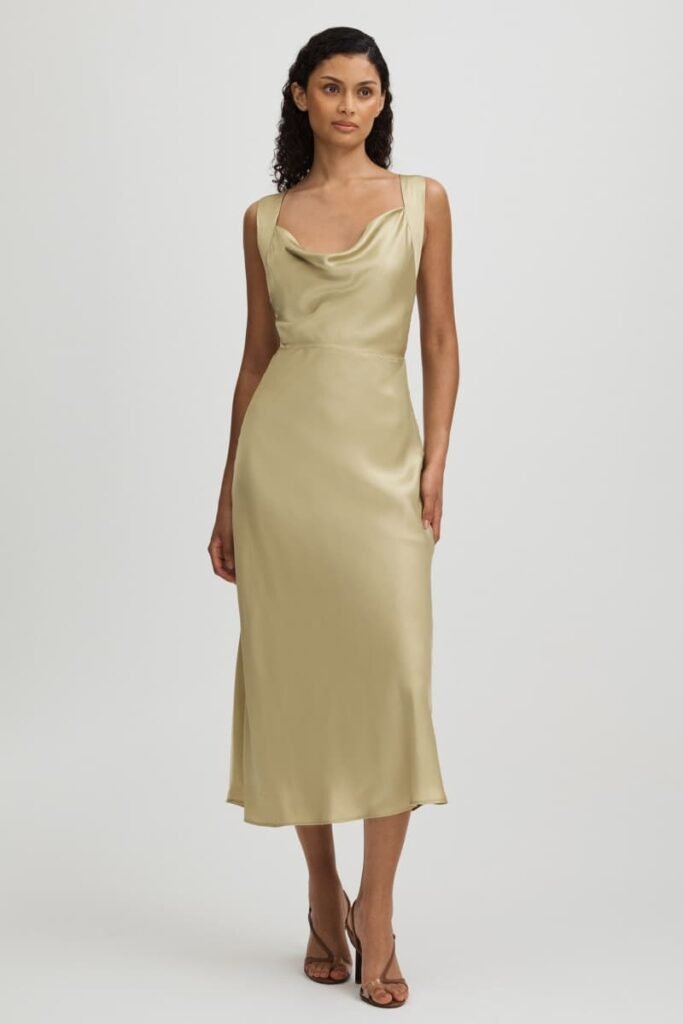
Cowl-Neck Bias Midi

Minimal Bias Slip

Open-Back Bias Maxi

Draped Occasion Dress

Asymmetric Bias Dress

Lace-Trim Bias Slip
Fabric and Lining Choices for Controlled Bias Drape
Material selection determines far more than shine or softness. For bias-cut dresses, Duolan reviews fabric weight, surface friction, weave stability, opacity, directional behavior, lining compatibility, pressing response, width, and bulk availability before the sample becomes a production reference. The same fabric family can produce a clean flowing line in one weight and visible drag, transparency, or seam distortion in another. Shell and lining are therefore approved as a moving system, with physical swatches and sample behavior guiding the final production choice.
| Material Direction | Drape Character | Main Bias Risk | Lining Direction | Best Application | Production Review Focus |
|---|---|---|---|---|---|
| Lightweight satin | Fluid, luminous, body-following | Seam puckering, show-through, length growth, packing creases | Light compatible lining where coverage is needed | Slip minis, midis, cowl dresses | Surface marks, stitch tension, opacity, hem stability |
| Medium-weight satin | Fuller fall with more body | Visible seam drag, press marks, side-seam pull | Light to medium lining depending on style | Occasion midi, evening maxi, draped styles | Weight balance, seam smoothness, final pressing |
| Crepe satin | Fluid with slightly more surface control | Grain imbalance, uneven fall, face-side handling | Compatible woven lining if needed | Occasion, wedding guest, refined slip | Drape, texture, lining interaction, color depth |
| Silky polyester woven | Commercial fluidity with broad color options | Static, surface shine variation, heat sensitivity | Anti-static or soft woven lining as required | Fashion drops, party, resort | Heat setting, seam appearance, shade consistency |
| Viscose-type fluid woven | Soft hand and natural movement | Relaxation, shrinkage, distortion, seam slippage | Lightweight breathable lining where required | Resort, soft occasion, draped midi | Pre-treatment, dimensional stability, seam strength |
| Fluid crepe woven | Softer matte movement with more visual control | Uneven drape if weight or weave shifts by batch | Optional lining based on opacity and structure | Occasion, day-to-evening, draped maxi | Batch handfeel, weight, shrinkage, hem fall |

Pattern Engineering That Keeps Bias Silhouettes Balanced on Body
Bias-cut pattern work begins with the desired body line, not with rotating a finished straight-grain pattern and hoping the fabric creates the rest. Duolan reviews panel direction, bust and waist balance, hip ease, neckline fall, strap loading, seam placement, and final skirt movement as connected pattern decisions.
Pattern Direction, Balance, and Body Relationship
A bias-cut dress needs enough freedom to drape without losing control around the body. The pattern team first reviews the intended silhouette: close fluid fit, relaxed slip, deep cowl, low back, asymmetric drape, or long flowing skirt. Each direction changes where the garment needs stability and where the fabric is allowed to move.
- Bust and neckline: Cowl depth, neckline width, armhole shape, bust coverage, and strap position determine whether the front falls cleanly or collapses unevenly.
- Waist and hip: Ease must allow the fabric to follow curves without horizontal drag lines or a side seam being pulled out of position.
- Side and center seams: Seam lines serve as visual balance references. Rotation usually signals a pattern, fabric, or sewing issue needing correction rather than cosmetic pressing.
- Skirt and hem: Panel length, flare, slit position, and asymmetry influence how visible any growth becomes after the fabric settles.
- Lining pattern: Lining cannot be treated as a generic inner layer. Its direction, ease, attachment points, and length need compatibility with shell movement.
Duolan’s pattern and sample development system includes CAD pattern tools, marker systems, paper plotting, sample sewing equipment, and dedicated development resources. Company records list roughly 650-1,200 sets of pattern, sample, and development equipment across the manufacturing system, supporting pattern correction and repeatable production transfer rather than one-off sample making.
Fit Comments Must Return to the Pattern
Bias-cut revisions often arrive as visual comments: “hip feels tight,” “cowl sits too low,” “side seam moves forward,” “back drops too much,” or “hem is uneven.” Useful development work translates each comment into a measurable cause and correction path.
A tight hip may come from insufficient ease, fabric behavior, seam tension, or lining restriction. A low cowl can involve neckline geometry, strap length, front-panel balance, or fabric weight. A twisted side seam may require panel-direction review, pattern correction, or different sewing handling. The team records the change in the pattern and sample notes so later sizes and PP approval do not rely on memory.
After the base size reaches the intended fit and drape, grading should preserve silhouette logic rather than enlarge every point mechanically. Bust coverage, waist position, hip ease, strap length, neckline depth, dress length, slit location, and hem sweep may need different grading rules. A stable graded pattern then becomes part of the production basis together with approved fabric, size specification, workmanship standard, and PP reference.
Draping and Relaxation Reveal What Flat Measurements Cannot Show
Fluid fabric needs gravity before a team can judge the finished line. Duolan uses mannequin or fit review where flat pattern information cannot fully explain cowl fall, side-seam balance, skirt drop, asymmetric weight, or the interaction between shell and lining.
Reading Drape Before Locking the Sample
Draping is used as a technical review tool, not as decorative studio theater. A cowl-neck bias dress may meet every flat measurement and still sit poorly because the neckline weight falls unevenly. A low-back maxi may rotate because skirt weight pulls through a narrow upper structure. An asymmetric midi may develop a different left-right hem level after the fabric settles. Those issues become visible only when the garment is allowed to hang and interact with gravity.
Review points include neckline fall, bust coverage, waist balance, hip line, side-seam direction, back opening stability, strap loading, slit behavior, skirt movement, and inner-layer influence. For styles with complex drape, mannequin work can help confirm where folds begin, where volume should be controlled, and how soft fullness returns to the flat pattern.
Duolan does not apply one fixed hanging time to every bias style. Fiber content, weave, fabric weight, finish, panel length, lining, and construction all influence relaxation. The development team evaluates stability before final hem decisions, then records the approved sequence for production. Such discipline avoids copying a competitor’s generic 24-hour or 48-hour rule into a fabric where a different review method is more appropriate.
Controlling Shell and Lining as One Moving System
Lining can improve opacity, skin comfort, color depth, and wearing confidence, but it can also interfere with the intended bias movement. A rigid inner layer may prevent the shell from falling naturally. A lining with different relaxation can create pulling at side seams, neckline, zipper, or hem. Attachment points also matter: too many fixed points can restrict movement, while too few can allow twisting or lining exposure.
During development, shell and lining are reviewed together after sewing and finishing. The team checks whether the lining follows the body without gripping, whether the shell remains visually smooth, whether both layers hang cleanly through movement, and whether the inner hem stays controlled beneath the outer hem. Low-back, pale-color, long maxi, and slit styles often need more attention because coverage and movement must coexist.
Once the relationship is approved, material specifications, lining length, attachment method, seam allowance, and finishing direction are included in the production standard. The result is not simply a softer dress. The result is a controlled silhouette with predictable movement across sampling, size grading, and bulk inspection.

Fit and Grading Rules for Fluid Bias-Cut Silhouettes
Bust and Cowl Balance
Waist Position
Hip and Seat Ease
Strap and Back Geometry
Dress Length and Hem
Size-Set Confirmation

Cutting Control Starts Bias Stability Before Sewing Begins
Cutting is the first production stage where a good bias pattern can be protected or damaged. Duolan combines fabric inspection, marker planning, controlled spreading, panel direction, numbering, batch separation, and post-cut handling to keep pattern intent intact before sewing.
Fabric Inspection, Direction, and Marker Planning
Before cutting, material needs a production identity. Duolan can review fabric width, GSM, shade, surface direction, defects, shrinkage or pre-treatment needs, and usable quantity. Company manufacturing resources include approximately 1,100-2,000 sets of fabric inspection, spreading, cutting, and related handling equipment, including inspection machines, GSM equipment, color-light boxes, automatic spreading systems, automatic cutters, computer cutting beds, cutting tables, numbering tools, and supporting equipment.
Bias layouts usually consume more fabric than tightly nested straight-grain markers because panel direction cannot be rotated freely for yield alone. Marker efficiency therefore belongs in cost planning at the beginning, not after the sample is approved. For satin and other directional surfaces, face direction and sheen also need control so adjacent panels do not reflect light differently.
During spreading and cutting, tension must stay appropriate for the fabric. Stretching a fluid woven while laying can create distorted pieces after release. Panel direction, notches, pairs, and asymmetric components are identified clearly. If multiple fabric lots are involved, batch separation helps prevent shade or handfeel mixing. Cut pieces move to sewing with orientation and bundle identity preserved.
Post-Cut Handling Protects the Pattern Before Assembly
Bias pieces can be more sensitive to hanging, carrying, stacking, and edge handling than stable straight-grain woven pieces. A correctly cut panel can still change if long unsupported edges stretch before sewing. Production handling should therefore avoid unnecessary pulling and uncontrolled suspension, especially around neckline, armhole, long side seams, and long skirt panels.
Critical pieces are checked against the approved pattern or control points where required. Left and right pairs, front and back direction, slit components, low-back edges, and lining pieces receive particular attention because one reversed or distorted panel can create a visible imbalance after assembly.
Cutting records also support bulk consistency. Pattern version, marker version, fabric lot, color, size, and bundle identification should remain traceable through production. When fit, drape, or seam balance is later questioned, the team can review whether the issue originates from pattern, fabric, cutting, or sewing rather than relying on guesswork. Controlled cutting reduces avoidable variation before sewing begins.
Sewing Bias Seams Without Puckering, Drag, or Rotation
Bias seams are visually unforgiving. Duolan selects sewing conditions around fabric behavior and wearing position, with attention to feeding, needle and thread compatibility, seam allowance, stitch balance, reinforcement, internal finishing, pressing, and repeatability across operators.
Seam Construction Must Match Fabric and Load
A side seam in a bias satin dress performs two jobs: it joins panels and visually defines the garment’s vertical balance. If one layer feeds faster, if thread tension is too high, or if the seam is stretched during handling, the result may pucker, rope, or rotate. The correction is rarely “press harder.” Sewing setup should first match needle size, thread, stitch length, presser-foot pressure, seam allowance, fabric surface, and seam load.
Lightweight satin needs careful needle and stitch selection because permanent needle marks and tension lines can remain visible. A deeper low back may require reinforcement at strap or closure points even when the surrounding fabric remains soft. Slits need secure endpoints without adding a bulky patch visible through fluid cloth. French seams, narrow clean seams, or other refined internal methods can be considered according to fabric thickness, opacity, price position, and design intent.
Operators also need a defined handling method. Long bias edges should not be pulled into alignment. Paired panels should feed evenly, and seam direction should follow the approved construction sequence. The team compares finished seam appearance with the approved sample rather than judging only seam strength.
Pressing Supports the Seam Instead of Forcing It Flat
Satin and silky fabrics can show shine, glazing, seam impressions, water marks, or edge ridges after aggressive heat and pressure. Pressing therefore belongs to workmanship planning from sample stage onward. Temperature, steam, pressure, support surface, and garment sequence are adjusted around the material instead of using one setting for every style.
Seams are checked under normal light and stronger directional light because puckering or press marks may appear only when the surface reflects. The garment is also reviewed from a normal viewing distance, where a wavy side seam can become more obvious than a small close-up defect.
For bulk production, approved seam construction should be translated into workmanship instructions, PP reference, first-piece review, and inline inspection points. If a fabric lot behaves differently, the sewing team should review settings before large quantities are completed. The objective is consistent visual smoothness, secure function, and controlled drape rather than a seam that merely survives a strength check.


Hem Leveling After Relaxation Protects the Final Dress Line
Bias hems cannot be treated as a final trimming step. The hem determines visible length, movement, symmetry, and the impression of quality. Duolan reviews garment stability before final leveling and selects finishing around fabric weight, silhouette, lining, slit, and intended movement.
When to Measure and Level the Hem
A long bias panel may change after cutting, sewing, hanging, steaming, and final finishing. The amount varies, so Duolan does not rely on one universal waiting period. The team evaluates the selected fabric and construction, then defines a consistent point in the development and production sequence for final length assessment.
The garment is checked from front, side, and back on an appropriate mannequin or fit reference. For asymmetric dresses, each intended high and low point needs a defined measurement basis. A side seam that has rotated can make one hem area appear longer even when raw panel lengths were cut correctly, so seam balance is reviewed before simply trimming the bottom edge.
Lining is checked at the same time. An inner layer should not hang below the shell, pull the shell upward, or create a visible ridge. Slits and openings require extra attention because inner and outer layers separate during movement. Once the silhouette is stable, the hem can be leveled and prepared for the approved finish.
Selecting a Finish That Preserves Movement
Narrow rolled hems, clean narrow turns, blind hems, facings, bindings, or other finishes change weight at the skirt edge. A very light satin slip usually needs a finish that does not create a stiff ring around the hem. A heavier occasion fabric may tolerate more structure. Curved, flared, asymmetric, or slit hems need enough control to remain clean without forcing the fabric into waves.
Workmanship review includes hem width, stitch visibility, puckering, turning, left-right balance, front-back balance, slit reinforcement, lining relationship, and pressing. The garment is then observed while standing and moving. A hem that looks level on a table can still swing unevenly on the body.
For bulk, the approved finish, measurement method, leveling stage, and visual reference should appear in production instructions and QC checkpoints. Such detail gives production and inspection teams one common standard and protects the flowing line that made the bias design commercially attractive in the first place.
A Controlled Development Path from Brief to Production Standard
Project Review
Fabric Direction
Pattern and Draping
Pattern work establishes panel direction, neckline, bust, waist, hip, side seam, strap, back opening, skirt, slit, and lining relationship. Draping or mannequin review is added when gravity and soft volume cannot be judged reliably from flat information alone.
Development notes capture the main control points before sewing.
First Sample
Fit and Revision
Comments are grouped by fit, fabric, visual balance, construction, and production risk. Each approved change returns to the pattern, material specification, or workmanship instruction.
The revised sample should move closer to the brand’s intended wearing result while building a clearer basis for grading and PP preparation.
PP and Bulk Readiness

First-Sample Review Focused on Decisions, Not Cosmetic Approval
A useful first sample should reveal whether the bias concept can become a controlled garment. Duolan reviews the sample as a development version, separating visual preference from pattern, fabric, construction, and production issues so each revision has a clear technical reason.
What the First Sample Must Prove
A first bias sample does not need to represent every final production detail, but it must be accurate enough for a brand team to make real decisions. Review starts with silhouette and proportion: neckline depth, bust coverage, waist position, hip line, back opening, overall length, and skirt sweep. The next layer is fabric behavior: cowl fall, body cling, side-seam direction, surface appearance, opacity, and movement.
Workmanship is reviewed at the same time because seam puckering or a heavy hem can distort the silhouette and make a pattern look wrong when the root cause sits in sewing. Lining, zipper, straps, slit, and internal finishing are assessed where they influence fit or drape. Measurements are recorded, but front, side, and back visual review remains essential.
The sample is then classified by result. Some styles need a fit correction; some need a fabric change; some need seam or hem trials; some may already be close enough to move toward a photo-ready or PP direction. The team avoids pretending every first sample is “perfect.” A strong first sample exposes remaining decisions early enough for correction.
Turning Comments into Controlled Revisions
Comments such as “more fluid,” “less clingy,” “higher neckline,” or “straighter side seam” are not production instructions by themselves. Duolan converts each comment into a defined action. More fluid may require a different fabric weight, altered panel shape, reduced lining restriction, or changed fullness. A straighter side seam may require pattern rebalance, sewing adjustment, or different handling after cutting.
Revision records identify what changed, why it changed, and what should be rechecked. Pattern amendments, material changes, seam changes, measurements, and visual comments remain connected so one correction does not create another hidden problem. For example, raising a neckline can change cowl volume; shortening a strap can alter armhole and back position; increasing hip ease can affect side-seam and skirt fall.
The revised sample is reviewed against both the original design intent and future production needs. Once fit, fabric, construction, and visual balance reach an acceptable direction, the development basis becomes ready for grading, PP preparation, and sample-to-bulk transfer.
PP Locking Converts an Approved Sample into Bulk Control
A beautiful sample does not protect an order by itself. Bias-cut production needs the approved result translated into materials, measurements, pattern version, workmanship, leveling sequence, QC references, and change controls before quantity is released across production lines.
From Approved Sample to Production Instruction
PP or golden sample approval is the point where development decisions become a production standard. Duolan connects the physical reference with the current pattern, BOM, fabric and lining specification, color, trim, size chart, measurement method, construction details, seam finish, hem finish, label, packing, and inspection points. The production team should not rely on scattered emails or memory to reproduce a fluid silhouette.
For bias styles, the standard should also identify details often missed in ordinary dress production: panel direction, cowl or drape reference, side-seam position, shell and lining relationship, critical strap measurements, the stage used for final length measurement, and the expected hem appearance. If a material substitution or construction change occurs after PP approval, production should be reviewed again because even a small change in weight or surface can alter drape and seam behavior.
Pre-production alignment brings merchandising, material, pattern, production, and QC teams onto the same reference. Complex or high-risk styles can then move through first-piece confirmation or a controlled trial before wider output. The aim is to discover variation while the quantity is still small enough for fast correction.
Inline Control Keeps Bulk Close to the Approved Standard
Once sewing begins, inline inspection should compare garments against the PP reference and critical checkpoints rather than waiting for final inspection. Bias-specific observations include side-seam direction, neckline fall, strap position, hip pulling, length, hem balance, seam puckering, lining behavior, press marks, and surface damage.
Measurements are checked at defined stages. Visual review should include hanging or wearing position where relevant because a flat table cannot reveal every bias issue. If an early batch begins to rotate or grow differently, the team can review fabric lot, cutting, sewing setup, handling, and finishing before the same variation spreads across the order.
Final inspection then confirms the agreed standard across sizes, colors, workmanship, appearance, labeling, packing, and shipment readiness. Duolan’s broader manufacturing system supports first-piece confirmation, inline QC, final inspection, and brand-specific requirements, allowing the approved sample to function as a working reference throughout production instead of becoming an archived showroom piece.

Eight Bias-Specific QC Points Before Garments Reach Packing
Drape Consistency
Side-Seam Position
Critical Measurements
Seam Appearance
Side seams, neckline edges, zipper areas, strap attachments, slits, and internal seams are inspected for puckering, roping, drag, needle marks, skipped stitches, visible bulk, or distortion.
Strength matters, but surface smoothness also affects photography, online presentation, and perceived garment value, especially in satin or silky fabrics.
Hem Balance
Lining Behavior
Size-Range Balance
Pressing and Surface
Cost Drivers Behind Commercial Bias-Cut Dress Production
Bias-cut pricing is shaped by material yield, development effort, sewing sensitivity, finishing, and production control. Duolan reviews cost from the confirmed style and order structure rather than quoting from a product image alone, helping brand teams understand where value and risk enter the garment.
| Cost Driver | Why It Changes Cost | Commercial Review |
|---|---|---|
| Fabric width and marker yield | Bias panels cannot always be nested or rotated for maximum utilization | Compare usable width, panel direction, size mix, and estimated consumption before material lock |
| Fabric quality and weight | Better drape or surface can raise material cost while unstable fabric can raise rejection and rework risk | Balance target retail position with drape, opacity, seam response, and bulk availability |
| Style length and flare | Midi and maxi panels use more fabric and make growth or hem variation more visible | Review length, sweep, slit, asymmetry, and finishing sequence together |
| Lining and inner construction | Lining adds material, cutting, sewing, and alignment work | Use lining where coverage, comfort, structure, or color depth requires it rather than by default |
| Pattern and sampling complexity | Cowl, low-back, asymmetric, or draped designs can require more development and revision | Confirm sample purpose, fit priorities, and approval stages before production planning |
| Seam and hem finish | Fine internal seams and narrow hems require controlled handling and can slow sewing | Select finish by fabric, visual standard, garment position, and order volume |
| Size range | Wider size coverage increases grading and size-set validation needs | Lock base size, grading rules, critical POMs, and fit references before bulk |
| Order structure and delivery | Multi-style, multi-color programs need material coordination, line planning, QC, and packing control | Evaluate style-color-size split, launch calendar, production route, and shipment plan together |
Manufacturing Depth to Scale Bias Development Beyond One Sample
Pattern and Sample Platform
Fabric and Cutting Resources
Production Line Capacity
The broader system includes about 300 garment sewing lines plus more than 50 flexible lines for fast-response and smaller production routing, with regular monthly capacity recorded around 6.5 million pieces and higher peak capacity available across the network.
Bias styles are allocated according to complexity, fabric, order structure, and delivery plan rather than pushed through a uniform line setup designed for basic products.
High-Density Sample Development
Multi-Factory Coordination
Audit and Standard Readiness
Representative Bias-Cut Occasionwear Program at Brand Scale
Program Scope and Development Inputs
A representative occasionwear program can be structured around 18 styles and 46,800 total pieces, with six bias-led styles forming the fluid core of the range. The bias group may include two cowl-neck midis, one minimal slip maxi, one open-back satin dress, one asymmetric occasion midi, and one lace-trim slip. The wider collection can use straight-grain or structured styles for visual balance, allowing the brand to combine fluid and more controlled silhouettes within one launch.
The size range can run from US 0-14, with a defined base size for initial fit review and selected graded sizes used for size-set checks. Four fluid fabric directions can be developed across the bias group: lightweight satin, medium satin, crepe satin, and a fluid crepe or silky woven. Color planning may contain five coordinated color families while maintaining fabric-lot and lining consistency inside each style-color combination.
Development would begin from tech packs, reference images, size specifications, target fabric direction, and launch timing. Three main sample checkpoints can organize decisions: first sample for silhouette and fabric behavior, fit or revision sample for pattern and wearing correction, and PP or golden sample for production locking. Additional trials remain available where a fabric, seam, hem, or low-back structure requires separate confirmation.

Bias-Specific Control Decisions
The six bias styles would not share one identical manufacturing route. Cowl styles require neckline fall and strap review; the open-back maxi needs upper-body stability and long-panel balance; the asymmetric midi needs left-right weight and hem control; the lace-trim slip needs trim tension and shell-lining compatibility. Pattern, cutting, and sewing instructions therefore differ even when several styles use the same fabric family.
Before bulk release, the technical team would confirm panel direction, approved pattern version, fabric and lining, size specification, seam construction, strap details, zipper or closure, stabilization and final-length sequence, hem finish, pressing standard, labeling, packing, and QC points. First-piece confirmation can focus on side-seam position, drape, seam appearance, and length before quantity expands.
During production, inline review would compare early garments against the PP reference across selected sizes and colors. Any repeated side-seam rotation, cowl variation, length shift, lining pull, or seam puckering would trigger a review of fabric lot, cutting, pattern, sewing setup, or finishing stage. Final inspection would then confirm appearance, measurements, workmanship, graded consistency, packing, and shipment readiness.
Commercial Result and Reorder Basis
The commercial value of a controlled program is not a dramatic claim about “zero defects.” The value is a reusable production basis. Once six bias styles have approved patterns, material specifications, size rules, seam standards, hem methods, QC references, and production records, the brand has a stronger foundation for color extensions, length variations, selected neckline changes, or repeat production.
A successful satin slip can become a midi, maxi, lace-trim, cowl, or open-back extension without restarting every technical decision. Pattern and fit records help preserve the silhouette; BOM and material records support sourcing continuity; PP or golden samples give production and QC a visual reference; reorder review identifies any fabric-lot or trim change before the next run.
For a program at 46,800 pieces, production planning also needs line allocation, material arrival control, style-color-size breakdown, QC timing, packing, and shipment coordination. Duolan’s broader manufacturing structure is designed to support multi-style parallel production and subsequent scale-up, making the bias development work valuable beyond one seasonal sample round.
Real Production Evidence Worth Reviewing Before Supplier Approval

Fabric and Garment Pairing
Photograph the approved fabric swatch beside the corresponding sample, including a clean close-up of surface, drape, and opacity. For satin or silky woven styles, one image under directional light can reveal sheen and seam behavior more clearly than a flat catalog shot. A second image can show shell and lining together, proving material decisions were made as a garment system rather than as separate sourcing tasks.

Pattern and Draping Review

Controlled Cutting

Seam and Interior Finish

Hem and Final Balance

PP and QC Reference
Bias-Cut Dress Manufacturing Frequently Asked Questions

Send Your Bias-Cut Dress Program for Technical Review
Share the development information already available, even when a few details are still being finalized. Duolan can review a bias-cut dress program from the combined perspective of fabric behavior, pattern engineering, fit, cutting, sewing, hem stability, grading, PP preparation, and bulk execution. A clearer brief allows the team to identify which decisions are ready, which points need a sample trial, and which material or construction details should be locked before quantity is committed. For multi-style collections, include the overall launch structure so shared fabrics, color groups, size ranges, and production timing can be reviewed together rather than style by style in isolation. If an existing sample has fit, twisting, cowl, seam, lining, or hem problems, include front, side, back, and close-up photos together with previous comments. For programs already approaching bulk, send the approved sample status, BOM, quantity split, delivery target, and inspection requirements. The review can then focus on the next technical decision instead of repeating information already confirmed by the brand team.
Please include when available:
- Tech pack, sketch, reference garment, or visual direction
- Target fabric, swatch, composition, weight, or desired handfeel
- Size range, base size, size chart, and fit priorities
- Colorways, lining direction, closures, trims, and special details
- Estimated style count and quantity by style, color, and size
- Sample purpose: first fit, photo, salesman, PP, or production preparation
- Target production window, inspection requirements, packing needs, and shipment destination