Skip to content

Bodycon Dress Manufacturing Solutions
Controlled fit, fabric performance, full-size grading, and repeatable production for bodycon collections developed for established fashion brands.
- 6 core bodycon controls: stretch, recovery, opacity, bust-waist-hip balance, grading, and seam stability.
- Fit review can follow XS-XL or a brand-defined size range, rather than judging one sample size alone.
- Development supports fitted jersey, ruched, mesh, cut-out, structured hybrid, and party bodycon directions.
- Approved samples move forward through documented fit, material, workmanship, PP, and bulk control points.
What Fashion Teams Should Evaluate in Bodycon Manufacturing
Controlled Fit
Fabric Behavior
Full-Size Grading
Stretch Workmanship
Sample Decisions
A bodycon sample needs to answer production questions, not only look good on a hanger. Fit review should confirm body balance, fabric behavior, transparency, lining coverage, seam appearance, movement, and measurement points. Revision comments are translated back into pattern, specification, or construction changes before the next sample round.
The sample path can include first prototype, fit sample, revision sample, photo-ready sample, and PP sample according to the purpose of the program.
Bulk Repeatability
Bulk consistency depends on what gets locked before the line starts. Fabric batch, stretch behavior, lining, color, measurements, workmanship points, pattern version, PP reference, and packing requirements need clear production status. Inline inspection then checks whether approved standards remain stable across sizes and lots. Final inspection should confirm measurement, appearance, workmanship, labels, and packing against the agreed production basis. A strong bodycon supplier must prove repeatability, not only sample-room skill.
Six Manufacturing Risks Behind a Poor Bodycon Fit
Fabric Bagging
Bagging often appears at the seat, waist, elbow area on long sleeves, or lower abdomen after the fabric remains under tension. The cause may be weak recovery, excessive negative ease, unsuitable knit structure, heat history, or a pattern designed around a different fabric. Review starts with stretch and recovery behavior, garment pressure, and wear movement rather than simply reducing measurements.
A fabric stretching far but returning slowly can create a clean first fitting and still lose shape during use. Material selection and pattern allowance therefore have to be developed together.
Stretch Transparency
Opacity can change dramatically once a fitted fabric is stretched over the body. Light colors, thin jersey, rib knits, mesh, and some glossy blends are especially sensitive. Flat swatch inspection is not enough because tension can expose underwear lines, lining transitions, or uneven color density.
Duolan reviews opacity under the intended stretch condition and considers weight, fiber blend, color, double-layer construction, partial lining, and seam placement. Coverage review also checks seam allowances and edge finishes because tension can make internal construction unexpectedly visible.
Side-Seam Distortion
Uneven Compression
Size-Range Drift
A base sample can look balanced while larger or smaller sizes lose neckline proportion, waist placement, skirt length, cut-out position, or hem width. Mechanical grading is especially risky when fabric stretch changes the effective wearing measurements. Duolan reviews critical points by size, including bust, waist, hip, body length, side seam, opening dimensions, and style-specific details. Grading rules can be adjusted by region or brand fit standard. The goal is to reproduce the visual intent across the released size range, not to make every measurement grow at the same rate.
Style-specific grading notes are retained so later color extensions follow the same proportional rules.
Bulk Fit Variation
Bodycon Dress Styles Developed Around Different Fit Problems
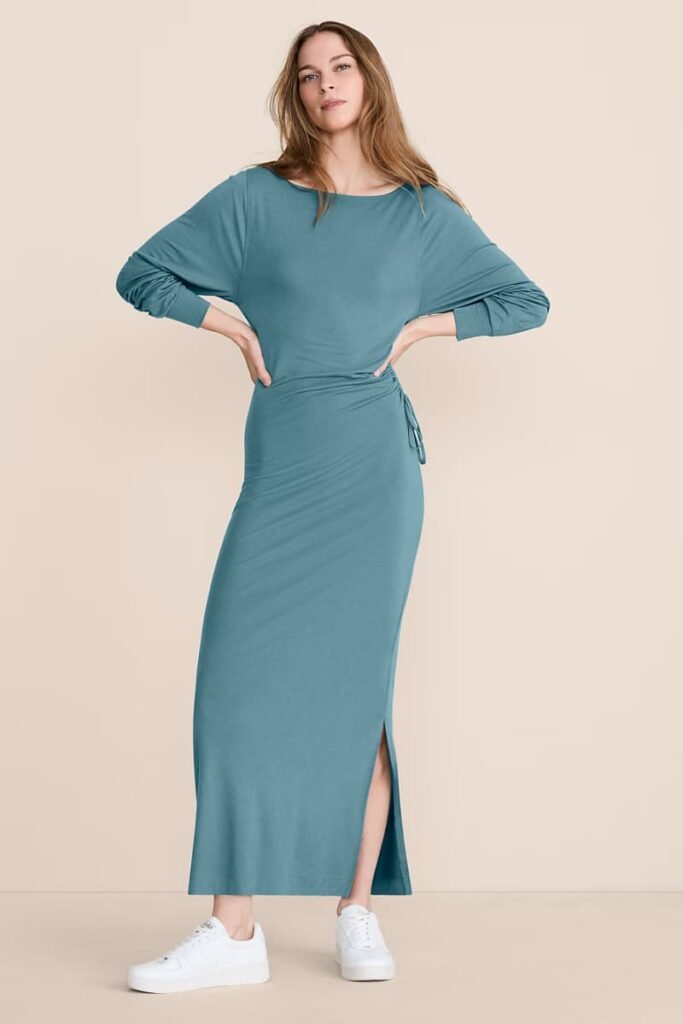
Clean Fitted Jersey

Ruched Bodycon Dresses

Mesh Layered Bodycon

Cut-Out Bodycon Dresses
Cut-outs concentrate stress around openings. Edges can gape, roll, stretch permanently, or pull the surrounding body panels out of balance. Development therefore starts with the location of the opening, fabric recovery, body movement, coverage, seam or binding method, and nearby support points. Duolan reviews the cut-out on a mannequin and through movement, not only in a static front view. Pattern curves, stabilization, lining decisions, elastic application, and seam allowances may need adjustment.
Grading also receives special attention because a fixed opening size rarely works correctly across a full size range.

Structured Bodycon Hybrids

Party Bodycon Styles
Controlled Fit Starts With Body Zones, Not Smaller Measurements
Bodycon fit is developed around where the garment needs to hold, follow, release, or move. Duolan connects measurement, pattern shape, fabric stretch, and wear pressure so a fitted silhouette remains balanced instead of simply tight.
Control Fit Across Bust, Waist, Hip, and Hem
- Bust projection and neckline stability: Bust width alone cannot define front fit. Projection, neckline depth, armhole position, strap placement, cup or lining support, and fabric recovery influence whether the upper body sits cleanly. Excess tension can flatten the bust, pull the side seam forward, or open the neckline. Too much allowance can create gaping or loose underarm areas. Pattern review therefore considers both circumference and shape.
- Waist and abdomen balance: A strong waist line should look controlled without producing horizontal drag lines or rolling. Duolan reviews waist placement, front-back distribution, abdomen allowance, fabric compression, seam positions, and any ruching or cut-out detail crossing the area. Negative ease is treated as a material-dependent decision rather than a fixed percentage.
- Hip and seat shaping: Hip fit affects side-seam balance, back rise through the dress body, hem level, and movement. A fabric with strong recovery can support a closer fit than a softer knit with weak return. Pattern curves, back shaping, seam allowance, and lining are adjusted according to the target silhouette and stretch direction.
- Thigh and hem movement: A narrow lower body can look clean while standing and fail during walking or sitting. Mini and midi bodycon styles need enough functional movement for the intended use. Hem opening, slit height, fabric extension, seam elasticity, and lining length are reviewed together.
A controlled bodycon block becomes useful only after several variables agree: fabric behavior, target fit, measurement method, pattern balance, and movement. Duolan keeps those variables connected during revision so one correction does not create a new problem elsewhere.
Balance Compression With Wearability and Brand Silhouette
Compression should serve the design rather than become a substitute for pattern engineering. A brand may want a sculpted party fit, a soft contour fit, a sleek evening fit, or a casual close-to-body fit. Each direction requires a different combination of fabric weight, elastane content, knit structure, lining, and pattern ease.
Duolan reviews the intended visual pressure by zone. Stronger hold may be appropriate around the waist or hip for compact jersey, while the neckline and underarm still need enough release to avoid digging or rolling. Structured hybrids need stable cup and waist landmarks while stretch panels manage movement. Mesh overlays need enough freedom to avoid pulling the inner layer. Ruched areas need additional material without losing the base fit underneath.
Movement review is equally important. Standing fit can hide problems appearing while walking, sitting, turning, or lifting the arms. Fit samples can therefore be reviewed through mannequin balance, live fitting, photos, measurement checks, and movement comments. Any correction is traced back to pattern, specification, fabric, or construction rather than handled as an isolated sewing alteration.
For established dress programs, a stable bodycon fit block also supports future extensions. Neckline, sleeve, length, color, ruching, slit, or overlay variations can be developed from a known base, while major material or structure changes trigger a new fit review instead of relying on the old block without validation.
Compare Bodycon Fabrics by Fit Result and Production Risk
Fabric names are not enough for a bodycon decision. Duolan compares stretch, recovery, weight, coverage, surface, lining needs, and production behavior so material choices match the intended silhouette, price position, and repeat-production plan.
| Fabric Direction | Best Use | Key Behavior | Main Production Risk | Duolan Review Focus |
|---|---|---|---|---|
| Compact stretch jersey | Clean fitted mini, midi, core bodycon | Balanced stretch, firmer hand, stronger shape retention | Excessive compression or seam show-through if weight and ease are mismatched | GSM, recovery, opacity under tension, seam appearance, shrinkage, color lot |
| Double-layer jersey | Premium fitted styles, light colors, stronger coverage | More coverage and smoothing, higher fabric consumption | Inner and outer layers can pull differently or add heat and bulk | Layer stretch match, lining length, seam feeding, neckline and hem finish |
| Rib stretch knit | Casual fitted dresses, long-sleeve bodycon, textured programs | Directional stretch, visible texture, comfortable body follow | Rib growth, torque, pilling, neckline distortion, uneven recovery | Knit stability, stretch direction, recovery after wear, wash behavior, edge control |
| Stretch mesh | Sheer overlay, gathered panels, contrast layers, party details | High visual flexibility, light weight, strong dependence on lining | Layer twist, edge growth, transparency, differential stretch | Mesh direction, lining coverage, seam tension, recovery, color match |
| Stretch satin | Sleek evening bodycon, fitted party silhouettes | Gloss, smoother surface, controlled stretch depending on base | Seam puckering, pressure shine, zipper ripple, limited recovery | Stretch amount, grain, seam setting, pressing, lining, movement allowance |
| Structured stretch blend | Corset-bodycon hybrids, paneled fitted styles | Higher support with controlled extension | Rigid zones may fight stretch zones and distort waist or side seams | Panel balance, support points, zipper load, boning or lining, grading logic |
Stretch, Recovery, and Opacity Must Be Checked Together
A fabric can stretch enough and still fail in wear. Bodycon development needs recovery, coverage, weight, shrinkage, torque, and surface stability reviewed alongside extension so the garment keeps its shape after movement and repeated use.
Stretch Is Only the First Measurement

Opacity Changes Under Real Garment Tension
Opacity needs to be evaluated in the state in which the dress will actually be worn. A flat swatch on a table may appear fully covered while the same fabric becomes noticeably lighter over the hip or seat. Light shades, white, pastel, thin jersey, open rib structures, and mesh require particular attention. Duolan considers several options before adding lining automatically. Increasing fabric weight may improve coverage but change hand feel and cost. A double layer can improve confidence but also alter stretch, seam bulk, and heat. Partial lining can protect key zones while keeping other areas lighter, although lining edges have to remain invisible. Color can also influence coverage, so a black approval cannot be assumed to behave like ivory in the same construction. Opacity review also connects directly to photography and retail presentation. Strong studio lighting can reveal lining transitions, seam allowances, underwear lines, or stretched areas appearing acceptable in normal room light. Development review therefore considers fit tension, fabric color, lighting sensitivity, and movement. Production controls then verify fabric lots, lining, and cutting direction remain consistent enough for the approved coverage standard. Color approval and coverage approval are therefore linked for sensitive shades. If a lighter color needs extra lining or a heavier base fabric, the added layer is rechecked for stretch, seam bulk, heat, and fit before the material package is approved.

Pattern Engineering Turns Brand Fit Into Repeatable Production
Build the Fit Block Around Fabric Behavior
A bodycon block cannot be separated from the fabric selected for development. The same body measurements can require different pattern dimensions when using compact jersey, rib knit, stretch satin, mesh, or a double-layer construction. Duolan reviews horizontal and vertical stretch, recovery, weight, thickness, surface friction, and lining before finalizing how much the pattern should follow or compress the body.
Key pattern points include neckline shape, bust point, armhole, waistline, front and back side seams, hip curve, center back, zipper position, slit, hem opening, lining pattern, and any cut-out or panel edge. For mini styles, hem level and movement need special attention. For corset-bodycon hybrids, cup, underbust, waist, boning, and stretch-panel transitions become fixed landmarks. For ruched styles, the underlying base fit is developed separately from the added gathering volume.
Pattern balance is checked in three dimensions. A side seam can look correct on paper and move forward on the body because the front requires more projection or because fabric stretch is pulling unevenly. A back waist can gap even when the total waist measurement is correct. Pattern development therefore uses fit observation together with measurements and fabric behavior rather than treating the spec sheet as the only source of truth.
Translate Fit Comments Back Into the Pattern System
Effective revisions need a clear path from observed problem to technical action. A comment such as “waist looks loose” may involve waist circumference, back waist shaping, fabric recovery, seam position, or torso length. “Hip feels tight” may come from insufficient width, wrong curve placement, limited stretch, or a lining layer restricting the outer fabric. Duolan groups comments by fit, visual preference, material behavior, and production impact before changing the next sample.
Pattern correction can involve reshaping curves, redistributing front and back width, changing seam angle, moving the waistline, adjusting body length, modifying armholes, recalculating hem opening, or revising a cut-out edge. Related documents are updated so the correction does not remain only on one sample garment. Measurement points, construction notes, lining patterns, or BOM references may also need revision.
Version discipline becomes important once several styles share a fit block. The approved pattern basis should be traceable for future color extensions, length changes, repeat orders, and related silhouettes. Major changes in fabric recovery or structure should trigger a new validation rather than using the previous block automatically. The goal is not a perfect paper pattern in isolation; the goal is a repeatable garment fit linked to a defined material and production standard.
Grading Must Preserve Bodycon Proportion Across Every Released Size
Grade Proportion, Not Only Circumference

Lock Critical Measurements for Bulk Inspection
Once the size range is approved, measurement control turns the grade into a production standard. Critical bodycon points commonly include bust, waist, hip, body length, side seam, hem opening, neckline or strap dimensions, slit height, and style-specific openings. The measurement method also matters: relaxed flat measurement, defined points of measure, and any approved handling before measurement need consistency across QC teams. Tolerance should reflect the garment structure and visual sensitivity. A small waist deviation can change a fitted silhouette more than the same numerical deviation at a less sensitive point. Several individually acceptable deviations can also combine into a visibly wrong garment, so appearance and measurement review work together. Duolan links grading, spec sheets, PP references, and QC checkpoints rather than treating them as separate documents. When a fit comment changes a measurement, the pattern and specification should move together. When a repeat order uses the same fit block, the retained reference can support faster comparison of size balance, material behavior, and workmanship without rebuilding the standard from zero. Critical measurements are ranked by fit sensitivity rather than treated equally. A repeated trend near the edge of tolerance can trigger investigation even before individual garments become formally out of tolerance, especially when the same direction of drift appears across several sizes or production lots.

Stretch Seams Must Stay Smooth, Strong, and Recoverable
Engineer Seams for Extension and Visual Balance
A seam on a fitted garment has two jobs: hold the construction securely and move with the fabric. If the stitch does not extend enough, the seam can pop or restrict movement. If feeding or tension is unstable, the seam can wave, tunnel, twist, or create visible ridges. Duolan reviews stitch selection and setup according to fabric structure, seam position, expected load, and final appearance.
Side seams receive particular attention because distortion is easy to see on a bodycon silhouette. Cutting direction, notches, front-back balance, feeding pressure, seam allowance, and pressing can all influence the final line. Necklines and armholes need recoverable edges rather than flared edges. Slit endpoints and cut-out corners need reinforcement without becoming bulky. Zipper seams need enough stability to prevent rippling while matching the stretch garment around them.
Ruching creates another layer of control. Gathering needs consistent density, secure anchoring, and balanced tension between panels. A drawcord or adjustable ruched channel must remain durable after repeated adjustment. Mesh or lining layers need compatible seam behavior so one layer does not pull against another. Thread, needle, seam construction, and handling pressure are considered together because a strong stitch can still damage the fabric or create visible distortion. Trial seams can be compared after extension so the selected construction is judged in the same stressed condition seen during wear.
Define Workmanship Standards Before Full Production
A workmanship standard should describe visible and functional outcomes, not only machine operations. Bodycon criteria can include straight and balanced side seams, smooth stretch seams, secure high-tension points, clean neckline and armhole edges, stable zipper application, even ruching, aligned panels, concealed lining, controlled hem, and no excessive needle damage or seam show-through.
Duolan uses sample development to identify which details need a reference standard before bulk. A difficult seam or material combination can be trialed before the full run. PP approval can then carry the accepted appearance, measurements, and construction points into the production plan. Inline QC checks high-risk details while production is active, giving the team a chance to correct systematic sewing or handling problems before they spread.
Finishing also matters. Heat and pressing can alter stretch fabrics, create shine, flatten texture, or change dimensions. The finishing method therefore needs to match the material and approved look. Packing is reviewed with the same mindset, especially for styles where pressure or folding can create marks, distort cups, or leave temporary creases across a smooth fitted surface. Reference photos and approved detail samples help reduce interpretation differences between operators and QC staff. When a detail carries higher risk, the production plan can identify a first-piece check or an inline checkpoint before the same operation continues across the full quantity.
Complex Bodycon Details Need Separate Manufacturing Control

Ruching and Draping

Cut-Out Openings

Mesh Paneling

Slits and Openings

Strap and Neckline Systems
Thin straps, halter lines, asymmetrical necklines, one-shoulder shapes, and low backs can turn a simple fitted dress into a support-sensitive product. Strap length, attachment points, neckline tension, bust coverage, underarm shape, and back opening all influence whether the upper body stays in place. Duolan reviews the relationship between stretch fabric and support structure, including adjustable hardware, elastic, lining, cups, or internal reinforcement when relevant. Sampling tests whether the neckline rolls, gapes, digs, or shifts during movement. Production standards then lock strap dimensions, attachment strength, neckline shape, and symmetry.

Structured Hybrid Details
Corset seams, cups, boning, rigid waist panels, hook-and-eye closures, and hardware can be combined with stretch bodycon sections, but mixed construction needs careful balance. A rigid bodice can resist the movement of a soft skirt; a heavy zipper can pull a flexible center back; boning channels can become visible through thin fabric. Duolan reviews support level, material compatibility, cup and waist position, closure load, lining, seam bulk, and transition points between rigid and elastic areas.
The production route can include local trials, first-piece verification, and PP reference checks before full release.
Bodycon Sampling Should Produce Clear Fit and Production Decisions
Build the Sample Around a Defined Development Basis
A bodycon project can start from a tech pack, original sample, reference images, design sketch, existing fit block, fabric direction, or a combination of inputs. Before pattern work begins, Duolan reviews the intended silhouette, target market, size basis, key measurements, fabric type, stretch direction, lining, closures, design details, color direction, and planned order structure. Missing information is separated from confirmed information so the sample team knows which decisions are fixed and which remain open.
Fabric direction is especially important before a fitted pattern is treated as meaningful. If the sample uses a different stretch or recovery level from the intended production fabric, fit comments can point in the wrong direction. Duolan therefore records whether sample fabric is production-equivalent, close substitute, or temporary development material. High-risk details such as mesh panels, cut-outs, structured cups, heavy trims, or adjustable ruching can be trialed locally before the full sample is completed.
The first prototype is used to judge proportion, construction logic, material response, and major fit direction. A fit sample or revision sample then resolves more detailed comments around bust, waist, hip, side seam, length, neckline, openings, movement, and workmanship. When photography is part of the development calendar, a photo-ready sample can emphasize visual finish while remaining close enough to the future production standard. A PP sample becomes a separate decision point because its purpose is to lock the basis for bulk.
Turn Every Revision Into a Traceable Next Step
Revision quality depends on how comments are interpreted. Duolan groups feedback into fit adjustment, fabric or detail adjustment, visual preference, and production-related issues. Each category receives a defined action rather than a generic “noted” response. Fit comments are translated into pattern or measurement changes. Fabric concerns can trigger alternative material review or lining changes. Construction issues can lead to seam, reinforcement, or sequence adjustments. Visual preferences are checked against bulk repeatability before becoming production standards.
A revision summary can identify what will change, what should remain, what still needs confirmation, and what risk may affect production. Staged updates during sampling help keep decisions aligned before the sample is finished, especially for styles where stretch, opacity, structure, or fit can change the result. The team can share material status, difficult construction points, pre-completion photos, or areas requiring early approval.
Sampling time is therefore quoted after the style, material, fit sensitivity, and sample purpose are reviewed rather than reduced to one blanket promise. A clean fitted jersey dress and a mesh-corset bodycon hybrid do not need the same development route. The aim is a sample plan giving the brand team enough information to make a fit, visual, and production decision with fewer hidden variables.
Fit Review Connects Garment Appearance With Pattern Correction
Review the Garment From More Than One View
Mannequin review helps identify proportion, side-seam position, waistline, hem level, neckline shape, symmetry, and construction balance. A live fitting adds movement information unavailable from a static form. Walking, sitting, turning, lifting the arms, and common posing positions can reveal hem restriction, neckline movement, strap pressure, rolling edges, cut-out instability, or fabric bagging. Photo review adds another layer because strong lighting and camera angles can magnify wrinkles, seam ridges, shine, opacity differences, and back-waist issues. Measurement review runs alongside visual review. Bust, waist, hip, body length, side seam, hem opening, strap length, slit height, and style-specific openings are checked using agreed measuring methods. A garment can meet several individual measurements and still look wrong if front-back balance, fabric recovery, or vertical proportion is off. Duolan therefore uses measurements as evidence, not as a substitute for fit judgment. The output from a fit review should be specific enough to guide the next sample. Comments can identify pattern correction points, measurement changes, fabric concerns, lining changes, seam issues, support adjustments, and the recommended next stage. Brand teams can then approve a direction or challenge a point with a clear technical basis instead of relying on vague descriptions such as “make it fit better.”

Correct the Root Cause Before Releasing the Next Sample
Pattern correction starts by tracing the visible problem back to its likely source. A twisted side seam may come from front-back balance, grain direction, cutting, sewing feed, or fabric torque. A loose back waist may require reshaping rather than simply reducing total waist circumference. A rolling neckline can involve pattern curve, elastic tension, fabric recovery, seam allowance, or lining. Duolan reviews the interaction before deciding the correction. Approved actions are reflected in the pattern and related production information. Measurement points may change; lining patterns may need new dimensions; cut-out edges may require stabilization; ruched panels may need revised gathering allowance; zipper seams may need added support. When the next sample is made, the review focuses on whether the root problem has been corrected without creating a new imbalance elsewhere. Version control becomes especially important for programs with many related bodycon styles. A shared fit block can improve consistency, but only when each derivative style records major changes in material, neckline, length, structure, or pressure. Duolan can retain approved pattern, material direction, fit comments, and production references for repeat styles so later color or design extensions start from a known basis rather than from an unverified copy. A short revision record also protects later handoff into PP and bulk because the production team can see why a pattern or construction detail changed, not only the final number.

Lock the Right Standards Before Bodycon Bulk Production Starts
A bodycon sample should enter bulk only after the variables affecting fit and repeatability are clear. Duolan uses production-readiness checks to connect approved development decisions with material, measurement, workmanship, PP, QC, and packing standards.
| Control Point | What Must Be Confirmed | Production Reference | Main Risk if Left Open |
|---|---|---|---|
| Approved fit | Bust-waist-hip balance, length, openings, movement, intended compression | Approved sample, fit notes, measurement specification | Bulk garments may meet numbers but lose the intended silhouette |
| Fabric and lining | Composition direction, weight, stretch, recovery, opacity, color, lining behavior | Approved swatch or bulk standard, lab dip where relevant, BOM | Different lots can change fit, coverage, seam appearance, and shrinkage |
| Pattern and grading | Correct pattern version, size range, grade rules, critical points | Pattern version record, size spec, grading basis | Size-range drift, misplaced waistlines, distorted cut-outs, uneven length |
| Workmanship | Stitching, reinforcement, ruching, zipper, slit, edge finish, layer connection | PP sample, workmanship notes, detail references | Seam cracking, waviness, twisting, inconsistent gathering, weak stress points |
| QC method | Measuring method, tolerance priorities, visual checkpoints, inspection stage | QC checklist, POM reference, approved appearance standard | Different teams may judge the same garment differently |
| Packing and handling | Folding, hanger or bag method, labels, barcode, carton, pressure-sensitive areas | Packing instruction, approved packed sample when required | Creasing, shape distortion, labeling errors, avoidable presentation problems |
Bulk Control Protects Fit, Fabric, and Workmanship Consistency
Control Variation Before It Becomes a Full-Run Problem
Bulk consistency starts before sewing. Incoming fabric needs comparison against the approved direction for color, hand feel, weight, defects, stretch, recovery, and any relevant shrinkage or stability concern. Cutting direction and marker planning matter because stretch fabrics can behave differently across grain or knit direction. Panels depending on symmetry, mesh placement, or visible seams need clear control before bundles reach the line.
First-piece or pilot verification is useful for fit-sensitive or construction-sensitive bodycon styles. A line sample can reveal whether seam feeding, zipper application, ruching, elastic, pressing, or layer handling produces the same result as the approved reference. High-risk points are then translated into operator guidance and inline inspection priorities.
Inline QC looks for repeated patterns rather than waiting for final inspection. Side-seam drift, uneven ruching, neckline growth, zipper ripple, inconsistent slit height, seam waviness, stretch-seam restriction, and lining exposure can often be corrected faster when identified early. Measurement checks focus on agreed POMs and critical tolerances, while appearance review confirms several small deviations are not combining into a visibly poor fit.
Final inspection covers measurement, workmanship, appearance, labels, packing, and agreed brand requirements. When third-party inspection or brand-specific standards are required, the production team can prepare the relevant samples, records, and packing status for coordination.
Plan Production Time Around Complexity and Locked Decisions
Production lead time becomes more reliable when PP status, BOM, fabric, trims, color, size range, workmanship points, packing, and order information are confirmed before the production clock starts. Reference manufacturing windows used in Duolan’s planning framework are approximately 15-20 days for simpler constructions, 20-30 days for regular programs, and 30-45 days for complex styles. Actual timing depends on material readiness, decoration, sample status, quantity, production allocation, inspection requirements, and shipment planning.A bodycon program with standard compact jersey, stable color, existing fit block, and straightforward construction follows a different production path from a multi-style drop combining stretch mesh, corset structures, custom trims, several colorways, and detailed ruching.
Duolan separates production time from shipping time. Shipment method, nominated forwarder, split-shipment requirements, launch calendar, and warehouse or packing instructions are coordinated as a separate delivery layer. Brand teams can therefore plan photography, launch, intake, and replenishment around clearer production milestones instead of treating “lead time” as one undifferentiated number. Production planning also separates critical-path items from work capable of running in parallel. Fabric color approval, custom trim, special process trials, and final fit decisions can determine the earliest reliable line-start date, while packaging preparation or noncritical documentation may progress alongside other work.
Manufacturing Scale Supports Multi-Style Bodycon Programs and Reorders
300 Sewing Lines
50+ Flexible Lines
15,000-35,000 Samples
3,000-8,000 Style Flows
6.5M Stable Capacity
10M Peak Capacity
Peak group-level monthly capacity can reach approximately 10 million pieces, with additional capacity space reported within the wider network. Peak figures are useful only when production planning, material supply, quality control, and project coordination can grow together. Duolan therefore positions capacity as a scheduling and risk-allocation resource rather than a sales headline. For bodycon programs, scale-up decisions still require approved fit standards, locked materials, clear workmanship references, and an agreed QC plan before additional lines or factories are introduced.
Anonymous U.S. Bodycon Program From Fit Review to Bulk
Initial Fit and Material Risks Across 18 Styles
The program covered 18 bodycon styles, 31 style-color combinations, XS-XL, and 42,600 pieces across fitted mini, ruched, mesh-panel, cut-out, and structured party directions. The core challenge was not creating 18 visually different dresses. The larger challenge was keeping a consistent brand silhouette while several fabrics and construction types behaved differently under tension. Development was grouped by technical behavior. Clean fitted jersey styles used a compact stretch base with separate review for light-color opacity. Ruched styles required gathering-density and side-seam control. Mesh-panel styles added a second stretch system, so outer mesh direction, inner coverage, seam tension, and layer alignment were checked together. Structured hybrids received additional review around upper-body support, zipper load, and the transition between rigid and elastic sections. The first round identified recurring issues at the back waist, side-seam position, neckline recovery, and lower-body movement. Rather than reducing measurements across every style, the development team separated fabric-driven problems from pattern-driven problems. Shared fit points were corrected at block level where appropriate, while style-specific openings, ruching, and support details remained independent. The approach prevented one general fit correction from being copied into styles where the material or structure required a different answer. The style group was therefore treated as one coordinated fit program with several construction families, allowing common standards to be reused where technically appropriate while keeping material-specific risks visible.

Lock the Program Through Three Sample Levels and PP Standards
The program used three main approval levels: first prototype, fit/revision sample, and PP sample. Prototype review focused on silhouette, material behavior, main construction, and fit direction. Fit/revision review concentrated on bust-waist-hip balance, side seams, length, openings, movement, opacity, and workmanship. PP approval then carried the accepted pattern version, size specification, fabric and lining status, critical construction points, and appearance reference into bulk planning. Size control was organized around a shared measurement language rather than style-by-style improvisation. Critical POMs included bust, waist, hip, body length, side seam, hem opening, and style-specific points such as slit height, strap length, cut-out dimensions, or ruched panel length. XS-XL grading was reviewed by proportion as well as measurement, especially for mini lengths and cut-out placement. Before full production release, material and workmanship standards were checked against the approved basis. Inline inspection focused on the risks already found during sampling: side-seam drift, neckline growth, uneven gathering, mesh-layer twist, zipper ripple, and measurement variation. The final program moved into bulk with one documented fit and production logic across all 18 styles while preserving the differences required by each construction family. A production-readiness review then confirmed which styles could share materials, which details needed separate first-piece checks, and which measurements required tighter observation during inline QC. The structure supported one collection-level control system without forcing identical construction rules across all 18 styles.

Evidence Should Show How Bodycon Standards Are Actually Controlled
Stretch Test Evidence
Opacity Under Tension
Pattern Correction Record
Fit Review Views
Use mannequin front, side, and back views, plus controlled live-fitting details when confidentiality permits.
Relevant visual points include side-seam position, waist balance, hem level, neckline, back waist, cut-outs, slit, or ruching. A review image should identify what the team is checking rather than functioning as a fashion shoot.
Movement stills can add useful proof for narrow hems, straps, high slits, or openings where static fit does not reveal the full risk.
Seam Construction Close-Up
Size Measurement Control
PP Standard Reference
Bulk QC Record
Show inline measurement, garment inspection, appearance comparison, packing checks, or anonymized inspection notes. The strongest images connect a known sample risk with the production check used to control it. For bodycon styles, side-seam balance, stretch-seam condition, neckline recovery, ruching, measurement, lining, and opacity are more informative than a generic “QC passed” photo.Include lot or line identification where confidentiality permits so the evidence reads as a production record rather than a staged inspection image.
Bodycon Dress Manufacturing Frequently Asked Questions
Compact stretch jersey, double-layer jersey, rib stretch knit, stretch mesh, stretch satin, and structured stretch blends can all work, depending on the intended silhouette. Selection should consider stretch direction, recovery, GSM, opacity, hand feel, surface, lining, and price position. A fabric with more stretch is not automatically better. The material needs enough recovery and coverage for the required fit, while the pattern and seam construction must be developed around the chosen behavior.
Recovery is reviewed alongside extension because a fabric can stretch well and still bag after wear. Duolan considers material structure, repeated extension, weight, heat history, intended garment pressure, and pattern ease. Sample fitting checks the seat, waist, sleeves, neckline, and other tension zones for growth or distortion. Production controls also compare bulk fabric behavior with the approved direction so fit does not change when a new lot enters cutting.
Yes. Development can start from an existing size chart, grade rule, approved sample, or established fit block. The team reviews POM definitions, measuring method, base size, critical bodycon measurements, target market, and fabric behavior before the specification is used for sampling. If the chart leaves a fit-sensitive area unclear, the issue can be raised before pattern work. Existing standards are followed as the brand basis rather than replaced with a generic factory chart.
Grading is treated as proportion control, not simple enlargement. Bust, waist, hip, torso length, waist height, neckline, strap, slit, cut-out, and hem relationships can need different grade behavior. Stretch and recovery also influence effective wearing measurements. Duolan can follow approved brand grade rules or review key points when a new style changes material or structure. Full-size fit risk is considered before bulk, especially for cut-outs, mini lengths, structured hybrids, and mixed-stretch constructions.
Common stages include first prototype, fit sample, revision sample, photo-ready sample, salesman sample, and PP sample. The required sequence depends on the project purpose. A first prototype tests direction; a fit sample resolves body balance; revisions close comments; a photo-ready sample supports campaign needs; a PP sample locks production standards. Duolan confirms sample purpose before quoting the development route so one sample is not expected to perform several conflicting functions.
Sampling time is confirmed after reviewing design complexity, fabric readiness, fit sensitivity, special construction, and sample purpose. A clean jersey bodycon style usually follows a shorter route than a mesh, cut-out, corset, or embellished hybrid requiring local trials and additional fit review. The sample proposal should separate first-sample timing, revision timing, required approvals, and any fabric or trim dependency. Duolan avoids one fixed number for every construction because the development risk is not the same.
Reference planning windows are approximately 15-20 days for simpler constructions, 20-30 days for regular programs, and 30-45 days for complex styles. Timing starts after the required production basis is locked, including PP status, BOM, materials, order information, and agreed payment milestone. Custom fabric, decoration, multiple colorways, testing, third-party inspection, or unusually complex fit work can extend the schedule. Shipping time is planned separately from manufacturing time.
Yes, subject to project review. Each construction needs a different control plan. Ruching requires density and anchor control; cut-outs require edge recovery and grading review; mesh needs layer and opacity control; corset hybrids require support, cup, waist, boning, and stretch-transition review. Duolan evaluates material, fit, construction, cost, timeline, and bulk repeatability before confirming the final development route rather than treating every design detail as an interchangeable decoration.
Duolan links the approved sample to pattern version, size specification, grading basis, fabric and lining direction, workmanship standards, PP reference, measuring methods, and QC checkpoints. Material inspection and first-piece verification reduce early variation. Inline QC looks for systematic issues such as side-seam drift, neckline growth, uneven ruching, seam waviness, and measurement deviation. Final inspection checks measurement and visual appearance together because bodycon fit can be affected by several small deviations at once.
Send the strongest available development basis: tech pack, reference images, original sample photos, existing size chart, target fabric, fit comments, colorways, quantity plan, size range, launch timing, labeling, and packing requirements. Full documentation is helpful but not required for an initial review. Duolan can identify missing information, material or fit risks, recommended sample path, production questions, and the next confirmation needed before an accurate quotation or development schedule is finalized.

Send Your Bodycon Program for Development and Production Review
Share the current development basis for your fitted-dress program, whether the starting point is a tech pack, approved fit block, original sample, reference images, existing size chart, or a group of styles planned for one collection. Duolan will review product structure, fabric direction, stretch and recovery risk, opacity, critical fit points, grading requirements, sample purpose, production complexity, and the information needed before a reliable quotation and timeline can be confirmed.
Useful project information includes:
- Bodycon style type and reference images or tech pack
- Target fabric, weight or hand-feel direction, lining, and colorways
- Existing size chart, base sample size, grading rules, or fit comments
- Expected order quantity by style, color, and size range
- Required sample purpose, campaign date, launch date, and delivery window
- Labels, packaging, inspection, testing, or nominated-forwarder requirements
Files can be uploaded with the inquiry. Duolan can start with the information already available and identify missing points affecting fit, material selection, sampling, production readiness, or bulk consistency.