Skip to content

Boning, Cup & Internal Support Development
Structured support development for corset, bustier, strapless and fitted dresses where bust shape, stability, comfort and bulk consistency must work together.
- 8 linked elements reviewed: pattern, fabric, lining, interlining, cups, boning, closure and hidden support trims for one integrated construction plan.
- 3 wear states checked during fit review: standing, sitting and movement, with pressure and neckline stability observed together before fit approval moves forward.
- Critical support references include bust point, underbust, waist, side seam, center front, center back and closure position for left-right balance.
- Approved support details are carried into the BOM, PP basis, first-piece review and bulk QC checkpoints for repeat orders.
What Brand Teams Need From Internal Support Development
Secure Fit
Clean Outer Shape
Repeatable Bulk
Internal Support Works as One Engineered Dress System
Support Begins With Pattern and Fabric Stability
Pattern first: A structured bodice needs a clear relationship between bust point, underbust, waist, side seam, center front, center back and neckline. If the paper pattern creates the wrong torso length or bust position, extra boning cannot correct the underlying geometry. The pattern determines where shaping occurs, where pressure is transferred and where support can be anchored without pulling the garment off balance.
Fabric second: Outer fabric must be judged for stretch, recovery, thickness, drape, surface sensitivity and directional stability. A soft stretch fabric can move away from a rigid internal layer. A satin surface can show a hard boning edge. Mesh can reveal construction meant to stay hidden. Lace can require placement control around cup edges and seam lines. Support decisions therefore change when the outer material changes.
Development control: Duolan links pattern and material review before finalizing the internal support plan. The team checks whether the garment needs light shaping, localized reinforcement or a fuller structured bodice. The objective is not maximum stiffness. The objective is enough controlled resistance to maintain the intended silhouette, neckline and waist position while preserving comfort and the visual character of the fabric. Before release, the team also checks whether the structure can be sewn consistently without forcing operators to improvise around the support zones.
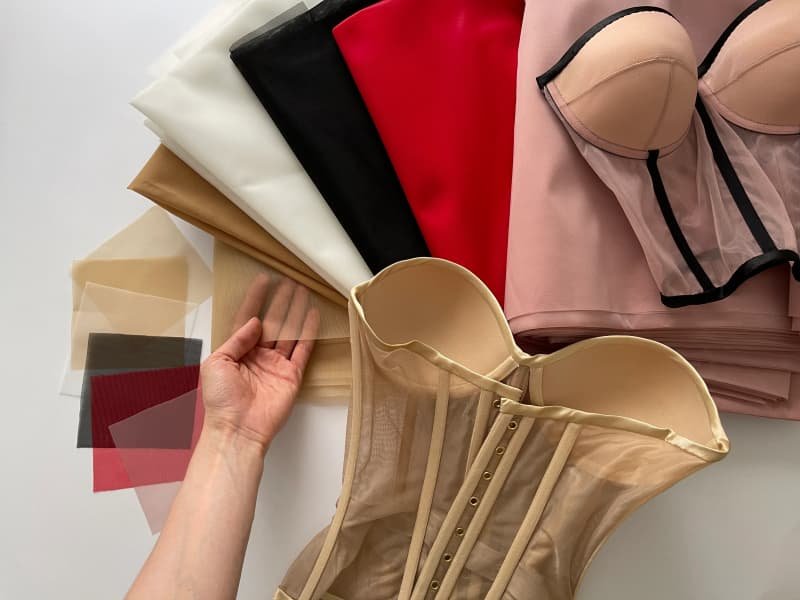
Cups, Boning and Hidden Layers Share the Load
Cup role: A cup helps define bust shape, coverage and the visual transition into the neckline. Cup height, spacing, depth and edge position need to follow the pattern and target fit. A cup cannot compensate for a bodice with incorrect bust length or poor waist balance. It works inside a geometry already designed to support the body.
Boning role: Boning helps resist collapse, stabilize vertical lines, maintain waist shape and control wrinkling in selected zones. Boning type, stiffness, route and length should match the garment rather than follow a fixed recipe. Plastic, spiral steel, flat steel and softer boning options create different levels of resistance and movement. Channel construction and end finishing also affect comfort.
Hidden layer role: Lining and interlining distribute load, protect the skin, stabilize edges and help isolate structural components from the outer fabric. Power mesh, elastic, anti-slip and other functional trims can add targeted support where a heavy rigid construction would be unnecessary. Strong development comes from assigning a clear job to each layer instead of asking one component to solve every fit problem. The internal stack is reviewed for thickness, pressure, attachment order and surface effect so the final bodice remains controlled without becoming unnecessarily heavy.

Closures and Anchoring Keep the Structure in Position
Closure load: Zippers, lace-up backs, hooks and concealed fixing points are part of the support path. A zipper installed on an unstable edge can ripple or carry uneven tension. A lace-up back can provide adjustability, but the eyelet or channel area must be reinforced enough to receive repeated pulling. Hidden hooks or internal fixing points can help keep an upper edge aligned when used in the right position.
Anchoring: Strapless and corset-inspired shapes depend heavily on where support is anchored. Waist control, back tension, upper-edge grip and side-body balance must work together. Tightening only the top edge often creates pressure without security. A stable waist and balanced back can reduce the need for aggressive upper-bust tension.
Production meaning: Closure and anchoring details should be confirmed before bulk release, then recorded with material specification and placement references. A support system loses reliability when a zipper, elastic, boning grade or lining construction changes after sample approval. Duolan treats hidden support components as production standards, not late-stage accessories. Closure samples, elastic recovery, zipper length, reinforcement method and support-trim placement can be included in the approved technical basis. When several closures or adjustment methods appear within one collection, each construction route is kept separate to prevent cross-style substitution during bulk.

Support Failures Should Lead to Root-Cause Checks
Visible fit problems often come from several linked causes. A symptom should trigger a structured review of pattern, cup, boning, internal layers, closure and material behavior before any correction is released into the next sample round.
| Visible Symptom | Likely Development Cause | Review Focus | Control Action |
|---|---|---|---|
| Neckline gaping | Upper-bodice length, neckline curve, cup position or weak anchoring | Bust point, neckline tension, back width, waist hold | Correct pattern balance, cup relationship and anchoring before tightening the edge |
| Empty cup area | Cup height, spacing or depth does not match bust geometry | Cup center, bust point, coverage, underbust line | Reposition or respecify cup, then recheck pattern and lining attachment |
| Bust compression | Cup volume or bodice tension is too restrictive | Cup depth, front length, side tension, fabric stretch | Adjust cup/pattern volume and redistribute pressure through the bodice |
| Dress slipping down | Waist, back and upper-edge support are not working together | Waist anchoring, back tension, anti-slip, closure | Rebalance torso fit and support path rather than simply adding tighter elastic |
| Boning poking | Length, route, endpoint or channel construction is wrong | Body curve, sitting position, seam line, boning end | Shorten, reroute or change stiffness and improve channel/end finishing |
| Horizontal wrinkles | Vertical balance or support resistance is uneven | Torso length, waist level, boning route, fabric stability | Correct pattern length and support placement, then validate during wear |
| Boning visible outside | Support is too hard or too close to a sensitive surface | Boning profile, seam allowance, interlining, pressing | Change boning/support layer and improve separation from the outer fabric |
Structured Support Across High-Sensitivity Fashion Dress Categories

Corset Dresses

Bustier Dresses

Strapless Dresses

Structured Mini Dresses
A structured mini combines upper-body support with short-length movement risk. The bodice may remain secure while the skirt rises, twists or changes tension during walking, so torso support cannot be developed in isolation from hip fit and hem balance. Internal structure also adds thickness and can affect the waist-to-hip transition. Strong development checks bust, waist, hip and body length together, especially when stretch panels, cut-outs or a close body contour are involved.

Party and Occasion Dresses

Selected Halter and Backless Styles
Halter and backless designs need selective support because normal shoulder and back structures are reduced. Development may use cup positioning, side-body control, hidden elastic, internal fixing, lining and carefully placed reinforcement. Neck pressure, bust coverage and back opening stability must be reviewed together. Duolan treats each style separately because a support method suitable for a closed corset back may be impossible or visually unacceptable when the back opening becomes the main design feature.
Cup Development Starts With Geometry, Not Cup Availability
Cup Position Must Follow Bust Point and Neckline Geometry
Position first: Cup center should relate to the intended bust point rather than a convenient seam location. If the cup sits too high, the lower bust can feel compressed while the neckline still gaps. If it sits too low, the upper cup may look empty and the garment can lose the lifted shape expected from a structured bodice. Spacing also matters because a narrow or wide center changes cleavage direction, front balance and how the cup meets the neckline.
Coverage and depth: A shallow cup can flatten the bust even when the size label appears correct. Excessive depth can create hollow areas or visible cup edges. Cup height also needs to respect neckline design. A low neckline has less space to hide a high cup edge, while a more covered bustier can use a different internal shape. Development should review the cup as part of the bodice, not as a standalone component.
Pattern connection: Cup placement changes dart, panel and seam relationships around the bust. A change of cup position may require adjustments to front length, side panel shape, lining and boning route. Duolan reviews those connections during sampling so a correction is carried back into the pattern and technical references rather than solved by hand-adjusting one sample.
Cup Integration Must Stay Clean Under Fashion Fabrics
Edge visibility: Satin and other smooth surfaces can reveal cup edges, adhesive transitions or abrupt thickness changes. A cup may need a softer edge transition, different lining route, more controlled interlining or a revised panel seam so the exterior stays smooth. Strong light used in campaign photography can make faint internal ridges more visible than normal room lighting, so visual review should include the intended surface behavior.
Lining attachment: Cup fixation must prevent shifting without creating local pulling. Stitching or attachment points should follow the internal construction and remain stable during wear. The lining also needs enough compatibility with the cup and outer fabric to avoid twisting or drag. In mesh or lace styles, coverage becomes an additional design decision because the cup may be intentionally concealed or partially integrated into the visual structure.
Symmetry: Left and right cup positions need repeatable references. Small differences are immediately visible on fitted bodices, especially when the neckline is symmetrical. Duolan carries approved cup placement into sample notes, pattern references and later production checks so the visual center, height and spacing can be checked consistently rather than set by eye on every garment. The review also checks whether the cup remains stable after the garment is turned, pressed and finished, because internal movement can appear only after the full construction is assembled.
Cup Decisions Must Be Rechecked Across the Size Range
Base size is not the finish line: A cup position approved on one base size must be reviewed against the brand’s grading logic. Bust width, front length, underbust and torso proportion do not behave as a simple scale enlargement. A larger size may need a different relationship between cup center, side coverage and bodice tension even when the same visual design is preserved.
Critical references: Duolan focuses on cup center, bust point, underbust line, neckline coverage, side-body relationship and symmetry. Those references connect with waist and back width because the cup can move visually when the entire bodice is stretched differently across a graded size. A good cup cannot remain stable inside a pattern whose surrounding tension changes unpredictably.
Production control: Approved cup specification, placement and attachment are recorded with the garment BOM and PP basis. If a cup supplier, density, shape or availability changes, the replacement should be reviewed before bulk use. Component substitution can change projection, edge visibility and comfort even when the replacement looks similar on a trim card. For graded styles, the team also compares cup coverage against the changing neckline and side-body shape so a larger size does not simply gain width while losing the intended bust position. Any approved alternative needs a new reference before production use.

Boning Engineering Balances Shape, Resistance and Wearing Comfort
Choose Boning by Structural Role, Not by Maximum Stiffness
Different roles: Boning can help preserve a vertical line, support waist shaping, reduce panel collapse or stabilize an upper bodice. Those jobs do not always require the same material. Plastic boning can suit certain fashion structures where moderate support and lighter weight are preferred. Spiral steel can follow curves while providing stronger resistance. Flat steel offers more directional rigidity in selected areas. Softer boning can support shape with less hard pressure in lighter garments.
Stiffness balance: A harder bone can create a strong line, yet it can also fight the body, show through sensitive fabric or push pressure into the wrong endpoint. A softer option can be more comfortable but may fail to stabilize a heavy or highly fitted structure. Selection should consider outer fabric weight, internal layers, seam position, expected movement and target visual sharpness.
System relationship: Boning does not fix a weak pattern, poor cup placement or unstable closure. Duolan reviews boning after the main fit geometry is understood, then uses it to reinforce an already coherent structure. A support plan may mix stronger and lighter zones rather than using identical stiffness around the entire bodice. The decision also considers garment weight, expected wear time and whether the style relies on a sharp sculpted line or a softer fitted appearance.
Route, Length and Channel Construction Control Real-Wear Performance
Route: Boning normally follows structural lines where support can be distributed cleanly. Placement too far from the intended load can create little benefit, while placement directly under a sensitive area can cause pressure. Route also needs to coexist with cup edges, seam allowances, zippers, lace-up areas, cut-outs and embellishment positions. Construction order should be reviewed before the pattern is locked.
Length: A bone ending too high or too low can create a hard pressure point. Long boning may feel acceptable while standing but become uncomfortable while sitting. Short boning can stop before the area needing stabilization and allow collapse or horizontal wrinkling. Fit review therefore includes body movement, not only static shape.
Channels and endpoints: Channel width should hold the boning securely without excessive friction or looseness. Ends need controlled finishing so the bone does not migrate, pierce the channel or create a visible lump. Seam allowance, lining and interlining should isolate the structure from skin and outer fabric. Approved route and endpoint references are then transferred into workmanship instructions. During sampling, the channel is also checked after turning and pressing because a route which looks correct before finishing can shift, twist or become more visible once seam allowances and lining are closed.
Boning Must Stay Invisible Under the Intended Outer Surface
Surface sensitivity: Smooth satin, light crepe and fine stretch materials can show every internal ridge. A boning line can become visible because of stiffness, channel bulk, seam allowance, pressing or insufficient separation from the outer layer. Mesh and lace raise a different issue: the structure can become visually exposed, so the inside may need to be integrated into the design rather than merely hidden.
Pressing control: Structured bodices need careful pressing because heat and pressure can flatten seam areas, mark satin or create hard transitions around channels. The support layer should remain stable while the outer fabric stays smooth. Finishing review should check the garment under front, side and angled light rather than relying only on a flat inspection table.
Bulk repeatability: Boning type, width, stiffness, route and length should be fixed after approval. A visually similar substitute can behave differently in wear. Duolan treats boning as a controlled component in the BOM, supported by PP and first-piece references for styles where structure is a major fit variable. Inline inspection can then compare position, symmetry and channel security against one approved basis. The same references support repeat orders when boning availability or material batches change. Approved boning behavior should remain traceable over time.

Lining and Interlining Build the Hidden Support Foundation
Build the Support Layer Before Closing the Outer Fabric
Lining function: Lining is not only an inside finish. It touches the body, controls coverage, supports clean dressing and helps stabilize construction around cups, boning, zippers and openings. Stretch, hand feel and weight should match the way the garment moves. A lining with too little give can restrict a stretch outer fabric; excessive stretch can allow the internal structure to shift. In light colors and sheer materials, opacity and color also affect the final look.
Interlining function: Interlining adds stability to selected zones such as neckline, bust, waist, zipper edge and other structured areas. The correct level of reinforcement can keep an edge clean and help distribute load. An overly rigid interlining can make a bodice feel board-like or leave visible lines. A weak option can allow the neckline or waist to collapse. Adhesive or heat-sensitive constructions also need surface compatibility checks.
Construction sequence: Cups, boning, lining and interlining must be planned together because one layer can block or distort another. Duolan reviews the internal stack before bulk workmanship is fixed. The goal is a support foundation where each layer has a defined job and the outer fabric can sit naturally over the structure. Seam bulk, bonding response and edge transitions are checked before production so hidden reinforcement does not create a hard ridge at the neckline, waist or zipper edge.
Match Hidden Layers to Satin, Mesh, Lace and Stretch Fabrics
Satin: Smooth surfaces demand low-bulk transitions and careful pressing. Cup edges, interlining boundaries and boning channels should be reviewed for show-through. Lining needs to support the shape without pulling against the satin grain or creating internal drag. Even a small ridge can become obvious under photography lighting.
Mesh and lace: Sheer areas require control of what remains visible. Power mesh or other internal support layers may be used selectively, but color, edge position and coverage need to follow the design. Lace placement around the bust can affect symmetry and cup concealment. A hidden support layer should not create an accidental block of color behind a deliberately sheer panel.
Stretch fabrics: Support layers must respect recovery and negative ease. A rigid internal layer can stop the outer fabric from moving, while a soft layer can allow the bodice to lose shape. Duolan reviews stretch direction, recovery, support level and attachment method together, then validates the combination in fit sampling before locking material references. For color-sensitive or sheer styles, the internal layer is also compared against the outer material under light so support does not create an unintended block, shadow or contrast. When stretch direction differs between layers, attachment points are reviewed to reduce twisting and migration during wear.
Hidden Support Components Complete the Wearing System
Anti-Slip Control
Anti-slip tape or grip elements can support upper-edge stability in selected strapless styles, but placement and pressure must be controlled. Too little grip offers no benefit; too much can feel harsh or create a visible ridge. The upper edge also needs correct pattern balance because grip cannot compensate for a bodice which is too loose at the waist or too long through the torso. Fit review should check skin contact and edge smoothness.
Internal Elastic
Zipper Load Control
Lace-Up Adjustment
Hidden Hooks and Fixing
Strap Hardware
Match Fabric Behavior With the Internal Support Plan
The same cup and boning layout can perform very differently under another fabric. Support development should account for stretch, recovery, surface sensitivity, transparency, weight and embellishment before the internal structure is approved for sampling or bulk.
| Fabric Direction | Support Concern | Development Direction | QC Focus |
|---|---|---|---|
| Satin | Ridges, seam pressure and boning lines can show through | Use low-bulk transitions, controlled interlining and careful cup/channel placement | Surface smoothness, pressing marks, cup-edge visibility, zipper rippling |
| Mesh | Sheerness can expose hidden layers and seams | Integrate support visually; control power mesh/lining color and edge positions | Transparency, edge visibility, stretch recovery, panel alignment |
| Lace | Motif placement can conflict with cup and seam geometry | Plan lace placement around cup, bust and support seams before cutting | Symmetry, motif continuity, lining coverage, edge finishing |
| Stretch Jersey | Outer fabric can move differently from rigid support | Balance negative ease, recovery and internal support elasticity | Recovery, seam stretch, support migration, body contour |
| Crepe / Structured Woven | Stable surface may support shaping but can become stiff | Select moderate reinforcement and preserve clean drape outside the bodice | Shape retention, seam balance, neckline stability, pressing |
| Sequin / Embellished | Weight and bulk can pull on the bodice or block support seams | Separate decorative load from support path and protect inside surfaces | Weight balance, reinforcement, abrasion, dropped trims, bulk symmetry |
Pattern and Fit Engineering Control the Support Load Path
Bust, Underbust and Waist Must Work as Connected References
Five critical zones: bust point, underbust, waist, side body and back width form a connected system in structured dresses. Moving one zone changes tension elsewhere. A tighter waist can improve anchoring but may also pull the cup downward if torso length is wrong. Increasing bust room can improve projection but may open the neckline when front length and side tension are not rebalanced.
Pattern geometry: Cup placement and boning route should be drawn inside a clear front and side-body shape. The side seam should sit where intended, the waist should remain level, and the front length should provide enough room for bust projection. If the pattern is too short over the bust, the garment may climb upward or compress the cup area. If too long, the upper bodice can gap.
Fit correction: Duolan uses fit comments to return to the pattern rather than making isolated hand adjustments on one sample. Corrections can change panel shape, neckline curve, waist position, back width, cup reference or boning route. The next sample then tests the revised system as a whole, protecting the design from a chain of unrelated local fixes. The same approach helps preserve left-right balance and keeps fit comments connected to a controlled pattern version, which is especially important when several colors or related styles are being developed in parallel.
Neckline, Back Opening and Closure Need Balanced Tension
Upper-edge balance: A strapless neckline should stay close to the body without acting as the only anchor. Excessive upper-edge tension can create pressure, flatten the bust or pull the side seam upward. Insufficient tension can lead to gaping. Neckline shape, cup edge, side-body fit, back width and anti-slip direction should therefore be evaluated together.
Back opening: Lace-up, zipper and open-back structures change how tension travels across the bodice. A narrow back panel can pull the front outward; a loose back can reduce front support. Lace-up tension creates adjustability, but the garment should remain balanced within the expected adjustment range. Selected backless designs may need more side and internal control because normal back anchoring has been removed.
Closure integration: Zipper or lace-up placement is set during pattern development, not after fit is solved. Seam reinforcement and lining structure around the closure should carry load without rippling. During fit review, Duolan checks whether closure tension changes cup position, waist level or neckline shape before the construction is approved. Pressure is also checked around the zipper top, side seam and back edge because local tension can change after the garment is fully closed. A stable closure should secure the bodice without dragging the neckline or forcing the cup away from its intended position.
Fabric Changes Can Require a New Pattern and Support Balance
Stretch change: Moving from a stable woven to stretch satin or jersey can change negative ease, side tension and waist anchoring. The same pattern may become too loose or too tight even when measurements remain nominally similar. Support components can also move differently because the outer fabric stretches while the internal layer resists movement.
Weight and drape: A heavier satin, embellished fabric or layered skirt can pull downward from the waist and alter bodice pressure. A lighter fabric can reveal support ridges or lack enough body to smooth over channels. Pattern and internal layers may need adjustment when the material family changes, especially around waist, side seam and closure zones.
Development discipline: Duolan reviews fabric, pattern and support together during sample revision. A material substitution after fit approval is not treated as a cosmetic change. The team checks whether stretch, recovery, thickness, hand feel and surface behavior require a revised pattern, lining route or support specification before the style moves forward. A new fabric may require a different seam allowance, support-layer stiffness or negative-ease decision even when the external sketch remains unchanged. Treating material change as a technical revision reduces the risk of approving a new color or fabric family on visual similarity alone.

Support Grading Must Preserve Fit Across Every Size
Base-Size Approval Is Only the First Technical Reference
Base size: The approved fit establishes the starting relationship between bust, underbust, waist, torso length, cup position, boning route and closure. Grading then changes those dimensions according to the brand’s size specification. A structured garment can lose its original balance when each area grows at a different rate.
Illustrative six-size range: In an XS-XXL program, six label steps do not mean six proportional copies. Bust width, front length, waist, back panel and cup position can require different grade increments. The same visual neckline may need different tension and coverage decisions as the body dimensions change. Duolan follows the brand’s size chart and grading rules rather than imposing one generic block.
Technical record: Critical points should be identified before production grading is released. For structured dresses, Duolan focuses on cup position, waist, boning route, back panel width and neckline coverage in addition to standard garment measurements. Clear references make later PP and bulk inspection more meaningful. The grade plan should also identify which support measurements are expected to move linearly and which need separate review. Brand fit identity remains the reference: a fitted party silhouette, a structured occasion bodice and a softer bustier line can require different grading priorities even within the same numerical size range.
Cup and Boning Placement Need Size-Sensitive Rechecking
Cup center: A cup shifted only a small distance can look acceptable in a flat garment but sit incorrectly on the body. Grade review should confirm whether cup center and height still align with the intended bust position. Side coverage should also remain balanced so the cup does not drift toward the armhole or center front.
Boning route: Boning tied to panel seams will move when the panels are graded. The new route should still support the intended body zone and avoid hard pressure at the bust or hip of the bodice. Length can also need review as torso dimensions change. A boning specification copied without size logic can create comfort problems even when the outer silhouette looks similar.
Combined effect: Cup, boning and waist shape are checked as one system. Duolan reviews how graded pattern changes influence support rather than approving each component separately. Size-specific concerns can then be documented for sampling, PP review or QC where the style requires additional attention. Sampling should include enough size coverage to reveal whether the support path is drifting as the pattern grows. If a larger size produces more neckline pressure or a smaller size loses cup contact, the grade rule is reviewed before production rather than accepted as normal size variation.
Measurement Control Turns Grading Into a Bulk Standard
Agreed POMs: Measurement control should define the points used to judge fit, such as bust, underbust, waist, body length, back width, neckline and closure-related dimensions. The measuring method matters because a relaxed stretch garment and a structured woven bodice should not be checked in the same way.
Tolerance logic: Critical support points deserve tighter attention than low-risk areas, but tolerance must still reflect fabric behavior and garment structure. Duolan uses brand specification, material behavior and target fit to guide measurement review. When an out-of-tolerance result appears, the team identifies whether the source is cutting, sewing, pressing, material stretch or pattern interpretation.
Bulk link: Size spec, graded pattern, PP sample and QC references should agree before production. The same records also support repeat orders, where an approved fit can be lost if pattern versions, materials or measurement methods change between seasons. A measurement sheet should therefore define how the garment is laid, whether stretch is relaxed, where cup and neckline references are taken, and which points are considered critical. The same method must be used by sample room, production and QC. Consistent measuring practice prevents teams from debating numbers produced by different methods and makes root-cause review faster when a size falls outside the agreed tolerance.

From Project Input to Production-Ready Support Development
Project Input Review
Support Architecture Mapping
Pattern and Material Build
First Sample Review
Fit and Revision Loop
PP and Bulk Readiness
Before bulk release, approved materials, pattern, support components, workmanship and critical measurements are reviewed together. The project can move into a PP basis, first-piece verification or pilot step according to structural risk. Cup, boning, lining, closure and other support details are carried into the BOM and QC references. Production begins from a documented construction standard instead of relying on memory from the sample room. Final release status is communicated before line allocation.
Fit Review Must Include Real Wearing and Movement
Standing Balance
Sitting Comfort
Walking Stability
Neckline Security
Closure Load
Zippers, lace-up backs and hidden hooks are observed under real tension. A zipper should lie flat without rippling or opening pressure. Lace-up areas should remain reinforced and symmetrical through the intended adjustment range.
Hooks or internal fixing points should stay accessible and discreet. Closure review also checks whether tension changes the front cup position or waist line, because the closure is part of the support system, not only a dressing mechanism.
Inside Surface Check
The interior is checked for sharp edges, exposed hardware, rough channel ends, bulky seam intersections and lining distortion. Cup attachment and boning channels should remain secure without abrasive contact. Internal elastic or grip elements should perform without leaving excessive pressure. For embellished or sequin styles, the lining must also isolate decorative backs from the skin. A clean interior protects comfort, wearability and the brand’s perceived quality after the garment leaves the fitting room.
Revision Should Correct the System, Not Hide the Symptom
Classify Comments Before Changing the Sample
Comment groups: Fit feedback is separated from visual preference, material behavior and workmanship. A neckline which feels unsafe is not automatically a sewing problem. It may come from cup height, front length, back width, waist anchoring or upper-edge tension. A boning ridge can come from support stiffness, channel bulk, insufficient interlining or pressing. Clear classification prevents one comment from being solved in the wrong department.
Open questions: Some revisions require a brand decision before technical work can continue. Increasing coverage may change the neckline look. Reducing boning stiffness may soften the silhouette. Adding a stronger internal layer can improve support but change hand feel. Duolan identifies those trade-offs in the revision summary so design direction remains controlled while the technical route changes.
Version control: Comments are tied to the current sample and pattern version. When pattern, cup or material changes are approved, the related spec and BOM references are updated. Version discipline matters on multi-style programs because several structured bodices can be moving through different sample stages at the same time. The team also separates comments which affect only appearance from comments which alter the support path, because the second group can require new fit validation and an updated production basis before approval.
Move the Correction Back Into Pattern and Construction References
Pattern correction: Surface pinning or hand alteration can help diagnose a fit issue, but the final solution should be translated back into the pattern. Neckline curve, panel shape, front length, waist position, back width or seam route may need revision. A corrected paper pattern gives the next sample a repeatable base.
Component correction: Cup height, spacing, boning route, stiffness, channel construction, elastic pressure or closure reinforcement can be updated where the root cause sits. A component change is checked against surrounding parts because moving a cup can affect boning route and neckline, while changing the back closure can alter front support tension.
Material correction: Lining, interlining or outer fabric may need adjustment when structure remains visible or unstable. Material changes are evaluated for stretch, recovery, thickness, surface response and compatibility with the existing pattern. The revision is then treated as a system change, not a simple sourcing replacement. Revised components are checked inside the complete garment, since a stronger elastic or different interlining can solve one issue while creating another at the neckline, waist or zipper. The pattern file, workmanship note and BOM are updated together when the correction changes more than one construction layer. Revision ownership stays clear across teams.
Validate the Revised Sample Before Production Decisions
Comparison review: The revised sample is compared with the previous version using the original problem statement. The team checks whether the intended improvement is visible and whether a new side effect has appeared elsewhere. A neckline may become more secure but create bust compression; stronger waist control may improve anchoring but increase zipper pressure. Corrections need whole-garment review.
Wear review: Standing, sitting and movement checks are repeated where support changed. Cup, boning and internal fixing are inspected from the inside as well as on the body. Photos, measurements and marked details can be organized into a Sample Review Note so the brand team can evaluate the result efficiently.
Production meaning: Once the revision is accepted, the change is carried into pattern, BOM, workmanship and PP references. Duolan uses the revision stage to build the production standard. A sample is not considered successfully corrected if the solution depends on a one-off hand adjustment which cannot be repeated in bulk. If the revised result depends on temporary pinning, hand shaping or unusual pressing, the team still needs a repeatable sewing method before PP approval. Production readiness means the correction can be explained, documented, measured where necessary and repeated by the assigned line.

Structured Partywear Program: 18 Styles, 46,800 Pieces
Program Scope and Development Risk Across Multiple Structured Styles
Order profile: 18 structured party and occasion styles, 46,800 total pieces, 6 size steps from XS to XXL and 5 color families. The assortment included strapless minis, bustier midis, corset-inspired bodycon shapes and selected halter/back structures. Seven bodice pattern families were used across the assortment so related silhouettes could share a development base without forcing every style into one block.
Support variation: Four main internal support combinations were planned across the range. Some styles used cups plus light boning and lining; others required stronger boning zones, interlining and reinforced closures. Sheer or stretch styles used more selective hidden support so the outside remained light. Satin styles required lower-bulk internal transitions to reduce cup-edge and channel show-through. The support plan changed by material and neckline rather than by price tier alone.
Development path: Three main sample rounds were planned for the higher-risk structured group: first development sample, fit/revision sample and PP basis. Not every style needed the same number of corrections, but the program used common review checkpoints for cup position, neckline, waist, boning comfort, closure stability and size grading. Shared checkpoints helped the team compare styles without flattening their individual design language. Material and support changes were therefore approved by style family, not by one universal corset specification applied across the whole program.

Control Plan From Sample Revision to Bulk Release
Approval basis: Each of the 18 styles received a defined PP reference with BOM, pattern version, size spec, support components and critical workmanship notes. Cup and boning details were treated as controlled materials, not generic accessories. Any style using a different lining, interlining or closure route carried a separate record so production did not copy internal details from a visually similar style.
Risk-based release: Six higher-risk styles received additional first-piece verification before full production release because their support depended on multiple interacting elements or more sensitive fabrics. First-piece review focused on cup symmetry, boning placement, zipper or lace-up stability, neckline security, outer-surface smoothness and critical measurements. Lower-risk related styles still followed PP and inline checkpoints but did not receive unnecessary extra construction steps.
Production organization: The program was separated by style complexity and support construction before line allocation. Repeated components and shared pattern families helped reduce avoidable variation, while different fabric families remained under separate material control. The result is a scalable way to manage a 20,000-80,000-piece brand program without treating structured support as a single standard repeated blindly across every dress. The same planning model also leaves room for repeat colors or replenishment because approved pattern families, support combinations and QC points remain traceable after the first production run.

Lock Approved Support Into BOM, PP and QC References
Lock the Components and Placement Before Bulk Release
Material list: The BOM should identify outer fabric, lining, interlining, cup, boning, elastic, anti-slip, zipper, lace-up material, hooks and other relevant support trims. Generic names are not enough for high-risk components. Width, type, stiffness, color, finish or supplier reference may need to be recorded where a substitution can change fit or appearance.
Placement: Cup position, boning route, anti-slip location, zipper length and internal fixing points need placement references tied to the approved pattern. A component with the right specification can still fail when installed in the wrong position. For symmetrical bodices, left-right consistency is especially visible and should be checked against clear construction marks.
Material change control: Sample approval does not mean support materials can be swapped freely later. A different cup density, boning profile, elastic recovery or lining stretch can change projection, tension and comfort. Duolan reviews material changes before they become a bulk standard, then updates the BOM and related technical notes when an alternative is approved. The material card can also carry physical references for stretch, thickness, color or finish where written naming is too vague. For support-sensitive components, visual similarity is never the only acceptance criterion; the replacement must still deliver comparable fit behavior and construction stability.
Use the PP Sample as a Construction Reference, Not Decoration
PP role: The PP sample represents the production-ready combination of pattern, material, support, workmanship and fit decisions. For structured dresses, the inside matters as much as the outside. Cup attachment, channel construction, lining route, closure reinforcement and upper-edge finishing should be visible in the PP review where relevant.
Measurement connection: Size spec and critical POMs are checked against the PP basis. Cup position, waist, back panel and boning-related references can be added to the review for structure-sensitive styles. The goal is to give production and QC a clear standard which links visible fit with hidden construction.
Approval communication: Open questions are closed before release whenever possible. If a visual detail is accepted but a support point still needs correction, the status should remain clear instead of treating the garment as fully approved. Duolan uses production-readiness review to separate fit confirmed, visual confirmed and PP basis status where projects need a more controlled transition. Critical inside views can be photographed or marked for the production team when a hidden detail is difficult to communicate through text alone. The PP reference should make clear which elements are locked and which remain subject to final brand confirmation. Inside construction photos can support the written record.
Preserve the Standard for Reorders and Future Extensions
Reorder reference: Approved pattern files, BOM versions, material cards, PP/golden references, QC notes and previous issue records form a reusable product asset. A repeat order should not rebuild the internal support from memory. The same references allow the team to check whether a new material batch, trim replacement or color extension changes the original construction.
Extension styles: A strong fit block can support new necklines, lengths or fabrics, but internal support still needs review when the design changes. A strapless version and a halter extension may share a waist and lower bodice base while requiring different upper support. Records help distinguish what can be reused from what needs fresh validation.
Quality learning: Previous production issues are brought into the next order before release. If a prior batch showed cup-edge visibility, zipper pressure or inconsistent boning position, the risk can be written into first-piece or inline checkpoints. Documentation turns one successful development into a repeatable program instead of an isolated result. Reorder preparation can then compare new materials, color batches and support components with the stored basis before sewing starts. If the silhouette is extended into a new neckline or fabric, the preserved records show which parts of the support system can be reused safely and which need fresh validation.

Pilot Run and Bulk QC Protect Structured Dress Consistency
Release High-Risk Styles Through First-Piece or Pilot Verification
Trigger conditions: Extra verification is most useful when a style is fit-sensitive, structure-sensitive, fabric-sensitive, new to the production line or dependent on several hidden support parts. Corset, bustier, strapless, halter/backless, satin, mesh and embellished occasion styles can qualify when their construction carries enough risk to justify a controlled first-piece review.
Verification points: The first piece is checked against the PP basis for cup position, boning placement, lining/interlining, zipper or lace-up stability, critical measurements, outer-surface appearance and inside finishing. A pilot step can also confirm whether the sewing sequence produces the intended shape consistently rather than relying on one sample maker’s technique.
Decision: The first-piece stage can release the style, trigger a workmanship adjustment or hold production until a material/pattern issue is corrected. Duolan’s source process uses a Pilot Run / First-piece Confirmation Note for risk-sensitive styles, giving the brand team a clearer view of what was verified before full production starts. The review can include a small set of finished units or a controlled first-off garment depending on risk. Any deviation is traced to material, pattern, sewing sequence or support installation so production is not released with an unresolved cause. The decision and correction are then communicated to the assigned line.
Control Critical Support Points During the Production Run
Inline checks: Structured styles need more than general seam and appearance inspection. QC attention can include cup symmetry, neckline level, waist position, boning route, channel security, closure smoothness, lining stability and measurement tolerance. High-risk points are checked during the run so a repeated error is found before it reaches a large finished quantity.
Process consistency: Production teams use the approved pattern, BOM and PP references to reduce variation. If several lines or factories are involved, the same construction standard should travel with the order. Duolan’s manufacturing system separates order planning by style complexity, material and critical construction points so high-risk styles can be matched to an appropriate production path.
Corrective action: When an issue appears, the team identifies whether it comes from material, cutting, sewing, pressing, measurement or support installation. A controlled correction is applied and rechecked rather than allowing operators to create different local solutions. Production consistency depends on one shared answer to the same problem. Supervisors and QC can use marked PP details, measurement references and workmanship notes to keep interpretation aligned.
Plan Lead Time Around Complexity Instead of Compressing Controls
Reference windows: Duolan’s company data gives bulk production references of 15-20 days for simple styles, 20-30 days for regular styles and 30-45 days for complex styles. Structured support development usually sits closer to the regular or complex path when multiple internal components, sensitive fabrics or added verification are required.
Start point: Lead time becomes meaningful after the PP basis, BOM, materials, measurements, workmanship and order information are sufficiently locked for production. Changes to cup, boning, lining or closure after release can require rework, new sampling or a revised schedule. A shorter promise made before those decisions are closed creates more risk than value.
Launch planning: Duolan can connect production timing with the brand’s launch calendar and shipping plan. Complex support should not be rushed by removing PP, first-piece or critical QC steps. A reliable delivery window comes from clear pre-production decisions, risk-based verification and early communication when any locked condition changes. Material lead time, custom color, trim availability, external inspection and packaging can also affect the schedule. Structured styles benefit from an early critical-path review so cup, boning, lining and closure decisions are closed before the sewing window becomes compressed.

Manufacturing Evidence Behind Structured Dress Development at Duolan
Dress-Focused Development Background
Multi-Factory Manufacturing Network
High Development Density
Group-level development capacity is documented at approximately 15,000-35,000 sample pieces or development instances per month, with 3,000-8,000 style development and sampling workflows supportable monthly. Large numbers are useful only when the process remains controlled, so Duolan emphasizes staged sampling updates, sample review notes, revision summaries and production-readiness checks for projects where fit, fabric or support structure requires closer communication.
The scale also supports parallel development when several structured styles need technical review at once.
Scalable Production Capacity
SMETA Compliance Foundation
Documented Sample-to-Bulk Handover
Frequently Asked Questions About Internal Support Development

Send Your Structured Dress Project for Technical Review
Send the available project information and Duolan will review the development route before moving into sampling or bulk planning. Useful files include a tech pack, reference images, original sample photos, size chart, target fabric, existing fit comments and any known cup, boning or support requirement. A complete file set helps the team assess structure, material compatibility, sample path and production risk more accurately; partial information can still be reviewed to identify the next technical questions.
Please include, where available:
- Product type and target silhouette
- Tech pack, reference image or sample photos
- Target fabric, lining and support direction
- Size range and base-size information
- Expected quantity, colorways and launch date
- Known fit, cup, boning or closure concerns
Duolan will use the submission to review pattern/support complexity, material needs, sample strategy, key fit checkpoints, bulk-readiness requirements and quotation basis. Sensitive design files can be shared for project evaluation and kept within the development workflow.