Skip to content

A cowl neckline looks effortless when it is done well. The fabric seems to fall into soft folds by itself, and a finished dress may give the impression that the designer simply added extra material around the neckline. In reality, a successful cowl is the result of several decisions working together: the shape of the base pattern, where additional volume is released, grain direction, fabric weight, shoulder position, body contour, neckline depth, facing construction, and the way the garment is handled during sewing and pressing. A small change in one of these variables can move the lowest point of the cowl, reduce coverage, cause one side to twist, or turn soft folds into stiff ridges. This is especially important with satin, viscose, lightweight crepe, jersey, and other materials commonly used for occasion, party, slip, and backless dresses. The front and back versions may share the same visual language, but the structures underneath them are not the same.
A front cowl is developed around the bust, front neckline, and shoulder support points, while a back cowl is developed around the upper back, intended back opening, shoulder security, and gravity-driven drop. Front cowls are generally more sensitive to bust volume and coverage; back cowls are often more sensitive to bias elongation, shoulder movement, and finished back depth. They should therefore be drafted, fitted, and approved as separate constructions.
This distinction often becomes clear only after the first sample is made. A back cowl that looks perfectly balanced immediately after sewing may hang several centimeters lower after the fabric has relaxed, while a front cowl that looks elegant on a mannequin may open too much when the wearer bends or walks. The interesting part of cowl development is not the fold that everyone sees. It is the hidden pattern, grain, support, and construction system that makes that fold look natural every time the dress is worn.
What Is the Difference Between Front and Back Cowls?
A front cowl is shaped around the chest, bust projection, front neckline, and two shoulder points, while a back cowl is shaped around the upper back, shoulder stability, and the intended open-back depth. Both use controlled extra fabric to create drape, but gravity and body volume affect them differently. As a result, the two constructions normally require separate pattern development, fit checks, and approval measurements.
Drape and Body Shape
The most useful way to understand the difference is to consider what sits underneath the draped fabric. A front cowl hangs across a three-dimensional part of the body. The bust pushes the material forward and changes the path each fold follows between the shoulders and center front. This is why two people wearing the same size can display slightly different cowl shapes even when the garment measurements are identical. Bust projection, bust position, shoulder width, and the tension of the fitted bodice below the neckline all influence the visible result.
A back cowl usually falls over a much flatter area and may eventually leave the body completely as the opening becomes deeper. Gravity therefore has more freedom to pull the cloth downward. The effect is particularly noticeable in soft satin, viscose, or lightweight crepe. A fabric that creates a moderate front cowl can create a much lower back opening when an equivalent amount of pattern volume is released. The difference becomes even greater when the back piece is placed on the bias and has little structural support below the shoulder line.
This behavior means the finished cowl should be judged after the garment has been worn and allowed to settle, rather than only while it is flat on a cutting table. The front needs to maintain suitable coverage as the bust and torso move. The back needs to maintain an intentional lowest point without allowing the shoulder area to migrate outward. Both should look fluid, but they reach that result through different structural balances.
| Development Point | Front Cowl | Back Cowl |
| Primary body influence | Bust and chest contour | Upper back and shoulder position |
| Main visual control | Front depth and fold placement | Back drop and shoulder stability |
| Typical fit risk | Gaping or excessive exposure | Excessive drop or shoulder slipping |
| Bias sensitivity | High in fluid woven fabrics | Often very high in deep back styles |
| Useful reference | Center-front cowl depth | Lowest center-back cowl point |
| Movement concern | Coverage when bending or moving | Shoulder migration and growing depth |
Support Points Matter
Both cowl types rely heavily on the shoulders, but the shoulders perform a different job in each design. A front cowl often sits above a bodice that is still controlled by the bust, side seams, waist shaping, lining, or other fitted areas. These additional points help keep the garment in position, which means the neckline has a relatively stable foundation even though the visible folds are relaxed.
A deep back cowl may have far fewer secondary support points. Once much of the upper back has been removed, two relatively narrow shoulder areas may carry most of the structural responsibility. If the shoulder seam becomes longer during sewing or pressing, the change can be magnified at the bottom of the back. If the neckline point moves outward, the dress may begin to slide toward the arm. Moving it too far inward can create the opposite problem, making the back look tight and reducing the soft drop that defines the style.
Front cowls also need controlled shoulders, particularly when the bodice itself is bias cut. Uneven shoulder stretching can make the folds drift to one side or expose the facing. For this reason, shoulder geometry should be evaluated as part of the cowl rather than treated as an ordinary seam. The lowest fold is the most visible feature, but its position is often determined much higher up in the garment.
Similar Look, Different Engineering
A front cowl and a back cowl can belong to the same collection and share a similar visual mood, yet their pattern logic should not be copied directly from one side of the body to the other. The front must allow for bust shaping, while the back usually begins from a flatter pattern foundation. Front and back armhole relationships also differ, and a deep back removes structural fabric that would normally help stabilize the upper bodice.
This becomes particularly important when a style is adapted from an existing successful product. A designer may ask to move a familiar front-cowl treatment to the back while maintaining the same apparent depth and fullness. The visual request is understandable, but the pattern needs to be rebuilt around the back rather than simply reversed. The amount of cloth, shoulder position, grainline, and finishing depth may all need to change before the new version behaves naturally.
The two designs should therefore have separate approval criteria. Front development can focus on center-front depth, bust coverage, fold balance, and opening during movement. Back development should pay more attention to the lowest back point, shoulder security, symmetry, and growth after hanging. Natural draping materials will always produce small variations in individual folds, but the overall silhouette, exposure, and balance should remain predictable.
How Are Front and Back Cowl Patterns Drafted?
Front cowls are commonly developed from a tested front bodice by releasing fullness toward the neckline through dart manipulation and slash-and-spread techniques. Back cowls begin from the back bodice, where the intended opening, shoulder neckline, and center-back drop are established before fullness is added. Both patterns must define grainline, shoulder matching, facing depth, notches, and measurable reference points before production.
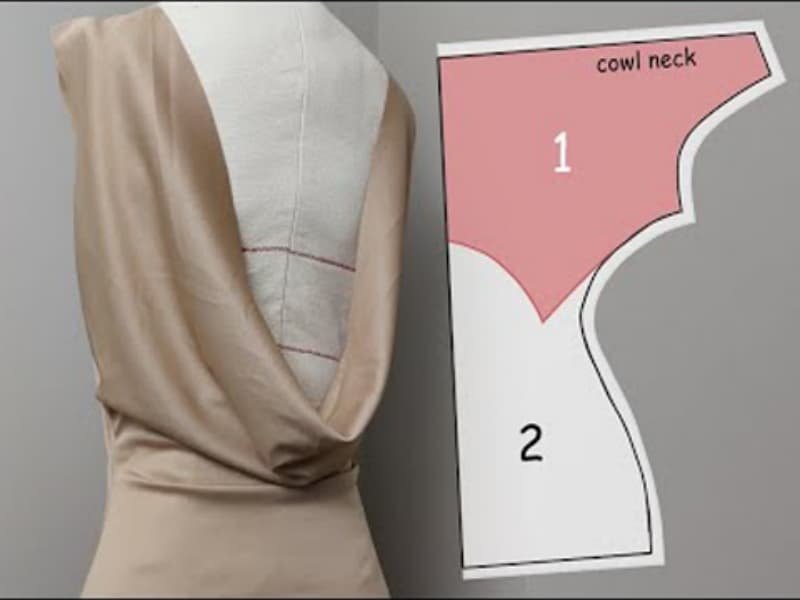
Front Cowl Drafting
A reliable front cowl usually begins with a bodice block that has already been tested for bust, shoulder, armhole, and waist balance. Beginning with an unproven block makes later fitting difficult because a neckline defect can easily be confused with a basic bodice problem. The first step is normally to establish where the finished neckline should begin at the shoulder and roughly where the visible cowl should fall at center front.
Bust shaping becomes important at this stage. In many front-cowl developments, some or all of the bust dart can be transferred toward the neckline. This keeps the necessary bust volume while contributing additional fabric to the drape. If the design needs more fullness than the transferred dart provides, extra slash lines can be opened. The amount of spread affects the number and depth of folds, but it should never be considered independently from the chosen fabric.
A lightweight satin may turn a relatively modest spread into a soft, deep neckline because it collapses readily and extends along the bias. A firmer crepe can use the same pattern and produce fewer, more controlled folds. This is one reason the first pattern should not be approved solely from dimensions. The actual material needs to confirm whether the released volume produces the intended appearance.
After the spread is completed, the shoulder seam needs to be re-trued. New seam lengths, neckline curves, and facing extensions should then be checked carefully. Grainline, notches, fold points, and the final reference measurements should be clearly recorded. These details are what transform a creative pattern experiment into a version that another sample maker or production line can reproduce.
Back Cowl Drafting
Back-cowl development begins with the intended back opening rather than simply asking how much fabric should be added. A high, subtle back cowl and a dramatic low-back version may share a design family, but they have very different structural requirements. The pattern maker first needs a clear target for the lowest visible point and a clear understanding of how much upper-back fabric must remain to hold the garment securely.
The back bodice is then adjusted around the shoulder neckline and center-back area. Existing dart shaping may be reduced, transferred, or removed according to the silhouette. Fullness is introduced so the fabric can fall between the shoulder points without being forced into a fixed shape. During this process, the shoulder seam must continue to match the front pattern. If its length or angle changes significantly, the corresponding front shoulder may need correction.
Facing depth deserves more attention on the back because the interior of the garment can become visible during movement. A facing that looks hidden when the pattern lies flat may roll outward once the back begins to swing. Folding the paper pattern into an approximate finished position before cutting can reveal whether the internal edge is deep enough to remain concealed.
A practical technical file should also record a consistent back-depth reference, often measured from the high-point shoulder to the lowest part of the finished cowl. Photographs are still useful, but a measurable reference gives the sample room and production team a much clearer target when revisions or repeat orders are made.
Controlling Fullness and Depth
Fullness and depth are related, but they are not the same thing. A cowl can contain a generous amount of fabric while remaining relatively high, or it can fall low with comparatively few visible folds. The result depends on several variables working together: shoulder opening, center neckline position, spread amount, grain direction, material weight, and the way the fabric collapses under gravity.
During development, it is often more efficient to change one variable at a time. The shoulder points can remain fixed while several levels of neckline spread are tested, or the same spread can be evaluated in two material weights. This makes the fitting result easier to interpret because the team can see what caused the visual difference instead of changing pattern, fabric, and neckline position at the same time.
The approved sample should normally record at least the shoulder neckline position, the lowest cowl point, the effective opening width, and an appropriate high-point-shoulder reference. These measurements do not replace visual judgment, because a draped neckline is not a rigid geometric feature. They simply provide a stable framework for comparing later samples.
Grading also requires judgment. Decorative cowl volume should not always increase at the same rate as bust, waist, or shoulder measurements. The body pattern still needs to accommodate size growth, but blindly scaling every fold can make larger sizes disproportionately full. The goal is consistent design character across the size range rather than mechanically identical pattern growth.
Which Fabrics and Grainlines Work Best?
Soft, fluid materials usually produce the most natural cowls because they can collapse into rounded folds without standing away from the body. Bias-cut woven fabrics are especially effective because diagonal grain deformation increases flexibility. Stretch jerseys can also work well when their recovery is appropriate. Fabric approval should consider weight, drape, stretch, recovery, opacity, surface behavior, and stability rather than fiber composition alone.

Bias Versus Straight Grain
True bias is approximately 45 degrees to the straight and cross grains of a woven fabric. At this angle, the yarn structure can deform more readily, which gives the cloth greater flexibility even when it contains no elastane. This property is one of the main reasons bias cutting is associated with satin slip dresses, fluid occasionwear, and classic cowl necklines. The folds are able to curve rather than breaking into hard, angular shapes.
Bias should not be treated as an automatic requirement for every style, however. A soft knit with sufficient stretch and recovery may already create an effective cowl on the straight grain. Cutting such a fabric diagonally can add unnecessary instability and may complicate marker planning or sewing without producing a meaningful visual improvement. The grain decision should therefore come from the actual performance of the selected fabric.
Marker efficiency also matters in commercial development. Diagonal pieces are generally harder to nest closely than straight-grain pieces and can increase fabric consumption, especially when the cowl is integrated into a large bodice pattern. Directional prints add another consideration because a floral, stripe, or engineered motif can look rotated when the piece is placed on true bias.
A successful development balances appearance and manufacturability. If the bias version creates a clearly superior drape, the extra fabric use may be justified. If the difference is minimal, a more efficient grain direction may be worth testing. The final choice should be confirmed during sampling and then locked into the production pattern rather than left to the cutting room to interpret.
Fabric Weight and Drape
Fiber content alone is a poor predictor of cowl behavior. Two fabrics labeled polyester satin may have completely different weight, density, surface finishing, stiffness, and diagonal extension. One may drop immediately into deep folds while another stays almost sculptural. For this reason, the material should be judged by its physical behavior rather than its commercial name.
The following ranges are useful as broad development references rather than fixed rules. Actual suitability depends on weave, finishing, garment length, lining, and the depth of the intended cowl.
| Fabric Type | Common Development Range | Typical Cowl Behavior | Main Point to Watch |
| Chiffon | about 40–80 g/m² | Very light and soft | Transparency and instability |
| Lightweight satin | about 70–120 g/m² | Fluid with defined folds | Bias growth and surface marking |
| Crepe | about 90–160 g/m² | Controlled, softer visual drape | Can become firm at higher weights |
| Viscose woven | about 90–150 g/m² | Soft and fluid | Growth, shrinkage, and handling |
| Stretch jersey | about 150–220 g/m² | Smooth and body-following | Recovery and neckline stretching |
A low front cowl needs enough opacity and recovery to remain wearable when the neckline moves. A deep back cowl may be more sensitive to weight because the material hanging between the shoulders can place significant load on the upper bodice. The same satin can also perform differently when lined, since the lining may either support the shell or pull against it.
Whenever possible, the cowl should be approved in the intended production fabric. A substitute can be useful for an early pattern test, but it should not be treated as final proof if its weight and bias behavior differ substantially from the bulk material. The neckline is one of the areas where a material substitution can change the silhouette even when the sewing pattern remains identical.
Bias Growth and Hang Tests
Bias-cut woven fabrics can continue to change after cutting and sewing because gravity gradually redistributes tension through the yarn structure. This is particularly important in deep back cowls, long slip dresses, and styles where the skirt itself is also cut on the bias. A garment that is measured immediately after sewing may therefore look and fit differently after it has spent a full day on a hanger.
A 12- to 24-hour hang test is a practical development check for fluid woven styles. The lowest front or back cowl point can be measured immediately after sewing and then measured again after the garment has settled. The purpose is not to expect a universal amount of growth, because different fabrics behave differently. The value of the test is in identifying whether the actual material changes enough to affect coverage or the approved silhouette.
For example, a back opening that moves from 33 centimeters to 36 centimeters after settling has changed by 3 centimeters. On a modest upper-back cowl, that difference may not be critical. On a very low back designed to finish just above a specific coverage line, the same change could significantly alter the appearance and wearability of the dress.
Pressing and handling can increase the problem. Pulling a bias edge while it is warm or using excessive steam can permanently lengthen delicate materials. The production method should therefore be established together with the pattern. Fabric, grainline, sewing, pressing, and hanging behavior are parts of one system rather than separate decisions.
How Do Fit and Support Requirements Differ?
Front cowls depend mainly on bust volume, chest coverage, and the relationship between the draped neckline and the fitted bodice below it. Back cowls rely more heavily on shoulder anchoring, controlled drop, and resistance to slipping. Both need dynamic fitting because a cowl that looks balanced on a static mannequin can change noticeably when the wearer walks, raises her arms, bends, turns, or sits.

Front Cowl and Bust Balance
The bust acts as a three-dimensional form beneath a front cowl, which means the neckline cannot be judged only from a flat pattern. As bust projection increases, the fabric is pushed farther forward and the route of the folds changes. A cowl that looks deep on a smaller bust may appear shallower on a fuller bust because more of the released fabric is being used to travel over the body.
The bodice below the cowl matters just as much. If the bust or under-bust area is too tight, the lower garment can pull downward and outward, leaving less fabric available to form relaxed folds. If the upper bodice is too loose, the neckline may gape independently of the intended drape. Bust-point position, shoulder width, armhole balance, and waist tension therefore need to be reviewed together.
Coverage should also be checked during movement rather than only in a front photograph. A neckline can look perfectly suitable when the wearer stands upright and then open considerably when she leans forward. This is particularly relevant for party, occasion, and slip-style dresses where the cowl may intentionally be low but still needs to feel secure.
Size grading requires the same practical judgment. The body portion of the pattern needs to accommodate larger bust and torso measurements, but decorative cowl volume does not always need to grow proportionally. Maintaining a similar sense of depth, coverage, and fold rhythm across sizes is more important than making the mathematical spread increase at the same percentage as the bust.
Back Depth and Shoulder Security
A deep back cowl creates a different structural challenge because removing fabric from the upper back also removes part of the garment’s natural support. As the opening becomes lower, the shoulders may carry a greater share of the load. Their length, angle, and neckline position become central to the way the entire dress sits on the body.
If the neckline is too wide at the shoulders, the garment may begin to slip outward. If the shoulder seam grows during assembly, the lowest part of the back can drop farther than intended. Narrowing the shoulder too aggressively can create the opposite problem, making the garment look tense and flattening the folds that are supposed to move freely.
The lowest back point should therefore have a measurable reference on the approved sample. One practical method is to measure from the high-point shoulder to the lowest cowl point. The appropriate tolerance depends on the fabric and design rather than on a single universal standard. A small variation may be harmless in a high cowl but much more noticeable in a very low style.
Some dresses also benefit from hidden support. Internal elastic, lining control, carefully positioned straps, or a discreet back or waist support can stabilize the garment without becoming visible. These techniques should be tested carefully because excessive tension can flatten the cowl and remove the soft movement that makes the design attractive in the first place.
Fit in Motion
A cowl should move with the body, but it should not lose its intended position every time the wearer moves. Static fitting alone cannot reveal this. A practical sample review should include normal standing, walking, raising the arms, rotating the torso, and sitting before standing again. Low front cowls should also be checked when the wearer bends forward because this is when unexpected exposure often becomes apparent.
During movement, the development team should watch whether the neckline returns to a natural position after being displaced. The shoulder points should remain reasonably stable, and the lowest part of the cowl should not continue to become deeper with each movement. A completely rigid neckline is not the goal, because natural movement is part of the appeal of a draped garment. The objective is controlled movement.
The intended occasion also matters. A glamorous evening or party dress may reasonably allow a more relaxed neckline than a style intended for formal daytime wear. This is a product decision as much as a technical decision. The same pattern solution should not automatically be applied to every market or customer profile.
The strongest sample is therefore not simply the one that photographs well. It should preserve the intended silhouette while giving the wearer enough security to move naturally. When fit, support, and drape are considered together, the cowl feels relaxed without feeling unstable.
How Are Cowl Edges and Shoulders Finished?
Cowl edges should be finished with as little bulk as possible so the fabric can continue to fall naturally, while the shoulder area needs enough reinforcement to keep the neckline at its approved position. Self-facings are common in fluid woven styles, separate facings can add localized control, and binding is suitable for many knits. The finish should support the drape without becoming stiff or visible.

Self-Facing and Clean Edges
A self-facing is one of the most useful finishing methods for woven cowls because the neckline extension folds to the inside instead of requiring a heavy additional component. This keeps the visible edge soft and allows the same material to appear on both sides of the fold, which can be especially important when the cowl opens during movement.
Facing depth needs to be planned carefully. A shallow self-facing may remain hidden while the garment lies flat but roll outward when the wearer walks or turns. The problem is especially obvious on satin because the reverse side often has a noticeably different sheen. Folding the paper pattern into its approximate finished shape before cutting fabric is a simple way to check whether the internal edge is likely to remain concealed.
Very lightweight fabrics may need another solution. Chiffon and similar materials can become bulky when several layers accumulate around a narrow edge, so a fine rolled finish or very light facing may perform better. Knit cowls may work more naturally with binding or a turned edge, depending on stretch and recovery.
Pressing should preserve the roundness of the drape. A cowl is not usually meant to have a sharp, permanent crease at its upper fold. Heavy pressing can make satin look flat or create shine. The finish should look clean when viewed closely while remaining almost invisible in the overall silhouette.
Shoulder Stabilization
The shoulder seam is small compared with the cowl itself, but it carries a large part of the structural load. On bias-cut garments, the fabric next to the shoulder naturally wants to extend. Without adequate control, that area can grow during sewing, pressing, hanging, or repeated wear, changing the neckline width and the position of the lowest fold.
Lightweight stabilization is therefore common. Depending on the material and design, manufacturers may use narrow woven stay tape, fine fusible reinforcement, clear elastic, or another low-bulk method. The objective is to preserve the approved shoulder seam length without making the area visibly stiff. A heavy tape beneath lightweight satin can create a ridge, while an overly elastic reinforcement may still allow the shoulder to become longer.
Operator handling also matters. If one layer is stretched while the other is fed normally, the two sides of the garment may finish differently even when the pattern pieces were cut correctly. Sensitive styles benefit from checking the shoulder measurement before sewing, after assembly, and again after pressing during the sample-development stage.
This is particularly important for deep back cowls. A small amount of uncontrolled growth at the shoulder can produce a much larger visual change at the lowest part of the back. Keeping the support point stable allows the rest of the fabric to move freely without making the entire neckline unpredictable.
Gaping, Twisting and Facing Roll
Many visible cowl defects are blamed on the sewing line even when their source appears earlier in development. A neckline that constantly pulls toward one side may have been cut away from the intended grain. A center-front gap may come from excess pattern volume or poor bust balance. A facing that rolls outward may simply be too short or too firm for the chosen fabric.
Troubleshooting becomes easier when the problem is first placed into the correct category: pattern geometry, material behavior, grain placement, cutting, assembly, or pressing. Each category requires a different correction. Increasing seam tension, for example, may temporarily pull a loose neckline toward the body but can also create puckering and destroy the softness of the folds.
The same caution applies to reinforcement. Adding a heavy fusible can stop a neckline from stretching, but it may turn a soft satin cowl into a rigid shape that no longer resembles the approved design. Good construction usually comes from several small, compatible controls rather than one aggressive fix.
When the first sample shows a defect, it is worth asking whether the sewing line is being asked to correct a pattern or fabric problem. A production-friendly cowl should already have stable geometry and an appropriate material before the operator begins sewing. The line should reproduce the design, not redesign it through tension and pressing.
How Do You Keep Cowl Construction Consistent in Production?
Consistent cowl production requires the approved pattern, fabric, grainline, shoulder construction, facing method, pressing procedure, and visual reference to be locked before bulk cutting. First pieces should be compared with measurable depth references and approved photographs, while production control should monitor grain orientation, shoulder stretching, pressing, and facing visibility. A cowl needs both dimensional control and visual evaluation to remain consistent.

Sampling and Approval
The sampling stage should establish exactly what an acceptable cowl looks like before the style reaches the production line. Because fluid folds never sit in precisely the same place every time, visual approval alone is too vague. The approved sample should combine photographs with several technical references that the sample room, production team, and quality team can all understand.
Useful records include center-front or center-back depth, shoulder neckline position, shoulder seam length, facing depth, grain direction, and front, back, and side photographs. If the garment uses a highly fluid woven fabric, it is also helpful to record whether the measurements were taken immediately after sewing or after the garment had time to settle.
A 12- to 24-hour hang check is particularly useful before final approval of bias styles. Movement testing should also be completed while the sample is still being developed. If the back drops significantly after hanging or the front opens too far during normal wear, correcting the issue at this stage is far more efficient than trying to classify it as an inspection defect later.
The approved material matters as much as the approved pattern. A prototype made in substitute satin may confirm basic pattern geometry, but the cowl is not fully validated until the intended production fabric has been tested. Small changes in weight, finishing, or diagonal stretch can change both the depth and the character of the folds.
Bulk Control Points
Production consistency begins before the garment reaches the sewing machine. Cutting orientation, fabric handling, and material lot behavior can influence the finished neckline just as much as seam quality. This is one reason cowl construction needs clear production instructions instead of relying only on an approved sample hanging beside the line.
| Control Point | What Should Be Locked | Risk if Uncontrolled |
| Fabric | Approved quality and behavior | Different drape or unexpected growth |
| Grainline | Exact pattern orientation | Twisting and uneven folds |
| Shoulder seam | Length and stabilization method | Slipping or changing neckline depth |
| Facing | Depth and construction | Facing becomes visible |
| Cowl depth | Approved sample reference | Inconsistent coverage |
| Pressing | Steam, temperature, and handling | Flattening or stretching |
| First piece | Visual and dimensional approval | Defects repeated through bulk |
| Packing | Folding method | Creasing and distorted presentation |
Slippery woven fabrics require careful spreading because stacked layers can shift before cutting. Bias pieces are particularly sensitive, and even a relatively small orientation error can make one side hang differently from the other. Marker placement should therefore follow the final approved grainline rather than being rotated simply to improve fabric yield.
The sewing line also needs consistent shoulder handling. When one operator stretches the seam slightly more than another, finished back depth can vary even though both pieces came from the same marker. Pressing should have its own standard because excessive steam or pulling while the fabric is warm can permanently change some diagonal sections.
For visually sensitive styles, approving a first piece or a short pilot run before releasing the full quantity is much safer than waiting for final inspection. A problem caught on the first few garments is a development adjustment; the same problem discovered after thousands of pieces have been produced becomes an expensive production issue.
QC and Repeat Orders
Quality control needs to recognize that a draped neckline cannot be judged exactly like a straight seam. The aim is not to force every unit to display identical folds. Fluid cloth naturally creates some variation. The important question is whether those differences change the intended depth, coverage, symmetry, shoulder position, or overall silhouette.
Two garments can show slightly different fold arrangements and still be acceptable if both maintain the approved visual character. Conversely, a garment may technically fall within general body measurements and still fail because the cowl is twisted, the facing is visible, or one shoulder has stretched enough to make the neckline appear unbalanced. This is why both visual and dimensional references are needed.
Repeat orders deserve additional attention because a new fabric lot may not behave exactly like the previous one. Composition and nominal weight can remain the same while finishing, yarn variation, or dye processing changes softness and bias extension. Comparing incoming material with a retained reference before full cutting can reveal whether a small pattern or construction adjustment is needed.
Pattern version control is equally important. Cowls often pass through several revisions during development, including subtle changes to shoulder position, spread, facing depth, and neckline shape. An older pattern can appear almost identical at first glance yet produce a noticeably different finished garment. Maintaining a clear relationship between the final pattern, approved material, first-piece reference, and QC standard is what turns a successful sample into a style that can be reproduced reliably across launch orders and later replenishment.
For fashion teams developing satin, backless, occasion, or other drape-sensitive dresses, this is also the point where early technical discussion pays for itself. Reviewing fabric behavior, pattern balance, cowl depth, shoulder support, and production risk before the first sample is finalized can prevent repeated revisions later. A development partner such as Duolan can be most useful when the conversation begins with these construction variables rather than waiting until a finished sample has already failed.
A well-developed cowl should feel almost effortless to the person wearing it, even though considerable engineering sits behind that appearance. Front cowls succeed when bust shape, coverage, fold volume, and shoulder position work together. Back cowls succeed when visual depth is balanced with shoulder security, bias behavior, and controlled movement. In both cases, the most reliable results come from treating fabric, pattern, fit, finishing, and production handling as one connected system. When those decisions are made early and recorded clearly, the design becomes easier to sample, easier to approve, and much more predictable when it moves into bulk and repeat production.
Frequently Asked Questions
Is a Front Cowl Pattern the Same as a Back Cowl Pattern?
No. Both use extra fabric to create a soft drape, but the base patterns and fit conditions are different. A front cowl has to work around bust projection, chest coverage, and the front bodice, while a back cowl usually relies more heavily on the shoulders and the intended back opening. A successful front pattern should therefore not simply be reversed or transferred to the back without new pattern and fit development.
Does a Cowl Neckline Have to Be Cut on the Bias?
Not always. Bias cutting is particularly useful for woven fabrics because the approximately 45-degree orientation allows more deformation and usually creates softer folds. Stretch jersey, however, may already provide enough flexibility and recovery to form a cowl on another grain direction. The most reliable approach is to test the selected fabric and compare drape, stability, fabric consumption, and production handling before the final grainline is locked.
What Fabric Is Best for a Cowl Neck Dress?
There is no single best material, but fabrics with fluid drape and enough weight to fall cleanly usually perform well. Lightweight satin, viscose, soft crepe, chiffon, and suitable jerseys are common options. The final choice should reflect the intended silhouette, opacity, stretch, recovery, lining, and neckline depth. A dramatic back cowl and a modest daytime front cowl may require very different materials even when both are described simply as cowl-neck dresses.
What Causes a Cowl Neckline to Gape?
Gaping can come from several sources, including excessive pattern fullness, incorrect bust balance, a shoulder neckline positioned too far outward, fabric with insufficient recovery, or a stretched shoulder seam. The correct fix depends on the cause. Simply tightening the seam or adding heavy reinforcement can create new problems. The pattern, fabric, grainline, and shoulder support should be checked first so the correction addresses the real source of the opening.
How Can a Back Cowl Be Kept From Dropping Too Low?
Back depth is controlled through the original pattern geometry, shoulder position, grain direction, fabric behavior, and sometimes hidden internal support. Fluid bias fabrics should be allowed to hang before final approval because they may continue to lengthen. Measuring the lowest back point before and after a 12- to 24-hour hang test can show whether the pattern needs adjustment before production begins.
How Should Cowl Dresses Be Checked Before Bulk Production?
The approved sample should establish visual references and measurable checkpoints before bulk cutting. Useful controls include neckline depth, shoulder position, facing visibility, grainline, movement performance, fabric behavior after hanging, and the stability of the shoulder seams. A first-piece or pilot check is particularly valuable for low back, satin, bias-cut, or highly fitted styles because it allows manufacturing problems to be corrected before they are repeated across a larger quantity.