Skip to content

Puff-Sleeve Dress Manufacturing
Custom development and production for fashion brands requiring controlled sleeve volume, accurate fit, production-ready sampling, and repeatable bulk quality.
- 10 sleeve-control points reviewed during development: cap height, shoulder position, bicep volume, gathering allowance, sleeve length, armhole curve, cuff opening, elastic tension, lining, and pressing shape.
- 7 fabric directions can create very different sleeve results, from structured organza and taffeta to commercial poplin, soft chiffon, satin, jacquard, and layered tulle support.
- Development moves through first-sample, fit/revision, and PP or production-ready confirmation before bulk standards are released to production.
What Brand Teams Check Before Puff-Sleeve Production
A puff sleeve can look correct in a flat sketch yet fail on the body or change during bulk production. Mature product teams usually judge the sleeve through proportion, material behavior, movement, repeatability, and size-to-size consistency before approving production.
Sleeve Shape Accuracy
The first question is whether the finished sleeve carries the intended visual proportion instead of merely appearing “puffy.” Cap height, shoulder point, bicep width, sleeve length, and gather distribution work together.
A small change can make a romantic sleeve look flat or turn a controlled statement sleeve into an oversized shoulder.
- Define the visual volume before cutting.
- Record gathering allowance and placement.
- Review front, side, and back balance on a mannequin or fit model.
- Transfer approved proportions into the pattern and workmanship notes before PP approval.
Fabric Volume Match
- Review weight, stiffness, drape, transparency, and skin feel.
- Check whether lining or support layers are necessary.
- Compare sample fabric with bulk-available fabric before approval.
- Protect the intended silhouette without forcing every design into the same material solution.
Shoulder Armhole Balance
A large sleeve changes how the upper body reads. Shoulder width, armhole depth, sleeve-cap ease, and upper-arm room must allow movement without shifting the dress or making the shoulder line appear too wide.
Visual balance matters even more on fitted waists, square necklines, and corset-inspired bodices because sleeve volume contrasts sharply with the body shape.
- Review shoulder point against neckline and bodice width.
- Check arm lifting, forward reach, and natural standing position.
- Control sleeve twist and armhole drag lines.
- Adjust pattern shape rather than hiding fit problems with extra gathering.
Cuff Tension Control
The cuff defines where sleeve volume finishes. Elastic that is too tight creates pressure and excessive bunching; elastic that is too loose allows the sleeve to drop or lose the intended shape.
Fixed cuffs require accurate opening measurements and closure allowance, while elastic cuffs also need recovery control after sewing and wear.
- Confirm cuff circumference by size.
- Specify elastic width, length, stretch level, and recovery expectation.
- Check symmetry between left and right sleeves.
- Review skin contact, seam bulk, and clean internal finishing around the cuff channel.
Size Grading Logic
- Protect the original design ratio across the size run.
- Separate functional growth from visual volume growth.
- Review at least critical end sizes when risk is high.
- Keep grading comments linked to fit notes and QC measurement points.
Bulk Shape Consistency
- Lock production-critical sleeve details before line release.
- Use first-piece or pilot confirmation for sensitive constructions.
- Inspect symmetry and key measurements during production.
- Check packing and shape recovery when structured fabrics are used.
- Keep approved visual references available for final comparison.
Puff-Sleeve Dress Directions Built for Brand Collections
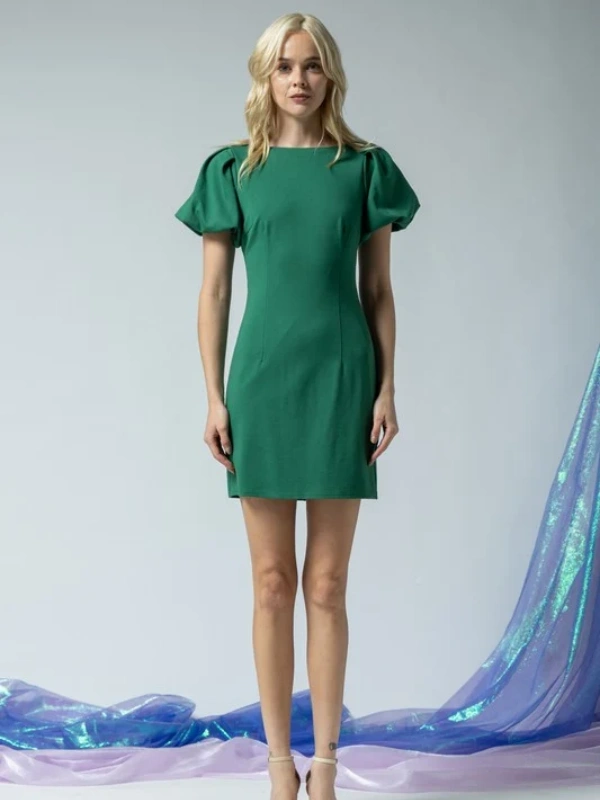
Structured Short Puff

Soft Romantic Puff

Sheer Organza Puff

Long Statement Puff

Off-Shoulder Puff

Fitted Body Puff

Occasion Volume Sleeve

Collection Extension Sleeve
A proven puff-sleeve fit block can support controlled collection extensions across color, length, neckline, fabric, and sleeve proportion.Moving from mini to midi may require a different sleeve scale; changing from poplin to satin can soften the sleeve; switching to organza may require edge and lining changes. Development records should preserve pattern references, fabric specifications, gathering standards, cuff details, and QC points so new versions remain recognizably part of one brand language.
Turn References Into Controlled Puff-Sleeve Development Briefs

Tech Pack Review
- Confirm missing sleeve measurements or construction notes.
- Flag conflicts between sketch, spec, and material.
- Identify measurements that should become QC checkpoints.
- Clarify whether the requested sample is first proto, fit, photo-ready, or PP.
- Record sleeve-specific approval points before pattern cutting begins.

Reference Image Analysis
- Estimate the likely fabric behavior without claiming an exact composition.
- Define which sleeve proportions require client confirmation.
- Separate inspiration from direct copying.
- Convert visual observations into pattern, fabric, fit, and sample review notes.
- Confirm which proportions require measurements, mock-ups, or sample testing before approval.

Original Sample Review
- Record critical sleeve dimensions and construction order.
- Compare original material behavior with proposed bulk fabric.
- Note wear, distortion, or weak points before replication.
- Build a cleaner production basis instead of copying hidden defects.
- Photograph internal sleeve construction when the original garment provides useful development evidence.

Collection Direction Review
- Map sleeve directions across mini, midi, and maxi styles.
- Reuse approved materials or fit blocks where suitable.
- Prioritize high-risk samples earlier in the calendar.
- Keep construction language consistent without making every sleeve look identical.
- Identify hero sleeves, commercial volume styles, and repeatable extensions within the same drop.
Engineering Puff Volume From Pattern to Finished Sleeve
Pattern Geometry Controls Volume, Balance, and Shoulder Proportion
A puff sleeve starts with a pattern that defines where volume is added and how the sleeve joins the bodice. Simply widening a basic sleeve can create uncontrolled bulk, a low sleeve crown, or excessive fabric under the arm. A stronger development route separates visual volume from functional ease.
- Sleeve-cap height: A higher crown can create a more lifted shoulder expression, while a lower crown tends to spread volume horizontally. The correct height depends on neckline, shoulder width, fabric stiffness, and the visual direction of the dress.
- Fullness allocation: Added width may be concentrated at the sleeve cap, distributed around the bicep, or placed near the cuff. Each option changes silhouette and movement. Pattern markings should define where gathering starts and stops instead of leaving the distribution to operator judgment.
- Armhole relationship: Puff sleeves still need a clean armhole. Too much cap ease can cause puckering or poor mobility; too little can flatten the sleeve. Armhole curve, sleeve-head shape, seam allowance, and bodice shoulder position must be reviewed together.
- Body proportion: A 12 cm-looking visual increase at the shoulder can read very differently on a fitted mini than on a loose maxi. Sleeve decisions should therefore be reviewed on the complete garment, not on a detached sleeve sample alone.
The approved pattern becomes the reference for sample revision, grading, first-piece confirmation, and later repeat production. Pattern control is what turns a fashion detail into a repeatable manufacturing standard.
Cuff, Lining, and Internal Support Finish the Silhouette
The lower sleeve determines whether volume stays controlled. A cuff can be elastic, fixed, buttoned, faced, gathered into binding, or integrated with a soft casing. Each construction changes pressure, visual fullness, and the way fabric falls between shoulder and wrist or upper arm.
- Elastic cuffs: Width, cut length, stretch ratio, seam overlap, casing allowance, and recovery all affect comfort. A small variation can change visible sleeve volume because stronger tension pulls more fabric into the cuff zone.
- Fixed cuffs: Finished opening needs enough wearing ease without becoming loose. Closure size, button position, seam bulk, and lining attachment should be checked before grading.
- Lining: Sheer or structured sleeves may need partial or full lining. Lining can reduce transparency, protect skin, and stabilize seams, but excessive weight can pull down a soft puff. Lining volume must therefore support the outer shell rather than compete with it.
- Internal support: Organza, tulle, lightweight interlining, or localized support can be used when the outer fabric cannot maintain the intended shape alone. Support should remain invisible, comfortable, and suitable for repeat production.
- Pressing: Steam, temperature, pressure, and handling can either define a clean sleeve or flatten it. Final pressing instructions should match the fabric instead of relying on aggressive shaping at the end.
The strongest result comes from making support decisions during development, not adding structure after the sleeve has already failed in sampling.
Match Fabric Behavior to the Intended Puff Volume
Different fabrics create different sleeve architecture. Material selection should consider stiffness, drape, transparency, handfeel, pressing response, seam visibility, and bulk availability before the final sleeve pattern is approved. A material decision should support both the sample image and repeatable production behavior.
| Fabric Direction | Typical Puff Result | Main Development Focus | Bulk Control Priority |
|---|---|---|---|
| Organza | Light, transparent, structured volume | Cap shape, seam visibility, skin contact, support | Crease control, pressing, packing recovery |
| Taffeta | Strong, crisp statement volume | Sleeve scale, noise, seam bulk, cuff construction | Lot handfeel, pressing, compression marks |
| Cotton Poplin | Clean commercial puff with moderate body | Gathering density, shrinkage, cuff comfort | Shrinkage, color, seam balance, repeatability |
| Jacquard | Premium textured volume | Pattern repeat, weight, gather placement | Direction, matching, bulk weight consistency |
| Chiffon / Georgette | Soft romantic fullness | Collapse risk, transparency, lining, edge finish | Sheerness, seam quality, gather consistency |
| Satin | Polished softer volume | Drape, puckering, needle marks, pressing | Surface protection, seam smoothness, packing |
| Tulle Support | Layered or internal volume assistance | Layer count, stiffness, scratch risk, invisibility | Recovery, edge finish, layer consistency |
Control Gathering, Cuffs, and Elastic Before Bulk Production

Gathering Must Be Measured, Marked, and Repeated Consistently
Gathering creates visible volume, yet the production method must be more controlled than simply pulling thread until the sleeve looks full. The approved sample should establish where fullness starts, where it peaks, and how it transitions into flatter areas around the underarm or lower sleeve.
- Gathering ratio: The relationship between pre-gathered edge length and finished seam length affects fullness and fabric density. The target does not need to be published as one universal ratio because different fabrics behave differently, but the approved style should carry a defined production reference.
- Placement marks: Notches or process markings help distribute fullness consistently between front shoulder, sleeve top, back shoulder, and underarm zones. Concentrated volume should not drift from one garment to another.
- Stitch control: Basting, gathering stitch, elastic gathering, shirring, or fixed pleat construction each produces a different result. Thread tension, stitch length, seam allowance, and operator sequence should match the selected method.
- Symmetry: Left and right sleeves need the same visual height and density. Measurement alone cannot catch every difference, so visual comparison on a hanger, mannequin, or flat inspection board can complement numeric checks.
- Fabric response: Stiff organza can show every uneven fold; satin may pucker at the seam; chiffon can shift while sewing. The gathering method must follow the material rather than forcing one process across all fabrics.
A repeatable gathering standard gives production and QC a shared reference, reducing reliance on manual styling before inspection or photography.

Cuff and Elastic Specifications Protect Comfort and Sleeve Shape
Cuff construction controls both function and appearance. The same sleeve body can look dramatically different when the cuff opening changes by only a small amount, particularly on short puffs where volume is compressed into a narrow zone.
- Elastic width and length: Both should be specified. Elastic should sit securely without excessive pressure, rolling, twisting, or visible ridging. Stretch and recovery matter more than a soft handfeel alone.
- Casing construction: Channel width must accommodate the elastic without unnecessary movement. Joining seams, elastic overlap, and opening closure should remain flat enough for skin contact.
- Fixed cuff opening: A non-elastic cuff requires wearing ease plus a clean closure method. Button, hook, zip, or simple opening decisions should be confirmed in the sample before grading.
- Size development: Cuff growth should respond to body measurements and wearing comfort, while sleeve fullness may follow a different visual grading rule. Both values should not be increased mechanically at the same rate.
- Wash and wear stability: Elastic recovery can be checked during material approval when brand requirements call for it. The aim is consistent tension across production rather than chasing one laboratory number for every style.
Cuff details should be locked with the pattern, BOM, workmanship notes, and PP sample so the final sleeve does not change when materials or operators change.
Fit the Shoulder, Armhole, and Sleeve for Movement

Shoulder Line Balance
- Check front and back shoulder alignment.
- Review visual width on a mannequin or fit model.
- Compare shoulder position with neckline and waist proportion.
- Correct the bodice or sleeve pattern when drag lines appear.
- Recheck sleeve height after any shoulder-position change because the visual crown can shift.

Armhole Movement Room
- Test forward reach and arm lift.
- Inspect underarm seam strain and sleeve twist.
- Balance ease between bodice armhole and sleeve head.
- Check movement again after lining or support layers are added.
- Inspect neckline movement at the same time because sleeve tension can pull the upper bodice.

Upper-Arm Ease Control
Puff volume does not automatically mean comfortable bicep fit. A narrow inner sleeve or heavy gathered area can still bind the upper arm. Bicep circumference, fabric stiffness, lining, and seam thickness should be reviewed together so the sleeve holds shape without feeling restrictive.
- Define functional bicep ease separately from visible fullness.
- Check fit on the body, not only flat measurements.
- Review larger sizes for proportion and movement.
- Avoid using extra surface gathering to hide insufficient wearing ease.
- Confirm seam bulk at the underarm, where multiple layers can reduce effective room.

Cuff Wearing Comfort
- Confirm finished cuff measurement by size.
- Check pressure after several minutes of wear.
- Inspect elastic channel bulk and seam placement.
- Recheck sleeve shape after comfort adjustments are made.
- Review cuff placement from front and side so comfort changes do not weaken the intended proportion.
Review Puff-Sleeve Feasibility Before the First Sample
Design Proportion Review
- Confirm the intended volume level.
- Check whether sleeve scale supports mini, midi, or maxi proportion.
- Identify areas where the sketch needs measurable definition.
- Recommend sample validation when the sleeve is a major visual feature.
- Compare the sleeve scale with neckline width, waist position, and dress length before freezing the development direction.
- Record the agreed volume direction with front and side references so later revisions do not drift toward a different silhouette.
Fabric Feasibility Review
- Review outer shell and lining together.
- Consider alternative fabrics when the original direction is unstable.
- Check how gathering changes fabric density.
- Confirm whether bulk supply can repeat the approved sample behavior.
- Check pressing response and crease recovery when sleeve volume depends on fabric body.
- Compare sample and bulk-available qualities whenever finish, coating, or yarn structure may change stiffness or surface appearance.
Fit Feasibility Review
- Identify movement-sensitive areas.
- Separate visual fullness from functional ease.
- Review fit priorities by target market and base size.
- Plan fit checks before photo-ready or PP approval.
- Review arm lift, forward reach, and natural standing balance instead of relying on a static front view alone.
- Recheck neckline and bodice stability during movement because sleeve tension can shift the entire upper garment.
Construction Feasibility
- Define construction before final quotation.
- Test complex details on the sample rather than during bulk.
- Specify skin-contact finishing and underarm clean-up.
- Confirm pressing and packing methods for shape-sensitive materials.
- Flag seam-bulk or transparency problems that may require a construction trial before the full sample is completed.
- Confirm whether the chosen construction can be inspected and repeated at production speed without relying on hand correction.
Grading Feasibility Review
- Plan shoulder and armhole grade rules.
- Control bicep ease and cuff growth.
- Review gather amount by size.
- Flag end sizes for additional fitting when the sleeve is highly structured.
- Separate visual sleeve-volume growth from functional bicep and cuff growth across the range.
- Keep approved base-size proportions visible during grading review so numeric growth does not erase the original design character.
Bulk Repeatability Review
- Convert visual details into pattern marks and process notes.
- Define first-piece acceptance points.
- Set measurable and visual QC checkpoints.
- Check shape recovery after packing when volume is compression-sensitive.
- Confirm that production acceptance can be judged through both measurable points and approved visual references.
- Identify which checkpoints belong at first-piece, inline, final inspection, and packing instead of checking everything only at the end.
Build a Production-Ready Puff-Sleeve Sample Step by Step

Brief and Risk Review
- Review tech pack, reference, or original sample.
- Mark sleeve-critical measurements and unknowns.
- Confirm sample purpose and approval target.
- Align material sourcing with development timing.
- Define the first decision point: silhouette approval, fit approval, photo readiness, or production readiness.
- Identify any cuff, lining, or support detail requiring early testing.
- Set the expected review output before sampling starts so comments can be tied to a clear approval decision.

Fabric and Trim Check
Fabric, lining, elastic, cuff components, closures, and support materials are reviewed before the sleeve shape is judged.
A sample made from the wrong material can produce misleading fit comments and unnecessary pattern revisions.
- Compare stiffness, drape, transparency, and handfeel.
- Confirm elastic width and recovery direction.
- Review lining weight and support options.
- Flag materials that may not remain stable in bulk.
- Review pressing and packing sensitivity before approving structured or sheer sleeve fabrics.
- Confirm substitute-material rules if the preferred fabric has supply risk.
- Keep swatch, trim, and material-reference information linked to the sample version used for approval.

First Pattern Sample
The first sample tests the core geometry: cap height, shoulder point, armhole, bicep volume, sleeve length, gather allocation, cuff opening, and overall proportion against the dress body.
- Photograph front, side, and back views.
- Check movement and sleeve symmetry.
- Record where fullness begins and ends.
- Separate fabric issues from pattern issues before revising.
- Compare the sleeve with neckline, waist, and skirt proportion so the first sample is judged as a complete dress.
- Record cuff comfort and arm movement before comments are issued.
- Note whether pressing or manual styling was needed to achieve the photographed shape, since production should not depend on hidden hand correction.

Fit and Shape Revision
- Update measurement and pattern references together.
- Recheck neckline and shoulder balance after sleeve changes.
- Compare the revised sleeve with the approved design direction.
- Preserve a clear revision history for later PP review.
- Recheck left-right symmetry and sleeve-body balance after every major cap, shoulder, or cuff adjustment.
- Update critical measurement notes when the visible correction changes a production control point.
- Confirm whether the revised sleeve now meets the intended visual standard under normal standing and movement conditions.

Size and Workmanship Check
Once the base sleeve is stable, grading logic and sewing repeatability are reviewed. Structured or sheer sleeves may need end-size checks, while elastic cuffs and concentrated gathers need clear process standards.
- Define critical grade points.
- Confirm gather placement marks and cuff construction.
- Check seam smoothness, interior finish, and pressing.
- Identify high-risk operations before bulk line release.
- Review selected end sizes when sleeve structure, cuff pressure, or upper-arm fit carries higher grading risk.
- Confirm that sewing sequence can reproduce the approved gather distribution.
- Add a trial or operator briefing when seam bulk, sheer fabric, or structured volume makes workmanship more sensitive than a standard sleeve.

PP and Bulk Basis
The PP or production-ready sample should give pattern, material, production, and QC teams one reference. Sleeve details are locked alongside body measurements, BOM, workmanship, pressing, labeling, and packing requirements.
- Confirm approved fabric and trim specification.
- Freeze critical sleeve dimensions and visual standards.
- Record QC checkpoints and first-piece requirements.
- Release bulk only after pending details are resolved.
- Keep the approved sleeve reference available to production and QC teams during first-piece and inline checks.
- Confirm packing guidance when volume can be compressed during shipment.
- Close all pending comments in the PP record so production does not receive conflicting versions of the sleeve standard.
Correct Puff-Sleeve Patterns Instead of Styling Around Problems
Repeated sleeve revisions often come from treating visible symptoms instead of correcting the pattern, material, or construction cause. A controlled correction process identifies why the sleeve looks wrong, changes the relevant pattern area, and checks the new result against fit and bulk repeatability.
Diagnose the Cause Before Changing Sleeve Volume
When a puff sleeve appears too flat, too wide, too high, or uneven, adding or removing fabric is only one possible response. The underlying cause may sit in cap height, shoulder placement, armhole shape, bicep width, gather distribution, fabric stiffness, cuff tension, lining weight, or pressing.
- Sleeve looks too flat: Increasing total width may help, but the better correction could be a higher sleeve crown, stronger fabric, more concentrated cap fullness, or internal support. Adding width everywhere can create underarm bulk without producing lift.
- Shoulder looks too broad: The issue may come from a sleeve cap that spreads horizontally, a shoulder point set too far out, or gathering concentrated outside the intended zone. Moving fullness upward can sometimes preserve volume while reducing visual width.
- Sleeve twists forward or backward: Pattern balance, not gathering density, is usually the first area to inspect. Front and back sleeve-head relationships need to match the bodice armhole.
- Cuff looks over-gathered: A very tight cuff can make the lower sleeve balloon excessively even when the upper sleeve is correct. Cuff opening, elastic length, sleeve width, and gathering location should be reviewed as one system.
- Sleeve collapses after pressing: Material response or pressing method may be the problem. Recutting the same pattern will not solve a fabric that loses structure under heat or pressure.
Correction comments should name the affected area, intended result, and technical change. Clear comments reduce repeated sampling and create records that can later guide grading and QC.
Convert Approved Corrections Into Repeatable Production Standards
A revised sample has limited value if the successful changes remain only in a sample maker’s memory. Approved adjustments should be transferred back into the pattern, specification, BOM, workmanship notes, and QC plan before bulk production begins.
- Pattern update: Revised cap height, sleeve width, notches, gather zones, armhole curve, cuff opening, and seam allowances should become the controlled pattern version.
- Spec update: Critical dimensions such as sleeve length, bicep, cuff circumference, and relevant POMs should match the approved sample. Visual standards like sleeve height or fullness can also be documented with reference photos when a flat measurement cannot capture the complete result.
- Workmanship update: Gathering method, stitch sequence, elastic channel, lining attachment, support placement, and pressing instructions should be written clearly enough for production to repeat them.
- Grading update: Changes to the base size should flow into size grading rules. A corrected sample cannot be considered complete if the original grading logic still carries the old sleeve proportions.
- QC update: The issue that caused revision should become a prevention point. If left-right asymmetry was a sample problem, symmetry belongs in first-piece and inline checks. If cuff tension was the problem, elastic specification and finished opening belong in measurement control.
The purpose of correction is not to create one perfect sample. The purpose is to produce a stable technical basis that can survive line production, inspection, packing, and future repeat orders.
Grade Puff-Sleeve Volume Without Losing the Original Proportion
Size grading must protect both fit and visual identity. A five-size run such as XS-XL cannot rely on equal percentage growth across shoulder, bicep, gathering, sleeve length, and cuff because each area serves a different functional or visual purpose.

Separate Functional Growth From Visual Volume Growth Across Sizes
Grading starts by identifying which dimensions follow body growth and which dimensions define the design statement. Armhole, bicep, and cuff often need functional increases to maintain comfort, while sleeve-cap height and gathering volume may need more selective growth to preserve proportion.
- Shoulder and armhole: Growth must follow the brand’s size block and bodice grade. Moving the shoulder point too aggressively can widen the silhouette and change the intended sleeve expression.
- Bicep ease: Larger sizes usually need more functional room, but increasing the entire sleeve width at the same rate can create excessive volume. Functional ease can be added while controlling visible fullness.
- Gather amount: A design approved at the base size may need adjusted gather allowance rather than a simple proportional multiplier. The aim is comparable visual density, not mathematically identical ratios.
- Sleeve length: Length grade depends on sleeve type, target market, and cuff location. Long sleeves may require more controlled length progression than short upper-arm puffs.
- Cuff opening: Elastic and fixed cuffs follow different rules. Elastic needs finished comfort and recovery; fixed cuffs need enough wearing ease and closure clearance.
A base size such as US 4 / UK 8 / AU 8 can establish the design reference, but final grade rules should reflect the brand’s own size standard. Duolan can follow an established size chart and comment structure, or help identify sleeve-critical points when the technical file needs clarification.

Use End-Size Checks When Structure or Fit Risk Is High
Not every style needs a complete fitting sample in every size, but high-volume, structured, off-shoulder, or tightly cuffed sleeves can benefit from additional verification at selected sizes. The purpose is to catch proportion and mobility changes before the full quantity is cut.
- End-size review: Checking a smaller and larger size can reveal whether sleeve height, shoulder width, and cuff pressure are moving out of balance.
- Visual comparison: Front, side, and back photos help compare the sleeve’s relationship with neckline, waist, and dress length across sizes.
- Movement check: Arm lift, forward reach, sitting, and natural walking should remain acceptable after grading, especially when the sleeve is lined or internally supported.
- Measurement check: Bicep, armhole, sleeve length, cuff opening, and selected cap measurements can be used as control points when appropriate.
- Production handoff: Final grade rules should connect to the size specification, controlled pattern set, PP approval, and QC tolerances. Critical sleeve points can also be supported by approved visual references when one flat measurement cannot fully describe the intended volume.
A puff sleeve that looks strong only in the sample size is not a finished development result. Size grading should keep the design recognizable while allowing the wearer to move comfortably and consistently across the planned range.
Sew Puff Sleeves for Clean Shape and Repeatable Workmanship
Build Clean Armholes, Gathered Seams, and Cuff Construction
A puff sleeve concentrates fabric around seams where poor handling becomes highly visible. Stitching must hold the intended shape without creating puckering, twisting, hard ridges, exposed seam allowance, or inconsistent fullness.
- Armhole joining: Gathered sleeve heads should enter the armhole smoothly. Notches and gather zones guide placement so fullness stays in the approved area. Seam allowance, easing, and stitch tension should be selected for the material rather than forcing heavy gathering into a narrow seam.
- Underarm seam: The underarm carries movement and can show twisting quickly. Seam alignment should remain smooth through the armhole and down the sleeve, with reinforcement where the construction creates higher stress.
- Structured materials: Taffeta, jacquard, and crisp poplin can create bulky seam intersections. Excess seam thickness around the cuff or armhole should be reduced without weakening the construction.
- Elastic channels: Casing width, elastic insertion, overlap, closure, and anti-twist handling should produce a flat internal finish. A bulky channel can irritate skin and distort the outer cuff.
- Fixed cuffs: Button, opening, facing, interfacing, or clean-finish construction should support the sleeve while remaining comfortable and visually balanced.
Pressing and Handling Must Preserve the Designed Sleeve Shape
Puff sleeves can be damaged after sewing if pressing and handling are treated as ordinary finishing. Heat, steam, pressure, folding, hanger storage, and carton compression can change the volume that the pattern and sewing teams worked to create.
- Material-specific pressing: Satin may show pressure marks, organza can flatten or crease, taffeta can hold hard folds, and poplin may need controlled steam to remove construction wrinkles without softening the silhouette excessively.
- Shape setting: The aim is not to sculpt every sleeve by hand into a temporary showroom shape. Pressing should help the approved construction settle into a form that can be repeated in production.
- Handling between operations: Structured sleeves can be crushed when bundled or stacked. Work-in-process handling should avoid unnecessary compression around the sleeve head and cuff.
- Final appearance check: Sleeve height, symmetry, seam smoothness, and cuff position should be reviewed after final pressing, not only before it.
- Packing trial: Highly structured sleeves may need tissue, folding guidance, reduced compression, or a packaging arrangement that allows acceptable recovery after unpacking.
Workmanship control links sewing, pressing, QC, and packing. A sleeve is not complete when the final seam is sewn; it is complete when the intended shape can be delivered and recovered consistently at the destination.
Lock the Puff-Sleeve Standard Before Releasing Bulk Production

Freeze Material, Pattern, Construction, and Visual Acceptance References
A production-ready puff-sleeve dress needs more than an approved photograph. The reference package should make clear which details are fixed, which tolerances are acceptable, and which visual elements require comparison against the approved sample.
- Material standard: Main fabric, lining, elastic, support layers, cuff components, thread, and relevant trims should match the approved specification. Weight, handfeel, stiffness, color, transparency, and recovery may affect sleeve shape, so substitutions require review.
- Pattern standard: Controlled pattern version, grading rules, notches, gathering zones, seam allowances, sleeve length, bicep, cuff opening, and armhole relationship should be confirmed.
- Workmanship standard: Stitch method, gathering technique, elastic casing, lining attachment, support placement, underarm finishing, seam clean-up, pressing, and folding should be recorded where they affect final appearance.
- Visual reference: The PP or golden sample can define sleeve height, fullness, symmetry, cuff position, and the relationship between sleeve and bodice. Reference photos can support areas that are difficult to describe numerically.
- QC checkpoints: Measurements and visual checks should focus on the features most likely to drift in production, not on a generic checklist alone.
Once these references are aligned, production teams can work from the same definition of an acceptable sleeve instead of interpreting the design independently.

Use First-Piece Confirmation to Catch Drift Before Full Line Release
Puff sleeves with strong shape, sheer construction, concentrated gathering, tight cuffs, or internal support can justify a first-piece or short pilot review before full production is released. The aim is early correction, not extra bureaucracy.
- Compare first piece against PP reference for sleeve height, width, symmetry, gather placement, cuff position, armhole smoothness, and overall silhouette.
- Measure critical points such as sleeve length, bicep, cuff opening, and any style-specific dimensions agreed during development.
- Check the actual bulk fabric because small changes in stiffness or handfeel can alter volume even when the pattern is unchanged.
- Review sewing sequence and operator handling where concentrated gathering or sheer materials create consistency risk.
- Confirm pressing and packing approach before a large quantity is finished in the wrong shape.
Duolan’s bulk-readiness process is designed to lock fabric, lining, trims, color, measurements, workmanship points, and packing requirements before production expands. For fit-, structure-, or workmanship-sensitive styles, first-piece and pilot verification can reduce late-stage surprises and help keep the approved sample logic intact through bulk production. Any first-piece correction should be recorded before wider line release so the same change reaches sewing, pressing, and QC teams. The updated release note should identify the approved unit or image reference used for comparison during the rest of the run.
Move Approved Puff Sleeves Into Controlled Bulk Production

Production Path Planning
- Match style complexity with suitable lines and process support.
- Identify operations needing pre-production trial or special handling.
- Schedule high-risk styles early enough for correction.
- Keep multi-style programs visible through one production timeline.
- Reserve additional validation time for sleeves with strong structure, sheer construction, or special surface work.
- Coordinate pattern, sampling, sourcing, and production priorities so approval delays on one complex sleeve do not obscure the rest of the collection plan.

Material and Process Lock
- Confirm bulk material against approved direction.
- Lock gathering, cuff, support, and pressing methods.
- Record risk-sensitive operations for production briefing.
- Align labeling and packing requirements before finishing begins.
- Reconfirm material handfeel and stiffness if the bulk lot differs visibly from the approved sample fabric.
- Keep material approval evidence available when a sleeve depends on structure or drape for its final shape.

First-Piece Confirmation
The first completed units are compared with the PP or approved reference before full output is released.
Shape-sensitive puff sleeves benefit from checking more than flat measurements because symmetry, sleeve height, gather distribution, and overall body balance are visual standards as well.
- Compare front, side, and back silhouette.
- Check sleeve length, bicep, cuff, and armhole.
- Review left-right symmetry and seam smoothness.
- Correct process drift before it spreads across the order.
- Record the approved first-piece result so later line checks have a clear visual and measurement reference.
- Use the same reference when operators or production lines change during a multi-style or extended run.

Inline Production Control
Inline checks focus on the operations most likely to create repeatability problems.
Puff sleeves may be inspected after gathering, armhole joining, cuff completion, and pressing rather than waiting for the garment to reach final inspection.
- Watch gather density and placement.
- Check cuff measurement and elastic consistency.
- Inspect sleeve twist, seam puckering, and underarm finish.
- Record defects and feed corrections back to the line promptly.
- Compare units from different operators when gathering or cuff construction carries a higher consistency risk.
- Escalate repeated deviations into a process correction rather than sorting the same defect only at final inspection.

Finishing and Packing
Final pressing, thread cleaning, visual inspection, label application, folding, and carton packing can affect the sleeve after sewing is complete.
Structured sleeves need enough protection to arrive with acceptable shape recovery.
- Use fabric-appropriate pressing conditions.
- Check final sleeve height and symmetry after pressing.
- Avoid crushing statement sleeves during folding.
- Verify labels, barcodes, packing, and carton marks against the order requirement.
- Check sleeve recovery after folding when the approved volume is sensitive to compression.
- Keep folding and protection instructions consistent across packing stations so delivery appearance is not determined by individual handling.

Lead-Time Planning
- Confirm the style category before scheduling.
- Add time for special material or process validation where needed.
- Coordinate inspection and packing inside the delivery plan.
- Reconfirm timing if approvals or materials change after booking.
- Keep inspection, packing, and shipment handoff visible inside the same schedule rather than treating them as after-production tasks.
- For multi-style programs, confirm each style’s readiness separately before combining the final delivery plan.
Puff-Sleeve Bulk Quality Control With Defined Checkpoints
Quality control should compare bulk garments against the approved sleeve standard, not rely on a generic final check. Measurement, symmetry, gathering, elastic, sewing, pressing, and packing checkpoints help catch drift while correction is still manageable.
| QC Checkpoint | What We Check | Why It Matters | Typical Risk Controlled |
|---|---|---|---|
| Sleeve Height | Approved cap height and visible lift | Protects intended silhouette | Flat or over-raised sleeve |
| Left-Right Symmetry | Height, fullness, cuff level, gather placement | Keeps the garment visually balanced | Uneven sleeves |
| Gather Distribution | Density and position against pattern marks | Maintains designed volume | Random fullness or bald areas |
| Sleeve Length | Finished length by size | Protects proportion and cuff placement | Short/long sleeve mismatch |
| Bicep and Armhole | Finished measurement plus movement | Supports comfort and fit | Restriction, drag, sleeve twist |
| Cuff Opening | Finished opening or elasticized circumference | Controls comfort and visible volume | Tight pressure or sleeve drop |
| Elastic Recovery | Tension, twist, return after stretch | Keeps cuff function stable | Loose or inconsistent cuffs |
| Seam Quality | Armhole, underarm, gathering seam, lining join | Protects appearance and durability | Puckering, open seam, bulk |
| Pressing Shape | Final volume, creasing, surface condition | Preserves approved visual finish | Flattening or pressure marks |
| Packing Recovery | Sleeve condition after folding/compression | Protects delivered appearance | Crushed structured sleeves |
Manufacturing Scale Behind Repeatable Puff-Sleeve Production Programs
Owned Factory Network
Sewing Line Capacity
Flexible Response Lines
Material Supply Access
Compliance Readiness
Multi-Style Coordination








Anonymized Puff-Sleeve Program From Development Into Bulk Production
Program Scope, Development Mix, and Sleeve-Risk Priorities
The program covered 18 dress styles and 42,600 pieces across five size groups. The collection combined short structured puffs, softer romantic sleeves, sheer organza volume, long statement sleeves, and fitted dress bodies with puff-sleeve contrast. Six main fabric directions were involved, including poplin, organza, satin, chiffon-like woven fabric, jacquard, and selected support materials.
Development was organized around three sample levels: first development samples for proportion and material direction, revised fit or construction samples for sleeve and body corrections, and PP or production-ready samples used to lock the bulk basis. The most sensitive styles were not automatically the styles with the largest sleeves. Several risks came from interactions between the sleeve and the rest of the garment: a square neckline became unstable when shoulder position moved outward; a fitted waist made a moderate sleeve look visually wider; a sheer organza sleeve exposed seam allowance and gathering inconsistency; a long cuffed sleeve required more upper-arm movement than the initial sketch suggested.
The review therefore separated each problem into design, material, fit, construction, grading, and bulk-repeatability categories. High-risk sleeve styles were sampled earlier, while lower-risk color or length extensions followed after the core fit block and sleeve logic were stable. That sequencing reduced late-stage changes inside the main production calendar.
Pattern Corrections, PP Locking, and Production Control Actions
Several corrections focused on moving volume rather than simply adding volume. One structured sleeve received a higher, narrower cap to create more upward lift without widening the shoulder line. A softer sleeve kept similar overall fullness but changed gather distribution so the underarm stayed cleaner. Elastic cuff specifications were separated by size to improve wearing comfort while keeping the intended visual density.
Before bulk production, approved styles were translated into production references covering fabric, lining, elastic, sleeve pattern version, gathering zones, sleeve length, bicep, cuff opening, workmanship, pressing, and packing. Styles with organza or strong statement volume used first-piece checks before full release. Inline inspection focused on sleeve symmetry, gathering, cuff level, seam smoothness, and pressing shape rather than waiting for final inspection to identify every issue.
Bulk timing was planned by complexity rather than treating all 18 styles as one production block. Simple woven styles followed the shorter production route, while structured and sheer sleeves were given more validation time. Packing guidance was also adjusted for sleeves with compression risk. The program moved from sample approval into a controlled 42,600-piece production plan with the same sleeve references available to pattern, production, QC, and packing teams. Production notes remained style-specific so a softer sleeve was not judged by the same finishing standard as a structured sleeve.
Commercial Outcome and Repeat-Order Readiness
The final value of the program was not the number of puff-sleeve variations alone. The collection left behind controlled pattern versions, size rules, material references, sleeve construction notes, PP standards, QC checkpoints, and packing guidance that could be reused for later color, length, neckline, or fabric extensions.
For a fashion brand running frequent drops, production memory matters. A proven sleeve block can support future development without treating every new style as an unrelated project. Color extensions can reuse the same pattern when fabric behavior remains comparable. Length extensions can retain the upper-body logic while rebalancing the complete silhouette. Fabric changes can start from a known sleeve standard and focus review on the new material behavior rather than reopening every measurement.
The anonymized program also created clearer reorder checkpoints: approved pattern version, BOM, elastic specification, critical sleeve measurements, visual PP reference, workmanship notes, and QC images. Future runs can still require material-lot and production-readiness checks, but the starting point is a documented standard rather than memory. The structure helps keep repeat orders closer to the original approved product while allowing controlled collection development over time. It also gives product teams a clearer basis for deciding which future changes are low risk and which need fresh sampling.

Evidence Behind Puff-Sleeve Development and Bulk Control
A manufacturing claim is stronger when the development and production stages can be seen. The most useful evidence shows how sleeve shape was reviewed, corrected, standardized, inspected, and protected rather than relying on finished campaign imagery alone.
Pattern Review Evidence
Fabric Comparison Evidence
Place structured and soft fabric swatches beside corresponding sleeve samples or mannequin views. Organza, poplin, satin, chiffon-like woven fabric, jacquard, and support layers should demonstrate how stiffness, drape, transparency, and weight change the same design direction. A useful image pair shows why one material holds a crown while another creates softer fullness. Include the garment view after pressing so material behavior is shown in the condition production teams actually need to reproduce.
First Sample Evidence
Use front, side, and back views of an internal or approved-to-share puff-sleeve sample. Mark sleeve height, shoulder balance, bicep volume, cuff position, and any visible issue found during review. A sample image becomes more credible when viewers can see what the development team actually evaluates. Include the sample stage so teams can distinguish first-proto review from PP approval evidence. A short note can identify whether the image is checking shape, fit, workmanship, or bulk readiness rather than presenting every sample as final.
Revision Comparison Evidence
Show a before-and-after sleeve correction with a short technical note. Examples include moving volume upward, reducing shoulder width, improving cuff comfort, correcting sleeve twist. The comparison should connect the visible improvement to a pattern, fabric, or construction action rather than presenting a vague “improved sample.” Include one measurable or observable control point, such as cuff opening, shoulder position, or revised gather zone. Showing the reason for the change makes the comparison more valuable than a simple before-and-after beauty image.
Cuff Construction Evidence
Photograph elastic channels, fixed cuffs, lining attachment, cuff seam, and inside finishing at close range. Include the outside silhouette and the internal construction so product teams can see how comfort, cleanliness, and repeatability are built into a highly visible sleeve detail. Add elastic width, cuff type, or construction-note context where disclosure is appropriate and non-confidential. A second image can show how the inside finish sits against the arm, linking appearance with wearing comfort and repeatability.
First-Piece Evidence
Document the first completed bulk unit beside the approved PP or reference sample. Captions can identify sleeve symmetry, gather density, sleeve length, cuff level, seam quality, and pressing shape as release checks. The image should show why the line was approved to continue, not merely show a garment on a rack. A short release note can identify any correction completed before wider production. The strongest proof shows the exact approved sleeve condition production and QC were instructed to follow after the first-piece review.
Inline QC Evidence
Packing Recovery Evidence
Puff-Sleeve Dress Manufacturing Frequently Asked Questions
Yes. A reference image can define visual direction, but production needs more detail. We review sleeve shape, cap height, shoulder position, fullness, cuff, likely fabric behavior, and the relationship with the bodice. Missing points such as composition, size spec, lining, support, and target quantity are clarified before pattern work. Reference images guide development; they are not treated as complete production files.
Suitable options depend on the target silhouette. Organza and taffeta create stronger structure; poplin gives cleaner commercial volume; chiffon and georgette create softer fullness; satin gives a polished but more draped result; jacquard adds texture and weight. Tulle or other support layers can assist selected constructions. Fabric approval should consider stiffness, drape, transparency, skin feel, pressing response, and bulk availability.
Volume is controlled through sleeve-cap geometry, added pattern fullness, gathering zones, shoulder position, bicep width, cuff opening, fabric behavior, lining or support, and pressing. The approved sample should convert those decisions into a controlled pattern, notches or gather marks, workmanship notes, and visual references so production does not depend on operator judgment alone.
Sampling lead time is confirmed after the design brief, fabric availability, sleeve construction, sample purpose, and revision scope are reviewed. A simple poplin puff sleeve and a lined organza statement sleeve should not be scheduled as if they require the same work. We define the route through first sample, fit or construction revision, and PP or production-ready confirmation before giving a project timeline.
Yes. Existing brand size standards can be followed, with sleeve-critical measurements reviewed against fabric and construction. For a size run such as XS-XL, shoulder, armhole, bicep, sleeve length, gather amount, and cuff growth may need different grading logic. When structure or fit risk is high, selected end-size checks can be added before bulk cutting.
Consistency starts with the elastic specification and construction method. Width, cut length, stretch, recovery, casing size, joining method, cuff measurement, and size grading should be defined. First-piece and inline checks can compare finished cuff opening, left-right symmetry, elastic twist, comfort, and the visible sleeve volume created by the cuff tension.
Symmetry is checked through pattern marks, controlled gathering zones, first-piece comparison, inline visual inspection, and selected measurements. Sleeve height, fullness, cuff level, and gather placement should be compared left to right after sewing and after pressing. Visual checks are important because two sleeves can meet flat measurements yet still look different on the finished garment.
Current production references are 15-20 days for simple styles, 20-30 days for regular styles, and 30-45 days for complex styles after materials, approvals, and production conditions are ready. Puff-sleeve complexity depends on fabric, lining, structure, special processes, size range, quantity, and packing needs. Final timing is confirmed against the actual style list and launch schedule.
Yes. Puff-sleeve programs can include different sleeve volumes, fabrics, lengths, necklines, and body silhouettes. Development is stronger when core fit blocks, approved sleeve directions, material families, sample priorities, and production risk are coordinated across the collection. Multi-style orders are then planned by complexity so high-risk styles do not disrupt the full program.
Send the available design basis: tech pack, reference images, original sample photos, size chart, target fabric, color plan, sample purpose, expected quantity, and launch timing. Brand-specific label, packing, QC, or compliance requirements can follow as the project advances. Complete information helps us review sleeve construction, material direction, fit priorities, sample path, and bulk readiness more accurately.

Send Your Puff-Sleeve Dress Project for Technical Review
Share the product information already available, and Duolan can review the sleeve structure, fabric direction, fit priorities, sample route, and bulk-production risks before confirming the next step. A clear brief is especially useful for structured organza sleeves, long statement sleeves, off-shoulder constructions, fitted dresses with strong shoulder volume, sheer sleeves, elastic cuffs, and multi-style collection programs. Formal quotation and production timing depend on confirmed design details, materials, size range, quantity, workmanship, packing, QC, and delivery requirements. For projects already in sampling, include current sample photos and revision comments. For production-ready styles, include the approved sample status, BOM or material information, size breakdown, target delivery window, and any brand-specific inspection or packing standard.
Please include when available:
- Tech pack, reference image, or original sample photos
- Target fabric, lining, elastic, cuff, and support direction
- Size range, base size, and fit comments
- Style count, color plan, and estimated order quantity
- Sample stage or current approval status
- Target launch date and delivery requirement
- Label, barcode, packing, QC, or compliance instructions