Skip to content

Strapless Dress Manufacturing
Structured development and scalable production for strapless dresses where support, fit, fabric behavior, grading and bulk consistency must work together.
- 9 critical control points are reviewed around the upper bodice: neckline height, anti-slip, cup position, boning, inner elastic, side coverage, back tension, zipper strength and movement safety.
- Size development checks the base size first, then verifies how coverage and support behave across the planned grade rather than relying on proportional measurements alone.
- Bulk timing is planned by construction complexity: regular styles commonly follow a 20-30 day production window, while complex structured programs commonly require 30-45 days after materials and production standards are locked.
Built for Fashion Teams Managing Structured Strapless Collections
Strapless programs suit brands with defined product direction, planned launch calendars and clear expectations for fit, visual finish, production control and repeatability. Duolan works around the development decisions needed before a style can move confidently from concept into bulk.
Global Fashion Brands
Product Development Teams
Partywear and Occasion Brands
Six Manufacturing Risks Behind Unstable Strapless Dresses
Upper Edge Slipping
- Neckline position must match the intended bust coverage, not only the sketch.
- Anti-slip and elastic are selected around fabric handfeel and skin contact.
- Back tension is reviewed together with zipper or lace-up closure behavior.
Bust Support Loss
- Cup depth and width are reviewed against the base-size fit goal.
- Side coverage is checked for security without excessive compression.
- Boning position is selected to stabilize shape rather than create visible ridges.
Cup Position Mismatch
- Bust distance, cup width and cup depth are treated as related measurements.
- Neckline height and side-bust coverage are checked with cup position.
- Molded cups, foam cups and fabric-shaped cups require different pattern allowances.
Size Grade Distortion
A strong base-size sample does not guarantee a stable size set. Strapless styles carry more fit responsibility across the upper body because no shoulder strap can compensate for a weak grade. Large proportional changes can produce gaping, excessive pressure or altered neckline height across the range.
- Base-size approval establishes the fit direction, not the final grading answer.
- Bust, underbust, waist and back relationships are checked through the planned sizes.
- Cup position, side coverage and support strength may need size-specific adjustment.
For a five-size XS-XL range, each graded sample should preserve the intended silhouette rather than merely preserve measurement increments.
Fabric Structure Conflict
A strapless pattern developed in one fabric can behave very differently after a material change. Stretch satin may relax at the upper edge, jersey may lose recovery, mesh may need a stable base layer and heavy sequin fabric may pull against the bodice.
Visual similarity between swatches is not enough.
- Stretch and recovery affect neckline tension and body hold.
- Weight affects boning, lining and zipper load.
- Surface friction changes how anti-slip systems perform against the body.
Material substitution therefore triggers a structure review, especially when a previously approved fit block is being reused for a new collection.
Sample Bulk Variation
Many production problems start after a good sample has already been approved. Different boning, elastic, cup foam, lining, zipper construction or fabric batch can change how a strapless dress fits even when the outer pattern is unchanged. Bulk control needs measurable production standards.
- Approved material references must be linked to BOM and PP records.
- Neckline height, cup position and back circumference require clear measurement points.
- First-piece and inline checks should focus on support components, not only general workmanship.
Duolan treats sample approval as the beginning of production standardization rather than the end of development.
Strapless Dress Directions Developed for Commercial Fashion Collections
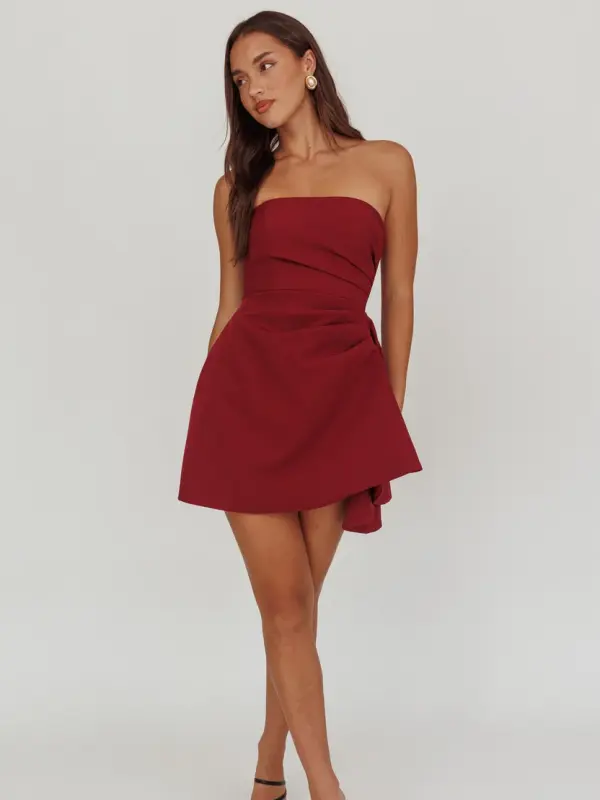
Structured Strapless Mini
- Best suited to party, homecoming, birthday and going-out collections.
- Common development focus: cup position, boning, upper-edge stability, waist shaping and hem security.
- Suitable materials include structured woven, support satin, crepe and selected stretch wovens.
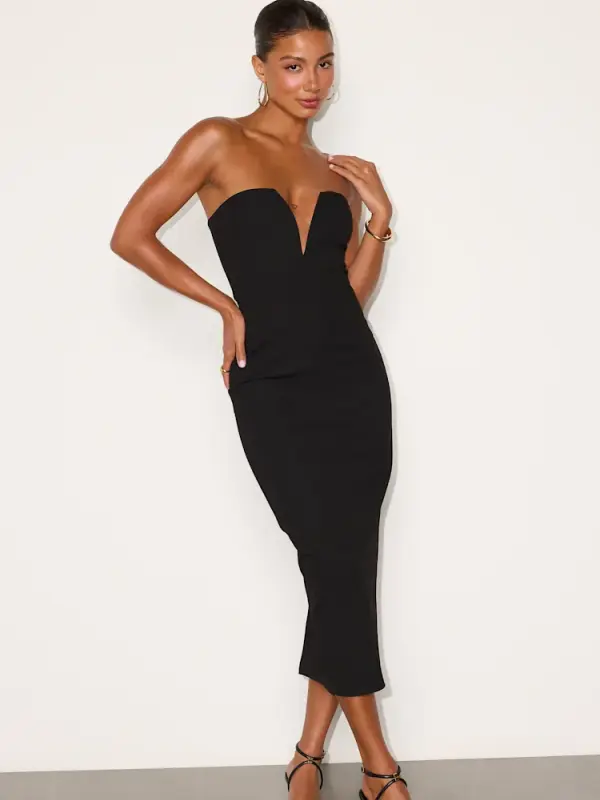
Bodycon Strapless Dress
- Stretch percentage and recovery are reviewed before pattern confirmation.
- Bust-to-waist balance is adjusted with the chosen fabric rather than copied from a woven block.
- Inner elastic, power mesh, light boning or lining support can be combined according to compression level.
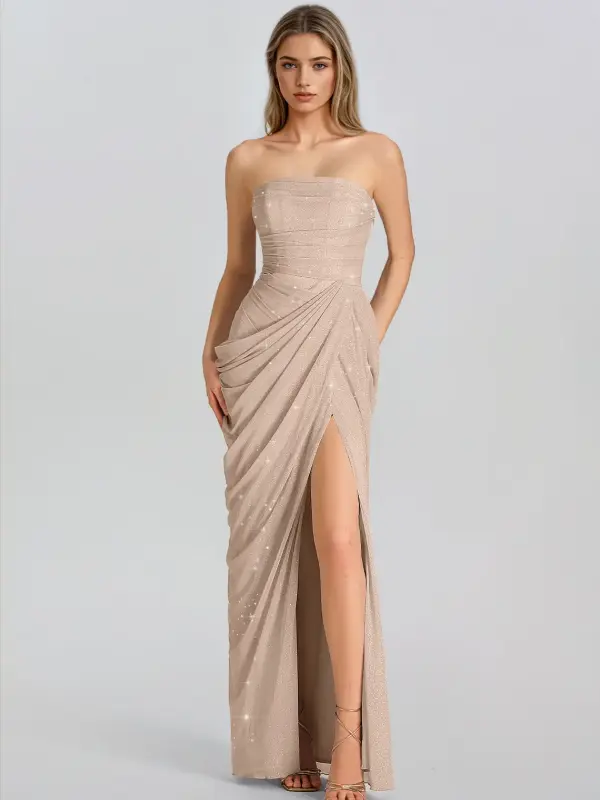
Corset Strapless Dress
Corset-inspired strapless styles require a more deliberate internal architecture. Boning channels, cups, interlining, lining, waist shaping, zipper load and possible lace-up adjustment work together as a support system.
Decorative corset seams alone do not create structural control.
- Cup depth and center-front shape define the bust line.
- Plastic, soft, spiral or steel boning is selected according to support level and wear comfort.
- Back zippers or lace-up closures must handle tension without distorting the outer fabric.
Sampling should include seated and movement review because excessive rigidity can look strong in photos while performing poorly during wear.
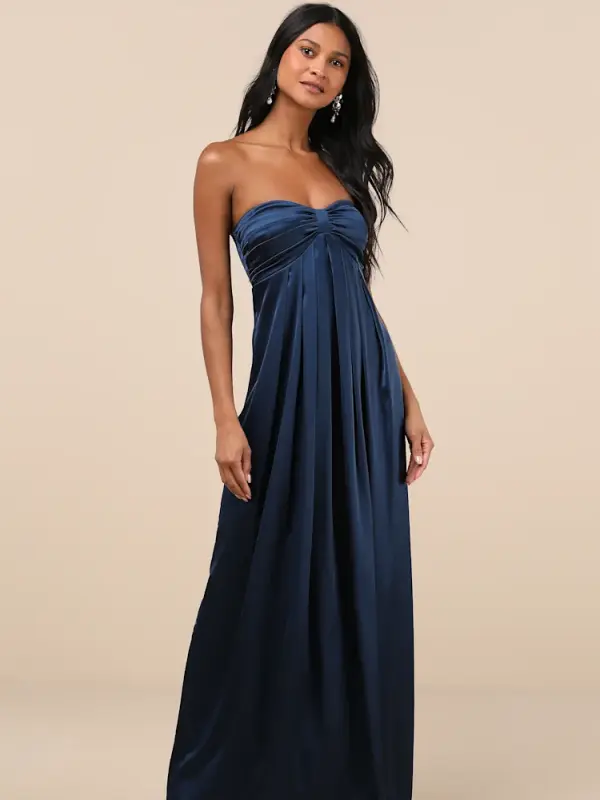
Satin Strapless Dress
- Fabric weight and weave influence how much internal support is required.
- Seam construction and pressing are planned around surface sensitivity.
- Lining, interlining and anti-slip components are selected to avoid visible bulk.
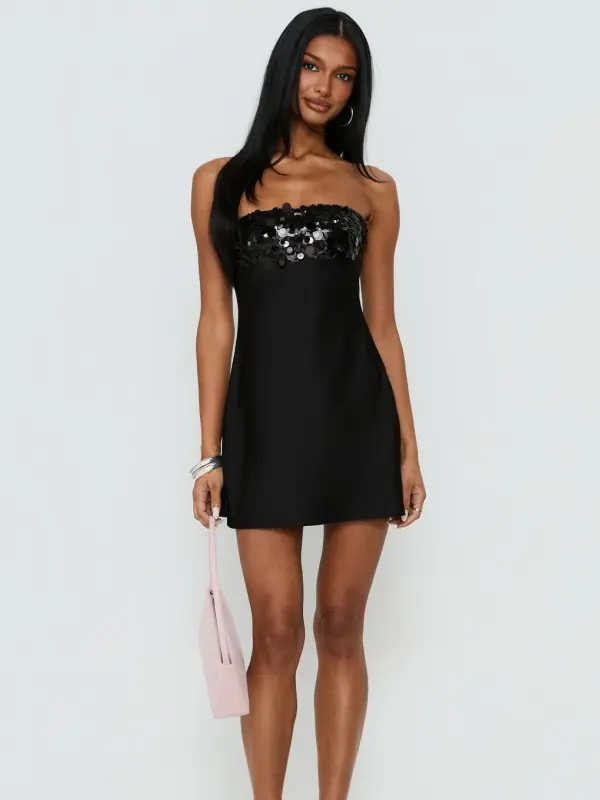
Party Strapless Dress
- Sequin weight may require stronger lining, boning or zipper reinforcement.
- Mesh inserts need coverage, stretch direction and seam stability review.
- Ruching can hide some seams but can also distort neckline tension when gathering ratios vary.
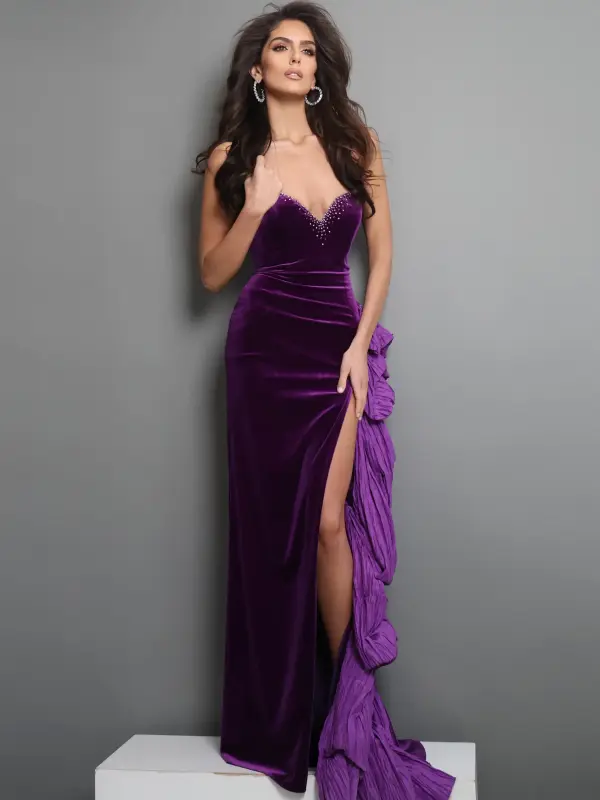
Occasion Strapless Dress
- Crepe, satin, lace and layered mesh each need different internal support decisions.
- Midi and maxi lengths add skirt weight that can pull against the bodice.
- Lining color, opacity and surface finish are reviewed alongside support construction.
Hidden Support Engineering Behind a Secure Strapless Bodice
Engineering the Upper Edge Against Downward Movement
A secure upper edge starts with the pattern. Anti-slip tape can improve grip, but silicone alone cannot correct a neckline cut too wide, a back panel too loose or a fabric with poor recovery. Duolan reviews the top edge as a continuous line from center front through the side body and across the back, checking where tension is created and where the dress can relax during movement.
- Upper-edge position: neckline height is set around intended bust coverage and design proportion. A small visual change at center front can alter both security and styling.
- Pattern tension: front, side and back panels are balanced so the garment holds without creating aggressive compression at one point.
- Anti-slip options: silicone gripper tape, soft elastic and internal elastic constructions are selected according to skin contact, fabric weight and required hold.
- Back control: zipper length, back circumference and any lace-up or elastic section are reviewed as part of the same support loop.
- Surface compatibility: smooth satin, stretch jersey, textured lace and sequin fabrics create different levels of friction and require different internal treatment.
Movement review should include raised arms, seated posture, torso rotation and normal walking. A dress that remains secure only while standing still has not completed fit validation. The aim is a stable neckline without visible pulling, gaping or constant adjustment by the wearer.
Building Bust Support with Cups Boning and Lining
- Cup geometry: cup width, depth, bust distance and side coverage are reviewed together. Molded cups, foam cups and fabric-shaped cups each affect seam allowance and internal space differently.
- Boning strategy: plastic boning, spiral steel, flat steel, soft boning and boning channels can serve different functions. The choice depends on curvature, garment weight, comfort and the visual rigidity required.
- Interlining: selected areas can be stabilized without making the complete bodice stiff. Reinforcement may be concentrated along the neckline, zipper, cup frame or side panel.
- Lining attachment: lining must support the structure without twisting, bubbling or pulling the outer shell. Seam positions and internal anchoring points are planned around the outer design.
- Zipper load: a back or side zipper may carry significant tension. Tape strength, insertion method and surrounding reinforcement therefore matter to both fit and durability.
Balancing Movement Comfort and Production Repeatability
A secure strapless dress still needs to move. Excessive compression can create red marks, restricted breathing, zipper stress or a neckline that digs into the body. Too little structure produces slipping and collapse. Duolan uses fit review to find the working range between hold and comfort, then converts the approved result into measurements and construction references that production teams can repeat. Nine checkpoints are especially useful when a strapless style approaches production readiness: neckline height, anti-slip position, cup location, boning position, inner elastic tension, side coverage, back circumference, zipper strength and movement safety.
- Fit approval confirms how the dress should feel and look on the body.
- PP approval confirms the material and construction combination intended for production.
- First-piece review confirms whether the sewing line has reproduced the agreed standard.
- Inline checks focus on support-sensitive areas before a large volume is completed.
- Repeat-order records preserve the approved pattern, BOM, support components and known risk points for future color or length extensions.
The strongest strapless manufacturing system is not the heaviest support system. It is the one that delivers the intended silhouette, remains secure during normal movement and can be reproduced consistently across sizes and production runs.

Pattern Fit and Grading for Secure Strapless Sizes
Base Size Fit Defines the Structural Starting Point
A base-size fitting is where design intent becomes a wearable structure. Measurements alone cannot confirm the result because the same bust and waist numbers can produce very different silhouettes depending on fabric stretch, cup construction, seam placement and neckline shape. Duolan reviews the garment on the body or fit form with attention to how each structural area interacts.
- Bust balance: the cup or shaped bust section must sit around the intended bust point without flattening, gaping or shifting sideways.
- Neckline level: center-front and side-front heights are checked for visual proportion and coverage during movement.
- Side-body control: the side seam and side-bust area help transfer support toward the waist and back.
- Waist placement: a waistline that sits too high or too low can change the entire bodice tension and make the skirt hang incorrectly.
- Back circumference: the back must hold enough tension to support the front without creating zipper strain or horizontal drag lines.
Fit comments are recorded as specific pattern or construction actions. A note such as “needs more support” is not enough for the next sample round; the team needs to know whether the required change concerns cup position, side coverage, elastic tension, boning, back width or fabric behavior. Clear diagnosis reduces circular revisions and helps preserve the intended fashion line.
Size Grading Must Protect Coverage and Support
- Bust and underbust relationships are monitored rather than using bust circumference alone.
- Cup width, depth and bust distance are reviewed as the range develops.
- Boning and side seams should continue to follow useful body lines instead of migrating away from support zones.
- Back width and elastic behavior are checked because larger circumferences can change hold even when the material is identical.
- Neckline coverage is reviewed from front and side views so visual balance remains consistent.
Fit Comments Become Measurable Pattern Actions
The value of a fitting round depends on how comments are translated. Duolan separates feedback into fit, measurement, construction, fabric and visual categories before the next sample is cut. A change in fabric may require a pattern correction; a change in neckline height may affect cup position; a tighter back may change zipper load and upper-edge tension. Treating each comment independently can create a new problem while solving the old one. A structured revision path can include five steps:
- Confirm the comment and identify the affected body or construction area.
- Measure the current sample against the approved or target specification.
- Mark the pattern change and any linked construction or material change.
- Produce the revised sample with a clear version record.
- Review whether the change affects grading, BOM, workmanship or future bulk checks.
For photo-ready and fitted party styles, visual review should include front, side and back because a strapless bodice can appear smooth from one angle while gaping or collapsing from another. Once fit, structure and measurements are aligned, the approved pattern becomes the production foundation. Later PP and bulk checks then compare against defined points rather than a general impression of “similar fit.” The revision record also gives merchandising and technical teams a clear basis for approving later color, fabric or length extensions without reopening every decision.
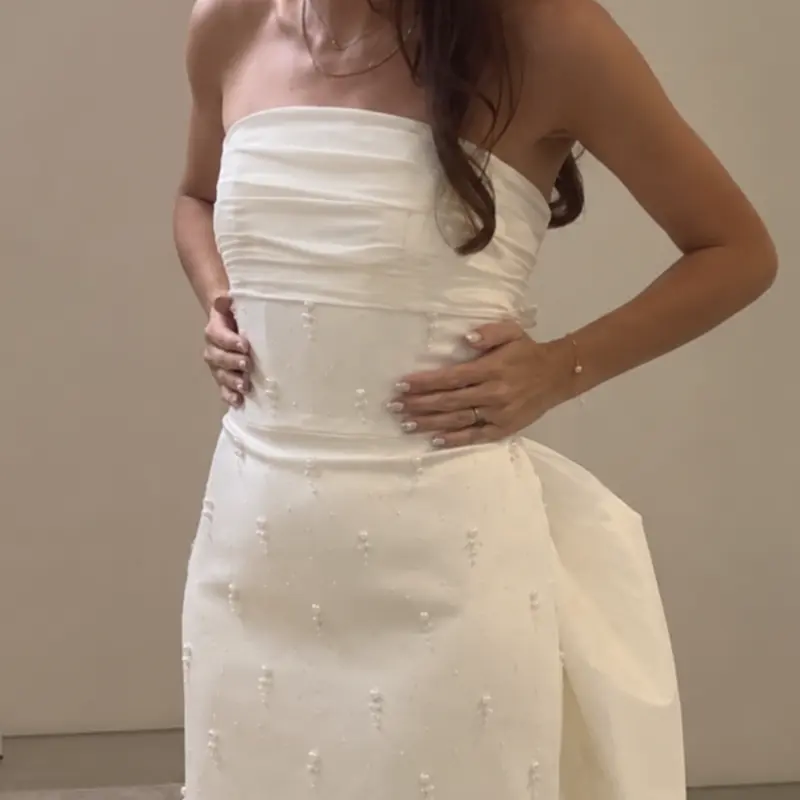
Match Strapless Fabrics to Structure Support and Finish
Fabric selection changes how much support a strapless dress needs and how easily the approved silhouette can be repeated. Duolan compares material behavior by stretch, recovery, weight, friction, opacity, surface sensitivity and the load created by the finished garment.
| Fabric Direction | Best Strapless Use | Main Manufacturing Risk | Development Control |
|---|---|---|---|
| Structured woven | Corset minis, sculpted occasion styles | Excess rigidity or pressure at the upper body | Shape the pattern around cup, boning and waist control; use targeted interlining instead of over-stiffening the complete bodice. |
| Stretch satin | Fitted party and bodycon styles | Slipping, seam puckering and relaxation after wear | Check stretch/recovery, stabilize the upper edge, control needle and pressing settings, and match lining to surface sensitivity. |
| Crepe | Clean occasion mini, midi and formal silhouettes | Weight and drape can pull against the bodice | Balance bodice support with skirt weight; review neckline hold, zipper load and lining before PP approval. |
| Jersey / stretch knit | Bodycon strapless and ruched styles | Poor recovery, rolling neckline and transparency under tension | Test recovery and opacity, use inner elastic or power mesh where needed, and adapt the pattern to the actual stretch direction. |
| Mesh or lace overlay | Party, occasion and corset-inspired styles | Overlay cannot carry structural load; transparency and seam distortion | Build support in the stable base layer, control overlay stretch and placement, and align lining color with coverage goals. |
| Sequin or embellished fabric | Statement party and event styles | Added weight, scratchy edges, zipper load and uneven neckline tension | Reinforce support areas, protect the skin with lining, control embellishment near seams and verify finished garment weight before bulk. |
Sample Development Built Around Fit Structure and Production
Start with a Defined Development Basis
Sample work moves faster when the project begins with a clear reason for the sample. A first prototype for silhouette review does not require the same level of locking as a PP sample intended to release production. Duolan therefore establishes the development basis before cutting: design input, base size, fabric direction, fit priority, support level and sample purpose. A project can begin from a tech pack, reference image, original garment, sketch, sample photo or a mixture of those inputs. The initial review identifies missing information and separates visual requirements from structural requirements. For a strapless style, the most sensitive questions normally include bust shape, upper-edge height, desired hold, back opening, zipper or lace-up system, intended fabric stretch and whether the dress needs light support or corset-level structure.
Five sample outputs help keep the process organized:
- Development brief: what the style is trying to achieve.
- Feasibility note: where fit, fabric or construction risk is concentrated.
- Sample review note: what is already close and what needs evaluation.
- Revision summary: what changes before the next version.
- PP checklist: what must be locked before bulk release.
The sample schedule is confirmed after these factors are reviewed rather than treated as one fixed number for every strapless design.
Use the First Sample to Diagnose Rather Than Finish
- Pattern or seam areas adjusted after fitting.
- Cup, boning, lining and elastic changes.
- Fabric or trim substitutions affecting support.
- Measurement points changed and the reason for the change.
- Visual details postponed until fit and structure are stable.
Lock the PP Sample as a Production Reference
A PP sample has a different job from an early development sample. By the time a strapless style reaches PP approval, the team should know the intended material, pattern, measurements, internal support components, workmanship and visible finish. Any unresolved issue can multiply across thousands of units, so production release requires a clear basis rather than informal approval. Duolan links the PP result to the working production documents. Relevant records can include the approved pattern version, size spec, BOM, fabric reference, lining specification, cup type, boning type and position, elastic or anti-slip details, zipper requirement, stitching notes, pressing points, packing instruction and identified QC checkpoints. For a structured strapless program, PP review should confirm at least:
- Neckline height and stability.
- Bust and cup position.
- Boning location and comfort.
- Side coverage and back tension.
- Zipper function under wear tension.
- Lining smoothness and outer-surface appearance.
- Movement safety during normal wear.
Once the PP basis is locked, production planning can focus on replication instead of continuing product development on the sewing line. The separation protects both delivery timing and consistency. Production, QC and sourcing teams can then refer to one approved basis when questions arise, reducing verbal interpretation and late changes after line release.
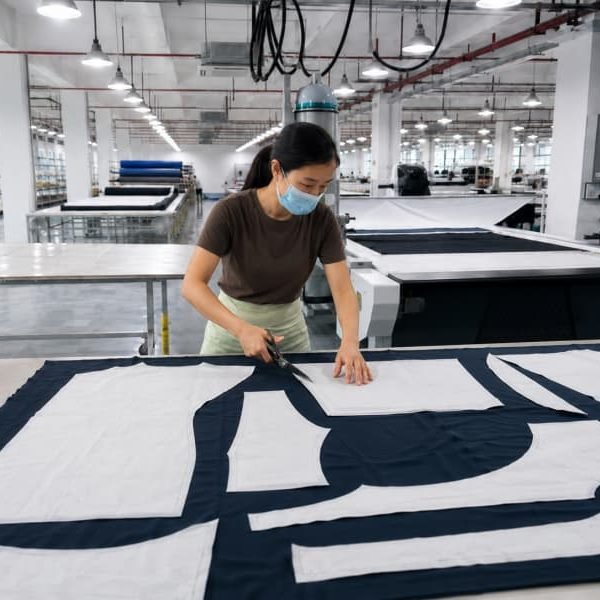
Construction Details That Hold Strapless Dresses in Shape
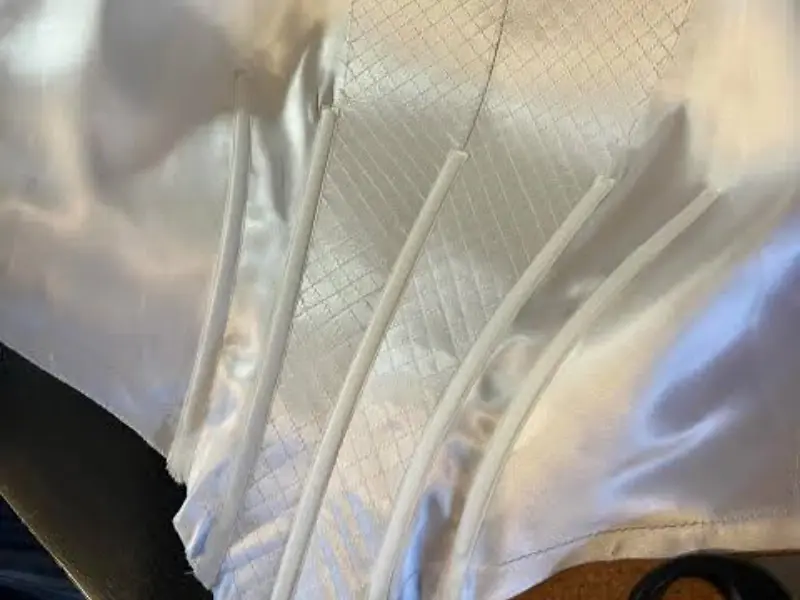
Boning Channels
- Channel position follows the approved pattern and support map.
- Bone length is checked for seated comfort and upper-edge stability.
- Channel ends are secured so the bone does not migrate or push through.
- Outer fabric is monitored for show-through, especially on satin and fitted light colors.
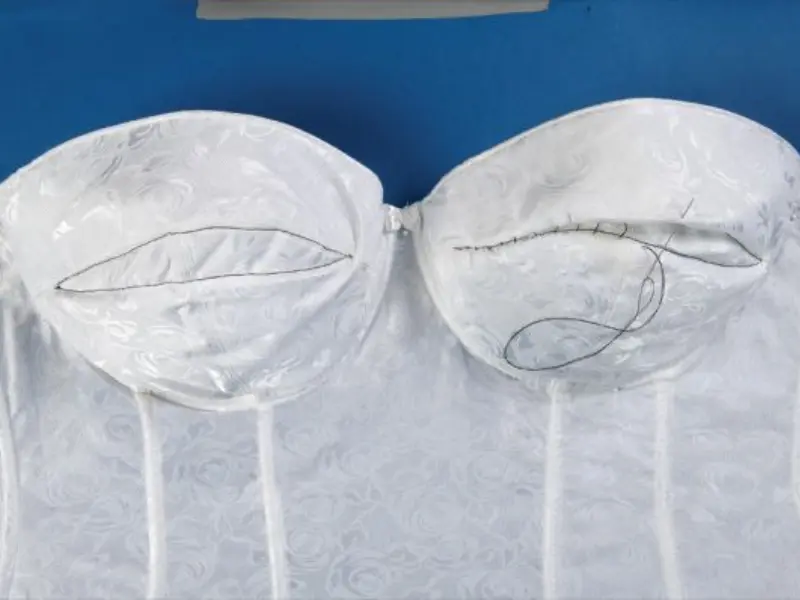
Cup and Bust Seams
- Cup pieces are matched by notches and seam allowance, not by visual guessing.
- Foam or molded cups are positioned to the approved bust point.
- Seam bulk is trimmed and pressed carefully to avoid ridges under satin or smooth woven fabric.
- Lining attachment must not pull the cup out of position.
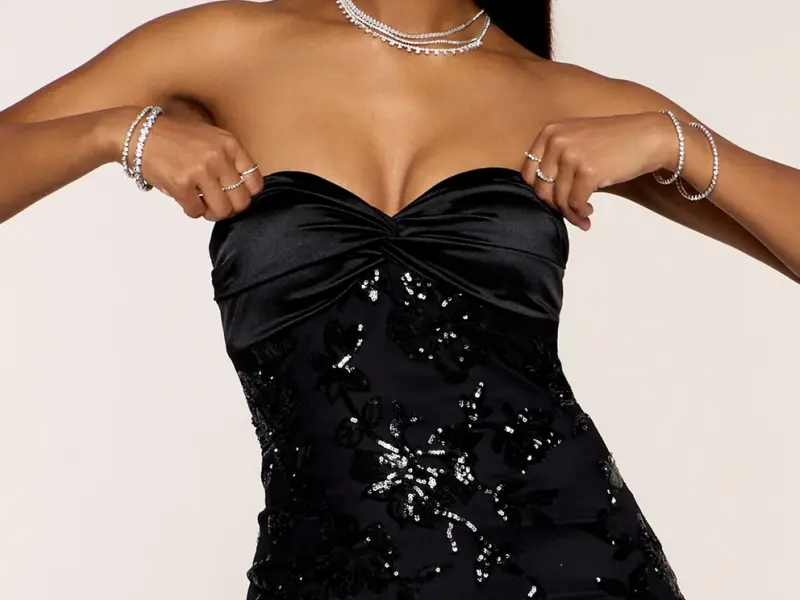
Upper Edge Finish
- Edge length is controlled against the approved pattern.
- Elastic or anti-slip application is distributed consistently rather than stretched by eye.
- Corner and curved areas are clipped or graded to turn cleanly.
- Pressing methods are adjusted for satin, crepe, lace, mesh or embellished surfaces.
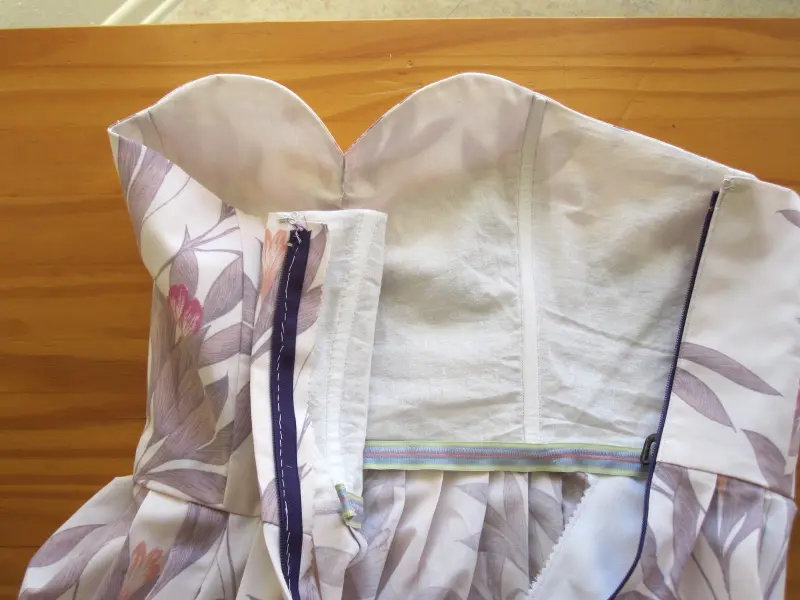
Lining Attachment
- Lining stretch and weight are matched to the outer material and support plan.
- Internal seams are anchored at planned points so layers move together.
- Neckline and zipper areas are stabilized without excessive bulk.
- Hem or skirt lining length is controlled so it does not pull the bodice downward.
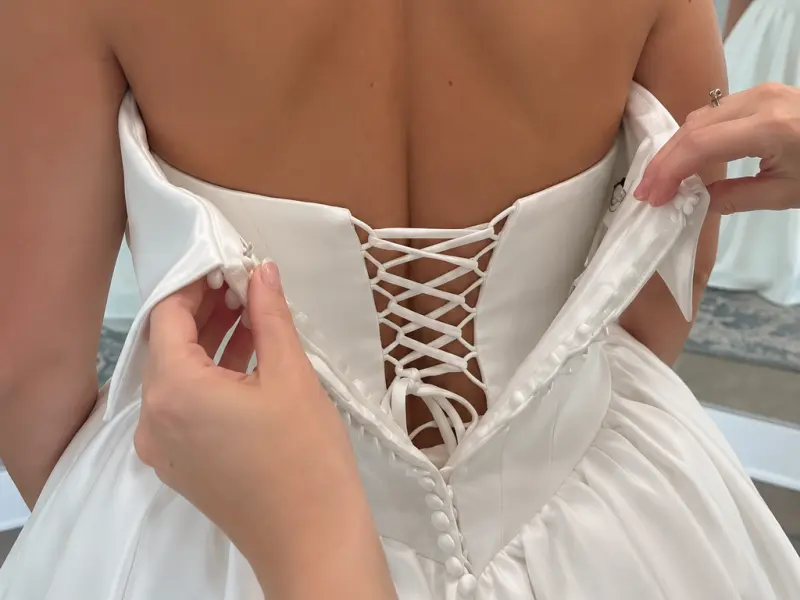
Back Closure Control
- Back circumference is verified against the approved fit.
- Closure reinforcement matches the expected wearing tension.
- Lace-up eyelets or loops need stable backing and symmetrical placement.
- Hook-and-eye placement protects the top edge from opening under movement.
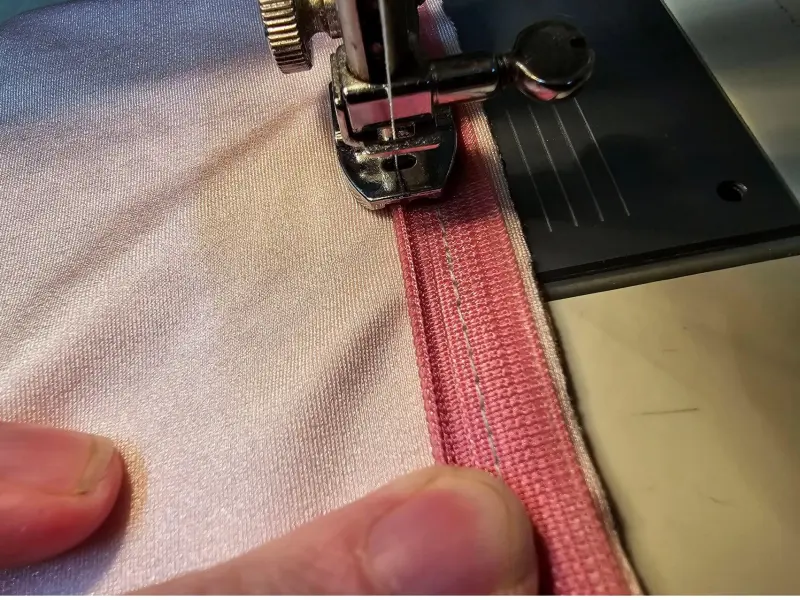
Zipper Reinforcement
A fitted strapless zipper often carries more load than a zipper on a loose dress because the bodice is actively holding the body. Fine outer fabrics may also show every ripple around the zipper seam.
- Zipper type and length are selected according to fabric weight, tension and visual requirement.
- Seam allowance and reinforcement are planned so the zipper does not stretch the surrounding fabric.
- Top stops, hook-and-eye support and neckline alignment are checked together.
- Finished garments are opened and closed under realistic tension during inspection.
Reliable zipper construction protects both fit and appearance, especially on satin, structured mini and corset-influenced styles.
Production Engineering for Stable Multi-Style Strapless Programs
Convert the Approved Sample into Production Instructions
- Cup and bust seam assembly.
- Boning channel position and closure.
- Upper-edge stabilization.
- Lining and outer-shell connection.
- Back zipper or lace-up reinforcement.
- Final pressing around structured curves.
Verify the Pilot or First Piece Before Volume Release
Structured dresses benefit from an early production check before the complete quantity is released. The first piece shows whether production materials, machines, operators and finishing methods are reproducing the PP basis under actual line conditions. A perfect sample made by a senior sample technician does not automatically predict line output.
Duolan can review the first piece against the approved standard, focusing on both general workmanship and strapless-specific checkpoints. Neckline height, cup symmetry, boning position, elastic tension, zipper alignment, lining smoothness and garment balance are compared before the run accelerates. If a process creates a new issue, the team can correct the method while the affected quantity is still limited.
For multi-style programs, pilot attention is prioritized around complexity. A simple unboned stretch strapless style does not require the same control plan as a corset-inspired sequin midi with molded cups and a reinforced back zipper. Production planning therefore considers structure, material sensitivity and order size together.
Once materials and standards are locked, group planning commonly references 20-30 days for regular production and 30-45 days for complex production. Final timing is confirmed around style count, material readiness, order quantity, embellishment and required inspection steps. A multi-style calendar also reserves time for first-piece review and corrective action before full release, especially where several support constructions share one launch date.
Build Risk Checkpoints into the Sewing Line
Inline control is most useful when it catches a structural drift before hundreds of garments move into finishing. Duolan maps risk-sensitive operations to inspection points instead of relying only on a final inspection after the complete order is made. During the run, inspectors and production teams can check representative pieces for measurement, left-right symmetry, stitch control, cup placement, boning location, upper-edge behavior, zipper function and outer-surface appearance. A structured line review can follow four layers:
- Material readiness: correct fabric, lining, cup, boning, elastic, zipper and trims.
- Construction readiness: approved operation method for support-sensitive points.
- In-process control: measurement and workmanship checks during sewing.
- Release control: final appearance, movement, labeling, packing and shipment requirements.
The result is a production system built around the real failure points of strapless dresses. Volume is increased after the line demonstrates control, not before. The approach is especially valuable for programs containing multiple colorways, support levels or fabric families under one launch calendar.
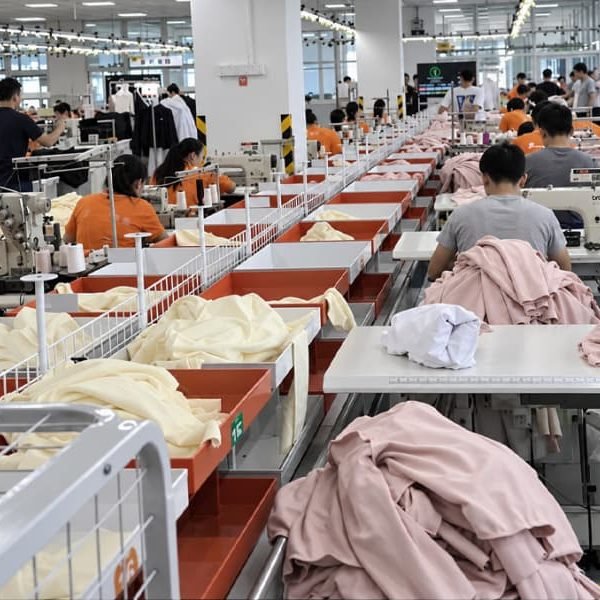
Strapless Quality Control Focused on Structural Failure Points
Neckline Stability
- Center-front and side-front heights are measured at defined points.
- Left-right symmetry is checked on the garment and, when needed, on a form.
- Elastic or anti-slip application is reviewed for consistent length and position.
- Waviness, rolling, gaping or excessive compression is flagged before finishing.
Bust and Cup Position
- Molded or foam cups are checked for type, size and orientation.
- Left-right cup position is compared for symmetry.
- Bust seams are checked for smooth curve transitions and equal seam allowance.
- Lining attachment is inspected to confirm it does not pull cups out of position.
Boning Placement
Boning must follow the approved support map. Movement of even one channel can change the waist line, create pressure or allow the bodice to fold.Inspection therefore checks position as well as the presence of the bone.
- Boning type and length are verified against BOM or PP reference.
- Channels are checked for secure ends and correct width.
- Bones are reviewed for twisting, migration or visible show-through.
- Seated comfort and body-line alignment are considered on highly structured styles.
The goal is repeatable support rather than simply confirming that a piece of boning exists inside the garment.
Size Set Consistency
- Bust, waist, back and key vertical measurements are checked against size specs.
- Cup and boning positions are compared with graded pattern references.
- Neckline height and side coverage are reviewed through the size range.
- Stretch styles are monitored for recovery differences caused by cutting direction or batch variation.
Closure Strength
- Zipper tape and surrounding seams are reviewed for distortion.
- Top stops and hook-and-eye support are checked for alignment.
- Lace-up eyelets, loops or channels are checked for reinforcement and symmetry.
- Closure operation is tested after pressing because heat and finishing can alter fabric tension.
Movement Safety
Final fit review should reflect normal wear, not a static pose. Strapless dresses for parties, events and evening use need enough security for walking, sitting, turning and raising the arms while preserving the intended neckline and silhouette.
- The upper edge is observed during movement for downward travel or gaping.
- Side coverage is reviewed when the torso rotates.
- Boning and zipper areas are checked for discomfort while seated.
- Short styles are assessed for hem and body balance during movement.
Movement testing helps connect production quality with real wearing performance and catches issues that are difficult to identify from measurements alone.
Keep Approved Strapless Standards Stable Through Bulk and Reorders
Lock Materials and Internal Support Before Bulk Release
Before bulk release, relevant references can include approved main fabric, lining, interlining, cup type, boning type, elastic or anti-slip specification, zipper, hook-and-eye, lace-up components and any structural trim. Color or finish substitutions are reviewed for performance as well as appearance. A black elastic and a nude elastic may look interchangeable in a BOM, yet different stretch force or recovery can change neckline tension.
Duolan links critical components to the PP basis and production records so purchasing, production and QC are working from the same reference. When a supplier substitution becomes necessary, the replacement is reviewed before broad use rather than introduced silently on the line.
For repeat orders, preserving the approved BOM reduces unnecessary redevelopment. A known material package also helps identify the cause more quickly if later production behaves differently. Repeatability depends on controlling the complete support system, not only keeping the same shell fabric name. Retained swatches, component references and PP photos can provide additional visual confirmation when a repeat order starts months after the original run.
Translate Fit Approval into Measurable Production Standards
A production standard can include neckline heights, bust and waist measurements, cup position, boning placement, elastic length, back circumference, zipper length, seam allowances and visible alignment points. The exact set varies by style, but the principle remains consistent: each high-risk feature needs a reference that production can follow and QC can verify.
Visual standards remain useful alongside measurements. Front, side and back photos of the PP sample can clarify how the neckline, side coverage and waist line should look on a form or body. Inside-out photos can show boning, cup, lining and reinforcement arrangement without requiring every operator to interpret a finished garment from memory.
When a first piece differs, the team can identify whether the cause is pattern, material, construction or finishing. Clear standards shorten troubleshooting and prevent subjective approval from spreading inconsistency through a large quantity. They also help internal teams distinguish a true production deviation from an intentional design update, which is important when several colors or related silhouettes are moving at the same time.
Preserve Fit Blocks BOM Records and Known Risk Points
Repeat programs become more efficient when development knowledge is treated as a reusable production asset. A strapless fit block that has already passed sample, size-set and bulk review can support future color, length or fabric extensions, but only if the information behind the successful result is retained.
Duolan can preserve the approved pattern version, BOM, size spec, PP reference, support construction, workmanship notes, QC checkpoints and previous issue records. When a new color or seasonal version is requested, the team first identifies what remains unchanged and what needs re-evaluation. A color extension in the same fabric may require limited review; a change from structured crepe to stretch satin may require new fit and support work even when the silhouette appears identical.
Repeat control also helps with production allocation. Known styles can be matched to familiar processes and inspection points, while new risk areas receive additional attention. The purpose is not to freeze a product forever. The purpose is to retain what has already been proven so future development starts from a stronger technical base. A controlled archive also reduces dependence on individual memory when the same style returns after a seasonal gap or moves to a new production line.
For brands operating frequent drops, stable records reduce repeated explanation and make multi-season collaboration more predictable across sampling, bulk production and replenishment.

Anonymized Strapless Program from Development Through Bulk Production
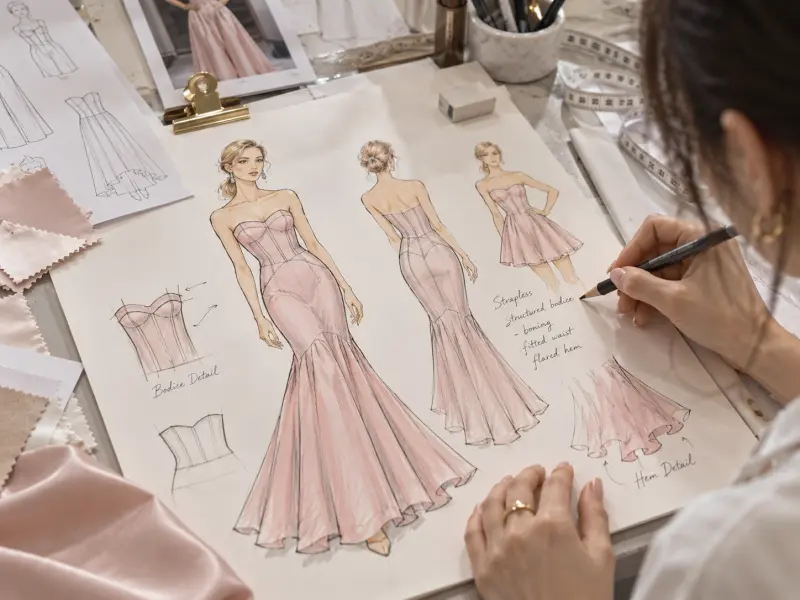
Program Brief
The program covered 18 structured party and occasion styles across mini and midi lengths, with a total order of 42,600 pieces in sizes XS-XL. The assortment included corset-inspired strapless minis, clean satin midis, bodycon strapless styles and embellished event dresses. Four main color families created 31 style-color combinations.
- 7 styles used molded or shaped cup support with boning.
- 6 styles used inner elastic plus side boning for lighter structure.
- 5 styles used soft support with stabilized upper edges and fitted back panels.
Development was planned as one program rather than 18 isolated samples so recurring cup positions, back closures, lining options and QC points could be reviewed together.
Development Control
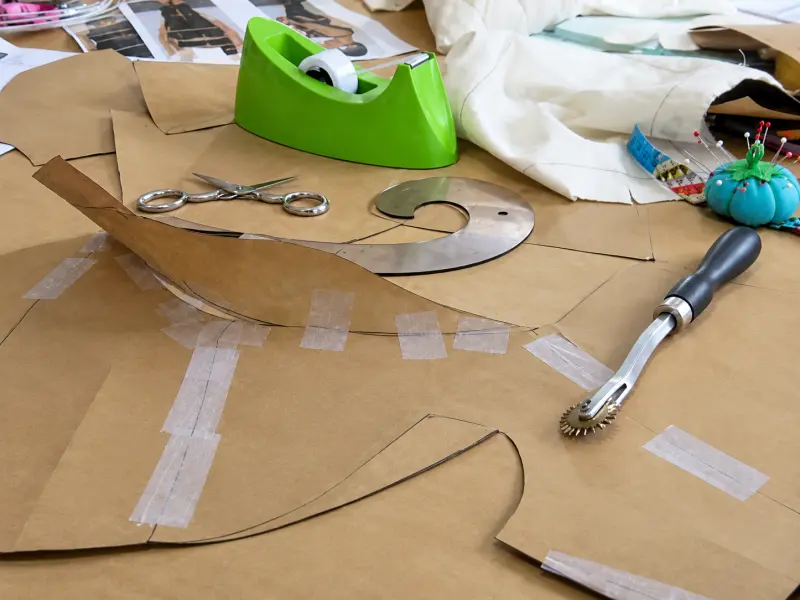
The first development stage focused on fit blocks, fabric behavior and support level before decorative details were fully locked. Satin styles needed clean upper edges and controlled pressing; stretch bodycon styles needed recovery checks; embellished styles needed support adjusted for finished garment weight. Comments were separated into fit, measurement, construction, fabric and visual categories.
- Five-size grading was reviewed against neckline coverage and bust support rather than measurements alone.
- Support components were grouped into three construction families to reduce unnecessary variation.
- PP review locked cup type, boning map, lining, zipper, anti-slip or elastic details and critical measurements.
The structure made it easier to compare related styles and keep repeated technical decisions consistent across the collection.

Bulk Execution
Bulk planning separated regular structured styles from higher-risk embellished and corset-influenced styles. First-piece review concentrated on neckline height, cup position, boning, back tension and zipper alignment before full line release. Inline checks then monitored measurement, symmetry and support-sensitive operations alongside normal workmanship.
The 42,600-piece order was managed as a multi-style program with shared production standards but style-specific risk notes. Material references, PP samples and measurement points were retained for later production discussion and color extensions.
The case illustrates the operating principle behind Duolan strapless manufacturing: similar silhouettes can share development knowledge, yet support level, fabric behavior and construction method still need to be engineered by style. Scale becomes safer when the technical differences are defined before volume production begins.
Manufacturing Scale for Multi-Style Dress Programs and Reorders
16 Owned Womenswear Factories
20+ Satellite Factories
300 Sewing Lines
50+ Flexible Lines
6.5M Stable Monthly Capacity
Multi-Style Development Capacity
The group supports 3,000-8,000 style development and sampling workflows per month and approximately 15,000-35,000 sample pieces or development iterations at group level. Those figures reflect a broad development network rather than a single sample room. For dress-focused programs, development scale allows multiple styles to progress in parallel through fabric review, pattern work, sampling and revision. The value for a strapless collection is the ability to manage related styles as one program while still tracking individual fit, support, material and PP requirements before bulk production.
Compliance Support for Formal Brand Supplier Evaluation Processes
SMETA Audit Record
Duolan’s manufacturing system has completed SMETA audit work, including a SMETA 2-Pillar audit and social audit record. Audit information can be discussed during qualified supplier evaluation rather than used as a generic marketing badge.
Brand sourcing or compliance teams may request relevant factory profile information, audit scope details and supporting documents as part of internal review. Early communication is preferred when a program has specific social responsibility, factory disclosure or vendor onboarding requirements, allowing production planning and documentation expectations to be aligned before order commitment.
Standards and Testing Coordination
Inspection and Vendor Review
Brand quality teams may require inline inspection records, final inspection, packaging review, third-party inspection support or a formal vendor information form. Duolan can coordinate those steps around the agreed production plan. Relevant materials can include factory information, QC process description, PP and production standard records, material references, testing coordination details, label and packaging requirements and shipment preparation information. Sensitive supplier or audit documents are shared during qualified evaluation rather than posted without context. The objective is controlled onboarding into a formal supply chain, not a collection of certificates disconnected from the garment program.








How to Evaluate a Strapless Dress Manufacturing Partner
A strong supplier review should test whether support, fit and production knowledge are visible in evidence, not only in sales claims. The checklist below gives product, technical and sourcing teams a consistent framework for comparing factories before sampling or bulk commitment.
| Evaluation Area | What to Ask | Evidence to Request | Warning Sign |
|---|---|---|---|
| Strapless fit | How do you control neckline height, side coverage and back tension? | Fit photos, measurement points, annotated sample review | Only general claims about “good fit” with no strapless-specific checkpoints |
| Bust support | How are cups, bust seams, underbust and side support developed? | Inside-out bodice photos, cup specifications, fit comments | Support described only as adding padding or tightening the dress |
| Boning system | How do you choose boning type, length and position? | Boning map, channel details, PP sample interior | Same boning solution proposed for every fabric and silhouette |
| Anti-slip control | What keeps the upper edge secure during movement? | Elastic or grip specification, movement review notes | Silicone tape presented as the only solution to slipping |
| Fabric matching | How does fabric stretch, weight and friction change the structure? | Swatches, recovery checks, material alternatives, sample comparisons | Pattern reused after major fabric change with no fit review |
| Size grading | How do you preserve cup position and coverage across sizes? | Brand size spec, grading notes, size-set review | Simple proportional grading with no upper-body review |
| Sample revision | How are fit comments recorded and converted into changes? | Revision summary, marked photos, sample version record | Comments forwarded without technical classification or traceable changes |
| PP and bulk control | How is the approved sample converted into production standards? | PP checklist, BOM, critical process notes, first-piece record | Production starts from a sample alone with no locked material or process references |
| QC and repeat orders | Which strapless risks are checked inline and retained for reorders? | QC checklist, measurement records, retained pattern/BOM history | Final inspection used as the only quality-control stage |
Use Two Checklists Before Starting Strapless Dress Development
Development Brief Checklist
The development checklist is designed for product and technical teams preparing a new strapless style or collection. It organizes the information most likely to affect support, fit, fabric and sample direction before pattern work begins.
Recommended inputs include design sketch or reference image, base-size specification, target size range, neckline height, cup preference, desired support level, back closure, intended fabric, lining direction, target launch timing and planned order quantity. Space can also be included for fit priorities and known risks.
Using the checklist helps the sample team distinguish visual ideas from locked technical requirements and identify missing decisions before material or pattern work progresses too far.
Supplier Review Checklist
The supplier review checklist is designed for sourcing, product and quality teams comparing manufacturing partners. It moves the evaluation beyond factory size, price and general OEM claims by asking for evidence related to strapless development.
Review points include pattern capability, cup and boning development, anti-slip strategy, size grading, fabric testing or performance review, sample revision records, PP standardization, first-piece control, inline QC, repeat-order records and compliance support. Each point can be scored against evidence supplied by the factory.
A structured review makes supplier comparisons more consistent and gives internal teams a clearer reason for approving, testing or rejecting a manufacturing partner.
Frequently Asked Questions About Strapless Dress Manufacturing
Yes. Development can start from reference images, sketches, an original garment, sample photos or a tech pack. The team first identifies the intended silhouette, fabric direction, bust structure, back opening, support level and size standard. Missing technical details are flagged before sampling so the first prototype has a clear development basis rather than relying on visual copying alone.
Stability comes from a combined system: pattern tension, neckline height, side coverage, back circumference, cups, boning, lining, inner elastic and anti-slip components when suitable. Silicone grip alone is not treated as a complete solution. Sample review also includes normal movement so the neckline can be evaluated while walking, sitting, turning and raising the arms.
No. Support level depends on silhouette, fabric, garment weight, bust construction and intended wearing experience. Some stretch bodycon styles can use inner elastic, power mesh or light side support, while corset-inspired and sculpted styles may require more structured boning. Boning type, length and position are selected around the body line rather than added as a decorative feature.
Yes. Cup development can include molded cups, foam cups or fabric-shaped bust construction depending on the design. Development reviews cup width, depth, bust distance, side coverage and how the cup connects with boning, lining and the neckline. Cup placement is also checked during grading because the relationship between bust volume and garment circumference changes across sizes.
The approved base size establishes the fit direction, then grading is reviewed against the brand’s size chart and grade rules. Bust, underbust, back circumference, cup position, side coverage and neckline height are monitored because proportional enlargement alone can distort support. A size-set review is recommended for structured styles before the complete production quantity is released.
Structured woven, support satin, crepe, selected stretch satin, jersey, lace or mesh overlays and embellished fabrics can all work when the support system matches the material. The important variables are stretch, recovery, weight, friction, opacity and surface sensitivity. A material change after fit approval may require new pattern or support review even when the visual design remains unchanged.
A first sample should confirm the main silhouette, neckline level, bust position, support direction, fabric behavior, side coverage, back fit and visible balance. It does not need to represent final bulk approval when development is still open. Comments are separated into fit, measurement, fabric, construction and visual categories so the next sample round has a defined purpose.
Bulk consistency begins by locking the PP basis: approved pattern, size spec, BOM, fabric, lining, cups, boning, elastic or anti-slip details, zipper, workmanship and critical measurements. A first-piece review checks whether the production line has reproduced the approved standard. Inline inspection then monitors high-risk areas before the full quantity is completed.
A reliable quotation is easier when the project includes a tech pack or clear reference, target quantity by style and color, size range, fabric direction, lining and support requirements, labels, packaging, expected delivery timing and any testing or inspection requirements. If the style is still at concept stage, development review may come before a formal bulk quotation.
Yes. The group manufacturing system is designed for multi-style development, bulk production, rolling repeat orders and scale-up. Related styles can share approved fit logic or support components while keeping style-specific risk controls. Patterns, BOMs, PP references and QC records can be retained so later color, length or collection extensions start from established technical information.
Send Your Strapless Dress Project for Technical Review
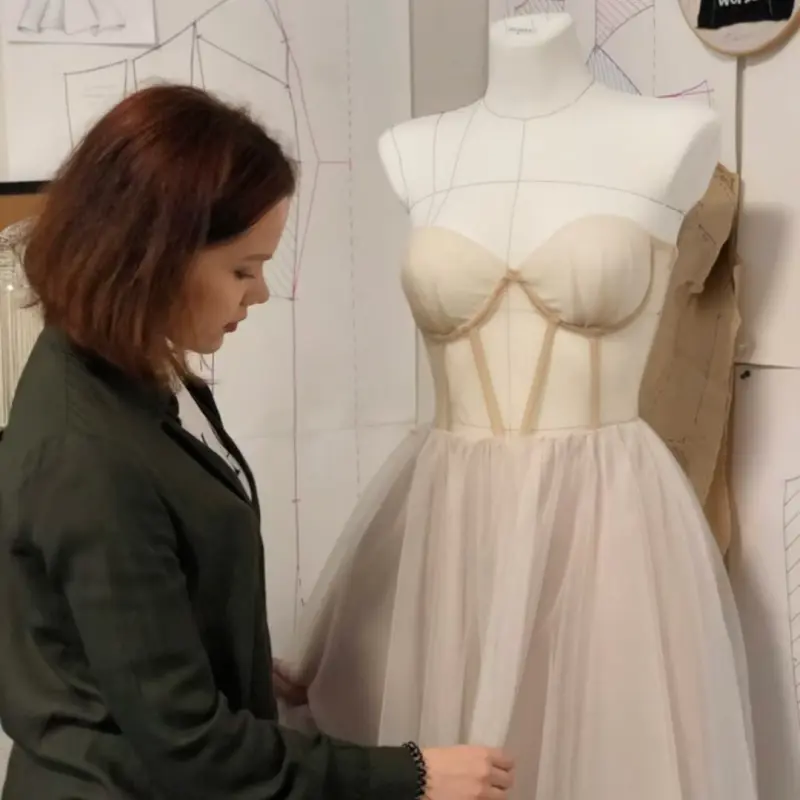
Share the material your team already has, whether the project is at concept, sampling, PP or bulk planning stage. Duolan can review the style around the points that most directly affect a strapless result: neckline stability, bust support, cup and boning direction, fabric behavior, fit and grading, back closure, sample path and production readiness. Clear information allows the team to respond with a more useful development or manufacturing assessment instead of a generic quotation.
Useful project inputs include:
- Tech pack, design sketch, reference image or original sample photos.
- Target fabric, lining, cup, boning or support direction if already defined.
- Base size, size range and any existing brand grading rules.
- Planned quantity by style or color and target launch timing.
- Fit comments, approved sample photos or previous production issues when applicable.
- Label, packaging, testing, inspection or vendor review requirements.
- Any launch calendar constraints, replenishment expectations or approved fit blocks that should guide development and production planning.