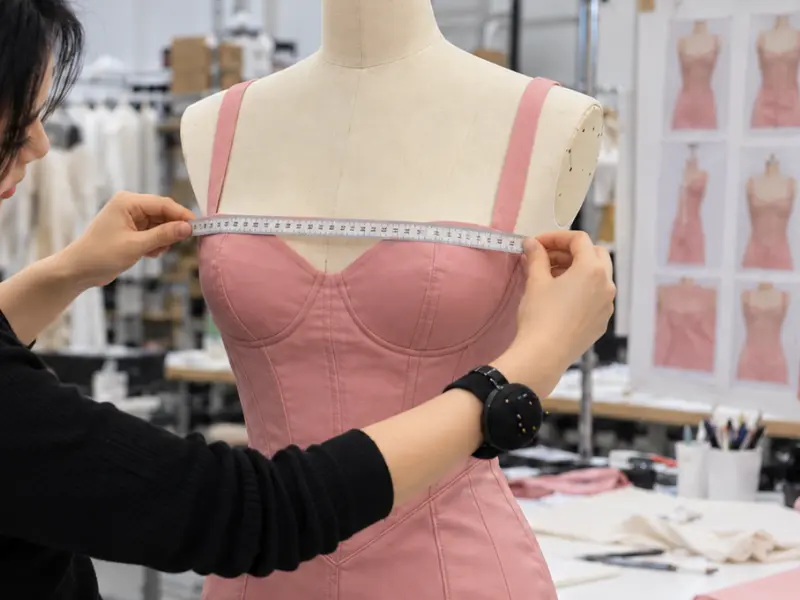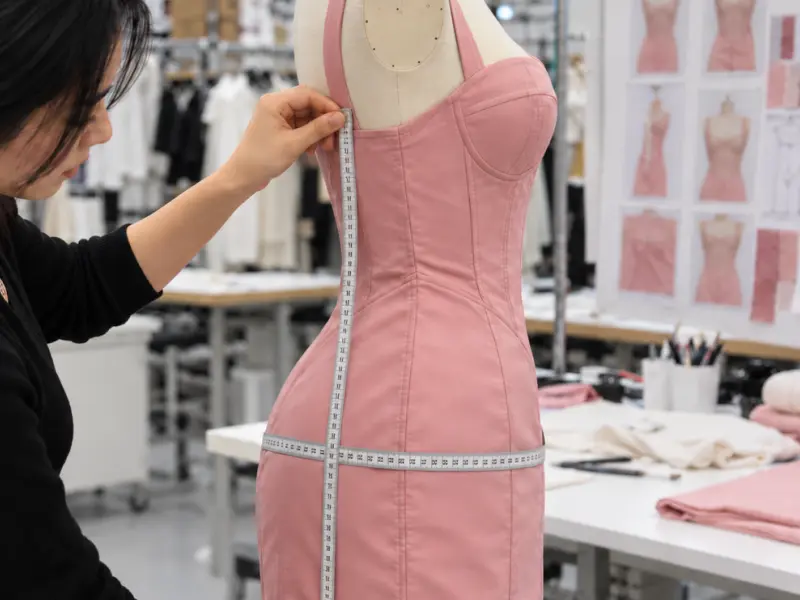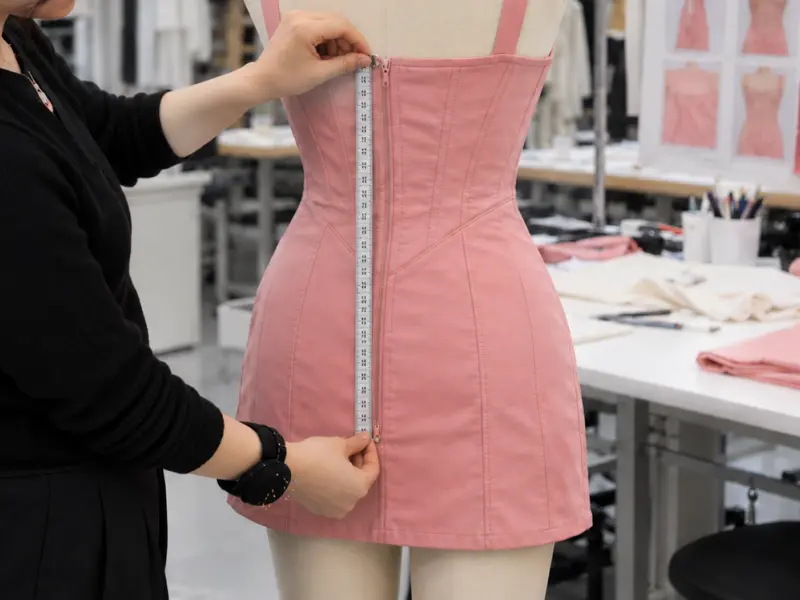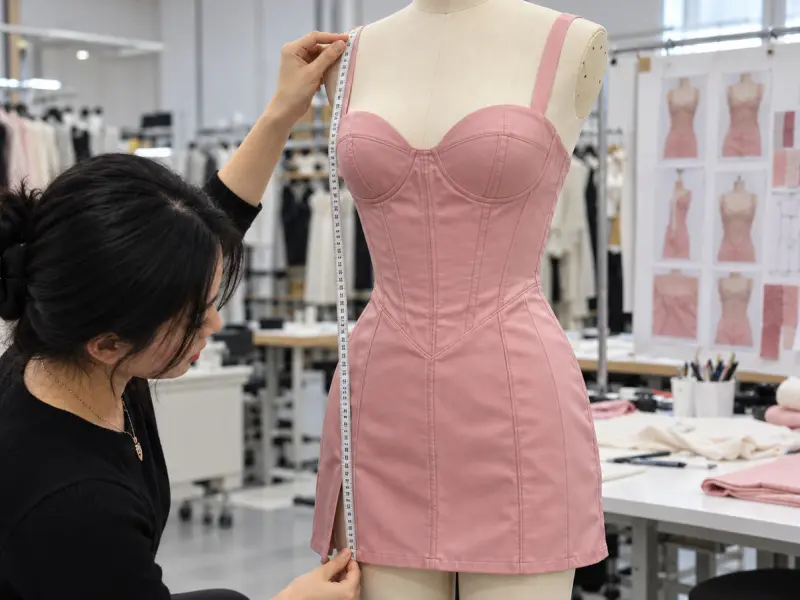
...

Structured Dress Fit Solutions

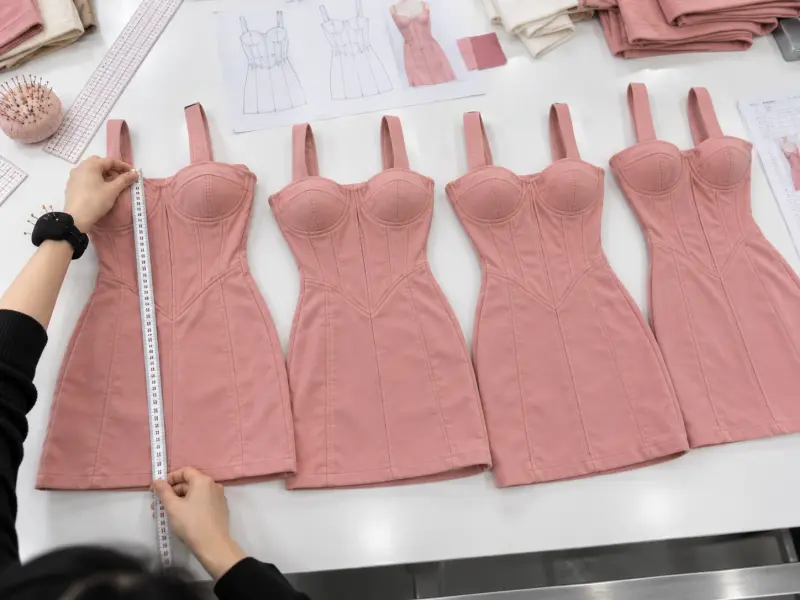
Fit engineering for corset, bustier, strapless and structured occasion dresses, from first pattern review through approved bulk production standards.

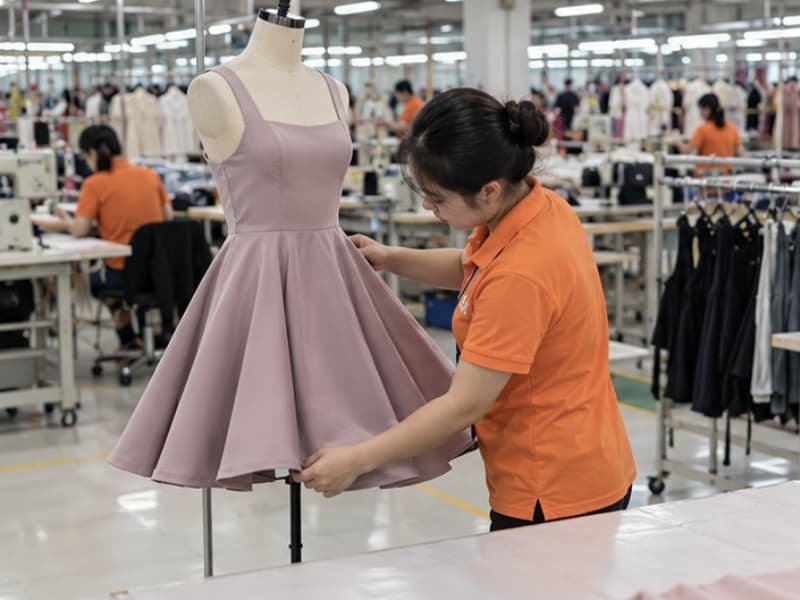
Structured fit is controlled before sewing begins. Duolan Apparel reviews body proportion, pattern balance, fabric behavior, internal support and production repeatability as one connected system.

  • 8 critical fit checkpoints: bust point, underbust, neckline, torso length, waistline, side seam, closure and skirt balance.
  • 6 linked systems: pattern, shell fabric, interlining, lining, support and closure.
  • 3 approval stages: first sample, fit revision and PP/bulk reference.
  • Full-size development: grading follows approved base-fit logic rather than simple measurement enlargement.

Structured Fit Is More Than Matching Measurements

A structured dress can meet bust, waist and hip measurements and still sit incorrectly on the body. Reliable fit depends on where the garment anchors, how its internal structure carries tension and whether movement changes the intended silhouette.
Size Fit
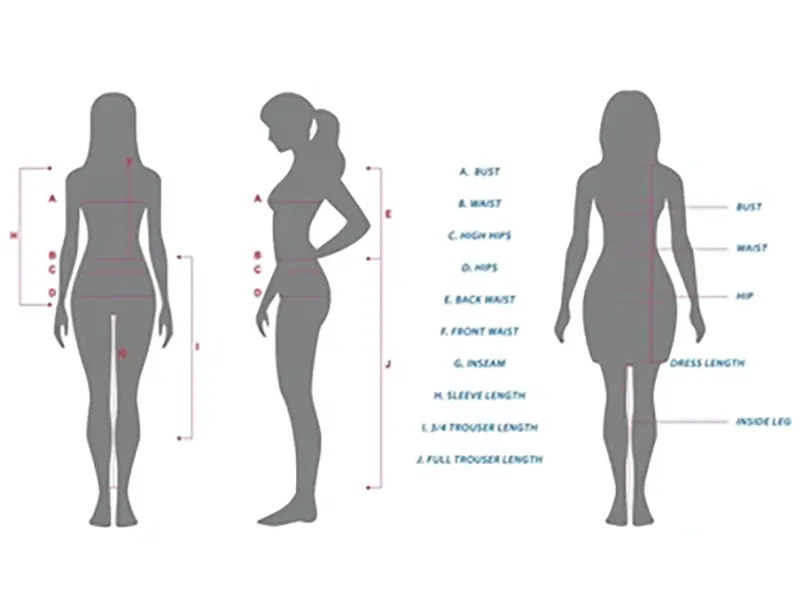
Size fit establishes whether the garment circumference and length sit within the agreed specification, but numerical compliance alone cannot confirm a successful structured silhouette. Bust width, underbust, waist, hip and body length provide a measurable foundation. The next question is how those measurements relate to the body. A bodice may technically measure correctly while the bust point sits too low, the waist seam rises, or the neckline opens away from the chest. Numbers define boundaries; pattern balance decides how the garment occupies those boundaries.

Structural Fit

Structural fit describes how pattern shaping, cups, seams, boning, interlining, lining and closures work together under load. A strapless bodice must remain anchored without relying on excessive compression at the neckline. A corset-inspired dress needs enough support to hold shape while avoiding pressure from boning ends or an over-tight waist. A tailored structured dress needs clean shoulder, lapel and waist shaping without stiffness. Fit therefore has to be reviewed as a load-bearing system, not only as a size-chart exercise.

Movement Fit

A structured garment should hold its intended line when standing and remain wearable when sitting, walking or raising the arms. Movement exposes problems that a static fitting can hide: a waist seam may ride upward, a cup may shift, a neckline may gape, boning may dig into the torso, or the skirt may pull the bodice downward. Duolan reviews movement alongside silhouette because a commercially successful structured dress must look controlled without forcing the wearer to continually readjust it.

Diagnose the Fit Problem Before Changing the Pattern

Visible symptoms often come from several connected causes. A neckline gap, compressed bust or twisting side seam should be traced through body balance, pattern geometry, materials and internal support before a correction is approved.

Visible Fit ProblemPossible Root CauseWhat Should Be CheckedTypical Correction Direction
Neckline gapingBust balance, neckline curve, torso length or weak supportBust point, upper chest, shoulder position, top-edge tensionRebalance pattern and support rather than simply reducing neckline width
Bust compressionInsufficient cup depth, short front length or incorrect princess shapingCup volume, bust point, underbust, front body lengthIncrease three-dimensional volume and rebalance seam shaping
Bodice slippingWeak anchoring or incorrect back tensionWaist support, boning, back width, anti-slip structureRebuild support path from waist/back rather than overtighten top edge
Waist seam riding upTorso imbalance or insufficient bust lengthFront/back body length, waist position, bust volumeCorrect vertical pattern balance before changing waist circumference
Boning diggingIncorrect length, position or channel angleBody curve, sitting position, boning endpointAdjust boning type, length, channel placement or internal layer
Zipper ripplingBack balance, fabric instability or sewing tensionCenter-back shape, zipper length, seam tension, interliningCorrect pattern and reinforcement before production
Side seam twistingFront/back imbalance, grain direction or unequal tensionSide seam position, hip curve, fabric stretch directionRebalance pattern pieces and cutting direction
Restricted movementInsufficient ease or over-structured internal layersHip, armhole, waist, skirt opening, liningReplan ease and internal support around real movement

Six Systems Control a Structured Dress Fit

A stable structured silhouette is rarely created by one construction detail. Duolan reviews six connected systems so a correction solves the cause of a fit problem instead of moving the problem to another area of the garment.

Body Proportion

Bust height, underbust level, torso length, waist position, shoulder angle and hip distribution determine where a structured garment needs to shape, support and release. A technically correct pattern can still look wrong when the underlying body assumptions do not match the brand’s fit model or target market. Fit development therefore begins by identifying critical body relationships, not by increasing or reducing every circumference equally.

Pattern Balance

Pattern balance determines where the dress sits before internal support is added. Neckline curve, bust shaping, princess seams, front and back length, side seam position, hip ease and skirt balance must work as a connected geometry. When one area is corrected in isolation, another often changes. Duolan returns fit comments to the pattern so approved adjustments can be repeated in later samples, grading and production.

Fabric Behavior

Shell fabric controls how closely the finished garment follows the pattern. Stretch, recovery, weight, thickness, drape and surface stability can make an identical pattern fit differently. Stretch satin may need different negative ease from a stable crepe. A dense woven may hold a sculpted panel but restrict movement. Material review therefore happens alongside pattern development rather than after the silhouette is already fixed.

Internal Support

Cups, boning, waist support, elastic, anti-slip components and reinforcement determine how a structured bodice stays in position. Support should distribute load instead of concentrating pressure at the neckline or zipper. Boning alone cannot compensate for an incorrect pattern, and a tighter garment does not automatically create better support. The internal system must follow the intended body curve and wearing position.

Lining and Interlining

Lining affects comfort, opacity, stretch and internal tension. Interlining affects stiffness, edge stability and shape retention. Either layer can change external fit even when the shell pattern remains unchanged. A lining cut too short can pull the shell upward; an overly rigid interlining can make a neckline stand away from the body. Duolan evaluates internal layers as fit components rather than hidden finishing materials.

Closure and Tension

Invisible zippers, exposed zippers, lace-up backs, hooks, elastic sections and adjustable straps create local tension. The closure must hold the garment at the intended position without distorting nearby seams. Center-back rippling, strained zipper tape or uneven lace-up gaps often reveal a pattern or tension problem rather than a zipper problem alone. Closure behavior is therefore reviewed during fitting and again before bulk release.

Fit Risks Change With Structured Dress Construction

Different structured silhouettes fail in different places. Duolan develops fit priorities around the actual garment architecture, wearing position, material behavior and support requirements rather than applying one corset or fitted-dress formula across every style.

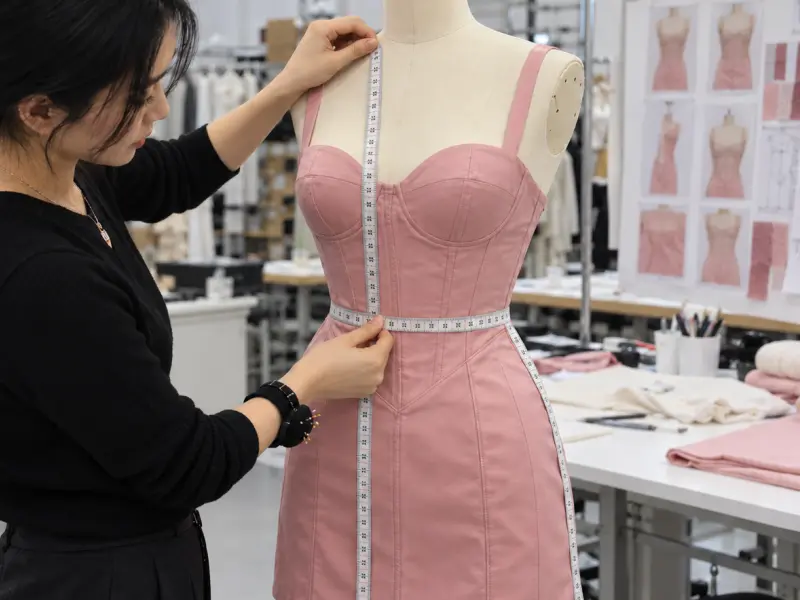
Corset Dresses

Corset dresses rely on controlled relationships between cup position, underbust shaping, waist suppression, panel lines and boning. A waist can appear clean while the bust remains unstable, or a visually strong bodice can become uncomfortable when the boning is too long for a seated position. Development priorities include:
  • Bust point and cup depth relative to the target fit model.
  • Boning position following the torso rather than forcing a straight line.
  • Waist shaping without excessive compression.
  • Back-panel or lace-up balance.
  • Lining and interlining firm enough to support the shell without creating a board-like handfeel.
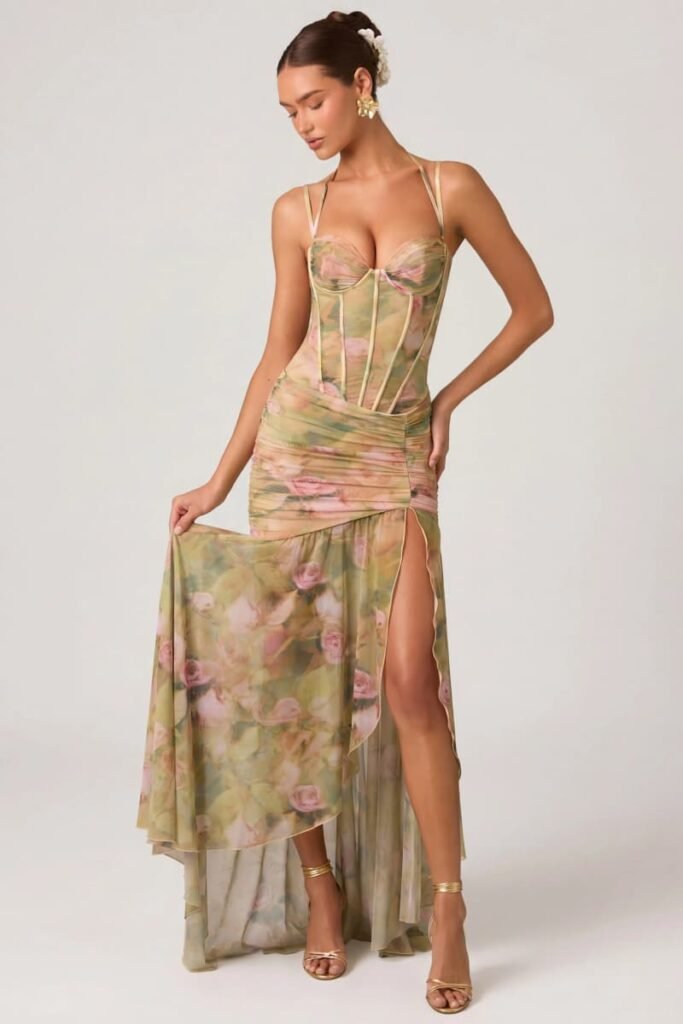
A corset-inspired design should hold the intended shape through construction, not through extreme tightness.

Bustier Dresses

Bustier dresses place greater emphasis on three-dimensional bust shaping and the transition from cup to waist. Common problems include empty space above the bust, compression at the fullest point, cup edges showing through the shell, or a waist seam positioned incorrectly after the cup is adjusted. Duolan reviews:
  • Cup volume and separation.
  • Underbust level and seam position.
  • Princess-panel curvature.
  • Internal cup and lining compatibility.
  • Boning channels around, rather than through, critical bust volume.
  • Top-edge stability.
An adjustment to bust volume may require changes to front body length and waist placement. Simply increasing bust circumference can leave the original fit problem unresolved.

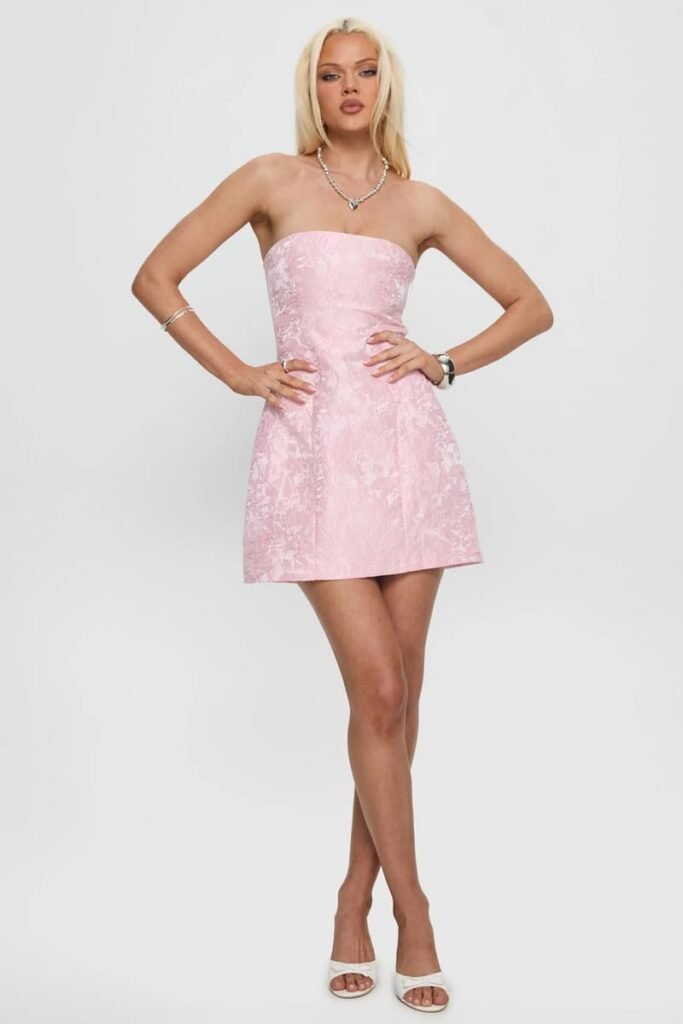
Strapless Dresses

A strapless dress should stay in position because the bodice is anchored through pattern balance and internal support, not because the upper edge is painfully tight. Common failure points include neckline gaping, downward slipping, cup movement, zipper strain and repeated pulling-up during wear. Fit review focuses on:
  • Upper-edge contact.
  • Bust and underbust relationship.
  • Front-to-back torso balance.
  • Waist anchoring.
  • Boning and anti-slip support.
  • Center-back stability.
A secure neckline can still remain comfortable when tension is distributed through the bodice. Over-tightening the top edge often creates a temporary fix while increasing pressure, distortion and movement problems elsewhere.

Structured Blazer Dresses

Blazer dresses require tailored shape through the shoulder, lapel, chest and waist while preserving mobility. Fit problems often appear as shoulder collapse, lapel roll distortion, pulling through the bust, waist drag lines or a hem that opens unevenly when the wearer moves. Key controls include:
  • Shoulder width and angle.
  • Chest and bust shaping.
  • Lapel break point.
  • Interlining placement.
  • Waist suppression.
  • Sleeve or armhole movement when applicable.
  • Front overlap and closure position.
Fabric and interlining must be selected together. Too little support loses the tailored line; excessive stiffness makes the garment look heavy and limits movement.

Sculpted Panel Dresses

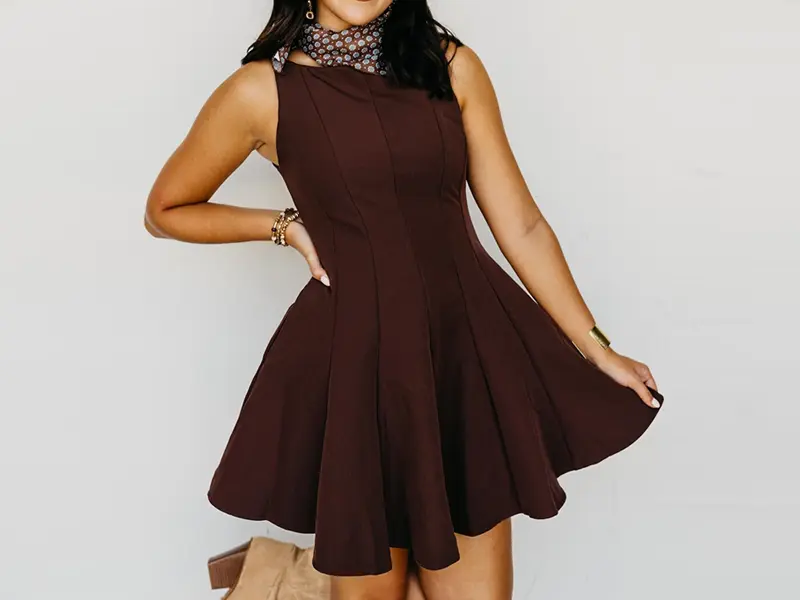
Panelled or sculpted dresses use seam architecture to create shape. Curved side panels, princess seams, asymmetric cut lines and shaped waist sections can build a strong silhouette, but small pattern imbalances become highly visible because the seam lines themselves act as visual guides. Development needs to control:
  • Panel symmetry or intentional asymmetry.
  • Seam position over the body.
  • Bust-to-waist transition.
  • Fabric stability across curved seams.
  • Seam allowance and pressing behavior.
  • Side seam and center-line balance.
Fit corrections must preserve the design geometry. Moving a seam purely to solve circumference can weaken the original proportion or create a new visual imbalance.

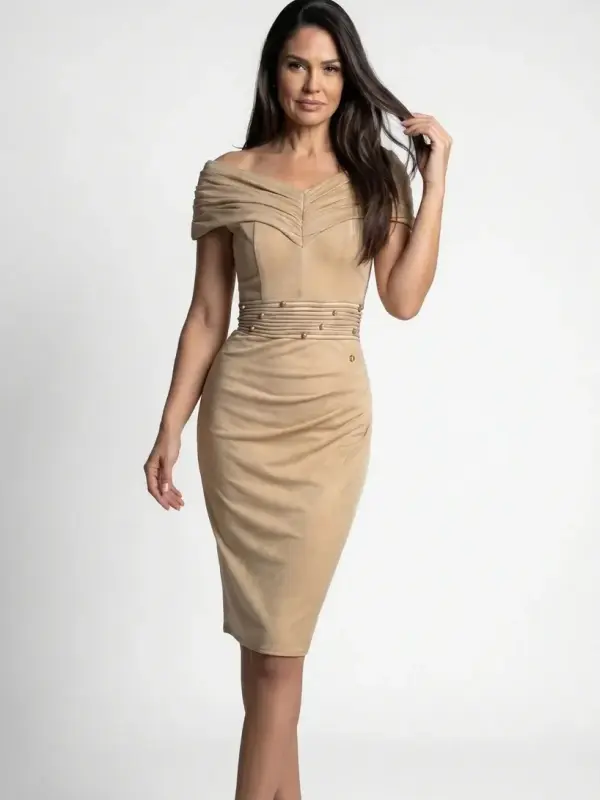
Fitted Occasion Dresses

Structured occasion dresses often combine support with softer materials, drape, embellishment or a narrow skirt. The bodice may need firm internal engineering while the lower body still needs natural movement. Typical fit risks include:
  • Bust security at deep or open necklines.
  • Waistline placement affecting overall proportion.
  • Hip tension pulling the upper body downward.
  • Heavy skirts changing bodice position.
  • Lining restricting an otherwise correct shell.
  • Slit height changing when the garment is under tension.
Duolan reviews the full silhouette because upper-body structure and lower-body movement cannot be developed as separate garments.

Pattern Engineering Starts Before the First Stitch

Structured dress fit is built into the pattern before cups, boning or reinforcement can improve it. Duolan uses pattern review to connect body proportion, design intent, fabric behavior and construction into a repeatable development standard.

Bust Point and Princess Seams Shape the Upper Body

Bust fit is three-dimensional. A flat circumference measurement cannot describe where volume needs to sit, how much projection is required or where a seam should cross the body. For structured bodices, the bust point becomes a reference for cup depth, princess shaping, neckline position and the transition into the waist. When a first sample shows compression, excess fabric or distorted seam lines, Duolan reviews several areas together:

  • Bust point position: A low or high bust point can make an otherwise correct circumference look visibly wrong.
  • Princess seam curvature: The seam must create enough volume at the fullest area while returning cleanly toward the underbust and waist.
  • Front body length: Insufficient length over the bust can pull a waist seam upward even when the waist measurement itself is correct.
  • Cup and shell relationship: Internal cups need to support the same volume and position defined by the outer pattern.
  • Neckline geometry: Changing bust volume can change upper-edge tension and coverage.

A common mistake is to respond to a tight-bust comment by adding width at the side seam. Extra circumference can make the side seam loose while leaving cup depth unchanged. A more controlled correction distributes volume through the panel or cup area where the body actually needs it. Duolan records approved corrections in the pattern and related measurement specification so the revised shape is available for the next sample, grading and production rather than remaining as an alteration made only on one garment.

Torso Length and Waist Placement Control Vertical Balance

A structured bodice has a vertical position as well as a circumference. Front length, back length, bust projection and waist placement determine where the garment anchors on the torso. When vertical balance is wrong, several symptoms can appear at the same time: the waist rises, the neckline opens, the side seam tilts, the cup shifts or the skirt begins from the wrong level. Duolan reviews torso balance through a connected sequence:

  • Front body length: Enough length is required to travel over the bust and reach the intended waist position.
  • Back body length: The back needs to balance the front without pulling the neckline backward or allowing the bodice to drop.
  • Waistline location: A technically accurate waist circumference can still look wrong when the seam sits 1-2 cm above or below the intended visual line.
  • Underbust-to-waist distance: Corset and bustier styles depend heavily on this section because boning, panels and waist shaping all use the vertical relationship.
  • Center-front and center-back balance: Unequal vertical tension can rotate the garment around the torso.

During fit correction, Duolan avoids using the waist seam as the only adjustment point. If the seam is riding upward because front torso length is short, lowering the seam without correcting upper-body length may create distortion in the lower panel. Vertical balance is also important for future grading. Larger and smaller sizes cannot simply receive equal length increments at every point. 

Side Seam, Hip Ease and Lower-Body Balance

A clean side seam is an important diagnostic line. On a balanced fitted dress, the side seam should follow the intended vertical or shaped path without rotating strongly toward the front or back. When it twists, the cause may come from front/back pattern imbalance, hip distribution, unequal stretch or a bodice problem higher on the garment. Duolan reviews:

  • Front and back width distribution: Equal total circumference does not guarantee correct balance between the front and back panels.
  • High-hip and low-hip shaping: Structured fitted styles need enough contour to follow the body without creating horizontal drag lines.
  • Seat allowance: A visually narrow silhouette still needs movement and sitting allowance appropriate to the fabric.
  • Fabric stretch direction: A pattern developed for one stretch direction can rotate or ride when the production fabric behaves differently.
  • Skirt weight: Heavy lower sections can pull on the bodice and alter the waist or neckline position.

Hip fit also affects how the garment behaves during walking. Insufficient ease may make the skirt climb upward, which then shifts the waist and creates extra pressure in the upper body. A correction focused only on the bodice would miss the source. For mini and midi fitted dresses, Duolan connects hip ease with hem opening, slit height and length. The goal is controlled contour with usable movement rather than a static mannequin fit. Approved hip and side-seam corrections are returned to the pattern so later samples and sizes keep the same silhouette logic.

Center-Back Closure and Hem Balance Complete the Pattern

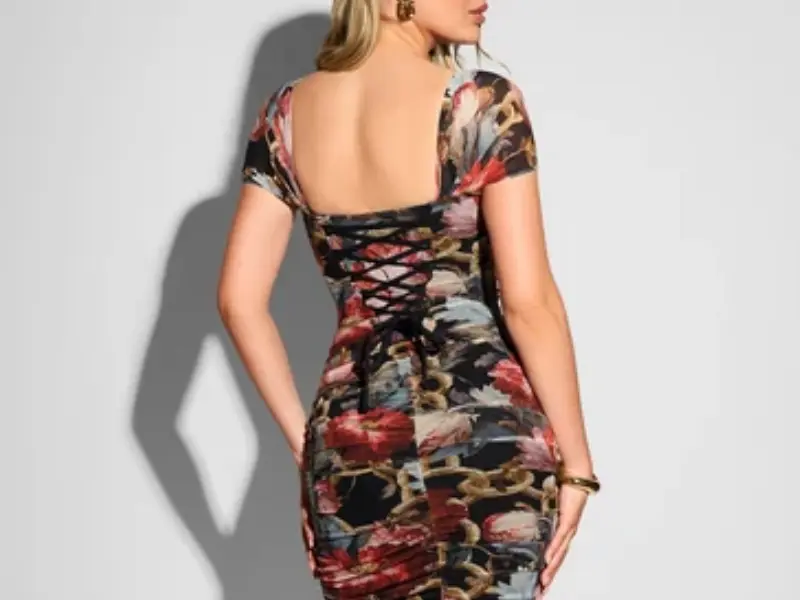
The center back often carries more responsibility than its appearance suggests. Invisible zippers, exposed zippers, lace-up sections or hook closures can stabilize the bodice, but the closure line will show distortion when surrounding pattern balance or material reinforcement is incorrect. Duolan checks several relationships:

  • Center-back contour: The line must follow the body without excessive hollowing or straightness.
  • Zipper length: A zipper ending at the wrong structural point can concentrate tension.
  • Seam allowance and reinforcement: Delicate or stretch fabrics may need stabilization to prevent rippling.
  • Back width: A back that is too narrow can pull the zipper into waves; excessive width can create looseness above the waist.
  • Lining tension: A shorter or tighter lining can distort an otherwise correct shell.

Hem balance is reviewed at the same stage because vertical pattern errors often become visible at the bottom of the garment. An uneven hem can originate from waist position, hip tension, front/back length, asymmetric construction or fabric grain. For structured mini and midi silhouettes, the hem is also part of movement control. The opening must allow the planned stride while keeping the intended line. Slits, vents and shaped hems are evaluated in the worn position rather than only while the garment lies flat. 

Bust, Neckline and Torso Must Work Together

Upper-body structured fit fails when cup volume, bust position, neckline contact and torso balance are treated as separate measurements. Duolan reviews each area through the way load moves across the bodice during wear.

Bust Volume, Cup Depth and Underbust Position

A correct bust circumference can still produce a poor fit when volume is placed in the wrong location. Structured dresses need enough three-dimensional depth for the target body while keeping the bust point, underbust and waist aligned with the design. Duolan reviews bust fit through:
  • Cup depth: Determines forward projection rather than total width alone.
  • Cup width: Controls how the bust volume is distributed across the front body.
  • Bust-point height: Affects seam direction, neckline relationship and visual proportion.
  • Bust-point spacing: Important for shaped cups and princess constructions.
  • Underbust position: Creates the lower anchor for cups and corset-like shaping.
  • Front body length: Allows the pattern to travel over the bust without pulling the waistline upward.
When the bust feels compressed, a side-seam increase may not solve the problem. More width around the whole body can loosen the back or waist while the cup remains shallow. Duolan instead looks for the location where volume is missing. When the upper cup appears empty, reducing the entire bust measurement may also be incorrect. The issue may involve cup height, neckline shape or the relationship between the internal cup and shell pattern. Fit corrections are checked on the garment, returned to the pattern and compared against the agreed measurement method. Structured fit becomes reliable when visible shape and measurable standards describe the same body position.

Neckline Stability Without Over-Tightening the Upper Edge

A stable neckline should stay close to the body without creating excessive pressure. Gaping is often treated as a local neckline problem, but the real cause can originate much lower in the bodice. Duolan reviews:
  • Bust volume below the neckline.
  • Front torso length.
  • Shoulder or strap angle.
  • Back tension.
  • Interlining stiffness.
  • Cup position.
  • Boning and waist anchoring.
  • Elastic or anti-slip support when required.
For a strapless dress, reducing top-edge circumference may temporarily remove a gap while creating a new problem: the edge becomes tight, the bust compresses, the bodice slides downward or the zipper becomes strained. Support needs to come from the full bodice. Deep necklines need a different approach. The edge may require controlled reinforcement, stay tape, lining stability or pattern reshaping to keep the opening close to the body without visibly flattening the bust. Asymmetric and one-shoulder structured dresses add another variable because tension travels diagonally. The supported side and open side cannot be evaluated as two identical halves. A successful neckline therefore comes from pattern geometry plus a stable support path. Duolan checks the garment in front, side and movement positions so the edge remains controlled without turning the neckline into the main load-bearing component.

Torso and Back Tension Keep the Bodice Anchored

Structured fit needs an anchor. Depending on the design, anchoring may come from the waist, underbust, back panel, shoulder, strap system or a combination of several points. When the anchor is weak, the garment shifts even if individual measurements appear correct. Back tension plays a major role in strapless and corset-inspired dresses. Too little tension allows the bodice to drop; too much pulls the front body backward and can flatten the bust or distort the neckline. Duolan examines:
  • Center-back width and contour.
  • Waist-to-back relationship.
  • Zipper or lace-up load.
  • Side-back panel shaping.
  • Internal elastic or waist support when specified.
  • Interaction between lining and shell.
  • Boning termination points.
Torso length is reviewed in both standing and seated positions. Long boning or an overly long front bodice may look clean while standing but press into the body when seated. A short torso pattern can ride upward and push the bust into the neckline. For adjustable lace-up backs, adjustability does not remove the need for pattern accuracy. The target lace-up gap, panel width and size range still need control so the closure does not compensate for an incorrectly balanced bodice. Duolan treats anchoring as part of fit engineering. A structured dress should remain in position because load is distributed through the correct structural points, not because one area has been tightened enough to prevent movement.

Internal Support Must Follow the Garment Architecture

Boning, cups and reinforcement can improve a structured silhouette only when they support a correct pattern. Duolan develops internal construction around body position, fabric behavior, comfort and the amount of support required by each design.

Boning Works as Part of a Support System

Boning helps control vertical shape, reduce collapse and stabilize defined areas of a bodice. It cannot create correct fit on its own. Position, length, stiffness and channel construction all influence how the garment feels and performs.
Duolan reviews boning according to the design:
  • Channel position: Boning should reinforce useful structural lines such as princess seams, side panels or center-front areas rather than cross important body volume incorrectly.
  • Length: A bone that ends too high may not support the waist; a bone extending too low may become uncomfortable when sitting.
  • Stiffness: Different silhouettes need different resistance. A light structured mini does not require the same support approach as a heavily corseted occasion style.
  • Curvature: Support should follow the intended torso line rather than force every body into a rigid straight path.
  • Channel stability: Fabric and lining around the channel need enough strength to avoid distortion during wear.
Boning placement also changes across sizes. A channel cannot simply move outward at the same rate as bust or waist circumference. The relationship to cup position, side seam and torso length must remain visually and functionally balanced.
During sample review, Duolan checks whether boning improves shape without becoming visible as unwanted ridges, pushing against the body or distorting the neckline. The approved structure is then documented alongside pattern and construction information for later production.

Interlining and Lining Control Shape and Comfort

Interlining gives stability to areas where the shell fabric alone cannot hold the intended line. It may support a neckline, bust panel, waist section, zipper edge, lapel or other structured area. The correct choice depends on the shell fabric, target handfeel and amount of reinforcement needed.
An interlining can fail in two opposite directions:
  • Too soft: the garment collapses, edges roll or the intended sculpted shape disappears.
  • Too rigid: the surface looks board-like, seams become bulky and movement becomes uncomfortable.
Duolan therefore evaluates weight, stiffness, stretch compatibility, adhesion where fusible materials are used, and whether the interlining remains invisible from the outside.
Lining has a different role. It needs to support comfort, opacity and internal finish while moving with the shell. A lining with lower stretch than the outer fabric can restrict the garment and create unexpected fit pressure. A lining cut too short can pull the shell upward or distort the hem.
For corset and bustier styles, lining also carries cups, boning channels and internal construction. Seam placement and tension need to correspond with the shell rather than creating a second pattern that fights against it.
Duolan locks shell, interlining and lining as a material system because changing one layer after fit approval can alter the approved result.

Closures and Internal Anchors Carry Real Load

A closure is not only an opening mechanism. In fitted structured garments, the zipper, lace-up section, hook system or adjustable back often carries significant tension. Construction around the closure must therefore match the load created by the fit.
For invisible zipper styles, Duolan checks:
  • Center-back pattern balance.
  • Zipper length.
  • Seam stabilization.
  • Fabric stretch or bias behavior.
  • Lining attachment.
  • Top and waist stress points.
For lace-up backs, the team reviews panel strength, eyelet or loop reinforcement, target opening width and how adjustment changes the bust and waist. A lace-up system should provide controlled flexibility without becoming a substitute for correct grading.
Strapless styles may also use internal waist support, elastic or anti-slip components. Such features work best when the waist and torso pattern already provide a stable anchor. Adding silicone or stronger elastic to an unstable bodice rarely solves the root problem.
Duolan evaluates closures during fitting because tension only becomes visible after the garment is placed on the body. Rippling, pulling, uneven opening or repeated movement are treated as technical signals. The corrective action may involve the pattern, reinforcement, closure specification or several elements together.
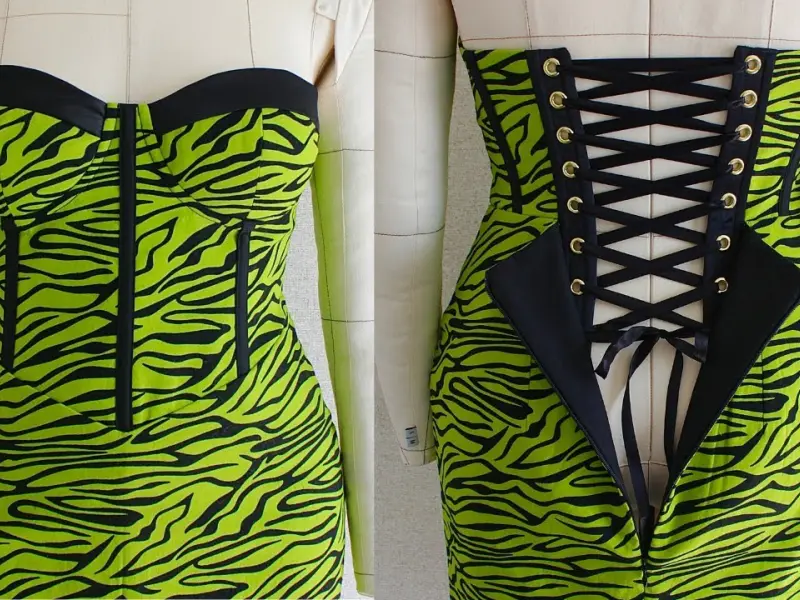
Material Choice Can Create or Correct Fit Problems

Structured dress development needs material decisions that support both silhouette and movement. Shell fabric, interlining and lining are reviewed together because replacing one layer can change tension, drape, structure and the approved pattern result.

Shell Fabric Stability Changes the Same Pattern

Two fabrics cut from an identical pattern can produce noticeably different fit. Stretch percentage, recovery, thickness, weight, weave density and drape influence how the garment follows the body and how much support the pattern must provide.
For structured dresses, Duolan reviews:
  • Stretch: Determines whether negative ease is appropriate and where the garment can move.
  • Recovery: Poor recovery may cause the neckline, waist or hip to grow during wear.
  • Weight: Heavy material can pull on a bodice and shift the waist or neckline downward.
  • Thickness: Changes seam bulk, cup transitions and the visibility of internal construction.
  • Drape: A very soft fabric may not maintain a sculpted silhouette.
  • Surface behavior: Satin and smooth fabrics expose seam tension, pressing marks and internal ridges more clearly.
Stretch satin may support a fitted silhouette while requiring careful recovery and seam control. Stable crepe can provide cleaner structure but needs enough planned ease for movement. Dense woven fabrics may hold sharp panels well but can become restrictive if the pattern was developed with stretch in mind.
Duolan connects fabric approval with the fit sample. When the final bulk material differs materially from the sample fabric, the fit should be reviewed before the pattern is treated as fully locked.

Interlining Should Support Without Making the Dress Rigid

Interlining changes local behavior rather than overall size. A neckline can become cleaner, a front panel can hold shape and a zipper area can resist stretching. The wrong interlining, however, can create new fit problems.
Key review points include:

  • Weight relative to shell fabric.
  • Stretch compatibility.
  • Handfeel after bonding or layering.
  • Edge thickness.
  • Visibility through the shell.
  • Wash or care requirements.
  • Stability under pressing.

Structured satin is especially sensitive because an overly heavy interlining can show through the surface. Lightweight shell fabrics may need localized reinforcement instead of full-area stiffness. Blazer dresses may require stronger support through lapels and shoulders while leaving other areas softer.
Duolan evaluates where reinforcement is actually needed. A structured garment does not need every panel to have the same stiffness. Strategic support can hold the intended line while preserving natural movement and a refined handfeel.
During sampling, the interlining specification should remain connected to fit comments. If a neckline collapses, the correction may involve both pattern curvature and support.

Lining Tension Can Distort an Otherwise Correct Shell

A lining needs its own pattern logic. Using the shell measurements without considering stretch, seam construction and internal components can create tension that pulls against the outer garment.
Common lining-related problems include:

  • Lining shorter than the shell, pulling the hem or waist upward.
  • Lower stretch than the shell, reducing movement.
  • Excess lining volume, creating internal folds.
  • Incorrect cup or boning attachment, changing bust shape.
  • Tight armhole or neckline attachment, pulling the outer edge inward.
  • Poor slit coordination, restricting walking.

Duolan checks lining through both fit and internal construction. A structured bodice may need close lining control to support cups and boning, while a skirt section may need additional ease so the outer silhouette moves cleanly.
Opacity and skin comfort also matter. Occasion dresses frequently combine structured sections with lighter, sheer or decorative materials. The lining needs to protect coverage without changing the intended visual line.
Before fit approval is transferred into production, shell and lining are treated as a pair. Changing lining composition, stretch or weight after approval can alter fit even when the visible outer fabric remains unchanged. Material locking therefore covers internal layers as well as the main fabric.

Material Locking Protects the Approved Fit

Fit approval has limited value when production materials are still open to change. A different fabric lot, lining composition, boning specification or interlining can alter the garment enough to make an approved pattern perform differently.
Duolan connects fit approval with material locking by reviewing:

  • Main fabric composition, weight and stretch behavior.
  • Lining type and stretch.
  • Interlining weight and application area.
  • Cup shape and size.
  • Boning type and placement.
  • Zipper specification.
  • Elastic, anti-slip or support components.
  • Any trim carrying structural load.

For fashion programs using several colors, the material review also considers whether colorways behave consistently. Dark dyeing, coatings or finishes can sometimes change handfeel or stretch compared with another color from the same base material.
Duolan uses the sample and PP stages to connect material decisions with pattern and fit. Once the combination is approved, the material information can be carried into the BOM, production preparation and QC reference.

Structured Fit Must Hold Through Real Movement
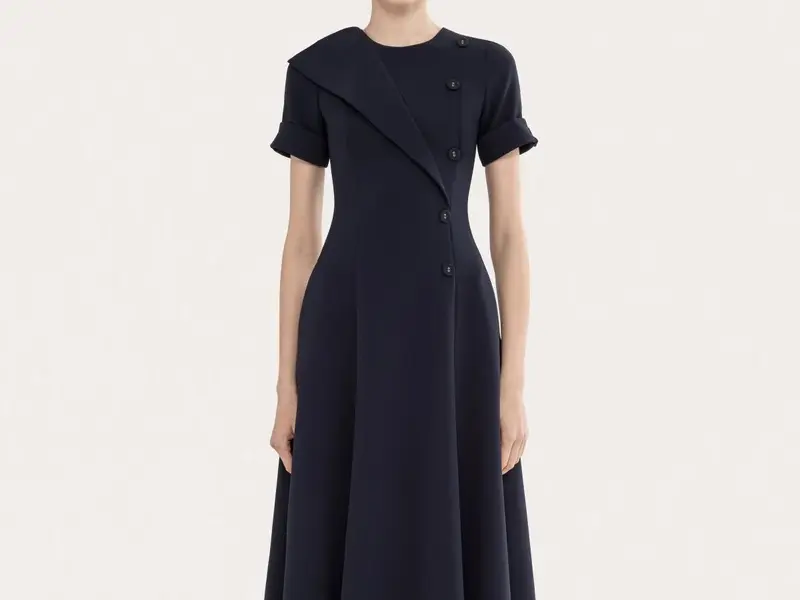
A fitting viewed only in a standing front pose can miss important failures. Structured dresses need enough support to maintain the intended silhouette while allowing the wearer to sit, walk and move without constant adjustment.

Standing Balance

Standing review establishes the visual baseline. Duolan checks neckline contact, cup position, bust symmetry, waistline level, side-seam direction, zipper line, hem balance and whether support components remain visually clean. The garment should look controlled without obvious horizontal pulling, collapse or over-compression. Front, side and back views are reviewed together because a fit correction that improves one view can disturb another.

Sitting Comfort

Sitting changes torso length, hip position and abdominal pressure. Boning that appears correctly placed while standing can become too long or dig into the body when seated. A tightly structured waist may also push the bodice upward. Duolan checks whether the neckline, cups and waist remain in position during sitting and whether internal support bends or terminates at comfortable points rather than creating concentrated pressure.

Walking Stability

Walking exposes lower-body restrictions and their effect on the bodice. Insufficient hip ease, narrow hem openings or unstable slits can make a fitted skirt climb upward, shifting the waist and changing bust or neckline position. Duolan reviews stride, slit behavior, hem opening and side-seam stability so the lower body can move without pulling the structured upper body away from its approved position.

Upper-Body Movement

Shoulder and arm movement can affect strapless, one-shoulder, halter and sleeved structured dresses differently. Armholes that are too low or tight may pull the bodice; straps may change bust position; asymmetric tension can rotate a neckline. Duolan reviews the movement most relevant to the design rather than applying one mobility test to every garment. A successful structured fit maintains security while allowing natural movement appropriate to the wearing occasion.

A Controlled Sample Path Builds Reliable Structured Fit

Structured styles benefit from a defined development sequence. Duolan separates development basis, pattern work, fit review and approval so each sample answers a clear technical question instead of becoming another version with unclear changes.

Development Basis

Before pattern work begins, Duolan reviews the available tech pack, reference image, original sample, size specification, target market, intended silhouette and previous fit comments. The sample purpose is also confirmed: visual direction, fit approval, construction testing or production preparation. Clear priorities prevent a fit sample from being judged against criteria that were never defined at the start.

Fabric and Trim Review

Shell fabric, lining, interlining, cups, boning, zippers and structural trims are reviewed before the pattern direction is treated as final. Stretch, recovery, weight, drape and support can change the required ease and internal construction. When target material is unavailable, any development substitute should be evaluated for how closely it reproduces the fit behavior needed for useful sampling.

Initial Pattern

Pattern development translates the intended silhouette into measurable geometry. Bust point, neckline, torso length, waistline, side seam, hip curve, closure and hem are coordinated with the chosen material direction. Structured garments receive extra attention around support lines and load-bearing areas. The first pattern is a technical starting point, not a promise that every design assumption has already been validated.

First Sample

The first sample is reviewed for proportion, fit, support, construction feasibility and material behavior. Duolan looks for root causes rather than recording only visible symptoms. A neckline gap may lead to review of bust volume and torso balance. A rising waist may lead back to front body length. The sample should generate clear development decisions rather than simply produce a list of requested alterations.

Fit Review and Revision

Comments are separated into measurement, pattern, material, construction, visual and production-related categories. Corrections are returned to the relevant technical source: pattern, specification, support system, material or workmanship. Revision records keep the first and revised directions traceable. For complex structured styles, staged updates can be used when an early decision on fabric or construction prevents unnecessary work later.

PP and Bulk Reference

Once fit direction, material, construction and measurements are sufficiently aligned, the approved development needs a production reference. PP preparation connects the pattern, specification, BOM, structural details and QC checkpoints. The goal is not merely to approve a good-looking sample; the goal is to create a version that production teams can reproduce across the agreed colors, sizes and order quantities.

Fit Comments Must Become Technical Pattern Actions

Brand comments are most useful when they lead to a defined technical correction. Duolan separates the visible symptom from the root cause, documents the change and verifies the revised result before fit decisions become production standards.

"Neckline Feels Loose" Is the Start of Diagnosis

A loose neckline is easy to describe but can have several causes. Reducing the neckline circumference immediately may remove visible space while producing compression, distorted cups or an upper edge that digs into the body. Duolan first reviews:
  • Bust point and cup volume.
  • Upper-bust coverage.
  • Front torso length.
  • Neckline curvature.
  • Shoulder or strap position.
  • Back-panel tension.
  • Boning and waist anchoring.
  • Interlining and elastic support.
If the bust lacks enough volume, the body can push the bodice outward and create a gap above the fullest point. If front length is short, the waist may pull the bodice upward and alter neckline contact. If the back is too loose, the entire garment may rotate forward. A correction can therefore involve more than one pattern line. The neckline may need a small contour adjustment while princess shaping, cup depth or front length also changes. Support may be refined so the upper edge is no longer responsible for holding the garment up. The revised sample is checked in front, side and movement positions. The important result is not simply “the gap disappeared.” Duolan looks for a neckline that remains close to the body without creating new pressure or changing the intended bust shape. Approved changes are returned to the pattern and measurement notes so the correction remains reproducible.

"Bust Feels Tight" Needs Volume and Length Review

“Tight at bust” is another comment that can be misread as a simple circumference issue. Structured dresses need volume in the correct three-dimensional location. Adding width at the side seam may increase the total measurement without increasing cup depth or space where the body actually needs it. Duolan reviews:
  • Full-bust measurement.
  • Bust-point position.
  • Cup depth and width.
  • Princess seam curvature.
  • Front body length.
  • Underbust position.
  • Lining and cup compatibility.
  • Fabric stretch and recovery.
Drag lines moving from the bust toward the armhole or side seam can help show where the pattern is under tension. A waist seam rising at the front may indicate insufficient length over the bust rather than a waist issue. For corset and bustier styles, the internal cup must also match the shell. Increasing outer volume while leaving the cup unchanged can create pressure inside a garment that looks visually larger from the outside. A controlled correction may redistribute volume through the cup or panel, adjust front length and then rebalance the side seam. The goal is to preserve waist and back fit while providing enough space at the bust. Duolan verifies the revised shape rather than treating the measurement change as proof of success. Fit is approved when the bust position, neckline, waist and support work together.

"Waist Pulls Up" Can Begin Above the Waist

When a structured dress rises at the waist, reducing or enlarging the waist measurement may not address the cause. The garment may be short over the bust, tight through the hip, incorrectly balanced from front to back or pulled by a heavy lower section. Duolan checks the full vertical system:
  • Front and back torso length.
  • Bust projection.
  • Underbust-to-waist distance.
  • Waistline position.
  • High-hip and low-hip ease.
  • Side-seam direction.
  • Skirt weight.
  • Lining length.
  • Closure tension.
If the front body is short, the bodice may climb until enough length is created by shifting the waist seam upward. If the hip is too tight, walking can make the skirt rise, bringing the waist and bodice with it. A lining cut shorter than the shell can create a similar effect. Correction therefore depends on cause. The pattern may need additional front length, redistributed shaping, more movement ease or a lining adjustment. In some designs the waist seam itself remains unchanged after the root cause is corrected. Duolan uses worn-position review to confirm the result. The waist needs to stay close to the intended level during standing and normal movement rather than looking correct only immediately after the garment is adjusted by hand.

Version Control Turns Revisions Into Production Standards

A fit correction has limited value when the reason for the change disappears after the sample is approved. Structured products often contain several interacting changes, so Duolan manages revisions as a technical record rather than a series of untracked alterations. A revision summary can separate:

  • Fit comments.
  • Measurement changes.
  • Pattern corrections.
  • Fabric or lining changes.
  • Support-system changes.
  • Construction changes.
  • Items already approved.
  • Items still waiting for confirmation.

V1, V2 and later versions should make the development direction increasingly clear. When a neckline curve changes because of bust balance, the note should distinguish the root correction from a simple dimensional change. When boning position changes, the related pattern or construction information also needs to move forward. Version control becomes especially important when several departments are involved. Product development, pattern, sampling, sourcing, production and QC need to work from the same current standard. Duolan uses the approved development to prepare the next production step. 

Critical Measurements Turn Fit Into a Production Standard
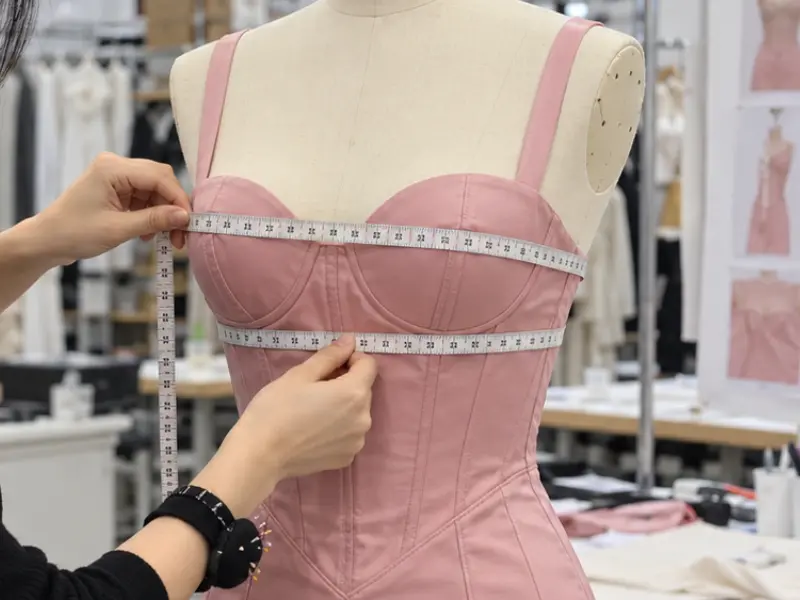
A structured fit needs measurable control points without reducing the garment to a simple bust-waist-hip chart. The measurement method should reflect the design, fabric behavior, support structure and areas where small deviations can change the worn result.

Bust and Underbust

Bust width alone does not define shaped-bodice fit. Duolan reviews bust measurement together with underbust level, bust point and the location of cups or princess seams. Measuring method must remain consistent between sample review and production QC. For corset and bustier styles, the relationship between bust and underbust is often more informative than either number viewed independently.

Torso and Waist

Front length, back length and waist placement control where the structured section sits vertically. A correct waist circumference cannot compensate for incorrect torso length. Measurement notes should define exactly where body length starts and ends, especially when the neckline is asymmetric, strapless or unusually shaped. The approved waist position then becomes a visual and measurable reference for grading and production.

Neckline and Straps

Neckline drop, top-edge width and strap length affect coverage and upper-body stability. Adjustable straps also need a defined measurement method: whether the measurement includes hardware and which adjustment position is used. For strapless garments, top-edge measurement should be interpreted together with internal support because a smaller neckline dimension does not automatically create a more secure fit.

Side Seam and Hip

High hip, low hip, side seam and hem opening influence contour and movement. Duolan checks whether measurements are taken in a relaxed flat position and whether stretch fabrics need a defined non-stretched method. Side-seam length can also help identify imbalance between front and back pattern pieces. Critical POMs vary according to silhouette rather than using one universal dress template.

Closure and Back

Zipper length, center-back width, lace-up opening and back neckline measurements affect both access and structural tension. A closure specification should state where the zipper begins and ends and how surrounding fabric is measured. For adjustable backs, the target opening needs a reference so different sizes do not rely on unpredictable tightening to achieve the intended fit.

Length, Slit and Hem

Dress length, slit height and hem opening determine proportion, coverage and movement. Measurement notes should define the exact start point for length and the reference point for slit height. On fitted dresses, a slit can appear higher when the hip is under tension, so visual review still needs to accompany the flat measurement. Production control combines numbers with the approved worn result.

Grading Must Preserve Structure Across the Size Range

A strong base sample does not guarantee a strong size range. Structured-dress grading needs to preserve proportion, support and wearing position as dimensions change, especially around cups, torso length, neckline, waist and boning.

Base Size Approval Defines the Grading Logic

The base size establishes more than a set of measurements. It establishes the intended relationship between bust, waist, hip, torso length, neckline, support and garment length. For example, a brand may approve a size S or US 4 base sample and plan an XS-XL range. Five sizes do not mean five simple scale versions of the base garment. Each size needs to retain the same visual and functional logic. Before grading, Duolan identifies which areas are critical:
  • Bust point.
  • Cup position.
  • Underbust.
  • Waist height.
  • Neckline shape.
  • Torso length.
  • Side seam.
  • Hip curve.
  • Strap or shoulder position.
  • Slit and hem proportion.
The grading rule also needs to match fabric behavior. A stretch structured dress may allow controlled negative ease, while a stable woven style requires planned wearing ease. Using the same increment logic for both can create a range that looks consistent on a table but behaves differently on the body. The approved base sample therefore becomes the design reference, while the spec sheet defines how measurements are intended to change. Grading connects the two. Duolan treats the base fit as a system to be translated across sizes rather than a garment to be mathematically enlarged.

Upper-Body Grading Needs More Than Circumference Increments

Structured bodices are especially sensitive to mechanical grading. As sizes change, bust volume increases in three dimensions while shoulder, neckline, cup position and torso proportions do not change at identical rates. For corset, bustier and strapless styles, Duolan reviews:
  • Cup width and depth.
  • Bust-point spacing.
  • Underbust relationship.
  • Neckline width and depth.
  • Boning channel position.
  • Center-front and center-back length.
  • Side-panel width.
  • Back closure or lace-up proportion.
A cup that is simply widened can become too shallow. A neckline enlarged at the same rate as bust circumference can create gaping. Boning shifted too far outward can lose its support relationship with the body. Upper-body grading also needs to protect design language. A narrow square neckline, sculpted sweetheart line or defined corset panel should maintain its visual identity across sizes. Duolan connects pattern grading to the brand’s size chart and fit direction. The objective is not to make every size geometrically identical. The objective is to reproduce the same intended silhouette, level of support and wearing security for the relevant size range. Where a style is highly fit-sensitive, selected size verification can be used before bulk production so grading decisions are checked on real garments rather than only in CAD.

Vertical Proportion and Support Need Controlled Change

Length grading can change the character of a structured dress as quickly as circumference grading. Waist height, torso length, cup position, slit height and hem length create the vertical proportions visible in photographs and on the body. Duolan separates vertical controls such as:
  • Shoulder or strap-to-bust distance.
  • Bust-to-underbust distance.
  • Underbust-to-waist distance.
  • Waist-to-high-hip distance.
  • Total body length.
  • Slit position.
  • Boning length.
Not every area should grow at the same increment. If boning length increases too aggressively, larger sizes may become uncomfortable when seated. If torso length barely changes, the waistline can rise on bodies that require more vertical room. If a mini dress is lengthened mechanically, the visual proportion may shift away from the original design. Structured grading therefore needs a balance between numerical consistency and design consistency. Duolan reviews how support components move with the pattern. Cups, boning, zipper positions and internal anchors need to remain connected to the body zones they are designed to support. Once grading is approved, measurement tolerances and QC checkpoints should focus on the dimensions that most strongly affect fit. A full size range becomes reliable when pattern, support and measurement systems are aligned rather than managed separately.

Structured Fit Correction Across a 31,200-Piece Program
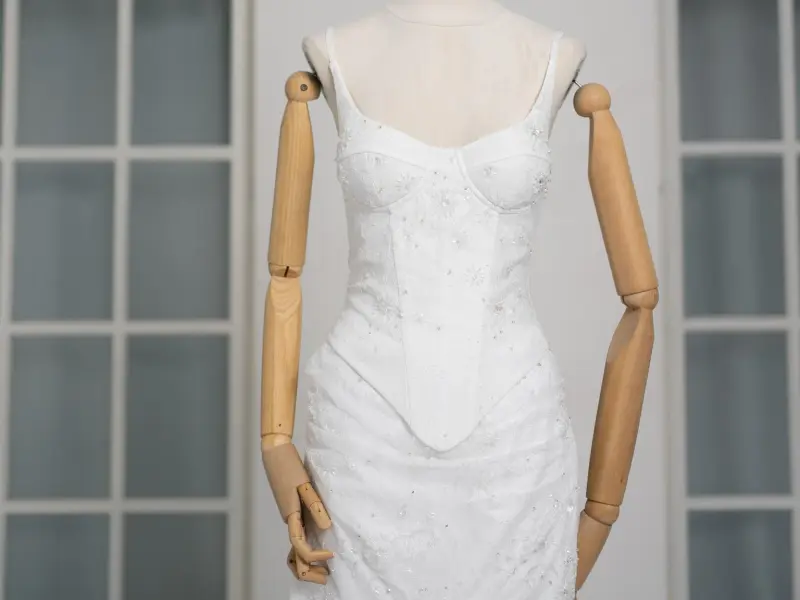
An anonymized North American occasionwear program shows how structured fit decisions can move from sample comments into repeatable production standards without treating every fit issue as a simple measurement alteration.

Program Scope and Fit Priorities

The development program covered 14 dress styles and 31,200 pieces across XS-XL, with six styles using fit-sensitive structured bodices. The assortment combined stretch satin, stable crepe and structured woven directions, creating different requirements for support, ease and seam control.
The main structured silhouettes included strapless minis, corset-inspired midis and fitted occasion dresses with shaped upper-body panels.
The brand team wanted a consistent fit language across the collection:

  • Secure bust coverage.
  • Defined waist.
  • Clean neckline contact.
  • Controlled side seams.
  • Comfortable sitting and walking.
  • Consistent proportion across five sizes.

Rather than treating all six structured styles with the same block, the development review separated them by support requirement and fabric behavior.
Stretch satin styles needed recovery and seam-tension control. Stable woven styles needed more planned wearing ease. Strapless styles required stronger anchoring through the waist and back.
The development objective was therefore not simply to make fourteen samples match a size chart.
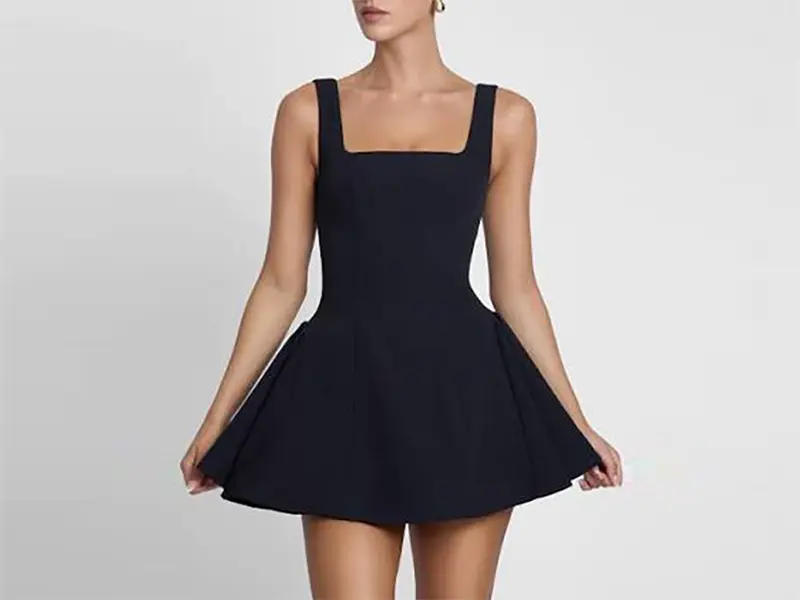
First Fit Review Found Connected Problems

One hero strapless style showed three visible issues during the first fit review: slight neckline gaping, the front waistline rising under the bust and side seams moving forward toward the hip.
Treating each symptom independently would have produced three local alterations. The development review instead looked for a connected cause.
The technical review identified:

  • Front body length needed more room over the bust.
  • Princess shaping was not creating enough projection at the target bust point.
  • Back width was slightly generous relative to the front.
  • Hip ease was low for the selected woven construction.
  • Lining tension was adding vertical pull.

The neckline itself required only a limited contour adjustment. Most of the visible gap was being created by the relationship between bust projection, front length and back tension.
Pattern corrections redistributed volume through the princess panels, extended the required front length and rebalanced the front-to-back width distribution. Hip ease was increased to reduce upward movement, while the lining pattern was aligned with the revised shell.
The result of the first review was a defined technical action list rather than a general instruction to “tighten the neckline and loosen the bust.”

Two Revision Rounds Locked the Fit Direction

The structured styles moved through two controlled fit-revision rounds before PP preparation.
Revision one focused on root pattern changes:

  • Bust-point position.
  • Princess seam curvature.
  • Front torso length.
  • Waistline balance.
  • Side-seam position.
  • Hip movement.
  • Lining length.

The second fitting confirmed that the neckline stayed closer to the body without increasing top-edge compression. Waist position remained more stable during walking, and side seams returned closer to the intended line.
Revision two then refined production-sensitive details:

  • Boning channel position.
  • Top-edge support.
  • Center-back zipper reinforcement.
  • Internal cup alignment.
  • Seam allowance around curved panels.
  • Pressing method for visible structured seams.

The development record separated fit changes from workmanship refinements so the production team could understand which points were pattern-critical and which belonged to sewing or finishing.

PP References Connected Fit to the Bulk Order

Before production, each approved style was tied to a PP reference, current pattern version, measurement specification and material direction.

For the six structured styles, the production handover highlighted:

  • Critical POMs.
  • Bust and waist balance.
  • Neckline contact.
  • Boning placement.
  • Center-back stability.
  • Lining tension.
  • Side-seam direction.
  • Hem or slit movement.

The program used three material families, so fit control was not separated from material control. Production fabric, lining and structural components were reviewed against the approved development direction before release.
The bulk plan covered five sizes and multiple style quantities rather than using one garment as the only visual standard. Critical points were carried into first-piece and production QC references.

No unsupported performance claim is needed to make the case useful. The important outcome is the development pathway: a visible fit problem was diagnosed at root level, corrected in the pattern and internal structure, verified through two revisions and transferred into a documented PP and bulk standard for a 31,200-piece multi-style program.

Production-Ready Fit Requires Six Locked References

A fit-approved sample is only useful for manufacturing when the decisions behind it are captured. Duolan connects the approved garment with pattern, measurements, materials, structure, workmanship and a physical reference before bulk release.

Approved Pattern

The current pattern version needs to include all confirmed fit corrections rather than relying on alterations made directly to the sample. Bust shaping, neckline, waistline, side seam, hip ease, closure and length changes become part of the controlled pattern. Pattern version status also reduces the risk of an earlier revision returning during production or repeat orders.

Measurement Specification

Critical POMs, measuring methods and tolerances define how the approved fit will be checked. Structured styles may place greater emphasis on bust, underbust, torso length, waist position, neckline, zipper and boning-related dimensions. Measurement control supports the pattern; it does not replace visual fit evaluation.

Material and BOM

Main fabric, lining, interlining, cups, boning, zipper, elastic and structural trims need to match the fit direction used during approval. The BOM records which components create the approved result. A late material substitution should trigger technical review when stretch, stiffness, thickness or support behavior changes.

Internal Support

Boning type and position, cup specification, reinforcement, anti-slip components, waist support and closure details need to be documented where they affect garment stability. Small internal changes can cause large visible differences in structured styles. Support is therefore treated as part of the production standard rather than a sewing-room preference.

Construction Standard

Seam sequence, reinforcement, attachment, pressing and finishing can alter fit even with a correct pattern. Curved princess seams, zipper installation, boning channels and top-edge construction need controlled methods. Production instructions focus on the workmanship points capable of changing the approved silhouette or creating visible tension.

PP Physical Reference

A PP or agreed production-ready sample gives the production and QC teams a physical standard for proportion, handfeel, structure and finish. The reference is most useful when it matches the current pattern, specification and material direction. A physical garment plus technical records provides stronger control than either source used alone.

Verify Fit-Sensitive Styles Before Full Production Release

For structured garments with higher fit or workmanship sensitivity, Duolan can use first-piece or pilot-stage verification before full production is released. Early confirmation is designed to catch production differences while correction remains manageable.

Pre-Production Readiness Review

Before a fit-sensitive style reaches the line, Duolan checks whether the approved sample status, current pattern, main materials, lining, structural trims, measurements and workmanship points are aligned. Open fit issues should not be hidden inside a production schedule. The review identifies which elements are approved, which remain sensitive and which checkpoints the production team needs to protect from the first garment onward.

First-Piece Verification

The first-piece stage checks whether production construction reproduces the approved fit direction. Structured styles receive attention around neckline, bust, waist, boning, zipper, side seam, lining and overall balance. Production sewing methods can create differences even when the pattern is unchanged, so first-piece review looks at both measurement and visual behavior before a wider quantity is released.

Controlled Production Release

When critical fit and construction points are aligned, the style can move into the planned production path. If a deviation appears, the cause can be reviewed before thousands of garments carry the same issue. The purpose is not to add unnecessary approval layers; it is to protect high-risk structured details at the point where sample-room techniques become repeatable production methods.

Bulk Fit Consistency Needs More Than Final Measurement

Fit can drift through cutting, sewing, pressing, material variation and production handling. Duolan controls critical points during manufacturing so the approved structured silhouette remains connected to measurable standards and visual references.

Consistent Measuring Method

A tolerance has limited value when operators measure the garment differently. Duolan aligns POM definitions and measuring methods before interpreting results. Relaxed flat measurements, stretch handling, zipper position and reference points need to remain consistent. Structured styles often require special attention around bust, underbust, neckline, front/back length and waist position rather than only standard garment widths.

Critical POM Control

Not every measurement has the same impact on fit. A small deviation at a low-risk point may have little effect, while a similar deviation in bust position, torso length or neckline can change the worn result. Critical POMs are therefore identified according to silhouette, fabric and support structure rather than giving every line in the spec identical priority.

Material Batch Consistency

Changes in stretch, recovery, weight or stiffness can alter fit without changing pattern measurements. Production material needs to remain aligned with the approved direction. Lining and internal support materials also matter. A different lining stretch or boning stiffness can create a result that measures within tolerance while feeling or sitting differently on the body.

Structural Placement

Boning channels, cups, interlining, zipper reinforcement and anti-slip components need consistent placement. A structured bodice can lose symmetry when internal elements shift even slightly between garments. Placement review is especially important where visible seam lines are also used as structural lines, such as corset panels and princess seams.

Inline Appearance Review

Measurement alone cannot identify every fit-related production problem. Twisting seams, zipper rippling, neckline distortion, uneven cups, collapsing panels and pulling around the waist may appear as visual defects before a measurement falls outside tolerance. Inline review helps separate isolated workmanship issues from developing production patterns.

Final Fit-Sensitive Review

Final inspection combines agreed measurements with workmanship, symmetry, closure operation, structural placement and overall appearance. Bulk production reference: Duolan’s general production planning range is approximately 15-20 days for simple styles, 20-30 days for regular styles and 30-45 days for complex styles.

What Brands Should Check in a Structured Fit Supplier

A capable structured-dress partner needs more than access to sewing capacity. Brand teams should evaluate whether pattern, fit correction, material judgment, grading, sample control and production transfer are connected strongly enough to protect the approved silhouette at scale.

Supplier Evaluation PointWhy It MattersDuolan Apparel Evidence
Dress category focusStructured fit requires experience beyond basic loose apparelFocus on fashion dresses, occasion dresses, party dresses, fitted dresses, corset/bustier, halter, backless and other fit-sensitive directions
Pattern and fit capabilityRoot causes must be corrected in the pattern, not hidden in sample alterationsIndependent pattern development, fit adjustment, contour control, silhouette balance and grading capability
Material-fit judgmentIdentical patterns behave differently with different stretch, recovery and supportFabric sourcing and review across satin, mesh, crepe, jersey, velvet, sequin and related dress materials, plus lining and structural trim coordination
Structured constructionCups, boning, interlining and closures need coordinated engineeringDevelopment support for corset, bustier, strapless and other structure-sensitive dresses
Sample revisionA first sample often reveals design assumptions that need correctionFirst proto, fit sample, revised sample, salesman sample and pre-production/PP development paths
Production transferA strong sample has limited value when bulk teams receive incomplete standardsBulk-readiness review covering fabric, lining, trims, measurements, workmanship and packaging before production release
Pilot verificationFit-sensitive errors are cheaper to correct before full releaseFirst-piece, pilot and key-operation verification for higher-risk styles before full-volume production
Scalable manufacturingA supplier needs capacity after the structured fit is approvedManufacturing system with 300 sewing lines, 50+ flexible/quick-response lines, approximately 6.5 million pieces stable monthly capacity, peak capacity up to 10 million, and monthly sample-development capacity of approximately 15,000-35,000 pieces/style instances

Send the Right Information for a Faster Fit Review

A useful technical review begins with enough information to understand the intended garment, current fit position and production goal. Duolan can work from complete technical packs or assess available development materials and identify what should be confirmed next.

Tech Pack or Reference

Send the current sketch, tech pack, annotated reference or original sample information available to the team. A complete tech pack is useful, but a structured review can also begin from partial development material when the design direction is clear. Mark important design lines, intended support areas and any details that must remain unchanged during fit correction.

Current Size Specification

Provide the current size chart, base size, POM definitions and grading information when available. For existing brand blocks, noting the target fit model or market is especially useful. Duolan can review whether the structured style requires additional measurements such as underbust, torso length, neckline, strap, zipper or slit controls beyond the standard bust-waist-hip specification.

Previous Fit Comments

Previous comments often reveal where development has already been difficult. Send annotated photos, fitting notes, measurement comments or marked samples. Comments such as “neckline gaps,” “cup feels low,” “waist rides up” or “side seam twists” provide a starting point, but Duolan will still review the possible root cause before recommending a correction direction.

Fabric Direction

Share composition, weight, stretch information, swatches, supplier references or the desired handfeel when available. Structured fit cannot be reviewed independently from material behavior. If the target fabric is not confirmed, describe whether the design needs crisp support, soft shaping, stretch contour, satin surface, dense tailoring or another specific garment result.

Internal Construction

List cups, boning, interlining, lining, anti-slip components, elastic, zipper, lace-up details or other support elements already planned. Internal photographs of an existing sample are useful where possible. Duolan can review whether the current support system matches the fit issue or whether the correction should begin with the pattern before additional reinforcement is introduced.

Program and Timing

Include the intended size range, number of styles, target order quantity and development calendar. A single fit sample and a 20,000-80,000-piece multi-style program require different production planning even when the technical fit issue is similar. Timeline review becomes more accurate after material status, sample purpose and structured complexity are understood.

Structured Dress Fit Frequently Asked Questions
Often, yes, but the neckline should not be altered before the cause is understood. Gaping can come from neckline curvature, bust volume, front torso length, back tension, cup position or weak anchoring. A small neckline correction may be enough when the rest of the bodice is balanced. When the cause originates in bust or torso geometry, reducing the upper edge alone can create compression or slipping.
Duolan reviews cup depth, bust-point position, princess shaping, front body length, underbust and overall circumference. Tightness may come from insufficient three-dimensional volume rather than total garment width. Adding side-seam width alone can loosen the waist or back without solving the bust. The correction is returned to the pattern and then checked through a revised fit sample.
No. Boning supports a correctly developed structure; it cannot repair an incorrect pattern. Excessive stiffness or poor placement can create discomfort, visible ridges or pressure when sitting. Boning type, length and position should match the garment architecture, body curve and amount of support required. Cups, lining, interlining, waist anchoring and closures also contribute to stability.
Stretch, recovery, weight, thickness and stiffness can change how the same pattern sits on the body. A softer material may collapse around a sculpted section, while a rigid fabric can restrict movement. Heavy fabrics may pull the bodice downward. Fit approval is more reliable when the sample fabric behaves closely to the planned production material.
The answer depends on the silhouette. Bust, underbust, waist, hip, front length, back length, neckline, strap length and zipper can all become critical. Corset styles add cup and boning relationships; strapless styles place more emphasis on upper-edge stability and torso anchoring. Duolan defines critical POMs according to the actual garment rather than using one generic dress specification.
Yes. Existing fitting photos, comments, patterns, tech packs, size specs or physical samples can provide valuable development history. Duolan reviews previous comments as diagnostic information rather than automatically repeating the requested alteration. When a comment describes a symptom, the team checks whether the original cause comes from pattern, material, internal support or construction before proposing the next revision.
There is no responsible fixed number for every structured dress. Complexity, material status, quality of the starting pattern and fit priorities all affect the revision path. A well-defined development basis may reduce unnecessary rounds. Duolan separates first-sample review, fit correction and production preparation so each version has a clear purpose instead of repeating broad changes without a locked direction.
Grading starts from an approved base fit and brand size logic. Cup position, neckline, torso length, waistline, boning, hip and overall proportion should not be enlarged mechanically at identical rates. Stretch and stable fabrics also require different ease logic. Selected size verification can be used for highly fit-sensitive products before bulk production begins.
The approved pattern is connected with the current measurement specification, material/BOM direction, internal support, construction details and PP reference. Critical measurements and fit-sensitive workmanship points are identified before production release. For higher-risk structured styles, first-piece or pilot verification can confirm that production construction reproduces the approved development result.
Send the available tech pack or reference, current size specification, fitting photos or comments, target fabric information, internal construction details, size range, quantities and required development timing. If some information is still open, send the material already available. Duolan can identify which missing points have the greatest impact on fit review and production planning.

Review Your Structured Dress Project With Duolan

A structured dress project is easier to evaluate when the design intent, fit problem and production target are visible from the beginning. Send Duolan Apparel the material already available, whether the project is entering first development, correcting an existing sample or preparing an approved style for bulk production. Our team will review the garment around pattern balance, bust and torso fit, neckline stability, material behavior, internal support, grading and the transition from sample approval into manufacturing.

A useful first review can include:

  • Tech pack, sketch or reference images.
  • Current sample photos or physical sample details.
  • Size chart and base-size specification.
  • Previous fit comments or annotated fitting photos.
  • Main fabric, lining and support direction.
  • Planned size range and colorways.
  • Number of styles and target quantity.
  • Required sample, launch or production timing.

Clear project information allows Duolan to identify the strongest development path, highlight unresolved fit risks and define what should be confirmed before the next sample or production stage.

Start Your Apparel Development Project

OEM/ODM Manufacturing Support for Fashion Brands

Share your collection details, estimated quantities, target market, development timeline, and technical requirements. The production team will review your request and provide a tailored manufacturing solution based on your product category, fabric selection, construction needs, and delivery schedule.

Fashion Manufacturing Support with Scalable Production Capacity

From sample development to bulk production, Duolan supports fashion brands with confidential OEM/ODM manufacturing, stable quality management, flexible production planning, and coordinated multi-factory execution for seasonal and capsule collections.

Need Direct Assistance?