
...

Work and Office Dress Manufacturing

Structured women’s workwear developed for professional fit, day-long comfort, clean finishing, repeatability, and controlled bulk production.

  • 8 core office-dress directions: sheath, shirt, wrap, tailored midi, blazer, A-line, structured knit, and work-to-evening dresses.
  • 10 workwear-critical fit points: shoulder, bust, waist, hip/seat, armhole, neckline, dress length, slit height, hem opening, and lining length.
  • Manufacturing scale for multi-style programs: 300 sewing lines supported by 50+ flexible lines for development, launch, repeat, and scale-up planning.

Fashion Workwear Is Different From Industrial Workwear

Work and office dresses sit inside women’s fashion, not uniforms or protective garments. Development decisions focus on professional appearance, movement, coverage, fit consistency, fabric recovery, and a finish suitable for repeated office wear and commercial collections.

Fashion Workwear

Fashion workwear covers career dresses, office dresses, professional day dresses, business-casual dresses, and polished work-to-evening styles. Silhouettes still need a clear fashion point of view, but the garment cannot depend on appearance alone. A strong work dress must stay appropriate while sitting, walking, commuting, reaching, and wearing the garment for several hours. Neckline depth, slit height, armhole shape, waist placement, fabric opacity, and surface recovery all become development decisions. A sheath dress, shirt dress, or blazer dress therefore needs a different fit and construction review from a party or resort style.

Professional Wear Logic

Office-appropriate design depends on restraint and control rather than decoration. The garment should hold its silhouette without becoming stiff, allow movement without losing shape, and provide coverage without looking conservative or generic. A fitted waist may need controlled ease through the seat. A front or back slit must support stride without opening too high when seated. A sleeveless armhole must look clean while allowing natural reach. Light-colored fabrics need opacity review, while stretch fabrics need recovery checks so knees, seat, and elbows do not remain bagged after wear.

Commercial Manufacturing

A commercial workwear program is often built around repeatable blocks rather than one-off novelty. Once a sheath, tailored midi, shirt dress, or compact-knit fit is proven, the same base can support seasonal colors, sleeve changes, neckline refinements, fabric alternatives, and repeat orders. Production records therefore matter as much as the first sample. Pattern versions, measurement methods, fabric references, interlining, zipper specifications, workmanship points, color approvals, and packing requirements need to remain traceable when a style returns in another season or a new color group.

Built for Established Fashion and Product Teams

Duolan works best with teams managing defined product direction, commercial calendars, size standards, and repeatable production. The working model is structured around development review, sample decisions, bulk readiness, quality control, and long-term style continuity.

Established Fashion Brands

For brands already operating a clear officewear, careerwear, contemporary, or polished daywear category, development usually begins with existing fit language, target retail positioning, preferred materials, and a launch calendar. Duolan can work from tech packs, original samples, reference garments, design drawings, or a mixed development brief. The main objective is not to replace the brand’s direction. The objective is to translate approved design language into fabric, pattern, construction, workmanship, and production standards that can be repeated across a seasonal program.

Product Development Teams

Product teams need more than a factory response saying a style is possible. They need to know where the risk sits before sample time is spent. For work dresses, common early questions involve shoulder and armhole movement, waist-to-hip balance, slit position, interlining choice, lining coverage, fabric recovery, collar or lapel structure, and how a fit block will grade. Development discussions can be organized around those points so sample comments lead to pattern, measurement, material, or construction actions rather than a sequence of vague remake requests.

Sourcing and Production Teams

Sourcing and production teams often compare suppliers on more than unit cost. Material availability, style complexity, size consistency, sample-to-bulk transfer, production capacity, quality checkpoints, third-party inspection support, and repeat-order control all affect the commercial result. Duolan’s process separates development decisions from production release, so approved fit, materials, workmanship, color, labels, and packing requirements can be checked before bulk planning. That structure is especially useful for officewear programs containing several silhouettes, fabrics, and delivery windows in one season.

Multi-Brand Retail Groups

Multi-brand groups and retail programs may need multiple price points, silhouettes, color stories, and launch windows while keeping production documentation organized. A structured officewear assortment can include fitted core dresses, looser shirt dresses, tailored silhouettes, knit options, and work-to-evening pieces without treating every style as an isolated order. Shared fabric families, approved trim standards, common packaging rules, and reusable fit information can reduce repeated decisions while still allowing each label or collection to keep a distinct visual identity and target price architecture.

Office Dress Silhouettes Built for Commercial Collections
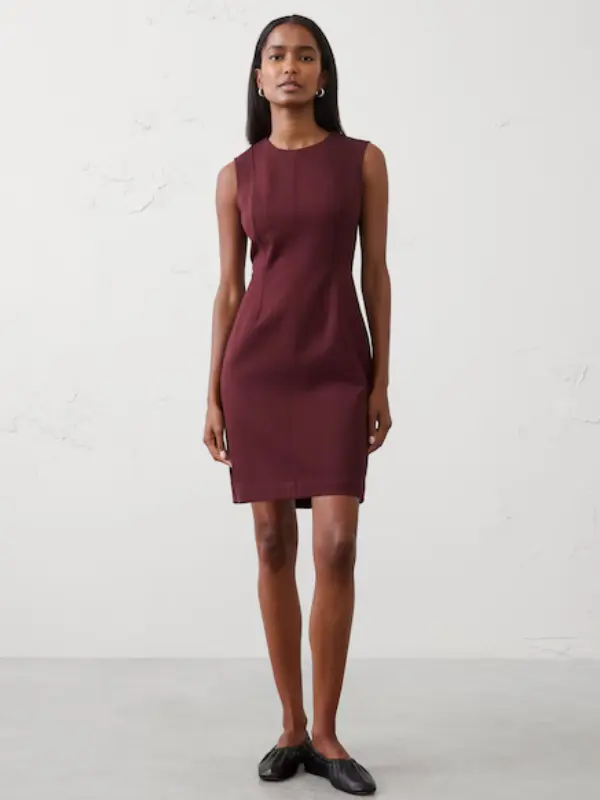
Eight office-dress directions cover different fit, fabric, structure, and sales roles. Each silhouette needs its own development logic rather than one generic pattern, fabric recommendation, or construction standard across the collection.

Sheath Dress

A sheath dress looks simple because the silhouette is clean, yet small fit errors are highly visible. Development should control shoulder balance, bust shaping, waist placement, hip and seat ease, hem width, slit position, and the relationship between outer fabric and lining. Stretch crepe, ponte, compact knit, and structured woven blends can all work, but the pattern must respond to stretch and recovery rather than using the same ease for every fabric. For a core office style, seam position, zipper behavior, waist shaping, and grading need to stay stable when black, navy, neutral, or seasonal colors are added later.

Shirt Dress

A commercial shirt dress combines garment fit with shirt construction. Collar stand, collar shape, front placket, button spacing, bust ease, sleeve mobility, waist definition, belt position, skirt volume, and hem balance all influence the finished result. Button placement around the bust needs special review to reduce gaping, while the collar and placket may require suitable interlining to stay crisp without looking rigid. Fabric choice also changes the result: cotton blends feel cleaner and fresher, viscose blends drape more softly, while crepe or twill can create a more polished city look. Every option affects pressing, shrinkage, opacity, and repeatability.

Wrap Dress

A wrap dress needs reliable overlap, not only an attractive front line. The front panels must cover the bust and lower body during standing, walking, and sitting, while the waist tie or internal fastening must hold the intended position without excessive pulling. Neckline depth, wrap overlap, side-seam balance, waist placement, skirt sweep, and fabric slip are linked. A fabric with too much drape may shift or open, while a fabric with too much body can create bulk around the waist. Workwear versions often benefit from controlled stretch, stable edge finishing, and an overlap test on a body rather than judging the sample only on a hanger.

Tailored Midi Dress

A tailored midi dress often carries the strongest professional identity in a workwear collection. Its value comes from proportion: shoulder line, bust shaping, waist seam or dart placement, hip balance, skirt length, slit height, and hem width need to work together. The garment should remain clean when standing but still allow a normal stride and seated posture. Stretch suiting, crepe, twill, or compact woven blends can support the silhouette, with lining and interlining selected according to opacity, friction, structure, and season. Pressing standards matter because seam impressions, shine, twisted side seams, or an uneven hem become obvious on a minimal tailored surface.

Blazer Dress

A blazer dress requires dress fit and light tailoring in one garment. Lapel roll, neckline position, shoulder shape, front edge, waist suppression, button placement, sleeve pitch, lining, vent or slit, and hem balance cannot be treated as decorative details. Interlining must support lapels, collar, front edge, button area, and selected body zones without making the garment board-like. The front closure also needs enough stability to remain flat over the bust and waist. For short blazer dresses, hem and sitting coverage deserve extra attention. For midi versions, vent function and skirt movement become more important than simply extending the length.

A-Line Office Dress

An A-line office dress offers more ease through the hip and skirt, but clean upper-body balance remains essential. Shoulder width, bust shaping, armhole, waist position, skirt flare, hem circumference, lining volume, and fabric weight determine whether the style reads polished or casual. Too much flare can look juvenile; too little can restrict movement or pull across the hip. Woven crepe, compact twill, structured viscose blends, and medium-weight knits can create different levels of formality. A strong A-line block can also support sleeveless, short-sleeve, long-sleeve, collar, belt, and color extensions while preserving a familiar fit language across the range.

Structured Knit Dress

Ponte and compact-knit office dresses are valuable because they combine shape with controlled comfort. Development should focus on fabric weight, stretch direction, recovery, opacity, surface stability, seam type, neckline stabilization, waist and hip fit, and the risk of bagging at the seat or knees. A softer knit may feel comfortable but lose a clean silhouette after several hours; a very firm knit may hold shape but feel restrictive when seated. Pattern ease must reflect the actual fabric rather than a generic stretch percentage. Hem construction and pressing also need testing so the lower edge stays flat instead of waving after production or wear.

Work-to-Evening Dress

A work-to-evening dress needs enough polish for office hours and enough visual distinction for dinner, events, or after-work occasions. The balance usually comes from silhouette, neckline, fabric surface, refined drape, controlled slit placement, or a focused detail rather than heavy decoration. A square neck, asymmetric drape, clean waist feature, covered button, shaped sleeve, or subtle sheen can add value while keeping the garment wearable during the day. Development should protect movement, coverage, lining, and shape retention first. The finished style can then carry stronger color or fabric direction without becoming a party dress that only happens to be worn before 6 p.m.

Build a Workwear Collection Around Repeatable Core Styles

A strong officewear category usually combines proven core silhouettes with controlled seasonal changes. Product architecture should connect commercial role, fabric family, color strategy, fit continuity, and the probability of repeat production.

Core Commercial Styles

Core styles carry the most stable fit language in a workwear range. A sheath dress, tailored midi, compact-knit dress, or shirt dress can become a repeat platform when the pattern, fabric behavior, construction, and measurement method are already understood. Core does not mean visually basic. Details such as a shaped waist, subtle lapel, controlled neckline, covered buttons, clean slit, or refined sleeve can create distinction while preserving production repeatability. The main advantage is cumulative knowledge: each approved run leaves pattern files, BOM details, trim standards, QC points, packing requirements, and fit feedback that can support the next color or repeat order.

Seasonal Color Extensions

Color extension is often the lowest-risk way to refresh a proven work dress, but repeat color work still needs control. Black, navy, charcoal, camel, burgundy, ivory, olive, and seasonal tones can behave differently on the same fabric because dye lots, opacity, surface sheen, and shade depth change visual perception. Light shades may need a different lining strategy; dark shades may expose press shine or surface marking; saturated colors may require closer colorfastness review. A new color should therefore pass lab-dip or swatch approval and bulk shade review instead of assuming an existing pattern automatically guarantees a repeatable result.

Category Extensions

A strong fit block can support measured extensions into sleeves, lengths, necklines, collars, belts, or fabric families. The safest changes usually preserve the original bust-waist-hip relationship and overall balance. Moving from sleeveless to long sleeve affects armhole and sleeve mobility. Moving from knee length to midi changes vertical proportion, slit function, lining length, and hem weight. Switching from stretch crepe to a firmer suiting fabric can require pattern ease and dart changes. Development should identify which parts of the original block are worth locking and which parts need fresh validation before the extension becomes a commercial style.

Reorder-Ready Families

A reorder-ready family is built so one successful style does not become a new development problem every season. Pattern version, approved measurements, grading, fabric supplier or approved alternative, lining, zipper, buttons, interlining, color reference, stitching, pressing, labels, packing, and QC notes should remain traceable. When a material or process changes, the difference is reviewed before line release rather than discovered after production. The result is not a guarantee that every repeat run will be identical; textile batches naturally vary. The value is a documented standard that makes deviations visible early and easier to manage.

Six Performance Checks Behind a Strong Office Dress

Professional appearance depends on what happens during wear, not only on a front-view fitting photo. Office-dress development should check movement, sitting, coverage, fabric recovery, and pressed presentation alongside standard fit measurements.

Shoulder-to-Waist Fit

A clean work-dress silhouette starts at the upper body. Shoulder width, shoulder slope, neckline position, bust shaping, armhole depth, back width, waist level, and side-seam balance need to align before the skirt can hang correctly. Pulling at the bust can shift the waist upward. A wide armhole can expose undergarments; a tight armhole can restrict reaching. A dropped or high waist can distort the intended proportion across every size. Fit review should separate pattern issues from fabric issues so corrections are made in the right place rather than simply adding or removing circumference.

Sitting Comfort

A dress can look correct while standing and still fail during a working day. Sitting changes the relationship between waist, abdomen, hip, seat, skirt length, slit opening, and lining. A fitted woven dress needs enough controlled ease through the seat without creating a loose standing shape. A stretch dress needs recovery so the seat and knees return after pressure. Short or split styles need coverage checks on a chair, not only on a mannequin. Waistbands, belts, internal seams, and zippers should also be assessed for pressure because small discomfort can become significant after several hours of wear.

Arm Mobility

Officewear frequently involves reaching forward, typing, carrying a bag, putting on a jacket, and moving between sitting and standing. Sleeve and armhole development should therefore check mobility rather than relying only on a static shoulder line. Sleeve pitch, bicep ease, underarm height, back width, shoulder width, and fabric stretch interact. A fitted woven sleeve may need more carefully distributed ease than a compact knit sleeve. Sleeveless dresses also require mobility review because an armhole cut too high can rub, while an armhole cut too low can reveal the bra or lining. Movement should remain clean without excess fabric collapsing around the armhole.

Coverage and Slit

Coverage in workwear is a construction question, not a vague styling preference. Neckline drop, wrap overlap, front placket, armhole opening, lining length, slit height, and hem length should be checked in motion. A back slit can be acceptable while standing but open too far when seated. A wrap front can cross correctly in a fitting pose yet shift during walking. A light-colored dress can appear opaque indoors but become transparent under stronger light. Development should identify the areas that need structural coverage, lining, overlap, or controlled opening before the final sample is treated as office-ready.

Shape Recovery

Stretch and knit work dresses need recovery, not simply stretch. Recovery describes how well fabric returns after being extended around the seat, knees, elbows, waist, or other pressure zones. A material that feels comfortable in the first fitting can look tired after two hours if the structure does not recover. Fabric weight, fiber blend, knit construction, heat setting, seam type, pattern ease, and lining all affect the result. During development, stretch behavior should be considered together with the intended silhouette. A fitted ponte sheath has different recovery needs from a loose knit midi or a woven dress with only mechanical give.

Pressed Presentation

Pressing is part of the product standard for tailored and minimal work dresses. Clean seams, flat darts, crisp but natural lapels, even hems, smooth plackets, stable waist seams, and balanced side seams influence perceived quality before anyone looks at stitch density. Heat, pressure, steam, and fabric sensitivity must be controlled to avoid shine, seam impressions, flattened texture, distorted edges, or shrinkage. The same standard should be visible across production, not only on a showroom sample. A work dress that arrives crushed, shiny, twisted, or unevenly pressed loses much of the professional value created during pattern and sewing stages.

Fabric Choices for Professional Work and Office Dresses

Fabric selection should be based on silhouette, movement, structure, opacity, recovery, pressing behavior, and repeat availability. The right material supports the final garment; a familiar fabric name alone does not guarantee an office-ready result.

FabricBest UseStructure / DrapeStretch & RecoveryKey RiskDevelopment Focus
Ponte / Compact KnitSheath, fitted midi, sleeved core dressesFirm, smooth, controlledUsually medium to high; recovery must be verifiedSeat or knee bagging, heavy hand, wavy hemsWeight, recovery, opacity, seam stability, neckline and hem control
Stretch CrepeTailored sheath, midi, work-to-eveningClean drape with moderate structureLow to medium depending on blendSeam puckering, shine from pressing, inconsistent stretchDrape, stretch direction, pressing test, lining compatibility
Suiting BlendBlazer dress, tailored midi, structured A-lineCrisp to medium structureOften low; stretch versions varyRestrictive movement, press marks, bulky seamsInterlining, shoulder/arm mobility, seam allowance, pressing
Twill / GabardineShirt dress, belted dress, A-line, city stylesStable, defined silhouetteLow to moderateStiffness, shrinkage, visible needle marksWeight, wash stability, collar/placket structure, seam finish
Structured JerseyFitted day dress, softer office shapesSofter drape with bodyMedium to highTransparency, body-line exposure, seam growthGSM, opacity, recovery, lining or double-layer need
Viscose / Poly BlendShirt dress, wrap dress, fluid midiFluid to semi-structuredUsually low to moderateShrinkage, wrinkling, slippage, unstable drapePre-shrink review, seam stability, opacity, repeat lot consistency

Hidden Structure Gives Office Dresses Their Clean Shape

Much of a polished work dress is built inside the garment. Lining, interlining, zipper support, buttons, waist stabilization, and pressing foundations influence coverage, movement, shape retention, and the clean visual finish expected from professional womenswear.

Linings Control Coverage, Movement and the Inside Finish

Lining should be selected for the outer fabric and wearing situation rather than added as a generic extra layer. In a light sheath dress, lining can control transparency around the bust, waist, hip, and thigh. In a tailored midi, lining can reduce friction so the outer fabric falls cleanly while walking or sitting. In a blazer dress, lining also helps protect internal construction and provides a cleaner dressing experience. The key variables include lining weight, stretch, handfeel, color, length, static tendency, breathability, opacity, and shrinkage compatibility with the shell. Length is especially important in workwear. A lining ending too high can create a visible ridge, reduce coverage, or pull the outer skirt when seated. A lining running into a slit needs enough allowance to move without becoming exposed. Stretch shells require lining that does not block the intended movement. Pale or white dresses need testing under stronger light because a lining shade that looks acceptable on a table can change the final color depth when layered underneath. Before bulk production, the chosen lining should be recorded in the BOM with its composition or specification, color reference, width, and application. The aim is a consistent inside finish and a predictable wearing result across sizes and repeat orders.

Interlining Holds Collars, Lapels, Plackets and Waistlines

Interlining creates structure in areas where the wearer notices shape even when she never sees the supporting material. Work dresses use it differently from occasion corsetry. A shirt dress may need controlled support in the collar, collar stand, cuff, placket, belt, or button area. A blazer dress may use interlining through lapels, front edges, selected chest zones, pocket areas, or vents. A tailored waist seam may need reinforcement where the fabric is soft or prone to stretching. Zipper edges can also benefit from stabilization when the shell fabric distorts easily. Choosing interlining involves more than selecting a light, medium, or firm option. Adhesive behavior, stretch direction, thickness, handfeel, heat response, wash stability, and compatibility with the shell need to be considered. An overly firm fusible can make a dress feel rigid or create visible edges. An unsuitable adhesive can bubble or release after cleaning. A heavy interlining can also change drape and cause the garment to sit away from the body. Small test pieces can confirm bond strength, surface appearance, flexibility, and pressing temperature before full sample construction. Once approved, interlining type and placement should be defined clearly so the collar, lapel, placket, waist, or zipper area remains consistent in bulk.

Small Trims Need Bulk-Ready Specifications Before Production

Officewear often depends on restrained details, which makes trim quality more visible rather than less important. A concealed zipper should run smoothly without waviness around the seam. A front button should match the brand’s visual level and remain secure through repeated use. Covered buttons, horn-look buttons, matte metal buttons, belt buckles, hooks, snaps, shoulder pads, elastic, and internal fastenings all influence feel, durability, and presentation. A small difference in shine, thickness, diameter, or color can change a tailored garment more than expected. Trim control should cover size, material, color, finish, strength, placement, supplier, lead time, and bulk availability. For example, a matte button approved on a black blazer dress may appear too warm or too glossy on navy. A zipper tape color that looks close in isolation can become obvious next to a smooth crepe. Belt hardware must be checked for weight and edge quality so it does not pull or damage the fabric. The BOM should lock the approved trim before bulk. If a supplier changes or an alternative is needed, the visual and functional difference should be reviewed before substitution. Repeat production becomes easier when small components are treated as production standards instead of last-minute accessories.

Fit Engineering for Eight-Hour Professional Wear

A work dress should look balanced in a fitting room and remain controlled through a full day. Fit review therefore combines body measurements with sitting, reaching, walking, coverage, fabric behavior, and the visual line of the garment.

Standing Fit and Working Fit Need Different Checks

Static fitting remains important, but officewear cannot be approved from one front-view pose. A sample should be reviewed while standing naturally, sitting, walking, reaching forward, raising the arms, and moving through a normal stride. Each movement exposes a different relationship between pattern and fabric. A fitted waist may feel correct while standing but press into the abdomen when seated. A back zipper can sit flat in a pose and buckle when the wearer moves. A sleeve may hang cleanly but restrict keyboard or steering movement. A skirt can show the right length until sitting raises the hem and opens the slit.
A useful fit review separates three types of issues.
  • Pattern balance covers shoulder, bust, waist, hip, side seam, back length, and skirt hang.
  • Fabric behavior covers stretch, recovery, drape, thickness, friction, and shrinkage.
  • Construction behavior covers lining, interlining, seam allowance, zipper, slit, hem, and pressing.
Correcting the wrong layer can create new problems: adding circumference will not fix a fabric that cannot recover, and changing a dart will not solve an armhole restricted by sleeve pitch.
Approval should identify which movement conditions matter most for the intended style and record any critical measurements or workmanship notes before grading and bulk release.

Bust, Waist, Hip and Seat Balance Drive the Silhouette

Professional fitted dresses depend on proportional control rather than aggressive tightness. The bust must sit in the intended position without pulling the neckline or armhole. The waist should align with the design line and remain comfortable after sitting. Hip and seat measurements need enough ease for movement while preserving a clean side profile. Side seams should hang vertically unless the design intentionally changes them. A garment that is too tight through the seat can pull the waist down, lift the back hem, open the slit, distort a zipper, or create horizontal drag lines.
For workwear, measurement review often includes at least ten critical points: shoulder, bust, waist, hip/seat, armhole, neckline drop, body length, slit height, hem opening, and lining length. Additional points are added for sleeves, collars, lapels, belts, front plackets, or asymmetric details. The exact tolerance should follow the brand’s spec sheet, fabric behavior, garment structure, and target fit rather than applying one tolerance number to every point.
When fit comments arrive, they should be translated into a pattern or spec action. “Waist feels loose” may involve dart intake, side seam shape, stretch level, lining behavior, or waist position. The correction needs to address the cause, not only the symptom.

Movement, Coverage and Slit Control Protect Daily Wear

Coverage is one of the clearest differences between officewear development and purely visual occasionwear. A neckline, wrap front, side opening, sleeve, slit, or hem must remain within the intended level of exposure during movement. For a sleeveless dress, the armhole should cover the bra while still allowing the arm to move freely. For a wrap dress, overlap should be checked through walking and sitting. For a front or back slit, the approval point should include both stride and seated opening, because a slit that looks controlled on a standing sample can become too exposed on a chair.
Fabric and lining influence coverage as much as the pattern. Stretch can pull a neckline lower. A slippery lining can shift away from a wrap overlap. A pale woven can become more transparent under daylight or stronger store lighting. A heavy interlining can make an edge stand away from the body. Review should therefore combine fit, movement, material, and construction.
Once approved, critical coverage dimensions such as neckline drop, armhole depth, wrap overlap, slit height, lining length, and hem length can become measurable control points for grading and bulk inspection. The aim is consistent wearability across the size run, not only a successful sample-size fitting.

Grading and Measurement Control Across the Size Range

A sample size proves only one point in a size run. Officewear needs proportion, movement, coverage, and silhouette to remain controlled when the pattern expands across multiple sizes and later moves into bulk inspection.

Measurement Map

The measurement map should include the points that actually control the garment. For a fitted office dress, that normally includes shoulder, bust, waist, hip or seat, front and back length, armhole, neckline drop, slit height, hem opening, and lining length. Shirt and blazer dresses add collar, sleeve, cuff, placket, button, lapel, or vent points. A clear POM map prevents different teams from measuring the same garment in different ways and makes fit comments easier to convert into technical changes.

Measuring Method

Measurements are useful only when the method is consistent. Half-body or full circumference, relaxed or stretched state, top-edge or seam reference, and pre-press or post-press condition can all change the number. Dress length must state where the measurement begins. Slit height must state the reference point. Adjustable straps or belts need a defined setting. During bulk, the same method should be used by production and QC so a tolerance discussion is based on an agreed procedure rather than random flat measurements.

Size-Range Grading

Grading is not a percentage enlargement of the sample. In a six-size range, for example, bust, waist, hip, shoulder, armhole, neckline, sleeve, dress length, and slit do not all grow at the same visual rate. The objective is to preserve proportion and wearing balance. A fitted waist should remain correctly positioned, the neckline should not become disproportionately open, and the slit should not climb too high on larger sizes. Brand-specific grade rules can be followed, with fit comments feeding back into the graded pattern where needed.

Vertical Balance

Length control is especially important in officewear because proportion affects both appearance and coverage. Waist level, bodice length, skirt length, sleeve length, hem position, and slit height should be reviewed as a connected vertical system. A longer torso size may require more than adding length at the hem. A midi dress can lose its intended proportion if the waist and slit remain static while body length changes. Vertical balance should therefore be checked on graded patterns and, for critical programs, on selected additional sizes before full bulk release.

Fabric-Sensitive Grading

The same grading rule can behave differently in ponte, stretch crepe, suiting, viscose blend, or structured jersey. Stretch level changes the amount of ease needed. A thicker fabric occupies more space at seams. A fluid fabric can drop longer under its own weight. A compact knit can recover well in one direction but not another. When fabric changes between seasons or color programs, the existing grade should be reviewed against the new material rather than assuming the old pattern remains automatically correct.

Bulk Tolerance Control

Tolerance is used to protect fit consistency, not to excuse uncontrolled variation. Critical measurements should be identified before production, and the permitted range should reflect the brand spec, fabric behavior, and garment structure. A fitted waist or slit height may need closer attention than a non-critical decorative measurement. If a point falls outside tolerance, the response depends on cause and scale: isolated piece, cutting issue, sewing variation, pressing, shrinkage, or fabric stretch. Production can then repair, isolate, recheck, or adjust the process based on evidence.

Office Dress Sampling Built Around Clear Decisions

Sampling should answer fit, fabric, structure, workmanship, and production questions in a defined order. Duolan organizes development around project information, material readiness, sample purpose, fit comments, and the standard required before bulk release.

Development Brief

Sampling begins by defining the development basis. The brief records whether the style comes from a tech pack, reference garment, image, sketch, or mixed source; what the sample must prove; the target fabric; size standard; intended market; number of colorways; target quantity; and launch timing. For work dresses, the brief should also identify fit priorities such as shoulder, waist, hip, arm mobility, neckline coverage, slit behavior, collar or lapel structure, and lining. Clear priorities reduce wasted revisions because the sample is judged against a specific purpose rather than an undefined idea of “close enough.”

Fabric and Trim Review

Before pattern and sewing decisions are locked, the material direction should be checked for drape, structure, stretch, recovery, opacity, weight, handfeel, pressing behavior, and bulk availability. Shirt and blazer dresses may also need early interlining, button, zipper, or lining selection because those components affect construction. If an exact fabric is not ready, a temporary sample material should be identified clearly so the team knows which fit or visual judgments are valid and which will need rechecking on the final material. Material changes should not disappear silently between first sample and PP stage.

Pattern and First Sample

The first pattern translates design proportion into measurable structure. For officewear, pattern review pays attention to shoulder line, bust shaping, waist position, hip and seat ease, armhole, sleeve, neckline, placket, lapel, slit, hem, and lining balance. The first sample then tests how those decisions behave in fabric. A first sample does not need to pretend every issue is solved. Its value is to expose the main fit, proportion, material, and construction questions early enough for a useful review rather than carrying hidden problems into later stages.

Internal Sample Review

Before a sample is sent, an internal review can check measurements, workmanship, obvious fit imbalance, symmetry, zipper function, collar or lapel shape, slit and hem, lining exposure, pressing, and visible material issues. Photos from front, side, and back, plus key detail images, make the next review more efficient. For a complex office style, staged updates can also be shared when a fabric, interlining, or structure choice needs approval before completion. The aim is to keep development aligned while decisions can still be changed without remaking the whole garment.

Revision and Fit Comments

Comments should be converted into technical actions. A request for a cleaner waist may involve dart shape, side seam, fabric stretch, lining, or waist position. A collar standing away from the neck may involve neckline shape, collar pattern, interlining, or pressing. A slit opening too far can involve height, overlap, skirt ease, fabric, or lining. Revision records should state what changed, why it changed, and whether the change affects measurements, pattern, construction, fabric, trims, grading, or bulk QC. Clear version control prevents one correction from being lost in a later sample.

PP or Golden Sample

The final approval stage should be close enough to production conditions to serve as a reference for bulk. Fit, measurements, fabric, color, lining, interlining, trims, construction, stitching, pressing, labels, and packing details should be aligned with the BOM and tech pack before the style is released. Sampling time is therefore managed as a sequence of approval gates rather than one fixed promise for every garment. Fabric readiness, structure, sample purpose, and comment speed influence the calendar, especially for blazer dresses or fit-sensitive tailored styles.

Turn the Approved Sample Into a Production Standard

A good sample is not enough if its fit, materials, construction, and finishing cannot be communicated to production. Six approval areas create a stronger bridge from development into repeatable bulk manufacturing.

Fit Standard

The approved fit should be supported by a measurement spec, POM method, critical dimensions, grade rules, and fit comments that have already been translated into pattern changes. For office dresses, shoulder, bust, waist, hip or seat, armhole, neckline, slit, hem, and lining length are common control points. Production should know which measurements are visually or functionally critical rather than treating every number as equal.

Fabric and Color

The production material should match the approved direction for composition, weight, stretch, recovery, handfeel, drape, opacity, surface, and color reference. Lab dips, approved swatches, PP material, or another agreed standard can provide the comparison basis. If a new dye lot or replacement fabric is introduced, the difference should be reviewed before cutting because a material change can alter fit, pressing, seam behavior, lining need, and final appearance.

Lining and Interlining

Inside materials must be specified as carefully as the shell. Lining color, weight, stretch, length, handfeel, and coverage should be recorded. Interlining type and placement should be defined for collar, lapel, placket, waist, zipper edge, cuff, belt, or other supported areas. A bulk line cannot reproduce a structured office sample consistently if internal materials are treated as interchangeable components.

Trim and BOM

Zippers, buttons, hooks, snaps, belts, buckles, shoulder pads, labels, hangtags, and packing materials should be locked in the BOM with the relevant size, color, material, finish, placement, and supplier information. If an item becomes unavailable, the replacement needs approval before substitution. A small trim change can affect closure, weight, color balance, pressing, or presentation, especially on minimal tailored designs.

Construction Standard

Seam allowance, dart treatment, princess seams, collar and lapel construction, placket, zipper, lining attachment, slit, vent, hem, topstitching, bartack, pressing, and any special finishing should be documented or clearly referenced by the approved sample. Critical visual points can be supported by photos or workmanship notes. Production operators and QC then work from the same reference rather than relying on verbal memory.

PP Approval

Before full line release, the PP or golden sample should align with the approved fabric, trims, measurements, construction, and visual finish. Fit-sensitive or structured styles may also benefit from first-piece verification before production volume is released. The purpose is not extra paperwork; it is to make sure development, material, production, and QC teams are using the same standard before variation becomes expensive to correct.

Tailoring and Workmanship Standards for Professional Dresses

Officewear exposes construction quality because the design language is often clean and restrained. Darts, princess seams, collars, lapels, zippers, plackets, hems, slits, lining, symmetry, and pressing need deliberate control rather than a generic final inspection.

Shaping Seams Must Build Form Without Visible Distortion

Darts and princess seams are fundamental tools in sheath, tailored midi, A-line, and blazer dresses. Their role is to create three-dimensional shape while keeping the surface controlled. Dart point position should sit naturally relative to the bust and end without puckering. Princess seams should follow the intended body line, remain symmetrical, and avoid twisting as they pass through the waist and hip. Seam tension, stitch length, thread, fabric stability, and pressing all affect the final result. A technically correct pattern can still look poor if sewing tension creates ripples or pressing leaves a ridge along a smooth crepe.
Waist seams and panel seams also need alignment across the front, side, and back. In multi-panel dresses, a small mismatch can change the visual balance or create uneven skirt fall. Stretch materials need seam methods that allow movement without growth or popping. Woven tailoring fabrics need enough stability to prevent seam slippage while avoiding unnecessary bulk. Internal seam allowances should be clean and compatible with lining construction.
Workmanship review should therefore look at shape, symmetry, seam behavior, fabric response, and the finished silhouette together. Loose threads are a basic defect; seam engineering is what determines whether a minimal office dress looks refined.

Collars, Lapels, Plackets and Zippers Need Clean Structure

Structured details act as visual anchors in workwear. A shirt-dress collar should sit evenly, hold its intended shape, and roll or stand consistently across production. A blazer-dress lapel needs balanced width, breakpoint, roll line, collar relationship, and front edge. Plackets should remain straight without bubbling, twisting, or pulling around buttons. Concealed zippers should close smoothly and lie flat without creating a wave down the center back or side seam.
Internal support matters. Interlining can stabilize collar stands, cuffs, lapels, plackets, button areas, and zipper edges, but the material must match the shell. Too much stiffness can create visible ridges or an artificial feel. Too little support can cause collapse or stretching. Buttonholes need clean cutting and secure stitching; button placement must prevent gaping at the bust. Belt loops, hooks, snaps, and internal fastenings need reinforcement according to load.
Before bulk, critical structured areas should be compared against the approved sample and workmanship notes. For first-piece review, the team can check lapel symmetry, collar shape, placket alignment, zipper behavior, button spacing, front-edge balance, and pressing before the line repeats the same construction hundreds or thousands of times.

Pressing and Hem Finishing Decide the Final Professional Look

Pressing is often where a well-sewn work dress either becomes polished or loses its value. Smooth tailored surfaces show every seam impression, shine mark, crushed texture, twisted edge, uneven hem, or poorly set dart. Heat and steam settings need to match the fabric. A synthetic crepe can develop shine under excessive pressure. A twill may need stronger shaping. A compact knit can distort if stretched during pressing. Interlined areas need enough heat for bonding without creating a hard edge or surface change.
Hems also influence proportion and movement. A narrow hem can suit a fluid shirt dress, while a structured midi may need a different finish to hold the line. Slit corners should be reinforced and symmetrical. Lining should hang independently without pulling the outer hem or becoming visible. Blazer-dress vents need clean internal construction so they open and return without twisting.
Final pressing should follow the approved silhouette, not merely flatten the garment. QC can compare shoulder line, waist seam, side seam, lapel or collar, skirt fall, slit, hem, and overall symmetry before packing. Packaging should then protect the pressed result so the garment does not arrive with avoidable creasing or deformation.

From Approved Sample to Controlled Bulk Production

Bulk production should begin only after the reference standard is clear. Material, cutting, first-piece checks, sewing, pressing, inline review, and packing each protect a different part of the approved office-dress result.

Material Verification

Before cutting, the production fabric and key trims should be checked against approved references. Color, lot, handfeel, weight, stretch, recovery, surface, opacity, lining, interlining, zipper, buttons, and other critical components can affect fit or visual appearance. If a material differs from the approved sample, the impact should be assessed before production rather than absorbed silently into the line.

Shade Separation

Officewear often uses solid black, navy, neutral, burgundy, ivory, or other controlled colors where panel-to-panel shade variation is easy to see. Rolls can be identified and separated by dye lot or shade group before cutting. Front and back panels, sleeves, belts, and matching components should avoid unnecessary mixing across visibly different lots. Repeat colors may also need a new approval because textile dye lots naturally vary.

Controlled Cutting

Pattern version, grain direction, fabric relaxation, shrinkage information, stripe or texture direction, nap where relevant, and component numbering all influence cutting consistency. A precise fit block loses value if pieces are cut from the wrong pattern version or mixed after cutting. Structured office dresses also depend on accurate notches and matching points so darts, princess seams, waist seams, collars, lapels, pockets, vents, and linings align during sewing.

First-Piece Verification

Before releasing volume, a first-piece check can confirm the most sensitive points from the approved sample. Fit measurements, collar or lapel shape, placket, zipper, waist seam, slit, hem, lining, interlining, pressing, and visual symmetry can be reviewed on the first completed garment or early pilot output. A problem corrected at this stage is less disruptive than a repeated construction error discovered after hundreds of pieces are completed.
Development Decisions and Production Controls (1)

Inline Production Review

Inline checks focus on repeatability while correction is still possible. Measurements, stitch quality, seam appearance, symmetry, zipper function, button placement, lining, slit, hem, pressing, and material issues can be sampled during production. The review should concentrate on the points most likely to affect fit, wear, or brand presentation rather than relying only on a generic defect list. Findings can be fed back to the line before the same issue spreads.

Final Finish and Packing

Final inspection confirms appearance, measurements, workmanship, labels, packing, and order requirements against the approved standard. Office dresses need extra attention to pressed presentation, collar or lapel shape, seam smoothness, hem level, slit, zipper, lining, and shade consistency. Folding, hanging, tissue paper, polybags, size stickers, barcodes, hang tags, and outer carton markings must all adhere to the confirmed packaging instructions.

Office Dress Quality Risks and Control Points

Quality control is strongest when predictable problems are identified before final inspection. Work dresses have recurring fit, movement, material, tailoring, pressing, and shade risks that can be converted into clear checkpoints during development and production.

RiskLikely CauseControl PointCommercial Effect
Waist / hip deviationPattern, stretch, cutting, sewing, pressingCritical POM review, first piece, inline measurementUnstable fit across sizes and returns
Restricted armholeArmhole shape, sleeve pitch, fabric rigidityMovement fitting, pattern review, selected size checkPoor comfort during daily wear
Slit opens too farSlit height, skirt ease, fabric, liningStanding and seated fitting, bulk slit measurementCoverage concern and wearability issue
Lining creeps or showsWrong length, shrinkage mismatch, poor attachmentLining spec, shrinkage review, final visual checkLower perceived quality and discomfort
TransparencyLight color, low fabric weight, stretched fabricOpacity review, lining decision, light checkCoverage concern and avoidable returns
Seam puckeringTension, needle, thread, fabric instabilitySample sewing test, first piece, inline seam checkCheap visual appearance on clean surfaces
Zipper distortionUnsupported edge, tension, poor insertionZipper-area stabilization, first-piece reviewWavy back or side line, difficult closure
Collar / lapel collapsePattern, interlining, pressing, fabric softnessInterlining test, sample approval, first pieceWeak professional silhouette
Press shine / impressionsExcess heat, pressure, seam bulkPressing test, controlled finish reviewSurface damage on tailored fabrics
Shade variationDye-lot differences, mixed rollsApproved reference, shade separation, final comparisonInconsistent color across one style or reorder

Keep Core Work Dresses Consistent Across Repeat Orders

Repeat production should preserve the proven fit, material logic, construction, and presentation of the first successful run. A reorder file reduces the need to rebuild the same product understanding every season.

Approved Fit Block

The approved pattern and grading form the center of a repeat program. Fit comments, critical measurements, POM methods, size rules, and any changes made during the first production should remain attached to the correct version. When a repeat order begins, the pattern should be checked against the latest approved standard rather than a local copy or an early sample version. If a new fabric or size extension is introduced, the effect on ease, grading, movement, and coverage should be reviewed before assuming the old block can be used unchanged.

Material and BOM Memory

Fabric supplier, composition, weight, stretch, recovery, handfeel, color reference, lining, interlining, zipper, buttons, labels, and packing materials should remain traceable from the previous run.  If a component changes, the team can compare old and new references and decide whether a new sample, lab dip, trim approval, or first-piece review is needed. Material memory also helps explain cost or lead-time changes instead of treating them as unexpected adjustments after the order is placed.

Color Reapproval

A repeat black, navy, camel or burgundy is not automatically the same color because dye lots change. New lab dips, bulk swatches, or roll checks can be compared against the approved historical reference. Shade separation during cutting remains important, and light colors may need a fresh opacity and lining review. Color reapproval protects visual consistency while recognizing a basic textile reality: repeat production can control variation, but no responsible supplier should promise that independent dye lots will always be mathematically identical.

Reorder QC Review

Previous QC records are useful because they show where the first run needed the most attention. If the prior order showed a sensitive zipper seam, slit measurement, collar press, lining length, or specific size tolerance, the point can become a higher-priority control in the reorder. PP comparison, first-piece review, inline measurement, final appearance, labels, and packing can then focus on preserving the already approved product. The purpose is continuous control, not starting from zero every time a strong office style returns.

Anonymized Workwear Program From Development to Bulk

A representative officewear program shows how multi-style development becomes easier when fit, material, construction, and bulk standards are managed as one system rather than as separate style-by-style conversations.

Project Scope: 16 Styles Across a 38,400-Piece Program

A North American fashion program was structured around 16 office and polished daywear styles totaling 38,400 pieces, developed across five sizes from XS to XL. The assortment combined sheath dresses, tailored midis, shirt dresses, compact-knit fitted dresses, and two blazer-inspired styles. Four material families were used: stretch crepe, ponte or compact knit, woven suiting blend, and a softer viscose-poly blend for fluid shirt and wrap directions. The range also included black, navy, neutral, and seasonal color groups.
The production challenge was not the quantity alone. Different silhouettes shared a common professional fit language while requiring different movement, lining, interlining, and pressing decisions. Fitted styles needed controlled bust-waist-hip balance and seated comfort. Shirt dresses needed collar and placket stability. Blazer-inspired styles required stronger front structure and cleaner pressing. The project was therefore divided by silhouette, material, and construction sensitivity before sampling so similar decisions could be reviewed together instead of repeating the same discussion across sixteen separate files.
CTA points for the internal team focused on one question: which standards could be shared across the program, and which styles needed individual validation before PP approval.

Development Challenge: Keep Fit Language Consistent Across Fabrics

The main development risk was fit drift between fabric families. A waist and hip balance that worked in ponte could not be copied directly into a lower-stretch suiting blend. A fluid shirt-dress fabric needed more attention to placket stability, collar support, shrinkage, and seam movement. The fitted crepe styles required controlled ease, clean zipper lines, smooth princess seams, and careful pressing to avoid puckering. Blazer-inspired dresses added lapel, shoulder, interlining, and front-edge control.
The team grouped fit comments into repeatable categories: shoulder and armhole, bust and neckline, waist position, hip and seat ease, dress length, slit function, and lining. Material comments were separated into stretch and recovery, structure and drape, opacity, pressing, and shrinkage. That separation made revisions easier to track. A loose waist was not automatically treated as a pattern problem, and a distorted zipper was not automatically treated as a sewing problem. Fabric stretch, seam stabilization, and pressing could also be involved.
By the PP stage, each style carried an approved measurement basis, material and trim reference, lining or interlining direction, key workmanship notes, and the specific visual points required for first-piece and inline review.

Bulk Control: Lock the Standard Before Releasing Production

Before the 38,400-piece program moved into volume, the production path was split by construction sensitivity. Core sheath and knit styles could follow a more standardized line plan after PP approval. Blazer-inspired and fit-sensitive woven styles received stronger first-piece attention before full line release. Fabric lots and colors were identified before cutting, critical components were checked against the BOM, and fit-sensitive measurements were prioritized for inline review.
The bulk control plan did not attempt to inspect every feature with the same intensity. Sheath styles focused on bust-waist-hip balance, zipper, side-seam hang, slit, hem, and pressing. Shirt dresses focused on collar, placket, button spacing, sleeve movement, belt position, and shrinkage. Blazer-inspired styles focused on lapel, front edge, waist shaping, interlining, lining, sleeve balance, and pressing. Final review also covered shade, labels, packing, and the relationship between the approved PP sample and finished production.
A multi-style order becomes manageable when the factory knows which standard belongs to every silhouette. The value of the system is not a claim of zero variation; it is faster identification of variation before it spreads across a large production run.

Manufacturing Scale for Multi-Style Workwear Programs

Scale matters when it supports development density, production allocation, repeat orders, and brand calendars. Duolan’s manufacturing network combines large production capacity with flexible lines and substantial sample-development resources for dress-focused programs.

300 Sewing Lines

The manufacturing system includes 300 garment sewing lines. For an officewear program, the value is allocation flexibility rather than a headline number. Sheath, shirt, blazer, knit, and tailored woven styles do not necessarily belong on the same line. Production planning can consider fabric, construction sensitivity, quantity, delivery window, and required workmanship so styles move through a more suitable production path instead of being treated as one undifferentiated order.

50+ Flexible Lines

More than 50 flexible and quick-response lines support programs that need a different rhythm from full-scale volume production. Flexible capacity can be useful for launch planning, repeat orders, selected style replenishment, pilot quantities, or a group of styles requiring closer coordination. The important point is not speed at any cost. Fit-sensitive or structured work dresses still need approved materials, PP standards, first-piece checks where required, and clear QC points before volume is released.

15,000-35,000 Samples

The wider manufacturing system supports approximately 15,000-35,000 sample developments or sample pieces per month. High sample capacity matters for fashion brands because seasonal programs often run several styles, colorways, and revision rounds in parallel. Sample volume alone does not prove accuracy, so development is organized around briefs, fabric direction, pattern review, staged comments, and production-readiness decisions rather than treating sample output as a speed contest.

3,000-8,000 Style Flows

The network can support roughly 3,000-8,000 style-development and sampling flows per month across its broader operation. For a workwear category, such density makes multi-style collection development more realistic when several sheath, shirt, knit, tailored, or blazer directions need to move at the same time. Project coordination, version control, material tracking, and approval discipline remain necessary so volume of development does not become volume of confusion.

6.5 Million Stable Capacity

The broader manufacturing system has a stated stable monthly capacity of approximately 6.5 million garments, with allocation depending on product complexity, materials, processes, order size, and delivery timing. A capacity figure should never replace a project review. Its value is the ability to plan beyond a single successful sample and consider how a multi-style program, repeat order, or scale-up requirement can be matched with manufacturing resources.

Up to 10 Million Peak

Peak monthly capacity can reach approximately 10 million garments across the wider manufacturing network. Peak figures are relevant mainly for supply planning, not as a promise for an individual program. Work and office dresses can involve fit-sensitive patterns, pressing, lining, interlining, tailoring details, and multi-size QC, so realistic capacity must be confirmed by style mix and calendar. Scale is useful when quality standards and production planning grow with the order rather than being relaxed to chase volume. 

Compliance and Evidence Behind the Manufacturing Process

Supplier evaluation works best when claims are supported by records and visible production evidence. Duolan can support brand-level reviews with manufacturing, sample, material, QC, packing, and compliance documentation linked to the relevant project stage.

SMETA 2-Pillar

Duolan’s core manufacturing system has completed a SMETA 2-Pillar audit and maintains a social-audit record. Formal programs may also require additional market, product, testing, or retailer-specific standards. Requirements should be confirmed against the exact order and destination rather than treating one audit as a universal substitute for every brand compliance system. Relevant documentation can be reviewed during supplier evaluation before production planning is finalized.

Pattern and Sample Evidence

Pattern-room images, CAD output, measurement diagrams, sample photos, fit-comment records, revision notes, and PP-sample details are stronger evidence than a general statement about development capability. For officewear, evidence should show the technical areas that affect the garment: shoulder, waist, hip, sleeve, collar, lapel, slit, lining, interlining, zipper, and pressing. Sensitive brand designs or unlaunched products should remain protected rather than displayed as marketing material.

Fabric and Trim Evidence

Swatch cards, lab dips, lining options, interlining tests, zipper references, button boards, color approvals, and fabric-performance notes show how materials are selected and controlled. A useful evidence set explains what is being checked: drape, stretch, recovery, opacity, weight, shade, shrinkage, bonding, closure function, or bulk availability. Material evidence should connect to the approved sample and BOM rather than becoming a decorative wall of fabric photos.

Production Evidence

Cutting, first-piece review, sewing, pressing, inline checks, and finished-garment handling can be documented with real production images or short process records. For work dresses, production evidence should focus on the steps that protect a clean tailored result: accurate cut pieces, seam alignment, collar or lapel construction, zipper insertion, lining, slit, hem, and controlled pressing. Images of machines without garment context provide much less value than evidence showing how the process supports the product.

QC Evidence

Measurement sheets, POM diagrams, inline records, defect notes, PP-to-bulk comparisons, shade checks, slit and lining reviews, and final inspection images help show how quality decisions are made. Third-party inspection can also be coordinated when required by the brand or sourcing program. The goal is traceability: a sourcing team should be able to see which reference was used, which point was checked, and how a deviation was handled.

Packing and Delivery Evidence

Label placement, care labels, size stickers, hangtags, barcodes, polybags, hangers, tissue, carton marks, carton counts, and final packing checks are part of a brand-level delivery standard. Packing evidence should show that approved instructions have been translated into actual packed goods. When a warehouse, retailer, or nominated forwarder has special receiving requirements, the relevant documents and packing details can be aligned before shipment rather than corrected after cartons are closed.

Work and Office Dress Frequently Asked Questions

Duolan focuses on fashion-oriented workwear rather than industrial uniforms. Relevant directions include sheath dresses, shirt dresses, wrap dresses, tailored midis, blazer dresses, A-line office dresses, structured knit or ponte dresses, fitted day dresses, and work-to-evening styles. Style suitability is reviewed against fabric, fit, construction, quantity, size range, and the intended market before sampling or bulk planning.

Yes. A complete tech pack can be used as the execution basis for sketch, measurements, construction, fabric, trims, stitching, labels, packing, colorways, tolerance, and quantity. Any conflict or production risk should be raised before changing the specification. Fit comments can then be converted into pattern or measurement actions and carried forward into PP and QC standards.

Sampling is planned by development stage rather than one fixed number for every style. A regular sheath, shirt, knit, or tailored dress has a different calendar from a blazer dress with interlining and more structured construction. Timing is confirmed after the development basis, fabric and trim readiness, sample purpose, and critical fit points are clear. The normal flow is brief review, material preparation, pattern, first sample, review, revision, and PP or golden sample where required.

As a working reference, simple styles may take around 15-20 days, regular styles around 20-30 days, and complex styles around 30-45 days after the required production conditions are confirmed. The schedule begins only when the PP basis, BOM, materials, order details, and relevant payment or approval milestones are ready. Customized fabrics, interlining, trims, testing, third-party inspection, packing, and delivery windows can change the final timeline.

MOQ is evaluated from the project structure rather than used as a marketing number. Fabric mill minimums, dyeing, color count, lining, interlining, buttons, zippers, size breakdown, style complexity, production allocation, and total order structure all affect the feasible quantity. A multi-style program using shared materials can have a different production logic from one highly customized blazer dress. Send the style plan and quantity structure for a realistic review.

Yes, structured styles can be reviewed with attention to lapel, collar, shoulder, front edge, waist shaping, sleeve balance, lining, interlining, button or closure, vent or slit, and pressing. Construction must match the selected fabric and intended level of structure. Interlining type and placement are normally validated before bulk so the garment holds shape without becoming overly stiff or showing bonding marks.

Size control starts with an agreed measurement method, approved pattern and grading, critical POMs, and brand tolerance. Workwear-sensitive points often include shoulder, bust, waist, hip or seat, armhole, neckline, dress length, slit height, hem opening, and lining length. First-piece and inline measurement checks can focus on the dimensions most likely to affect fit, movement, or coverage rather than treating all measurements as equally critical.

Yes. Repeat production works best when the previous pattern version, BOM, material reference, color standard, workmanship notes, QC record, labels, and packing instructions remain traceable. A new color or dye lot still needs shade review, and a new fabric may require fit or construction revalidation. The goal is to preserve the proven standard while identifying what changed before the next run starts.

Duolan can coordinate with brand teams, sourcing offices, and third-party inspection providers when required. The core manufacturing system has completed SMETA 2-Pillar auditing. Additional inspection, testing, social-compliance, product, or destination-market requirements should be provided early so documentation, sample standards, inspection timing, and shipment planning can be prepared around the specific program.

Send the tech pack or reference, intended style type, target fabric or swatch, size range, number of colorways, quantity, target market, launch or delivery window, label and packing requirements, and any specific fit or quality concerns. If some information is still open, send the current version. The team can identify missing decisions before the project moves further into sampling or bulk planning.

Start Your Work and Office Dress Project

Share the information your team already has, and Duolan will review the workwear program around product structure, fabric direction, fit priorities, sample path, production feasibility, and the standards required before bulk. A complete tech pack is useful but not mandatory at the first contact; reference garments, sketches, development notes, swatches, or existing samples can also establish the starting point. Clear information makes the review more accurate and reduces generic back-and-forth before sampling.
Please include, where available:

  • Tech pack, reference image, original sample, or sketch
  • Number of styles and intended workwear categories
  • Target fabric, swatch, composition, or material direction
  • Size range and brand measurement standard
  • Colorways and target quantity by style or color
  • Key fit concerns such as shoulder, waist, hip, armhole, slit, or coverage
  • Lining, interlining, zipper, button, belt, label, and packing requirements
  • Target market, launch date, delivery window, and inspection requirements

Duolan will use the information to identify the next development or production step rather than returning a generic quotation with no technical context.


Start Your Apparel Development Project

OEM/ODM Manufacturing Support for Fashion Brands

Share your collection details, estimated quantities, target market, development timeline, and technical requirements. The production team will review your request and provide a tailored manufacturing solution based on your product category, fabric selection, construction needs, and delivery schedule.

Fashion Manufacturing Support with Scalable Production Capacity

From sample development to bulk production, Duolan supports fashion brands with confidential OEM/ODM manufacturing, stable quality management, flexible production planning, and coordinated multi-factory execution for seasonal and capsule collections.

Need Direct Assistance?