Skip to content
Custom Ready-to-wear Manufacturer
Brand-custom ready-to-wear development and manufacturing for established womenswear collections.
Duolan helps fashion brands turn approved designs, fabric standards, fit requirements and launch plans into standard-size, retail-ready womenswear. We support dress-focused RTW programs from development review and sampling to PP approval, bulk production, QC, packaging and repeat delivery.
- 16 owned womenswear factories support controlled sample-to-bulk handover for core RTW styles.
- 20+ satellite factories provide flexible capacity for multi-style launches and repeat orders.
- 300 sewing lines support standard-size garment production across different womenswear structures.
- 50+ quick-response lines support sampling, test production and launch preparation.
- 15,000–35,000 monthly samples support high-frequency RTW collection development.
- 6,500,000 stable monthly capacity supports planned bulk and repeat production.
- SMETA 2-Pillar audit record supports supplier evaluation for established fashion brands.





What Custom Ready-to-wear Really Means
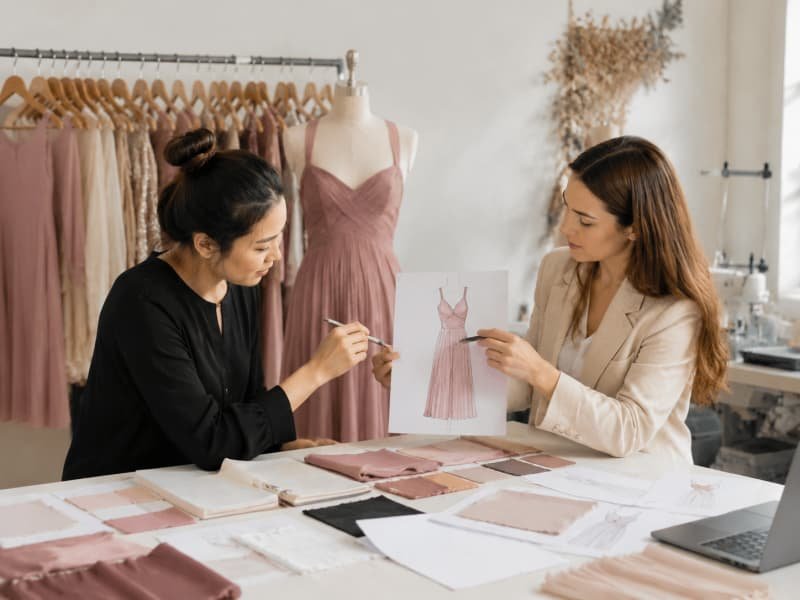
Custom ready-to-wear is not personal tailoring, consumer made-to-order, blank garment decoration or a low-quantity startup production service. For established fashion brands, it means developing and producing standard-size garments that follow the brand’s own design direction, sample standard, fabric requirement, fit expectation, label system and channel-ready delivery needs.
A custom RTW garment must be custom to the brand but ready-to-wear for the customer. That is why Duolan treats each project as a production system, not a single sample exercise. A dress, set or top is not ready for bulk only because the sample looks close to the reference. It becomes ready for RTW production when the fabric, pattern, size chart, trims, PP sample, QC checkpoints, labels, packaging and repeat order records are clear enough for controlled manufacturing.
Built for Established Women’s Apparel Brands
Duolan is structured for women’s apparel brands that need product development, private label execution and brand-ready delivery in one controlled manufacturing path. The strongest fit is with brands that already have market direction, sales channels and long-term product planning.
Global Fashion Brands
- Need suppliers that can support multi-style collections, standard-size systems, PP approval, bulk consistency and compliance review.
- Care about development discipline, production documentation, material continuity, QC control and repeat delivery across seasons.
- Duolan fits brands that need structured sample-to-bulk execution rather than informal custom clothing production.
Regional Fashion Leaders
- Need faster development cycles without losing fit, fabric quality, label accuracy or shipment control.
- Often work with drops, capsules, bestsellers and repeat styles that need stable supplier follow-up.
- Duolan supports these programs through sampling, material locking, production scheduling and QC coordination.
Contemporary Dress Brands
- Need refined execution around satin, mesh, fitted silhouettes, occasionwear, vacation dresses and structured styles.
- Care about drape, proportion, lining, zipper, hem balance, surface finish and ecommerce presentation.
- Duolan’s dress-focused background helps translate visual style into production-ready garments.
Product Teams
- Need useful samples for internal review, not disconnected prototypes.
- Evaluate fit comments, fabric changes, construction risks, PP readiness and size grading before bulk approval.
- Duolan supports project review from reference, tech pack or sample direction to production standard.
Buying Teams
- Compare suppliers by cost logic, production reliability, quality control, packing accuracy, audit support and delivery discipline.
- Need clear answers on quantity, lead time, bulk risk, material availability and repeat order control.
- Duolan can provide project-based evaluation rather than generic factory promises.
Multi-brand Groups
- Need separate control for different brand identities, price levels, product lines and launch windows.
- Require multi-style coordination across fabrics, sizes, labels, packaging and production routes.
- Duolan’s owned factory and satellite factory system supports structured multi-line RTW programs.
RTW, Made-to-order, Bespoke and OEM
Custom ready-to-wear needs clear definition because many search results mix it with made-to-order, bespoke, startup apparel and private label basics. Duolan focuses on brand-custom standard-size garments made for commercial fashion channels.
| Production Mode | Meaning | Duolan Position | Best Fit |
|---|---|---|---|
| Custom Ready-to-wear | Brand-custom garments produced in standard sizes for ecommerce, retail or wholesale channels | Core focus | Established brands needing sellable RTW collections |
| Made-to-order | Garments produced after customer orders, often with inventory-light logic | Not core positioning | Only relevant when part of mature brand production planning |
| Bespoke / Made-to-measure | Individually fitted garments made for one wearer | Not Duolan’s direction | Personal tailoring or couture service |
| OEM Production | Manufacturing based on brand tech pack, sample, BOM and standards | Fully supported | Brands with ready production files |
| ODM Development | Supplier supports style development, fabric proposal and sampling | Supported | Brands needing development before bulk |
| Premium Private Label | Brand labels, packing and channel-ready execution | Supported as RTW delivery element | Brands needing controlled retail-ready product execution |
RTW Project Inputs Before Production
A stronger custom RTW project starts with clearer information. A complete tech pack is useful, but Duolan can also review an earlier-stage project if product category, fabric direction, size range, target quantity and launch timing are clear.
| Project Input | Why It Matters | Buyer-side Decision |
|---|---|---|
| Design File / Tech Pack | Defines construction, measurements, fabric, trims and workmanship expectations | Is the style production-ready or still in development review? |
| Reference Sample | Shows fit, handfeel, proportion, finishing level and commercial expectation | Should Duolan follow, adjust or improve the original sample? |
| Size Range | Defines grading, tolerance and standard-size production logic | Which sizes must be fit-critical before bulk approval? |
| Fabric Direction | Controls drape, opacity, stretch, recovery, lining and bulk availability | Is the fabric chosen for appearance only, or also for production stability? |
| Target Quantity | Affects material sourcing, factory routing, production cost and delivery planning | Is the order a launch order, repeat order or seasonal bulk order? |
| Colorways | Affects lab dip, fabric booking, color shade control and packing ratio | Which colors are core, seasonal or test colors? |
| Launch Date | Drives sample timeline, PP approval, material booking and shipment planning | What must be confirmed before the critical path begins? |
| Label / Packing | Controls retail readiness, barcode accuracy, carton marks and channel receiving | Is the product ready for ecommerce, retail or wholesale receiving? |
Custom RTW Product Range
Duolan’s custom ready-to-wear capability is built around womenswear products that require real development control: fabric judgment, fit balance, sample approval, PP standards, bulk consistency and channel-ready delivery. The focus is not generic apparel, but sellable RTW categories where product quality directly affects brand image, return risk and repeat sales.
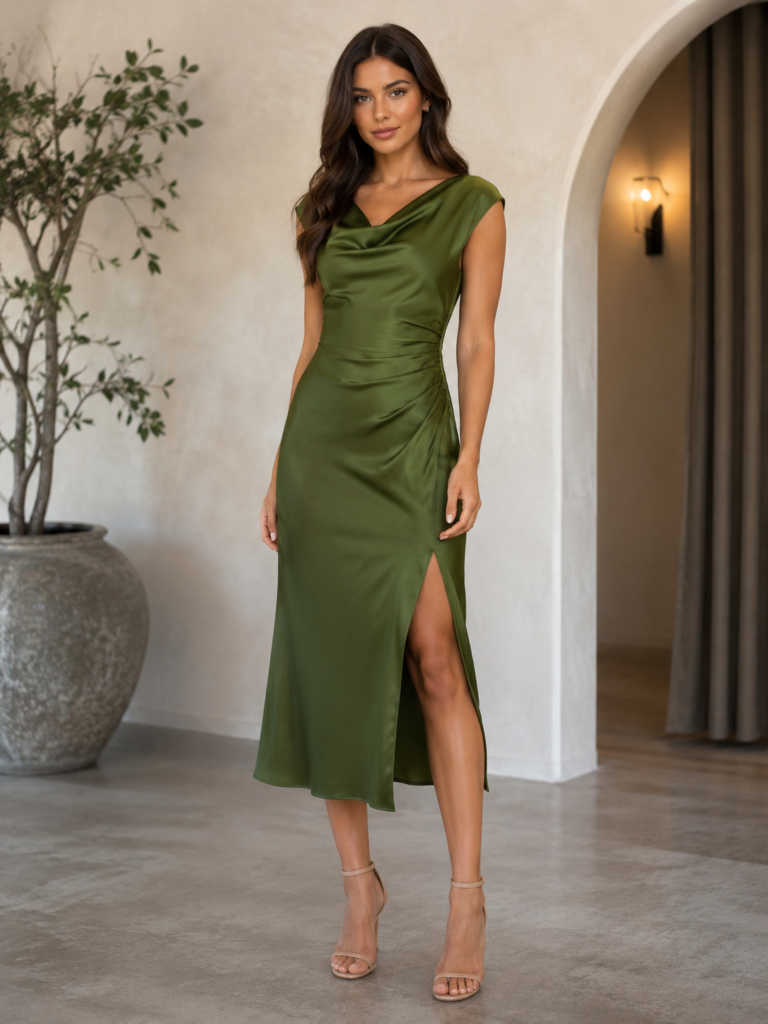
Custom Dress Collections
Fashion dress collections are often the center of a womenswear brand’s seasonal launch. Duolan supports custom RTW dress programs where the brand needs standard-size production, consistent fit and controlled presentation across styles, colors and delivery windows.
- We review silhouette, fabric drape, lining, zipper, hem balance and PP sample standards before bulk production starts.
- Dress collections can include mini, midi, maxi, satin, mesh, printed, fitted and structured directions under one coordinated launch plan.
- Production control focuses on size consistency, surface finish, label placement, packing condition and repeat order readiness.

Occasionwear RTW
Occasionwear must look polished in social settings, ecommerce photography and retail presentation. These garments often carry higher expectations for drape, support, finishing and visual completeness than daily casual styles.
- Duolan supports cocktail, graduation, wedding guest, formal, semi-formal and event-driven dress programs.
- Development reviews focus on lining, support, zipper strength, hem balance, movement comfort and fabric presentation.
- Bulk production requires more attention to PP standards, pressing, stain control, packaging and delivery timing before event seasons.

Party and Going-out Dresses
Party and going-out RTW styles need strong visual impact, but production must also protect comfort, durability and customer confidence. Fitted shapes, mesh panels, sequins, cut-outs and halter structures can create higher production sensitivity.
- Duolan reviews stretch recovery, opacity, body coverage, edge finishing, strap load and packing protection before bulk.
- For sequin, mesh or cut-out styles, lining, skin-contact areas and seam strength are checked as production risks.
- These products often need tighter sample review because visual style and real wearing stability must work together.

Fitted and Bodycon RTW
Fitted garments are not difficult because they are small; they are difficult because the fabric and pattern must work with body movement. RTW bodycon products require consistency across sizes, colors and fabric batches.
- Duolan checks negative ease, recovery, opacity, side seam balance, waist-hip proportion and measurement tolerance.
- Different colors or fabric lots may behave differently, so fit and fabric performance are reviewed together.
- Bulk QC focuses on seam elasticity, transparency, twisting, hem stability and size consistency.

Resort and Vacation RTW
Resort and vacation styles rely on lightness, color, print, movement and comfortable wear. They may look relaxed, but production risks often appear in transparency, shrinkage, print placement, wrinkling and packing condition.
- Duolan supports printed maxi dresses, vacation dresses, lightweight sets, summer styles and resort-ready capsules.
- Fabric choices are reviewed for drape, handfeel, opacity, wrinkle behavior, color consistency and bulk availability.
- RTW delivery focuses on clean folding, surface protection, print direction, label accuracy and seasonal launch timing.

Coordinated Sets and Tops
Fashion sets and refined tops help brands extend a RTW collection beyond dresses. These products require matching color, fabric, proportion and packing logic across multiple garments or related styles.
- Duolan reviews top-to-bottom proportion, waistband structure, fabric batch consistency, label placement and packing ratio.
- Sets require stronger color and size coordination because two garments must arrive and sell as one product unit.
- Refined tops such as satin tops, corset tops, mesh tops and halter tops are developed with neckline stability, lining and fit balance in mind.
Collection Structure for RTW Launches
Ready-to-wear brands usually launch collections, not isolated garments. Duolan helps brands organize styles by commercial role, development priority, production complexity and repeat potential before production resources are committed.
| Product Role | Collection Purpose | Typical RTW Decision | Duolan Control Focus |
|---|---|---|---|
| Hero Style | Campaign impact and visual brand recognition | Higher development attention and stronger sample review | Fabric effect, silhouette, detail execution, photo-readiness |
| Commercial Core | Stable sales and broader customer acceptance | Balanced cost, fit and production reliability | Fit, fabric availability, size range, QC consistency |
| Repeatable Style | Reorder across seasons, colors or fabrics | Stronger BOM and PP sample record | Color standard, trim continuity, production notes |
| Seasonal Style | Color, print, fabric or occasion-driven relevance | Calendar-sensitive material and delivery planning | Lab dip, fabric booking, launch timing |
| Extension Style | Build from proven silhouettes | Controlled pattern and detail adjustment | Length, sleeve, neckline, fabric variation |
| Channel-ready Style | Ecommerce, retail or wholesale receiving | Accurate labels, barcodes and packing ratio | Polybag, carton, SKU and packing consistency |
From Design Direction to RTW Delivery
Step 1|Design and Project Review
The project begins with design direction, category, reference sample, tech pack, target customer, fabric idea, price range, size range and launch timing. Duolan reviews whether the style is technically clear, commercially realistic and suitable for standard-size RTW production. This stage identifies missing information, fabric risks, construction challenges and sample priorities before development cost and production time are committed.

Step 2|Fabric and Fit Feasibility
Fabric and fit are reviewed together because they decide how the garment behaves on the body. A satin midi dress, mesh party style, stretch bodycon dress or structured corset top all need different material logic. Duolan checks drape, stretch, opacity, recovery, weight, lining, support and tolerance before the sample route is confirmed.

Step 3|Sample Development
Samples are developed to answer clear production and commercial questions. A first sample may test silhouette and fabric; a fit sample checks body balance; a photo sample supports campaign review; a PP sample becomes the production benchmark. Duolan treats samples as decision tools, not disconnected prototypes, so each version clarifies the next production step.
Duolan reviews polybag size, folding method, hanger or flat pack decision, sticker placement, carton ratio and carton mark. For private label products, packing is part of the brand’s delivery standard, not a final afterthought.

Step 4|PP Standard Locking
Once the style is approved, fabric, trims, measurements, workmanship, labels, packing and QC points are locked into the PP standard. For RTW collections, this stage protects size consistency, color control, label accuracy and bulk repeatability. The approved sample becomes a production reference that cutting, sewing, finishing and QC teams can follow.

Step 5|Bulk and Repeat Delivery
Bulk production follows the confirmed PP sample, BOM, production notes and QC plan. Duolan coordinates material preparation, cutting, sewing, special process, pressing, final inspection, packing and shipment preparation. If the style becomes a bestseller, the same records support repeat orders, color extensions and future collection updates.

Standard-size Fit and Tolerance Control
Ready-to-wear garments must fit a defined commercial size range. Duolan reviews size charts, grading logic, fabric behavior and fit-sensitive areas so approved samples can be repeated across colors and sizes.
| Fit Area | What We Check | Typical RTW Risk | Duolan Control |
|---|---|---|---|
| Bust | Coverage, support, cup position, neckline stability | Gaping, tightness, poor support | Fit sample review, lining and construction check |
| Waist | Waist position, shaping, seam balance | Visual distortion, poor proportion | Pattern correction and size grading review |
| Hip | Ease, stretch, side seam position | Pulling, twisting, transparency | Fabric recovery and tolerance review |
| Length | Mini, midi, maxi or lining relationship | Unsafe coverage, uneven hem | Length standard and hem control |
| Strap / Neckline | Strap tension, halter load, shoulder stability | Slipping, discomfort, neckline collapse | Reinforcement and fit check |
| Fabric Behavior | Stretch, recovery, shrinkage, opacity | Different fit across colors or batches | Fabric-to-fit testing before bulk |
Fabric and Trim Choices That Change Cost
Material decisions shape the final product more than many brands expect. In custom RTW production, fabric and trim choices do not only change appearance; they also affect pattern correction, sample rounds, MOQ logic, production speed, defect risk, QC intensity and repeat order stability.
Main Fabric
Main fabric usually drives the largest part of RTW product cost because it controls garment appearance, cutting yield, sewing difficulty and bulk stability. A lower-cost fabric is not always cheaper if it causes poor drape, transparency, twisting, shrinkage or high defect rates.
- Cost impact: Satin, lace, sequin, velvet, mesh, print and structured woven fabrics can change material cost by 30–55% of the garment cost structure.
- Fit impact: Stretch, recovery, weight and drape influence body fit, size tolerance and whether the pattern needs additional correction.
- Production impact: Slippery satin, delicate mesh, directional velvet or sequins may require slower cutting, lower sewing speed and stronger QC review.
- Repeat impact: Fabric continuity affects whether a bestseller can be repeated in future colors or seasons without changing fit and handfeel.
Lining and Support
Lining and support materials are often underestimated in RTW costing. For dresses and fitted womenswear, inner construction can reduce return risk by improving coverage, comfort, structure and wearing confidence.
- Cost impact: Lining, cups, boning, interfacing and elastic may add 5–15% depending on garment complexity and coverage area.
- Quality impact: Proper lining can reduce transparency, skin irritation, scratchiness, static cling and poor inner finishing.
- Fit impact: Stretch lining supports bodycon fit, soft lining improves comfort, and structured support helps corset or strapless garments hold shape.
- Risk impact: Removing lining to lower cost may increase complaints in mesh, lace, sequin, white, light-color or fitted styles.
Trims and Hardware
Trims are small but commercially important. A zipper, eyelet, slider, hook or label can affect function, wearing security, perceived quality and production schedule.
- Cost impact: Branded trims, metal hardware, specialty zippers, boning, hooks, sliders and decorative components can add 5–15% depending on material and quantity.
- Lead-time impact: Custom color, plating, branded pulls or special hardware may need earlier confirmation than main garment sewing.
- Function impact: Weak zippers, sharp edges, poor sliders or unstable hooks can create customer complaints even when fabric and fit are correct.
- QC impact: Hardware position, pull strength, symmetry, skin contact and color consistency must be checked before final packing.
Special Processes
Special processes can increase product value when used correctly, but they also introduce cost, timeline and quality risk. A process should support the garment’s commercial purpose, not simply make the design look more complicated.
- Cost impact: Print, embroidery, dyeing, washing, pleating, sequin or beading can add 5–25% depending on coverage, setup, labor and QC needs.
- Sample impact: Strike-offs, embroidery samples, dye lab dips, pleating tests or sequin trials may be needed before bulk approval.
- Production impact: Special processes can affect shrinkage, fabric handfeel, seam behavior, color fastness, surface damage and packing protection.
- Commercial impact: The right process can create campaign value; the wrong process can increase defect rate, delay delivery or weaken wearability.
Fabric-led Capsules
Fabric-led capsules can create a seasonal product story around satin, mesh, lace, crepe, jersey, sequin or lightweight woven directions.
- Duolan checks whether the fabric supports the intended silhouettes and private label packing method.
- Fabric behavior is reviewed before expanding into several styles.
- This helps brands create cohesive product capsules with production control.
Category Extensions
Category extensions help brands move from dresses into sets, tops, skirts or selected jumpsuits while maintaining a consistent brand identity.
- Duolan reviews whether the new category fits the brand’s customer and channel.
- Private label execution must remain consistent across garment types.
- Strong category extension uses product records from previous approved styles.
Sample Decisions for RTW Collections
A custom RTW sample should answer a specific decision. Duolan uses different sample stages to clarify fit, visual presentation, production readiness and bulk standards.
| Sample Type | Purpose | What It Confirms | Data to Track |
|---|---|---|---|
| First Sample | Test design-to-garment feasibility | Silhouette, fabric, construction, basic proportion | First sample comment count |
| Fit Sample | Confirm standard-size body relationship | Bust, waist, hip, length, comfort, movement | Fit issue closure rate |
| Revised Sample | Confirm corrections | Pattern, fabric, lining, trims, measurements | Revision cycle count |
| Photo Sample | Support ecommerce or campaign review | Color, drape, finish, visual presentation | Photo approval status |
| Salesman Sample | Support buying or wholesale evaluation | Commercial appearance and quality feel | Buyer comment record |
| PP Sample | Become production benchmark | Material, measurement, workmanship, packing, QC | PP approval date |
Sample-to-bulk Handover Checklist
A strong RTW supplier should not move from sample approval to production by memory. Duolan converts approved garments into records, checkpoints and production references before bulk begins.
| Handover Item | What Gets Locked | Why It Matters |
|---|---|---|
| Approved Sample | Final garment reference | Prevents vague visual interpretation during production |
| BOM | Fabric, lining, trims, labels, packing items | Connects sample decisions to purchasing and production |
| Size Spec | Measurements and tolerance points | Controls standard-size consistency |
| Material Record | Color, batch, fabric supplier, trim reference | Supports bulk consistency and repeat production |
| PP Sample | Physical production benchmark | Guides cutting, sewing, finishing and QC teams |
| Process Notes | Critical construction and workmanship details | Reduces style-specific production drift |
| QC Checklist | Inspection points by stage | Keeps risk areas visible before shipment |
| Packing Standard | Folding, polybag, barcode, carton ratio | Supports channel-ready receiving |
Production Engineering Before Bulk
Production engineering turns a custom RTW sample into a garment that a production line can repeat. This stage is especially important for dresses and fashion styles with fitted structures, delicate fabrics, linings, sequins, mesh, corset details, cut-outs, special trims or complex finishing.
Process Route Review
- The garment is reviewed from cutting to sewing, special process, pressing, QC and packing before bulk begins.
- Satin may need seam and pressing control; sequin may need edge cleaning and lining protection; corset styles may need internal structure sequencing.
- The goal is to prevent a good sample from becoming unstable when multiplied across sizes, colors and quantities.

Critical Detail Mapping
- Duolan identifies high-risk areas such as neckline stability, bust support, zipper strength, lining attachment, strap tension, slit reinforcement and hem finish.
- Each risk point is connected to PP sample standards, production notes and inspection checkpoints.
- This makes the garment easier to produce, inspect and repeat.

First-piece Confirmation
- First-piece confirmation checks whether the production line understands the approved standard before bulk continues.
- Measurements, construction, trim position, lining, seams, finishing and appearance are reviewed against the PP sample.
- This reduces the risk of producing large quantities before discovering that the bulk output has drifted from the approved sample.

Equipment Evidence Behind RTW Production
Duolan’s manufacturing system includes equipment for fabric inspection, sample development, cutting, sewing, printing, embroidery, finishing, QC, packing and shipment preparation. The value is not machine count alone, but how each equipment group supports RTW quality and delivery.
| Equipment Group | Approx. Quantity | RTW Production Value |
|---|---|---|
| Fabric inspection, pre-treatment and cutting preparation | 1,100–2,000 sets | Supports fabric defects review, shrinkage control, shade checking, spreading and cutting preparation |
| Pattern, sample and development equipment | 650–1,200 sets | Supports CAD patterning, sample sewing, sample pressing and development iteration |
| Core sewing equipment | 7,000–9,000 units | Supports standard RTW sewing, stretch seams, overlock, lockstitch, buttonhole, bartack and special-machine operations |
| Printing equipment | 150–400 sets | Supports DTG, heat transfer, screen print, digital print and related visual process development |
| Embroidery equipment | 150–300 sets | Supports flat embroidery, multi-head embroidery, sequin embroidery and decorative detail development |
| Pressing and finishing equipment | 1,000–1,800 sets | Supports garment shaping, steam pressing, finishing, stain removal and final presentation control |
| QC, packing and auxiliary equipment | 3,000–6,000 sets | Supports needle detection, measurement, folding, bagging, carton sealing, barcode printing and shipment preparation |
| Utility and environmental equipment | 120–190 sets | Supports production stability, workshop operation and environmental process support |
Manufacturing Capacity for RTW Bulk
Duolan’s capacity is designed for development-to-production continuity. For established RTW brands, the value is not only volume, but the ability to support samples, launch orders, repeat orders, multi-style programs and factory routing.
| Capacity Area | Duolan Data | Buyer Value |
|---|---|---|
| Owned womenswear factories | 16 | Core styles, sensitive projects and PP-controlled production can be managed with stronger direct control |
| Satellite factories | 20+ | Repeat orders, volume expansion and flexible production can be coordinated without relying on one production point |
| Sewing lines | 300 | Supports multi-style RTW production across dresses, sets, tops and structured garments |
| Quick-response lines | 50+ | Supports sampling, test production, replenishment planning and faster launch preparation |
| Stable monthly capacity | 6,500,000 pcs | Supports planned bulk and repeat programs for mature fashion brands |
| Peak monthly capacity | Up to 10,000,000 pcs | Supports seasonal concentration and large-volume production windows |
| Monthly sample capacity | 15,000–35,000 pcs/style-times | Supports high-frequency collection development and sample revision cycles |
| Monthly style development flows | 3,000–8,000 | Supports multiple collections, product lines and parallel development programs |
Pre-production Approval Board
Before custom RTW bulk begins, the project should pass a pre-production approval board. This prevents the most common RTW failure: starting production when the sample looks approved, but materials, size tolerance, labels, packing, QC standards or shipment requirements are still unclear.
| Approval Area | What Must Be Confirmed | Risk If Not Confirmed | Duolan Control |
|---|---|---|---|
| PP Sample | Final garment standard, construction, fit and finish | Bulk output may drift from approved sample | PP sample review before bulk start |
| Fabric Bulk | Color, batch, shrinkage, width, defects, handfeel | Shade variation, poor drape, shrinkage disputes | Bulk fabric inspection and shade reference |
| Trim Bulk | Zipper, lining, elastic, hardware, labels | Function failure or late replacement | Trim approval before production |
| Size Spec | Measurements, tolerance, grading | Fit complaints and size inconsistency | Size table and measurement checkpoints |
| Label System | Main label, care label, size label, barcode | Retail receiving errors or compliance issues | Label placement and content check |
| Packing | Folding, polybag, carton ratio, carton mark | Channel delay or receiving confusion | Packing standard confirmation |
| QC Standard | AQL level, inspection points, defect definitions | Disputes during final inspection | QC checklist before line start |
QC Standards for RTW Delivery
RTW quality control must protect the final sellable garment, not only the sewing process. Duolan reviews the garment through material, measurement, construction, appearance, label and packing checkpoints so the finished product can move into ecommerce, retail, wholesale or distribution channels with fewer avoidable risks.
Material and Cutting QC

- Fabric, lining and trims are checked for color, shade, defects, shrinkage, opacity and handfeel before production risk moves downstream.
- Cutting control reviews fabric direction, panel balance, print placement, numbering, size accuracy and batch separation.
- These checks reduce fit variation, color inconsistency, poor drape, panel mismatch and production confusion before sewing begins.
Sewing and First-piece QC

- First-piece approval checks whether the production line understands the PP sample before bulk continues.
- Duolan reviews measurements, seam quality, lining attachment, zipper function, trim position, support points and critical workmanship details.
- Inline QC then checks whether these standards remain stable during production instead of waiting until final inspection to find repeated issues.
Final and Packing QC

- Final QC reviews appearance, stains, loose threads, measurement tolerance, labels, trims, finishing, pressing and overall garment presentation.
- Packing QC checks folding, barcode, hangtag, polybag, carton mark, ratio, SKU separation and shipment readiness.
- For RTW brands, packing accuracy is part of quality because it affects warehouse receiving, ecommerce fulfillment and retail presentation.
Retail-ready Label and Packaging
Ready-to-wear garments should arrive prepared for the brand’s selling channel. Duolan treats label and packaging execution as part of product delivery discipline, not decoration.
Label System

- Main labels, care labels and size labels should match brand identity, comfort and market requirements.
- Duolan reviews label placement, stitch visibility, skin contact and transparency risk before bulk.
- For satin, mesh, lace and fitted garments, label placement must avoid distortion, irritation or visible show-through.
Barcode and SKU

- Barcode accuracy affects ecommerce, warehouse, retail and wholesale receiving.
- Duolan follows customer instructions for SKU, color, size, carton relationship and label location.
- Correct barcode execution reduces receiving errors and downstream operational cost.
Polybag and Folding

- Folding method and polybag size affect how garments arrive after transport.
- Satin, sequin, pleated, structured and delicate garments may need special surface or shape protection.
- Duolan reviews packing method before shipment so garments are not damaged after production is completed.
Carton and Ratio

- Carton marks, ratio, weight and packing list accuracy matter for receiving teams.
- Multi-style RTW programs need clear carton separation by style, size, color and SKU.
- Packing discipline supports faster receiving, storage, ecommerce fulfillment and inventory control.
Cost Drivers in Custom RTW Production
RTW costing should be understood through project structure, not reduced to a low-MOQ or lowest-unit-price discussion. The percentages below are planning ranges only. Actual costing depends on garment category, fabric, construction, quantity, colorways, packaging and delivery requirements.
| Cost Driver | Typical Influence Range | Why It Changes Price | Brand Decision |
|---|---|---|---|
| Main fabric | 30–55% | Fabric type, weight, width, shrinkage, color, print, lace, sequin or custom development changes material cost | Decide whether premium fabric creates enough product value |
| Sewing labor | 15–30% | More seams, lining, fitted construction, corset work, delicate fabric or complex assembly increases labor time | Separate simple commercial styles from complex hero styles |
| Trims and lining | 5–15% | Zippers, boning, cups, elastic, hooks, hardware, lining and labels affect cost and function | Lock trims early to avoid late-stage cost changes |
| Special process | 5–25% | Print, embroidery, sequin, dyeing, washing, pleating or beading adds setup, testing, waste and QC cost | Use special processes where they improve product value |
| Sampling and development | 3–10% | More sample rounds, fit corrections, fabric tests and PP preparation increase development cost | Clarify sample purpose before each round |
| QC and finishing | 3–8% | Inspection level, pressing, stain removal, thread trimming and packing checks affect delivery condition | Define brand QC expectations before bulk starts |
| Packaging | 2–8% | Hangtags, barcodes, polybags, cartons, ratio packing and retail requirements add operational cost | Confirm channel-ready packing before production |
| Logistics preparation | Variable | Carton count, weight, freight route, nominated forwarder and documentation affect delivery cost | Plan packing and shipping method early |
Multi-style Launch Support
Mature ready-to-wear brands rarely launch one garment alone. Duolan supports multi-style programs by coordinating fabric sourcing, sample rounds, material readiness, production routing, QC and packing across several garments.
Style Grouping
- Styles are grouped by fabric type, construction difficulty, production route and delivery priority.
- Satin dresses, mesh party styles, vacation dresses, fitted sets and structured tops should not follow identical production logic.
- Clear grouping reduces confusion during sampling, quotation, factory routing and final inspection.
Timeline Back-planning
- RTW launches require backwards planning from target launch date to sample approval, material booking, production and shipment.
- Duolan reviews which styles need earlier fabric approval, which need more sample risk control and which can enter production faster.
- This protects event-driven, party season, vacation and capsule launches from avoidable production delay
Production Routing
- Core styles can be routed through controlled production lines, while repeat orders can use established BOM and PP standards.
- Complex styles may require familiar lines, special process partners or stronger first-piece control.
- Multi-style routing helps brands protect quality without slowing down the entire collection.
Repeat Production Readiness
A ready-to-wear manufacturer should help a brand repeat what sells. Duolan prepares core styles and bestseller programs for repeat production through records, material standards, PP references and QC notes.
| Repeat Control Area | What Gets Recorded | Why It Protects Reorders |
|---|---|---|
| BOM Record | Fabric, lining, trims, labels, thread, packaging | Prevents each reorder from restarting material confirmation |
| Color Standard | Lab dip, bulk color, shade band, previous batch | Reduces color drift across repeat orders |
| PP Sample | Approved garment standard and physical reference | Keeps workmanship and measurement consistent |
| Pattern Record | Approved pattern, grading, tolerance | Protects fit across repeated production |
| QC Notes | Known risks, inspection points, previous issues | Prevents the same defect from returning |
| Packing Standard | Folding, barcode, polybag, carton mark, ratio | Keeps channel delivery consistent |
| Production Feedback | Previous bottlenecks and improvement actions | Makes future orders more stable |
Anonymous RTW Project Evidence
The following anonymous project cards are written in a publication-ready format. Before going live, Duolan should verify each number against internal CRM, QC, shipment and after-sales records. If verified, these cards can become strong evidence for brand-level RTW capability.

US Occasion Dress Program
- Project scope: 28,600 standard-size occasion dresses across 18 styles, 42 color-size combinations and 2 shipment batches.
- Timeline evidence: first sample to PP approval completed in 31 days; bulk production and packing completed within a 58-day launch window.
- Delivery evidence: shipment milestone achievement reached 97.8% against the agreed delivery plan after material approval.
- Quality evidence: final inspection pass rate reached 98.4%; post-shipment quality claim rate remained below 0.9%.
- Control focus: satin drape, lining coverage, invisible zipper, hem balance, barcode packing and carton ratio accuracy.

Australian Partywear Launch
- Project scope: 36,800 pieces across fitted, mesh, cut-out and sequin-influenced partywear styles.
- Timeline evidence: sample-to-PP cycle completed in 27–35 days depending on fabric complexity; bulk was delivered in 3 coordinated shipment waves.
- Delivery evidence: 96.9% of confirmed cartons were ready within the planned packing window after PP approval.
- Quality evidence: inline defect closure rate reached 95.6%; post-shipment defect claim rate stayed under 1.2%.
- Control focus: stretch recovery, opacity, edge finishing, lining comfort, support structure and packing protection for embellished styles.

European Contemporary RTW Collection
- Project scope: 19,400 pieces across satin midi dresses, vacation dresses and refined RTW tops.
- Timeline evidence: material approval completed within 14 days after final fabric direction; bulk delivery achieved within a 52-day production window.
- Delivery evidence: 98.1% on-time handover to the nominated forwarder after final inspection release.
- Quality evidence: final measurement compliance reached 97.6%; return-related quality issue rate stayed below 0.8%.
- Control focus: fabric weight, color consistency, drape, pressing, hem balance, lining length and retail presentation.

Repeat Fitted Dress Program
- Project scope: 52,000 pieces produced across 3 repeat rounds for a proven fitted dress direction.
- Timeline evidence: reorder preparation time reduced by 22% after BOM, PP sample, pattern and packing standards were locked.
- Delivery evidence: 98.5% of repeat order units were packed within the confirmed production calendar.
- Quality evidence: batch-to-batch color deviation was kept within approved shade band; repeat defect rate reduced from 1.4% to 0.7%.
- Control focus: BOM continuity, PP reuse, shade control, measurement tolerance, seam elasticity and packing repeatability.
Custom Ready-to-wear FAQ
These questions help brand teams understand how Duolan supports custom RTW development and bulk production without positioning the service as personal tailoring, low-quantity startup manufacturing or generic custom apparel.
Custom ready-to-wear means garments are made to a brand’s design direction, fabric standard, size range, sample approval and delivery requirements, while still being produced in standard sizes for commercial sale. Duolan focuses on brand-custom womenswear collections, not personal tailoring or blank garment decoration.
Yes. Ready-to-wear usually means standard-size garments produced for ecommerce, retail, wholesale or distribution channels. Made-to-order often means production after individual orders. Duolan’s focus is planned RTW production for established brands with launch schedules, bulk orders and repeat potential.
Yes. Duolan supports standard-size womenswear production across dress-centered and fashion-led categories. We review size charts, grading, measurement tolerance, fabric behavior, fit balance and PP standards before bulk production.
Useful files include tech packs, reference samples, design sketches, size charts, fabric swatches, BOM, trims, target quantity, colorways, launch date, label requirements and packing instructions. Earlier-stage projects can also be reviewed if the production goal is clear.
Duolan connects approved samples to BOM, material locking, PP sample confirmation, production notes, QC checkpoints and packing standards. The approved garment becomes a production benchmark, not only a visual reference.
Yes. Duolan can follow customer requirements for main labels, care labels, size labels, hangtags, barcodes, polybags, carton marks and packing ratios. Packing is managed as part of RTW delivery discipline.
Cost is affected by fabric, construction, size range, colorways, trims, special processes, sample rounds, QC level, packaging and repeat potential. Duolan reviews cost through project structure rather than using low quantity as a marketing hook.
Yes. Repeat orders are supported through BOM records, fabric references, PP samples, approved patterns, QC notes and packing standards. This helps brands repeat proven styles without restarting the project from zero.

Send Your RTW Project for Review
Duolan works best with established womenswear brands, product teams, buying teams and sourcing offices that need custom ready-to-wear development and manufacturing. Send your project information for a practical review of fabric, fit, sample path, production readiness, QC focus and retail-ready delivery.
Share Your Product Details
- Product category: dresses, fitted styles, fashion sets, refined tops or structured womenswear.
- Project stage: design review, sample development, PP approval, bulk production or repeat order.
- Key files: design sketch, tech pack, reference sample, fabric swatch, size chart or packing instruction.
Share Your Production Plan
- Target quantity, colorways, size range and launch date.
- Fabric direction, trim details, special process and quality expectations.
- Label, barcode, polybag, carton and channel-ready packing requirements.
Duolan Will Review
Fabric, fit, construction and RTW feasibility.
Sample path, PP confirmation and bulk production readiness.
QC focus, packing requirement and repeat production preparation.