 Skip to content
Custom Midi Dress Manufacturer
Custom midi and knee-length dress development and manufacturing for established fashion brands.
Duolan helps fashion brands develop midi dresses with controlled length, waist proportion, fabric drape, hem balance and standard-size consistency. From satin midi dresses and occasion styles to printed resort dresses, fitted midi silhouettes and below-knee work-to-evening designs, our team connects sampling, PP approval, bulk production, QC, packing and repeat delivery.
- 16 owned womenswear factories support controlled sample-to-bulk handover.
- 20+ satellite factories provide flexible capacity for multi-style dress programs.
- 300 sewing lines support standard-size midi dress bulk production.
- 50+ quick-response lines support sampling, revised samples and launch preparation.
- 15,000–35,000 monthly sample capacity supports frequent dress development cycles.
- 6,500,000 stable monthly capacity supports planned bulk and repeat delivery.
- Typical cooperating brand orders include 10–30 styles and 20,000–80,000 pieces per order.







Midi and Knee-Length Dresses, Developed as One Length Family
Midi and knee-length dresses should be developed as one length family for brand-level manufacturing. Knee-length dresses sit closer to the knee, below-knee styles extend slightly lower, and classic midi dresses usually reach the mid-calf area. Each version needs careful control of waistline, body proportion, hem level, lining length, slit position and fabric drape.
For production teams, the development risks are closely connected. A knee-length work dress, below-knee cocktail dress and mid-calf satin midi dress may serve different styling purposes, yet all require length accuracy, balanced movement and stable standard-size grading. Separate production logic would create unnecessary repetition.
Duolan uses Custom Midi Dress Manufacturer as the main product direction while naturally covering knee-length, below-knee, mid-length and mid-calf dresses. The result is a stronger, broader dress-length category without creating overlapping content or scattered development standards.

Built for Established Dress Brands
Duolan is structured for brand teams managing seasonal launches, capsule collectionsDuolan works with fashion brands, product teams and sourcing offices managing dress lines with real launch plans, size standards, quality requirements and repeat value. Midi dress projects usually need more than basic cutting and sewing. Length, proportion, fabric and finishing all influence commercial appearance., dress programs and multi-style womenswear drops. The strongest fit comes from brands with defined positioning, real launch plans, product standards and long-term supply value.
Contemporary Dress Brands
Contemporary dress brands need midi styles with refined proportion, clean seams, controlled drape and polished presentation. Satin, woven, knit, printed and minimal midi dresses must look balanced across sizes, not only on one sample body.
Occasionwear Brands
Occasionwear brands need cocktail, wedding guest, graduation and semi-formal midi dresses with stable lining, zipper, waist placement, slit height and photo-ready finish. The garment must feel polished without losing comfort.
Work-to-Evening Brands
Work-to-evening midi and knee-length dresses require coverage, movement, wrinkle control and professional proportion. Below-knee length, fabric weight and hem balance become key manufacturing decisions.
Resort and Vacation Brands
Resort midi dresses need lightweight fabric, print placement, soft movement and crease-aware packing. Duolan reviews transparency, lining, color consistency and garment recovery after transport.
Product Development Teams
Product teams need samples answering clear questions: Is the waistline correct? Does fabric fall well? Is the slit safe? Does length scale across sizes? Duolan turns sample review into production preparation.
Sourcing Offices
Sourcing offices evaluate sample accuracy, factory control, QC, packing, capacity and repeat readiness. Duolan supports midi dress programs with structured development-to-production handover.
Midi Dress Lengths and Fit Positions
Midi dress development begins with a clear length target. Duolan reviews each length position through proportion, fabric behavior, movement and production control.
| Length Position | Typical Appearance | Development Focus | Best Use |
|---|---|---|---|
| Knee-Length | Around knee level | Coverage, professional proportion, hem stability | Work dresses, polished daywear, modest cocktail styles |
| Below-Knee | Slightly below knee | Waistline, leg proportion, movement ease | Work-to-evening, refined cocktail, semi-formal styles |
| Classic Midi | Mid-calf area | Drape, hem balance, slit position, proportion | Contemporary dresses, occasionwear, resort pieces |
| Longer Midi | Lower calf / above ankle | Fabric fall, long hem control, packing crease prevention | Elegant dresses, vacation styles, relaxed eventwear |
Midi Dress Styles Duolan Can Support
Midi dress manufacturing becomes stronger when style types are grouped by structure, fabric and commercial use. A satin midi dress, ribbed bodycon midi, printed resort midi and below-knee work dress do not share the same sample or production focus.
Core midi dress structures
- Satin midi dresses require drape control, seam discipline, lining decisions and careful pressing.
- Bodycon midi dresses need stretch recovery, opacity control, side seam balance and stable sizing.
- A-line midi dresses depend on waist position, skirt sweep, hem level and graceful movement.
- Slip midi dresses require strap balance, bust coverage, bias behavior and fabric fall.
- Knit or ribbed midi dresses need shrinkage review, recovery testing and measurement control.
- Woven midi dresses require fabric weight, waist shaping, seam finish and wrinkle behavior.
Commercial midi programs
- Cocktail midi dresses balance polish, fit, slit height and final presentation.
- Occasion midi dresses need lining, zipper strength, neckline stability and photo-ready finish.
- Work-to-evening midi dresses focus on coverage, comfort, movement and polished structure.
- Vacation midi dresses need lightness, print control, soft drape and packing recovery.
- Printed midi dresses require print placement, color consistency and hem alignment.
- Repeatable core midi styles need BOM records, PP samples and fabric continuity.
Design-led midi directions
- High slit midi dresses require reinforcement, movement review and lining coordination.
- Strapless midi dresses need bust support, inner structure and anti-slip control.
- Halter midi dresses require neck load balance, strap strength and back stability.
- Ruched midi dresses need even gathering, stretch behavior and side seam control.
- Lace midi dresses require placement, lining color and soft inner finishing.
- One-shoulder midi dresses need shoulder balance, neckline stability and fit review.

Brand Scenarios for Midi Dress Programs
Midi dresses appear across several brand scenarios. Duolan reviews each project by wearing context, fabric, fit, presentation and production route instead of treating every midi dress as one garment type.
Cocktail and Occasion Programs

Cocktail and occasion midi dresses need drape, lining, zipper, slit height and polished surface. Satin, lace, chiffon and structured woven fabrics require careful sample approval before bulk production.
Work-to-Evening Lines

Knee-length and below-knee dresses for work-to-evening lines need coverage, professional proportion and comfort. Fabric weight, wrinkle behavior and hem stability matter more than extreme visual details.
Resort and Vacation Drops

Resort midi dresses rely on lightness, color and movement. Printed woven, chiffon-like, lightweight satin or soft rayon-blend directions need print placement, opacity, lining and packing control.
Contemporary Dress Collections

Contemporary midi styles often use clean silhouettes, minimal details and quality finishes. Weak seams, poor pressing or uneven hems will reduce the perceived value quickly.
Party Midi Styles

Party midi dresses may include bodycon fits, mesh panels, cut-outs, shine or slit details. Fit stability, coverage and comfort must stay controlled despite strong visual impact.
Repeatable Core Dress Lines

Core midi dresses are often suitable for repeat colors, seasonal updates and long-term programs. BOM records, color references, PP samples and QC notes protect repeat production.
Fabric Behavior in Midi Dress Production
Fabric decides whether a midi dress feels elegant, heavy, unstable or production-ready. Midi length exposes fabric behavior more clearly than short dresses because hem fall, movement, weight and drape remain visible from waist to calf.
Duolan reviews fabric behavior before sample approval, especially when a brand plans several colors, size ranges or repeat batches.
Satin

Satin supports elegant and occasion midi styles, but seam puckering, needle marks, shine marks and packing creases must be controlled.
Chiffon and lightweight woven fabrics

Chiffon and lightweight woven fabrics create soft movement for resort or vacation midi dresses, requiring opacity review, lining planning and hem balance.
Jersey and ribbed knit fabrics

Jersey and ribbed knit fabrics suit fitted midi styles, but stretch recovery, shrinkage, side seam twist and opacity under tension need review.
Lace

Lace works for romantic and occasion midi dresses, with placement, lining color, edge comfort and repeat consistency checked before bulk.
Printed woven fabrics

Printed woven fabrics fit resort, daywear and contemporary midi programs, requiring print placement, color continuity and shrinkage control.
Mesh

Mesh supports party and going-out midi designs, with transparency, lining maps, edge stability and skin comfort reviewed early.
Velvet or textured fabrics

Velvet or textured fabrics can create premium winter or event midi styles, but pile direction, pressing response and carton pressure need control.
Structured woven fabrics

Structured woven fabrics support clean work or fit-and-flare midi shapes, with waistline, hem sweep and pressing behavior checked.
Proportion, Waistline and Hem Balance
Midi dress development is not only about selecting a length between knee and ankle. The strongest midi dresses depend on visual proportion: where the waist sits, how the fabric falls, how the hem meets the leg and how the style moves across sizes.
A midi dress can look refined in one size but become heavy, short, long, tight or unbalanced during grading. Duolan checks proportion from sample stage to PP approval, especially for styles planned across several colors or repeat orders.
Key proportion checks
- Waistline position must support leg proportion and garment balance, especially for below-knee and mid-calf dresses.
- Hem level needs stability across sizes, fabrics and production batches to avoid uneven finished garments.
- Slit height should improve movement and proportion without creating exposure risk during wear.
- Lining length must support opacity while staying visually clean below the outer layer.
- Hem sweep should match silhouette direction, from slim bodycon to A-line or flared midi shapes.
- Fabric weight must not make the lower half feel heavy or stiff.
- Side seam balance affects how the dress hangs during standing, walking and photography.
- Pressing and packing can change hem appearance, especially for satin, pleats, structured fabrics and long midi styles.
Slits, Necklines and Sleeve Options
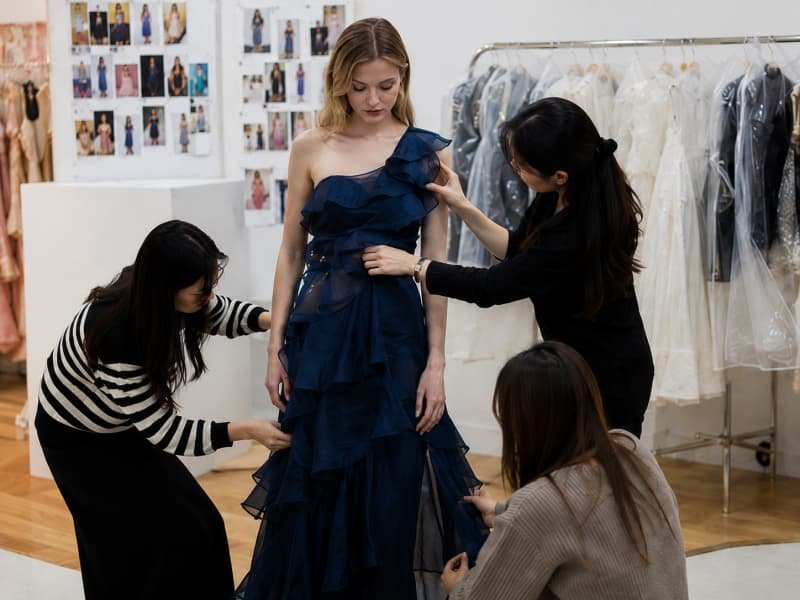
Design details can change how a midi dress fits, moves and photographs. Duolan reviews key details by body area and fabric behavior, not as decoration.

High Slit Midi Dresses
High slit midi dresses require slit height control, reinforcement, lining coverage and movement comfort. Slit position must remain stable across sizes, especially for satin, bodycon and occasion midi styles.

Strapless Midi Dresses
Strapless midi dresses need bust support, inner structure, zipper strength and anti-slip stability. A polished outside shape depends on inner construction and correct grading.

Halter Midi Dresses
Halter midi dresses place pressure on the neck and upper body. Duolan checks strap strength, neck load, back stability and bust support before PP approval.

Long Sleeve Midi Dresses
Long sleeve midi styles need arm movement, cuff finish, sleeve balance and fabric weight control. Heavy fabrics can restrict movement or distort the shoulder area.

Off-Shoulder and One-Shoulder Midi Dresses
Shoulder balance, elastic tension, neckline stability and body movement must be reviewed. Asymmetrical styles need extra checks for left-right visual balance.

Deep V Midi Dresses
Deep V midi dresses require front stability, coverage control, inner support and photo-angle review. Neckline shape must remain secure in standard-size production.
Midi Dress Sample Development Path
Collection sampling needs sequence. Duolan organizes sample development by product role, risk level, fabric uncertainty and launch priority so multiple garments can move forward without confusion.
Step 1|Length and Style Review
Duolan reviews target length first: knee-level, below-knee, classic midi or longer midi. The review includes reference images, intended occasion, fabric direction, size range, target quantity and launch schedule. Length goals must be clear before pattern work begins.
Step 2|Fabric and Drape Evaluation
Fabric is reviewed for drape, opacity, stretch, weight, lining need and bulk availability. A satin midi dress, printed resort midi and ribbed bodycon midi each needs a different sample strategy.
Step 3|Pattern and First Sample
The first sample checks waistline, hem level, slit height, lining length, side seams and overall proportion. The goal is to confirm whether the garment shape works as a midi dress, not only whether the reference image is recognizable.
Step 4|Fit and Revision
Fit comments are translated into changes for length, waist, bust, hip, hem, slit, neckline, straps, lining or fabric. Duolan reviews whether the correction improves both appearance and future production stability.
Step 5|PP Sample and Bulk Preparation
After approval, the PP sample, BOM, measurements, tolerance, fabric standard, QC points and packing method are locked. The sample becomes a production benchmark rather than a visual reference only.

Sample Types for Midi Dress Decisions
Different samples support different decisions. Midi dress projects often need more than one sample because length, drape and fit must be confirmed before bulk.
| Sample Type | Purpose | Midi Dress Focus |
|---|---|---|
| First Sample | Checks whether the design becomes a wearable garment | Length position, waistline, fabric fall, hem proportion |
| Fit Sample | Reviews standard-size fit and movement | Bust, waist, hip, slit, hem, lining, comfort |
| Revised Sample | Confirms corrections after comments | Length update, slit change, lining adjustment, fabric replacement |
| Photo Sample | Supports campaign or ecommerce review | Surface, drape, color, hem balance, presentation |
| Salesman Sample | Supports commercial evaluation | Quality feel, occasion fit, brand alignment |
| PP Sample | Becomes the production benchmark | Measurements, fabric, workmanship, label, packing |
Pattern, Grading and Size Consistency
Midi dress grading needs careful control because length and proportion can change quickly across sizes. A sample may look balanced in one size, then feel too long, too heavy, too tight or too short after grading.
Duolan reviews pattern and size consistency through fabric behavior, target fit and garment structure. Standard-size production for midi dresses must protect both measurement accuracy and visual proportion.
Key grading checks
- Bust, waist and hip balance must support the intended fit without pulling the garment upward or downward.
- Finished length needs review across all confirmed sizes, not only the sample size.
- Slit height should scale safely and remain visually balanced.
- Hem circumference must match silhouette direction: slim, straight, A-line, flared or fit-and-flare.
- Lining length must follow outer length while avoiding show-through or bunching.
- Bodycon midi dresses require negative ease, recovery and side seam stability.
- Slip midi dresses require bias behavior review and side seam alignment.
- A-line midi dresses require hem sweep control and waist balance.
- Repeatable styles need approved pattern, grading record and PP sample retention.

Development Risk Matrix
Midi dress development carries length, fabric and fit risks. Duolan reviews these issues early so corrections happen before bulk production.
| Risk | Why It Happens | Duolan Control |
|---|---|---|
| Midi length looks heavy | Waistline and hem position are not reviewed together | Length proportion review before sample approval |
| Hem becomes uneven in bulk | Fabric stretch, cutting drift or pressing instability | Cutting check, hem control and pressing standard |
| Slit feels unsafe or unbalanced | Slit height approved only on sample size | Slit review across size range |
| Lining shows through or feels wrong | Lining length and opacity are not matched | Lining map and opacity check |
| Fabric does not drape well | Fabric weight or stiffness conflicts with midi length | Fabric behavior review before sample approval |
| Bodycon midi twists | Stretch direction or side seam control is weak | Fabric direction and seam control |
| Satin midi creases badly | Pressing or packing method is not planned | Pressing notes and packing standard |
| Print placement feels inconsistent | Print layout is not reviewed by panel and size | Placement photo record and cutting review |
Manufacturing System for Midi Dress Bulk
Midi dress production needs more than a general sewing line. Length-sensitive dresses require sample accuracy, fabric control, cutting discipline, pressing standards and packing awareness. Duolan’s manufacturing structure supports multi-style midi programs, repeat orders and brand-level production handover.
Manufacturing capacity connected to midi dress programs
- 16 owned womenswear factories support core style control, complex garment handling and PP standard transfer.
- 20+ satellite factories provide flexible capacity for seasonal volume, repeat orders and parallel dress styles.
- 300 sewing lines support standard-size bulk production across satin, woven, knit, printed and structured midi dresses.
- 50+ quick-response lines support first samples, revised samples, trial runs and launch preparation.
- 15,000–35,000 monthly sample capacity supports frequent length, fit and fabric revisions.
- 6,500,000 stable monthly capacity supports planned bulk delivery and repeat production programs.
- Typical cooperating brand orders run across 10–30 styles with 20,000–80,000 pieces per order.
- Fabric, trim and process resources support satin, lace, mesh, print, embroidery, dyeing, washing and finishing needs.

How the system supports midi dress production
- Length-sensitive styles can move from sample room to production with clearer PP references.
- Core midi styles can be prepared for repeat colors and future batches.
- Multi-style programs can be grouped by fabric, silhouette and production route.
- Pressing and packing requirements can be planned before final inspection.

Cutting, Sewing and Pressing Control
Midi dress quality is built through production stages. Poor fabric preparation, inaccurate cutting, weak seam control or careless packing can change garment length, hem appearance and final presentation.

Fabric Inspection Before Cutting
Duolan checks shade, shrinkage, opacity, stretch, drape, surface defects and batch consistency before cutting. Satin, mesh, lace, jersey and lightweight woven fabrics receive closer review because fabric behavior affects midi length directly.

Cutting Control
Cutting checks include fabric direction, panel balance, print placement, left-right symmetry, skirt length, slit position and bundle numbering. For midi dresses, cutting accuracy protects hem level, waist proportion and size consistency.

Sewing Execution
Sewing control focuses on stitch quality, seam allowance, zipper setting, lining attachment, waist seam, side seams, slit reinforcement and hem preparation. Bodycon, satin, lace and structured midi dresses require different sewing handling.

Pressing and Hem Finishing
Pressing can improve or damage a midi dress. Duolan checks satin shine marks, hem balance, wrinkle removal, skirt fall and surface cleanliness. Long hems need special care before packing.

Packing Preparation
Packing checks include folding method, polybag size, carton pressure, label accuracy and surface protection. Satin, sequin, structured and lightweight midi dresses may require different packing methods.
QC Standards for Midi Dresses
Midi dress QC must protect length, drape, fit, surface appearance and channel-ready packing. Duolan checks quality from material arrival to packed cartons.
| QC Stage | What Duolan Checks | Midi Dress Risk Controlled |
|---|---|---|
| Material QC | Shrinkage, stretch, opacity, shade, defects, lining compatibility | Fabric and lining instability |
| Cutting QC | Length, panel balance, print placement, slit position, fabric direction | Uneven hem, wrong proportion, twisted panels |
| First-piece QC | Waistline, zipper, lining, slit, hem, key measurements | Production misunderstanding before bulk continues |
| Inline QC | Side seams, hem level, slit reinforcement, seam stability, measurement drift | Bulk production drift |
| Final QC | Finished length, appearance, surface, hem balance, measurements | Unsellable garment condition |
| Packing QC | Folding, polybag, carton mark, barcode, style-color-size ratio | Creasing, receiving errors, poor presentation |
QC for Fashion Collections
Quality control for a fashion collection must protect individual garments and the collection as a whole. Duolan checks materials, cutting, sewing, finishing, packing and overall consistency across all styles.
| QC Stage | What We Check | Collection Risk Controlled |
|---|---|---|
| Material QC | Fabric defects, color, shade bands, stretch, shrinkage, lining and trim consistency | Prevents material mismatch across styles and colors |
| Cutting QC | Fabric direction, panel balance, placement, numbering and size accuracy | Reduces fit variation and visual imbalance before sewing |
| First-piece QC | Measurements, construction, trims, lining, zipper and critical details | Confirms each style is understood before bulk continues |
| Inline QC | Seam quality, stitch tension, support points, trim position and workmanship | Catches production drift across different lines or factories |
| Final QC | Appearance, measurements, stains, defects, labels and finishing | Protects shipment quality across the full collection |
| Packing QC | Folding, barcode, hangtag, polybag, carton mark and ratio | Reduces receiving confusion for multi-style shipments |
| Consistency Check | Color rhythm, fabric mood, workmanship level and final presentation | Keeps the collection aligned as one branded product program |
Label, Packing and Channel-Ready Delivery
Midi dresses often move through ecommerce, retail, showroom or occasionwear channels. Packing needs to protect the garment’s length, drape, surface and receiving accuracy. A poorly folded satin midi or crushed structured dress can lose value before reaching the brand’s next operational step.
Channel-ready delivery checks
- Main label and care label must be placed cleanly without affecting comfort or fabric appearance.
- Size label and barcode should match style, color, size and carton information.
- Hangtag and SKU sticker need secure attachment without damaging delicate fabric.
- Polybag size should match midi length, garment thickness and folding method.
- Folding method must consider satin, lightweight fabrics, sequins, pleats or structured shapes.
- Carton mark should align with style number, color, size ratio, quantity and shipment information.
- Final packing photo record supports repeat orders and shipment review.
- Surface protection may be needed for shiny, embellished, light-colored or wrinkle-sensitive midi styles.

Cost and Quantity Logic for Midi Dress Projects
Midi dress cost depends on fabric, lining, trims, length, construction, process, finishing, QC and packing. Duolan reviews cost through garment structure and repeat potential rather than lowest-price thinking.
| Cost Area | Midi Dress Cost Driver | What Should Be Confirmed Before Bulk |
|---|---|---|
| Main Fabric | Satin, chiffon, jersey, lace, mesh, print, fabric width, shrinkage, drape | Fabric quality, width, color, opacity, shrinkage, repeat availability |
| Lining and Inner Support | Lining length, opacity, stretch compatibility, cup or support needs | Lining type, coverage, comfort, color match, inner support |
| Trims and Closures | Zipper, elastic, straps, hooks, hardware, thread, labels | Trim sample, color, strength, lead time, replacement risk |
| Cutting and Sewing | Midi length, slit, panels, lining, hem, structure, fabric sensitivity | Operation sequence, seam type, first-piece approval |
| Special Process | Print, embroidery, sequin, pleating, dyeing, washing | Approved process sample, placement, lead time, defect standard |
| Finishing and Pressing | Hem balance, satin surface, wrinkles, long garment presentation | Pressing notes, final appearance standard, packing method |
| QC and Packing | Measurements, label accuracy, polybag, carton, packing ratio | Inspection plan, label files, carton standard, final packing review |
Anonymous Midi Dress Project Evidence
Duolan protects brand confidentiality, so project experience is presented through anonymous production scenarios. These examples reflect common midi dress development and bulk control needs.
US Cocktail Midi Program

A US occasionwear brand developed satin and woven midi dresses for cocktail and semi-formal use.
- Order scope: 18 styles across midi and below-knee lengths.
- Total program quantity: about 46,000 pieces.
- Focus areas: satin drape, lining length, slit height, zipper strength and PP sample control.
- Duolan actions: fabric review, first sample correction, PP standard locking, final pressing notes and packing reference.
- Result focus: polished midi dresses prepared for channel-ready delivery.
Australian Party Midi Drop

An Australian partywear brand developed fitted midi dresses with mesh, ruching and slit details.
- Order scope: 14 styles across fitted and going-out midi designs.
- Total program quantity: about 32,000 pieces.
- Focus areas: stretch recovery, side seam balance, opacity, mesh coverage and slit reinforcement.
- Duolan actions: fabric direction review, fit sample adjustments, first-piece check and inline QC.
- Result focus: visually strong dresses kept stable across size range and bulk production.
European Work-to-Evening Midi Line
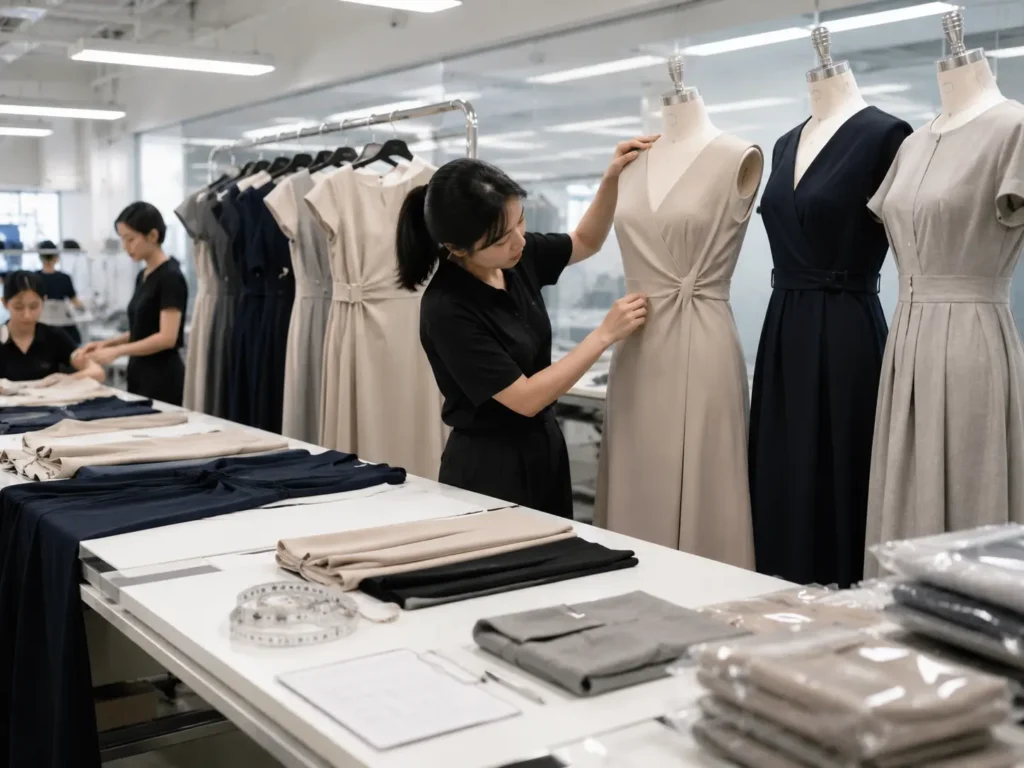
A European contemporary brand developed below-knee woven midi dresses for polished day-to-evening wear.
- Order scope: 22 styles across woven midi and knee-length silhouettes.
- Total program quantity: about 58,000 pieces.
- Focus areas: waistline position, hem balance, wrinkle behavior, size consistency and pressing.
- Duolan actions: pattern review, hem measurement checks, fabric batch control and packing preparation.
- Result focus: refined garments suitable for repeatable commercial programs.
Resort Printed Midi Collection

A resort-focused brand developed printed midi dresses and lightweight vacation styles.
- Order scope: 16 styles across printed midi, soft woven and vacation silhouettes.
- Total program quantity: about 41,000 pieces.
- Focus areas: print placement, fabric lightness, opacity, lining coverage and carton creasing.
- Duolan actions: print placement review, fabric shrinkage check, sample correction and packing photo record.
- Result focus: soft movement and clean presentation after international transport.
FAQ|Custom Midi Dress Manufacturing
A custom midi dress manufacturer develops and produces midi dresses according to brand direction, fabric standards, fit requirements, size range and delivery needs. Duolan supports midi, knee-length, below-knee and mid-calf dress programs from sample development to PP approval, bulk production, QC, packing and repeat delivery.
Yes. Knee-length and below-knee dresses can be developed within the same midi dress length family. Both require control of waistline, finished length, hem level, lining, movement and standard-size consistency. Duolan covers knee-length as a length branch inside midi dress production logic.
Duolan supports satin midi dresses, bodycon midi dresses, cocktail midi dresses, printed resort midi dresses, lace midi dresses, A-line midi dresses, slip midi dresses, ruched midi dresses, halter midi dresses, strapless midi dresses and work-to-evening knee-length dresses.
Fabric choice depends on garment purpose. Satin works for polished occasion styles, jersey supports fitted midi dresses, printed woven fabrics suit resort programs, lace creates romantic occasion looks, and chiffon-like fabrics support movement. Duolan reviews drape, opacity, recovery, shrinkage and packing behavior before bulk.
Duolan reviews finished length, waistline, slit height, hem sweep, lining length and grading across the confirmed size range. PP samples, measurement tolerance, pattern records and QC checks help protect length consistency from sample approval to bulk production.
Yes. Duolan connects approved midi dress samples to BOM, material locking, PP samples, production notes, QC checkpoints, packing standards and repeat records. Sample approval becomes a production standard before bulk cutting and sewing begin.
A brand can send reference images, tech packs, fabric direction, target length, size range, colorways, quantity, launch date and packing requirements. Duolan will review fabric feasibility, fit risks, sample path, production readiness, QC focus and delivery planning.

Send Your Midi Dress Project
Duolan works best with established fashion brands, product teams and sourcing offices developing midi, knee-length, below-knee or mid-calf dress programs. Share your project files, reference styles or sample requirements, and our team will review the development path before sampling or bulk production.
Share your project details
- Target length: knee-length, below-knee, classic midi or longer midi.
- Product type: satin, cocktail, bodycon, printed, resort, work-to-evening or occasion midi dress.
- Project stage: first sample, revised sample, PP approval, bulk production or repeat order.
- Key files: tech pack, reference image, original sample, fabric swatch, size chart or packing instruction.
- Program information: style count, target quantity, colorways, size range and launch date.
- Production needs: fabric sourcing, fit review, QC, packing, label, barcode or repeat records.
